Focus on function helps identify the changes that made us human

Humans split away from our closest animal relatives, chimpanzees, and formed our own branch on the evolutionary tree about seven million years ago. In the time since — brief, from an evolutionary perspective — our ancestors evolved the traits that make us human, including a much bigger brain than chimpanzees and bodies that are better suited to walking on two feet. These physical differences are underpinned by subtle changes at the level of our DNA. However, it can be hard to tell which of the many small genetic differences between us and chimps have been significant to our evolution.

New research from Whitehead Institute Member Jonathan Weissman; University of California, San Francisco Assistant Professor Alex Pollen; Weissman lab postdoc Richard She; Pollen lab graduate student Tyler Fair; and colleagues uses cutting edge tools developed in the Weissman lab to narrow in on the key differences in how humans and chimps rely on certain genes. Their findings, published in the journal Cell on June 20th, may provide unique clues into how humans and chimps have evolved, including how humans became able to grow comparatively large brains.

Studying function rather than genetic code

Only a handful of genes are fundamentally different between humans and chimps; the rest of the two species’ genes are typically nearly identical. Differences between the species often come down to when and how cells use those nearly identical genes. However, only some of the many differences in gene use between the two species underlie big changes in physical traits. The researchers developed an approach to narrow in on these impactful differences.

Their approach, using stem cells derived from human and chimp skin samples, relies on a tool called CRISPR interference (CRISPRi) that Weissman’s lab developed. CRISPRi uses a modified version of the CRISPR/Cas9 gene editing system to effectively turn off individual genes. The researchers used CRISPRi to turn off each gene one at a time in a group of human stem cells and a group of chimp stem cells. Then they looked to see whether or not the cells multiplied at their normal rate. If the cells stopped multiplying as quickly or stopped altogether, then the gene that had been turned off was considered essential: a gene that the cells need to be active-producing a protein product-in order to thrive. The researchers looked for instances in which a gene was essential in one species but not the other as a way of exploring if and how there were fundamental differences in the basic ways that human and chimp cells function.

By looking for differences in how cells function with particular genes disabled, rather than looking at differences in the DNA sequence or expression of genes, the approach ignores differences that do not appear to impact cells. If a difference in gene use between species has a large, measurable effect at the level of the cell, this likely reflects a meaningful difference between the species at a larger physical scale, and so the genes identified in this way are likely to be relevant to the distinguishing features that have emerged over human and chimp evolution.

“The problem with looking at expression changes or changes in DNA sequences is that there are many of them and their functional importance is unclear,” says Weissman, who is also a professor of biology at the Massachusetts Institute of Technology and an Investigator with the Howard Hughes Medical Institute. “This approach looks at changes in how genes interact to perform key biological processes, and what we see by doing that is that, even on the short timescale of human evolution, there has been fundamental rewiring of cells.”

After the CRISPRi experiments were completed, She compiled a list of the genes that appeared to be essential in one species but not the other. Then he looked for patterns. Many of the 75 genes identified by the experiments clustered together in the same pathways, meaning the clusters were involved in the same biological processes. This is what the researchers hoped to see. Individual small changes in gene use may not have much of an effect, but when those changes accumulate in the same biological pathway or process, collectively they can cause a substantive change in the species. When the researchers’ approach identified genes that cluster in the same processes, this suggested to them that their approach had worked and that the genes were likely involved in human and chimp evolution.

“Isolating the genetic changes that made us human has been compared to searching for needles in a haystack because there are millions of genetic differences, and most are likely to have negligible effects on traits,” Pollen says. “However, we know that there are lots of small effect mutations that in aggregate may account for many species differences. This new approach allows us to study these aggregate effects, enabling us to weigh the impact of the haystack on cellular functions.”

Researchers think bigger brains may rely on genes regulating how quickly cells divide

One cluster on the list stood out to the researchers: a group of genes essential to chimps, but not to humans, that help to control the cell cycle, which regulates when and how cells decide to divide. Cell cycle regulation has long been hypothesized to play a role in the evolution of humans’ large brains. The hypothesis goes like this: Neural progenitors are the cells that will become neurons and other brain cells. Before becoming mature brain cells, neural progenitors divide multiple times to make more of themselves. The more divisions that the neural progenitors undergo, the more cells the brain will ultimately contain — and so, the bigger it will be. Researchers think that something changed during human evolution to allow neural progenitors to spend less time in a non-dividing phase of the cell cycle and transition more quickly towards division. This simple difference would lead to additional divisions, each of which could essentially double the final number of brain cells.

Consistent with the popular hypothesis that human neural progenitors may undergo more divisions, resulting in a larger brain, the researchers found that several genes that help cells to transition more quickly through the cell cycle are essential in chimp neural progenitor cells but not in human cells. When chimp neural progenitor cells lose these genes, they linger in a non-dividing phase, but when human cells lose them, they keep cycling and dividing. These findings suggest that human neural progenitors may be better able to withstand stresses — such as the loss of cell cycle genes — that would limit the number of divisions the cells undergo, enabling humans to produce enough cells to build a larger brain.

“This hypothesis has been around for a long time, and I think our study is among the first to show that there is in fact a species difference in how the cell cycle is regulated in neural progenitors,” She says. “We had no idea going in which genes our approach would highlight, and it was really exciting when we saw that one of our strongest findings matched and expanded on this existing hypothesis.”

More subjects lead to more robust results

Research comparing chimps to humans often uses samples from only one or two individuals from each species, but this study used samples from six humans and six chimps. By making sure that the patterns they observed were consistent across multiple individuals of each species, the researchers could avoid mistaking the naturally occurring genetic variation between individuals as representative of the whole species. This allowed them to be confident that the differences they identified were truly differences between species.

The researchers also compared their findings for chimps and humans to orangutans, which split from the other species earlier in our shared evolutionary history. This allowed them to figure out where on the evolutionary tree a change in gene use most likely occurred. If a gene is essential in both chimps and orangutans, then it was likely essential in the shared ancestor of all three species; it’s more likely for a particular difference to have evolved once, in a common ancestor, than to have evolved independently multiple times. If the same gene is no longer essential in humans, then its role most likely shifted after humans split from chimps. Using this system, the researchers showed that the changes in cell cycle regulation occurred during human evolution, consistent with the proposal that they contributed to the expansion of the brain in humans.

The researchers hope that their work not only improves our understanding of human and chimp evolution, but also demonstrates the strength of the CRISPRi approach for studying human evolution and other areas of human biology. Researchers in the Weissman and Pollen labs are now using the approach to better understand human diseases — looking for the subtle differences in gene use that may underlie important traits such as whether someone is at risk of developing a disease, or how they will respond to a medication. The researchers anticipate that their approach will enable them to sort through many small genetic differences between people to narrow in on impactful ones underlying traits in health and disease, just as the approach enabled them to narrow in on the evolutionary changes that helped make us human.


Share Button

Face of Anglo-Saxon teen VIP revealed with new evidence about her life

The face of a 16-year-old woman buried near Cambridge (UK) in the 7th century with an incredibly rare gold and garnet cross (the ‘Trumpington Cross’) has been reconstructed following analysis of her skull. The striking image is going on public display for the first time on 21st June,* with new scientific evidence showing that she moved to England from Central Europe as a young girl, leading to an intriguing change in her diet.

Forensic artist Hew Morrison created the likeness using measurements of the woman’s skull and tissue depth data for Caucasian females. Without DNA analysis, Morrison could not be sure of her precise eye and hair colour, but the image offers a strong indication of her appearance shortly before she died.

Hew Morrison said: “It was interesting to see her face developing. Her left eye was slightly lower, about half a centimetre, than her right eye. This would have been quite noticeable in life.”

New “you are what you eat” isotopic analysis of the young woman’s bones and teeth conducted by bioarchaeologists Dr Sam Leggett and Dr Alice Rose, and archaeologist Dr Emma Brownlee, during PhD research at the University of Cambridge also reveals that she moved to England from somewhere near the Alps, perhaps southern Germany, sometime after she turned 7 years old.

Leggett and Rose also found that once the girl had arrived in England, the proportion of protein in her diet decreased by a small but significant amount. This change occurred close to the end of her young life, showing that the period between her migration and burial near Cambridge was tragically short.

Dr Leggett, now at the University of Edinburgh, said: “She was quite a young girl when she moved, likely from part of southern Germany, close to the Alps, to a very flat part of England. She was probably quite unwell and she travelled a long way to somewhere completely unfamiliar — even the food was different. It must have been scary.”

Previous analysis indicated that the young woman had suffered from illness but her cause of death remains unknown. She was buried in a remarkable way — lying on a carved wooden bed wearing the cross, gold pins (also on display) and fine clothing.

Hers is one of only 18 bed burials ever uncovered in the UK. Her ornate cross, combining gold and garnets (third quarter of the 7th century), is one of only five of its kind ever found in Britain and identifies her as one of England’s earliest converts to Christianity and as a member of the aristocracy if not royalty. The best known example of such a cross was found in the coffin of St Cuthbert.

In 597 AD, the pope dispatched St Augustine to England on a mission to convert the pagan Anglo-Saxon kings, a process which continued for many decades.

Dr Leggett said: “She must have known that she was important and she had to carry that on her shoulders. Her isotopic results match those of two other women who were similarly buried on beds in this period in Cambridgeshire.

“So it seems that she was part of an elite group of women who probably travelled from mainland Europe, most likely Germany, in the 7th century, but they remain a bit of a mystery. Were they political brides or perhaps brides of Christ? The fact that her diet changed once she arrived in England suggests that her lifestyle may have changed quite significantly.”

Dr Sam Lucy, a specialist in Anglo-Saxon burial from Newnham College, Cambridge, who published the Anglo-Saxon excavations at Trumpington**, said:

“These are intriguing findings, and it is wonderful to see this collaborative research adding to our knowledge of this period. Combining the new isotopic results with Emma Brownlee’s research into European bed burials really does seem to suggest the movement of a small group of young elite women from a mountainous area in continental Europe to the Cambridge region in the third quarter of the seventh century.

“Southern Germany is a distinct possibility owing to the bed burial tradition known there. Given the increasingly certain association between bed burial, such cross-shaped jewellery, and early Anglo-Saxon Christianity, it is possible that their movement related to pan-European networks of elite women who were heavily involved in the early Church.”

Dr Jody Joy, the exhibition’s co-curator, said: “The story of this young woman goes to the very heart of what our exhibition is all about — new research making visible the lives of people at pivotal moments of Cambridgeshire’s history. MAA holds one of Britain’s most important collections of Early Medieval archaeology and the Trumpington bed burial is so important. It looks like it still has much more to teach us.”

In the exhibition, the ‘Trumpington Cross’ will be displayed together with the delicate gold and garnet pins connected by a gold chain, which were found near the teenager’s neck. These pins probably secured a long veil to an outer garment of fine linen. The pins would have caught the light as she moved.The burial bed’s decorativeheadboard will also be exhibited.

* The image and artefacts from the mysterious woman’s burial — discovered in 2012 by the Cambridge Archaeological Unit at Trumpington Meadows on Cambridge’s southern limits — including her famous cross will be unveiled in a major new exhibition at Cambridge’s Museum of Archaeology and Anthropology (MAA). ‘Beneath Our Feet: Archaeology of the Cambridge Region’ will run from 21st June to 14th April 2024.

**C. Evans, S. Lucy & R. Patten, Riversides: Neolithic Barrows, a Beaker Grave, Iron Age and Anglo-Saxon Burials and Settlement at Trumpington, Cambridge (2018); and S. Lucy, ‘The Trumpington Cross in context’, Anglo-Saxon England (2016).

Share Button

Researchers expand ability of robots to learn from videos

New work from Carnegie Mellon University has enabled robots to learn household chores by watching videos of people performing everyday tasks in their homes.

The research could help improve the utility of robots in the home, allowing them to assist people with tasks like cooking and cleaning. Two robots successfully learned 12 tasks including opening a drawer, oven door and lid; taking a pot off the stove; and picking up a telephone, vegetable or can of soup.

“The robot can learn where and how humans interact with different objects through watching videos,” said Deepak Pathak, an assistant professor in the Robotics Institute at CMU’s School of Computer Science. “From this knowledge, we can train a model that enables two robots to complete similar tasks in varied environments.”

Current methods of training robots require either the manual demonstration of tasks by humans or extensive training in a simulated environment. Both are time consuming and prone to failure. Past research by Pathak and his students demonstrated a novel method in which robots learn from observing humans complete tasks. However, WHIRL, short for In-the-Wild Human Imitating Robot Learning, required the human to complete the task in the same environment as the robot.

Pathak’s latest work, Vision-Robotics Bridge, or VRB for short, builds on and improves WHIRL. The new model eliminates the necessity of human demonstrations as well as the need for the robot to operate within an identical environment. Like WHIRL, the robot still requires practice to master a task. The team’s research showed it can learn a new task in as little as 25 minutes.

“We were able to take robots around campus and do all sorts of tasks,” said Shikhar Bahl, a Ph.D. student in robotics. “Robots can use this model to curiously explore the world around them. Instead of just flailing its arms, a robot can be more direct with how it interacts.”

To teach the robot how to interact with an object, the team applied the concept of affordances. Affordances have their roots in psychology and refer to what an environment offers an individual. The concept has been extended to design and human-computer interaction to refer to potential actions perceived by an individual.

For VRB, affordances define where and how a robot might interact with an object based on human behavior. For example, as a robot watches a human open a drawer, it identifies the contact points — the handle — and the direction of the drawer’s movement — straight out from the starting location. After watching several videos of humans opening drawers, the robot can determine how to open any drawer.

The team used videos from large datasets such as Ego4D and Epic Kitchens. Ego4D has nearly 4,000 hours of egocentric videos of daily activities from across the world. Researchers at CMU helped collect some of these videos. Epic Kitchens features similar videos capturing cooking, cleaning and other kitchen tasks. Both datasets are intended to help train computer vision models.

“We are using these datasets in a new and different way,” Bahl said. “This work could enable robots to learn from the vast amount of internet and YouTube videos available.”

More information is available on the project’s website and in a paper presented in June at the Conference on Vision and Pattern Recognition.

Share Button

Prof Davies apologises to relatives of Covid victims

England’s former Chief Medical Officer says “how sorry I am” to those who lost loved ones in the pandemic.

Share Button

Egg freezing rises as more women look to preserve fertility

The dramatic rise in egg freezing could be due to the pandemic, the UK fertility regulator says.

Share Button

A daytime nap is good for the brain

Those prone to napping had brains that looked up to six years younger than everyone else.

Share Button

Boris Johnson Has Been Stripped Of His Parliamentary Pass For Lying To MPs

Boris Johnson has been stripped of his parliamentary pass for repeatedly lying to the House of Commons over partygate.

MPs voted 354 to 7 to support last week’s privileges committee’s report which found him guilty of misleading parliament by insisting lockdown rules were followed in Downing Street during the pandemic.

Johnson resigned as MP for Uxbridge and South Ruislip 10 days ago after seeing an advance copy of the committee’s report.

Had he remained an MP, the committee said it would have recommended he be suspended from the Commons for 90 days.

Johnson described the inquiry as a “kangaroo court” and claimed he was the victim of a political stitch-up.

But following a five-hour debate, an overwhelming majority of MPs voted to back the committee’s findings, including the recommendation that Johnson should have the parliamentary pass given to former MPs removed.

The debate also exposed the deep splits within the Tories over their former leader, with around 200 of the party’s MPs – including prime minister Rishi Sunak – abstaining by failing to take part in the vote.

Some 118 Tory MPs voted to back the committee’s findings, including cabinet ministers Alex Chalk, Penny Mordaunt Gillian Keegan, and former PM Theresa May.

The Tories who voted against the committee’s report were Joy Morrisey, Karl McCartney, Adam Holloway, Heather Wheeler, Nick Fletcher and Bill Cash.

In a bizarre interview this morning, Sunak repeatedly refused to say what he thought of the report, insisting he “wouldn’t want to influence” any MPs on how to vote.

Meanwhile, the prime minister’s official spokesman said he was too busy with other engagements, including hosting the prime minister of Sweden, to attend parliament.

Lib Dem deputy leader Daisy Cooper said: “Tonight Rishi Sunak committed a cowardly cop-out. His failure to vote says all you need to know about this prime minister’s lack of leadership.

“Sunak promised integrity yet when push came to shove, he was too weak to even turn up.”

Share Button

Covid Inquiry: Mistake not to consider range of pandemics – David Cameron

David Cameron says “group think” meant government focused on flu pandemics, rather than other diseases.

Share Button

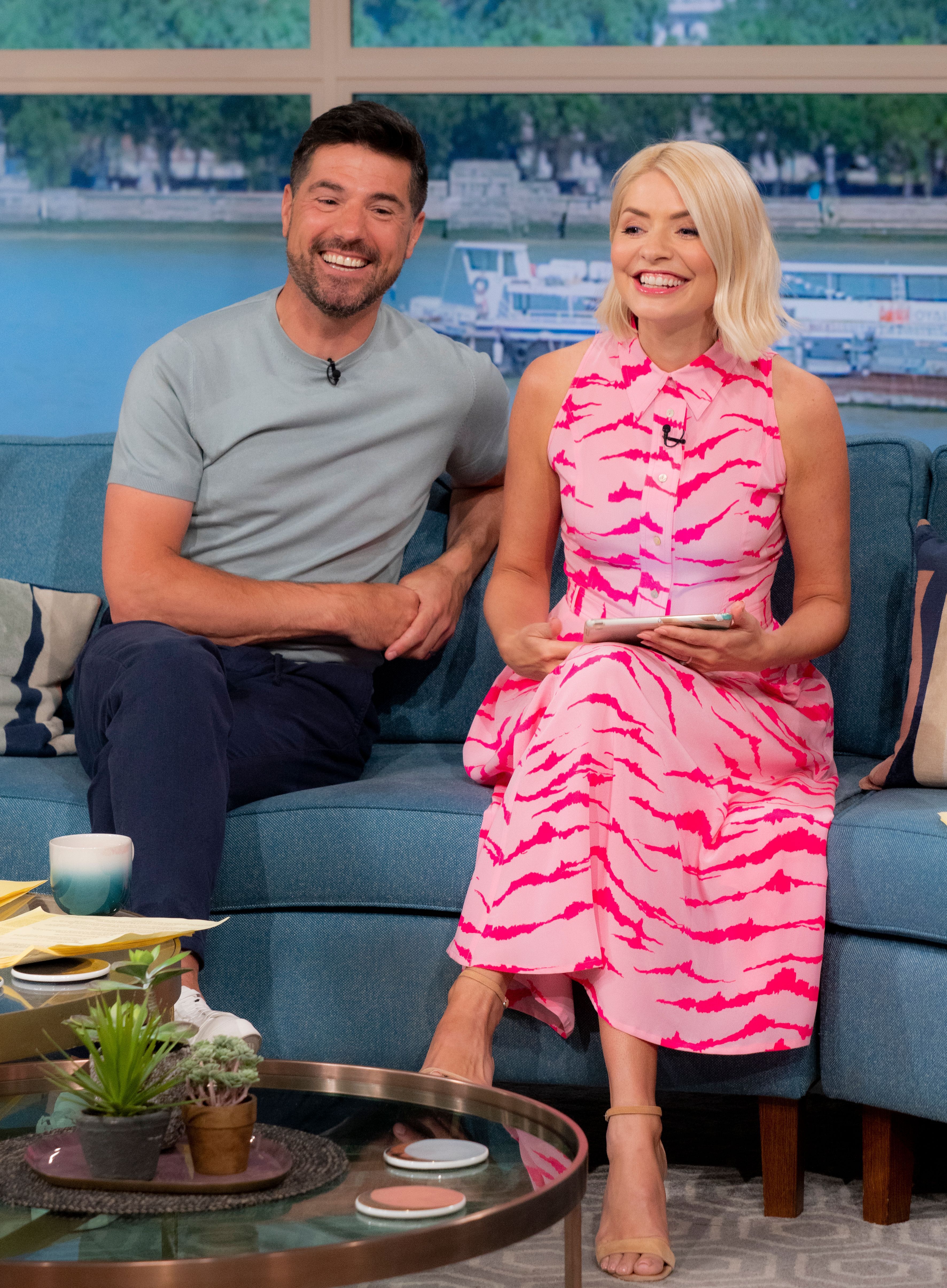
Craig Doyle Speaks Out On This Morning Presenting Role, Amid Schofield Replacement Rumours

Craig Doyle has spoken out on his role guest hosting This Morning, amid rumours he could be set to replace Phillip Schofield full time.

The Irish presenter has emerged as one of the frontrunners to land the job, as ITV chiefs search for a permanent co-host for Holly Willoughby following Phillip’s exit from the daytime show.

In an interview with The Times, Craig revealed his love of presenting the show, admitting he feels “grateful” for chance to front it.

“I love doing the This Morning show,” he said. “It’s great fun and I feel so grateful at this stage in my career to get an opportunity to do a show this size.”

“Given that I’m on my second or third lap of this industry, to get an opportunity like this is fantastic.”

He continued: “It’s a very important television programme as it’s the backdrop for a lot of people’s morning,”

“From anecdotal evidence, I know that it provides company and it’s almost a friend to a lot of people. There’s a familiarity, an everydayness and a brightness that makes it enjoyable.”

Craig also praised the way the show’s wide mix of topics “encapsulate life”, suggesting it mirrors the way people can be “in the supermarket and one minute you’re talking about your kids and the next, you’re in work, discussing financial projections”.

Craig has proved popular with This Morning viewers

Ken McKay/ITV/Shutterstock

Craig – who has proved to be very popular with This Morning fans – stepped in to host for two days during Holly’s first week back following Phillip’s exit from the show last month

Phillip subsequently left ITV altogether after admitting to an affair with a younger colleague on the show.

Craig has previously served as a guest host on This Morning on Fridays and during school holidays, presenting alongside the likes of Josie Gibson, Rochelle Humes and Alison Hammond.

Holly is currently presenting with a rotation of different members of the This Morning family until a permanent replacement for Phillip is found.

This Morning airs weekdays at 10am on ITV1.

Share Button

Banish Your Hayfever Symptoms With These 3 Doctor-Approved Tips

Of all the summer maladies, I reckon hayfever is among the worst.

The constantly-watering eyes, the itchy nose, the explosive sneezes – I’d happily trade a couple of days’ worth of sun for some sniffle-free time, ta very much.

If you’re anything like me, you will have tried every conventional hayfever-busting trick in the book. But for some reason, the pollen this summer seems to have some serious hands.

Thankfully, Dr. Karan Raj recently took to TikTok to explain three of the best lesser-known antidotes to hayfever – including everything from pro-level meds to sneaky hair-washing hacks.

Here’s what he had to say:

Make absolutely definite you’re doing the basics

OK, OK, I know I started this off by saying that you’ve probably tried all the better-known solutions.

But just in case, Dr. Raj listed all his favourite go-to hayfever hacks to check off before you try anything drastic.

These are:

  • Wearing Vaseline, or another petroleum jelly, around your nostrils
  • Wearing sunglasses when you’re out
  • Washing your hair before bed to clear out any stray pollen
  • Not drying laundry outside, where your clothes can catch pollen
  • Changing your clothes frequently

Once you’ve got those covered, he recommends trying what he calls “extras”.

1) Nab yourself some fexofenadine

When it comes to hayfever symptom-relieving tablets, it turns out that not all options are created equal.

Fexofenadine, Dr. Raj says, is the “strongest over-the-counter medication you can buy” for hayfever.

Sure, it might cost a little more than your usual faves – but its “much stronger” active ingredient, fexofenadine hydrochloride, could well be worth a shot.

Just make sure you actually *are* getting the active ingredient on there, Dr. Raj says.

2) Irrigate your nose

Yes, taking meds is easy and can be effective – but as Dr. Raj says, “It’s in your nose holes that pollen can get trapped and cause reactions.”

Flushing your nostrils with water or a nasal spray can loosen the trapped pollen, potentially relieving you of those cursed symptoms.

But the doctor stresses the importance of using the nozzles products like nasal sprays correctly.

“Don’t point up towards your brain,” he says. He recommends we point “sideways, towards (our) ears” instead.

That way, the solution will reach your sinuses directly.

On top of that, he says that you shouldn’t swallow the spray – it’ll end up in your throat, where it’s not doing any good.

3) Ban the booze

I know, I know, it’s summer – but Dr. Raj reckons going on the lash could be just about the worst thing you can do for your hay fever.

He points out that alcohol contains chemicals called histamines (the thing your hay fever meds are so anti), which can trigger allergic reactions.

“It also makes you more sensitive to poller’” Dr. Raj adds, “thus increasing symptoms.”

Catch his entire video here:

Share Button