5G Coronavirus Conspiracies

Why do so many people seem to (mistakenly) think there’s a connection between the 5G rollout and the coronavirus, despite plenty of evidence to the contrary?

In this case the evidence points to this originating from a Russian disinformation campaign much like we saw leading up to the 2016 election in the USA. The 5G one in particular has been very effective in duping many people and persuading them to spread the disinformation. Such campaigns breed distrust among citizens, which plays into Russia’s political advantage. Same goes for the anti-trust campaign related to “the media.”

So the 5G hoax is really just a disinformation campaign that many people are succumbing to. It’s what happens when geopolitical maneuvering infects social media. To the extent there’s an actual conspiracy, it’s a lot more basic and common than the 5G one, and this sort of behavior is certainly not limited to Russia. Humans have been using disinformation campaigns for thousands of years. It’s a prestigious line of work with a long and glorious tradition.

Ironically the people spreading this 5G-coronavirus idea are behaving like viruses themselves by infecting others with similar falsehoods. While you may think that such people are being too suspicious, the reality is that they’re actually being too naïve and trusting. If they were more skeptical, they’d evaluate the evidence rationally (instead of emotionally) and quickly realize that it’s untrue since it doesn’t mesh with readily available facts.

When I see people spreading disinformation campaigns like the 5G one, I will generally quarantine them from my social sphere by adding them to my block list. I prefer to prevent further risk of contamination within my slice of social media. I won’t interfere with their personal deep dive into disinformation campaigns if they choose to experience that, but it would be inconceivable to join them in the pit of despair.

Yes, human beings can do evil acts sometimes, and they’re often negligent and expedient, which can cause a host of problems. But humans also tend to be too simplistic to rise to the level of fanciful hoaxes that require them to perform like an organized team of Lex Luthors.

Share Button

Collecting Memories

Instead of thinking of life as a series of goals or accomplishments, I also like to think of life as a collection of memories. I ponder what kinds of memories I’d like to add to that collection as I age.

This helps me get past overly abstract goals and focus on the experiential nature of life. Sometimes achieving a goal is a great experience, but sometimes it can be a boring slog where only the end result matters. If we pay more attention to the experiences we’re accumulating and not just the achievements we’re ticking off, we can acquire better memories and feel more enjoyment from those memories.

I’ve been investing in this mindset a lot more during the past 10 years than I have in other decades of my life, and it’s made a noticeable difference in how I feel about the past. That last decade is filled with such delightful memories that I cherish. I contrast this with other periods of my life when I didn’t practice this mindset, and I realize that I allowed too many days to go where I didn’t create enough beautiful memories.

Some of my favorite memories are of travel experiences. I have vivid memories of Paris, London, Berlin, Amsterdam, Bucharest, Lucerne, Rome, and more. I recall an amazing 23-day road trip through the Pacific Northwest. And of course how could I forget the Las Vegas Zombie Run?

Some cherished memories are actually very simple and inexpensive. They were little decisions to add some extra flavor to my memory banks. I read several Mark Twain novels during the past few years, including Tom Sawyer, Huckleberry Finn, and A Connecticut Yankee in King Arthur’s Court. Recalling some of the ridiculous events from those stories puts a smile on my face.

Last night I began reading Don Quixote, which is more than 400 years old. This is a book I’ve always wanted to read, and I just finally began reading it, partly because I want to acquire the memory of having read it. I want to add some intimate knowledge of this book to my mind. And I also want to experience the story. It’s about a man who decides to become a chivalrous knight and go on adventures in a world that cares little for chivalry.

Reading The Princess Bride book was another delightful experience. That’s my all-time favorite movie, and I loved how reading the book increased my appreciation for the movie adaptation. I can see why the movie didn’t include the Zoo of Death and chose to replace it with the much simpler Pit of Despair though.

As I noted in yesterday’s post about balancing achievements and experiences, I like to plan for experiences too, often selecting them based on the memories they’ll create. I find this especially important while spending a lot more time at home due to the virus situation.

If you’re spending a lot of time at home right now, realize that you’re still acquiring memories day by day. You can create stressful memories during this time, and then you’ll have those locked into your mind for the rest of your life. You can create boring memories, in which case you may not remember much when you think back on this time. Or you could take the opportunity to create some delightful memories to punctuate these days, in which case you’ll remember the good times that you experienced when you think back on this situation.

Have you ever read The Diary of Anne Frank? I read the book when I was younger. I walked through the real Anne Frank house in Amsterdam, which is now a popular museum. Even though it was a stressful experience for her that ended in her death, she still managed to record some positive memories in her diary while she was in hiding. Even in darkness there were beautiful moments.

A lot of personal growth work involves understanding one’s past. I used to find this kind of work unpleasant because I didn’t feel good about many parts of my past – it was full of mistakes and setbacks. But now I’ve greatly increased my mental bank of positive memories, so I find it much more pleasant to reflect back on the past. It seems a lot brighter than it used to.

A mistake I made in the past was focusing too much on trying to create a better future and not enough on enjoying moments in the present. That mindset actually hurt my past, filling it with memories of drudgery instead of beautiful experiences.

When I was younger, I wish that I had spent less time at the office and said yes to more zombie runs. The time at the office is mostly a blur today, but I remember the Zombie Run vividly, and it was only a few hours out of one day.

It’s not difficult to fill your past with moments that you’ll cherish. You’ve had some beautiful experiences before, and you can create more of them. The key is to recognize how much value such experiences add to your life.

Share Button

Trusting the Virus

In November when I did four days of ayahuasca ceremonies in Costa Rica, the first night was really rough. About an hour after drinking the tea, I started feeling very strange, and this feeling continued to intensify. My body began to feel really heavy, and after a while I felt like I was mostly paralyzed and could hardly move. I couldn’t sit or stand up. All I could do was lie down.

It was reasonably cool in the room, but I was sweating profusely. Soon I started feeling like it was hard to breathe… like I wasn’t getting enough oxygen. I began to feel concerned. This was my first ever experience of this nature, and I hadn’t heard of anyone having breathing issues, so I didn’t feel prepared for that. I had the sensation like something was pushing down on my chest. So I started pushing myself to breathe harder and faster, which made me sweat even more.

The shaman’s helpers came over to check on me, probably because they could hear me struggling, encouraging me to try to relax and slow my breathing. But it was like listening to them through a fog. Mentally I was telling myself that I’d be okay, but my physical sensations were very confusing and unpleasant.

Meanwhile my mind was flooding with vivid, brilliantly colored fractal imagery at the same time I was trying to get my breathing under control. The feeling of discomfort kept increasing. I started wondering if I was going to pass out from not being able to breathe. What if no one realized what had happened in time? What if I died right there?

The worst was feeling so physically paralyzed, not 100% but maybe 90%, while trying harder and harder to get more air in. I was breathing really loudly and forcibly, almost like a woman in labor, yet I still felt like I wasn’t getting enough air.

But then when I feel really uncomfortable, disturbed, and concerned, I reminded myself to seek out my primary source of grounding, which is my relationship with reality. Despite the labored breathing and the psychedelic imagery, I found immediate comfort in remembering that relationship. And I reminded myself of the importance of trust in reality.

I didn’t know if I’d be physically okay. I hoped so, but it didn’t feel like things were okay in that moment. So I decided to trust on a different level that the experience was spiritually okay. In my mind I just began repeating: I trust you. I trust you. I trust you. I did my best to let go and surrender to my commitment to always trust reality. This included trusting that if it was my time to die, then it was my time to die, and fighting that wasn’t going to help.

This effort to lean towards trust started making me cry, not from desperation though. It was a feeling like I was linking up and opening a communication channel to some aspect of life that runs deeper than what I normally experience on a day to day basis. It felt like the tears were just my body’s reaction to what felt like an energetic response from reality. In some ways it felt like I was really just remembering that this channel is always there. It’s a similar channel to what I often experience while writing, but the frequency range was a bit difference.

Never in my life have I had to lean so far in the direction of trust before. Intellectually I can trust reality because I’ve reasoned out that it makes sense to do so. But it was something else entirely to lean into trusting reality when I wasn’t sure which way my body was going to go in the next hour. I didn’t have much control over my body in that situation, and even the contents of my mind were a bit out of control too, but I still had the ability to acknowledge this relationship with reality and to commit to trusting it no matter what happened.

Somehow when I leaned into trust, my body began to follow. My breathing started to ease up. My heart rate came down. It was still uncomfortable, but I began to relax into internal rhythms that felt safer to me. Soon I could tell that I was out of the woods and would be okay physically.

Afterwards I still had several hours of deep imagery and intense emotional processing to go through, including a storm of tears, but that was the easy part relative to the physical sensations. I still spent hours feeling semi-paralyzed and super dizzy like the room was spinning, so I needed help just to walk to the bathroom at one point.

And then I went through three more ceremonies in the next three nights. As you might guess, it took a lot of trust to drink the tea again after knowing what happened the first night. But I also felt that since I’d gone through it once and learned that trusting reality helped a lot, I was perhaps better prepared if I had to go through something similar again.

It turned out that each night was a different experience. I only had the labored breathing, profuse sweating, and semi-paralysis on the first night. The other nights were so different, with some of the worse nausea and dry heaving I’ve ever experienced, including retching over a bucket for more than an hour – quite the ab workout.

Overall that week was a physically difficult experience but mentally, emotionally, and spiritually beautiful. I may even go back again this November, but we’ll have to see if that’s possible.

For some time after that experience, I’ve been wondering about that night where I felt like I could barely breathe. It didn’t make a whole lot of sense to me. I understand the purging aspect, which most people experienced during that week, some more than others. But I didn’t hear of anyone else struggling to breathe like I did, at least not among our group of about 40 people. And why did I have to endure that only on the first night? I saw so much evidence of rich meaning in other parts of the experience, but this part stood out to me as a piece that didn’t seem to fit.

At the time I decided to just trust that reality was giving me that experience for a reason, but I didn’t know why. It did help me appreciate life afterwards, and it also shifted my relationship with death. It reminded me that if death is approaching, it’s best to relax and do my best to trust reality rather than tensing up all over.

What I didn’t know or expect about ayahuasca is that it seems to leave a permanent trace effect behind. I feel like it opened up some kind of communication channel has never fully switched off or closed since November. Most of the time it’s muted, but it’s still present, and I can tune into some threads of information or energy currents that remain accessible.

As the virus situation has been escalating this month, I’ve been feeling this channel open up more, as if the ayahuasca energy signature is tapping me on the shoulder and trying to get my attention. I also keep hearing music looping in my mind that I heard during the ceremonies.

When I learn about people being on ventilators and struggling to breathe, this channel opens up more clearly, and it reconnects me back to the vivid memories of when I felt that I could barely breathe. I even feel some of the sensations in my body, like I’m acting it out again. Sometimes it becomes so uncomfortable that I have to pull my attention away for a while and allow my body to relax.

Meanwhile the reason why this is happening comes through clearly as well – empathy.

Whenever I think about the people who are struggling to breathe – and the many more who will soon be joining them – I can’t help but feel some of those physical sensations myself. I’m reminded of how terrifying that can be, and all sorts of emotions come up. And I have to keep surrendering to those feelings and reminding myself to relax into trust again.

Even though a virus isn’t a plant, this open ayahuasca channel is somehow showing me that plant intelligence and viral intelligence are connected. Maybe they’re linked via the energy patterns or intelligence of nature. I can’t really explain it. I just sense that this viral situation isn’t some random or chaotic event but rather that there is an intelligence behind it, and it’s part of the same intelligence that I danced with during the ayahuasca ceremonies.

These realizations have been guiding my behavior in recent days. On the one hand, I’m strongly motivated to encourage people to practice good social distancing, and I want us to move towards stronger measures faster and sooner, partly because I don’t want anyone to have to go through the experience of feeling like they can’t breathe. Knowing that more and more people will soon be gasping for breath brings up a flood of emotion, especially this feeling of connection to the fear and stress they’ll experience as they go through it. Putting my attention on this creates strong sympathetic sensations in my body.

And yet there’s this other aspect of trust as well, which has multiple layers to it. One part tells me that if people have to go through this experience, then it’s best for them to lean into trusting reality as much as possible, even going so far as to trust that it may be time to die. Mentally and emotionally resisting and tensing doesn’t seem like it would help, but letting go and allowing the body to respond with its own intelligence just might help.

Another layer, which might sound odd to many people, includes trusting the virus itself. This doesn’t mean trusting that it won’t infect me and running around risking people’s lives.

By trusting the virus, I mean trusting that it’s part of nature and part of reality, and so if I lean into trusting reality, that includes trusting the purpose of whatever this virus is doing. I can’t say exactly why, but I do sense that this virus has a purpose, both for us as individuals and for the world.

So while one part of me empathizes with seeing it as a threat and wanting to prevent harm, another part of me trusts that it’s not really here to vanquish us. When I look at it this way, even death doesn’t look like a form of harm per se, just a type of transition.

Because of this perspective, I feel that if I got infected, one part of me might want to frame the virus as an invader that I have to defeat in order to survive. But another part of me somehow knows that this level of perception isn’t accurate and that it would only fuel more tension and make the experience worse. It makes me consider that perhaps I should welcome the virus as a form of intelligence, to let it do its dance with my body and trust my body to respond appropriately. Maybe its purpose is to teach me something or to give me an experience that might actually be a precious gift.

So presently I don’t feel aligned with the “war on virus” frame that I’ve been hearing lately. To me that sounds about as ludicrous as declaring a war on kale. I don’t think the virus is declaring war on us. I sense no hostility or belligerence in its intention.

I do think the virus has a positive purpose to serve, and I don’t think that going to war with it acknowledges that purpose. I’m not 100% sure what it’s purpose is, but I’m pretty sure that it isn’t here to make everyone stock up on toilet paper.

I sense that this new virus is here to teach us something. I see its presence in the world as an invitation – a complex invitation with many layers to it, both individually and collectively. I know that I’m not the only one who’s considering this perspective right now.

Whenever I write a new blog post, I pick a frame and write from within that frame. This virus situation has many layers to it, which makes this an especially big challenge because no single frame can address the entirety of the situation. One day I may write from a frame that encourages social distancing, which may be a rational course of action within that frame. Another day I may write from a frame that suggests the rationality of acceptance and surrender. Some people may see these as being in conflict. I don’t. They’re just different lenses for viewing the same reality, and when we consider multiple lenses, we discover deeper levels of rationality that make sense across multiple frames.

Recognizing the value of surrender doesn’t make me want to abandon social distancing, for instance. I can and do practice both. I can do what I can to reduce suffering, even while feeling intense sympathetic emotion. And I can simultaneously accept and align with where this story wants to go without feeling like I’m fighting reality. What binds these together is trust. When we trust, life plays us like instruments.

I think a common objection to trusting reality is that it will make you passive, complacent, or foolish. I think that’s an irrational objection though.

If you consider this virus situation as an invitation for you, what kind of invitation do you think it is?


Share Button

Feeling Grounded in the Midst of Spiraling Changes

As much as you’ve seen unfold this month already, this is still the early game for the virus, so there will be even more changes coming up quickly. The last 10 days of the month could be even bigger than the first 21.

With so much uncertainty, how can you still feel grounded? Is that even possible? Or do you have to simply surrender to the feeling of being uprooted, knowing that it’s going to last for a while?

I think it’s entirely possible to continue feeling grounded in this situation, but in order to do that, you have to ground yourself to something permanent – something that remains constant in a sea of change.

If you’d previously been grounding yourself to something temporary or vulnerable to change, such as your job, lifestyle, social life, or the state of the economy, then it’s predictable that you may be feeling ungrounded, stressed, or scared. That isn’t so much due to the current circumstances though. It has more to do with where you chose to ground yourself.

Many years ago my life went through a lot of upheaval, especially while I was struggling financially. It was hard to make good plans because I often felt like my situation was unstable or vulnerable. Eventually I realized that I could never feel truly grounded if I rooted myself to the contents of reality because that’s always subject to change. If I ground myself to something impermanent, it’s just a matter of time before life eventually pulls the rug out from under me.

I learned that I could lose all my money and go bankrupt. I learned that I could go through a divorce. I learned from growing up in L.A. that even the ground could shake and break a bunch of stuff. I learned that whatever I assumed would endure might not endure. Anything inside this reality is subject to change.

Yet I still wanted to feel secure. I wanted to feel like I could trust some aspect of life to remain stable. I wanted to feel like I always had something to grasp even in turbulent times.

Eventually I came up with an approach that worked pretty well. I decided to ground myself to certain principles, namely truth, love, and power. Since these principles were abstract and universal, they could help me find my way in any situation. No matter what we have to deal with in life, there’s always a truth aspect, a love aspect, and a power aspect. We can always explore and consider what’s true. We can connect with and acknowledge our feelings. And we can consider our capabilities and consider actions to take.

This has been a helpful model, and to some extent I still lean on it today. You may notice that in a lot of my recent blog posts, I focus on these aspects, especially truth alignment. I ask questions like: What’s the truth about what’s happening? Where are we heading? What’s likely to happen next? Sometimes I make predictions about where things are heading. For instance, I mentioned the possibility of the Vegas Strip closing and Disneyland closing a while back, and now of course that’s a reality.

Even when it seems like the world is going crazy, I still feel pretty grounded. The world may be shifting rapidly, but the principles I use remain the same. I wrote about them in my book Personal Development for Smart People, which was published in 2008. Twelve years later I’m still using the same principles to guide me. They remain unchanged and constant. Only my understanding of them and my ability to apply them changes.

I’ve used these principles as my primary source of grounding for many years. They work well and have withstood the test of time. They can adapt to any situation that life throws at us.

But these days my top method for feeling grounded isn’t to lean on these principles. They’re still great for that purpose, but some years ago I found an approach I like even more.

Currently I like to ground myself to my relationship with reality. The nature of that relationship may shift around, but the existence of that relationship is a constant. No matter what’s happening in life, I have a relationship with reality. That’s always true, and so I can always trust that this relationship is here for me as a source of grounding.

I could be sick, and I’d still have a relationship with reality. I could be in prison, and I’d still have a relationship with reality. I could travel to Mars (maybe), and I’d still have a relationship with reality. I could die and continue on to some other phase of existence, and I’d still have a relationship with reality. As long as I exist, so does this relationship. This relationship is as permanent as my awareness is, which is long enough to be a reliable source of grounding.

The key is to ground this relationship in unwavering trust. This doesn’t mean trusting that reality will do what I want or expect. It means trusting that reality is always here for me and always on my side.

I imagine this probably sounds a bit abstract, so in tomorrow’s post I’ll share more details about applying this idea, including in life and death situations.

Share Button

When a Virus Derails Your Plans

This will be a quick add-on for the recent post on framing the coronavirus.

Obviously this situation has derailed many people’s plans, some more than others.

So how do you frame a situation like this where reality seriously derails your plans?

First off, reality can do that, as it’s obviously demonstrating right now. This is true whether you use an objective or subjective framing. The simulation doesn’t have to obey your intentions. It has a mind of its own.

This is why I like to view intentions and goals as offers to reality. Reality gets to respond in kind. It can accept my offers, reject my offers, or counter my offers. (We explored this framing in depth in the Submersion course.)

One of my goals (i.e. offers) for this year involved taking my character in the direction of some social expansion locally, as I’ve blogged about earlier. Two direct actions I took included joining a local meetup group and a new local fitness studio that does group classes, both of which happened in February.

So I was able to lean in with action, and it was going nicely for a few weeks. Then this virus situation exploded and of course took my plans with it. Social distancing is pretty much the opposite of what I’d intended for the months ahead.

So what gives? Do I treat this as a smackdown from reality?

Not at all. It’s a response from reality. And if I don’t understand it, I can ask, which in this case I did. I often dialog aloud with reality, and I speak aloud what I think its response is. Or sometimes I do this in the form of journaling.

When I asked why the change of plans, the answer that came through was pretty straightforward. I got a taste of my intention for a few weeks, enough to validate that it is indeed a direction I want to keep pursuing. The way I was pursuing this social expansion was working nicely too.

However, reality’s response is that it’s not time yet for the full intention to manifest just yet. It’s time for me to attend to other aspects of life for the next several weeks or possibly months. Reality’s directive is to also attend to a bunch of other tasks that aren’t social in nature.

The details don’t really matter in this case, but the direction was to focus on some other items first and clear those out. These are other projects that are pretty well-defined, some business and some personal, so I could finish them and move them off my plate fully. That would lighten up my plate and allow more room for social expansion activities when the time is right. Think of it like a spring cleaning of my other projects.

I can see and accept the wisdom of this. While the social expansion that I was engaging in seemed to be going well, I still have a lot on my plate, so I had to be pretty minimalist about the new direction to keep my life in balance. It would be nice to have some extra capacity, and that can happen if I clear out several more completable projects first and then revisit the social expansion later this year.

So while initially I was a bit disappointed that my plans seemed to be derailed, I can see that there may be intelligent reasons for it. So I’m good with accepting reality’s counter-offer in this case, which includes becoming a social minimalist for the time being.

Now clearly there’s a lot more to framing this situation that goes way beyond my little social expansion goal, but I just wanted to share this quick update to demonstrate the idea of receiving reality’s response and dialoging a bit to understand it better.

And if I didn’t like reality’s counteroffer in this case, I could have made another counteroffer of my own, and then reality could have given me its response to that. So there can be some back and forth negotiation if you’d like. What’s most important is to preserve trust in your relationship with reality, regardless of how it responds.

Share Button

How to Frame the Coronavirus

At the individual level, you have many options for how to frame the coronavirus situation.

You could continue to see it as some meaningless objective event, remaining detached from assigning any meaning to it. It just is. A virus is simply doing what a virus does. And people are reacting to it as people do. It has no special personal meaning for you.

Or you could see it as some kind of spiritual sign with a very personal meaning for you.

Or you could see it as a subjective reality event within your simulation, in which case it could have personal meaning as a form of communication from the simulator. Within that same context, however, it could just be a semi-random event without any personal meaning, like a disaster happening in Sim City.

You could frame this however you like and in whatever way you find interesting because the assignment of meaning is your choice. You don’t have to assign a meaning if you don’t want to.

But if you feel intuitively called to assign a personal meaning to an event like this, especially if it keeps grabbing your attention and you keep wondering about possible meanings in a spiritual or subjective sense, you can always assign a meaning.

If you’re going to assign a meaning to an unfolding event like this, how do you decide what meaning (or meanings) to assign? I’ll walk you through the process by sharing how I’d do it.

First off, let me caution you about avoiding a special kind of trap when you assign meaning in this way. Be careful to consider how your assignment of meaning will affect your overall relationship with reality. If your assignment of meaning upholds or strengthens that relationship, especially by deepening your level of trust in reality, then you have a decent assignment of meaning. If, however, your assignment of meaning degrades the level of trust you have in reality and weakens that relationship, you’re running into problem territory with the assignment of meaning, and you should reconsider the way you’re assigning meaning.

Generally speaking, when you assign meaning in such a way that sets you up for disappointment, that’s where you run into trouble. Since reality has many options for its next moves, your main risk is getting attached to the false notion that you can force reality down a certain path, such as by assuming that it can only make certain moves. If you pre-reject other viable moves that reality could actually make, you’re getting into trouble there. This includes wishful or delusional thinking regarding how your reality works. You may get to assign meaning, but the simulator still gets to decide the simulation’s moves and responses.

Let’s get a bit more specific with respect to the coronavirus situation.

We’re currently coming up on 120K reported coronavirus infections worldwide with more than 1K in the USA. Viruses don’t propagate linearly, so these numbers will probably increase rapidly from there, especially if major countermeasures aren’t taken. Many countries (including the USA) are severely under-testing right now, so it’s possible that within a relatively short period of time (weeks maybe), we could be in the millions of infections, if we aren’t already there now and just haven’t detected them.

Since infected people can be asymptomatic and infectious for many days, many people are now getting infected each day but won’t realize it for a while still. They’ll start showing symptoms in the days and weeks ahead.

The death rate of the virus is still being figured out, but presently it seems to be in the ballpark of 3.5%. And of course we know this factor depends heavily on age and overall health. Nevertheless, it’s significantly more deadly than the flu for those infected. It just hasn’t had a chance to propagate as widely as the flu yet, but it’s spreading rapidly. For instance, the reported cases in Italy have doubled in the past three days (from 5K to 10K people). And the entire country of Italy is now under quarantine measures, including the closures of all museums and major travel restrictions.

Based on what we’re seeing in other parts of the world, it’s reasonable to expect this virus is likely to spread rapidly and extensively in the USA, especially since the country seems woefully unprepared for it, and the lack of leadership from the top is currently egregious, so that’s likely to give the virus a lot more free reign to propagate largely unchecked. The virus isn’t going to care about politics, and it’s unlikely to reward wishful thinking or denial. It will simply behave as a virus does. It will continue to infect people at a significantly faster than linear rate, and so more people will die from it.

It’s much too late to contain it at this point, so it’s just a matter of time before it infects a considerable percentage of people on earth. A vaccine won’t likely be possible till next year.

We can also predict that more events and public gatherings are going to be canceled. More schools will close or shift to online classes. More companies will tell their employees to work from home. The increasing infection rate will fuel that response. As reported infections rise, the level of response will increase. People will take this more and more seriously in the weeks ahead, and there will be less room for denial or wishful thinking.

Some countries will be much better at responding to outbreaks with massive testing and quarantining. South Korea seems to be a good example that’s bending the curve downward, so new infections are increasing at a slower rate than before.

Based on the reactions and responses I’m seeing in the USA, especially a serious lack of leadership at the federal level, I think this country is likely to be harder hit than most Western nations.

I’d have to also predict that some people I know will be infected by the virus within the next several weeks or months, and I’d have to predict that some aren’t going to survive. I think that some people I know personally will die as a result of this virus, this year. I think it’s very likely (much more likely than a coin toss) that this will happen based on what I’m seeing.

There’s a good chance that I’ll get infected too, perhaps even sometime this year, especially since I live in Las Vegas, which is a major international hub of travel and tourism. If so, I’ll likely survive since my health is good. I live close to a hospital as well, but there’s a good chance it could be overwhelmed resource-wise.

I predict that the local Vegas economy will be hit hard though. All the people who work for the hotels and casinos here can’t simply work from home. Local resources will be strained.

I don’t predict major personal difficulties for me compared to some (assuming that I survive) since I have plenty of savings to coast for quite a while, my business isn’t tied to the local economy, and I already know from past experience that I can go as long as 40 days with no food and still function okay.

Now meaning-wise I think what’s likely to happen here is that the USA (and many other parts of the world) are heading towards a rude awakening. This virus isn’t going to respect an ignorant yet hopeful response. And it doesn’t care about the economy either. So I suspect that reality is essentially going to punish the kind of behavior I’m seeing in the USA a lot, especially the completely inept non-leadership.

Consequently, the meaning I assign to this event is basically that it’s a reminder to stay in alignment with truth, especially when it comes to leadership. Trying to lead by self-interest, reputation, or wishful thinking is inadequate for a situation like this, and I think this reality is in the process of sharing a potent demonstration of just how inadequate that type of response is.

I think that ultimately this will be a good and important lesson, especially for my home country. Many people will pay the price of ignorance with their lives unfortunately, but we’ve gone so far off track from the truth in recent years that I’d say reality is providing a much needed form of chiropractic adjustment to get back into alignment with truth.

Now if that’s the external meaning that I’d assign, I also think about what this event means on a more personal level. If reality is teaching the world (and especially my country) the importance of getting back into alignment with truth, then I can also apply that sort of lesson personally. I can look at my life and consider where I may have been wallowing in ignorance, avoiding problems, or doing other forms of truth denial.

That’s actually something I’ve been working on for much of this year already, although I’ve been thinking of it more in terms of rebalancing my life. I’ve been noticing where my life has been out of balance and bringing it into better balance, and I’ve been making very nice progress with that, but I still have further to go. So I see these unfolding events as a good reminder to look at certain issues from the angle of truth alignment. That could reveal other possible approaches and solutions that I haven’t considered as carefully.

I’ve also been thinking a lot about leadership lately and what it means to me. So this is also a good reminder that leadership needs to be grounded in truth.

The basic idea here is that you figure out what you think the coronavirus means for the world around you. What is its purpose at that level? Then when you think you have a decent answer, you apply the same type of lesson but much closer to home. You generalize it first, and then you make it personal.

Note that you have multiple options for assigning meaning of course. So you may need to play around on the action side to see which assignments resonate with you best. Usually when you begin taking action in alignment with a meaning that improves and strengthens your relationship with reality, you’ll feel the potency of that meaning pretty quickly, and you may see some validation from reality as well that you’re heading in a pretty solid direction. If instead it feels like your relationship with reality is going downhill, then back up and try assigning a different meaning.

And beyond this, note that your assignment of meaning may shift over time too. Each day is a fresh one, and you can change up the meaning as you go. For instance, with the coronavirus you could also go down paths to assign meanings regarding love and/or power, not just truth, especially if the virus begins to affect you or people you know in much more personal ways. I’m mainly thinking about the truth corner so far because my relationship with this part of reality has more to do with data and stats than a close-to-home personal impact, but of course that’s likely to change in the weeks ahead, in which case I’ll also revisit the meanings that I’m assigning.

Share Button

Conscious Conversation – Steve Pavlina and Martin Rutte

Here’s the video of my Conscious Conversation call with author, speaker, fellow Transformational Leadership Council member, and long-time friend Martin Rutte.

We had a lively chat about Martin’s Project Heaven on Earth (which is about how to create a better world for all of humanity), pursuing impossible goals, and many other personal growth topics.

[embedded content]

Here are some related links:

I hope you enjoy the conversation. 🙂

Share Button

You Can Change Today

Let’s consider four different variations on the title of this post, each emphasizing a different word.

YOU Can Change Today

You are the driving force of change in your life. You don’t have to wait for something external to happen first. You don’t need anyone else’s permission. If some part of your life is going to change, it’s up to you and you alone.

This is a reminder to take responsibility for your situation. It’s your life. You’ll need to initiate and propel any changes you wish to make. Be proactive about that, not passive.

Even if your current circumstances weren’t entirely of your choosing, you still have the ability to create change. You can influence and direct the path forward.

Change is personal.

You CAN Change Today

Even when you don’t see it, you still have the ability to create change. Change is always a possibility. You’re not stuck in a tunnel. There are exits all around you at every point. You can stop, leave, or change course.

Change is a choice. We don’t always see that option, but it’s there in each moment. When you want something different, you can choose to create change.

If you don’t choose change, you choose the status quo. If you’re happy with the status quo, showing up as usual may be a wise choice. Otherwise remind yourself that you can change the status quo, often by not showing up to it anymore.

There’s a way to change now.

You Can CHANGE Today

Living today the same as you did yesterday is optional. Today could be a little different. Today could be radically different.

Sometimes change happens to us. A big event occurs, and it grabs our attention and makes us focus elsewhere. The shift in focus creates change.

You can direct your attention consciously too. Rattle yourself today instead of waiting to be rattled. Look where you don’t normally look. Listen where you’d usually tune out. Take actions you’ve never taken.

What’s different about today? Today isn’t the same as any other day. It’s new. It’s fresh. It’s unique. It’s an opportunity to experience what you’ve never previously experienced.

Will you use today to repeat the sameness of the past? Will you use today to create something a little different? Will you make today wildly different?

What will you do today that you’ve never done before?

That idea that just popped into your head…

The one you just tried to suppress…

Yup, that one…

Yes, really….

What if you did it today?

You Can Change TODAY

Your power to create change exists now, in the present moment. Change doesn’t happen yesterday or tomorrow, only today. Every yesterday and every tomorrow exists beyond the realm of change. But today is always within that realm.

If you chose to do so, you could be in a new city within hours. You could begin a new job, career, or business today. You could exit or enter a relationship today. You could begin a new lifestyle today. You could invest in something new and different today.

Or you could make simpler changes. You could have that difficult conversation today. You could begin that new exercise program today. You could at least clean the bathroom.

It’s good to remind yourself direct action can make today a day of change.

What part of you wants to change today?

Share Button

Creating Harmonious Flow

It’s only February 5, and due to my daily blogging challenge this year, I’ve already published more blog posts in 2020 than I did in all of 2019.

I realized fairly early in this challenge that it could feel very burdensome if I don’t frame it the right way. I think the wrong way to frame it would be as a self-discipline challenge. That makes it feel stressful to me. It makes the daily behaviors feel like demanding “have tos.” I wouldn’t want the next 11 months to feel like a forced march.

This morning while doing some journaling, I noted that writing is an activity that I often regard as restorative and rejuvenating. Writing can be cathartic. It helps me connect with people. It helps me process and understand ideas better. When I set my intentions properly before I start, the words flow naturally and sometimes even playfully. Writing doesn’t feel so much like thinking. It feels more like not thinking. Sometimes it feels like listening. Sometimes it feels like channeling. Sometimes it feels like dancing.

Writing is a part of my life that I feel that I’ve solved very well. While it still provides plenty of richness and depth, and I still appreciate its role in my life, this isn’t due to the experience of challenge or conflict. Writing feels like a channel that’s wide open for me to continue exploring, like a river I’ve traveled so many times that I know where all the rapids are, yet I still enjoy traversing it again and again.

Writing as a medium fits squarely within my comfort zone, yet it still has many branches that I can follow beyond my comfort zone. Oddly it has become a comfortable way to explore many discomforts.

I tend to think of many parts of life in terms of relationships. For me this way of thinking has been very transformational. What I especially love about writing is how I’ve developed a close, trusting relationship with it. It’s not just the act of writing that’s a source of positivity in my life. It’s my relationship with writing that’s grown so healthy and positive, and I can benefit from that relationship even when I’m not actively writing.

My initial intention for the daily blogging challenge was to more deeply explore my relationship with creative self-expression. This was more of an intuitive decision than a logical one, similar to how you might have an intuitive feeling about connecting with someone.

What is your relationship with money? What’s your relationship with your work? What’s your relationship with social media? What’s your relationship with sexuality? What’s your relationship with your partner (if you have one)? What’s your relationship with your character? What’s your relationship with reality?

I’ve been asking myself these questions for many years. I’ve answered some of them in the form of significant courses. And I continue to reflect upon all of these relationships and more.

Conscious Quality Control

Thinking of different aspects of life in terms of the quality of the relationships is empowering because I know that those relationships exist in my mind. That’s where I experience all of them. While I can say that there are external aspects to many of these relationships, I still process all of the details within my mind. I model each relationship mentally. I feel each relationship emotionally. Some relationships have physical aspects that I experience with my body and my senses, and those signals also get processed through my mind.

I don’t control the externals per se, but I can wield some conscious control over how I do the internal processing. If I notice that the way I represent a relationship is becoming problematic, I can delve into how I’m modeling it. This is tricky work since the initial modeling happens subconsciously. I don’t really control how my mind frames these relationships from the start, but I can consciously discover the details of those models, such as by asking questions and journaling about it. Having conscious conversations with others helps too. As I gain more clarity about how my mind is modeling a relationship, I can look for modeling problems that could introduce bugs in my thinking or give rise to paralyzing emotions, and I can challenge my mind to devise more intelligent and accurate models.

I often think of the architecture of my mind in very physical terms – a collection of neural clusters in my brain. Since the brain exists in 3D space, it has physical limitations that give rise to various artifacts. Some regions of the brain don’t share data very well with other regions. You’ve probably heard the term cognitive dissonance, when we seem to believe something even when we have plenty of evidence to the contrary. My religious upbringing was rife with that. I see this as being linked to the physical structure of the brain. The architecture of the brain doesn’t force congruent thinking. We can have one region of the brain modeling reality one way and another region modeling reality a different way (or simply storing memories that conflict with the first region’s model), and they don’t necessarily talk to each other to resolve these conflicts.

Hence I don’t really take it personally when my mind holds models that lead to problematic relationships. I tend to regard such problems as engineering or algorithmic problems. These problems don’t usually disturb my sense of self-esteem. I recognize that the architecture of my brain is giving rise to these problems, but I also have well-developed tools that I can use to resolve such problems. These tools are my collection of personal growth insights, many of which I’ve been blogging about over many years.

I notice that when many people have mental modeling problems, they tend to take it personally, as if they’re somehow defective, unworthy, or broken. I encourage you not to think like that.

My mental processing occurs within my mind, but that mental processing isn’t me per se. It’s just the software running within me. So if the software is buggy or defective, I like to interpret this as an invitation to explore and experience those bugs, to diagnose them, and to attempt to fix them if I’m so inclined. I try not to take it personally, just as I wouldn’t take it personally if one of my devices behaves in a buggy manner.

This mental model was one that I learned from programming computers and from studying some neuroscience. But I don’t have to root it to the physical to make it work. Quite often I prefer using the subjective reality perspective, and in that context I still regard thought as software, except that it’s running in some kind of simulation instead of within my physical brain. The simulation doesn’t need to have a physical aspect. It could be some kind of dream world, in which case I just consider the dream constructs to be a different type of software.

If I think of thought as software, then thoughts can sometimes be buggy. Multiple thoughts don’t have to agree with each other. Congruence is not a requirement for thought to exist.

Harmony

I also sometimes think of thought as music. Some music sounds harmonious and pleasant, and some doesn’t. Just as we can listen to unpleasant music and consider what’s wrong with it and what needs to be changed to make it sound better, we can do the same with thought.

I often feel this drive within me to make my thinking more harmonious. Sometimes this feels like the drive of life itself. How can life organize itself into increasingly complex yet stable structures? This requires bringing harmony to competing priorities, so the competition doesn’t tear apart the overall structure.

We see this on a social level too. Individuals have different priorities, and this bubbles up to competition among families, tribes, communities, political groups, and countries. Socially and politically we have a lot of disagreements. Our collection social software can be pretty buggy and disharmonious sometimes. But we could say that this bubbles up from our individual software. If we’re internally disharmonious, how can society be otherwise?

I recognize that when I’m working on my own personal problems, trying to bring harmony to my inner relationships, I’m also working on an internal version of our larger social problems. Perhaps the reason I notice certain problems in the world is that they resonate with internal patterns, so I can look at my issues with the world as indicators of what might be issues in need of resolution within myself.

How would we recognize harmony when it’s present?

Imagine a world where politicians greeted each other with hugs and smiles instead of withholding handshakes. Imagine a world where politicians praised each other and expressed gratitude openly. Imagine politicians agreeing on purpose and priorities together. Imagine politicians sharing honestly what they intend to do and what they can’t realistically do. It’s not that difficult to imagine what a more harmonious situation would look like, although it may be difficult to imagine it becoming real.

Can we do this internally as well? What would a more harmonious you look like?

With more inner harmony, you might find yourself doing a wonderful job of balancing priorities, as if you’ve somehow resolved the inner competition by recognizing common ground and getting each part of you to align with that common ground. You wouldn’t experience the problem of feeling like you should work and distracting yourself online instead.

Purpose

One way to achieve this sense of inner harmony is with clarity of purpose. If you can clarify and commit to a strong purpose for yourself, it’s easier to get otherwise disagreeable neural regions to align. A strong purpose can serve as an alignment beacon, but only if you’re really committed.

Thinking of different parts of life in terms of relationships also connects with the purpose idea. Then you can consider how each relationship in your life is serving your greater purpose. How is your relationship with money serving your purpose? How is your relationship with work serving your purpose? How is your relationship with your body serving your purpose? Asking such questions will expose further misalignments in these relationships since some aspects won’t serve your purpose very well. Then you can delve into the misaligned models and see if you can upgrade them to better align with your purpose.

It can be easier to write a harmonious song if you get clear about the purpose. If you compose one track with one purpose in mind, and you write another track with a different purpose in mind, you may inject disharmony into the song. But if all tracks are created with the intention of collectively serving a singular purpose, that can help you to create a more aligned and harmonious song.

I’m noticing the usefulness of this purpose alignment with my daily blogging challenge as well. Each day I seek to fit this into my schedule, there’s the possibility (and sometimes the reality) of running into resistance. Competing priorities can push against this commitment, sometimes delaying it till late in the day. I may not always feel motivated to create. I may be extra busy some days. Sometimes surprises will happen, and I’ll have to deal with those too. With a full year of daily blogging, it’s unavoidable that I’ll experience numerous episodes of resistance from various other regions of my brain.

Trying to push through such resistance day after day can be draining, and if I do that too much, it leads to feeling burnt out and not wanting to continue. Then I have little choice but to lean on self-discipline and force compliance with the commitment. But of course that option isn’t ideal.

There are many options for this purpose, and really it’s just a matter of reminding myself of why this challenge is a good idea. I can focus on the daily connection with the flow of creative energy. I can think about helping people grow and how many people are served by this challenge. I can think about the character growth this challenge is creating.

By connecting with a strong enough purpose for this challenge, I notice that the resistance starts shifting towards a feeling of greater harmony. What’s really interesting is that just having a decent purpose for the daily blogging is also helping other parts of my life to harmonize, not just with this challenge but with each other. It’s like the purpose serves as a core musical track, providing the rhythm that all of the other tracks sync to. And when those other tracks sync to the rhythm track, they also sync well with each other.

For example, I’ve noticed that I’m doing a better job of self-care lately than when I first started this challenge. I’m feeling more relaxed and peaceful while I work, even when I have a lot to do. I’m working with better flow and less stress. January was an extra busy month due to the Stature course launch, and I also had a Panama trip that month, so it was an unbalancing time that took me off my normal routine. February is still plenty busy, but it feels more relaxed and flowing. I think this has a lot to do with finding greater clarity among otherwise competing priorities. Instead of feeling pulled in different directions, I’m doing a better job of getting my activities and projects aligned in service to an overall purpose.

When I get extra busy, my sense of purpose can feel a bit scrambled. I get lost among the trees and have a hard time remembering which forest I’m in. And when that happens, I often find it hard to justify keeping up those vital self-care activities, and of course that just makes things worse. But when I get back in tune with a clear purpose, it’s easier to slow down, and slowing down helps me speed up. Instead of burning the candle at both ends, I do a better job of creating harmonious days and weeks that feel sustainably pleasant. My personal song begins to sound increasingly harmonious.

Share Button

Clarity Through Action

What’s the connection between clarity and action? Can you achieve better clarity just by diving in and taking lots of action?

The short answer is yes. In fact, often this is a superior approach to making advance plans, at least in terms of the clarity gains you’ll experience.

A key reason that direct action can help you gain clarity is that when you take action, you map out more of the possibility space. Action usually involves exploration. The more you take action, the more you explore. Even when your actions don’t work out, you’re still mapping out part of the possibility space. And this can easily help you gain clarity about your path through this space.

Suppose you go to Disneyland for the first time in your life, and you don’t know the layout of the park. You won’t be able to spend your time there very efficiently, at least not without help, since you won’t have a good map of the possibility space. You won’t know the most efficient way to navigate the park. You won’t know what times to go on certain rides if you want to avoid the longest wait times. You’ll end up spending more time waiting in line, and you won’t be able to take in as many rides and attractions as someone with more experience.

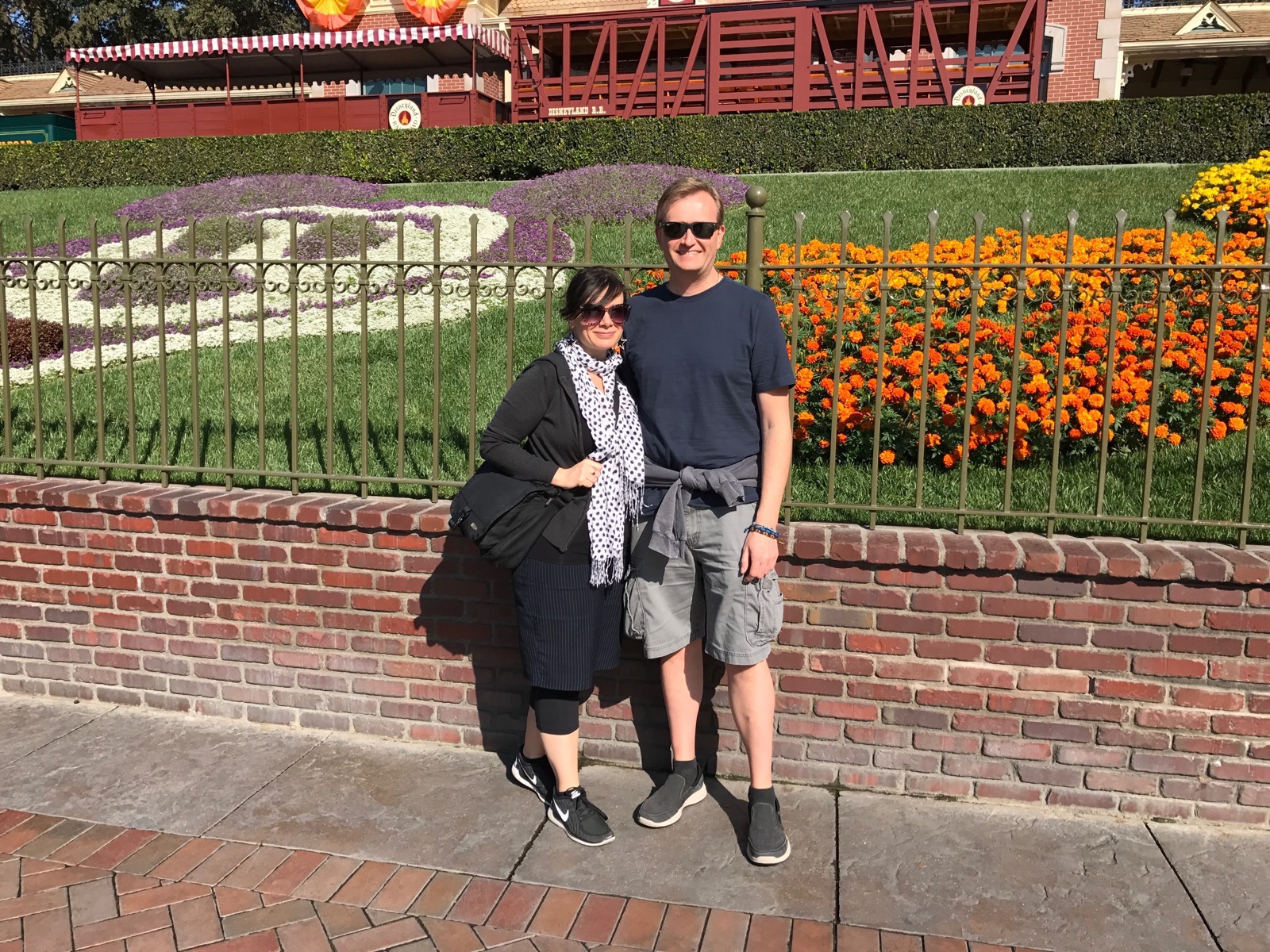
In 2016 Rachelle and I did an experiment where we went to Disneyland every day for 30 days in a row. So we spent a lot of time there, and consequently, our minds now contain detailed mental maps of the park. Whenever I want to, I can picture myself walking around there in my mind’s eye. You can name any two rides there, and I can mentally navigate an efficient route from one to the other, as if I’m seeing all the scenery on a movie screen. And that’s simply because I took lots of action for 12-16 hours a day for a month. As a result of doing this, I can now navigate that space with greater ease than ever before.

Now I could have done a bunch of research online first, and I could have made written plans for what I was going to do. But I don’t think any of that would have given me as much clarity as just diving in and taking action day after day. The mental maps I gained through action and experience are more useful and accurate than those I acquired through learning from others.

I experienced something similar when I got into public speaking. I read many books on speaking. I attended workshops. I had conversations with professional speakers. All of that helped to some degree. But nothing moved the needle forward nearly as much as just diving in and doing a lot of speaking.

My friend Darren LaCroix, who’s the 2001 World Champion of Public Speaking, likes to say that there are three steps to getting good at speaking: stage time, stage time, and stage time. He gained skill through direct action, and he had a mentor that encouraged him to never turn down stage time. Darren was taught to always say yes to stage time, even if he had to drive hours to participate in an open mic night for a few minutes. That’s some dedication!

When Darren began building his comedy and speaking skills, by his own admission he was atrocious. Less than a decade later, he was a world champion. That’s a nice success story, but it’s also a clarity story. Darren created refined mental models of his area of expertise by speaking a lot, by doing stand-up comedy, and by traveling around the world for stage time, stage time, and more stage time. Darren is also one of the more focused people I know in terms of his goals, projects, and actions. His clarity largely comes from direct experience.

If you try to minimize how much action you take, thinking that you’re trying to be more efficient, that’s understandable. It seems logical at first. But it’s generally a mistake because you won’t map the possibility space as well if you resist taking action.

A common reason people resist action is that they have limiting beliefs about the exploration phase. They think it’s risky. They don’t want to fail. They don’t want to waste time doing things that don’t yield immediate results. And again, that’s very understandable.

But if you’re too focused on getting an immediate result, you’re surely going to struggle with clarity because you won’t develop a deep enough understanding of the possibility space around you. You won’t have a good map of the territory that you’re in.

During his championship speech, which was called “Ouch,” Darren purposefully fell down on stage to demonstrate the value of failure and how it’s all part of the learning process. It’s is also part of the mapping process.

Now if you’re in a situation where you can’t afford to map the space first, like if you’re going to Disneyland only once in your life for a single visit, and that’s it, then what’s the best way to have a good visit that packs in a lot of value? Well, you could muddle through on your own, but perhaps the best way would be to have someone with superior experience show you around and be your tour guide for the day. You’ll probably get at least 50% more value out of the experience if you can enlist the assistance of someone with a well-developed mental map.

You do something similar whenever you pay for expertise. You pay for access to the mental maps of an experienced doctor, dentist, lawyer, accountant, and so on. Realize that you’re often paying for clarity when you do this, and the way you purchase clarity is by paying for access to superior mental maps. Let that be a hint that experience gained through direct action can be an equally effective avenue for building clarity yourself.

In some spaces you can do both. When I learned public speaking, I did a lot of speaking to map the possibility space through action. I also learned from mentors like Darren with vastly more experience. That’s a quick way to learn new skills and also to gain clarity.

But between these two choices, I still think your best bet is to favor learning through direct action when you can. Put in the time to map the space. As you build a stronger mental model for the space you’re in, you’ll naturally experience an increase in clarity.

When I get an opportunity for more stage time, I still hear Darren’s “stage time, stage time, stage time” mantra echoing in the back of my mind, which nudges me to say yes most of the time. I know that more stage time will further refine my mental maps. That’s one reason I accepted an invitation to perform the emcee role at an event last week in Panama. I was already going to the event anyway, but being an emcee isn’t a role I normally do, and that means I’d learn something from it. It was a great experience and upgraded my clarity about public speaking in a way that sticking to the familiar wouldn’t have accomplished.

When you set a goal within a space that you’ve done a good job of mapping, you’ll be able to traverse the space more efficiently because you’ll know the territory. You’ll know how to get from point A to point B, just as if you were walking from one part of Disneyland to another after you’d already spent a month there.

But if you stubbornly refuse to map the space you’re in, well… good luck with that approach. I think you’re always going to suffer from a lower level of clarity and more confusion when you do that.

Ultimately this boils down to some pretty simple lessons: Explore the world around you. Explore the field you’re in. Explore the possibility space. And if you don’t know what to explore, then pick anything because any exploration will improve your mental models more than no exploration. Be willing to fall on your face now and then as well; that’s also part of the exploration process.

Share Button