Home Alone: 21 Behind-The-Scenes Facts You Probably Never Knew

Somewhat incredibly, it is now 32 years since the release of one of the most beloved Christmas films of all time – Home Alone.

Starring Macaulay Culkin, it might not have been an immediate critical success, but the slapstick festive comedy stormed the box office, spawned various spin-off films and a recent TV series, and still holds a special place in the hearts of millions across the globe.

However, no matter how many times you’ve seen it in the ensuing years, there’s plenty we bet you still don’t know about it, so have these 21 behind-the-scenes secrets from the set, ya filthy animal…

1. Home Alone was written in just over a week

Screenwriter John Hughes knocked out the first draft of the script in just nine days after a family holiday to Europe.

He was inspired by his own worries whilst traveling, telling Time magazine in 1990: “I was going away on vacation and making a list of everything I didn’t want to forget. I thought, ‘Well, I’d better not forget my kids.’ Then I thought, ‘What if I left my 10-year-old son at home? What would he do?’”

2. But it took much longer to find the right Home Alone house

The Home Alone house

Nam Y Huh/AP/Shutterstock

Director Chris Columbus said the team “drove around for several weeks” in the Wilmette, Winnetka, Glencoe, Lake Forest areas of North Shore.

Eventually, the right house was found in 671 Lincoln Avenue in Winnetka, Illinois, which funnily enough had previously been scouted as a potential location for 1989’s Uncle Buck, but was never used.

The house itself – which was sold for $1.585 million in 2012 – has since become a major tourist attraction.

3. Some interior scenes were filmed in the real house, while others were shot on sets

The hallway and staircase were all real, while the kitchen and dining room and other first-floor rooms were built and shot in a studio. The attic bedroom was also a real feature.

4. The family who lived in the house remained there during filming

It took about five months to setup, shoot and derig for scenes in the house, during which time the then-owners, the Abendshien family, continued living there, despite having access to an apartment that had been paid for as part of the deal.

Cynthia Abendshien explained to Chicago Magazine that the location manager had told them “that, under the contract, if they needed to knock down a wall when we weren’t home, they could do it. So she told us it was best if we remained on the premises”.

John Abendshien added: “In that house, there’s a master bedroom suite with four rooms. Basically, we just moved into that. We put a hot plate up there to cook. We didn’t have to cook that much, because we had full access to the food truck that the crew used.”

5. Kevin’s treehouse was specially built in the house’s garden for the film

The owners reportedly turned down a chance to keep Kevin’s treehouse in the backyard once filming was over.

6. The flooded basement scene was filmed in a school swimming pool

The production made use of the pool at New Trier Township High School in Winnetka, Illinois, to film the scene where Kevin runs through a flooded basement, director Chris Columbus told Entertainment Weekly.

The school’s basketball hall was also used to construct the plane set, on which the Macallister family were seen traveling to Paris, while the kitchen set was also built on site there, too.

Scenes for Ferris Bueller’s Day Off and Uncle Buck had previously been shot in the same school.

7. The Macallister family never actually made it to Paris
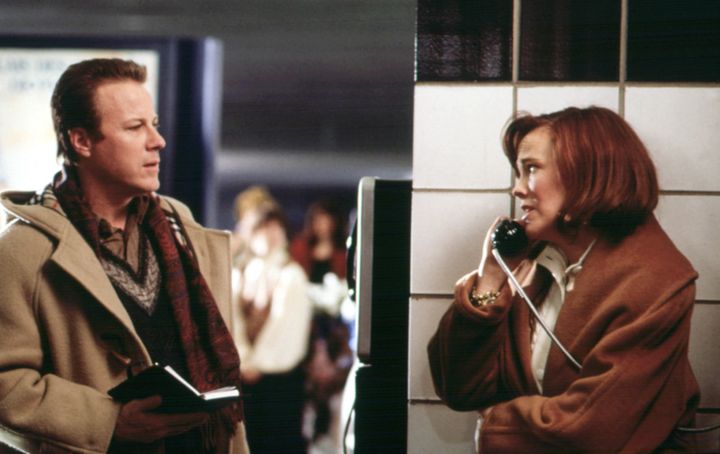
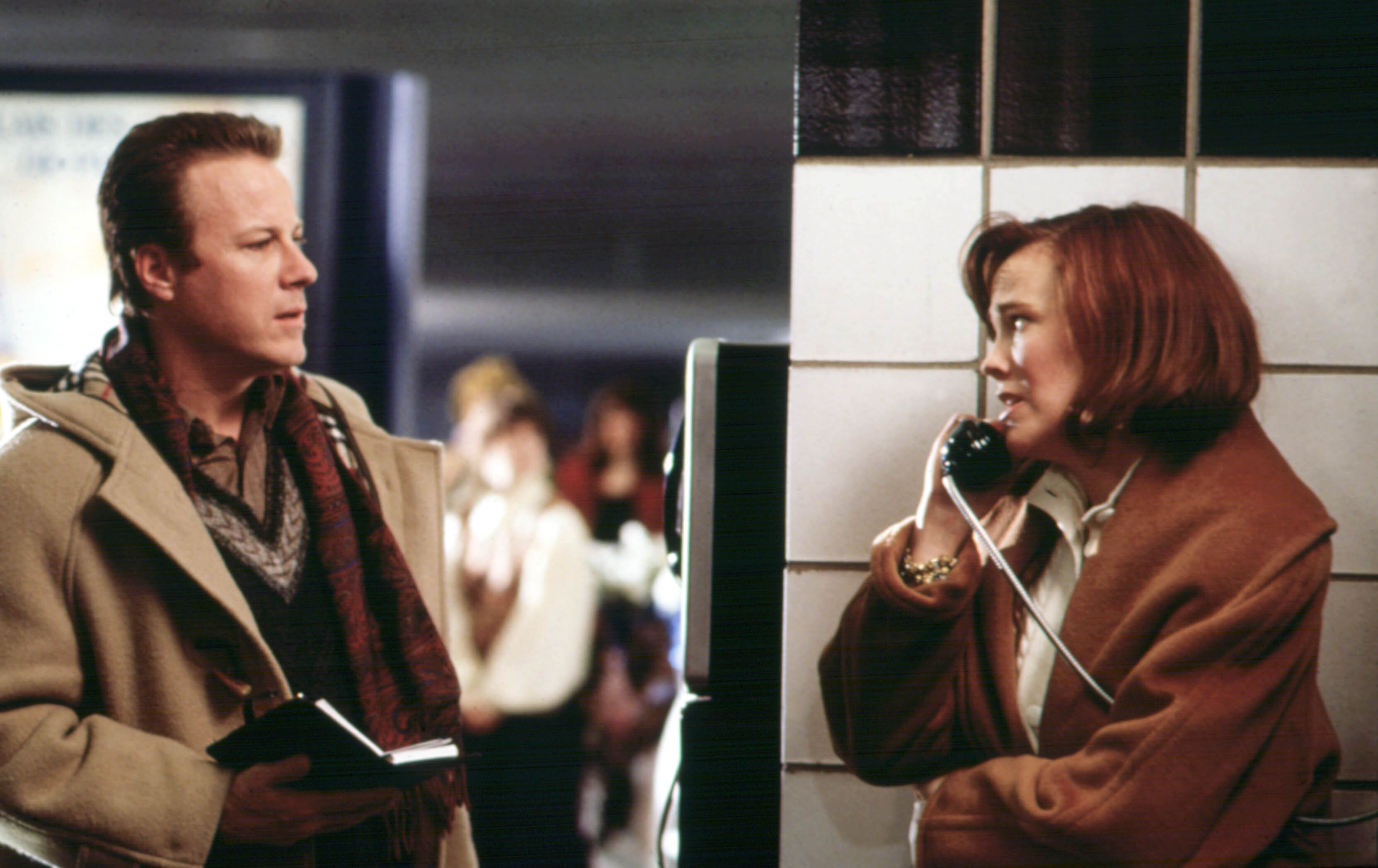
John Heard and Catherine O'Hara in Home Alone
John Heard and Catherine O’Hara in Home Alone

Moviestore/Shutterstock

While the plot of the film sees the Macallister family leaving Kevin behind as they head to Paris for Christmas, all scenes were shot in the US.

Scenes where the family are seen at Paris Orly Airport were actually shot at O’Hare International Airport.

8. The airport scenes were particularly “nail biting” for the director

“We had to move fast. We only had two or three takes of the entire family running down the terminal,” Chris told Chicago Magazine.

9. The adult actors didn’t always act opposite Macaulay Culkin

A lot of the film was shot at night, but due to Macaulay’s age at the time, he wasn’t able to be on set after 10pm.

This meant that Joe Pesci and Daniel Stern – aka Harry and Marv – acted opposite director Chris Columbus standing in as Kevin behind the camera.

“I was Kevin McCallister from about 10 at night to 6 in the morning,” Chris told Entertainment Weekly.

Catherine O’Hara also recalled having to act opposite a tennis ball for some scenes.

She told Chicago Magazine: “We’d shoot a scene with one of the kids; then, as late as one in the morning, we’d shoot my close-ups.

They’d have a tennis ball on a stand, the height of the kid’s head, and the script supervisor would read the children’s lines.”

10. Joe Pesci even did his best not to interact with Macaulay when the cameras weren’t rolling
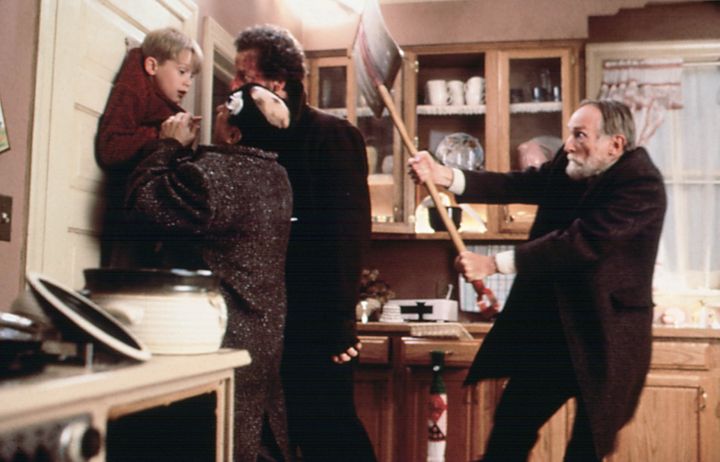
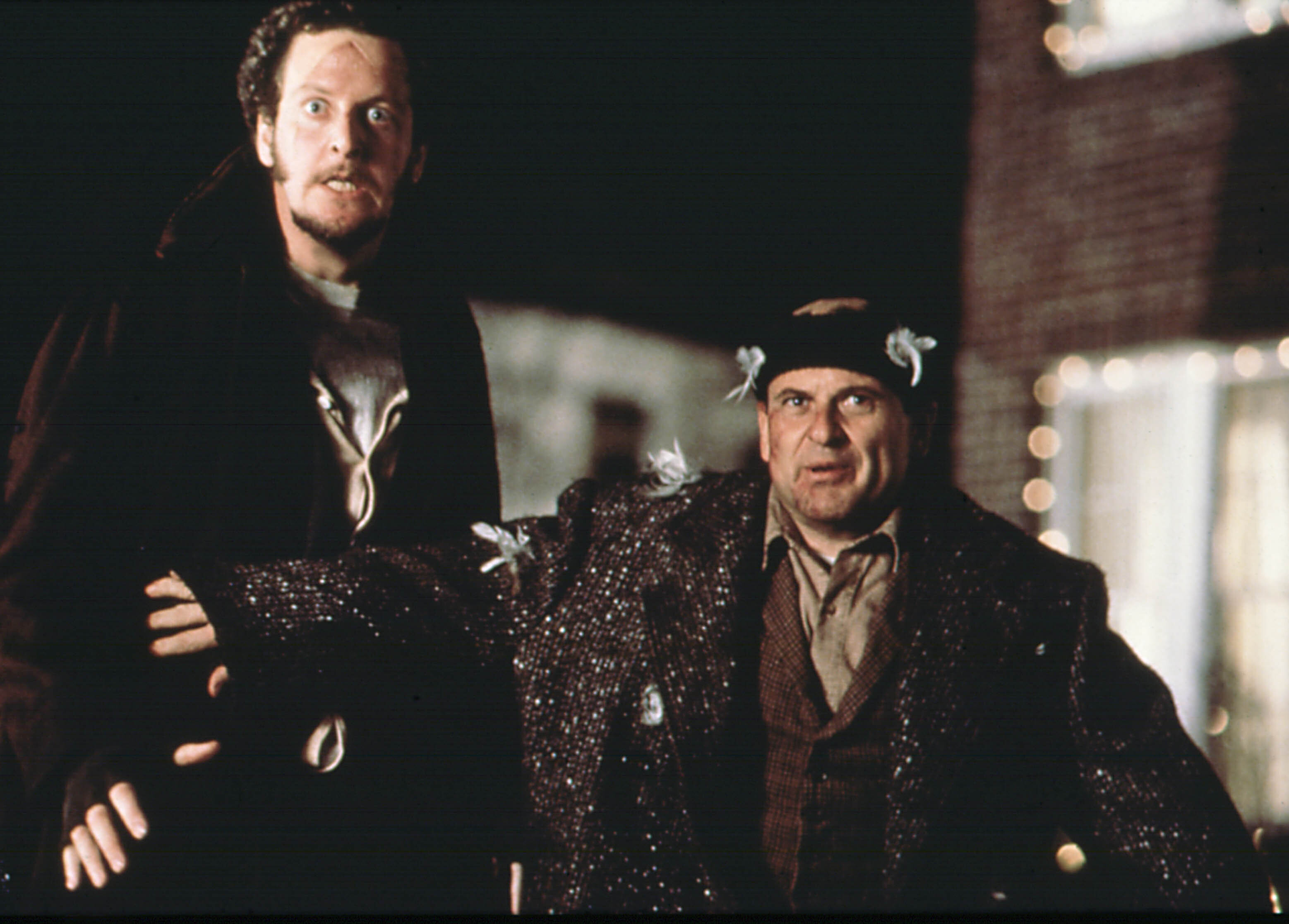
Macaulay Culkin, Joe Pesci, Daniel Stern as Kevin, Harry and Marv

Moviestore/Shutterstock

The actor went quite method in his approach to the character of Harry, as he avoided Macaulay on set so that the child star would be afraid of him.

He told People he “intentionally limited my interactions with him to preserve the dynamic” between the characters.

Joe explained he did not want “it to come across on the screen that we were in any way friendly”.

“I wanted to maintain the integrity of the adversarial relationship,” he added.

11. The film was written with Macaulay in mind to play Kevin

Screenwriter John Hughes imagined Macaulay in the leading role when creating the film due to his performance in 1989’s Uncle Buck, but director Chris Columbus told Entertainment Weekly he still met with “hundreds” of other young actors out of “directorial responsibility” to ensure they had the right person.

In the end, Chris was charmed by Macaualy, who he said was “really funny” and had “a great voice that was not annoying”.

Macaulay Culkin was just 10 years old when he filmed Home Alone

Moviestore/Shutterstock

12. Robert De Niro was considered for the role of Harry

While some outlets have reported the screen legend “turned down’ the chance to appear in the film, Chris told Insider that Robert never seriously considered it.

“It was talked about a little internally, but when [Joe] Pesci said yes, I was stunned,” he said.

It has also been claimed Jon Lovitz was considered for the part.

13. Filming the stunt sequences was not as funny as it looks on screen

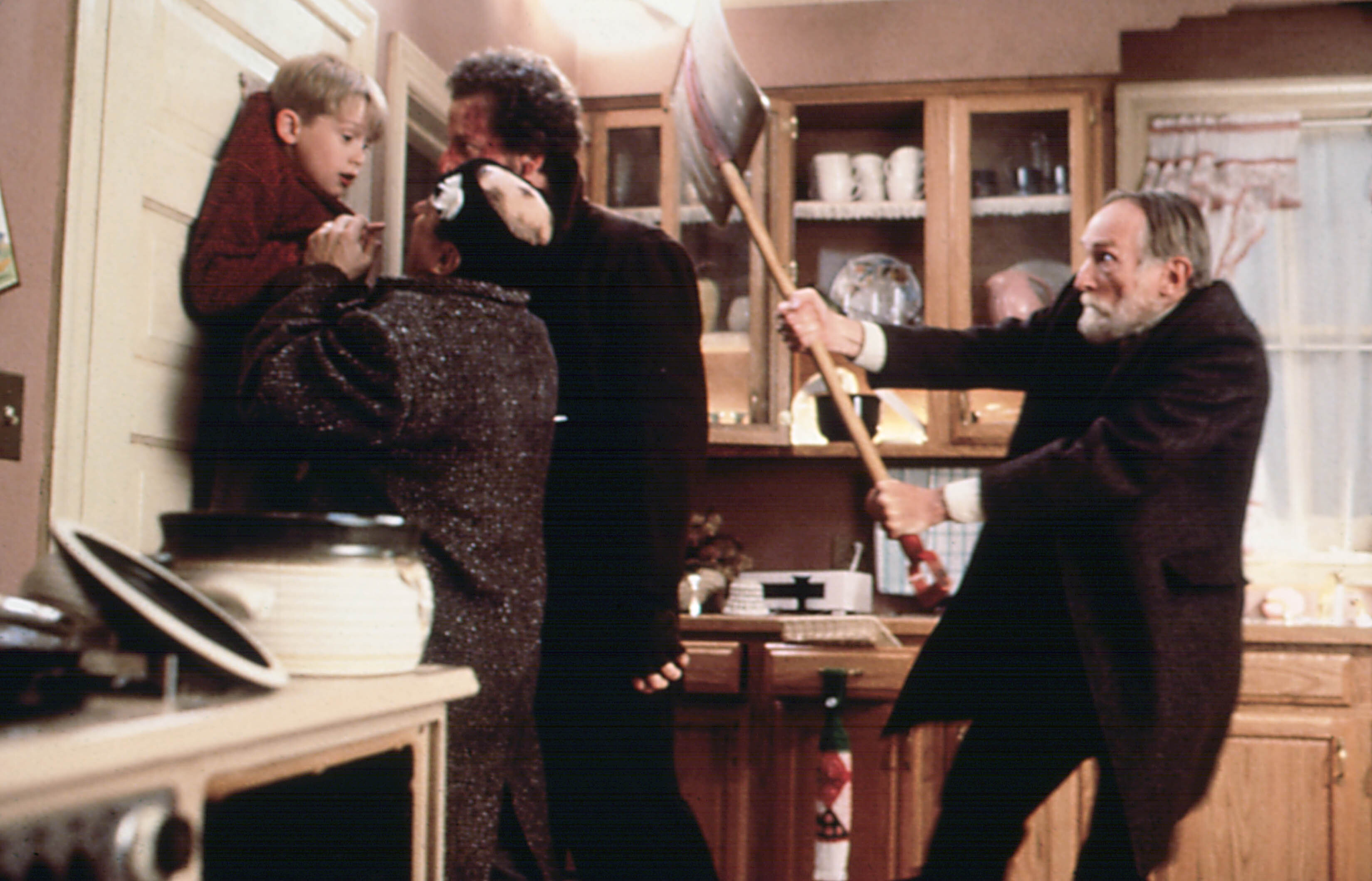
Chris said the team had a constant fear the stunt performers had injured themselves while acting out some of the slapstick sequences.

He told Entertainment Weekly: “I really thought Troy, our stunt man, had broken his back on that first take [of walking up the stairs of the front of the house and doing a back flip]. Until we knew those guys were alive and okay, none of that stuff was funny, so I was surprised once we put the film together how well it actually worked for an audience.”

Stunt doubles stood in for Daniel Stern and Joe Pesci

Moviestore/Shutterstock

14. However, the stunts were not the hardest part of the shoot

Chris said that was actually making the gangster movie Angels With Filthy Souls – the one Kevin plays in the film and uses to scare off Harry and Marv – which you might not even have realised isn’t a real film.

“It’s not easy to recreate the look and the feel and the sound of those movies,” he told EW. “It was kind of a painstaking task to get it right. And we had to find actors that felt like they lived in that particular time period, as well, which was an interesting thing.”

15. One actor was unhappy with the amount he was paid for the film

John Candy, who was a huge comedy personality in the US when Home Alone came out, made a brief appearance as Gus Polinski, but reportedly received just $414 for a day’s work of shooting.

Director Chris Columbus said there was “certainly a little resentment on John’s part” about the amount he was paid.

He told Insider: “It was a deal between him and John Hughes at the time. I never met John Candy before he came on the movie. I don’t know if John ever got any kind of compensation from Fox.”

John Candy in Home Alone

16. When there was a snowstorm early on into filming, the schedule was readjusted to capitalise on it

According to an episode of The Movies That Made Us, a snowstorm happened on the second day on set, so the team quickly seized the moment to shoot the scene where Kevin is reunited with his family on Christmas morning.

The flurries were enhanced with potato flakes to make it look like it was snowing more than it was at that moment in time.

Kevin was reunited with his mum Kate on Christmas morning

Moviestore/Shutterstock

17. They had to bring in snow machines for the rest of the film, which proved expensive

After the snow storm, the team had to bring in snow machines to match it for the rest of the movie. However, associate producer Mark Radcliffe told Chicago magazine that whenever the snow melted, “we were spraying ice, and then they had problems with ice. The next thing, they were literally laying bags of ice to try and create snow.”

18. This caused some problems for the location team

James Giovannetti Jr, second assistant director, added: “We had refrigerated semitrucks of shaved ice coming to the set. There must’ve been about 15 guys dumping tons of ice in the yard every day. We may have even got water in the house, because when it started melting, it started seeping into the basement.”

19. Some of the film was improvised – including one iconic moment

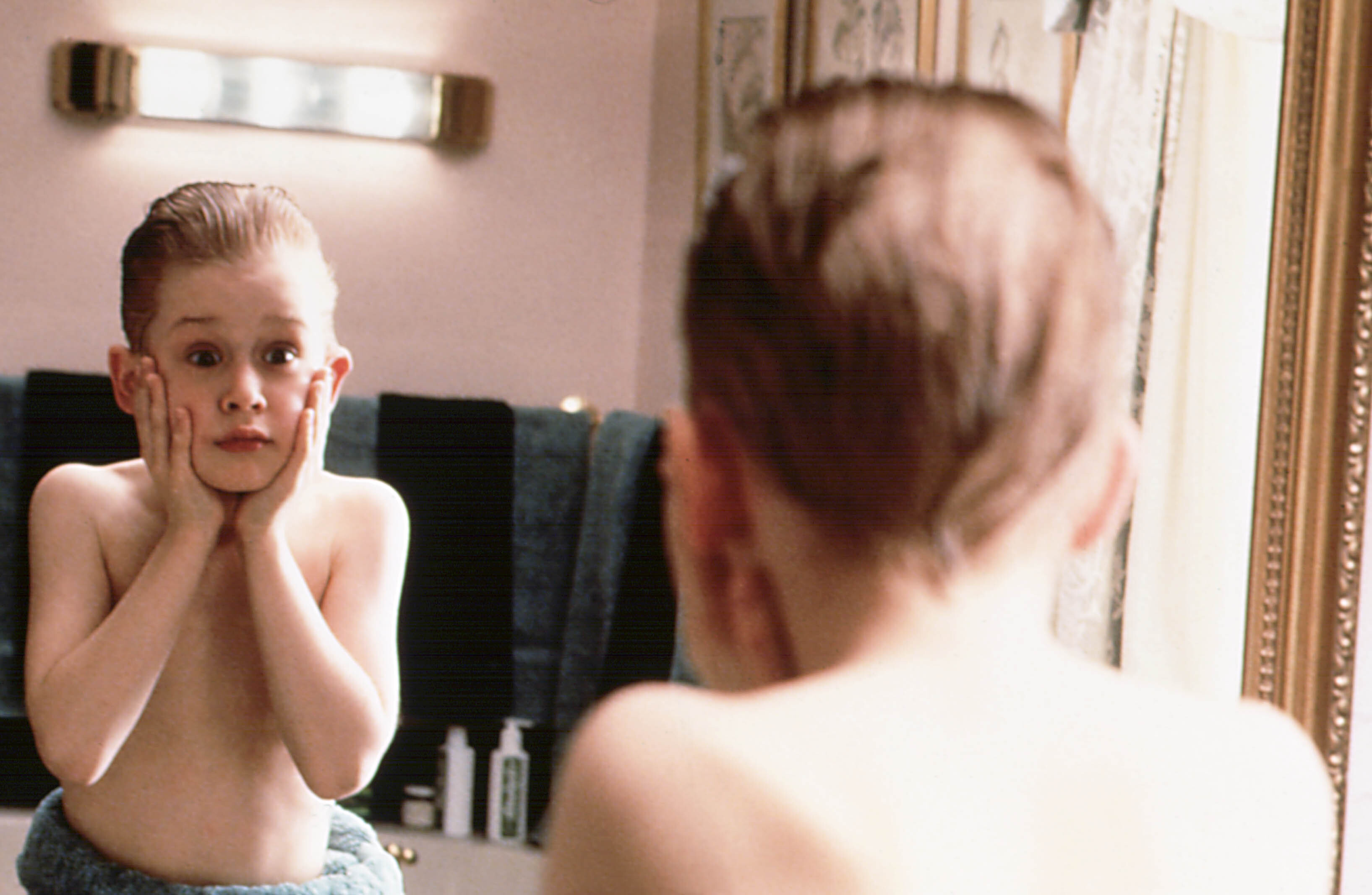
Kevin’s reaction after putting on the aftershave gave the film an instantly iconic moment that has been used on promotional material ever since.

However, Macaulay didn’t act the moment out as originally intended by the director.

The famous Home Alone scream was never intended to turn out the way it did

Moviestore/Shutterstock

Chris Columbus told Insider: “If you put something on your face that burns, most people move their hands right away. So my direction to him was when you pat your face, move your hands and scream. And I think it was the first take, he kept his hands on his cheeks.

“It’s funny, the iconic moment from Home Alone was an accident.”

John Candy, who played Gus Polinski, also loved to improvise and Chris said he took his cameo appearance “and ran” with the scenes.

He told Entertainment Weekly: “We’d do a couple scripted takes and then we would improvise about four or five other takes, and a lot of the improvisation ended up in the film.”

Such examples included the moment where Gus is seen talking to Kate about being left in the funeral home alone with the corpse all night.

20. The tarantula on Marv’s face was actually real

Actor Daniel Stern recalled how the crew initially told him they had a rubber tarantula that they could use, but they also had a real one that “was real nice and showed it walking across the trainer’s arm”.

He asked if the crew could remove the spider’s “stinger,” to which he was told it would die.

“And I said yeah, but if you don’t take it out, I’ll die,’” he recalled to The Hollywood Reporter. “But everyone seemed cool with it, so I just had them put the friggin‘ tarantula on my face.”

The spider used in this scene was real

21. However, his scream wasn’t dubbed, as many people believe

Many reports over the years have claimed Daniel was asked to mime the scream that Marv lets out upon seeing the spider so as to not scare the creature, with it then later dubbed into the film in the edit.

However, Daniel revealed that actually wasn’t the case, as he did the scream there and then, take after take.

“I asked if that would spook the spider, but I guess tarantulas can’t hear,” he told The Hollywood Reporter. “Again, I was committed fully to that movie … I wanted to hit a home run in every scene.”

The complete Home Alone collection is available to stream on Disney+. HuffPost may receive a share from purchases made via links on this page.


Share Button

Will Rishi Sunak Perform Yet Another U-Turn To End The Nurses’ Strike?

Rishi Sunak this week stopped being Britain’s shortest-serving prime minister.

After managing to survive 50 days in Number 10, he has surpassed Liz Truss’s ill-starred tenure as PM.

But during his brief time in charge, Sunak has managed to earn an unenviable reputation for being willing to completely change his position when the pressure’s on.

We’ve already seen two major U-turns – one on housebuilding targets and the other on onshore wind farms – brought on by the prospect of Tory backbench rebellions.

Now, it seems only a matter of time before he is forced into his biggest about-face yet as he tries to end nurses pay dispute which saw members of the Royal College of Nursing walk out on Thursday. A further 24-strike is due next week.

So far, ministers have stuck to the same line on nurses’ pay as they have on other public sector workers taking part in the growing winter of discontent – that the government has accepted the recommendations of the various pay review bodies and won’t be re-visiting the matter.

But with trade unions unwilling to accept the real-terms pay cuts on offer, the pressure is building on the PM – not least from senior Tories – to relent.

Former Conservative chairman Jake Berry – a man with an axe to grind after being sacked by Sunak – spoke for many of his colleagues when he said the current offer on the table to nurses was “too low” and that compromise was needed.

“There is no do-nothing option except continued strikes,” he said yesterday.

“And I just think the cancellation of probably literally hundreds of thousands of non-urgent appointments has huge repercussions for an already-overstretched health service.

“That’s why I think it’s reasonable to say in this regard, it is time for pragmatism and talking between the government and the unions. I don’t see why that is controversial.

“Machismo and sort of chest beating and ‘we’ll take the unions on’ doesn’t work. You only get these things sorted out by talking.”

Dr Dan Poulter – a GP – and former cabinet minister Robert Buckland are also among a growing band of Tory MPs who believe compromise is urgently needed to bring an end to the dispute.

Public support for the nurses’ fight remains strong, meaning the political damage for the government grows whenever they take to the picket line.

Staff Nurse Courtney Watson joins members of the Royal College of Nursing (RCN) on the picket line outside Mater Infirmorum Hospital in Belfast as nurses in England, Wales and Northern Ireland take industrial action over pay. Picture date: Thursday December 15, 2022.

Liam McBurney via PA Wire/PA Images

A veteran Tory MP told HuffPost UK: “I’ve been around long enough to know that there will invariably be a compromise found.”

Labour can hardly believe their luck. A party source told HuffPost UK: “I just don’t understand what they are thinking – do they think ‘crush the nurses’ is a viable strategy for the country or a good look? He’s just going to end up looking weak again.

“It’s notable that the Tories who think strategically can see a mile off this isn’t going to work.

“It’s absolutely bonkers they didn’t get that strike called off and instead let us use PMQs to frame all the strike action around it. It’s not just that Sunak has no vision – there’s no political strategy either.”

For now, though, the prime minister appears to be digging in.

Speaking in Belfast yesterday, he said: “We want to be fair, reasonable and constructive, that’s why we accepted the recommendations of an independent pay body about what fair pay would be.”

But there is a growing sense in Westminster that a government climbdown is inevitable.

And while that may well pave the way for a resolution to the nurses’ dispute, it will be yet another blow to Sunak’s faltering political reputation.

Share Button

Atomic structure of a staphylococcal bacteriophage using cryo-electron microscopy

Cryo-electron microscopy by University of Alabama at Birmingham researchers has exposed the structure of a bacterial virus with unprecedented detail. This is the first structure of a virus able to infect Staphylococcus epidermidis, and high-resolution knowledge of structure is a key link between viral biology and potential therapeutic use of the virus to quell bacterial infections.

Bacteriophages or “phages” is the terms used for viruses that infect bacteria. The UAB researchers, led by Terje Dokland, Ph.D., in collaboration with Asma Hatoum-Aslan, Ph.D., at the University of Illinois Urbana-Champaign, have described atomic models for all or part of 11 different structural proteins in phage Andhra. The study is published in Science Advances.

Andhra is a member of the picovirus group. Its host range is limited to S. epidermidis. This skin bacterium is mostly benign but also is a leading cause of infections of indwelling medical devices. “Picoviruses are rarely found in phage collections and remain understudied and underused for therapeutic applications,” said Hatoum-Aslan, a phage biologist at the University of Illinois.

With emergence of antibiotic resistance in S. epidermidis and the related pathogen Staphylococcus aureus, researchers have renewed interest in potentially using bacteriophages to treat bacterial infections. Picoviruses always kill the cells they infect, after binding to the bacterial cell wall, enzymatically breaking through that wall, penetrating the cell membrane and injecting viral DNA into the cell. They also have other traits that make them attractive candidates for therapeutic use, including a small genome and an inability to transfer bacterial genes between bacteria.

Knowledge of protein structure in Andhra and understanding of how those structures allow the virus to infect a bacterium will make it possible to produce custom-made phages tailored to a specific purpose, using genetic manipulation.

“The structural basis for host specificity between phages that infect S. aureus and S. epidermidis is still poorly understood,” said Dokland, a professor of microbiology at UAB and director of the UAB Cryo-Electron Microscopy Core. “With the present study, we have gained a better understanding of the structures and functions of the Andhra gene products and the determinants of host specificity, paving the way for a more rational design of custom phages for therapeutic applications. Our findings elucidate critical features for virion assembly, host recognition and penetration.”

Staphylococcal phages typically have a narrow range of bacteria they can infect, depending on the variable polymers of wall teichoic acid on the surface of different bacterial strains. “This narrow host range is a double-edged sword: On one hand, it allows the phages to target only the specific pathogen causing the disease; on the other hand, it means that the phage may need to be tailored to the patient in each specific case,” Dokland said.

The general structure of Andhra is a 20-faced, roundish icosahedral capsid head that contains the viral genome. The capsid is attached to a short tail. The tail is largely responsible for binding to S. epidermidis and enzymatically breaking the cell wall. The viral DNA is injected into the bacterium through the tail. Segments of the tail include the portal from the capsid to the tail, and the stem, appendages, knob and tail tip.

The 11 different proteins that make up each virus particle are found in multiple copies that assemble together. For instance, the capsid is made of 235 copies each of two proteins, and the other nine virion proteins have copy numbers from two to 72. In total, the virion is made up of 645 protein pieces that include two copies of a 12th protein, whose structure was predicted using the protein structure prediction program AlphaFold.

The atomic models described by Dokland, Hatoum-Aslan, and co-first authors N’Toia C. Hawkins, Ph.D., and James L. Kizziah, Ph.D., UAB Department of Microbiology, show the structures for each protein — as described in molecular language like alpha-helix, beta-helix, beta-strand, beta-barrel or beta-prism. The researchers have described how each protein binds to other copies of that same protein type, such as to make up the hexameric and pentameric faces of the capsid, as well as how each protein interacts with adjacent different protein types.

Electron microscopes use a beam of accelerated electrons to illuminate an object, providing much higher resolution than a light microscope. Cryo-electron microscopy adds the element of super-cold temperatures, making it particularly useful for near-atomic structure resolution of larger proteins, membrane proteins or lipid-containing samples like membrane-bound receptors, and complexes of several biomolecules together.

In the past eight years, new electron detectors have created a tremendous jump in resolution for cryo-electron microscopy over normal electron microscopy. Key elements of this so-called “resolution revolution” for cryo-electron microscopy are:

  • Flash-freezing aqueous samples in liquid ethane cooled to below -256 degrees F. Instead of ice crystals that disrupt samples and scatter the electron beam, the water freezes to a window-like “vitreous ice.”
  • The sample is kept at super-cold temperatures in the microscope, and a low dose of electrons is used to avoid damage to the proteins.
  • Extremely fast direct electron detectors are able to count individual atoms at hundreds of frames per second, allowing sample movement to be corrected on the fly.
  • Advanced computing merges thousands of images to generate three-dimensional structures at high resolution. Graphics processing units are used to churn through terabytes of data.
  • The microscope stage that holds the sample can also be tilted as images are taken, allowing construction of a three-dimensional tomographic image, similar to a CT scan at the hospital.

The analysis of Andhra virion structure by the UAB researchers started with 230,714 particle images. Molecular reconstruction of the capsid, tail, distal tail and tail tip started with 186,542, 159,489, 159,489 and 159,489 images, respectively. Resolution ranged from 3.50 to 4.90 angstroms.

Share Button

Using machine learning to better understand how water behaves

Water has puzzled scientists for decades. For the last 30 years or so, they have theorized that when cooled down to a very low temperature like -100C, water might be able to separate into two liquid phases of different densities. Like oil and water, these phases don’t mix and may help explain some of water’s other strange behavior, like how it becomes less dense as it cools.

It’s almost impossible to study this phenomenon in a lab, though, because water crystallizes into ice so quickly at such low temperatures. Now, new research from the Georgia Institute of Technology uses machine learning models to better understand water’s phase changes, opening more avenues for a better theoretical understanding of various substances. With this technique, the researchers found strong computational evidence in support of water’s liquid-liquid transition that can be applied to real-world systems that use water to operate.

“We are doing this with very detailed quantum chemistry calculations that are trying to be as close as possible to the real physics and physical chemistry of water,” said Thomas Gartner, an assistant professor in the School of Chemical and Biomolecular Engineering at Georgia Tech. “This is the first time anyone has been able to study this transition with this level of accuracy.”

The research was presented in the paper, “Liquid-Liquid Transition in Water From First Principles,” in the journal Physical Review Letters, with co-authors from Princeton University.

Simulating Water

To better understand how water interacts, the researchers ran molecular simulations on supercomputers, which Gartner compared to a virtual microscope.

“If you had an infinitely powerful microscope, you could zoom in all the way down to the level of the individual molecules and watch them move and interact in real time,” he said. “This is what we’re doing by creating almost a computational movie.”

The researchers analyzed how the molecules move and characterized the liquid structure at different water temperatures and pressures, mimicking the phase separation between the high and low-density liquids. They collected extensive data — running some simulations for up to a year — and continued to fine-tune their algorithms for more accurate results.

Even a decade ago, running such long and detailed simulations wouldn’t have been possible, but machine learning today offered a shortcut. The researchers used a machine learning algorithm that calculated the energy of how water molecules interact with each other. This model performed the calculation significantly faster than traditional techniques, allowing the simulations to progress much more efficiently.

Machine learning isn’t perfect, so these long simulations also improved the accuracy of the predictions. The researchers were careful to test their predictions with different types of simulation algorithms. If multiple simulations gave similar results, then it validated their accuracy.

“One of the challenges with this work is that there’s not a lot of data that we can compare to because it’s a problem that’s almost impossible to study experimentally,” Gartner said. “We’re really pushing the boundaries here, so that’s another reason why it’s so important that we try to do this using multiple different computational techniques.”

Beyond Water

Some of the conditions the researchers tested were extremes that probably don’t exist on Earth directly, but potentially could be present in various water environments of the solar system, from the oceans of Europa to water in the center of comets. Yet these findings could also help researchers better explain and predict water’s strange and complex physical chemistry, informing water’s use in industrial processes, developing better climate models, and more.

The work is even more generalizable, according to Gartner. Water is a well-studied research area, but this methodology could be expanded to other difficult-to-simulate materials like polymers, or complex phenomena like chemical reactions.

“Water is so central to life and industry, so this particular question of whether water can undergo this phase transition has been a longstanding problem, and if we can move toward an answer, that’s important,” he said. “But now we have this really powerful new computational technique, but we don’t yet know what the boundaries are and there’s a lot of room to move the field forward.”

Share Button

Hospitals told to free up beds for ambulance strike

Health bosses warn of “extensive disruption” as staff are set to walk out on December 21 and 28.

Share Button

Study examines bacteria living in and on mosquitoes

Avoiding mosquitoes to protect against bites is always a good idea. But a new North Carolina State University study shows that the bacteria-ridden exteriors of mosquitoes may be another reason to arm yourself with a swatter.

The first-of-its-kind study, published in PLOS ONE, examined both the exterior surface and interior microbiome of mosquitoes found in homes in Africa’s Cote d’Ivoire — the Ivory Coast.

“When you’re exposed to mosquitoes, you worry about blood feeding,” said R. Michael Roe, William Neal Reynolds Distinguished Professor of Entomology at NC State and co-corresponding author of the study. “Our hypothesis is that mosquitoes can physically transfer bacteria by landing on you or by defecating on household surfaces, like flies do.

“They may not, but no one has studied it before.”

Research collaborators at the Centre Suisse de Recherches Scientifiques collected 79 adult female Anopheles coluzzii mosquitoes from homes in a rice-producing province in Cote d’Ivoire. The mosquitoes were sent to NC State for analysis of the microbiome inside and on external body surfaces.

Some of the findings were surprising.

“We found greater bacterial diversity internally than externally, which didn’t match what has been found with blow flies, for example,” said Loganathan Ponnusamy, an NC State principal research scholar in entomology and co-corresponding author of the paper.

“At the same time, we found lots of external bacterial differences between homes, but not much difference internally between homes, which makes sense. Much of what is found internally relates to nectar or honey consumed as mosquitoes forage outdoors.”

The researchers also found — for the first time in the academic literature — fructobacillus, which is generally found in nectar sources like flowers and beehives, pointing to mosquitoes visiting those plants or nectar sources, said Kaiying Chen, an NC State postdoctoral researcher and first author of the paper.

Perhaps more ominously, the researchers also found large amounts of Staphylococcus and two variants of Rickettsia. The genus of these bacteria are associated with human and animal diseases.

“This is another risk,” Roe said. “Mosquitoes carry bacteria externally and internally and come into your home, possibly transferring pathogenic bacteria.”

The researchers hope to continue the work by exposing mosquitoes to a bacteria that would never be found on human skin and seeing whether the bacteria transfers to an artificial membrane. They then could perform the same test on human arms.

NC State Ph.D. researchers Chouaïbou S. Mouhamadou and Jean M. Deguenon co-authored the paper, as did Behi Kouadio Fodjo, Gba Christabelle Sadia and France Paraudie Kouadio Affoue from the Centre Suisse de Recherches Scientifiques, Abidjan, Cote d’Ivoire, Africa. Funding was provided by a grant from the Department of the Army under a Deployed Warfighter Protection (DWFP) Program Grant W911QY1910003.

Story Source:

Materials provided by North Carolina State University. Original written by Mick Kulikowski. Note: Content may be edited for style and length.

Share Button

Rishi Sunak says nurses’ pay offer appropriate and fair

The prime minister is refusing to bow to pressure from health leaders to increase the offer.

Share Button

Physician, heal thyself?

Following established guidelines about prescription drugs would seem to be an obvious course of action, especially for the professionals that do the prescribing. Yet doctors and their family members are less likely than other people to comply with those guidelines, according to a large-scale study co-authored by an MIT economist.

Depending on your perspective, that result might seem surprising or it might produce a knowing nod. Either way, the result is contrary to past scholarly hypotheses. Many experts have surmised that knowing more, and having easier communication with medical providers, leads patients to follow instructions more closely.

The new study is based on over a decade of population-wide data from Sweden and includes suggestive evidence about why doctors and their families may ignore medical advice. Overall, the research shows that the rest of the population adheres to general medication guidelines 54.4 percent of the time, while doctors and their families lag 3.8 percentage points behind that.

“There’s a lot of concern that people don’t understand guidelines, that they’re too complex to follow, that people don’t trust their doctors,” says Amy Finkelstein, a professor in MIT’s Department of Economics. “If that’s the case, you should see the most adherence when you look at patients who are physicians or their close relatives. We were struck to find that the opposite holds, that physicians and their close relatives are less likely to adhere to their own medication guidelines.”

The paper, “A Taste of Their Own Medicine: Guideline Adherence and Access to Expertise,” is published this month in the American Economic Review: Insights. The authors are Finkelstein, the John and Jennie S. MacDonald Professor of Economics at MIT; Petra Persson, an assistant professor of economics at Stanford University; Maria Polyakova PhD ’14, an assistant professor of health policy at the Stanford University School of Medicine; and Jesse M. Shapiro, the George Gund Professor of Economics and Business Administration at Harvard University.

Millions of data points

To conduct the study, the scholars examined Swedish administrative data from 2005 through 2016, as applied to 63 prescription drug guidelines. The data enabled the researchers to determine who is a doctor; the study largely defined close relatives as partners, parents, and children. All told, the research involved 5,887,471 people to whom at least one of the medication guidelines applied. Of these people, 149,399 were doctors or their close family members.

Using information on prescription drug purchases, hospital visits, and diagnoses, the researchers could see if people were adhering to medication guidelines by examining whether prescription drug decisions matched these patients’ medical circumstances. In the study, six guidelines pertained to antibiotics; 20 involved medication use by the elderly; 20 focused on medication attached to particular diagnoses; and 17 were about prescription drug use during pregnancy.

Some guidelines recommended use of a particular prescription drug, like a preference of narrow-spectrum antibiotics for an infection; other guidelines were about not taking certain medications, such as the recommendation that pregnant women avoid antidepressants.

Out of the 63 guidelines used in the study, doctors and their families followed the standards less often in 41 cases, with the difference being statistically significant 20 times. Doctors and their families followed the guidelines more often in 22 cases, with the difference being statistically significant only three times.

“What we found, which is quite surprising, is that they [physicians] are on average less adherent to guidelines,” says Polyakova, who received her PhD from MIT’s Department of Economics. “So, in this paper we are also trying to figure out what experts do differently.”

Ruling out other answers

Since doctors and their close relatives adhere to medical guidelines less often than the rest of the population, what exactly explains this phenomenon? While homing in on an answer, the research team examined and rejected several hypotheses.

First, the lower compliance by those with greater access to expertise is unrelated to socioeconomic status. In society overall, there is a link between income and adherence levels, but physicians and their families are an exception to this pattern. As the scholars write in the paper, special “access to doctors is associated with lower adherence despite, rather than because of, the high socioeconomic status” of those families.

Additionally, the researchers did not find any link between existing health status and adherence. They also studied whether a greater comfort with prescription medication — due to being a doctor or related to one — makes people more likely to take prescription drugs than guidelines recommend. This does not appear to be the case. The lower adherence rates for doctors and their relatives were similar in magnitude whether the guidelines pertained to taking medication or, alternately, not taking medication.

“There are a number of first-order alternative explanations that we could rule out,” Polyakova says.

Resolving a medical mystery

Instead, the researchers believe the answer is that doctors possess “superior information about guidelines” for prescription drugs — and then deploy that information for themselves. In the study, the difference in adherence to guidelines between experts and nonexperts is largest in the case of antibiotics: Doctors and their families are 5.2 percentage points less in compliance than everyone else.

Most guidelines in this area recommend starting patients off with “narrow-spectrum” antibiotics, which are more targeted, rather than “broader-spectrum” antibiotics. The latter might be more likely to eradicate an infection, but greater use of them also increases the chances that bacteria will develop resistance to these valuable medications, which can reduce efficacy for other patients. Thus for things like a respiratory tract infection, guidelines call for a more targeted antibiotic first.

The issue, however, is that what is good for the public in the long run — trying more targeted drugs first — may not work well for an individual patient. For this reason, doctors could be more likely to prescribe broader-spectrum antibiotics for themselves and their families.

“From a public-health perspective, what you want to do is kill it [the infection] off with the narrow-spectrum antibiotic,” Finkelstein observes. “But obviously any given patient would want to knock that infection out as quickly as possible.” Therefore, she adds, “You can imagine the reason doctors are less likely to follow the guidelines than other patients is because they … know there’s this wedge between what’s good for them as a patients and what’s good for society.”

Another suggestive piece of data comes from different types of prescription drugs that are typically avoided during pregnancies. For so-called C-Class drugs, where empirical evidence about the dangers of the drugs is slightly weaker, doctors and their families have an adherence rate 2.3 percentage points below other people (meaning, in this case, that they are more likely to take these medications during pregnancy). For so-called D-Class drugs with slightly stronger evidence of side effects, that dropoff is only 1.2 percentage points. Here too, doctors’ expert knowledge may be influencing their actions.

“The results imply that probably what’s going on is that experts have a more nuanced understanding of what is the right course of action for themselves, and how that might be different than what the guidelines suggest,” Polyakova says.

Still, the findings suggest some unresolved tensions in action. It could be, as Polyakova suggests, that guidelines about antibiotics should be more explicit about the public and private tradeoffs involved, providing more transparency for patients. “Maybe it’s better for the guidelines to be transparent and say they recommend this not because it is [always] the best course of action for you, but because it is the best for society,” she says.

Additional research could also aim to identify areas where lower expert adherence with guidelines may be associated with better health outcomes — to see how often doctors have a point, as it were. Or, as the researchers write in the paper, “An important avenue for further research is to identify whether and when nonadherence is in the patient’s best interest.”

The research was supported, in part, by the Population Studies and Training Center and the Eastman Professorship at Brown University, and the National Institute on Aging.

Share Button

Webb Space Telescope reveals previously shrouded newborn stars

Rice University astronomer Megan Reiter and colleagues took a “deep dive” into one of the first images from NASA’s James Webb Space Telescope and were rewarded with the discovery of telltale signs from two dozen previously unseen young stars about 7,500 light years from Earth.

The published research in the December issue of the Monthly Notices of the Royal Astronomical Society offers a glimpse of what astronomers will find with Webb’s near-infrared camera. The instrument is designed to peer through clouds of interstellar dust that have previously blocked astronomers’ view of stellar nurseries, especially those that produce stars similar to Earth’s sun.

Reiter, an assistant professor of physics and astronomy, and co-authors from the California Institute of Technology, the University of Arizona, Queen Mary University in London and the United Kingdom’s Royal Observatory in Edinburgh, Scotland, analyzed a portion of Webb’s first images of the Cosmic Cliffs, a star-forming region in a cluster of stars known as NGC 3324.

“What Webb gives us is a snapshot in time to see just how much star formation is going on in what may be a more typical corner of the universe that we haven’t been able to see before,” said Reiter, who led the study.

Located in the southern constellation Carina, NGC 3324 hosts several well-known regions of star formation that astronomers have studied for decades. Many details from the region have been obscured by dust in images from the Hubble Space Telescope and other observatories. Webb’s infrared camera was built to see through dust in such regions and to detect jets of gas and dust that spew from the poles of very young stars.

Reiter and colleagues focused their attention on a portion of NGC 3324 where only a few young stars had previously been found. By analyzing a specific infrared wavelength, 4.7 microns, they discovered two dozen previously unknown outflows of molecular hydrogen from young stars. The outflows range in size, but many appear to come from protostars that will eventually become low-mass stars like Earth’s sun.

“The findings speak both to how good the telescope is and to how much there is going on in even quiet corners of the universe,” Reiter said.

Within their first 10,000 years, newborn stars gather material from the gas and dust around them. Most young stars eject a fraction of that material back into space via jets that stream out in opposite directions from their poles. Dust and gas pile up in front of the jets, which clear paths through nebular clouds like snowplows. One vital ingredient for baby stars, molecular hydrogen, gets swept up by these jets and is visible in Webb’s infrared images.

“Jets like these are signposts for the most exciting part of the star formation process,” said study co-author Nathan Smith of the University of Arizona. “We only see them during a brief window of time when the protostar is actively accreting.”

The accretion period of early star formation has been especially difficult for astronomers to study because it is fleeting — usually just a few thousand years in the earliest portion of a star’s multimillion-year childhood.

Study co-author Jon Morse of the California Institute of Technology said jets like those discovered in the study “are only visible when you embark on that deep dive — dissecting data from each of the different filters and analyzing each area alone.

“It’s like finding buried treasure,” Morse said.

Reiter said the size of the Webb telescope also played a role in the discovery.

“It’s just a huge light bucket,” Reiter said. “That lets us see smaller things that we might have missed with a smaller telescope. And it also gives us really good angular resolution. So we get a level of sharpness that allows us to see relatively small features, even in faraway regions.”

The Webb Space Telescope program is led by NASA in partnership with the European Space Agency (ESA) and the Canadian Space Agency (CSA). The telescope’s science and mission operations are led by the Space Telescope Science Institute (STScI) in Baltimore.

The research was supported by NASA (NAS 5-0312, NAS 5-26555), STScI and a Dorothy Hodgkin Fellowship from the UK’s Royal Society.

Story Source:

Materials provided by Rice University. Original written by Jade Boyd. Note: Content may be edited for style and length.

Share Button

High School program linked to lower substance use, better health behaviors

New UCLA-led research finds that a college preparatory program for youth experiencing educational inequities that operates in about 13% of U.S public high schools has a positive effect on students’ social networks, psycho-social outcomes, and health behaviors.

The findings, published Dec. 16 in the peer-reviewed journal Pediatrics, suggests that the Advancement via Individual Determination (AVID) program, aimed at increasing educational opportunities for under-represented and economically disadvantaged students, also significantly reduces substance use.

“Academic tracking” is a common practice in high schools through which lower-performing students are clustered with others of similar academic achievement. Although intended to tailor academic rigor to students’ level of preparation, the study findings suggest that this practice may be counterproductive by reinforcing risky behaviors that students pick up from their peers.

“Untracking” these students by mixing them in with higher-performing peers may lead to better physical and psychological health, said lead author Dr. Rebecca Dudovitz, associate professor of pediatrics and director of pediatric health services research at the David Geffen School of Medicine at UCLA.

“This is the first randomized controlled trial of AVID in the United States, so it’s really exciting to see that this program that was designed to help open up educational opportunities for kids, also improved their health,” Dudovitz said.

AVID works with high school students earning B or C grade averages who might not otherwise be placed in more rigorous college preparatory tracks. It operates in 5,400 secondary schools, including both middle and high school, in 46 states and exposes academically middling students to tougher courses than they would have been assigned to under normal circumstances. AVID helps students develop agency, relational capacity, and opportunity knowledge.

“We believe that surrounding students with a supportive community and providing them with the skills and resources they need to reach their goals within existing educational structures is how we make college and career readiness possible for every student,” said Thuan Nguyen, AVID’s CEO. “The findings of the UCLA study are not surprising because AVID educators invest so much in their students’ lives.”

The researchers randomized 270 students in five large public schools who were placed in either an AVID group or in usual school programs. Students completed surveys at the end of 8th grade or beginning of 9th grade, and again at the end of 9th grade.

They found that students in the AVID group had lower odds of using substances — a 33% reduced risk compared to the control group — in addition to a 26% lower risk of associating with substance-using peers and about 1.7 times the odds of socializing with peers who were more involved with academics.

In addition, AVID males experienced lower stress and higher self-efficacy, determination and engagement with school than their peers who were assigned to the usual tracked academic program. These effects, however, were not seen among females, possibly because supportive academic environment have a greater effect on boys of color, the researchers write.

“AVID positively impacts social networks, health behaviors, and psycho-social outcomes suggesting academic untracking may have substantial beneficial spillover effects on adolescent health,” the researchers write.

The study has some limitations. The schools were all from a single school district and primarily serve low-income Latino students, and the findings were all from one school year, the researchers note. They did not directly observe how AVID was implemented or examine if the program actually increased college enrollment. In addition, it was not possible to blind the participants, meaning that students knew who was assigned to each group, which could have led them to respond to survey questions in ways that they thought the researchers would view favorably.

While more research is needed, the findings still provide important evidence that “ensuring schools have the resources and structures necessary to expand access to educational opportunities and facilitate healthy social connections, particularly in marginalized communities, may be key to achieving education and health equity more broadly,” the researchers write.

The Robert Wood Johnson Foundation Evidence for Action Program (Grant 74086) and National Institutes of Health (1K23DA040733-01A1) funded this research.

Study co-authors are Dr. Paul Chung, Kulwant Dosanjh, Meredith Phillips, Christopher Biely, Chi-Hong Tseng, and Dr. Mitchell Wong of UCLA; Joan Tucker of RAND Corporation; Mary Ann Pentz of USC; and Arzie Galvez and Guadalupe Arellano of Los Angeles Unified School District. Chung is also affiliated with Kaiser Permanente.

Share Button