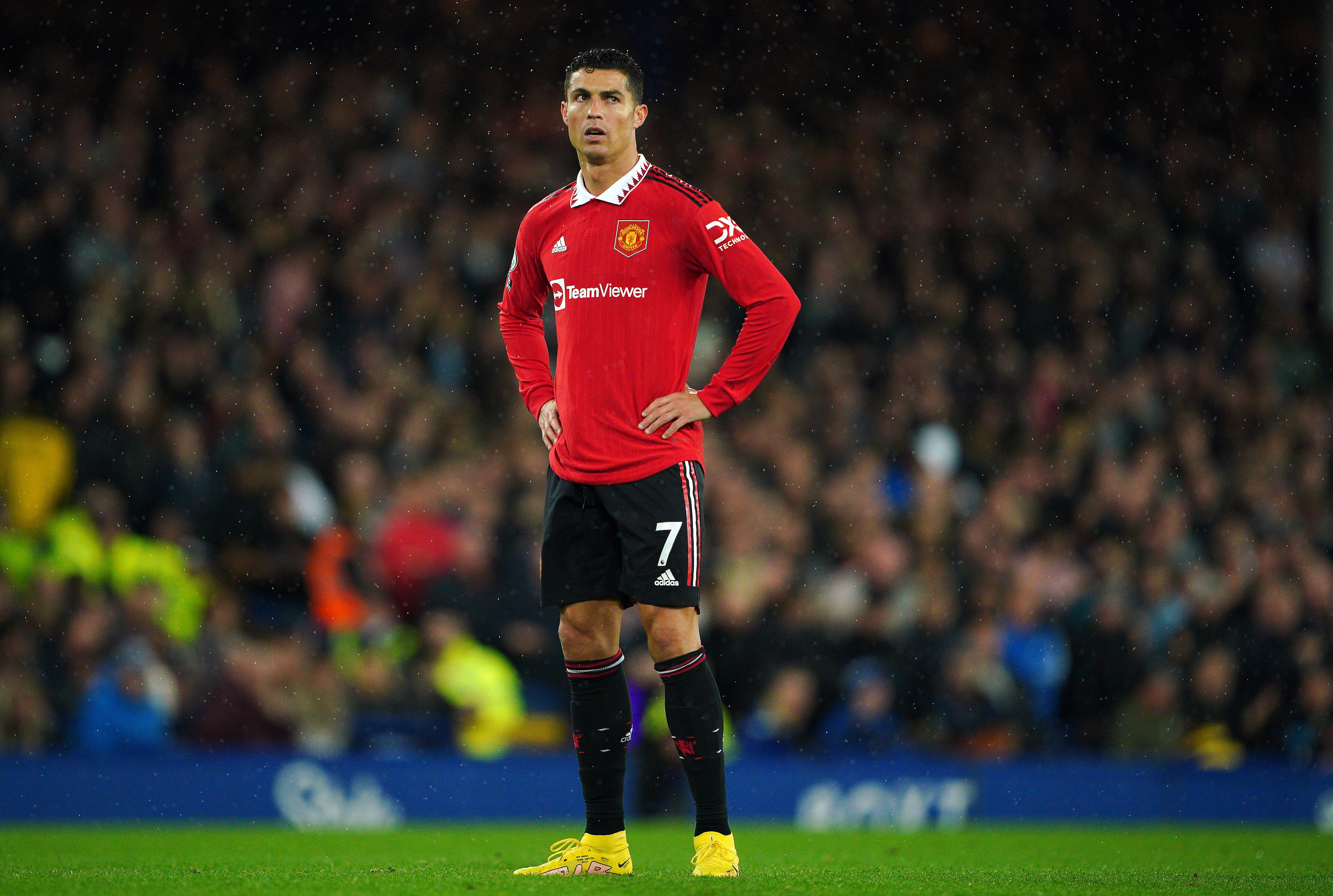
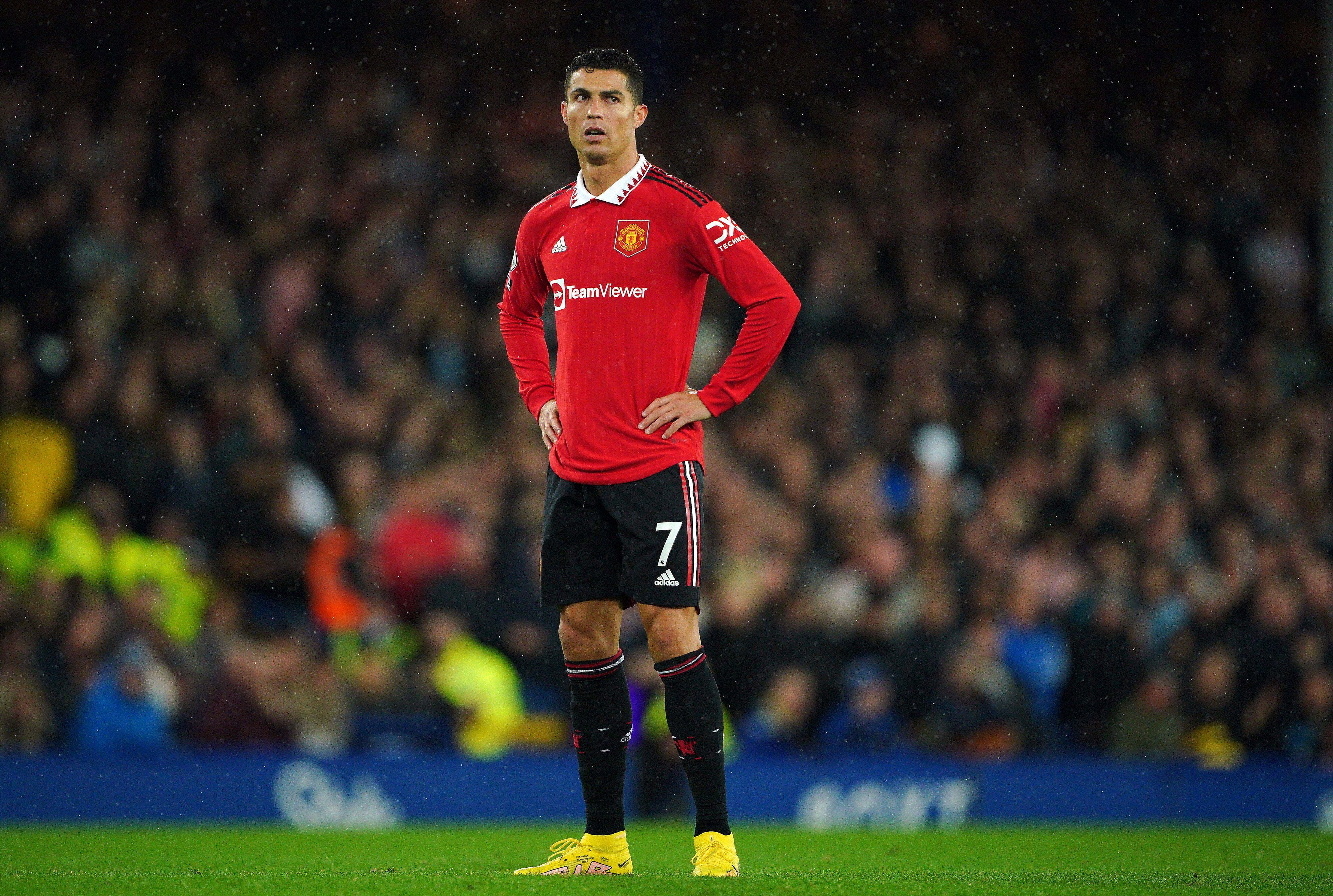
Cristiano Ronaldo: Twitter Reacts To ‘Sad, Avoidable’ Departure From Manchester United

Cristiano Ronaldo’s departure from Manchester United – with immediate effect – sent social media into overdrive as the football superstar threatened to overshadow even the World Cup.

United issued a statement on Tuesday evening announcing they had reached a mutual agreement with the player to terminate his contract.

The development comes a week after Ronaldo unsettled the club in an outspoken TV interview with Piers Morgan, which exacerbated a relationship that was already strained during the early part of the season.

Among his comments in the programme were claims that he felt “betrayed” by United and that he had no respect for new manager Erik Ten Hag.

He also said that he felt people at the club were trying to force him out and that United showed a lack of empathy when his daughter was in hospital ill.

There were also wider complaints about the standard of facilities at the club as well as criticism of the owners.

When United responded by appointing lawyers to consider potential action for alleged breach of contract, it became clear a parting of the ways was likely.

Ronaldo, 37, issued his own statement which read: “Following conversations with Manchester United we have mutually agreed to end our contract early.

“I love Manchester United and I love the fans, that will never ever change. However, it feels like the right time for me to seek a new challenge.

“I wish the team every success for the remainder of the season and for the future.”

The development means Ronaldo is now free to negotiate with other clubs.

Morgan was inevitably one of the first to react …

… cheekily suggesting a move to his beloved Arsenal was now on the cards.

Football journalists offered brief post-mortems

A Manchester United legend and former teammate was philosophical

Was there something of a parting shot?

Some came to praise …

… while others imagined an awkward exit.

And it wasn’t supposed to be the biggest football story of the day.

Share Button

Richard Hammond reveals Top Gear crash coma dream

The presenter has gone viral on TikTok talking about his experience following a high-speed car crash in 2006.

Share Button

Glass-like shells of diatoms help turn light into energy in dim conditions

A new study has revealed how the glass-like shells of diatoms help these microscopic organisms perform photosynthesis in dim conditions. A better understanding of how these phytoplankton harvest and interact with light could lead to improved solar cells, sensing devices and optical components.

“The computational model and toolkit we developed could pave the way toward mass-manufacturable, sustainable optical devices and more efficient light harvesting tools that are based on diatom shells,” said research team member Santiago Bernal from McGill University in Canada. “This could be used for biomimetic devices for sensing, new telecommunications technologies or affordable ways to make clean energy.”

Diatoms are single-celled organisms found in most bodies of water. Their shells are covered in holes that respond to light differently depending on their size, spacing and configuration. In the journal Optical Materials Express, the researchers, led by McGill University’s David V. Plant and Mark Andrews, report the first optical study of an entire diatom shell. They analyzed how different sections of the shell, or frustule, respond to sunlight and how this response is connected to photosynthesis.

“Based on our findings, we estimate that the frustule can contribute a 9.83 percent boost to photosynthesis, especially during transitions from high to low sunlight,” said Yannick D’Mello, first author of the paper. “Our model is the first to explain the optical behavior of the entire frustule. So, it contributes to the hypothesis that the frustule enhances photosynthesis in diatoms.”

Combining microscopy and simulation

Diatoms have evolved for millions of years to survive in any aquatic environment. This includes their shell, which is composed of many regions that work together to harvest sunlight. To study the optical response of diatom frustules, the researchers combined computer optical simulations with several microscopy techniques.

The researchers began by imaging the architecture of the frustule using four high-resolution microscopy techniques: scanning near-field optical microscopy, atomic force microscopy, scanning electron microscopy and dark field microscopy. They then used these images to inform a series of models that the researchers built to analyze each part of the frustule via 3D simulations.

Using these simulations, the researchers examined how different colors of sunlight interacted with the structures and identified three primary solar harvesting mechanisms: capture, redistribution and retention. This approach allowed them to combine the different optical aspects of the frustule and show how they work together to aid photosynthesis.

“We used different simulations and microscopy techniques to examine each component separately,” said D’Mello. “We then used that data to build a study of how light interacts with the structure, from the moment it gets captured, to where it gets distributed after that, how long it is retained, and until the moment it likely gets absorbed by the cell.”

Boosting photosynthesis

The study revealed that the wavelengths with which the shell interacted coincided with those absorbed during photosynthesis, suggesting it could have evolved to help capture sunlight. The researchers also found that different regions of the frustule could redistribute light to be absorbed across the cell. This suggests that the shell evolved to maximize the exposure of the cell to ambient light. Their findings also indicated that the light circulates inside the frustule long enough to aid photosynthesis during periods of transition from high to low illumination.

The new frustule model could make it possible to cultivate diatom species that harvest light at different wavelengths, allowing them to be customized for specific applications. “These light harvesting mechanisms of diatoms could be used to improve the absorption of solar panels by allowing sunlight to be collected at more angles, therefore partially removing the dependency of the panel to directly face the sun,” said Bernal.

The researchers are now working to refine their model and plan to apply their new toolkit to study other species of diatoms. After that, they plan to extend the model beyond the light interactions within a single frustule to examine behaviors between multiple frustules.

This work commemorates Dan Petrescu, who passed away last year. The research would not have been possible without his insights, assistance and dedication.

Story Source:

Materials provided by Optica. Note: Content may be edited for style and length.

Share Button

Researchers eye embroidery as low-cost solution for making wearable electronics

Embroidering power-generating yarns onto fabric allowed researchers to embed a self-powered, numerical touch-pad and movement sensors into clothing. The technique offers a low-cost, scalable potential method for making wearable devices.

“Our technique uses embroidery, which is pretty simple — you can stitch our yarns directly on the fabric,” said the study’s lead author Rong Yin, assistant professor of textile engineering, chemistry and science at North Carolina State University. “During fabric production, you don’t need to consider anything about the wearable devices. You can integrate the power-generating yarns after the clothing item has been made.”

In the study published in Nano Energy, researchers tested multiple designs for power-generating yarns. To make them durable enough to withstand the tension and bending of the embroidery stitching process, they ultimately used five commercially available copper wires, which had a thin polyurethane coating, together. Then, they stitched them onto cotton fabric with another material called PTFE.

“This is a low-cost method for making wearable electronics using commercially available products,” Yin said. “The electrical properties of our prototypes were comparable to other designs that relied on the same power generation mechanism.”

The researchers relied on a method of generating electricity called the “triboelectric effect,” which involves harnessing electrons exchanged by two different materials, like static electricity. They found the PTFE fabric had the best performance in terms of voltage and current when in contact with the polyurethane-coated copper wires, as compared to other types of fabric that they tested, including cotton and silk. They also tested coating the embroidery samples in plasma to increase the effect.

“In our design, you have two layers — one is your conductive, polyurethane-coated copper wires, and the other is PTFE, and they have a gap between them,” Yin said. “When the two non-conductive materials come into contact with each other, one material will lose some electrons, and some will get some electrons. When you link them together, there will be a current.”

Researchers tested their yarns as motion sensors by embroidering them with the PTFE fabric on denim. They placed the embroidery patches on the palm, under the arm, at the elbow and at the knee to track electrical signals generated as a person moves. They also attached fabric with their embroidery on the insole of a shoe to test its use as a pedometer, finding their electrical signals varied depending on whether the person was walking, running or jumping.

Lastly, they tested their yarns in a textile-based numeric keypad on the arm, which they made by embroidering numbers on a piece of cotton fabric, and attaching them to a piece of PTFE fabric. Depending on the number that the person pushed on the keypad, they saw different electrical signals generated for each number.

“You can embroider our yarns onto clothes, and when you move, it generates an electrical signal, and those signals can be used as a sensor,” Yin said. “When we put the embroidery in a shoe, if you are running, it generates a higher voltage than if you were just walking. When we stitched numbers onto fabric, and press them, it generates a different voltage for each number. It could be used as an interface.”

Since textile products will inevitably be washed, they tested the durability of their embroidery design in a series of washing and rubbing tests. After hand washing and rinsing the embroidery with detergent, and drying it in an oven, they found no difference or a slight increase in voltage. For the prototype coated in plasma, they found weakened but still superior performance compared with the original sample. After an abrasion test, they found that there was no significant change in electrical output performance of their designs after 10,000 rubbing cycles.

In future work, they plan to integrate their sensors with other devices to add more functions.

“The next step is to integrate these sensors into a wearable system,” Yin said.

The study, “Flexible, durable and washable triboelectric yarn and embroidery for self-powered sensing and human-machine interaction,” was published online in Nano Energy. Co-authors included Yu Chen, Erdong Chen, Zihao Wang, Yali Ling, Rosie Fisher, Mengjiao Li, Jacob Hart, Weilei Mu, Wei Gao, Xiaoming Tao and Bao Yang. Funding was provided by North Carolina State University through the NC State Faculty Research & Professional Development Fund and the NC State Summer REU program.

Share Button

Drinking during pregnancy changes baby’s brain structure

A new MRI study revealed that consumption of alcohol even in low to moderate amounts during pregnancy can change the baby’s brain structure and delay brain development. Results of the study will be presented next week at the annual meeting of the Radiological Society of North America (RSNA).

“Fetal MRI is a highly specialized and safe examination method that allows us to make accurate statements about brain maturation prenatally,” said study senior author Gregor Kasprian, M.D., associate professor of radiology from the Department of Biomedical Imaging and Image-guided Therapy of the Medical University of Vienna in Austria.

Alcohol consumption during pregnancy can expose the fetus to a group of conditions called fetal alcohol spectrum disorders. Babies born with fetal alcohol spectrum disorders could develop learning disabilities, behavioral problems or speech and language delays.

“Unfortunately, many pregnant women are unaware of the influence of alcohol on the fetus during pregnancy,” said lead author Patric Kienast, M.D., a Ph.D. student in the Department of Biomedical Imaging and Image-Guided Therapy, Division of Neuroradiology and Musculoskeletal Radiology at the Medical University of Vienna. “Therefore, it is our responsibility not only to do the research but also to actively educate the public about the effects of alcohol on the fetus.”

For the study, researchers analyzed MRI exams of 24 fetuses with prenatal alcohol exposure. The fetuses were between 22 and 36 weeks of gestation at the time of MRI. Alcohol exposure was determined via anonymous surveys of the mothers. The questionnaires used were the Pregnancy Risk Assessment Monitoring System (PRAMS), a surveillance project of the Centers for Disease Control and Prevention and health departments, and the T-ACE Screening Tool, a measurement tool of four questions that identify risk drinking.

In fetuses with alcohol exposure, the fetal total maturation score (fTMS) was significantly lower than in the age-matched controls, and the right superior temporal sulcus (STS) was shallower. The STS is involved in social cognition, audiovisual integration and language perception.

“We found the greatest changes in the temporal brain region and STS,” Dr. Kasprian said. “We know that this region, and specifically the formation of the STS, has a great influence on language development during childhood.”

Brain changes were seen in the fetuses even at low levels of alcohol exposure.

“Seventeen of 24 mothers drank alcohol relatively infrequently, with average alcohol consumption of less than one alcoholic drink per week,” Dr. Kienast said. “Nevertheless, we were able to detect significant changes in these fetuses based on prenatal MRI.”

Three mothers drank one to three drinks per week, and two mothers drank four to six drinks per week. One mother consumed an average of 14 or more drinks per week. Six mothers also reported at least one binge drinking event (exceeding four drinks on one occasion) during pregnancy.

According to the researchers, delayed fetal brain development could be specifically related to a delayed stage of myelination and less distinct gyrification in the frontal and occipital lobes.

The myelination process is critical to brain and nervous system function. Myelin protects nerve cells, allowing them to transmit information faster. Important developmental milestones in infants, as rolling over, crawling and language processing are directly linked to myelination.

Gyrification refers to the formation of the folds of the cerebral cortex. This folding enlarges the surface area of the cortex with limited space in the skull, enabling an increase in cognitive performance. When gyrification is diminished, functionality is reduced.

“Pregnant women should strictly avoid alcohol consumption,” Dr. Kienast said. “As we show in our study, even low levels of alcohol consumption can lead to structural changes in brain development and delayed brain maturation.”

It is unclear how these structural changes will affect brain development in these babies after birth.

“To assess this accurately, we need to wait for the children who were examined as fetuses at that time to get a little older, so that we can invite them back for further examinations,” Dr. Kienast said. “However, we can strongly assume that the changes we discovered contribute to the cognitive and behavioral difficulties that may occur during childhood.”

Co-authors are Marlene Stuempflen, M.D., Daniela Prayer, M.D., Benjamin Sigl, M.D., Mariana Schuette, M.D., Ph.D., and Sarah Glatter, M.D., M.M.Sc.

Share Button

Superbug fight ‘needs farmers to reduce antibiotic use’

Campaigners say they have found superbugs in rivers and waterways near farms and in livestock waste.

Share Button

Energy bills: Patients prescribed heating as part of health trial

It is aimed at avoiding the cost of hospital care for patients whose conditions are worsened by the cold.

Share Button

Keir Starmer Warns Britain Must End ‘Dependence’ On Migrant Labour

Keir Starmer is to urge businesses to wean Britain off “immigration dependency” as he will warn the days of “low pay and cheap labour” have to end.

The Labour leader will tell firms to train up UK workers in a speech to the Confederation of British Industry conference where he outlines his vision to smash the “low pay model”.

Starmer will vow not to ignore the need for skilled individuals to come into the country if he forms a Labour government, as he sets out plans to “start investing more in training up workers who are already here”.

But he will stress that any changes to a points-based migration system “will come with new conditions for business”.

“We will expect you to bring forward a clear plan for higher skills and more training, for better pay and conditions, for investment in new technology,” he is expected to tell business leaders gathered in Birmingham.

“But our common goal must be to help the British economy off its immigration dependency. To start investing more in training up workers who are already here.

“Migration is part of our national story – always has been, always will be. And the Labour Party will never diminish the contribution it makes to the economy, to public services, to your businesses and our communities.

“But let me tell you – the days when low pay and cheap labour are part of the British way on growth must end.”

Starmer will set out Labour’s plans for reform, which include:

– Ensuring all employers able to sponsor visas are meeting decent standards of pay and conditions

– Speed up visa delays to avoid labour shortages damaging the economy

– Introduce training and plans for improving pay and conditions for roles that require international recruitment

– Reform the migration advisory committee that reports to the Government so it better projects future trends.

He will warn that businesses cannot be “more comfortable hiring people to work in low paid, insecure, sometimes exploitative contracts” rather than investing in new technology to boost productivity.

Starmer’s speech comes as Rishi Sunak moved to deny plans ministers could look to realign Britain with EU laws.

Some Tories have been angered by suggestions the government was weighing up a Swiss-style relationship with Brussels.

But the prime minister told the CBI conference on Monday that the UK “will not pursue any relationship with Europe that relies on alignment with EU laws”.

Starmer is understood to be sticking to his opposition of rejoining the EU’s single market.

Share Button

5 Embarrassing Moments For The Qatar World Cup In Its First 24 Hours

The 2022 World Cup in Qatar has been mired in controversy from the moment it was announced the tiny Persian Gulf country would be hosting the tournament 12 years ago. But while the football has now started, the negative headlines have yet to subside.

In the build-up, thousands of migrant workers died in the nation’s extreme heat and construction accidents building the stadiums for what The Times called the “biggest sportswashing coup” in history – referring to nations that host sporting events to distract from their human rights records.

At the last minute, all alcohol was banned in the stadiums – not surprising in a Muslim nation, but the wealthy can down whatever they want in their luxury stadium suites. What’s more, prior World Cup hosts Brazil and Russia also prohibited drinking in stadiums – but governing body FIFA successfully pressured both countries to lift those rules for the 2014 and 2018 tournaments respectively.

In a bizarre speech on Saturday, FIFA head Gianni Infantino defended Qatar’s human rights record, as he called Europeans hypocrites for complaining about it. He indicated he knew just how the oppressed in Qatar felt because he had been bullied as a boy – in Switzerland – for having red hair and freckles.

All this before a ball was kicked. And little more than 24 hours since the opening game, the action on the pitch has yet to provide much of a distraction.

1. Iran team send a message home

<img class="img-sized__img landscape" loading="lazy" alt="Iran players Ehsan Hajsafi, Alireza Beiranvand and Morteza Pouraliganji do not sing the national anthem before the World Cup match versus England.” width=”720″ height=”479″ src=”https://www.wellnessmaster.com/wp-content/uploads/2022/11/5-embarrassing-moments-for-the-qatar-world-cup-in-its-first-24-hours-4.jpg”>
Iran players Ehsan Hajsafi, Alireza Beiranvand and Morteza Pouraliganji do not sing the national anthem before the World Cup match versus England.

Sebastian Frej/MB Media via Getty Images

Against the backdrop of two months of protests in Iran, the country’s players didn’t sing their national anthem and didn’t celebrate their goals in the match against England – a brave act of solidarity given the repercussions they could receive from the hardline regime at home.

The protests in Iran were sparked by the death of a young woman in the custody of the morality police, and marks one of the boldest challenges to Iran’s clerical leaders since the 1979 Islamic Revolution. It has resulted in the deaths of at least 419 people, according Human Rights Activists in Iran, a group that has been monitoring the protests.

Meanwhile, in the stands, many Iranian fans showed solidarity with the protest movement – holding signs and flags at odds with the image the tournament hosts want to project.

Before international matches, Iran’s players usually sing the national anthem with the right hands on their heart. On Monday they stood silently, their arms draped around each other’s shoulders, prompting Iran’s state TV to cut from a close-up of the players’ faces to a wide shot of the pitch.

During the match, the players didn’t celebrate their two goals, something that has become common in Iranian league matches since the protests began.

2. Armband showdown

A stand-off over armbands is another flashpoint organisers of the tournament would rather have avoided.

The football associations of England and Wales, along with other European countries, announced they would not wear the rainbow-coloured One Love anti-discrimination armband in their World Cup matches after FIFA threatened them with sporting sanctions at the last minute. They feared a yellow card being issued for their captain.

Step forward BBC broadcaster Alex Scott.

The former Lioness defender was seen wearing a One Love armband on air as she presented the the BBC’s coverage in Doha.

The 38-year-old former wore the anti-discrimination symbol as England played Iran in their opening match.

.

Scott received praised for wearing the band from many.

Pride in Football, which represents LGBT+ fan groups in the UK, wrote on Twitter: “England may not be wearing the #OneLove armband, but @AlexScott is right now on BBC.

“This is more than just LGBTQ+ rights, this is Human Rights.”

Meanwhile, comedian Joe Lycett continues to call out David Beckham and his ambassadorship deal with Qatar.

3. Empty seats

Even the basic logistics were not running smoothly.

Several fans heading to the Enngland v Iran fixture endured ticketing problems as they attempted to enter the stadium, with some missing part of the game.

Concerns were also raised about the availability of food within the stadium and at the main fan park in central Doha.

<img class="img-sized__img landscape" loading="lazy" alt="Empty seats are seen inside the stadium after ticketing problems outside the stadium prior England v Iran.” width=”720″ height=”480″ src=”https://www.wellnessmaster.com/wp-content/uploads/2022/11/5-embarrassing-moments-for-the-qatar-world-cup-in-its-first-24-hours-6.jpg”>
Empty seats are seen inside the stadium after ticketing problems outside the stadium prior England v Iran.

Catherine Ivill via Getty Images

With the 4pm local time kick-off approaching, some supporters were frantically refreshing the official ticketing mobile app on their phones in a bid to have their QR code load.

This left them enduring some stressful and frustrating moments, with a group of England fans also seen arguing with officials as they kept being told entry to the queue was closed and repeatedly moved down to another entrance.

4. Rainbow bucket hats confiscated

First it was armbands, then it was headwear.

Female Wales supporters wearing rainbow bucket hats had them confiscated in Qatar ahead of the clash with the USA, according to fans.

Wales’ Rainbow Wall, a group of LGBTQ+ supporters, said male supporters wearing the hats were allowed to keep them but the items were taken from women.

Former Wales international footballer Laura McAllister, now a professor at Cardiff University, wrote on Twitter: “So, despite fine words from @FIFAWorldCup before event, @Cymru rainbow bucket hats confiscated at stadium, mine included.

“I had a conversation about this with stewards – we have video evidence. This #WorldCup2022 just gets better but we will continue stand up for our values.”

The bucket hat has become the must-have accessory for Wales fans over the past decade.

The yellow, green and red hats are worn in their thousands by the so-called Red Wall, with a rainbow version also produced.

Wales’ Rainbow Wall wrote: “Our rainbow bucket hat. We are so proud of them, but news on the ground tonight is our welsh female supporters wearing them in #Qatar are having them taken off them, not the men, just women.”

5. Qatar embarrassed on the pitch

On the pitch, things weren’t much better for the hosts.

Despite more than a decade of hothousing players for this moment, Qatar’s national team lost 2-0 in the tournament curtain-raiser against Ecuador on Sunday before more than 67,000 soccer fans.

It was the first time in the 92 years of the World Cup’s existence that the host nation’s team failed to win its opening game.

Share Button

Fresh talks to avert strike by NHS Scotland staff

Health Secretary Humza Yousaf is expected to meet health unions in a bid to resolve a pay dispute.

Share Button