A simpler path to better computer vision

Before a machine-learning model can complete a task, such as identifying cancer in medical images, the model must be trained. Training image classification models typically involves showing the model millions of example images gathered into a massive dataset.

However, using real image data can raise practical and ethical concerns: The images could run afoul of copyright laws, violate people’s privacy, or be biased against a certain racial or ethnic group. To avoid these pitfalls, researchers can use image generation programs to create synthetic data for model training. But these techniques are limited because expert knowledge is often needed to hand-design an image generation program that can create effective training data.

Researchers from MIT, the MIT-IBM Watson AI Lab, and elsewhere took a different approach. Instead of designing customized image generation programs for a particular training task, they gathered a dataset of 21,000 publicly available programs from the internet. Then they used this large collection of basic image generation programs to train a computer vision model.

These programs produce diverse images that display simple colors and textures. The researchers didn’t curate or alter the programs, which each comprised just a few lines of code.

The models they trained with this large dataset of programs classified images more accurately than other synthetically trained models. And, while their models underperformed those trained with real data, the researchers showed that increasing the number of image programs in the dataset also increased model performance, revealing a path to attaining higher accuracy.

“It turns out that using lots of programs that are uncurated is actually better than using a small set of programs that people need to manipulate. Data are important, but we have shown that you can go pretty far without real data,” says Manel Baradad, an electrical engineering and computer science (EECS) graduate student working in the Computer Science and Artificial Intelligence Laboratory (CSAIL) and lead author of the paper describing this technique.

Co-authors include Tongzhou Wang, an EECS grad student in CSAIL; Rogerio Feris, principal scientist and manager at the MIT-IBM Watson AI Lab; Antonio Torralba, the Delta Electronics Professor of Electrical Engineering and Computer Science and a member of CSAIL; and senior author Phillip Isola, an associate professor in EECS and CSAIL; along with others at JPMorgan Chase Bank and Xyla, Inc. The research will be presented at the Conference on Neural Information Processing Systems.

Rethinking pretraining

Machine-learning models are typically pretrained, which means they are trained on one dataset first to help them build parameters that can be used to tackle a different task. A model for classifying X-rays might be pretrained using a huge dataset of synthetically generated images before it is trained for its actual task using a much smaller dataset of real X-rays.

These researchers previously showed that they could use a handful of image generation programs to create synthetic data for model pretraining, but the programs needed to be carefully designed so the synthetic images matched up with certain properties of real images. This made the technique difficult to scale up.

In the new work, they used an enormous dataset of uncurated image generation programs instead.

They began by gathering a collection of 21,000 images generation programs from the internet. All the programs are written in a simple programming language and comprise just a few snippets of code, so they generate images rapidly.

“These programs have been designed by developers all over the world to produce images that have some of the properties we are interested in. They produce images that look kind of like abstract art,” Baradad explains.

These simple programs can run so quickly that the researchers didn’t need to produce images in advance to train the model. The researchers found they could generate images and train the model simultaneously, which streamlines the process.

They used their massive dataset of image generation programs to pretrain computer vision models for both supervised and unsupervised image classification tasks. In supervised learning, the image data are labeled, while in unsupervised learning the model learns to categorize images without labels.

Improving accuracy

When they compared their pretrained models to state-of-the-art computer vision models that had been pretrained using synthetic data, their models were more accurate, meaning they put images into the correct categories more often. While the accuracy levels were still less than models trained on real data, their technique narrowed the performance gap between models trained on real data and those trained on synthetic data by 38 percent.

“Importantly, we show that for the number of programs you collect, performance scales logarithmically. We do not saturate performance, so if we collect more programs, the model would perform even better. So, there is a way to extend our approach,” Manel says.

The researchers also used each individual image generation program for pretraining, in an effort to uncover factors that contribute to model accuracy. They found that when a program generates a more diverse set of images, the model performs better. They also found that colorful images with scenes that fill the entire canvas tend to improve model performance the most.

Now that they have demonstrated the success of this pretraining approach, the researchers want to extend their technique to other types of data, such as multimodal data that include text and images. They also want to continue exploring ways to improve image classification performance.

“There is still a gap to close with models trained on real data. This gives our research a direction that we hope others will follow,” he says.

Share Button

Labour MP Perfectly Sums Up The Chaos Caused By The Tories This Year

A Labour MP perfectly summed up the chaos caused by the Tories this year as she grilled Jeremy Hunt.

The chancellor was left squirming as Angela Eagle ran through the astonishing political events of the last 12 months.

Hunt was appearing in front of the Treasury select committee to face questions on last week’s autumn statement, which came just weeks after his predecessor Kwasi Kwarteng’s disastrous mini-budget.

Hunt unveiled £55 billion of tax rises and spending cuts as he tried to undo the damage caused in part by Kwarteng’s unfunded spending spree, which sent the value of the pound plummeting and interest rates soaring.

Kwarteng was only in the job for six weeks, having been appointed by Liz Truss after she succeeded Boris Johnson as prime minister in September.

Eagle told Hunt: “Chancellor, this year alone your party has given us three prime ministers, four chancellors, four different versions of the Conservative government and six fiscal events.

“One hundred and forty-seven members of the government, including 32 cabinet ministers, have resigned or been sacked.

“What effect do you think this chaos has had on our economic prospects and our international reputation.”

In response, the chancellor insisted the UK’s economic woes had been “primarily” caused by the war in Ukraine and the global rise in energy prices.

He said: “I wish we hadn’t had that level of instability, but I produced an autumn statement that is designed to restore economic stability and consistency of economic policymaking and I hope we can turn the page on all that instability.”

Share Button

Stephanie Beacham Pulls No Punches When Asked About Her Strictly Come Dancing Experience

Stephanie Beacham has admitted she didn’t exactly have the best time of it when she took part in Strictly Come Dancing.

The former Dynasty star was one of the contestants during Strictly’s fifth series back in 2007, during which time she was partnered with professional dancer Vincent Simone.

And while she and Vincent only lasted one week in the competition, it seems she doesn’t have the best memories of her time in the ballroom.

Speaking to OK! magazine, Stephanie recalled her time on Strictly as an “absolutely hateful” experience, but insisted she is still an avid viewer of the show despite it all.

“I’m a fan of Strictly and I think [Anton Du Beke] is doing a terribly good job [on the panel],” she explained. “But doing it was absolutely hateful.”

Stephanie in the Strictly ballroom with her dance partner Vincent Simone

While the majority of the celebrities who come through Strictly have spoken favourably about their experience on the show, Stephanie is far from the only star who had a rather different take.

Earlier this year, actor Laila Rouass described her Strictly stint as a “nightmare”, revealing: “I really wanted to leave, I didn’t enjoy it.”

Laila Rouass
Laila Rouass

Karwai Tang via Getty Images

Countdown presenter Rachel Riley also said she underwent therapy after competing on Strictly in 2013, and now avoids the show completely to avoid being triggered.

“I needed cognitive behavioural therapy after competing in 2013 and developed post-traumatic stress disorder,” she shared.

“If I heard the theme music, I’d start reliving the experience. It was scary and unnerving, so my way of dealing with it is to avoid watching.”

Rachel Riley
Rachel Riley

Nicky J Sims via Getty Images

The 20th series of Strictly Come Dancing is currently airing on BBC One, with seven couples currently left in the competition.

However, only six will be performing during Saturday night’s live show, after it was confirmed that Kym Marsh had contracted Covid.

Share Button

Most young people’s well-being falls sharply in first years of secondary school, UK study finds

Most young people in the UK experience a sharp decline in their well-being during their first years at secondary school, regardless of their circumstances or background, new research shows.

Academics from the Universities of Cambridge and Manchester analysed the well-being and self-esteem of more than 11,000 young people from across the UK, using data collected when they were 11, and again when they were 14. The adolescents’ overall ‘subjective well-being’ — their satisfaction with different aspects of life (such as friends, school and family) — dropped significantly during the intervening years.

It is widely accepted that young people’s well-being and mental health are influenced by factors such as economic circumstances and family life. The research shows that notwithstanding this, well-being tends to fall steeply and across the board during early adolescence.

That decline is probably linked to the transition to secondary school at age 11. The study identified that the particular aspects of well-being which changed in early adolescence were typically related to school and peer relationships, suggesting a close connection with shifts in these young people’s academic and social lives.

In addition, students with higher self-esteem at age 11 experienced a less significant drop in well-being at age 14. This indicates that structured efforts to strengthen adolescents’ self-esteem, particularly during the first years of secondary school, could mitigate the likely downturn in well-being and life satisfaction.

Ioannis Katsantonis, a doctoral researcher at the Faculty of Education, University of Cambridge, who led the study said: “Even though this was a large, diverse group of adolescents, we saw a consistent fall in well-being. One of the most striking aspects was the clear association with changes at school. It suggests we urgently need to do more to support students’ well-being at secondary schools across the UK.”

Ros McLellan, Associate Professor at the University of Cambridge, specialist in student well-being, and co-author, said: “The link between self-esteem and well-being seems especially important. Supporting students’ capacity to feel positive about themselves during early adolescence is not a fix-all solution, but it could be highly beneficial, given that we know their well-being is vulnerable.”

Globally, adolescent well-being is in decline. In the UK, the Children’s Society has shown that 12% of young people aged 10 to 17 have poor well-being. Dr Jose Marquez, a Research Associate at the Institute of Education, University of Manchester, and co-author, said: “Until now, we haven’t fully understood how universally poor well-being is experienced. The relationship between well-being and self-esteem has also been unclear.”

The researchers used data from the Millennium Cohort Study, which involves a nationally representative sample of people born between 2000 and 2002 and incorporates standard questionnaires about well-being and self-esteem. They then calculated a well-being ‘score’ for each student, balanced to control for other factors that influence well-being — such as economic advantage, bullying, and general feelings of safety.

While most adolescents were satisfied with life at age 11, the majority were extremely dissatisfied by age 14. By that age, the well-being scores of 79% of the participants fell below what had been the average score for the entire group three years earlier. “This is a statistically significant drop,” Katsantonis said. “It goes far beyond anything we would classify as moderate.”

The study also captured information about the adolescents’ satisfaction with specific aspects of their lives, such as schoolwork, personal appearance, family and friends. This suggested that the most dramatic downturns between 11 and 14 were probably related to school and relationships with peers.

Despite the overall fall, students with better well-being at age 14 tended to be those who had higher self-esteem at age 11. The pattern did not apply in reverse, however: better well-being at age 11 did not predict better self-esteem later. This implies a causal link in which self-esteem seems to protect adolescents from what would otherwise be sharper declines in well-being.

“Supporting self-esteem is not the only thing we need to do to improve young people’s well-being,” Katsantonis said. “It should never, for example, become an excuse not to tackle poverty or address bullying — but it can be used to improve young people’s life satisfaction at this critical stage.”

The researchers identify various ways in which schools could support this. At a basic level, Katsantonis suggested that celebrating students’ achievements, underlining the value of things they had done well, and avoiding negative comparisons with other students, could all help.

More strategically, the study suggests incorporating more features that promote self-esteem into England’s well-being curriculum, and stresses the need to ensure that similar efforts are made across the UK. Recent studies have, for example, highlighted the potential benefits of mindfulness training in schools, and of ‘positive psychology’ initiatives which teach adolescents to set achievable personal goals, and to acknowledge and reflect on their own character strengths.

McLellan added: “It’s really important that this is sustained — it can’t just be a case of doing something once when students start secondary school, or implementing the odd practice here and there. A concerted effort to improve students’ sense of self-worth could have really positive results. Many good teachers are doing this already, but it is perhaps even more important than we thought.”

Share Button

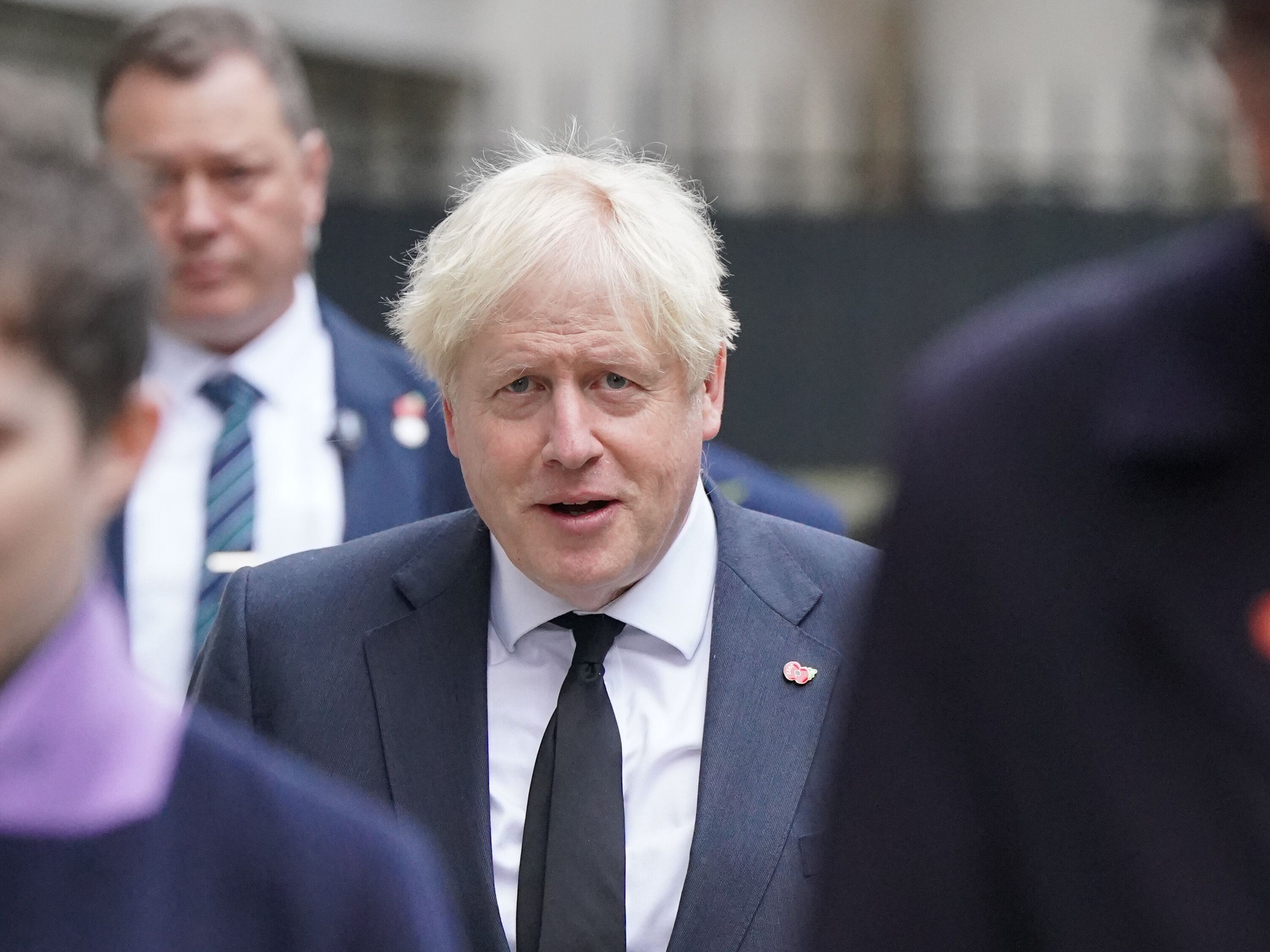
Boris Johnson Causes A Stir With Claims About Europe’s Initial Response To Russian Aggression

Boris Johnson has taken aim at some of his former European counterparts over Russia’s aggression towards Ukraine, claiming not everyone on the continent had the same immediate reaction.

The former PM, who has tried to make his support for Ukraine one of the lasting legacies of his premiership, went a step further in a new broadcast interview with CNN Portugal.

Speaking on Monday, he said Germany, France and Italy all had very different responses compared to him when Russia was closing in on its European neighbour at the end of February.

“This thing was a huge shock,” Johnson alleged on Wednesday. “We could see the Russian battalion tactical groups amassing, but different countries had very different perspectives.”

He began: “The German view was at one stage that if it were going to happen, which would be a disaster then it would be better for the whole thing to be over quickly, and for Ukraine to fold.”

Germany had a substantial dependency on Russia’s fuel exports prior to the war, due to the Nord Stream pipelines which transmitted natural gas from Russia int Europe. However, it has been trying to wean itself off ever since the war started.

Johnson then claimed there were “all sorts of sound economic reasons” behind that way of thinking, but added: “I couldn’t support that, I thought that was a disastrous way of looking at it.

“But I can understand why they thought and felt as they did.”

An aide of Germany’s chancellor Olaf Scholz has since rebuffed these claims, claiming that Johnson has “his own relationship with the truth”, and said the idea Germany wanted a quick end to the war was “utter nonsense”.

Scholz’s spokesman Steffen Hebestreit also told reporters in Berlin: “I think I can say that first-hand, because I took part in talks with the then British prime minister in Munich only a few days before the start of the war. Namely that he always has a very personal approach toward the truth.”

Germany’s economic cooperation secretary Jochen Flasbarth also tweeted that Johnson’s claims were “crazy”.

The former prime minister also targeted France in his interview, claiming the UK’s neighbour was “in denial” over the possibility of a war on the fringes of Europe.

He claimed: “Be in no doubt that the French were in denial right up until the last moment.”

French president Emmanuel Macron led Europe’s attempts to prevent Vladimir Putin’s aggression tipping into war earlier this year, and even went to Kremlin just weeks shortly before Russia ordered the attack.

Then Johnson went after Italy. He told CNN that the Italian government, then led by Mario Draghi, was “at one stage simply saying that they would be unable to support the position we were taking” due to their “massive” reliance on Russian hydrocarbons.

However, Johnson said that once the actual invasion began, a sense of unity emerged.

“What happened was everybody – Germans, French, Italians, everybody, Joe Biden – saw that there was simply no option.

“Because you couldn’t negotiate with this guy (Putin). That’s the key point.”

He added in unusual praise for the bloc that the EU “has done brilliantly” opposing Putin.

“After all my anxieties…I pay tribute to the way the EU has acted. They have been united. The sanctions were tough.”

Interestingly, the prominent Eurosceptic who led the Vote Leave campaign said that if Ukraine wants to join the EU “they should go for it and I think it would be a good thing for Ukraine”.

Kyiv applied to join the EU earlier this year as part of its efforts to move away from Russia’s sphere of influence.

Ukraine has been vocal in its admiration for Johnson – and even tweeted out a suggestion that he return to Downing Street again after Liz Truss’s resignation, but it was quickly deleted.

New prime minister Rishi Sunak made his first official visit to the country last week, and pledged £50 million in defence aid.

Despite the ongoing support from Western allies for Ukraine, Russia has continued its relentless attacks on the nation, leaving entire regions without power as the winter looms.

Share Button

The puzzle of UK’s half a million missing workers

The number out of work through ill health has been rising sharply – and no-one is really sure why.

Share Button

They died suddenly – then the anti-vax trolling started

A new “documentary” falsely blames Covid vaccines for deaths of young people.

Share Button

Pregnancy soon after miscarriage no more risky – study

There may be no health gain from waiting a recommended six months before trying again, research finds.

Share Button

Kate Middleton Dazzles In Sparkling Tiara For Charles’ First State Banquet As King

Kate Middleton donned a dazzling tiara at Buckingham Palace on Tuesday for a very special occasion: King Charles’ first state banquet as monarch.

The banquet was held on behalf of President Cyril Ramaphosa of South Africa’s state visit, which also marks the first state visit for Charles as sovereign. The trip was originally scheduled prior to the death of Queen Elizabeth II, who died in September at age 96.

The Princess of Wales wore the Queen Mary’s Lover’s Knot tiara with earrings that once belonged to Princess Diana, as identified by Lauren Kiehna, the writer and editor behind The Court Jeweller.

Kiehna also identified that Kate paired the tiara with an equally stunning dress ― with bejeweled shoulders, no less ― from one of her favourite go-to designers, Jenny Packham.

Prince William dressed in white tie for the glamorous occasion.

The Prince and Princess of Wales arrive for a state banquet at Buckingham Palace for the president of South Africa on Nov. 22 in London, England.

Chris Jackson via Getty Images

The Prince and Princess of Wales arrive for a state banquet at Buckingham Palace for the president of South Africa on Nov. 22 in London, England.
A closer look at Catherine, Princess of Wales.

Chris Jackson via Getty Images

A closer look at Catherine, Princess of Wales.
President of South Africa, Cyril Ramaphosa, King Charles III and Camilla, Queen Consort during the state banquet at Buckingham Palace.

Chris Jackson via Getty Images

President of South Africa, Cyril Ramaphosa, King Charles III and Camilla, Queen Consort during the state banquet at Buckingham Palace.

Earlier in the day, the Prince and Princess of Wales greeted Ramaphosa at the Corinthia Hotel to kick off his two-day visit.

From there, the group traveled to Horse Guards Parade for a welcome ceremony, where they met Charles and Camilla before undertaking more engagements.

President Cyril Ramaphosa of South Africa, King Charles III, Camilla, Queen Consort, Prince William and Catherine, Princess of Wales attend the Ceremonial Welcome at Horse Guards Parade on Nov. 22 in London.

Max Mumby/Indigo via Getty Images

President Cyril Ramaphosa of South Africa, King Charles III, Camilla, Queen Consort, Prince William and Catherine, Princess of Wales attend the Ceremonial Welcome at Horse Guards Parade on Nov. 22 in London.

The Prince and Princess of Wales will soon undertake a visit of their own, as the two are making a trip across the pond next week to Boston, Massachusetts, for William’s second annual Earthshot Prize award ceremony.

“In 2022, we’re back and bringing Earthshot to the USA, where we’ll award the next five winners of the prize,” the duke said in a video back in July announcing the visit. “And we will be doing it right here in Boston.”

Hannah Jones, CEO of the Earthshot Prize, previously spoke with HuffPost in September about the significance of holding the award show in Boston.

“It’s the 60th anniversary, as you know, of the ‘Moonshot,’” Jones told HuffPost at the Earthshot Prize Innovation Summit in New York City. “And that was really a great source of inspiration to Prince William when he founded the Earthshot Prize, which was to try to inspire what President Kennedy inspired in the American people.”

Jones said that she hopes that this year’s award show “gives everybody inspiration and it rekindles that American mindset of turning the seemingly impossible possible.”

Share Button

Veteran Labour Activist Pete Willsman Expelled For Alleging Anti-Semitism ‘Whipped Up’ By Israel

A veteran Labour activist has been expelled by the party for claiming anti-Semitism allegations against Jeremy Corbyn supporters had been “whipped up” by the Israeli Embassy.

Pete Willsman was a member of Labour’s ruling national executive council (NEC) when he was suspended in 2019.

He had been recorded telling American-Israeli author Tuvia Tenenbom that critics of Corbyn were using claims of anti-Semitism to “whip people up,”

Willsman said: “It’s almost certain who is behind all this anti-Semitism against Jeremy… Almost certainly it was the Israeli embassy. Because they caught somebody in the Labour party – it turns out they were an agent in the embassy.

“The thing is that the people that are in the Labour party doing it are people who are linked… one of them works indirectly for the Israeli embassy.

“I wouldn’t want to be bothered to find out anyway but my guess would be they are the ones whipping it up all the time.”

He was previously handed a warning by then Labour general secretary Jennie Formby after he accused rabbis speaking out over anti-Semitism crisis of being “Trump fanatics”.

HuffPost UK has learned that Willsman has now been expelled by the party.

Mike Katz, national chair of the Jewish Labour Movement, said: “Pete Willsman was a member of Labour’s ruling NEC when he attacked Rabbis from across the UK Jewish community by smearing them as ‘Trump supporting fanatics’.

“It’s about time he was expelled. This anti-semitic behaviour has no place in Keir Starmer’s Labour Party.”

Share Button