Suffocating cancer cells

Development of medical treatment against cancer is a major research topic worldwide — but cancer often manages to circumvent the solutions found. Scientists around Tanja Weil and David Ng at the Max Planck Institute for Polymer Research (MPI-P), have now taken a closer look at the cancer’s countermeasures and aim to stop them. By disrupting the cellular components that are responsible for converting oxygen into chemical energy, they have demonstrated initial success in eliminating cells derived from untreatable metastatic cancer.

Treatment of cancer is a long-term process because remnants of living cancer cells often evolve into aggressive forms and become untreatable. Hence, treatment plans often involve multiple drug combinations and/or radiation therapy in order to prevent cancer relapse. To combat the variety of cancer cell types, modern drugs have been developed to target specific biochemical processes that are unique within each cell type.

However, cancer cells are highly adaptive and able to develop mechanisms to avoid the effects of the treatment. “We want to prevent such adaptation by invading the main pillar of cellular life — how cells breathe — that means take up oxygen — and thus produce chemical energy for growth,” says David Ng, group leader at the MPI-P.

The research team produced a synthetic drug that travels into cells where it reacts to conditions found inside and triggers a chemical process. This allows the drug’s molecules to bind together and form tiny hairs that are a thousand times thinner than human hair. “These hairs are fluorescent, so you can look at them directly with a microscope as they form,” says Zhixuan Zhou, an Alexander-von-Humboldt-fellow and first author of the paper.

The scientists monitored the oxygen consumption in different cell types and found that the hairs stop all of them from converting oxygen into ATP, a molecule that is responsible for energy delivery in cells. The process worked even for those cells derived from untreatable metastatic cancer. As a result, the cells die rapidly within four hours. After some more years of research, the scientists hope that they can develop a new method to treat up-to-now untreatable cancer.

Weil, Ng and colleagues have shown an exciting outcome under controlled laboratory culture and will continue to unravel deeper insights on the basis of how these tiny hairs prevent the conversion of oxygen to chemical energy. With further development, these objects could in the future possibly also be manipulated to control other cellular processes to address other important diseases.

They have published their results in the Journal of the American Chemical Society.

Story Source:

Materials provided by Max Planck Institute for Polymer Research. Note: Content may be edited for style and length.


Share Button

City digital twins help train deep learning models to separate building facades

Game engines were originally developed to build imaginary worlds for entertainment. However, these same engines can be used to build copies of real environments, that is, digital twins. Researchers from Osaka University have found a way to use the images that were automatically generated by digital city twins to train deep learning models that can efficiently analyze images of real cities and accurately separate the buildings that appear in them.

A convolutional neural network is a deep learning neural network designed for processing structured arrays of data such as images. Such advancements in deep learning have fundamentally changed the way tasks, like architectural segmentation, are performed. However, an accurate deep convolutional neural network (DCNN) model needs a large volume of labeled training data and labeling these data can be a slow and extremely expensive manual undertaking.

To create the synthetic digital city twin data, the investigators used a 3D city model from the PLATEAU platform, which contains 3D models of most Japanese cities at an extremely high level of detail. They loaded this model into the Unity game engine and created a camera setup on a virtual car, which drove around the city and acquired the virtual data images under various lighting and weather conditions. The Google Maps API was then used to obtain real street-level images of the same study area for the experiments.

The researchers found that the digital city twin data leads to better results than purely virtual data with no real-world counterpart. Furthermore, adding synthetic data to a real dataset improves segmentation accuracy. However, most importantly, the investigators found that when a certain fraction of real data is included in the digital city twin synthetic dataset, the segmentation accuracy of the DCNN is boosted significantly. In fact, its performance becomes competitive with that of a DCNN trained on 100% real data. “These results reveal that our proposed synthetic dataset could potentially replace all the real images in the training set,” says Tomohiro Fukuda, the corresponding author of the paper.

Automatically separating out the individual building facades that appear in an image is useful for construction management and architecture design, large-scale measurements for retrofits and energy analysis, and even visualizing building facades that have been demolished. The system was tested on multiple cities, demonstrating the proposed framework’s transferability. The hybrid dataset of real and synthetic data yields promising prediction results for most modern architectural styles. This makes it a promising approach for training DCNNs for architectural segmentation tasks in the future — without the need for costly manual data annotation.

Story Source:

Materials provided by Osaka University. Note: Content may be edited for style and length.

Share Button

One in eight on hospital waiting list as backlog grows

Numbers waiting for treatments, such as knee and hip surgery, reaches 6.84 million in England.

Share Button

New malaria vaccine is world-changing, say scientists

The jab could be used on a mass scale next year with the aim of ending deaths from the disease.

Share Button

Hormone replacement therapy and menopause: What you need to know about HRT

HRT can help with menopausal symptoms. If you’re thinking about taking it, here’s what you need to consider.

Share Button

Post-menopause HRT treatment to be sold over the counter in UK

Estradiol tablets help treat the cause of vaginal dryness in women experiencing menopause.

Share Button

How Everyone Is Affected As Pound Falls To Lowest Level Against Dollar Since 1985

The economic woes facing new prime minister Liz Truss have been underlined by the pound slipping to a new 37-year-low against the US dollar.

In symbolism noted by many, the last time sterling dipped this low was 1985 – when Truss’s political hero Margaret Thatcher was in power.

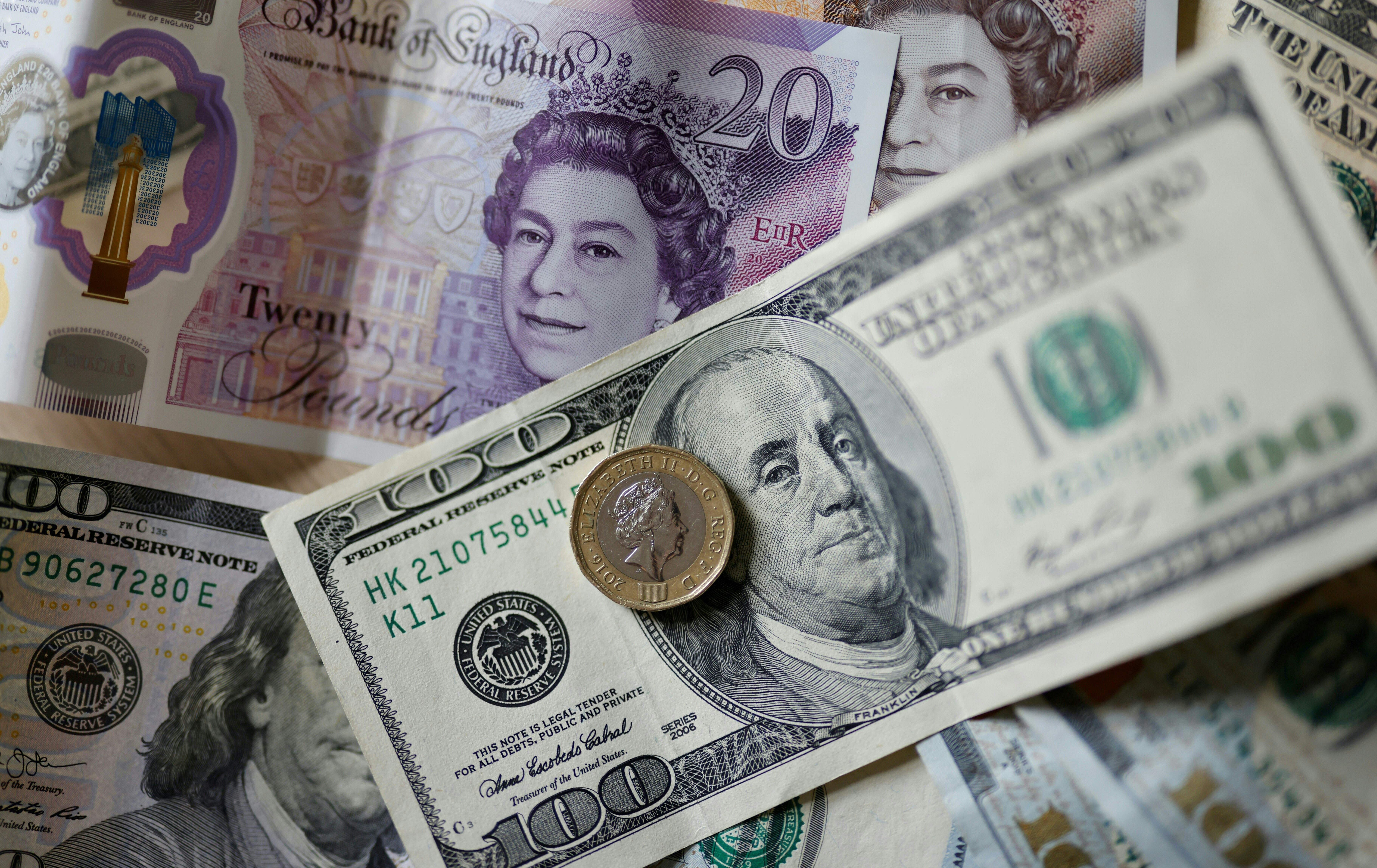
Britain’s currency dropped to as low as $1.1403 on Wednesday, surpassing the trough of $1.1412 seen at the outset of the Covid-19 pandemic in March 2020.

The currency is down more than 15% against the dollar so far this year.

Sterling hit an all-time low of $1.0545 in March 1985, just before the Group of Seven (G7) economies acted to rein in the superdollar of the Reagan era in the so-called Plaza Accord.

Why has the pound fallen so low against the US dollar?

The value of a currency invariably reflects how traders fell about the health of a country’s economy – either for better or worse.

The UK is suffering from a series of factors – most pressingly, soaring energy bills – but the pound’s plunging value against the dollar is also a measure of the relative strength of the American economy, where inflation is easing and strong jobs numbers continue.

Andrew Bailey, governor of the Bank of England, highlighted the strength of the US currency during a Treasury select committee meeting earlier on Wednesday, as he explained to MPs the recent weakness in the pound.

A sustained rally in the US dollar, referred to by traders as the “greenback”, has also seen it hit a 24-year high against the Japanese yen – reflecting how the UK is not in a unique position.

Against the euro, the pound was also down almost 1% on Wednesday, although sterling has held up far better against the euro than versus the dollar. It is down just 3% versus the single currency this year.

Nonetheless, investors are dumping British assets in the face of a bleak economic outlook that incudes the rising risk of a recession. The country’s surging inflation rate is also the highest among G7 powers, with the Bank of England previously predicting inflation could pass 13% in October. Concerns over tax cuts and increased public spending under the new Truss government also add to the uncertainty influencing traders.

Britain has further been hit differently by the energy crisis. While the UK only imports a small percentage of its gas from Russia, it relies more on gas than its European neighbours because it has less nuclear and renewable energy and does not have as much capacity to store gas.

Analysts say the direction of the pound could now be swayed by the economic plans of the new prime minister, with Truss expected to detail her response to energy bills on Thursday, with government borrowing likely to pick up the tab for freezing bills for households and businesses.

The tumbling pound is also a headache for the Bank of England since it increases the cost of imports and can cause more imported inflation. The UK’s central bank meets next week and is expected to hike interest rates by 0.5 or even 0.75 percentage points.

The worst could yet come. Nordea chief analyst Jan von Gerich said: “There could be a recovery in sterling but I wouldn’t catch a falling knife for now.”

What does this mean for Brits?

The immediate impact of the falling pound is being felt by British travellers heading off for their holidays.

This means that travellers to the US – and to a lesser extent, Europe – will find their pound does not go very far, hiking up the cost of everything from accommodation to food.

Other countries use the greenback as the main currency, so even destinations such as Dubai and China are more expensive as their currencies are pegged to the US dollar.

Is it just holidaymakers who will be affected by the pound’s tumble?

All UK consumers stand to be impacted by a sustained plummet in the value of the pound, because it makes it more expensive for retailers and manufacturers to import food, goods and materials.

This means prices will be pushed up for goods and services, sending UK inflation rising even further and hitting Brits hard in the pocket.

Are there any benefits to a falling pound?

A weak pound can prove helpful in a number of ways, by making it cheaper for foreign companies to buy UK goods and boosting exports as a result.

It can also increase foreign investment in the UK, for example in property and in shares.

The FTSE 100 Index on London’s stock market usually rises when the pound falls as it is dominated by internationally-focused firms, which trade largely in US dollars.

A falling pound can also increase tourism to the UK, with overseas travellers looking to make the most of a better exchange rate.

This offers a boost to retailers and other sectors, such as restaurants and leisure attractions.

Share Button

Measuring wastewater coronavirus accurately

Monitoring of viruses in wastewater enables the course of a pandemic and its burdens on various parts of the health-care sector to be predicted, independently from official public testing capacity and scope for infection tracking. This has been established in a study from the University of Gothenburg.

The measurements and analyses of coronavirus levels in the wastewater of Gothenburg attracted a great deal of attention during the pandemic. The weekly reports have shown both how widespread SARS-CoV-2 infection is in the community and its distribution among variants of the virus.

Beginning in February 2020, the virus measurements taken in the monitoring rapidly became a useful indicator for forecasting load peaks in health care. High concentrations of SARS-CoV-2 in the wastewater were followed by rising numbers of people with COVID-19 needing hospitalization.

The association emerges with striking precision in the study now published in the scientific journal iScience. Each of the four pandemic waves in 2020-2022 exhibits a pattern in which, within a couple of weeks after SARS-CoV-2 peaked in the wastewater, a rise in the number of newly admitted hospital patients with COVID-19 ensued.

Increased pressure on 1177 Vårdguiden

The virus peaks in the wastewater were followed not only by heavier burdens on inpatient care, but also by predictable increases in pressure on the 1177 Vårdguiden e-service. One to two weeks after a wastewater virus peak, more calls were coming in about acute breathlessness in adults.

“The study shows that virus monitoring in wastewater can predict how a pandemic is going to develop and its burden on several parts of the health system,” says Hao Wang, postdoctoral researcher at Sahlgrenska Academy’s Department of Infectious Diseases, University of Gothenburg, and the study’s first author.

The study provides an account of the degree of testing capacity in Sweden during various phases of the pandemic. The scientists say that the national statistics on the number of confirmed cases did not reflect the actual spread of infection.

However, even when their symptoms were mild, all those infected had the virus in their urine and feces. This enabled detection of the virus in wastewater, in the form of RNA (genetic material). The weekly reports were based on daily samples of wastewater collected by Gryaab, the municipal water treatment company in Gothenburg.

Lasting benefit to community

Heléne Norder, research leader at the University of Gothenburg’s Sahlgrenska Academy and the last author of the study, sees the results as proof of how virus surveillance during the pandemic has benefited the community. She also identifies the distinct advantages of the method used.

“The method we use in Gothenburg also enables monitoring of other viruses, which gives us unique scope for quickly spotting ongoing outbreaks. In the area, besides SARS-CoV-2, we’ve also been able to demonstrate the presence of viruses that spread through food or water and are excreted in the feces. Some of those caused outbreaks — norovirus, the ‘winter vomiting bug’, and astrovirus among children, for instance — during the pandemic.

“So, during that time,” she continues, “we found changes in the virus levels that were directly relatable to the number of people infected in Gothenburg. Our research group intends to keep analyzing different viruses in the wastewater as long as we have research funding for it.”

The planning also includes further development of the technique to enable its adoption by all the laboratories that wish to carry out continuous virus monitoring.

“This might result in monitoring of more viruses in more regions for rapid identification of future outbreaks and efficient, proactive nationwide surveillance of ongoing ones,” Norder concludes.

Story Source:

Materials provided by University of Gothenburg. Note: Content may be edited for style and length.
Share Button

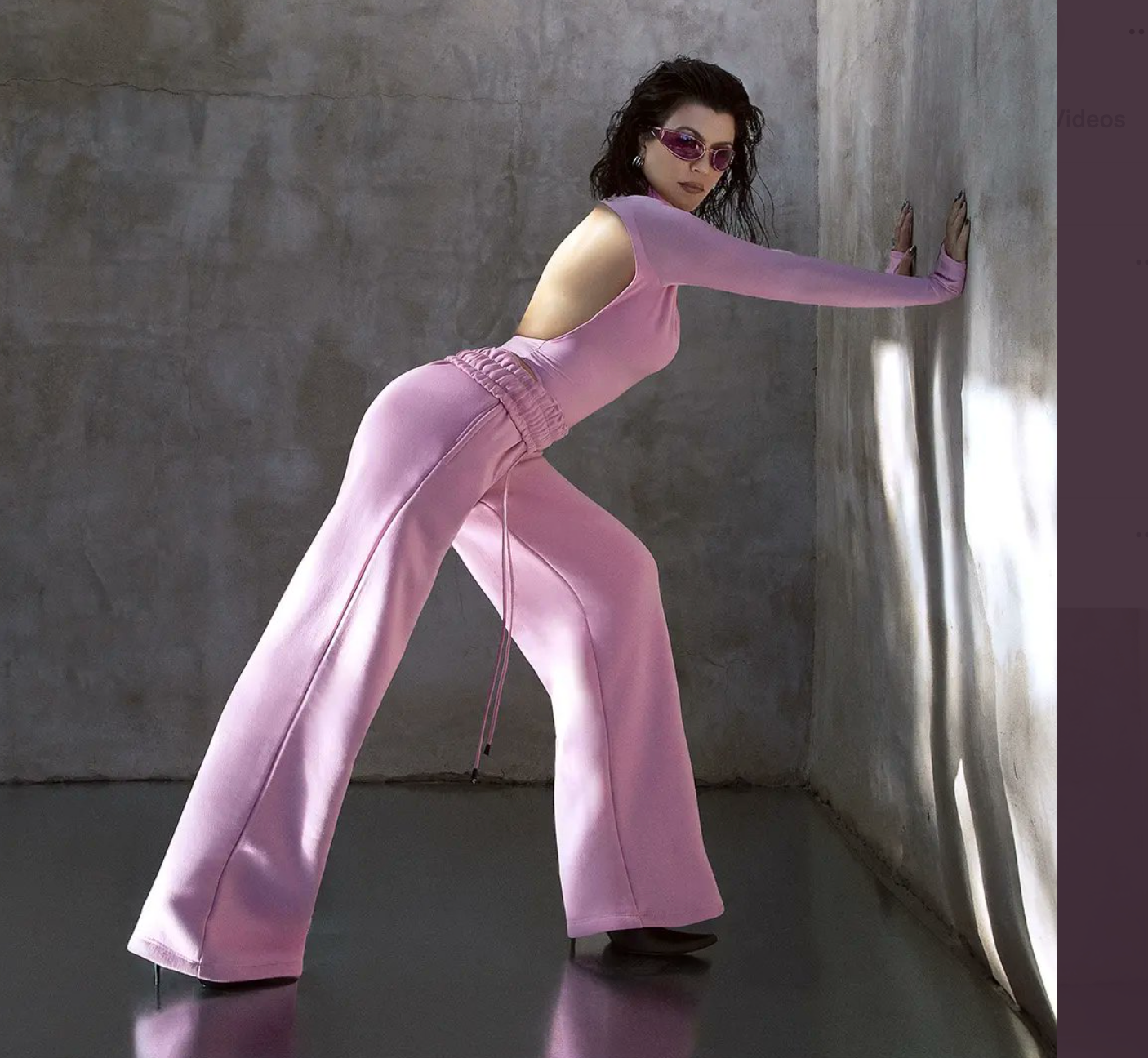
Kourtney Kardashian’s ‘Sustainability’ Job For Boohoo Has Not Landed Well

In case you missed it, fast fashion behemoth Boohoo has announced Kourtney Kardashian Barker has a new gig as the brand’s “sustainability ambassador”.

This collaboration sees the reality TV star release a new line Boohoo, which will include two 46-piece limited edition collections, the first of which will be showcased during New York Fashion Week on September 13.

This comes hot on the kitten heels of news that Pretty Little Thing – the fast fashion brand that’s also owned by Boohoo – has introduced an app encouraging shoppers to buy and sell second hand clothes.

Kourtney’s first Boohoo line – set to launch in the US market – ranges in price from $6 to $100 and will include items made with recycled polyester and recycled cotton, as well as two vintage-style biker jackets.

“When Boohoo first approached me to collaborate on a line, I was concerned about the effects of the fast-fashion industry on our planet,” Kourtney, 43, told WWD in an interview about the line.

“I’m grateful for the opportunity to use my platform to drive conversations that lead to ongoing change and use my voice to share actionable tips with consumers on how we can play our own part.”

Social media seems less than impressed by news of the collaboration, however. Echoing criticism of Pretty Little Thing’s marketplace, Boohoo’s latest announcement has been labelled by some as an act of greenwashing.

People have also queried Kardashian’s involvement, given her penchant for a private jet or two, and her family’s reputation for excess.

Boohoo’s business model is famously based on fast turnaround to meet and stoke demand, with more than 3,000 new styles added weekly to its site and some items taking just 48 hours to go on sale from idea to manufacture.

In July, the UK Competition and Markets Authority opened an investigation into whether eco-friendly claims made by various UK fast fashion chains added up – Boohoo is one of the brands under investigation, alongside Asos and Asda.

It was also hit by scandal mid-pandemic in 2020, when a series of newspaper investigations alleged that some UK workers producing clothes for Boohoo in factories in Leicester were being paid below minimum wage and working in non-Covid safe environments.

This led the company to severing ties with various UK suppliers, and some of its shareholders voting against big payouts for top Boohoo executives.

It’s hardly surprising, perhaps, that people have taken issue with this new collab on social media.

Kourtney isn’t exactly the most sustainable celebrity

Fast fashion and sustainability don’t really go together

And what about the garment makers behind the new line?

When we reached out to Boohoo, Cheryl Chung, head of communications for the brand, responded.

“We recognise that working with Kourney is a choice a lot of people will find unusual,” she told HuffPost UK.

“Kourtney has faced a lot of criticism about her own sustainability practices. But we’re talking to a lot of sustainability experts as part of this project.”

Chung emphasised Kourtney’s huge following on Instagram – 196 million followers at last count – to explain that hiring her in an ambassadorial role could influence a larger number of people to learn more about sustainability.

The brand is releasing her conversations with experts as a docuseries, available to view on YouTube. Those experts include Tim Nelson, the CEO of Hope For Justice, which works on freeing people from modern slavery around the world.

“We’re working with her and tackling conversations around the challenges of textile waste, the challenges of worker welfare, and how you responsibly deal with your clothes at the end of their life,” Chung said, adding that Kourtney’s conversations about massive challenges facing the fashion industry was “the most important part of the collaboration”.

Asked whether the venture was another example of greenwashing, Chung responded that in-house designers working on Kardashian’s line are concentrating on using fabrics and materials that wouldn’t harm the environment, but didn’t speak to further supply chain logistics.

“We’re not claiming to be perfect in any way but we’re categorically trying to do our best to be as honest and open and transparent,” she added.

Share Button

More than 1.1 million sea turtles poached over last three decades

One of the most serious threats to wildlife biodiversity, in addition to the climate crisis, is the illegal killing and trafficking of animals and plants. Despite many laws against the black-market wildlife trade, it is considered to be one of the most lucrative illicit industries in the world.

Animals, especially endangered and threatened species, are often exploited and sold for their pelts or used as medicine, aphrodisiacs, curios, food and spiritual artifacts.

In a new study published in Global Change Biology, Arizona State University researchers estimate that more than 1.1 million sea turtles have been illegally killed and, in some cases, trafficked between 1990 and 2020. Even with existing laws prohibiting their capture and use, as many as 44,000 sea turtles were exploited each year over the past decade in 65 countries or territories and in 44 of the world’s 58 major sea turtle populations.

Despite the seemingly large number of poached turtles, the study shows that the reported illegal exploitation of sea turtles declined by approximately 28% over the last decade — something that surprised the researchers. They initially expected to see an overall increase in reported poaching.

“The decline over the past decade could be due to increased protective legislation and enhanced conservation efforts, coupled with an increase in awareness of the problem or changing local norms and traditions,” says Kayla Burgher, co-first author of the study and a doctoral student in ASU’s environmental life sciences program in the School of Life Sciences.

In addition to the slight decline, the researchers found that most of the reported illegal exploitation over the past decade occurred in large, stable and genetically diverse sea turtle populations.

Jesse Senko, co-first author of the study and an assistant research professor with the ASU School for the Future of Innovation in Society says this discovery may be a silver lining to the high number of turtles illegally exploited. “What this means is that most of these sea turtles came from healthy, low-risk populations, which suggests that, with a few exceptions, current levels of illegal exploitation are likely not having a major detrimental impact on most major sea turtle populations throughout the world’s oceans.”

Senko adds, however, the results should be cautiously considered. “Assessing any illegal activity is difficult, and the take and trade of sea turtles is no exception, especially when it becomes organized or connected to crime syndicates. Our assessment also did not include eggs or turtle products, such as bracelets or earrings made from sea turtle shells that could not be easily attributed to individual turtles,” says Senko.

In the study, the researchers reviewed data from peer-reviewed journal articles, archived media reports, NGO reports, and online questionnaires to determine a comprehensive look at existing information on exploited sea turtles. The study revealed additional patterns and trends that may assist in determining conservation management priorities. For example, Vietnam was the most common country of origin for illegal sea turtle trafficking, while China and Japan served as destinations for nearly all trafficked sea turtle products. Similarly, Vietnam to China was the most common trade route across all three decades.

Across the 30-year study period, 95% of poached sea turtles came from two species — green and hawksbill turtles — both of which are listed under the U.S. Endangered Species Act. Also, Southeast Asia and Madagascar emerged as major hotspots for illegal sea turtle take and trade, particularly for critically endangered hawksbills, which are prized in the illicit wildlife trade for their beautiful shells.

“Our assessment is an important foundation for future research and outreach efforts regarding illegal sea turtle exploitation. We believe this study can help conservation practitioners and legislators prioritize conservation efforts and allocate their resources to best help protect sea turtle populations from harmful levels of exploitation worldwide,” says Burgher.

The research team says much more needs to be done to sustain global biodiversity.

“Increased support for governments lacking the resources to protect sea turtles is needed, along with support for communities to sustain human well-being in the face of restrictions or bans on sea turtle exploitation. We must develop conservation strategies that benefit both people and turtles,” says Senko.

Share Button