All The Beef Surrounding Olivia Wilde, Florence Pugh And Harry Styles On ‘Don’t Worry Darling’

Olivia Wilde’s highly anticipated Don’t Worry Darling — her second movie as a director, following 2019′s Booksmart — stars Oscar nominee Florence Pugh and singer Harry Styles in his first leading film role. The period drama and sci-fi thriller is set to make its world premiere at the Venice Film Festival on Sept. 5 before a theatrical release on Sept. 23, as the autumn awards season ramps up.

But what’s happening behind the scenes has generated an outsize amount of media attention and internet speculation, with fans and social media observers leaving no stone unturned and mulling over every nugget of information. Among the areas of intrigue: While neither has commented on it publicly, Wilde and Styles reportedly began dating sometime in late 2020, during production on the film.

Much of the drama surrounding the movie came to a head this week due to a Variety profile of Wilde, in which she spoke out about some of the major headlines for the first time. If you’ve struggled to piece together the various threads and keep up with the sheer amount of details and players — with some tangential to the film itself — here’s what has transpired so far.

Harry Styles and Florence Pugh in "Don't Worry Darling," directed by Olivia Wilde.
Harry Styles and Florence Pugh in “Don’t Worry Darling,” directed by Olivia Wilde.

Warner Bros. Pictures

Shia LaBeouf

Shia LaBeouf was originally cast in the movie in early 2020. But Styles replaced him by that autumn, shortly before the film began production.

In December 2020, LaBeouf’s former partner FKA Twigs sued him for assault and sexual battery, accusing him of physical, mental and emotional abuse. The case is currently pending. LaBeouf — who has a long and public history of physical and verbal altercations, with a judge once ordering him to attend anger management — parted ways with his agency and began an inpatient rehab program.

Warner Bros., which is distributing Don’t Worry Darling, initially said LaBeouf couldn’t do the film due to a scheduling conflict. However, in this week’s Variety profile, Wilde said that she fired the actor, describing how his “combative energy” didn’t work for the film.

Shia LaBeouf
Shia LaBeouf

Rich Fury via Getty Images

“I say this as someone who is such an admirer of his work. His process was not conducive to the ethos that I demand in my productions,” Wilde told Variety.

“A lot came to light … that really troubled me, in terms of his behaviour,” the director continued. “For our film, what we really needed was an energy that was incredibly supportive. Particularly with a movie like this, I knew that I was going to be asking Florence to be in very vulnerable situations, and my priority was making her feel safe and making her feel supported.”

LaBeouf disputes the nature of his exit from the film. In an email to HuffPost, sent early Thursday in response to Wilde’s Variety interview, LaBeouf wrote: “I was never fired from Don’t Worry Darling. I quit the film due to lack of rehearsal time.”

LaBeouf also enclosed a forwarded email that he said he sent to Wilde this week, imploring her to “correct the narrative as best you can,” and attached text messages that appear to be from August 2020, in which the two discussed him exiting the film.

“What inspired this email today is your latest Variety story. I am greatly honoured by your words on my work; thank you, that felt good to read. I am a little confused about the narrative that I was fired, however. You and I both know the reasons for my exit. I quit your film because your actors & I couldn’t find time to rehearse,” said LaBeouf’s email to Wilde.

“I know that you are beginning your press run for DWD [Don’t Worry Darling] and that the news of my firing is attractive clickbait, as I am still persona-non-grata and may remain as such for the rest of my life,” the forwarded email said.

“My failings with Twigs are fundamental and real, but they are not the narrative that has been presented. There is a time and a place to deal with such things, and I am trying to navigate a nuanced situation with respect for her and the truth, hence my silence. But this situation with your film and my ‘firing’ will never have a court date with which to deal with the facts. If lies are repeated enough in the public they become truth. And so, it makes it that much harder for me to crawl out of the hole I have dug with my behaviours, to be able to provide for my family,” it continued.

“Firing me never took place, Olivia. And while I fully understand the attractiveness of pushing that story because of the current social landscape, the social currency that brings. It is not the truth. So I am humbly asking, as a person with an eye toward making things right, that you correct the narrative as best you can. I hope none of this negatively effects you, and that your film is succesful [sic] in all the ways you want it to be.”

A representative for Wilde declined to comment on LaBeouf’s remarks.

Florence Pugh

Social media speculation has swirled around a purported feud between Pugh and Wilde, based on the impression that Pugh has barely promoted the movie on social media — with some observers zeroing in on how she didn’t hit “like” on Wilde’s Instagram post about a trailer for the movie or a subsequent one praising Pugh’s work. A Page Six story about Pugh taking issue with Wilde and Styles’ on-set relationship also generated intrigue.

The two women have also expressed divergent views on the film’s sex scenes. Wilde has described the movie as breaking new ground for centering female pleasure and, throughout promoting the movie, has discussed her philosophy on portraying sex on screen. On the other hand, in a Harper’s Bazaar profile published earlier this month, Pugh suggested the movie’s marketing has placed too much of an emphasis on sex.

“When it’s reduced to your sex scenes, or to watch the most famous man in the world go down on someone, it’s not why we do it. It’s not why I’m in this industry,” Pugh told Harper’s Bazaar. “Obviously, the nature of hiring the most famous pop star in the world, you’re going to have conversations like that. That’s just not what I’m going to be discussing because [this movie is] bigger and better than that.”

Neither Pugh nor Wilde has publicly commented on the speculated feud. In her interview with Variety, Wilde praised Pugh’s performance. She also denied claims of a pay gap between Pugh and Styles. Meanwhile, Pugh’s publicist has said the Little Women and Midsommar star has been busy filming Dune: Part Two in Hungary.

Jason Sudeikis

The promotion for Don’t Worry Darling has also become entangled in Wilde’s custody battle with Jason Sudeikis, her former partner, over their two children. When Wilde was giving a presentation on the movie at CinemaCon in April, a representative for Sudeikis served her custody papers on stage.

At the time, a representative for Sudeikis told HuffPost that the Ted Lasso star “had no prior knowledge of the time or place that the envelope would have been delivered as this would solely be up to the process service company involved and he would never condone her being served in such an inappropriate manner.”

Wilde at CinemaCon 2022 in April, holding an envelope with custody papers.

Chris Pizzello/AP Photo

According to a court filing obtained by the Daily Mail earlier this month, Wilde later said Sudeikis’ actions “were clearly intended to threaten me and catch me off guard.”

“He could have served me discreetly, but instead he chose to serve me in the most aggressive manner possible,” she reportedly said in the court filing. “The fact that Jason would embarrass me professionally and put our personal conflict on public display in this manner is extremely contrary to our children’s best interests.”

Sudeikis said the whole situation was due to a series of mishaps, according to the Daily Mail. “I deeply regret what happened,” he said in the documents.

In the interview with Variety, Wilde similarly described the incident as “an attack” and “really upsetting,” adding that she “hated that this nastiness distracted from” the movie.

“To try to sabotage that was really vicious. But I had a job to do; I’m not easily distracted,” she told Variety. “But, you know, sadly, it was not something that was entirely surprising to me. I mean, there’s a reason I left that relationship.”

Share Button

Novel baseline data on leopard seals, the mysterious apex predators of Antarctica

Baylor University marine biologist Sarah Kienle, Ph.D., has always been fascinated by leopard seals. These prehistoric, reptilian-looking seals are often portrayed as scary villains in movies such as “Happy Feet” and “Eight Below,” but little is known about their basic biology. The combination of the extreme climate in Antarctica, the species’ solitary habits and their lethal reputation makes leopard seals one of the most difficult top predators to study on Earth.

In a first-of-its-kind study funded by the National Science Foundation awarded to professor Daniel Costa (lead PI; UCSC), associate professor Stephen Trumble, Ph.D. (Baylor), professor Shane Kanatous, Ph.D. (Colorado State University), wildlife biologist Mike Goebel, Ph.D. (NOAA), and professor Daniel Crocker, Ph.D. (Sonoma State University), the PIs and Kienle (a graduate student and postdoctoral researcher at the time) set out with one shared goal: to learn more about leopard seals. Over the course of two years, the research group studied 22 leopard seals off the Western Antarctic Peninsula, an area rapidly warming and changing. They weighed and measured each seal and followed each seal’s activities and dive patterns using satellite/GPS tags.

In the study published in Frontiers of Marine Science — “Plasticity in the morphometrics and movements of an Antarctic apex predator, the leopard seal” — Kienle (first author) and the team documented the flexible behaviors and traits that may offer leopard seals the resilience needed to survive the extreme climate and environmental disturbances occurring around Antarctica.

This study greatly increases our understanding of leopard seals’ life history, spatial patterns and diving behavior,” Kienle said. “We show that these leopard seals have high variability (or, flexibility) in these different traits. Across the animal kingdom, variability is vital for animals adapting and responding to changes in their environment, so we’re excited to see high variability in this Antarctic predator.”

Among the research team’s discoveries detailed in the journal article:

Adult female leopard seals are much larger than adult males; in fact, females are 1.5 times larger and longer.

  • The team measured one of the largest leopard seals ever, an adult female they nicknamed “Bigonia,” who weighed 540 kg (1,190 lbs.).
  • Female-biased sexual dimorphism (where females are larger) is unusual among marine mammals, a diverse group that includes polar bears, whales, dolphins, seals and sea lions, but leopard seals are the most extreme example of female-biased dimorphism among the 130+ species of marine mammals.
  • Why females are larger than males is not known, although Kienle explained other studies show that larger females are better at defending feeding areas, as well as stealing prey from smaller seals. Larger females also eat bigger, energy-rich prey, including fur seals and penguins, while males and smaller females often eat smaller prey like krill and fish. This suggests that the larger body size in adult females is beneficial and offers a selective advantage that Kienle and team will continue to explore.

From the movement data, female leopard seals spent more time “hauled out” — or coming out of the water to rest on ice or land — than males.

    • Two adult female leopard seals in this study spent two weeks straight hauled-out on ice in the middle of the ocean, not eating and not getting in the water. Kienle and colleagues suggest that this two-week haul-out period is when female leopard seals give birth and nurse their pup.
    • At the end of the two weeks, females return to water and begin diving for food again, and, at the same time, they likely wean their pup. It’s a short period to spend with their pups because the leopard seal is doing all of these really energetically demanding things without any food.

Male and female leopard seals swim short and long distances in both coastal and open-ocean habitats.

  • One seal only traveled 46 km from where the team worked with the seal, staying in and around islands off the Antarctic Peninsula.
  • Another seal, however, traveled 1,700 km during that same period away from the tagging location, swimming to an island more than a thousand kilometers away.

Leopard seals of both sexes are short, shallow divers — diving to an average of 30 meters and taking three-minute-long dives.

  • Other seals can dive thousands of meters deep and hold their breath for more than 40 minutes. However, the research team recorded the longest and deepest dive ever recorded for leopard seals made by a male nicknamed “Deadpool,” who dove to 1,256 meters for 25 minutes.

“It’s interesting to see such variation [in movements and dive behavior] in a relatively small number of animals. To me, this means that leopard seals are highly flexible in their movement patterns, and that’s a really good thing in terms of adapting to changes in your environment,” Kienle said.

What’s next for this team of leopard seal biologists? Kienle said the team continues to analyze additional data from these same 22 leopard seals for publication. Kienle also is excited to compare how the leopard seals from this study compare to other populations of leopard seals across the Southern Ocean.

“I have so many more questions, and I’m excited to continue learning about leopard seals for years to come. There’s so much more to discover about this incredible Antarctic predator,” said Kienle, who leads the Comparative Ecophysiology of Animals Lab at Baylor that focuses on understanding how different animals work in the context of their environment.

Story Source:

Materials provided by Baylor University. Note: Content may be edited for style and length.

Share Button

Getting data to do more for biodiversity

Michigan State University ecologists have developed a mathematical framework that could help monitor and preserve biodiversity without breaking the bank.

This framework or model takes low-cost data about relatively abundant species in a community and uses it to generate valuable insights on their harder-to-find neighbors. The journal Conservation Biology published the research as an Early View article on Aug. 25.

“One of the biggest challenges in monitoring biodiversity is that the species you’re most concerned about tend to be lowest in abundance or they’re the hardest species to observe during data collection,” said Matthew Farr, the lead author on the new report. “This model can be really helpful for those rare and elusive species.”

Farr, now a postdoctoral researcher at the University of Washington, helped develop the model as a doctoral student in Elise Zipkin’s Quantitative Ecology Lab in the College of Natural Science at MSU.

“There are a lot of species in the world and many of them are data deficient,” said Zipkin, an associate professor of integrative biology and director of MSU’s Ecology, Evolution and Behavior Program, or EEB. “We’re developing approaches to more quickly estimate what’s going on with biodiversity, which species are in trouble and where, spatially, do we need to focus our conservation efforts.”

After validating the model with an assist from forest-dwelling antelope in Africa, the researchers say it could be applied to a variety of other animals that meet certain criteria.

“The model doesn’t work for all types of species. It’s not a panacea,” Zipkin said. “But when it does work for a community, we can learn a lot more about member species without much data.”

The ‘magic’ of the model

For its newest model, Zipkin’s team focused on what’s called detection-nondetection data that tracks whether or not a given animal is detected in a given habitat.

“It’s basically the cheapest data and the easiest to collect,” Zipkin said. “You go to a spot, wait and see what animals are there and only need to record which species are seen.”

Researchers gather this data visually in person or with low-cost, motion-detecting camera traps that snap photos when triggered by an animal. Researchers then analyze the photos to record detection-nondetection data over time.

There are trade-offs, though. Although relatively cheap and easy to collect, detection-nondetection data doesn’t provide as much information as researchers and conservationists want. Historically, that has required intensive observational approaches such as tagging and tracking animals.

“That lets us calculate all sorts of things about the animals and their communities, but that data is expensive and hard to get,” Zipkin said. “For certain species, it’s impossible.”

The MSU team realized that, for the right animals, they could use an understanding of animal behavior and statistics to close the information gap by squeezing more insight out of detection-nondetection data.

“For some species, these are the best data you can get,” Farr said. “Now we can get more out of it.”

That may sound like magic — some of Zipkin’s colleagues have even said so — ?but there’s nothing supernatural about the model. Like much of science, it’s the result of hard work, collaboration and building on previous efforts in the field.

The story of the new model has its roots in 2003 with researchers J. Andrew Royle and James D. Nichols. The duo devised a mathematical link between the abundance of a species and the probability of detecting it.

At the time, Royle was a researcher with the U.S. Fish and Wildlife Service and Nichols was with the U.S. Geological Survey. Both are MSU alumni: Royle graduated with his bachelor’s degree in 1990 and Nichols earned his doctorate in 1976.

“It’s interesting,” said Farr, whose current adviser, Sarah Converse, also graduated with a bachelor’s degree from Michigan State before becoming an associate professor at the University of Washington. “Wherever you go in this field, people have some connection to Michigan State.”

After publishing the Royle-Nichols model, Royle joined the USGS, where he’d work with Zipkin before she joined MSU in 2014. In 2016, Zipkin’s team evolved the Royle-Nichols model to estimate things like the survival and reproduction rates for a single species using the barred owl as a case study.

Working in Zipkin’s lab with support from the National Science Foundation, Farr took the next step by linking the population dynamics of different species within the same communities.

“The model lets information from more common species inform what’s happening with the rare and elusive species,” said Farr. “The model relies on the commonalities between species, but still allows for variations.”

To develop the model, the team had to make some assumptions, like that the target species were territorial and did not travel much. The researchers then had to find real species that fit those assumptions to validate their model.

“We knew it would work for certain types of communities, but did those communities exist in real life?” Zipkin said.

“That’s one of the biggest challenges in model development,” Farr said. “You develop the model in a vacuum with simulations running under perfect conditions. You need to show what it can do in a real-world situation.”

“That’s when Tim O’Brien reached out and said, ‘I have your animals,'” Zipkin said.

The duiker data

Timothy O’Brien is a retired ecologist in Kenya who worked with the Wildlife Conservation Society, a nongovernmental organization or NGO, and an expert in camera traps. As part of what’s known as the Tropical Ecology Assessment and Monitoring program, or TEAM, he’s helped standardize how camera traps are used to make their data as powerful as possible.

He was familiar with Zipkin’s 2016 work and learned that she was expanding the model to include multiple species over multiple seasons. He suspected that forest-dwelling antelopes, notably those known as duiker, would provide the perfect test case.

Not only did duiker behavior match the assumptions of the model, but O’Brien had been helping monitor the animals for years using camera traps. Duikers presented an interesting and important conservation case.

“The duiker that live in rainforests, they are the most sought-after bushmeat in Africa,” O’Brien said. “If duiker populations are in decline, it’s usually because of people hunting for bushmeat.”

Bushmeat is meat from any wild animal and it’s an important source of food and income for many communities. But the hunting is loosely regulated and is financially incentivized by markets that sell bushmeat. The combination can be devastating for duiker populations.

With MSU’s model and TEAM’s duiker data, the team assessed the population dynamics of a total of 12 antelope species — some more abundant than others — in six national parks in Africa, where duikers are protected. The data covered time periods ranging from four to 11 years.

“We didn’t see the level of population decline in duiker you expect to see when hunting is an issue,” O’Brien said. “I would say the parks are fulfilling their function as far as duiker are concerned.”

Overall, the duiker populations were mostly stable, but the researchers did detect population declines in about 20% of the combinations of species and parks that they examined. Again, the declines weren’t so substantial to suggest that the duiker were being overhunted in the parks, but the researchers still want to understand what’s happening in those cases.

“We found that’s what causing the changes was more the differences between the parks than between the species,” Zipkin said. “We haven’t pinpointed the exact causes yet, but our results could help us do that.”

“Matt and Elise have taken this model to a whole new plane,” O’Brien said. “I’ve really enjoyed the collaboration.”

Charles Yackulic, a research statistician with the USGS, was also a contributor to the project, which was supported by NSF, WCS, Conservation International, the Smithsonian Institution and the Gordon and Betty Moore Foundation.

“This project is a great example of a university, government and NGOs working together,” Zipkin said.

Share Button

Analysis challenges U.S. Postal Service electric vehicle environmental study

The Inflation Reduction Act signed into law by President Biden this month contains $3 billion to help the U.S. Postal Service decarbonize its mail-delivery fleet and shift to electric vehicles.

On the heels of the Aug. 16 bill-signing ceremony at the White House, a new University of Michigan study finds that making the switch to all-electric mail-delivery vehicles would lead to far greater reductions in greenhouse gas emissions than previously estimated by the USPS.

In its analysis of the potential environmental impacts of the Next Generation Delivery Vehicle program, the Postal Service underestimated the expected greenhouse gas emissions from gasoline-powered vehicles and overestimated the emissions tied to battery-electric vehicles, according to U-M researchers.

“Our paper highlights the fact that the USPS analysis is significantly flawed, which led them to dramatically underestimate the benefits of BEVs, which could have impacted their decision-making process,” said Maxwell Woody, lead author of the new study, published online Aug. 26 in the peer-reviewed journal Environmental Science & Technology.

The NGDV program calls for the purchase of up to 165,000 new mail delivery trucks over the next decade. The Postal Service said in February that at least 10% of the new mail trucks would be electric. But following blistering criticism from many quarters, the agency upped that number in July.

Though the Postal Service now says at least 40% of the new delivery vehicles will be electric, the flaws in the USPS environmental analysis remain and need to be addressed, said Woody, a research area specialist at the Center for Sustainable Systems, which is part of the U-M School for Environment and Sustainability.

The new study takes a second look at the two delivery-vehicle scenarios the Postal Service evaluated in its 340-page Final Environmental Impact Statement on the NGDV project, published Jan. 7.

That document compared the expected environmental impacts of a delivery fleet with 10% battery-electric vehicles and 90% gasoline-powered trucks (called the ICEV scenario for internal-combustion engine vehicles) to a fleet with 100% battery-electric vehicles (called the BEV scenario).

U-M researchers conducted a cradle-to-grave greenhouse-gas emissions assessment — known as a life-cycle assessment, or LCA — of the two scenarios and reached some vastly different conclusions than the Postal Service did.

The U-M team determined that:

  • Lifetime greenhouse gas emissions under the ICEV scenario would be 15% higher than estimated by the Postal Service, while emissions tied to the BEV scenario would be at least 8% lower than estimated by the agency.
  • When anticipated improvements to electric vehicles and future electrical-grid decarbonization are factored in, a fully electric USPS delivery fleet would result in up to 63% lower greenhouse gas emissions than the agency estimated, over the lifetime of the fleet.
  • An all-electric fleet would reduce lifetime greenhouse gas emissions by 14.7 to 21.4 million metric tons of carbon dioxide equivalents when compared to the ICEV scenario. The USPS estimate was 10.3 million metric tons.

The Postal Service declined to comment on the U-M study.

In February, the agency announced it had completed the environmental review for its Next Generation Delivery Vehicle program and was moving ahead with plans to start purchasing the new trucks. At least 10% of the delivery vehicles would be zero-emissions electric models, while the remainder would be powered by gasoline.

In response, attorneys general from 16 states (including Michigan), the District of Columbia and several environmental groups sued the mail agency to block the original purchase plan or to force the Postal Service to buy more electric trucks. The agency later pledged to electrify at least 40% of its new delivery fleet.

The authors of the new study say the main reasons their findings differ substantially from the USPS results are:

  • The U-M study includes greenhouse gases generated throughout a delivery vehicle’s lifetime, including the mining and manufacturing of materials, vehicle assembly, vehicle operations and service (known as use-phase emissions) and end-of-life disposal. The Postal Service analysis looked only at use-phase emissions.
  • The new study includes projections of how electrical-grid emissions are likely to change over the estimated 20-year service life of next-generation delivery vehicles, as renewables increasingly replace fossil fuels. The USPS analysis did not address this factor, which is known as grid decarbonization.
  • The U-M study uses a more accurate method to calculate vehicle operating emissions, one that relies on fuel economy and fuel combustion intensity rates. The USPS analysis of projected operating emissions was based on estimated per-mile emissions rates.

“While our emissions results and USPS emissions values are on the same order of magnitude, the details of the USPS FEIS seem to have significant miscalculations and vary greatly from the established literature on vehicle LCAs,” the study’s authors wrote.

Study senior author Greg Keoleian said the new findings suggest the Postal Service should be deploying electric delivery trucks at a rate much higher than 40%. The failure to do so exposes a lack of sustainability leadership by the agency, he said.

Many of the largest private fleet operators — including FedEx, UPS, Amazon and Walmart — have begun electrifying their fleets and have more ambitious electrification and decarbonization targets than the current USPS purchase plan, he said.

“Each gas vehicle purchased locks in infrastructure for at least 20 years, which will cause the federal government to fall behind private vehicle fleets and will drive future greenhouse gas emissions that could be dramatically reduced by greater electric delivery vehicle deployment,” said Keoleian, director of the U-M Center for Sustainable Systems.

Ultimately, the USPS decision about next-generation delivery vehicles was based more on cost than climate-altering greenhouse gas emissions, he said. The agency estimated that an all-electric delivery fleet would have a total cost of ownership about $3.3 billion higher than a fleet with just 10% electric vehicles.

However, the recently signed U.S. Inflation Reduction Act includes $3 billion to help the U.S. Postal Service meet zero-emission vehicle goals: $1.29 billion for the purchase of zero-emission delivery vehicles and $1.71 billion for infrastructure to support those vehicles.

The additional funds will likely reduce cost-based objections to a fully electric postal delivery fleet.

On top of that, the authors of the new study say the mail agency’s estimate of a $3.3 billion cost savings for the ICEV scenario failed to account for the climate and public health damages associated with continued use of fossil fuel-powered vehicles.

“Given the long lifetimes expected of these vehicles, committing to such a course contradicts U.S. climate policy and environmental justice goals, squanders an opportunity to deploy BEVs in an ideal use case, exposes a lack of sustainability leadership, and jeopardizes our ability to meet national and international climate targets,” the study authors wrote.

In addition to Woody and Keoleian, the authors of the Environmental Science & Technology paper are Parth Vaishnav and Michael Craig of the Center for Sustainable Systems at the U-M School for Environment and Sustainability.

The work was supported by Ford Motor Co. through a Ford-University of Michigan Alliance Project Award, by the Responsible Battery Coalition and by the U-M School for Environment and Sustainability.

Share Button

The evolution of mucus: How did we get all this slime?

From the slime coating slugs to the saliva in our mouths, many slippery bodily fluids contain mucus. So how did this marvel of biology evolve?

In mammals, the answer is many times, and often in a surprising way, according to a new study on proteins called mucins. These molecules have a variety of functions, but as a family, they are known as components of mucus, where they contribute to the substance’s gooey consistency.

Through a comparison of mucin genes in 49 mammal species, scientists identified 15 instances in which new mucins appear to have evolved through an additive process that transformed a non-mucin protein into a mucin.

The scientists propose that each of these “mucinization” events began with a protein that wasn’t a mucin. At some point, evolution tacked a new section onto this non-mucin base: one consisting of a short chain of building blocks called amino acids that are decorated with sugar molecules. Over time, this new region got duplicated, with multiple copies added on to elongate the protein even further, making it a mucin.

The doubled regions, called “repeats,” are key to a mucin’s function, say University at Buffalo researchers Omer Gokcumen and Stefan Ruhl, the senior authors of the study, and Petar Pajic, the first author.

The sugars coating these sections protrude outward like the bristles of a bottle brush, and they bestow mucins with the slimy property that’s vital to many important tasks that these proteins carry out.

The research will be published on Aug. 26 in Science Advances.

“I don’t think it was previously known that protein function can evolve this way, from a protein gaining repeated sequences. A protein that isn’t a mucin becomes a mucin just by gaining repeats. This is an important way that evolution makes slime. It’s an evolutionary trick, and we now document this happening over and over again,” says Gokcumen, PhD, associate professor of biological sciences in the UB College of Arts and Sciences.

“The repeats we see in mucins are called ‘PTS repeats’ for their high content of the amino acids proline, threonine and serine, and they aid mucins in their important biological functions that range from lubricating and protecting tissue surfaces to helping make our food slippery so that we can swallow it,” says Stefan Ruhl, DDS, PhD, interim dean of the UB School of Dental Medicine and professor of oral biology. “Beneficial microbes have evolved to live on mucus-coated surfaces, while mucus can at the same time also act as a protective barrier and defend against disease by shielding us from unwanted pathogenic intruders.”

“Not many people know that the first mucin which had been purified and biochemically characterized came from a salivary gland,” Ruhl adds. “My lab has been studying mucins in saliva for the last 30 years, mostly because they protect teeth from decay and because they help balance the microbiota in the oral cavity.”

The intriguing evolution of an ‘amazing life trait’

“I think this paper is really interesting,” Gokcumen says. “It’s one of those times where we got lucky. We were studying saliva, and then we found something that’s interesting and cool and decided to look into it.”

While studying saliva, the team noticed that a small salivary mucin in humans called MUC7 was not present in mice. The rodents did, however, have a similarly sized salivary mucin called MUC10. The scientists wanted to know: Were these two proteins related from an evolutionary perspective?

The answer was no. But what the research uncovered next was a surprise. While MUC10 did not appear to be related to MUC7, a protein found in human tears called PROL1 did share a portion of MUC10’s structure. PROL1 looked a lot like MUC10, minus the sugar-coated bottlebrush repeats that make MUC10 a mucin.

“We think that somehow that tear gene ends up repurposed,” Gokcumen says. “It gains the repeats that give it the mucin function, and it’s now abundantly expressed in mouse and rat saliva.”

The scientists wondered whether other mucins might have formed the same way. They began to investigate and discovered multiple examples of the same phenomena. Though many mucins share common ancestry among various groups of mammals, the team documented 15 instances in which evolution appeared to have converted non-mucin proteins into mucins via the addition of PTS repeats.

And this was “with a pretty conservative look,” Gokcumen says, noting that the study focused on one region of the genome in a few dozen mammal species. He calls slime an “amazing life trait,” and he’s curious whether the same evolutionary mechanism might have driven the formation of some mucins in slugs, slime eels and other critters. More research is needed to find an answer.

“How new gene functions evolve is still a question we are asking today,” says Pajic, a UB PhD student in biological sciences. “Thus, we are adding to this discourse by providing evidence of a new mechanism, where gaining repeated sequences within a gene births a novel function.”

“I think this could have even broader implications, both in understanding adaptive evolution and in possibly explaining certain disease-causing variants,” Pajic adds. “If these mucins keep evolving from non-mucins over and over again in different species at different times, it suggests that there is some sort of adaptive pressure that makes it beneficial. And then, at the other end of the spectrum, maybe if this mechanism goes ‘off the rails’ — happening too much, or in the wrong tissue — then maybe it can lead to disease like certain cancers or mucosal illnesses.”

The study on mucins demonstrates how a long-time partnership between evolutionary biologists and dental researchers at UB is yielding new insights into genes and proteins that are also important to human health.

“My team has been studying mucins for many decades, and my collaboration with Dr. Gokcumen has brought this research to a new level by revealing all these exciting novel insights into their evolutionary genetics,” Ruhl says. “At this advanced stage of my career, it is also immensely gratifying to see that the flame of scientific curiosity is being carried on by a new generation of young investigators like Petar Pajic.”

Additional research co-authors include Shichen Shen, PhD, postdoctoral associate, and Jun Qu, PhD, professor, both in the Department of Pharmaceutical Sciences in the UB School of Pharmacy and Pharmaceutical Sciences, and in the UB Center of Excellence in Bioinformatics and Life Sciences; and Alison J. May, PhD, former postdoctoral scholar, and Sarah Knox, PhD, associate professor, both in the Department of Cell and Tissue Biology in the University of California, San Francisco School of Dentistry. May is now an assistant professor at the Icahn School of Medicine at Mount Sinai.

Scientists who conducted the study are supported by the U.S. National Science Foundation, along with the National Institute of Dental and Craniofacial Research and National Cancer Institute, both part of the U.S. National Institutes of Health.

Share Button

Hydropower dams induce widespread species extinctions across Amazonian forest islands, research finds

Deforestation, habitat loss and fragmentation are linked and are driving the ongoing biodiversity crisis, with hydropower to blame for much of this degradation. In lowland tropical forests, river damming typically floods vast low-elevation areas, while previous ridgetops often become insular forest patches.  

In a new study, scientists from UEA, Portugal and Brazil used network theory to understand how insular habitat fragmentation affects tropical forest biodiversity. This approach perceives habitat patches and species as connected units at the whole-landscape scale, encompassing a species-habitat network. 

The study, “Emergent properties of species-habitat networks in an insular forest landscape,” is published today in the journal Science Advances. 

The authors studied 22 habitat patches, consisting of forest islands and three continuous forest sites, which were created by the Balbina Hydroelectric Reservoir, one of the largest in South America. The 608 species surveyed represented eight biological groups: mid-sized to large mammals; small non-flying mammals; understorey birds; lizards; frogs; dung beetles; orchid bees and trees. 

The study revealed widespread species extinction, especially of large-bodied species, but this varied across different groups of plants, vertebrates and invertebrates. Island size determined the persistence of species diversity, with just a few islands holding the most diversity.  

Large tracts of tropical forests become rarer as they are subdivided and isolated into small habitat patches. The removal of larger forest sites will exert the greatest impact, likely inducing secondary extinctions of species that occur only at a single site or those that have larger spatial requirements.  

Conversely, small forest patches proportionally harbour more species than one or a few larger patches of equal total area, so the loss of smaller sites is also expected to cause secondary extinctions.  

Prof Carlos Peres, co-author of the study, is Professor of Environmental Studies at UEA. He said: “Tropical developing countries are still hellbent on creating vast hydropower reservoirs under the banner of ‘green’ energy.  

“This is a double-jeopardy because we lose both the unique lowland biodiversity and the carbon stocks of the now inundated old-growth forests. 

“Such actions also generate a powerful methane pump, never mind the huge financial costs of mega-dams compared to diffuse in-situ electrification based on low-impact renewables.  

“We need a much better strategic dialogue between sustainable energy security and biodiversity conservation, particularly in the world’s most biodiverse emergent economies.” 

Dr Ana Filipa Palmeirim, a researcher from CIBIO-University of Porto, led the study, which investigated a complex landscape as a single unit. She said: “This approach allowed us to unveil previously unknown patterns, such as the simplification of the network structure and changes in important network parameters due to the loss of species affected by the dam.” 

Dr Carine Emer, a co-author of the study from the Rio de Janeiro Botanical Garden, said: “The beauty of this study lays in the combination of sophisticated network and statistical analyses, with the natural history of high-quality species inventories from an astonishing tropical living lab.  

“More than 3,000 islands were created 35 years ago due to the Uatumã River damming, and by studying these we were able to understand the functioning of such a complex and rich human-modified landscape.”  

The study was a collaboration between UEA in the UK; the Research Centre in Biodiversity and Genetic Resources (CIBIO) and the University of Porto, in Portugal; the Research Institute of the Rio de Janeiro Botanical Garden; the State University of Santa Cruz; the State University of Mato Grosso; and the Farroupilha Federal Institute of Education, Science and Technology, in Brazil. The study would not be possible without the logistical support provided by the staff of the Biological Reserve (REBIO) of Uatumã. 

Share Button

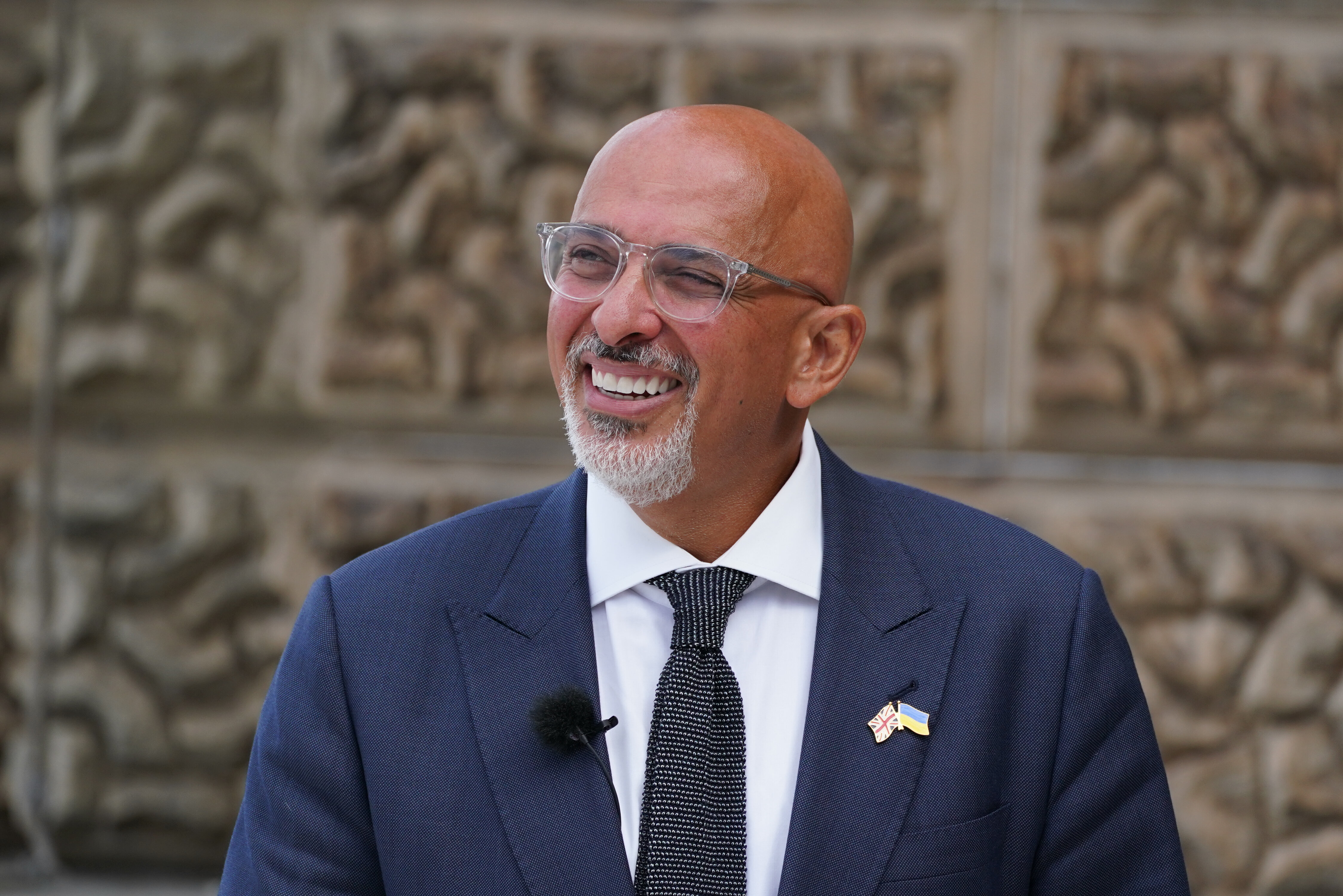
People Are Taking Nadhim Zahawi’s Advice On Cutting Energy Use With A Pinch Of Salt

Nadhim Zahawi urging households to look at how they are using energy has left some people speechless – probably because he used taxpayers’ cash to heat his horse stables.

On Friday, the chancellor said everyone should “look at our energy consumption” as it was confirmed bills are set to soar by 80%.

In 2013, the Sunday Mirror revealed he claimed for electricity at the stables, as part of a wider bill, other parts of which were allowed under the rules.

At the time, Zahawi promised to repay part of a £5,822.27 expenses claim for his energy bills after it emerged taxpayers were paying for the electricity supply to his stables.

He has said it was a “deeply embarrassing” but “genuine mistake” to claim the expenses for heating stables for his horses.

Given his history, some were taking his guidance with a pinch of salt after it was after it was announced the average energy price cap will soar to a devastating £3,549 in October.

One of the wealthiest members of parliament, Zahawi founded the polling firm YouGov.

In July, he told Sky News’ Kay Burley the claim was a “genuine mistake” as he did not realise his stable heating and personal heating was coming in on a single bill.

“It was a complete error, a mistake, and of course I apologised and repaid,” he said.

Asked if he was embarrassed, Zahawi said: “Of course. Deeply embarrassing. But it was a genuine mistake. It’s much better to admit and demonstrate than to do anything else.”

Share Button

House Of The Dragon Already Renewed For Season 2, Sky Confirms

Sky has confirmed the fantasy drama – set 200 years before the original hit show – will return for more episodes after the first series wraps up.

House Of The Dragon debuted earlier this week, with its first episode proving a hit with fans of the GOT franchise and critics alike.

Zai Bennett, managing director of content at Sky, said: “House Of The Dragon is already proving to be a ratings hit, and we predict it will go from strength to strength due to the captivating storytelling and incredible production values.

“We look forward to sharing a second series with our customers on Sky and NOW.”

The HBO drama – based on George R R Martin’s Fire And Blood novel – chronicles the beginning of the end of House Targaryen and the events leading up to the Targaryen civil war, known as the Dance of the Dragons.

Matt Smith, Paddy Considine, Olivia Cooke, Steve Toussaint, Fabien Frankel, Sonoya Mizuno and Rhys Ifans are among the cast.

Share Button

Moderna suing Pfizer over Covid vaccine technology

Moderna said it is suing Pfizer and its German partner BioNTech for patent infringement.

Share Button

12 Ways To Spend The Bank Holiday If You Don’t Want To Swim In Poo

Heavy rainfall returned in parts of the UK this week, which has overwhelmed the country’s Victorian sewage system.

‘Why does this impact me?’ you may ask. Well, dear reader, we’re sorry to inform you that raw sewage is being released into the sea – and it may scupper your usual bank holiday plans.

Over 40 beaches and swimming spots in England and Wales – mainly on the southern coast – saw pollution warnings in place after downpours followed months of little-to-no rain.

Sewage water could be seen gushing into the ocean at Bexhill Beach in East Sussex on Wednesday. Southern Water said electrical issues at a wastewater pumping station had caused the discharge. So, it’s safe to say our plans to go to the beach during the bank holiday are a little less appealing now.

Not to worry though, there are plenty of other ways you can enjoy the last weekend of August that don’t involve stomaching the stench of poo at the seaside. If you’re out of plans, keep reading.

Notting Hill Carnival

After three years, the UK’s favourite Caribbean celebration is finally back. Carnival was put on pause in 2020, along with so much else, but this year it’s back with a bang and we know it won’t disappoint. There’s music, dancing, Black joy and lots of food. And the best part of it all? It’s free!

Picnic in the park

You can’t go wrong with a classic picnic. Get all your friends together and go to your local park. Bring some snacks, drinks and a speaker and appreciate the outdoors. It’s warm across most of the country this weekend too, so it could be the last chance to have a picnic in the sun.

All Points East

What’s a better way to say goodbye summer than a festival? If you’re a music lover then All Points East is where you want to be. It’s running all weekend and you’ll be able to hear music from acts like Tame Impala, Disclosure and James Blake. Get your tickets here.

Edinburgh Fringe

It’s not too late to make it to Edinburgh for the Edinburgh Festival Fringe. This is the place to be if you want to experience some arts and culture this weekend. There are many, many plays and comedy gigs to choose from. Buy tickets here.

Two performers promote their show during the Edinburgh Festival Fringe.

Ken Jack via Getty Images

Two performers promote their show during the Edinburgh Festival Fringe.

Cornwall’s Seal Sanctuary

In the mood to see some animals? You should head down to the seal sanctuary in Cornwall. Here you’ll find seals (naturally) and also penguins and sea lions! You’ll be happy to know their mission is all about rescuing and helping injured or distressed animals. An ideal place to go for a family day out.

Get some free fish and chips

Yes, you read it right, you could get some free fish and chips this weekend courtesy of Sarson’s Vinegar. With the rising cost of living affecting some of Britain’s most-loved institutions, they want to give back. To be in with a chance of a free dinner, fish and chip fans need only snap a photo of their order (complete with Sarson’s vinegar, of course) and share it to Twitter or Instagram (post or story) tagging @SarsonsUK and #SarsonsFryday. The company will choose 400 people who’ll have their meal reimbursed this bank holiday weekend.

Go to a bottomless brunch

Who doesn’t like a boozy brunch on the weekend? If you haven’t tried a bottomless brunch yet, this is the time to do it (with an extra day to get over that hangover). There are several restaurants all over the country that offer a bottomless brunch on the weekends.

If you’re in London and want to continue with the theme of carnival, head over to the The Laslett in Notting Hill for their Carnival brunch. If you’re in Manchester, head to The Pen & Pencil for a free flowing brunch or go to the Lost Cat for their bottomless brunch, which they serve everyday. For those of you in Birmingham, check out the Bristol Pear or The Lost & Found.

The Big Feastival

Love food? Love music? The Big Feastival has both, with big-name chefs leading cooking demonstrations while bands play on into the evening. There’s also a lot of street food to try. The festival is happening Friday – Sunday in the Cotswolds and tickets are still available.

Visit a different city for a day

Bored of what’s on your doorstep? Get a train or a coach ticket to a different city for a day. Why not try going to Plymouth, Southampton or Newcastle for a day? You’ll be surprised at how much fun you have.

A new book

Book lovers! If you’re looking for a recommendation for a new read to help you relax this weekend, we have plenty of suggestions on our Shopping channel. From otherworldly books to reads that have a cathartic release, you’ll find something to suit you.

Cookery (and foraging) classes

Extend your cooking skills this bank holiday by attending this bread making or pasta class. Running on August 27, the class will teach attendees the key pillars of bread-making and pupils will leave with freshly baked focaccia, milk buns, tiger bread and soda bread. Or enjoy a pasta filled class run by pasta evangelists.

If you’re more of the outdoorsy type, the Foraging, Cookery and Lunch for Two course with Totally Wild is right up your street. They have 18 different locations across the UK and they’re all about teaching you how to make delicious meals with ingredients in the countryside.

If you’re a fan of asian cuisine, try the Asian Masterclass at the Smart School of Cookery for Two. They have classes in London, East England and South East England.

Visit Manor Wildlife Park

Situated in Tenby, Wales, this wildlife park is the home to several exotic and endangered animals from all over the world. They also have a bouncy castle, indoor play and a cafe that serves homemade pizzas. Take a look here.

Share Button