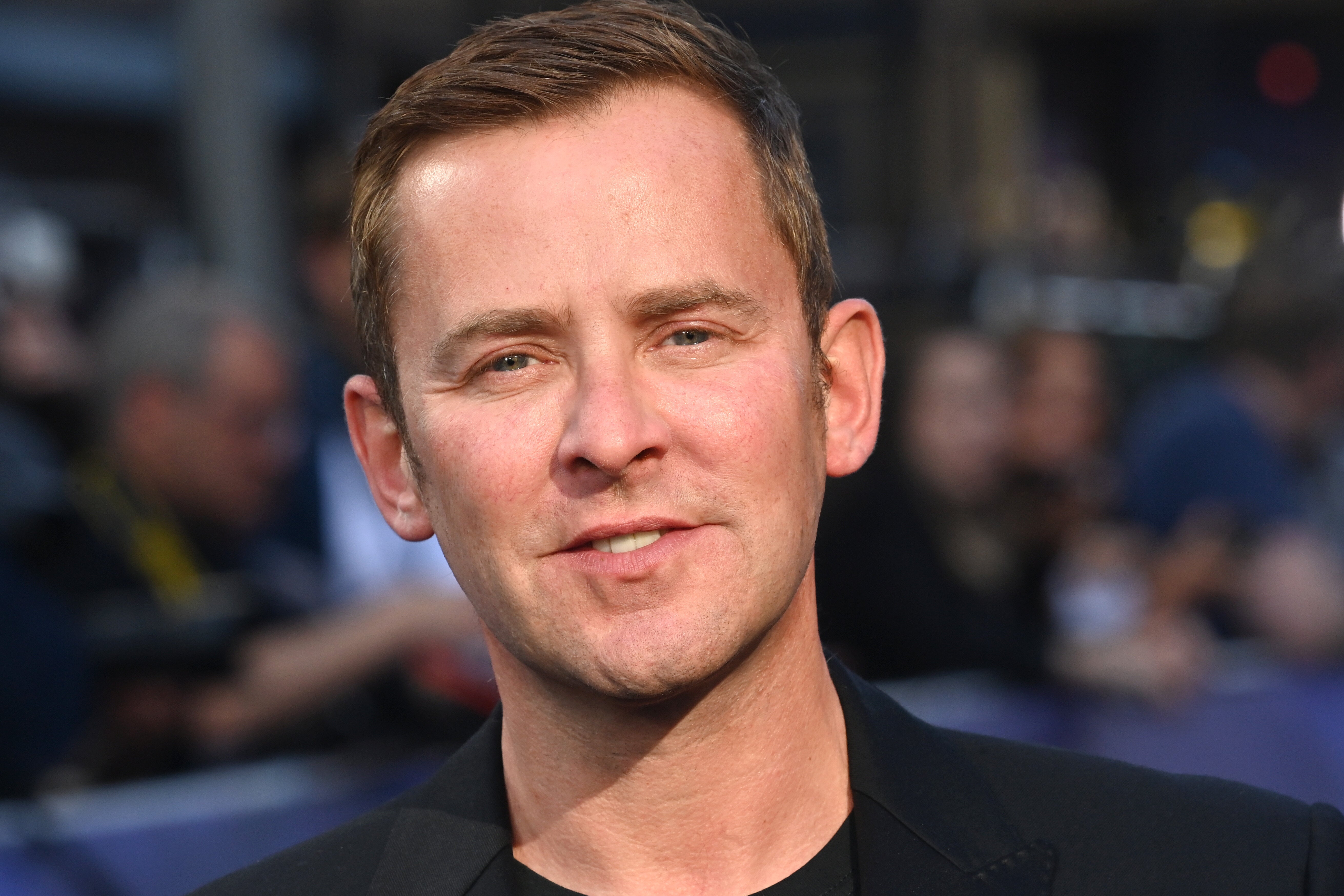
Scott Mills Holds Back Tears As He Signs Off From Radio 1 After 24 Years During Emotional Final Show

Scott Mills had an emotional moment has he signed off from Radio 1 after 24 years on Thursday.

Earlier this year, it was announced the DJ would be moving to Radio 2 to replace Steve Wright as the host of the station’s early afternoon show.

As Scott and his co-host Chris Stark hosted their final Radio 1 show together, he struggled to hold back tears as he told listeners to “turn on the radio” if they ever feel alone.

Scott also chose One Direction’s Night Changes as the final track, with his parting words fittingly being his famous catchphrase: “Love you, bye.”

He said: “I, like millions of you, have grown up with Radio 1, it has been more than half my life sat here talking to you.

“In that time I have publicly come out, met some of my best friends like the one sitting opposite me, I have had break-ups, found love and lost it again sometimes, and said hello and goodbye to family.

“Every low this show has got me through and every high I have been lucky enough to celebrate has been here, Radio 1 has been the constant through all this.

“We have done so much stuff and over the last month people have sent immensely kind messages of what the show has meant to them and the truth is everything we have meant to you, you have meant to me.

“We are your friends, it is not an act or a performance, we are your friends. We were here to be stupid and to give everyone a bit of a laugh and a bit of a safe space to a lot of mad and horrible things going on. Radio 1 is your mate.”

Scott also thanked Chris, saying: “You make me laugh every day.”

He added: “This might be quite weird but I can be quite shy and quite anxious off the radio, and some days you turn up and you need these people in your life to give you a bit of a lift.

“Thank you to every single one of you. This show is nothing without you, your calls, your messages, you texts, your companionship.

“If you ever feel there is no one there, if you feel lost, or if you feel there is nothing good around you, I will say one thing to you, turn on the radio.”

To mark his contribution to Radio 1, it was revealed that one of the station’s studios at Broadcasting House in London – previously named 82A – will from now be known as 82 Mills.

During his time with Radio 1, Scott has hosted a variety of shows across the network, including his current roles as host of the 1-3.30pm Monday to Thursday slot and fronting The Official Chart Show.

He will begin hosting the weekday 2-4pm slot on Radio 2 from 5 September.

After vacating his Radio 2 afternoons after 23 years, Steve Wright will continue to host Sunday Love Songs from 9-11am, as well as a new Serious Jockin’ show and other Radio 2 specials.

Meanwhile, Scott’s Radio 1 co-host Chris Stark will be joining the Capital Breakfast With Roman Kemp team from October.

Dean McCullough and Vicky Hawkesworth will take over as the new presenters of Radio 1′s Monday to Thursday 1pm slot, beginning 5 September.

Share Button

Climate change exacerbated hurricane Harvey’s flood damage, hitting low-income and Latinx neighborhoods disproportionately harder

New research published today shows that if it were not for the impact of climate change, up to 50 percent of residences in Houston’s Harris County would not have been flooded by Hurricane Harvey five years ago. The study, published in Nature Communications, coincides with the fifth anniversary of Hurricane Harvey, a Category 4 hurricane that made landfall in Texas and Louisiana in 2017, causing massive flooding in Houston.

“We already know that climate change is increasing the severity and frequency of extreme weather events,” said Kevin Smiley, the study’s lead author and LSU Department of Sociology assistant professor. “But now researchers are able to pinpoint the extent of damage from a specific extreme weather event such as Hurricane Harvey and the resulting floods.”

Fifty percent less residences impacted equates to about 50,000 fewer homes damaged and billions of dollars saved in residential damage.

“This means that we have quantified the contribution of climate change to the suffering of people who live there,” said Michael Wehner, the study’s co-author and senior scientist at Lawrence Berkeley National Laboratory.

The research, a first of its kind investigation into potential disparities between those impacted by the climate change-induced flooding, finds patterns of racial and economic disparities.

“Part of the reason why low-income neighborhoods flooded has to do with the historical development of Houston along its waterways and surrounding petrochemical corridor,” Smiley said. “There’s a clear climate and environmental justice story as to where these neighborhoods are located.”

How do researchers study the impacts of climate change?

Climate change attribution, which ascertains the connection between climate change and extreme weather events, involves running computational models to estimate how much these changes in climate make extreme weather events, like hurricanes, more severe. Scientists can compare these estimates without climate change to what actually happened to see the difference.

“This is the first end-to-end impact attribution study of a specific weather event following on our previous studies showing a significant increase in Harvey’s precipitation and the resulting flooding increase because of climate change,” Wehner said.

Although popular discussion tends to center around climate change forecasts for the future, the study underscores the fact that climate change is impacting life now.

“Climate change is happening right now with real and substantial costs,” Smiley said. “Three to five extra inches of rainfall from climate change can make the difference between your lawn getting soaked and your house getting flooded leaving it uninhabitable.”

Story Source:

Materials provided by Louisiana State University. Note: Content may be edited for style and length.

Share Button

Novel blood test helps evaluate severity in pulmonary arterial hypertension, a rare lung disease

Researchers at the National Institutes of Health have found that a novel blood test can be used to easily evaluate disease severity in patients with pulmonary arterial hypertension (PAH) and predict survivability. PAH is a rare, life-threatening condition that causes unexplained high blood pressure in the lungs. In early clinical studies, the researchers showed the test to significantly improve upon conventional tests, some of which use invasive tools.

The new blood test measures DNA fragments shed by damaged cells. Researchers found that these fragments, called cell-free DNA, were elevated in the blood of patients with PAH and increase with disease severity. If future studies confirm the findings, this first-of-its-kind blood test for PAH patients could allow doctors to intervene faster to prevent or delay progression of the disease and possibly save lives. Cell-free DNA is a relatively new analytical technique that is growing in its potential medical uses, which include the early detection of heart- and lung-transplant rejection as well as early detection of cancer.

The study was funded by the National Heart, Lung, and Blood Institute (NHLBI) and the NIH Clinical Center, both part of NIH. The findings will appear online in the journal Circulation, a publication of the American Heart Association.

PAH is a rare form of pulmonary hypertension that can cause difficulty breathing, chest pain, and fatigue. The disease, whose exact cause is unknown, is estimated to affect less than 50,000 people in the United States, according to the NIH’s Genetic and Rare Diseases Information Center. It is characterized by progressive narrowing and blockage of the small pulmonary arteries of the lungs, strain on the right side of the heart, and eventual death from heart failure. The damage to the lung in severe cases can require lung transplantation. Patients with PAH have a high death rate, and the condition mostly affects women. Despite treatment advances, it currently has no cure.

Current tests used to monitor PAH severity rely on established risk prediction scores based on clinical symptoms and on the use of an invasive catheter to measure pressure in the lungs. Doctors sometimes use echocardiography, or heart imaging, to measure pressures in the heart as an indirect measurement of lung pressure, but these tests tend to lack reliability and sensitivity.

“Researchers have been actively searching for novel, less-invasive approaches to evaluate PAH severity, disease progression, and response to therapy for more than a decade. These cell-free DNA analyses represent progress toward that goal,” said study co-author Michael A. Solomon, M.D., M.B.A., who is part of the NHLBI Cardiovascular Branch and co-director of the NIH Clinical Center Pulmonary Arterial Hypertension Section.

Sean Agbor-Enoh, M.D., Ph.D., study co-author and chief of the NHLBI’s Laboratory of Applied Precision Omics, agreed. “Here we’re proposing a one-time test where you collect a vial of blood from a patient and use that to predict survival. We’re very encouraged by the early results.”

In the current study, the research team analyzed cell-free DNA from blood samples taken from 209 adult patients, predominately women, diagnosed with PAH at two large U.S. medical centers. The researchers compared the results to cell-free DNA measured from a control group of 48 healthy volunteers without PAH at the NIH Clinical Center.

They found that cell-free DNA was elevated in patients with PAH, and also found that cell-free DNA concentrations increased in proportion to the severity of the disease. Patients with the highest level of cell-free DNA had a 3.8 times greater risk of either death or a need for lung transplantation compared to those with the lowest level of cell-free DNA, the researchers said.

Further analyses of cell-free DNA samples revealed that multiple tissue types — including the heart, blood vessels, fat tissue, and inflammatory cells circulating in the blood — were affected by PAH. The new blood test will allow researchers to better pinpoint the specific tissues involved in the PAH disease process. This knowledge may lead to new drug interventions for PAH, whose current treatment options may slow but not halt or reverse disease progression.

In addition to funding from the Intramural Research Program of the NHLBI, this research is supported by the NIH Clinical Center Research Award for Staff Clinicians Program, the NIH Distinguished Scholar Award, the Lasker Clinical Research Scholars Program, and the Intramural Research Programs of the NIH Clinical Center.

Share Button

Private mental health unit scrutiny recommended by Norfolk committee

It follows a report into the care of three women who were taken to accident and emergency 53 times.

Share Button

No new London hospitals until at least 2027

Epsom and Helier and Whipps Cross face delays of at least three years for new sites.

Share Button

South Korea records world’s lowest fertility rate again

Figures show that just 0.81 children per woman are being born in the country.

Share Button

Emily Maitlis Has A Brutal Message For The BBC Over Its Brexit Coverage

<div class="js-react-hydrator" data-component-name="YouTube" data-component-id="3692" data-component-props="{"itemType":"video","index":0,"contentListType":"embed","code":"

","type":"video","meta":{"url":"https://www.youtube.com/watch?v=bMaDI0DOJ3s","type":"video","version":"1.0","title":"Emily Maitlis on Brexit","author":"OldQueenTV","author_url":"https://www.youtube.com/channel/UC_1mDKnRagiJYrS060VQ9ig","provider_name":"YouTube","thumbnail_url":"https://i.ytimg.com/vi/bMaDI0DOJ3s/sddefault.jpg","thumbnail_width":640,"thumbnail_height":480,"cache_age":86400,"options":{"_start":{"label":"Start from","value":"","placeholder":"ex.: 11, 1m10s"},"_end":{"label":"End on","value":"","placeholder":"ex.: 11, 1m10s"},"_cc_load_policy":{"label":"Closed captions","value":false},"click_to_play":{"label":"Hold load & play until clicked","value":false}}},"fullBleed":false,"flags":[],"enhancements":{},"options":{"theme":"news","device":"desktop","editionInfo":{"id":"uk","name":"U.K.","link":"https://www.huffingtonpost.co.uk","locale":"en_GB"},"slideshowAd":{"scriptTags":[],"otherHtml":""},"slideshowEndCard":{"scriptTags":[{"attribs":{},"scriptBody":"\r\n (function(){\r\n var c = document.getElementById(‘taboola-endslate-thumbnails’);\r\n c.id += ‘-‘ + Math.round(Math.random()*1e16);\r\n \r\n var taboolaParams = {\r\n loader: \"//cdn.taboola.com/libtrc/aol-huffingtonpost/loader.js\",\r\n mode: \"thumbnails-b\",\r\n container: c.id,\r\n placement: \"Endslate Thumbnails\",\r\n target_type: \"mix\"\r\n };\r\n \r\n if (typeof window.modulousQueue === \"function\") {\r\n \twindow.modulousQueue.add(function(){ doTaboola(taboolaParams); });\r\n } else {\r\n \tdoTaboola(taboolaParams);\r\n }\r\n }());\r\n"}],"otherHtml":"

"},"isMapi":false,"isAmp":false,"isVideoEntry":false,"isMt":false,"entryId":"63068fa2e4b00c150d6774c1","entryTagsList":"brexit,newsnight,emily-maitlis","sectionSlug":"politics","deptSlug":null,"sectionRedirectUrl":null,"subcategories":"entertainment","isWide":false,"headerOverride":null,"noVideoAds":false,"disableFloat":false,"isNative":false,"commercialVideo":{"provider":"custom","site_and_category":"uk.politics","package":null},"isHighline":false,"vidibleConfigValues":{"cid":"60afc140cf94592c45d7390c","disabledWithMapiEntries":false,"overrides":{"all":"60b8e525cdd90620331baaf4"},"whitelisted":["56c5f12ee4b03a39c93c9439","56c6056ee4b01f2b7e1b5f35","59bfee7f9e451049f87f550b","5acccbaac269d609ef44c529","570278d2e4b070ff77b98217","57027b4be4b070ff77b98d5c","56fe95c4e4b0041c4242016b","570279cfe4b06d08e3629954","5ba9e8821c2e65639162ccf1","5bcd9904821576674bc55ced","5d076ca127f25f504327c72e","5b35266b158f855373e28256","5ebac2e8abddfb04f877dff2","60b8e525cdd90620331baaf4","60b64354b171b7444beaff4d","60d0d8e09340d7032ad0fb1a","60d0d90f9340d7032ad0fbeb","60d0d9949340d7032ad0fed3","60d0d9f99340d7032ad10113","60d0daa69340d7032ad104cf","60d0de02b627221e9d819408"],"playlists":{"default":"57bc306888d2ff1a7f6b5579","news":"56c6dbcee4b04edee8beb49c","politics":"56c6dbcee4b04edee8beb49c","entertainment":"56c6e7f2e4b0983aa64c60fc","tech":"56c6f70ae4b043c5bdcaebf9","parents":"56cc65c2e4b0239099455b42","lifestyle":"56cc66a9e4b01f81ef94e98c"},"playerUpdates":{"56c6056ee4b01f2b7e1b5f35":"60b8e525cdd90620331baaf4","56c5f12ee4b03a39c93c9439":"60d0d8e09340d7032ad0fb1a","59bfee7f9e451049f87f550b":"60d0d90f9340d7032ad0fbeb","5acccbaac269d609ef44c529":"60d0d9949340d7032ad0fed3","5bcd9904821576674bc55ced":"60d0d9f99340d7032ad10113","5d076ca127f25f504327c72e":"60d0daa69340d7032ad104cf","5ebac2e8abddfb04f877dff2":"60d0de02b627221e9d819408"}},"connatixConfigValues":{"defaultPlayer":"8b034f64-513c-4987-b16f-42d6008f7feb","clickToPlayPlayer":"5a777b9b-81fe-41a6-8302-59e9953ee8a2","videoPagePlayer":"19654b65-409c-4b38-90db-80cbdea02cf4"},"customAmpComponents":[],"ampAssetsUrl":"https://amp.assets.huffpost.com","videoTraits":null,"positionInUnitCounts":{"buzz_head":{"count":0},"buzz_body":{"count":0},"buzz_bottom":{"count":0}},"positionInSubUnitCounts":{"article_body":{"count":4},"before_you_go_slideshow":{"count":0}},"connatixCountsHelper":{"count":0},"buzzfeedTracking":{"context_page_id":"63068fa2e4b00c150d6774c1","context_page_type":"buzz","destination":"huffpost","mode":"desktop","page_edition":"en-uk"},"cetUnit":"buzz_body"}}”>

Emily Maitlis has criticised the BBC for “both-sideism” in its coverage of Brexit – suggesting its attempts to hear both sides of the argument led to “superficial balance”.

The former BBC journalist also argued the BBC and other media outlets are failing to tackle the impact of leaving the EU today, saying that “sidestepping” the issue “feels like a conspiracy against the British people”.

Maitlis, who left the broadcaster this year for rival media group Global, was addressing the annual MacTaggart Lecture at the Edinburgh TV Festival on Wednesday.

In one striking passage that won praise on social media, Maitlis said: “It might take our producers five minutes to find 60 economists who feared Brexit and five hours to find a sole voice who espoused it.

“But by the time we went on air we simply had one of each; we presented this unequal effort to our audience as balance. It wasn’t.”

She added: “I’d later learn that the ungainly name for this myopic style of journalism: ‘both-sideism’, which talks to the way it reaches a superficial balance while obscuring a deeper truth.”

Not everyone agreed.

The broadcaster suggested the problems continue, and outlets including the BBC adopt an “automatic crouch position whenever the Brexit issue looms large”.

She said: “Many broadcasters fear discussing the obvious economic cause of major change in this country in case they get labelled pessimistic, anti-populist, or worse still, as above: unpatriotic.

“And yet every day that we sidestep these issues with glaring omissions feels like a conspiracy against the British people.”

Maitlis joined the BBC in 2001 and presented Newsnight from 2006.

In February, she and Jon Sopel announced they were leaving the BBC to join Global, where they are hosting a new podcast, titled The News Agents, and a radio show together on LBC.

In her speech, Maitlis also said the BBC’s board includes an “active agent of the Conservative party” as she issued a warning about her former employer’s impartiality.

Share Button