Before 7am

I love the morning magical time. It’s my favorite time of day – before dawn when most of the city is still snug in bed.

This morning I hopped out of bed at 4:45am, feeling happy to start another adventurous day. By 7am this morning, I had done the following:

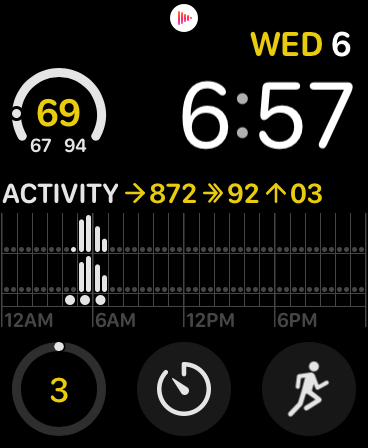
  • Ran 5 miles / 8 kilometers
  • Did 12,000 steps
  • Listened to 4 hours of The Art of Possibility audiobook (100 minutes x 2.5 speed)
  • Did 15 minutes of yoga with a little meditation at the end
  • Made a green smoothie (1 banana, 6 mandarin oranges, spinach, celery, blueberries, maca, dehydrated barley grass juice, chia seeds, hemp seeds, water)
  • Mopped the kitchen floor (well… assigned a robot to do it)
  • Started some steel cut oats cooking (I love the InstantPot!)
  • Dreamed up an idea for a new course / launch

Afterwards I reviewed my goals, and now I’m sipping the smoothie and writing this blog post while the oatmeal is cooking and the robot is diligently cleaning the kitchen floor.

Caffeine isn’t part of my day by the way, nor is chocolate, caffeinated teas, or other stimulants. That would just slow me down.

When I was 20 years old, this is what my morning would have looked like this (sometimes all the way to noon and beyond):

  • Zzzzzzzz
  • Yawn
  • Zzzzzzzz

Then I’d drag myself out of bed and start my day very sluggishly. It would take me at least an hour or two just to feel awake enough to function much at all. Then the rest of the day would be a blur, with the main decisions being figuring out what to eat. My biggest accomplishment of the day would be going for a long walk. At least I liked to walk.

What made the difference? Really it came down to a decision. I decided I didn’t want to live like that first person anymore. I didn’t want his life or his results – because they sucked! It was a boring, low energy, depressing way to live. And I decided that I could change that.

When I would read about highly productive people and their morning routines, I was envious at first, but their routines also seemed unreachable for me. Still, I felt attracted to having an empowering morning routine and starting my day with high energy. It took a long time to figure out what works best for me. I experimented a lot.

A solid cardio workout is such an essential part of my routine because of the benefits it produces. What many people don’t realize is that cardio exercises the brain, not just the body. It makes your brain and your mind stronger. See the Mental Benefits of Cardio video for more details on that. A good minimum is 45 minutes per day.

Running 5 miles (8K) to start my day is a stretch for me. I’m used to running closer to 3 miles (5K) on a normal basis. But it feels so much better to stretch myself. The feeling isn’t 60-70% better, relative to the mileage increase. It’s more like 3x better. Running farther than usual creates a disproportionate boost in mood and energy above the baseline.

Nailing an empowering morning routine sets you up for a strong day. It’s wonderful to know that you’ve accomplished something meaningful during those first couple of hours.

I’m not in competition with anyone here. I compare my results to where I’ve been. My past self is the baseline, and as I generate new past selves, I develop new baselines. Presently I’m pushing myself to surpass my old baseline from earlier this year.

I especially like the combo of audiobooks and running. It’s nice to go through an audiobook every few days without having to take any extra time. Maybe you won’t retain every idea as well this way, but it still helps.

That app in the lower left of my Apple Watch screen (with the number 3 in the middle of a circle) is Nozbe. If I get a cool idea while running, I can tap that app and record a quick voice message that will go into my capture system as text. So if I do catch a cool idea from an audiobook while running, I send it into my system while on the road, and then I can decide if I want to turn it into something actionable later that day.

What’s the best morning routine you’ve ever had in your life? Are you at least using that as your baseline today? Now what are you doing to surpass it? Just because it’s good doesn’t mean you should settle. How could you make it even more kickass?

My morning routine works well for me. It’s energizing and mood-boosting. But it could be better, so I’ll keep tinkering with it and improving it over time. There is no reason to settle for good enough.

Share Button

Overdoing the New

By the time I had started my computer games business in 1994, I had already programmed a commercially published game as an independent contractor working for a local game studio. Actually it was a four-pack of Windows 3.1 games that were sold as a single unit. And I’d worked on a previous game project before that, so in about six months, I had iterated through five unique game projects.

Each time I started a new game, I had the opportunity to improve upon what I’d done before. I’d begin with the code base for an earlier game project, and then I’d make some improvements to the code to create a stronger foundation for the next project.

Additionally, since I didn’t have to reinvent what I’d already done, I could stretch myself by taking on a little more challenge each time. For the first game project I worked on for the local studio, they already had a working prototype running on a Mac, and my job was to port it to Windows. They scrapped that project after a few weeks (for commercial reasons I believe), but the work was basically to translate some pre-existing code from one platform to another. This was my first commercial project ever, so it was great that it was an easy way to get started.

For the first game in the four-pack, however, there was no prototype. I had to code the game from scratch based on a pretty thin design doc (like 1-2 pages). I was assigned a young artist to work with, and that was the extent of our development team. It was a simple shoot-em-up game, so our tiny team was sufficient. I also had enough time to add some extra embellishments of my own, and I believe my improvements made the game a little more fun to play.

With each succeeding game project, I tried to challenge myself a little bit more. The more games I wrote, the more I could lean on previous code I’d already written, often adapting it for similar mechanics in a different game. The more code I could reuse, the more capacity I had for extra embellishments.

For the fourth game in the four-pack, I asked if I could design the game myself, and the company agreed. I kept to the minimalist standards of the four-pack, and I pushed myself to squeeze more out of the little 2D game engine I’d been developing.

By starting with a porting project, in a few iterations I was eventually able to design and code a complete game. I also did the sound effects for it.

But if I’d started with the fifth game project, it would have been too much. And it would have been discouraging too. It was so much nicer to see rapid progress through a series of completed projects, so by the time I was beginning the fifth project, my confidence was sky high. It was just another 20% beyond what I’d done before, so I knew it was achievable.

When I started my computer games business, I wrote a new code base for my first game, and it took about six solid months to develop that game because I put way more into it. Looking back, I think I overextended myself. I tried to squeeze too many new ideas into one project. It would have been better if I’d started with less ambitious project and released and iterated more frequently, like I’d done while working as a contractor. Trying to go too big too soon really slowed me down.

In fact, I made an even bigger mistake by progressing way too quickly into a mega-project that I worked on for years and had to be canceled in the end. Meanwhile, my business was starved of cashflow during that time because I had little to sell, and there was no effort being put into marketing. Going back to smaller projects with more frequent releases – and paying a lot more attention to marketing – turned things around.

Today I’m much better at leveraging the power of incremental improvements. I have a well-developed system that I use for developing and launching new courses. Each time I run through that system, I improve it. I document it more clearly. I add some new ideas, but not too many each run-through. I maintain the parts that are working, and this gives me more capacity to add a little more each time without feeling overwhelmed.

A recurring mistake I’ve made in the past was trying to add too many new ideas to a project. New ideas are way harder to incorporate than re-using previously tested ideas. For me the worst part about trying new ideas is that it’s hard to estimate how long they’ll take. The more new ideas I add to a project, the greater the risk of blowing my intended schedule.

When I’ve tried to overdo the new by incorporating too many new and untested ideas into a project, the project normally doesn’t go well. But when I assemble a project from pieces that are familiar and then add some newness on top of that, my odds of success increase greatly. And I feel more confident too.

Conscious Growth Club is a good example. When I started putting together the initial pieces for this club in 2017, the overall package was new, but I assembled it from pieces rooted in past experience, so it wasn’t overwhelming. I stuck to the core ideas first, and then gradually year by year, we’re adding more to it.

I think of each year in CGC like a new project that builds upon the codebase of the previous year. We maintain what’s working and then explore adding something new – a new feature, a new course, some new experiments, etc. The key is not to try adding too many new ideas all at once, especially if they’re complex ideas.

Consider the CGC member discussion forums. I knew I could manage that because I’d done it before. I’d previously admin’d a sizable public forum for five years, and I had a lot of previous admin and online community experience from years prior. So while we were using new software for the CGC forums, online community management is old hat to me. I was very confident that I could manage that aspect successfully, and I had the necessary mental callouses to prepare me for the experience in a realistic way.

The courses were going to be new, and that part took the longest, but I’d previously had experience with writing (from blogging and a book), product design (from my game development experience), audio (from podcasting), speaking (from six years in Toastmasters), online publishing, and marketing and selling products online. So I had a whole bundle of experiences that gave me a solid codebase to build upon. There was still a lot of newness here, but it wasn’t as daunting as starting from scratch.

For the CGC coaching calls, I had previous one-on-one coaching experience, so it wasn’t too much of a stretch to expand into group coaching calls. It’s basically a series of one-on-one coaching sessions back to back.

Wherever I need to chip away at some of the new areas, I leaned in with practice. My video practice was a bit weak, so I committed to doing a public 30-day challenge to record and publish a new YouTube video each day. I averaged about 30 minutes per day, so that was 15 hours of published video in a month. That gave me sufficient practice to get comfortable with it. I also bought Final Cut Pro and learned it use it for video editing till I grew very comfortable with it. I spent weeks transforming a room of my house into an audio and video recording studio as well. I’ve been using it for years now, but it took a long time to experiment with the lighting and setup till I liked the results.

It was just so crucial to assemble the different parts of CGC from the familiar and not try to squeeze in too many new ideas all at once. Figuring out the new parts always takes longer, but when you do figure them out, you can lock them into your codebase and reuse them efficiently.

Additionally I had to figure out how to launch and promote CGC. I started out very basic. And now each year that we launch, I can do things with a bit more complexity, including advertising. The familiar gets easier, and that frees up capacity to try some new things. I like to incorporate at least one new idea each launch, but if I try to add three or four new ideas, it could become overwhelming to get everything done in time.

Exploring what’s new can be fun and rewarding, but it’s also risky. I’ve paid the price numerous time for trying to be too ambitious with too many new ideas. Every new idea takes a lot of work to figure out, and it’s unpredictable how long it will take precisely because it’s new. A project that tries to incorporate too many new ideas is at great risk of scope creep. If scope creep becomes too much, a project could be at risk of cancellation, or it may begin to feel like a death march.

Think about where it’s important to innovate with a project and where it isn’t. If you want to innovate greatly with the content, it’s probably best to keep the format familiar. If you want to innovate greatly with the format, then you may not innovate as much with the content. If you want to innovate on both sides, look for ways to lean on a tried and tested codebase where possible, so excessive newness doesn’t overburden your project with too much risk.

Exploring the new can be fun and rewarding, but pay attention to the risks. If you’re constantly blowing your intended schedules and dropping projects before they finish, consider whether you’re trying to do too much too soon. Could you scale back to a more reasonable project that can better leverage your existing codebase of knowledge and skills, even if it’s less creative? It’s better to start with a modest success and build upon it with each new iteration than to overwhelm yourself from the start.

Share Button

Virtual Coworking

I learned about virtual co-working in the past year when a Conscious Growth Club member introduced me to it. It’s very simple. A group of people hop onto a Zoom call together, and they work, each person in their own physical space. A work session session might last for a few hours.

This might sound odd, but it’s surprisingly helpful if you’re used to working solo. With everyone sharing their videos and being able to watch each other if they want, you also know that you’re being watched, which can make you feel more accountable to doing real work. You see everyone else working diligently and looking focused, which makes you want to join in.

There’s also the option to check in with each other at regular intervals. Ultraworking hosts sessions with 30-minute work cycles and 10 minute breaks. Those intervals are a bit short for my tastes since the check-ins feel too frequent, but the general concept is interesting.

I’ve done many virtual co-working sessions, mostly last year, and while I wouldn’t want to do them all day long, they’re nice now and then. I like the variety of it, as long as the check-ins aren’t too frequent.

Once drawback, however, is that it’s not that exciting to do virtual co-working with strangers that you don’t know. It’s not bad though since it’s basically the online equivalent of working at a Starbucks surrounded by strangers.

Well, one CGC member recognize the opportunity for inviting other members to do this together, so she started up a co-working group inside CGC in March. Now some members are doing regular “let’s work together” work cycles in the CGC Watercooler (our 24/7 member video hangout).

I think this is a great idea, and I could imagine this becoming a popular feature if other members want to join in on some of these sessions.

Virtual co-working not only helps with accountability, but it also makes working from home (which many of us are doing now) feel more social. Instead of taking breaks by yourself, you can take breaks to check in with your coworker friends. You can share progress updates and help each other stay motivated, focused, and productive.

Since CGC is a pretty stable group – the minimum membership is a year – you’ll surely get to know the other members too, so then it feels like you’re working with a group of friends. It’s nice to feel that other people care about your projects and are keeping tabs on you.

I love the organic nature of CGC because there’s lots of opportunity for interesting ideas and experiments to bubble up inside the group. This year I’d like to encourage more of these kinds of experiments, and then we can work on making the popular ones more consistent, so they’ll always have a space inside the club.

By the way, if you’re thinking about joining CGC this week, I invite you to join us for a Q&A call with me and some of our members on Thursday, April 30 at 11:11am Pacific time. You can learn more about the club and what it’s really like inside. Meet some of our members. See this news post for the call details:

Conscious Growth Club Q&A and Meet Your Future Friends

The deadline to join Conscious Growth Club is Friday, May 1st. This is the only week of the year that we’re inviting new members to join. Many have already joined this week and are getting a warm welcome inside the club. 🙂

Share Button

Creative Productivity

One goal that’s been on my Someday / Maybe list for many years is to write a novel (or even multiple novels). I’ve done lots of nonfiction writing, so I think it would be interesting to explore fiction writing. I like the idea of delving deeper into my imagination and connecting dots through a different medium.

I also love to turn personal goals into social goals by inviting people to join in such experiences.

This aligns well with the next deep dive I have planned, which is on the topic of creative productivity, tentatively called Amplify. I’d like to start creating this course during the summer.

I have a pretty large body of published work, including video games, articles, videos, podcasts, personal development courses, and hundreds of books published under my name in various languages. I wrote one of those books myself, and the others were compilations of different articles that people created from my uncopyrighted blog posts. I’ve also done many speeches and live workshops and even a little music.

Since 1993 the creative professional path has been my way forward in life. I got to see my first published commercial product (a collection of computer games) on the shelf at Comp USA shortly after I graduated from college. Those games weren’t very good, but that project got me started. I’m glad I got an early since since it took time to figure out how to earn a living from creative work and to become proficient.

The relationship between creativity and productivity fascinates me. It’s such a dance of yin and yang, part exploration and discovery and part disciplined action and goal focus. If this balance is off, it’s hard to converge on creative work that feels worthy of publishing. Either we crank out uninspired drivel, or we get lost in the idea space too long.

I’d love to explore this relationship between creativity and productivity more deeply this year and invite people to delve into this with me. So that’s the basis of our next deep dive. How can we be brilliantly creative and consistently productive at the same time?

I’d like to do something a bit more hands-on this time though. In addition to creating an all new course, I think it would be worthwhile to invite each person who participates to commit to creating some kind of creative work. What each person creates is up to them.

Possible creative works could include:

  • book (fiction or nonfiction)
  • screenplay
  • video game (at least a playable prototype)
  • software app
  • music album (or perhaps one well-polished song)
  • stand-up comedy routine
  • artwork
  • blogging / writing series
  • YouTube videos (build a following)

Alternatively, people could also use the deep dive to focus on creative skill building through exploration with smaller projects. This could include:

  • musical instrument practice
  • photography
  • painting
  • 3D art
  • programming
  • cooking
  • chess
  • parenting

Many creative skills have much in common, especially when it comes to being productive. The lessons I learned from designing computer games apply well to designing personal growth courses or laying out a book. One key lesson I struggled to learn was how to adapt certain media to fit my strengths. It took me years to figure out how to create and publish courses efficiently after so many years of blogging. I had to learn different methods for managing short-form and long-form creative projects.

I’m still in the very early phase of figuring out the scope of this new deep dive, but the initial inspiration is leaning me towards inviting participants to work on a real creative project as they go through the course, so they can apply the lessons to a genuine project.

In fact, I would like to do the same by writing a novel as we go through the deep dive together. Since that’s a new medium for me, it would make it extra challenging. If I’m to weave two major projects together like this though (a major new course and a novel), I’d need to go at a gradual enough pacing, so I can devote sufficient time to each. So I may develop and publish the lessons of this course more slowly if I go that route. That would likely be fine since then it would give people doing the course more time to work on their own creative projects while they go through the course.

An alternative approach would be to have two phases: First we do the deep dive course, and then we tackle our creative projects as a separate phase. Perhaps we could have check-in calls for that second phase, do some Q&A, share lessons, and help each other work through any blocks that arise.

For now I’m just sharing an early version of this idea, which still needs a lot of development. If you find this theme of creative productivity appealing and want to share feedback about it, please let me know your thoughts. I think it has some potential to be a really engaging and rewarding deep dive.

If you join Conscious Growth Club next week – we open for new members April 27 to May 1 – you’ll get access to this new deep dive as part of your membership automatically. Then we can also use the CGC forums to support each other as we go through it. I’ll also make it available as a standalone deep dive, as with our other courses.

Share Button

Offense and Defense

Please enter your name.

Please enter a valid email address.

Thanks for requesting the One-Minute Productivity Hacks PDF. To receive your download link, please click the confirmation link in the email that has been sent to you.

Something went wrong. Please check your entries and try again.

Share Button

How to Work Productively on Big Projects

Recently I’ve been a in terrific productive flow. Due to the coronavirus situation, I have no in-person obligations now, so there’s no need to go to the gym, to guitar lessons, to run errands, or to meet up with people. My hair is growing longer, but my focus is growing deeper.

This has given me the space to tinker with my system for managing tasks and projects. I’ve had time to experiment with different approaches and to observe closely how those changes affect me. There’s less variety of activity in my life now, so I can perceive the impact of these changes more clearly. It’s like working in my own personal productivity lab where I can finally control the lab environment.

One simple change that I’ve been finding very effective has been to redefine larger projects as lots of smaller projects instead. For instance, the annual opening of Conscious Growth Club is a big project with more than 100 steps, and many of those steps have checklists of 10+ items within them. This year I decided to split that larger project into 17 smaller ones. The action steps are the same.

There’s a different feel where I have to work for weeks just to complete one project versus being able to complete multiple projects every week. I like the feeling of accomplishment I get from closing smaller projects more frequently. These smaller projects are just chunks of the larger one, but they’re crisply defined. Some of them can be completed in an afternoon.

As I continue to break off pieces of other large projects and turn them into their own projects, my projects list has grown lengthy. But the feeling of flow has increased because now I’m completing and closing projects more often. On a good day I might fully complete 2-3 smaller projects.

This helps me see myself as a project finisher. I’m feeling increasingly driven not just to work on projects but to push them towards full completion. It’s intrinsically rewarding to close out a project, and now I get to enjoy that reward 10-20x more often.

Imagine working on a project with 100 action steps to complete, and you’re only 9 steps in. How does that feel?

Now imagine fully completing one 5-step project and then finishing 4 out of 5 steps of a second project. How does that feel?

In each case you’ve completed 9 actions steps, and they’re the same actions. But the framing in the second case is likely to feel a lot better. It does a better job of building momentum and confidence, doesn’t it?

Moreover, if you only have 1 step left to go to complete that second small project, are you really going to leave that undone at the end of the day? You could, but you might feel driven to polish off that last task to fully close that project too. I’ve noticed that I’m more likely to push myself to complete an extra step or two if I’m that close to the finish line. It feels good to close out the project and move it off my plate completely. This is restful for my mind because when I complete the project, I can let it go.

Is it easier to tackle a big project like “write a novel,” knowing you won’t get far in a day, or to break off a small piece like “brainstorm and outline a rough design for one character” and complete it? Which framing leads to more procrastination?

Which is easier to face: a project that says “Clean house” or one that says “Do laundry”?

The framing of big projects may lead to thoughts like:

😓 This is gonna be a lot of work.

😓 This looks complicated.

😓 This will take a long time.

😓 How long will this actually take to finish?

😓 It will be a long time before I see results from this.

😓 I wonder what’s on Netflix…

With small projects the framing shifts to:

✅ I can knock this out this afternoon.

✅ Only 6 action steps? I can do that.

✅ This looks simple and compact.

✅ This seems pretty straightforward.

✅ I can see all the steps at a glance.

✅ It will be nice to get this project done today.

✅ I’ve already finished 5 projects this week… which one to do next?

My suggestion is to consider how you’re presenting your work to yourself. If you present a long, slow slog up a mountain of work, your mind and body may react accordingly. If you present yourself with accessible projects you can readily finish, you may enjoy some meaningful gains in focus, flow, and fulfillment.

Share Button

Are People Slowing You Down?

When I was in college, I listened to an audio program that mentioned businessman and author Harvey Mackay. The program cited him as an example of someone who was very coachable because he’d often hire a coach for those areas of life where he wanted to improve. For instance, he hired a running coach to help him get better at running.

This got me thinking about how coachable I was. I decided to try hiring a coach for 6 months while still in school, someone who was part of a coaching program offered by Denis Waitley. When this offer came to me via postal mail, I thought, “Why not?”

That was a new and interesting experience for me. We had weekly 30-minute calls, which were very conversational. Usually the coach, whose name was John, would ask me for an update on my situation, and then he’d make some suggestions for what I could do to improve.

I also had to take a personality profile test as part of this program, and the results were shared with the coach and me. My results were fairly unbalanced according to the report, but I thought it was reasonably accurate.

This was during the time when I was going through college in three semesters by taking a significantly higher course load. My focus at the time was on productivity. I wanted to get better and better at that. My goals were mainly academic in nature.

My coach, however, often didn’t seem to care much about helping me in that area, perhaps because by most people’s standards, I was already highly productive. He wanted to bring more balance to my life, so his advice was often social in nature. He advised me to reach out and connect more with other people, and he gave me some tips on how to lean into that gradually.

I had a small group of friends, and I thought my social life was okay for the time I had to devote to it. I was in a bit of a bubble socially though, and I didn’t feel much desire to expand in that area. My friendships weren’t particularly deep, but I actually felt okay about that.

The coach spotted an imbalance, and in a way he was right, but I wasn’t in a position to be coached in that particular area. I did work on that area of life tremendously after I graduated, but while I was immersed in the educational funnel, working on the coach’s goal for me wasn’t a good fit. I wanted to work on my own goals that were front and center.

After six months I decided not to continue with that coach. I found that his advice in some areas was okay, but his timing was wrong for me. I think he wanted to help me create a significant breakthrough in my social life and relationships, but I wasn’t in a position to make that a reality.

The bigger issue for me, however, was his attitude towards productivity. I wanted to push myself further in developing outstanding productivity practices and habits, so I could complete my schoolwork faster and take on even more. I wanted his help in raising my standards even more. On some level I knew that my life was unbalanced, but I was actually okay with that. I was getting so much juice from pursuing goals that mattered to me.

When I released the coach, I actually went faster. I don’t think this was due to saving 30 minutes a week from not doing the coaching calls anymore. I think it was from unshackling myself from the coach’s expectations, which were lower than the demands I placed on myself. The coach anchored me to attitudes that didn’t serve me.

My final semester at college was my most productive ever. I even did the equivalent of a full-time contract work position programming computer games while taking 37 units at school (the usual is about 15 units). I’d sketch out game algorithms during slow classes. I found many more ways to be productive without burning out.

I realized that when I pushed myself to excel, other people could create social drag for me. I also recall that this was one reason that I was fairly guarded in my social life back then. I liked having a few friends to hang out with and to enjoy poker nights with. I was also active in the school’s computer club and eventually served as Vice Chair of that club. But I was hesitant to make too many friends, partly because I didn’t want to be infected by their attitudes.

Well-meaning people can slow us down if they hold us to lower standards than we wish to hold ourselves. They’ll often try to rope us back into the fold. I see this as a test from reality: Are you ready to stand up for your desires? Are you ready to develop and maintain your own standards, regardless of what other people think?

Don’t let other people’s limits infect you. If you want to go further and faster, you can do so. Expect social resistance to rise up now and then. Just poke it with a pin, and you’ll find that it deflates pretty easily.

What I found is that if I keep leaning towards my desires, even when it seems like no one else wants to go there, it does eventually attract people who align with having similar experiences. Again, it’s helpful to see this as a test from reality. If you don’t stand up for your standards, then you don’t have standards. You have sitards. 😉

Surely there are some areas of life where the standards of the people around you seem to be significantly lower than yours. A major challenge of living consciously is to continue acting in alignment with your own standards. Do your best to avoid the tendency to sink back down into the social trough – you won’t be happy if you let yourself slide.

Take a moment to remind yourself of your true personal standards. What habits and practices feel aligned to you, even though someone else might consider those standards too extreme? Are you happiest when you maintain your standards… or when you slip back down to lower standards that others can accept more easily?

Share Button

The Beauty of Endless Projects

One thing that Walt Disney loved about Disneyland was that it was an endless project. He could always continue tinkering with it. He knew that it would never be finished.

In contrast to Disney films like Snow White, Bambi, and Mary Poppins, Walt found it appealing to pour his energy into a project that he could never complete. This allowed him to make continuous improvements. He would walk around Disneyland often, especially on Saturday mornings, and note issues that could be improved. Sometimes he’d even tell team members to relocated trees that they’d planted, so the views for guests would be better. He was good at noticing how small details contributed to the overall experience.

Conscious Growth Club is that kind of project for me. We’re about to enter our fourth year, opening for new members April 27 – May 1. We’ve made numerous improvements to the group since we first opened for early access in April 2017. And there are many more improvements yet to be made.

From one perspective, the list of potential improvements can seem daunting. Whenever I invite members to share ideas for improvement, like I recently did in our private forums, there’s a flow of great suggestions that will take time to implement. I capture these ideas and integrate them into my project planning system, so I can keep track of them. The hardest part is prioritizing what we’ll do next.

For the early months and years of CGC, much of my focus was to get the big rocks in place: the forums, the coaching calls, and some courses. We now have three major courses and a nice flow of three coaching calls per month. We’ve had significant daily activity in the forums since we started. The core pieces have all been working well for quite a while now. And we can maintain a nice flow of continuing to add to these resources.

We’ve also added other stable elements to the group: a 24/7 video chat channel where members can connect (called the CGC Watercooler), new 30-day challenges every month, 5-step quarterly planning sessions for members to clarify their goals, and lots of spinoff projects and experiments that members have come up with, including a writing mastermind group, a CGC movie club, and an online co-working group.

CGC is my own version of personal growth Disneyland. It’s a project that will never be completed. Ideally I’d love it to outlive me – always evolving in different ways. With so many growth-oriented people inside contributing to it, it’s been expanding in interesting directions since we started.

Here are some of the aspects I want to improve for the upcoming year of CGC.

Helping Members Feel at Home

CGC is great for people who are very growth-oriented and have sufficient time to delve into all the resources and opportunities the group provides. But it can feel a bit intimidating to new members, and it takes a while for some people to warm up to it and feel socially integrated into the group, even though the people inside are very friendly and welcoming.

We always welcome new members in the forums after they introduce themselves. Rachelle and I do our best to welcome everyone personally too. That’s a good start, but we need to build upon that to help people feel even more welcomed and to help them feel comfortable enough to start using CGC’s resources regularly, especially on the social side.

After our 2020 opening, I plan to host an orientation webinar in the first half of May. All members are welcome to attend. This may be followed by a video Watercooler welcome party (either right away or shortly thereafter). The orientation will be recorded and added to the CGC member portal, so members can rewatch it whenever they want. If someone has gone inactive for a while, rewatching this could help reacquaint them with the key features quickly and help them re-engage.

As part of the orientation process, I could also invite some members who’ve been in CGC for at least a year to share their tips and suggestions for getting the most out of the group. I think some of our members would be happy to share, especially in terms of what they wish they understood better when they first joined.

I plan to create a nice onboarding email sequence too (instead of just a single welcome email), so when new members join, they’ll receive a series of emails gradually introducing them to different features of CGC one by one. They can reply to these emails to ask questions too. I’ll set it up so that previous members can opt-in to this sequence too if they want a gentle refresher.

Helping Members Build Comfort and Trust

I do the coaching calls personally, and even though I find them fun, casual, and stimulating, for some members it’s still a bit intimidating to raise their hands to participate in a live video coaching call.

Even after a year or more in CGC, many members have never participated in the live coaching (other than watching), and a key reason is that they don’t feel comfortable enough with it yet, especially when it comes to talking about personal growth challenges. We’re pretty gentle and encouraging on these calls, which are geared towards helping people find solutions to their problems. But it can take time for people to get used to this level of intimacy.

I don’t think I could get nervous doing these coaching calls if I tried, and it seems like I’ve been sharing intimate details of my life online forever, so this can be a blind spot for me. It’s easy for me to forget what it’s like to just be getting started with this level of sharing and trust. So I’m looking into adding more intermediate steps to help people bridge this gap.

One idea is to host occasional “office hours” or hangouts in the video Watercooler for members who want to connect and chat with me in a less structured format than the coaching calls. This could help members feel more comfortable talking with me on video if they find the regular coaching calls too big of a step.

There are other ideas we’re considering along these lines as well.

In the beginning our focus was on adding a lot of value to CGC. This year we’ll continue doing that, and I also want to do more to help members leverage the value that’s already there.

When you first enter Disneyland, you have to walk down Main Street. That’s the only way in. Then you get to the round courtyard in front of the castle, and from there you have options. It’s basically a hub-and-spoke design.

For some members the experience of joining CGC is like starting the Disneyland experience right in front of the castle. You’re dropped into the middle of the park, which can seem a little overwhelming. Which way do I go first? Should I go through one of the courses? Hop on a coaching call? Join a 30-day challenge? Start posting in the forums? Just lurk and read the forums for a bit?

So we need to build a Main Street for CGC. I can see that it would be helpful to provide a more linear channel into CGC to help guide people into the experience. Help them warm up to the new reality they’re entering. Then point out the options for further exploration when they’re ready.

Experimenting

I’m also interested in doing more experimentation this year. We already have lots of daily engagement in the forums, and members are finding wonderful ways to leverage CGC’s tools to create extra value, such as using the video Watercooler for mastermind meetups and co-working challenges. I’d love to do more along these lines. Lots of good ideas bubble up from observing how members are using the different tools.

Here are some ideas that I’d love to experiment with:

  • Investigate ways to add games to make CGC more fun and to help members connect in different ways.
  • Look into team-based projects, experiments, and challenges in CGC. What about a team-based 30-day challenge now and then? This could increase accountability for those who want more motivation and support to complete all 30 days.
  • Explore the video co-working idea in more depth. See if more members want to engage with it and if we could do more with it, such as team productivity challenges.
  • Explore adding some competitive aspects or contests to CGC for members who’d find that fun and motivating. Team 30-day challenges could be one version.
  • Brainstorm what we could do with multiple Watercooler-type video channels.
  • Consider having occasional Watercooler check-in chats for the more popular 30-day challenges, so people can discuss progress and sticking points. See if we can help more people finish all 30 days.

Most of these features will be of greatest benefit for the members who feel right at home in CGC and want to keep exploring and growing together. So I want to be careful to balance the addition of new features (including experimental ones) with making sure that we’re doing enough to invite members to engage with these features.

In this next year, I also want to give members more authority to help manage and implement some of these features. I’d like to explore adding some positions with paid stipends, so members who contribute a lot to the community can generate some extra income from their participation. This seems like a good year to lean into that.

I’m excited about the future of CGC. We have a really interesting mix of structure and organic elements within the group. It’s rewarding to have this endless project that can continue evolving year after year.

In some ways the most difficult years are the early ones because there’s so much to figure out and improve. Walt Disney and his team were constantly testing different ideas for Disneyland. They failed early and often, building rides that didn’t work well, tearing them down, and trying something else.

Sometimes I think of CGC as an amusement park of different experiences, although we focus primarily on growth experiences instead of entertainment. When I think about what Disneyland was like when it first opened in 1955 and how much it evolved over time, it helps me understand how far constant experimentation, improvement, and iteration can take us if we simply persist and keep striving to serve our members well.

Sometimes I dream about what it would be like to visit Disneyland in the 1950s or 60s. I’ve been there every decade from the 70s onward, but I’ve never seen the park during its earlier years. By the time I saw it, it had already been evolving for at least two decades. That would be a fun experience to recreate in virtual reality someday. Perhaps a smart enough future AI could build a decent simulation of that experience by researching historical footage and reading first-hand accounts from people who were there in the 50s or 60s. In creating some aspects of Disneyland, Walt realized that the past could be brought back to life. Imagine what past experiences we could recreate and experience with advanced enough technology.

Share Button

Daily Reminders

I normally review my quarterly goals each morning, which is a good habit for staying focused on them throughout the quarter. One new habit I’ve started is to also review a daily reminders list. This is a list of good practices that I want to refresh in my mind each morning, so I can remember to practice them.

The reminders list is good for habits that are difficult to anchor to just one time of day. This can include mindsets, frames, values, and practices that I may want to embody throughout the day. The list is very flexible though, so I can also use it to remind myself of positive habits and their benefits.

My reminders list is pretty long – too long actually – so I want to cull it down to make it more succinct. I started by making an exhaustive list. I can strip away the less important items that really don’t need a daily reminder. I think it’s good to get the list down to a page or less, so it can be reviewed more quickly.

Here are some ideas for what you could include on a daily reminders list:

  • Your favorite morning routine
  • Your favorite evening routine
  • Your favorite weekend activities
  • Reminders about how to use your personal time purposefully
  • Your key areas of focus: health, relationships, business, etc.
  • Your favorite habits that benefit you
  • New habits in progress
  • The current book you’re reading
  • The last time you changed your contact lenses (for 30-day kind)
  • Favorite activities that aren’t daily
  • Your favorite exercises or workouts and when to do them
  • Your best diet advice to yourself: dos and don’ts
  • The healthiest foods you want to eat more frequently
  • How much caffeine is best for you (or none at all)
  • Trigger foods you want to avoid
  • Personal blind spots to watch out for
  • Risks you need to stay on top of
  • A reminder to look for opportunities each day
  • A reminder to practice gratitude
  • A reminder to type shorter emails
  • A reminder to sometimes practice silence
  • A reminder to be compassionate towards your future self when making decisions
  • Your best practices for unwinding at the end of a workday as you transition back to personal time
  • A list of some trips and vacations you want to take
  • A list of your top 10 friends that you want to connect with more often
  • Some of your long-term dreams
  • A few reminders of your favorite memories
  • Your best practices for relaxing when you’re stressed
  • Your best practices for amping up the stimulation when you’re bored
  • A reminder to take breaks during your workday
  • Some favorite songs that make you feel good
  • Your favorite music to listen to while working (I love anything by Jessita Reyes)
  • Your best productivity practices
  • Your favorite productivity apps to use
  • Areas of focus that you want to pay more attention to
  • A reminder to cut back on behaviors that aren’t serving you (and what to do instead)

One reason my list is so big is that many of my daily reminders don’t need to be daily. It contains many sublists. Some of these could be bumped to a weekly or monthly reminder list instead. I do find that a long list is still better than none at all, even if I just take a couple of minutes to skim through it. But the risk of having too many items is that it could clutter my mind instead of helping me focus on the essentials.

One great use of a daily reminder is to warn yourself about blind spots in your thinking. This can help you remain watchful of known weaknesses and traps you’ve fallen into before. So if you have a tendency to overspend on items you don’t need, you could include a daily remind to be frugal and watch out for unnecessary expenses. However you tend to unbalance your life, you can remind yourself to pay attention to the areas where you tend to under-invest, especially while feeling overly busy.

Daily reminders are especially good for changing long-term health habits. You could have daily reminders for some of these good practices if you’re looking to improve your eating habits, for instance:

  • Take pics of all meals and snacks; review at end of week.
  • Eat slowly and mindfully to 80% full; save leftovers.
  • Wait 20 min after eating before considering eating more.
  • Favor foods with low caloric density, low fat intake, lots of veggies; measure quantities for denser foods.
  • Favor raw foods, whole foods, low-fat foods, nutritarian, variety of colors.
  • Reduce or eliminate refined sugars.

Your list doesn’t have to be beautiful, so even a hastily created one that you scribble out in a few minutes could be better than none. The key is to establish the habit of reviewing it daily. I like to review mine each morning while sipping a green smoothie.

For some items it’s fine to just include the what. For others you may want to briefly mention the why as well, so you can link the behavior to the purpose behind it. Reminding yourself of the purpose behind your best practices can help you with consistency.

What are some essentials to include on your list? Where do you lose sight of your best practices? Where do you tend to slip after a while? Where are you struggling to be more consistent? Daily reminders can help with all of these.

Daily reminders also create a sense of accountability. If you’re slacking off on some of your best practices, these reminders will alert that you’re falling short. It doesn’t feel good to be reminded of this, and the daily reminders keep that unpleasant realization right in your face. If you try to justify your sliding, your own purposeful reminders will hold you accountable and encourage you to raise your standards. You’ll have to face the music each time you review your list.

This practice is good for prevention too. It’s harder to slack off on a good habit when you keep reminding yourself of its benefits each day, such as by reminding yourself that exercise boosts your mood, clarity, mental endurance, depth of concentration, creativity, and immunity.

I encourage you to test this habit for yourself. It’s easy to get started. Just make a list. Then you can ask one of your devices to remind you to review it each day. Or you could place a physical copy of your list somewhere conspicuous, like taped to your bathroom mirror, so you’ll automatically see it each day.

Share Button

Your Most Daunting Open Loops

An open loop typically refers to an unfinished project, task, or assignment. Sometimes people will extend the definition to include their major goals as well.

I’ve been finding a lot of value in extending this concept to include anything that pops into my mind where I don’t feel that I’ve achieved sufficient closure. If my mind is dedicating some internal processing cycles to a thought pattern that isn’t aligned with what I’m doing in the moment, that’s a distraction. And many of those distractions come from unresolved open loops.

These open loops could be little things, like a past memory that pops up. Or they could be significant concerns, like trying to get clarity on the coronavirus situation.

So instead of just thinking of an open loop as an incomplete item on my to-do list, I think of it as any thought pattern that pulls my mind away from what I’m doing.

Resolving Open Loops

There are multiple ways to handle an open loop:

  • Fully complete it, so it’s 100% done.
  • Make a plan for how you’ll complete it.
  • Schedule on your calendar when you’ll plan it or complete it.
  • Push it down to a Someday / Maybe list to consider later, in which case you also need a routine for regularly reviewing that list, like once per calendar quarter.
  • Delegate or outsource it to someone else, in which case you still need to follow up to make sure they finish it, so it remains an open loop for you till they get it done.
  • Let it go if you can do that, which may include forgiveness, especially forgiving yourself.

When I extended my definition of open loops to include more than just action items, I found that these solutions generally applied as well. I just needed to be more creative in how I resolve different types of open loops.

Suppose I have a past memory that bugs or disturbs me. Maybe I have some trauma associated with it. That’s an unprocessed open loop. If I don’t resolve my feelings about the memory, it could continue disrupting me for years to come. Do I really want it to do that? Probably not. Is this a problem that can be solved? Yes. It’s a mental pattern, and mental patterns can be changed. Sometimes it takes a deep and serious effort to change an entrenched mental pattern, but as with many skills, the more you practice, the more you can lean on this skill when you need it. The Stature course in particular goes deep into these skills and practices.

One approach that almost universally fails with open loops is trying to resist them. If you try to resist a memory, that doesn’t work any better than trying to resist a project. The memory or the project will remain, patiently haunting you till you deal with it more proactively.

I’ve found that if I’m flexible and creative in my approach to processing just about any kind of open loop, I can bring it to resolution over time and feel that I’ve finally closed it. When the loop feels resolved and closed, my mind can relax a little more in that one area, and I’ve freed up some otherwise stuck mental energy.

Unresolved Open Loops

Here are some types of open loops that can be resolved if you invest enough in bringing them to closure:

  • Do you have an aligned morning routine that consistently gets you off to a strong start to each day? The lack of a good morning routine is an unresolved open loop. Same goes for a decent morning routine that’s inconsistently maintained.
  • Have you figured out how to consistently eat and exercise so that you feel good, have abundant energy, and don’t fight with your health habits? If not, that’s an open loop.
  • Do you have any chronic health conditions that are probably reversible? Do you know if they’re reversible or not? Have you done whatever it takes to fix them? This may require major lifestyle and habit changes. Is it possible though? If it’s possible to solve these problems and you haven’t solved them yet, that’s a significant open loop that could distract you. Imagine if you permanently solved these problems and could finally let them go for good. Alternatively, you could deeply welcome and accept them as-is. But if you still feel some resistance towards them, that’s an open loop.
  • Are you in a misaligned relationship? Or are you single and feeling misaligned with that? If you’re not feeling good about your relationship situation, that’s an open loop. It won’t go away on its own. It will just keep nagging you till you properly address it and finally solve it. Is this a solvable problem? Yes. You may need to do a ton of inner work, but many other people have done that, and they enjoy happy relationships as a result. Knowing that other people have already created situations that you desire could nag at you endlessly till you finally close this open loop for yourself.
  • How are you handling the current coronavirus situation? Are you able to handle the uncertainty regarding what will happen next? If not, then you haven’t processed the situation well enough yet. You may still need to do some reframing till you’ve come up with a flexible and adaptable strategy. If you’re feeling off balance, that’s an open loop. It’s possible to feel balanced and grounded amidst major changes and uncertainty.

Self-control

You may see a common pattern here. All of these require great self-control and self-discipline. There’s no getting around that.

Resisting the need for self-control is itself an open loop. If you try to fight the obviousness of this, the open loop will just keep staring at you. And you’ll keep spending more mental processing cycles thinking about it again and again. And again!

Another problem is that low self-control tends to create more open loops. If you don’t muster the resolve to close these open loops, they’ll eventually pile up, which can start to feel overwhelming. Then the temptation is to sink into constant self-distraction to avoid having to deal with them. A better solution is to recognize and admit the tremendous need to work on one’s self-control, and then train yourself to build that muscle.

Many open loops look smaller and less daunting when you build your self-control. The first step is just deciding that this matters to you and that you’ll need to invest in this for life.

Putting a good plan in place can help to quiet a pesky open loop, even if the plan isn’t very good and won’t actually work. But when you create a thorough plan that you truly believe can work, the effect is even stronger.

Our lives are filled with solvable problems that we haven’t actually solved, troublesome memories that we haven’t fully integrated, and relationship troubles that we haven’t fully forgiven or released. These are open loops.

A simple realization is that if you can develop better self-control, you can close more open loops because you’ll have more capacity to do so. But how do you build more self-control? You can build self-control by closing open loops.

Start by closing the easier open loops. Don’t just settle into busywork each day. Pick some open loops that you can fully close. Then close them. It’s like training with lighter weights before you move to heavier weights.

Closing Open Loops

This is how I like to flow through my workdays. I identify open loops that I’d like to close that day. Maybe I list a bunch of smaller open loops. Maybe I decide to tackle one big open loop. Or maybe I pick an open loop that’s a meaningful slice of a larger project. Then I prefer to work single-mindedly to close these loops one by one.

Having an article idea pop into my mind is an open loop. So to close that loop, I have to write and publish the article. I prefer to do that in one sitting when possible. I virtually never outline an article one day and then write and edit it the next day since that would leave an open loop overnight. If I’m going to give my attention to an open loop, I want to bring it to some form of closure before I move on to the next task or project.

It feels much more rewarding to me to close a few open loops during a day than it feels to chip away at a bunch of projects and not fully close anything. Driving tasks to full completion is often difficult and requires great tenacity sometimes, but nothing beats the feeling of getting to 100% done.

Processing the Coronavirus Open Loop

If you were reading my blog last month, you may have noticed that I focused intently on the coronavirus situation for a while, writing many articles about it. The virus introduced a major unresolved open loop to my life and to the lives of my readers, and I wanted to give it sufficient attention to fully process it until I could achieve some form of closure with it. Every day I tried to advance my understanding of the situation, make reasoned predictions, assess the risks, and make aligned decisions for how to proceed. I couldn’t just ignore that giant open loop and stick it on the back burner.

I found this extremely helpful. It allowed me to get up to speed quickly with the new reality. This helped me determine if I needed to make any course corrections or adaptations. For instance, I decided to drop the plan to do a new workshop in the Fall. There was too much uncertainty over the viability of that idea. So that was an open loop of uncertainty that I had to resolve and close. I can always add that project back when it becomes viable again, but I find it better to close that loop for now by taking it off my plate. That way I’m not dwelling on it in the back of my mind, and I can free up that mental energy for other projects.

Like many people, I also had to do some extra processing on Trump’s depths of lying, stupidity, incompetence, and utter ridiculousness in handling the virus situation. Pretty much every day, the news headlines is some form of, “Yup… Trump is still behaving like a toddler.” Sadly I’m not joking. I have to factor in how having a moron for a President could affect my life. That’s an open loop that takes some processing to resolve, so I don’t feel knocked off balance by his endless acts of idiocy. Interestingly, this actually lead me to feel more grateful and appreciative of sane, intelligent, and honest people.

Eventually I felt that I grasped the possibilities of the coronavirus situation well enough, and I’d done what I could to practice and promote the importance of social distancing early on (when it matters most). So this no longer felt like a major open loop in my life. While it’s still an ongoing and evolving situation, I’ve settled into a way of keeping up to date that feels balanced and doesn’t distract me while I’m working on other projects. Until the situation changes in some way I didn’t already factor in, I don’t feel that it needs as much direct personal attention anymore.

Growing Stronger

If you broaden your definition of open loops, what do you see? What still needs more processing to bring those open loops to full resolution? What thoughts and feelings still nag at you?

A good test is whether you feel chill about a situation. If you still feel some tension and your mind can’t relax, there’s more processing to be done to close the loop.

I find a lot of benefit in just asking: What would it really take to fully close this loop for the rest of my life?

Then I try to be deeply honest with myself. The answer may initially seem like it would take a Herculean effort, but it only seems so relative to my current strength. If I had Hercules’ strength, then a Herculean effort would seem pretty normal. Oh… it’s another Hydra… no problem! Then I see it as a character sculpting challenge to build the necessary strength, however long it takes.

This is my preferred way to frame persistent open loops that are extremely difficult to close. They’re character sculpting challenges, inviting me to grow into a smarter and more capable human being, so I can finally close them. If I don’t accept and commit to the growth challenge, I can never hope to close those open loops, and they’ll pester me for the rest of my life. Accepting the growth challenge is the wise choice then.

Even when it’s really difficult to do so, reaching the point of full closure of a persistent open loop can be so rewarding that it’s worth pursuing. The greatest reward is to experience the character you created in order to finally close those loops.

Share Button