Families of patients at the County Antrim facility expect details of alleged abuse to be harrowing.


Families of patients at the County Antrim facility expect details of alleged abuse to be harrowing.
Patients are missing out on basic care and medicines as the NHS struggles to fill posts, staff say.

UNC Lineberger Comprehensive Cancer Center’s Hanna K. Sanoff, MD, MPH, is the author of a viewpoint in the New England Journal of Medicine that provides a perspective on the evolving treatment of rectal cancer. She offers prospects for future treatment of the disease in light of encouraging findings from a study published in the journal that found the immunotherapy drug dostarlimab was especially effective in a phase II clinical trial of a dozen patients with a subtype of rectal cancer.
Approximately 5-10% of rectal cancers are molecularly characterized as being deficient in mismatch repair enzymes (dMMR). These cancers tend to be less responsive to chemotherapy and radiation, which increases the chance that surgical treatment is necessary. Unfortunately, surgery can result in notable health consequences, including nerve damage, infertility, and bowel and sexual dysfunction.
“Over 45,000 people in the United States were diagnosed with rectal cancer last year, and many of those cases were in people under the age of 65. Historical treatment of the disease has included radiation, surgery and chemotherapy, which can be debilitating despite its curative potential, pointing to the need for better and more effective treatments that can prolong longevity while maintaining quality of life,” said Sanoff, who is the quality and innovation officer of the North Carolina Cancer Hospital and professor in the UNC School of Medicine Division of Oncology. “These initial findings of the remarkable benefit with the use of dostarlimab are very encouraging but also need to be viewed with caution until the results can be replicated in a larger and more diverse population.”
Sanoff also cautioned that little is known about how long the benefit of the drug will last or whether it will be curative in the long-term. Patients in this trial have only been observed for six months to two years so far.
“The responses in these first 12 of a planned-for 30 patients in the trial were remarkable and exceed what we would expect with the standard chemotherapy plus radiation,” Sanoff said. “Although quality of life measures have not been reported yet, it’s encouraging that some of the most difficult symptoms, such as pain and bleeding, all resolved with the use of dostarlimab.”
Sanoff noted there are other immunotherapy drugs that could also be tested against this form of rectal cancer. “As a gastrointestinal medical oncologist, I can think of nothing better for my patients than being able to offer them a drug that is more effective, less toxic and avoids surgery, chemotherapy, and radiation; that day can’t come soon enough,” she said.
Story Source:
Materials provided by UNC Lineberger Comprehensive Cancer Center. Note: Content may be edited for style and length.
WHO figures show confirmed cases tripled in a week, which is likely to be an underestimate.

Boris Johnson and his wife were cheered as well as booed by crowds as they attended a Jubilee church service for the Queen, Grant Shapps has insisted.
The transport secretary clashed with the BBC’s Sophie Raworth after she asked him why the prime minister and Carrie Johnson were jeered by the public.
Advertisement
“There were also people cheering and you’re not asking why they did that,” Shapps said.
Television footage showed the PM and his wife clearly being booed as they entered and left the national service of thanksgiving for the Queen at St. Paul’s Cathedral on Friday.
Advertisement
Culture secretary Nadine Dorries, a Johnson loyalist, leapt to the PM’s defence by insisting there were “far, far more cheers” for the couple – prompting a wave of online mockery.
Appearing on the BBC’s Sunday Morning programme, Shapps also attempted to downplay the extent of public opposition to his boss.
Advertisement
He said: “Look, politicians don’t expect to be popular all the time. You know, getting on with running the country is a job where you have to take difficult decisions a lot of the time.
“I wasn’t there, but I heard people booing, I heard people cheering, I think it’s best to get on with the job at hand – running the country – rather than being overly distracted by the clips that you just played.”
Shapps said George Osborne, who was Chancellor at the time, was booed at the 2012 Olympics opening ceremony but the Conservatives still went on to win the 2015 election.
Asked why other politicians – including former PMs like Tony Blair and Gordon Brown – who attended the St. Paul’s service were not booed, Shapps said: “Well, he’s the Prime Minister, rather different from an ex-prime minister or a more minor politician.”
Advertisement
Johnson faces another huge week at Westminster amid mounting speculation he could face a vote of no confidence in his leadership.
In a further blow for the PM, a new poll has revealed that the Tories are 20 points behind Labour in Wakefield, where voters will go to the polls on June 23 in a crunch by-election.
Shapps said he did not believe a confidence vote would take place, but insisted Johnson would win it if one did happen.

Sam Fender has issued an apology after sharing a photo of himself with Johnny Depp on his Instagram page, in which he described the actor as a “hero”.
Earlier this week, Depp won a defamation lawsuit against his ex-wife Amber Heard, over a 2018 article she wrote for the Washington Post.
Advertisement
Although Heard’s article did not mention Depp by name, his lawyers alleged that it falsely implied he had physically and sexually abused her during their relationship.
Having appeared in person throughout the trial in May, which took place in the US, Depp flew to the UK when it was over, where he has been making guest appearances on musician Jeff Beck’s tour.
Advertisement
In Thursday, when the verdict was announced, Depp was in the North East, and shortly afterwards was seen drinking in a pub with both Beck and local musician Sam Fender.
The Seventeen Going Under singer shared a picture of the event on his Instagram story at the time, describing Depp and Beck as “some serious heroes”, although he later issued an apology for his choice of words.
Advertisement
“I want to apologise,” he wrote on his Instagram story on Saturday. “I was invited to briefly meet a musical legend and an actor who has been in almost every film I’ve watched growing up. I went – we chatted music and without thinking I took a photo and posted it as it was pretty surreal”

Instagram/Sam Fender
The Brit Award winner continued: “Using the word ‘heroes’ was meant in reference to their careers, but in the context of the trial was severely misinformed.
“I now realise that it was a poor choice of words and timing, but that’s irrelevant. It was naive and disrespectful to those who relate to any of the issues highlighted in the trial and the broader issues it poses. I didn’t think it through and I should have.
“I can’t really say anything other than it was ill-judged and I was ignorant with regard to the trials as a whole, and thoughtless on what my post could imply. I realise this entirely, and for that I’m deeply sorry.”
Advertisement
Amber Heard’s legal team has already made it clear they intend to appeal the jury’s decision, which they’ve claimed she has “excellent grounds” for.
If you, or someone you know, is in immediate danger, call 999 and ask for the police. If you are not in immediate danger, you can contact:


Shakira and partner Gerard Piqué have parted ways after over a decade together, the former couple confirmed on Saturday.
In a joint statement announcing the split, Shakira and Gerard said: “We regret to confirm that we are separating. We ask for privacy at this moment for the wellbeing of our children, who are our maximum priority.”
Advertisement
“Thank you in advance for your understanding and respect,” they added.
The chart-topping Hips Don’t Lie singer and FC Barcelona player began dating shortly after meeting at the Fifa World Cup in 2010, where Shakira performed the official song Waka Waka (This Time For Africa) and Gerard was one of the players on the winning team, Spain.
Advertisement
During their relationship, they welcomed two sons, seven-year-old Sasha, and nine-year-old Mila.
Born in Colombia, Shakira relocated to Barcelona in the 2010s, where she and Gerard had been living together with their family.
Advertisement

Robert Marquardt via Getty Images
Shakira is currently awaiting trial for alleged tax fraud, after losing an appeal last month.
Prosecutors in Spain have alleged that the star had failed to pay up to around £12.4 million in tax on income earned between 2012 and 2014.
According to Reuters, they are arguing that Shakira was living in Catalonia during this period, although she has insisted she did not permanently move there until 2015.
Her legal representatives have insisted: “Shakira’s conduct on tax matters has always been impeccable in all the countries she had to pay taxes and she has trusted and followed faithfully the recommendations of the best specialists and advisers.”
Advertisement
Shakira is currently gearing up for the release of her twelfth studio album, telling PA Media that it was a “family project” as her children came up with the concept for her Te Felicito music video.



A new research study showed that circulating tumor DNA (ctDNA) — genetic material shed from tumors into the bloodstream — can identify stage II colon cancer patients who can most benefit from chemotherapy following surgery and spare other patients the need for this form of treatment.
The multi-institutional, international study, led by researchers at the Johns Hopkins Kimmel Cancer Center and WEHI in Melbourne, Australia, found that testing for ctDNA after surgery and directing chemotherapy to ctDNA-positive patients reduced the use of chemotherapy overall without compromising recurrence-free survival.
There are several prior research studies demonstrating that circulating tumor DNA can be detected in blood and that the presence of ctDNA post-surgery predicts a risk of cancer recurrence. However, this is believed to be the first clinical study showing that the measurement of circulating tumor DNA prior to therapy may benefit patients.
These findings will be published in the New England Journal of Medicine and presented at the annual meeting of the American Society of Clinical Oncology on June 4.
“Previous studies have theorized that ctDNA measurements might be useful in guiding patient management, and this study provides real-world clinical evidence that supports these theories,” says Bert Vogelstein, M.D., Clayton Professor of Oncology, co-director of the Ludwig Center at Johns Hopkins and a Howard Hughes Medical Institute investigator. Vogelstein and group were the first to show that colon cancer is caused by a sequence of genetic mutations and showed that DNA shed from tumors could be detected in blood, stool and other body fluids.
Currently, the use of chemotherapy in stage II colon cancer, which is defined as a colon cancer that has grown through the wall of the colon but does not extend to the lymph nodes or other organs, is controversial. There is no consensus among cancer experts on its benefit. This study was aimed at helping solve the controversy by assessing whether ctDNA could be used to provide a more precise prediction of recurrence risk after surgery. Patients who were ctDNA-negative could be spared the toxicities of chemotherapy, and those who had remaining cancer could receive chemotherapy to attack the lingering malignant cells.
In the study, 455 patients with stage II colon cancer were randomized after surgery 2:1 to standard treatment or ctDNA-guided management. Of these patients, 153 received standard management, which includes monitoring over time for recurrence or chemotherapy. An additional 302 patients underwent blood tests within seven weeks after surgery to search for ctDNA. If ctDNA was detected, patients received fluoropyrimidine or oxaliplatin-based chemotherapy. If ctDNA was not detected, patients did not receive chemotherapy.
The ctDNA-guided approach reduced the use of chemotherapy compared with the standard management group (15.3% of patients in the ctDNA-guided group received chemotherapy versus 27.9% in the standard management group). The two- and three-year survival with no cancer recurrence was similar between the ctDNA-guided group and the standard management group.
“Stage II colon cancer presents a unique challenge,” explains Anne Marie Lennon, M.B.B.Ch., Ph.D., professor of medicine, and director of the division of gastroenterology and hepatology. “In stage I colon cancer, patients do not receive chemotherapy because their prognosis for survival is over 90%. The risk of discomfort and toxicities from the therapy outweigh the benefits it can provide. On the other hand, every stage III colon cancer patient currently receives chemotherapy because the risk of relapse is high.”
The goal of chemotherapy in colon cancer is to eradicate micrometastases, cancer cells not yet visible on radiologic images that travel through the bloodstream and cause the cancer to come back or spread it to other parts of the body. Using ctDNA to detect these invisible cells can now identify which patients are most likely to have micrometastases and, therefore, are most likely to benefit from chemotherapy.
“Using ctDNA to guide treatment, a stage II colon cancer patient who is negative for ctDNA has a lower chance of cancer recurrence than the average stage I colon cancer patient, so we have an opportunity to change clinical practice,” says Joshua Cohen, a lead author of the study and M.D./Ph.D. candidate at the Johns Hopkins University School of Medicine.
The researchers hope these findings will stimulate the study of ctDNA in patients with other stages of colon cancer and other types of cancer. In future studies, the researchers will explore patients with early-stage pancreatic cancer and stage III colon cancer to see if ctDNA can similarly identify patients who are most likely to benefit from more aggressive chemotherapy than is currently used. They also plan to explore whether the presence of residual ctDNA can be used to help optimize the management of individual patients following surgery or other forms of therapy.
Using ctDNA to stratify treatments among patients is part of the movement toward precision medicine — individualized care that tailors therapies to the unique characteristics of a cancer.
The researchers also believe the findings will provide opportunities to test promising new drugs in patients with earlier stages of cancer.
“All drugs work better in patients with cancers that are detected relatively early, before they have given rise to large metastatic masses. However, new drugs are usually first tested in patients whose cancers are very advanced,” says Vogelstein. “We hope that ctDNA analysis will enable testing of new drugs in patients with early-stage cancers and micrometastases, when the new drugs are most likely to save lives.”
In addition to Vogelstein, Cohen, Lennon, other researchers were Kamel Lahouel, Ph.D., Yuxuan Wang, M.D., Ph.D., Janine Ptak, M.S., Natalie Silliman, B.S., Lisa Dobbyn, B.A., Maria Popoli, M.S., Ralph Hruban, M.D., Nicholas Papadopoulos, Ph.D., Kenneth Kinzler, Ph.D., and Cristian Tomasetti from Johns Hopkins, and Jeanne Tie, M.D., Serigne Lo, Ph.D., Suzanne Kosmider, M.B.B.S., Jeremy Shapiro, M.B.B.S., Margaret Lee, M.B.B.S., Sam Harris, M.B.B.S., Adnan Khattak, M.B.B.S., Matthew Burge, M.B.B.S. Marion Harris, M.B.B.S., James Lynam, M.B.B.S., Louise Nott, M.B.B.S., Fiona Day, Ph.D., Theresa Hayes, M.B.B.S., Sue-Anne McLachlan, M.B.B.S., Belinda Lee, M.B.B.S., and Peter Gibbs, M.D., from the Walter and Eliza Hall Institute of Medical Research, Peter MacCallum Cancer Centre, or University of Melbourne in Melbourne, Australia.
This research was supported by the Australian National Health and Medical Research Council, the Marcus Foundation, the Virginia and D.K. Ludwig Fund for Cancer Research, Lustgarten Foundation, the Conrad R. Hilton Foundation, the Sol Goldman Charitable Trust, John Templeton Foundation, National Institutes of Health (CA62924, CA009071, GM136577, CA06973) and the Eastern Health Research Foundation Linda Williams Memorial Grant.
Bert Vogelstein, Kenneth Kinzler and Nickolas Papadopoulos are founders of and hold equity in Thrive Earlier Detection, an Exact Sciences Company. Kenneth Kinzler and Nickolas Papadopoulos are consultants to Thrive Earlier Detection, an Exact Sciences Company. Bert Vogelstein, Kenneth Kinzler, Nickolas Papadopoulos and Joshua Cohen are consultants to and own equity in Haystack Oncology. Nickolas Papadopoulos and Kenneth Kinzler are on the board of directors of Haystack Oncology. The companies named above have licensed previously described technologies related to the work described in this paper from The Johns Hopkins University. Bert Vogelstein, Kenneth Kinzler, Nickolas Papadopoulos and Joshua Cohen are inventors on some of these technologies. Licenses to these technologies are or will be associated with royalty payments to the inventors as well as to The Johns Hopkins University.
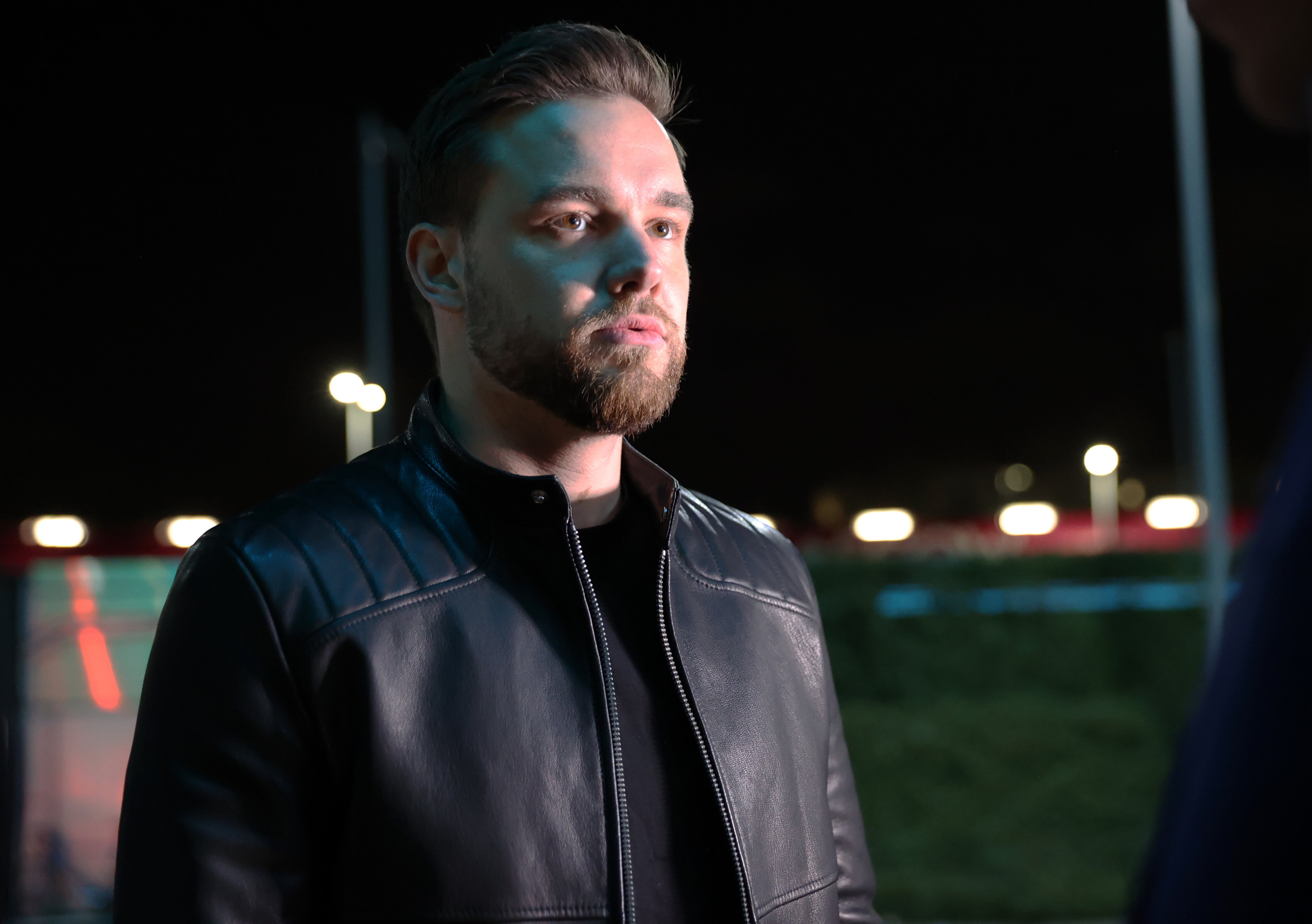
Liam Payne has spoken out after hitting the headlines for comments he made about his former bandmate Zayn Malik.
Earlier this week, the former One Direction star’s interview with YouTuber Logan Paul was shared online, during which he spoke about past tensions within the boyband.
Advertisement
He was also asked about Zayn, who quit 1D in 2014, a year before the group announced they’d be going on an indefinite hiatus.
“There’s many reasons why I dislike Zayn and there’s many reasons why I’ll always, always be on his side,” Liam said.
Advertisement
“You can always look at the man for where he is and say ‘Whatever, that guy’s a dick,’ but at the end of the day once you understand what he’s been through to get to that point and also if he even wanted to be there. I’m so misunderstood by myself more than anyone… I can’t sit here and dick on him.”

Raymond Hall via Getty Images
Liam added: “I can’t commend some of the things he’s done, I can’t be on his side for that.
Advertisement
“What I can say is I understand…. You hope at some point the person on the other side of the phone wants to receive the help you’re willing to give them.”
As his remarks became more widespread, Liam posted a clarification on his Twitter page.

Jeffrey Mayer via Getty Images
“I wouldn’t normally comment on this stuff but when it’s your family it’s hard to let it slide,” he tweeted.
“They mentioned a specific incident involving Zayn which I responded to – but listening back maybe I didn’t articulate myself as well as I could have.
Advertisement
“I was saying that there will always be things we disagree on but that I will always, always be on his side. That’s family. Zayn is my brother and I will stand by him forever.”
Elsewhere in the interview, Liam admitted that while he and Louis Tomlinson are now “best mates”, they “hated” one another during their time in One Direction.
The Strip That Down singer also recalled an incident when a member of the group “threw me against a wall” during an altercation, and discussed his relationship with ex-partner Cheryl Tweedy, with whom he has a five-year-old son.



One of Kate Bush’s signature tunes made a return to the UK top 10 this week, after receiving pride of place in the latest series of Stranger Things.
The first half of the hit Netflix sci-fi drama’s fourth season debuted last week, with the pop icon’s hit Running Up That Hill being featured prominently in multiple scenes throughout the new episodes.
Advertisement
Due to the popularity of Stranger Things, Running Up That Hill shot to the top of the iTunes chart in the last week, and also received an 8700% percent increase in streaming.
On Friday, it was revealed that the track had landed at number eight in the UK singles chart, an impressive 37 years after it was first released.
Advertisement
The Official Charts Company’s CEO Martin Talbot said of the feat: “It is fantastic to see Running Up That Hill returning to the Top 10 this week, driven by its feature in Stranger Things, introducing Kate Bush and this iconic eighties hit to a brand new audience.”

United Archives via Getty Images
Running Up That Hill was first introduced as the lead single from Kate Bush’s Hounds Of Love album in 1985, peaking at number three upon its original release.
Advertisement
In 2012, a re-recorded version of the track was included in the London Olympics Closing Ceremony, and later released as a single, which also reached number six in the UK charts.
Kate Bush famously keeps out of the spotlight, but did perform a string of concerts in London back in 2014, where Running Up That Hill was included on the setlist.
The acclaimed musician is often reluctant to allow her music to be featured in films or TV shows, but gave permission to Stranger Things as she was apparently already a fan.
Wende Crowley of Sony Music Publishing told Variety: “Kate Bush is selective when it comes to licensing her music and because of that, we made sure to get script pages and footage for her to review so she could see exactly how the song would be used.”
Advertisement
The first chapter of Stranger Things’ fourth season is available to stream on Netfix now.