Ron DeSantis Is About To Run For President. Andrew Warren Has A Warning.

MONTGOMERY, Ala. — Of all the places Andrew Warren imagined his career would take him, it was never here: the lobby of an upscale chain hotel in downtown Montgomery, huddling with his legal team and preparing for a hearing that — maybe within a year if he’s lucky — will result in him getting his job back.

“I didn’t ask to be the tip of the spear in this fight for freedom and democracy,” Warren said, settling into a tall wingback chair on the morning of May 2, several hours before he was due in a federal appellate court just down the street. “But the governor picked a fight with me, so I’m fighting on behalf of everyone who cares about these issues.”

It has been over nine months since Florida Gov. Ron DeSantis suspended Warren, accusing the twice-elected Democratic prosecutor for Hillsborough County of “incompetence” and “neglect of duty” in a scathing 29-page executive order last August. The Florida Constitution gives the governor the power to remove elected officials in cases of extreme misconduct. But those powers have rarely, if ever, been used in a case like Warren’s.

“This is something you’d expect to see happen in Turkey or North Korea or China. This is not something you’d ever expect to see happen in the United States,” said Warren, whose general measured demeanor during our interview sometimes gave way to a quiet rage about the whole episode.

“The governor is the one who did wrong here,” Warren told me, “and no one else should have to adjust their behavior to the whims of the dictator.”

Frothing with the polite but pointed anger of a clean-cut attorney, Warren described the surreal events of the past year, which has included: Learning of his suspension in the middle of grand jury proceedings for a decades-old cold case. Being escorted from his office with his belongings by armed sheriff’s deputies. Watching the governor brag about his suspension on Fox News. Reading about his suspension in the governor’s book. Hearing about his suspension in the governor’s stump speeches. Reliving this episode of his life over and over again — in court, in interviews, in conversations with friends and strangers. Having his career and life essentially frozen. Receiving death threats against his family because of the bright spotlight that DeSantis put him under.

“This has been very difficult for me professionally,” said Warren, who is still living with his family in Tampa, “because I care so much about the office. It’s been very difficult for me politically, because the most powerful Republican in the country is targeting me specifically, as an individual. And it’s been very difficult for me personally ― everything from just the huge disruption it’s had on my life with my family, to getting death threats from people who tell me that my children deserve to die for the things I’ve done.”
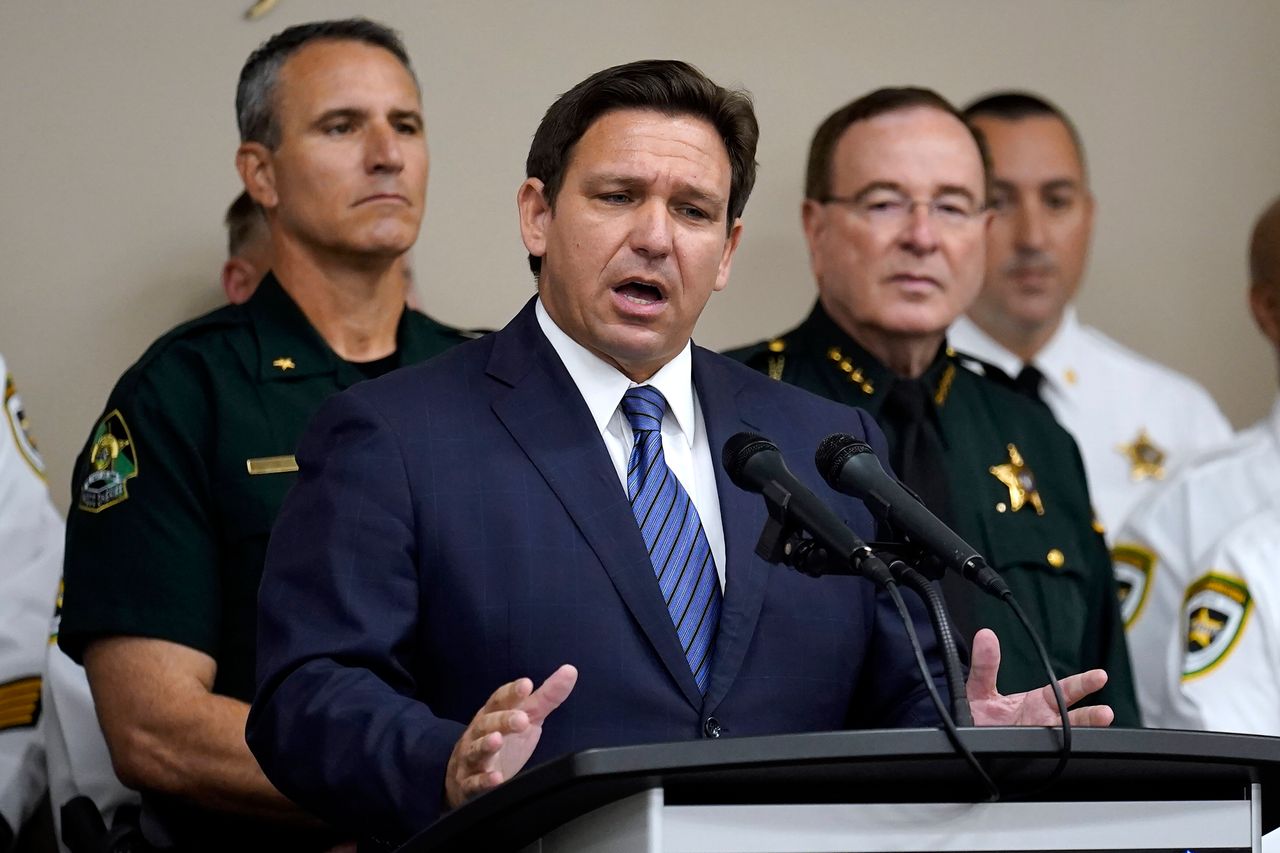
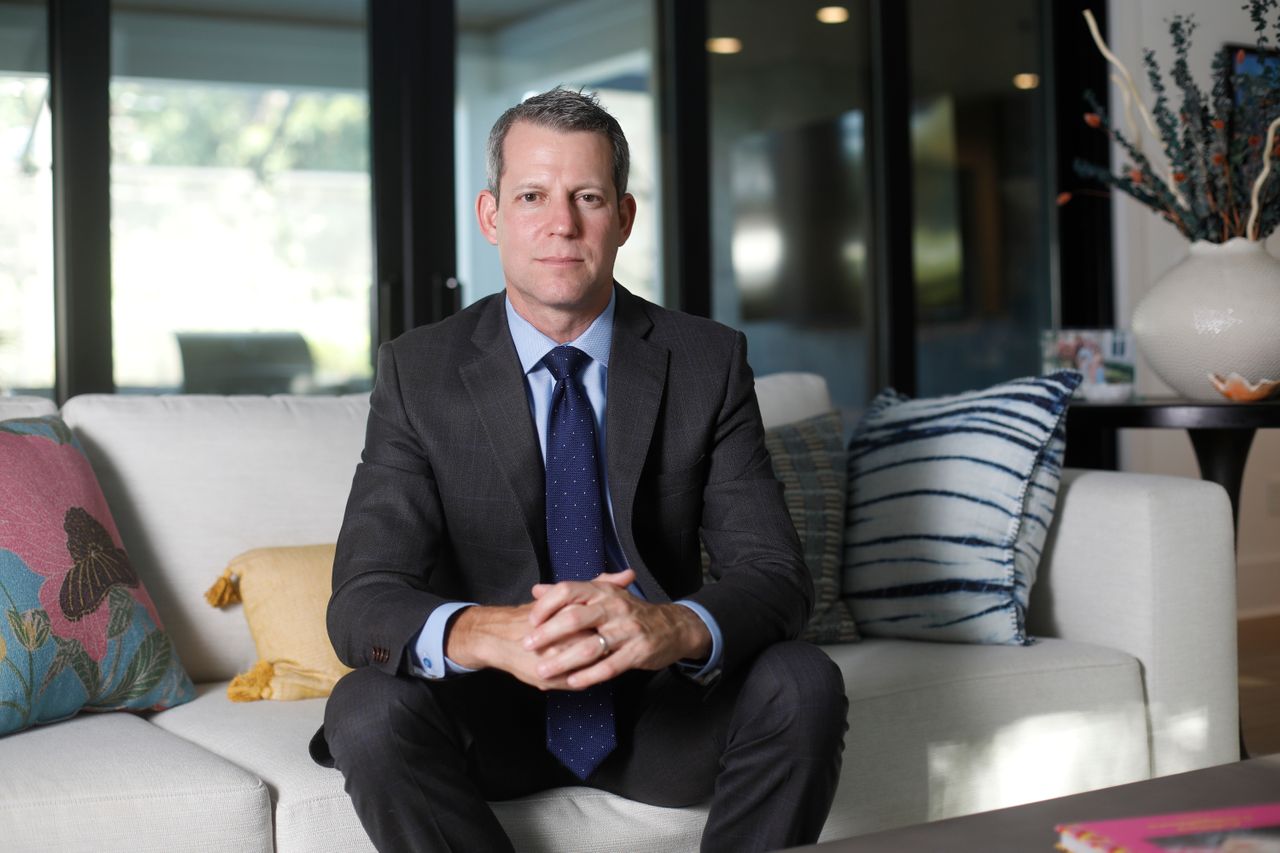
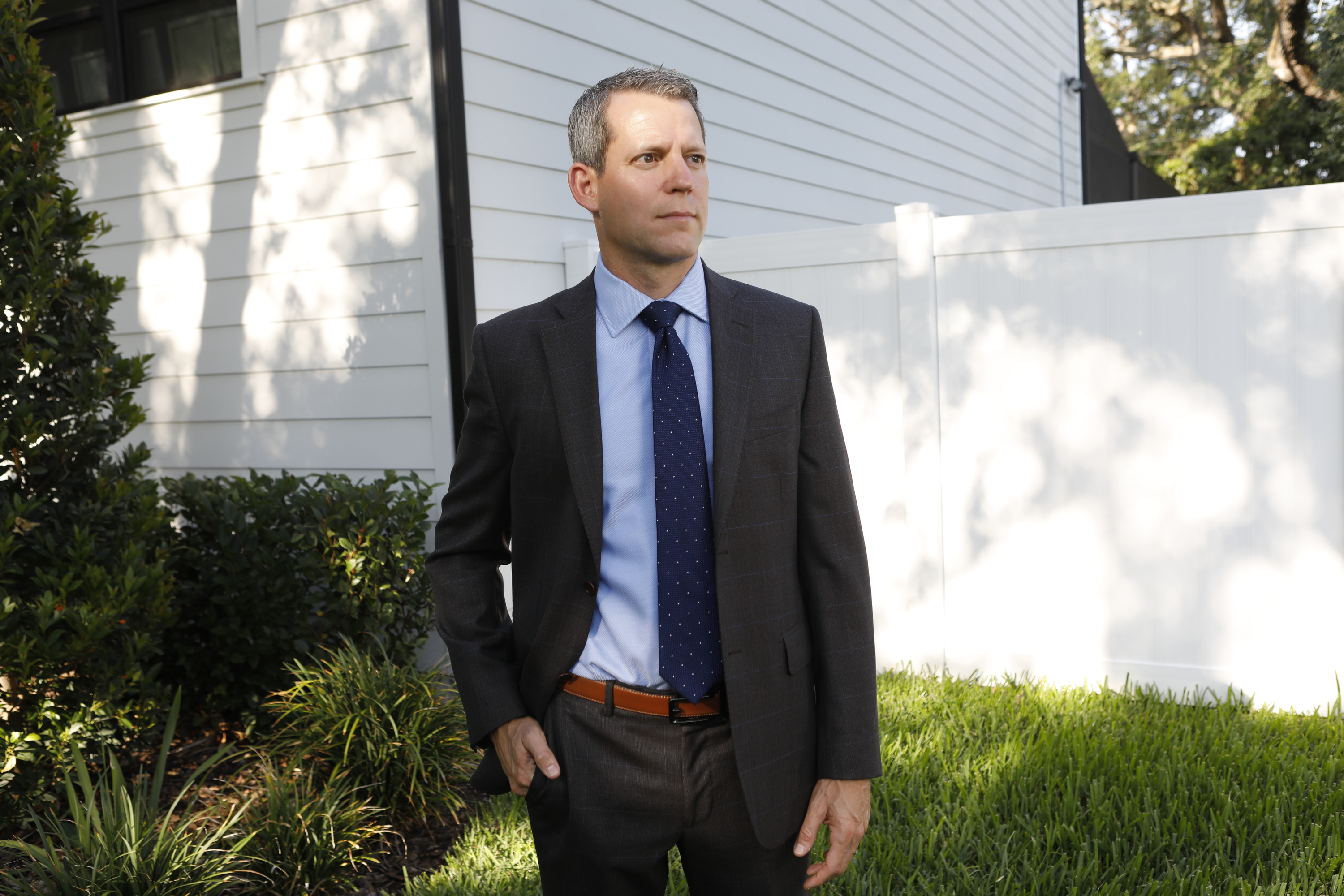
DeSantis, the Republican governor of Florida, suspended Warren last August for what he characterized as "neglect of duty."
DeSantis, the Republican governor of Florida, suspended Warren last August for what he characterized as “neglect of duty.”

Associated Press

In his lawsuit, now winding its way through federal courts and currently being heard by the 11th U.S. Circuit Court of Appeals here in Montgomery, Warren argues that DeSantis violated his constitutional right to free speech and removed him without cause. It will likely be decided as DeSantis is running for president on his record of governing “the free state of Florida.”

DeSantis is expected to announce his campaign for the Republican nomination in the coming days. He has already made Warren’s firing a staple of his stump speech, using the episode to show how he’s crushed foes using his executive fist. “[These state attorneys] want to weaponize the power of their office to target people they don’t like,” DeSantis said last month in Manchester, New Hampshire. “And when we had an attorney like that, a district attorney in Tampa who had been funded by [George] Soros and said he would not uphold the laws of the state, I removed him from his post. He’s gone.”

Warren was never bankrolled by Soros, the Democratic mega-donor who is a perennial target of conspiracies and hate on the right — but he likely benefited from contributions Soros made to the Florida Democratic Party at one point or another. DeSantis, perhaps projecting, also misrepresented the argument he used to fire Warren, who has never been accused, in either the executive order suspending him or in subsequent court filings, of going after people he didn’t like.

The governor’s office, which generally only interacts with certain friendly news outlets, never responded to a request from HuffPost to provide a comment for this article.
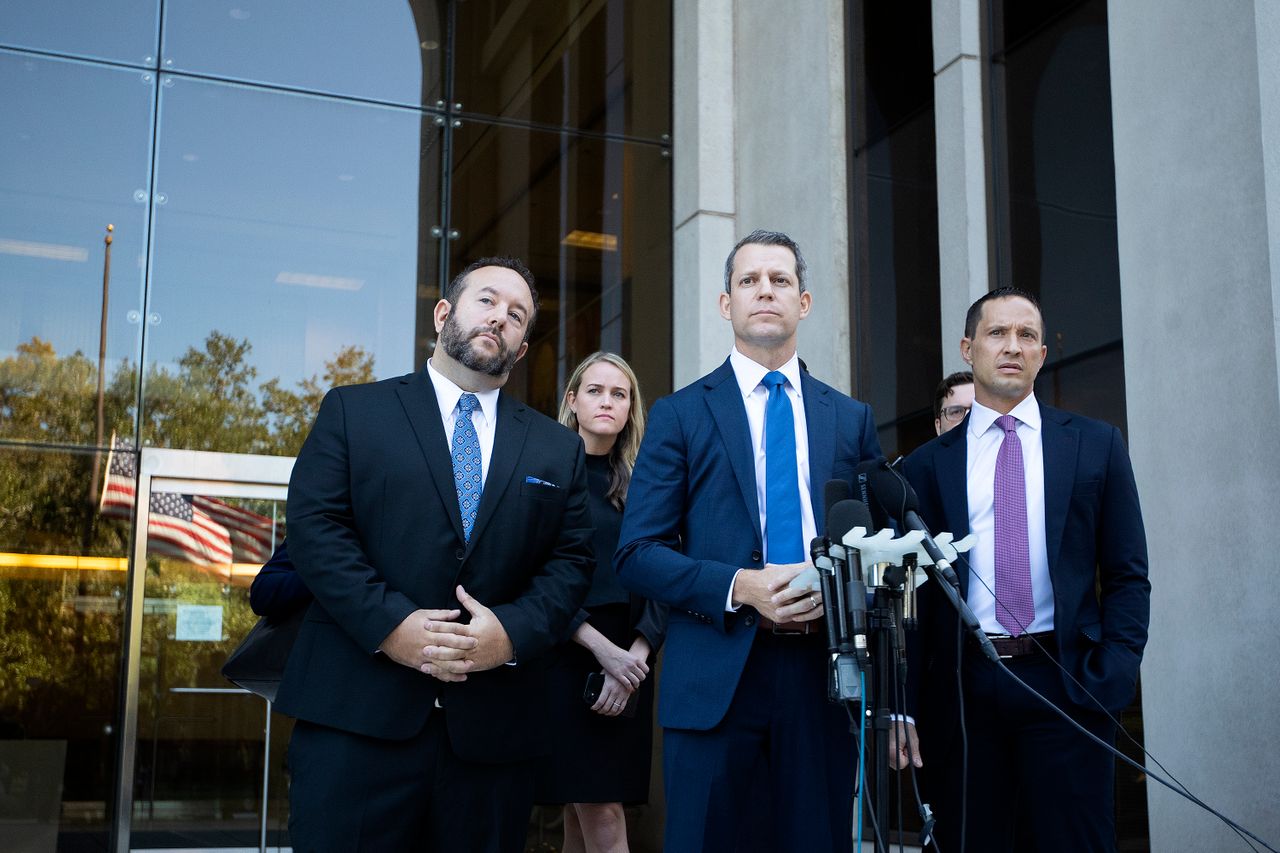
Warren has taken his battle against DeSantis to the courts, hoping the 11th U.S. Circuit Court of Appeals will rule in his favor.

Chasity Maynard/Tallahassee Democrat via AP

Although it’s easier to describe Warren as having been removed or fired, he’s technically in a state of suspension that could be reversed — or made permanent — pending a hearing by the Florida Senate. But given the heavy Republican makeup of that body, Warren is exploring other remedies.

Warren’s suspension came two months after he co-signed a letter with more than 80 other progressive prosecutors opposing the criminalization of abortion and transgender health care, in the wake of the Supreme Court’s reversal on abortion rights. In his executive order, DeSantis cited both the letter and what he characterized as a “blanket refusal” to prosecute some low-level crimes, such as the aggressive ticketing of Tampa bicyclists, most of whom were Black. Warren disputes that his office had “blanket” policies that endangered public safety, as DeSantis tried to argue in his order — and his case hinges on whether a panel of majority-conservative appellate judges see it the same way.

“The governor has his talking points, which are divorced from reality. From the day I was suspended, I said this was a publicity stunt, the allegations are false, this is un-American,” said Warren, on the edge of his seat, his legal team hovering nearby.

A trim 46-year-old with light salt-and-pepper hair, Warren sometimes doesn’t blink when he’s talking. During an interview, he comes off as a deeply focused person who has spent the last nine months of his life consumed by two overlapping objectives — getting his job back and sounding the alarm on DeSantis, whom he sees as a threat to democracy. “Powerful people without a moral compass are dangerous,” Warren said. “Politicians who are willing to break the law to get votes or to get applause are dangerous.”

Politics aside, however, the two men have, if not a lot, at least some major things in common. They are both Florida natives in their mid-40s. They followed similar paths into public service after graduating from elite law schools (Warren from Columbia, DeSantis from Harvard). As young lawyers, they both worked for the Justice Department as federal prosecutors. And they’ve both confronted family tragedies in recent years ― Warren, after his pregnant wife was involved in a car crash and the couple lost their baby, and DeSantis, after his wife was diagnosed and underwent treatment for breast cancer.

Their paths diverged dramatically once DeSantis became a congressman and joined the right-wing House Freedom Caucus, and Warren, having moved from Washington to Tampa to raise his family, decided to challenge a longtime GOP incumbent for state attorney.

The job of chief law enforcement officer, by its very nature, relies heavily on the discretion of the individuals doing the job to determine how crimes are prosecuted and sentenced. That’s why Warren’s case is so tricky and precedent-setting. It’s also why, in nearly every state, prosecutors are locally elected and therefore not subject to the political whims of a faraway official — the same principle behind a governor not picking the members of your city council or school board.

DeSantis isn’t the only Florida governor who has kneecapped a prosecutor. Sen. Rick Scott, the Republican who preceded DeSantis, got a judge to allow him to reassign murder cases from an Orlando prosecutor who was opposed to using the death penalty. But Scott didn’t try to get that prosecutor fired. “When I was there I was very clear — you have to prosecute your cases,” Scott told HuffPost, declining to comment on what’s happening now between DeSantis and Warren.

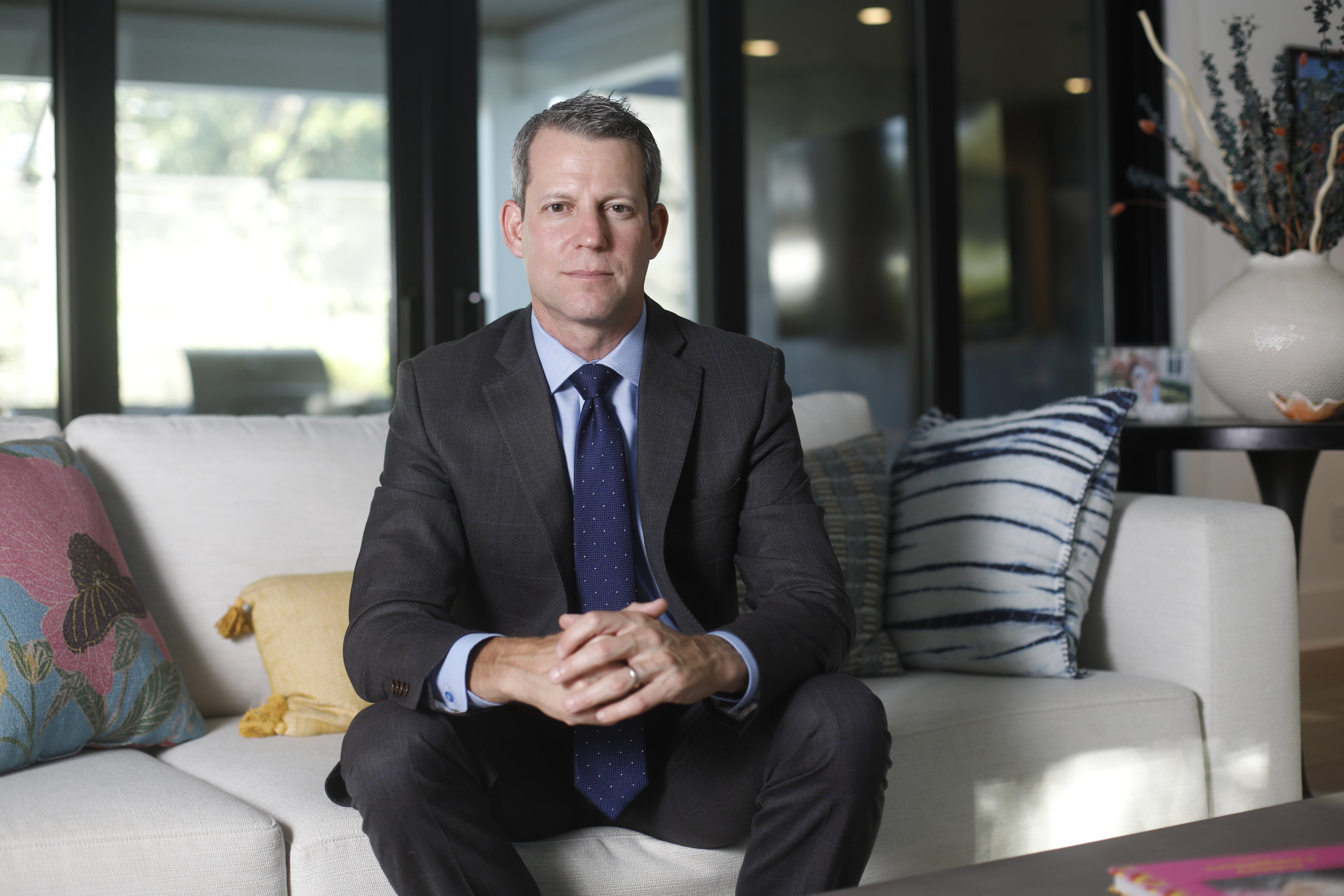
"Politicians who are willing to break the law to get votes or to get applause are dangerous,” Warren said.
“Politicians who are willing to break the law to get votes or to get applause are dangerous,” Warren said.

OCTAVIO JONES for HuffPost

Warren came into office in 2016 after upsetting a longtime Republican in the purple west-central Florida county that encompasses Tampa, the state’s third-largest city. He says his backers were both Republicans and Democrats drawn to his mission of more equitable criminal justice outcomes amid a national reckoning over police brutality. Accusing his opponent of being too heavy-handed when the times demanded the opposite, Warren won a surprise victory followed four years later by his reelection to a second term.

At a time when Florida Democrats are desperately trying to build their bench, Warren has been floated as a possible U.S. Senate candidate against Scott in 2024. His close friend Nikki Fried, the newly elected chair of the Florida Democratic Party, told HuffPost that Warren would make a great candidate for any number of Republican-held positions that Democrats are hoping to contest. “He’s a true leader with a big heart, and unfortunately in politics right now you don’t find a lot of those,” Fried said.

Warren can also raise money. While he declined to give an exact figure, he said he’s brought in “several hundred thousand” dollars through a nonprofit for his legal defense.

But Warren isn’t interested in another office, at least not right now. “It’s wonderful to have people who are so confident in your leadership to encourage you to run for different positions,” he said. “But my focus is on the state attorney’s job.”

Running statewide in Florida won’t be easy for any Democrat. So far, no serious candidates have emerged to challenge Scott in what was once a Senate battleground. A bellwether for these times, Warren’s own swing county, Hillsborough, lurched to the right in the last election, shedding several Democratic officeholders.

DeSantis cites his own blowout reelection last year to justify the heavy leverage of his executive powers. The governor has single-handedly spearheaded measures such as banning transgender medical therapy for minors and expanding the state’s controversial “Don’t Say Gay” law into high schools. He also amped up his feud with a beloved American corporation that happens to be one of his state’s largest taxpayers. DeSantis wears these battles as a badge of honor. “My view is simple,” he told an audience last month at Liberty University, uttering a line that’s become a staple of his speeches and the overriding ethos of his governorship. “I may have earned 50% of the vote, but that entitled me to wield 100% of the executive power.”

DeSantis might even be going after another Democratic prosecutor. Monique Worrell, Orlando’s state attorney, said this month that she believes DeSantis is building a case to target her next, accusing the governor of seeking to “exploit his political agenda against me.”

Fried, Florida’s former agriculture commissioner and the last Democrat elected statewide, said DeSantis has created a climate of fear in Florida.

“We’ve got a governor who believes he’s the ultimate ruler of the state. He’s taking away people’s freedom of speech and he’s removing officers who have been elected by their constituents at the local level,” she said.

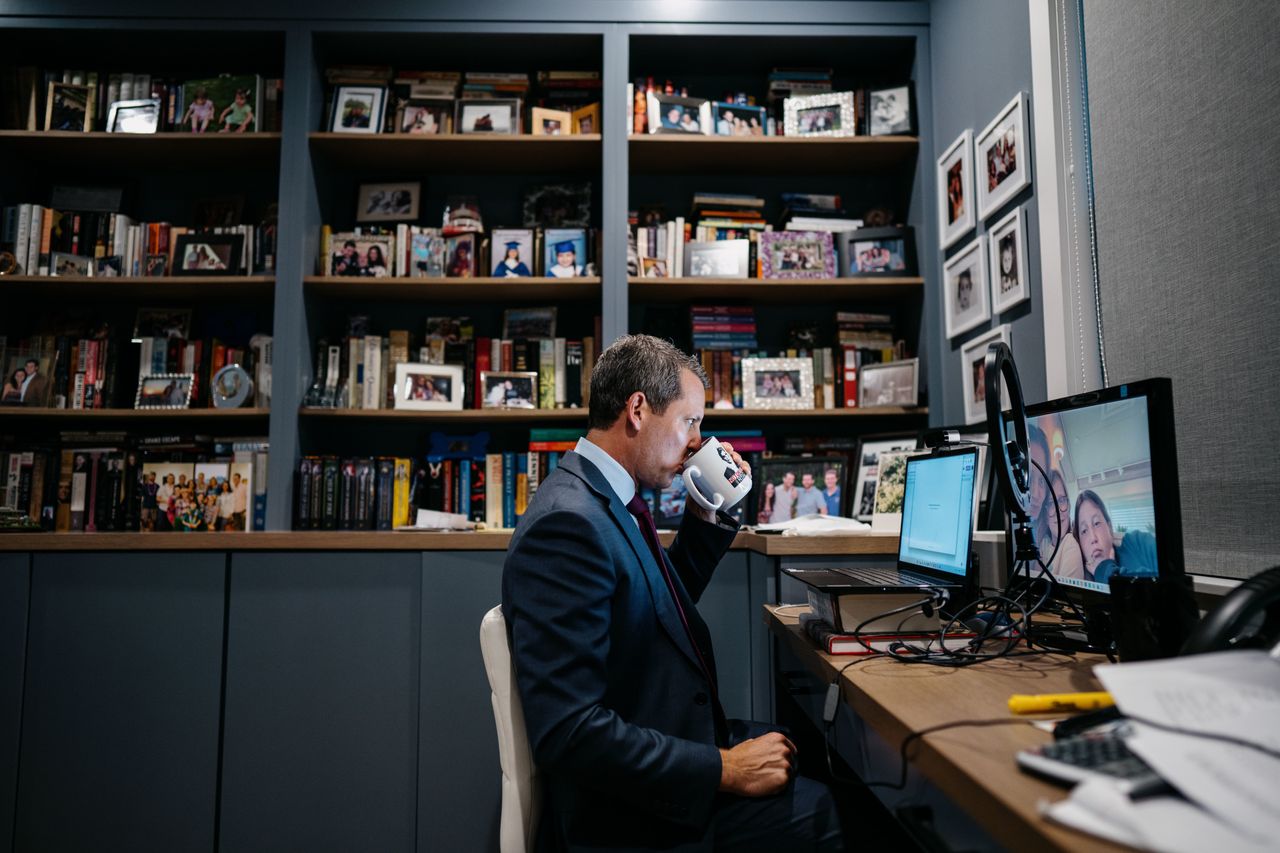

Warren prepares for a TV interview at his home in Tampa.

The Washington Post via Getty Images

Warren’s best shot at reversing his suspension lies with the appellate court, which is reviewing his challenge to an earlier ruling from a federal judge in Florida. This ruling was both good and bad for Warren — good in that it seemed to generally side with Warren that DeSantis violated his free speech and removed him from office without citing “even a hint of misconduct”; bad because despite all that, the judge still found he didn’t have the constitutional authority to restore Warren as a local prosecutor.

Documents unearthed in discovery support the argument that DeSantis doled out a punishment driven overwhelmingly by his political agenda. An early version of the executive order made numerous references to Soros, the political lightning rod, which DeSantis ultimately struck out with a blue marker. Beyond that, the governor’s attorney struggled to build a case showing that Warren had undermined public safety, according to a New York Times analysis of the discovery documents.

That didn’t stop DeSantis from declaring, in an Aug. 4 press conference announcing the suspension, that Warren’s tenure had been “devastating to the rule of law.” He made similar comments that night to then-Fox News host Tucker Carlson.

“Tucker, you’ve documented the destruction that we’ve seen with these Soros prosecutors around the county, where they basically take it upon themselves to determine which laws should be followed and which laws should not be followed,” a grinning DeSantis said, with photos of Warren proceeding to flash across the screen.

Warren disputes that his policies had any negative impact on crime, noting that, by the state of Florida’s own crime reporting metrics, overall crime declined in Hillsborough County under his watch. “This isn’t a Portland or San Francisco scenario,” he said.

Republicans blame soft-on-crime policies, and the “woke” district attorneys they say promote them, for the visible homelessness and addiction in places like Portland, Oregon, and San Francisco, an idea that’s been relentlessly reinforced by conservative media. I asked Warren to define a “woke prosecutor,” and he didn’t know where to begin. In general, the term has become a catchall on the right for anything deemed too liberal or politically correct. “You have to ask the people on Fox News [what it means],” Warren said. “I’m a moderate prosecutor from a moderate county. I have done things that have frustrated the far left as much as the far right.”

Warren’s suspension was a direct result of DeSantis’ war on “woke,” his attorneys argue, a pretext the governor has used to go after schools, government agencies and businesses in a way that Democrats, at least, find chilling.

“The animus here toward woke ideas and woke viewpoints was a motivating factor,” Warren’s attorney David O’Neill argued to the appellate panel. Republicans have made the word so pervasive that it’s being used now in a deadly serious manner in federal courts.

DeSantis was represented in Montgomery by two young attorneys for the state of Florida who returned to a single, much-examined line in the abortion rights letter that Warren signed last June. The sentence in question seems to signal, beyond just the general opposition to the criminalization of abortion, that the co-signers would go a step further and refuse to prosecute abortion crimes altogether. Warren, as far as he knows, is the only prosecutor from the letter who lost his job over this single sentence.

In the chaotic and emotional days that followed the Supreme Court’s abortion ruling and the letter’s release, Warren said he attempted to clarify that he didn’t mean he would disregard abortion law in its entirety. At the time, Florida lawmakers had just passed a 15-week abortion ban. Since then, they’ve passed a six-week ban, which DeSantis put his signature on last month but hasn’t said much about since.
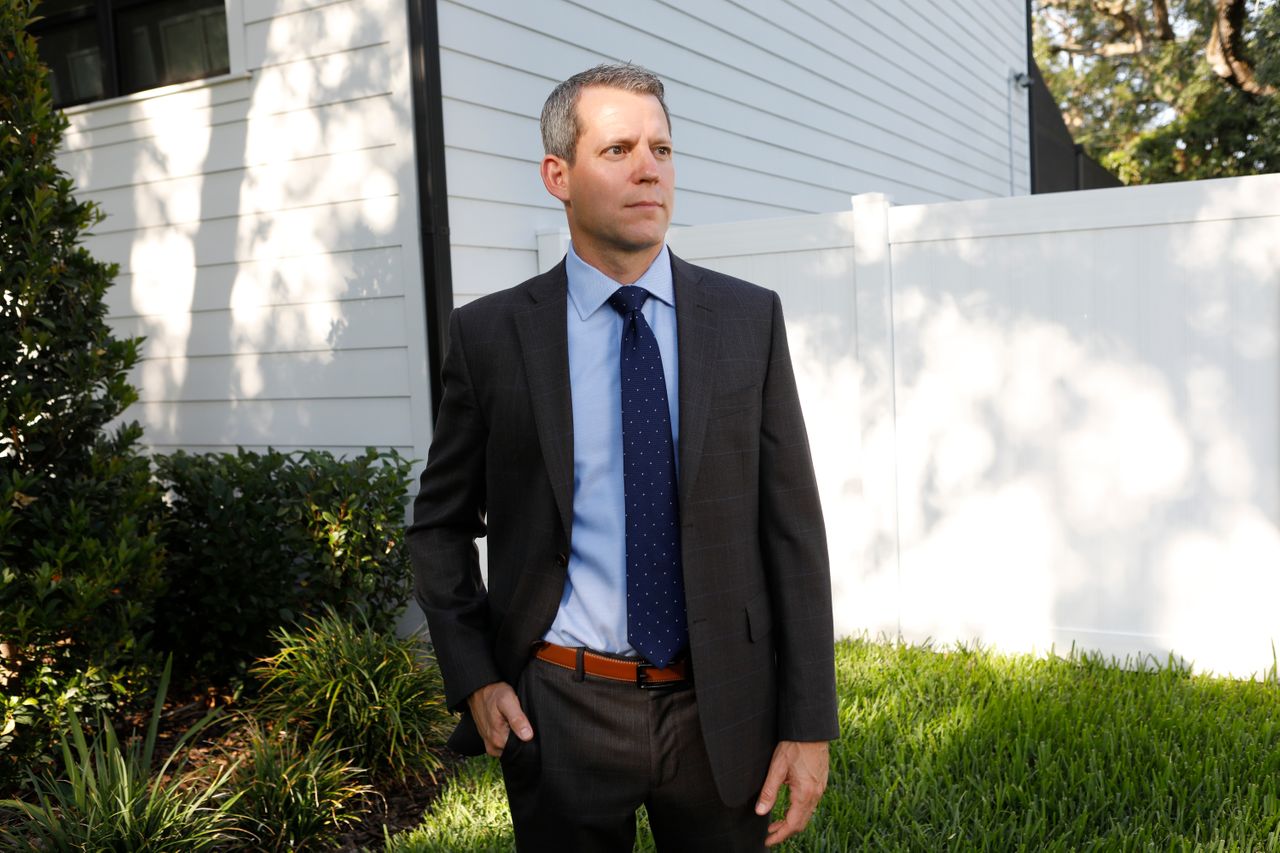
“The governor has made it clear that if he disagrees with who you are or what you said or what you stand for, then you’re at risk for being attacked,” Warren said.

Octavio Jones for HuffPost

Warren can expect a ruling sometime within the next year. It may not be the ruling he’s hoping for.

The appellate panel is composed of three judges: one Democratic appointee and two Republicans, including a Trump nominee. And beyond this panel of judges in Alabama, there are only dead ends — the Republican-controlled Florida Senate and equally conservative Florida Supreme Court — underscoring how entrenched Republicans have become in Florida under DeSantis and throughout the age of Donald Trump.

Warren, who might violate the terms of his suspension if he were to take another legal job, has had a lot of downtime to reflect on this battle and what it all means. For himself and his future. For Florida. For the country, if DeSantis beats both Trump and Joe Biden and tries to run the federal government like the state of Florida — which he’s promised to do.

“The governor has made it clear that if he disagrees with who you are or what you said or what you stand for, then you’re at risk for being attacked,” Warren said. “I mean, look at the people he’s gone after. Disney, obviously. The Special Olympics. He’s attacked businesses. He’s attacked teachers. He’s attacking the LGBTQ community. He’s attacked universities and professors and boards of regents. He’s attacked elected officials. If you don’t say what he wants you to say, then you are at risk.”

My final question for Warren was whether he regrets signing the abortion letter — after all, had he not, he might still be employed. Would he risk this all over again? Or would he try to find another, less out-there way to signal his opposition to the abortion climate? Warren shifted uncomfortably in his seat. For the first time in our conversation he became a little less lawyerly and a little more pissed, channeling, in a certain sense, his nemesis.

“Your question to me is — should I have done something differently and not spoken my mind so as not to annoy the governor of Florida? Should I not have exercised my constitutional right to free speech? So I didn’t run the risk of the governor breaking state and federal law?” he said. “Americans don’t need permission slips to exercise their constitutional rights. No, I wouldn’t change a thing, and I shouldn’t have to change a thing.”

Share Button

Water Companies Start To Admit You Will Be Charged More To Stop Sewage Dumping

Britain’s privatised water and sewage companies secured some favourable headlines after it was announced they would oversee the biggest modernisation of English sewers “since the Victorian era”.


Against the backdrop of growing public anger over raw sewage being dumped into the sea and rivers when the system cannot cope with heavy rain, the industry said shareholders will make a £10 billion investment in sewerage infrastructure.

And then came the fine print.

Ruth Kelly, chair of the trade body Water UK, admitted the public will have to pay towards upgrading storm overflows – and could be doing so for up to a century.

To be clear, the upfront payment by the water companies will be recuperated from consumers by gradually raising their bills over time.

Kelly said: “Over time, the way the system works is that there will be modest upward pressure on customer bills over the full lifetime of the asset, so over 50 years or perhaps even longer, maybe up to 100 years, customers do contribute.”

So how much is “modest upward pressure”?

Anglian Water, which covers a long stretch of the east of England coast, became the first firm to a price on it. It suggested customers could face an increase on their bills of £91 a year – including £12 to help pay for investment in sewerage infrastructure.

Speaking on BBC Radio 4’s World At One programme, Anglian Water’s head of public relations, Regan Harris, said: “The initial investment will be put forward by our shareholders and the way we’re financed is that they put up that investment and Ofwat allows us to recover a proportion of that from bills.

“What we’re looking at is a fairly small increase of probably a few percent a year between now and 2030.”

It’s hard to gauge how much a household will pay, since it will be determined by individual regional water companies – and the longer the stretch of coastline to keep clean, the higher the bill is likely to be.

The regulator Ofwat said water companies will submit their National Overflows Plan by October 2 which will include any bill increases for the period 2025-30.

The regulator will analyse the plans, giving a final announcement in December 2024, so any bill increases related to the storm overflows plan will not be felt until 2025.

Households have already seen the largest increase to water bills in almost 20 years this year when they soared to £448 a year. Meanwhile, as the Financial Times reported, water and sewage companies paid £1.4 billion in dividends in 2022, an increase from £540 million the previous year.

“This is nothing to celebrate whatsoever.”

And the backlash has begun, with the Metro’s front page screaming ”£10 Billion Dirty Trick”.

Musician and clean river campaigner Feargal Sharkey criticised the water companies for making customers pay “a second time”.

He told BBC Radio 4’s Today Programme: “They are now suggesting that we should pay them a second time for a service we haven’t had.

“We should have an apology for the suggestion they are going to put bills up by £10 billion for their incompetence and their greed.

“This is nothing to celebrate whatsoever. What they should be saying is, ‘we messed this up, we’re terribly sorry, we’re going to compensate you all, £10 billion, it is the least we could do for our customers, give you a refund’.

“That we could all get behind. This is just another outbreak of moral panic due to the pressure and scrutiny they are coming under.”

Share Button

Kwasi Kwarteng Doesn’t Think People Are Angry With Him For Crashing The Economy

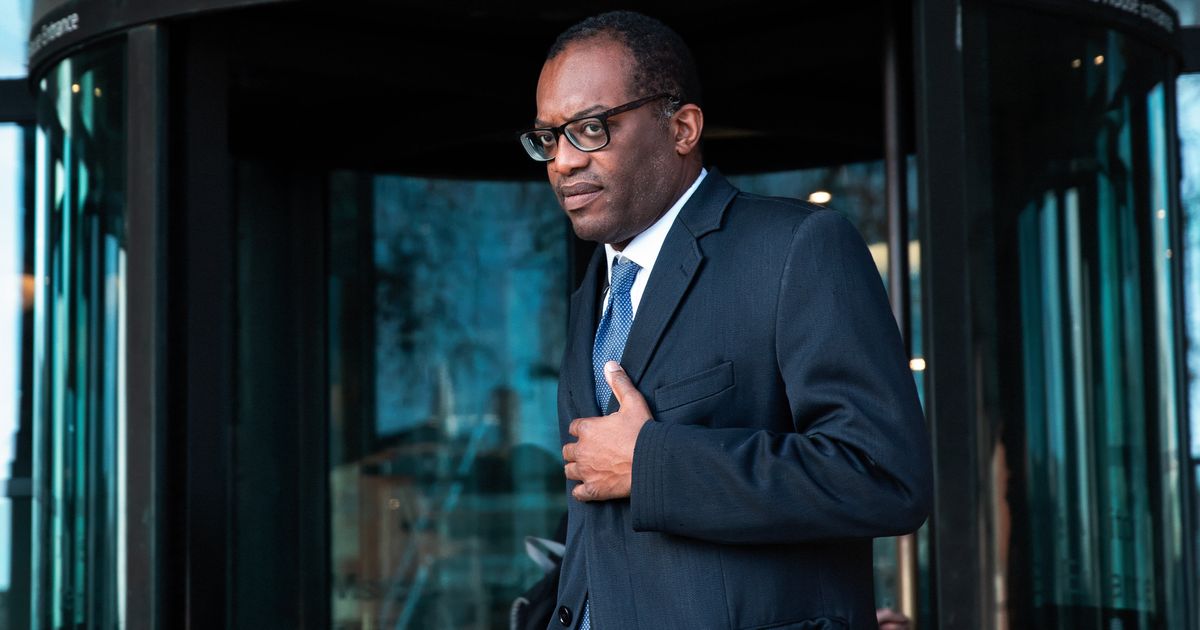
Kwasi Kwarteng has refused to apologise for the financial meltdown unleashed by his time in office alongside Liz Truss – saying “what was done was done”.

The former chancellor also suggested people were not angry about mortgage rates soaring as a result of his mini-budget – and that instead they say “you tried your best”.

On September 23, Kwarteng announced the biggest raft of tax cuts for half a century. The mini-budget triggered turbulence in the financial markets, sending the pound tumbling and forcing the Bank of England’s intervention.

Truss ended up resigning after only 44 days in office, with her economic measures swiftly ripped up by new chancellor Jeremy Hunt and her successor in No 10, Rishi Sunak.

“I’m not going to apologise,” he told Channel 4 News on Wednesday.

“I’ve said very clearly, you know, what was done was done, but I don’t believe that politicians are endlessly, you know, apologising for everything that has gone in the past. I’m looking forward.”

Asked whether he felt people’s anger about crippling mortgage rates, he said “no”.

He added: “I know the media will want to go to a world where people are being angry and outrage … but actually, what I found is that some people will come up to people and say, ‘I’m very angry, I’m very upset.’ You get that.

“I’m very struck, actually, by the fact that people are ‘you tried your best. We understand what you were trying to do. It was difficult.’”

Share Button

Liz Truss Attacks Rishi Sunak Over China U-Turn

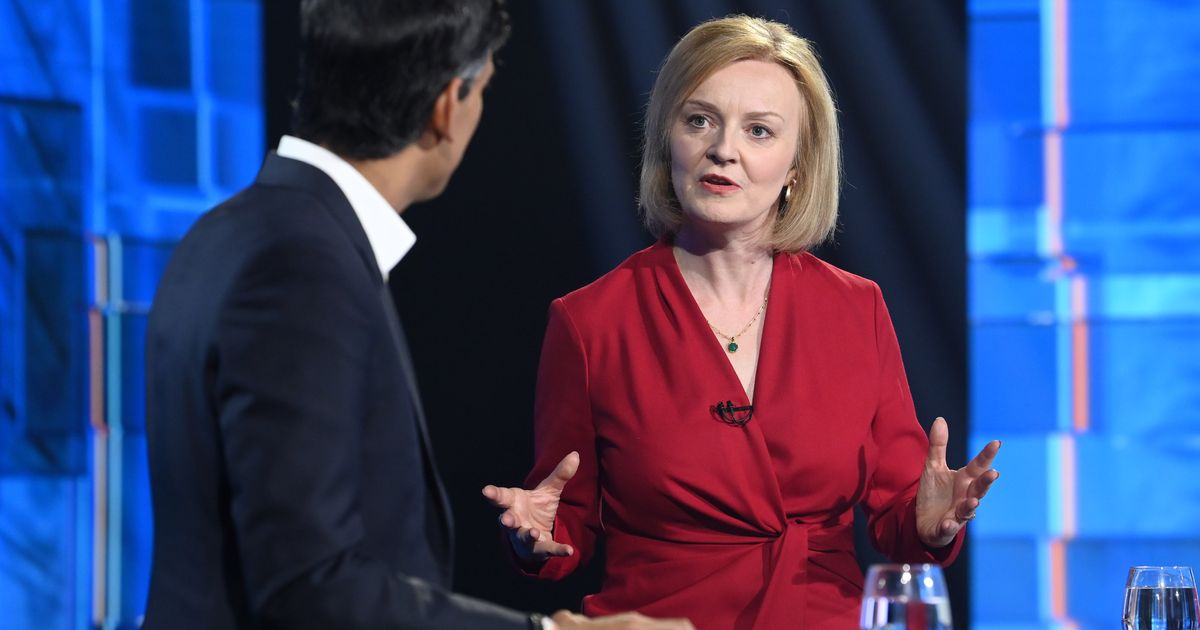
Liz Truss has condemned Rishi Sunak for U-turning on his previous decision to describe China as a “threat” to global security.

The former prime minister will hit out at her successor – and former Tory leadership rival – in a speech in Taiwan.

Sunak made clear his concern about China last July during his battle with Truss to succeed Boris Johnson in Downing Street.

In a tweet, Sunak said: “China and the Chinese Communist Party represent the largest threat to Britain and the world’s security and prosperity this century.”

He also pledged to shut down the UK’s 30 Confucius Institutes, which promote and teach Chinese culture.

But speaking in March – four months after taking over from Truss in Number 10 – Sunak struck a more conciliatory tone by refusing to say he still saw China as a threat.

He said: “I don’t think it’s kind of smart or sophisticated foreign policy to reduce our relationship with China – which after all is a country with one and a half billion people, the second biggest economy, and member of the UN security council – to just two words.”

In a speech in Taiwan, Truss will call on Sunak to stand by what he said about China last year.

She will say: “Last summer the now British prime minister described China as ‘the biggest long-term threat to Britain’ and said the Confucius Institutes should be closed. He was right and we need to see those policies enacted urgently.

“The UK’s integrated review needs to be amended to state clearly that China is a threat. Confucius Institutes should be closed down immediately.”

Truss, the UK’s shortest-serving PM, also took a swipe at Sunak when she said “there have been too many mixed messages” about China by western leaders.

“There can be no more ambiguity,” she added.

Elsewhere in her speech, Truss will call on the west to defend Taiwan in the face of Chinese aggression.

She will say: “We in the west have a collective responsibility not just to do the right thing by Taiwan, but also to hold the Chinese government to account for its actions.

“My visit this week is enabling me to communicate directly the solidarity that the British people have with the people of Taiwan.

“Taiwan really is a shining beacon in the Pacific. It’s an enduring rebuke to totalitarianism. It is an example of the power of free enterprise. It shows the importance of a free society for human happiness.

“We in the United Kingdom and the free world must do all we can to back you.”

Share Button

Ann Widdecombe Says Poor Families ‘Shouldn’t Have A Cheese Sandwich’ If They Can’t Afford To Buy One

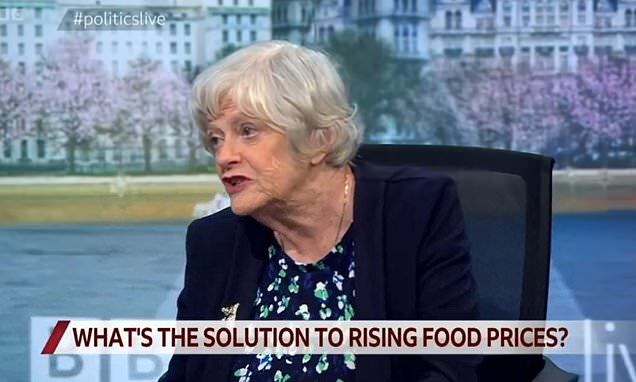
Ann Widdecombe has told poor families they shouldn’t expect to be able to have a cheese sandwich if they don’t have the money.

The former Tory MP said hard-pressed families should not “do the cheese sandwich” on a BBC politics show discussing the cost-of-living crisis.

Widdecombe is a former Strictly Come Dancing contestant who has also represented the Brexit Party in the European parliament, and now backs the Reform Party.

The cost of a homemade cheese sandwich rose by one-third to 40p last year, BBC research suggests.

Politics Live presenter Jo Coburn asked: “What do you say to consumers who literally can’t afford to pay for even some of the basics if they have gone up the way that cheese sandwich has, with all its ingredients?”

She replied: “Well then you don’t do the cheese sandwich … because we have been decades without inflation we have come to regard it as some sort of given right that our food doesn’t go up.”

In response, Liberal Democrat Treasury spokesperson Sarah Olney MP said: “How out of touch can you get? Anne Widdecombe joins a long line of right-wing politicians who pin the blame on hard-working families for this government’s failures.”

The latest inflation figures from Which? show the cost of British food staples such as cheddar cheese, white bread and porridge oats have soared on a year ago.

Overall inflation on food and drink at supermarkets continued to rise in March to 17.2%, up from 16.5% the month before, the watchdog found.

Cheddar cheese prices increased by an average 28.3% across eight major supermarkets compared to a year ago.

UK inflation remained above 10% in March – far higher than in the US and Europe – with food prices pushing the benchmark up.

Her comment echo the sentiments of Tory deputy chairman Lee Anderson, who attracted criticism for suggesting that people in the UK use food banks because they “cannot cook properly” and “cannot budget”.

Share Button

‘Marxism, Narcissism And Paganism’ Among Tory Fears During Bizarre Gathering

Conservatives brought a jumble of ideas to a three-day gathering in London – with one MP warning of the perils of “Marxism, narcissism and paganism” during a bizarre few hours.

As Labour leader Keir Starmer mocked the Tories for “holding a series of mad hatters’ tea parties” in the aftermath of their local elections drubbing, the National Conservatism conference opened in London – with high-profile Conservative Party figures in attendance.

The meeting brought together right-wing politicians, journalists and thinkers to discuss the potential of “national conservatism” to provide a path towards renewal for the party.

The conference is a project of the Edmund Burke Foundation, a “public affairs institute” based in Washington DC which has held conferences across Europe and America since 2019 to promote the ideas of national conservatism.

Between two separate protests, with one speech was interrupted early on by a someone warning about “fascism”, and the conference chair suggesting they’ve been “communing” with Margaret Thatcher, here are a handful of the most eye-catching comments.

“The unexamined drive towards multiculturalism” is a “recipe for communal disaster”.

Home secretary Suella Braverman was arguably the “star” turn. Despite being in charge of the UK’s immigration policy, she took a number of swings at the UK’s immigration policy.

She deployed her own background as the daughter of migrants to argue it’s “not racist for anyone, ethnic minority or otherwise, to want to control our borders”.

The cabinet minister also argued that “you cannot have immigration without integration” and “the unexamined drive towards multiculturalism” is a “recipe for communal disaster”.

Braverman said that people who come to the UK “must not commit crimes”, “need to learn English and understand British social norms” and “cannot simply turn up and say: ‘I live here now, you have to look after me’”.

Young radicalised by “Marxism, narcissism and paganism”

Tory backbencher Danny Kruger blamed the country’s problems on the “new religion” of “progressive liberalism” – which is a mix of “Marxism, narcissism and paganism” and is causing a “radicalisation of a generation”. He even hit out at the “dystopian fantasy of John Lennon”.

“As Russell Crowe says in the film Gladiator …”

Multiple speakers decried the impact of “wokeism” on British society, particularly Katharine Birbalsingh, who was once dubbed “Britain’s strictest headteacher”.

She urged conservative parents to take their children out of schools that were “too woke”, and criticised private schools for being even more “woke” than their state-funded counterparts.

In a speech that included lines from the film Gladiator, Birbalsingh bemoaned children “leading” schools, attacked private schools for being more “woke” than state providers, and claimed children at some schools are allowed to wear ears and tails because they “identify as cats”.

“Woke” teaching is “destroying our children’s souls”

Tory MP Miriam Cates identified falling birth rates as the “overarching threat” to UK and western society.

She also said society had ceased to value children and parenthood properly: “You cannot be socially liberal and economically conservative. If you think that government and society should have nothing to say about the conditions that promote strong families, don’t be surprised if you end up with a high-tax, high-spend economy, with a nation of broken people dependent on the state.”

She also criticised “woke” teaching for “destroying our children’s souls” and causing self-harm and suicide among young people.

The Conservative MP faced criticism for hitting out at “cultural Marxism”. John Mann, the government’s antisemitism tsar, said the term has its origins in a “conspiracy theory with anti-Semitism at its core”.

Share Button

Keir Starmer Says Party Must Be New Labour ‘On Steroids’

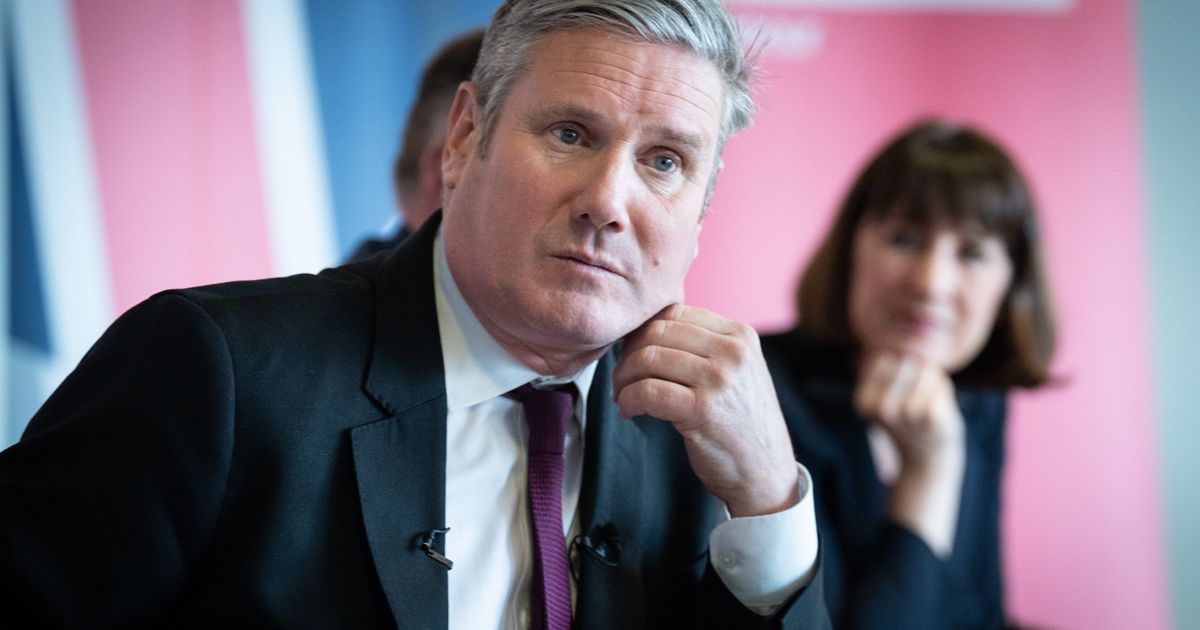
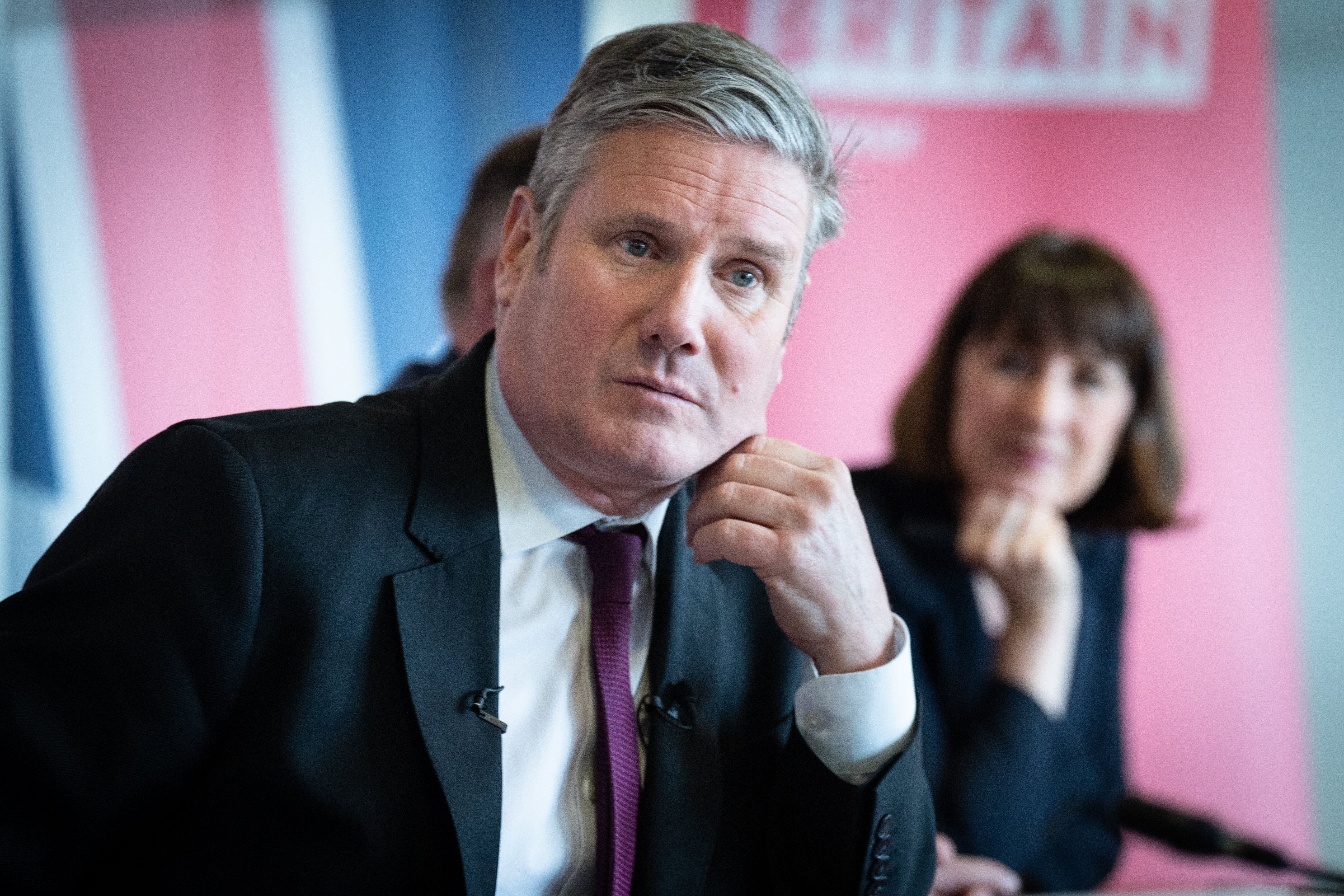
Keir Starmer will tell his party it must be New Labour “on steroids” and that he does not care if it “sounds conservative”.

In a speech on Saturday morning, the Labour leader is expected to say while the party is on the path to power the “toughest part lies ahead”.

Labour gained hundreds of council seats in last week’s local elections, which saw voters give Conservatives a kicking.

The results suggest Rishi Sunak is likely to be booted out of Downing Street at the next general election, expected to be held in 2024.

But Starmer could have to settle for Labour being the largest party in a hung parliament rather than winning an overall majority.

Speaking to the Progressive Britain annual conference in London, Starmer will say it “misses the point” to think all he is doing is distancing himself from Jeremy Corbyn’s “regime”.

“This is about taking our party back to where we belong and where we should always have been. Back doing what we were created to do,” he will say.

“That’s why I say this project goes further and deeper than New Labour’s rewriting of Clause Four.

“This is about rolling our sleeves up, changing our entire culture – our DNA. This is Clause Four – on steroids.”

Tony Blair famously scrapped Labour’s commitment to mass public ownership in 1995 as he sought to appeal to middle England.

Since taking over as leader in April 2020, Starmer has steadily moved Labour towards the political centre ground.

He has been criticised by those on the left of the party for abandoning many of the promises he made during the leadership campaign to stick to policies included in its 2017 and 2019 manifestos.

Last week, on the eve of the local elections, he all but confirmed his promise to to scrap university tuition fees would be ditched.

Plans to nationalise railways, Royal Mail, energy companies and water companies have been essentially scrapped, with Starmer having argued the economic situation now meant this was too expensive.

Progressive Britain is associated with the Blairite wing of the party and was formed in 2021 by the merger of the Progress and Policy Network groups.

Starmer will tell party members at the gathering that “I don’t care” if he “sounds conservative” sometimes.

“Somebody has got to stand up for the things that make this country great and it isn’t going to be the Tories,” he will say.

“That in the end is one of the great failure of the last 13 years. A Tory Party that in generations past saw itself as the protector of the nation and the union has undermined both.

“They’ve taken an axe to the security of family life, trashed Britain’s reputation abroad, and totally lost touch with the ordinary hope of working people.”

The suggestion Labour could fall short of a majority has led to questions about whether Starmer would do a deal with Ed Davey’s Lib Dems in order to become prime minister.

Starmer last week refused seven times to rule out forming a coalition with the Lib Dems, although he has said he would not do so with the SNP.

Share Button

Rishi Sunak Is Partial To A Jilly Cooper ‘Bonkbuster’ Novel, Apparently

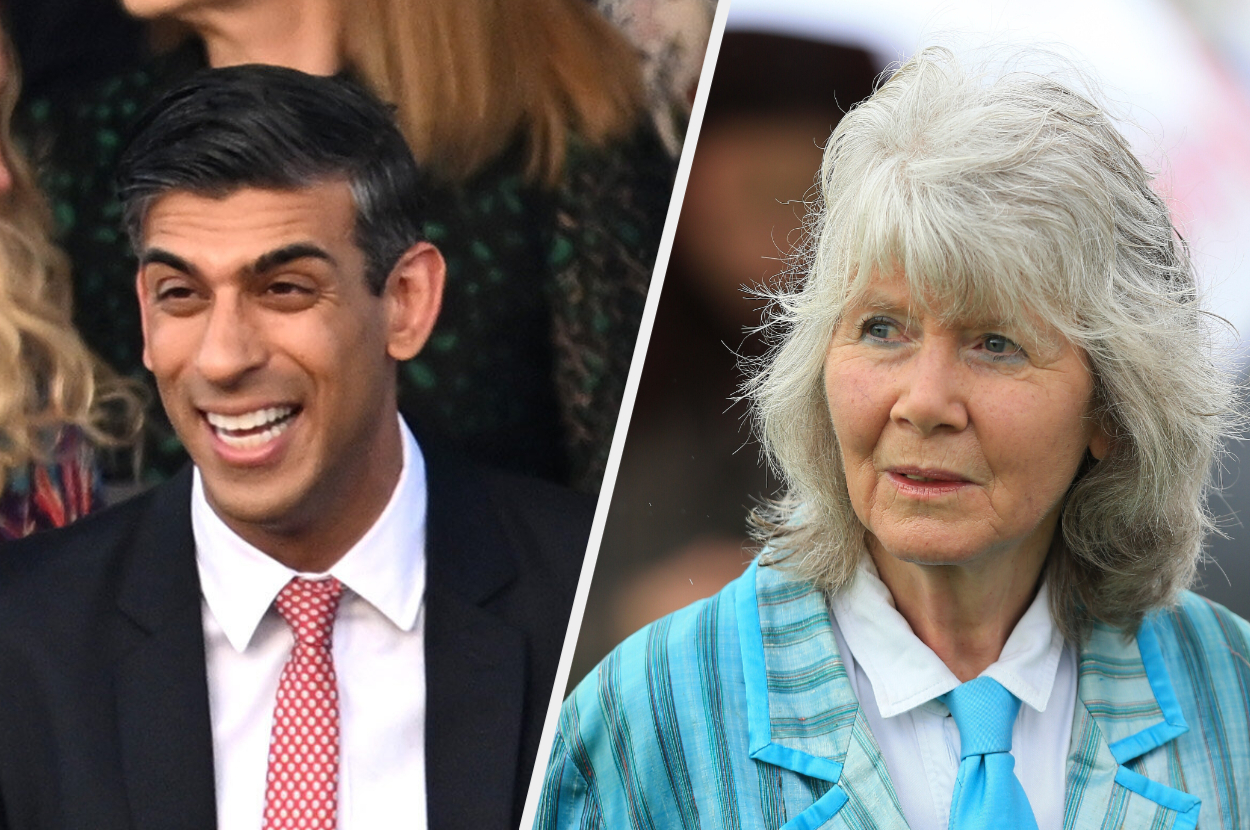
In yet another unlikely-sounding moment for British politics, Rishi Sunak is reportedly a fan of Jilly Cooper’s erotic romance novel Riders – perhaps the very definition of the 1980s “bonkbuster”.

While a prime minister’s best-loved tome is usually a worthy affair, the current resident of No.10 apparently prefers something a bit more steamy – at least that’s according to the Spectator.

It’s worth noting the Spectator is well-sourced when it comes to Sunak: the magazine’s former political editor is now one of the PM’s closest Downing Street aides (and the best man at his wedding). So it’s not come from nowhere.

Whether Riders is actually one of his favourites, and not an attempt to humanise the geeky one-time tech bro (he has in the past expressed a very specific fondness for Mexican Coca-Cola) is anyone’s guess.

Cooper’s oeuvre captures the drama and excess of Britain’s affluent elite through her Rutshire Chronicles series. They do a lot of horse riding, among other things.

The action is focussed on galloping aristocrat Rupert Campbell-Black – later a Tory minister. Perhaps more famous is the book’s original cover of a female bottom clad in white jodhpurs and a male hand.

“Sex and horses: who could ask for more?,” noted the Sunday Telegraph in 1985, as the novel went on to become a runaway success.

Share Button

Ash Sarkar: Tory Migration Crackdown Is A ‘Nastiness Olympics’

Journalist Ash Sarkar has confronted Tory minister Helen Whately over the government’s controversial migration crackdown – accusing the administration of indulging in a “nastiness Olympics” to please the Daily Mail.

The accusation came on BBC’s Question Time, which this week came from Bexhill-on-Sea, and was prompted by the Archbishop of Canterbury condemning the government’s plans to tackle the small boats crisis as “morally unacceptable and politically impractical”.

The intervention by Justin Welby sparked criticism of the church leader at Westminster, who was told neither “handwringing or bell ringing” will solve the misery of the channel crossings.

Th immigration reforms aim to ensure those who arrive in the UK without permission will be detained and promptly removed, either to their home country or a third country such as Rwanda. Meanwhile, asylum seekers are being housed in barracks and barges.

On the show, Sarkar said proposed new laws were treating “people who have been raped, people who have been tortured, people who are fleeing persecution” as “criminals”.

The writer went on: “I object so strongly when you use these words like ‘generosity’, to talk about things like having a glorified prison ship or refurbishing a prison just around the corner from here in order to detain people who are fleeing some of the most unimaginable circumstances possible.

“No government does that because they think it’s morally good. No government does that because they think it’s particularly efficient or effective.

“You’re doing it because you’ve committed yourself to this nastiness Olympics because you want a pat on the back from the Daily Mail and the human cost of that is obscene.”

Whately had argued 500,000 migrants coming to the UK since 2015, and people opening their homes to Ukrainians, showed the UK is a “generous country on offering asylum” – but it was “morally wrong” not to crackdown on people smugglers fuelling the problem.

On the same question, broadcaster and clergyman Rev Richard Coles called the illegal migration bill “politically unworkable, legally doubtful and morally indefensible”, adding he supported Welby’s position.

Share Button

Why Martin Lewis And Economists Think Raising Interest Rates Is A Bad Idea

The Bank of England raised UK interest rates again – lifting the “base rate” to 4.5% from 4.25%.

It’s the 12th increase in a row since rates started going up in December 2021, pushing borrowing costs up further, particularly impacting homeowners with a mortgage.

Soaring food prices – and the fact they remain stubbornly high – appears to be the key factor behind the decision.

But experts are not sure it’s the right policy

Some economists think the Bank could has gone too far since the impact of the repeated rises has yet to pass through to households and businesses.

Take homeowners. Around 85% of all borrowers are tied to fixed-rate mortgages – but the majority are yet to switch to a higher-rate home loan, and could be in for a shock when they do.

One prominent commentator predicted “screeching U-turns are coming” – and the Bank will soon have to cut rates to avoid tipping the UK economy into recession.

So how do interest rates work?

Hiking the base rate increases the cost of borrowing, making both credit and investment more expensive. The idea is to put the brakes on the economy and curb the soaring cost of goods and services – known as inflation.

Bringing rates down is an attempt to have the opposite effect – stimulate growth by making borrowing cheaper, and in turn, encourage investment.

The Bank is tasked with keeping inflation under control, targeting 2% a year. Inflation hit 10.1% in March, and raising rates is the blunt instrument it has to bring it down.

This is the bind the Bank is in: raise interest rates to combat inflation, but then stall the economy and make people’s lives miserable and make any downturn potentially deeper and longer.

Why are experts calling it out?

Put simply, some economists argue that pushing up rates is having little to no effect on inflation – mainly because the war in Ukraine has been the driving force, chiefly through higher energy costs that are now easing. The same applies to two other factors, namely higher oil prices and economies emerging from a pandemic.

Consumer champion Martin Lewis suggested on Twitter that the Bank was sending signals more than anything else. Lewis wrote: “I’m no economist, but I struggle with the logic behind base rate rises currently. Inflation seems supply-side driven – but rate rises dampen demand. Then again the BoE is charged with bringing down inflation and this is it’s only tool. So it has to do it. Co-ordinated effort with govt would help.”

An actual economist went much further.

David “Danny” Blanchflower, who sat on the Bank’s monetary policy committee for three years, accused the central bank of “terrible incompetence”.

He told Sky News in a lengthy diatribe:

“This is utter incompetence. The market doesn’t believe them. I don’t believe them.

“I don’t believe a word that they say and it’s going to make things much worse for your listeners.

“Housing market’s going be in trouble. Mortgages are going to go up, housing quantities are going to decline.

“It’s the same utter group-think incompetence in 2008, and the same bank missed the greatest financial crisis since 1929.

“And here they go again. The market doesn’t believe them. I don’t believe them.

“Your listeners shouldn’t believe them. Screeching u-turns are coming and bad economic data is coming.

“This is terrible incompetence and this lot should just quit.”

Others were of a similar mind.

Suren Thiru, economics director at the Institute of Chartered Accountants in England and Wales, said the Bank risked “overdoing” rate rises, which could compound the cost crisis for many.

He said: “With most of the interest rate rises yet to pass through to households and businesses, the Bank of England risks overdoing the rate hikes, adding to the squeeze on our growth prospects and aggravating the cost-of-living crisis.”

The IPPR think tank argued the Bank should have held off raising interest rates again, warning of a “continued increase in inequality”.

Carsten Jung, senior economist at IPPR, said: “The Bank of England should have held off raising rates.

“The current approach risks creating big economic costs, in the form of lower future growth and fewer jobs, while not actually being effective enough at bringing down inflation.”

What does the Bank say?

The Bank had previously been more optimistic that inflation could fall as low as 1% by the middle of 2024, but it is now predicted to reach about 3.4%, meaning it will fall at a significantly slower rate.

Andrew Bailey, the Bank’s governor, said there had been a “very big underlying shock” to food prices.

He added: “It appears to be taking longer for food price pressures to work their way through the system this time than we had expected.”

“But, as we said before, we are in very unusual times.”

Share Button