The company behind the test said there were positive signs that some of the most aggressive cancers could be prevented.


The company behind the test said there were positive signs that some of the most aggressive cancers could be prevented.
Ukraine will mark the fourth anniversary of Vladimir Putin’s barbaric invasion on Tuesday, February 24.
The date will serve as a cruel reminder of just how long this war has been raging, especially as the third round of trilateral talks between Russia, Ukraine and the US failed to make any significant progress last week.
Advertisement
Moscow’s refusals to give up its maximalist goals weigh down Donald Trump’s push for a speedy peace deal – though the US president continues to falsely blame Kyiv for the stagnant talks.
Earlier this week, he told reporters that it was going to be “very easy” to reach a deal.
But he warned: “Ukraine better come to the table, fast. That’s all I’m telling you. We are in a position, we want them to come.”
Desperate to secure an agreement and consolidate his supposed reputation as a “deal-maker”, Trump has time and time again promised a truce is on the horizon – all while Russian strikes continue to target Ukraine.
Advertisement
But, as Ukraine enters its fifth year of war, could the president be right, and an end is in sight?
HuffPost UK asked experts just how realistic Trump’s claims are – and if there are any alternatives to a formal peace agreement.
British officials are confident that Ukraine can hold its ground on the battlefield in the east, even after a challenging winter where Russia repeatedly targeted Ukraine’s energy infrastructure.
That enables Kyiv to hold a firmer line in negotiations – like refusing to give into Putin and Trump’s demands that Ukraine gives up even more land.
Advertisement
But there are fears – particularly in Ukraine – that the talks themselves are just theatre to entertain Trump, with Kyiv delegates put under pressure to join.
Similarly, experts told HuffPost UK that it seems unlikely these negotiations will result in anything.
Professor Konstantin Sonin, from the University of Chicago Harris School of Public Policy said he remains sceptical that Trump could secure a peace deal because “the basic, big things remain unchanged”.
Advertisement
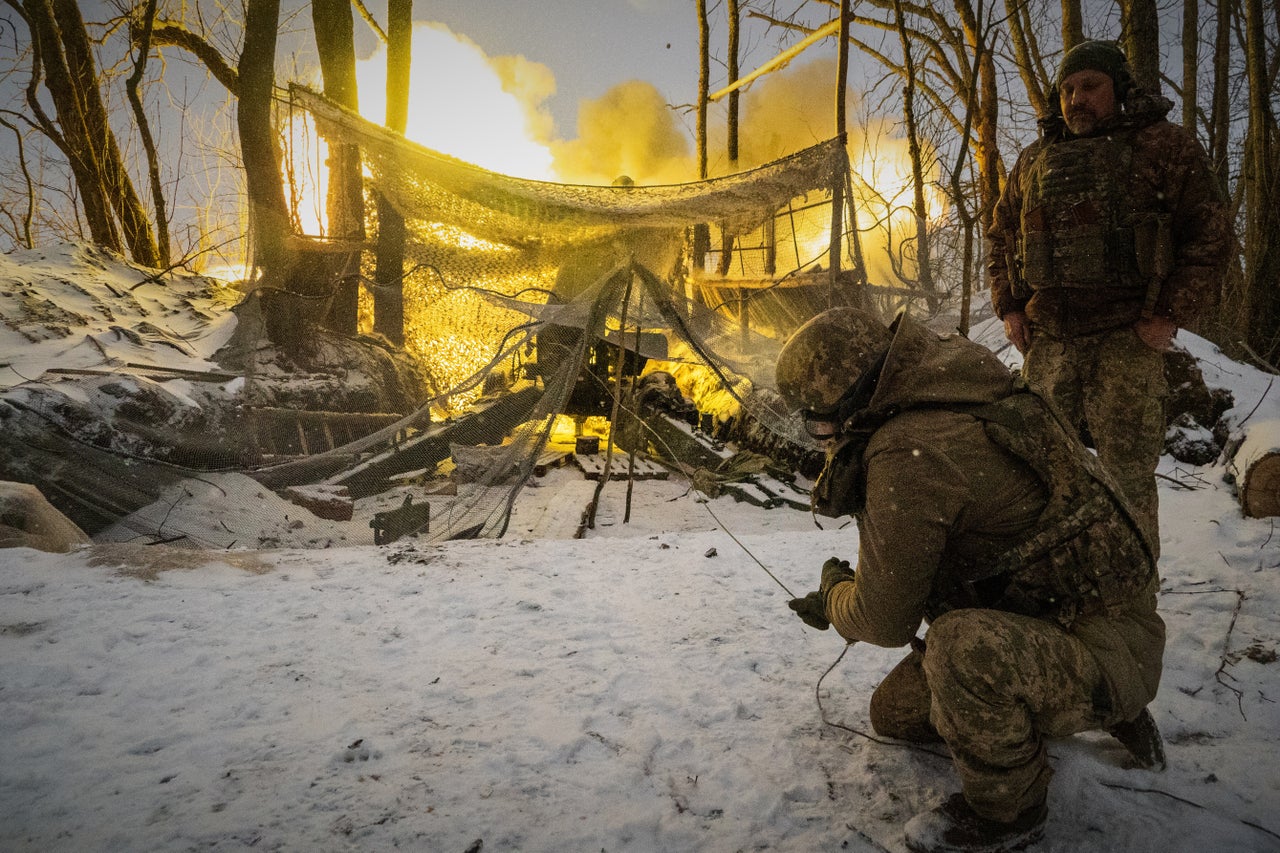
via Associated Press
He told HuffPost UK that Putin does not care about the cost of the war in terms of soldiers’ lives and material expenses, even though Russia is estimated to have suffered 1.2 million casualties since the conflict began.
While British officials have signalled that, beneath the surface, Russia’s economy is slowing down – with a fall in oil prices and a hike in VAT – that impact does not seem to have yet trickled through to the battlefield.
Advertisement
It’s suspected that Putin has not been informed about the reality of the public finances, or the eroding public support for the war.
But, at the same time, the Ukrainian army and state is nowhere near the state of collapse. In fact, its defence sector has been boosted over the last four years.
“A couple of more years of grinding warfare, in which the Russian army exchanges dozens of thousands of men for villages and townships in Eastern Ukraine, are totally possible,” Sonin, a Russian citizen and Kremlin critic, said.
Advertisement
“And then a new US president, a Republican or a Democrat, will be able to push Putin towards peace.”
Dr Simon Bennett, from the University of Leicester’s civil safety and security unit, also suggested it seemed pretty unlikely Trump’s efforts would result in a peace deal.
He said: “The upshot of this in 2026 is likely to be that Russia’s gains will come at an even greater cost, and, occasionally, will be partially reversed, albeit on a small scale in terms of square miles retaken by Ukraine.”
Bennett predicted Putin’s ongoing bid to control the whole of Ukraine’s eastern region, the Donbas, will likely mean the territory continues to be “the same bloody quagmire in 2026 as it was in 2025.”
Advertisement
“A couple of more years of grinding warfare… are totally possible”
– Professor Konstantin Sonin, the University of Chicago Harris School of Public Policy
Kurt Volker, who stepped down as Trump’s special envoy to Ukraine in 2019, claimed this week that the president has done a lot towards ending the war.
For instance, he has encouraged Ukraine to accept the idea of a ceasefire, and forced European allies to increase defence spending.
Advertisement
But speaking to the Centre for European Policy Analysis (CEPA) think tank, Volker said: “He still needs to get an end to the war. We need to be demanding a ceasefire and putting pressure on Russia to do that as soon as possible.”
The president’s annual State of the Union address is set to be on February 24 this year, the fourth anniversary of Russia’s full-scale invasion.
But experts do not expect him to use the opportunity to finally recognise the extent of Russia’s aggression against Ukraine.
Advertisement
As Bennett said, Trump is too “inconsistent” – and his approach to policy-making is a “crisis or war waiting to happen”.
The specialist also pointed out that “Putin has no intention of negotiating a peace deal” and claimed he is playing “demonstrably gullible” Trump.
Meanwhile, when asked if the US president could crack down on Russia in a bid to boost his ratings before the midterm elections in November, Sonin said: “There will be more pressure on Trump from the Congress Republicans, because both the US population and the elite have been consistently supportive of Ukraine through the years of war.
Advertisement
“So, I’d expect Trump to do small things against Putin.”

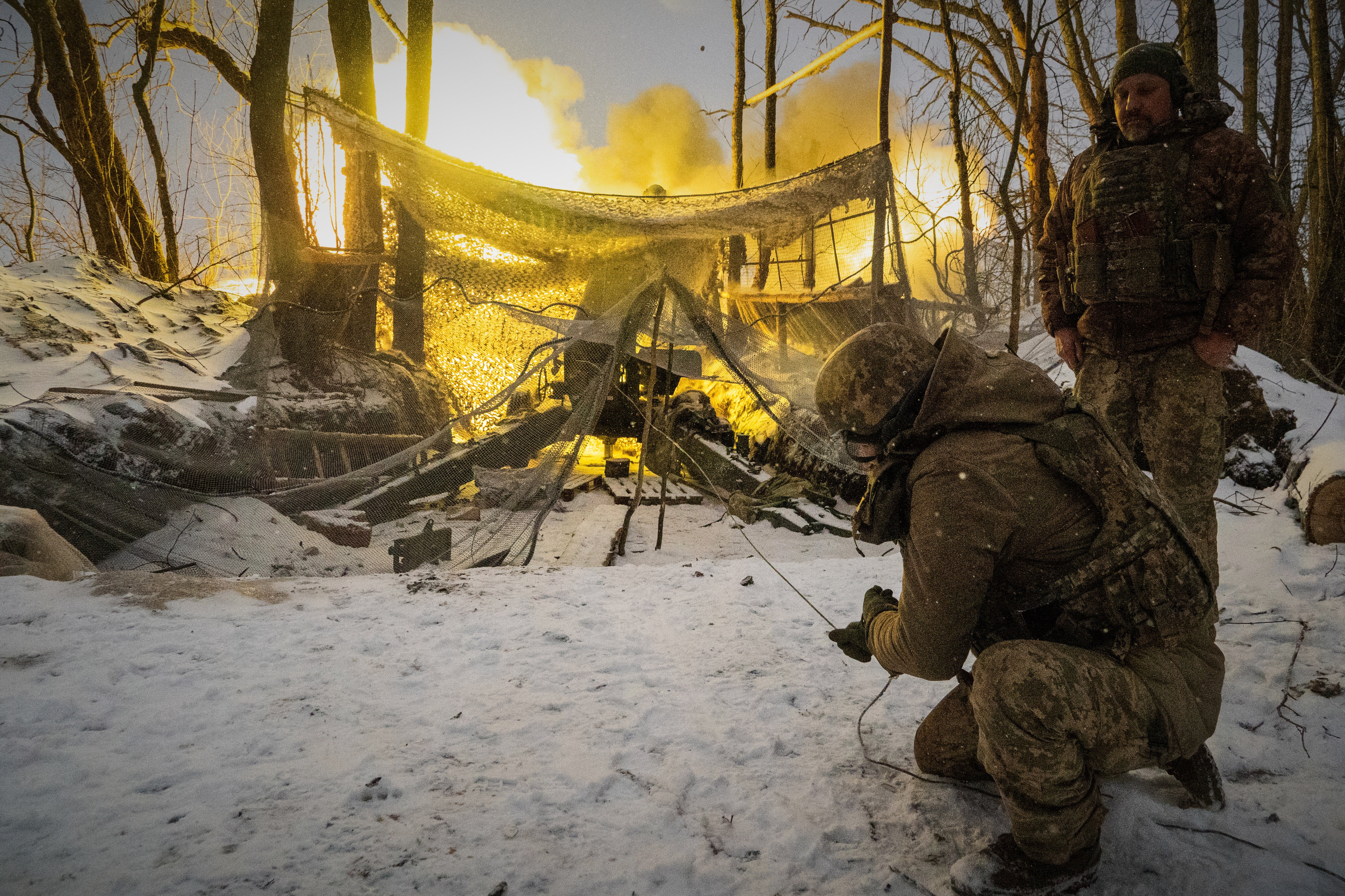
via Associated Press
Kurt Volkner told CEPA that it could be possible to strike up a deal comparable to the one which stopped the war between North and South Korea.
That non-aggression pact has – for the most part – held for more than 70 years, even though neither side technically agreed to a sustainable peace.
Advertisement
Volkner said: “Someday, I do believe there will be a ceasefire. I don’t believe there will ever be a peace agreement.
“I don’t believe Vladimir Putin will ever accept that there is an independent and sovereign Ukraine.
“Again, of the West, of governments, of investors, businesses, needs to be one that assumes that we will have a strong, growing, prosperous democratic European Ukraine that is safe and worthy of investment and business growth, very much like South Korea, without a final peace agreement with Russia, that’s just going to be where we are.”
Advertisement
But Sonin disagreed with this idea.
He said that while the North-South Korea deal was “one of the most durable, effective peace agreements despite never being finally ‘settled’”, it’s clear from previous attempts that written agreements between Russia and Ukraine do not work.
He also pointed out that such an agreement relies on the US commitment to help South Korea if North Korea invades, and China’s commitment to help North Korea if South Korea invades.
Sonin said: “A ‘peace agreement without a peace agreement’ between Russia and Ukraine is totally possible, but it will require Polish, German, Swedish, Baltic, etc, troops on the ground in Ukraine and a firm US commitment to get involved immediately if a new conflict starts.”
Advertisement
Bennett also dismissed Volker’s argument, as Putin still wants to restore Ukraine into a satellite state for Moscow.
“Few western leaders mention the fact that Putin’s war aims have not changed, first, because it does not fit with the Trump-the-Peacemaker-Extraordinaire narrative and secondly, because, when it comes to dealing with Trump, most western leaders are spineless,” Bennett said.

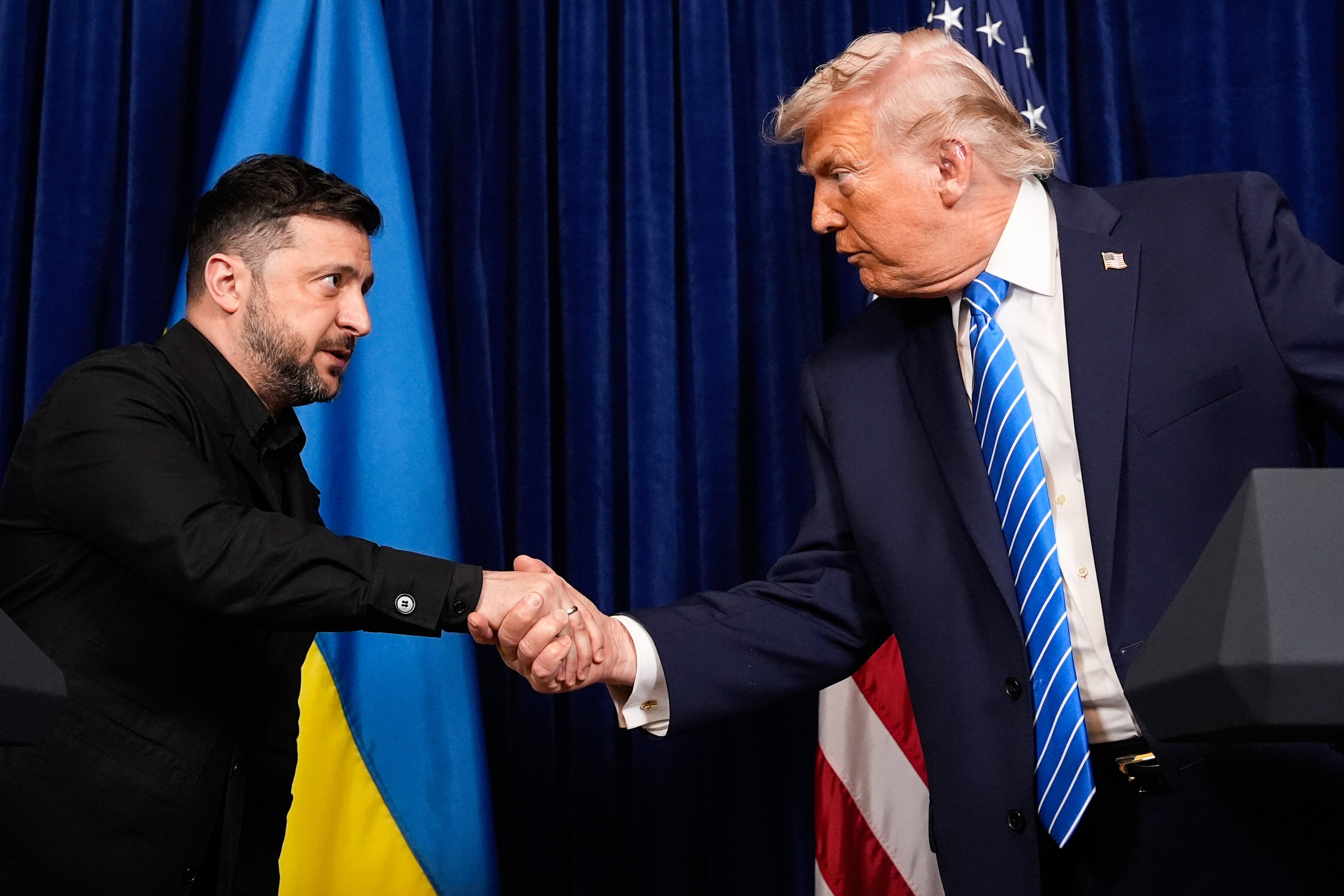
via Associated Press
Advertisement
It’s widely believed that, in the absence of a stronger response from Trump, only a firmer intervention from Europe can actually stop the war.
But Ukraine allies across the continent have so far refused to commit to sending troops unless they operate in a peace-keeping capacity, as they want to avoid direct conflict with Russia.
Sonin told HuffPost UK: “I think that European countries will have to get involved into the military defense of Ukraine – sending ground troops, drone operators, etc. Of course it is a heavy lift politically.
Advertisement
“However, for the elites in Poland or Germany or Czech Republic or Romania or Baltic countries a scenario of Russia-controlled Ukraine (with Ukrainian army under maybe influence of the Russian masters) should be so scary that even a political heavy lift might become reality.”
He warned that without such an intervention, “the only hope is an internal collapse of Putin’s regime”.
Similarly, Bennett said Europe must resolve the issue by sending arms to Ukraine urgently, while the Russian army is weak.
Advertisement
“The cost in blood and treasure will be great,” Bennett said. “But nowhere near as great as allowing Russia to regenerate its armed forces for a final push on western Europe in five to 10 years’ time.”
Bennett said he saw this year’s Munich Conference as a “watershed moment”, as US secretary of state Marco Rubio reiterated that the White House primarily sees the Ukraine conflict as a problem for Europe not for the US.
Similarly, Volker said: “Europe can do a lot and can do a lot more than it is currently doing. And as I said, I picked up in Munich a realisation among a lot of European leaders that they’re not doing enough, that they need to step in and fill a gap that the US is leaving. So there are there’s a lot they can do.”
Advertisement
“The US sees itself as more of an arbiter than a prime mover in respect of European security,” Bennett said, adding: “I shall put it bluntly: the only way to end this war is through war. Europe must take Russia down.”
With nothing within Russia threatening to slow Putin’s ongoing aggression, and Trump’s efforts still – for now – amounting to mainly showmanship, ending the war in 2026 seems like a pipe dream, unless Europe gets directly involved.
As Bennett said: “Our fate is in our hands, and no-one else’s.”



The loss of a loved one is a heavy weight and one that all of us will experience throughout our lives. The emotional toll alone can make day to day life incredibly difficult to cope with.
This is before we even consider the practical and financial elements of loss which, according to the loss experts at Empathy, fall disproportionately on women in the UK.
Advertisement
HuffPost UK spoke exclusively with Clare Dodd, UK General Manager at Empathy who shared: “When we talk about bereavement, the first thing people think of is the emotional devastation – how awful it must be to not have that person in your life anymore.
“But what often gets overlooked, and can be equally painful to deal with, is the practical avalanche that follows a death. And in the UK, that burden disproportionately falls on women.”
This is partially because Census data reveals women are significantly more likely to be widowed than men, and around three quarters of bereavement benefit claimants are female according to DWP data.
Advertisement
Dodd adds: “Beyond the statistics, we see a clear pattern amongst the people we work with: women are often the ones left navigating the administrative tasks of loss, while handling their own grief.
“And the to-do list can be lengthy – planning a funeral, contacting pension providers, closing bank accounts, organising the funeral, dealing with probate, all while holding the family together emotionally.”
Of course, this leads to a lot of stress on women. According to Empathy’s research, women are almost 40% more likely than men to suffer physical symptoms of stress, and 60% more likely to experience psychological symptoms post-loss.
Advertisement
Dodd adds: “We’re also seeing the ramifications of traditional gender stereotypes around finances play out in grief. Empathy’s research found that women are more likely to report being uninvolved in long-term household financial planning, such as managing advisers, pensions and insurance.”
This aligns with UK data showing 70% of people who manage household finances alone are men. Additionally, research from Canada Life also found nearly half of couples don’t know where their partner’s will is kept, highlighting how financial visibility gaps are widespread.
“So when a partner dies, some women are not just grieving; they’re also suddenly trying to understand pensions, investments or debts they may never have been fully included in, find the details for a financial adviser they’ve never met or figure out which insurer to contact,” says Dodd.
Advertisement
“That cognitive load is huge. Grief already affects memory, concentration and decision-making. Layer complex bureaucracy on top of that and it can become very difficult to cope.”
We wrote last year about how death admin becomes a secondary trauma for grieving people, and Dodd agrees, saying: ” Every bank, insurer and utility provider has its own process. People have to repeat the same painful information again and again, which makes it incredibly difficult to begin the healing journey.
“The way bereavement works from a policy perspective doesn’t make this any easier, which is a real shame. Outside of child bereavement, there is no guaranteed statutory paid leave for losing a spouse or partner in the UK.
Advertisement
“Many people get just a couple of compassionate days off work, and then they’re expected to return while still navigating funeral arrangements and legal processes, as well as the emotional implications of a loss that they may not have fully processed yet. A few days off simply doesn’t reflect the magnitude of what bereavement involves.”
I asked Dodd what we could do to support women when they’re dealing with this avalanche of admin. She said: “The people we work with often tell us they feel isolated but don’t know why, since a lot of family and friends might be checking in, bringing food or saying things like ‘let me know if you need anything.’
“For most people though, it feels too daunting to make a specific ask – and sometimes they don’t even know what to ask for. So the best support you can give to anyone navigating the admin of loss, regardless of gender, is to offer practical, bite-size support.
Advertisement
“Little things like researching the process for cancelling their loved one’s driver’s licence or sourcing the number for the right department at the bank can be hugely helpful”
She adds that while your loved one may be capable of managing all of this, they may not have the bandwidth to, saying: “Remember this is not about capability. It’s about capacity. Someone might be perfectly competent or independent, but grief shrinks your bandwidth. Reducing decision fatigue is a real form of care.”
It’s not a comfortable topic to address but Dodd says: “The single most protective thing couples can do is talk openly about money and logistics before anything happens. Both partners should know where key documents are kept, understand what accounts exist, and feel confident accessing them. Passwords and important contacts should be documented somewhere secure but accessible.
Advertisement
“It’s never nice to think about death, but keeping your will up to date is so crucial. Remember big life changes like getting married, divorced or having a child can invalidate previous wills or signal changes to intestacy if someone dies without a will.
“If there are big changes to your assets, for example purchasing a new or additional property, it’s also a great time to review both your will and your insurance cover.”
Look after each other.


Right now, longevity is all the rage and as we are gradually getting older as a population, we’re hoping to extend our lifetimes even further. It makes perfect sense, right?
Plus, most longevity advice can often be summarised into: eat healthy foods, exercise often and keep a healthy sleep schedule to reduce stress. All of this is great advice and we should be trying to implement it into our lives as much as possible!
Advertisement
However, there is a stage where a preoccupation with longevity is just a little too far and could be impacting your mental health and even the quality of your life as you lock into the quest for a longer life.
While this isn’t an official diagnosis, experts at Paracelsus Recovery, a mental health clinic based in Zurich have found that an obsessive and unhealthy fixation on longevity is increasingly presenting as anxiety and stress, and even eating disorders with their patients.
Speaking to The Mirror, Jan Gerber, the founder and CEO of Paracelsus Recovery said: “We are seeing a growing number of people whose lives are being dominated by the fear of ageing and decline, so much so that we have identified it as a new condition, Longevity Fixation Syndrome,
Advertisement
“What starts as self‑care becomes obsessive self‑surveillance. The stress generated by this mindset can be so intense that it actively shortens lifespan rather than extending it.”
Gerber adds that “there is no longevity without good mental health.”
Additionally, Jason Wood, a former sufferer of this syndrome said to The Guardian that he believes that longevity obsession is closely aligned to orthorexia: a condition characterised by excessive interest in, concern about, or obsession with healthy food.
Wood says: “I believe many of the underlying factors and desired outcomes which fuel orthorexia are the same for longevity fixation syndrome. But with the latter, there are more variables you feel like you need to control, so even more anxiety.”
Advertisement
If any of this feels familiar to you, speak to your GP or leading eating disorder charity BEAT for support.

A team at the University of Oxford has created an advanced technique that makes it possible to clearly see a vital component inside lithium-ion battery electrodes that scientists have struggled to track. The findings, published on February 17 in Nature Communications, could make battery manufacturing more efficient and help improve both charging speed and the overall lifespan of Li-ion batteries.
The research zeroed in on polymer binders used in the negative electrodes of lithium-ion batteries (anodes). These binders act like a glue that holds the electrode materials together. Even though they account for less than 5% of the electrode’s total weight, they strongly influence mechanical strength, electrical and ionic conductivity, and how long a battery can operate through repeated charge cycles.
Because binders are present in such small amounts and lack clear visual signatures, scientists have had difficulty determining exactly where they are located within the electrode. This has limited efforts to fine tune battery performance, since the way binders are distributed directly affects conductivity, structural stability, and long term durability.
Patent Pending Staining Technique Reveals Hidden Structure
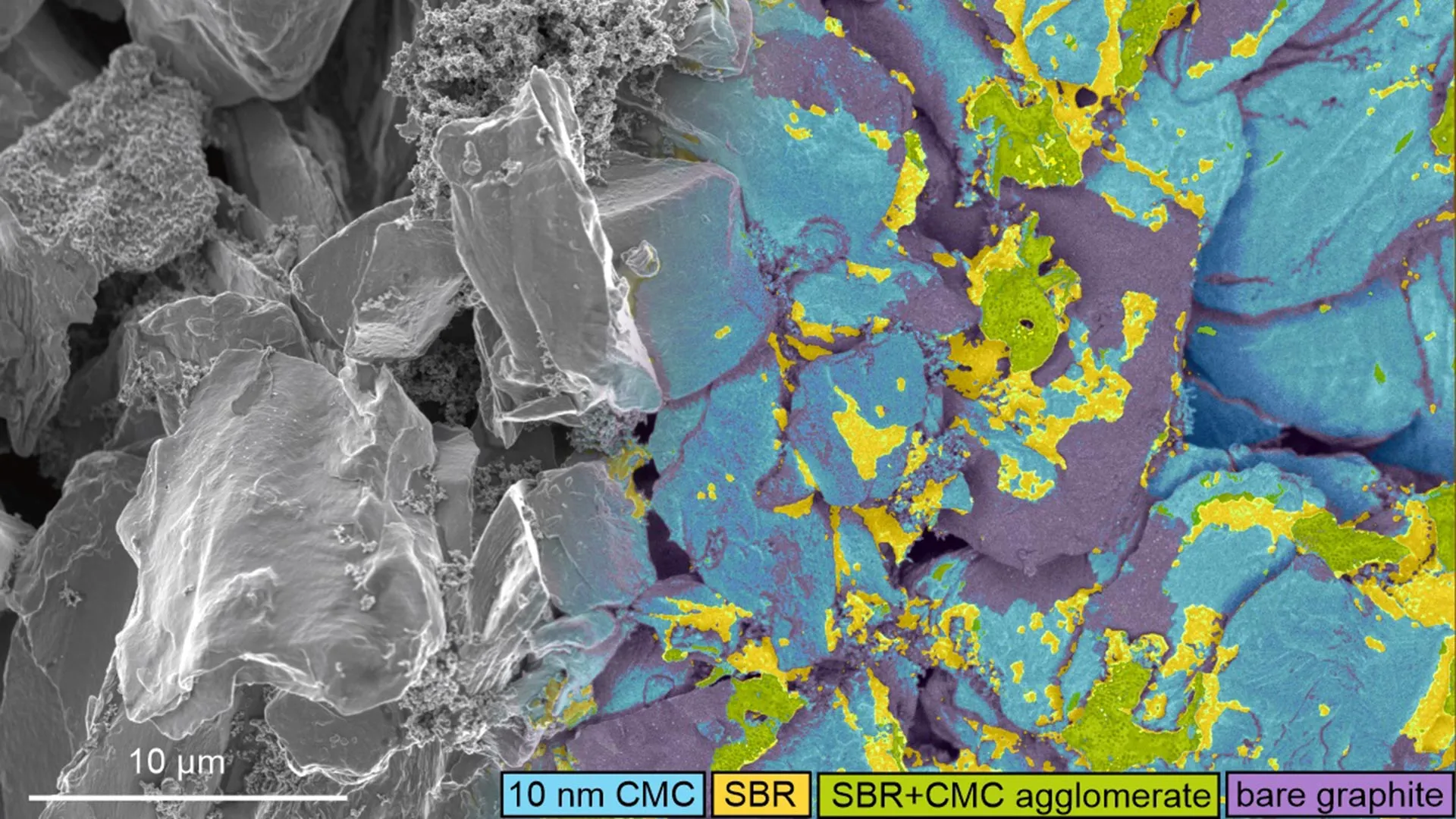
To overcome this obstacle, the researchers designed a patent-pending staining approach that attaches traceable silver and bromine markers to widely used cellulose- and latex-based binders in graphite- and silicon-based anodes. Once labeled, the binders can be detected because they emit characteristic X-rays (measured with energy-dispersive X-ray spectroscopy) or reflect high-energy electrons from the sample surface (measured with energy-selective backscattered electron imaging).
When viewed under an electron microscope, these signals provide detailed maps of where specific elements are located and what the electrode surface looks like. This allows scientists to analyze binder distribution with far greater precision than before.
Lead author Dr. Stanislaw Zankowski (Department of Materials, University of Oxford) said: “This staining technique opens up an entirely new toolbox for understanding how modern binders behave during electrode manufacturing. For the first time, we can accurately see the distribution of these binders not only generally (i.e., their thickness throughout the electrode), but also locally, as nanoscale binder layers and clusters, and correlate them with anode performance.”
The method works with standard graphite electrodes as well as advanced materials such as silicon or SiOx, making it relevant for both current lithium-ion batteries and next-generation designs.
Faster Charging and Longer Battery Life
By applying the new imaging tool, the team discovered that even subtle shifts in binder distribution can significantly change how efficiently a battery charges and how long it lasts. In testing, adjustments to slurry mixing and drying steps reduced the internal ionic resistance of experimental electrodes by as much as 40% — a major barrier to fast charging.
The researchers also captured detailed images of extremely thin layers of carboxymethyl cellulose (CMC) binder that coat graphite particles. The technique enabled clear detection of CMC layers just 10 nm thick and visualized structures spanning four orders of magnitude within a single image. The images revealed that what begins as a uniform CMC coating can break apart into uneven, patchy fragments during electrode processing, which may weaken battery performance and stability.
Co-author Professor Patrick Grant (Department of Materials, University of Oxford) said: “This multidisciplinary effort-spanning chemistry, electron microscopy, electrochemical testing, and modelling- has resulted in an innovative imaging approach that will help us to understand key surface processes that affect battery longevity and performance. This will drive forward advancements across a wide range of battery applications.”
The work was supported by the Faraday Institution’s Nextrode project and has already drawn significant interest from industry, including major battery producers and electric vehicle manufacturers.

Older adults who live with higher levels of air pollution are more likely to develop Alzheimer’s disease, according to new research led by Yanling Deng of Emory University, U.S.A. The study was published February 17th in the open access journal PLOS Medicine.
Alzheimer’s is the most common type of dementia and affects roughly 57 million people worldwide. Scientists have long recognized air pollution as a risk factor for Alzheimer’s, as well as for chronic conditions such as hypertension, stroke, and depression. Because these conditions are also tied to dementia, researchers have questioned whether polluted air raises Alzheimer’s risk indirectly by contributing to those illnesses, or whether it harms the brain more directly. Another possibility was that existing health problems could make the brain more sensitive to pollution.
Large Medicare Study of 27.8 Million Older Adults
To explore these questions, the Emory team analyzed data from more than 27.8 million U.S. Medicare beneficiaries age 65 and older between 2000 and 2018. They compared levels of air pollution exposure with new cases of Alzheimer’s disease, while carefully considering the presence of other chronic health conditions.
The analysis revealed that people exposed to higher levels of air pollution had a greater likelihood of developing Alzheimer’s. The relationship was somewhat stronger among individuals who had previously suffered a stroke. In contrast, hypertension and depression did not meaningfully increase the pollution related risk.
Direct Brain Effects of Fine Particulate Pollution
Taken together, the results indicate that air pollution may raise Alzheimer’s risk mainly through direct effects on the brain rather than by triggering other chronic diseases. At the same time, a history of stroke appears to increase vulnerability, suggesting that certain individuals face compounded risks.
The findings also point to cleaner air as a potential strategy for lowering dementia rates and protecting cognitive health in aging populations.
The authors add, “In this large national study of older adults, we found that long-term exposure to fine particulate air pollution was associated with a higher risk of Alzheimer’s disease, largely through direct effects on the brain rather than through common chronic conditions such as hypertension, stroke, or depression.”
“Our findings suggest that individuals with a history of stroke may be particularly vulnerable to the harmful effects of air pollution on brain health, highlighting an important intersection between environmental and vascular risk factors.”
This work was supported by the National Institutes of Health (R01 AG074357 to KS and R01 ES034175 to YL).
Scientists widely agree that complex life emerged after two very different microbes formed a close partnership. That merger eventually gave rise to plants, animals, and fungi, collectively known as eukaryotes. Yet one key question has lingered for years. How did these two organisms meet if one required oxygen to survive while the other was believed to thrive only in oxygen-free environments?
Researchers at The University of Texas at Austin now report evidence that may resolve that puzzle. Writing in the journal Nature, the team focused on a group of microbes called Asgard archaea, which are considered close relatives of the ancestors of complex life. Although most known Asgards live in deep-sea or other oxygen-poor environments, the new study shows that some members of this group can tolerate or even use oxygen. The discovery strengthens the long-standing theory that complex life evolved as predicted, likely in an environment where oxygen was present.
“Most Asgards alive today have been found in environments without oxygen,” explained Brett Baker an associate professor of marine science and integrative biology at UT. “But it turns out that the ones most closely related to eukaryotes live in places with oxygen, such as shallow coastal sediments and floating in the water column, and they have a lot of metabolic pathways that use oxygen. That suggests that our eukaryotic ancestor likely had these processes, too.”
The Great Oxidation Event and Early Eukaryotes
Baker’s team studies the genomes of Asgard archaea to identify new branches of the group and better understand how these microbes generate energy. Their latest findings align with what geologists and paleontologists have reconstructed about Earth’s early atmosphere.
More than 1.7 billion years ago, oxygen levels in the atmosphere were extremely low. Then oxygen concentrations rose sharply during what scientists call the Great Oxidation Event, eventually approaching levels similar to those today. Within a few hundred thousand years of this dramatic increase, the earliest known microfossils of eukaryotes appear in the fossil record. This close timing suggests that oxygen may have played a crucial role in the emergence of complex life.
“The fact that some of the Asgards, which are our ancestors, were able to use oxygen fits in with this very well,” Baker said. “Oxygen appeared in the environment, and Asgards adapted to that. They found an energetic advantage to using oxygen, and then they evolved into eukaryotes.”
Symbiosis and the Birth of Mitochondria
The prevailing model holds that eukaryotes arose when an Asgard archaeon formed a symbiotic relationship with an alphaproteobacterium. Over time, the two organisms became integrated into a single cell. The alphaproteobacterium eventually evolved into the mitochondria, the structure inside eukaryotic cells that produces energy.
In this study, researchers significantly expanded the known genetic diversity of Asgard archaea. They identified specific groups, including Heimdallarchaeia, that are especially closely related to eukaryotes but are relatively uncommon today.
“These Asgard archaea are often missed by low-coverage sequencing,” said co-author Kathryn Appler, a postdoctoral researcher at the Institut Pasteur in Paris, France. “The massive sequencing effort and layering of sequence and structural methods enabled us to see patterns that were not visible prior to this genomic expansion.”
Massive Genome Sequencing Effort
The work began with Appler’s Ph.D. research at The University of Texas Marine Science Institute in 2019, when she extracted DNA from marine sediments. The UT team and collaborators ultimately assembled more than 13,000 new microbial genomes. The project combined samples from multiple marine expeditions and required analyzing roughly 15 terabytes of environmental DNA.
From this extensive dataset, the researchers recovered hundreds of new Asgard genomes, nearly doubling the known genomic diversity of the group. By comparing genetic similarities and differences, they built an expanded Asgard archaea tree of life. The newly identified genomes also revealed previously unknown protein groups, doubling the number of recognized enzymatic classes within these microbes.
AI Analysis of Oxygen Metabolism Proteins
The team then examined Heimdallarchaeia more closely, comparing their proteins to those found in eukaryotes that are involved in energy production and oxygen metabolism. To do this, they used an artificial intelligence system called AlphaFold2 to predict the three-dimensional shapes of the proteins. Because a protein’s structure determines how it functions, this analysis provided important clues.
The results showed that several Heimdallarchaeia proteins closely resemble those used by eukaryotic cells for oxygen-based, energy-efficient metabolism. This structural similarity offers additional support for the idea that the ancestors of complex life were already adapted to using oxygen.
Other contributors to the study included former UT researchers Xianzhe Gong (currently at Shandong University in China), Pedro Leão (now at Radboud University in the Netherlands), Marguerite Langwig (now at the University of Wisconsin-Madison) and Valerie De Anda (currently at the University of Vienna). James Lingford and Chris Greening at Monash University in Australia, along with Kassiani Panagiotou and Thijs Ettema at Wageningen University in the Netherlands, also participated in the research.
Funding was provided in part by the Gordon and Betty Moore and Simons Foundations, the National Natural Science Foundation of China and the National Health and Medical Research Council of Australia.
Manjit Sangha, from Penn, near Wolverhampton, says her life drastically change in one weekend.
The household cat could hold the key to understanding certain types of cancer, such as breast cancer.
A Stanford University team have tested their nasal spray vaccine in animals but still need to do human clinical trials.
