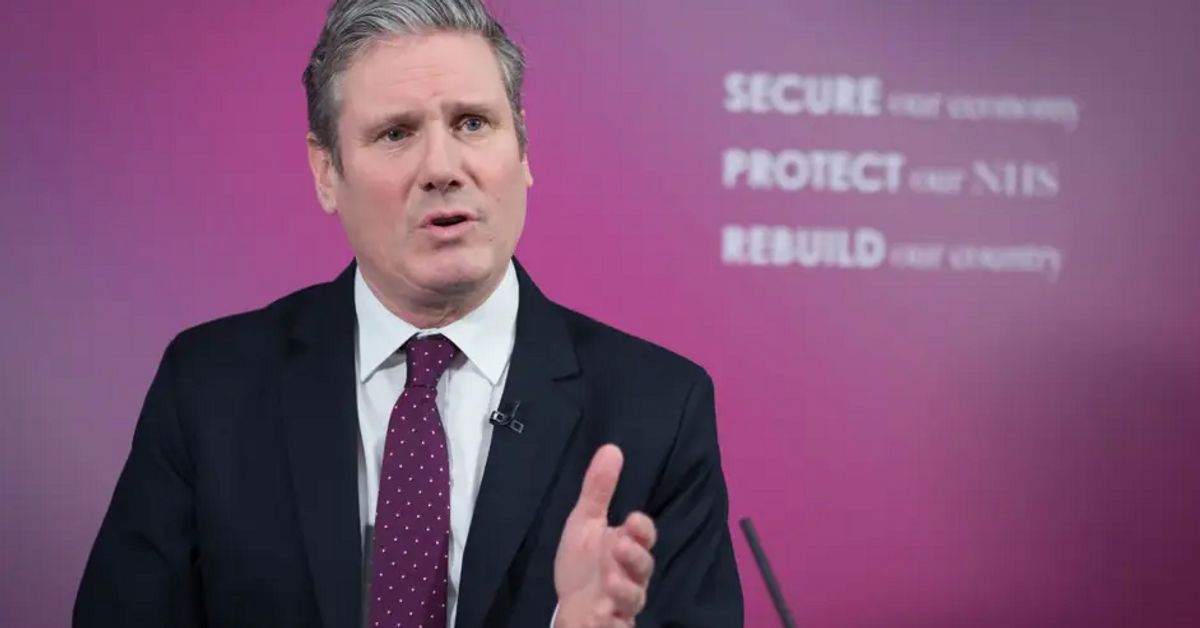
The Unite union general secretary said voters “don’t understand” what Labour stands for anymore.
In an interview with Times Radio on Sunday, McCluskey, who was a close ally of Jeremy Corbyn, said Starmer was on course to “destroy the unity of the party”.
McCluskey also said the selection process led to the selection of Paul Williams as Labour’s candidate for the Hartlepool by-election “beggars belief”.
Williams chosen to stand in the seat after he was the only person placed on the shortlist of candidates.
In the interview, McCluskey said: “Keir needs to start telling people what he is and what Labour are. People don’t know at the moment.
“People knew where Jeremy Corbyn was coming from long before any elections.
“People knew where Tony Blair was coming from long before any elections.
“At the moment we are suffering because people don’t understand what Keir Starmer stands for or what Labour stands for. And that’s what he has to do.
“Stick to the radical nature of the policies he stood on and win back the red wall seats.
“If he continues to attack the democracy in the left of the party he’ll destroy the unity of the party and the reality will be he’ll be dumped into the dustbin of history.”
Speaking about the upcoming Hartlepool by-election, McCluskey said: “If that’s Keir’s definition of democracy well it’s certainly not mine. It’s not even a pretence any more.
“A shortlist – actually it was a longlist – of one man. It beggars belief. But at the moment in terms of the internal democracy within our party. Nothing is surprising.
“I regret the fact that a proper process wouldn’t have been gone through.”
The by-election in the so-called red wall seat was triggered after incumbent Labour MP Mike Hill resigned this week amid sexual harassment allegations.
The contest will be seen a key test for Starmer’s leadership, one year after he succeeded Corbyn at the top of the party.
Boris Johnson made advances into traditional Labour territory in the North of England, Midlands and north Wales during the general election in December 2019, in which he secured a Conservative majority victory.
One of the seats taken as part of the host of red-to-blue turnovers in the North East was Williams’ former Stockton South seat.
Williams has apologised after a Tweet of his from 2011 was unearthed in which he asked his followers: “Do you have a favourite Tory milf?”
Shami Chakrabarti, the former shadow attorney general under Corbyn, has said the “unacceptable misogynistic” language means Williams should be dumped as the candidate.
But speaking to the Andrew Marr Show on Sunday, Lisa Nandy, the shadow foreign secretary, agreed while the language was “completely and utterly unacceptable”, as Williams had apologised he should not have to step down.
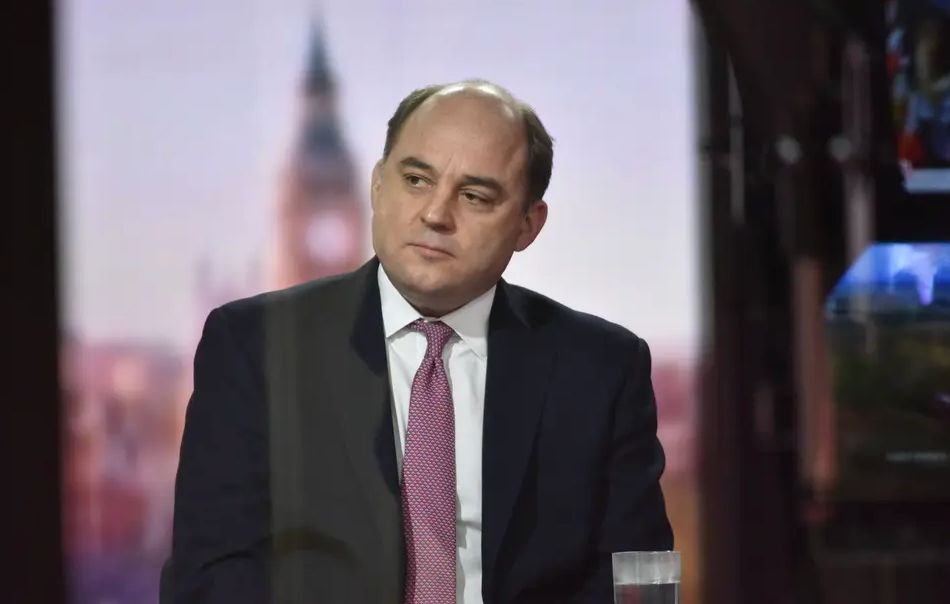
Ben Wallace, the defence secretary, has issued a warning to the European Commission that any attempt to block coronavirus vaccine exports to the UK would be “counterproductive”.
Commission president Ursula von der Leyen ramped up the rhetoric at the weekend, saying the EU had the power to “forbid” exports, adding; “That is the message to AstraZeneca.”
The warning reflects growing frustration on the continent that the EU is not getting the supplies it expected from the British-Swedish manufacturer.
Ireland’s commissioner Mairead McGuinness said no decisions had been taken but that EU leaders would consider the matter when they meet on Thursday.
“European citizens are growing angry and upset at the fact that the vaccine rollout has not happened as rapidly as we had anticipated,” she told BBC1’s The Andrew Marr Show.
“Both the EU and the UK have contracts with AstraZeneca and my understanding is the company is supplying the UK but the European Union.
“We are supplying the UK with other vaccines, so I think this is just about openness and transparency.”
Wallace, however, hit back by warning the manufacture of the Pfizer vaccine depended on supplies from the UK.
“The grown-up thing would be for the European Commission and some of the European leaders to not indulge in rhetoric but to recognise the obligations that we all have,” he told The Andrew Marr Show.
“We will all hold each other to our contracts. Making a vaccine is like baking a cake. We all have different ingredients and the European Commission will know that.
“You pointed out the point about Pfizer. They will know you wouldn’t want to cut off your nose to spite your face.”
Speaking earlier on Sky News’s Sophy Ridge on Sunday programme, he said the EU would suffer “severe reputational” damage if it tried interfering with vaccine exports.
“If contracts and undertakings get broken that is a very damaging thing to happen for a trading bloc which prides itself on the rule of law,” he said.
“It would be counterproductive because the one thing we know about vaccine production and manufacturing is that it is collaborative.
“If we start to unpick that, if the commission were to start to do that, I think they would undermine not only their citizens’ chances of having a proper vaccine programme, but also many other countries around the world with the reputational damage to the EU, I think, they would find very hard to change over the short-term.”
Asylum seekers who escaped war and oppression to seek refuge in the UK have been left penniless and in limbo during a national crisis, HuffPost UK can reveal.
Zakat is an obligatory religious levy and the third pillar of Islam, which requires Muslims to give up 2.5% of their qualifying wealth each year to help those in need. During 2020, the foundation distributed £3.8m in grants, a 27% rise on the previous year.
A Sudanese mother-of-three who escaped to the UK told HuffPost UK she has been living in a hotel room with her three children for the last five months and became ill with coronavirus while they all lived in the same space.
Saira,* 43, moved to Qatar from Sudan in 2008 with her husband, and the couple had three children.
But when her husband briefly returned to Sudan for his mother’s funeral in October, he was arrested.
Terrified she would be deported to Sudan and arrested too, Saira fled to the UK with her children to apply for asylum.
However, due to the backlog of asylum claims – which she believes is exacerbated by Covid-19 – Saira and her children have been living in hostels and hotel rooms since their arrival in the UK which she admitted is very difficult.
Getty imagesSaira, an asylum seeker, has been living with her three children in a hotel room for the last five months
“My children are really struggling and home schooling in one hotel room is very hard,” Saira told HuffPost UK.
“My kids are fighting and crying and asking when we can go to live in a home, and they miss their dad.”
Saira’s children – aged 12, 10 and four – managed to attend school for a month before the third national lockdown.
But even in that time one of her kids contracted Covid-19 and brought it home, and Saira became ill. “I felt pain all over my body and I started to cough and I could not move from the bed,” she said.
Home schooling in one hotel room is very hard. My kids are fighting and crying and asking when we can go to live in a home.”Saira, an asylum seeker from Sudan
Saira wore a mask all the time and kept the window open, even though it was cold, to try to protect her children from the virus.
“My youngest son wanted to be near me and when I told him to keep away, he didn’t understand and cried,” she said. “I felt very ill and still feel weak now.”
She came to the UK following her husband’s disappearance as she was frightened of being deported to Sudan from Qatar herself. She had visited Sudan in 2018 and was arrested, imprisoned for a month and treated very badly.
Saira believes her arrest then was related to fundraising and support for the people of Darfur, where her parents are from. “We made donations after collecting clothing and money to help people’s human rights,” she said.
“When they arrested me, I was shocked. They told me they knew everything about me and treated me badly.
“They pushed us around using their feet and I have problems in my back and shoulders because of this.
“I was alone in a dark room with no light and no water. I had to go to the toilet in the same room. It was very bad.”
She added: “I can’t go back to Sudan. Everyone I know there is trying to escape.”
Getty imagesAsylum seekers, who are already vulnerable, have been hit hard by the coronavirus pandemic
Then when lockdown began, Saira was forced to home school the children in the London hotel room they all share. “It was so stressful,” she said. “I felt very depressed and the children were restless and shouting and screaming and kept asking me questions that I couldn’t answer.”
Saira and her children are given food at the hotel, but it is not what they are used to and she admits often her children only eat the bread and rice.
“The hotel provides halal Indian food, but it is very spicy and my children cannot eat it. A few times, the hotel reception staff have ordered pizza for my children, but I feel too ashamed to ask for food.”
Saira was given shopping vouchers by the National Zakat Foundation when the organisation heard of her plight.
She has used these to buy food and snacks for her children and essential household items to use in the hotel room. “They helped me too much,” said Saira of the NZF.
Saira now longs for a home where she can cook for her own children and follow the procedure for seeking asylum. “All we need is to live a simple life,” she said. “We just want to be in a home where we can start our life in a safe place.”
For Ahmad,* a 40-year-old asylum seeker, the hardest part of being stuck in limbo with the asylums process is not being able to work and constantly having to say no to his children as he can’t afford to buy them things.
When the kids ask for something and as a father you cannot provide it, it is very disturbingAhmad, an asylum seeker living with his family in Greater Manchester
Ahmad lives with his wife and four young children in Bolton, Greater Manchester. He told HuffPost UK: “When the kids ask for something and as a father you cannot provide it, it is very disturbing.”
Ahmad was born and brought up in Dubai to parents from Balochistan in Pakistan.
He claimed asylum in the UK two years ago after being told his name was “on a list” because of his work raising awareness of human rights abuses in Balochistan and Dubai.
“In Dubai, carrying out human rights awareness was considered a crime,” he said. “It is forbidden and taboo. They thought of us as outsiders and foreigners and one of my friends told me my name was on a list, so we came to the UK two years ago.”
Getty imagesAhmad, an asylum seeker in Greater Manchester, feels frustrated at not being able to work and provide for his family
Ahmad applied for asylum but his case was refused. He appealed and is now awaiting an outcome. But in the meantime, he isn’t allowed to work despite his many skills.
Ahmad speaks several languages and was working as a customer care manager for a hospitality firm in Dubai. He is also able to work as a mechanic.
“If they gave me approval to work, at least I could provide more for my family,” he said. Instead, they rely on money from the government, which is just enough to cover the bare essentials.
“I am not bothered about myself, but it is very hard not being able to buy things for my kids,” he said. “I don’t even want to take them to the shops with me as I’m afraid if they ask me to buy something, I’ll have to say no as I can’t afford it.”
Ahmad says Covid-19 has also taken a mental toll on the family. “I feel like we are on a drowning ship and cannot move,” he said. “We just have to stand still and wait for something good to happen. It’s like your life is paused.”
A friend told Ahmad about the National Zakat Foundation and he applied for support. Within days, he and his family were given money to help them.
“I bought my children some new clothes and shoes and I have kept the rest for emergency,” he said. “I was very grateful for this support.”
We just have to stand still and wait for something good to happen. It’s like your life is pausedAhmad
Iqbal Nasim, the foundation’s chief executive, told HuffPost UK the stories of vulnerable asylum seekers during the pandemic had gone largely unheard.
“These people, many of them families, have travelled hundreds of miles in treacherous conditions to escape war and oppression,” he said.
“They’ve found themselves in a new country, with barely a penny in their pockets, and then been faced with the added strain of being left in limbo during a national crisis.
“Covid has delayed asylum claim assessments and left many struggling on meagre incomes, housed in hotels or B&Bs in obscure locations and unable to apply for additional support.”
Nasim said the charity had been able to use zakat to provide food and other essentials to thousands of asylum seekers, but much more needed to be done to help them.
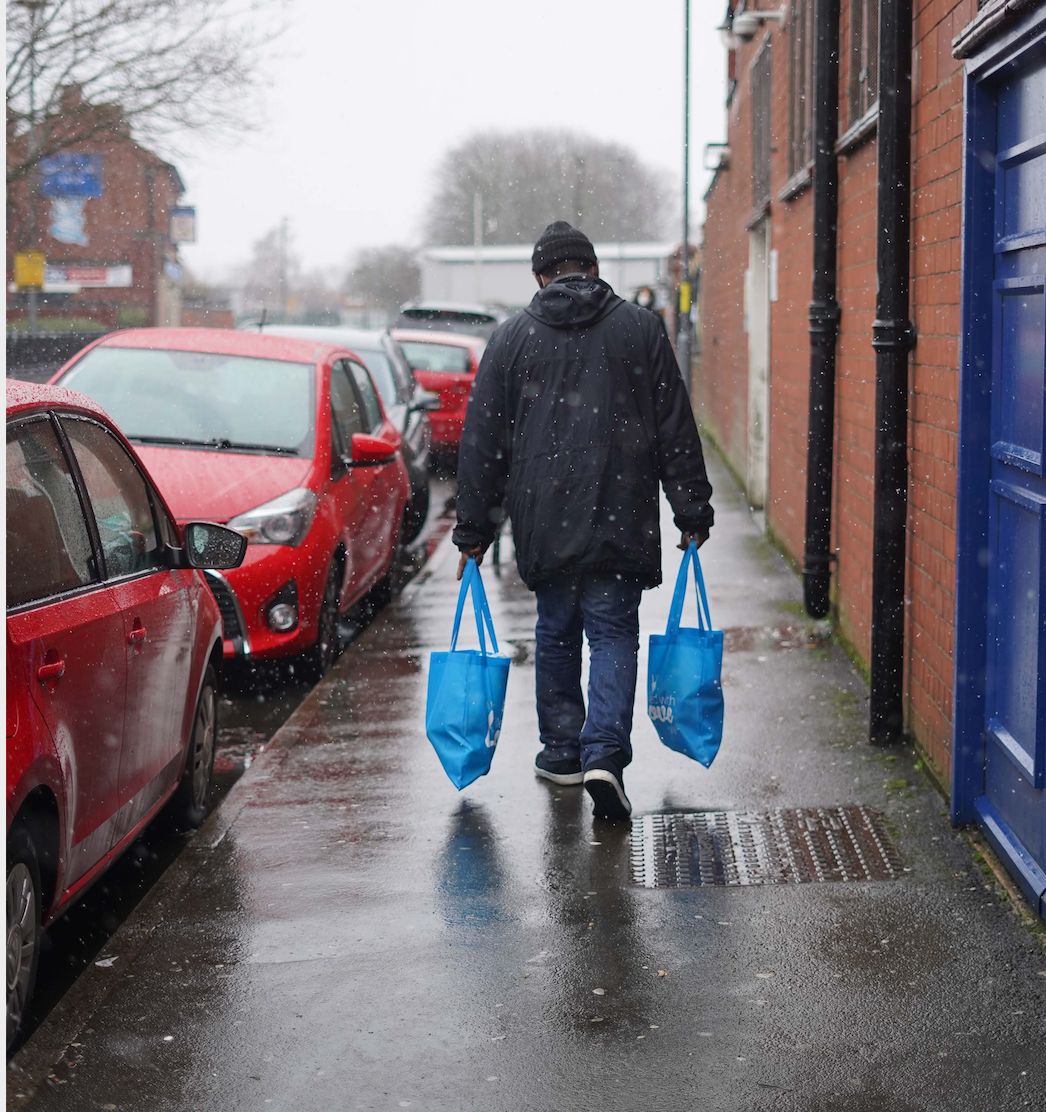
Haaris Karim – Islamic ReliefA man carrying food parcels to help those in need
Islamic Relief UK, which works to end poverty, teamed up with the National Zakat Foundation to deliver hardship relief to asylum seekers.
Zia Salik, Islamic Relief UK director, told HuffPost UK people are experiencing suffering all over the country. “As Muslims, we cannot abandon anyone in need and must urgently provide help wherever we can,” he said.
“There is still a long way to go in terms of drawing attention to the effect Covid-19 has had on an already suffering community.
“We hope our partnership will inspire other charities and individuals to come forward and offer their help, especially as we approach Ramadan.”
Downing Street has refused to apologise after Jacob Rees-Mogg used parliament to smear HuffPost UK journalist Arj Singh.
But No.10 did rebuke the Commons leader, by saying Boris Johnson would not have made the same comments.
Rees-Mogg on Thursday described Singh as “either a knave or a fool” and falsely accused him of “editing” comments made by foreign secretary Dominic Raab.
On Tuesday, HuffPost UK published a leaked extract from a video call in which Raab told foreign office staff that the UK was keen to trade with countries that had poor human rights records.
The government did not deny Raab had used the words, or suggest they had been doctored. HuffPost UK did not edit the recording that had been passed to us, and our article quoted it in full.
And he said Raab’s words had been “shockingly distorted by low quality journalism”.
Labour has accused Rees-Mogg of an attempt to mislead parliament with the claims.
No. 10 distanced the prime minister from Rees-Mogg’s words on Friday, saying Johnson would not have made the same comments.
Commons leader Jacob Rees Mogg has just told MPs that Dominic Raab’s own comments which came out of his own mouth and were recorded on tape were “shockingly distorted by low quality journalism” by me.
A Downing Street spokesperson said: “The PM is a staunch believer in the value of the free press and the important role journalists play in our democracy.
“These are not comments that the PM would have made.
“These comments were made by Jacob Rees-Mogg and I’m confident that he can explain their intended meaning.”
The spokesperson declined to say whether Rees-Mogg would be told to retract the comments or apologise.
Downing Street was repeatedly asked to back up claims that the report or recording had “distorted” what Raab had said. No evidence was provided.
The government was also pressured over its hostility to the media, after comments from the National Union of Journalists’ general secretary Michelle Stanistreet.
The union also picked out previous comments made by equalities minister Kemi Badenoch, to former HuffPost journalist Nadine White, who claimed it was “creepy and bizarre” for White to have privately asked for comment on a story.
It also follows a report last week that health secretary Matt Hancock had described The Guardian as “a rag” in leaked WhatsApp messages.
Stanistreet said “this behaviour has to stop”, adding: “It beggars belief that government ministers are smearing and impugning journalists in this way, indulging in outrageous behaviour that demeans them and the offices they hold.
“This same government, including the prime minister and other ministers, have committed time and resources to tackling the growing problem of abuse and harassment which is compromising the safety of journalists across the UK.
“Yet here we have colleagues around the cabinet table acting like playground bullies, undermining the work of journalists, bringing their work into disrepute, and dishing out insults that are clearly designed to further inflame harassment and abuse online.
“It’s not acceptable to dismiss reporting you don’t like as fake news. It’s completely unacceptable to resort to insults and personal smears of journalists simply trying to get on with their job.
“Our elected politicians should be committed to improving the parlous level of public discourse, not further polluting it. This behaviour has to stop, the government must get a grip and put its commitments to improving the recognition and value of journalists and journalism into practice.”
The UK’s Covid R rate has risen slightly to between 0.6 and 0.9, scientists advising the government have said.
Last week the estimated R rate was 0.6 and 0.8.
R measures the number of people, on average, that each sick person will infect.
If R is greater than 1 the epidemic is generally seen to be growing; if R is less than 1 the epidemic is shrinking.
The estimate was published on Friday and provided by the Scientific Advisory Group for Emergencies (Sage) and the Department for Health and Social Care (DHSC).
Here’s what the R rate is in each region of England
In England, the R rate is 0.7 to 0.8.
Regionally it is as follows:
East of England – 0.6 to 0.9 (up from 0.6 to 0.8 last week)
London – 0.6 to 0.9 (up from 0.6 to 0.8)
Midlands – 0.6 to 0.9 (up from 0.6 to 0.8)
North-east and Yorkshire – 0.7 to 0.9 (no change)
North-west – 0.7 to 0.9 (no change)
South-east – 0.7 to 0.9 (up from 0.6 to 0.8)
South-west – 0.6 to 0.9 (up from 0.5 to 0.8)
Here’s what the R rate is in the devolved nations
In Scotland the latest figures estimate the R rate is between 0.7 and 1.0, last week it was between 0.6 and 0.8.
In Wales it is believed to be between 0.6 and 0.8, last week it was between 0.7 and 0.9.
And in Northern Ireland, the R is estimated to be between 0.9 and 1.1, last week it was between 0.75 and 0.95.
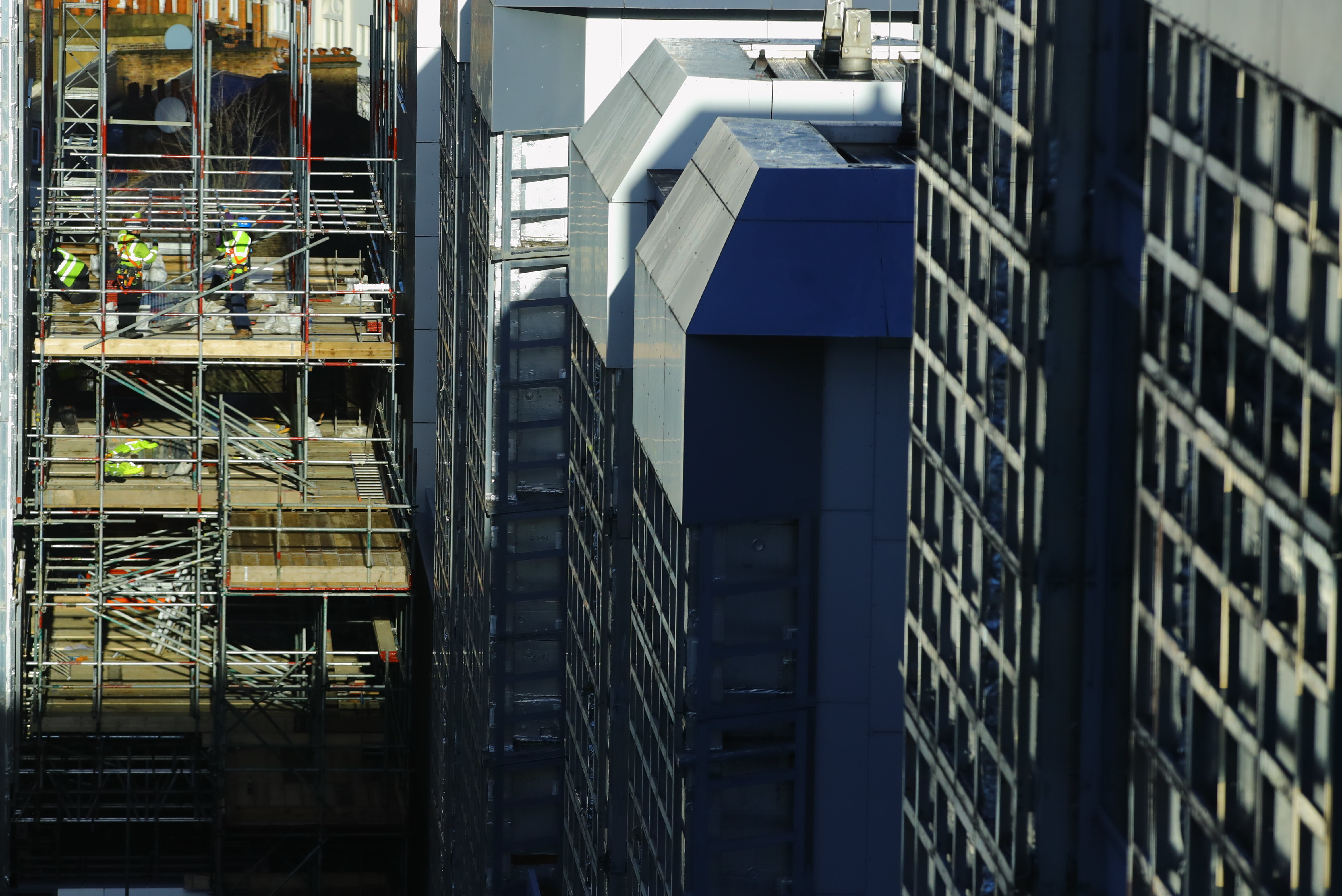
The government has been defeated again over the cladding scandal as peers backed a fresh bid to ensure flat owners do not have to pay for fire safety work.
The House of Lords passed an amendment to the fire safety bill proposed by the Lord Bishop of St Albans, Alan Smith, by 326 votes to 248, to ensure leaseholders do not have to pay for the removal of unsafe cladding from homes.
It sets up a fresh headache for Boris Johnson in the Commons, where Tory MPs are threatening to rebel over what they see as unfair costs being passed to homeowners to fix historic fire safety defects identified after the Grenfell Tower disaster.
Thousands of people living in flats cased in combustible cladding face huge bills after the Grenfell fire revealed major flaws in medium- and high-rise buildings’ fire-safety.
Housing secretary Robert Jenrick last month attempted to defuse the row by promising £3.5bn of cash to help homeowners.
But he was accused of “betrayal” of leaseholders as it was revealed the plans would force some leaseholders into taking out loans.
The money will only pay for the removal of cladding in buildings over 18 metres high.
People living in buildings below that height will have to take out loans, wiping thousands of pounds off the value of their homes.
Leading Tory rebel MP Stephen McPartland said the government defeat was “brilliant news”.
He told HuffPost UK: “The amendment protects leaseholders from paying for historic fire safety costs and retains the status quo in the Fire Safety Reform Order 2005.
“Leaseholders, action groups and supporters of the amendment do not want the taxpayer to pay – we want those responsible to pay, and only the government has the power to provide the funds up front and then levy those responsible to pay them back.
“The focus is now on to persuade the government to work with us and leaseholders to find a compromise that protects leaseholders from paying for historic fire safety costs.”
Smith told the Lords that ministers had not addressed the “severe adverse financial consequences that this bill will create for leaseholders”, and that ministers were “morally wrong in their treatment of leaseholders in this crisis”.
He said freeholders would be able to force leaseholders to reimburse “staggering” costs for fire safety work that need to be carried out through no fault of their own.
The bishop told the Lords: “Far from the government’s estimated remedial costs of around £9,000 per leaseholder depending on the terms of the lease and the work involved, a leaseholder could very easily be handed a bill of £50,000 payable within weeks.”
Citing a survey by Inside Housing, he said many of those affected are already seeking bankruptcy options.
“How can this be fair? How can this be just?” he said.
“It’s not the leaseholders who sold defective cladding.
“It was not leaseholders who fitted defective cladding.
“Leaseholders are the innocent party – they purchased their properties in good faith, believing them to be safe.
“And if this bill passes unamended, it is they who will pay.
“Not the cladding providers, not the developers, but hardworking ordinary people, forced to pay for defects that were deemed safe when they purchased their apartments.”
He added: “By not including sufficient provision to protect leaseholders, a conscious decision would be made to impose poverty, possibly bankruptcy, and certainly misery on thousands of ordinary people – people whose only crime was being aspirational.
“Those responsible should be the ones who pay.”
Labour housing spokesperson Lord Kennedy of Southwark, who backed the amendment, said: “The leaseholders are victims and have done nothing wrong.
“They deserve to be treated much better than they have been by the government.
“They have done everything right, they have bought their property and are paying their mortgage and are being penalised for the failure of others.
“Surely that cannot be right.
“The fact that their building has been covered in dangerous cladding has made their flats worthless – they cannot sell them but they are still expected to pay their mortgage and other charges.”
The bill will now return to the Commons for further consideration in another round of parliamentary ping-pong.
Downing Street has awkwardly dodged a string of questions about claims that Boris Johnson said ignoring Covid would be “the best thing” early in the pandemic.
The prime minister’s spokesperson ignored every opportunity to contradict the claims made in a bombshell BBC report, which also says cabinet ministers felt the PM should have installed a tougher lockdown last autumn to save more lives.
The documentary further claimed Johnson’s aides explicitly advised him to tell the public to stop shaking hands – despite which he boasted about shaking hands with hospital staff during an early press conference.
The PM’s spokesperson was asked four times on Tuesday about the central claim that Johnson was overheard saying at the start of the pandemic that “the best thing would be to ignore it”.
The BBC says he repeatedly warned that an overreaction could do more harm than good.
The spokesperson refused to deny the words had been said. “I would point back to what the prime minister said and set out at the time. It has always been our focus to reduce the cases of transmission, to protect the NHS and to ultimately protect lives.
“That’s what we did when we first locked down the country last year and that’s what we have sought to do throughout the pandemic.”
Put to him that he was not denying the allegation, the spokesperson said: “I’m pointing out that throughout the pandemic what we have done is do what we think was the best course of action in terms of protecting lives and in terms of protecting the NHS. That has been our focus throughout the pandemic.”
One source told the BBC’s Laura Kuenssberg there was a “lack of concern and energy” in No.10 as the virus began to hit the UK. “The general view was it is just hysteria. It was just like a flu.”
The BBC also quoted an unnamed cabinet minister’s frustration with the PM’s unwillingness to tighten restrictions in September as a second wave of infections began to appear.
“We knew there was going to be a second wave and there was a row about whether people should work from home or not – it was totally ridiculous,” they said.
No.10 also tried to dodge questions about a Daily Telegraph report saying the role of the Sage advisory committee of scientists would be “reviewed” after the pandemic, because they hold “too much sway” over ministerial decisions.
“We’ve said previously, there will be a time in the future to look back and analyse and reflect on all aspects of the pandemic,” the spokesperson said.
“But Sage continues and will continue to provide scientific evidence and information to the prime minister, the health secretary, and to the wider government as we move through implementing the roadmap.”
Boris Johnson’s “vaccine bounce” is being driven by the over-55s who have so far been given the Covid jab, according to new polling analysis.
A study of Savanta/ComRes surveys by polling expert Lord Hayward found that the Tories’ opening up of a seven-point lead over Labour almost exactly mirrors the age-related rollout of the vaccination programme.
And crucially, the older generations are more likely to vote in the coming set of “super Thursday” local elections on May 6.
The Conservatives are hoping that the vaccine effect, together with Johnson’s personal popularity in the north and midlands, could combine to protect them from heavy losses in key councils in Lancashire, Nottinghamshire and Derbyshire.
Keir Starmer is pushing the government’s planned 1% pay cap for NHS nurses as a key theme of Labour’s local election campaign.
The UK has one of its largest ever sets of elections in May, with polls postponed last year by the pandemic combining with planned contests to allow the first nationwide verdict on the main parties since the 2019 general election.
As well as county, district and city elections, there will be votes for eight London and metro mayors, and for the Scottish and Welsh parliaments.
Hayward said that the age differential of those switching support to the Tories was notable, given how the party had been neck and neck with Labour in early December but is now up to seven points behind across several polls.
“It is the older generations who have moved most markedly to the Conservatives. Basically the cohort from [the age of] 54 upwards.
“Now the significant thing is, they are the people who vote in local elections. So not only has that group moved towards the Conservatives, or has the population moved towards the Conservatives, but the people who’ve moved most towards the Conservatives are actually the people who vote generally.”
He went on: “It is quite noticeable. It was first of all the age group from 64 upwards that moved. There’s some sign now that the 55-year-old and upwards are also moving.
“And interestingly enough, they are the people who have received their vaccinations. So there’s clearly an element of ‘vaccine bounce’. I think it goes hand in hand. I don’t think it’s chance.”
More than 90% of pensioners have had their first dose of the Covid vaccine. Everyone aged 55 and over has already been notified they are eligible for vaccination, with some projections suggesting that everyone over 50 could be jabbed by the end of this month. It could take until the end of June to give a first dose to every adult over 18.
Hayward, the pollster who first coined the phrase “shy Tories” to explain John Major’s surprise 1992 victory, said the prime minister could be further assisted by each stage of the exit from lockdown restrictions in the weeks before the May polling day.
But he cautioned that other polling evidence showed concerns about Covid were receding notably since January and it was possible that its salience overall as an electoral issue could diminish in coming weeks as a result.
In a normal year, Labour would be expected to make substantial gains in the local elections, not least as the Tories had impressive seat holds or gains in 2016 and 2017, the baseline for this year’s contests.
Yet in key “red wall” areas that Boris Johnson won at Westminster level in 2019, there are signs that his personal popularity has increased. There are marked regional differences, with the PM’s popularity still very low in London but actually healthy in the north, the new analysis said.
The Tories will be heartened by another poll on Monday, with an IpsosMORI/Evening Standard survey finding a surge in economic optimism. For the first time since 2015, slightly more people think things will improve over the coming year than think they will get worse.
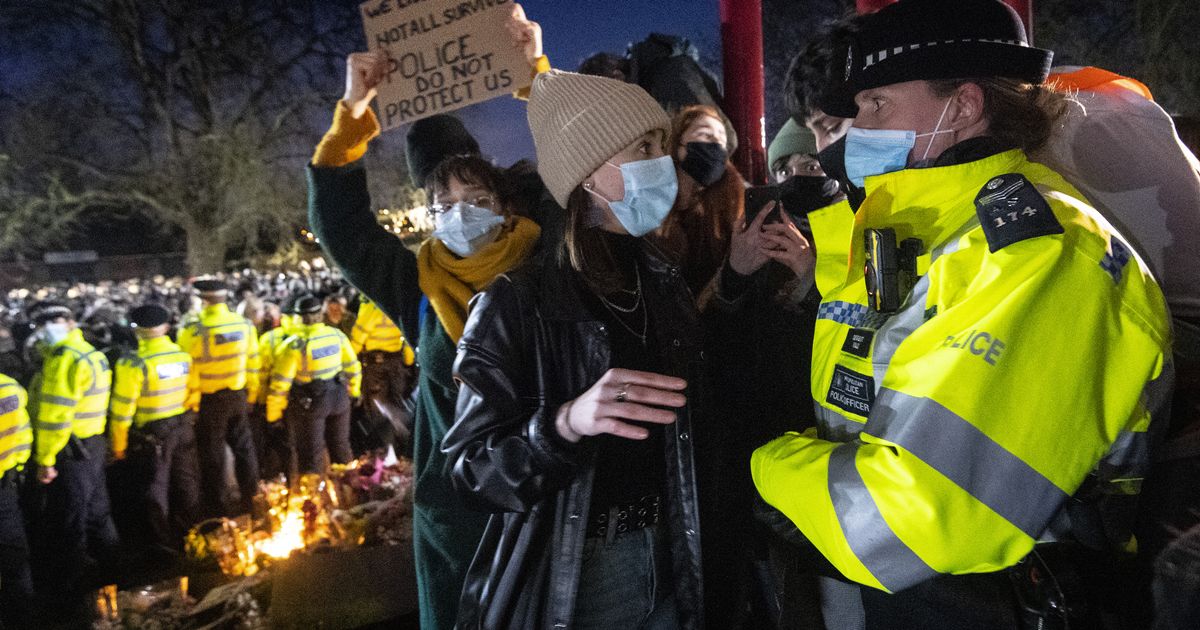
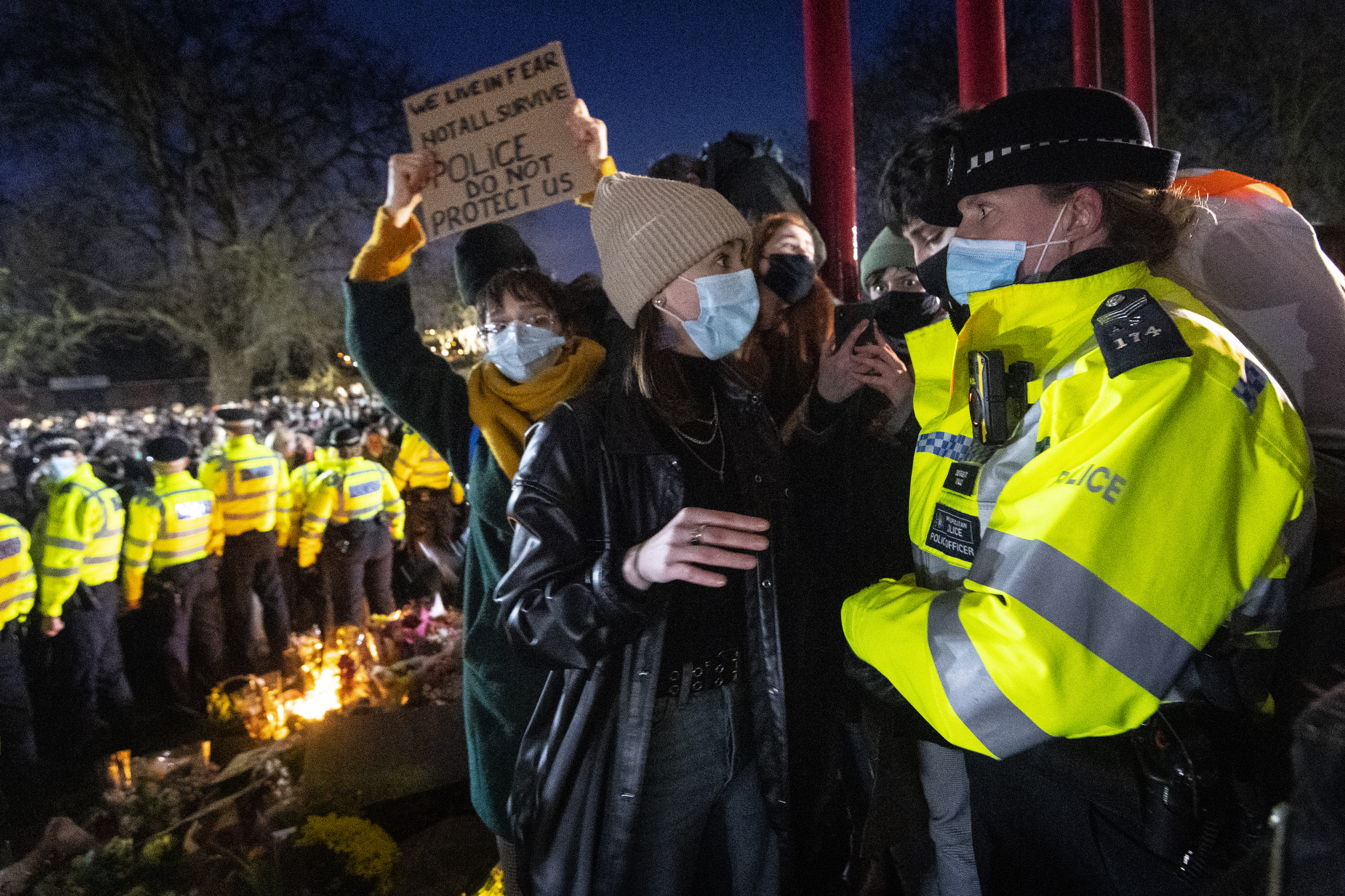
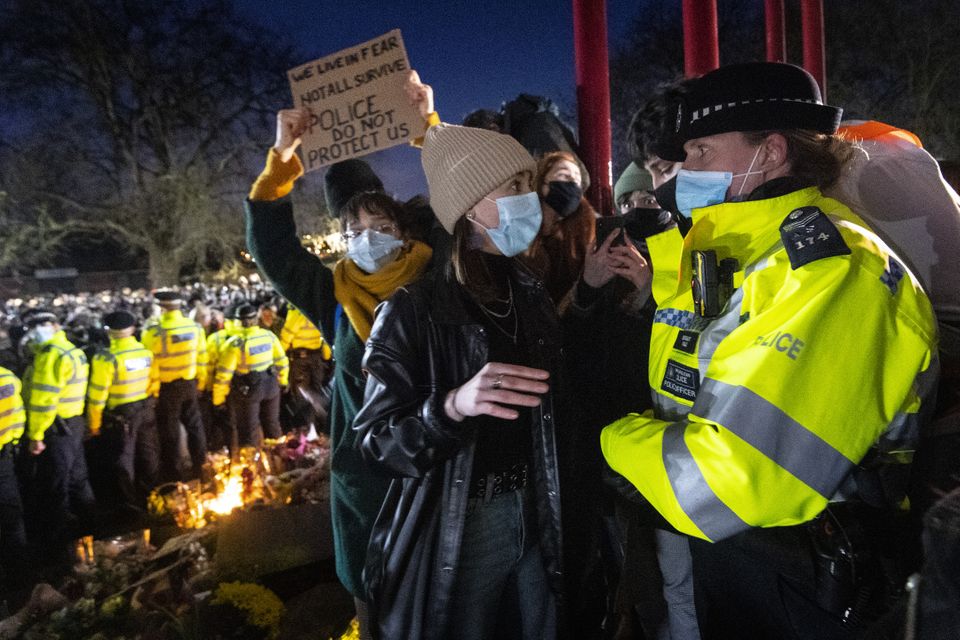
The scenes from Clapham Common on Saturday evening were horrific by anyone’s standards. The sight of Met Police officers trampling flowers lain in remembrance, dragging away and pinning to the floor women attending a vigil would be stomach churning under normal circumstances. But these are not normal circumstances.
That a vigil held in the wake of the horrific murder of Sarah Everard should descend into such horror, allegedly at the hands of an officer of the same police force, shames us all. But whilst the fallout from this shameful episode and the calls for Cressida Dick’s resignation will ring out clearly in the next few days and weeks, we must organise against the next assault on our liberties.
There is no doubt that Cressida Dick should resign. No justification exists for the scenes on Clapham Common but this will not solve the underlying issue.
This week the police, crime, sentencing and courts bill come before the House of Commons. This hurried piece of legislation is wide ranging and contains many parts to it which appear fairly benign. Sadly, there are some dangerous aspects to the bill too. At the heart of it lies the dangerous and dark curbs on protest. It is a cruel quirk that commissioner Dick has penned an accompanying statement to the legislation.
It is why the illusionists in government have been so keen to provoke a culture war. To try to divide those usually opposed to them into opposing camps
One might question why a government riding so high in the polls would seek to further neuter dissenting voices. But after presiding over a response to the Covid pandemic, which has seen us suffer the world’s worst death tolls and amongst the most disastrous financial slumps, they are aware their hold on power is built on sand.
It is why the illusionists in government have been so keen to provoke a culture war. To try to divide those usually opposed to them into opposing camps. Those protesting the brutality that people of colour suffer, or against the destruction of our planet, are branded extremists.
It is in this framing that the bill, in front of the Commons this week, is presented. In doing so the government are seeking consent from those who may have been conditioned to believe that the aforementioned groups should have draconian measures implemented upon them, whilst hoping they do not realise that the same legislation would have much farther-reaching consequences. What they appear not to have bargained for is something so shocking as Saturday’s events coming before the legislation could pass.
Saturday’s shameful scenes put protesters and the government on a collision course. This time, as ever, it is the protesters who are on the side of the angels
The history of protest is littered with events that have changed history, where people who have demanded change we now see as common, sense they have been demonised for daring to ask. The suffragettes, civil rights movement and trade unionists through the ages have all been forced through fighting for what is right, onto the wrong side of the law. Should the government do so again, protests will not stop – criminalising protest never ends well.
As a young miner on strike during the 1984-85 dispute I saw first-hand how politically enabled state apparatus could be turned on hardworking communities for opposing the government’s regressive agenda. As a representative of those communities who suffered so much as a result, I will never bow to the authoritarianism embodied by this government. I am very pleased that the Labour frontbench see the dark turn at the heart of this legislation and will be whipping to oppose.
Like those giants who have protested before them, the women mourning Sarah Everard and demanding change will not be cowed into submission by a legal framework intent on silencing them. Saturday’s shameful scenes put protesters and the government on a collision course. This time, as ever, it is the protesters who are on the side of the angels.
Ian Lavery is the Labour MP for Wansbeck and former party chair.
The UK’s Covid R rate has fallen to between 0.6 and 0.8, scientists advising the government have said.
Last week the estimated R rate was 0.7 to 0.9, which had been a slight rise on the previous week’s estimate of 0.6 and 0.9.
R measures the number of people, on average, that each sick person will infect.
If R is greater than 1 the epidemic is generally seen to be growing; if R is less than 1 the epidemic is shrinking.
The estimate was published on Friday and provided by the Scientific Advisory Group for Emergencies (Sage) and the Department for Health and Social Care (DHSC).
The DHSC also provides a breakdown of the estimated R rate in regions of England.
Here’s what the R rate is in each region
In England, the R rate is 0.6 to 0.8.
Regionally it is as follows:
East of England – 0.6 to 0.8 (no change from last week)
London – 0.6 to 0.8 (no change)
Midlands – 0.6 to 0.8 (from 0.7 to 0.9)
North-east and Yorkshire – 0.7 to 0.9 (from 0.7 to 1.0 )
North-west – 0.7 to 0.9 (no change)
South-east – 0.6 to 0.8 (no change)
South-west – 0.5 to 0.8 (from 0.6 to 0.8 )
It comes as the number of people infected with coronavirus continues to fall across England, but appears to be levelling off in Northern Ireland and Scotland.
New estimates from the Office for National Statistics (ONS) show that around one in 270 people in private households in England had Covid-19 between February 28 and March 6 – the equivalent of 200,600 people.
This is down from around one in 220, or 248,100 people, for the period February 21 to 27.
It is the lowest figure since the week to September 24 when the estimate stood at one in 470, or 116,600 people.
However, the number of people infected in England is still high when compared to last summer. In the week to August 25 around one in 2,000 people had coronavirus.
Meanwhile, the latest data for Wales shows around one in 365 people are estimated to have had Covid-19 between February 28 and March 6 – down from one in 285 the week before.
In Northern Ireland, around one in 310 people were infected, up from one in 325.
The estimate for Scotland was around one in 320 people, up from one in 335 the previous week.