Neon is on trend, but some make-up products pose a serious risk to your health. Here’s what to check for, and how to dazzle.


Neon is on trend, but some make-up products pose a serious risk to your health. Here’s what to check for, and how to dazzle.
Niamh Smyth and her husband Justyn have spent over a decade trying to start a family, undergoing four rounds of IVF, with three unsuccessful attempts and one pregnancy which ended in miscarriage.
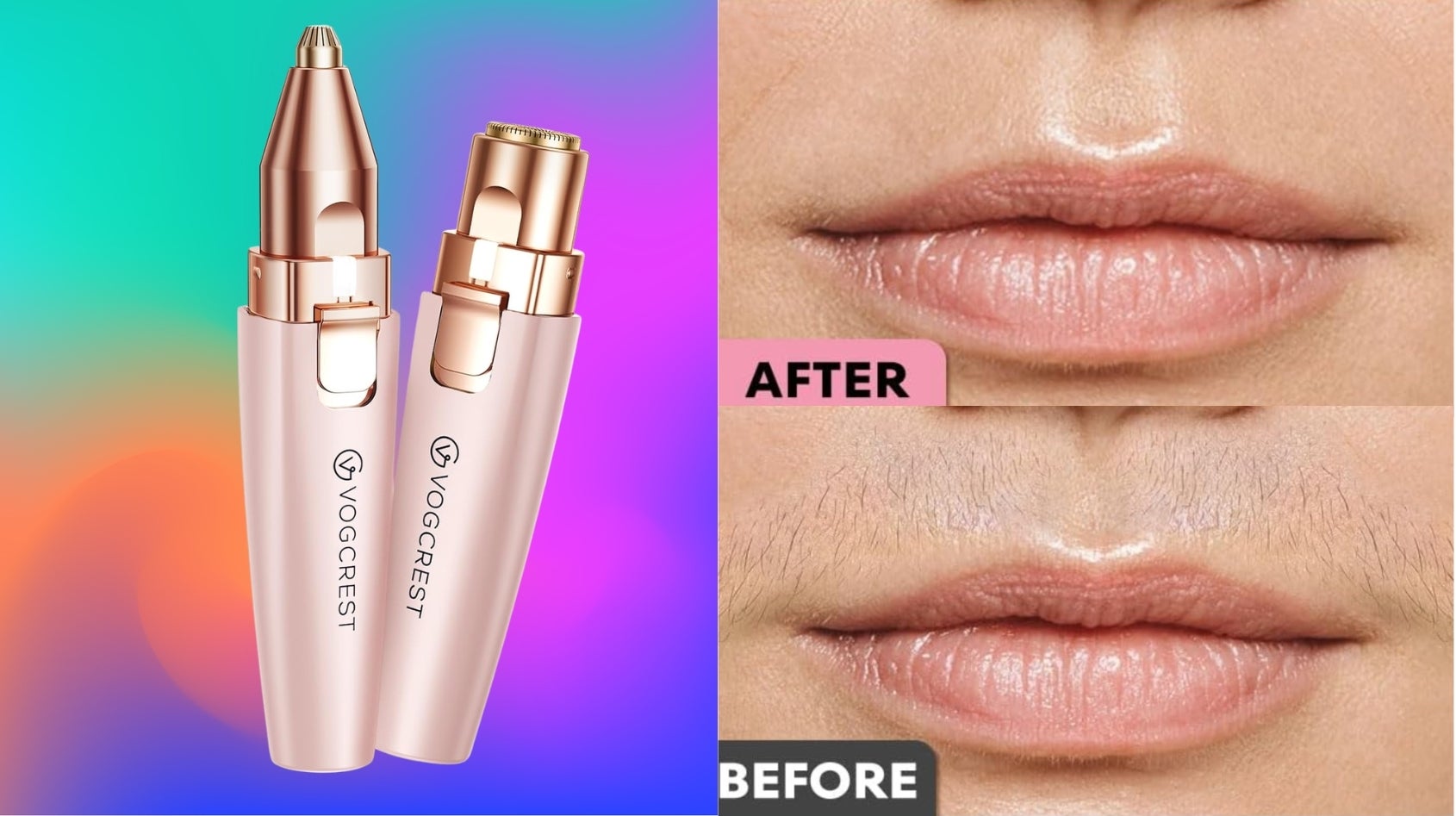
I always believed my natural hairiness was due to my Italian heritage. Every drop-dead gorgeous woman in my family spent Saturdays religiously waxing their upper lips. While it is certainly every individual’s choice as to who waxes and why, in my family, it was basically a rite of passage. At 10 years old, I sat at the kitchen table as my mom dripped microwaveable hot wax onto my lip, then ripped it off to searing pain.
When I hit my 20′s, the hair growth was… intense. I realized that it wasn’t my heritage alone making me a little fuzzier than the average woman; it was actually a medical condition: Polycystic Ovarian Syndrome (PCOS), which causes hirsutism (the rapid growth of facial hair) in women. Now, after over 20 years of waxing, I am done: The skin damage, the pain— I am determined to find a better way. And I think I may have found it in this little-known $20 device hiding on Amazon.
Advertisement
This particular design is meant to remove facial hair closely without the risk of razor bumps or nicks. It comes with two heads: One for your delicate areas like the upper lip, chin, and neck, and another for your eyebrows and even your nose. As one reviewer put it, the design makes for “great precision and a smooth, gentle trim every time.”
Advertisement
It features a 1,000 RPM motor for “faster hair removal” and even comes with a little LED light to make visibility even easier. And with dual blades and a titanium-plated head, skin irritation should be at a minimum. Several reviewers noted how great it is for being cautious with mature and even sensitive skin.
The razor is also portable and rechargeable, so it is easy to throw in your bag for trips or take on the go to freshen up. Additionally, as a fun aside, it’s available in a multitude of colors.
While I should be above societal beauty standards, I am, alas, just a girl looking to lead a peach-fuzz-free life. This cool find can give people like me the convenience and ease of hair removal on the go. As someone who has spent many a frantic five minutes in the car plucking out rogue chin hairs before an event, something like this could be life-changing.
Advertisement
People are reporting it helping with a few different skin needs. Several reviewers also note that it helps remove dead skin.
Advertisement
Plus, one user shared that it also helped with their blackheads triggered by ingrown hairs.
If you wear makeup, just give this a quick swipe over your face, and your products will lay smoother and more evenly than before.
“As a 52 year old woman, I [have] always struggled with facial hair. I have been using these type of devices since they first came out… late 90… early 00s? Before that it was those awful smelly creams. Let me tell you ladies, this is next level holy effing grail!!!!!! My face has never, ever in my life felt so smooth, looked so nice… not a single stubble to be seen or felt. I was hesitant to buy this one for a while thinking I have tried them all and it can’t be better then the one I was currently using. Wish I had bought it sooner, it’s life changing!” — Anyasings
“As a Senior, this product was easy to assemble and to use. It is gentle to an old face and did a wonderful job on the fine peach fuzz and firmer hairs. I’d recommend this product, I’m very well pleased with it and would buy it again.” — Camille
“This face and eyebrow hair trimmer remover is absolutely the best thing in the whole world I suffered from acne my whole life now I’m 51 years old and I have very deep blackheads and I’ve tried everything to remove them and nothing worked and as a trimming my facial hair it was removing my blackheads I am like beyond happy with this product and it works perfectly to remove my facial hair I am just so happy with this product” — Alana J. Cooley
“Who knew I had so much peach fuzz! And eyebrows are so light that shaving is difficult.” — Wildflowersgal
“Old crone’s delight. Just what is needed to keep looking good. A quick fix for lip/chin hairs, as well as touching up the eyebrow area. Best grooming product ever for the hair-gifted out there.” — Ragnar
Advertisement
The Real Deal: We use deal trackers and commerce experience to sift through “fake” hike-and-drop deals and other deceptive sales tactics. Products will usually be rated at least 4 stars with a minimum 15% discount. (And when there’s an exception, we’ll tell you why.)

Actor and singer Jared Leto has been accused of sexual misconduct by four women while they were teenagers in a new BBC documentary, “Jared Leto: Hollywood’s Dark Secret.”
One woman identified as Etta told the BBC that she met Leto in 2014 when she was 16 and Leto was 42. She said Leto approached her outside a modelling agency in Los Angeles and they exchanged contact info. The phone conversations quickly went from industry talk to talking about sex, she told the BBC.
Advertisement
Another woman, identified as Isabel, said she met Leto in 2002 in a Las Vegas mall when she was 17 and and he was 30. She told the BBC he invited her to his hotel, which she described as “dingy.” Once she was there, she said, Leto got in the shower and called her over. She alleged that he then opened the shower curtain and started kissing her. He grabbed her hand and used it to touch himself, she said.
“Alarms started going off in my head, like, ‘What are you doing here? This is not what you came here for,’” Isabel told the BBC. “I pulled away and was like, ‘OK, I’m going to go.’”
She said she went home and looked him up and learned he was in his early 30s.
One woman told the BBC that she had sex with Leto when she was 17 and he “shrugged off” a conversation about the age of consent. Another woman alleged that when she was 19, Leto threatened her with sexual assault.
Advertisement
The BBC reported that four other women said they received “strange and often very sexual phone calls” from the actor.
“I have never sexually assaulted anyone in my entire life,” Leto said Wednesday in a statement to HuffPost about the allegations in the documentary. “These claims are absolutely and categorically false.”
Someone named Simon, who worked with Leto’s band 30 Seconds to Mars for a decade, told the BBC that he witnessed Leto inviting a lot of young girls to a house where the band was recording. He said he remembered one instance when a girl’s parents dropped her off. He said Leto and the girl went to a bedroom and, when they returned, there was a feeling of shame and embarrassment in the air.
Advertisement
“I just remember being really moved by it,” Simon told the BBC.
A total of 10 women told the BBC about their experiences with Leto; nine of them were talking about their allegations for the first time.
About a year ago, Air Mail published a report featuring nine women accusing Leto of sexual misconduct dating back to 2006. Leto, now 54, denied the allegations.

As they gear up for the release of their fifth studio album, Sam Smith is celebrating the start of a new life chapter.
On Monday, the singer-songwriter confirmed to The New York Times that they and Christian Cowan, a fashion designer who has dressed the likes of Lady Gaga and Jennifer Lopez, had gotten engaged. The pair have been dating for about three years.
Advertisement
The news comes just weeks before the release of Smith’s new album, Hazel Eyes. In their chat with the Times, the five-time Grammy winner said the album’s title is a nod to Cowan’s eye colour, while songs like Everlasting Love and My Guy are inspired by their relationship.
Smith, who is nonbinary and uses they/them pronouns, did not divulge details of the proposal in the interview, but told the outlet, “I feel good, I feel happy.”

Udo Salters via Getty Images
Advertisement
Later, they added: “For me, there’s something radical about being queer in this time, in this world, and singing love songs. I’m not going to allow the poison that I read and that I see to affect my way of loving.”
Smith and Cowan grew up about 10 minutes apart from one another near Cambridge, England, but met online in 2022.
According to People, in December of that year, Cowan accompanied Smith to the White House, where Smith performed at a ceremony on the South Lawn after then-President Joe Biden signed the Respect for Marriage Act into law.
Advertisement
The couple made their red carpet debut at the 2024 Met Gala, with Smith wearing a bespoke tuxedo designed by Cowan.

Mike Coppola via Getty Images
“I couldn’t have dreamed of a better companion for the occasion,” Smith told Vogue at the time. “I always feel beautiful whenever I wear Christian’s clothes, both inside and out. Tonight’s is a particularly perfect fit.”
Advertisement
The musician also wore one of Cowan’s designs to this year’s Met Gala in May.
“I have always loved Erté. I love the way he brought costume art to the world through his visionary illustrations,” Cowan later said of Smith’s 2026 Met Gala look, alluding to the Russian-born French artist and designer known for his opera and theatre designs. “This look is a love letter to the king of fashion illustration, and to my love, Sam.”



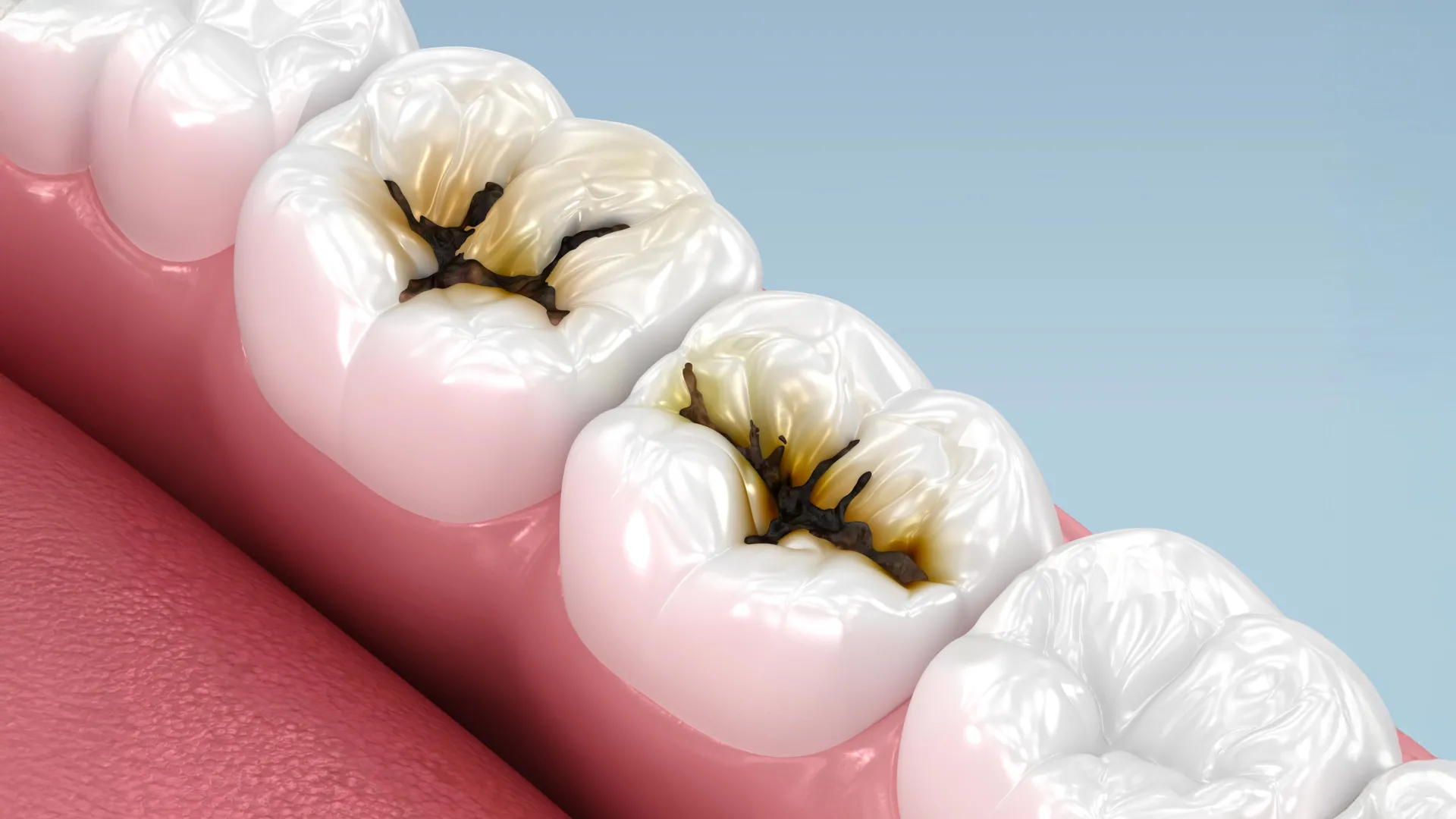
Untreated cavities send thousands of young children in the United States to emergency departments each year. Because hospital doctors usually cannot repair the underlying dental problem, some children continue to suffer from pain and infection, while others eventually need surgery under general anesthesia.
A low-cost liquid known as silver diamine fluoride, or SDF, may offer a much simpler option. Dentists apply it directly to a cavity with a small sponge-tipped applicator, a process that takes only a few seconds for each tooth. The treatment can stop decay without drilling, injections, or sedation.
A Long-Used Treatment Gains Stronger Evidence
SDF has been used successfully in many countries for decades. In the United States, dentists have used it off-label since 2014, when it was approved as a medical device for reducing tooth sensitivity.
However, researchers had not yet completed the large U.S. clinical trials needed to demonstrate its safety and effectiveness as a cavity treatment. That evidence would be necessary for the Food and Drug Administration to approve SDF as a drug for treating tooth decay.
A clinical trial led by the University of Michigan has now supplied those data.
The Phase III study, published in JAMA Pediatrics, included 830 children younger than age 6. Participants were recruited through dental offices, pediatric medical practices, Head Start and Early Head Start programs in Michigan, New York and Iowa.
SDF Stopped Decay in Many Baby Teeth
The researchers found that 38% SDF stopped tooth decay in more than half of the affected baby teeth when the treatment was applied every six months.
Traditional cavity treatment usually involves removing damaged tooth material and placing a filling. SDF requires no removal of the tooth. Instead, the liquid is painted directly onto the decayed area.
“This is a very effective and safe treatment — even in children as young as 1,” said Margherita Fontana, professor of dentistry at the University of Michigan School of Dentistry and the study’s lead investigator.
Tooth decay is the most common chronic disease among children and affects more than 40% of children in the United States. Cavities that are not treated can lead to intense pain, infections, difficulty sleeping or eating, missed school days and repeated medical appointments.
A Potential Option for Hard-to-Treat Patients
Fontana said SDF could be particularly useful for very young children, older adults, people with developmental or physical disabilities, and patients with severe dental anxiety. It may also help people who have limited access to conventional dental care or cannot easily tolerate standard procedures.
The treatment does have a visible drawback. The silver permanently turns the decayed part of the tooth dark.
“If we want more children and families to benefit from this treatment, we need rigorous evidence showing both that it works and that it’s safe. From a public health perspective, if we want broader implementation across the United States, including in medical settings, we need carefully collected data in U.S. populations, and we now have that,” Fontana said.
The research began in 2018 and continued despite disruptions caused by the COVID-19 pandemic.
“In medicine, clinicians want high-quality evidence before changing practice,” Fontana said. “It is important to have data they can refer to because young children often see pediatricians years before they ever visit a dentist; broader acceptance could allow many more cavities to be treated while a referral to a dental home is successful, and before they become painful, infected, or require surgery.”
Findings Could Support FDA Approval
Fontana worked with researchers from New York University, the University of Iowa and Indiana University, as well as the NIH’s National Institute of Dental and Craniofacial Research. The institute provided more than $12 million to support the study.
The trial generated the clinical evidence the manufacturer needs to submit a dental caries drug application to the FDA. Elevate Oral Care supplied Advantage Arrest 38% SDF, the product tested in the study.
Amr Moursi, professor of pediatric dentistry at New York University College of Dentistry, said the findings could help expand access to the treatment.
“Our results support FDA approval of SDF for managing arrest of tooth decay in young children. Removing SDF from off-label status would be an important innovation which could lead to increased utilization by providers, enhanced payments by insurers and more consistent product quality,” said Moursi, a co-principal investigator on the study.
A Bridge or Long-Term Treatment
For some children, applying SDF again every few months may control the cavity until the baby tooth falls out naturally. In adults, it could function as a long-term treatment or provide temporary protection until a restorative procedure becomes affordable or practical.
“For almost anyone, this can arrest the decay and stop the infection and the pain it causes,” Fontana said. “This could benefit many people.”

French fries and other fried foods are popular largely because of their crisp texture and rich flavor. However, they can absorb large amounts of oil during cooking, increasing their fat and calorie content. Regularly consuming foods high in fat can contribute to health problems such as obesity and hypertension.
Researchers at the University of Illinois Urbana-Champaign are investigating whether microwave energy could help produce French fries that absorb less oil without losing the qualities consumers expect. Their findings suggest that combining microwave frying with conventional frying could shorten cooking time, limit oil uptake, and still create the crisp exterior and satisfying texture associated with traditional fries.
Creating Healthier Fries Without Sacrificing Flavor
“Consumers want healthy foods, but at the time of purchase, their cravings often take over. High oil content adds flavor, but it also contains a lot of energy and calories. My research team studies frying with the aim of obtaining lower fat content without significant differences in taste and texture,” said principal investigator Pawan Singh Takhar, professor of food engineering in the Department of Food Science and Human Nutrition, part of the College of Agricultural, Consumer and Environmental Sciences at U of I.
Takhar and Yash Shah, a doctoral student in FSHN, reported their results in two new publications examining the physical changes that occur when French fries are cooked with microwave energy.
For the first study, the Illinois researchers worked with scientists at Washington State University who had developed a specialized microwave fryer. The device could operate at both 2.45 gigahertz (similar to a regular microwave oven) and 5.8 gigahertz.
Gigahertz is a unit used to describe the frequency of electromagnetic waves. Different microwave frequencies can affect how energy moves through food and how quickly water molecules respond during cooking.
Tracking What Happens Inside a French Fry
The researchers rinsed and peeled potatoes before cutting them into strips. The strips were then blanched, salted, and fried in soybean oil that had been heated to 180 degrees Celsius.
Blanching briefly exposes food to hot water or steam. For potatoes, this step can begin softening the tissue and help prepare the surface for frying.
During and after cooking, the team measured temperature, internal pressure, volume, texture, moisture, and oil content. These measurements helped reveal how water escaped from the potatoes and how oil entered the spaces it left behind.
According to Takhar, one of the central challenges in frying is preventing oil from moving into food both during cooking and immediately afterward.
At the start of frying, the tiny pores inside a potato are still filled with water, leaving little room for oil. As the potato heats up, however, that water turns into vapor and escapes. Empty spaces begin to form, and negative pressure can pull oil into the potato.
“Think about a straw in a drink. If you push air into the straw, it creates positive pressure and any liquid will be pushed out. But if you suck on the straw, the liquid moves upward. Now imagine food materials have lots of tiny straws. When there is positive pressure, the oil stays out. But if there is negative pressure, the oil starts moving in,” Takhar explained.
Why Pressure Determines Oil Absorption
The researchers found that as much as 90% of frying occurs while the food is under negative pressure. That creates a prolonged suction effect, allowing oil to move into the newly opened pores.
A more effective frying process would keep pressure inside the potato positive for a longer period and reduce the amount of time spent under negative pressure. This could limit the amount of oil drawn into the food.
Microwave energy may help by heating water throughout the potato rather than relying only on heat moving inward from the surface. As water molecules absorb microwave energy, they move more rapidly and generate additional vapor. That vapor raises the pressure inside the food and makes it harder for oil to enter.
“When we heat something in a conventional oven, the heat moves from outside to inside, but a microwave oven heats from the inside out, because the microwaves penetrate everywhere in the material. The microwaves oscillate water molecules, causing more vapor formation and thus shifting the pressure profile towards the positive side. The higher pressure in microwaves helps reduce oil penetration,” Takhar said.
Microwave Frying Cuts Cooking Time and Oil Uptake
Alongside the laboratory tests, the researchers used mathematical modeling to examine the frying process in greater detail. Computer models allowed them to explore how different variables interacted and to predict changes that would be difficult to measure directly in every experiment.
The team compared temperature, pressure, volume, texture, moisture, and oil absorption during frying at 2.45 GHz, 5.8 GHz, and under conventional conditions.
Across the experiments and simulations, microwave frying caused moisture to leave the potatoes more quickly. It also reduced total cooking time and lowered the amount of oil absorbed by the fries.
Microwave frying by itself, however, did not produce the desired texture. Fries cooked only with microwave energy tended to remain soft rather than developing the crisp surface consumers expect.
“However, if you just use microwave frying, you get soggy food. To obtain a crispy texture and taste, you need conventional heating. Therefore, we propose combining the two approaches in the same unit. Conventional heating maintains the crispiness, while microwave heating lowers the oil intake,” Takhar said.
A Hybrid Fryer Could Offer the Best of Both Methods
The proposed system would use conventional frying to brown the surface and create crunch, while microwave energy would speed moisture removal and help prevent excess oil from entering the potato.
This combined approach could allow manufacturers to produce fries with less oil while preserving the flavor and texture that make fried foods appealing. Faster cooking could also improve production efficiency.
The researchers noted that continuous fryers used in large food processing facilities could be modified to include microwave generators. Because these components are widely available and relatively inexpensive, the system may be economically practical for commercial production.
The first paper, “The Effect of Conventional and Microwave Frying on the Quality Characteristics of French Fries,” is published in the Journal of Food Science.
The second paper “Predicting the quality changes during microwave frying of food biopolymers by solving the hybrid mixture theory-based unsaturated transport, and electromagnetics equations,” was published in Current Research in Food Science.
The research was funded by USDA National Institute of Food and Agriculture (Awards 2020-67017-31194, ILLU-698-308, and ILLU-698-926).
When temperatures rise, sleep often suffers. Hot nights can make it harder to fall asleep, increase waking during the night and leave people feeling less rested the next day.
One reason is thermoregulation, the body’s ability to keep its internal temperature within a safe range. Sleep is closely linked to body temperature: to fall asleep and stay asleep, the body usually needs to lose some heat. Hot bedrooms make that harder.
And UK summers are becoming hotter. The Met Office has reported that the chance of exceeding 40°C in the UK is now more than 20 times higher than it was in the 1960s, with a 50% chance of another 40°C day in the next 12 years.
Humidity can make the problem worse. Research on humidity and heat stress shows that high humidity can increase the strain heat places on the body. The body cools itself partly by sweating. As sweat evaporates from the skin, it carries heat away. But when the air is already humid, evaporation becomes less efficient.
So how can you sleep better in hot weather?
Air conditioning is one answer, but it is not affordable or practical for many households. According to the Energy Saving Trust, the electricity unit rate under the July to September 2026 price cap is 26.11p per kWh for direct debit customers. A small portable air-conditioning unit using about 1kW for seven hours a night over 30 nights would cost around £54.83 in electricity alone, before buying the unit.
Research on overheating in homes shows that shading and ventilation can be important passive cooling strategies: reducing indoor heat without mechanical cooling. Before cooling the air, then, it helps to reduce the heat entering the home. Overheating usually comes from sunlight entering through windows, known as solar gain, and warm outside air.
These eight steps can help keep bedrooms cooler before nightfall.
On sunny days, keep curtains or blinds closed on sun-facing windows. This reduces sunlight entering the room and heating up floors, walls and furniture. External shading, such as shutters, awnings or shades, can be even more effective because it stops some sunlight before it reaches the glass.
Be careful with windows. If the air outside is hotter than the air inside, opening windows can bring heat in. Open windows when the outside air is cooler than indoors, often early in the morning, evening or overnight. Close them during the hottest part of the day if the outside air is warmer.
Cross-ventilation means opening windows or doors on different sides of a home so air can flow through. When outdoor air is cooler, this can help remove heat that has built up indoors. Studies of passive cooling in homes have found that night-time ventilation can reduce overheating, although effectiveness depends on the building, outdoor temperature, safety, noise and air quality.
Conservatories can become very hot because sunlight passes through the glass and warms the surfaces inside. Keep them ventilated during the day and, where possible, close internal doors between the conservatory and the rest of the house. Reflective films, blinds, shutters, awnings and shaded roofs can all reduce heat gain.
Loft spaces and top-floor rooms can also become hot because roofs absorb solar heat. Loft ventilation or reflective roof materials may help in some homes, although these are usually more substantial interventions. For example, solar panels on the roof can generate electricity and at the same time act as a barrier to reduce heat transfer to the building.
If your bedroom is on an upper floor or faces south or west, it may be one of the hottest rooms in the house. Heat rises through the building, and sun-facing walls and roofs can continue releasing stored heat after sunset.
During a heatwave, sleeping on the ground floor or north-facing side of the home may help.
Ovens, hobs, tumble dryers, washing machines and dishwashers can all make indoor spaces warmer. Cooking and drying clothes indoors can also increase humidity, making it harder for sweat to evaporate.
On very hot days, use heat-producing appliances earlier in the day or later in the evening. Use extractor fans when cooking or showering because they remove warm, moist air before it spreads through the home. Research on moisture movement and extractor fans has shown that fans can reduce the movement of moisture from kitchens and bathrooms to other rooms.
A review of sleepwear and bedding fibre types found that bedding and clothing can affect thermal comfort during sleep. Light, loose sleepwear and bedding can help the body lose heat. Cotton and linen are often comfortable because they absorb moisture and allow air movement, although fabric weave, thickness and moisture handling also matter. Avoid heavy bedding, thick duvets and tight synthetic fabrics that trap heat and moisture.
Evidence on electric fan use in hot weather suggests that fans can be useful in many hot conditions, but their safety depends on temperature, humidity, age, hydration and health.
Fans do not cool the air. They move air across the skin, which can help sweat evaporate and make people feel cooler.
In very high temperatures, especially for older adults or people who are dehydrated or unwell, fans alone may not be enough. If using a fan, drink water, avoid directing it continuously at the face while sleeping, and stop using it if it makes you feel hotter, dizzy or unwell.
Reusable ice packs, freezer blocks or cooling pillows may help some people feel more comfortable. Wrap ice packs in a cloth or place them on a tray to avoid condensation soaking bedding or direct cold contact with skin.
Cooling mattress toppers and bedding that use water or phase change materials may also help. These materials absorb, store and release heat as they change state, although cost and effectiveness vary.
In hot weather, better sleep starts long before bedtime.
The most effective approach is usually a combination: block sunlight during the day, ventilate when outside air is cooler, reduce heat from appliances, sleep in the coolest room available and use bedding that allows the body to lose heat.
Ed Butler investigates one of Europe’s most wanted drug smugglers
I’ll be the first to admit my concentration levels aren’t great. In my twenties, I was pretty good at getting my head down and boshing out a project, free from distraction.
But nowadays, with the ping of social media notifications, WhatsApp messages, emails, Slack updates, news alerts, to-do list reminders, not to mention the 20+ tabs I have open and need to flit between on a daily basis (and all the parenting mental load tabs running in the background: who needs picking up at what time tonight? What shall I make for dinner? Whose birthday party do I need to buy gifts for ahead of this weekend?), I am in a state of constant distraction.
Advertisement
It can be pretty exhausting.
Sometimes it feels like I can barely get one thing done – a task, an article, a bunch of emails fired out – without becoming distracted by about 13 other things that need to be done. And then the first task becomes this monster hill to climb.
Like most people, I’m not immune to the odd mid-afternoon slump, either. If I’ve had a disrupted night’s sleep – which happens a lot with kids under five – I often find this period is when my productivity nose-dives off a cliff.
So, I was intrigued to hear about the 5-5-5-3 method from career coach, Jo Irving. It’s a mindful productivity hack for getting things done, which involves:
Advertisement
“Clients often tell me it helps them transition more easily into deep work, especially on days when they feel scattered or overwhelmed,” Irving said.
“The breathing component is particularly useful for calming the mind, while the preparation phase eliminates the common excuse of ‘I’m not ready yet’.
Advertisement
“By respecting the mental runway you need before engaging with a task, the method reduces procrastination and enhances focus.”
I was intrigued as to whether this intentional method could help me free myself from distraction overload and help me shift into a better state of focus.

Advertisement
I hit a bit of an afternoon slump around 2.30pm, so I decided to go for a quick walk and then returned to my computer to focus on writing.
First things first, I planned what I was going to write and made sure I had all the necessary information to hand. Then I cleared my desk of clutter (empty water bottles, plates, cups, random bits of paperwork), popped my phone in the other room, turned off notifications on Slack, and sat down to write.
To begin with I sat and focused on my breathing for a few minutes. My brain tried to distract me throughout – the buzz of a notification on my phone in the other room, the lure of a tab on my laptop, but I chose to ignore each distraction and continued with my breathing, focusing on a plant on a bookshelf nearby. It was actually very calming. (I had this music on in the background which probably contributed to the relaxed vibe.)
Advertisement
After around three minutes, I felt ready to start. I clocked the time on my laptop and began to type.
I have to admit, the intentional start to this period of focus did seem to help me stay on track. I am forever getting distracted by about 25 open tabs on my laptop, but I maintained focus on the one tab I was using and continued to write.
Irving noted the method works “particularly well for people who struggle with distractions or have difficulty getting started”. Hi, hello. “Rather than forcing yourself into work mode, this technique creates a natural, structured entry point into deep concentration,” she explained.
Advertisement
“It’s especially effective for those who feel mentally fragmented throughout the day or overwhelmed by a long to do list. That said, like any tool, consistency is key. It’s most powerful when used regularly, not just as a one off.”
The only thing I’d say is that I didn’t feel like I needed to take a whole five minutes for planning, another five minutes for preparing my workspace (it took barely 60 seconds) and a whole five minutes for breathing.
I think depending on what your job is or how fast-paced it is, you could probably tweak these timings to suit.
Advertisement
The career coach agreed that for people working in reactive environments where immediate responses are required, carving out 15 minutes before each task might feel impractical.
“Similarly, if you’re constantly context switching or working in a high interruption role, the method may need some adjusting,” she added.
“But in coaching terms, I’d say that’s not a flaw in the technique, it’s just about tailoring it to your real world circumstances.”
Advertisement
Irving summarised the approach as being “ideal for anyone trying to reclaim their focus in a world full of distractions”.
I certainly found it refreshing – and almost freeing – to not be pulled in a hundred different directions at once. I also managed to finish my article in one go, without flicking between tabs, which rarely happens nowadays. (Sometimes I can end up straddling about five different demands and projects as a result, and I wonder why I haven’t got everything I’d hoped to get done completed at the end of the day.)
Irving ended: “If you’re someone who tends to dive into tasks without much thought or ends the day wondering where your time went, this approach can be a game changer.”
Advertisement
After giving it a go, I’d say it’s certainly worth a shot!