The home tests will be offered so that women can check for cervical cancer without visiting a GP.


The home tests will be offered so that women can check for cervical cancer without visiting a GP.

Keir Starmer will announce a historic boost in national security spending at Tuesday’s Nato summit during this “era of radical uncertainty”.
While gathering with his allies in The Hague this week, the prime minister will promise to spend 5% of gross domestic product (GDP) on national security by 2035.
Advertisement
His pledge comes days after the US joined Israel in bombing Iran and as Vladimir Putin continues his brutal land grab in Ukraine.
US president Donald Trump has been pressuring Europe to take more responsibility for its defence, too.
According to the government, this new target means the UK will meet Nato’s demands for member states’ defence spending.
Advertisement
Starmer announced in February that the government was boosting defence spending from 2.3% to 2.5% by 2027, with an ambition to increase that to 3% by 2035.
However, that is now being increased to 3.5%, with an additional 1.5% of “national resilience and homeland security”, which includes protecting the UK’s energy infrastructure and tackling people smuggling gangs.
Starmer said: “We must navigate this era of radical uncertainty with agility, speed and a clear-eyed sense of the national interest to deliver security for working people and keep them safe.
Advertisement
“That’s why I have made the commitment to spend 5% of GDP on national security. This is an opportunity to deepen our commitment to Nato and drive greater investment in the nation’s wider security and resilience. After all, economic security is national security.”
The announcement comes as the government reveals its National Security Strategy, announcing that the UK must improve its work in science, education, trade and frontier technology to keep up with competitors.
It is meant to help the UK bring together all of its plans in a world of increasing “grey zone” threats from other nations.
Advertisement
The UK’s Industrial Strategy, revealed on Monday, also announced an investment of £86 billion in research and development in technology to boost the economy and the military.
While other Nato allies are expected to join the UK in hiking their defence spending, there has been some pushback from countries like Spain and Italy, who are refusing to put more money into the sector.
This could end up being a source of tension at this week’s summit, as Trump attends his first Nato conference since 2019.
Advertisement


There’s no set figure for how little sex is too little.
Indeed, some researchers found that only 26% of couples hit the once-weekly mark – speaking to The New York Times, multiple married pairs reported happy, sex-free marriages.
Couples counsellor and author of The Couples Communication Handbook, Raffi Bilek, previously told HuffPost UK the tipping point is usually “whatever amount is causing arguments”.
Advertisement
Writing to Reddit’s r/AITAH (Am I The Asshole Here) forum recently, site user renelemely suggested he was approaching that point of “resentment” with his partner.
“My girlfriend and I have never [had] sex, and it’s been almost five years. Am I the asshole?,” he asked.
We spoke to psychologist Veronica West, founder and lead Content Creator of My Thriving Mind, about when sexual incompatibility is a dealbreaker – and when it can be overcome.
Advertisement
The poster shared that he’s never slept with his girlfriend in their five-year relationship.
At first, he said, he thought she was a little shy and wanted to go slow. “I was just excited for the time to come… and it still hasn’t come,” OP (the original poster) wrote.
When he tries to bring it up, she gets very upset and says the topic makes her feel extremely guilty. She has recently shared that the main reason behind the mismatch is her lack of sex drive.
Advertisement
“She is beautiful and smart, and she has a good job,” OP added. “We live together and her family love me. We do everything together, and I miss her when she’s not around.”
Still, he wonders if he “can live like this”, and feels increasing “resentment” towards his partner and is hoping she can change.
West shared that even though a lot of couples struggle to address sexual incompatibility, it isn’t a “death sentence” for the relationship.
Advertisement
“What really counts is what both parties feel about it,” she added. “If both parties are willing to get curious and find options, there is room to build something positive.”
When asked whether most relationships can survive a complete sexual mismatch, she responded: “Sometimes, sometimes not.”
Compromise, she said, is not always a “meet in the middle” scenario when it comes to sex. “You can’t really compromise to have sex one and a half times per week and feel like you’ve won,” she advised.
Advertisement
“It’s about emotional and physical needs being met in a way that feels respectful and genuine.”
That can take the form of physical contact with no sexual expectation, experimenting with open relationships, seeing a therapist, and communicating your needs often.
“But no matter the route, the two of them have to actually agree, not begrudgingly go along and hope the other [one] of them will change their mind next month,” West continued.
“It becomes a dealbreaker when the mismatch turns into a chronic emotional ache.”
Refusal to discuss the topic is one red flag.
And, she ended: “If one partner starts to feel invisible or chronically rejected, or the other feels guilt every time the topic comes up, the tension is no longer just about sex – it is about identity, resentment, and unmet needs.”
Advertisement


David Lammy accused a Reform UK MP of “swallowing conspiracy theories” over a question she asked him in the House of Commons.
The foreign secretary told Sarah Pochin to “get some help” after she suggested the government’s controversial decision to give the Chagos Islands to Mauritius had played a part in America’s plans for bombing Iran.
The pair clashed after Lammy updated parliament about the worsening crisis in the Middle East.
It was thought that the UK may have to give the US permission to use the Diego Garcia air base in the Chagos Islands to launch its attacks on Iranian nuclear weapons facilities.
But in the end, the American aircraft flew non-stop from the US on their bombing mission.
Pochin, the MP for Runcorn and Helsby, said: “Can the foreign secretary explain to the House whether the United States felt unable to use the Diego Garcia base … because of your deal that you did with the Mauritians, that would then tell the Chinese, that would then tell the Iranians?”
Lammy told her: “The honourable lady has got to get off social media, has got to get some help because she’s swallowing conspiracy theories which should not be repeated in this House.”

It will target the worst-performing trusts in England – and report back by the end of the year.
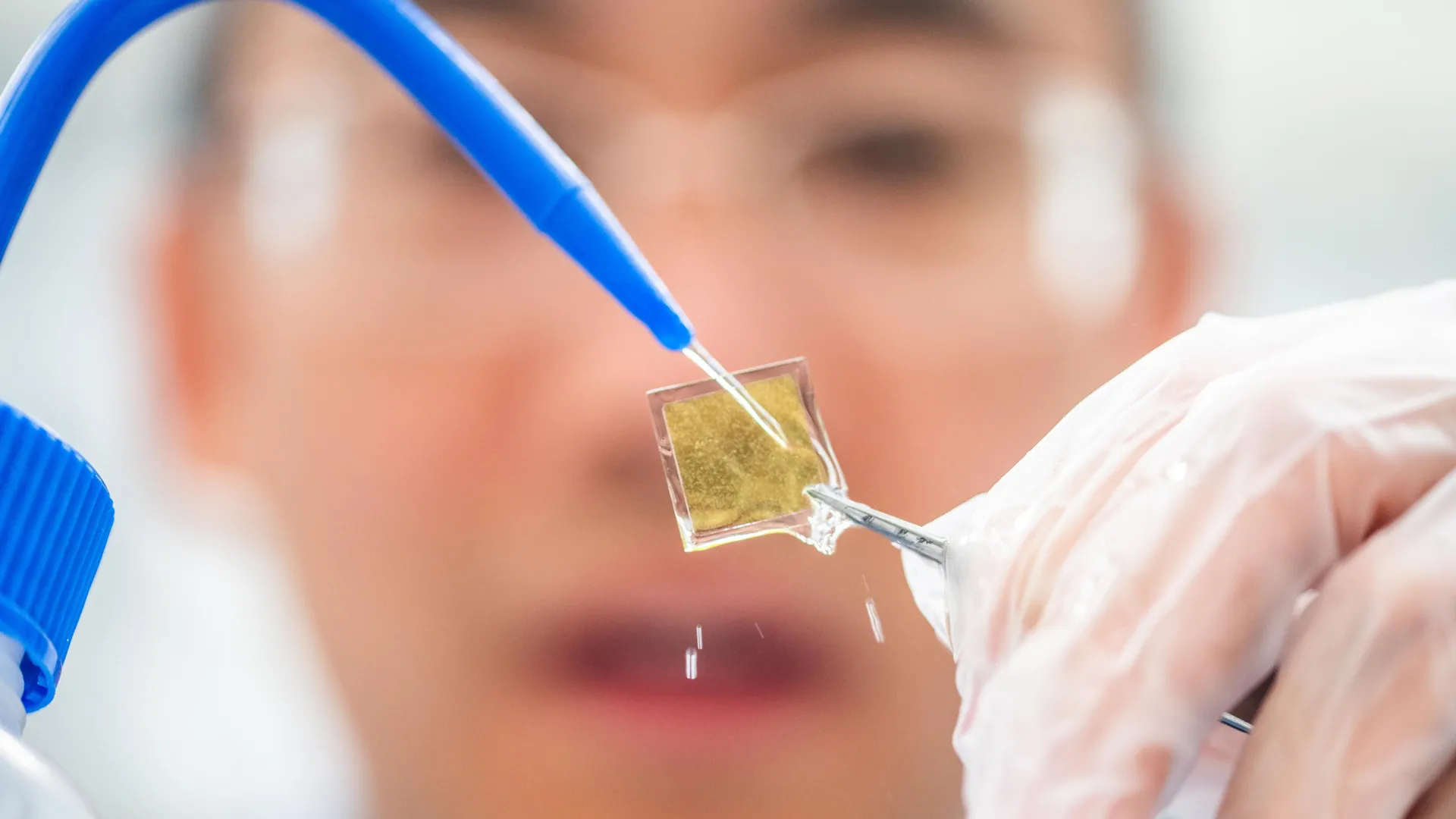
The chemical reaction to produce hydrogen from water is several times more effective when using a combination of new materials in three layers, according to researchers at Linköping University in Sweden. Hydrogen produced from water is a promising renewable energy source – especially if the hydrogen is produced using sunlight.
The production of new petrol and diesel cars will be banned in the EU as of 2035. Electric motors are expected to become increasingly common in vehicles – but they are not suitable for all types of transport.
“Passenger cars can have a battery, but heavy trucks, ships or aircraft cannot use a battery to store the energy. For these means of transport, we need to find clean and renewable energy sources, and hydrogen is a good candidate,” says Jianwu Sun, associate professor at Linköping University, who has led the study published in the Journal of the American Chemical Society.
The LiU researchers are working on developing materials that can be used to produce hydrogen (H2) from water (H2O) by using the energy in sunlight.
The research team has previously shown that a material called cubic silicon carbide (3C-SiC) has beneficial properties for facilitating the reaction where water is split into hydrogen and oxygen. The material can effectively capture the sunlight so that the energy therein can be used for hydrogen production through the photochemical water splitting reaction.
In their current study, the researchers have further developed a new combined material. The new material consists of three layers: a layer of cubic silicon carbide, a layer of cobalt oxide and a catalyst material that helps to split water.
“It’s a very complicated structure, so our focus in this study has been to understand the function of each layer and how it helps improve the properties of the material. The new material has eight times better performance than pure cubic silicon carbide for splitting water into hydrogen,” says Jianwu Sun.
When sunlight hits the material, electric charges are generated, which are then used to split water. A challenge in the development of materials for this application is to prevent the positive and negative charges from merging again and neutralising each other. In their study, the researchers show that by combining a layer of cubic silicon carbide with the other two layers, the material, known as Ni(OH)2/Co3O4/3C-SiC, becomes more able to separate the charges, thereby making the splitting of water more effective.
Today, there is a distinction between “grey” and “green” hydrogen. Almost all hydrogen present on the market is “grey” hydrogen produced from a fossil fuel called natural gas or fossil gas. The production of one tonne of “grey” hydrogen gas causes emission of up to ten tonnes of carbon dioxide, which contributes to the greenhouse effect and climate change. “Green” hydrogen is produced using renewable electricity as a source of energy.
The long-term goal of the LiU researchers is to be able to use only energy from the sun to drive the photochemical reaction to produce “green” hydrogen. Most materials under development today have an efficiency of between 1 and 3 per cent, but for commercialisation of this green hydrogen technology the target is 10 per cent efficiency. Being able to fully drive the reaction using solar energy would lower the cost of producing “green” hydrogen, compared to producing it using supplementary renewable electricity as is done with the technology used today. Jianwu Sun speculates that it may take around five to ten years for the research team to develop materials that reach the coveted 10 per cent limit.
The research has been funded with support from, among others, the Swedish Foundation for International Cooperation in Research and Higher Education (STINT), the Olle Engkvists Stiftelse, the ÅForsk Foundation, the Carl Tryggers Stiftelse and through the Swedish Government Strategic Research Area in Advanced Functional Materials (AFM) at Linköping University.

As artificial intelligence reshapes workplaces worldwide, a new study provides early evidence suggesting AI exposure has not, thus far, caused widespread harm to workers’ mental health or job satisfaction. In fact, the data reveals that AI may even be linked to modest improvements in worker physical health, particularly among employees with less than a college degree.
But the authors caution: It is way too soon to draw definitive conclusions.
The paper, “Artificial Intelligence and the Wellbeing of Workers,” published June 23 in Nature: Scientific Reports, uses two decades of longitudinal data from the German Socio-Economic Panel. Using that rich data, the researchers — Osea Giuntella of the University of Pittsburgh and the National Bureau of Economic Research (NBER), Luca Stella of the University of Milan and the Berlin School of Economics, and Johannes King of the German Ministry of Finance — explored how workers in AI-exposed occupations have fared in contrast to workers in less-exposed roles.
“Public anxiety about AI is real, but the worst-case scenarios are not inevitable,” said Professor Stella, who is also affiliated with independent European bodies the Center for Economic Studies (CESifo) and the Institute for Labor Economics (IZA). “So far, we find little evidence that AI adoption has undermined workers’ well-being on average. If anything, physical health seems to have slightly improved, likely due to declining job physical intensity and overall job risk in some of the AI-exposed occupations.”
Yet the study also highlights reasons for caution.
The analysis relies primarily on a task-based measure of AI exposure — considered more objective — but alternative estimates based on self-reported exposure reveal small negative effects on job and life satisfaction. In addition, the sample excludes younger workers and only covers the early phases of AI diffusion in Germany.
“We may simply be too early in the AI adoption curve to observe its full effects,” Stella emphasized. “AI’s impact could evolve dramatically as technologies advance, penetrate more sectors, and alter work at a deeper level.”
Key findings from the study include:
Due to the data supply, the study focuses on Germany — a country with strong labor protections and a gradual pace of AI adoption. The co-authors noted that outcomes may differ in more flexible labor markets or among younger cohorts entering increasingly AI-saturated workplaces.
“This research is an early snapshot, not the final word,” said Pitt’s Giuntella, who previously conducted significant research into the effect of robotics on households and labor, and on types of workers. “As AI adoption accelerates, continued monitoring of its broader impacts on work and health is essential. Technology alone doesn’t determine outcomes — institutions and policies will decide whether AI enhances or erodes the conditions of work.”
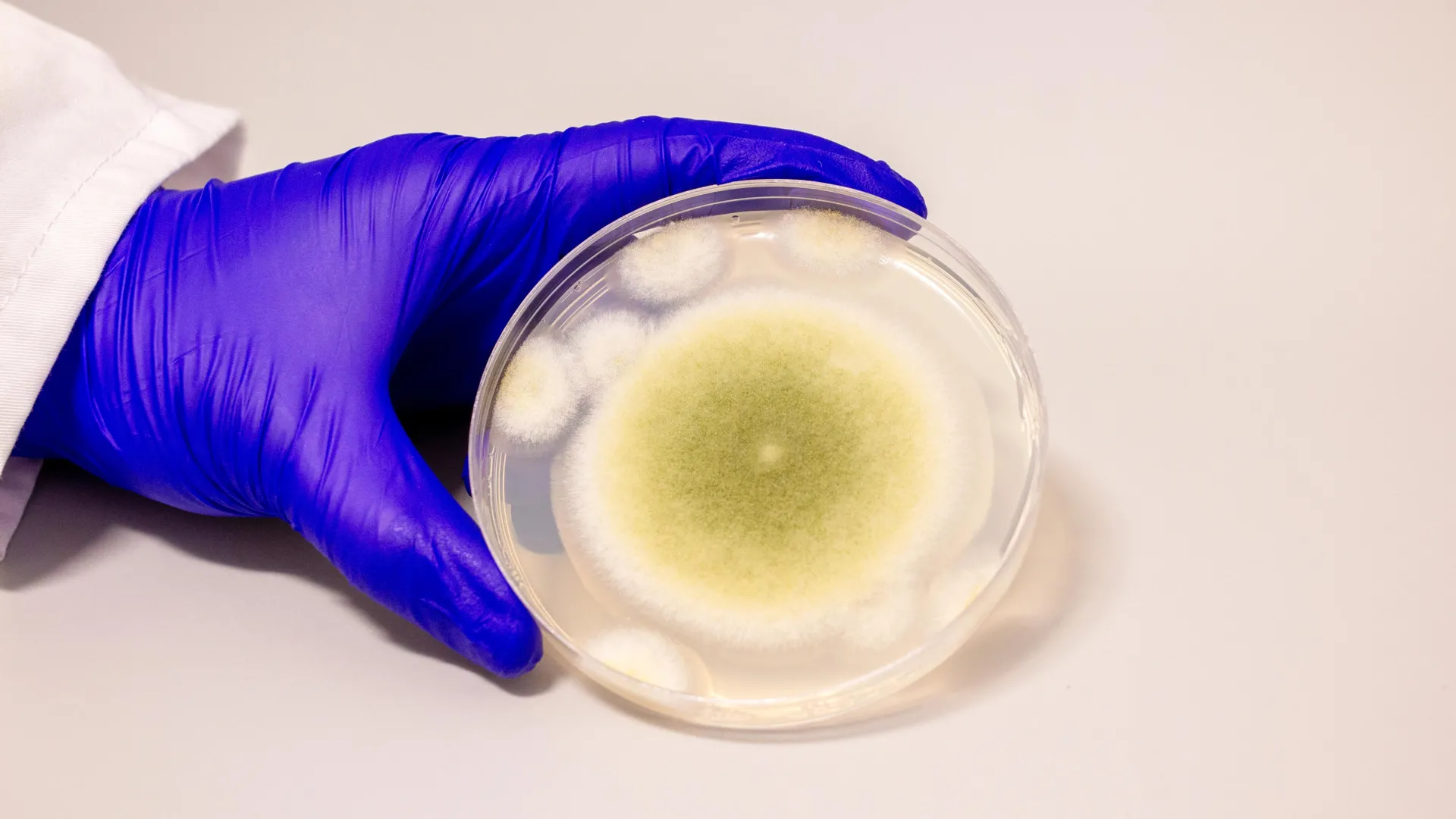
Penn-led researchers have turned a deadly fungus into a potent cancer-fighting compound. After isolating a new class of molecules from Aspergillus flavus, a toxic crop fungus linked to deaths in the excavations of ancient tombs, the researchers modified the chemicals and tested them against leukemia cells. The result? A promising cancer-killing compound that rivals FDA-approved drugs and opens up new frontiers in the discovery of more fungal medicines.
“Fungi gave us penicillin,” says Sherry Gao, Presidential Penn Compact Associate Professor in Chemical and Biomolecular Engineering (CBE) and in Bioengineering (BE) and senior author of a new paper in Nature Chemical Biologyon the findings. “These results show that many more medicines derived from natural products remain to be found.”
From Curse to Cure
Aspergillus flavus, named for its yellow spores, has long been a microbial villain. After archaeologists opened King Tutankhamun’s tomb in the 1920s, a series of untimely deaths among the excavation team fueled rumors of a pharaoh’s curse. Decades later, doctors theorized that fungal spores, dormant for millennia, could have played a role.
In the 1970s, a dozen scientists entered the tomb of Casimir IV in Poland. Within weeks, 10 of them died. Later investigations revealed the tomb contained A. flavus, whose toxins can lead to lung infections, especially in people with compromised immune systems.
Now, that same fungus is the unlikely source of a promising new cancer therapy.
A Rare Fungal Find
The therapy in question is a class of ribosomally synthesized and post-translationally modified peptides, or RiPPs, pronounced like the “rip” in a piece of fabric. The name refers to how the compound is produced — by the ribosome, a tiny cellular structure that makes proteins — and the fact that it is modified later, in this case, to enhance its cancer-killing properties.
“Purifying these chemicals is difficult,” says Qiuyue Nie, a postdoctoral fellow in CBE and the paper’s first author. While thousands of RiPPs have been identified in bacteria, only a handful have been found in fungi. In part, this is because past researchers misidentified fungal RiPPs as non-ribosomal peptides and had little understanding of how fungi created the molecules. “The synthesis of these compounds is complicated,” adds Nie. “But that’s also what gives them this remarkable bioactivity.”
Hunting for Chemicals
To find more fungal RiPPs, the researchers first scanned a dozen strains of Aspergillus, which previous research suggested might contain more of the chemicals.
By comparing chemicals produced by these strains with known RiPP building blocks, the researchers identified A. flavus as a promising candidate for further study.
Genetic analysis pointed to a particular protein in A. flavus as a source of fungal RiPPs. When the researchers turned the genes that create that protein off, the chemical markers indicating the presence of RiPPs also disappeared.
This novel approach — combining metabolic and genetic information — not only pinpointed the source of fungal RiPPs in A. flavus, but could be used to find more fungal RiPPs in the future.
A Potent New Medicine
After purifying four different RiPPs, the researchers found the molecules shared a unique structure of interlocking rings. The researchers named these molecules, which have never been previously described, after the fungus in which they were found: asperigimycins.
Even with no modification, when mixed with human cancer cells, asperigimycins demonstrated medical potential: two of the four variants had potent effects against leukemia cells.
Another variant, to which the researchers added a lipid, or fatty molecule, that is also found in the royal jelly that nourishes developing bees, performed as well as cytarabine and daunorubicin, two FDA-approved drugs that have been used for decades to treat leukemia.
Cracking the Code of Cell Entry
To understand why lipids enhanced asperigimycins’ potency, the researchers selectively turned genes on and off in the leukemia cells. One gene, SLC46A3, proved critical in allowing asperigimycins to enter leukemia cells in sufficient numbers.
That gene helps materials exit lysosomes, the tiny sacs that collect foreign materials entering human cells. “This gene acts like a gateway,” says Nie. “It doesn’t just help asperigimycins get into cells, it may also enable other ‘cyclic peptides’ to do the same.”
Like asperigimycins, those chemicals have medicinal properties — nearly two dozen cyclic peptides have received clinical approval since 2000 to treat diseases as varied as cancer and lupus — but many of them need modification to enter cells in sufficient quantities.
“Knowing that lipids can affect how this gene transports chemicals into cells gives us another tool for drug development,” says Nie.
Disrupting Cell Division
Through further experimentation, the researchers found that asperigimycins likely disrupt the process of cell division. “Cancer cells divide uncontrollably,” says Gao. “These compounds block the formation of microtubules, which are essential for cell division.”
Notably, the compounds had little to no effect on breast, liver or lung cancer cells — or a range of bacteria and fungi — suggesting that asperigimycins’ disruptive effects are specific to certain types of cells, a critical feature for any future medication.
Future Directions
In addition to demonstrating the medical potential of asperigimycins, the researchers identified similar clusters of genes in other fungi, suggesting that more fungal RiPPS remain to be discovered. “Even though only a few have been found, almost all of them have strong bioactivity,” says Nie. “This is an unexplored region with tremendous potential.”
The next step is to test asperigimycins in animal models, with the hope of one day moving to human clinical trials. “Nature has given us this incredible pharmacy,” says Gao. “It’s up to us to uncover its secrets. As engineers, we’re excited to keep exploring, learning from nature and using that knowledge to design better solutions.”
This study was conducted at the University of Pennsylvania School of Engineering and Applied Science; Rice University; the University of Pittsburgh; The University of Texas MD Anderson Cancer Center; Washington University School of Medicine, St. Louis; Baylor College of Medicine and the University of Porto.
The study was supported by the U.S. National Institutes of Health (R35GM138207, R35CA274235, R35GM128779), the University of Pennsylvania, the Welch Foundation (C-2033-20200401), the Houston Area Molecular Biophysics Program (NIH Grant T32 GM008280), the Cancer Prevention and Research Institute of Texas (RR220087, RR210029) and the National Science Foundation (OAC-2117681, OAC-1928147, OAC-1928224).
Additional co-authors include Fanglong Zhao, Xuerong Yu, Caleb Chang, Rory Sharkey, Bryce Kille, Hongzi Zheng, Kevin Yang, Alan Du, Todd Treangen, Yang Gao and Hans Renata of Rice University; Chunxiao Sun and Shuai Liu of Penn Engineering and Rice; Siting Li and Junjie Chen of MD Anderson; Mithun C. Madhusudhanan and Peng Liu of Pitt; Sandipan Roy Chowdhury, Dongyin Guan, Jin Wang, Xin Yu and Dishu Zhou of Baylor; Maria Zotova and Zichen Hu of Penn Engineering; Sandra A. Figueiredo and Pedro N. Leão of the University of Porto; and Andy Xu and Rui Tang of Wash U, St. Louis.
NHS England says the first patients able to get the jab will be those most in need.
Paloma Shemirani’s brothers say she refused chemotherapy because of their mother’s beliefs.
