A new BBC documentary looks at how a diagnosis of bipolar disorder at 57 changed the celebrity chef’s life.


A new BBC documentary looks at how a diagnosis of bipolar disorder at 57 changed the celebrity chef’s life.
With an ongoing attack on high-profile targets in Iran that began on Thursday, Israel has presented President Donald Trump with his most significant foreign policy crisis yet. Trump now has to decide how — and whether — to prevent an all-out war across the Middle East that could spiral, endangering millions of people, drawing in US forces and worsening the global economic slowdown fuelled by Trump’s trade policies.
Israeli jets have already struck more than 100 sites, including in the Iranian capital of Tehran, killing at least three military commanders and two nuclear scientists, as well as civilians including children, according to Iranian state media. Israeli officials have told their US counterparts they plan to continue strikes for “several days or up to two weeks,” a US official, speaking on condition of anonymity, told HuffPost.
Advertisement
Israeli officials call their offensive “preemptive,” noting that Iran, a longtime foe of Tel Aviv, is closer than ever to being able to develop a nuclear weapon. There was no sign of an imminent Iranian attack on Israel, however, and Iran denied it intends to build a bomb.
For months, Washington and Tehran have been discussing a possible agreement to limit Iranian nuclear development in exchange for easing sanctions on the country.
On Friday morning, Trump appeared to call for diplomacy on his social media platform Truth Social: “There is still time to make this slaughter, with the next already planned attacks being even more brutal, come to an end. Iran must make a deal, before there is nothing left.”
Advertisement
The Trump administration may struggle to shape what comes next, given its limited policy-making circle, the president’s unpredictability and its hollowing out of government expertise. The administration recently slashed staff at the National Security Council at the White House, has urged thousands of professional diplomats to resign and plans to fire hundreds more as early as next week, and top positions at the Pentagon and State Department are lying empty.
Still, some leading officials, like White House chief of staff Susie Wiles and Vice President JD Vance, have previously questioned those who wanted the US to help Israel attack Iran, like the demoted former national security adviser Mike Waltz. The administration may decide it must take the reins from Israeli Prime Minister Benjamin Netanyahu — defying him as Trump has notably done on Syria, and as some conservative voices, like commentator Tucker Carlson, have urged him to.
“The split on the right is already obvious,” said Reid Smith, the vice president of foreign policy at Stand Together, an organisation founded by the right-wing billionaire Charles Koch.
Advertisement
“Friends of Israel, and I number myself among them, should tread warily, as a casualty of this conflict could be essentially unanimous support for Israel on not just a bipartisan but a conservative basis,” Smith told HuffPost.

ATTA KENARE via Getty Images
While Trump’s preference for an agreement has been relatively consistent, so has Netanyahu’s opposition to one. He is joined by some influential foreign policy hawks in the US, including leading Republican lawmakers, who argue Iran cannot be trusted and insist the only possible compromise would include a clause that Tehran calls unacceptable: a ban on any uranium enrichment. Those voices say force is the only way to cripple Iran’s nuclear program and press Iran to make concessions.
Advertisement
Since Trump abandoned the last international deal to limit Iranian nuclear development, negotiated by President Barack Obama, Iran’s capabilities have dramatically increased.
As Israel’s chief military backer and the key player in enforcing sanctions on Iran, the US is deeply implicated in the dispute. Trump is convening national security officials at the White House on Friday and calling Netanyahu to discuss next steps.
Meanwhile, developments outside the U.S. control may shape his choices, the US official told HuffPost, pointing to the chance that Iran’s plan for “severe” retaliation kills one of the tens of thousands of American troops deployed in the Middle East or prompts Israel to request additional US military involvement in the region, creating even more tension. Iran has already launched drones at Israel, which were intercepted. The US evacuated some personnel from the region earlier this week.
Advertisement
American and Israeli officials say they coordinated on the barrage against Iran, which hit sensitive figures and military sites, demonstrating extensive and effective Israeli espionage. Anti-Iran hard-liners who have long sought regime change in Tehran are, for now, echoing Trump’s line that the Israeli attack is linked to his diplomacy.
Still, a fundamental disconnect between the goals of Trump and Netanyahu persists, and will make it hard for the administration to de-escalate. The situation reflects a contest within Trump-linked foreign policy circles that has been significant in shaping policy throughout the administration and may no longer be tenable.
Trump has, for years, claimed he will limit global conflict, promising “peace through strength” and accusing his political rivals of enabling bloodshed in contexts like Ukraine and Gaza, while questioning deployments of American troops abroad. That political brand seemed reflected in the State Department’s Thursday night statement about the Israeli attack, which emphasized that it was “unilateral” and urged Iran not to “target US interests or personnel.”
Advertisement
On Friday, the president told CNN “hard-liners” in Tehran had been killed, boosting chances for diplomacy. And Tom Barrack, the US ambassador in Turkey and one of the personal friends Trump is relying on as a top Middle East deal-maker, posted on X: “Even in tension, there’s always a moment for dialogue to weave peace.”
Barrack and Steve Witkoff, another business figure who is leading the US–Iran negotiations for Trump, are seen as more pragmatic than many in the traditional Republican national security establishment — and their influence has grown as Trump has repeatedly fired officials whom members of his MAGA movement say are too bellicose and tied to the so-called “deep state.”
“Trump has, for years, claimed he will limit global conflict, promising ‘peace through strength’ and accusing his political rivals of enabling bloodshed in contexts like Ukraine and Gaza.”
Advertisement
But Netanyahu and influential hawks are openly speaking of increasing pressure on Iran, not of compromise.
The Israeli leader appears to be betting that, as he did under President Joe Biden, he can treat the US as primarily an enabler of his goals through military support, reacting to Israeli moves rather than being the force driving events.
Netanyahu has been able to do that with his ongoing, devastating US-backed offensive in the Gaza Strip, pummelling Palestinians and avoiding a settlement with the Gaza-based militant group Hamas even as Trump has repeatedly expressed frustration. Under the Biden administration, Israel was able to use continued claims of interest in diplomacy and dramatic PR-focused moments — like its deadly pager attack in Lebanon — to sustain US backing and defuse criticism as it pursued sweeping military campaigns.
Advertisement
Now, George Washington University professor Marc Lynch wrote on Friday, “Israel’s attack on Iran is best understood neither as pre-emptive nor preventive, but as a continuation of its attempt to remake the Middle East through force.”
“The pattern of attacks in the first day of Israeli strikes actually suggests that the target of the attack is the regime itself, not necessarily the nuclear programme,” Lynch continued.
It’s unclear if Netanyahu’s playbook will work under Trump and against a far more capable opponent than Hamas or Hezbollah. As Iran faces greater pain and reputational damage, it could deploy a wide range of tactics, across the Middle East or even globally, to push back against Israel and the U.S. as its patron. That could create painful, unexpected consequences and a mounting, deadly, tit-for-tat cycle of violence.
Advertisement
Some observers claim a military-focused approach is the way to achieve Trump’s stated goal of preventing a nuclear Iran. “Israel should be hailed by nonproliferation organisations,” Jonathan Conricus, a former spokesperson for the Israel Defense Forces who now works at the hawkish Foundation for Defense of Democracies think tank in Washington, wrote on X.
Yet experts have, for years, said force alone cannot destroy Iran’s expertise in nuclear technology, and could instead spur its leaders to see developing weapons as the only way to protect their rule.
“If the Trump administration truly wants to avoid Iran’s path to a bomb, it should clarify its involvement in these strikes and work to strike a deal. This will be exponentially more difficult if strikes continue,” Nicole Grajewski, a fellow at the Carnegie Endowment for International Peace think tank, wrote on Bluesky.
Advertisement


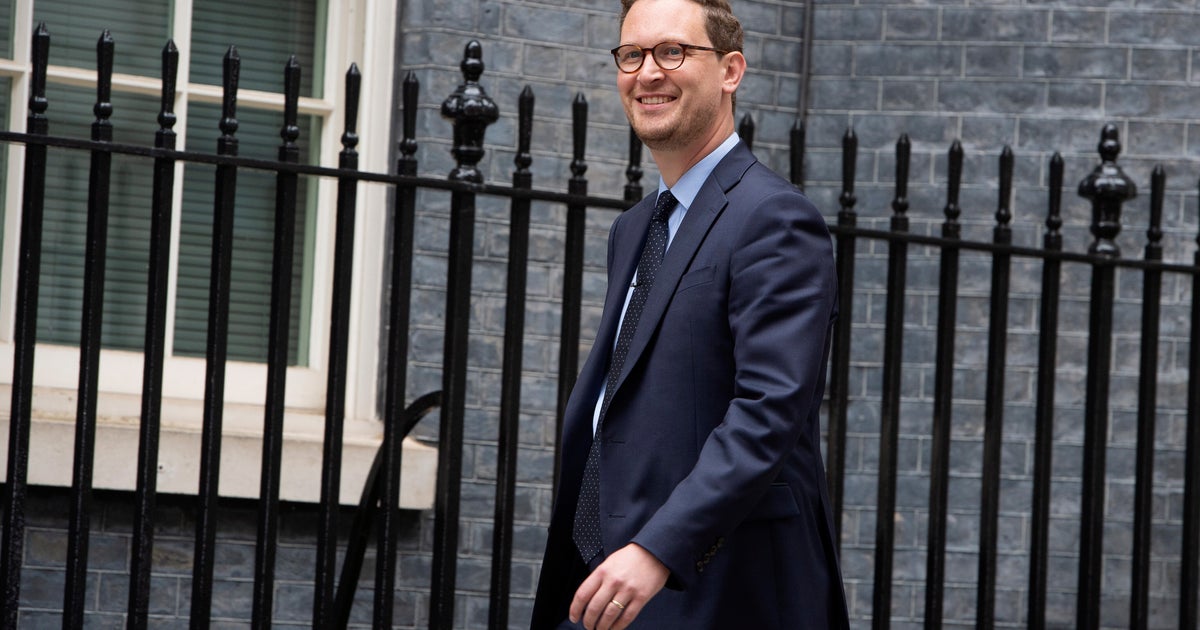
Darren Jones has admitted that he was wrong to say that the majority of asylum seekers arriving in the UK on small boats are “children, babies and women”.
The chief secretary to the Treasury made the erroneous claim on the BBC’s Question Time programme on Thursday night.
He was challenged on the programme by former Reform UK chairman Zia Yusuf, who claimed that more than 90% of those on the boats were men.
In actual fact, Home Office data indicates that adult males made up 73% of small boat arrivals between January 2018 and March 2025.
Jones has been under pressure to correct his statement all day, and finally did so in a post on X on Friday evening.
However, he said his comments had been “misrepresented” by Labour’s opponents.
He said: “Of course the overall majority of people arriving illegally on small boats are men – but not “north of 90%” as Reform claimed.
“On Question Time, I shared a story from my visit to the Border Security Command about a dinghy that arrived mostly carrying women, children and babies who had suffered horrific burns.
“I’m happy to clarify this given how this is now being misrepresented. Labour committed new funding this week to secure our borders while Reform have voted against giving our police the powers needed to smash the gangs fuelling this vile trade.”
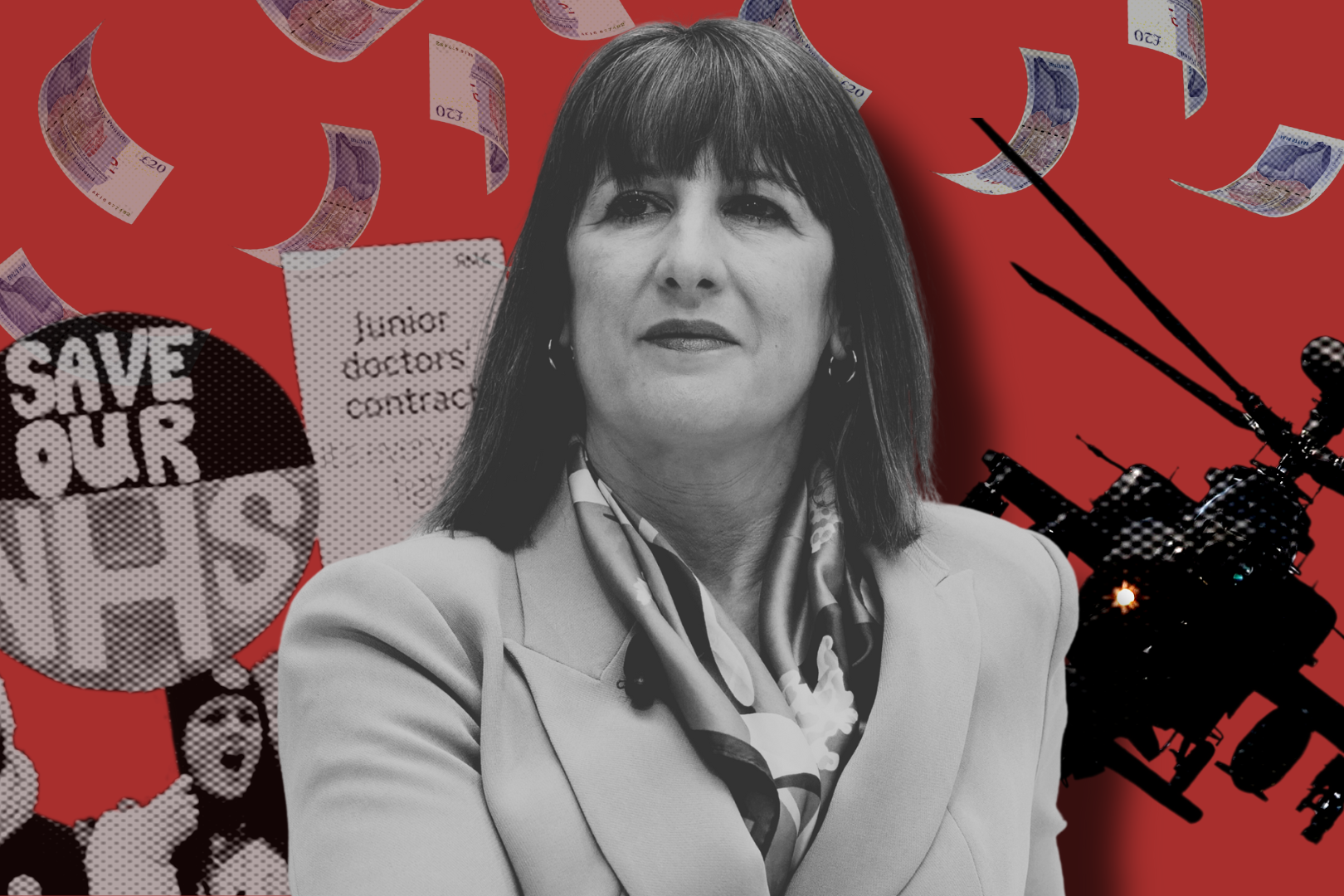
Labour MPs saw a different side to Rachel Reeves on Wednesday evening.
Fresh from delivering her spending review, the chancellor faced a meeting of the Parliamentary Labour Party, telling them to go out and “sell” what she had just announced to voters.
“People are only going to know the good news that we set out today if we campaign on it, if we deliver the leaflets, if we speak to people on the doorstep, if we write those pieces for our local papers, that is how people are going to know that it is Labour making these differences,” Reeves told them.
Advertisement
So far, so unsurprising. But those present detected a marked change of tone from the chancellor, who has often appeared to have the weight of the world on her shoulders over the past 11 months.
“She joked, she laughed and she looked well,” said the MP. “She was like a woman released.”
When the winter fuel debacle was raised, Reeves acknowledged that mistakes had been made since Labour won the election.
“That shows she gets it,” one backbench MP told HuffPost UK. “She knows where she is in the popularity stakes and there’s no way you don’t feel that personally. She’s not Cruella de Vil. But this felt like a reset moment for her.”
Advertisement
Among the jokes, however, there was a nod to the often-fractious negotiations with her Cabinet colleagues as their departmental budgets were set.
The last hold-out was home secretary Yvette Cooper, whose refusal to accept the real-terms cuts she was facing eventually led to Reeves taking the highly unusual step of imposing a settlement on her.
At the PLP meeting, Reeves admitted to being “peed off” with police chiefs complaining about a lack of cash after receiving a 2.3% increase in their budget.
Advertisement
“I don’t think they would have said that without Yvette giving them the nod,” one MP said.
For the moment, however, Labour MPs from across the party’s various factions seem pretty pleased with what Reeves announced.
Chris Curtis, co-chair of the Labour Growth Group, said: “We were pushing for greater investment in affordable housing, infrastructure, and research and development and we’ve seen major commitments on all three.
“These are the foundations of sustainable economic growth, and with them we can start to deliver what the British people rightly expect: rising wages, economic security, and properly funded public services.”
Advertisement
Jo White, the MP for Bassetlaw and chair of the Labour Red Wall Group, said the spending review – which included billions for better transport links in the north and Midlands – had been “the starting gun” on the next election.
“We welcome that the government is listening to the Red Wall,” she said.
Reeves might find her spending spree is a tougher sell across the country, however.
A focus group carried out in Coventry after the spending review by the More in Common think-tank offered further proof of the widespread disillusionment there is in the country with politicians.
All of those taking part had voted Labour last year, but been unimpressed so far by the party’s time in office.
Advertisement
“Growing up when you voted for Labour, you knew what you were voting for,” said Deena. “I think at the moment, they’ve just gone back to blaming things on the Tories and not giving stuff they promised.”
On what Reeves had announced, therapy assistant Caroline said: “She just says what she thinks we want to hear. And we do want to hear it. But will we see it? I definitely won’t hold my breath.”
Ed Hodgson, More in Common’s associate director of polling and analysis, said: “Behind all the numbers from the spending review, it’s clear from the voters we spoke to in Coventry that they’re running out of patience and want to see real improvements in their day-to-day lives.
Advertisement
“That’s going to be the real test of whether the chancellor’s financial calculations, and her belief in UK growth giving her future headroom, can actually pay off politically.”
“She knows where she is in the popularity stakes and there’s no way you don’t feel that personally. She’s not Cruella de Vil”
The ink on Reeves’ spending review speech had barely dried before the Office for National Statistics announced on Thursday morning that the UK’s gross domestic product (GDP) shrunk by 0.3% in April.
Advertisement
For a government’s whose number one mission is supposedly growing the economy, this was sub-optimal.
A senior No.10 aide was sanguine telling HuffPost UK that they had been braced for bad news.
“You can overdo the month-to-month stuff,” he said. “The month before growth was up 0.7%.
“But we’ve never shied away from the fact that there’s a lot to do on GDP and we always knew that April was going to be tricky.”
Critics have dubbed Reeves the “Klarna chancellor”, insisting that the billions of pounds of spending she announced on Wednesday will have to be paid for later, most likely by hiking taxes in the Budget.
Reeves, who put up taxes by £40 billion in what was meant to be a once-in-a-parliament move last autumn, has refused to rule out coming back for more this autumn, while also insisting that the spending review was “fully funded”.
Advertisement
“We didn’t put up taxes in the autumn for no reason, we had to do it, and the choices we had was either to put up VAT on everyone or ask businesses to pay a bit more,” said one senior government figure.
“We don’t relish tax rises, but we need to put the public finances first.”
But one Labour insider accused the chancellor of “boxing herself in” by sticking to her fiscal rules, which forbid any borrowing to pay for day-to-day government spending.
“It’s their starting position on everything,” the source said. “You can argue that’s the best possible starting point, but equally you can say at some point, shouldn’t your starting point be how do we win that election or deliver the plan for change?”
Advertisement
With all the talk of more tax rises, one seasoned observer suggested that Reeves may in fact have something much more radical in mind.
“The big unknown, and which will only begin to take shape in 2027, is will this hairshirt being worn now give Rachel a war chest that will allow her to do a big tax cut before the next election?” they said.
“Mind you the recent track record or pre-election tax cuts is not great, given Jeremy Hunt did three of them and the Tories still got hammered.”
Advertisement
If Labour are to avoid the same fate in 2029, Reeves needs to hope that the spending spree she announced on Wednesday delivers tangible improvements to the lives of ordinary voters – and soon.

It’s peak pollen season so we set out the best ways to treat hay fever symptoms, and other advice.
A world-first ‘Trojan horse’ therapy is being made available on the NHS in England

The forerunners of dinosaurs and crocodiles in the Triassic period were able to migrate across areas of the ancient world deemed completely inhospitable to life, new research suggests.
In a paper published in Nature Ecology and Evolution on June 11, researchers from the University of Birmingham and University of Bristol have used a new method of geographical analysis to infer how these ancestral reptiles, known as archosauromorphs, dispersed following one of the most impactful climate events the Earth has ever seen, the end-Permian mass extinction.
The first archosauromorphs, some resembling modern reptiles and many times smaller than familiar dinosaurs, were previously believed to only survive in certain parts of the globe due to extreme heat across the tropics, viewed by many paleontologists as a dead zone, in the earliest Triassic.
By developing a new modelling technique based on landscape reconstructions and evolutionary trees, the team of researchers have been able to discover clues about how these reptiles moved around the world during the Triassic period, following the mass extinction where more than half of land-based animals and 81% of marine life died.
The archosauromorphs that survived the extinction event rose to prominence in Earth’s ecosystems in the Triassic, leading to the evolution of dinosaurs. The team now suggest that their later success was in part due to their ability to migrate up to 10,000 miles across the tropical dead zone to access new ecosystems.
Dr Joseph Flannery-Sutherland from the University of Birmingham and corresponding author of the study said:
“Amid the worst climatic event in Earth’s history, where more species died than at any period since, life still survived. We know that archosauromorphs as a group managed to come out of this event and over the Triassic period became one of the main players in shaping life thereafter.
“Gaps in their fossil record have increasingly begun to tell us something about what we weren’t seeing when it comes to these reptiles. Using our modelling system, we have been able to build a picture of what was happening to the archosauromorphs in these gaps and how they dispersed across the ancient world. This is what led us to call our method TARDIS, as we were looking at terrains and routes directed in space-time.
“Our results suggest that these reptiles were much hardier to the extreme climate of the Pangaean tropical dead zone, able to endure these hellish conditions to reach the other side of the world. It’s likely that this ability to survive the inhospitable tropics may have conferred an advantage that saw them thrive in the Triassic world.”
“The evolution of life has been controlled at times by the environment,” says Professor Michael Benton from the University of Bristol, senior author of the study, “but it is difficult to integrate our limited and uncertain knowledge about the ancient landscape with our limited and uncertain knowledge about the ecology of extinct organisms. But by combining the fossils with reconstructed maps of the ancient world, in the context of evolutionary trees, we provide a way of overcoming these challenges.”

A new study to be presented at the SLEEP 2025 annual meeting found that teens who get moderate — but not excessive — catch-up sleep on weekends have fewer symptoms of anxiety.
Results show that teens who got up to two more hours of sleep on weekends than on weekdays exhibited fewer anxiety symptoms compared with those who did not sleep longer on weekends. However, longer durations of catch-up sleep on weekends were associated with slightly more internalizing symptoms.
“The results show that both sleeping less on weekends than weekdays and sleeping substantially more on weekends were associated with higher anxiety symptoms,” said lead author Sojeong Kim, a doctoral candidate in the department of clinical psychology and psychology graduate advisor at the University of Oregon in Eugene. “In contrast, moderate catch-up sleep — defined as less than two hours — was associated with lower anxiety symptoms, suggesting that some weekend recovery sleep may be beneficial.”
The American Academy of Sleep Medicine recommends that teenagers 13 to 18 years of age should sleep 8 to 10 hours on a regular basis to promote optimal health. However, CDC data show that only 23% of high school students get sufficient sleep on an average school night.
“Many teens try to make up for lost sleep by sleeping in on weekends,” Kim said.
Consistently getting sufficient sleep is associated with better health outcomes including improved attention, behavior, learning, memory, emotional regulation, quality of life, and mental and physical health. In contrast, insufficient sleep in teenagers is associated with increased risks of problems such as depression and suicidal thoughts.
The study involved 1,877 adolescents with a mean age of 13.5 years. Sleep duration was estimated using Fitbit devices, while internalizing symptoms were assessed using the Child Behavior Checklist survey. Weekend catch-up sleep was calculated as the difference between weekend and weekday sleep duration.
Kim noted that it is important to identify the right amount of catch-up sleep that is beneficial to teens who restrict their sleep during the week.
“Too little or too much sleep variability from weekday to weekend may contribute to the symptoms someone is trying to combat, like physical or mental fatigue and feelings of anxiety,” she said.
The research abstract was published recently in an online supplement of the journal Sleep and will be presented Wednesday, June 11, during SLEEP 2025 in Seattle. SLEEP is the annual meeting of the Associated Professional Sleep Societies, a joint venture of the American Academy of Sleep Medicine and the Sleep Research Society.
Abstract Title: The Sweet Spot of Weekend Catch-Up Sleep: A Protective Factor Against Depressive Symptoms?
Abstract ID: 0263

Genetic material shed by tumors can be detected in the bloodstream three years prior to cancer diagnosis, according to a study led by investigators at the Ludwig Center at Johns Hopkins, Johns Hopkins Kimmel Cancer Center, the Johns Hopkins University School of Medicine and the Johns Hopkins Bloomberg School of Public Health.
The study, partly funded by the National Institutes of Health, was published May 22 in Cancer Discovery.
Investigators were surprised they could detect cancer-derived mutations in the blood so much earlier, says lead study author Yuxuan Wang, M.D., Ph.D., an assistant professor of oncology at the Johns Hopkins University School of Medicine. “Three years earlier provides time for intervention. The tumors are likely to be much less advanced and more likely to be curable.”
To determine how early cancers could be detected prior to clinical signs or symptoms, Wang and colleagues assessed plasma samples that were collected for the Atherosclerosis Risk in Communities (ARIC) study, a large National Institutes of Health-funded study to investigate risk factors for heart attack, stroke, heart failure and other cardiovascular diseases. They used highly accurate and sensitive sequencing techniques to analyze blood samples from 26 participants in the ARIC study who were diagnosed with cancer within six months after sample collection, and 26 from similar participants who were not diagnosed with cancer.
At the time of blood sample collection, eight of these 52 participants scored positively on a multicancer early detection (MCED) laboratory test. All eight were diagnosed within four months following blood collection. For six of the eight individuals, investigators also were able to assess additional blood samples collected 3.1-3.5 years prior to diagnosis, and in four of these cases, tumor-derived mutations could also be identified in samples taken at the earlier timepoint.
“This study shows the promise of MCED tests in detecting cancers very early, and sets the benchmark sensitivities required for their success,” says Bert Vogelstein, M.D., Clayton Professor of Oncology, co-director of the Ludwig Center at Johns Hopkins and a senior author on the study.
“Detecting cancers years before their clinical diagnosis could help provide management with a more favorable outcome,” adds Nickolas Papadopoulos, Ph.D., professor of oncology, Ludwig Center investigator and senior author of the study. “Of course, we need to determine the appropriate clinical follow-up after a positive test for such cancers.”
The study was supported in part by National Institutes of Health grant #s R21NS113016, RA37CA230400, U01CA230691, P30 CA 06973, DRP 80057309, and U01 CA164975. Additional funding was provided by the Virginia and D.K. Ludwig Fund for Cancer Research, the Commonwealth Fund, the Thomas M Hohman Memorial Cancer Research Fund, The Sol Goldman Sequencing Facility at Johns Hopkins, The Conrad R. Hilton Foundation, the Benjamin Baker Endowment, Swim Across America, Burroughs Wellcome Career Award for Medical Scientists, Conquer Cancer — Fred J. Ansfield, MD, Endowed Young Investigator Award, and The V Foundation for Cancer Research. The Atherosclerosis Risk in Communities study has been funded in whole or in part with federal funds from the National Heart, Lung, and Blood Institute, National Institutes of Health, Department of Health and Human Services, under contract numbers 75N92022D00001, 75N92022D00002, 75N92022D00003, 75N92022D00004, and 75N92022D00005.
It sneaks toxic drugs inside cancer cells to hit them hard while minimising side-effects.
