The government has written to the supermarkets to say the adverts are banned by a law passed in 2002.


The government has written to the supermarkets to say the adverts are banned by a law passed in 2002.
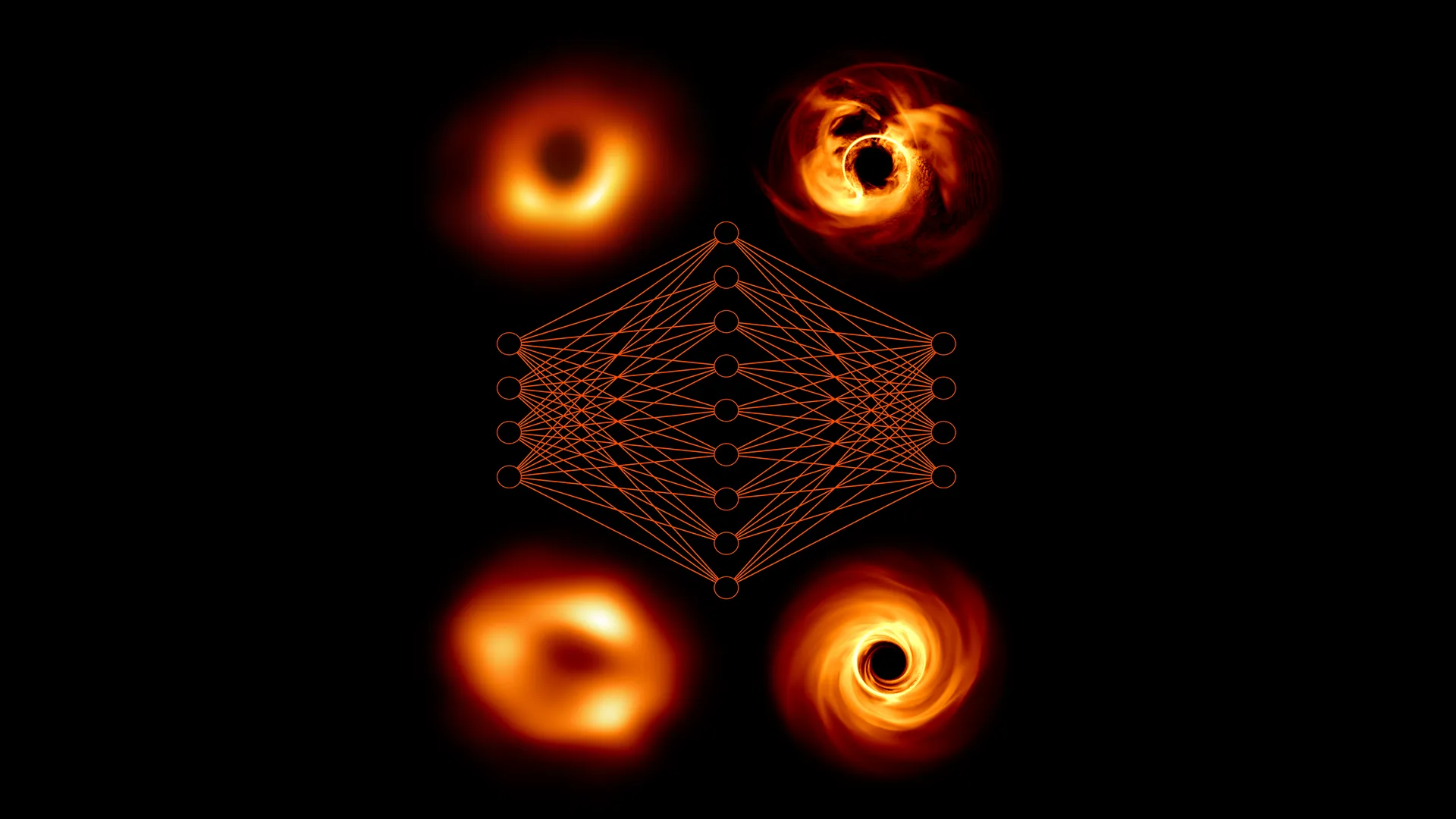
An international team of astronomers has trained a neural network with millions of synthetic simulations and artificial intelligence (AI) to tease out new cosmic curiosities about black holes, revealing the one at the center of our Milky Way is spinning at nearly top speed.
These large ensembles of simulations were generated by throughput computing capabilities provided by the Center for High Throughput Computing (CHTC), a joint entity of the Morgridge Institute for Research and the University of Wisconsin-Madison. The astronomers published their results and methodology today in three papers in the journal Astronomy & Astrophysics.
High-throughput computing, celebrating its 40th anniversary this year, was pioneered by Wisconsin computer scientist Miron Livny. It’s a novel form of distributed computing that automates computing tasks across a network of thousands of computers, essentially turning a single massive computing challenge into a supercharged fleet of smaller ones. This computing innovation is helping fuel big-data discovery across hundreds of scientific projects worldwide, including the search for cosmic neutrinos, subatomic particles and gravitational waves as well as to unravel antibiotic resistance.
In 2019, the Event Horizon Telescope (EHT) Collaboration released the first image of a supermassive black hole at the center of the galaxy M87. In 2022, they presented the image of the black hole at the center of our Milky Way, Sagittarius A*. However, the data behind the images still contained a wealth of hard-to-crack information. An international team of researchers trained a neural network to extract as much information as possible from the data.
From a handful to millions
Previous studies by the EHT Collaboration used only a handful of realistic synthetic data files. Funded by the National Science Foundation (NSF) as part of the Partnership to Advance Throughput Computing (PATh) project, the Madison-based CHTC enabled the astronomers to feed millions of such data files into a so-called Bayesian neural network, which can quantify uncertainties. This allowed the researchers to make a much better comparison between the EHT data and the models.
Thanks to the neural network, the researchers now suspect that the black hole at the center of the Milky Way is spinning at almost top speed. Its rotation axis points to the Earth. In addition, the emission near the black hole is mainly caused by extremely hot electrons in the surrounding accretion disk and not by a so-called jet. Also, the magnetic fields in the accretion disk appear to behave differently from the usual theories of such disks.
“That we are defying the prevailing theory is of course exciting,” says lead researcher Michael Janssen, of Radboud University Nijmegen, the Netherlands. “However, I see our AI and machine learning approach primarily as a first step. Next, we will improve and extend the associated models and simulations.”
Impressive scaling
“The ability to scale up to the millions of synthetic data files required to train the model is an impressive achievement,” adds Chi-kwan Chan, an Associate Astronomer of Steward Observatory at the University of Arizonaand a longtime PATh collaborator. “It requires dependable workflow automation, and effective workload distribution across storage resources and processing capacity.”
“We are pleased to see EHT leveraging our throughput computing capabilities to bring the power of AI to their science,” says Professor Anthony Gitter, a Morgridge Investigator and a PATh Co-PI. “Like in the case of other science domains, CHTC’s capabilities allowed EHT researchers to assemble the quantity and quality of AI-ready data needed to train effective models that facilitate scientific discovery.”
The NSF-funded Open Science Pool, operated by PATh, offers computing capacity contributed by more than 80 institutions across the United States. The Event Horizon black hole project performed more than 12 million computing jobs in the past three years.
“A workload that consists of millions of simulations is a perfect match for our throughput-oriented capabilities that were developed and refined over four decades” says Livny, director of the CHTC and lead investigator of PATh. “We love to collaborate with researchers who have workloads that challenge the scalability of our services.”
Scientific papers referenced
Deep learning inference with the Event Horizon Telescope I. Calibration improvements and a comprehensive synthetic data library. By: M. Janssen et al. In: Astronomy & Astrophysics, 6 June 2025.
Deep learning inference with the Event Horizon Telescope II. The Zingularity framework for Bayesian artificial neural networks. By: M. Janssen et al. In: Astronomy & Astrophysics, 6 June 2025.
Deep learning inference with the Event Horizon Telescope III. Zingularity results from the 2017 observations and predictions for future array expansions. By: M. Janssen et al. In: Astronomy & Astrophysics, 6 June 2025.
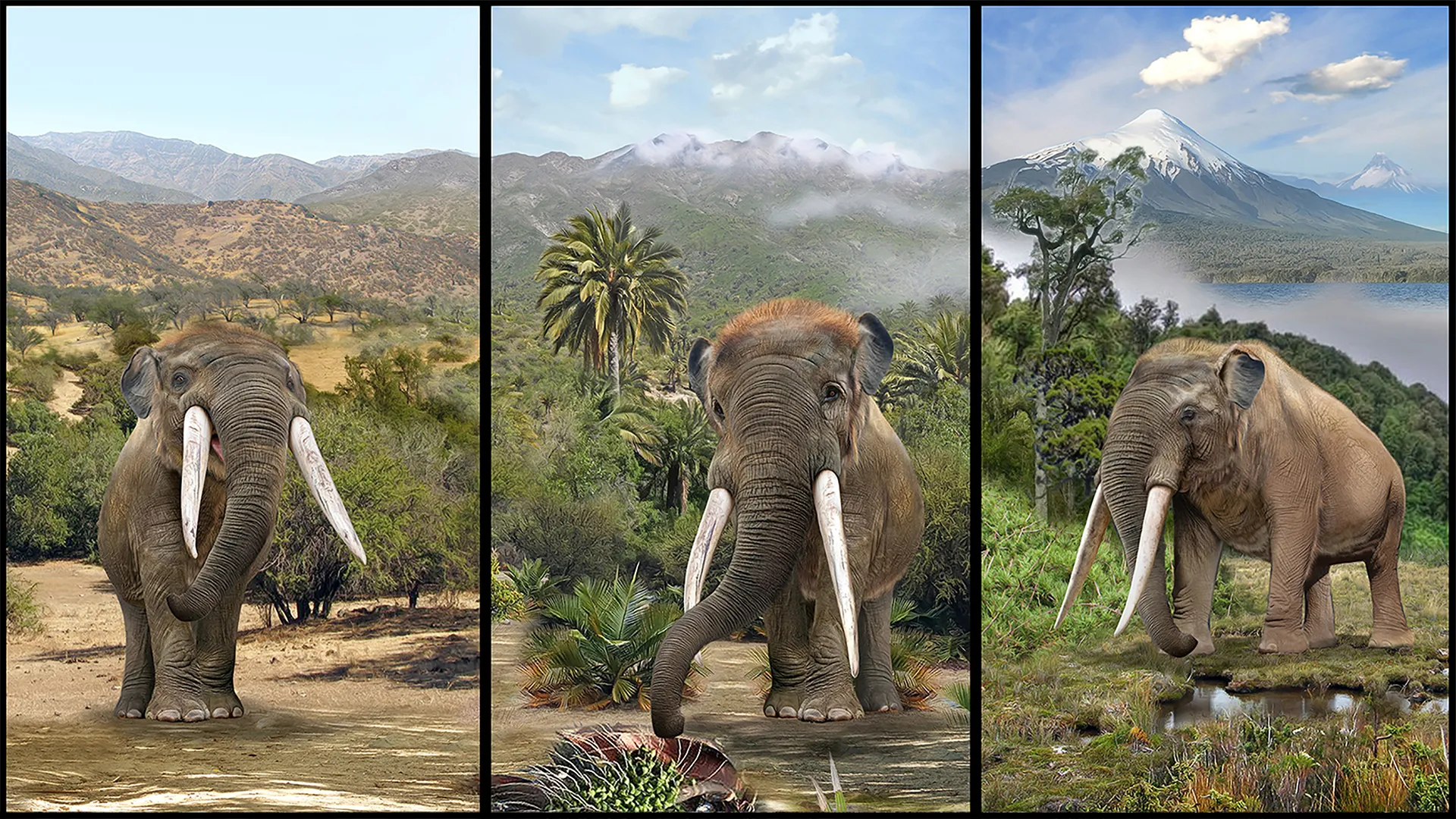
Ten thousand years ago, mastodons vanished from South America. With them, an ecologically vital function also disappeared: the dispersal of seeds from large-fruited plants. A new study led by the University of O’Higgins, Chile, with key contributions from IPHES-CERCA, demonstrates for the first time — based on direct fossil evidence — that these extinct elephant relatives regularly consumed fruit and were essential allies of many tree species. Their loss was not only zoological; it was also botanical, ecological, and evolutionary. Some plant species that relied on mastodons for seed dispersal are now critically endangered.
Published in Nature Ecology & Evolution, the research presents the first solid evidence of frugivory in Notiomastodon platensis, a South American Pleistocene mastodon. The findings are based on a multiproxy analysis of 96 fossil teeth collected over a span of more than 1,500 kilometers, from Los Vilos to Chiloé Island in southern Chile. Nearly half of the specimens come from the emblematic site of Lake Tagua Tagua, an ancient lake basin rich in Pleistocene fauna, located in the present-day O’Higgins Region.
The study was led by Dr. Erwin González-Guarda, researcher at the University of O’Higgins and associate at IPHES-CERCA, alongside an international team that includes IPHES-CERCA researchers Dr. Florent Rivals, a paleodiet specialist; Dr. Carlos Tornero and Dr. Iván Ramírez-Pedraza, experts in stable isotopes and paleoenvironmental reconstruction; and Alia Petermann-Pichincura. The research was carried out in collaboration with the Universitat Rovira i Virgili (URV) and the Universitat Autònoma de Barcelona (UAB).
An ecological hypothesis finally proven
In 1982, biologist Daniel Janzen and paleontologist Paul Martin proposed a revolutionary idea: many tropical plants developed large, sweet, and colorful fruits to attract large animals — such as mastodons, native horses, or giant ground sloths — that would serve as seed dispersers. Known as the “neotropical anachronisms hypothesis,” this theory remained unconfirmed for over forty years. Now, the study led by González-Guarda provides direct fossil evidence that validates it. To understand the lifestyle of this mastodon, the team employed various techniques: isotopic analysis, microscopic dental wear studies, and fossil calculus analysis. “We found starch residues and plant tissues typical of fleshy fruits, such as those of the Chilean palm (Jubaea chilensis),” explains Florent Rivals, ICREA research professor at IPHES-CERCA and an expert in paleodiet. “This directly confirms that these animals frequently consumed fruit and played a role in forest regeneration.”
The forgotten role of large seed dispersers
“Through stable isotope analysis, we were able to reconstruct the animals’ environment and diet with great precision,” notes Iván Ramírez-Pedraza. The data point to a forested ecosystem rich in fruit resources, where mastodons traveled long distances and dispersed seeds along the way. That ecological function remains unreplaced.
“Dental chemistry gives us a direct window into the past,” says Carlos Tornero. “By combining different lines of evidence, we’ve been able to robustly confirm their frugivory and the key role they played in these ecosystems.”
A future threatened by an incomplete past
The extinction of mastodons broke a co-evolutionary alliance that had lasted for millennia. The researchers applied a machine learning model to compare the current conservation status of megafauna-dependent plants across different South American regions. The results are alarming: in central Chile, 40% of these species are now threatened — a rate four times higher than in tropical regions where animals such as tapirs or monkeys still act as alternative seed dispersers.
“Where that ecological relationship between plants and animals has been entirely severed, the consequences remain visible even thousands of years later,” says study co-author Andrea P. Loayza.
Species like the gomortega (Gomortega keule), the Chilean palm, and the monkey puzzle tree (Araucaria araucana) now survive in small, fragmented populations with low genetic diversity. They are living remnants of an extinct interaction.
Paleontology as a key to conservation
Beyond its fossil discoveries, the study sends a clear message: understanding the past is essential to addressing today’s ecological crises. “Paleontology isn’t just about telling old stories,” concludes Florent Rivals. “It helps us recognize what we’ve lost — and what we still have a chance to save.”
Back in the 1980s, I was leading a double life. By day, I owned and operated the largest Lamborghini dealership in the United States. But by night, I was secretly flying tons of cocaine for Pablo Escobar and smuggling it into South Florida.
I never set out to be a cocaine smuggler. My dad was a real estate developer in Miami and my mom was a homemaker. I had a great childhood. But becoming the victim of a duplicitous con artist completely changed the trajectory of my life and turned me into a different person. And a few years later, I was making tens of millions of dollars every month in the cocaine business.
Advertisement
At the height of my success, I owned 30 airplanes, dozens of boats, multiple mansions and Lamborghinis. I even had a pet mountain lion named Top Cat.
But it all came crashing down in April of 1988 when I was arrested in an early morning raid by federal agents. As I was crouched on my knees getting handcuffed, and as federal agents surrounded me with guns drawn pointing at my head, I thought to myself, “How the hell did I get here?”
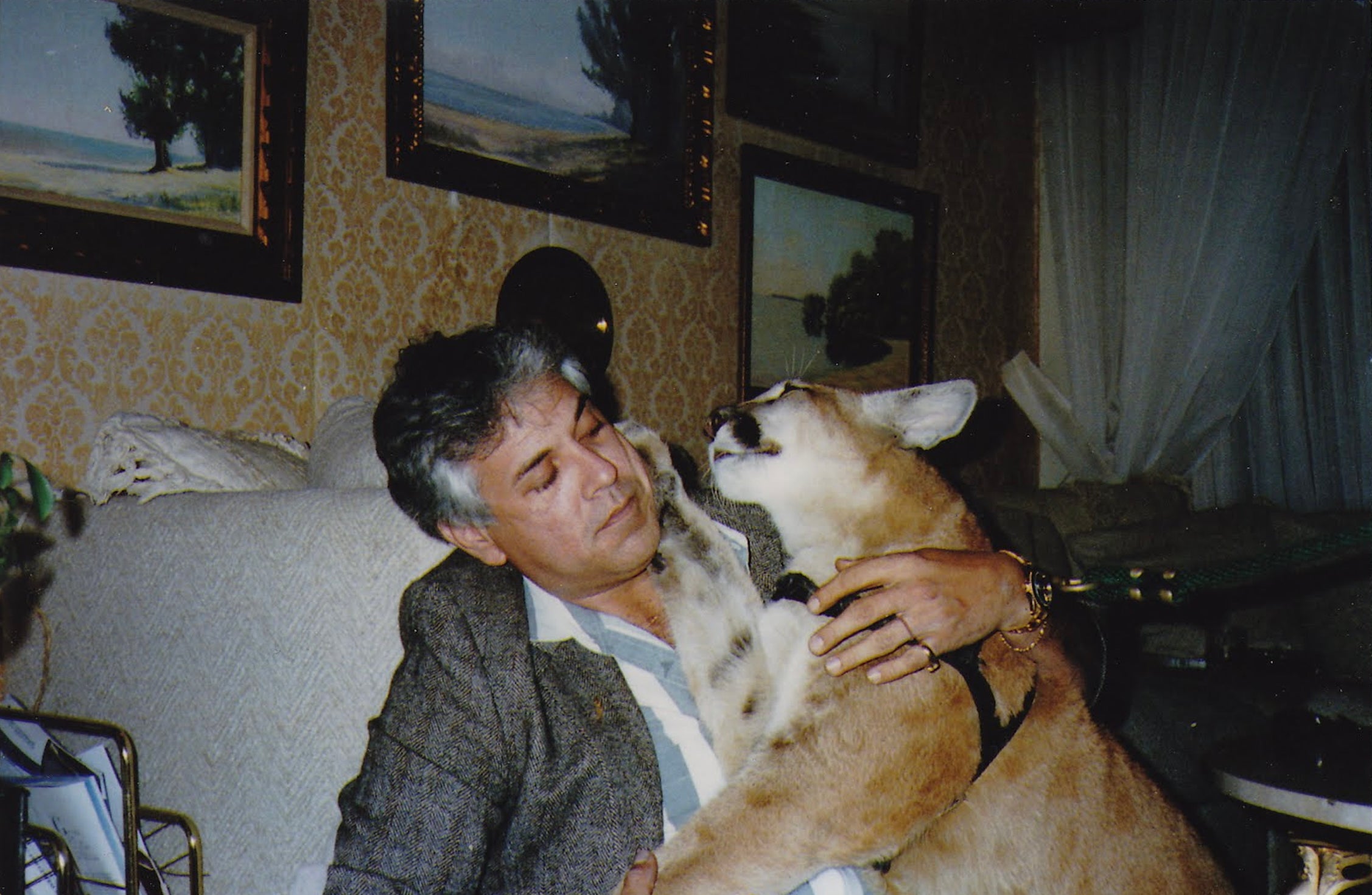
Photo Courtesy Of TJ Dominguez
Advertisement
I was born in Cuba back in 1952. At that point my father was a senator, a really respectable and noble man. And all I wanted to do, all I ever wanted to do was follow in his footsteps. The brutal dictatorship of Fidel Castro forced my family to flee Cuba and make a new life for ourselves in South Florida. My dad started working in construction, and before long he became a very successful real estate developer.
When I was 17 years old, my dad decided to get into the sugar business. He purchased land in Haiti to build a sugar mill and spent the next few years trying to get that sugar mill up and running.
I was my dad’s shadow. I followed him everywhere. He wore a suit and had a briefcase. I wore a similar suit and carried a similar briefcase. I was with him at every single business meeting, and he taught me everything he knew. He was the best father any son could have asked for.
Advertisement
But tragically, when I was 19 years old, my father got cancer and died quickly over the course of a few months. On his deathbed, he made me promise him that I would get that sugar mill in Haiti off the ground. And I swore to him that I would.
Before he passed away, my dad had secured a $14 million loan for the sugar mill in Haiti. But after his death, the bank refused to honour that loan and refused to acknowledge me as a capable heir. They dismissed me as a “kid” and wished me luck finding the $14 million at another lending institution.
I was grieving the loss of my father, and I was desperate to keep the promise I had made to him. I worked all my contacts and my dad’s contacts and eventually found a banker willing to loan me the money. All he needed was a $100,000 “good faith” deposit.
Advertisement
I was young and desperate, a truly dangerous combination. I didn’t suspect that once I made that deposit, that banker would stop talking to me. And then he would start avoiding me. For months. When I eventually showed up unannounced at his office one day, I was stunned to see other victims there demanding their money back, too. That banker turned out to be a ruthless con artist. I was devastated.
At that point, I was defaulting on loans my father had already taken out for the sugar mill, for the land and for the machinery. And I was severely in debt to the government of Haiti. I needed money and I needed it fast.
It was the mid-1970s and I knew that selling marijuana could make me a lot of cash in a short amount of time. So, I bought a boat and set sail for the Bahamas, where I knew all the pot being sold in South Florida was coming from.
Advertisement
I was fortunate to make a great contact when I got there and sailed back to South Florida with a few hundred pounds of weed stashed away in my boat. I paid $25,000 for all that marijuana and sold it for $100,000. It wasn’t the $14 million I needed to get the sugar mill in Haiti off the ground, but it was definitely a good start.

Photo Courtesy Of TJ Dominguez
At that point, I started making regular trips to the Bahamas. But then the weed supply there started to dry up. You see, the marijuana that I had access to in the Bahamas was marijuana the government confiscated ― which ultimately ended up on the black market, where I would purchase it. But there were months when they didn’t confiscate much pot ― so there wasn’t much I could buy.
Advertisement
So I decided to go where the pot grows: Colombia. But to get to Colombia, I would need to buy an airplane and learn how to fly it. So that’s exactly what I did. I opened the classifieds section of the newspaper (remember those?) and found a little twin-engine Beechcraft for sale for $50,000. It was a real bucket of bolts, but I bought it and repaired it and quickly learned how to fly.
My first trip to Colombia in 1979 was a huge success. I brought back a ton of marijuana and sold it and made a few hundred thousand dollars. At that point I was able to get credit for more marijuana. So, I flew back and got another $800,000 worth of pot. On credit. That turned out to be a huge mistake because I ended up losing that marijuana.
I was flying at night and I thought I dropped the marijuana out of my plane onto my boat that was waiting below off the coast of Florida, but it turned out to be someone else’s boat. And they made off with my marijuana.
Advertisement
I owed those Colombian suppliers $800,000 for that weed. Two weeks later, they sent thugs to kidnap me. And those thugs put a gun to my head and told me that if they didn’t get their $800,000 — in 48 hours ― they would kill me. And then kill my entire family.
Up until that point, I had avoided anything to do with cocaine. Because in my mind, the cocaine guys were the “bad guys.” The cocaine guys were the killers. I was just smuggling marijuana to make enough money to get my dad’s sugar mill off the ground.
But my life was on the line now, and so were the lives of my family. And flying cocaine was 100 times more profitable than flying marijuana.
Advertisement
So I flew to Colombia, picked up a load of cocaine, and flew it back. And I made $1 million from doing that one trip alone. I paid the Colombians back their $800,000 and saved my life. But the realisation that I could make $1 million a trip flying cocaine changed everything for me. Suddenly my marijuana smuggling days were in the rearview mirror.
As a full-time cocaine smuggler, I was making $1 million a week. I quickly developed a stellar reputation in the world of cocaine pilots. Primarily because most cocaine pilots during that time partook in the cocaine they were smuggling, and they were always high.
I, on the other hand, had never done drugs in my life. Not marijuana. Not cocaine. Not any drug. That really seemed to separate me from the other pilots of the day who were constantly late and constantly crashing their airplanes, losing loads of cocaine. I was never late. And I never lost a plane load of cocaine. Ever.
Advertisement
In 1983, Pablo Escobar sent one of his underlings to summon me. He had heard of me and heard about my reputation for never losing a load and he wanted to hire me to smuggle cocaine for him. After a tense back-and-forth negotiation in his secret lair deep in the Colombian jungle, I agreed to fly 1,000 kilos of coke for Pablo Escobar. And he agreed to pay me $5 million to do it.
After I started making weekly $5 million trips for Pablo Escobar, he stopped paying me in cash ― and started paying me in cocaine. The cocaine that Pablo Escobar paid me with, I sold in South Florida and all over the country, becoming a cocaine kingpin in my own right.
Sadly, by the time I had enough money to resurrect my father’s sugar mill, it was no longer salvageable. The government of Haiti had taken it over years earlier and run it into the ground. This was during the rule of Haitian dictator Jean-Claude Duvalier, and the nation was in steep decline. As I walked through the rubble where my father’s sugar mill once stood, I realised it would never, ever be.
Advertisement
So I flew back to Miami and parlayed all the money I was making into a Lamborghini dealership, and I bought a cell phone company ― in the mid 1980s, when cellphones cost $5,000 each. I also started building and selling homes in the Miami-Ft. Lauderdale area and became a real estate developer.
In the end — adjusted for inflation — I was grossing nearly $100 million a month at the height of my cocaine career — smuggling and selling tons and tons of cocaine every week. Keep in mind, back in the 1980s, cocaine was selling for as much as $600 per gram. And there are more than 900,000 grams in a ton (plane load) so I was swimming in money.
Photo Courtesy Of TJ Dominguez
Advertisement
But then one of my underlings got addicted to the coke we were smuggling and got very sloppy. And then he got busted. And he served me up to the Feds on a silver platter in order to get a lighter prison sentence for himself.
I was arrested in April of 1988. And in early 1991, I pled guilty to multiple felonies including the distribution of marijuana, the distribution of cocaine and money laundering. I ended up serving a total of 13 years in federal prison.
Going to prison was devastating for me. Not just because of the loss of my freedom. But because my family and friends discovered my secret. And I was so ashamed and embarrassed.
Advertisement
After I was arrested, my mom came to see me. With a heartbreaking look of pain and disbelief on her face, she said, “Son, tell me what they’re saying about you isn’t true.” I still tear up thinking about that moment.
Before that, my double life was fuelled by compartmentalisation. There was “the good me” that my family knew, who was running successful legitimate businesses and making a lot of money, and who they were extremely proud of.
Then there was the “cocaine kingpin me” who was smuggling and selling tons and tons of cocaine for Pablo Escobar. I meticulously hid that side of me from them, because I knew they would be so ashamed of that version of me they never would have accepted it.
Advertisement
As the years passed, I painstakingly kept both worlds, both versions of myself, separate. And as long as these two versions of me never collided, I was able to feel good or at least, OK, about each one of them. But after my arrest, only one version of me remained – the cocaine smuggler. And my family was heartbroken over it for a long time.
My family has since forgiven me for the past. But I still can’t forgive myself. It haunts me every single day.

Photo Courtesy Of TJ Dominguez
Advertisement
I’ve served my time, and I’ve learned a lot about life being behind bars for 13 years. If I could do it all over again, I would try to pursue a different path in life. As a 19-year-old kid, I made some really bad decisions that snowballed into a series of other really bad decisions that I regret.
I’m 73 years old now. I still love Lamborghinis. But my life has taken me in a whole new direction. I’ve been speaking at high schools and colleges. And for the past few months I’ve been working on producing a podcast about my life called “Cocaine Air.” Because I want to share my story with the world, especially with young people, about how one bad decision can lead to 1,000 more and send you in unimaginable directions.
But I truly believe there’s no mess that can’t be cleaned up. And that’s how I plan to spend the rest of my time on this Earth. Trying to do good, trying to have a positive impact on the world and using my story to teach young people how not to make the same mistakes that I did.
Advertisement
Do you have a compelling personal story you’d like to see published on HuffPost? Find out what we’re looking for here and send us a pitch at pitch@huffpost.com.




We hope you love the products we recommend! All of them were independently selected by our editors. Just so you know, HuffPost UK may collect a share of sales or other compensation from the links on this page if you decide to shop from them. Oh, and FYI — prices are accurate and items in stock as of time of publication.
As I approach the big 3-0, I’ve found myself developing an unexpected obsession with my bedding. Gone are the days of just throwing on whatever’s clean; now, I genuinely care about having my sheets look sleek, elegant, and, dare I say, wrinkle-free.
Advertisement
Enter the Nectar Duvet, which has absolutely transformed my bed into a sanctuary of sophistication.
I’ve been sleeping with this duvet for just over a month now (tough gig, testing duvets), and I can confidently say it’s been a game-changer.
The Nectar Duvet has a way of elevating the entire aesthetic of my bedroom. No more waking up to creased sheets that make me feel like I’m living in university halls. The duvet is so smooth and perfectly puffed, giving my bed an effortlessly neat appearance. I don’t even have to break out the iron anymore (honestly, I was starting to consider it!).
The secret to this duvet is its Smartfil® technology and Modal fabric, which is derived from natural wood pulp. This combination makes it incredibly light, breathable, and soft, making it the perfect choice for the spring season.
Advertisement
Modal helps to wick moisture away from the body, allowing you to sleep in total temperature-controlled comfort and wake up feeling refreshed.
I’ve found it keeps me warm enough during cooler nights while still feeling light and fluffy enough that it doesn’t overheat me. It strikes the perfect balance for year-round comfort.
Aside from the duvet itself, the service and delivery were top-notch. I received the duvet within just two days of placing the order—impressive, considering the speed and efficiency of the delivery.
Advertisement
The whole process was smooth, with timely updates from the delivery service every step of the way. It made the experience all the more pleasant and hassle-free.
In short, I couldn’t recommend the Nectar Duvet more. It’s made my bed look elegant, kept me cozy, and saved me from ever considering ironing my sheets again. I can’t believe I even thought about it. This duvet is worth every penny and truly lives up to its promises.

Have you ever frustratingly mumbled to your partner that it “must be nice to have a partner who walks the dog” in hopes of them walking the dog more often? Or have you ever sighed that you’ll “just do the errands alone” even though you don’t want to? Turns out, you may be dry begging, a tool that people use in relationships of all sorts to get their needs met.
“Dry begging is when someone indirectly asks for something. There’s a need there, but they’re not stating it clearly,” said Aerial Cetnar, a therapist and owner of Boulder Therapy and Wellness in Colorado.
Advertisement
Instead of making a straightforward request or voicing a direct want, someone who is dry begging hints at a need or makes a vague complaint, Cetnar added.
So, instead of stating, “I wish we spent more time together,” someone who is dry begging may say, “Oh, I guess I’ll just stay home with the cat” — they’re hinting at their displeasure instead of addressing it.
“I’ll say it can come from a place of insecurity, fear or manipulation,” said Tori-Lyn Mills, a licensed clinical professional counsellor with Thriveworks in Columbia, MD. But it can also be something that folks grew up with and learned as a way to get their needs met, Mills added.
Advertisement
It’s also not an official psychological term that you’ll find in mental health literature, said Cetnar — “regardless, it’s very much a thing.”
While it can feel easier than directly asking for what you want, dry begging really isn’t meant for the long haul. Here’s why.
According to Mills, dry begging can weaponise emotion and empathy while also shifting responsibility in a situation. It can “even weaponise a person’s role as a partner, specifically in romantic relationships,” she said.
Advertisement
For example, in a romantic relationship, if one partner wants to have sex and the other doesn’t, instead of flat-out saying how they feel, someone who is dry begging may say something like “well, most people would be happy that their partner wants to have sex with them all the time [and] is attracted to them all the time,” Mills said.
This can put the other partner in a position where they feel guilty about not wanting to have sex in the moment. It can even put responsibility on them and make them think, “Oh, I should be happy about this,” Mills noted.
“It’s kind of like — I should be giving into this. That’s how dry begging can work,” she said.
If this sounds manipulative, it’s because it often is.
If it becomes a pattern, that’s a red flag for manipulation, Cetnar said. More, if the partner ends up doing things they don’t want to do without ever being clearly asked, it’s another red flag, she said.
Advertisement
“It’s not always manipulative — it certainly can be — but I like to give people the benefit of the doubt. First, look at what’s the intention and is it a pattern,” Cetnar said. Once again, if it’s a pattern, that is not OK.
If it’s just an occasional happening, it probably isn’t a big deal, she said.
Dry begging is often linked to narcissism, and while both experts said it certainly can be a tool narcissists use to get their needs met, not everyone who occasionally dry begs is a narcissist.
“With narcissism, there is a high level of entitlement. You may get a hint or a prompt, but you could get a lot more covert demands,” said Mills.
Advertisement
In the case of a narcissist and dry begging, they may explicitly try to elicit guilt in their partner when they dry beg or weaponise empathy to get their partner to do what they want, Mills explained.
“Narcissists are typically seen as manipulative. And so there can be an overlap,” Cetnar added. Narcissists are often needy, too, she said, and dry begging is definitively needy behaviour.
“I’m just going to continue to passively say something or ask for something in the hopes that people will just give me what I want,” Cetnar added.
Advertisement

Akio Maeshima via Getty Images
Someone who engages in dry begging by saying things like, “Oh, it must be nice to have a husband who cooks” or “I guess I’ll just hang up these pictures alone” instead of directly asking for what they want may grow resentful of their partner when they don’t get the hints.
“Because they thinking that they’re asking for something, but they’re not,” said Cetnar.
“They’re not being very clear about it,” she added. Your partner may not understand that you’re asking for help with something or may even choose to ignore your passive statements.
Advertisement
It can be uncomfortable to flat-out tell someone you want them to prioritize time together or need them to help around the house more, which can make dry begging a more comfortable way of dealing with the ask.
People who tend to dry beg may be doing it out of a place of insecurity, said Mills. They may not want to get their feelings hurt if they hear a “no” to their request or may even worry that they’re asking for too much.
For some people, this is, once again, a learned behaviour.
“It’s common that people are not really taught how to ask for things in a way that’s really clear and direct,” said Cetnar. “Sometimes they resort to dry begging because it feels like it’s a hint and they’d rather it be a hint that gets rejected than a clear ask to be rejected,” she noted.
Advertisement
In the end, dry begging comes from a place of needs needing to be met, Cetnar said, and is likely common in those who have trouble expressing their needs and vulnerabilities.
“This could be coming from a certain person who grew up in an environment in which maybe it was a bit uncomfortable to ask for things,” she noted.
The first step to dealing with dry begging, whether it’s you doing it or your partner, is awareness. You can’t fix a behaviour if you don’t know it exists.
Advertisement
If you dry beg your partner, ask yourself how you can start implementing direct communication, said Mills, and consider what needs of yours aren’t being met before you make a passive comment.
If you feel lonely, consider how to ask your partner to spend more time with you instead of hinting at it, Mills noted.
You can even tell your partner you’re working on this so they know to expect more direct communication and direct asks from you, Mills said.
Advertisement
“That way, they can practice and they can have feedback and feel supported in trying to make a positive change,” she said.
If you are in a relationship with someone who is dry begging, start to notice it and acknowledge when someone is making a request by saying something like “Is this a request? It sounds like you are asking for something here,” Cetnar said.
This can open up the conversation and encourage your partner to explicitly state their needs so there is no guesswork or resentment.
Advertisement
If your partner isn’t willing to change and continues to manipulate you, it’s worth considering if the relationship is worth it. But, for someone who does this as a learned behaviour or because of difficulty expressing emotions, there is hope for change.



To allow studying the genetic causes of autism spectrum disorder, a Kobe University research team created a bank of 63 mouse embryonic stem cell lines containing the mutations most strongly associated with the disorder. The achievement was made possible by developing a new and more efficient method for changing the genome of embryonic stem cells.
Although it is well understood that genetics influence the development of autism spectrum disorder, no one could yet pinpoint the precise cause and mechanism. To study the biological background of diseases, researchers use models: Cell models allow us to study how changes in the genes affect the shape and function of the cell, while animal models show how the change in its cellular components affects health and behavior. Despite significant differences between mice and humans, many disease-causing genes are very similar and cause similar conditions across these species. “One of the problems, however, is the lack of a standardized biological model to study the effects of the different mutations associated with autism spectrum disorder. This makes it difficult to find out, for example, whether they have common effects or what is specific to certain cell types,” explains Kobe University neuroscientist TAKUMI Toru.
Thus, twelve years ago, Takumi and his team embarked on a journey to change that. Being experts in studying mouse models of the disorder, they combined a conventional manipulation technique for mouse embryonic stem cells — cells that can be made to develop into almost any kind of cell in the body — with the then-newly discovered, highly specific and easy-to-handle CRISPR gene editing system. This new method proved highly efficient in making genetic variants of these cells and allowed the Kobe University team to produce a bank of 63 mouse embryonic stem cell lines of the genetic variants most strongly associated with autism spectrum disorder.
In the journal Cell Genomics, Takumi and his team now published that they were able to develop their cells into a broad range of cell types and tissues, and even generate adult mice with their genetic variations. The analysis of these alone proved that their cell lines were adequate models for studying autism spectrum disorder. However, the cell lines also allowed them to conduct large-scale data analyses to clearly identify genes that are abnormally active, and in which cell types this is the case.
One of the things the data analysis brought to light is that autism-causing mutations often result in neurons being unable to eliminate misshapen proteins. “This is particularly interesting since the local production of proteins is a unique feature in neurons, and a lack of quality control of these proteins may be a causal factor of neuronal defects,” explains Takumi.
The Kobe University neuroscientist expects that his team’s achievement, which has been made available to other researchers and can be flexibly integrated with other lab techniques and adjusted to other targets, will be an invaluable resource for the scientific community studying autism and trying to find drug targets. He adds: “Interestingly, the genetic variants we studied are also implicated in other neuropsychiatric disorders such as schizophrenia and bipolar disorder. So, this library may be useful for studying other conditions as well.”
This research was funded by the Japan Society for the Promotion of Science (grants 16H06316, 16F16110, 21H00202, 21H04813, 23KK0132, 23H04233, 24H00620, 24H01241, 24K22036, 17K07119 and 21K07820), the Japan Agency for Medical Research and Development (grant JP21wm0425011), the Japan Science and Technology Agency (grants JPMJPF2018, JPMJMS2299 and JPMJMS229B), the National Center of Neurology and Psychiatry (grant 6-9), the Takeda Science Foundation, the Smoking Research Foundation, the Tokyo Biochemical Research Foundation, the Kawano Masanori Memorial Public Interest Incorporated Foundation for Promotion of Pediatrics, the Taiju Life Social Welfare Foundation, the Tokumori Yasumoto Memorial Trust for Researches on Tuberous Sclerosis Complex and Related Rare Neurological Diseases, and Takeda Pharmaceutical Company Ltd. It was conducted in collaboration with researchers from the RIKEN Center for Brain Science, Radboud University, the RIKEN Center for Integrative Medical Sciences, the Agency for Science, Technology and Research, the RIKEN Center for Biosystems Dynamics Research, and Hiroshima University.
Kobe University is a national university with roots dating back to the Kobe Higher Commercial School founded in 1902. It is now one of Japan’s leading comprehensive research universities with nearly 16,000 students and nearly 1,700 faculty in 11 faculties and schools and 15 graduate schools. Combining the social and natural sciences to cultivate leaders with an interdisciplinary perspective, Kobe University creates knowledge and fosters innovation to address society’s challenges.

In a new study, physicists at the University of Colorado Boulder have used a cloud of atoms chilled down to incredibly cold temperatures to simultaneously measure acceleration in three dimensions — a feat that many scientists didn’t think was possible.
The device, a new type of atom “interferometer,” could one day help people navigate submarines, spacecraft, cars and other vehicles more precisely.
“Traditional atom interferometers can only measure acceleration in a single dimension, but we live within a three-dimensional world,” said Kendall Mehling, a co-author of the new study and a graduate student in the Department of Physics at CU Boulder. “To know where I’m going, and to know where I’ve been, I need to track my acceleration in all three dimensions.”
The researchers published their paper, titled “Vector atom accelerometry in an optical lattice,” this month in the journal Science Advances. The team included Mehling; Catie LeDesma, a postdoctoral researcher in physics; and Murray Holland, professor of physics and fellow of JILA, a joint research institute between CU Boulder and the National Institute of Standards and Technology (NIST).
In 2023, NASA awarded the CU Boulder researchers a $5.5 million grant through the agency’s Quantum Pathways Institute to continue developing the sensor technology.
The new device is a marvel of engineering: Holland and his colleagues employ six lasers as thin as a human hair to pin a cloud of tens of thousands of rubidium atoms in place. Then, with help from artificial intelligence, they manipulate those lasers in complex patterns — allowing the team to measure the behavior of the atoms as they react to small accelerations, like pressing the gas pedal down in your car.
Today, most vehicles track acceleration using GPS and traditional, or “classical,” electronic devices known as accelerometers. The team’s quantum device has a long way to go before it can compete with these tools. But the researchers see a lot of promise for navigation technology based on atoms.
“If you leave a classical sensor out in different environments for years, it will age and decay,” Mehling said. “The springs in your clock will change and warp. Atoms don’t age.”
Fingerprints of motion
Interferometers, in some form or another, have been around for centuries — and they’ve been used to do everything from transporting information over optical fibers to searching for gravitational waves, or ripples in the fabric of the universe.
The general idea involves splitting things apart and bringing them back together, not unlike unzipping, then zipping back up a jacket.
In laser interferometry, for example, scientists first shine a laser light, then split it into two, identical beams that travel over two separate paths. Eventually, they bring the beams back together. If the lasers have experienced diverging effects along their journeys, such as gravity acting in different ways, they may not mesh perfectly when they recombine. Put differently, the zipper might get stuck. Researchers can make measurements based on how the two beams, once identical, now interfere with each other — hence the name.
In the current study, the team achieved the same feat, but with atoms instead of light.
Here’s how it works: The device currently fits on a bench about the size of an air hockey table. First, the researchers cool a collection of rubidium atoms down to temperatures just a few billionths of a degree above absolute zero.
In that frigid realm, the atoms form a mysterious quantum state of matter known as a Bose-Einstein Condensate (BEC). Carl Wieman, then a physicist at CU Boulder, and Eric Cornell of JILA won a Nobel Prize in 2001 for creating the first BEC.
Next, the team uses laser light to jiggle the atoms, splitting them apart. In this case, that doesn’t mean that groups of atoms are separating. Instead, each individual atom exists in a ghostly quantum state called a superposition, in which it can be simultaneously in two places at the same time.
When the atoms split and separate, those ghosts travel away from each other following two different paths. (In the current experiment, the researchers didn’t actually move the device itself but used lasers to push on the atoms, causing acceleration).
“Our Bose-Einstein Condensate is a matter-wave pond made of atoms, and we throw stones made of little packets of light into the pond, sending ripples both left and right,” Holland said. “Once the ripples have spread out, we reflect them and bring them back together where they interfere.”
When the atoms snap back together, they form a unique pattern, just like the two beams of laser light zipping together but more complex. The result resembles a thumb print on a glass.
“We can decode that fingerprint and extract the acceleration that the atoms experienced,” Holland said.
Planning with computers
The group spent almost three years building the device to achieve this feat.
“For what it is, the current experimental device is incredibly compact. Even though we have 18 laser beams passing through the vacuum system that contains our atom cloud, the entire experiment is small enough that we could deploy in the field one day,” LeDesma said.
One of the secrets to that success comes down to an artificial intelligence technique called machine learning. Holland explained that splitting and recombining the rubidium atoms requires adjusting the lasers through a complex, multi-step process. To streamline the process, the group trained a computer program that can plan out those moves in advance.
So far, the device can only measure accelerations several thousand times smaller than the force of Earth’s gravity. Currently available technologies can do a lot better.
But the group is continuing to improve its engineering and hopes to increase the performance of its quantum device many times over in the coming years. Still, the technology is a testament to just how useful atoms can be.
“We’re not exactly sure of all the possible ramifications of this research, because it opens up a door,” Holland said.
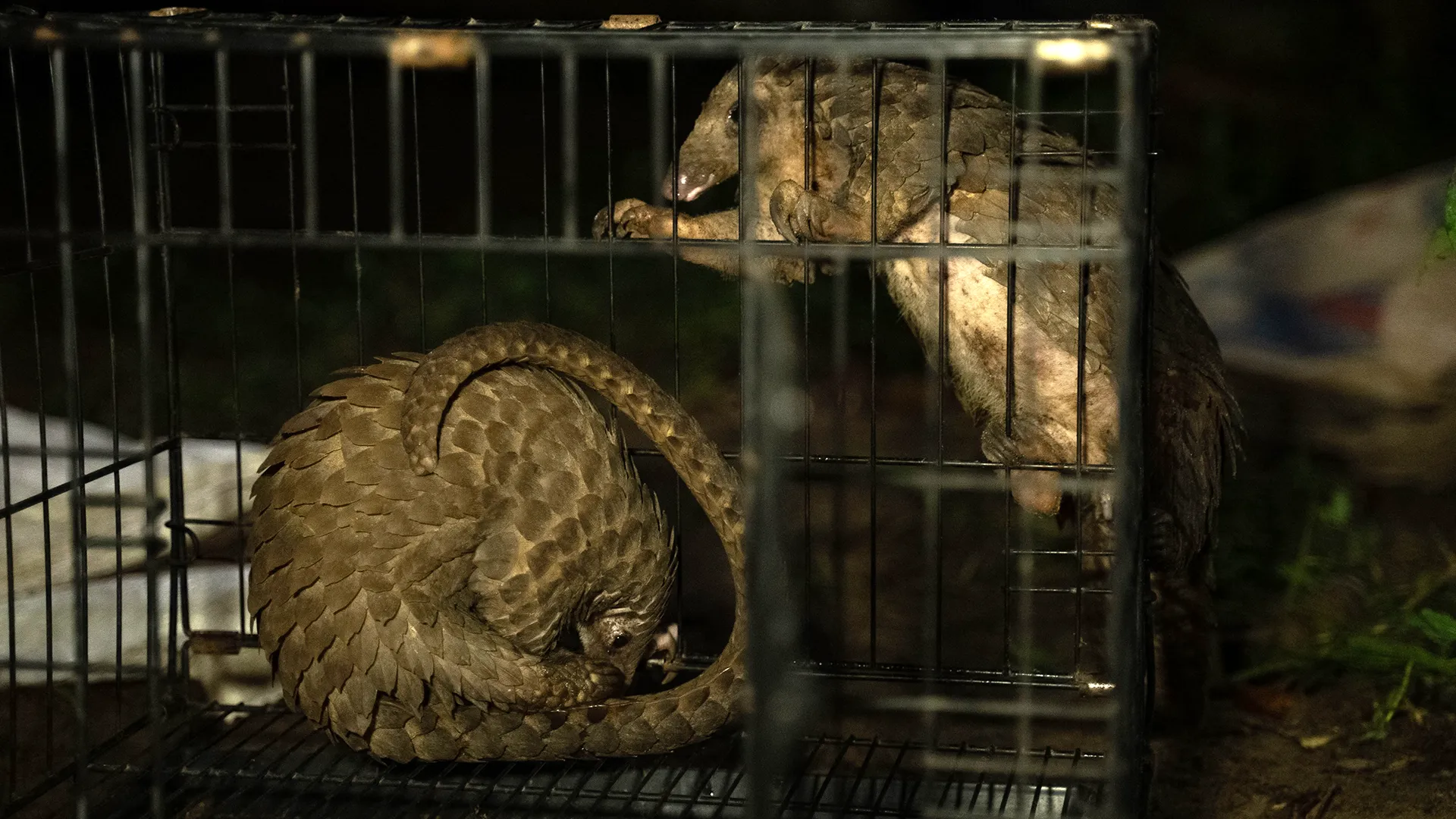
The vast majority of pangolin hunting in African forest landscapes is done for meat consumed by people in the region, rather than for scales shipped to East Asia, a new study led by the University of Cambridge suggests.
Pangolins are the most heavily trafficked wild mammal in the world. A solitary, insect-eating animal about the size of a large domestic cat*, pangolins are famous for their highly prized keratin scales — a staple of traditional Chinese medicine.
All eight existing pangolin species are threatened with extinction and on the IUCN’s Red List, with three Asian species categorised as critically endangered.
As Asian pangolins have declined dramatically, Nigeria has seen a boom in the export of pangolin scales to Asia. While hunting pangolins is illegal in Nigeria the West African country is now the world’s largest hub for the criminal trade in pangolin products.
However, a new study published in the journal Nature Ecology & Evolution suggests that some 98% of Nigerian pangolins are caught for meat first and foremost, with around two-thirds of scales from these animals simply thrown away.
A research team led by Cambridge collected data from over eight hundred hunters and traders in thirty-three locations across Nigeria’s Cross River Forest region, primarily between 2020 and 2023, during which time the conservationists estimate that around 21,000 pangolins were killed annually in the area.
Almost all pangolins were captured “opportunistically” or during general hunting trips (97%) rather than sought out, and caught primarily for meat (98%). Around 71% of pangolins were consumed by hunters themselves, with 27% traded locally as food.
Perhaps surprisingly, given their potential overseas value, around 70% of the scales were discarded, while less than 30% were sold on. However, researchers calculated that, per animal, pangolin meat fetched 3-4 times the price of scales at local Nigerian markets.
“Thousands of kilos of pangolin scales are seized at Nigeria’s ports, creating the impression that the international demand for scales is behind pangolin exploitation in West Africa,” said study lead author and Gates Cambridge Scholar Dr Charles Emogor, who conducted the research for his PhD at the University of Cambridge’s Department of Zoology.
“When we spoke to hunters and traders on the ground around the Cross River forest, the largest stronghold for Nigeria’s pangolins, it was obvious that meat was the motivation for almost all of the pangolin killings.”
“We found that dedicated pangolin hunts are virtually non-existent. Most pangolins are killed by hunters out for any type of game,” said Emogor, now a Schmidt Science Fellow split between Cambridge, UK, and Harvard, US.
“Around a third of pangolins are caught opportunistically, often while people are working in the fields. Pangolins curl into a ball when threatened, which sadly makes them easy to catch.” Among frequent hunters, by far the most common method of catching pangolins was given as simply picking them up by hand.
While Emogor says the demands of traditional medicine markets are exacerbating the decline of African pangolins — his previous research showed that just shipments intercepted by Nigerian authorities between 2010 and 2021 amounted to 190,407 kilos of pangolin scales taken from around 800,000 dead creatures — pangolins have been exploited in West Africa long before being trafficked to Asia.
The meat is a delicacy in parts of Nigeria, often procured for pregnant women in the belief it helps produce strong babies. Emogor and colleagues surveyed hunters and Cross River locals on “palatability”: asking them to rank the tastiness of almost a hundred different animals eaten in the region, from domestic beef and chicken to catfish, monkeys and antelope.
The three major African pangolin species were rated as the most palatable of all available meats, with average scores of almost nine out of ten, and the giant pangolin considered the topmost appetising meat in the region.
“Pangolins face a lethal combination of threats,” said Emogor. “Pangolins are easy to hunt, breed slowly, taste good to humans, and are falsely believed to have curative properties in traditional medicines. In addition, their forest habitat is being destroyed.”
Emogor’s research led him to set up Pangolino in 2021, a global network of volunteers, scientists and pangolin enthusiasts committed to saving the endangered animal. He points out that the cost of policy interventions to tackle meat-driven pangolin trading might be cheaper than those for an international scales market.
These should include anti-poaching patrols as well as community programmes focused on food security. Through Pangolino, Emogor is piloting interventions in four Southeast Nigerian communities by helping create by-laws that prohibit pangolin killing, with financial rewards for compliance.
“Clearly in designing any intervention we need good information on what’s motivating the hunters,” said Prof Andrew Balmford, co-author from Cambridge’s Department of Zoology. “That’s why studies such as this are vital for effective conservation of endangered species.”
While the latest study focused on Nigeria, researchers say their pangolin hunting and consumption data echo that from countries such as Cameroon and Gabon — suggesting these patterns may be Africa-wide.
Raised on the edge of the Cross River National Park, home to Nigeria’s endangered white-bellied and black-bellied pangolins, Emogor grew up surrounded by wildlife. Yet during childhood he only ever saw dead pangolins, and didn’t encounter a living animal until his mid-twenties.
“If we lose the pangolin, we lose 80 million years of evolution,” said Emogor. “Pangolins are the only mammals with scales, and their ancestors existed when dinosaurs still roamed the planet,” added Emogor.
The latest study was conducted by an international team of researchers from the University of Cambridge, Wildlife Conservation Society, Pangolin Protection Network, University of Washington, CIFOR, CARE International, as well as the UK universities of Oxford, Exeter and Kent.
Notes:
*While this is a rough size for some African species, such as the White-bellied pangolin, the Giant Pangolin can grow up to 30kg in weight.
NHS Confederation chair Lord Adebowale says his mother’s death illustrates inequalities in the system.
