Sabrina Carpenter Has Epic 4-Word Response About Who Inspired Her Single Manchild

Sabrina Carpenter is not getting involved when it comes to the internet’s obsession with the origin of her latest hit single.

Earlier this month, the US chart-topper sparked an internet frenzy when she announced the release of a new song, Manchild, prompting near-immediate rumours on social media that it was inspired by her most famous ex, Barry Keoghan.

This speculation only increased when Manchild finally came out, with lyrics admonishing an immature former beau.

Barry Keoghan and Sabrina Carpenter pictured together in 2024

Dave Benett/WireImage for Vanity Fair

During a wide-ranging new interview with Rolling Stone, Sabrina was asked directly if any of her famous exes served as the inspo for the track.

“It’s about your dad,” she quipped by way of response.

Elsewhere in the interview, Sabrina spoke about the interest in her personal life since her rise to global fame in the past year.

“When you get down the little rabbit hole is truly when people start commenting on you as a person or you physically,” she explained.

“All of those things that you’re already thinking on a day-to-day basis. You don’t need a stranger from Arkansas to remind you.”

Of the things people write about her online and in the press, she claimed: “You’re like, ‘That didn’t happen then. That did happen then. You’re missing a few key details there’. People underestimate how tricky it is to navigate being a young woman, having relationships, and then having a bunch of strangers have opinions on them.

“Because surely, all of these people that are commenting, if they had the same microscope on their personal lives, I don’t think they’d be as eloquently spoken as me. I know it’s a tale as old as time. It’s just unfortunate that it’s still a tale.”

Manchild is currently on course to get Sabrina her fourth number one single in the UK, following the success of Espresso, Please Please Please and Taste in 2024.

The song serves as the lead single from Sabrina’s newly-announced album Man’s Best Friend, the album cover for which has already raised plenty of eyebrows and led to plenty of online debate since it was unveiled on Wednesday evening.

Share Button

US Stance On Trade Unlikely To Change Even If A Democrat Replaced Trump, Minister Warns

The US’s stance on trade would be unlikely to change even if a Democrat were elected to the White House, a minister has warned.

The US president imposed a 10% tax on British imports to the States in April, on top of a global 25% levy on aluminium, steel and cars.

Other countries received higher “reciprocal” tariffs initially, rocking worldwide trade, although Trump did end up reducing the majority to 10%.

The UK became the first nation to agree to a trade deal with the States to reduce the tariffs earlier this year.

The two sides agreed to cut British steel and aluminum levies to zero and cut the car taxes to 10% – for up to 100,000 – although it is yet to be finalised.

Britain also secured a temporary exemption when Trump doubled its import tariffs on steel and aluminium to 50%, until July 9, depending on the progress of the trade deal.

Even so, the tariffs have undoubtedly hit the British economy.

The Office for National Statistics revealed on Thursday that gross domestic product (GDP) had declined by 0.3% in April, primarily due to the tariffs and the higher taxes imposed by the British Treasury.

But at a press gallery lunch with reporters on Thursday, trade and business secretary Jonathan Reynolds suggested these tariffs are not just a product of Trump’s administration.

He said it was time for Europe to “understand how the US feels” about the “lack of reciprocity” with trade.

“The US trade deal – there have been some hard bits of negotiating that,” Reynolds said, after saying he expects the final agreement to be finalised “very soon”.

“The US agenda is very significant, but we have always sought to recognise how the US feels about this.

“I said to an audience of European colleagues last week in Brussels, this, we have to understand, in Europe, is not US politics disrupting global trade.

“This is how global trade has disrupted US politics.

“I don’t think the kind of US agenda we see on trade would change overnight, if it was the end of the presidential term and someone else came in – even if it was Democratic president.

“Understand how the US feels about this, the lack of reciprocity, about some grievances, about how some multi-lateral bodies work.

“We might have different views but we have to engage, be willing to engage with them as well as build some personal relationships. That has been why we’ve been able to do a bit more than some others.”

There are hopes the US-UK trade deal will get over the line soon.

Reynolds met the US commerce secretary Howard Lutnik with PM Keir Starmer this week in London, and the UK ambassador to the States Peter Mandelson met with Trump in the White House.

The business secretary also told reporters it had been a “very significant” week in relation to the agreement.

Share Button

Air India Plane Crash: What We Know So Far As One Survivor Reported

AHMEDABAD, India (AP) — An Air India passenger plane bound for London crashed into a medical college in Ahmedabad after takeoff Thursday, killing at least 240 people in one of India’s worst airline disasters in decades, officials said.

Vidhi Chaudhary, a top state police officer in the northwestern city of Ahmedabad, said medical students who were in a college hostel when the plane hit the building are among the dead.

“Most of the bodies have been charred beyond recognition,” she said.
Indian Home Minister Amit Shah confirmed that a single passenger survived the crash and he met him at the hospital. A doctor said he had examined the survivor, whom he identified as Vishwashkumar Ramesh.

“He was disoriented with multiple injuries all over his body,” Dr. Dhaval Gameti told The Associated Press. “But he seems to be out of danger.”

Black smoke billowed from the site where the plane crashed into a medical college hostel and burst into flames near the airport in Ahmedabad, a city of more than 5 million and the capital of Gujarat, Prime Minister Narendra Modi’s home state.

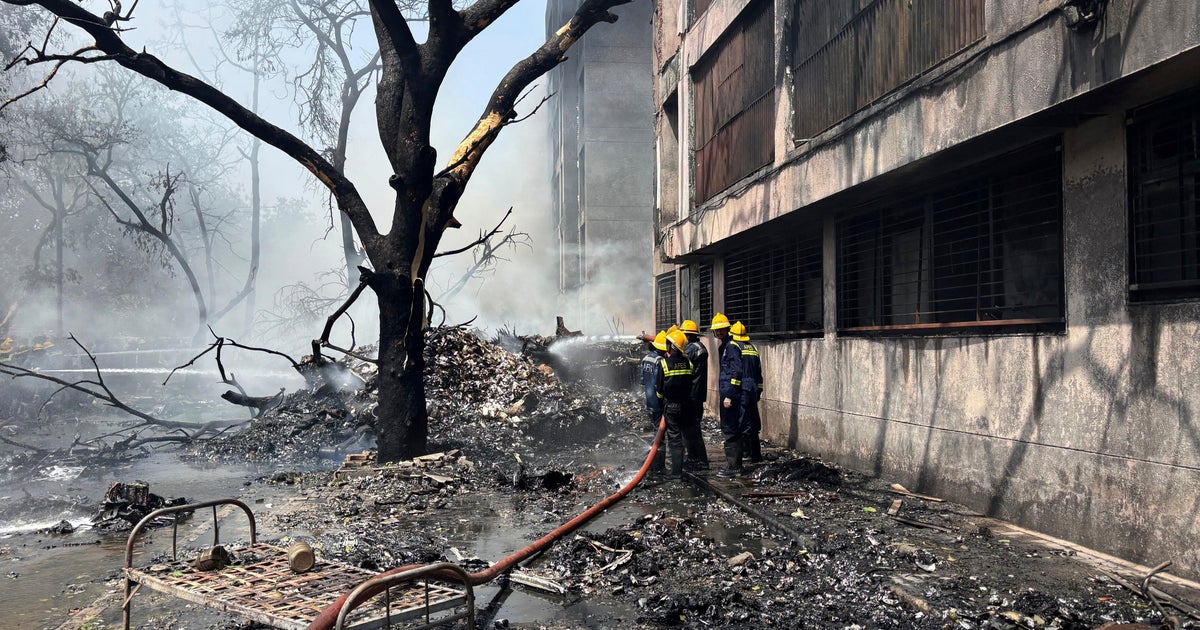
Firefighters doused the smoking wreckage of the plane, which would have been fully loaded with fuel shortly after takeoff, and adjacent multistory buildings with water. Many charred bodies lay on the ground and parts of the fuselage were scattered around the site. Indian army teams were assisting civil authorities to clear debris and help treat the injured.

Visuals also showed the tail cone of the aircraft with damaged stabiliser fins still attached to it lodged near the top of one of the buildings.

In a social media post, Modi called the crash “heartbreaking beyond words” and said “my thoughts are with everyone affected.”

“It appears there are no survivors in the plane crash,” city police chief GS Malik told The Associated Press. Malik said the dead could include both passengers and those on the ground.

“Exact figures on casualties are being ascertained,” he added.

Divyansh Singh, vice president of the Federation of All India Medical Association, a national body that represents resident doctors, said at least five students from the medical college were killed on the ground and 50 others were injured. Singh said some of them were in critical condition and many people are “feared buried in the debris.”

Air India said the Gatwick Airport-bound flight was carrying 242 passengers and crew, with 169 Indians, 53 Britons, seven Portuguese and one Canadian. The Boeing 787-8 crashed into a residential area called Meghani Nagar five minutes after taking off at 1:38 p.m. (08:08 GMT), Faiz Ahmed Kidwai, the director general of the directorate of civil aviation, told AP.

The first crash of a Boeing 787

The 787 Dreamliner is a wide-body, twin-engine plane. This is the first crash ever of a Boeing 787 aircraft, according to the Aviation Safety Network database.

Boeing said it was aware of the reports of the crash and was “working to gather more information.”

Aviation consultant John M Cox, the CEO of Safety Operating Systems, told the AP from Los Angeles that while the first images of the crash were poor, it appeared the aircraft had its nose up and was not climbing, which is one of the things that investigators would look at.

“At this point, it’s very, very, very early, we don’t know a whole lot,” he said. “But the 787 has very extensive flight data monitoring — the parameters on the flight data recorder are in the thousands — so once we get that recorder, they’ll be able to know pretty quickly what happened.”

The aircraft was introduced in 2009, and more than 1,000 have been delivered to dozens of airlines, according to the flightradar24 website.

Air India’s chairman, Natarajan Chandrasekaran, said at the moment “our primary focus is on supporting all the affected people and their families.”

He said on X that the airline had set up an emergency centre and support team for families seeking information about those who were on the flight.

“Our thoughts and deepest condolences are with the families and loved ones of all those affected by this devastating event,” he said.

UK promises support

UK Prime Minister Keir Starmer called the crash “devastating” and British Cabinet minister Lucy Powell said the government will provide “all the support that it can” to those affected by the crash.

“This is an unfolding story, and it will undoubtedly be causing a huge amount of worry and concern to the many, many families and communities here and those waiting for the arrival of their loved ones,” she told lawmakers in the House of Commons.

“We send our deepest sympathy and thoughts to all those families, and the government will provide all the support that it can with those in India and those in this country as well,” she added.

Britain has very close ties with India. There were nearly 1.9 million people in the country of Indian descent, according to the 2021 UK census.

Condolences also poured in from King Charles III, who said he and his wife Queen Camilla were “desperately shocked” by the crash.

“Our special prayers and deepest possible sympathy are with the families and friends of all those affected by this appallingly tragic incident across so many nations, as they await news of their loved ones,” he said in a statement.

Previous air disasters in India

The last major passenger plane crash in India was in 2020, when an Air India Express Boeing-737 skidded off a hilltop runway in southern India, killing 21 people.

The worst air disaster in India was on Nov. 12, 1996, when a Saudi Arabian Airlines flight collided midair with a Kazakhastan Airlines Flight near Charki Dadri in Haryana state, killing all 349 on board the two planes.

The crash comes days before the opening of the Paris Air Show, a major aviation expo where Boeing and European rival Airbus will showcase their aircraft and battle for jet orders from airline customers.

Boeing has been in recovery mode for more than six years after Lion Air Flight 610, a Boeing 737 Max 8, plunged into the Java Sea off the coast of Indonesia minutes after takeoff from Jakarta, killing all 189 people on board. Five months later, Ethiopian Airlines Flight 302, a Boeing 737 Max 8, crashed after takeoff from Addis Ababa, Ethiopia, killing 157 passengers and crew members.

Shares of Boeing Co. tumbled nearly 9% before trading opened in the U.S.

Roy reported from New Delhi. Associated Press writers Sheikh Saaliq in Srinagar, India, Pan Pylas, Kelvin Chan and Brian Melley in London and Annika Wolters, David Rising, Adam Schreck and Lorian Belanger in Bangkok contributed to this report.

Share Button

Rivers are exhaling ancient carbon — and climate math just changed

A new study has revealed for the first time that ancient carbon, stored in landscapes for thousands of years or more, can find its way back to the atmosphere as CO2 released from the surfaces of rivers.

The findings, led by scientists at the University of Bristol and the cover story of the journal Nature, mean plants and shallow soil layers are likely removing around one gigatonne more CO2 each year from the atmosphere to counteract this, emphasising their pivotal and greater part in combating climate change.

Lead author Dr Josh Dean, Associate Professor in Biogeochemistry and UKRI Future Leaders Fellow at the University of Bristol, said: “The results took us by surprise because it turns out that old carbon stores are leaking out much more into the atmosphere then previous estimates suggested.

“The implications are potentially huge for our understanding of global carbon emissions. Plants and trees take up CO2 from the atmosphere and can then lock this carbon away in soils for thousands of years.

“Our findings show some of this old carbon, as well as ancient carbon from rocks, is leaking sideways into rivers and making its way back to the atmosphere. We don’t yet know how humans are affecting this flow of ancient carbon, but we do know plants and trees must be taking up more carbon from the atmosphere today to account for this unrecognised release of old carbon.”

Rivers transport and release methane and carbon dioxide as part of the global carbon cycle. Until now, scientists believed the majority of this was a quick turnover derived from the recycling of recent plant growth – organic material broken down and carried into the river system in the past 70 years or so. This new study indicates the opposite, with more than half – some 60% – of emissions being attributed to long-term carbon stores accumulated over hundreds to thousands of years ago, or even longer.

The international research team, led by scientists at the University of Bristol, University of Oxford and the UK Centre for Ecology and Hydrology, studied more than 700 river reaches from 26 different countries across the world.

They took detailed radiocarbon measurements of carbon dioxide and methane from the rivers. By comparing the levels of carbon-14 in the river samples with a standard reference for modern atmospheric CO2, the team was able to date the river carbon.

Co-author Prof Bob Hilton, Professor of Sedimentary Geography at the University of Oxford, explained: “We discovered that around half of the emissions are young, while the other half are much older, released from deep soil layers and rock weathering that were formed thousands and even millions of years ago.”

The research was supported by funding from UK Research and Innovation (UKRI) Natural Environment Research Council (NERC).

Co-author Dr Gemma Coxon, Associate Professor in Hydrology and UKRI Future Leaders Fellow at the University of Bristol, said: “Rivers globally release about two gigatonnes of carbon each year, compared to human activity that results in between 10-15 gigatonnes of carbon emissions. These river emissions are significant at a global scale, and we’re showing that over half of these emissions may be coming from carbon stores we considered relatively stable. This means we need to re-evaluate these crucial parts of the global carbon cycle.”

Further building on these findings, the researchers plan to explore how the age of river carbon emissions varies across rivers the study was not able to capture, as well as investigating how the age of these emissions may have changed through time.

Share Button

Hospital backlog drops to lowest level in two years

But the NHS in England is still well below its target for seeing patients within 18 weeks.

Share Button

Atom-thin tech replaces silicon in the world’s first 2D computer

UNIVERSITY PARK, Pa. — Silicon is king in the semiconductor technology that underpins smartphones, computers, electric vehicles and more, but its crown may be slipping according to a team led by researchers at Penn State. In a world first, they used two-dimensional (2D) materials, which are only an atom thick and retain their properties at that scale, unlike silicon, to develop a computer capable of simple operations.

The development, published today (June 11) in Nature, represents a major leap toward the realization of thinner, faster and more energy-efficient electronics, the researchers said. They created a complementary metal-oxide semiconductor (CMOS) computer — technology at the heart of nearly every modern electronic device — without relying on silicon. Instead, they used two different 2D materials to develop both types of transistors needed to control the electric current flow in CMOS computers: molybdenum disulfide for n-type transistors and tungsten diselenide for p-type transistors.

“Silicon has driven remarkable advances in electronics for decades by enabling continuous miniaturization of field-effect transistors (FETs),” said Saptarshi Das, the Ackley Professor of Engineering and professor of engineering science and mechanics at Penn State, who led the research. FETs control current flow using an electric field, which is produced when a voltage is applied. “However, as silicon devices shrink, their performance begins to degrade. Two-dimensional materials, by contrast, maintain their exceptional electronic properties at atomic thickness, offering a promising path forward.”

Das explained that CMOS technology requires both n-type and p-type semiconductors working together to achieve high performance at low power consumption — a key challenge that has stymied efforts to move beyond silicon. Although previous studies demonstrated small circuits based on 2D materials, scaling to complex, functional computers had remained elusive, Das said.

“That’s the key advancement of our work,” Das said. “We have demonstrated, for the first time, a CMOS computer built entirely from 2D materials, combining large area grown molybdenum disulfide and tungsten diselenide transistors.”

The team used metal-organic chemical vapor deposition (MOCVD) — a fabrication process that involves vaporizing ingredients, forcing a chemical reaction and depositing the products onto a substrate — to grow large sheets of molybdenum disulfide and tungsten diselenide and fabricate over 1,000 of each type of transistor. By carefully tuning the device fabrication and post-processing steps, they were able to adjust the threshold voltages of both n- and p-type transistors, enabling the construction of fully functional CMOS logic circuits.

“Our 2D CMOS computer operates at low-supply voltages with minimal power consumption and can perform simple logic operations at frequencies up to 25 kilohertz,” said first author Subir Ghosh, a doctoral student pursuing a degree in engineering science and mechanics under Das’s mentorship.

Ghosh noted that the operating frequency is low compared to conventional silicon CMOS circuits, but their computer — known as a one instruction set computer — can still perform simple logic operations.

“We also developed a computational model, calibrated using experimental data and incorporating variations between devices, to project the performance of our 2D CMOS computer and benchmark it against state-of-the-art silicon technology,” Ghosh said. “Although there remains scope for further optimization, this work marks a significant milestone in harnessing 2D materials to advance the field of electronics.”

Das agreed, explaining that more work is needed to further develop the 2D CMOS computer approach for broad use, but also emphasizing that the field is moving quickly when compared to the development of silicon technology.

“Silicon technology has been under development for about 80 years, but research into 2D materials is relatively recent, only really arising around 2010,” Das said. “We expect that the development of 2D material computers is going to be a gradual process, too, but this is a leap forward compared to the trajectory of silicon.”

Ghosh and Das credited the 2D Crystal Consortium Materials Innovation Platform (2DCC-MIP) at Penn State with providing the facilities and tools needed to demonstrate their approach. Das is also affiliated with the Materials Research Institute, the 2DCC-MIP and the Departments of Electrical Engineering and of Materials Science and Engineering, all at Penn State. Other contributors from the Penn State Department of Engineering Science and Mechanics include graduate students Yikai Zheng, Najam U. Sakib, Harikrishnan Ravichandran, Yongwen Sun, Andrew L. Pannone, Muhtasim Ul Karim Sadaf and Samriddha Ray; and Yang Yang, assistant professor. Yang is also affiliated with the Materials Research Institute and the Ken and Mary Alice Lindquist Department of Nuclear Engineering at Penn State. Joan Redwing, director of the 2DCC-MIP and distinguished professor of materials science and engineering and of electrical engineering, and Chen Chen, assistant research professor, also co-authored the paper. Other contributors include Musaib Rafiq and Subham Sahay, Indian Institute of Technology; and Mrinmoy Goswami, Jadavpur University.

The U.S. National Science Foundation, the Army Research Office and the Office of Naval Research supported this work in part.


Share Button

Cleaner fish: Tiny healers or hidden spreaders in coral reef ecosystems?

Where do you go when you’re a fish and you need a skincare treatment? Coral reefs contain natural “beauty salons,” lively social hubs of activity where fish “clients” swim up and wait to be serviced by smaller fish cleaners. The little cleaners dart under and around their much bigger clients — even entering their mouths — cleaning their scales of bacteria and parasites like a team of car washers servicing a Buick. Sometimes cleaners even rub against their clients, providing a soothing massage.

But aside from skincare benefits, what role might busy cleaner fish stations play in spreading microbes and bacteria — for good or ill — throughout the reef?

A study published in the journal Marine Ecology Progress Series is the first to investigate the influence of cleaner fish stations on reef microbial diversity. It is led by scientists from the University of California, Davis, and Woods Hole Oceanographic Institute (WHOI) in collaboration with the University of Miami Rosenstiel School of Marine, Atmospheric, and Earth Science.

Could busy cleaning stations, like some medical clinics, be hotspots for spreading bacteria and pathogens? Conversely, could they help spread beneficial microbes among reef communities? Such questions carry important implications for protecting and restoring coral reefs.

“How pathogens or microbes are moving around a reef could be critically important to understanding how individuals will be affected,” said lead author Anya Brown, an assistant professor with the UC Davis Bodega Marine Laboratory and a National Geographic Explorer who conducted the study while at WHOI. “We know microbes play a role in coral bleaching, for example. This study really lays a foundation for using cleaner fish stations as a way to study movement of microbes around the reef environment.”

Cleaner fish and reef health

One hardworking fish is the cleaning goby, a pinky-sized fish with a boldly colored stripe running along its length. To understand how the presence of cleaner fish stations influence microbial diversity, the researchers experimentally removed cleaning gobies from cleaner stations on two Caribbean reefs in Puerto Rico and St. Croix in June 2021. They compared water nutrients and microbial communities of the surrounding reef area with and without gobies. This also included resident damselfish, frequent clients of cleaner gobies.

They found that more fish visited sites where cleaner fish were present compared to where they were removed in both Puerto Rico and St. Croix. They also found that cleaner fish do influence damselfish and reef microbial diversity, but the extent of their role depends on substrate type and the specific reef environment, as each reef carries a unique microbial signature. In the study, client fish, nutrient concentrations and water bacterial cell densities varied throughout the sites.

The authors say the results highlight yet another potential impact of cleaner fish and the need to further demystify their role in shaping reef microbial diversity and transmission.

Tiny fish can have big impact

“While larger organisms on coral reefs attract the most attention, the study underscores the huge impact tiny organisms such as these fish can have and how important they are to helping healthy reef ecosystems function,” said coauthor Paul Sikkel, a research professor at the Rosenstiel School’s Department of Marine Biology and Ecology. “While cleaner fish are well-known for their role in consuming parasites and reducing stress in other fish, this is the first field study to quantify their effects on microbes of other fish and the surrounding coral reef environment.”

Additional coauthors include Amy Apprill and Jeanne Bloomberg of Woods Hole Oceanographic Institution (WHOI), Gina Hendrick and Matthew Nicholson of the University of Miami Rosenstiel School, and Marta Soares and Raquel Xavier of the University of Porto in Portugal.

The study was funded by the National Science Foundation, WHOI, and The Foundation for Science and Technology in Portugal.

Share Button

Opinion: Karen Millen Called A Breastfeeding Mum ‘Selfish’ – Here’s Why She’s Wrong

I’m breastfeeding my 1.5-year-old so naturally we’re probably both addicted to it and she’s going to be emotionally ruined. That’s according to Karen Millen’s logic, anyway.

In a bizarre segment on Jeremy, Storm & Vanessa On 5 this week, in which for whatever reason they thought it was OK to pass judgement on a mum’s choice to breastfeed her three-year-old, the fashion designer suggested the parent had breastfed for “far too long”.

“There’s no benefit, is there, for a child to be breastfed beyond six months really,” said Millen.

And she didn’t stop there. “I think it’s quite a selfish thing on the mother’s part,” she continued.

When Vanessa Feltz pressed her on why she thought that, Millen replied: “Well I just think, you know, that’s not good emotionally for that child.

“I mean, what does that child do later in life and the attachment and, like you said, it becomes an addiction – and an addiction for that child too because they only know the boob … and it’s just not normal is it?”

I’m no expert in breastfeeding but I have breastfed two kids and can safely say what a load of codswallop (and that’s putting it politely).

As the NHS says, breastfeeding has long-term benefits for babies, lasting right into adulthood: “Any amount of breast milk has a positive effect. The longer you breastfeed, the longer the protection lasts and the greater the benefits.”

Breastfeeding can reduce a baby’s risk of infections, and diarrhoea and vomiting (with fewer visits to hospital as a result), as well as sudden infant death syndrome (SIDS), obesity and cardiovascular disease in adulthood.

The World Health Organisation adds that “breastfeeding is one of the most effective ways to ensure child health and survival”.

Not only does breastmilk provide all the energy and nutrients babies need for the first months of life, but in the second half of the first year – which is when Karen thinks we should stop whipping out the boob – it can provide up to half or more of a child’s nutritional needs.

Oh, and up to one third of their nutritional requirements during the second year of life. (But go off Karen about how there’s no benefit past six months.)

As for the emotional damage we’re inflicting, according to the American Academy of Family Physicians (AAFP) “there is no evidence that extended breastfeeding is harmful to parent or child”.

Whether a parent chooses to keep going, or stop breastfeeding, or feed their baby with formula milk, it’s ultimately their choice to do so – and they shouldn’t have to fear being shamed or slammed as “selfish” for doing so.

I’d argue that if you find it weird to see a kid breastfeeding, it probably says more about you and your feelings towards breasts than anything else.

The judgement emanating from that TV sofa – the suggestion it’s “selfish” to feed a child past a certain point, and “not good emotionally” for them – made me, as a breastfeeding mum, feel like a pariah. It was a gut punch – and I won’t be the only one who felt that.

The wrinkled noses, the scoffing, the wincing when a viewer called in and said they breastfed their child until the age of four… There is a huge stigma around extended breastfeeding. I’ve experienced it, I’ve written about it, I know it’s there.

And unhelpful – not to mention, incorrect – comments made on national TV simply add fuel to the fire. It’s yet another stick to beat mothers with. And honestly? I’m fed up of it.

If you’re not breastfeeding your baby, you’re shamed. If you are breastfeeding them past 12 months, you’re shamed. Honestly, you can’t win.

Millen has since apologised, saying: “I know I’ve upset a lot of your viewers and that was not my intention. The question was aimed at a three-year-old being breastfed and my thoughts on that and my answers reflected that, not the subject of breastfeeding…

“And as a woman to women, I do respect your choices and I do want to support you. So my apologies once again, I hope you forgive me.”

For those feeding their child and facing the comments – whether from relatives, friends or people on the TV who should know better – know that you’re not selfish, fuelling some weird boob addiction, or ruining your child emotionally.

Those who do manage to breastfeed past six months deserve a bloody medal, not the nation’s judgement.

Update: the article has been amended to include Karen Millen’s apology.

Share Button

Rachel Reeves Takes Axe To Whitehall Departments To Pay For Health And Defence Cash Splurge

Eight Whitehall departments will see their budgets slashed so that more cash can be spent on the NHS and defence.

The Home Office and Department for Transport are among those facing real-terms reductions in their day-to-day budgets as a result of chancellor Rachel Reeves’s spending review.

She announced that an extra £300 billion will be spent by the government over the next three years.

The NHS will enjoy a 3% rise in its budget after inflation, which works out at an extra £29 billion a year.

Meanwhile, defence spending will rise from 2.3% to 2.6% of gross domestic product (GDP) by 2027.

An extra £39 billion will be spent on building affordable homes over the next 10 years, while £14 billion is being spent on a new nuclear power plant at Sizewell C.

Reeves told MPs that departmental budgets will increase by 2.3% in real terms under plans.

She said she was “reflecting the choices of the British people” as she accused the Tories and Reform of having no plans for the economy.

But Treasury documents later revealed that a number of Whitehall departments will see their day-to-day budgets fall once inflation into account.

The Home Office faces a 1.7% fall, with the transport budget being reduced by 5% and the Department of the Environment, Food and Rural Affairs being cut by 2.7%.

Paul Johnson, director of the Institute for Fiscal Studies, said: “The crux is that most departments will have larger real-terms budgets at the end of the parliament than the beginning, but in many cases much of that extra cash will have arrived by April.

“Eight departments will actually see cuts to their budget between this year and the end of the parliament.”

Police chiefs warned that the Home Office funding settlement will make it “incredibly difficult” for them to hit the government’s target of recruiting an extra 13,000 frontline officers.

Liberal Democrat Treasury spokesperson Daisy Cooper accused Reeves of “smoke and mirrors”.

She said: “This spending review was a missed opportunity to repair the damage done by the Conservatives and finally deliver on the promise of change.

“Behind the smoke and mirrors is a potential blackhole for social care as local government budgets remain at breaking point. Putting more money into the NHS without fixing social care is like pouring water into a leaky bucket.”

Sadiq Khan, the Labour mayor of London, also attacked the chancellor, claiming the capital had missed out on much-needed funds.

He said: “I remain concerned that this spending review could result in insufficient funding for the Met and fewer police officers.

“It’s also disappointing that there is no commitment today from the Treasury to invest in the new infrastructure London needs. Projects such as extending the Docklands Light Railway not only deliver economic growth across the country, but also tens of thousands of new affordable homes and jobs for Londoners.

“Unless the government invests in infrastructure like this in our capital, we will not be able to build the numbers of new affordable homes Londoners need.”

Shadow chancellor Mel Stride said the spending review was “not worth the paper that it is written on” and will inevitably lead to taxes going up in the autumn Budget to pay for it.

He said: “This is the spend now, tax later review, because [the chancellor] knows she will need to come back here in the autumn with yet more taxes and a cruel summer of speculation awaits.

“How can we possibly take this chancellor seriously after the chaos of the last 12 months?”

Share Button

Putin Ally Can’t Even Explain Own Bizarre Theory About West’s Ongoing Support For Ukraine

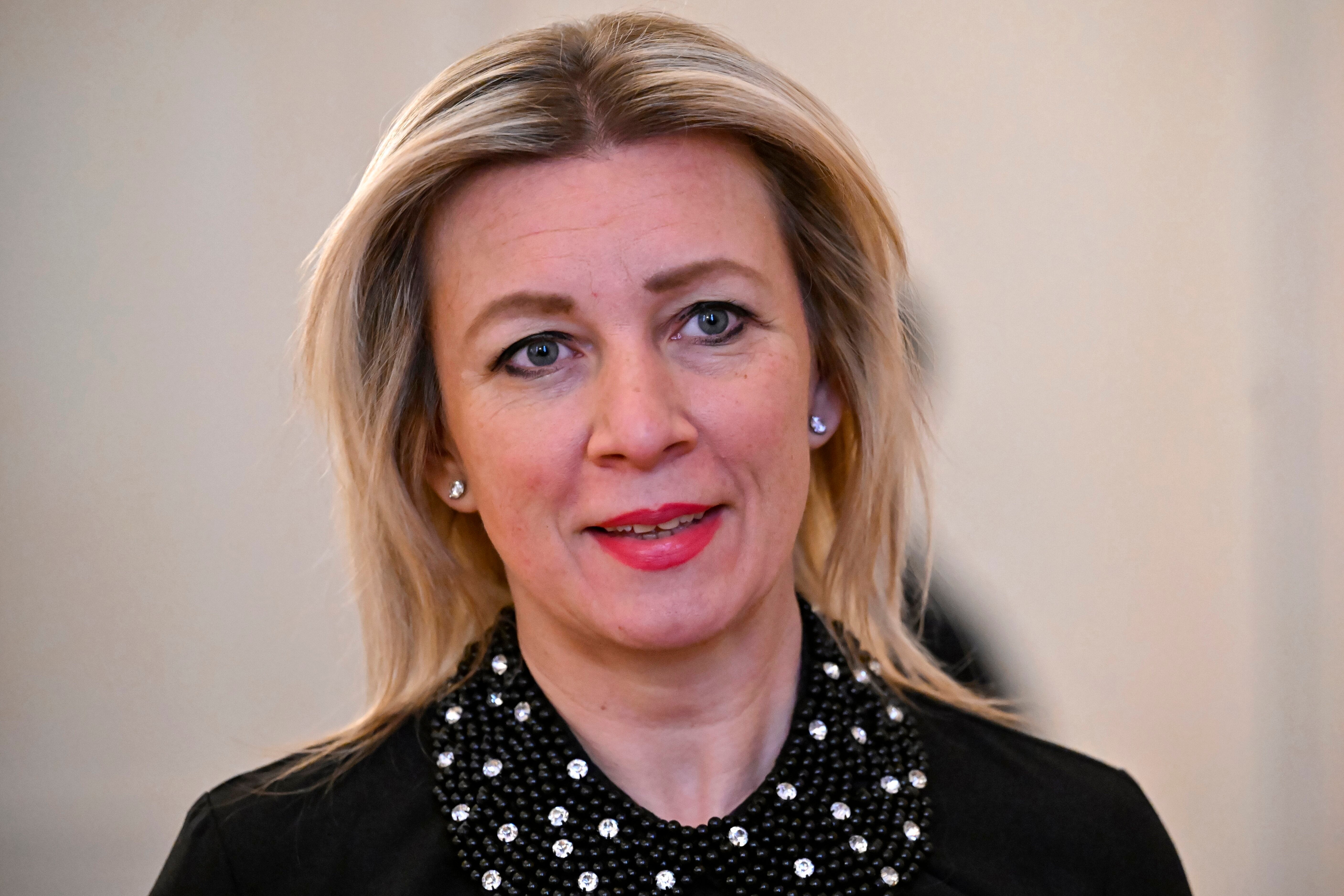
A senior figure within Vladimir Putin’s government has once again been pushing the Kremlin’s conspiracy theories about the West – but this time, she could not even explain the logic behind them.

The Russian foreign ministry spokeswoman Maria Zakharova claimed the West is “not interested” in its own citizens and instead wants to “escalate” the Ukraine war on Wednesday.

According to Russian state news agency TASS, she said: “They are not interested in the lives of their own people, the development of the economy, solving problems that are on the agenda of both the European continent and the whole world.

“They are interested in the escalation of the conflict and the continued use of the Kyiv regime and Ukraine for their own interests.”

She then added: “But what are these goals? It’s a good question to ask them.

“All this testifies to the aggressive attitude of the western European allies of the Kyiv regime, their maniacal desire to escalate the conflict at any price.”

According to Zakharova, it’s clear that the European Commission’s €150bn rearmament programme is “direct proof” they want to take the war to the next level.

The Kremlin spokesperson is overlooking that the west has actually tried to avoid being drawn directly into conflict with Russia for the last three years.

European allies have been investing and arming Ukraine to try and halt Putin’s land grab encroaching further into the continent.

Russia currently controls 18% of Ukrainian territory and has so far refused to agree to any long-term ceasefire deals.

The war could also end if Putin decided to pull his troops out of Ukraine.

US president Donald Trump has also tried to put pressure on both sides to end the war – even if it means resolving it on Putin’s terms – but Moscow keeps coming up with new conditions for peace.

Despite bombarding Ukraine consistently since invading in February 2022, Putin’s ambassador to the UK also accused Kyiv of intensifying the war last week after Ukraine deployed more than 100 attack drones across Russia.

Speaking to Sky News, Andrei Kelin said this was a “serious escalation” and claimed the UK had helped orchestrate the attack.

Keir Starmer’s spokesperson told reporters: “We’ve been round this a few times this week, we just don’t comment on operational matters.”

Share Button