Horses for Wellbeing says the funding would see children get help before they “hit crisis point”.


Horses for Wellbeing says the funding would see children get help before they “hit crisis point”.
Normally the insects are targeted with insecticide, but US researchers say anti-malaria drugs absorbed through their legs can stop them spreading disease.
Additional scans better tailored to spotting cancer in dense breasts could treble detection rates.
Stoke-on-Trent South MP Allison Gardner says at one point she considered having her bladder removed.

A new camera setup can record three-dimensional movies with a single pixel. Moreover, the technique can obtain images outside the visible spectrum and even through tissues. The Kobe University development thus opens the door to holographic video microscopy.
Holograms are not only used as fun-to-look-at safety stickers on credit cards, electronic products or banknotes; they have scientific applications in sensors and in microscopy as well. Traditionally, holograms require a laser for recording, but more recently, techniques that can record holograms with ambient light or light emanating from a sample have been developed. There are two main techniques that can achieve this: one is called “FINCH” and uses a 2D image sensor that is fast enough to record movies, but is limited to visible light and an unobstructed view, while the other is called “OSH,” which uses a one-pixel sensor and can record through scattering media and with light outside the visual spectrum, but can only practically record images of motionless objects.
Kobe University applied optics researcher YONEDA Naru wanted to create a holographic recording technique that combines the best of both worlds. To tackle the speed-limiting weak point of OSH, he and his team constructed a setup that uses a high-speed “digital micromirror device” to project onto the object the patterns that are required for recording the hologram. “This device operates at 22 kHz, whereas previously used devices have a refresh rate of 60 Hz. This is a speed difference that’s equivalent to the difference between an old person taking a relaxed stroll and a Japanese bullet train,” Yoneda explains.
In the journal Optics Express, the Kobe University team now publish the results of their proof-of-concept experiments. They show that their setup can not only record 3D images of moving objects, but they could also construct a microscope that can record a holographic movie through a light-scattering object — a mouse skull to be precise.
Admittedly, the frame rate of just over one frame per second was still fairly low. But Yoneda and his team showed in calculations that they could in theory get that frame rate up to 30 Hz, which is a standard screen frame rate. This would be achieved through a compression technique called “sparse sampling,” which works by not recording every portion of the picture all the time.
So, where will we be able to see such a hologram? Yoneda says: “We expect this to be applied to minimally invasive, three-dimensional biological observation, because it can visualize objects moving behind a scattering medium. But there are still obstacles to overcome. We need to increase the number of sampling points, and also the image quality. For that, we are now trying to optimize the patterns we project onto the samples and to use deep-learning algorithms for transforming the raw data into an image.”
This research was funded by the Kawanishi Memorial ShinMaywa Education Foundation, the Japan Society for the Promotion of Science (grants 20H05886, 23K13680), the Agencia Estatal de Investigación (grant PID2022-142907OB-I00) and the European Regional Development Fund, and the Generalitat Valenciana (grant CIPROM/2023/44). It was conducted in collaboration with researchers from Universitat Jaume I.

Astronomers have witnessed for the first time a violent cosmic collision in which one galaxy pierces another with intense radiation. Their results, published today in Nature, show that this radiation dampens the wounded galaxy’s ability to form new stars. This new study combined observations from both the European Southern Observatory’s Very Large Telescope (ESO’s VLT) and the Atacama Large Millimeter/submillimeter Array (ALMA), revealing all the gory details of this galactic battle.
In the distant depths of the Universe, two galaxies are locked in a thrilling war. Over and over, they charge towards each other at speeds of 500 km/s on a violent collision course, only to land a glancing blow before retreating and winding up for another round. “We hence call this system the ‘cosmic joust’,” says study co-lead Pasquier Noterdaeme, a researcher at the Institut d’Astrophysique de Paris, France, and the French-Chilean Laboratory for Astronomy in Chile, drawing a comparison to the medieval sport. But these galactic knights aren’t exactly chivalrous, and one has a very unfair advantage: it uses a quasar to pierce its opponent with a spear of radiation.
Quasars are the bright cores of some distant galaxies that are powered by supermassive black holes, releasing huge amounts of radiation. Both quasars and galaxy mergers used to be far more common, appearing more frequently in the Universe’s first few billion years, so to observe them astronomers peer into the distant past with powerful telescopes. The light from this ‘cosmic joust’ has taken over 11 billion years to reach us, so we see it as it was when the Universe was only 18% of its current age.
“Here we see for the first time the effect of a quasar’s radiation directly on the internal structure of the gas in an otherwise regular galaxy,” explains study co-lead Sergei Balashev, who is a researcher at the Ioffe Institute in St Petersburg, Russia. The new observations indicate that radiation released by the quasar disrupts the clouds of gas and dust in the regular galaxy, leaving only the smallest, densest regions behind. These regions are likely too small to be capable of star formation, leaving the wounded galaxy with fewer stellar nurseries in a dramatic transformation.
But this galactic victim isn’t all that is being transformed. Balashev explains: “These mergers are thought to bring huge amounts of gas to supermassive black holes residing in galaxy centres.” In the cosmic joust, new reserves of fuel are brought within reach of the black hole powering the quasar. As the black hole feeds, the quasar can continue its damaging attack.
This study was conducted using ALMA and the X-shooter instrument on ESO’s VLT, both located in Chile’s Atacama Desert. ALMA’s high resolution helped the astronomers clearly distinguish the two merging galaxies, which are so close together they looked like a single object in previous observations. With X-shooter, researchers analysed the quasar’s light as it passed through the regular galaxy. This allowed the team to study how this galaxy suffered from the quasar’s radiation in this cosmic fight.
Observations with larger, more powerful telescopes could reveal more about collisions like this. As Noterdaeme says, a telescope like ESO’s Extremely Large Telescope “will certainly allow us to push forward a deeper study of this, and other systems, to better understand the evolution of quasars and their effect on host and nearby galaxies.”
Ambika Mod is reflecting on how she and her One Day co-star Leo Woodall have been treated differently within the acting industry since the show’s debut.
The two stars played Emma and Dexter in Netflix’s TV adaptation of the classic David Nicholls novel One Day last year.
Advertisement
Since then, Leo, who had already played a supporting role in the second season of The White Lotus when One Day premiered, has starred opposite Renée Zellweger in the fourth Bridget Jones movie, took the lead in Apple TV+’s action series Citadel and currently has three film roles in the works.
Speaking to GQ, Ambika said she feels she’s had less opportunities come her way despite them having equal billing in the hit Netflix series, pointing out that she and Leo “just don’t get treated the same at all”.
“It’s mad because we wouldn’t be going for the same roles at all, and we’re very different people,” she said. “I think we’re going to have very different careers.”
Advertisement

via Associated Press
Ambika continued: “If I compare myself to someone like Leo, I’m always going to come up short, because there’s a privilege there that I don’t have access to.”
She lamented: “Being brown is not particularly easy in this industry. You don’t get the same opportunities. You don’t get the same ascension.
Advertisement
“I’ve been the lead of two very successful, critically-acclaimed TV shows [One Day and the medical drama This Is Going To Hurt, which aired two years earlier] and I still feel like I have to keep on proving myself. A lot of my white peers don’t really have to tackle that.”
Ambika also acknowledged that “at the same time, I’m so lucky to be here”, describing her situation as a “double-edged sword”, and expressing her hopes that “my being here makes it easier for a girl 10 or 20 years younger than me”.
In January, Ambika made her big-screen debut in Steven Soderbergh’s Black Bag.
She’ll next be seen in Sacrifice, a new action adventure featuring Anya Taylor-Joy, Chris Evans, Salma Hayek and Charli XCX.
Advertisement
Ambika also appeared in the miniseries The Stolen Girl, which premiered last month and included stars like Holliday Grainger and Jim Burgess, who played Dexter in the original film adaptation of One Day.



Elon Musk flipped out at a journalist who dared to question the billionaire’s success as President Donald Trump’s federal spending hatchet man.
The tech billionaire told Bloomberg’s Mishal Husain, a respected former BBC broadcaster, that “it’s like talking to a computer” when she suggested his so-called Department of Government Efficiency (DOGE) risked falling short of its $2 trillion savings target.
Advertisement
On Tuesday, Musk was interviewed by Husain via video at an economic forum in Qatar, and was asked about DOGE not meeting the goal.
She reminded Musk of his pledge — at a high-profile rally for Trump at Madison Square Garden in New York on October — that he’d cut “at least $2 trillion” from the federal government budget.
Experts had dismissed the $2 trillion aim as extremely unrealistic since it would equate to almost all discretionary funding, including programs for transportation, education and housing, so well beyond the fraud and waste Musk has said repeatedly would make up the bulk of the cuts.
Advertisement
DOGE has itself said it has only slashed $160 billion to date.
“You’ve talked about $4 billion a day being saved,” Husain said. “And I think everyone can agree that combating waste and inefficiency in government is a very good thing, but if you add that up, it’s not gonna get to $2 trillion over the lifetime of DOGE.”
Musk appeared not to understand or hear the question, so Husain repeated herself.
“I mean, I feel you’re somewhat trapped in the NPC dialogue tree of a traditional journalist,” Musk snapped. The term NPC derives from video games and refers to a “non-playable character.”
“So it’s difficult when I’m conversing with someone who’s trapped in the dialogue tree of a conventional journalist because it’s like talking to a computer.”
Advertisement
In a defense of DOGE’s work, Musk went on to stress the organisation “is an advisory group” and “we’re doing the best we can.”
He conceded the three branches of government “are to some degree opposed to that level of cost savings.”
The defensive response is the latest sign that the world’s richest man’s dream of transforming Washington, DC, has turned into a nightmare.
Advertisement
Almost ever-present at the president’s side in the early days of the second Trump administration, the Tesla CEO has since scaled back his day-to-day involvement with DOGE following political and consumer backlash that was threatening his business interests.
Trump signalled their relationship was changing when he effectively said farewell to the tech billionaire at a Cabinet meeting last month.
“He wants to get back home to his cars,” the president said.
In the same interview with Husain, Musk revealed he plans to significantly cut his political spending, saying he has “done enough.”
Advertisement
The GOP donor spent at least $250 million to get Trump elected last year.


When it comes to work, mums are damned if they do and damned if they don’t.
Those who work in the home (and yes, childcare and housework are very much “real” labour) often feel judged for being “spoiled,” while mums who work for a company can face professional prejudice alongside exhausting hours.
Whether they work in the home or outside of it, mothers are far more likely than fathers to shoulder the bulk of the emotional and cognitive load.
Advertisement
But the term “tradwife” is often used to refer to a woman who “embraces traditional gender roles” as a part of an online, “ultraconservative” performance, Merriam-Webster explains; not a regular stay-at-home mother.
A “tradwife” will often create content or speak about her role as a homemaker online, sharing the joys of not working while pocketing thousands in brand deals.
An example is Ballerina Farm, the full-scale production team behind which is overseen by Hannah Neeleman, wife of a billionaire’s son.
Advertisement
The cosy, “cottagecore” aesthetic of her supposedly “rustic” life is more reminiscent of Marie Antoinette’s pirouetting around her toy hamlet than it is of real-life stay-at-home-mother chaos – I know. I have cleaned for women playing into a similar fantasy.
Speaking on BBC Woman’s Hour, “traditional housewife” and influencer Charlie Gray admits that she relied on au pairs – “we had three children under the age of two, and it was crazy,” she says.
I sympathise. My own mother had two sets of twins with 18 months between us – but though she did not have a job, I don’t think she’d quite qualify for “tradwife status” now, not least because paying for an au pair was out of the question.
Advertisement
“Tradwives” don’t just raise kids at home. Theirs is a highly stylised, highly performative (Gray confesses she doesn’t smile as much while cutting onions in real life as she does for the camera) show that relies on a level of labour most women cannot achieve alone.
When I was a cleaner (slash housekeeper, slash au-pair), I worked for women who fed into a proto-tradwife myth. I
They put on a Bree Van De Kamp-level display of homemaking skills, proving to everyone that not only did they not have to go to (paid) work, but that they were the best, the most efficient, the most perfect at not working.
Advertisement
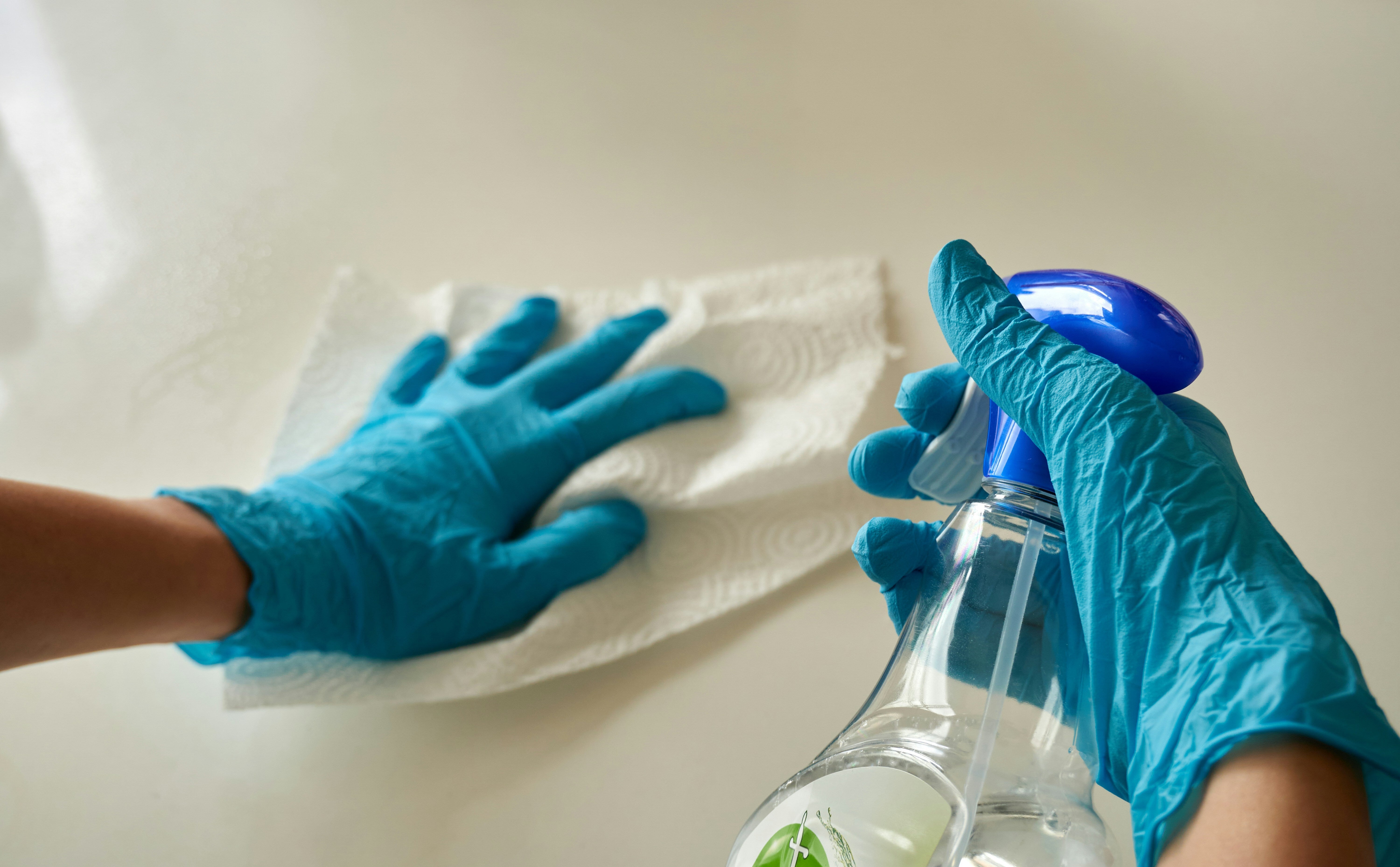
Behind the scenes, I was scrubbing long past my stated hours, polishing doorknobs, cleaning up their botched attempt at focaccia (they would later buy one and fob it off as their own), deep-cleaning grout, and vacuuming sofas.
This was not always enough. Those obsessed with projecting a “picture-perfect” housewife image would encourage a more humiliating routine, using the job I needed to survive to enhance the performance of their optional work.
Once, I was tasked with laying out pre-weighed, pre-chopped ingredients so they could “make” their dinner in front of their friends, hair and clothes still immaculate (which would be fine if it was my job, but it wasn’t).
Advertisement
Dolly Parton says it costs a lot to look cheap. I learned it takes a lot of uncredited labour to look breezily, effortlessly “into” homemaking – work only well-off women could afford.
This is not to say these “tradwife” women didn’t work hard, or that this agonised display was not the result of internalised misogyny or double standards.
But I always think – what about the women who clean their houses? What about when they get home to a less-than-picture-perfect house and an exhausting “second shift”?
Advertisement
My own mum, who was on benefits, did not feel the urge to put on the show of rustic contentment that most “tradwives” do: she complained about her housework a lot, because it was hard and exhausting.
I don’t think her experience would have fit into “tradwife” content, despite technically being a homemaker first of all, because the lives of those without stacks of cash are necessarily filled with compromises, shortcuts, and stress.
Having been a part of creating even quite a low-level, pre-virality “tradwife” fantasy for others, I can assure you most of us simply cannot afford to live the preened, painstakingly “curated” lives shown to us online.
Advertisement
They are either a complete myth or a cleverly-positioned gawk at a very rich woman’s hobby.
The sooner we remember that, the better.
A UK Health Safety Agency spokesperson said the risk to the general public is “very low”.
