I’m still reeling from the stench I smelled in my fridge the other day. After an unpleasant inspection, I realised the issue wasn’t a rotting courgette or some turned milk; instead, the little drainage hole at the back of the fridge had gotten blocked, leading stagnant water to pool under our bottom drawer.
I probably don’t need to tell you that this was not a welcome aroma. Nor did it go away completely after I flushed and cleared the drain, no matter how many times I wiped and re-wiped the surfaces.
Advertisement
It took a tip from appliance company Whirlpool – using coffee grounds – to finally rid our kitchen of the stinky spectre.
Coffee grounds can absorb smells from your fridge
You’ve likely already heard that a bowl of baking powder can help to get rid of some odours.
But if you don’t have that, coffee grounds do just as good a job, said Whirlpool.
“Coffee grounds contain nitrogen, which is great for neutralising odours. If you’re dealing with refrigerator odours, try placing a small bowl of coffee grounds in your fridge compartment,” their site reads.
“It will not only help absorb the odour but also leave behind a slight coffee smell.”
They do also reccomend vinegar for stronger smells, though we were dealing with a lingering, one-off scent remnant here rather than an ongoing smell issue.
Advertisement
And yes, old coffee grounds do the job brilliantly, as The Kitchn noted. Just make sure they’re dry; you can do that by placing them in a thin layer on a baking tray after use and waiting.
So far, it’s worked. A day after the Great Stink, our fridge is back to its normal aroma.
I regret to inform you that Christmas is scarily close – a matter of weeks away.
While in theory that’s a good thing (peace and goodwill, mince pies, etc, etc), the reality is often pretty hectic.
The buying, decorating, planning, and endless cooking are one thing; the post-unwrapping living room carnage is another, especially if your kids don’t exactly embrace a minimalist lifestyle when it comes to their toys as it is.
Advertisement
Which is why some experts, like Max Wilson, co-founder of Pocket Storage, say trying a “toy rotation” now can help you come 25 December.
What is a “toy rotation”?
Organisation blogger Tidy Dad described a situation many parents will be familiar with: when he kept all of his kids’ toys in a single playroom, his daughter would “eventually move every toy from a bin onto the floor, leaving no room to play or to walk through the space”.
Since then, though, he adopted a “toy rotation” system: basically, he leaves the majority of his children’s toys in a kitchen pantry out of reach, swapping them out every couple of days so they can still enjoy some variety.
Advertisement
That way, there are never enough items in a single space to truly crowd the carpet.
Speaking to Homes & Gardens, Wilson said he’s a huge fan of the strategy.
“The secret to a stress-free Christmas morning is making space now… By implementing a strategic toy rotation… you instantly clear physical space, curb impulse buying, and make room for the new gifts without feeling overwhelmed.”
He recommended getting going in November. But with vanishingly few days left in the month as of the time of writing, we reckon “ASAP” is the second-best start date.
Advertisement
How often should I swap out toys in a “toy rotation”?
Wilson said it’s a good idea to change the “curated” toys you have out every few weeks.
Life With Less Mess said that, depending on how many toys you have out at any given time, anything from once a week to once or twice a month could work.
They added that you might get some cues from your child or children when it’s time to change the rotation, too – they might start fighting over toys, leaving them on the floor, and/or seeming bored.
When this happens, the organisation site advised, “either involve your kids or wait until they’re gone or sleeping and surprise them with a ‘new’ space”.
Advertisement
If you can, try placing toys in labelled containers – this’ll make packing and unpacking a lot easier.
Marie Kondo rose to international fame with her bestselling books and the “KonMari method,” which encouraged millions to tidy their homes – and their lives.
The concept is simple: keep only the items that “spark joy,” and bid a grateful farewell to the rest.
Advertisement
Now she’s out with a new book, “Letter from Japan,” which explores the Japanese customs and principles that inform her philosophy on tidying and mindful living.
The essay-style book features reflections on cultural touchstones, such as relaxing at an onsen, snacking on onigiri or reading manga. But it also dives into more figurative Japanese concepts like kawaii – the idea of finding charm and joy in cuteness.
“In our daily lives, we often live with the notion that, as adults, we must always behave properly and be composed,” Kondo told HuffPost via email through an interpreter.
Advertisement
“But simply having an item that you personally find ‘kawaii’ can bring a sense of softness and relaxation into your everyday routine – even if it isn’t meant to be shown to others.”
She’s personally a fan of the popular kawaii character Chiikawa, who adorns a small cosmetic pouch she carries.
“No matter how busy my day is, whenever I open my bag and see Chiikawa’s disarming smile, it somehow reminds me to pause and take a deep breath,” Kondo said. “It feels almost as if this tiny, adorable character is cheering me on – bringing a gentle warmth and calm to my heart. I think that’s the special effect of a kawaii character.”
Advertisement
She believes nurturing the sensibility to notice what’s kawaii in our lives can deepen our sense of gratitude and affection for the things we already have.
That same appreciation for life’s small joys, as well as its inevitable messes, runs through “Letter from Japan,” which arrives almost three years after Kondo made headlines for admitting that she had “kind of given up on” keeping her home tidy as a mother of three.
But rather than a departure from her previous philosophy, the author says, this newer, gentler perspective is simply a natural extension of it.
Advertisement
“The ideas of ‘perfection’ and ‘mastery’ that I discuss in ‘Letter from Japan’ don’t mean that we must always maintain a flawless state,” Kondo said.
“Rather, they express the importance of having the desire to grow toward an ideal goal – the respect and beauty found in the path toward perfection itself. I believe that the imperfections and struggles we encounter along that path are themselves deeply beautiful and meaningful.”
Kondo’s new book, “Letter from Japan,” explores the cultural traditions and principles that inform her outlook on tidying and on life.
Advertisement
Kondo added that embracing imperfection, especially as a parent, has become an important part of how she finds calm and meaning in daily life.
“When it comes to balancing perfection and imperfection, I think what matters most is accepting and loving yourself as you are now – including your imperfections – while still holding onto your aspiration to improve,” Kondo explained.
“For example, even if I’m not able to tidy my home perfectly in the way I ideally would, I believe it’s important to maintain that sense of aspiration – the inner desire to move toward that ideal state.”
Advertisement
At the same time, she aims to embrace her reality as it is in the moment.
“Even if life becomes so busy that I can’t keep my home perfectly tidy, I remind myself to approach that situation with compassion and to cherish my life as a whole,” she said.
“The key is not whether everything is in perfect order, but whether you’re caring for what truly matters most in your life. In my case, since I’m raising children right now, what matters most is spending time communicating with them and maintaining a healthy balance so that I can be fully present as my best self.”
“The key is not whether everything is in perfect order, but whether you’re caring for what truly matters most in your life.”
– Marie Kondo
Advertisement
The goal is not a spotless house, but a balanced life. It’s about compromise and self-compassion. As Kondo notes in her book, all the children’s toys and books that pile up in her home nurture her little ones’ sense of beauty, wonder and curiosity.
And while she has less time to tidy, her day-to-day reality is filled with joyous moments with her kids … and still some opportunities for her cleaning rituals, too.
“Even if tidying has taken a lower priority for the moment, I still feel that I’m living a life that sparks joy – and that sense of awareness is what’s truly important,” Kondo said.
Advertisement
That same embrace of imperfection extends even to how Kondo views one of her most viral moments: the “I love mess!” meme. This clip from her 2019 Netflix show, “Tidying Up with Marie Kondo,” still pops up frequently on social media in cheeky posts about everything from cluttered apartments to chaotic love lives.
“When I come across that meme… well, I still find it quite endearing even now,” Kondo told HuffPost. “I suppose it’s because my excitement whenever I’m at a tidying site hasn’t changed at all – I still genuinely feel that spark of joy. Seeing it reminds me, ‘Yes, that’s exactly how I feel – tidying really is fun.’”
As for the meme’s place in her legacy, she’s nothing but appreciative.
“I’m actually proud if it has helped even a little to convey the idea that tidying is fun,” Kondo said. “Tidying is often seen as something bothersome or as an obligation, something you have to do. But if this moment helped people realise that the very process of bringing order to a messy space can be fun in itself, then I’m truly happy. It feels like a meaningful part of my purpose.”
Whether they work in the home or outside of it, mothers are far more likely than fathers to shoulder the bulk of the emotional and cognitive load.
Advertisement
But the term “tradwife” is often used to refer to a woman who “embraces traditional gender roles” as a part of an online, “ultraconservative” performance, Merriam-Webster explains; not a regular stay-at-home mother.
The cosy, “cottagecore” aesthetic of her supposedly “rustic” life is more reminiscent of Marie Antoinette’s pirouetting around her toy hamlet than it is of real-life stay-at-home-mother chaos – I know. I have cleaned for women playing into a similar fantasy.
The brand of “not working” is simply too much work for many “tradwives” to sustain
Speaking on BBC Woman’s Hour, “traditional housewife” and influencer Charlie Gray admits that she relied on au pairs – “we had three children under the age of two, and it was crazy,” she says.
I sympathise. My own mother had two sets of twins with 18 months between us – but though she did not have a job, I don’t think she’d quite qualify for “tradwife status” now, not least because paying for an au pair was out of the question.
Advertisement
“Tradwives” don’t just raise kids at home. Theirs is a highly stylised, highly performative (Gray confesses she doesn’t smile as much while cutting onions in real life as she does for the camera) show that relies on a level of labour most women cannot achieve alone.
When I was a cleaner (slash housekeeper, slash au-pair), I worked for women who fed into a proto-tradwife myth. I
They put on a Bree Van De Kamp-level display of homemaking skills, proving to everyone that not only did they not have to go to (paid) work, but that they were the best, the most efficient, the most perfect at not working.
Advertisement
Behind the scenes, I was scrubbing long past my stated hours, polishing doorknobs, cleaning up their botched attempt at focaccia (they would later buy one and fob it off as their own), deep-cleaning grout, and vacuuming sofas.
This was not always enough. Those obsessed with projecting a “picture-perfect” housewife image would encourage a more humiliating routine, using the job I needed to survive to enhance the performance of their optional work.
Once, I was tasked with laying out pre-weighed, pre-chopped ingredients so they could “make” their dinner in front of their friends, hair and clothes still immaculate (which would be fine if it was my job, but it wasn’t).
Advertisement
Dolly Parton says it costs a lot to look cheap. I learned it takes a lot of uncredited labour to look breezily, effortlessly “into” homemaking – work only well-off women could afford.
None of this is to insult stay-at-home parents or housewives
This is not to say these “tradwife” women didn’t work hard, or that this agonised display was not the result of internalised misogyny or double standards.
But I always think – what about the women who clean their houses? What about when they get home to a less-than-picture-perfect house and an exhausting “second shift”?
Advertisement
My own mum, who was on benefits, did not feel the urge to put on the show of rustic contentment that most “tradwives” do: she complained about her housework a lot, because it was hard and exhausting.
I don’t think her experience would have fit into “tradwife” content, despite technically being a homemaker first of all, because the lives of those without stacks of cash are necessarily filled with compromises, shortcuts, and stress.
Having been a part of creating even quite a low-level, pre-virality “tradwife” fantasy for others, I can assure you most of us simply cannot afford to live the preened, painstakingly “curated” lives shown to us online.
Advertisement
They are either a complete myth or a cleverly-positioned gawk at a very rich woman’s hobby.
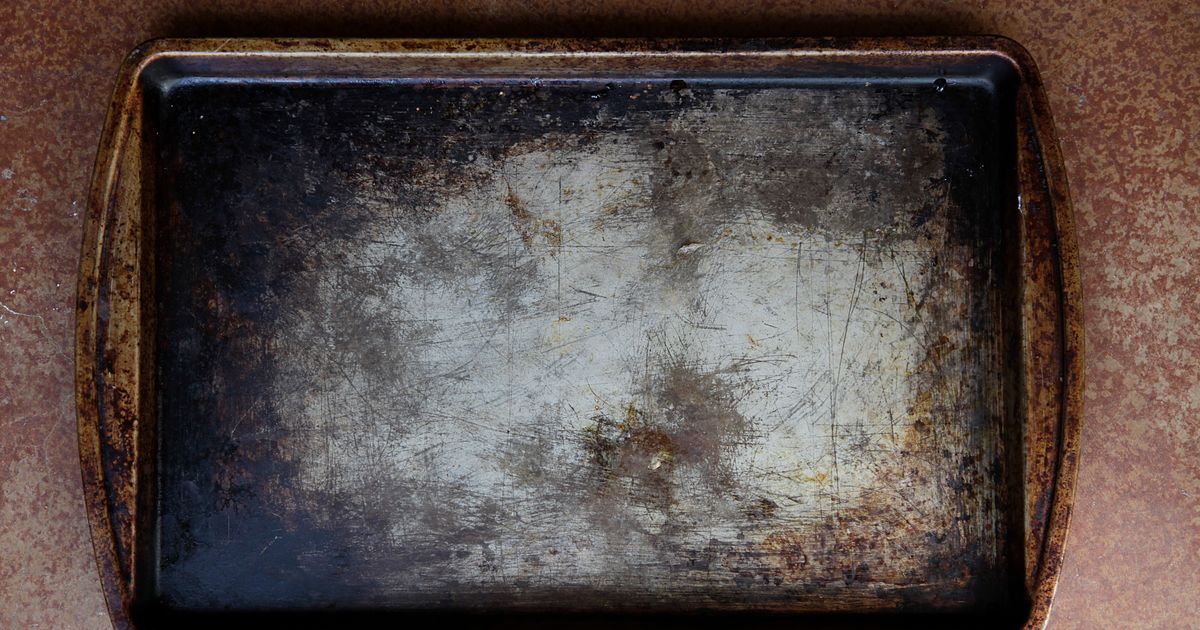
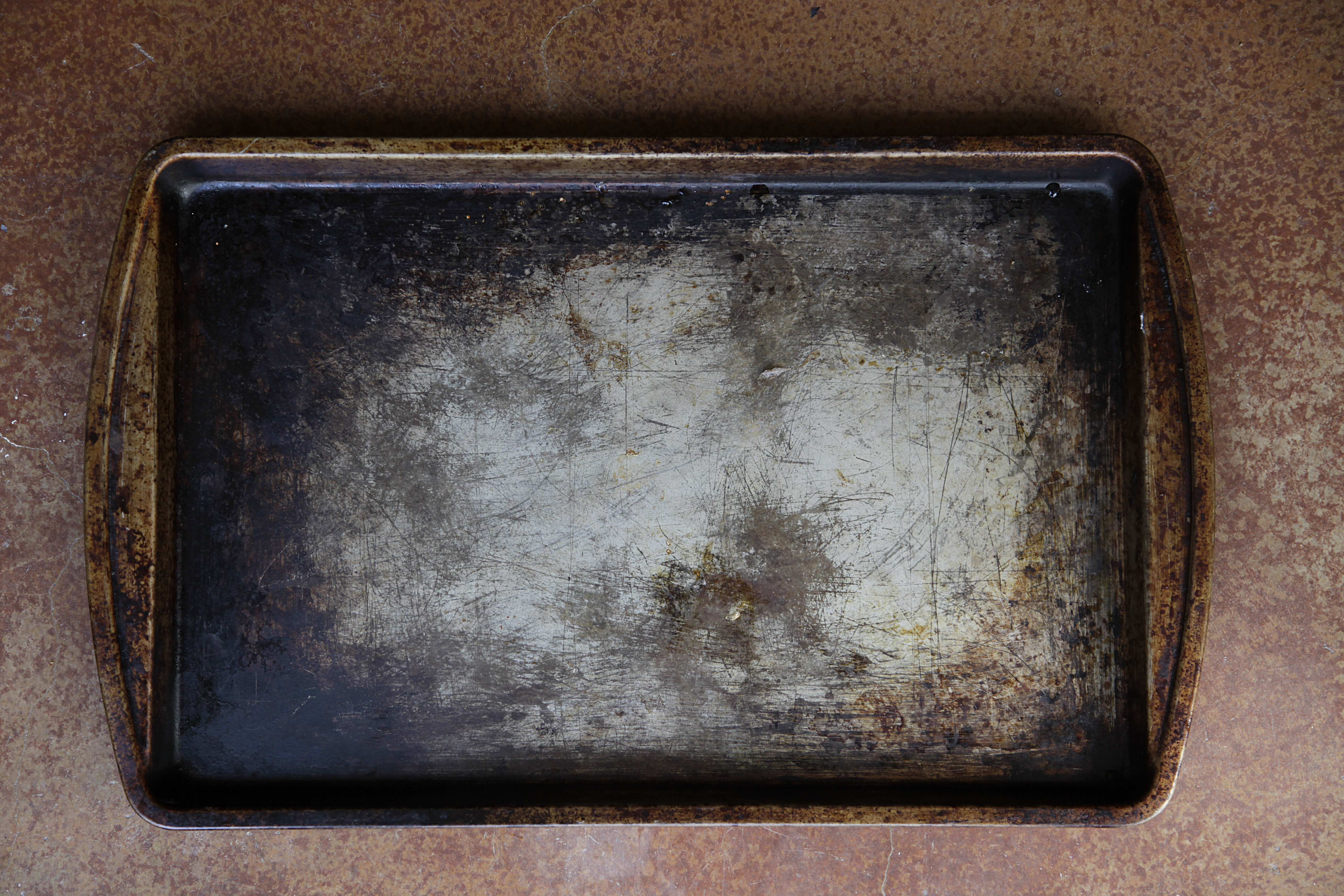
I don’t know what it is about baking trays. Maybe it’s the fact that we’ve designed them for a lifetime of inferno-like suffering in our ovens – but no matter how carefully I clean mine, they seem to get incredibly filthy in a matter of months ― almost as if they’re doing it on purpose.
Forget sponges. Forget dish brushes. Once my baking trays have achieved the crusted-on hue of shame, it feels like nothing will help to clean them.
So you can imagine how intrigued I was to hear from Tasting Table that the humble spud could help to remove the rust from my trays.
All I have to do, they advise, is halve a raw spud, dip the potato in washing-up liquid and salt or baking soda, and get to scrubbing. I was sceptical too ― but having tried it, I’ll never go back.
I know! It works because potatoes are high in something called oxalic acid, which is sometimes sold in its pure form as a rust remover.
When this comes into contact with rust, it creates a substance called iron oxalate, which can easily be washed away with water and soap.
The addition of washing-up liquid will help to cut through grease, while salt and baking powder will exfoliate the surface of your trays.
Sweet potatoes are higher in rust-reducing oxalic acid than other kinds, Tasting Table points out.
Yep! I’ve tried wrapping my entire oven (baking trays included) in clingfilm overnight after applying a baking soda paste before ― this worked brilliantly.
You can also try submerging your baking trays in hot, soapy water for a minimum of half an hour before scrubbing away the grime. This works, but requires a lot of sink space.
Baking soda and boiling water can also do the trick, Oven Pride suggests (though keep your hands safe during this method).
And of course, you can’t go too far wrong with a wire scourer and good ol’ elbow grease…
As a former cleaner, I notice the little details (like polished taps and doorknobs, or truly streak-free windows) that show an expert level of cleaning.
You don’t have to be a cleaner to meet those standards; I’ve even had clients whose homes were pro-looking spick and span before I turned up.
Advertisement
Even in those houses, however, an important part of the bedroom was almost always ignored.
Freddie Garnham, Lighting Design Engineer at Dyson, shared that “unseen dust mites, allergens and dust contribute to an unhygienic environment” in our sleeping space in one neglected area in particular.
Which is?
People, you are meant to vacuum your mattress.
It makes sense when you think about it ― you may already vacuum your sofa, but for some reason, mattresses always seem to evade deep cleans.
That’s not a great idea, Garnham says.
“Regularly vacuuming your mattress will ensure a cleaner and more hygienic sleeping environment and a sleep undisturbed by allergies,” he said.
“While the frequency will depend on the mattress itself, it is recommended to be cleaned every six months with bedding changed once a week to keep dust and allergens at bay.”
Advertisement
He’s not alone. Speaking to Ideal Homes, Jane Wilson, manager of Fantastic Cleaners, said: “Regular vacuuming of your mattress can help remove allergens, dust mites, and dirt, contributing to a cleaner and more hygienic sleeping environment.”
She added,“It’s generally safe and beneficial for most types of mattresses. This includes mattresses with materials such as foam, latex, innerspring, hybrid, and memory foam.”
How should I vacuum my mattress?
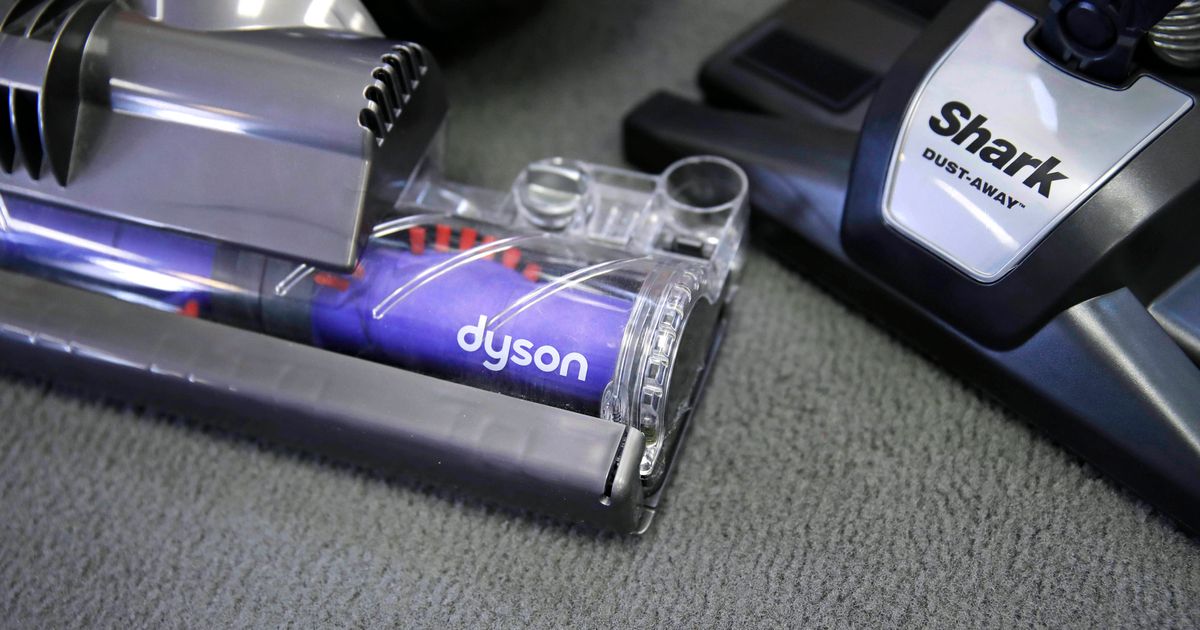
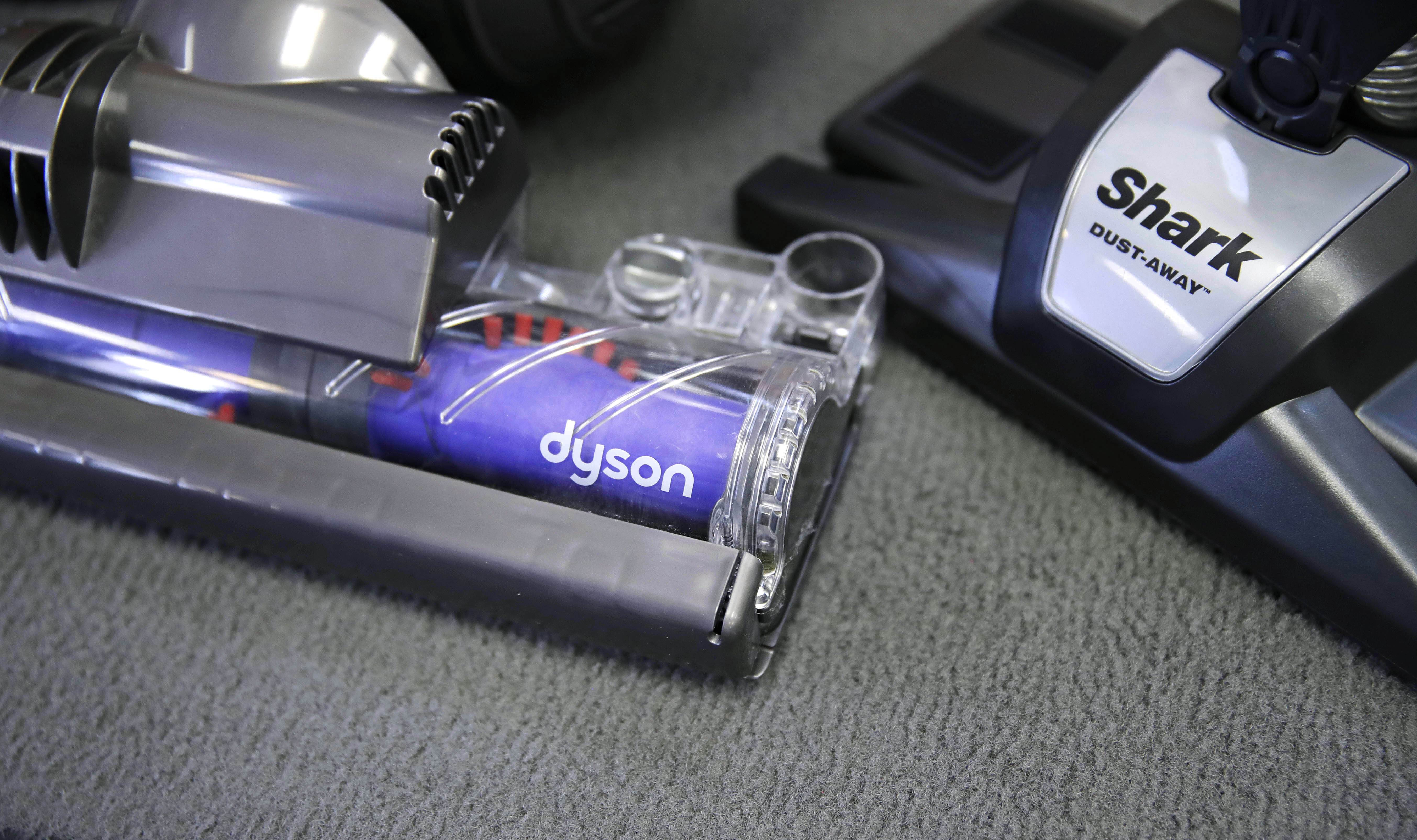
The good news is that you don’t need a specially designed tool for the task: a plain old Henry or other vacuum will do.
Mattress Online says you should get the nozzle on the bed part and begin “using small circular motions over the entire mattress to make sure you lift all of the dust, dirt, hair and dead skin.
“If you have one, you can also use an upholstery attachment to make vacuuming a little easier, but it’s not essential.”
Advertisement
Once you’ve tried it, we can almost guarantee you’ll never go back.
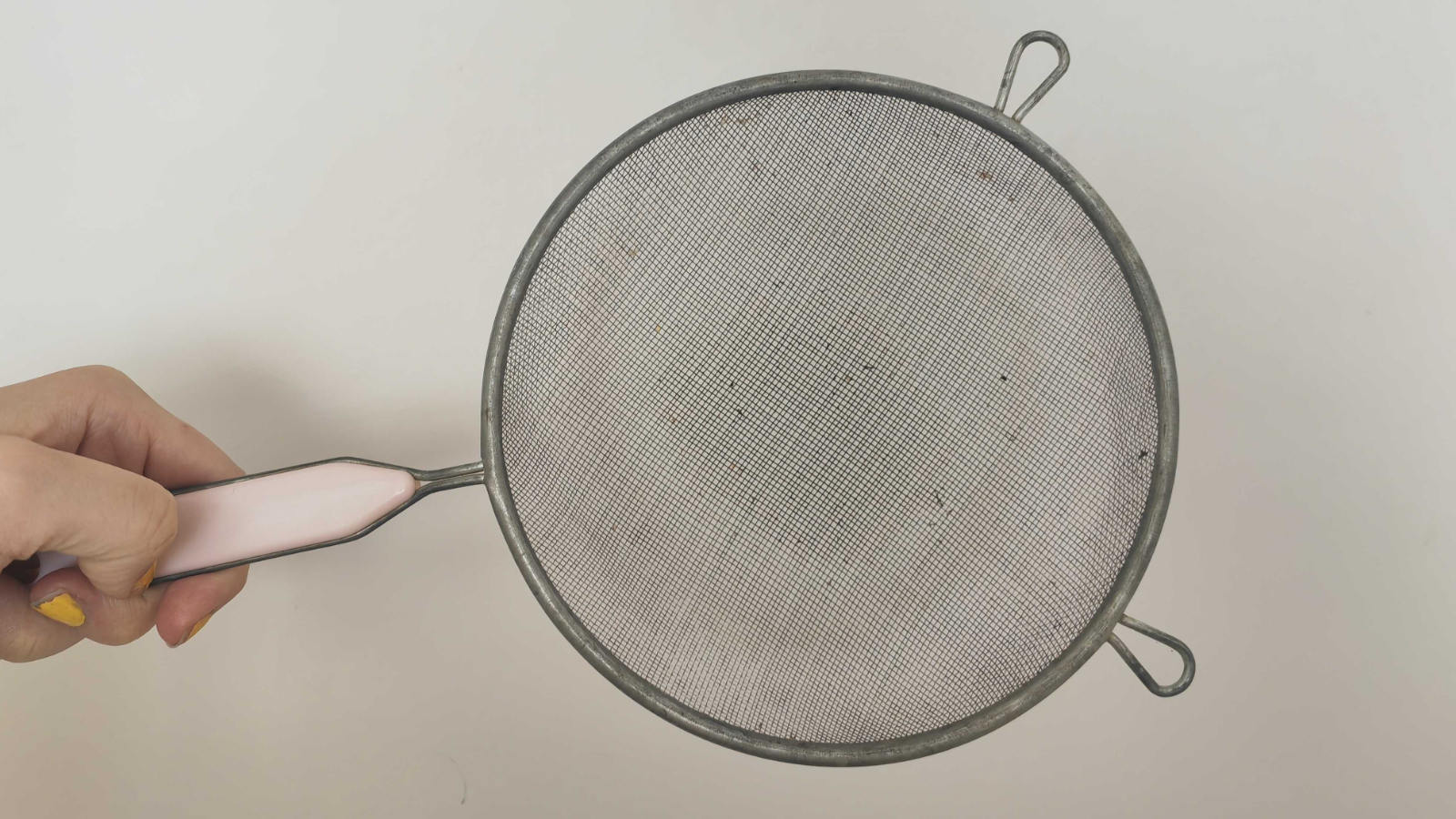
Ah, sieves ― they’d be such a handy tool if they weren’t nigh-on impossible to clean.
As someone who tends to be much kinder to “current me” than I am for “future me,” – I still end up using mine about once a day.
It’s perfect for draining pasta (except for the washing). It’s a great way to ensure no lemon seeds end up in the juice (except for the washing). It’s useful for sifting flour, too, except… well, you get the message.
Advertisement
So you can only imagine how relieved I was to find that taking one simple step immediately after using the tool can prevent an awful lot of stuck-on food.
Which is?
Food magazine Bon Appétit wrote that whacking the utensil against your sink as soon after using it as possible is really, really helpful.
“As soon as you finish using your sieve, bang it against the sink,” they shared.
“This helps dislodge some of those smaller pieces that haven’t had time to mush up and settle in.”
They add that you should also soak your sieve in very hot, soapy water for 15 minutes “right away.”
A dash of distilled white vinegar added to the mix can make cleaning it even more effective, the publication says.
However, for both methods, speed is key.
Is that the only hack?
Far from it. In a Reddit thread about the cooking conundrum, site users were full of recommendations.
Advertisement
“I turn it upside down in the sink, and use the sprayer to blast the back side. This usually cleans it pretty well,” one Redditor wrote.
Many advised against letting your sieve rest after use, even for a minute ― more people than I’d expected knew about the “banging it against the sink” trick too (am I the only one this is news to?).
Yet another person suggested using a toothbrush if the debris gets really dire (Bon Appétit reccomends this too).
With all the resentment I’ve built up to that accursed mesh, hitting it against the sink should be easy…
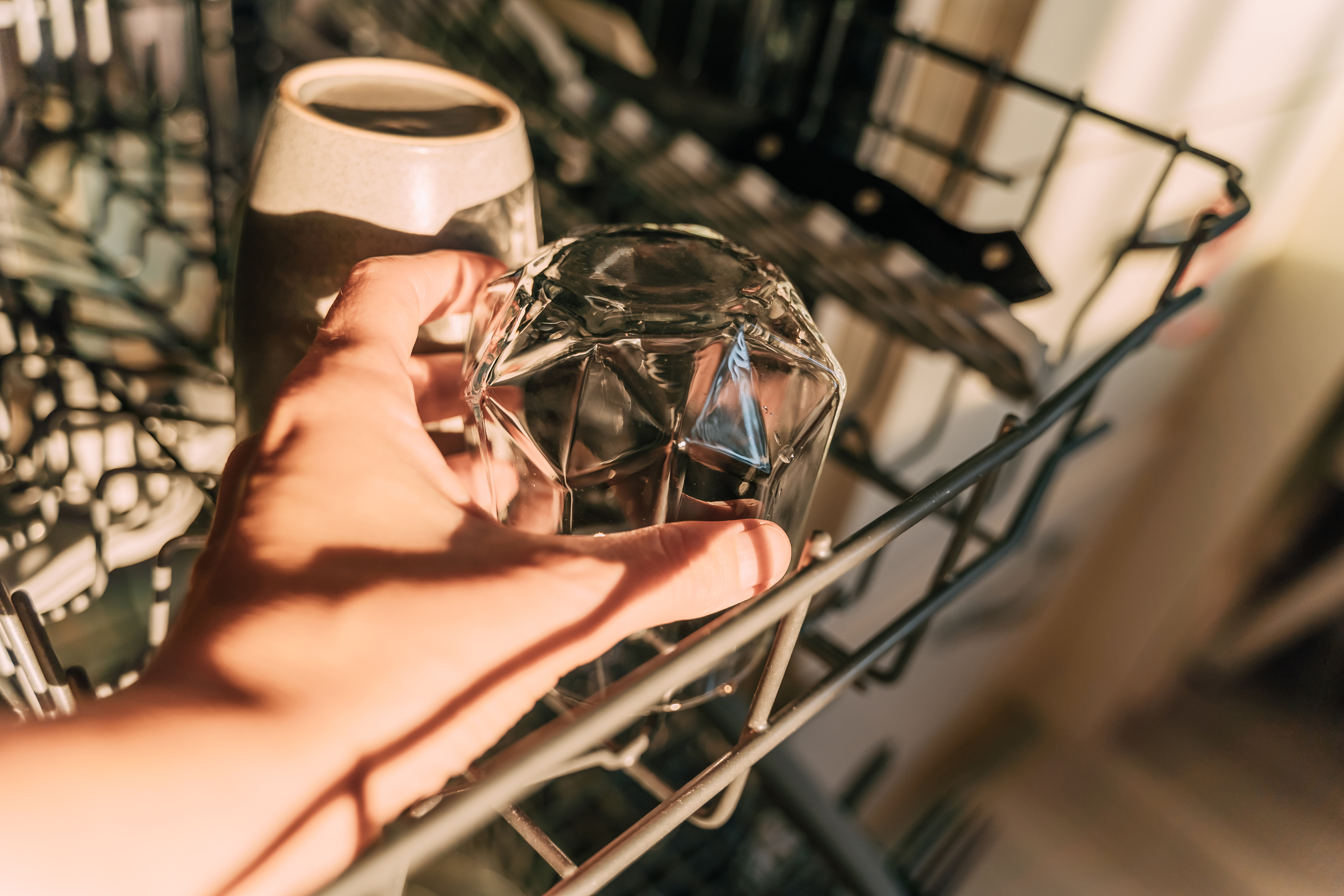
I don’t know about your household, but mine faces the same debate on repeat: should you rinse your dishes before putting them in the dishwasher, or not?
I’d always thought both sides made a valid point ― until I heard from Ian Palmer-Smith, appliance expert at Domestic & General, about the topic.
Advertisement
“One of the biggest dishwasher myths is that you need to rinse items before loading them,” he shared via email.
Here’s his reasons against pre-rinsing, as well as some other dishwasher tips from the pros.
Why shouldn’t you rinse your dishes before placing them in the dishwasher?
Palmer-Smith says that, in short, the practice is just a bit useless: “Pre-rinsing plates is a bit like hand washing your car before taking it to the car wash.”
Then, there’s the added boiler costs of using extra hot water (which, though likely not a huge percentage of your bill, are best avoided if not needed).
“In reality, [rinsing before dishwasher use] uses extra unnecessary hot water and typically won’t improve the results. Modern dishwashers use high temperatures designed to break down stubborn stains with little trouble,” he says.
Advertisement
Of course, that’s not to say you should just lob a loaded plate into your appliance, he adds. Scraping is the way forward, Palmer-Smith says, as too much gunk can clog your machine.
He concedes, however: “If you have a pan with some burnt-on food residue it can be a good idea to give it a soak beforehand.”
Still, it’s bad news for the rinsing regiment.
Dishwashers are more energy-efficient than you might think
In case you think I’m escaping the Dish Debate scot-free, you’re wrong; I’m usually a proponent of hand washing, because I always thought dishwashers used way too much energy.
But according to Palmer-Smith, I’m in the wrong.
“Even without pre-rinsing, dishwashers generally use less hot water than hand washing,” he says (that is, of course, if you have a dishwasher already).
“On average, a dishwasher uses water four times more efficiently than washing by hand so if you are running a load when the appliance is full, this can actually ease your energy bills more than most think,” the appliance pro adds ― and it turns out that science agrees.
Advertisement
Well, that’s a load of stress (literally) off my hands…
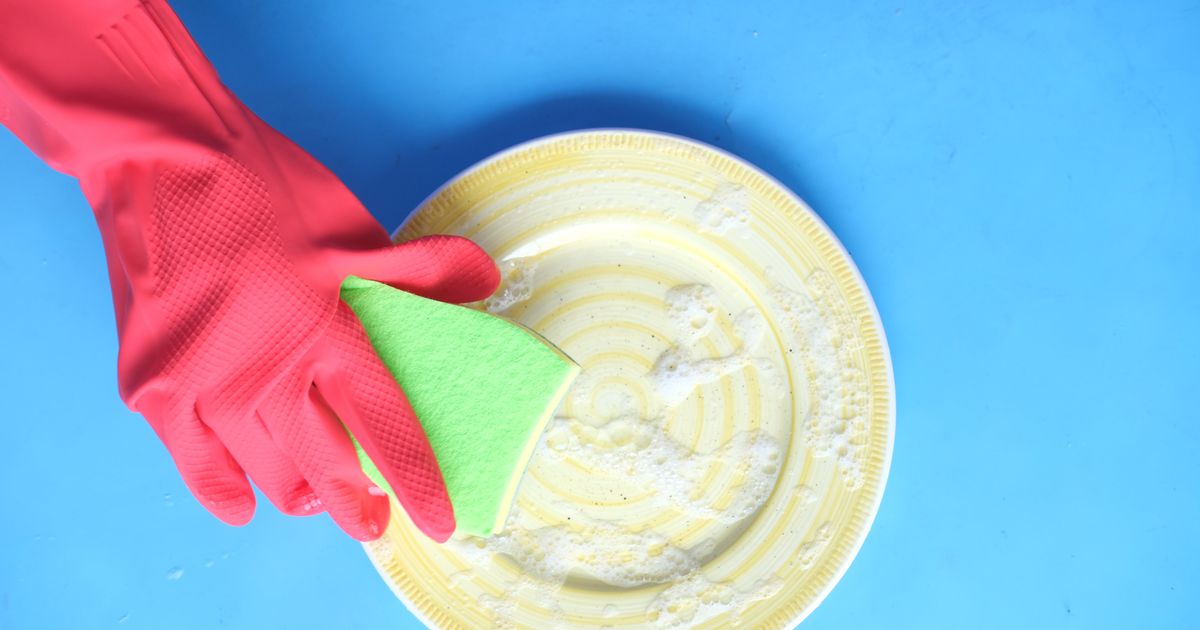
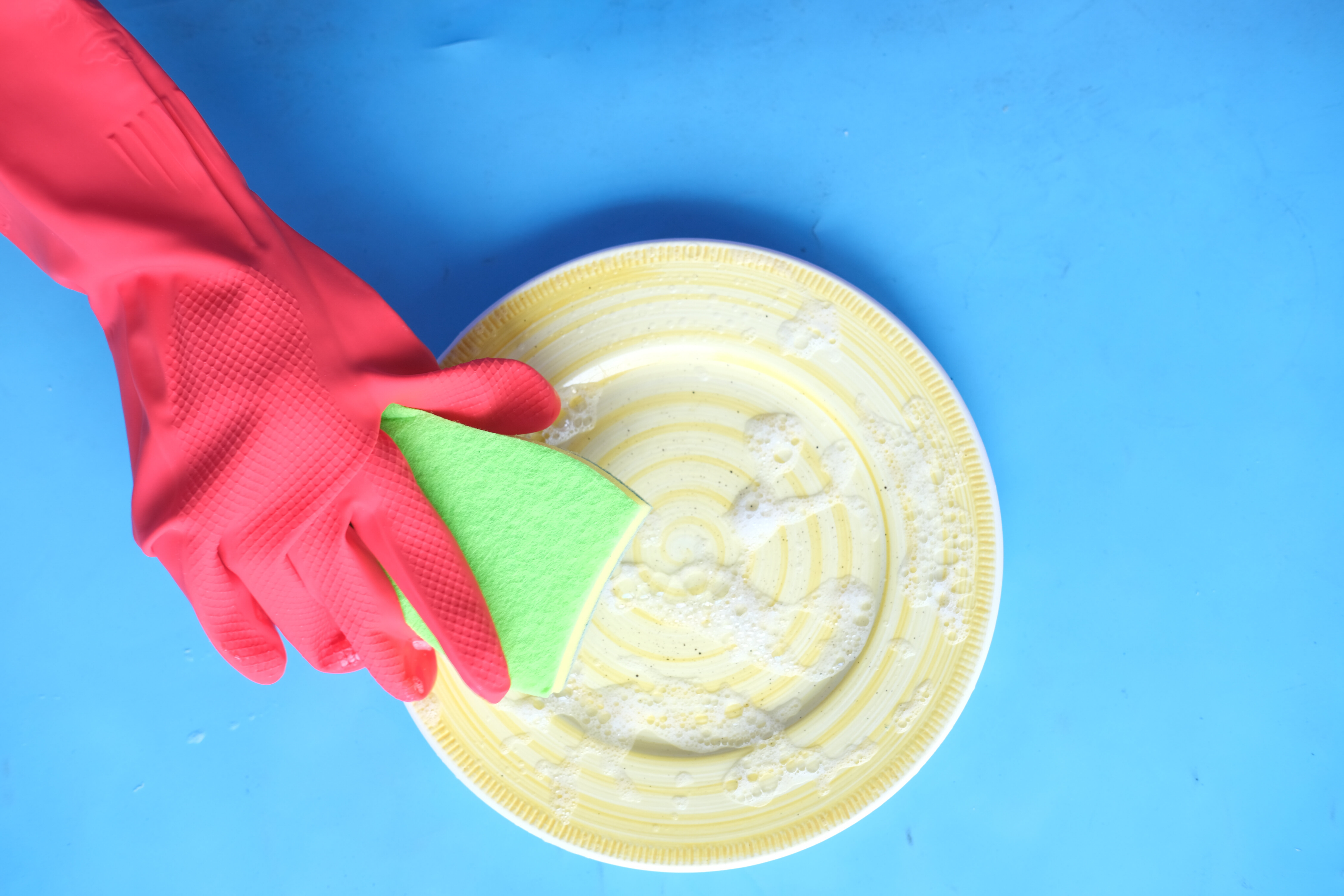
Where would we be without our trusty washing-up sponge? We use it to clean pretty much everything in our kitchen. Despite it being an item we use nearly every day, most of us aren’t changing our sponges as often as we should.
Think about it, when was the last time you swapped your sponge out for a new one? A few weeks ago? Two months ago? Well, I’m sure you’ll run to the shops and get a new one after realising how much bacteria is found in your favourite kitchen item.
Advertisement
A study found that one single sponge could hold up to more bacteria than the number of people living on this planet. Just let that sink in (pardon the pun).
“The sponge is humid and accumulates food residues which are also food for bacteria, leading to rapid growth of bacteria,” Trond Mretr, a research scientist at Nofima, a Norwegian food research institute said.
Though most of the bacteria found are not harmful, others like salmonella can spread from the sponge to kitchen surfaces, our hands and kitchen equipment which could lead to a potential illness.
What was most shocking to the researchers involved in the study was that the number of times the sponge was cleaned did not affect the level of growth of bacteria.
Advertisement
“The way the consumers used their sponges did not matter much regarding growth of bacteria. It is very difficult for consumers to avoid bacterial growth in the sponges as long as the sponges are not replaced daily,” Mretr explains.
Another study published in Scientific Reports in Germany found that different methods of cleaning sponges such as microwaving or cleaning them with boiling water did not actually get rid of all the bacteria found on the sponge.
Experts suggest using a kitchen brush instead of a sponge, as they found that harmful bacteria has a higher chance of survival in sponges than in brushes.
If you do want to keep using your trusty sponge, make sure they’re replaced at least once a week. Happy cleaning.
I’ll say it: some mourning processes are absolutely wasted on the dead.
Confessions of lifelong admiration? A chic all-black-clad gathering of your nearest and dearest? I could go for those now, TBH. And now, it seems I have another process to envy (thankfully, it’s appropriate for the living) – Swedish death cleaning.
Swedish what now?
The process, known in Swedish as döstädning, is designed to make it easy for your loved ones to pack away your stuff after you’re gone.
Advertisement
It involves simplifying your life by clearing away your old clutter, with the ultimate aim of chucking out more stuff than you accumulate.
And while cleaning is a big part of the process, Swedish death cleaning is much more of a minimalist exercise in intentionality than it is a weekend-long purge.
The goal is to have a true ‘place’ for everything in your life instead of mindlessly accumulating objects that end up being more of a nuisance than a beloved item (my enormous collection of unread books and I are trying not to feel offended).
She mentions that you should start the system aged around 65, but IMO, it makes too much sense to hold back on.
So, how do I get started?
First of all, there’s no need to get into a decluttering frenzy.
The whole point of death cleaning is to slowly ensure that you’re surrounded only by things that matter to you, so don’t toss the entire contents of your bedside cabinet away in the name of ‘living clean’.
You’ll want to start with the easy (read: massive and annoying) things first. That mattress you’ve been itching to throw out? The used-once-then-neglected paddleboard you bought during your brief ocean fixation phase? Yeah, those should be the first to go.
After all, Magnusson reckons “Mess is an unnecessary source of irritation” – so the clearing process will be easier if you chuck out the things that annoy you most first.
And you shouldn’t make death cleaning a one-off thing, either. Magnusson says that “Death cleaning is not about dusting or mopping up; it is about a permanent form of organisation that makes your everyday life run more smoothly.”
Advertisement
In other words, a one-off purge won’t cut it.
Don’t forget to include your online clutter, too
It can be tempting to limit your cleaning to the most satisfying, obvious parts of your life, like that crowded mantlepiece or the chaos in your attic.
But when it comes to Swedish death cleaning, ‘clutter’ just means anything that gets in the way more than it enriches your life, and which would be overwhelmingly annoying for someone else to clean up.
Remember, it’s about starting to sustainably shed more of life’s excess materials than you gain. So I reckon it’s about time we make a pact to delete three unflattering old selfies and blurred pocket pics for every new one we take, don’t you?
Think about what your extra stuff really means to you and others around you
Of course, this consideration has an incredibly specific application when you’re actually using it for death cleaning – in that case, it’s worth asking yourself if your daughter really has room to store your beloved grandfather clock.
But anyone who’s lived with more than two other people will know how intrusive other people’s accumulations can be. Consider whether or not your unused, spare room-consuming camping gear or cutlery drawer-dominating melon baller is as meaningful to you as it might be annoying to those around you.
In other words, gifting, donating, and selling are part and parcel of the process.
So, fellow hoarders, if you’re also growing weary of your Vague Piles of Indiscriminate Stuff, it might be time for both of us to take a lesson from the Swedes.