Dozens of amendments have been added to the bill from both sides since it passed its first stage.


Dozens of amendments have been added to the bill from both sides since it passed its first stage.
In the 1940s vulnerable hospital patients were fed sugar to see if their teeth decayed

Warming in the Arctic is intensifying methane emissions, contributing to a vicious feedback loop that could accelerate climate change even more, according to a new study published May 7 in Nature.
“Methane is a very potent greenhouse gas that we need to address urgently,” said co-author Xin (Lindsay) Lan, a climate scientist at CU Boulder’s Cooperative Institute for Research in Environmental Sciences (CIRES). “Our study suggests that a significant portion of the recent rise in atmospheric methane originates from natural sources driven by climate change. Our emission reduction efforts need to be more aggressive.”
Methane is the second most abundant human-produced greenhouse gas after carbon dioxide. But an equal amount of methane traps about 30 times more heat than CO2 over a 100-year time frame. Methane has been responsible for roughly a quarter of the planet’s warming since the Industrial Revolution.
Lan has spent the past decade tracking methane concentrations in the atmosphere at Boulder’s Global Monitoring Laboratory at the National Oceanic and Atmospheric Administration (NOAA).
Lan and her colleagues at NOAA have observed a rapid increase in atmospheric methane levels in recent years. While previous studies have shown fossil fuel production accounts for 30% of global methane emissions, Lan and colleagues have noticed a steady increase in emissions from microbial sources since 2007.
These microbes, specifically a group known as archaea, produce methane as a byproduct of their metabolism in environments like wetlands, landfills and livestock’s digestive systems.
Together, microbial emissions contribute to nearly half of global methane emissions, but it remains unclear which specific sources are driving this increase.
“While long-term methane trends are important to investigate, we also need to look at seasonal variations to understand how individual sources are changing and how the natural mechanisms that remove methane from the atmosphere are evolving,” Lan said.
A vicious cycle
To get a clearer picture, Lan and her team analyzed seasonal fluctuations in atmospheric methane levels over the past four decades.
They found that methane’s seasonal amplitude — the difference between peak and lowest methane levels within a year — has been decreasing in northern high-latitude regions, including the Arctic.
Using computer models, the team showed that this trend since the 1980s is largely a result of increased methane emissions from wetlands. Increased precipitation in the Arctic has expanded the region’s wetlands by 25% during the warmer months. Rising temperatures have also been melting some of the perpetually frozen soil layer deep underground, known as permafrost, in summer.
The melted, waterlogged soils have provided ideal conditions for archaea to thrive, leading to higher methane emissions which in turn could accelerate warming further.
Scientists have long warned about such climate feedback loops, but the precise scale and speed of these effects remain uncertain. Lan said this new study added another piece of evidence that natural methane emissions have already been responding to a warming climate.
“This study, along with a few previous studies, has provided indirect evidence on potential climate feedback on methane emissions, which would be beyond our ability to control directly,” Lan said.
The sharp increase in atmospheric methane and its climate feedback effects since 2007 resemble the planet’s most dramatic warming events that brought past ice ages to an end, according to Lan’s previous research.
“Our hope is that by rapidly reducing emissions, we can avoid triggering more severe and abrupt climate feedback that could lead to catastrophic events,” she said.
Methane sponges
The team’s simulations also found a 10% increase in the levels of hydroxyl (OH) radical since 1984. These radicals are highly reactive molecules that can soak up and remove methane and other air pollutants.
Because these molecules stay in the air for less than a second before they react with other compounds, scientists cannot directly measure them globally. In the past, researchers had assumed the OH levels remained constant over the years when calculating atmospheric methane emissions, but this study suggested that assumption might be wrong.
“Our result showed that we’ve been underestimating how much methane the atmosphere has been removing, which means that there’s actually more methane being emitted than we previously estimated,” Lan said.
Understanding the specific source of emission is vital in designing climate mitigation policies. While microbial emissions are responsible for most of the methane growth, human-produced methane from burning fossil fuels remains an important contributor.
“We need to aggressively cut all greenhouse gas emissions from the sources we can control,” Lan said. She added that the world’s permafrost currently holds at least twice as much carbon as is currently in the atmosphere. If future warming causes widespread permafrost thaw and releases that carbon, it could trigger irreversible changes to the planet’s climate. “We need to address the feedback loop before reaching that tipping point.”

A Yale-led study shows that the senses stimulate a region of the brain that controls consciousness — a finding that might inform treatment for disorders related to attention, arousal, and more.
Humans perceive and navigate the world around us with the help of our five senses: sight, hearing, touch, taste and smell. And while scientists have long known that these different senses activate different parts of the brain, a new Yale-led study indicates that multiple senses all stimulate a critical region deep in the brain that controls consciousness.
The study, published May 15 in the journal NeuroImage, sheds new light on how sensory perception works in the brain and may fuel the development of therapies to treat disorders involving attention, arousal, and consciousness
In the study, a research team led by Yale’s Aya Khalaf focused on the workings of subcortical arousal systems, brain structure networks that play a crucial role in regulating sleep-wake states. Previous studies on patients with disorders of consciousness — such as coma or epilepsy — have confirmed the influence of these systems on states of consciousness.
But prior research has been largely limited to tracking individual senses. For the new study, researchers asked if stimuli from multiple senses share the same subcortical arousal networks. They also looked at how shifts in a subject’s attention might affect these networks.
For the study, researchers analyzed fMRI (functional magnetic resonance imaging) datasets collected from 1,561 healthy adult participants as they performed 11 different tasks using four senses: vision, audition, taste, and touch.
They made two important discoveries: that sensory input does make use of shared subcortical systems and, more surprisingly, that all input — regardless of which sense delivered the signal — stimulates activity in two deep brain regions, the midbrain reticular formation and the central thalamus, when a subject is sharply focused on the senses.
The key to stimulating the critical central brain regions, they found, were the sudden shifts in attention demanded by the tasks.
“We were expecting to find activity on shared networks, but when we saw all the senses light up the same central brain regions while a test subject was focusing, it was really astonishing,” said Khalaf, a postdoctoral associate in neurology at Yale School of Medicine and lead author of the study.
The discovery highlighted how key these central brain regions are in regulating not only disorders of consciousness, but also conditions that impact attention and focus, such as attention deficit hyperactivity disorder. This finding could lead to better targeted medications and brain stimulation techniques for patients.
“This has also given us insights into how things work normally in the brain,” said senior author Hal Blumenfeld, the Mark Loughridge and Michele Williams Professor of Neurology who is also a professor in neuroscience and neurosurgery and director of the Yale Clinical Neuroscience Imaging Center. “It’s really a step forward in our understanding of awareness and consciousness.”
Looking across senses, this is the first time researchers have seen a result like this, said Khalaf, who is also part of Blumenfeld’s lab.
“It tells us how important this brain region is and what it could mean in efforts to restore consciousness,” she said.
Other authors include Erick Lopez, a former undergraduate researcher in Blumenfeld’s lab, and collaborators from Harvard Medical School.
This research was supported in part by funding from the National Institutes of Health.
Two Nobel prize-winning scientists worried about “asymptomatic transmission” between staff and patients.

TikTok user @succulentaddict8′s comments about pilates have not gone down well.
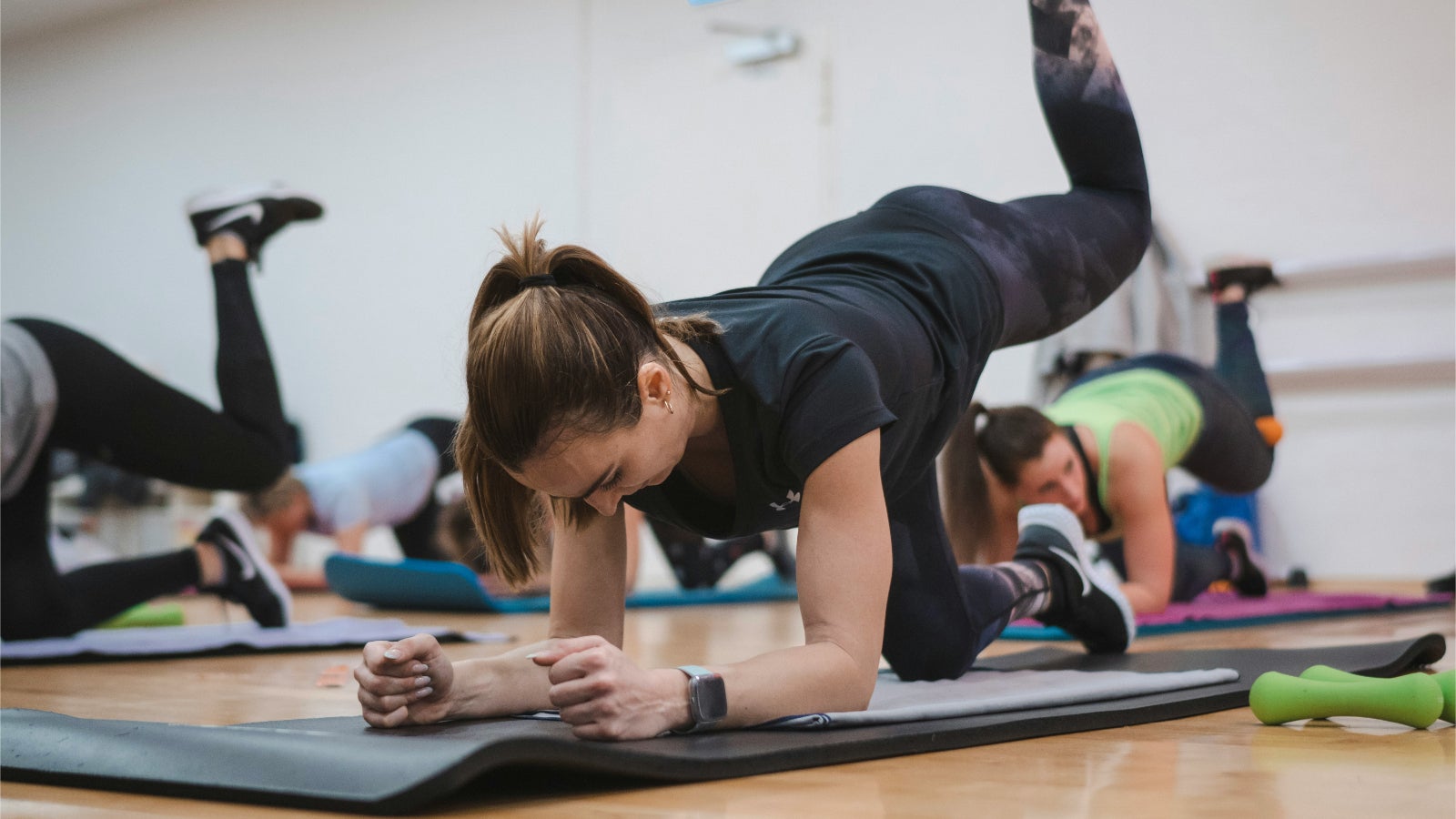
“If you’re 200lbs, you shouldn’t be in a pilates class,” she said in a recent (now-deleted) video, adding, “you shouldn’t be allowed to be a pilates instructor if you have a gut.”
Though the creator has since apologised for the cruel comments in a video she has also now deleted, some creators feel the damage is done.
Advertisement
Personal trainer Court responded, “There are so many people on this Earth who are so fearful of going into the gym and starting their fitness journey because of people like that.”
But it’s not the first controversy about who “should” go to pilates this year.
“SkinnyTok” influencer Toni Fine suggested Black women attending the classes are doing so to get “proximity to whiteness,” despite (among a million other problems people have raised with that statement) a Black woman, Kathy Stanford Grant, having essentially introduced the activity to America.
What is it about pilates in particular that seems to evoke such strong images of exclusivity, thinness, and wealth in some people’s minds (think the ‘Pilates Princess’ archetype)?
Advertisement
And how did we get here from Joseph Pilates’ original mission – to provide gentle, safe exercises for all?
The inventor of what were once 34 “official” moves started life with various ailments like asthma, rickets, and rheumatic fever.
Advertisement
He became inspired by disciplines like yoga and the poses of animals like cats to work on his exercises, with which he would rehabilitate injured prisoners of war interned with him and the rest of the circus troupe he’d been a part of on the Isle of Wight in World War I.
He was later asked to train the military police in Germany, but sensing the sinister potential of the request (this was in the late 1920s), Pilates went to America instead.
There, his Universal Reformer machine and exercises (originally called “contrology”) became a hit through his books and the help of pioneers like Kathy Stanford Grant.
Advertisement
Slate writes that until the early ’00s, pilates classes had been a slightly “grimy,” mid-price group activity, not particularly associated in the British or American mind with one group over another.
After some very conscious rebranding from various companies, Slate adds, pilates faced an “aesthetic gentrification” similar to yoga, whose gentle flow aspirational TikTokers are now more likely to praise as “hormone-balancing.”
After COVID, costs ballooned further; a Reformer class by me costs £60 a session, or £250 a month.
But it’s not just straight-up added expenses. Vogue Business also identified the “Pilates Princess” subgroup as a “growing consumer group of affluent women, willing to invest in athleisure, wellness and beauty.”
Advertisement
The hashtag #pinkpilatesprincess, which took off in 2023, is linked to pricey brands like Lululemon and Alo, they add. “Brands engaging them are winning big.”
But I can’t help but feel that image largely exists online (and possibly in the £600 studios neither I nor most of us would ever venture into anyway).
A #pinkpilatesprincess video with over a million views is filled with commenters envious of the creators’ highly curated home and unrealistically pretty lifestyle; none seemed to think it reflected their reality.
Advertisement
In turn, I don’t pay £600 for my pilates classes. I sweat in a group of about 30 other people in a dark, definitely Reformer machine-free room at my local PureGym.
Most people are not the “snobby mean Pilates girl” you may believe is common online. Every pilates instructor I reached out to about the 200lbs comment had some variation of “WTF?” to say about the statement.
The backlash to the TikToker who first posted it has been monumental, too.
And Pilates itself, in its truest form, isn’t about excluding, competing with, or making fun of, anyone, either – the sooner we remember that, the better.
Advertisement
WASHINGTON — If you’re interested in finding Donald Trump’s precise words as he lied about his failed coup attempt in his Jan 20 remarks at the US Capitol soon after his inaugural speech, good luck with that.
Same with his Feb 12 thoughts in the Oval Office on how magnetism, in his view “a new theory,” doesn’t work on the aircraft carrier Gerald Ford.
Advertisement
Or his statements in the Feb 28 meeting with Volodymyr Zelenskyy, berating the Ukrainian president and empathising with Russian dictator Vladimir Putin instead.
Ditto with his April 14 explanation of how well he is doing with “the cognitive” compared to previous occupants of the White House.
The self-proclaimed “most transparent” White House in history, as it turns out, has little interest in making the vast majority of Trump’s speeches and interactions with journalists readily accessible to the public whose taxes pay for their transcription, publishing just 29 transcripts of the 146 public remarks Trump made in his first 100 days in office.
Advertisement
Trump’s White House posted transcripts for only 11 of the 40 speeches in which Trump did not take questions from the media, and for only one of his six formal news conferences, according to a HuffPost review. And of the 98 media “availabilities” in which Trump took questions from reporters informally — a practice that his aides point to as proof of his great accessibility — only 15 of the transcripts have been made public.
Previous White Houses, going back decades, made all of the transcripts compiled by the non-political stenography office, staffed by career civil servants, available in printed form, via email and on the White House website, as a matter of course. Trump’s first-term staff also published all his remarks, with the exception of his speeches at rallies and fundraisers. Trump’s second-term White House stopped emailing transcripts to its press list just five days after taking office, and of late has largely stopped posting them on the website, too. As of Thursday morning, the last transcript from Trump on the site is from March 13.
Trump aides would not explain their decision to withhold 80% of the transcripts that have been prepared. White House communications director Steven Cheung, however, did insult HuffPost for asking the question:
Advertisement
“You must be truly fucking stupid if you think we’re not transparent. The president regularly does multiple press engagements per day and they are streamed live on multiple platforms. We’ve even granted low-level outlets like HuffPo [sic] additional access to events, because we’re so transparent. For anyone to think otherwise proves they are suffering from Trump Derangement Syndrome. Stop beclowning yourself,” he wrote, demanding that his statement be published “in full.”
Kathleen Hall Jamieson, director of the Annenberg Public Policy Center at the University of Pennsylvania, said transcriptions of a president’s remarks have always been seen as historical records, not things to be politicised. “Making the words of the president readily available is part of the accountability obligation of the White House,” she said.
“The public has the right to know what the leader says … It’s a mark of a democratic system,” she added, saying that she could not speculate as to why Trump is withholding most of his transcripts’ release. “Trying to figure out why this White House does what it does requires a skill far beyond mine.”
Advertisement

Jim Lo Scalzo/EPA/Bloomberg via Getty Images
While it is true that videos of nearly all of Trump’s public remarks are available on C-SPAN, YouTube or other websites, they are not easily searchable by topic or keyword. There are private firms that transcribe his words, but they are not comprehensive and not well-known to the public.
Indeed, Trump critics say that increasing the difficulty of finding his exact words on any given topic is precisely the point of keeping most of the official transcripts a secret. After 10 years of hearing him, Trump’s outlandish claims and constant lies have become mere background noise to many Americans, they argue, while actually reading his statements hits in a different way.
Advertisement
“They know the transcripts will reveal, on paper, the word salad and incoherence that characterises Trump,” said Norman Ornstein, a political scientist with the conservative-leaning American Enterprise Institute. “It is much easier to pore through written transcripts and compare them, which will show inconsistencies and reversals.”
Andrew Bates, a top press aide in the Joe Biden White House, said his counterparts in the Trump White House clearly understand that reading what Trump has said does not reflect well on him. “He keeps saying things that are a liability, like talking about dolls and pencils. Or just getting confused,” Bates said.
The Biden press office famously altered punctuation in a transcript to make it seem that Biden was criticising a smaller subset of Trump supporters than the transcript originally suggested. The Biden team, nonetheless, released that transcript and appears to have released all those prepared by the stenography office, totaling well over 2,000 over four years.
Advertisement
The Trump press shop, in contrast, appears to have decided that the best way to avoid negative media coverage of his transcribed remarks is to not release them in the first place. A comparison of the posted transcripts versus the remarks for which the transcripts have been withheld suggests an effort to conceal Trump’s most outrageous, factually inaccurate or lie-filled statements.
On Inauguration Day, for example, while the transcript for the official speech given immediately after Trump took the oath of office is available on the White House website, a second one he gave to congressional Republicans soon afterward is not.
In that one, he again pushed his oft-repeated lies about January 6, 2021, the day he encouraged a mob of his followers to march on the Capitol and then tried to use their assault on police officers and other violence to remain in power despite having lost the 2020 election. Trump bemoaned that his staff talked him out of including that material in his actual inaugural address.
Advertisement
“You can’t put things in there that you were going to put in, and I was going to talk about the J6 hostages, but you’ll be happy because you know it’s action, not words that count, and you’re going to see a lot of action on the J6 hostages, see a lot of action,” he said in a 1,232-word section that repeatedly blamed former House Speaker Nancy Pelosi for all that happened on Jan. 6. “And I was going to talk about the things that Joe [Biden] did today with the pardons of people that were very, very guilty of very bad crimes like the unselect committee of political thugs where they literally, I mean, what they did is they destroyed and deleted all of the information, all of the hearings. Practically not a thing left.”
Three weeks later, following a swearing-in ceremony for his director of national intelligence, Tulsi Gabbard, Trump offered nonsensical answers to a variety of questions, including one about waste and fraud in the federal government. Trump launched into a 1,710-word rant on military contractors, including the builders of the newest aircraft carrier, the USS Gerald Ford, which uses a high-tech electromagnetic catapult system to launch airplanes to reduce stress on their airframes and landing gear.
“Take a look at the Gerald Ford, the aircraft carrier, the Ford. It came ― it was supposed to cost $3 billion; it ended up costing like $18 billion, and they make, of course, all electric catapults, which don’t work. And they have all magnetic elevators to lift up 25 planes at a time, 20 planes at a time,” he said, not appearing to understand the rationale for the new designs. “And instead of using hydraulic, like on tractors, that can handle anything from hurricanes to lightning to anything, they used magnets. It’s a new theory, magnets are going to lift the planes up, and it doesn’t work.”
Advertisement
At the end of that month, Trump and Vice President JD Vance attacked Ukraine’s Zelenskyy for not being sufficiently grateful to the United States before Trump turned to his familiar defense of Putin, who continues to slaughter Ukrainian civilians to this day through aerial attacks on residential areas.
“Let me tell you, Putin went through a hell of a lot with me. He went through a phony witch hunt, where they used him and Russia, Russia, Russia, Russia. You ever hear of that deal?” Trump said during a 206-word tangent again recounting his grievances.
“That was a phony ― that was a phony Hunter Biden, Joe Biden scam, Hillary Clinton, Shifty Adam Schiff. It was a Democrat scam, and he had to go through that, and he did go through it, and we didn’t end up in a war, and he went through it. He was accused of all that stuff. He had nothing to do with it. It came out of Hunter Biden’s bathroom. It came out of Hunter Biden’s bedroom, it was disgusting. And then they said, ‘Oh, oh, the laptop from hell was made by Russia,’ the 51 agents, the whole thing was a scam, and he had to put up with that. He was being accused of all that stuff.”
Advertisement
Six weeks later, during a visit by Salvadoran President Nayib Bukele, who is housing deportees whom Trump claims are criminal illegal immigrants, Trump was asked how many more people he intended to ship there. Trump responded with a 417-word answer that quickly veered into boasts about his mental acuity.
“By the way, I took my cognitive exam as part of my physical exam, and I got the highest mark. And one of the doctors said, ‘Sir, I’ve never seen anybody get that kind of ― that was the highest mark.’ I hope you’re happy with that, although they haven’t been bugging me too much to take a cognitive. But I did do my physical, and it was released. I hope you’re all happy with it. I noticed there’s no questions, so probably you are. But the cognitive, they said to me, ‘Sir, would you like to take a cognitive test?’ I said, ‘Did Biden take one?’ ‘No.’ ‘Did anybody take one?’ ‘No, not too many people took them.’ I said, ‘What about Obama, did he take one?’” Trump said.
“The totality of his statements clearly show that he is utterly fucking off the rails,” said Rick Wilson, a longtime Republican consultant who became an early Trump critic. “Most of the Washington media is still playing the polite game of pretending this is a normal White House, and so they just move on and move on and move on eternally into the future.”
Advertisement
Trump’s usually rambling, often incoherent, at times downright deranged statements, of course, did not stop at the 100-day mark.
On Day 102, in a Rose Garden celebration of the National Day of Prayer, Trump suggested that Muslims are primarily terrorists willing to die to earn a reward of virgins in paradise: “Imams who I got to know in Michigan. I loved them. They were great, by the way. They said, ‘We don’t want to die.’ I said, ’Do you want to die? They said, ‘We don’t want to die.’ I said, ‘What about the 38 virgins?’”
On Day 106, in an Oval Office photo opportunity, Trump went on at length about his idea of reopening Alcatraz prison in San Francisco Bay. “I guess I was supposed to be a moviemaker. We started with the moviemaking, and we’ll end, I mean, it represents something very strong, very powerful in terms of law and order. Our country needs law and order. Alcatraz is, I would say the ultimate, right, Alcatraz, Sing-Sing and Alcatraz the movies,” he said in an answer that continued for 268 words. “But it’s right now a museum, believe it or not. A lot of people go there. It housed the most violent criminals in the world, and nobody ever escaped. One person almost got there, but they, as you know the story, they found his clothing rather badly ripped up, and it was a lot of shark bites, a lot of problems.”
Advertisement
It’s unclear what motion pictures featuring the prison as a setting have to do with reopening Alcatraz or why Trump believed his Muslim supporters in Michigan would be entitled to only 38 virgins, just over half of the 72 customarily cited.
Among the posted transcripts are two media interviews he did. While Trump does numerous interviews — most of which include statements that make him seem ignorant or foolish or both — his press staff has posted only two softball interviews: One by informal Trump adviser and Fox News host Sean Hannity dated Feb. 18 as well as a two-minute one by Jamie Little, a Fox Sports NASCAR announcer at the Daytona 500 race that Trump had attended two days earlier.
Advertisement
And while the stenography office transcribes every White House briefing and question-and-answer session aboard Air Force One by press secretary Karoline Leavitt, she and her staff have released only two. One was her first briefing on Jan. 29, in which she promised to always tell the truth, which she then immediately followed with an absurd falsehood about $50 million worth of condoms being sent to the Gaza Strip. The second was the Feb. 20 briefing in which she and other aides celebrated Trump’s first month in office.
Leavitt did not respond to HuffPost queries for this story.
Trump’s refusal to release transcripts created at taxpayer expense is just one piece of his effort to diminish independent news media. He has seized control of the White House press pool, which covers his events that take place in confined spaces like the Oval Office and Air Force One, from the White House Correspondents Association, which had administered it since its inception decades ago.
Trump and his staff have replaced journalists from legitimate news organizations with pro-Trump cheerleaders in many of the pool seats.
Advertisement
Trump also excluded the Associated Press from the pool because it refused to bend to his will and call the Gulf of Mexico by the name Trump decreed by fiat, the Gulf of America. When a federal judge ruled that Trump could not treat the AP any differently than it treats other wire services, he responded by ending assigned pool slots for all three wires: the AP, Reuters and Bloomberg.
On Trump’s current excursion to the Arabian Peninsula, his first extended foreign trip since he retook office in January, not one US wire service print reporter has been part of the pool aboard Air Force One or in meetings with various officials — thereby degrading news coverage for thousands of news outlets with billions of readers in the United States and globally.


A top Russian diplomat dubbed Volodymyr Zelenskyy a “nothing man” today after the Ukrainian president called for Vladimir Putin to attend the ongoing peace talks.
At Donald Trump’s insistence, Zelenskyy flew to Turkey for the first face-to-face discussions between Ukraine and Russia since early 2022, when Putin invaded.
Advertisement
However, the Russian leader has snubbed Kyiv by choosing not to attend Thursday’s negotiations in Istanbul – despite personally suggesting the direct talks between the warring countries last week.
When the Kremlin confirmed Putin was simply sending a low-calibre delegation in his place, Zelenskyy told reporters it was clear Moscow was not “serious” about ending the war.
“Russia does not feel that it needs to end [the war], which means there is not enough political, economic and other pressure on the Russian Federation,” the Ukrainian president said.
Advertisement
“And so we ask, if there is no ceasefire, if there are no serious decisions… we ask for appropriate sanctions.”
Zelenskyy still sent a delegation headed up by Ukraine’s defence minister for the talks in Istanbul but stayed in Ankara himself for talks with his Turkish counterpart.
According to Russian state news agency TASS, Putin’s top diplomat was less than happy with the Ukrainian president’s attack on the Kremlin.
Advertisement
Speaking on Thursday, Sergei Lavrov said: “First, Zelenskyy made some statements demanding that Putin attend in person. A nothing man. It’s clear to everyone – except perhaps to him and those pulling his strings.”
The Kremlin has been trying to discredit Zelenskyy ever since launching a full-scale invasion on Ukraine more than three years ago.
Putin’s false claim that Zelenskyy is not a legitimate president was even picked up by Trump earlier this year, as the American president claimed he is a “dictator without elections.”
Advertisement
But once Moscow started to drag its heels over negotiations, Trump began to accuse Putin of not wanting to end the war.
The Ukrainian president also pointed out on Thursday that Trump has been pressuring Kyiv “more than the Russians”.
He said: “You have to pressurise the side that does not want to end the war. The position of Turkey and the United States, you saw that President Trump thought it would help to pressurise both sides – I think they pressurised us more than the Russians.
Advertisement
“Ukraine is fighting for itself. We are not ready to lose our lives and land. That does not mean we are aggressors.”

MPs say new laws and “deep-rooted cultural change” are needed at the Department for Work and Pensions.

It started as a low, haunting roar building in the distance. It grew into a deafening thunder that drowned out all else. The sky turned an unnatural shade of green, then black. The wind lashed at trees and buildings with brutal force. Sirens wailed. Windows and buildings exploded.
In spring 2011, Joplin, Missouri, was devastated by an EF5 tornado with estimated winds exceeding 200 mph. The storm caused 161 fatalities, injured over 1,000 people, and damaged and destroyed around 8,000 homes and businesses. The tornado carved a mile-wide path through the densely populated south-central area of the city, leaving behind miles of splintered rubble and causing over $2 billion in damage.
The powerful winds of tornadoes often surpass the design limits of most residential and commercial buildings. Traditional methods of assessing damage after a disaster can take weeks or even months, delaying emergency response, insurance claims and long-term rebuilding efforts.
New research from Texas A&M University might change that. Led by Dr. Maria Koliou, associate professor and Zachry Career Development Professor II in the Zachry Department of Civil and Environmental Engineering at Texas A&M, researchers have developed a new method that combines remote sensing, deep learning and restoration models to speed up building damage assessments and predict recovery times after a tornado. Once post-event images are available, the model can produce damage assessments and recovery forecasts in less than an hour.
The researchers published their model in Sustainable Cities and Society.
“Manual field inspections are labor-intensive and time-consuming, often delaying critical response efforts,” said Abdullah Braik, coauthor and a civil engineering doctoral student at Texas A&M. “Our method uses high-resolution sensing imagery and deep learning algorithms to generate damage assessments within hours, immediately providing first responders and policymakers with actionable intelligence.”
The model does more than assess damage — it also helps predict repair costs and estimate recovery times. Researchers can assess these timelines and costs in different situations by combining deep learning technology, a type of artificial intelligence, with advanced recovery models.
“We aim to provide decision-makers with near-instantaneous damage assessment and probabilistic recovery forecasts, ensuring that resources are allocated efficiently and equitably, particularly for the most vulnerable communities,” Braik said. “This enables proactive decision-making in the aftermath of a disaster.”
How It Works
Researchers combined three tools to create the model: remote sensing, deep learning and restoration modeling.
Remote sensing uses high-resolution satellite or aerial images from sources such as NOAA to show the extent of damage across large areas.
“These images are crucial because they offer a macro-scale view of the affected area, allowing for rapid, large-scale damage detection,” Braik said.
Deep learning automatically analyzes these images to identify the severity of the damage accurately. The AI is trained before disasters by analyzing thousands of images of past events, learning to recognize visible signs of damage such as collapsed roofs, missing walls and scattered debris. The model then classifies each building into categories such as no damage, moderate damage, major damage, or destroyed.
Restoration modeling uses past recovery data, building and infrastructure details and community factors — like income levels or access to resources — to estimate how long it might take for homes and neighborhoods to recover under different funding or policy conditions.
When these three tools are combined, the model can quickly assess the damage and predict short- and long-term recovery timelines for communities affected by disasters.
“Ultimately, this research bridges the gap between rapid disaster assessment and strategic long-term recovery planning, offering a risk-informed yet practical framework for enhancing post-tornado resilience,” Braik said.
Testing The Model
Koliou and Braik used data from the 2011 Joplin tornado to test their model due to its massive size, intensity and availability of high-quality post-disaster information. The tornado destroyed thousands of buildings, creating a diverse dataset that allowed the model to be trained and tested across various levels of structural damage. Detailed ground-level damage assessments provided a reliable benchmark to check how accurately the model could classify the severity of the damage.
“One of the most interesting findings was that, in addition to detecting damage with high accuracy, we could also estimate the tornado’s track,” Braik said. “By analyzing the damage data, we could reconstruct the tornado’s path, which closely matched the historical records, offering valuable information about the event itself.”
Future Directions
Researchers are working on using this model for other types of disasters, such as hurricanes and earthquakes, as long as satellites can detect damage patterns.
“The key to the model’s generalizability lies in training it to use past images from specific hazards, allowing it to learn the unique damage patterns associated with each event,” Braik said. “We have already tested the model on hurricane data, and the results have shown promising potential for adapting to other hazards.”
The research team believes their model could be critical in future disaster response, helping communities recover faster and more efficiently. The team wants to extend the model beyond damage assessment to include real-time updates on recovery progress and tracking recovery over time.
“This will allow for more dynamic and informed decision-making as communities rebuild,” he said. “We aim to create a reliable tool that enhances disaster management efficiency and supports quicker recovery efforts.”
The technology has the potential to transform how emergency officials, insurers and policymakers respond in the crucial hours and days after a storm by delivering near-instant assessments and recovery projections.
Funding for this research was provided by the National Science Foundation.
