‘This Was A Conservative Policy’: BBC Presenter Skewers Minister Over Tory ULEZ Hypocrisy

A Conservative minister was left squirming after a BBC presenter highlighted the Tories’ hypocrisy over London’s Ultra Low Emission Zone (ULEZ).

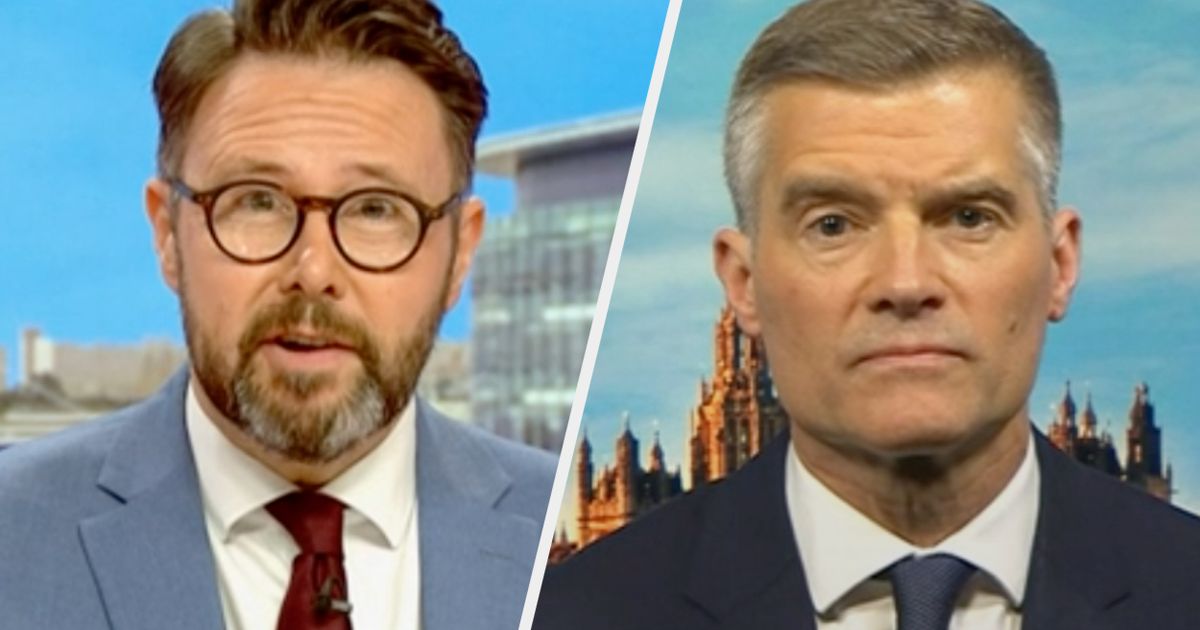
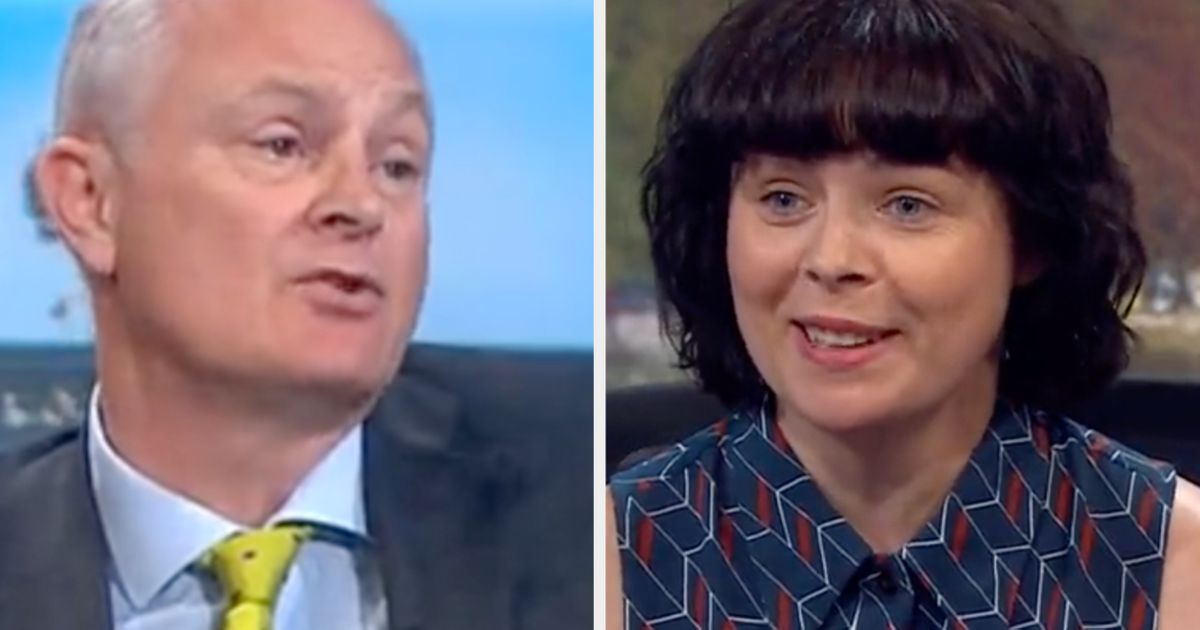
Transport secretary Mark Harper was skewered by John Kay on the day the controversial scheme is expanded across the whole of the capital.

The decision by Sadiq Khan, the Labour mayor of London, has been criticised by the Tories.

But on BBC Breakfast this morning, it was pointed out to Harper that ULEZ was originally the brainchild of Boris Johnson when he had Khan’s job in 2015.

Kay told him: “There are millions of people waking up this morning inside the ULEZ charging zone in London.

“I just want to read you a quote from the mayor of London: ‘The world’s first ULEZ zone is an essential measure to help improve air quality in our city and protect the health of Londoners’.

“That was former mayor of London, Conservative Boris Johnson. This was a Conservative policy originally, however critical you are of it now.”

Harper replied: “No, the expansion of the ULEZ zone to cover the whole of Greater London is a decision by the Labour mayor of London, Sadiq Khan, supported by the Labour leader.

“If you look at the mayor’s own impact assessment, it will have a minor to negligible effect on air quality. So it’s very clear, despite what the mayor says, this isn;t about improving air quality in Greater London, it’s about raising from Londoners for him.”

Kay then went on to point out that expanding ULEZ from central London was backed during the pandemic by Harper’s predecessor as transport secretary, Grant Shapps.

He said: “It wasn’t just Boris Johnson though, was it? Former Conservative transport secretary Grant Shapps, your predecessor in your job, he wanted the congestion charge in London expanded three years ago.”

But Harper hit back: “No he didn’t, this has been put around by the Labour Party. This was about the expansion of the ULEZ to the north and south London circular area, which was something that was a manifesto commitment by the mayor.

“The government does not support the rollout of the ULEZ to the whole of Greater London – we’ve been very clear about that.”

Under ULEZ, drivers of polluting vehicles are charged £12.50 per day.

Khan has insisted that its expansion is necessary to improve air quality across the whole of London.

However, the move was blamed for Labour’s failure to win the recent Uxbridge and South Ruislip by-election, which prompted Keir Starmer to urge the mayor to re-think the policy.

Share Button

Everything We Know About The Allegations Against A BBC Presenter

The BBC on Sunday suspended a member of staff following an allegation in The Sun newspaper that one of its star presenters paid a teenager to pose for sexually explicit photos. Neither the star, nor the youth, was identified.

The Metropolitan Police said on Monday there is “no investigation at this time” into the claims.

Later on Monday, the BBC reported on a letter from a lawyer acting for the young person claiming that The Sun’s allegations are “rubbish” and that “nothing inappropriate or unlawful has taken place between our client and the BBC personality”.

The crisis deepened on Tuesday when the BBC’s news division reported that the male presenter had sent abusive messages to a second person, aged in their early 20s.

What are the initial allegations?

The Sun newspaper on Friday reported allegations that the male presenter allegedly gave the teenager £35,000 starting in 2020 when they were 17.

Though the age of sexual consent in the UK is 16, it’s a crime to make or possess indecent images of anyone under 18.

According to the newspaper, the family complained to the broadcaster on May 19, but the presenter was not immediately taken off air.

The mother told the newspaper that the teenager had used the cash to fund a crack cocaine habit.

The family had not requested payment for their story, The Sun reported.

What has the BBC said?

The BBC said in a statement on Sunday that it “first became aware of a complaint in May”, but that “new allegations were put to us on Thursday of a different nature” – a day before The Sun published its story.

The broadcaster said “the BBC takes any allegations seriously and we have robust internal processes in place to proactively deal with such allegations”. It said the corporation had also been in touch with “external authorities,” but did not specify whether that was the police.

“This is a complex and fast-moving set of circumstances and the BBC is working as quickly as possible to establish the facts in order to properly inform appropriate next steps,” the BBC said.

“We can also confirm a male member of staff has been suspended.”

According to a timeline published by the broadcaster, a member of the young person’s family walked into a BBC building on May 18 to make a complaint. The family member contacted BBC Audience Services the next day.

The BBC said it made two unsuccessful attempts – one email and one phone call – to respond to the complainant.

The Sun contacted the BBC seven weeks later on July 6 with different allegations, the broadcaster said on Tuesday, and senior management were informed for the first time.

“The events of recent days have shown how complex and challenging these kinds of cases can be and how vital it is that they are handled with the utmost diligence and care,” BBC Director General Tim Davie told reporters after the corporation published its annual report.

Davie, who said he had not personally spoken to the presenter, said the new information provided by the Sun on July 6 “clearly related to potential criminal activity”.

What has the police said?

The Metropolitan Police said on Monday the force had met BBC bosses earlier in the day and that officers were making further enquiries about the allegations.

The Met said in a statement: “Detectives from the Met’s specialist crime command met with representatives from the BBC on the morning of Monday, July 10. The meeting took place virtually.

“They are assessing the information discussed at the meeting and further enquiries are taking place to establish whether there is evidence of a criminal offence being committed.

“There is no investigation at this time.”

On Tuesday, it asked the BBC to pause its inquiries while specialist officers decide if there is any justification for a criminal investigation.

What did the young person’s lawyer say?

The BBC reported it had received a letter from a lawyer representing the young person involved in the story.

It wrote: “For the avoidance of doubt, nothing inappropriate or unlawful has taken place between our client and the BBC personality and the allegations reported in the Sun newspaper are rubbish.”

The BBC also reported “the young person sent a denial to the Sun on Friday evening saying there was ‘no truth to it’. However, the “inappropriate article” was still published, the lawyer said.

The Sun responded to this claim by stating: “We have reported a story about two very concerned parents who made a complaint to the BBC about the behaviour of a presenter and the welfare of their child.

“Their complaint was not acted upon by the BBC.

“We have seen evidence that supports their concerns. It’s now for the BBC to properly investigate.”

What is the second claim?

BBC News said on Tuesday it had been contacted by a second young person – unconnected to the first – who said they had been approached by the presenter on a dating app.

When the person, who never met the presenter, hinted online that they would reveal his identity, they were sent abusive, expletive-filled messages, the BBC said.

BBC News said it had verified that the messages were sent from a phone belonging to the presenter. It said it had received no response to the latest allegations from either the presenter or his lawyer.

Late on Tuesday, The Sun claimed the presenter allegedly broke lockdown rules to meet a young stranger from a dating site.

Why has the presenter not been named?

The male presenter has not been named by the Sun or any other outlets who know their identity, with the media having to balance the public’s right to know with the legal risks.

Unless there are any criminal charges, there will be two aspects of the law weighing heavily on newsrooms – defamation and privacy.

Defamation

The law of defamation protects an individual’s reputation from the harm caused by lies. Identifying an individual and making false allegations against them that would lower them in the eyes of right-thinking members of society exposes the publisher to being sued if the claims are false.

The principle defence against defamation is that the allegation is true. But the burden of proof is on the publisher, and the bar is particularly high in sexual offence cases.

Two relatively recent cases have had a big impact on editorial decision-making when it comes to an individual’s right to privacy.

In 2018, Cliff Richard won a privacy case against the BBC over the broadcaster’s coverage of a police raid on his home following a false child sexual assault allegation, which has since tipped the balance in favour of privacy over a right to know.

Added to this, the Supreme Court, the UK’s highest court, ruled in 2022 that a person being investigated for a crime generally has “a reasonable expectation of privacy” until charged – turning what was an accepted principle into legal precedent.

In an email to staff on Monday, Davie said the BBC was taking the allegations “incredibly seriously”.

He added: “By law, individuals are entitled to a reasonable expectation of privacy, which is making this situation more complex.

“I want to assure you that we are working rapidly to establish the facts.”

What are BBC presenters saying?

Amid speculation on social media about the identity of the presenter, several of the BBC’s best-known stars spoke up to say it wasn’t them, including Gary Lineker, Rylan Clark, Nicky Campbell and Jeremy Vine.

The laws of defamation apply to social media as much as they do the media, but that hasn’t stopped some people accusing presenters without any foundation.

Campbell addressed the online speculation on the radio. On BBC Radio 5 Live, he opened his programme on Monday saying: “Thoughts with the alleged victim and family.”

He added: “It was a distressing weekend, I can’t deny it, for me and others falsely named.

“Today I’m having further conversations with the police in terms of malicious communication and with lawyers in terms of defamation.”

On his Radio 2 show, Vine did the same, saying: “I’m in that shortlist of BBC presenters who ended up being smacked around on Twitter yesterday and the day before. But what can you do? Are you going to tell me to take out 85 different lawsuits?”

On Tuesday, Vine suggested the star at the centre of the allegations reveal themself publicly.

Share Button

Question Time Audience Member Calls Out Claim UK Hasn’t ‘Properly Brexited’

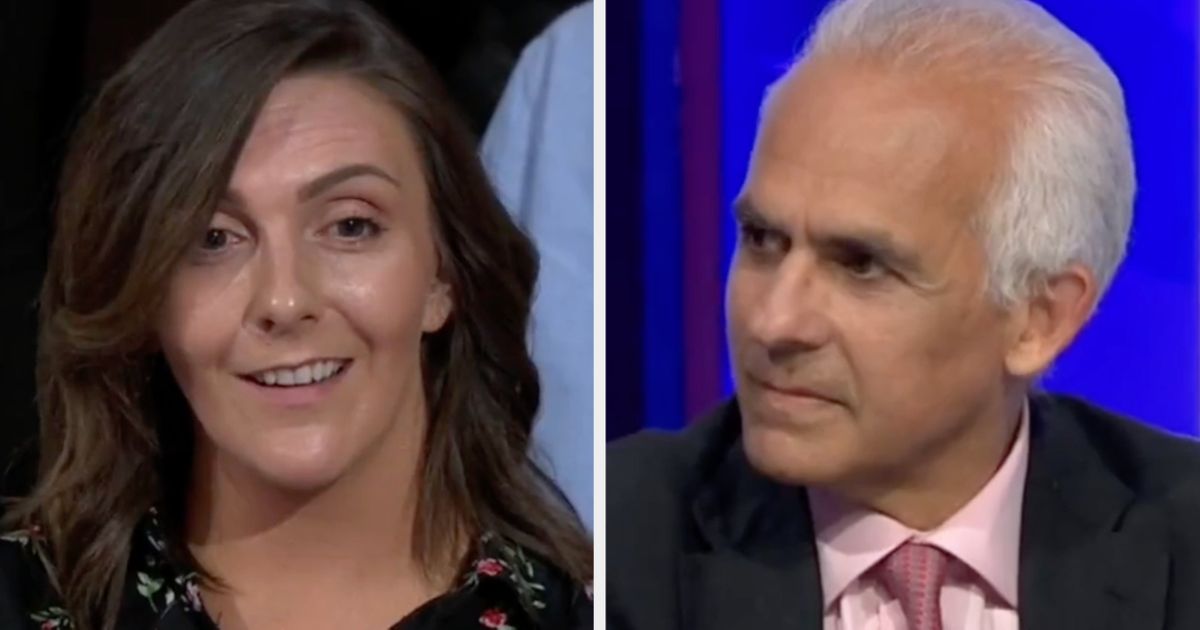
A Brexit voter appearing on BBC Question Time has called out the excuses made by politicians for leaving the European Union not living up to the promises – as a prominent supporter of quitting the bloc claimed the country hasn’t “properly Brexited”.

The corporation’s flagship politics show on Thursday held a “special” in Clacton-on-Sea in Essex to mark the seventh anniversary of the 2016 vote. Some 70% of people in the area voted to get out of the union and only Brexit voters were in the audience for the programme.

It was held on the same day interest rates were hiked for the 13th month in a row as the UK’s rate of inflation remains higher than other major economies, with Brexit in part being blamed.

On the show, panellist Ben Habib, a businessman and former Brexit Party MEP, who is now part of the successor Reform UK, claimed the country hasn’t “properly Brexited” and blamed former prime minister Boris Johnson for being “loose in his association with the truth when he promised to get Brexit done”.

But it was too much for one audience member, who responded directly to Habib’s comments.

She said: “Literally the first thing that people with your opinion say … it’s like Brexit could be good if it went to a different school. I’m so sick of that.

“Where is the gumption from both Labour and the Conservatives to say, actually, no, this is what we’re going to do about it.

“This boils my blood when all that is rolled out is ‘well, there could have been a good Brexit if …’”

Habib later claimed that Irish prime minister Leo Varadkar and then deputy Simon Coveney “weaponised the border and threatened violence”.

Another audience member also said Brexit “hasn’t started” as a result of the pandemic and war in Ukraine.

Campbell, the Tony Blair-era Labour Party spin chief, said they had been told it “would be pain-free” and “all be upsides”, as he pointed to the fall in the pound, a lack of a trade deal with the US and the claim of more money for the NHS.

Share Button

‘You Sound Crackers’: Boris Johnson Ally Called Out For Claiming Downfall Is ‘Revenge For Brexit’

An ally of Boris Johnson has been labelled “crackers” for suggesting the devastating report that could end the former prime minister’s political career is “revenge for Brexit”.

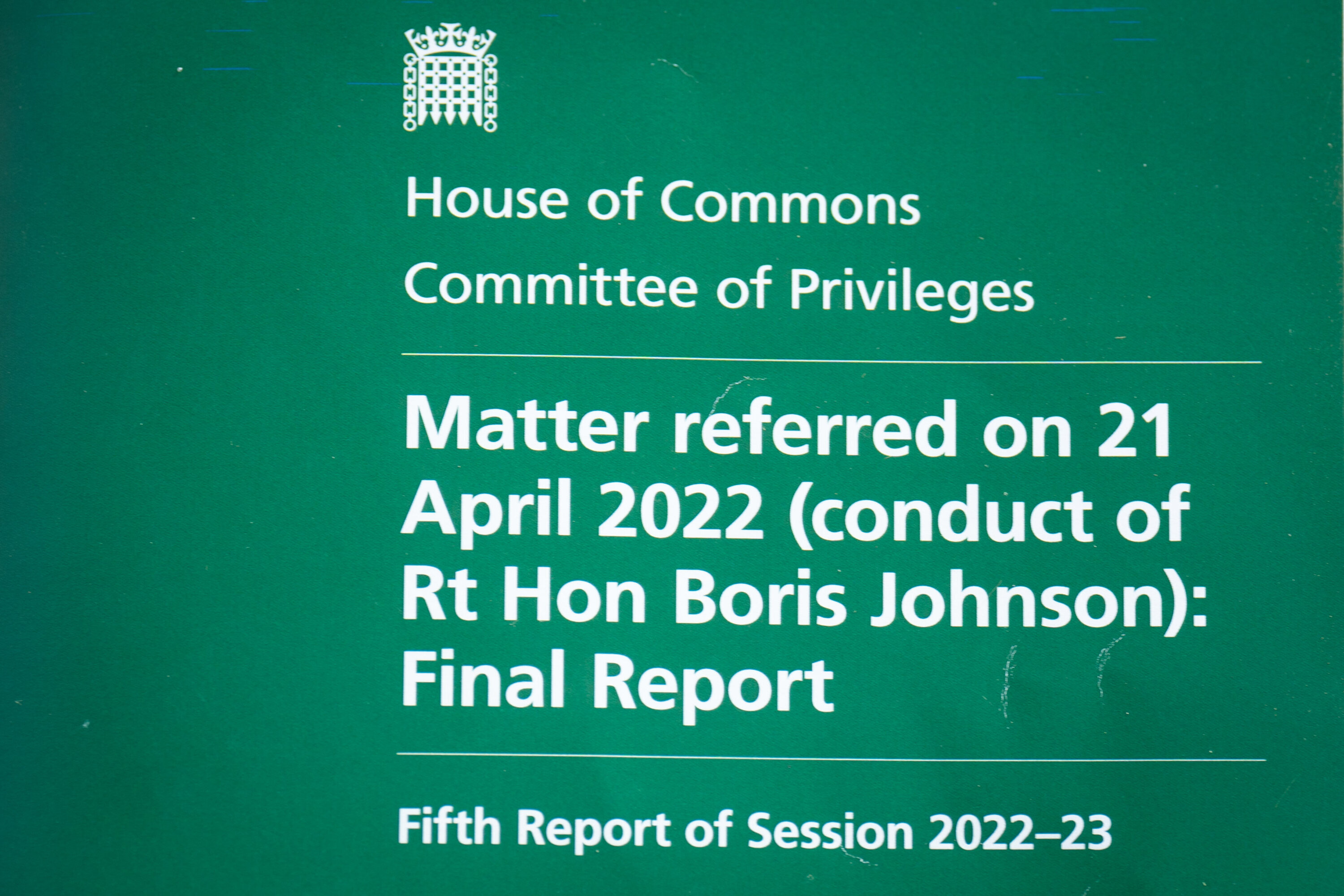
On Thursday, the privileges committee of MPs found Johnson deliberately misled parliament over partygate.

It recommended a 90-day suspension for the ex-prime minister, which he will escape after resigning as an MP, and said he should not receive a pass granting access to parliament which is normally given to former members.

MPs are expected to have a free vote on the proposed sanctions.

On the BBC’s Politics Live soon after the report was published, Lord Stewart Jackson, a former Conservative MP, echoed Johnson’s words by describing the process as “a sham court” and “a kangaroo court”, and said the MPs had conducted a “quasi-judicial process”.

He added: “And there are people there who were out to get him, and what this is effectively is revenge for Brexit dressed up as a judicial process.”

After Jackson insisted the majority of parliament was “hostile to his position on Brexit”, he faced pushback from Ellie Mae O’Hagan from the Good Law Project, which has launched a number of legal challenges against the government.

She said: “I’m sorry, I really don’t like being rude to fellow guests. But you sound crackers … the things you are saying are just crackers … it as like the idea that this is about Brexit, the idea that Britain is now a banana republic …”

You can watch the full exchange below.

Other Johnson loyalists have taken to the airways to defend Johnson.

Conservative MP Brendan Clarke-Smith told the BBC that the report was “vindictive, spiteful and an over-each”, adding: “90 days and taking their pass off them is the equivalent of putting somebody in the stocks and touring them round the country.”

Former Cabinet minister Simon Clarke was also among Johnson’s allies to indicate they would vote against the report, saying “this punishment is absolutely extraordinary to the point of sheer vindictiveness”.

Johnson was said to have deliberately misled MPs with his partygate denials and accused of being complicit in a campaign of abuse and intimidation, with the former prime minister hitting out at the “deranged conclusion”.

Share Button

Water Companies Start To Admit You Will Be Charged More To Stop Sewage Dumping


Britain’s privatised water and sewage companies secured some favourable headlines after it was announced they would oversee the biggest modernisation of English sewers “since the Victorian era”.

Against the backdrop of growing public anger over raw sewage being dumped into the sea and rivers when the system cannot cope with heavy rain, the industry said shareholders will make a £10 billion investment in sewerage infrastructure.

And then came the fine print.

Ruth Kelly, chair of the trade body Water UK, admitted the public will have to pay towards upgrading storm overflows – and could be doing so for up to a century.

To be clear, the upfront payment by the water companies will be recuperated from consumers by gradually raising their bills over time.

Kelly said: “Over time, the way the system works is that there will be modest upward pressure on customer bills over the full lifetime of the asset, so over 50 years or perhaps even longer, maybe up to 100 years, customers do contribute.”

So how much is “modest upward pressure”?

Anglian Water, which covers a long stretch of the east of England coast, became the first firm to a price on it. It suggested customers could face an increase on their bills of £91 a year – including £12 to help pay for investment in sewerage infrastructure.

Speaking on BBC Radio 4’s World At One programme, Anglian Water’s head of public relations, Regan Harris, said: “The initial investment will be put forward by our shareholders and the way we’re financed is that they put up that investment and Ofwat allows us to recover a proportion of that from bills.

“What we’re looking at is a fairly small increase of probably a few percent a year between now and 2030.”

It’s hard to gauge how much a household will pay, since it will be determined by individual regional water companies – and the longer the stretch of coastline to keep clean, the higher the bill is likely to be.

The regulator Ofwat said water companies will submit their National Overflows Plan by October 2 which will include any bill increases for the period 2025-30.

The regulator will analyse the plans, giving a final announcement in December 2024, so any bill increases related to the storm overflows plan will not be felt until 2025.

Households have already seen the largest increase to water bills in almost 20 years this year when they soared to £448 a year. Meanwhile, as the Financial Times reported, water and sewage companies paid £1.4 billion in dividends in 2022, an increase from £540 million the previous year.

“This is nothing to celebrate whatsoever.”

And the backlash has begun, with the Metro’s front page screaming ”£10 Billion Dirty Trick”.

Musician and clean river campaigner Feargal Sharkey criticised the water companies for making customers pay “a second time”.

He told BBC Radio 4’s Today Programme: “They are now suggesting that we should pay them a second time for a service we haven’t had.

“We should have an apology for the suggestion they are going to put bills up by £10 billion for their incompetence and their greed.

“This is nothing to celebrate whatsoever. What they should be saying is, ‘we messed this up, we’re terribly sorry, we’re going to compensate you all, £10 billion, it is the least we could do for our customers, give you a refund’.

“That we could all get behind. This is just another outbreak of moral panic due to the pressure and scrutiny they are coming under.”

Share Button

Ann Widdecombe Says Poor Families ‘Shouldn’t Have A Cheese Sandwich’ If They Can’t Afford To Buy One

Ann Widdecombe has told poor families they shouldn’t expect to be able to have a cheese sandwich if they don’t have the money.

The former Tory MP said hard-pressed families should not “do the cheese sandwich” on a BBC politics show discussing the cost-of-living crisis.

Widdecombe is a former Strictly Come Dancing contestant who has also represented the Brexit Party in the European parliament, and now backs the Reform Party.

The cost of a homemade cheese sandwich rose by one-third to 40p last year, BBC research suggests.

Politics Live presenter Jo Coburn asked: “What do you say to consumers who literally can’t afford to pay for even some of the basics if they have gone up the way that cheese sandwich has, with all its ingredients?”

She replied: “Well then you don’t do the cheese sandwich … because we have been decades without inflation we have come to regard it as some sort of given right that our food doesn’t go up.”

In response, Liberal Democrat Treasury spokesperson Sarah Olney MP said: “How out of touch can you get? Anne Widdecombe joins a long line of right-wing politicians who pin the blame on hard-working families for this government’s failures.”

The latest inflation figures from Which? show the cost of British food staples such as cheddar cheese, white bread and porridge oats have soared on a year ago.

Overall inflation on food and drink at supermarkets continued to rise in March to 17.2%, up from 16.5% the month before, the watchdog found.

Cheddar cheese prices increased by an average 28.3% across eight major supermarkets compared to a year ago.

UK inflation remained above 10% in March – far higher than in the US and Europe – with food prices pushing the benchmark up.

Her comment echo the sentiments of Tory deputy chairman Lee Anderson, who attracted criticism for suggesting that people in the UK use food banks because they “cannot cook properly” and “cannot budget”.

Share Button

BBC Newsreader Handles A Live TV Glitch Like A Pro

A BBC newsreader has won praise for her calm under pressure after a live TV glitch left the broadcaster in a potentially embarrassing situation.

Lukwesa Burak was anchoring the BBC News channel when the so-called “opt-out” appeared to let her down.

In a clip shared widely on Twitter, Burak finished a segment of the programme and said “around the world and across the UK, this is BBC News” as the feed cut to the channel’s titles.

Bagpipers appeared on screen briefly, before Burak could be seen stretching her arms up. She very quickly realises the camera is still rolling, and gives a look of disbelief (to put it mildly).

For what feels like an eternity, Burak stays silent. She eventually introduces a story about Ukraine.

An “opt-out” is when one set of viewers gets a different feed to another – such as adverts for an international audience which cannot be broadcast in the UK.

The BBC announced in July that BBC News and BBC World News would merge to create a single 24-hour TV channel, resulting in job losses, as part of its new digital-first strategy – which perhaps explains the gremlins.

Far from being a source of embarrassment, fellow broadcasters rallied around to praise Burak’s professionalism. She was variously described as a “legend” and “one of the best”.

Burak later took to Twitter to thank “colleagues – present and former, and all you wonderful viewers”.

As part of the shake-up, BBC Four and CBBC will also end as linear TV channels.

The BBC also plans for local radio stations to share more content and broadcast less programming unique to their areas.

The BBC needs to save a further £285 million in response to the announcement in January that the licence fee will be frozen for the next two years.

Share Button

‘The Pain Level Of Twitter Has Been Extremely High’: Musk Gives Free-Wheeling Interview To BBC

Twitter CEO Elon Musk on Tuesday sat down for a spontaneous interview with the BBC at the social media network’s San Francisco headquarters, speaking about some of his regrets and offering a glimpse into how he envisions the future of the company about six months after he bought it.

Musk conceded he can sometimes be impulsive when it comes to posting on the platform. He has come under fire for several controversial tweets, including one in which he shared a conspiracy theory around the hammer attack on Paul Pelosi, the husband of former House Speaker Nancy Pelosi.

“Have I shot myself in the foot with tweets multiple times? Yes,” Musk told the BBC’s James Clayton.

“I think I should not tweet after 3 am,” he continued.

The self-professed “free speech absolutist” purchased Twitter in October ― despite trying to get out of a $44 billion agreement to do so ― and quickly set about reshaping the company. He decimated its staff and publicly attacked his own employees. He welcomed back banned users including former US president Donald Trump, who was kicked off the platform for instigating the January 6, 2021, attack on the Capitol, as well as right-wing figures and other accounts blocked for misinformation. He criticised the media and spread misinformation himself.

Asked about how the first six months have gone, Musk replied: “It’s not been boring.”

He said managing the company has been “quite a rollercoaster”, but that overall usage was up and the site was performing well despite some outages and glitches. He claimed the company will be cash flow positive by the next quarter.

Musk said the hardest moment he faced in the past six months was closing down a server centre at the end of last year, thinking it was redundant — a move that he described as “catastrophic” and which had to quickly be reversed.

“The pain level of Twitter has been extremely high,” he said. “This hasn’t been some sort of party. It’s really been quite a stressful situation.”

The CEO told the BBC the current headcount is at around 1,500, down from the roughly 8,000 people the company employed before he took over.

Musk reportedly agreed to the wide-ranging interview just a few hours before its start.

The Tesla and SpaceX CEO defended his company over the latest controversy around requiring Twitter users to pay for verification. Prior to his takeover, the social media platform applied the badges to the accounts of notable individuals and businesses to deter impostors.

Musk vowed to remove all legacy blue checks by April 20, after missing an earlier deadline he had set for the action for April 1.

Musk has already stripped The New York Times of its badge after a user notified him the newspaper didn’t intend to pay for it.

“I must confess there’s some delight in removing the verified badge from The New York Times,” he told the BBC. “That was great.”

He claimed that the goal of his verification strategy is not to necessarily create another revenue stream, but more so to “massively raise the cost of disinformation and bots in general”.

“My prediction is that any social media company that does not insist on paid verification will simply be overwhelmed by advanced AI bots,” he added.

Musk had attempted to get out of the sale agreement with Twitter, saying there was “material breach of multiple provisions” and that the company did not disclose information on spam bot accounts. But Musk told the BBC he moved forward in the end because he expected a judge would have forced him to complete the sale anyway after Twitter sued to enforce the agreement.

While he originally told the BBC he wouldn’t sell the company for the $44 billion he bought it for, he quickly switched his answer: “If I was confident that they would rigorously pursue the truth, then I guess I would be glad to hand it over to someone else.”

Share Button

BBC ‘Caved To Tory Pressure’ By Axing Gary Lineker, Says Labour’s Rachel Reeves

The BBC “bowed to pressure” from the Tories by axing Gary Lineker from Match of the Day, Rachel Reeves has said.

The shadow chancellor said the corporation should reverse its decision, which triggered a mass revolt which threw its sports coverage into chaos.

Reeves also pointed out that BBC chairman Richard Sharp, who has donated huge sums to the Conservatives, has kept his job despite his role in Boris Johnson securing a loan of up to £800,000.

The BBC announced on Friday that Lineker was “stepping back” from presenting Match of the Day this weekend over a tweet criticising the government’s migrant crackdown.

He said some of the language being used by ministers was like “Germany in the 1930s”.

On Sky News this morning, Reeves said: “Whether you agree with Gary Lineker’s tweets or not, and I wouldn’t have used that language, I think that it is perfectly reasonable that you can present the football commentary on the BBC at a weekend.”

Referring to Richard Sharp, she added: “He is still in his job. Gary Lineker isn’t able to present the football commentary? I think there is a sense of proportionality here.

“The Tories obviously put a huge amount of pressure on the government to get rid of Gary Lineker, I don’t remember those same Tory MPs crying about impartiality when those revelations about Richard Sharp came out.”

Appearing on Sunday with Laura Kuennsberg on BBC One, Reeves said: “The BBC have clearly come under immense pressure from the Conservative Party to take Gary Lineker off air.

“I think it is a shame that the BBC has bowed to that pressure. I would urge the BBC to reconsider this decision, because I think it has now gone totally out of proportion.”

Meanwhile, Lineker’s son, George, has said his dad will not back down over the row.

He told the Sunday Mirror: “Dad is a good man, a good human, and I’m proud of him for standing by his word. That’s why he was pulled off the show – because he wouldn’t apologise. But he will always speak up for people who don’t have a voice.

“He is passionate about helping refugee charities – he took in two refugees who he is still in touch with and trying to help.

“It means a lot to him to stand up for people whose only hope is to escape a country with only the clothes on their back. That’s why he’s been so firm.

“Will he go back to Match of the Day? I think so – he loves Match of the Day. But he won’t ever back down on his word.”

BBC director general Tim Davie, who took the decision to suspend Lineker, said he was seeking a resolution to the dispute, but insisted he will not resign over his handling of the affair.

He said: “I think my job is to serve licence fee payers and deliver a BBC that is really focused on world-class, impartial landmark output – and I look forward to resolving this situation and looking forward to delivering that.”

Share Button

Gary Lineker’s Son Insists Presenter ‘Won’t Ever Back Down On His Word’ In BBC Row

Gary Lineker’s son has said his father would not “back down on his word” and believes the sports presenter will return to Match Of The Day.

In an interview with The Sunday Mirror, the former England player’s eldest son George claimed his father had been “a bit disappointed” by the BBC asking him to step back from hosting Saturday’s Match Of The Day after he compared the language used to launch a new Government asylum seeker policy with 1930s Germany in a tweet.

However, he said his father had been “overwhelmed by the support” of fellow pundits who had withdrawn from various BBC sports shows in solidarity with him, particularly his MOTD co-presenters Ian Wright and Alan Shearer.

(L-R) Gary Lineker and son George Lineker

Karwai Tang via Getty Images

George Lineker told The Sunday Mirror: “Dad is a good man, a good human, and I’m proud of him for standing by his word. That’s why he was pulled off the show – because he wouldn’t apologise. But he will always speak up for people who don’t have a voice.

“He is passionate about helping refugee charities – he took in two refugees who he is still in touch with and trying to help.

“It means a lot to him to stand up for people whose only hope is to escape a country with only the clothes on their back. That’s why he’s been so firm.

“Will he go back to Match of the Day? I think so – he loves Match of the Day. But he won’t ever back down on his word.”

Saturday’s Match Of The Day aired for only 20 minutes and did not include accompanying commentary or analysis from pundits or even its famous theme tune – instead broadcasting only short highlight clips of the day’s matches.

Gary Lineker waves to fans as he arrives prior to the Premier League match between Leicester City and Chelsea FC at The King Power Stadium on March 11, 2023 in Leicester, United Kingdom. (Photo by Marc Atkins/Getty Images)

Marc Atkins via Getty Images

Ahead of the show starting, a continuity announcer said: “Now on BBC One, we’re sorry that we’re unable to show our normal Match Of The Day including commentary tonight. But here now is the best action from today’s Premier League matches.”

Several of the broadcaster’s other football shows were pulled at the last minute on Saturday as more presenters and reporters withdrew, with neither Football Focus nor Final Score airing – while 5 Live’s radio coverage was radically altered throughout the day.

The BBC director-general apologised for the disruption caused to the broadcaster’s sports programming, but confirmed he will not resign over the Lineker impartiality row.

Tim Davie told BBC News in Washington, DC on Saturday: “I’m very sorry for the disruption today. It’s been a difficult day and I’m sorry that audiences have been affected and they haven’t got the programming.

“As a keen sports fan, I know like everyone that to miss programming is a real blow and I am sorry about that.

“We are working very hard to resolve the situation and make sure that we get output back on air.”

The director-general said that he would not go into too much detail about the discussions being had, but that “everyone wants to calmly resolve the situation”.

“I would say Gary Lineker is a superb broadcaster. He’s the best in the business, that’s not for debate,” he added.

“To be clear, success for me is: Gary gets back on air and together we are giving to the audiences that world-class sports coverage which, as I say, I’m sorry we haven’t been able to deliver today.”

Mr Davie also said that he does not feel this is about “left or right” politics, but about the corporation’s ability to balance free speech and impartiality, adding: “We’re fierce champions of democratic debate, free speech, but with that comes the need to create an impartial organisation.”

Asked if he would resign as “there are many people in the UK that simply do not trust you”, Mr Davie said: “Absolutely not.

“I think my job is to serve licence fee payers and deliver a BBC that is really focused on world-class, impartial landmark output – and I look forward to resolving this situation and looking forward to delivering that.”

Share Button