New chainmail-like material could be the future of armor

In a remarkable feat of chemistry, a Northwestern University-led research team has developed the first two-dimensional (2D) mechanically interlocked material.

Resembling the interlocking links in chainmail, the nanoscale material exhibits exceptional flexibility and strength. With further work, it holds promise for use in high-performance, light-weight body armor and other uses that demand lightweight, flexible and tough materials.

Publishing on Friday (Jan. 17) in the journal Science, the study marks several firsts for the field. Not only is it the first 2D mechanically interlocked polymer, but the novel material also contains 100 trillion mechanical bonds per 1 square centimeter — the highest density of mechanical bonds ever achieved. The researchers produced this material using a new, highly efficient and scalable polymerization process.

“We made a completely new polymer structure,” said Northwestern’s William Dichtel, the study’s corresponding author. “It’s similar to chainmail in that it cannot easily rip because each of the mechanical bonds has a bit of freedom to slide around. If you pull it, it can dissipate the applied force in multiple directions. And if you want to rip it apart, you would have to break it in many, many different places. We are continuing to explore its properties and will probably be studying it for years.”

Dichtel is the Robert L. Letsinger Professor of Chemistry at the Weinberg College of Arts and Sciences and a member of the International Institute of Nanotechnology (IIN) and the Paula M. Trienens Institute for Sustainability and Energy. Madison Bardot, a Ph.D. candidate in Dichtel’s laboratory and IIN Ryan Fellow, is the study’s first author.

Inventing a new process

For years, researchers have attempted to develop mechanically interlocked molecules with polymers but found it near impossible to coax polymers to form mechanical bonds.

To overcome this challenge, Dichtel’s team took a whole new approach. They started with X-shaped monomers — which are the building blocks of polymers — and arranged them into a specific, highly ordered crystalline structure. Then, they reacted these crystals with another molecule to create bonds between the molecules within the crystal.

“I give a lot of credit to Madison because she came up with this concept for forming the mechanically interlocked polymer,” Dichtel said. “It was a high-risk, high-reward idea where we had to question our assumptions about what types of reactions are possible in molecular crystals.”

The resulting crystals comprise layers and layers of 2D interlocked polymer sheets. Within the polymer sheets, the ends of the X-shaped monomers are bonded to the ends of other X-shaped monomers. Then, more monomers are threaded through the gaps in between. Despite its rigid structure, the polymer is surprisingly flexible. Dichtel’s team also found that dissolving the polymer in solution caused the layers of interlocked monomers to peel off each other.

“After the polymer is formed, there’s not a whole lot holding the structure together,” Dichtel said. “So, when we put it in solvent, the crystal dissolves, but each 2D layer holds together. We can manipulate those individual sheets.”

To examine the structure at the nanoscale, collaborators at Cornell University, led by Professor David Muller, used cutting-edge electron microscopy techniques. The images revealed the polymer’s high degree of crystallinity, confirmed its interlocked structure and indicated its high flexibility.

Dichtel’s team also found the new material can be produced in large quantities. Previous polymers containing mechanical bonds typically have been prepared in very small quantities using methods that are unlikely to be scalable. Dichtel’s team, on the other hand, made half a kilogram of their new material and assume even larger amounts are possible as their most promising applications emerge.

Adding strength to tough polymers

Inspired by the material’s inherent strength, Dichtel’s collaborators at Duke University, led by Professor Matthew Becker, added it to Ultem. In the same family as Kevlar, Ultem is an incredibly strong material that can withstand extreme temperatures as well as acidic and caustic chemicals. The researchers developed a composite material of 97.5% Ultem fiber and just 2.5% of the 2D polymer. That small percentage dramatically increased Ultem’s overall strength and toughness.

Dichtel envisions his group’s new polymer might have a future as a specialty material for light-weight body armor and ballistic fabrics.

“We have a lot more analysis to do, but we can tell that it improves the strength of these composite materials,” Dichtel said. “Almost every property we have measured has been exceptional in some way.”

Steeped in Northwestern history

The authors dedicated the paper to the memory of former Northwestern chemist Sir Fraser Stoddart, who introduced the concept of mechanical bonds in the 1980s. Ultimately, he elaborated these bonds into molecular machines that switch, rotate, contract and expand in controllable ways. Stoddart, who passed away last month, received the 2016 Nobel Prize in Chemistry for this work.

“Molecules don’t just thread themselves through each other on their own, so Fraser developed ingenious ways to template interlocked structures,” said Dichtel, who was a postdoctoral researcher in Stoddart’s lab at UCLA. “But even these methods have stopped short of being practical enough to use in big molecules like polymers. In our present work, the molecules are held firmly in place in a crystal, which templates the formation of a mechanical bond around each one.

“So, these mechanical bonds have deep tradition at Northwestern, and we are excited to explore their possibilities in ways that have not yet been possible.”

The study, “Mechanically interlocked two-dimensional polymers,” was primarily supported by the Defense Advanced Research Projects Agency (contract number HR00112320041) and Northwestern’s IIN (Ryan Fellows Program).


Share Button

The megadroughts are upon us

Increasingly common since 1980, persistent multi-year droughts will continue to advance with the warming climate, warns a study from the Swiss Federal Institute for Forest, Snow, and Landscape Research (WSL), with Professor Francesca Pellicciotti from the Institute of Science and Technology Austria (ISTA) participating. This publicly available forty-year global quantitative inventory, now published in Science, seeks to inform policy regarding the environmental impact of human-induced climate change. It also detected previously ‘overlooked’ events.

Fifteen years of a persistent, devastating megadrought — the longest lasting in a thousand years — have nearly dried out Chile’s water reserves, even affecting the country’s vital mining output. This is but one blatant example of how the warming climate is causing multi-year droughts and acute water crises in vulnerable regions around the globe. However, droughts tend only to be noticed when they damage agriculture or visibly affect forests. Thus, some pressing questions arise: Can we consistently identify extreme multi-year droughts and examine their impacts on ecosystems? And what can we learn from the drought patterns of the past forty years?

To answer these questions, researchers from the Swiss Federal Institute for Forest, Snow, and Landscape Research (WSL) and the Institute of Science and Technology Austria (ISTA) have analyzed global meteorological data and modeled droughts between 1980 and 2018. They demonstrated a worrying increase in multi-year droughts that became longer, more frequent, and more extreme, covering more land. “Each year since 1980, drought-stricken areas have spread by an additional fifty thousand square kilometers on average — that’s roughly the area of Slovakia, or the US states of Vermont and New Hampshire put together — , causing enormous damage to ecosystems, agriculture, and energy production,” says ISTA Professor Francesca Pellicciotti, the Principal Investigator of the WSL-funded EMERGE Project, under which the present study was conducted. The team aims to unveil the possible long-lasting effects of persistent droughts around the globe and help inform policy preparing for more frequent and severe future megadroughts.

Unveiling extreme droughts that flew under the radar

The international team used the CHELSA climate data prepared by WSL Senior Researcher and study author Dirk Karger, which goes back to 1979. They calculated anomalies in rainfall and evapotranspiration — water evaporation from soil and plants — and their impact on natural ecosystems worldwide. This allowed them to determine the occurrence of multi-year droughts both in well-studied and less accessible regions of the planet, especially in areas like tropical forests and the Andes, where little observational data is available. “Our method not only mapped well-documented droughts but also shed light on extreme droughts that flew under the radar, such as the one that affected the Congo rainforest from 2010 to 2018,” says Karger. This discrepancy is likely due to how forests in various climate regions respond to drought episodes. “While temperate grasslands have been most affected in the past forty years, boreal and tropical forests appeared to withstand drought more effectively and even displayed paradoxical effects during the onset of drought.” But how long can these forests resist the harsh blow of climate change?

Contrasting impacts on ecosystems

The persistently rising temperatures, extended droughts, and higher evapotranspiration ultimately lead to dryer and browner ecosystems, despite also causing heavier precipitation episodes. Thus, scientists can use satellite images to monitor the effect of drought by tracking changes in vegetation greenness over time. While this analysis works well for temperate grasslands, the changes in greenness cannot be tracked as easily over dense tropical forest canopies, leading to underestimated effects of drought in such areas. Thus, to ensure consistent results worldwide, the team developed a multistep analysis that better resolves the changes in high-leaf regions and ranked the droughts by their severity since 1980. Unsurprisingly, they showed that megadroughts had the highest immediate impact on temperate grasslands. ‘Hotspot’ regions included the western USA, central and eastern Mongolia, and particularly southeastern Australia, where the data overlapped with two well-documented multi-year ecological droughts. On the other hand, the team shed additional light on the paradoxical effects observed in the tropical and boreal forests. While tropical forests can offset the expected effects of drought as long as they have enough water reserves to buffer the decrease in rainfall, boreal forests and tundra react in their distinct way. It turns out that the warming climate extends the boreal growth season since vegetation growth in these regions is limited by lower temperatures rather than water availability.

Droughts evolve in time and space

The results show that the trend of intensifying megadroughts is clear: The team generated the first global — and globally consistent — picture of megadroughts and their impact on vegetation at high resolution. However, the long-term effects on the planet and its ecosystems remain largely unknown. Meanwhile, the data already agrees with the observed widely greening pan-Arctic. “But in the event of long-term extreme water shortages, trees in tropical and boreal regions can die, leading to long-lasting damage to these ecosystems. Especially, the boreal vegetation will likely take the longest to recover from such a climate disaster,” says Karger. Pellicciotti hopes the team’s result will help change our perception of droughts and how to prepare for them: “Currently, mitigation strategies largely consider droughts as yearly or seasonal events, which stands in stark contrast to the longer and more severe megadroughts we will face in the future,” she says. “We hope that the publicly available inventory of droughts we are putting out will help orient policymakers toward more realistic preparation and prevention measures.” As a glaciologist, Pellicciotti also seeks to examine the effects of megadroughts in the mountains and how glaciers can buffer them. She leads a collaborative project titled “MegaWat — Megadroughts in the Water Towers of Europe — From Process Understanding to Strategies for Management and Adaptation.”

Project and funding information The present study was conducted within the scope of the EMERGE Project of the Swiss Federal Institute for Forest, Snow, and Landscape Research (WSL) with Professor Francesca Pellicciotti from the Institute of Science and Technology Austria (ISTA) serving as its Principal Investigator. The research was supported by funding from the Extreme Program of the WSL for the EMERGE project.

Share Button

‘No dignity in this’, say staff on stretched A&E

While the number of patients with flu are declining, a cold snap has again placed nurses under extreme stress.

Share Button

Large UK-wide pandemic preparedness tests planned this year

The stress test will involve thousands of people to help the UK prepare for potential future threats.

Share Button

How does the Covid inquiry work?

The inquiry has heard from politicians, civil servants, public health experts and bereaved families.

Share Button

Marjorie Taylor Greene’s Verbal Spin On Donald Trump Leaves Critics Dizzy

Conspiracy theory-peddling Representative Marjorie Taylor Greene (Republican, Georgia) on Wednesday raised eyebrows with her attempted spin on Donald Trump’s reported walking back of one of his campaign vows.

The president-elect had promised to immediately “fix” and settle the Russia-Ukraine war (which Russia began with its invasion in February 2022) on his return to the White House.

“I would fix that within 24 hours, and if I win, before I get into the office, I will have that war settled,” Trump at one point even boasted to Fox News’ Sean Hannity.

But, this week, days before Trump’s return to the Oval Office, his advisers admitted it would take months to stop the fighting because the situation was more complex than Trump had talked about on the trail.

Greene defended the walk-back by claiming Trump hadn’t actually promised what he had actually promised.

“I think you need to understand language,” Greene told the non-profit news organisation NOTUS. “And everyone else in America understands that language.”

“I don’t think the media pressing Day One is specifically ‘Day One,’” Greene continued. “But he’s talking about that as one of his first roles as president, and there are many. He’s going to be writing hundreds of executive orders but, yes, ending that war is important.”

Trump will “be the one that ends that war,” she added.

Share Button

This Renée Zellweger Oscars Wardrobe Malfunction Could Have Been Lifted From Bridget Jones

During the chat, Renée was shown a photo from the 2005 Oscars, a year after her first win, where she presented the award for Best Supporting Actor to Morgan Freeman.

Looking at a photo of her red carpet ensemble, the two-time Oscar winner revealed that her night at that year’s ceremony involved a comedy of errors that could have been lifted straight from a Bridget Jones movie.

“As we were leaving that night, a gentleman stepped on the train [of my dress], and I kept walking in the other direction, and it ripped it right off my dress, from right beneath my booty,” she recalled with a laugh.

Renée continued: “There were parties and things afterwards, but I needed to go home and do a little bit of a costume change.”

Unfortunately, when she got there, she realised she’d come to the Oscars without taking her house key with her, leaving her “climbing up the balcony to the second floor” so she could enter through a bathroom window – all while still wearing her ruined dress “with a hole under my booty”.

Read Renée Zellweger’s full British Vogue interview here.

Share Button

Hamas And Israel Have Finally Agreed To A Ceasefire Deal. Here’s What You Need to Know

Israel and Hamas have finally reached a ceasefire deal after more than a year of devastating conflict in the Palestinian territory of Gaza.

While negotiators in Qatar announced an agreement had been reached on Wednesday evening, it is not yet set in stone as the Israeli cabinet have still to vote in favour of it.

Here’s what you need to know.

Recap: How did the Israel-Hamas war start?

While tensions between the two sides have been high ever since the state of Israel was established in 1948, this particular war started on October 7, 2023.

Hamas militants, backed by the Iranian regime, crossed into Israeli land and killed 1,200 people and took a further 251 others hostage.

Israel declared war on Gaza – where Hamas is based – and launched a land offensive, locking down the Palestinian territory borders and bombarding the territory with missiles.

The Hamas-run health ministry in Gaza says there have been more than 46,600 deaths in the region since the war began.

But, according to an independent study published in The Lancet, this is an underestimate. The researchers claim Israeli forces have killed more than 64,000 people in Gaza since October 2023.

The vast majority of the territory’s 2.3 million population has also been displaced due to the war, with little food, fuel, medicine or shelter due to the Israeli obstruction of aid at Gaza’s borders.

As of January 15, it is believed there are 94 Israeli people still being held in Gaza, 34 of whom are presumed dead.

The war also increased tensions between Israel and other Iranian proxies across the Middle East, including Lebanon-based Hezbollah and the Houthis in Yemen.

Israel and Lebanon reached a ceasefire deal in November 2024.


Smoke rises following an explosion in the Gaza Strip, as seen from southern Israel, Wednesday, Jan. 1, 2025.

via Associated Press

What are the terms of the new ceasefire agreement?

If signed off, the deal will come into effect from Sunday – meaning fighting continues on the ground right now – and there will be three phases.

The first six-week phase will see 33 Hamas hostages – children, women, the elderly, the sick and injured – released.

In exchange, Israel will free a large number of Palestinian prisoners, including around 1,000 who were detained after the October 7 attacks.

Once the deal is agreed to, the names of all those due for release – some of whom are serving time for murder or terrorism – will be published and the families of any victims will have 48 hours to appeal.

Israeli troops will then begin withdrawing from built up urban areas and relocating to buffer zones which are no more than 700 metres inside Gaza’s border with Israel.

However, that could exclude Israel’s 4km militarised belt across the middle of the territory which is meant to control movement in Gaza. That withdrawal will be staggered.

Israel will also allow displaced Palestinians in the south to head north again, and up to 600 trucks of aid may be permitted into the area, which is currently in the throes of a major humanitarian crisis.

It’s not clear if displaced Gazans will be screened before returning to their homes, as Israeli negotiators had asked.

Wounded civilians will also be allowed to leave the territory for treatment.

The Rafah crossing with Egypt will be opened a week after the first phase begins.

Israeli forces would be able to stay near the Gaza-Egypt border in the Philadelphi Corridor temporarily, but will have to withdraw completely by the 50th day after the deal comes into effect.

The subsequent two stages would be negotiated once the first stage of the ceasefire has started – meaning sustained peace is still pretty precarious.

It’s thought Hamas may agree to release the remaining living captives and Israel would free further Palestinian prisoners while also completely withdrawing from Gaza.

They have been agreed to in principle and mediators in Egypt, Qatar and the US promised Hamas the subsequent stages would be agreed to before stage 1′s six weeks is up.

However, Israel has refused to offer a written guarantee that it would not resume its attacks after the first phase, when the Hamas captives are returned.

The far-right members of Israeli PM Benjamin Netanyahu’s cabinet could also refuse to any such further agreements, as they have previously called for the PM to push his troops forward in Gaza until Hamas are fully defeated.

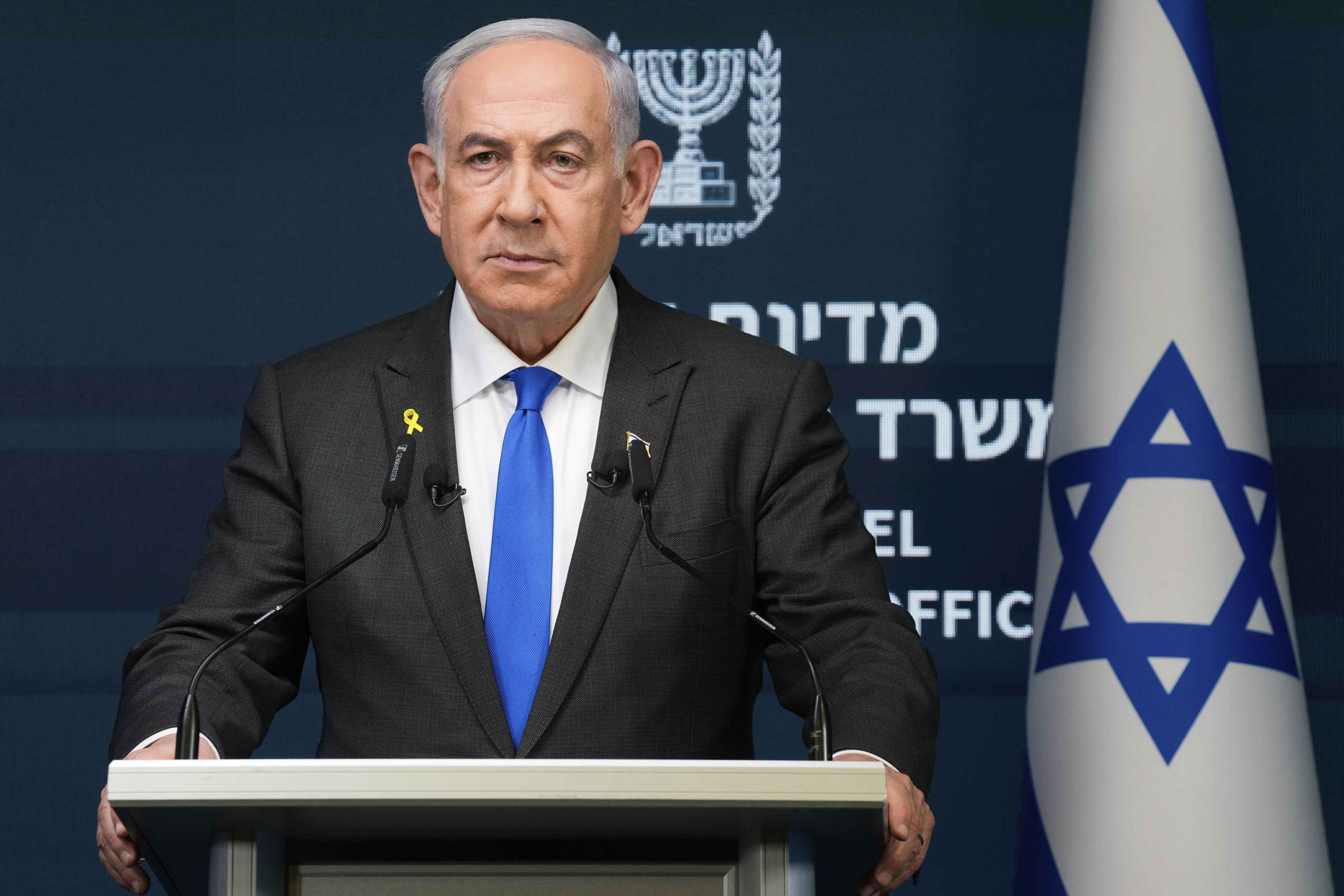
Israeli Prime Minister Benjamin Netanyahu speaks during a news conference in Jerusalem, Sept. 2, 2024.

via Associated Press

This is yet to be hashed out, but will most likely see all the remaining bodies of the Hamas hostages who died in captivity returned.

A three to five year reconstruction plan for Gaza may also be on the cards, overseen by international authorities.

It remains unclear exactly who would rule Gaza after the ceasefire as it is currently under Hamas’ control.

The US want to reform the Palestinian Authority – which is in control in the West Bank – to take over.

Top US diplomat Antony Blinken said Arab states should provide security in the short term, although many such countries may only agree if there is a scheme for Palestinian statehood outlined.

Israel is opposed to Palestinian statehood, but is yet to offer an alternative.

Who put forward the final plan?

The US, Qatar and Egypt developed the plan and presented it to both Israel and Hamas.

Envoys for both Joe Biden and Donald Trump have tried to take credit for any success, although it was the outgoing Democrat president who first outlined the plan eight months ago.

In a press conference on Wednesday, he said: “The result [is] not only of the extreme pressure Hamas has been under and the changed regional equation after a ceasefire in Lebanon and the weakening of Iran – but also of dogged and painstaking American diplomacy.”

But Biden also gave his successor a nod of recognition during his speech, acknowledging that Trump pressured both parties earlier this month and demanded the release of hostages before the president’s inauguration.

The president-elect posted on social media that the deal “could have only happened as a result of our historic victory in November”.

Netanyahu thanked them both, while Hamas’ chief negotiator Khalil al-Hayya said the deal was a “milestone in the conflict with the enemy” – although he warned the Palestinians “will not forget, and we will not forgive”.

Why did they reach an agreement now?

US secretary of state Anthony Blinken said the deal is similar to the one put forward last May but it’s thought the upcoming change in the White House was the biggest driver.

Trump’s inauguration (January 20) has applied pressure to the talks – and it’s thought Benjamin Netanyahu was hoping to seal the deal as a welcome present for the president-elect’s return.

According to the Israeli media, Trump’s envoy told the Israeli PM over the weekend that a peace deal had to happen.

Representatives from Israel and Hamas then started to conduct indirect talks in the same building for the first time.

Blinken also pointed to regional changes, saying in a press conference on Tuesday: “Hamas has been decimated. Iran is on its back foot.”

He said Hezbollah is also a “shadow of its former self” and pointed out that the Assad regime in Syria had also fallen.

Share Button

Patients dying in hospital corridors, say nurses

The Royal College of Nursing details harrowing cases from more than 5,000 nurses across the UK.

Share Button

Rise of vaccine distrust – why more of us are questioning jabs

Confidence in all types of vaccination has taken a hit. The question is why, and what can be done about it?

Share Button