The 48-year-old Scot says doctors have told him he has between two and four years to live.


The 48-year-old Scot says doctors have told him he has between two and four years to live.
The government is looking into whether weight-loss drugs can help get more people back to work.
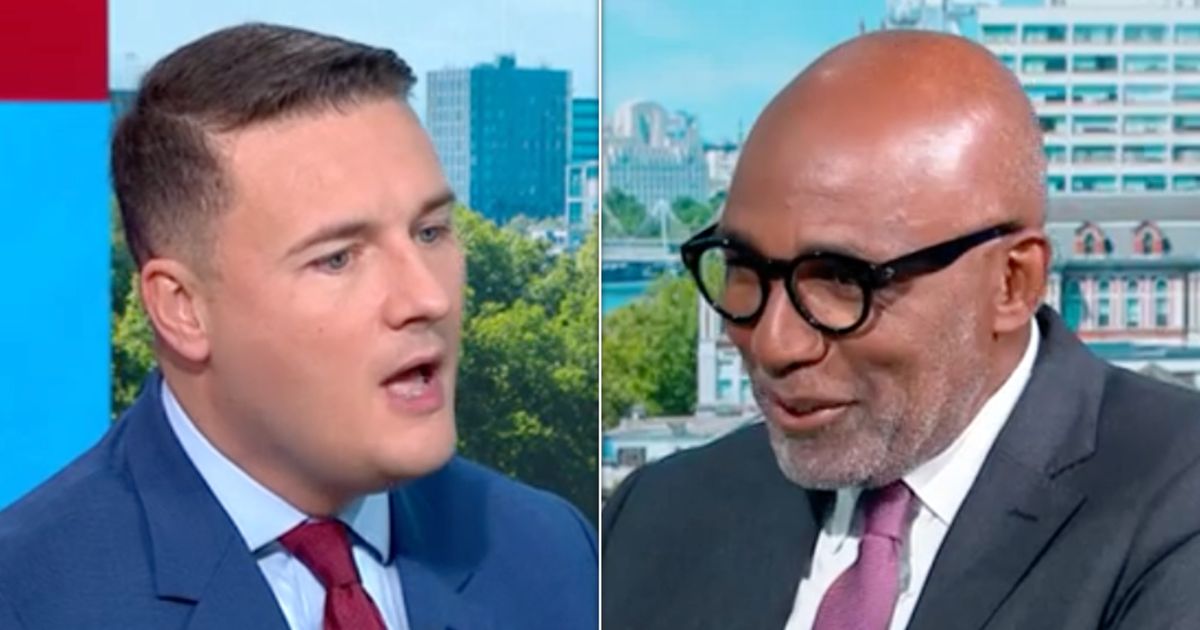
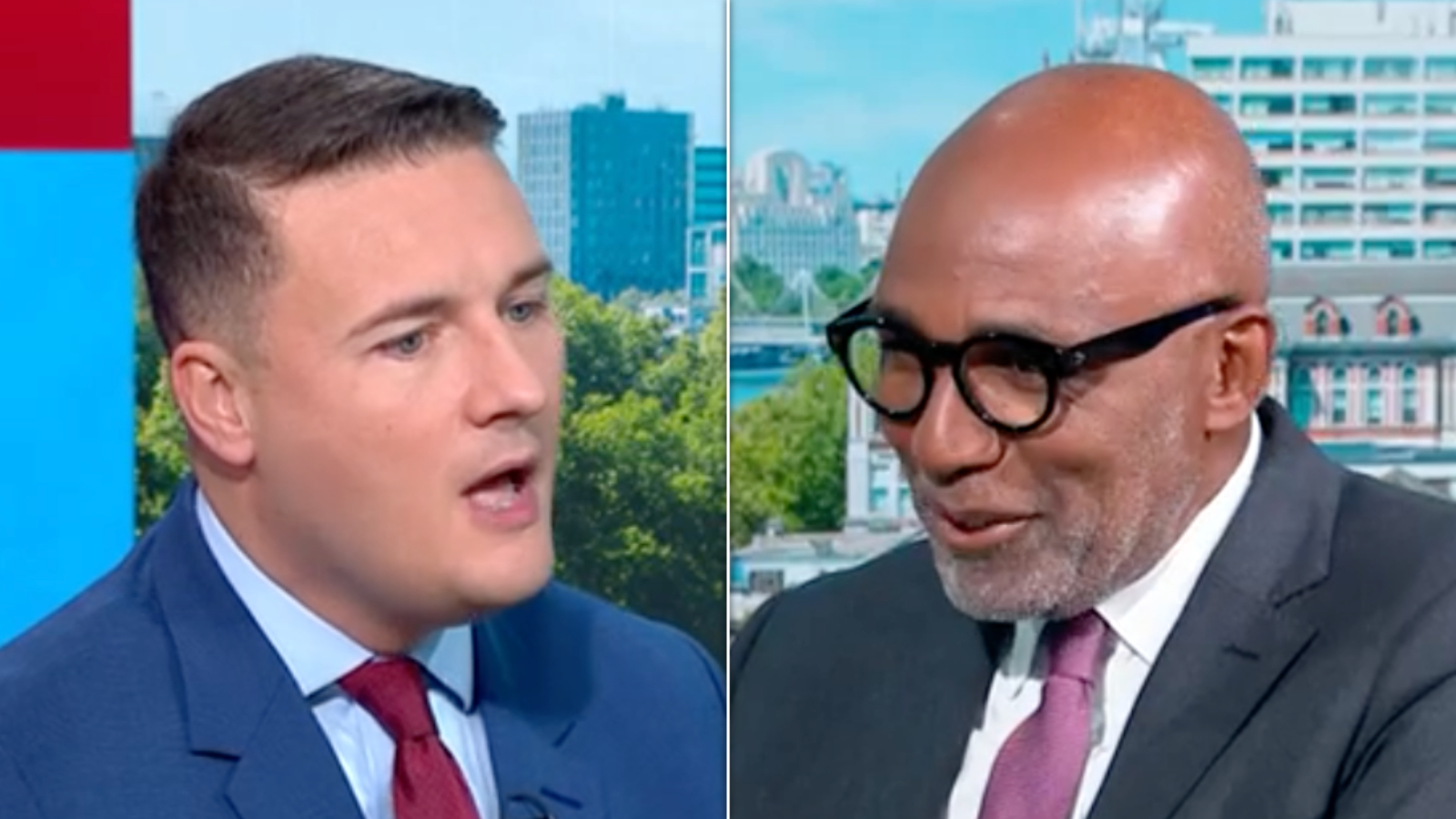
Sky News’ Trevor Phillips called out the government on Sunday morning by saying Labour’s manifesto had “terms and conditions” attached.
With less than two weeks to go until chancellor Rachel Reeves unveils her first Budget, the public are nervously waiting to see how she tries to raise £40bn in spending cuts and tax rises while also trying to avoid austerity measures.
Advertisement
Labour also promised before the election not to increase taxes for “working people”, particularly when it comes to VAT, income tax and National Insurance contributions.
In a clash with health secretary Wes Streeting, presenter Phillips asked how the “working people” label applies to the self-employed.
“Of course self-employed people are working people,” the cabinet minister replied, adding that when he thinks about the term, he means those who are on “low to middle incomes”.
Phillips asked: “Why is it then that in the legislation you’re going to introduce tomorrow on workers’ rights, you don’t redefine to include the self-employed?”
Advertisement
Streeting said that they have a “different working arrangement”.
The presenter asked: “So just in the same way you told us there would be no rise in National Insurance, but suddenly there’s rises in National Insurance for employers, it’s just possible there might be rises in taxes for the self-employed, because they’re not workers?”
The minister replied: “We will keep our manifesto promises, despite the pressures, we will not increase income tax, National Insurance or VAT on working people – that was the commitment we made before the general election.”
Phillips cut in: “Every expert says you’re breaking the pledge.”
Paul Johnson of the think tank Institute for Fiscal Studies (IFS) already said last week that putting up NI in any way would be a manifesto breach.
The health secretary claimed Labour had been criticised for not being radical enough in their manifesto in the run up to the general election, and that’s because they knew it had to be feasible to deliver on it.
As they spoke over each other, the presenter hit out: “You know what I want to do now? I want to say, I take that answer but terms and conditions apply.”
Advertisement
“What do you mean? Absolutely not,” Streeting said, saying Labour are going to deliver on every pledge they made in their manifesto.
For more than a year, we’ve been examining the scientific evidence and speaking to the experts at the centre of the case.
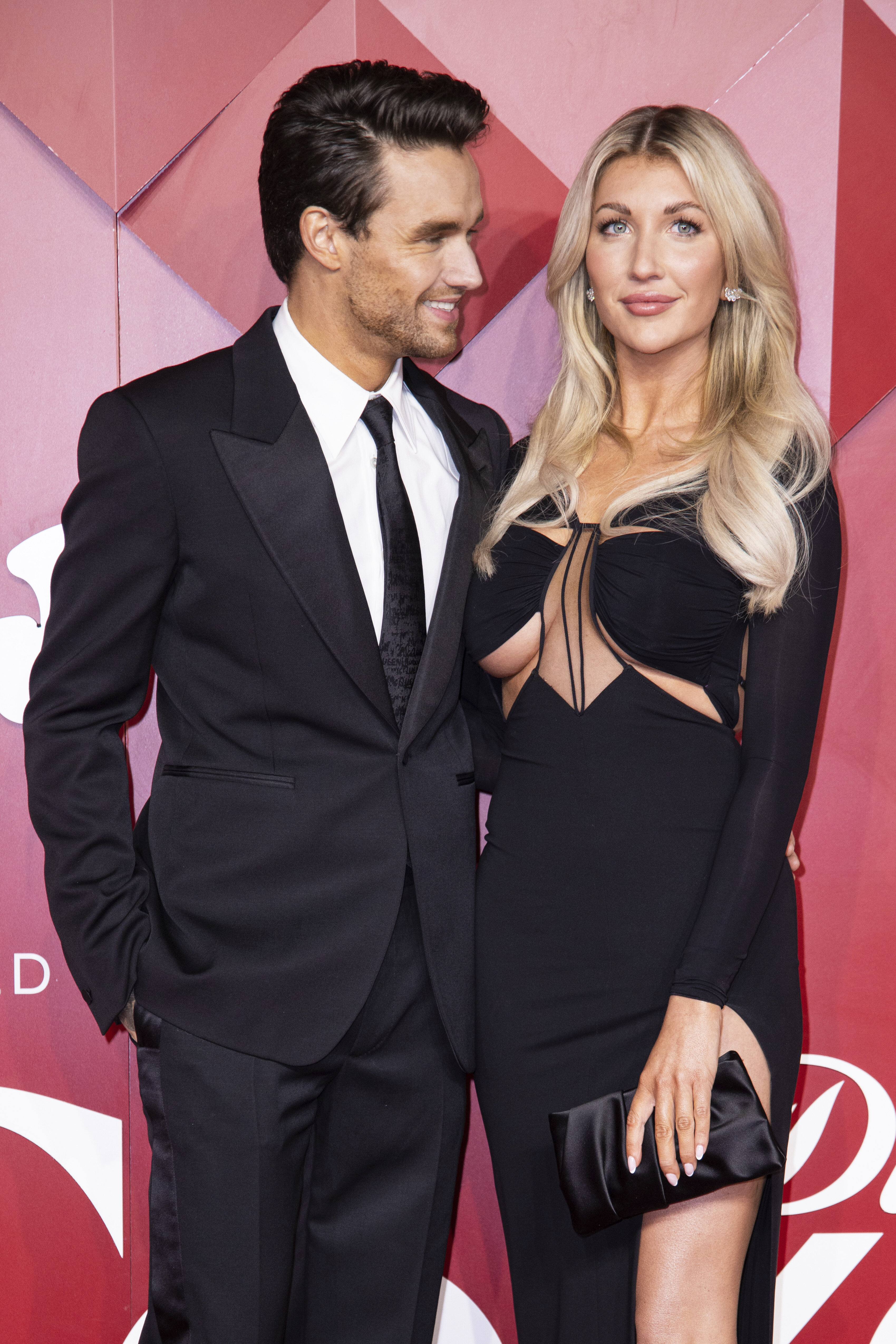
Liam Payne’s girlfriend, Kate Cassidy, is paying solemn tribute to the former One Direction singer two days after his death at age 31.
On Friday, the social media influencer shared an emotional note to her Instagram stories, in which she thanked supporters for “all of the kind words and love that has been sent my way” while requesting privacy as she processed her grief.
Advertisement
“Nothing about the past few days have felt real,” she wrote. “I ask and pray that you’ll give me the grace and space to navigate this in private.”
She ended her note by addressing Payne, her boyfriend of two years, directly.
“Liam, my angel. You are everything,” she wrote. “I want you to know I loved you unconditionally and completely. I will continue to love you for the rest of my life. I love you Liam.”
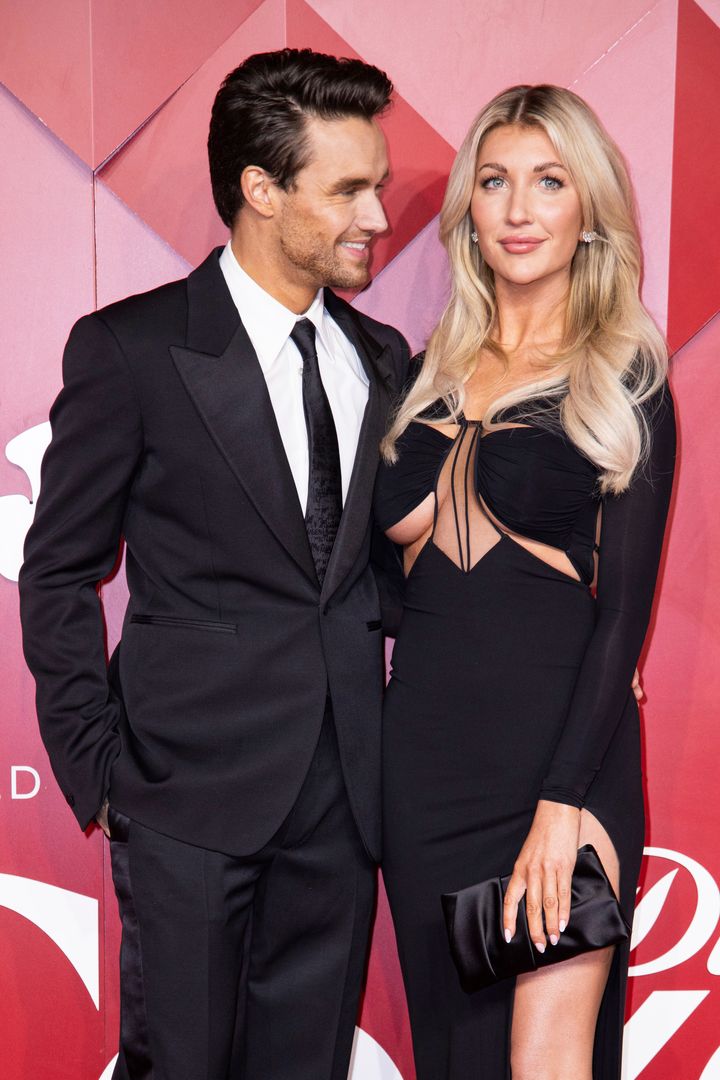
Vianney Le Caer via Associated Press
Payne was found dead Wednesday after falling from the third-floor balcony of a hotel in the Palermo neighbourhood of Buenos Aires, Argentina.
Advertisement
Cassidy, a New Jersey native, had recently traveled with Payne to Argentina. On Oct. 2, the couple were spotted at Buenos Aires’ Movistar Arena, where Payne’s former One Direction bandmate Niall Horan was performing.
Just days before Payne’s death, Cassidy confirmed on social media that she’d returned to the U.S., while he stayed behind in Argentina.
“We were supposed to be there for five days — turned into two weeks,” she said in a TikTok video. “And I was just like, ‘I need to go home.’”
Payne and Cassidy were first romantically linked in October 2022. They made their red-carpet debut as a couple at the British Fashion Awards later that year.


Barack Obama spent a while Friday night poking fun of Donald Trump’s odd behaviour as of late, warning that America would be getting “an older, loonier” version of him “with no guardrails” if he wins back the presidency next month.
“You would be worried if your grandpa was acting like this,” Obama joked to the crowd in Tucson as he stumped for Vice President Kamala Harris and Rep. Ruben Gallego, who’s vying for an open Senate seat there.
The former president laid in on Trump’s widely mocked town hall earlier this week, in which the GOP presidential nominee spent nearly 40 minutes swaying on stage to music instead of answering questions.
Advertisement
“Can you imagine if I did that?” Obama said. “Our playlist would probably be better.”
Then, addressing Trump’s recent head-scratching claim that he’s “the father of IVF,” Obama quipped: “I do not know what that means. You do not either.”
And Obama said his successor, who recently claimed the Jan. 6, 2021 insurrection in Washington, D.C. was a “day of love,” made the deadly riot “sound like it was Woodstock.”
Then his tone darkened. “Tucson, we do not need to see what an older, loonier Donald Trump looks like with no guardrails,” the former president warned.
Advertisement
Obama also regaled the crowd with commentary about Trump’s various business ventures, from his $400 gold high-tops to his six-figure watches.
“When he’s not complaining, he’s trying to sell you stuff,” Obama joked. “He’s got his gold sneakers, he’s got the $100,000 watch — says it’s a Swiss watch, but nobody can actually figure out where in Switzerland was this thing made.”
But Obama’s “favourite” Trump product, he said, is a $60 Trump-branded Bible.
“He’s got the Trump Bible ― wants you to buy the word of God, Donald Trump edition,” he continued. “His name’s gonna be on there, embossed, right next Luke and Mark and Matthew,” he said, referencing three of the gospels from the New Testament.

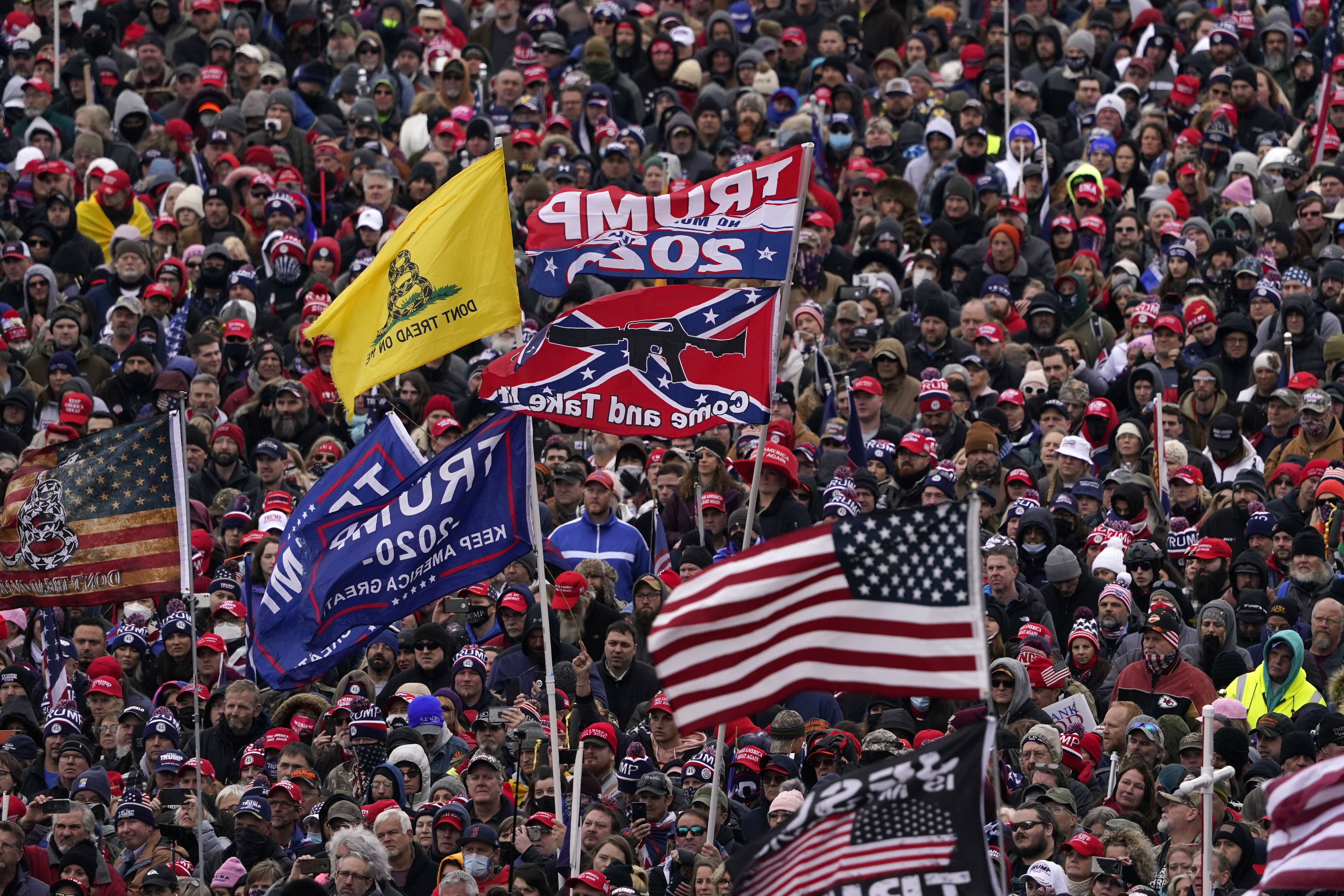
A four-part appendix detailing more about former President Donald Trump’s alleged criminal attempt to overturn the results of the 2020 election hit the public record on Friday.
U.S. District Judge Tanya Chutkan approved the public release on the federal criminal docket in Washington, D.C., late Thursday, following weeks of Trump requesting to keep the appendix out of the public eye.
Trump told the judge on Oct. 10 he needed more time to weigh his “litigation options” if she decided to admit the source materials publicly, arguing they could be damaging to jurors and the integrity of the case. Chutkan agreed to give him one week to respond and make his arguments at blocking the release. He filed a last-ditch motion early Thursday asking for more time, but was denied.
Advertisement
The appendix is split into four parts with sensitive information redacted. The four volumes total more than 1,800 pages.
Volume I is mostly transcripts of interviews with witnesses who testified before the House committee investigating the Jan. 6, 2021, attack on the U.S. Capitol.
There is a new detail in this first volume that stands out, however: testimony before the Jan. 6 committee from a White House valet to Trump.
The valet told the committee that on Jan. 6, when Trump was preparing to watch playback of his speech as violence erupted, Trump asked him if his “speech was cut off.” The valet told the committee that he tried to explain to Trump that it had been.
Advertisement
The record shows the valet appears to be reviewing photos with investigative counsel for the Jan. 6 committee when he is testifying about Trump’s reaction.
“And that’s pretty much the face I got the whole time, and it was kind of like he told me, Really? And I was like, yes sir,” the valet said.
This transcript with the valet has been released before — by House Republicans. But Smith’s version unmasks what they redacted.
The version published in March by Georgia Congressman Rep. Barry Loudermilk, the chair of the House Administration Subcommittee on Oversight, redacted the section where the valet tells investigators that after Trump said “let’s go see” when he was told that his speech was cut off, the valet took off Trump’s outer coat, got a television ready for him and handed him a remote.
“And he starts watching it. And I stepped out to get him a Diet Coke, come back in, and that’s pretty much it for me as he’s watching it and like, seeing it for himself,” the valet testified, according to Smith’s version.
Advertisement
The Republican version of the transcript also redacted when congressional investigators next asked the valet: “So, you set up the TV. Did you set it up for him to watch his speech or live coverage of what was happening at the Capitol?”
“Typically, that’s — a lot of times he’s in that back dining room a lot,” the valet said.
The contents of the transcript with the valet cut off here in Smith’s appendix once investigators asked the valet if he knew, in fact, whether Trump was watching the events at the Capitol.
Volume I also contains a previously public transcript in which Jan. 6 committee investigators ask a witness about whether Trump’s Jan. 6 speech draft was something his staffers categorised as “political” or “official.”
This is a key distinction for the special counsel’s team because it argues that Trump’s activities when he was in a campaign capacity are not official and therefore are prosecutable.
Notably, the witness first told committee investigators they didn’t recollect whether anybody told them that day if Trump’s speech at the Ellipse was a political one.
Advertisement
But “afterward,” the witness said, they knew that transcriptions of Trump’s speech went out via text and it was “styled ‘internal transcript.’”
“And my recollection is internal transcripts were political speeches,” the witness said.
Another transcript in the first volume features testimony from Greg Jacob, former Vice President Mike Pence’s legal counsel. The transcript in the Smith appendix redacts Jacob’s name, but a side-by-side comparison by HuffPost of the Jan. 6 committee transcript and the one Chutkan published Friday, confirms it is him.
Here the material Smith attaches to his immunity arguments zeroes in on testimony in which Jacob told the Jan. 6 committee about attempts by Trump darling and “coup memo” author John Eastman to convince Pence and Pence’s staff that a vice president had the constitutional authority to count slates and object to them.
This meant, according to Eastman, that anything in the existing legislation that governed the count, like the Electoral Count Act, was unconstitutional.
“But if we were to do what [Eastman] suggested, it would mean that none of those debates happened in Congress. None of those Senators would get to make their objections. We would be asserting we have the unilateral authority to do all of that,” Jacob testified.
Advertisement
Jacob expressed that Eastman appeared to understand the scheme wouldn’t work for Pence and it would be rejected if advanced.
“John, isn’t this just a terrible idea?” Jacob asked Eastman.
Eastman “didn’t quite get to saying yes,” Jacob said, but when he told Eastman that, if they took the fight all the way to the Supreme Court, they would lose 9-0, Eastman balked saying it would be 7-2 and he might have Justice Clarence Thomas on his side.
The men went over a few of Thomas’ opinions and Eastman backed off a bit, admitting he would lose 9-0.
Eastman told Jacob “they” would be “really disappointed.”
“They’re going to be really disappointed that I wasn’t able to persuade you,” Eastman allegedly told Jacob.
Eastman didn’t clarify who “they” referred to before he left the meeting with Jacob.
Volume II is heavily redacted and primarily features tweets from Trump in which he said there had been pervasive voter fraud in battleground states and called on state and election officials to address it. In tweets from November 2020, including on and around Election Day, Trump calls on the Supreme Court to decide the outcome or alleges that fraud in those battleground states is an “unsolvable problem.”
Advertisement
The records show how officials including Philadelphia City Commissioner Al Schmidt were forced to directly rebut Trump’s bunk claims online but often with demonstrably less effect on social media, given Trump’s reach on Twitter.
The tweets and retweets relate, in part, to Smith’s allegation that Trump was exacting a pressure campaign on election officials predicated on information he knew to be false and despite being told numerous times after Election Day that the election had been the most secure in history. Chris Krebs, former director of the Cybersecurity and Infrastructure Security Agency, made that announcement on Nov. 13. Former Attorney General William Barr would declare publicly on Dec. 1 that there was no evidence of voter fraud. None of that deterred Trump from pursuing his conspiracy theories, according to prosecutors.
This volume also shows tweets in which Trump calls on people to come to Washington on Jan. 6, 2021, and not just the first time, Dec. 19, 2020, when he blasted out the invite to his “wild” rally.
Smith’s appendix shows Chutkan that Trump sent out the call multiple times in December, including on Dec. 30, when he wrote, “JANUARY SIXTH, SEE YOU IN DC!”
The appendix also shows that Dec. 30 post was retweeted by Trump’s official “Team Trump” campaign account. So were several others.
Advertisement
Volume III has sections from Pence’s book, “So Help Me God.” Prosecutors highlighted certain passages in which Pence’s describes trying to console a despondent Trump over his defeat and Pence’s own awareness at the time that if there had been any voter fraud, it wasn’t enough to cost Republicans the 2020 election.
Other sections feature Pence’s recollection of Trump’s repeated calls to him on the eve of the U.S. Capitol attack.
“You gotta be tough tomorrow,” Pence recalled Trump telling him.
There are transcripts from court hearings in the third appendix, including a portion of one that took place in Arizona’s Maricopa County, where Trump and his cohorts peddled a fake elector scheme. Other transcripts come straight from political speeches Trump gave, including one on Jan. 4, 2021, when he endorsed Republican Senators Kelly Loeffler and David Perdue before a Georgia runoff election. Trump spent much of that rally talking about his own reelection campaign and claiming the presidential vote had been rigged.
“And I hope Mike Pence comes through for us, I have to tell you,” Trump said in a stump speech in Georgia, adding that he liked Pence but that if he didn’t “come through for us,” he wouldn’t “like him quite as much.”
Trump would echo those remarks 48 hours later at his speech on the Ellipse.
Volume III also includes copies of electoral vote certificates that so-called Trump electors tried to pass off in Pennsylvania, Nevada, Michigan, Arizona and Georgia.
Advertisement
Other records released Friday show a budget and trip plan for Jan. 4 to Jan. 6, in which close to $3 million was allotted for events with right-wing groups including Turning Point Action, Tea Party Express and Save the U.S. Senate.
Volume IV contains information that is mostly already in the public record and was obtained through the House Jan. 6 committee. Much of this 384-page document is redacted and it doesn’t offer much new to pore over. There are letters and emails already on the record about the strategy to advance fake electors as well as Pence’s letter issued on Jan. 6, 2021, stating that he did not have unilateral authority to determine which electoral slates should be counted.
It also includes a transcript of a town hall from May 2023 in which Trump defended his remarks made at the rally on the Ellipse on Jan. 6, 2021, and denied telling people to march to the Capitol that day.
The next big deadline Trump must meet in the election subversion case arrives Nov. 7, when he must reply to the 165-page immunity brief special counsel Jack Smith filed on Oct. 2. When he does, it is expected that Trump’s lawyers will emphasise that Trump genuinely believed there was widespread voter fraud and that he acted with the interest of the nation first to reverse his defeat.
Trump’s lawyers are also expected to push back on key distinctions Smith made around Trump as candidate for a new term in office versus Trump as commander-in-chief.
Advertisement
Smith’s immunity brief offered insight into Trump’s alleged conduct and frame of mind before and on Jan. 6, 2021, and included information on alleged efforts to advance fake electors in swing states that he lost to Joe Biden and pressure former Vice President Mike Pence to overturn the results.
It pored over tweets, emails and testimony from dozens of Trump White House officials, insiders or allies to establish the contours of the sweeping conspiracy that culminated into a violent, armed and deadly attack on the U.S. Capitol. Importantly, the brief also addressed which of Trump’s acts were and were not “official,” according to Smith, under the Supreme Court’s recent presidential immunity decision.
The Supreme Court’s ruling granted presidents absolute immunity for their core acts and “presumptive” immunity for all other official acts. But actions outside of core acts are not given this protection.
It will be up to Chutkan to decide whether Smith’s interpretations and attempts to rebut the “presumptive” immunity standards can survive the standards the nation’s highest court has now set.
Trump has pleaded not guilty to all charges he faces in the Jan. 6 case.
The rise of these treatments has major implications for how we think about obesity, says James Gallagher.

Trees are the most abundant natural resource living on Earth’s land masses, and North Carolina State University scientists and engineers are making headway in finding ways to use them as sustainable, environmentally benign alternatives to producing industrial chemicals from petroleum.
Lignin, a polymer that makes trees rigid and resistant to degradation, has proven problematic. Now those NC State researchers know why: They’ve identified the specific molecular property of lignin — its methoxy content — that determines just how hard, or easy, it would be to use microbial fermentation to turn trees and other plants into industrial chemicals.
The findings put us a step closer to making industrial chemicals from trees as an economically and environmentally sustainable alternative to chemicals derived from petroleum, said Robert Kelly, the corresponding author of a paper in the journal Science Advances detailing the discovery.
Kelly’s group previously proved that certain extreme thermophilic bacteria, which thrive in places such as Yellowstone National Park hot springs, can degrade the cellulose in trees — but “not to a great extent,” he said. “In other words, not at the level that would make economic and environmental sense for producing industrial chemicals.”
As Kelly explained, “It turns out that there’s more than just low lignin at play.”
To get around the high lignin problem with trees, Kelly, the director of NC State’s Biotechnology Program and Alcoa Professor in the Department of Chemical and Biomolecular Engineering, has been working for over 10 years with Associate Professor Jack Wang, the head of the Forest Biotechnology Program in NC State’s College of Natural Resources. Wang is also a faculty member with the N.C. Plant Sciences Initiative.
As reported in the journal Science in 2023, Wang and his colleagues used CRISPR genome editing technology to create poplar trees with modified lignin content and composition. They have focused on poplar trees because they are fast growing, require minimal use of pesticides and grow on marginal lands that are hard to grow food crops on.
Kelly’s group found that some, but not all, of these CRISPR-edited trees worked well for microbial degradation and fermentation. As his former Ph.D. student Ryan Bing explained, it turns out that these bacteria have different appetites for different types of plants.
“We can harness the ability of certain thermophilic bacteria from hot springs in places like Yellowstone National Park to eat the plant matter and convert it to products of interest. However, these bacteria have varying appetites for different types of plants,” said Bing, who now works as senior metabolic engineer for Capra Biosciences in Sterling, Virginia.
“The question was why? What makes one plant better than the next?” he explained. “We found an answer to this by looking at how these bacteria eat plant matter of various compositions.”
In a follow-up study, Kelly and Bing tested how well a genetically engineered bacterium originally isolated from hot springs in Kamchutka, Russia, Anaerocellum bescii, broke down Wang’s engineered poplar trees with markedly different lignin contents and composition.
The researchers found that the lower the tree’s lignin methoxy content was, the more degradable it was.
“This cleared up the mystery of why lower lignin alone is not the key — the devil was in the details,” Kelly said. “Low methoxy content likely makes the cellulose more available to the bacteria.”
Wang had created the low-lignin poplars to be better for papermaking and other fiber products, but the recent research suggests that engineered poplars that have not just low lignin but also low methoxy content are best for making chemicals through microbial fermentation.
Wang’s engineered poplars grow well in the greenhouse, but results aren’t in yet from field testing. Kelly’s group has previously shown that low lignin poplar trees can be converted to industrial chemicals, such as acetone and hydrogen gas, with favorable economic outcomes as well as low environmental impact.
If these trees hold up in the field and “if we keep working on our end,” Kelly said, “we will have microbes that make large amounts of chemicals from poplar trees, now that we know the marker to look for — the methoxy content.”
This gives researchers, like Wang, a specific target for producing poplar lines best suited for chemical production. Wang and colleagues have recently initiated field trials of advanced lignin modified poplar trees to address this question.
Right now, making chemicals from trees is doable by traditional means — chopping the wood into smaller pieces and then using chemicals and enzymes to pretreat it for further processing.
Using engineered microbes to break down lignin offers advantages, including lower energy requirements and lower environmental impact, Kelly said.
Enzymes can be used to break down cellulose into simple sugars, but they continually need to be added to the process. Certain microorganisms, on the other hand, continually produce the key enzymes that make the microbial process more economical, he said.
“They also can do a much better job than enzymes and chemicals,” Kelly added. “They not only break down the cellulose but also ferment it to products, such as ethanol — all in one step.
“The high temperatures that these bacteria grow at also avoid the need to work under sterile conditions, as you would need to do with less thermophilic microorganisms to avoid contamination,” he added. “This means that the process for turning trees into chemicals can operate like a conventional industrial process, making it more likely to be adopted.”
Daniel Sulis, another author on the Science Advances paper and a postdoctoral researcher in Wang’s lab, said that environmental disasters fueled by climate change highlight the urgent need to conduct research that finds ways to reduce dependence on fossil fuels.
“One promising solution lies in harnessing trees to meet society’s needs for chemicals, fuels and other bio-based products while safeguarding both the planet and human well-being,” Sulis added.
“These findings not only move the field forward but also lay the groundwork for further innovations in using trees for sustainable bio-based applications.”

University of Virginia School of Engineering and Applied Science professor Nikolaos Sidiropoulos has introduced a breakthrough in graph mining with the development of a new computational algorithm.
Graph mining, a method of analyzing networks like social media connections or biological systems, helps researchers discover meaningful patterns in how different elements interact. The new algorithm addresses the long-standing challenge of finding tightly connected clusters, known as triangle-dense subgraphs, within large networks — a problem that is critical in fields such as fraud detection, computational biology and data analysis.
The research, published in IEEE Transactions on Knowledge and Data Engineering, was a collaboration led by Aritra Konar, an assistant professor of electrical engineering at KU Leuven in Belgium who was previously a research scientist at UVA.
Graph mining algorithms typically focus on finding dense connections between individual pairs of points, such as two people who frequently communicate on social media. However, the researchers’ new method, known as the Triangle-Densest-k-Subgraph problem, goes a step further by looking at triangles of connections — groups of three points where each pair is linked. This approach captures more tightly knit relationships, like small groups of friends who all interact with each other, or clusters of genes that work together in biological processes.
“Our method doesn’t just look at single connections but considers how groups of three elements interact, which is crucial for understanding more complex networks,” explained Sidiropoulos, a professor in the Department of Electrical and Computer Engineering. “This allows us to find more meaningful patterns, even in massive datasets.”
Finding triangle-dense subgraphs is especially challenging because it’s difficult to solve efficiently with traditional methods. But the new algorithm uses what’s called submodular relaxation, a clever shortcut that simplifies the problem just enough to make it quicker to solve without losing important details.
This breakthrough opens new possibilities for understanding complex systems that rely on these deeper, multi-connection relationships. Locating subgroups and patterns could help uncover suspicious activity in fraud, identify community dynamics on social media, or help researchers analyze protein interactions or genetic relationships with greater precision.
