Part of Tom Hadrys’s bowel cut out during the operation was also left behind by the surgeon.


Part of Tom Hadrys’s bowel cut out during the operation was also left behind by the surgeon.

Using the James Webb Space Telescope, University of Copenhagen researchers have become the first to see the formation of three of the earliest galaxies in the universe, more than 13 billion years ago. The sensational discovery contributes important knowledge about the universe and is now published in the journal Science.
For the first time in the history of astronomy, researchers at the Niels Bohr Institute have witnessed the birth of three of the universe’s absolute earliest galaxies, somewhere between 13.3 and 13.4 billion years ago.
The discovery was made using the James Webb Space Telescope, which brought these first ‘live observations’ of formative galaxies down to us here on Earth.
Through the telescope, researchers were able to see signals from large amounts of gas that accumulate and accrete onto a mini-galaxy in the process of being built. While this is how galaxies are formed according to theories and computer simulations, it had never actually been witnessed.
“You could say that these are the first ‘direct’ images of galaxy formation that we’ve ever seen. Whereas the James Webb has previously shown us early galaxies at later stages of evolution, here we witness their very birth, and thus, the construction of the first star systems in the universe,” says Assistant Professor Kasper Elm Heintz from the Niels Bohr Institute, who led the new study.
Galaxies born shortly after the Big Bang
The researchers estimate the birth of the three galaxies to have occurred roughly 400-600 million years after the Big Bang, the explosion that began it all. While that sounds like a long time, it corresponds to galaxies forming during the first three to four percent of the universe’s 13.8-billion-year overall lifetime.
Shortly after the Big Bang, the universe was an enormous opaque gas of hydrogen atoms — unlike today, where the night sky is speckled with a blanket of well-defined stars.
“During the few hundred million years after the Big Bang, the first stars formed, before stars and gas began to coalesce into galaxies. This is the process that we see the beginning of in our observations,” explains Associate Professor Darach Watson.
The birth of galaxies took place at a time in the history of the universe known as the Epoch of Reionization, when the energy and light of some of the first galaxies broke through the mists of hydrogen gas.
It is precisely these large amounts of hydrogen gas that the researchers captured using the James Webb Space Telescope’s infrared vision. This is the most distant measurement of the cold, neutral hydrogen gas, which is the building block of the stars and galaxies, discovered by scientific researchers to date.
Adds to the understanding of our origins
The study was conducted by Kasper Elm Heintz, in close collaboration with, among others, research colleagues Darach Watson, Gabriel Brammer and PhD student Simone Vejlgaard from the Cosmic Dawn Center at the University of Copenhagen’s Niels Bohr Institute — a center whose stated goal is to investigate and understand the dawn of the universe. This latest result brings them much closer to doing just that.
The research team has already applied for more observation time with the James Webb Space Telescope, with hopes of expanding upon their new result and learning more about the earliest epoch in the formation of galaxies.
“For now, this is about mapping our new observations of galaxies being formed in even greater detail than before. At the same time, we are constantly trying to push the limit of how far out into the universe we can see. So, perhaps we’ll reach even further,” says Simone Vejlgaard.
According to the researcher, the new knowledge contributes to answering one of humanity’s most basic questions.
“One of the most fundamental questions that we humans have always asked is: ‘Where do we come from?’. Here, we piece together a bit more of the answer by shedding light on the moment that some of the universe’s first structures were created. It is a process that we’ll investigate further, until hopefully, we are able to fit even more pieces of the puzzle together,” concludes Associate Professor Gabriel Brammer.
The study was conducted by researchers Kasper E. Heintz, Darach Watson, Gabriel Brammer, Simone Vejlgaard, Anne Hutter, Victoria B. Strait, Jorryt Matthee, Pascal A. Oesch, Pall Jakobsson, Nial R. Tanvir, Peter Laursen, Rohan P. Naidu, Charlotte A. Mason, Meghana Killi, Intae Jung, Tiger Yu-Yang Hsiao, Abdurro’uf, Dan Coe, Pablo Arrabal Haro, Steven L. Finkelstein, & Sune Toft.
The Danish portion of the research is funded by the Danish National Research Foundation and the Carlsberg Foundation.
HOW THEY DID IT
Researchers were able to measure the formation of the universe’s first galaxies by using sophisticated models of how light from these galaxies was absorbed by the neutral gas located in and around them. This transition is known as the Lyman-alpha transition.
By measuring the light, the researchers were able to distinguish gas from the newly formed galaxies from other gas. These measurements were only possible thanks to the James Webb Space Telescope’s incredibly sensitive infrared spectrograph capabilities.
ABOUT THE EARLY UNIVERSE
The universe began its “life” about 13.8 billion years ago in an enormous explosion — the Big Bang. The event gave rise to an abundance of subatomic particles such as quarks and electrons. These particles aggregated to form protons and neutrons, which later coalesced into atomic nuclei. Roughly 380,000 years after the Big Bang, electrons began to orbit atomic nuclei, and the simplest atoms of the universe gradually formed.
The first stars were formed after a few hundred million years. And within the hearts of these stars, the larger and more complex atoms that we have around us were formed.
Later, stars coalesced into galaxies. The oldest galaxies known to us were formed about 3-400 million years after the Big Bang. Our own solar system came into being about 4.6 billion years ago — more than 9 billion years after the Big Bang.
A nine-year-old boy died from sepsis after doctors and nurses missed a “significant” GP note.
One child has been treated with Naloxene, usually given for opiate overdoses.
Parliament should pass the necessary bill to progress the legislation, government says.

Rishi Sunak’s bold decision to call a general election in the middle of yesterday’s downpour has opened the floodgates on social media.
The prime minister stood outside No.10 Downing Street, in the pouring rain, and declared a general election would be held on July 4.
Advertisement
He then immediately tried to rally voters with a few digs at Labour over the party’s campaigns and policies.
But, no one really focused on that. Most of the attention was on Sunak’s suit, which became completely sodden within minutes.
While all the journalists there to capture the historic moment were sensibly wearing coats or carrying umbrellas, the PM’s bizarre decision to go without for such a pivotal moment, has been demolished by everyone, including today’s newspapers.
Protesters also blared Labour’s 1997 election theme tune – D:Ream’s Things Will Only Get Better – throughout the PM’s speech.
Advertisement
And so critics were quick to coin the phrase “Things Will Only Get Wetter” in a scathing take on Sunak’s announcement.
Considering the Conservatives are around 20 points behind Labour in the opinion polls right now, the image of a downtrodden Sunak standing in the rain was seen as an apt metaphor by many people on social media.
Others pointed out that the Conservatives actually set up an expensive press conference room within No.10, which is warm, dry and available to use.
Either way, the impact that image of a soaked Sunak has had among his online critics – and the newspapers – is clearly significant.
Here’s a round-up of social media’s best jokes about the embarrassing PR gaffe…
Advertisement
Advertisement
Advertisement
Advertisement


According to Recycle Nation, microplastics have been found in an array of strange places, including bees, table salt, and even bottled water so maybe it was just a matter of time until the tiny fragments were found in human bodies.
Yes, that’s right, researchers at the University of Mexico looked at testicular tissue taken from both dogs and humans, finding microplastics in every sample, with a three times higher count in humans than in dogs.
Advertisement
Aside from being just incredibly concerning as it is, this news has led to researchers questioning whether microplastics are responsible for the decline in male fertility.
During the study, 12 different types of microplastics were identified and the most common one was polyethylene (PE) which is used to manufacture plastic bags and plastic bottles and is a major part of our plastic pollution problem.
The researchers couldn’t test human tissue for sperm count but they did do this for canine symptoms. There they found that higher levels of polyvinyl chloride (PVC) plastic correlated to a lower sperm count in the animals.
PVC is widely used in industrial and household products, leading researchers to worry that the plastic could be what’s causing falling sperm counts worldwide, which, according to Science Alert, have already been linked to heavy metals, pesticides and a variety of chemicals.
Advertisement
We still don’t know the full extent of what microplastics can do to the body, but they have been linked with inflammation and problems with digestion.
According to BBC Future, there is hope. The experts said: “Researchers are developing a number of approaches to help get rid of the plastic pollution in our environment. One approach has been to turn to fungi and bacteria that feed on plastic, breaking it down in the process.
“A species of beetle larvae that can devour polystyrene has also offered another potential solution. Others are looking at using water filtration techniques or chemical treatments that can remove microplastics.”


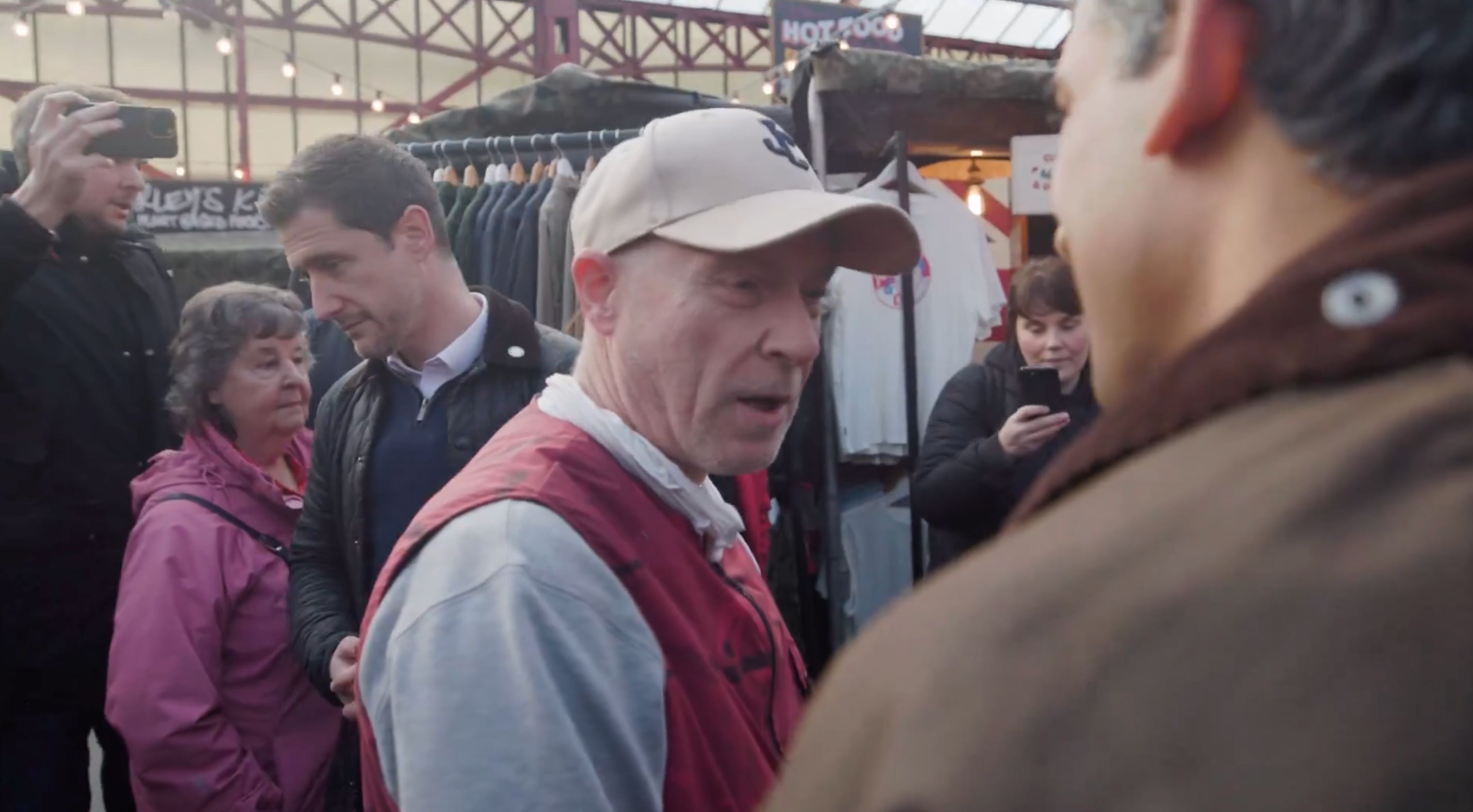
Rishi Sunak’s election campaign has been hit by another blunder after he released a video featuring a voter who said he came “close” to hitting him.
A slick promotional video published on X by Sunak, showed him delivering the speech in Downing Street and meeting voters across the country.
One member of the public Sunak is pictured with is Josef Schindler, in Altrincham market, on January 6.
Schindler posted a photograph of him and the prime minister on Facebook at the time.
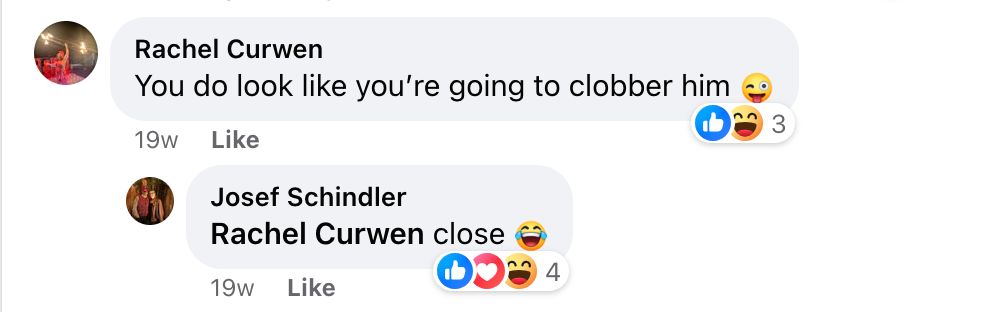
In the comments below the post, Schindler was told: “You do look like you’re going to clobber him.”
He reacted with a laughing emoji and replied simply: “close”.
His speech was also disrupted by Labour Party anthem ‘Things Can Only Get Better’ being played by protesters nearby.
The shambolic opening to the campaign was headlined “things can only get wetter” by the even the Conservative supporting Daily Telegraph.
In an interview with BBC Radio 4′s Today programme, Sunak said he was the “first to admit that it was a bit wet”.
Mandeep Dhillon has plenty of acting credits, but has just released Roll It Up – a personal, “deep song”.
Jersey politicians approve assisted dying plans for terminally ill by 32 votes to 14.
