Researchers have written up the unusual case in a medical journal.


Researchers have written up the unusual case in a medical journal.
Though last year’s mass bed bug invasion may have led most of us to understand the second half of the phrase, I’m willing to bet you’re not 100% certain on why we say “Night night, sleep tight.”
I, for one, had a sort of half-formed idea that it had something to do with trussing yourself up in tourniquet-like hotel duvets; I wondered whether maybe it had something to do with keeping your eyes shut tight, too.
Advertisement
But recently, TikToker @notmrspock suggested we were all wrong. In a recent video, the creator responded to a commenter’s question as to where the phrase came from.
“That’s an easy one,” he replied in the clip.
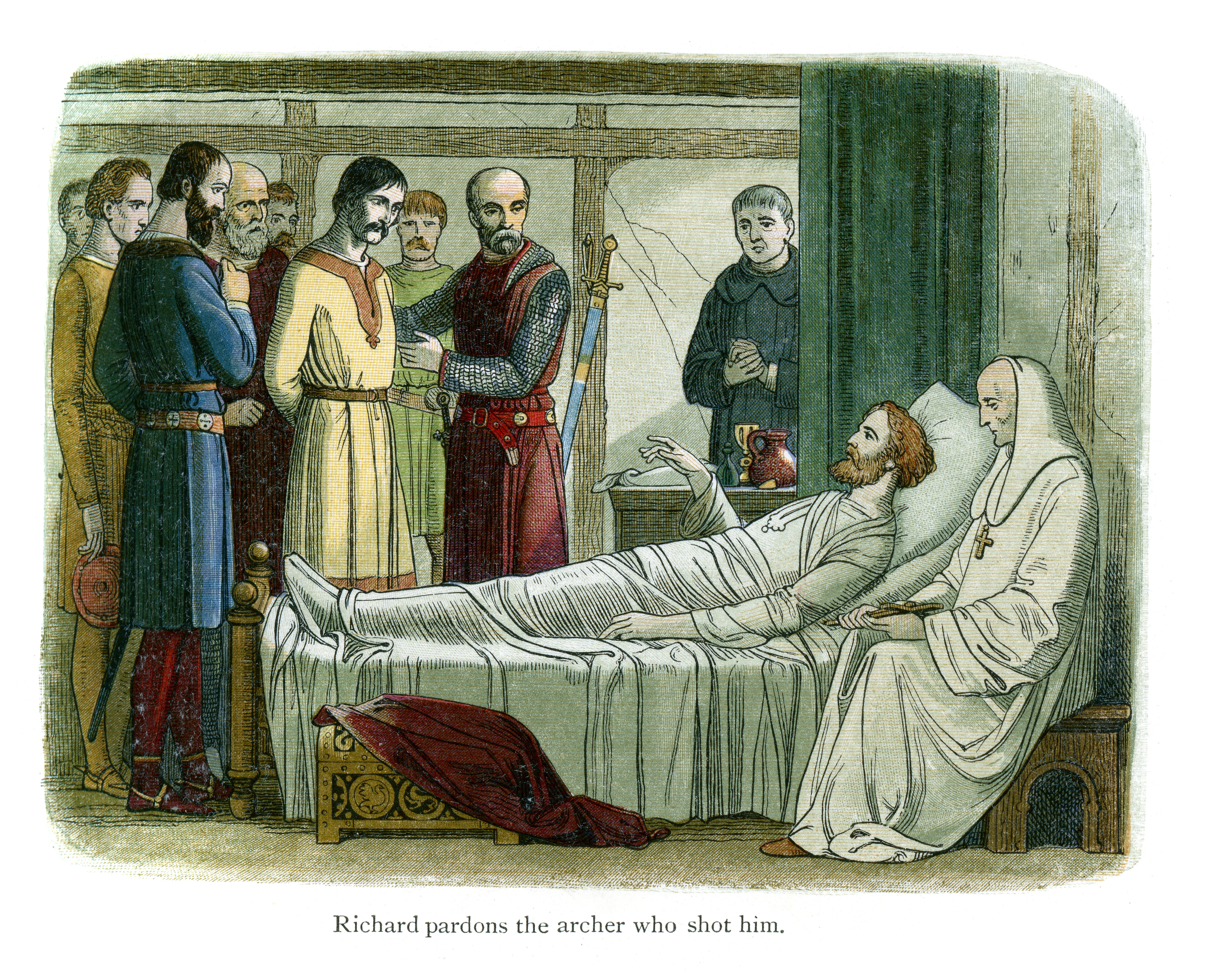
“In Medieval times, beds used to ― instead of having springs, they would have ropes underneath them to put a mattress or sack on,” the TikToker said.
“If the ropes were slack, the bed would really sag. So what would you do? You’d tighten up all the ropes so you have a nice, firm base to lay on,” the creator added; hence the expression, he suggested.
It’s a common story, appearing in Quora responses and BBC shows alike.
Rebecca Karstensen, Wylie House Museum Assistant and Docent for Indiana University, Bloomington, seemed to only partly agree with this assessment.
Advertisement
While it’s true that beds in the 16th century did use ropes, which did need to be tightened, the first recorded use of the phrase didn’t come until 1866 ― a while after the invention of the coil mattress, which took over rope beds rapidly.
“Goodbye little Diary. ‘Sleep tight and wake bright,’ for I will need you when I return,” the text reads, suggesting the term may have come about long after mos people used rope bedding.
So, the researcher looked into the origin of the word.
“According to the Oxford dictionary, the closely related adverb ‘tightly’ can also mean ‘safely’ or ‘soundly’,” the researcher found.
This would not only explain the phrase’s use to this day, but also seems to align more closely with what most people instinctively think of when we hear it.
“Since it sounds a bit catchier and poetic to say two one-syllable words as ‘sleep tight’ instead of the awkward 3-syllable ‘sleep tightly,’ that might explain why the suffix –ly was dropped from the word,” she added.
Advertisement
Writing for Cambridge’s Varsity publication, Georgie Thorpe points out that “The other issue is that it doesn’t quite make sense to tell someone to sleep tight when it’s their bed that needs to be tight, not them.”
So, though the rope beds are fascinating, “sleep tight” likely stuck around because it sounds pretty cosy ― and also rhymes with “night.”
Hey, not every fact can be as mind-blowing as the realisation that you cannot physically melt a Flake bar…
Consultants in England to vote on new deal after rejecting previous offer by narrow margin.
If you’re looking to bolster your cognitive abilities and keep your mind sharp throughout your lifetime, you may want to pick up a musical instrument. A recent study published in the International Journal of Geriatric Psychiatry found that playing is good for your brain health as you age.
Researchers examined 1,107 people in the U.K. over the age of 40 with an average age of 67.82. Participants self-reported their musical experience via a questionnaire and took part in a cognitive assessment, which tested their working memory and executive function. Researchers then studied how four aspects of musicality — listening to music, playing an instrument, singing and self-reported ability — impacted cognitive behavior and compared that to people who did not have a musical background.
Advertisement
“This large-scale, longitudinal study supports previous research indicating that musical training supports cognitive health by improving memory and lowering risk for age-related cognitive decline,” Dr. Gary Small, a memory, brain and aging expert at Hackensack Meridian Health in New Jersey, told HuffPost via email. Small is not affiliated with the study.
It’s worth noting that 83% of participants were women, so it’s not totally indicative of the general population. Another caveat is that some data was self-reported, said Dr. Arman Fesharaki-Zadeh, a behavioral neurologist and neuropsychiatrist at Yale Medicine in Connecticut, who is not affiliated with the study. Self-reporting leaves room for error; people may misremember their musical background or misunderstand a question.
Advertisement
Playing music largely involves your executive function, so it’s natural for folks with a musical background to see an improvement in the brain, said Dr. Golnaz Yadollahikhales, a neurologist at Cedars-Sinai in California, who is not affiliated with the study.
Your executive function refers to your “ability to multitask and organize oneself, and being able to sequence and prioritize,” Fesharaki-Zadeh explained. Additionally, playing music keeps you cognitively active, meaning it challenges your brain.
Advertisement
“Being cognitively active throughout one’s life can have a protective role” in brain health, Fesharaki-Zadeh continued. This is known as your cognitive reservoir (or cognitive reserve) and activities like playing music can build this up.
Yadollahikhales noted that she’s seen the study’s findings in her day-to-day work, too. People with a good cognitive reserve perform well even when their brain imaging has signs of atrophy. Brain atrophy is linked to issues like dementia and aphasia, according to the Cleveland Clinic.
“The patients of mine who were musicians or who were still playing music at the time of diagnosis would show better cognitive function than what was expected to be seen based on their structural imaging findings,” Yadollahikhales said.

Luis Alvarez via Getty Images
You may want to consider dabbling in music. The research and the experts who spoke to HuffPost were all pretty clear that playing musical instruments and singing can be beneficial for your long-term cognition.
Advertisement
If you’re ready to start some lessons and are open to the process, consider trying specific instruments. The study found that playing keyboard-based instruments, like the piano or organ, had the biggest benefit on memory and executive function, study author Anne Corbett told Newsweek, followed by brass and woodwind instruments.
The social aspect of music may be beneficial for your brain, too. Corbett also told Newsweek that the singers in the study had better complex task completion as they aged. But the study noted that the benefits that come with singing may also have to do with the social connections that are formed when singing with a choir or in a group setting.
“Music doesn’t usually happen in isolation,” Fesharaki-Zadeh said. Think about it: Music is often played in a group, practiced with a teacher or performed for other people. That social interaction is one of those protective factors for brain health, he added.
Bottom line: You’re never too old to start learning and challenging your brain.
“Overall, it is recommended that people start building their cognitive reserve early in life,” Yadollahikhales said. “This can be achieved by playing music and games such as puzzles, reading books and being physically active … also, as mentioned in this study as well, higher education can affect cognitive reserve positively.”
Even if it’s been years or even decades since you’ve challenged your brain to something new, hope is not lost. “We’re never too old to learn, I think that’s a known concept,” Fesharaki-Zadeh said. Benefits can be seen whether you’re 65 or 18.
Advertisement
Neurogenesis, the forming of new connections and new cells in the brain, is often not as robust for someone in their mid-70s when compared to someone, say, learning at a new job in their mid-20s. But by learning music (or by learning anything new) you activate this process again, Fesharaki-Zadeh added.
“So, let’s say somebody doesn’t have dementia [and] they’re wondering what are the ways that they can protect their brains against dementia — music could be potentially a viable strategy because it does incorporate a lot of the other factors such as learning, emotional well-being, social connections ― and they’re all great for the brain,” Fesharaki-Zadeh said.
It’s important to keep in mind that while you can control certain risk factors, you can’t control your genetics.
“Although this study demonstrates that musicality provides a significant cognitive benefit, other non-genetic … and genetic risk factors contribute to the risk of cognitive decline,” Small said. “So, even highly successful people with healthy lifestyles will develop dementia if they have a strong genetic predisposition.”
But, as Yadollahikhales mentioned above, if you build your cognitive reserve throughout your life, you’ll be better off if you do develop cognitive impairment or dementia. Studies “have shown that being cognitively, socially and physically active after the development of cognitive impairment and dementia can slow down the progression of the disease,” Yadollahikhales said.
Advertisement
So go ahead and pick up that guitar ― or whatever instrument makes you happy.
The doctors’ union is concerned about patient safety because of a new law regulating those roles.

On Monday, a live episode of Newsnight was broadcast from Doncaster as part of a series of town hall-style “on the road” programmes ahead of the general election.
The city is one of the areas to receive funding as part of the agenda to reduce regional inequalities, which was championed as “levelling up” by former prime minister Boris Johnson.
Advertisement
But when an audience in the newly-created Doncaster East and Isle of Axholme constituency were asked by presenter Victoria Derbyshire whether they’d experienced any impact of the policy, she was greeted with a unanimous “no” (See video at top of story).
When asked about the plan, Conservative MP Brendan Clarke-Smith, one of the panellists, put forward a version of Rishi Sunak’s “stick with the plan” argument.
He said: “We’re the only people who do actually have a plan, certainly in terms of how we want to invest. Now levelling up, of course, it’s something Boris Johnson made a big deal of in 2019.
Advertisement
“I think it’s not just about large cash transfers, though, it’s about pride in our communities. It’s about opportunities …”
While in full swing, Derbyshire interjected to say: “With respect, there are people here in the audience who are laughing at what you’re saying.”
Clarke-Smith, who represents a Nottinghamshire constituency, went on: “We just had a pandemic for two years. We spent £400 billion on that. That’s going to impact a lot of things. It’s impacted the NHS. It’s impacted a lot of building projects. It’s impacted all of these things together, so we are still recovering from that.”
He added: “But we’re going on the right path. We’re getting inflation down and we will see that levelling up and we will see that investment, including here in Doncaster East.”


Plant genomics has come a long way since Cold Spring Harbor Laboratory (CSHL) helped sequence the first plant genome. But engineering the perfect crop is still, in many ways, a game of chance. Making the same DNA mutation in two different plants doesn’t always give us the crop traits we want. The question is why not? CSHL plant biologists just dug up a reason.
CSHL Professor and HHMI Investigator Zachary Lippman and his team discovered that tomato and Arabidopsis thaliana plants can use very different regulatory systems to control the same exact gene. Incredibly, they linked this behavior to extreme genetic makeovers that occurred over 125 million years of evolution.
The scientists used genome editing to create over 70 mutant strains of tomato and Arabidopsis thaliana plants. Each mutation deleted a piece of regulatory DNA around a gene known as CLV3. They then analyzed the effect each mutation had on plant growth and development. When the DNA keeping CLV3 in check was mutated too much, fruit growth exploded.
Danielle Ciren, a recent CSHL School of Biological Sciences graduate who led this study, explains, “CLV3 helps plants develop normally. If it wasn’t turned on at the exact time that it is, then plants would look very different. All the fruits would be ginormous and not ideal. You have to balance growth and yield. If a plant has giant tomatoes but only two, is that as beneficial as a lower yield? There’s no simple solution. You’re always sacrificing something when you’re trying to get something improved.”
For tomatoes, engineering mutations near the beginning but not the end of the CLV3 gene dramatically affected fruit size. For Arabidopsis, areas around both parts of the gene needed to be disrupted. This indicates something happened over the last 125 million years that made the plants evolve differently. Exactly what occurred remains a mystery.
“You can’t go back to the common ancestor because they don’t exist anymore. So it’s hard to say what was the original state and how have things been mixed up,” says Ciren. “The most simple explanation is that there’s a regulatory element that’s conserved in some capacity, and it’s been altered in subtle ways. It is a bit unexpected.”
What is certain is that genetic regulation is not uniform between plant species. Unearthing these genetic differences could help make crop genome engineering more predictable. And that would be a big win not just for science but for farmers and plant breeders across the globe.

Looking deeply into space and time, two teams using NASA’s James Webb Space Telescope have studied the exceptionally luminous galaxy GN-z11, which existed when our 13.8 billion-year-old universe was only about 430 million years old.
Initially detected with NASA’s Hubble Space Telescope, this galaxy — one of the youngest and most distant ever observed — is so bright that it is challenging scientists to understand why. Now, GN-z11 is giving up some of its secrets.
Vigorous Black Hole Is Most Distant Ever Found
A team studying GN-z11 with Webb found the first clear evidence that the galaxy is hosting a central, supermassive black hole that is rapidly accreting matter. Their finding makes this the farthest active supermassive black hole spotted to date.
“We found extremely dense gas that is common in the vicinity of supermassive black holes accreting gas,” explained principal investigator Roberto Maiolino of the Cavendish Laboratory and the Kavli Institute of Cosmology at the University of Cambridge in the United Kingdom. “These were the first clear signatures that GN-z11 is hosting a black hole that is gobbling matter.”
Using Webb, the team also found indications of ionized chemical elements typically observed near accreting supermassive black holes. Additionally, they discovered a very powerful wind being expelled by the galaxy. Such high-velocity winds are typically driven by processes associated with vigorously accreting supermassive black holes.
“Webb’s NIRCam (Near-Infrared Camera) has revealed an extended component, tracing the host galaxy, and a central, compact source whose colors are consistent with those of an accretion disk surrounding a black hole,” said investigator Hannah Übler, also of the Cavendish Laboratory and the Kavli Institute.
Together, this evidence shows that GN-z11 hosts a 2-million-solar-mass, supermassive black hole in a very active phase of consuming matter, which is why it’s so luminous.
Pristine Gas Clump in GN-z11’s Halo Intrigues Researchers
A second team, also led by Maiolino, used Webb’s NIRSpec (Near-Infrared Spectrograph) to find a gaseous clump of helium in the halo surrounding GN-z11.
“The fact that we don’t see anything else beyond helium suggests that this clump must be fairly pristine,” said Maiolino. “This is something that was expected by theory and simulations in the vicinity of particularly massive galaxies from these epochs — that there should be pockets of pristine gas surviving in the halo, and these may collapse and form Population III star clusters.”
Finding the never-before-seen Population III stars — the first generation of stars formed almost entirely from hydrogen and helium — is one of the most important goals of modern astrophysics. These stars are anticipated to be very massive, very luminous, and very hot. Their expected signature is the presence of ionized helium and the absence of chemical elements heavier than helium.
The formation of the first stars and galaxies marks a fundamental shift in cosmic history, during which the universe evolved from a dark and relatively simple state into the highly structured and complex environment we see today.
In future Webb observations, Maiolino, Übler, and their team will explore GN-z11 in greater depth, and they hope to strengthen the case for the Population III stars that may be forming in its halo.
The research on the pristine gas clump in GN-z11’s halo has been accepted for publication by Astronomy & Astrophysics. The results of the study of GN-z11’s black hole were published in the journal Nature on January 17, 2024. The data was obtained as part of the JWST Advanced Deep Extragalactic Survey (JADES), a joint project between the NIRCam and NIRSpec teams.

Scientists have developed a new robot that can ‘mimic’ the two-handed movements of care-workers as they dress an individual.
Until now, assistive dressing robots, designed to help an elderly person or a person with a disability get dressed, have been created in the laboratory as a one-armed machine, but research has shown that this can be uncomfortable for the person in care or impractical.
To tackle this problem, Dr Jihong Zhu, a robotics researcher at the University of York’s Institute for Safe Autonomy, proposed a two-armed assistive dressing scheme, which has not been attempted in previous research, but inspired by caregivers who have demonstrated that specific actions are required to reduce discomfort and distress to the individual in their care.
It is thought that this technology could be significant in the social care system to allow care-workers to spend less time on practical tasks and more time on the health and mental well-being of individuals.
Dr Zhu gathered important information on how care-workers moved during a dressing exercise, through allowing a robot to observe and learn from human movements and then, through AI, generate a model that mimics how human helpers do their task.
This allowed the researchers to gather enough data to illustrate that two hands were needed for dressing and not one, as well as information on the angles that the arms make, and the need for a human to intervene and stop or alter certain movements.
Dr Zhu, from the University of York’s Institute for Safe Autonomy and the School of Physics, Engineering and Technology, said: “We know that practical tasks, such as getting dressed, can be done by a robot, freeing up a care-worker to concentrate more on providing companionship and observing the general well-being of the individual in their care. It has been tested in the laboratory, but for this to work outside of the lab we really needed to understand how care-workers did this task in real-time.
“We adopted a method called learning from demonstration, which means that you don’t need an expert to programme a robot, a human just needs to demonstrate the motion that is required of the robot and the robot learns that action. It was clear that for care workers two arms were needed to properly attend to the needs of individuals with different abilities.
“One hand holds the individual’s hand to guide them comfortably through the arm of a shirt, for example, whilst at the same time the other hand moves the garment up and around or over. With the current one-armed machine scheme a patient is required to do too much work in order for a robot to assist them, moving their arm up in the air or bending it in ways that they might not be able to do.”
The team were also able to build algorithms that made the robotic arm flexible enough in its movements for it to perform the pulling and lifting actions, but also be prevented from making an action by the gentle touch of a human hand, or guided out of an action by a human hand moving the hand left or right, up or down, without the robot resisting.
Dr Zhu said: “Human modelling can really help with efficient and safe human and robot interactions, but it is not only important to ensure it performs the task, but that it can be halted or changed mid-action should an individual desire it. Trust is a significant part of this process, and the next step in this research is testing the robot’s safety limitations and whether it will be accepted by those who need it most.”
The research, in collaboration with researchers from TU Delft and Honda Research Institute Europe, was funded by the Honda Research Institute Europe.
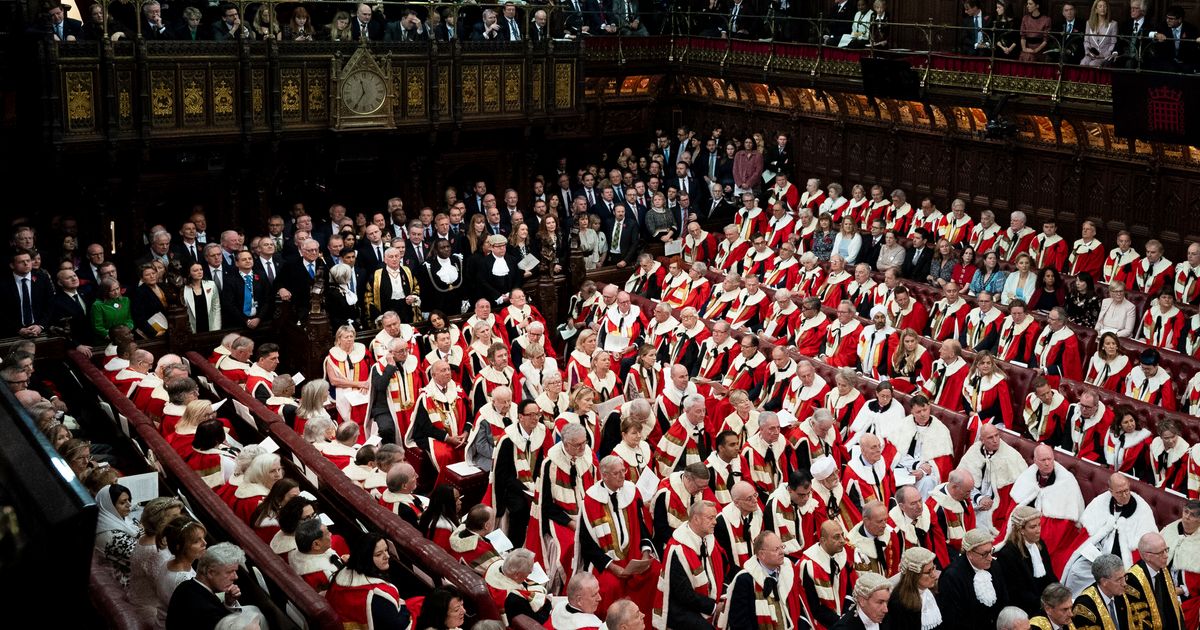
The House of Lords has inflicted five defeats on the government over its controversial Rwanda scheme.
In another headache for Rishi Sunak, the unelected upper chamber voted by a majority of 102 to back a move to ensure the proposed legislation is fully compliant with domestic and international law.
Advertisement
The first defeat on the Safety of Rwanda Bill was followed by four more – including insisting parliament cannot declare Rwanda to be a safe country until the treaty with its promised safeguards is fully implemented, and a vote in favour of establishing a monitoring mechanism for the UK-Rwanda pact.
It paves the way for a back-and-forth between the elected Commons and the Lords, which is often referred to as parliamentary “ping-pong”, meaning MPs can overturn the changes at later stages in the process.
The Safety of Rwanda Bill is designed to overcome legal challenges to past attempts to send asylum seekers with a one-way ticket to the east African country.
Advertisement
The bill would compel judges to regard Rwanda as safe, and give ministers the power to ignore emergency injunctions.
The policy is central to the prime minister’s hopes of convincing voters he can “stop the boats” crossing the English channel.
The government hopes once the bill passes flights will be able to take off by the spring, but that timetable now looks in disarray.
Dick Newby, Liberal Democrat leader in the Lords, said: “For months this Conservative government has been pushing this policy that does nothing to solve the asylum backlog.
“This bill has cost hundreds of millions of pounds, and doesn’t combat dangerous Channel crossings or create safe, legal routes.
Advertisement
“By declaring Rwanda safe when it is clearly anything but, and excluding the courts, the bill also undermines the rule of law. It is the product of a morally and politically bankrupt government.”
Speaking in the Lords, Conservative grandee Lord Tugendhat, whose nephew is security minister Tom Tugendhat, accused the government of behaving like the ruling party in George Orwell’s dystopian novel 1984.
“This country is no dictatorship, it is a democracy,” he said. “If this bill goes onto the statute book in its present form, Rwanda will be a safe country regardless of reality until the statute is repealed.”
This is a breaking news story and will be updated. Follow HuffPost UK on Twitter, Facebook and Instagram.

