Inexpensive, carbon-neutral biofuels are finally possible

When it comes to making fuel from plants, the first step has always been the hardest — breaking down the plant matter. A new study finds that introducing a simple, renewable chemical to the pretreatment step can finally make next-generation biofuel production both cost-effective and carbon neutral.

For biofuels to compete with petroleum, biorefinery operations must be designed to better utilize lignin. Lignin is one of the main components of plant cell walls. It provides plants with greater structural integrity and resiliency from microbial attacks. However, these natural properties of lignin also make it difficult to extract and utilize from the plant matter, also known as biomass.

“Lignin utilization is the gateway to making what you want out of biomass in the most economical and environmentally friendly way possible,” said UC Riverside Associate Research Professor Charles Cai. “Designing a process that can better utilize both the lignin and sugars found in biomass is one of the most exciting technical challenges in this field.”

To overcome the lignin hurdle, Cai invented CELF, which stands for co-solvent enhanced lignocellulosic fractionation. It is an innovative biomass pretreatment technology.

“CELF uses tetrahydrofuran or THF to supplement water and dilute acid during biomass pretreatment. It improves overall efficiency and adds lignin extraction capabilities,” Cai said. “Best of all, THF itself can be made from biomass sugars.”

A landmark Energy & Environmental Science paper details the degree to which a CELF biorefinery offers economic and environmental benefits over both petroleum-based fuels and earlier biofuel production methods.

The paper is a collaboration between Cai’s research team at UCR, the Center for Bioenergy Innovation managed by Oak Ridge National Laboratories, and the National Renewable Energy Laboratory, with funding provided by the U.S. Department of Energy’s Office of Science. In it, the researchers consider two main variables: what kind of biomass is most ideal and what to do with the lignin once it’s been extracted.

First-generation biofuel operations use food crops like corn, soy, and sugarcane as raw materials, or feedstocks. Because these feedstocks divert land and water away from food production, using themfor biofuels is not ideal.

Second-generation operations use non-edible plant biomass as feedstocks. An example of biomass feedstocks includes wood residues from milling operations, sugarcane bagasse, or corn stover, all of which are abundant low-cost byproducts of forestry and agricultural operations.

According to the Department of Energy, up to a billion tons per year of biomass could be made available for the manufacture of biofuels and bioproducts in the US alone, capable of displacing 30% of our petroleum consumption while also creating new domestic jobs.

Because a CELF biorefinery can more fully utilize plant matter than earlier second-generation methods, the researchers found that a heavier, denser feedstock like hardwood poplar is preferable over less carbon-dense corn stover for yielding greater economic and environmental benefits.

Using poplar in a CELF biorefinery, the researchers demonstrate that sustainable aviation fuel could be made at a break-even price as low as $3.15 per gallon of gasoline equivalent. The current average cost for a gallon of jet fuel in the U.S. is $5.96.

The U.S. government issues credits for biofuel production in the form of renewable identification number credits, a subsidy meant to bolster domestic biofuel production. The tier of these credits issued for second-generation biofuels, the D3 tier, is typically traded at $1 per gallon or higher. At this price per credit, the paper demonstrates that one can expect a rate of return of over 20% from the operation.

“Spending a little more for a more carbon-rich feedstock like poplar still yields more economic benefits than a cheaper feedstock like corn stover, because you can make more fuel and chemicals from it,” Cai said.

The paper also illustrates how lignin utilization can positively contribute to overall biorefinery economics while keeping the carbon footprint as low as possible. In older biorefinery models, where biomass is cooked in water and acid, the lignin is mostly unusable for more than its heating value.

“The older models would elect to burn the lignin to supplement heat and energy for these biorefineries because they could mostly only leverage the sugars in the biomass — a costly proposition that leaves a lot of value off the table,” said Cai.

In addition to better lignin utilization, the CELF biorefinery model also proposes to produce renewable chemicals. These chemicals could be used as building blocks for bioplastics and food and drink flavoring compounds. These chemicals take up some of the carbon in the plant biomass that would not get released back into the atmosphere as CO2.

“Adding THF helps reduce the energy cost of pretreatment and helps isolate lignin, so you wouldn’t have to burn it anymore. On top of that, we can make renewable chemicals that help us achieve a near-zero global warming potential,” Cai said. “I think this moves the needle from Gen 2 biofuels to Gen 2+.”

In light of the team’s recent successes, the Department of Energy’s Bioenergy Technology Office has awarded the researchers a $2 million grant to build a small-scale CELF pilot plant at UCR. Cai hopes that demonstrating the pilot plant will lead to larger-scale investment in the technology, as harnessing energy from fossil fuels adds to global warming and hurts the planet.

“I began this work more than a decade ago because I wanted to make an impact. I wanted to find a viable alternative to fossil fuels and my colleagues and I have done that,” Cai said. “Using CELF, we have shown it is possible to create cost-effective fuels from biomass and lignin and help curb our contribution of carbon emissions into the atmosphere.”


Share Button

Olivia Colman Had These Three Words To Say About Emma Stone In Poor Things

The film has won over hearts and critics with its ethereal, strange plot and performances from Emma Stone and Mark Ruffalo but now, Poor Things has been rated by the most important person of all: Olivia Colman.

Of course, Olivia has worked with Poor Things director Yorgos Lanthimos previously on The Favourite, along with Emma Stone and Rachel Weisz: a film that the British Film Institute rated as one of the best released that year.

Speaking about Olivia, Emma said: “Olivia is like a marshmallow of a human being — like the most warm, gooey, lovey person you know. She’s just an absolute heart of a person.”

So, when it came to her opinion of Poor Things — a very personal project for Emma —, we reckon it was incredibly important to the actress.

Now, in a clip shared on TikTok by production company Searchlight Pictures, we learn exactly how Colman feels.

“You make me want to cry”

In the clip, Olivia starts by telling Emma that she knows compliments are awkward for her and tells her to channel her character from Poor Things and just say “thank you” in response to praise.

Olivia then says: “I think what you did was exquisite, and beautiful and brave.” She adds that everything Emma does always blows her mind but, “this whole thing was creative filmmaking that you just never see that Yorgos did and you were part of that.”

As well as starring in the lead role, Emma was also a producer on the film, and, in fact, her fellow producers stated that the film could not have gone ahead without her.

Continuing in her lavishing praise as Emma was clearly moved, Olivia said, “you go at things, you know, head first, and you blew me away. I do mean that. I can’t lie.”

Emma tearily responded saying: “I love you Colman. I LOVE YA.”

Ah, what a pair.

Share Button

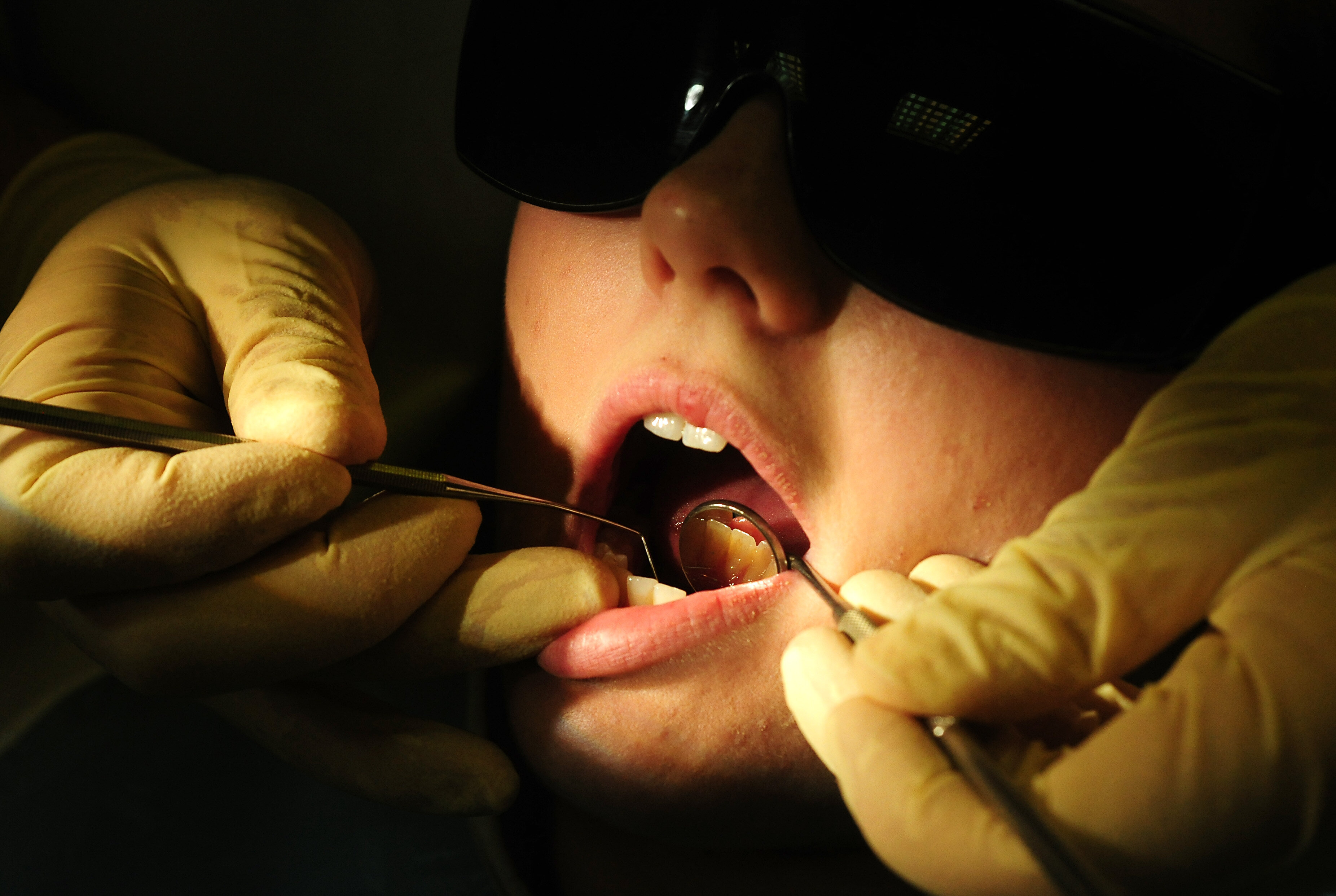
‘Where I live, many people don’t have teeth’

As the government unveils its NHS dentistry plan, people in England speak about their fight to get seen.

Share Button

Health scandal victims need payouts soon – report

Patient watchdog calls for payouts for those left disabled by an epilepsy drug or hurt by pelvic mesh.

Share Button

Dentist shortages to be tackled with cash incentive

Dental leaders say new measures to improve access to care in England do not go far enough in meeting needs.

Share Button

Tory Ministers Left Red Faced After New ‘Dental Recovery Plan’ Accidentally Sent To Every MP

Government officials accidentally sent top secret plans to boost NHS dental care to every MP in the Commons.

The ‘Dental Recovery Plan’, which will see dentists offered a £20,000 “bonus” to encourage them to take on more NHS patients, was not supposed to be unveiled until tomorrow.

But the blueprint, seen by HuffPost UK, landed in MPs’ email inboxes at lunchtime today.

Under the plans, ministers will spend an extra £200 million “to ensure everyone has fast and fair access to a dentist when they need one”.

Up to 240 dentists will receive the £20,000 payment to treat NHS payments for at least three years in so-called “dental deserts” areas where recruitment and retention is difficult.

A new “smile for life” scheme will see children in the first year of primary school will be given lessons on oral hygiene.

The move echoes a Labour plan for supervised toothbrushing for all 3 to 5 year-olds – which has been criticised by some Tory MPs.

Mobile dental teams will also be sent into schools in areas with fewer dentists to provide advice and fluoride treatment to 165,000 children.

The scale of the dental crisis in England has been highlighted this week by images of huge queues of people trying to sign up for an NHS dentist in Bristol.

Shadow health secretary Wes Streeting said: “After 14 years of Conservative neglect, patients are desperately queuing around the block to see a dentist, literally pulling their own teeth out, and tooth decay is the number one reason for 6–10 year-olds being admitted to hospital.

“The Conservatives are only promising to do something about it now there’s an election coming. By adopting Labour’s proposals for recruitment and supervised toothbrushing, they are finally admitting that they are out of ideas of their own.

“It will be left to the next Labour government to rescue NHS dentistry and get patients seen on time once again.”

Dentists have also condemned the government plan.

Shawn Charlwood, chair of the British Dental Association’s general dental practice committee, said: “This ‘Recovery Plan’ is not worthy of the title.

“It won’t halt the exodus from the workforce or offer hope to millions struggling to access care. Nothing here meets government’s stated ambitions, or makes this service fit for the future.

“Ministers wanted to stop dentistry becoming an election issue. By rearranging the deckchairs they’ve achieved the exact opposite.”

Share Button

Study finds strongest evidence to date of brain’s ability to compensate for age-related cognitive decline

Scientists have found the strongest evidence yet that our brains can compensate for age-related deterioration by recruiting other areas to help with brain function and maintain cognitive performance.

As we age, our brain gradually atrophies, losing nerve cells and connections and this can lead to a decline in brain function. It’s not fully understood why some people appear to maintain better brain function than others, and how we can protect ourselves from cognitive decline.

A widely accepted notion is that some people’s brains are able to compensate for the deterioration in brain tissue by recruiting other areas of the brain to help perform tasks. While brain imaging studies have shown that the brain does recruit other areas, until now it has not been clear whether this makes any difference to performance on a task, or whether it provides any additional information about how to perform that task.

In a study published in the journal eLife, a team led by scientists at the University of Cambridge in collaboration with the University of Sussex have shown that when the brain recruits other areas, it improves performance specifically in the brains of older people.

Study lead Dr Kamen Tsvetanov, an Alzheimer’s Society Dementia Research Leader Fellow in the Department of Clinical Neurosciences, University of Cambridge, said: “Our ability to solve abstract problems is a sign of so-called ‘fluid intelligence’, but as we get older, this ability begins to show significant decline. Some people manage to maintain this ability better than others. We wanted to ask why that was the case — are they able to recruit other areas of the brain to overcome changes in the brain that would otherwise be detrimental?”

Brain imaging studies have shown that fluid intelligence tasks engage the ‘multiple demand network’ (MDN), a brain network involving regions both at the front and rear of the brain, but its activity decreases with age. To see whether the brain compensated for this decrease in activity, the Cambridge team looked at imaging data from 223 adults between 19 and 87 years of age who had been recruited by the Cambridge Centre for Ageing & Neuroscience (Cam-CAN).

The volunteers were asked to identify the odd-one-out in a series of puzzles of varying difficulty while lying in a functional magnetic resonance imaging (fMRI) scanner, so that the researchers could look at patterns of brain activity by measuring changes in blood flow.

As anticipated, in general the ability to solve the problems decreased with age. The MDN was particularly active, as were regions of the brain involved in processing visual information.

When the team analysed the images further using machine-learning, they found two areas of the brain that showed greater activity in the brains of older people, and also correlated with better performance on the task. These areas were the cuneus, at the rear of the brain, and a region in the frontal cortex. But of the two, only activity in the cuneus region was related to performance of the task more strongly in the older than younger volunteers, and contained extra information about the task beyond the MDN.

Although it is not clear exactly why the cuneus should be recruited for this task, the researchers point out that this brain region is usually good at helping us stay focused on what we see. Older adults often have a harder time briefly remembering information that they have just seen, like the complex puzzle pieces used in the task. The increased activity in the cuneus might reflect a change in how often older adults look at these pieces, as a strategy to make up for their poorer visual memory.

Dr Ethan Knights from the Medical Research Council Cognition and Brain Sciences Unit at Cambridge said: “Now that we’ve seen this compensation happening, we can start to ask questions about why it happens for some older people, but not others, and in some tasks, but not others. Is there something special about these people — their education or lifestyle, for example — and if so, is there a way we can intervene to help others see similar benefits?”

Dr Alexa Morcom from the University of Sussex’s School of Psychology and Sussex Neuroscience research centre said: “This new finding also hints that compensation in later life does not rely on the multiple demand network as previously assumed, but recruits areas whose function is preserved in ageing.”

The research was supported by the Medical Research Council, the Biotechnology and Biological Sciences Research Council, the European Union’s Horizon 2020 research and innovation programme, the Guarantors of Brain, and the Alzheimer’s Society.

Share Button

Understanding the moon’s history with Chang’e-5 sample

Earth’s moon achieved its Swiss cheese appearance from celestial objects crashing into its surface, forming impact craters. But craters weren’t all that was left behind; the intense pressure and temperature of such a collision also impacts the rocks and dust covering the lunar surface, known as regolith, altering its mineral composition and structure. Analyzing the resulting minerals provides modern researchers clues to the moon’s past.

China’s Chang’e-5, the first lunar sample return mission since the Soviet Union’s Luna 24 in 1976, delivered 1.73 kilograms of regolith from the Oceanus Procellarum, a plane named for its vast size. The sample landed with Chang’e-5 (CE-5) in late 2020 and included a new mineral, Changesite-(Y), as well as a perplexing combination of silica minerals.

In Matter and Radiation at Extremes, an AIP Publishing journal, researchers from the Chinese Academy of Sciences compared CE-5’s material composition to other lunar and Martian regolith samples. They examined potential causes and origins for the lunar sample’s unique makeup.

Asteroids and comets collide with the moon at extreme velocities, causing impact (shock) metamorphism in the lunar rocks. This temperature and pressure change occurs rapidly and has distinctive features, including the formation of silica polymorphs like stishovite and seifertite, which are chemically identical to quartz but have different crystalline structures.

“Although the lunar surface is covered by tens of thousands of impact craters, high-pressure minerals are uncommon in lunar samples,” said author Wei Du. “One of the possible explanations for this is that most high-pressure minerals are unstable at high temperatures. Therefore, those formed during impact could have experienced a retrograde process.”

However, a silica fragment in the CE-5 sample contains both stishovite and seifertite, minerals that theoretically only coexist at much higher pressures than the sample seemingly experienced.

The authors determined that seifertite exists as the phase between stishovite and a third silica polymorph, α-cristobalite, also present in the sample.

“In other words, seifertite could form from α-cristobalite during the compressing process, and some of the sample transformed to stishovite during the subsequent temperature-increasing process,” said Du.

This mission also returned a new lunar mineral, Changesite-(Y), a phosphate mineral characterized by colorless, transparent columnar crystals.

The researchers estimated the peak pressure (11-40 GPa) and impact duration (0.1-1.0 second) of the collision that shaped the sample. Combining that information with shock wave models, they estimated the resulting crater to be anywhere from 3 to 32 kilometers wide, depending on the impact angle.

Remote observations show that distant ejecta in CE-5 regolith mainly come from four impact craters, and the Aristarchus crater is the youngest among the four distant craters. Because seifertite and stishovite are easily disturbed by thermal metamorphism, they inferred the silica fragment likely originated from the collision that formed the Aristarchus crater.

This sample return mission demonstrated the power of modern analysis and how it can help uncover the history of celestial bodies.

Share Button

Which came first: Black holes or galaxies?

Black holes not only existed at the dawn of time, they birthed new stars and supercharged galaxy formation, a new analysis of James Webb Space Telescope data suggests.

The insights upend theories of how black holes shape the cosmos, challenging classical understanding that they formed after the first stars and galaxies emerged. Instead, black holes might have dramatically accelerated the birth of new stars during the first 50 million years of the universe, a fleeting period within its 13.8 billion — year history.

“We know these monster black holes exist at the center of galaxies near our Milky Way, but the big surprise now is that they were present at the beginning of the universe as well and were almost like building blocks or seeds for early galaxies,” said lead author Joseph Silk, a professor of physics and astronomy at Johns Hopkins University and at Institut of Astrophysics, Paris, Sorbonne University. “They really boosted everything, like gigantic amplifiers of star formation, which is a whole turnaround of what we thought possible before — so much so that this could completely shake up our understanding of how galaxies form.”

The work is newly published in the Astrophysical Journal Letters.

Distant galaxies from the very early universe, observed through the Webb telescope, appear much brighter than scientists predicted and reveal unusually high numbers of young stars and supermassive black holes, Silk said.

Conventional wisdom holds that black holes formed after the collapse of supermassive stars and that galaxies formed after the first stars lit up the dark early universe. But the analysis by Silk’s team suggests that black holes and galaxies coexisted and influenced each other’s fate during the first 100 million years. If the entire history of the universe were a 12-month calendar, those years would be like the first days of January, Silk said.

“We’re arguing that black hole outflows crushed gas clouds, turning them into stars and greatly accelerating the rate of star formation,” Silk said. “Otherwise, it’s very hard to understand where these bright galaxies came from because they’re typically smaller in the early universe. Why on earth should they be making stars so rapidly?”

Black holes are regions in space where gravity is so strong that nothing can escape their pull, not even light. Because of this force, they generate powerful magnetic fields that make violent storms, ejecting turbulent plasma and ultimately acting like enormous particle accelerators, Silk said. This process, he said, is likely why Webb’s detectors have spotted more of these black holes and bright galaxies than scientists anticipated.

“We can’t quite see these violent winds or jets far, far away, but we know they must be present because we see many black holes early on in the universe,” Silk explained. “These enormous winds coming from the black holes crush nearby gas clouds and turn them into stars. That’s the missing link that explains why these first galaxies are so much brighter than we expected.”

Silk’s team predicts the young universe had two phases. During the first phase, high-speed outflows from black holes accelerated star formation, and then, in a second phase, the outflows slowed down. A few hundred million years after the big bang, gas clouds collapsed because of supermassive black hole magnetic storms, and new stars were born at a rate far exceeding that observed billions of years later in normal galaxies, Silk said. The creation of stars slowed down because these powerful outflows transitioned into a state of energy conservation, he said, reducing the gas available to form stars in galaxies.

“We thought that in the beginning, galaxies formed when a giant gas cloud collapsed,” Silk explained. “The big surprise is that there was a seed in the middle of that cloud — a big black hole — and that helped rapidly turn the inner part of that cloud into stars at a rate much greater than we ever expected. And so the first galaxies are incredibly bright.”

The team expects future Webb telescope observations, with more precise counts of stars and supermassive black holes in the early universe, will help confirm their calculations. Silk expects these observations will also help scientists piece together more clues about the evolution of the universe.

“The big question is, what were our beginnings? The sun is one star in 100 billion in the Milky Way galaxy, and there’s a massive black hole sitting in the middle, too. What’s the connection between the two?” he said. “Within a year we’ll have so much better data, and a lot of our questions will begin to get answers.”

Authors include Colin Norman and Rosemary F. G. Wyse of Johns Hopkins; Mitchell C. Begelman of University of Colorado and National Institute of Standards and Technology; and Adi Nusser of the Israel Institute of Technology.

The team is supported by the Israel Science Foundation and the Asher Space Research Institute, as well as Eric and Wendy Schmidt by recommendation of the Schmidt Futures program.

Share Button

Meryl Streep And Beyoncé Met At The Grammys, And It Immediately Became Our New Favourite Meme

This year’s star-studded Grammys guestlist allowed for plenty of iconic interactions, but when it comes to A-list meetings, they don’t come any bigger than Meryl Streep and Beyoncé.

Meryl was one of the guest presenters at the biggest night in music on Sunday, where she presented Record Of The Year with her son-in-law Mark Ronson, while Beyoncé was in attendance to support her husband Jay-Z on the night of his Global Impact Award win.

During the ceremony, the two-time Oscar winner paid a quick visit to Bey’s table, where it’s fair to say the Mamma Mia! actor looked like she was engaged in some very enthusiastic chat.

After being shared on the Grammys’ social pages, the photo of Meryl and Beyoncé’s meeting quickly began doing the rounds online, where fans began imagining exactly how things went down between the pair in their conversation:

Share Button