Putin And Xi Say They Need To Oppose International Interference – From Other Countries

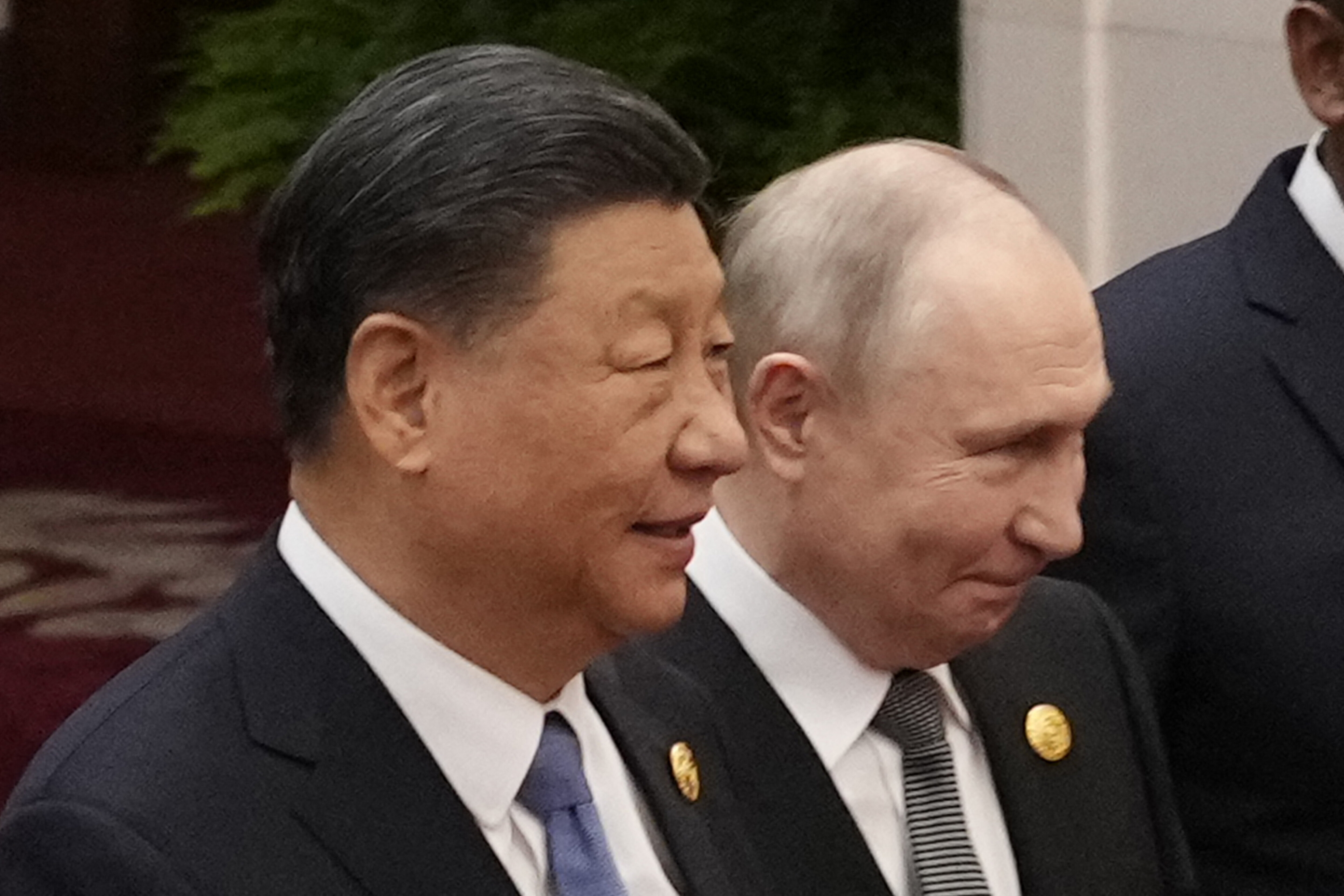
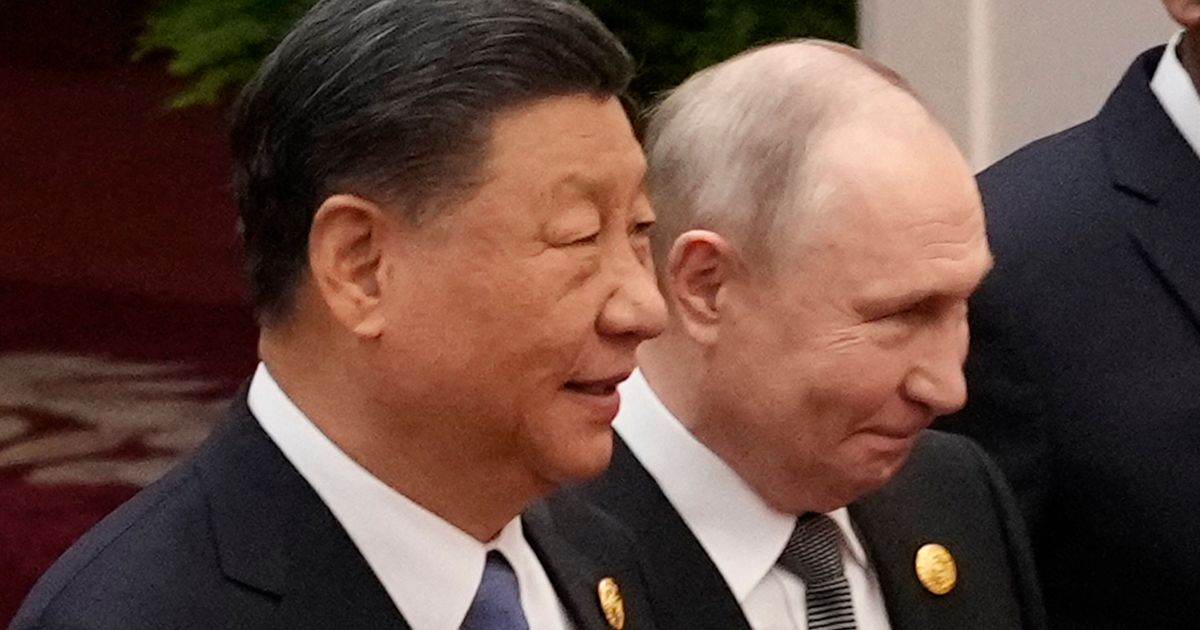
China’s president Xi Jiinping and Russia’s Vladimir Putin have agreed their countries should both try to oppose international interference – something both nations have been actually been accused of.

According to a Kremlin press briefing, they both lashed out at the US in particular, denouncing the “US policy of interfering in the internal affairs of other states”.

The two leaders spoke during an hour-long phone call on Thursday and discussed establishing a “multipolar, fairer world order”.

The Moscow Times reported that the Kremlin aide Yuri Ushakov told journalists: “The leaders of the two countries realise that the US is practically implementing a policy of double containment [toward] both Russia and China.”

The US has sanctions against both Beijing and Moscow right now.

A readout from the Chinese state broadcaster CCTV also reported that Xi suggested the two “should closely collaborate strategically, defend the sovereignty, security and development interests of their respective countries, and resolutely oppose interference in internal affairs by external forces.”

The UK and its allies actually called out Russia for its own sustained attempts to interfere in UK politics and democratic processes only in December 2023.

Meanwhile, China was criticised by Taiwan for “repeated interference” in its elections only in January.

Xi and Putin’s relationship has strengthened significantly since Russia invaded Ukraine, and, according to the Kremlin, the leaders agreed today to continue having “close personal interaction”.

Weeks before the war began, Xi signed up to a “no-limits” friendship with Putin, with a series of long-term energy deals.

Xi went to Moscow last March, and Putin visited Beijing in October – a particularly surprising move from the Russian president, because of the international arrest warrant out against him.

Although the Kremlin’s press service said the bond between their two countries was at “an unprecedentedly high level” right now, they do not have any more visits scheduled.

According to CCTV, Xi said the two countries have “weathered many storms together” and they are “facing new opportunities for development”.

The two also spoke about “the development of Sino-Russian comprehensive partnership and strategic cooperation over the recent period.”

China-Russia trade reached the new high of $218.2 billion (£173.12 billon) during January-November, according to Chinese customs data.

Russia has been able to rely on China as a key economic lifeline since the West imposed unprecedented sanctions on Moscow over its ongoing invasion of Ukraine.

In exchange, China has access to Russia’s cheap energy exports and natural resources.

Xi also wished Putin success in the upcoming elections. Russia recently banned a popular antiwar opponent from standing in the election, and Putin is expected to win comfortably.

Share Button

Measles cases continuing to rise

A sharp rise in numbers over the past six weeks is being driven by cases in Birmingham.

Share Button

Cancer waiting times in 2023 worst on record

Proportion starting treatment within 62 days in England drops to new low after 11 years of decline.

Share Button

First UK patient recruited to new eczema drug trial

A doctor with the NHS trust says the medication being trialled is “potentially highly effective”.

Share Button

Men on Viagra may reduce Alzheimer’s risk – study

A study suggests a link, but more research is needed to prove the drugs benefit the brain.

Share Button

Brianna Ghey’s Father Calls On Rishi Sunak To Apologise Over PMQs Trans Comments

The father of murdered schoolgirl Brianna Ghey has called on Rishi Sunak to apologise over his joke about trans people.

Peter Spooner said the remarks at PMQs – as Brianna’s mother, Esther, watched from the public gallery of the House of Commons – were “absolutely dehumanising”.

Tory MPs have also broken ranks to condemn the prime minister, who has so far refused to express any remorse.

Peter Spooner told Sky News: “For the prime minister of our country to come out with degrading comments like he did, regardless of them being in relation to discussions in parliament, they are absolutely dehumanising.

“Identities of people should not be used in that manner, and I personally feel shocked by his comments and feel he should apologise for his remarks.”

Sunak made the remarks as he launched an attack on Keir Starmer for changing his policy positions.

The PM said this included “defining a woman”, before adding with a laugh: “Although in fairness that was only 99% of a U-turn.”

That was a reference to Starmer’s previous claim that 99.9% of women “haven’t got a penis”.

In response to Sunak’s comment, Starmer hit back: “Of all the weeks to say that. When Brianna’s mother is in this chamber. Shame.

“Parading as a man of integrity when he has got absolutely no responsibility.

“I think the role of the prime minister is to ensure that every single citizen of this country feels safe and respected and it’s a shame the prime minister doesn’t share that.”

Esther Ghey later met with Starmer, who said he was “utterly in awe of her strength and bravery”.

At the end of PMQs, Sunak said what had happened to Brianna Ghey was “an unspeakable and shocking tragedy”.

He added that Esther Ghey “deserves all our admiration and praise”.

But following PMQs, Sunak’s spokeswoman doubled down on the prime minister’s comment, insisting it was “legitimate to point out the number of U-turns the leader of the opposition has made”.

Former minister Dehenna Davison, the Tory MP for Bishop Aukland, joined those who have condemned the PM.

She said: “The debate around trans issues often gets inflamed at the fringes. As politicians, it’s our job to take the heat out of such debates and focus on finding sensible ways forward, whilst ensuring those involved are treated with respect.

“Given some of the terrible incidences of transphobia we have seen lately, this need for respect feels more crucial than ever.

|That’s why it was disappointing to hear jokes being made at the trans community’s expense. Our words in the House resonate right across our society, and we all need to remember that.”

Share Button

Primodos victims ‘airbrushed’ from financial help

Families are heartbroken to be left out of a scheme proposing support for other patients.

Share Button

The One Thing You Should Be Doing After A Big Meal To Improve Your Health

Is there anything more satisfying than the feeling after a big meal? You’re full, you’re a little sleepy, and you’re satisfied. In fact, for some (me), it’s the ideal time to just nod right off and have a cheeky 20 minute nap.

In fact, the Christmas Day nap after the huge dinner is a highlight of the day for me.

However, apparently, what we should be doing is not napping but actually, walking. I know, I know, I’m disappointed too, but I think the health benefits may make it worthwhile.

According to @nikkithepa, an aesthetics, emergency and functional med physician assistant and TikTok creator, going for a walk after a big meal has a multitude of health benefits.

@nikkithepa

Taking a walk after eating can significantly improve digestion and enhance overall metabolism. 🍽️🔬 When you engage in gentle physical activity, like walking, it helps stimulate your digestive system, aiding in the breakdown of food and absorption of nutrients. It also encourages the movement of food through your gastrointestinal tract, reducing the likelihood of discomfort and bloating. 💪🌟 Moreover, walking after a meal has been found to positively impact blood sugar control. After you eat, your blood sugar levels rise, but walking can help your body utilize glucose more effectively. This means it helps prevent sharp spikes and dips in blood sugar, which is particularly beneficial for individuals with diabetes or those aiming to manage their weight. 📊🥦 Post-meal walks can also contribute to weight management. Engaging in light exercise, like walking, increases the number of calories burned, assisting in weight maintenance or even weight loss over time. It’s a fantastic way to stay active without putting excessive strain on your body. 🏃♀️🌈 So, why not make post-meal walks a regular part of your routine? Not only will you optimize digestion and metabolism, but you’ll also enjoy the added benefits of fresh air, stress reduction, and a chance to connect with nature. 🌳🌼 Remember, it doesn’t have to be a vigorous workout. A gentle stroll around the block or a nearby park is all it takes to reap these scientifically proven advantages. 💚✨ #PostMealWalks #ElevateYourWellBeing #HealthyHabits #weighloss #glucosecontol

♬ Don’t Let Me Go – Lane 8 & Arctic Lake

Why you should go for a walk after a big meal

In a recent video, Nikki says that this is the most simple but effective health habit you should be adding to your day for these x reasons:

Can help with digestion

Taking a short walk after a meal improves digestion. This is because walking helps to stimulate the muscles in your abdomen, promoting the movement of food through your digestive system.

Helps with blood sugar control

Nikki says: “By engaging in a post-meal walk, your muscles become more receptive to glucose uptake, allowing them to efficiently utilise and absorb the sugar from your blood stream.”

She adds that this helps regulate your blood sugar levels, preventing sharp spikes and crashes, promoting a metabolic balance.

It offers mental and emotional benefits

Nikki said that as you walk after a meal, your brain releases “feel good neurotransmitters” like serotonin and endorphins which improve the mood and reduce stress levels as well as enhancing overall mental wellbeing.

Nikki advises walking between 30 minutes to an hour after your meal and your walk only needs to be 10 to 15 minutes.

We’re off to get our steps in….

Share Button

EVs that go 1,000 km on a single charge: Gel makes it possible

Futuristic advancements in AI and healthcare stole the limelight at the tech extravaganza Consumer Electronics Show (CES) 2024. However, battery technology is the game-changer at the heart of these innovations, enabling greater power efficiency. Importantly, electric vehicles are where this technology is being applied most intensely. Today’s EVs can travel around 700km on a single charge, while researchers are aiming for a 1,000km battery range. Researchers are fervently exploring the use of silicon, known for its high storage capacity, as the anode material in lithium-ion batteries for EVs. However, despite its potential, bringing silicon into practical use remains a puzzle that researchers are still working hard to piece together.

Enter Professor Soojin Park, PhD candidate Minjun Je, and Dr. Hye Bin Son from the Department of Chemistry at Pohang University of Science and Technology (POSTECH). They have cracked the code, developing a pocket-friendly and rock-solid next-generation high-energy-density Li-ion battery system using micro silicon particles and gel polymer electrolytes. This work was published on the online pages of Advanced Science on the 17th of January.

Employing silicon as a battery material presents challenges: It expands by more than three times during charging and then contracts back to its original size while discharging, significantly impacting battery efficiency. Utilizing nano-sized silicon (10-9m) partially addresses the issue, but the sophisticated production process is complex and astronomically expensive, making it a challenging budget proposition. By contrast, micro-sized silicon (10-6m) is superbly practical in terms of cost and energy density. Yet, the expansion issue of the larger silicon particles becomes more pronounced during battery operation, posing limitations for its use as an anode material.

The research team applied gel polymer electrolytes to develop an economical yet stable silicon-based battery system. The electrolyte within a lithium-ion battery is a crucial component, facilitating the movement of ions between the cathode and anode. Unlike conventional liquid electrolytes, gel electrolytes exist in a solid or gel state, characterized by an elastic polymer structure that has better stability than their liquid counterparts do.

The research team employed an electron beam to form covalent linkages between micro-silicon particles and gel electrolytes. These covalent linkages serve to disperse internal stress caused by volume expansion during lithium-ion battery operation, alleviating the changes in micro silicon volume and enhancing structural stability.

The outcome was remarkable: The battery exhibited stable performance even with micro silicon particles (5μm), which were a hundred times larger than those used in traditional nano-silicon anodes. Additionally, the silicon-gel electrolyte system developed by the research team exhibited ion conductivity similar to conventional batteries using liquid electrolytes, with an approximate 40% improvement in energy density. Moreover, the team’s system holds significant value due to its straightforward manufacturing process that is ready for immediate application.

Professor Soojin Park stressed: “We used a micro-silicon anode, yet, we have a stable battery. This research brings us closer to a real high-energy-density lithium-ion battery system.”

This study was conducted with the support from the Independent Researcher Program of the National Research Foundation of Korea.

Share Button

Dinosaurs’ success helped by specialized stance and gait, study finds

Dinosaurs’ range of locomotion made them incredibly adaptable, University of Bristol researchers have found.

In a new study, published today in Royal Society Open Science, findings show that the first dinosaurs were simply faster and more dynamic than their competitors and why they were able to dominate the Earth for 160 million years.

The researchers compared the limb proportions of a broad array of reptiles from the Triassic, the period of time from 252 to 201 million years ago, when dinosaurs first appeared and rose to prominence. They identified which of these ancient beasts was quadrupedal (four-footed) or bipedal (two-footed), and also looked at their cursoriality index, a measure of their running ability.

They found that, from the beginning, not only were the dinosaurs and their close relatives bipedal and cursorial — which meant they had limbs adapted for running, they also showed a much wider range of running styles than some of their close competitors, called the Pseudosuchia.

The pseudosuchians included the ancestors of modern crocodiles. Some were small insect-eating bipeds, but most were medium-to-large-sized carnivores and herbivores and they were diverse throughout the Triassic. The team found that dinosaurs and their kin, the Avemetatarsalia, maintained a higher range of locomotory modes throughout this period.

MSc Palaeobiology student Amy Shipley led the study. She said: “When the crunch came, 233 million years ago, dinosaurs won out.

“At that time, climates went from wet to dry, and there was severe pressure for food. Somehow the dinosaurs, which had been around in low numbers already for 20 million years, took off and the pseudosuchians did not.

“It’s likely the early dinosaurs were good at water conservation, as many modern reptiles and birds are today. But our evidence shows that their greater adaptability in walking and running played a key part.”

“After the end of the Triassic, when there was a mass extinction, the dinosaurs expanded again,” said Professor Mike Benton. “Most of the pseudosuchians were wiped out by the mass extinction, except for the ancestors of crocodiles, and we found that these surviving dinosaurs expanded their range of locomotion again, taking over many of the empty niches.”

Co-author Dr Armin Elsler explained: “When we looked at evolutionary rates, we found that in fact dinosaurs were not evolving particularly fast.

“This was a surprise because we expected to see fast evolution in avemetatarsalians and slower evolution in pseudosuchians. What this means is that the locomotion style of dinosaurs was advantageous to them, but it was not an engine of intense evolutionary selection. In other words, when crises happened, they were well placed to take advantage of opportunities after the crisis.”

“We always think of dinosaurs as huge and lumbering,” says Dr Tom Stubbs, another collaborator. “This reminds us that actually the dinosaurs started as nippy little insect-eaters.

“The first dinosaurs were only a metre long, up high on their legs, and bipedal. Their leg posture meant they could move fast and catch their prey while escaping larger predators.”

Co-author Dr Suresh Singh concluded: “And of course, their diversity of posture and focus on fast running meant that dinosaurs could diversify when they had the chance.

“After the end-Triassic mass extinction, we get truly huge dinosaurs, over ten metres long, some with armour, many quadrupedal, but many still bipedal like their ancestors. The diversity of their posture and gait meant they were immensely adaptable, and this ensured strong success on Earth for so long.”

Share Button