They say the sterilisation device left them in pain – but the manufacturer defends its safety.


They say the sterilisation device left them in pain – but the manufacturer defends its safety.

More than 100 years of observations in nature have revealed a universal pattern of species abundances: Most species are rare but not very rare, and only a few species are very common. These so-called global species abundance distributions have become fully unveiled for some well-monitored species groups, such as birds. For other species groups, such as insects, however, the veil remains partially unlifted. These are the findings of an international team of researchers led by the German Centre for Integrative Biodiversity Research (iDiv), the Martin Luther University Halle-Wittenberg (MLU) and the University of Florida (UF), published in the journal Nature Ecology and Evolution. The study demonstrates how important biodiversity monitoring is for detecting species abundances on planet Earth and for understanding how they change.
“Who can explain why one species ranges widely and is very numerous, and why another allied species has a narrow range and is rare?” This question was asked by Charles Darwin in his ground-breaking book “The Origin of Species,” published over 150 years ago. A related challenge has been to understand how many species are common (numerous) and how many are rare, the so-called global species abundance distribution (gSAD).
Two main gSAD models have been proposed in the last century: R. A. Fisher, a statistician and biologist, proposed that most species are very rare and that the number of species declines for more common species (so-called log-series model). On the other hand, F. W. Preston, an engineer and ecologist, argued that only few species are actually very rare and that most species have some intermediate level of commonness (so-called log-normal model). However, until now and despite decades of research, scientists did not know which model describes the planet’s true gSAD.
Solving this problem calls for vast amounts of data. The study authors used data from the Global Biodiversity Information Facility (GBIF) and downloaded data representing over 1 billion species observations in nature from 1900 to 2019.
“The GBIF database is an amazing resource for all sorts of biodiversity related research, particularly because it brings together both data collected from professional and citizen scientists all over the world,” says first author Dr Corey Callaghan. He began the study while working at iDiv and MLU and is now working at the UF.
Callaghan and his fellow researchers divided the downloaded data into 39 species groups, for instance, birds, insects, or mammals. For each, they compiled the respective global species abundance distribution (gSAD).
The researchers detected a potentially universal pattern, which emerges once the species abundance distribution is fully unveiled: Most species are rare but not very rare, and only a few species are very common, as predicted in the log-normal model. However, the researchers also found that the veil has been fully lifted only for a few species groups like cycads and birds. For all other species groups, the data are yet insufficient.
advertisement
“If you don’t have enough data, it looks as though most species are very rare,” says senior author Prof Henrique Pereira, research group head at iDiv and the MLU. “But by adding more and more observations, the picture changes. You start seeing that there are, in fact, more rare species than very rare species. You can see this shift for cycads and birds when comparing the species observations from back in 1900, when less data was available, with the more comprehensive species observations we have today. It is fascinating: we can clearly see the phenomenon of unveiling the full species abundance distribution, as predicted by Preston several decades ago, but only now demonstrated at the scale of the entire planet.”
“Even though we have been recording observations for decades, we have only lifted the veil for a few species groups,” says Callaghan. “We still have a long way to go. But GBIF and the sharing of data really represents the future of biodiversity research and monitoring, to me.”
The new study’s findings enable scientists to assess how far the gSADs have been unveiled for different species groups. This allows for answering another long-standing research question: How many species are out there? This study finds that while for some groups like birds, nearly all species have been identified, this is not the case for other taxa such as insects and cephalopods.
The researchers believe that their findings may help in answering Darwin’s question of why some species are rare, and others are common. The universal pattern they found may point to general ecological or evolutionary mechanisms that govern the commonness and rarity of species. While more research is being done, humans continue to alter the planet’s surface and the abundance of species, for instance, by making common species less common. This complicates the researchers’ task: They need not only to understand how species abundances evolve naturally but also how human impacts are altering these patterns simultaneously. There may still be a long way to go before Darwin’s question is finally answered.

Tropical forests in South America lose their ability to absorb carbon from the atmosphere when conditions become exceptionally hot and dry, according to new research.
For a long time, tropical forests have acted as a carbon sink, taking more carbon out of the air than they release into it, a process that has moderated the impact of climate change.
But research led by Dr Amy Bennett, a Research Fellow at the University of Leeds, found that in 2015 — 2016, when an El Niño climate event resulted in drought and the hottest temperatures ever recorded, South American forests were unable to function as a carbon sink.
El Niño occurs when sea-surface temperatures in the Pacific Ocean increase sharply, triggering a major shift in the world’s climate system. In 2015-2016, the result was exceptionally hot weather for South America. A similar event is underway now.
Dr Bennett, from the School of Geography at Leeds, said: “Tropical forests in the Amazon have played a key role in slowing the build-up of carbon dioxide in the atmosphere.
“Scientists have known that the trees in the Amazon are sensitive to changes in temperature and water availability, but we do not know how individual forests could be changed by future climate change.
advertisement
“Investigating what happened in the Amazon during this huge El Niño event gave us a window into the future by showing how unprecedented hot and dry weather impacts forests.”
The researchers today report their findings in the journal Nature Climate Change. The study united the RAINFOR and PPBio research networks, with dozens of short-term grants enabling more than 100 scientists to measure forests for decades across 123 experimental plots.
The plots span Amazon and Atlantic forests as well as drier forests in tropical South America.
These direct, tree-by-tree records showed that most forests had acted as a carbon sink for most of the last 30 years, with tree growth exceeding mortality. When the 2015-2016 El Niño hit, the sink shut down. This was because tree death increased with the heat and drought.
Professor Beatriz Marimon, of Brazil’s Mato Grosso State University, added “Here in the southeastern Amazon on the edge of the rainforest, the trees may have now switched from storing carbon to emitting it. While tree growth rates resisted the higher temperatures, tree mortality jumped when this climate extreme hit.”
Study’s findings
Of the 123 plots studied, 119 of them experienced an average monthly temperature increase of 0.5 degrees Celsius. 99 of the plots also suffered water deficits. Where it was hotter, it was also drier.
advertisement
Prior to El Niño, the researchers calculated that the plots were storing and sequestering around one third of a tonne of carbon per hectare per year. This declined to zero with the hotter and drier El Niño conditions.
The change was due to biomass being lost through the death of trees.
Writing in the paper, the researchers noted that the greatest relative impact of the El Niño event were in forests where the long-term climate was already relatively dry.
The expectation was that wetter forests would be most vulnerable to the extreme drier weather, as they would be least adapted to such conditions. However, the opposite was the case. Instead, those forests more used to a drier climate at the dry periphery of the tropical forest biome turned out to be most vulnerable to drought.
This suggested some trees were already operating at the limits of tolerable conditions.
For Professor Oliver Phillips, an ecologist at the University of Leeds who supervised the research and leads the global ForestPlots initiative, the findings offered hope about the resilience of the South American tropical nature.
He added: “The full 30-year perspective that our diverse team provides shows that this El Niño had no worse effect on intact forests than earlier droughts. Yet this was the hottest drought ever.
“Where tree mortality increased was in the drier areas on the Amazon periphery where forests were already fragmented. Knowing these risks, conservationists and resource managers can take steps to protect them.
“Through the complex dynamics that happen in forest environments, land clearance makes the environment drier and hotter, further stressing the remaining trees.
“So, the big challenge is to keep forests standing in the first place. If we can do that, then our on-the-ground evidence shows they can continue to help lock up carbon and slow climate change.”
Two reports are published in Nature Climate Change related to this research. The scientific paper, “Sensitivity of South American tropical forests to an extreme climate anomaly,” and a research brief titled “Impact of the 2015-2016 El Nino on South American tropical forests.”
Lady Justice Thirlwall will lead a probe into how the neonatal nurse was able to murder seven babies.
Ministers will try to make it easier for people to get second medical opinion after teenager’s death.
Seventeen-year-old Leia is one of a growing number of teenage vapers – but she’s trying hard to quit.

ChatGPT could help to increase vaccine uptake by debunking myths around jab safety, say the authors of a study published in the peer-reviewed journal Human Vaccines and Immunotherapeutics.
The researchers asked the artificial intelligence (AI) chatbot the top 50 most frequently-asked Covid-19 vaccine questions. They included queries based on myths and fake stories such as the vaccine causing Long Covid.
Results show that ChatGPT scored nine out of 10 on average for accuracy. The rest of the time it was correct but left some gaps in the information provided, according to the study.
Based on these findings, experts who led the study from the GenPoB research group based at the Instituto de Investigación Sanitaria (IDIS) — Hospital Clinico Universitario of Santiago de Compostela, say the AI tool is a “reliable source of non-technical information to the public,” especially for people without specialist scientific knowledge.
However, the findings do highlight some concerns about the technology such as ChatGPT changing its answers in certain situations.
“Overall, ChatGPT constructs a narrative in line with the available scientific evidence, debunking myths circulating on social media,” says lead author Antonio Salas, who as well as leading the GenPoB research group, is also a Professor at the Faculty of Medicine at the University of Santiago de Compostela, in Spain.
“Thereby it potentially facilitates an increase in vaccine uptake. ChatGPT can detect counterfeit questions related to vaccines and vaccination. The language this AI uses is not too technical and therefore easily understandable to the public but without losing scientific rigor.
advertisement
“We acknowledge that the present-day version of ChatGPT cannot substitute an expert or scientific evidence. But the results suggest it could be a reliable source of information to the public.”
In 2019, the World Health Organisation (WHO) listed vaccine hesitancy among the top 10 threats to global health.
During the pandemic, misinformation spread via social media contributed to public mistrust of Covid-19 vaccination.
The authors of this study include those from the Hospital Clinico Universitario de Santiago which the WHO designated as a vaccine safety collaborating center in 2018.
Researchers at the center have been exploring myths around vaccine safety and medical situations that are falsely believed to be a reason not to get vaccinated. These misplaced concerns contribute to vaccine hesitancy.
The study authors set out to test ChatGPT’s ability to get the facts right and share accurate information around Covid vaccine safety in line with current scientific evidence.
advertisement
ChatGPT enables people to have human-like conversations and interactions with a virtual assistant. The technology is very user-friendly which makes it accessible to a wide population.
However, many governments are concerned about the potential for ChatGPT to be used fraudulently in educational settings such as universities.
The study was designed to challenge the chatbot by asking it the questions most frequently received by the WHO collaborating center in Santiago.
The queries covered three themes. The first was misconceptions around safety such as the vaccine causing Long Covid. Next was false contraindications — medical situations where the jab is safe to use such as in breastfeeding women.
The questions also related to true contraindications — a health condition where the vaccine should not be used — and cases where doctors must take precautions e.g. a patient with heart muscle inflammation.
Next, experts analyzed the responses then rated them for veracity and precision against current scientific evidence, and recommendations from WHO and other international agencies.
The authors say this was important because algorithms created by social media and internet search engines are often based on an individual’s usual preferences. This may lead to ‘biased or wrong answers’, they add.
Results showed that most of the questions were answered correctly with an average score of nine out of 10 which is defined as ‘excellent’ or ‘good’. The responses to the three question themes were on average 85.5% accurate or 14.5% accurate but with gaps in the information provided by ChatGPT.
ChatGPT provided correct answers to queries that arose from genuine vaccine myths, and to those considered in clinical recommendation guidelines to be false or true contraindications.
However, the research team does highlight ChatGPT’s downsides in providing vaccine information.
Professor Salas, who specializes in human genetics, concludes: “Chat GPT provides different answers if the question is repeated ‘with a few seconds of delay’.
“Another concern we have seen is that this AI tool, in its present version, could also be trained to provide answers not in line with scientific evidence.
“One can ‘torture’ the system in such a way that it will provide the desired answer. This is also true for other contexts different to vaccines. For instance, it might be possible to make the chatbot align with absurd narratives like the flat-earth theory, deny climate change, or object to the theory of evolution, just to give a few examples.
“However, it’s important to note that these responses are not the default behavior of ChatGPT. Thus, the results we have obtained regarding vaccine safety can be probably extrapolated to many other myths and pseudoscience.”

It was a case of new term, new trim, as the presenter fronted the ITV breakfast show for the first time since July.
She was seen with a much shorter hairstyle after having several inches chopped off ahead of her return to the show.
Susanna’s co-host Ed Balls was quick to comment on her transformation as the show got underway on Monday, telling her he “loved her hair”.
“Thank you very much indeed,” she replied. “Yes, I’ve had a few inches chopped off. I feel a little lighter. Not quite sure what I’m doing after being off all summer.”
On Sunday night, Susanna previewed her new ’do on X, formerly known as Twitter.
Susanna is not the only ITV daytime presenter who returned to work after the summer break on Monday.
Good Morning Britain airs weekdays at 6am on ITV1.


Earlier this year, as I walked into the University of Missouri Hospital, I wiped my sweaty palms on my jeans. I felt unsteady amid flashes of memories of ambulance lights, hospital gowns, and being handed a bag with the clothes that had been cut from my body. I read the words that hung on the wall — “Our Mission: To Save And Improve Lives.” One of the lives that hospital saved was my own.
I was there to speak to their emergency room medical residents about my patient experience. I walked into the conference room and there stood Jenn, the ER nurse I had spent years searching for.
Advertisement
I had checked Facebook, Instagram and Twitter, to no avail. I’d typed her name into Google and found many Jenns with her last name, but none of them was her. One of the administrators at the university was finally able to locate her for me.
Eight years ago, when I was rushed to that very ER after my suicide attempt, it was Jenn who helped pump pills out of my stomach. She poured charcoal down my throat and filled my veins with IV fluid to neutralise the effects of the pills. As she helped save my life, a bond of hope was sealed between us, and it would last for years to come.
I ran and hugged her, and she smiled. “I’m glad you’re still with us.”
“I’m glad, too,” I responded.
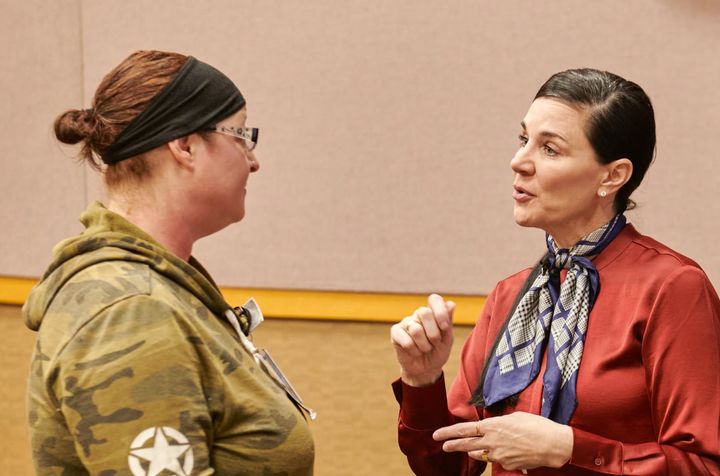
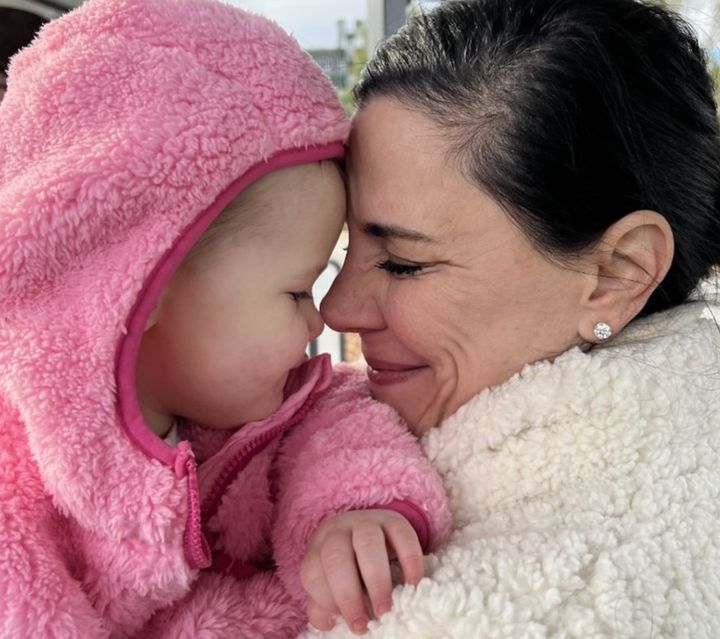
For my talk at the ER department, I had made a massive poster with photos of my life since my suicide attempt. Photos of me attending all three of my children’s weddings and holding my first granddaughter. Photos of me doing mental health advocacy work with first responders, veterans, and women in prison. Photos of me giving keynote speeches and making national TV appearances. My award-winning memoir. Photos of all the things I would have never experienced had the hospital not saved me.
Advertisement
Yet, that poster was missing the other part of my life.
There were no snapshots of my panic attacks or of the sleepless nights spent shaking, crying and pacing every room of my house for hours. I don’t have photos of the hot showers at 2 in the morning, or of praying on my hands and knees begging for God to give me relief, or my recent terrifying five-hour screening for electric shock treatment that is now part of my suicide prevention plan. What I told Jenn was the truth, because some days I’m glad I’m still here, but I still have days when I wish she and her colleagues hadn’t saved my life.
Many people applaud me for having conquered suicide ideation, but that isn’t actually what I did. I survived my suicide attempt, but I still have suicidal episodes. They are to be lived with — not conquered. Suicidal ideation can be treated through prevention, intervention, support strategies and suicide prevention plans. I’m not alone — many people who seek treatment for anxiety, depression, or eating disorders struggle with suicidal thoughts and urges.
Two weeks after I returned home from Missouri, I went into another deep suicidal episode.
As I taught a Sunday school class about trials, a woman asked if I would trade my trials for someone else’s, and I hesitantly replied, “Sure.”
Courtesy of Sonja Wasden
Religiously speaking, it was the wrong answer.
“You would trade with someone who is dying?” she asked. As a mental health advocate, I felt the pressure to be an inspiring example of a suicide survivor. I knew what I was not allowed to say, yet I felt the truth rising in my voice.
Advertisement
“Yes,” the words slipped out, “I want to die.” She gasped. The entire room went silent.
It scares people to talk about suicide. The number-one myth is that if we talk about suicide, it will lead to and encourage suicide. That is false.
Suicide is a complex issue that can include many contributing factors, including bullying, prejudice or stigma around a person’s race, gender, disability or sexual identity. What makes people want to end their lives can be sexual or physical abuse, addiction, financial difficulties, relationship problems, long-term illnesses, or cultural and social pressures, as well as mental illnesses and lack of mental health resources, of course. Each of these situations can make a person feel isolated, inadequate, hopeless and silenced.
Every 40 seconds, a person dies from suicide. Suicide is the second-leading cause of death for Americans ages 10-14 and 20-34. Suicide is a leading causes of death for people across the United States.
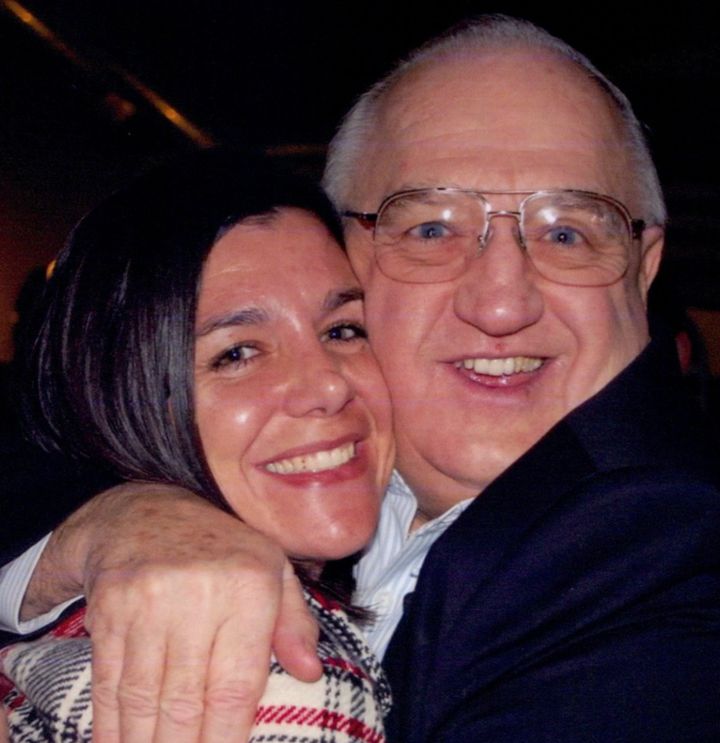
In 2004, my father attempted to die by suicide. My brother and sister found him in time, and he lived only seven years more: He experienced a bipolar episode and died by suicide. The ever-present guilt of what more I could have done to save him still haunts me. I often wonder, if he and I had talked — really talked — about our suicide ideation, whether he would be alive today.
Some studies estimate that a single suicide loss impacts the lives of 135 different people.
The widespread suicidal ideation among teenage girls — nearly one-third of female high school students reported in 2021 that they had recently considered suicide — is extremely concerning and catastrophic, because it coincides with a national disinvestment in mental health care. Even before the COVID-19 pandemic, mental health care inequities in the U.S. resulted in more than 100,000 deaths and cost the economy about $278 billion over a four-year period.
Advertisement
Courtesy of Sonja Wasden
I am one of the lucky ones who receives proper mental health care. It would be terrifying — and most likely fatal — for me to go without the support of mental health professionals.
My dialectical behavior therapist taught me that two truths can coexist: We can be lost and found, or in despair and hopeful, all at the same time.
My two truths in that Sunday school class were that I wanted to live — and I wanted to die.
As a mental health advocate, I have been terrified to admit that second truth out of fear that I would be stealing hope away from people who desperately need it. But I now believe I would be taking hope away from them if I didn’t share the whole picture.
Relapsing into another suicidal episode makes it’s hard not to question if I have somehow failed. But finding the strength to live another day takes courage. Surrendering to the reality that many will struggle with suicide ideation more than once, and for some like me, potentially for the rest of our lives — that is where hope lives. Hope is a choice to surrender to what “is” in that moment, knowing that dark times do not last forever and there are more joyful moments for us to experience.
Advertisement
Jenn later texted me, “To know and understand and feel that I was valuable and important to you, just the way you were and are to me that day and every day forward, was an amazing feeling I hadn’t felt in almost two decades of nursing.” It was a reminder that each of us is valuable not just in the sense of our individual worth, but in relation to each other.
The one thing we can all do to help prevent suicides is having open and inclusive conversations with our families, friends, co-workers and students, and in our communities, where people can share their unique experiences without feeling ashamed or broken. This expands our collective understanding of suicide by hearing different perspectives, and creates a more supportive environment for those struggling.
Suicide is not inevitable for anyone. Talking openly about suicide leads to more people seeking help for their mental health, which reduces the risk of suicide.
This is how we save lives.
Sonja Wasden is a suicide survivor with over 30 years of lived experience with mental health challenges. Her award-winning memoir, “An Impossible Life,” which details her struggles with mental illness, was featured on “CBS This Morning” as a story of hope. She is a member of Newsweek Expert Forum and has traveled the country speaking with Fortune 500 companies, not-for-profit organizations, government officials, advocacy groups and top media outlets about the importance of mental health. She has been an op-ed contributor for Oprah Daily, The Washington Post, Newsweek, The Hill, Ms. Magazine and the National Alliance on Mental Illness, among others. Sonja has been interviewed over 50 times on local and national news about the importance of raising mental health awareness. She has had the privilege of sharing her story and message of hope with millions of people.


Joe Jonas and Sophie Turner are at the centre of fresh break-up rumours – and people are not handling it very well.
On Sunday, TMZ was the first to report that the Jonas Brothers singer and former Game Of Thrones actor were preparing to divorce after around four years of marriage.
Advertisement
People magazine subsequently quoted an undisclosed “source” who claimed that Joe had “retained a divorce lawyer”.
Neither party is yet to comment on the rumours publicly, but that hasn’t stopped fans over on X (formerly Twitter) from sharing their feelings anyway. And let’s just say, they’re not taking it very well.
Advertisement
Advertisement
Advertisement
HuffPost UK has contacted representatives for Joe Jonas. Sophie Turner’s representatives declined to comment.
Joe and Sophie first began dating in 2017, and a year later announced their plans to wed.
They eventually tied the knot in 2019, first in a Las Vegas service following that year’s Billboard Music Awards, and later with a more lavish ceremony in Paris.
Advertisement

Jeff Kravitz via Getty Images
Since then, the pair have become parents to three-year-old Willa and a second child, whose name they have not disclosed publicly, in 2022.
Joe is best known for his work alongside his siblings Nick and Kevin Jonas in The Jonas Brothers. He was also the frontman of the group DNCE, whose hit Cake By The Ocean reached number four in the UK in 2015.
Meanwhile, Sophie played Sansa Stark in all eight seasons of Game Of Thrones, a role which earned her an Emmy in 2019.
She has also appeared in the true crime drama The Staircase and the films X-Men: Apocalypse and Do Revenge.
Advertisement


