People Reveal The Grossest Things Customers Do At Coffee Shops

I work from cafes most days. My regular place is good, but sometimes on my travels, I see things that make me question my caffeine addiction.

More than once, I’ve watched someone finish a glass of water and put their empty cup back in with the clean ones. So, now when I pick up a glass and it’s damp, I can’t tell if it’s wet from use or wet because it’s been washed, and I go without. It’s one of many unhygienic behaviours that seem rife in coffee shops.
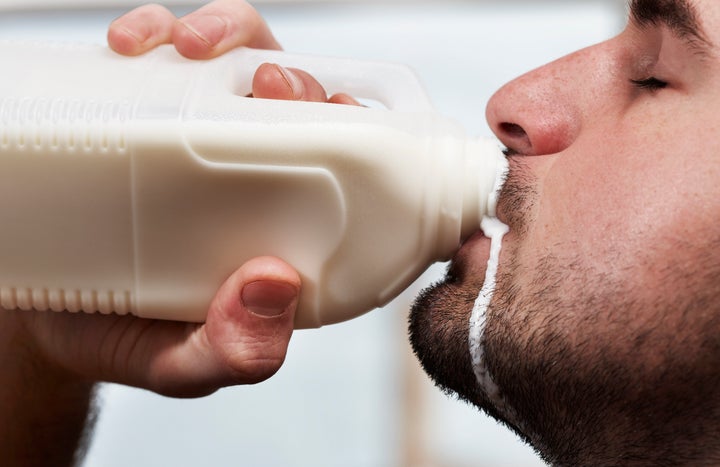
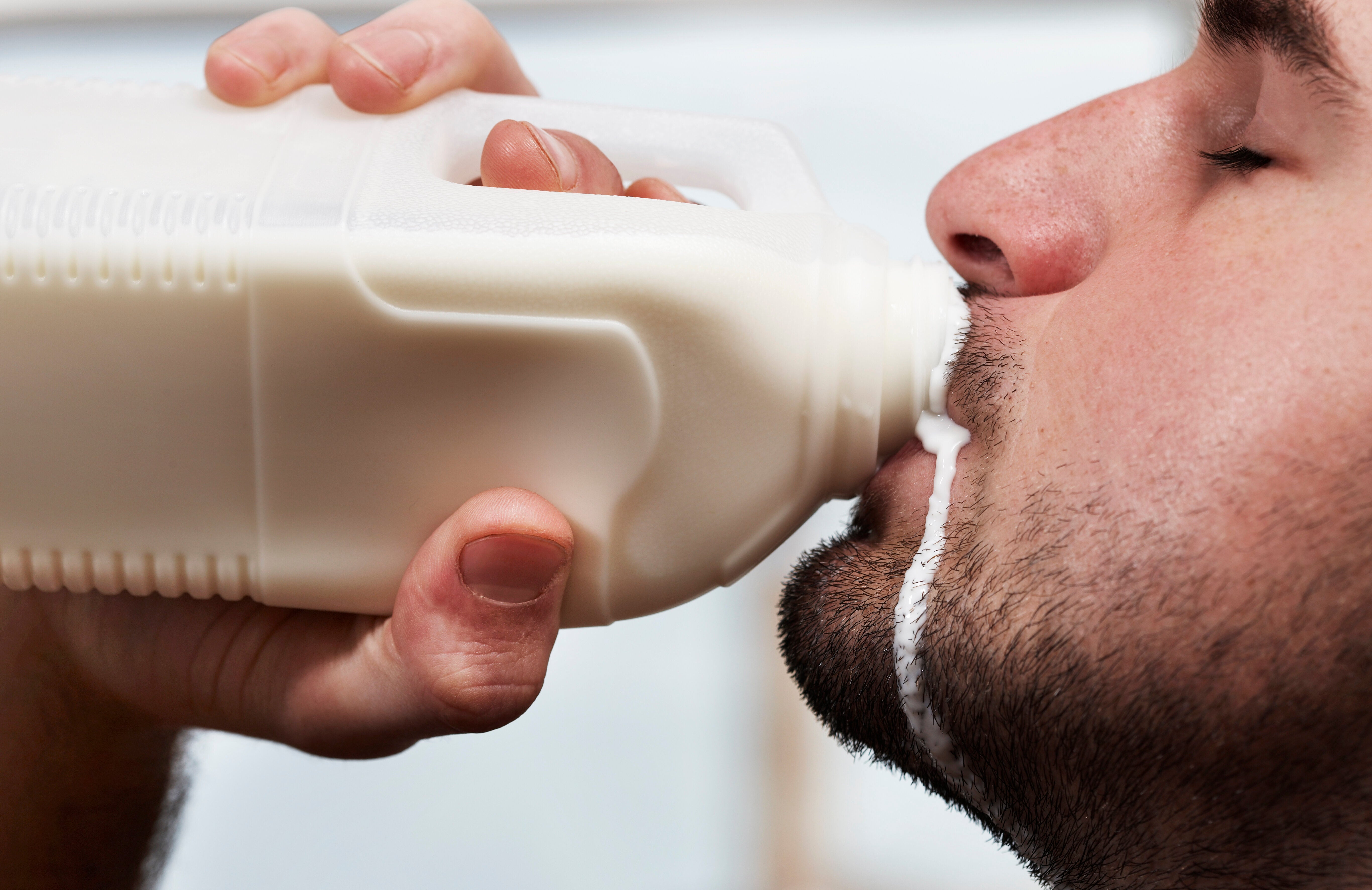
You may want to think twice before pouring from that shared milk carafe into your coffee.

Daniel Day via Getty Images

You may want to think twice before pouring from that shared milk carafe into your coffee.

Matt Woodburn-Simmons worked as a barista for years and now runs the Home Coffee Expert website. His first rule is: do not touch the milk.

In the hotter months, especially, people drink straight from the communal carafe, he said. “Full lips wrapped around it and chugging the milk while waiting for their coffee. I imagine people would rather their milk was not French kissed by a stranger before use.”

The honey is nearly as bad. Woodburn-Simmons watched people squeeze it onto a finger and lick it or wipe the drip from the nozzle and lick that, too. “Hundreds of fingers a day going onto the end of the honey nozzle is a superspreader event waiting to happen,” he said.

Shanina Knighton, an infection preventionist and nursing professor at Case Western Reserve University, can explain why the milk is so bad.

“Milk is about the friendliest thing you can hand a bacterium,” she said. “It is full of protein and sugar, it sits warm or lukewarm in the line, and it leaves a thin film on everything it touches. That film is where the trouble starts.

“Once a little milk dries onto a spout, a gasket or the inside of a dispensing tube, it gives bacteria a place to settle, and what grows there is a biofilm, a sticky layer of microbes that anchors to the surface and laughs off a quick rinse.”

I would never touch the milk, ever.

Topping up a half-empty jug only makes it worse. “When someone adds new milk on top of the old without emptying and washing the container first,” Knighton said, “whatever was living in that residue gets a fresh meal and a running start.”

Woodburn-Simmons saw that happen often. “Milk jugs with a crust around the spout,” he said, refilled multiple times and never cleaned. “I would never touch the milk, ever.”

Lids are also a concern. Elliot Sterling once watched a man find the communal milk almost empty, shake it vigorously over his cup, and then place his whole hand flat on the lid stack and drag it smoothly down the entire row. “Three people used those lids after him,” Sterling said, “and I used them as well before I realised what was happening.” He takes his from the middle of the stack now.

“People separate a stack by pawing through several lids before they commit to one,” Knighton said, “and the part they are handling is the same part that ends up against someone’s mouth. Most of what we touch in a day never reaches our lips, so it forgives a lot. A lid rim does not.”

“Lids themselves were never cleaned, just left on the assumption they were fine,” Woodburn-Simmons said. When the morning rush hit, the wipe-downs lapsed too. “Wiping down the area became an only-when-absolutely-necessary job,” he said, which on a bad morning meant “three to four hours.” He still remembers the puddles of spilled milky coffee left to spoil and people setting their lids down in them.

The horror stories continue. At a Toronto coffee shop, Philip Stoelman saw a customer lick the communal stir spoon and drop it straight back in the jar. “That person didn’t even think twice,” he said. Stoelman has carried his own stir stick ever since. JoAnne Loftus switched to a water bottle after watching someone in an Austin cafe rinse a used mug in the self-serve water-glass bin and refill it. “They didn’t even use the sink,” she said.
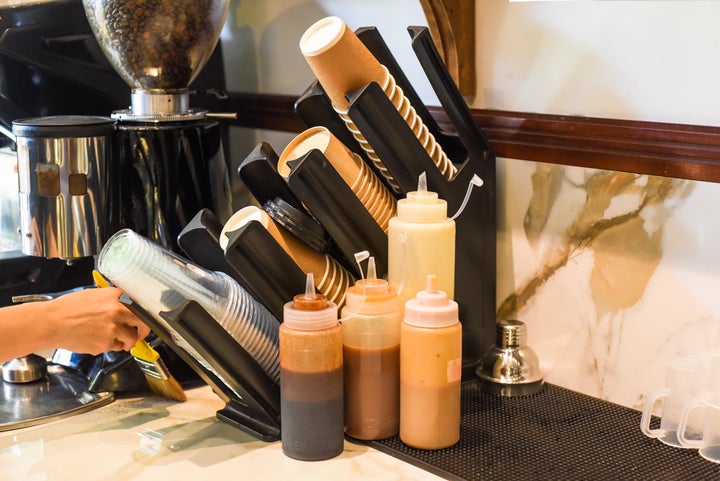
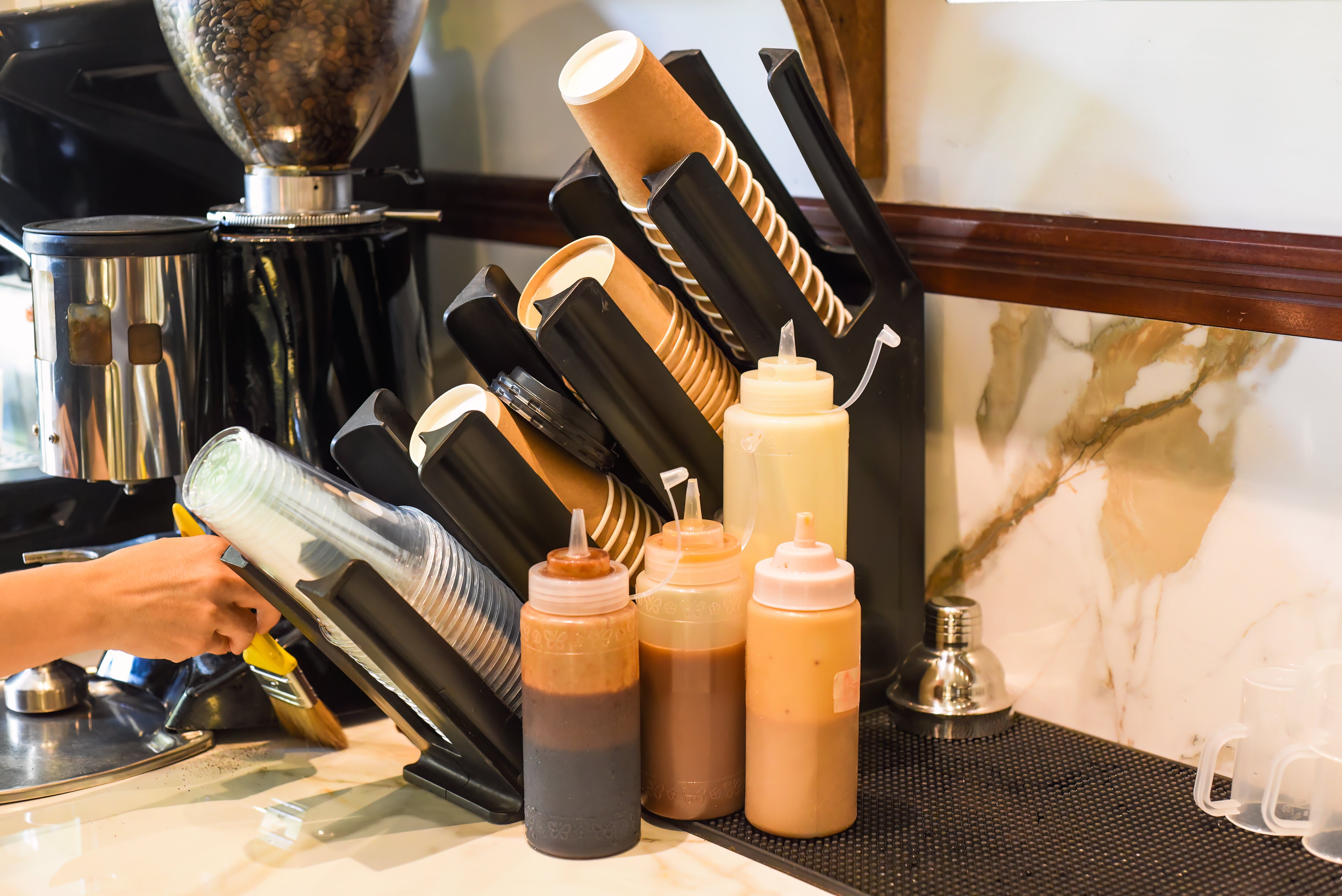
At a Toronto coffee shop, Philip Stoelman saw a customer lick the communal stir spoon and drop it straight back in the jar.

Tatiana Terekhina via Getty Images

At a Toronto coffee shop, Philip Stoelman saw a customer lick the communal stir spoon and drop it straight back in the jar.

Knighton has her own story. She once ordered an iced latte and watched the worker handle a credit card, then reach in and “grab the tip of my straw with their bare hand.” She asked for a fresh one. The worker held up the box kept under the counter. “Every straw in it had a visible coating of dirt,” she said. “They were clear straws, so there was no missing it.”

Woodburn-Simmons has a longer list. Customers clipped their nails while they waited, “nail clippings going everywhere.” Parents handed sugar packets to children who sucked on them and put them back – “kids being germ factories.” One person even fished an unused sugar packet out of the bin and put it back.

By now you might want to swear off self-serve stations entirely, but you don’t have to. “Bacteria live on practically everything we touch,” Knighton said, “so the real question is never whether something is there, but whether enough of the wrong kind is there to matter.”

Dr. Shilpi Agarwal, a board-certified family physician, has two rules at the station. The first is about the lid. “Customers often put their lid face down on the counter,” she said, after a mouth or dirty hands have already been on it. “Place down a napkin, then place your lid on there rather than resting it on the bare counter.”

The second rule skips the station altogether. “Ask for a top-off of warm milk,” she said, so the barista handles the dairy, and you never touch the jug. “Only touch what you need.”

Knighton’s test for a bad station needs no equipment. “Learn to read a station by its moisture rather than its shine,” she said. “Standing liquid, crusted residue, overflowing trays and a sticky dispensing area tell you far more about how a place is run than a spotless countertop ever will.”

I’m still a coffee addict, though after speaking to Woodburn-Simmons, I’m beginning to consider quitting. “The general public are way more disgusting than you think they should be,” he told me.

Share Button

If 1 Slice Of Bread Is Mouldy, Is The Whole Loaf Bad?

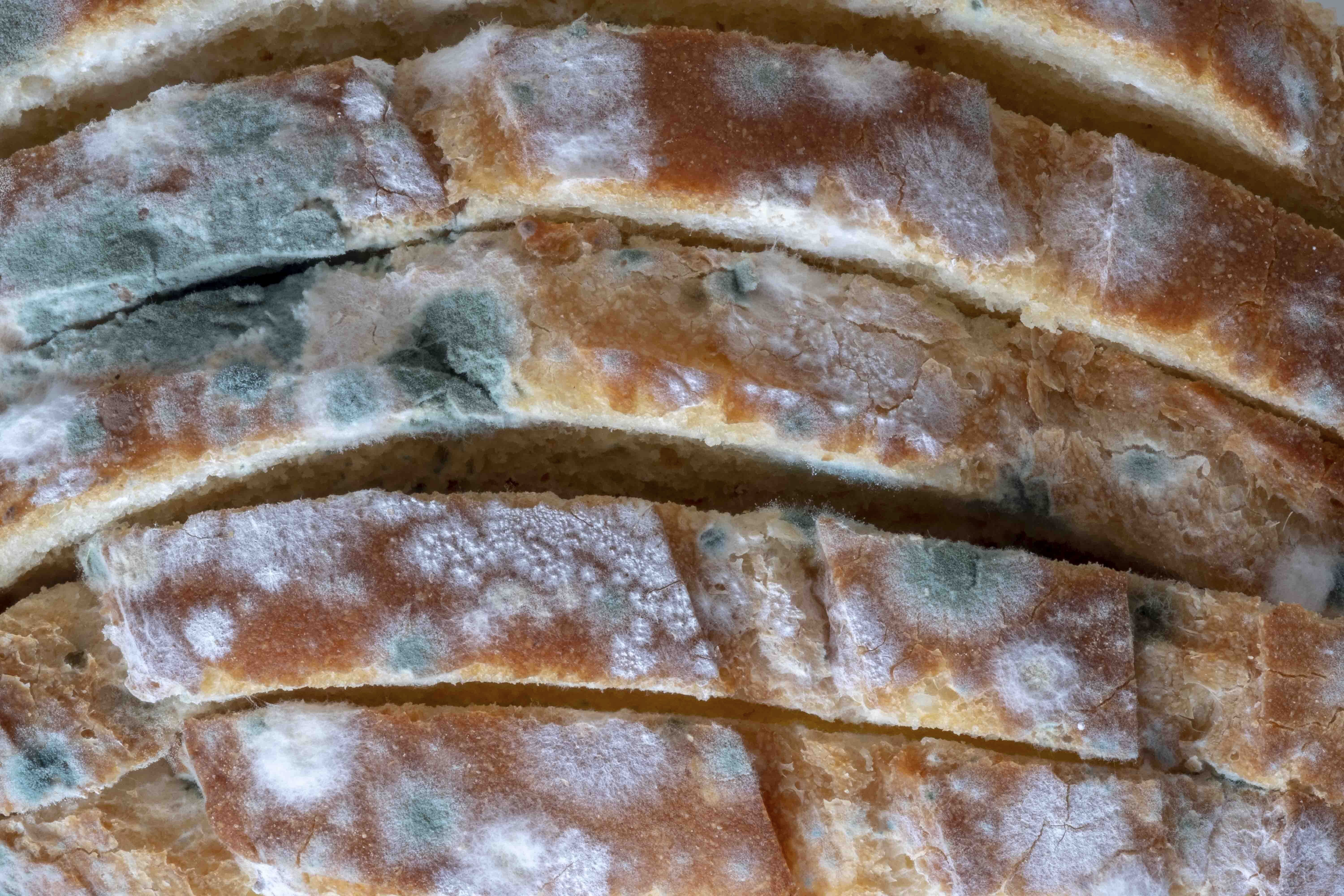
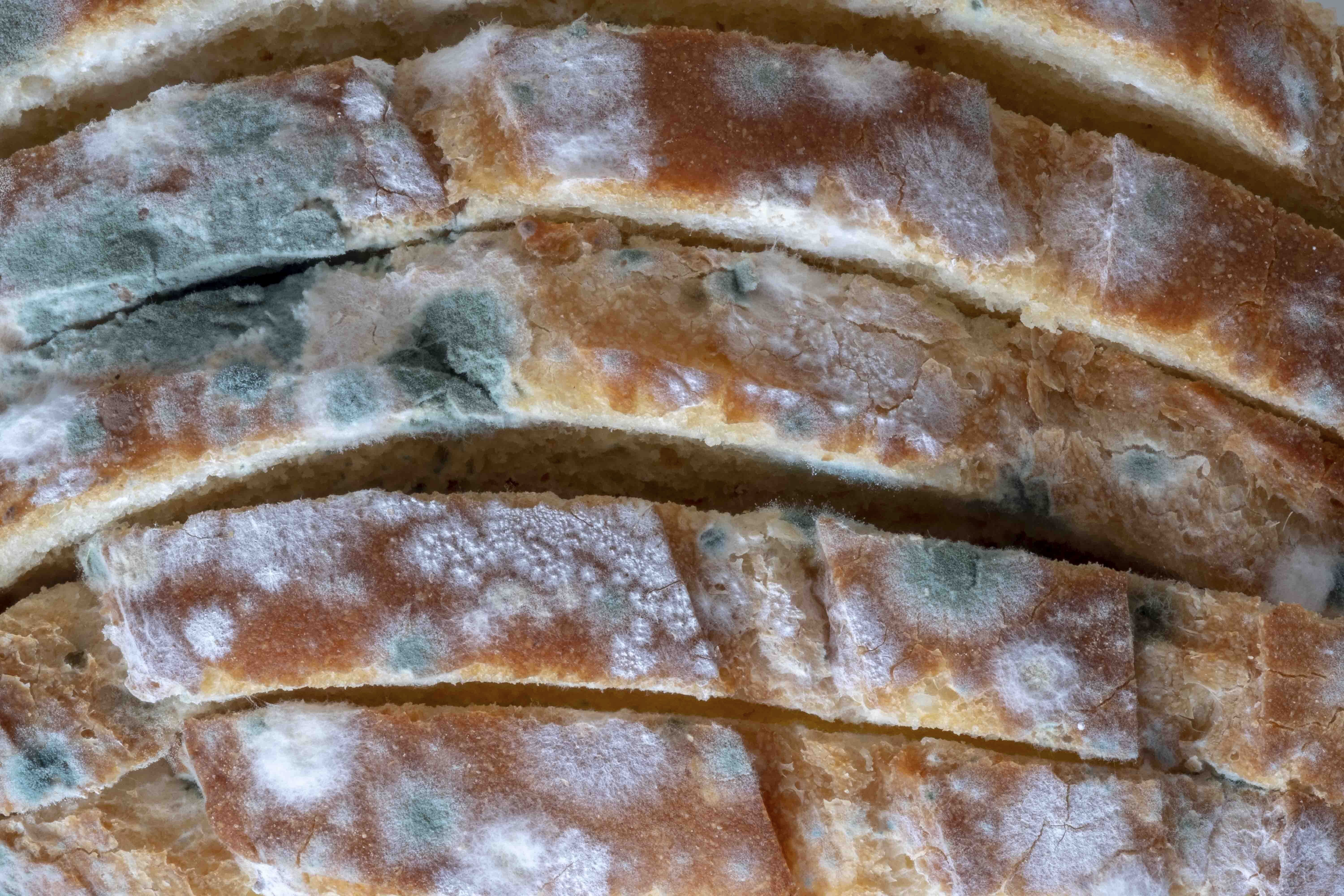
It’s lunchtime, your stomach is growling and you’ve decided to make a sandwich. But as soon as you head to the pantry and open the bread bag, you see it: a whitish, greenish spot. Ugh — it’s mould.

Some slices look OK, though, with smaller or no mouldy bits. Are those safe to eat? Maybe they haven’t been touched by the mould yet, you think.

The idea of eating them is gross, but if you are super hungry or haven’t been to the grocery store lately, you may be low on other options.

Plus, with the expectation that food costs will rise under President Donald Trump’s administration and the desire to reduce food waste, who wants to toss a whole loaf? Some might wonder if certain slices are still fine to eat, or at least won’t cause major stomach problems. Let’s see what food experts say.

What To Do If You See Mould On Just 1 Slice Of Bread

Unfortunately, mould on one slice is essentially mould on every slice (which is also the case for produce, by the way). It doesn’t matter if one piece looks fine or isn’t touching the mouldy area — it’s all dangerous to eat.

“No matter how little the mould spot is on the bread, or how many slices are left of the loaf, it is not safe to eat mouldy bread nor just cut around it and eat the rest, because the root of the mould already has deeply penetrated into it,” said Shelley Balls, a registered dietitian nutritionist with ServSafe manager certification on food safety.

And just because you might not see mould doesn’t mean it’s not there. “You may only see visible mould growing on the surface, like leaves on a tree or the petals of a flower,” explained Leanne Blommaert, the manager of food research and development at NSF, a public health organisation. “But there is an entire network of roots called mycelia that can spread into and across all surfaces of bread.”

Besides being gross, this can make you feel sick.

The Dangers Of Eating Mould

If you’re a fan of blue cheese, you may think it’s perfectly fine to eat some mould. You’ve done it before and been OK, right?

That’s understandable and, in some cases, true. Mould isn’t always bad — but it can be.

“Eating mouldy bread can upset your digestive system or cause allergic reactions, depending on the type of mould,” said Chris Mohr, a fitness and nutrition adviser at the website Garage Gym Reviews.

Dr. Kelly Krisna Johnson-Arbor, a medical toxicologist with the MedStar Health hospital system, explained how this can happen. “Some types of mould that are found in spoiled bread, including Aspergillus and Penicillium, are also associated with allergies that can occur immediately or hours after people come into contact with them,” she said.

She added that gastrointestinal symptoms — like abdominal pain and diarrhoea — may come from mycotoxins, which are secondary compounds from mould. They can change normal intestinal functions, with unpleasant results.

Those aren’t the only issues you may face, unfortunately. Even breathing in mould can cause health problems, according to Balls. People with asthma are especially at risk, Johnson-Arbor added, as the allergens can trigger breathing difficulties.

Johnson-Arbor recommended playing it safe. “Since some types of mold can cause unwanted health problems, and since it’s impossible for most people to tell whether a specific mould is harmful or not based on its appearance on food, it’s best to avoid consuming most mouldy foods,” she said.

If you want a cheat sheet on when mould may be safe to eat (or eat around), check out this webpage from the U.S. Department of Agriculture.

Why Some Bread Slices Get Mouldy Faster Than Others

Even when bread slices sit together, some can mould faster than others. How?

Balls said slices that mould faster may have more moisture or be warmer. She gave the example of a bread loaf with one side closer to a toaster, thus making it warmer and more likely to grow mould first.

Touching bread — with your hands or utensils — can cause mould spores to grow, too, Blommaert added. And that mould can spread.

Plus, mould can be airborne. Mohr said that slices near the seam of a bread bag, or near the end of a loaf, may mould faster. That’s because they’re closer to the air and moisture in your kitchen. Even if you don’t leave the bag open, it’s exposed to more air when you open it.

How To Prevent Mould From Growing On Your Bread

To some degree, mould growth is unavoidable with certain foods. However, there’s a way to slow its progress.

“You can safely store your bread in the fridge to extend its shelf life without any dangerous health risks,” Balls said.

The bread may become harder, she noted, but it’s safe to eat.

Whether this is the best option depends a little on the type of bread, however. Balls said to store crusty types of bread at room temperature only, but commercially made bread will have no or minimal problems with texture or flavour after sitting in the fridge. Just place it in an airtight container to prevent it from drying out.

Putting bread in the freezer can also keep it from drying out, and it could still taste about the same as when you first bought or baked it. If you have more than you can eat in a few days, your slices may best reside there.

Additionally, Blommaert suggested checking the expiration date of your bread and not consuming it past then. According to the USDA, commercially baked breads can be stored at room temperature for two to four days, refrigerated for seven to 14 days, or frozen for three months.

For anyone wanting to eat bread safely, Mohr offered this simple advice: “When in doubt, throw it out.”

Share Button

Butter Boards Are All The Rage, But Are They A Little Bit Gross?

By now, you’ve probably heard about TikTok’s latest food trend ― the butter board.

The concept is fairly simple. It’s a board artfully coated with soft butter. Often the dairy product is smeared and swirled around in patterns and topped with elements like honey, lemon zest, flaky salt, edible flowers, herbs and more.

Think charcuterie board, but instead of meats and cheeses, it’s elevated butter. Friends might gather around the communal dish, scrape the butter off the board and onto pieces of bread with a knife, or dip their bread directly into it.

The butter board was popularised by TikTok user and food blogger Justine Doiron aka @justine_snacks. On Sept. 15, she posted a 28-second video of herself making a butter board inspired by a recipe from Joshua McFadden’s 2017 cookbook, “Six Seasons: A New Way With Vegetables.” To date, the clip has racked up more than 8.5 million views on TikTok and another 11.2 million on Instagram.

Like the many viral food trends that came before it, the butter board is somewhat divisive. While some are utterly disgusted by the concept, others see it as a delightful indulgence.

Even if you’re on board with the butter board, not all food safety experts are. HuffPost spoke to Darin Detwiler, an associate professor at Northeastern’s College of Professional Studies and the author of “Food Safety: Past, Present and Predictions.”

Below, he shares some food safety concerns surrounding the butter board and advice for minimising the risks involved.

Is the butter board safe?

It’s perhaps unsurprising that Detwiler might have a few concerns about a dish that involves groups of people huddled over a small board as they eat and touch a dairy product.

He warned would-be butter board eaters to be mindful of “cross-contamination with many hands contaminating the butter board” and “dairy products left out of refrigeration too long ― keep cold foods cold.”

Pay attention to people’s food allergies, as butter boards involve dairy and other potential allergens like tree nuts and certain fruits or vegetables. The popularity of wooden boards as the base for many butter boards on social media also gave Detwiler pause.

“Consider the inability to sanitise a wooden board, with its micro-cracks and knife gauges that harbour pathogens such as E. coli and salmonella,” he explained. “Food-borne pathogens can make everybody sick, but the most vulnerable populations ― the very young, elderly, immune-compromised, and pregnant ― are the ones most likely to end up with reported, confirmed cases, hospitalised, and even dying as a result of such an illness.”

Detwiler noted that E. coli, salmonella and listeria are typical pathogens in food and, in rare cases, can lead to severe and potentially life-threatening complications like haemolytic uremic syndrome (HUS). Always seek medical attention if you suspect you have contracted one of these infections.

“Could people become sick from a butter board, it is 100% possible, as people have become sick from contaminated surfaces and person-to-person contact,” he added.

How can you minimise safety risks?

The risk of getting sick from a butter board still seems relatively low, according to other experts.

“This is not something that would make my top 20 list or top 50 of risky things,” food safety specialist Benjamin Chapman told The New York Times.

Although Detwiler is a little more concerned but believes a safe butter board experience is possible.

“Keep everything clean, cold, and conservative ― not too much at one time,” Detwiler said. “Also, keep in mind if people have any food allergens and keep those foods away from other foods.”

If you want to use a cutting board, choose it wisely. The United States Department of Agriculture advises using one cutting board for raw meat, poultry and seafood and a separate board for fresh produce and bread, so you might want to similarly avoid cross-contamination by using a separate platter for your butter board fantasies.

“Use a plastic board or a serving platter as opposed to a wooden board,” Detwiler recommended. “With any board, sanitise using a teaspoon of bleach to a gallon of water.”

Be mindful of timing as well. American butter tends to require refrigeration, and the USDA cautions against leaving out foods that require refrigeration for more than two hours ― and no more than one hour if the room temperature is 90 degrees Fahrenheit. Salted butter is also more protected from bacteria than unsalted butter, so more suitable for room temperature conditions. It’s also worth noting that people in many other countries (including some in the UK) keep their butter on the counter.

Still, if you’re working with a refrigerated product and want to play it safe, limit how long people can enjoy your butter creation.

“Do not leave butter boards out for more than two hours,” Detwiler advised. He also offered a more sanitary alternative to the big sweeping masterpieces on TikTok.

“Many dirty hands can spread not only food-borne pathogens but other pathogens and viruses as well,” Detwiler noted. “Use several smaller boards, as opposed to one large board, to minimise the number of hands in the food.”

So is the butter board trend here to stay? It’s hard to say, but with the murmurings of an impending butter shortage, perhaps we won’t even have the option.

Share Button