Here’s Why You Should Place A Torch In Your Fridge This Week

Bad news for fellow heatwave haters, especially in the south and east of the UK – “hot spells remain possible” this month, the Met Office says.

The BBC has predicted temperatures as high as 31C in parts of the country this Sunday, July 13.

And according to appliance repair company Atomic Tech, that can spell bad news for your fridge (and the food in it).

“Refrigerators are sensitive to heat and may struggle to cool if they are in an environment too hot (or too cold),” they wrote.

That’s why it’s important, they shared, to “keep the doors closed and ensure the gaskets seal completely… to maintain a consistent temperature inside.”

But gasket issues (problems with the accordion-like rubber seal that closes your fridge door) can be hard to spot – unless, of course, you own a torch.

How can a torch help me to spot issues with my fridge door’s seal?

According to House Digest, placing a lit torch (or your phone’s flashlight) in the fridge and then closing the door can reveal any seal issues.

Place the light facing out.

If any light seeps through the gasket, the seal isn’t as tight as it needs to be.

That means air is escaping your fridge, making it harder to keep your food cool.

It could even raise your electricity bill as your appliance struggles to circulate cooling air around your food, the publication says.

It helps if you do this earlier or later in the day, when it’s darker in your kitchen.

Keep other lights off to make the beams easier to spot.

You can also use a sheet of paper or a pound note

Per appliance services company Bodewell, another way to test your fridge’s seal is with a pound note or a sheet of paper.

Shut your fridge’s door on the sheet or note.

Then, try to pull it out.

“You should feel some tension as you do so; if not, the gasket may be weak or broken at this point,” the experts advised.

“Repeat this test around the whole of the gasket’s length.”

If you suspect you’ve got issues with your fridge’s seal, it may be time to buy a new gasket.

Share Button

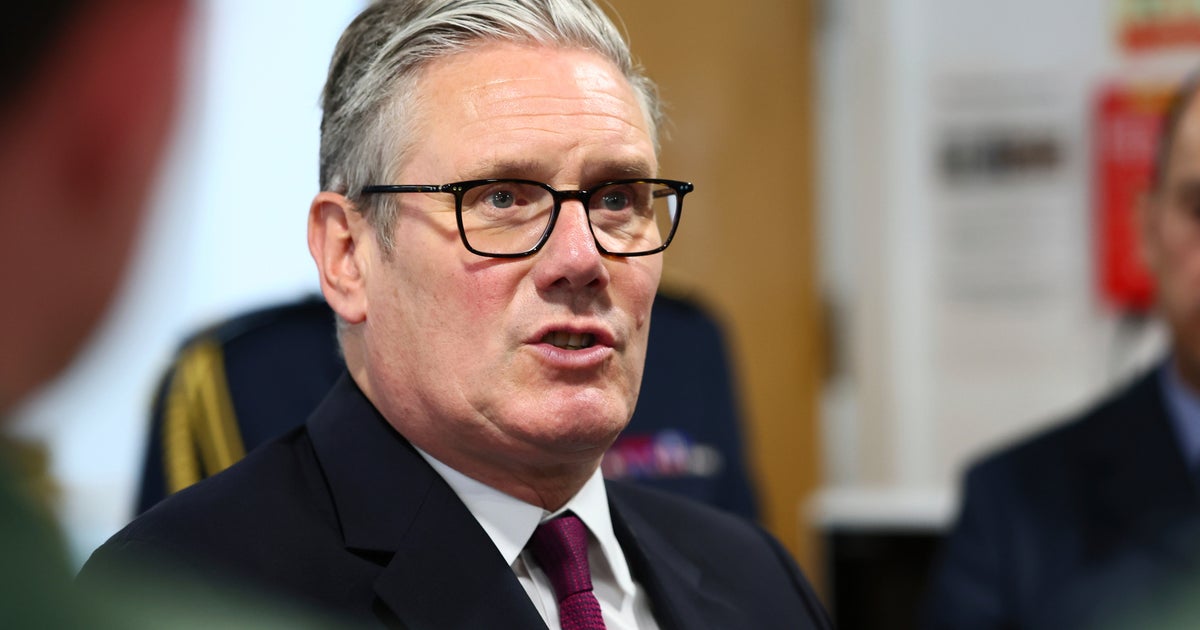
Keir Starmer And Rachel Reeves Could Be Preparing For Their Biggest U-Turn Yet. Here’s Why

Rachel Reeves could not have been clearer as she delivered her first Budget last October.

The chancellor told MPs that she had considered whether or not to maintain the freeze on income tax and National Insurance thresholds, which were brought in by the Tories and are due to stay in place until 2029.

The effect of the policy is to drag millions of workers into higher tax bands when their pay goes up, raising tens of billions of pounds for the Treasury in the process.

But critics say this is a stealth tax, a sneaky way of giving the chancellor more money to spend without having to increase the rate of income tax or National Insurance.

Delivering her Budget, Reeves told the Commons that under Labour, this practice would end.

“Extending their threshold freeze for a further two years raises billions of pounds,” she said.

“Money to deal with the black hole in our public finances, and repair our public services.

“Having considered this issue closely, I have come to the conclusion that extending the threshold freeze would hurt working people. It would take money out of their payslips.

“I am keeping every single promise on tax that I made in our manifesto. So there will be no extension of the freeze in income tax and National Insurance thresholds beyond the decisions of the previous government.

“From 2028/29, personal tax thresholds will be uprated in line with inflation once again.”

But with the chancellor struggling to balance the nation’s books, all the signs are that she is set to recant on her previous position when she delivers her next Budget in the autumn.

At prime minister’s questions on Wednesday, Tory leader Kemi Badenoch asked Keir Starmer if he stood by Labour’s election manifesto pledge not to put up income tax, VAT or National Insurance.

The PM delivered a one word answer: “Yes.”

But when Badenoch asked the prime minister if Reeves stood by her promise to lift the freeze on income tax thresholds, he was much more equivocal.

“We are absolutely fixed on our fiscal rules, we remain committed to them,” Starmer said, completely dodging the question.

“We remain committed to our Budget, to our manifesto commitments.”

Badenoch replied: “The whole House would have heard him fail to rule out freezing tax thresholds. He could say with the first question, he could promise, but he couldn’t this time round.”

She said maintaining the freeze meant “millions of our poorest pensioners face being dragged into income tax for the first time ever”.

Once again, Starmer failed to rule out maintaining the Tory threshold freeze, saying once again: “We will stick to our manifesto commitments, we will stick to our fiscal rules.”

Speaking to journalists afterwards, the prime minister’s spokesman repeatedly refused to say whether Reeves stands by her commitment to end the freeze.

Of course, performing an embarrassing U-turn would not be a new experience for the PM, who has turned it into something of an art form thanks to climbdowns on, among other things, winter fuel payments and welfare cuts – decisions which have left Reeves needing to urgently raise more funds.

Voters tend to be forgiving of politicians who actually change their minds when the tide turns against them.

But they may be less patient when the U-turn in question ends up hitting them in the pocket.

Share Button

Vast Majority Of Brits Back A Wealth Tax On The Super-Rich, Poll Reveals

The vast majority of UK voters back a wealth tax on the super-rich, a new poll has revealed.

According to the YouGov survey, 75% of Brits want to see a 2% charge on those worth more than £10 million.

Pressure of growing on chancellor Rachel Reeves to introduce a wealth tax in the Budget as she tries to plug another multi-billion pound hole in the nation’s finances.

Former Labour leader Neil Kinnock threw his weight behind the calls at the weekend.

He told Sky News: “This is a country which is very substantially fed up with the fact that whatever happens in the world, whatever happens in the UK, the same interests come out on top, unscathed all the time, while everybody else is paying more for gutted services.”

The YouGov poll found that 49% of people “strongly support” a wealth tax, with a further 26% saying they “somewhat support” it.

Only 13% say they oppose it, with 12% saying they don’t know.

According to separate research by the More in Common think-tank, a wealth tax would be the most popular tax policy the government could introduce.

But critics say the policy has never worked in other countries where it has been tried, mainly because the super-rich are highly mobile and simply move elsewhere in order to avoid it.

Reeves has previously ruled out a wealth tax, but No.10 failed to stamp out the speculation on Monday.

A spokesman for the prime minister said: “We have repeatedly said that those with the broadest shoulders should carry the greatest burden and the choices we’ve made reflect that.

“The top 1% of taxpayers contribute nearly a third of income tax.

“Revenue from wealth and asset taxes like capital gains tax and inheritance tax go towards funding tens of billions of pounds for the public services.

“The government is committed to ensuring that the wealthiest in our society pay their fair share of tax.”

Share Button

‘I Hated School, I Struggled With All Of It – Until I Had This Diagnosis’

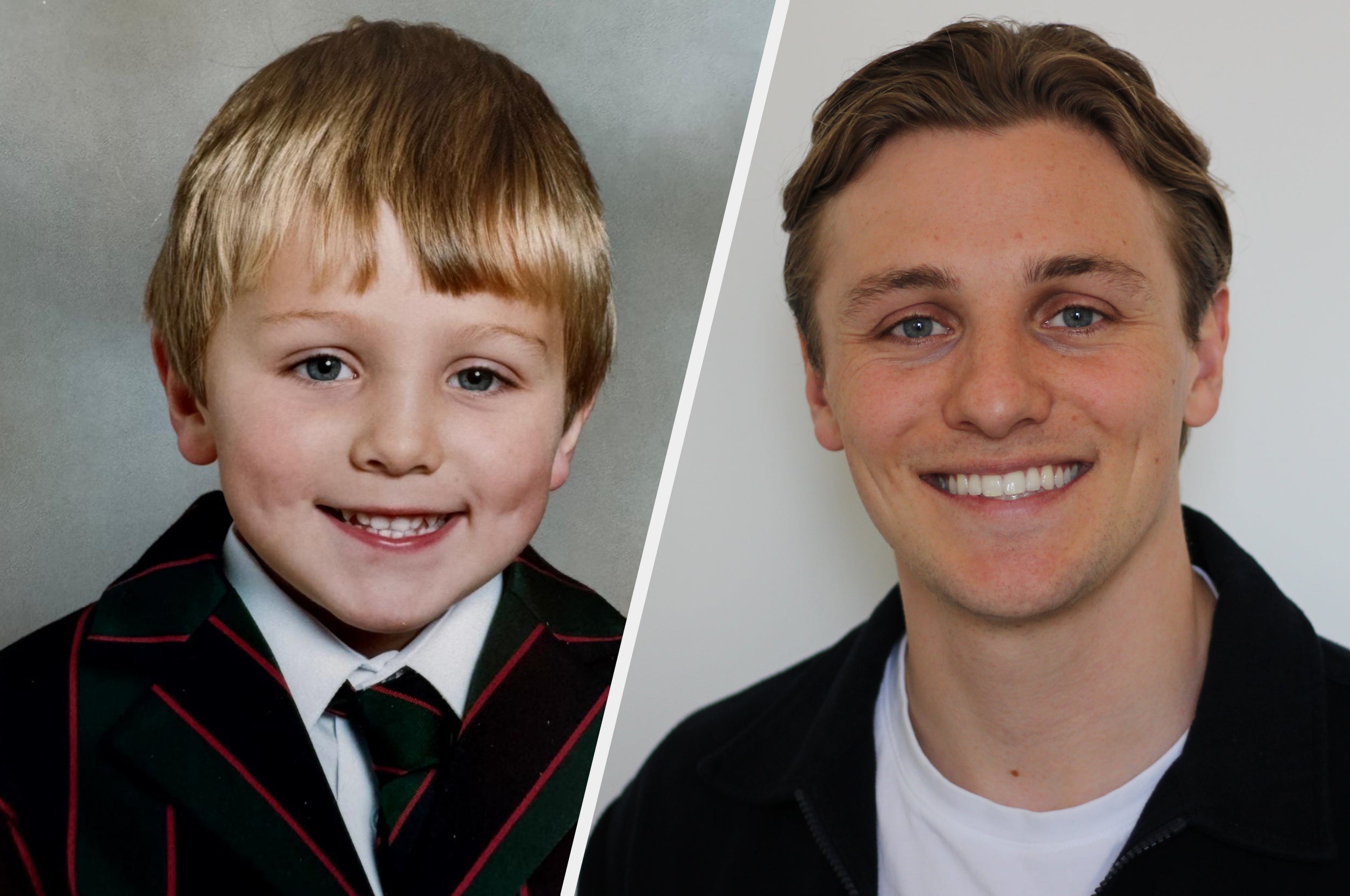
A young entrepreneur who “hated” school because of an undiagnosed learning disability has opened up about his experience in a bid to raise awareness among parents and teachers.

“I hated school. I thought I was just thick,” said Jamie Wace, from Devon. “I had siblings who were academic, but for me; reading, spelling, and working memory – I struggled with all of it.”

When Jamie was 13, a teacher noticed something “wasn’t quite right” with his school learning. Shortly after, his parents took him for a private assessment and he was diagnosed with dyslexia, a neurological difference which primarily affects reading and writing skills.

After the diagnosis, Jamie was able to adjust his way of learning at school. “My working memory is terrible, and I used to think that was just because I was stupid,” he recalled.

“Now I know that it’s a proper issue, and as a result, I was an avid notetaker at school after I knew this and I think that changed massively for me. I also just like was a bit less harsh on myself when I didn’t get something the first time.

“I was given extra time in exams, which was really helpful, but the main thing was discovering the things I could do well myself, as it is different for everyone.”

Prior to his diagnosis, Jamie said he had been in the bottom sets in classes at school, with predicted grades of Ds and Cs.

But after his diagnosis, his grades soared, with Jamie joining the top sets in all his classes within a year, and going on to achieve As and A*s in his exams.

“I was super lucky that my parents were able to take me for a private assessment,” Jamie recalled.

“I have no idea how long I could have been waiting to be tested via the local authority, and because I was 13, the waits could have meant some big impacts for my GCSEs.”

He’s now using his experience to help other children

Jamie, who is 30, is on a mission to screen one million children across the UK for dyslexia.

He co-founded Talamo, alongside Leo Thornton and Sophie Dick, in 2022. The online screening tool offers schools a way to screen classes quickly and affordably, costing roughly £12 per child.

The tool asks children aged 7-16 years old a number of questions and then offers a report providing a scale of how likely they are to have dyslexia, their strengths, as well as areas where they might need more support – and how teachers and parents can offer that support.

It is 95% accurate, according to the Talamo website – last September, just 10 schools were using it. Fast forward to today and 300 are. Parents can also pay for a online screening test for £69 which culminates in an action plan of next steps for their child at home and school.

It’s worth noting this isn’t a formal dyslexia assessment, nor can it provide a diagnosis. Private dyslexia assessments can typically cost £350 and over depending on the provider. The British Dyslexia Association says the cost of an assessment with a specialist teacher is £690 and an assessment with a psychologist is £882, for example.

But the online screening tool could help parents decide whether they should seek (and pay for) a full diagnosis – especially as waiting times can vary, depending on where you’re based and whether you opt for face-to-face or a remote assessment. Even the NHS’s website acknowledges diagnosis to be a “time consuming and frustrating process”.

“I don’t want other children to feel this way,” said Jamie, discussing how growing up he struggled with “mental fatigue and self-doubt” because of his undiagnosed learning difficulty.

“Understanding how my brain worked gave me the confidence to study in a way that suited me, and that changed everything. I knew I wasn’t stupid, I just learn things differently,” he added. “It set me on a path to earning two degrees and even learning Mandarin.”

Research has found as many as 80% of dyslexics leave school undiagnosed. As Kate Griggs, founder of Made By Dyslexia, previously wrote in an op-ed on HuffPost UK: “It means many children and their parents are left to muddle through, not knowing why their children are struggling and without their amazing potential being recognised.”

Symptoms of dyslexia can be subtle

In young children, it can manifest as slow speech development, muddling words up, showing no interest in letters or words, and difficulty learning to sing or recite the alphabet, according to the British Dyslexia Association.

In primary school, it can look like slow spoken or written language, difficulty concentrating and forgetting words. They might spell a word several different ways in a piece of writing, or use unusual sequencing of letters or words. And at secondary school level, pupils with dyslexia might have difficulty with punctuation and grammar, confuse upper and lower case letters, and have difficulty note-taking in class.

“There isn’t one simple checklist to notice the signs, and it can be subtle or less obvious in younger children, but that doesn’t mean it isn’t there,” said Jamie.

“Dyslexia doesn’t mean you’re less intelligent, it just means your brain works differently. But too many kids are told they’re lazy or slow, when really they just need the right support.”

Share Button

I Thought My Body Was ‘OK’ After Having 2 Kids – Then I Went For A Mummy MOT

“I want you to squeeze 30%, then 60% and then 90% when I tell you to, OK?” said the physiotherapist, referring to my pelvic floor muscles.

“OK,” I replied, feeling a little overwhelmed. I’d walked into this appointment completely unsure of whether I knew how to do a kegel properly. Thankfully, we swiftly established that I could.

I focused as hard as I could and slowly, carefully clenched my pelvic floor muscles. I squeezed a little, then some more, and then as much as possible.

“Good,” said physiotherapist Maria Elliott. She then proceeded to tell me I was doing it properly, and my muscles were working well, but the muscle was weaker at the back than at the front.

This, she explained, is likely why I’m having occasional trouble with bladder control.

Don’t get me wrong, I can (usually) cough and sneeze and not have any problems. But ever since having two kids, if I’m physically sick, the evacuation of my stomach is usually accompanied by an evacuation of my bladder. Not ideal.

Maria Elliott founded The Mummy MOT in 2015. The specialist postnatal examination, for those who’ve had either vaginal or C-section deliveries, assesses how posture, pelvic floor muscles, and stomach muscles are recovering after childbirth.

The physiotherapist has since gone on to train around 900 practitioners so they can deliver the same service to new parents across the UK.

While I was lucky enough to attend a session with Maria for free for the purpose of understanding how they work, in central London, an hour-long consultation costs around £150 (the same price as a cut and colour at the hairdresser’s), while follow up sessions can be £200 each.

During pregnancy, it’s normal to attend multiple antenatal appointments (roughly seven to 10 depending on whether it’s your first baby or not), but once that baby is born, new mums can often feel like they’re left in the lurch.

Bar a few midwife and health visitor check-ups in the weeks after birth (usually focusing on your baby), a GP appointment at 6-8 weeks postpartum is pretty much all you get – and even that is tacked onto the baby check-up, so if the appointment runs over, you’re left with approximately five minutes to explain where your head, and body, is at.

And let’s face it, at almost eight weeks postpartum, you’re still very much healing and trying to figure out how you feel in your body and mind, all while existing on very little sleep.

I wasn’t really aware of any issues with my pelvic floor at eight weeks postpartum after my second child. It was only months later, when I caught a stomach bug, that I realised it wasn’t working like it should.

Around the same time I started noticing that if my bladder was fuller than usual, the odd sneeze would wreak havoc, too. Now I realise why a relative of mine always crosses her legs when she sneezes.

But we shouldn’t have to put up with this, stressed Maria.

I thought my pelvic floor issues weren’t that bad, and that other women had it far worse. I’ve interviewed women left with devastating bowel injuries after giving birth, so it seemed acceptable almost to just keep calm and carry on. But during my appointment, which took just over an hour, we addressed a handful of issues, spanning from sex to posture and continence.

Yasmine Ghadache, an osteopath, was also on hand to help. In a weird turn of events, the night before my appointment I somehow managed to pull a muscle in my back and was in a lot of pain – she explained it was likely as a result of me carrying my baby (now a two-stone toddler) repeatedly on one side.

She manipulated the area and within a couple of days, I was back to normal.

Both Yasmine and Maria were very knowledgeable and so passionate. Sitting with them, talking about women’s health, I dared to imagine a world where women got proper postnatal care.

The sessions are up-close-and-personal at points. To check how well my pelvic floor muscles were working, Maria popped a gloved finger into my vagina (she did ask first) and told me to squeeze – all while we had a friendly chat.

During the exam, she discovered I have a very tight internal pelvic floor muscle, which needs some follow-up work. (I’m going to be honest, I didn’t fully know what a pelvic floor muscle was before this session and now we are WELL acquainted.)

Both Maria and Yasmine made me feel incredibly comfortable throughout the process, though. It wasn’t painful at any point. I felt genuinely supported and cared for. These women clearly wanted to help me feel my best.

With a rapid national investigation into NHS maternity and neonatal services underway, it’s as clear as day that too many mothers and birthing people are not supported enough during pregnancy, birth and beyond.

Roughly one in three women experience urinary incontinence three months after pregnancy, around one in seven experience anal incontinence six months after birth, and one in 12 women report symptoms of pelvic organ prolapse.

All of these issues can affect a woman’s ability to work, as well as their sexual and social relationships, and their mental health.

Mums put everyone but themselves first, but we should also be able to stand up and say: I deserve to feel good about myself, too. If Mummy MOTs were available to every birthing parent on the NHS, well, I think we’d be unstoppable.

Alas, they’re not. But if you have had a baby – whether six weeks or six years ago – and you’ve been struggling with pelvic floor issues, or problems with separated stomach muscles or posture, I would recommend a consultation.

You deserve to have your body back – you’ve certainly given enough.

Share Button

Another Blow For Starmer As Two-Thirds Of Brits Say PM No Longer Respects Them, Poll Finds

Two-thirds of Brits believe Keir Starmer does not respect people like them, according to a new poll.

Researchers at More in Common and UCL Policy Lab found 63% of the 7,000 people polled in June say the prime minister does not respect them now, compared to 32% a year ago.

Only a quarter (24%) of respondents said they still believe he does respect them.

Meanwhile, 65% of voters say the Labour Party as a whole lacks respect for them – double the amount who said that in 2024.

The results are yet another blow to the prime minister, who has just marked a year in office, but has very little to celebrate.

Last week, he was forced to water down his welfare reforms to prevent his own backbenchers from voting them down, although 48 Labour MPs still rebelled.

The decision also blew a £5 billion hole in chancellor Rachel Reeves’ autumn Budget, leaving more tax rises all-but inevitable.

So it’s no surprise that Brits told More in Common and UCL Policy Lab they would give the party an E on their report card after a year in office.

Most voters said nothing had changed in the year since the last Tory government was kicked out of office.

Only three in five Labour voters from last year would still support the party now, the researchers found.

Former Labour supporters are now heading to other parties – 11% to Reform, 8% to the Lib Dems, 4% to the Greens and 4% to the Conservatives.

More than a third of those disillusioned voters (36%) said they were moving away from Labour due to broken promises and U-turns.

A further 31% blamed the government’s inability to reduce the cost of living, and 27% cited the changes to the winter fuel allowance.

Other top reasons included a lack of control over immigration, improving the NHS and changes to the benefit system.

But, despite believing he does not respect them, only 13% said they would not vote for Labour because they don’t like Starmer, the same proportion who said the party is now too right-wing.

Meanwhile, the poll found Reform UK’s Nigel Farage is now seen as the most respectful political leader.

A third (33%) said the MP for Clacton respects people like them, compared to 24% who felt the same about either Starmer or Tory leader Kemi Badenoch.

Half (50%) of Brits said Farage felt the opposite – but that’s still significantly lower than those who feel the same about Starmer (63%) or Badenoch (56%).

Share Button

UK Gardeners Urged To Pee In Watering Cans For 2 Surprising Benefits

The UK’s recent heatwave has ended (for now), meaning watering and mowing rules have gone back to normal for gardeners.

Still, a bowl of water left in your garden remains useful for animals like hedgehogs, and though this week is safer than last for trimming your grass, you might want to keep your cut shreds on the lawn.

And according to author and former garden manager for various Royal Horticultural Society and National Trust sites, Simon Akeroyd, apparently, we should be peeing in our watering cans too.

“Sorry if this horrifies you,” a recent Instagram Reel of his read, “But the key to successfully growing plants is natural fertiliser.”

Why pay for specially-made products, the gardener argued, when “you have free access to the best natural stuff out there” – pee?

How could pee possibly help plants grow?

Calling your very own liquid gold the “best plant food” out there, Akeroyd shared that wee is “high in the three main plant nutrients needed for healthy plant growth – nitrogen, phosphorus and potassium.

“It’s particularly high in nitrogen,” he continued.

Nitrogen is key to plant health as it provides the building blocks of their DNA (though too much isn’t great for them either – nitrogen created by sewage can throw off the ecosystems of waterways, leading to too much algae).

That may be why Akeroyd recommends diluting your free plant feed “at a rate of about ten parts water to one part wee.”

Once placed in a watering can, t can be used to treat plants “once a week,” he added.

The expert isn’t alone – a 2017 paper published in Environmental Science and Technology reads, “Human urine contains significant amounts of N (nitrogen) and P (phosphorus); therefore, it has been successfully used as fertiliser in different crops.”

“Humans have been collecting urine and using it for fertiliser for a long, long time, but then in the west that really stopped with the invention of [the] sewage system,” Dr Krista Wigginton, who researched the topic, told The Guardian.

“We are just trying now to figure out with this infrastructure system that we have, how do we pull back and think differently about what goes into this sewage system and capture some of those valuable products before [they] get mixed and diluted with everything else?”

Does pee get rid of foxes?

Some people report that male human pee, and especially the first one of the day, can repel foxes by interrupting their scent markers.

“Once the fox’s scent has been masked, they will feel more vulnerable and leave your garden altogether. This is a free, effective, if not a bit strange way to get rid of foxes without killing them,” Shield Pest Control wrote.

As Black Foxes UK said, there’s no empirical evidence to prove this definitely works yet.

But hey – if you’re using it to feed your plants anyway, it might be a welcome side-effect.

Share Button

Former Russian Minister Found Dead In Car After Being Sacked By Putin

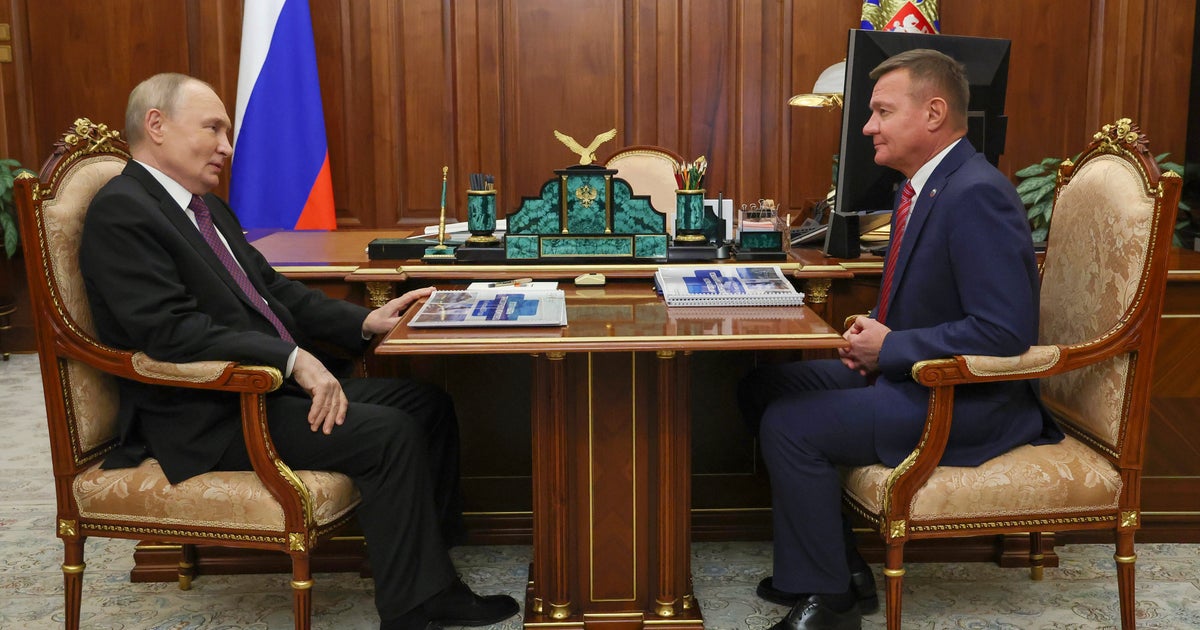
Russia’s former transport minister has been found dead in his car just hours after it was revealed he had been sacked by Vladimir Putin.

Initial investigations suggest Roman Starovoit took his own life using a handgun.

In a statement, the Investigative Committee of Russia said: “The body of the former minister of transport of the Russian Federation, Roman Vladimirovich Starovoit, was discovered in his personal vehicle with a gunshot wound today in the Odintsovo city district.”

The statement added: “The main version is suicide.”

Andrei Kartapolov, head of the Russian parliament’s defence committee, said Starovoit had died “quite a while ago”.

Earlier on Monday, it was announced that Putin had sacked Starovoit after just over a year in the job.

He had been governor of the Kursk region, which borders Ukraine, for nearly five years before taking on his ministerial role.

Before Starovoit’s dismissal, Russian airlines had cancelled nearly 500 flights and delayed almost 2,000 since Saturday because of the threat of Ukrainian drones.

He was replaced as transport minister by his deputy, Andrei Nikitin.

A Kremlin spokesperson said: “At present, in the president’s opinion, Andrei Nikitin’s professional qualities and experience will best contribute to ensuring that this agency, which the president described as extremely important, fulfils its tasks and functions.”

Share Button

Panel Of 2024 Labour Voters Name The 1 Turning Point They Began To Like Farage

A panel of 2024 Labour voters said they started to like Reform UK after watching its leader Nigel Farage on I’m A Celebrity… Get Me Out Of Here!.

Back in late 2023 before he was elected to parliament, Farage caused a huge stir by appearing in the hit reality TV show.

Even the programme’s hosts Ant and Dec urged producers to take a break from having politicians as contestants.

But, Farage still won over voters and ended up in third place.

More than 18 months later, a panel of voters who backed Labour last July told pollsters that his appearance on the show marked the moment they started warming up to the MP for Clacton.

In footage aired by the BBC’s Sunday with Laura Kuenssberg, one voter told pollsters More in Common: “I really like Reform.

“I didn’t [like him], but it was I’m A Celeb… which turned my head for Nigel.

“I really saw a different side to him and I think he’s very misunderstood.”

“He’s more relatable to people, to the average person,” another woman said. “Whereas some politicians at the present seem far removed, they’re so in another world, because they are public school educated, they can’t relate to the average person.”

However, a different person did jump in at this point, saying: “Nigel Farage was publicly educated, while Keir Starmer is working class but he does present that.

“So Nigel Farage puts on this image of being one of the people, but actually he went to private school.”

Even so, some voters suggested they would fire Starmer for his “disappointing” performance over the last year unless he starts to “try harder”.

Good Morning Britain host Susanna Reid also told the BBC that this conversation demonstrated how voters “need to feel a material difference in their lives”.

She noted that they are still struggling with food inflation and cost of living, so the “government are getting this wrong”.

“Perhaps Sir Keir Starmer needs to go on I’m A Celebrity… or Strictly, in order for voters to know who he is,” Reid suggested. “The words that kept coming out of their mouths were: I don’t know who he is.”

The focus group’s findings were published to mark the anniversary of Labour’s landslide victory in the general election as political pundits look at how Starmer has fallen down in the polls ever since.

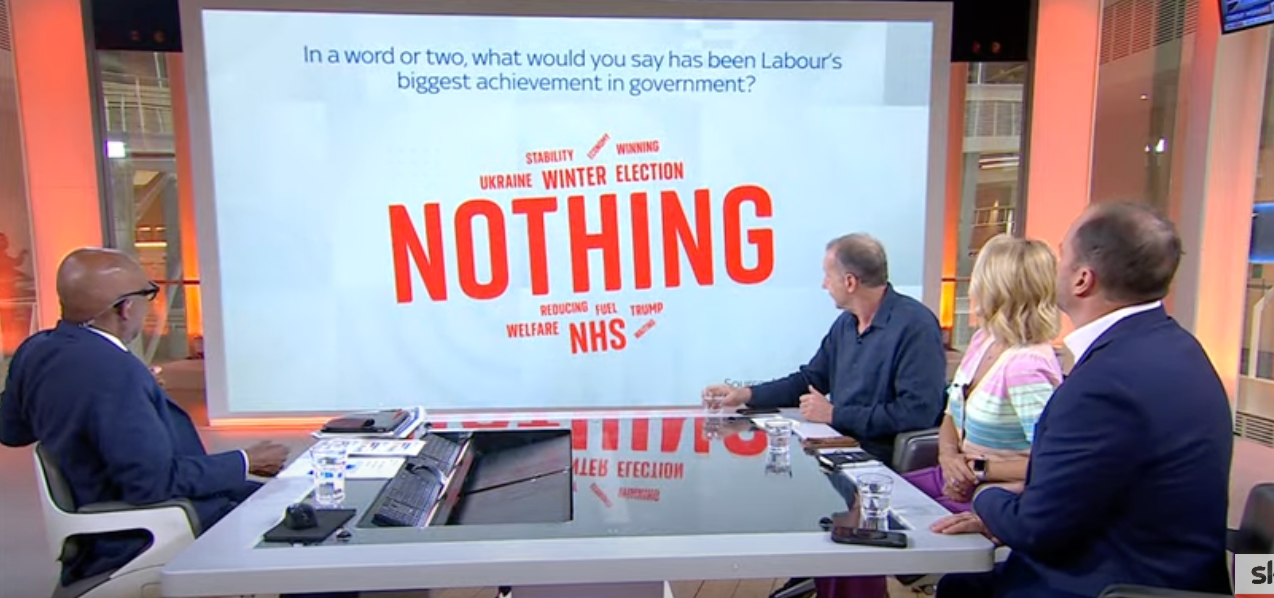
Sky News had its own devastating way of portraying Labour’s first year in office with some brutal word clouds, again from More in Common.

The pollsters asked the public: “In a word or two, what would you say has been Labour’s biggest achievement in government?”

The largest word by a healthy margin was “nothing”, although – in much smaller fonts – NHS, welfare, winter, election and Ukraine were all visible too.

A More in Common word cloud shown on Sky News
Share Button

Command Of Russian Army ‘Undermined’ After 16 Of Putin’s Generals Killed At War, UK Says

Vladimir Putin has reportedly lost 16 Russian generals in battle since declaring war on Ukraine, according to the UK.

The British Ministry of Defence (MoD) claimed this loss has subsequently undermined command and control in some parts of the army.

The MoD also noted in its latest update on X that two senior generals have died so far in 2025 and five in the last 12 months alone.

The MoD said: “The loss of so many high-ranking officers is likely to have had the effect of undermining command and control in parts of the Russian Armed Forces.

“This has likely contributed to Russian tactical and operational difficulties during the conflict.”

The MoD confirmed that Major General Mikhail Gudkov was the latest to be killed in battle after a Ukrainian strike on a Russian command post.

He died on July 2 in the Kursk oblast in western Russia, the region Ukrainian troops seized in a surprise incursion last August.

Russia has claimed to have retaken the area completely since April, while Ukraine has maintained that the fighting is ongoing.

The MoD said: “It is likely Gudkov was directing marine infantry units attempts to establish a buffer zone in the Ukrainian oblast of Sumy.

“Russia’s advances in Sumy have slowed due to Ukrainian counterattacks and significant Russian losses.”

The MoD has previously claimed Russia has now surpassed a million military losses since Putin first invaded Ukraine back in February 2022.

Despite the staggering attrition rate and Donald Trump’s efforts to secure a peace deal, the Russian president has refused to compromise on any long-term ceasefire deals with Ukraine.

Only last month, he confirmed that he still wants to annex all of Ukraine.

“I have said many times that the Russian and Ukrainian people are one nation, in fact. In this sense, all of Ukraine is ours,” Putin said.

Share Button