The Google Pixel 11 Pro Just Dropped In Price: Here’s How To Get The Best Deal

We don’t need to tell you this: tech is expensive. Keeping up to date with the latest gadgets can put a serious dent in your wallet, but the price tag doesn’t do much to quell our desires for a new phone.

Especially when one as enticing as the Google Pixel 11 Pro drops.

Available for pre-order now, and to buy from 20 August, the Pixel 11 Pro comes in four shades (Canyon pink, Olive green, Fog blue and Obsidian black).

The phone retails at £1,079, which is up nearly £500 from the Pixel 10. But, good news Google heads: you can get it for less when you trade in an old device.

Eligible devices include phones from Google, Samsung, and Apple, among tons of other brands, so if you’ve been thinking about switching to Google, this is as good a chance as any.

Depending on the phone you’re trading, you could save up to £850, which in case you need a little help with the maths, means your new phone could cost as little as £229. Woah.

When you consider the array of upgrades Google has made from its predecessor, the Pixel 10, that’s an insane steal.

The first Google phone to use its Tensor G6 chip, it’s considerably speedier than the Pixel 10, with Google claiming you’ll see 25% speedier browsing and 3.5 times faster Gemini processing.

Speaking of, the Pixel 11 Pro is loaded with Gemini Intelligence, which can help you with everything from brainstorming to finding information.

The camera is often the most important aspect of a phone (for us, at least) and this one delivers big time. Pixel 11 boasts Google’s longest zoom yet (up to a whopping 120x) and 30% better light sensitivity so your photos always come out looking crisp and sharp.

One of our favourite elements is Magic Capture mode, which means you can simply press a single button to let your phone take over the heavy lifting of taking photos and videos, so you don’t have to think about the best mode to capture the moment.

The offer runs until 1 September, so run, don’t walk – because you could miss out on £850 in savings on the Pixel 11 Pro as well as up to £260 when you trade in a smart watch for the new Google Pixel Watch 5.

Share Button

Reform UK Slump To Third Place Behind Labour And Tories As Farage Returns To Commons

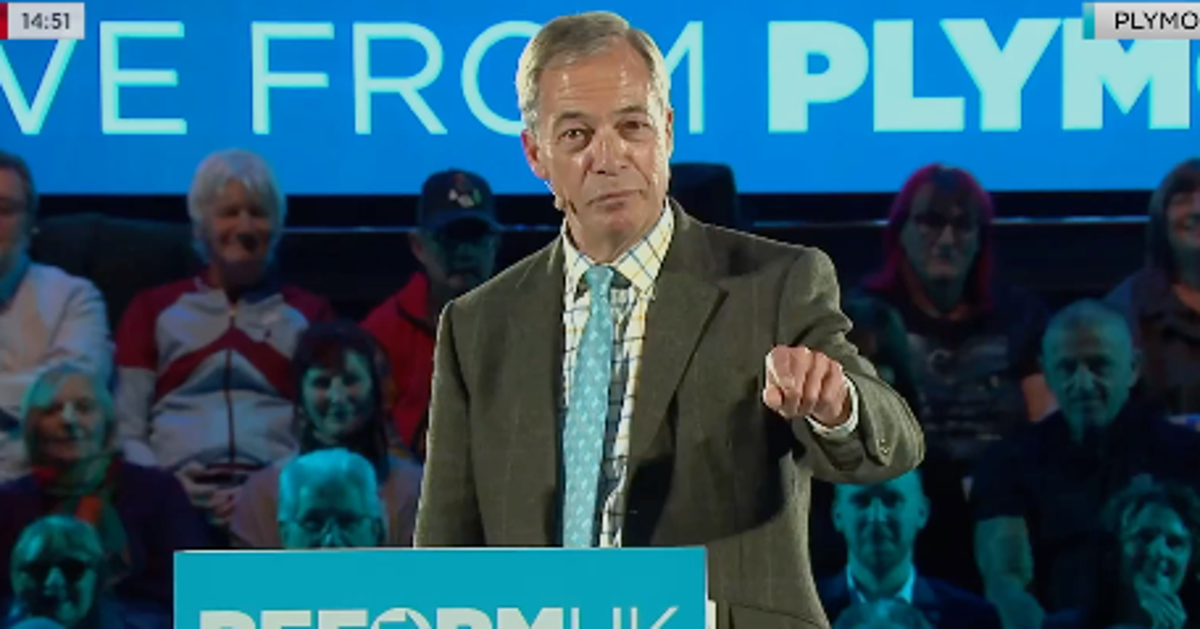
Reform UK have slumped to third place behind Labour and the Tories in the latest blow for Nigel Farage, according to the new poll.

The survey, by the More in Common think-tank, puts Labour in the lead on 26%, three points ahead of the Conservatives, with Reform a point behind on 22%.

It is Reform’s lowest vote share since January 2025, and the first time they have been behind the Tories in 18 months.

The poll also puts Restore Britain, the right-wing party led by former Reform MP Rupert Lowe, is on 4%.

The findings were released as Farage was sworn in again as MP for Clacton following his by-election victory over Count Binface last month.

They pile further pressure on the Reform leader to turn around the party’s fortunes as they prepare to hold their annual conference in Birmingham later this week.

More in Common director Luke Tryl said: “The poll tells us two things: the Conservatives seem to be moving in the right direction, and Reform face a growing threat from both sides, as Restore Britain erode their support on the right, and the Conservatives gain ground on their centre flank.

“Reform is now sitting around 10 points below their peak last autumn.”

Farage has endured a torrid few months after it emerged he had not declared a £5 million gift from a Thailand-based crypto billionaire shortly before he first became Clacton MP at the 2024 general election.

Parliament’s standards commissioner is carrying out an investigation into the row, which could lead to another by-election if Farage is found guilty and suspended from the Commons for more than 10 days.

The Reform leader’s woes have coincided with a steady fall in support for his party.

A senior Tory source said: “It’s still a long way to go, but it’s now clear Reform are going backwards.

“A pointless by-election vs a bin, chronic infighting, and still no answers on the fishy £5m personal donation – Farage is floundering and his party has now slipped to third in the polls.

“It’s surely only a matter of time before Farage decides to throw in the towel.”

Listen to Commons People, the podcast that makes politics easy. Every week, Kevin Schofield and Kate Nicholson unpack the week’s biggest stories to keep you informed. Join us for straightforward analysis of what’s going on at Westminster.

Share Button

Kemi Badenoch Accused Of ‘Shuffling Deckchairs On The Titanic’ With Tory Frontbench Shake-Up

Kemi Badenoch has been accused of “shuffling the deckchairs on the Titanic” after she axed two Tory big beasts as she freshened up her top team.

The Conservative leader sacked former cabinet ministers Priti Patel and Mel Stride in the second reshuffle of her leadership.

Andrew Griffith – one of the architects of Liz Truss’s disastrous mini-Budget – replaced Stride as shadow chancellor, while Tom Tugendhat takes over from Patel as shadow foreign secretary.

Tory rising star Katie Lam replaces James Cleverly – who is bidding to be the party’s London mayoral candidate – as shadow housing secretary.

Another member of the Conservatives’ 2024 intake, Rebecca Paul, has been appointed shadow culture secretary.

Former cabinet minister Damian Hinds returns to the Tory frontbench as shadow health secretary, taking over from the sacked Stuart Andrew.

Other changes include Harriet Cross becoming shadow Scottish secretary.

She takes over from Andrew Bowie, who is replacing Claire Coutinho as shadow energy secretary.

Coutinho, who is currently on maternity leave, becomes shadow business secretary.

A Reform UK spokesman said: “Kemi is simply moving the deckchairs around the titanic with this reshuffle.

“She has promoted ardent supporters of net zero and the ECHR into senior positions, despite saying she wouldn’t .

“The Conservatives haven’t learned a thing from their failures in office.”

Labour chair Bridget Phillipson said: “Kemi Badenoch’s Conservatives have learnt nothing since they were kicked out of office by the British people.

“Promoting a key architect of Liz Truss’s disastrous mini Budget tells you all you need to know about Badenoch’s complete lack of judgement.

“The Tories’ top team is crammed full of the same vandals who hammered family finances and left our public services crumbling. No wonder they’ve made no progress in the last two years.”

Listen to Commons People, the podcast that makes politics easy. Every week, Kevin Schofield and Kate Nicholson unpack the week’s biggest stories to keep you informed. Join us for straightforward analysis of what’s going on at Westminster.

Share Button

Kemi Badenoch Sacks Tory Big-Hitters In Brutal Frontbench Reshuffle

Tory big-hitters have been axed from the party’s frontbench team in a brutal reshuffle by Kemi Badenoch.

Former cabinet ministers Mel Stride and Priti Patel have both been sacked by the Conservative leader.

Shadow health secretary Stuart Andrew was also ousted as Badenoch shook up her top team amid speculation Andy Burnham could call a snap election.

In a surprise move, Patel announced on X that she was leaving her post as shadow foreign secretary to take on an “international role” strengthening the Tories’ links with other centre-right parties around the world.

She is being replaced by Tom Tugendhat.

Stride’s sacking as shadow chancellor is a surprise as he had recently bolstered his backroom team with three new advisers. He has been replaced by shadow business secretary Andrew Griffith.

Badenoch said: “Like Priti, Mel came into the job at an exceptionally difficult point for the Conservative Party.

“He brought experience, seriousness and stability when those things were badly needed. He helped us steady the ship, rebuild economic credibility and become an effective opposition, and I am genuinely grateful for his contribution.”

A senior Tory source said Badenoch wanted a new approach to the party’s economic policy.

“Kemi is changing the way the Conservative Party approaches economic policy and creating a new economic leadership team for the next phase, focused on growth, higher living standards and fiscal credibility,” the source said.

“The team will be led by Andrew Griffith, a no-nonsense, pro-growth shadow chancellor with real business experience.”

Claire Coutinho, who is currently on maternity leave, is being moved from the shadow energy portfolio to become shadow business secretary and Griffith’s number two.

A Tory source said: “Andrew and Kemi are in complete lockstep on how we back business, bring down taxes and regulation and get Britain working again.”

In a post on X, Stride said: “The Conservative party must continue to champion an approach which is both radical and deliverable.

“It is essential that the next Conservative government does things very differently, backing business like never before and getting government out of the way.

“The Conservatives have a good story to tell on this now and one that I know will continue to grow stronger and stronger under Kemi’s leadership. I am now looking forward to continuing to make a real contribution to the Conservative team in parliament and beyond, to build and amplify our vision for Britain, from the backbenches.”

James Cleverly has already announced he is standing down as shadow housing secretary as he bids to become the Tory candidate for London mayor.

Listen to Commons People, the podcast that makes politics easy. Every week, Kevin Schofield and Kate Nicholson unpack the week’s biggest stories to keep you informed. Join us for straightforward analysis of what’s going on at Westminster.

Share Button

The Vegetable A Cardiologist Says Is ‘Underrated’ For Heart Health

It doesn’t really matter which fruit and vegetables you choose – the British Heart Foundation (BHF) says that eating at least five portions a day can lower your risk of heart and circulatory disease.

And eating roughly two servings of fruit and three of veg daily could even lead to a longer life.

But once you’ve hit those goals, the kinds of produce you choose might make a good thing even greater.

Cardiologist Dr Francesco Lo Monaco, founder of the National Heart Clinic on Harley Street and author of Heart Saviour, has shared a vegetable he deems “underrated” for heart health: beetroot.

It’s “one of those foods that looks simple, but works on your cardiovascular system in remarkable ways,” the expert said.

Here’s how:

1) Beetroot could support your blood vessels

Beetroot is high in nitrates, which our bodies turn into nitric oxide. And nitric oxide is really good at helping our blood vessels to relax and dilate.

“This means better circulation, lower blood pressure, and a healthier endothelium, the inner lining of your vessels,” the expert said.

Some small studies have linked beetroot juice consumption to lower blood pressure, though the BHF has said kale, spinach, celery, bananas, and strawberries are also high in nitrates.

2) Beetroot could help to prevent stiff arteries

“Beetroot helps your arteries stay elastic, something medications alone can’t always achieve,” Dr Lo Monaco explained.

One study, which focused on men over 60, found the result after giving them beetroot juice supplements. Again, though, the study’s lead author said: “it doesn’t need to be beetroot juice, just a good, healthy source of nitrate.

“A big green leafy salad does the same thing. The added benefit of fresh vegetables is that they also have the ability to reduce oxidative stress, another problem that increases with age.”

3) Beetroot could help the heart to recover from stress

“Beetroot can reduce the damage caused when blood flow returns to the heart after being temporarily restricted,” the cardiologist stated.

A 2014 paper found that patients who’d suffered an ischemia-reperfusion injury saw better heart function after consuming beetroot juice.

4) Beetroot could help to protect the hearts of those already at risk

“Hypertension, diabetes, inflammation, high homocysteine – beetroot supports many of the pathways that become dysfunctional in these conditions,” Dr Lo Monaco.

Among those with type 2 diabetes, eating 100g of raw beetroot a day for eight weeks was associated with better metabolic health and improved cognition. And the nitric oxide effect we mentioned earlier may make the food especially beneficial for those with high blood pressure.

So, while it should never be used to replace medication and though a balanced overall diet is still better than consuming one “superfood”, the cardiologist ended: “Beetroot actively supports vascular repair, arterial youth, and heart performance in ways most people never hear about.

“Making small changes such as this is how you improve retention and longevity.”

Share Button

‘Genuinely Disturbing’: Critics Blast Google Maps Over This ‘Weak’ Trump-Inspired Move

Google has announced it’s falling in line with President Donald Trump’s executive order to rename Lake Ontario to Lake America, changing the name of the body of water for those in the US using its Google Maps service.

The online search giant explained that the move is part of its “long-standing” policy to make updates when there’s name changes in official government sources, thus, those in the US will see “Lake America,” a name cooked up by Trump on Thursday as a result of the ongoing trade war with Canada.

The company noted that America’s northern neighbours will continue to see Lake Ontario, a name that’s been around since the 17th century (predating Canada and the US) and, per scholars, stems from the Iroquois word meaning “shining sea” or “beautiful lake.”

The rest of the world, according to Google, will see “Lake Ontario (Lake America)” when hovering over the body of water on the platform.

The change is similar to an earlier move by the tech giant after Trump, in his first day back in office, signed an executive order calling on federal agencies to rename the Gulf of Mexico to the “Gulf of America.”

The move — which also saw the company changing Denali in Alaska back to Mount McKinley on its maps service — sparked backlash at the time, with critics pointing to Google and Alphabet CEO Sundar Pichai’s attending Trump’s inauguration earlier that month. In the wake of the change, Google Maps reportedly deleted reviews slamming the new name.

One critic on X described the company’s latest act of renaming as “genuinely disturbing.”

“like this will obviously just be changed back day 1 after trumps regime is over but its just deeply sad, not even demoralizing, just pathetic,” wrote @CantEverDie on X.

Another user on the platform blasted the move as “weak,” adding, “no one is calling it that.”

And at least one user shared their disappointment in the company, writing, “One of the things I’m most going to take away from the Trump era is how many people and institutions and corporations don’t actually stand for anything and will capitulate to bad people at a moments notice when having principles is even slightly inconvenient to them.”

Share Button

Keir Starmer ‘Looking For A Place To Live’ After Firebomb Attack On Former Home

Keir Starmer is having to find a new house because of a firebomb attack on the one he lived in before becoming prime minister, it has emerged.

The former PM’s biographer, Tom Baldwin, said he had been advised not to return to the property “for security reasons”.

Two men were jailed in June following a trial at the Old Bailey over arson attacks on property connected to Starmer.

The jury heard Roman Lavrynovych and Stanislav Carpiuc had been recruited by an anonymous Russian-speaking figure called “El Money” on the messaging service Telegram.

In the early hours of May 12, 2025, a fire broke out at Starmer’s former home in Kentish Town, north London, where his sister-in-law and her family were then living.

Lavrynovych and Carpiuc were also convicted of setting fire to a car once owned by Starmer, and the front door of a property in north London that Starmer had previously managed, earlier the same month.

Speaking in the House of Commons at the time, the then PM said it was “an attack on all of us, on democracy and the values that we stand for”.

Starmer and his family divided their time between Downing Street and the country grace-and-favour residence Chequers when he was prime minister.

But he left No.10 last month after being replaced as PM by Andy Burnham.

On Sky News on Sunday, Baldwin was asked how Starmer is coping with life out of power.

He said: “He’s had a holiday, which is something he didn’t get in his first summer. He is looking for a place to live, because he can’t go back to his old house for security reasons.”

HuffPost UK has contacted Starmer’s representatives for comment.

Listen to Commons People, the podcast that makes politics easy. Every week, Kevin Schofield and Kate Nicholson unpack the week’s biggest stories to keep you informed. Join us for straightforward analysis of what’s going on at Westminster.

Share Button

Researchers Warn Autism In Menopause Is A Major Overlooked Gap In Women’s Health

We’ve written before at HuffPost UK about how menopause is increasingly driving women with suspected ADHD to get a formal diagnosis. The life stage can “amplify ADHD-related challenges,” Eve Lepage, a reproductive health specialist at Clue, shared with us previously. Scientists have long suspected that hormones like oestrogen can affect how ADHD presents.

But researchers only began formally tracking ADHD symptoms across women’s menstrual cycles recently, with scientists calling the much-reported issue scientifically “overlooked”.

And in an article published in Frontiers in Reproductive Health, study authors wrote that “Autistic women navigating the menopause transition face a constellation of challenges that remain critically understudied”.

Issues with body awareness, sensory overstimulation, and systemic barriers can make the experience uniquely challenging for autistic women, they added.

Here, HuffPost UK spoke to Dr Claire Agathou, a GP with a specialist interest in women’s health and the co-founder of A-Z General Practice at HCA’s The Wellington Hospital, about the topic.

How might autism affect menopause and vice versa?

Dr Agathou told us that menopause “can affect virtually every aspect of a woman’s wellbeing from sleep and mood to concentration, memory and temperature regulation – and for autistic women there may be an additional layer of complexity”.

Emerging research suggests that autistic women might experience an intensification of autistic traits during the transition – “In particular, sensory
sensitivities may become more pronounced, emotional regulation can become more difficult, and changes in sleep, concentration and executive function may have a disproportionately disruptive effect on everyday life”.

Take, for instance, a hot flush, the GP said. “For someone who already experiences heightened sensitivity to temperature, clothing or touch, it may become intensely uncomfortable or overwhelming.

“Similarly, sleep disruption and the cognitive symptoms commonly described as ‘brain fog’ may compound existing difficulties with executive function, planning or managing competing demands”.

As with women who have ADHD, Dr Agathou continued, autistic women might find it harder to “mask” their neurodivergence during menopause.

Strategies they may have spent years adopting in order to hide struggles or navigate their professional or social sphere could be harder to maintain, which may be distressing, “particularly for women who have spent much of their adult lives functioning at a very high level, some without recognising that they may have autism”.

However, the doctor stressed that not every autistic person going through menopause will necessarily have a more intense experience.

“Menopause itself varies enormously between individuals. At present,
the evidence base is relatively small, so we need to listen to women’s individual
experiences rather than make assumptions based simply on a diagnosis,” she said.

Both autism and menopause are “historically neglected” in scientific research

When asked how we can support autistic women through menopause, Dr Agathou said it’s important to recognise the experience isn’t uniform.

“Healthcare professionals should actively ask about sensory symptoms, sleep, emotional regulation, executive functioning and the impact symptoms are having on day-to-day life, rather than focusing solely on hot flushes or changes to periods,” she said, adding that clear, written explanations and avoiding info-dumping on patients might also help some women.

“We should also recognise that autistic women may describe or experience internal bodily sensations differently, which can sometimes make identifying and communicating symptoms more difficult”.

But unfortunately, she continued, the intersection of menopause and autism simply isn’t all that well-studied.

“There are two historically neglected areas intersecting here. Women have traditionally been under-recognised in autism research because our understanding of autism was largely developed from studies of boys and men.

“Many autistic women… therefore reached adulthood without a diagnosis, often becoming very skilled at masking their difficulties. At the same time, menopause itself has historically been under-researched, and, for many years, women’s symptoms were too readily normalised or dismissed,” the GP explained.

“When those two gaps overlap, it isn’t surprising that autistic women going through menopause have received relatively little attention.”

This, despite some early evidence suggesting that menopause can be especially difficult and/or have unique side effects for some autistic women.

“The key message is that we shouldn’t assume menopause looks the same for every woman,” Dr Agathou ended.

“If somebody tells us that this transition has fundamentally changed how they are able to function, we need to listen, explore why, and provide care that reflects their individual needs.”

Meanwhile, the Frontiers In Reproductive Health study argued: “As the autistic population ages, and as researchers continue to learn more about the presentation of autism in the female population, it will be imperative to support autistic females in their experience of menopause”.

Share Button

People With ADHD And Autism May Be 4x Likelier To Face Tissue Disorders

But according to a new analysis, it seems neurodivergent people of all genders might be more likely to face a group of conditions known as connective tissue disorders.

The finding, which is based on health data from 117 million US adults and teens aged 15 and over, found that the issues were “consistently more common” among people who weren’t neurodivergent, and “were most likely for patients who were diagnosed with ASD [autism] and ADHD”.

What are connective tissue disorders?

These include many diseases and disorders that affect the tissue that supports our organs, body structure, and muscles. They might impact people’s bones, ligaments, skin, cartilage, and tendons.

Per the Cleveland Clinic, “as these tissues are in almost every part of your body, connective tissue diseases can also affect you all over. They might affect one or two types of tissues throughout your body or many. They can also affect many organs”.

Connective tissue disorders can present as hypermobility (being able to move your joints or body parts outside of their usual range), Ehlers-Danlos and Marfan syndrome, and inflammatory conditions like lupus.

How much more likely are people with ADHD and autism to have connective tissue disorders?

This analysis suggested that the breakdown was as follows:

  • People with both ADHD and autism were 4.38x more likely to have an inherited structural connective tissue disorder and 3.4x likelier to have a hypermobility spectrum disorder,
  • People with ADHD only were 1.7x more likely to have an inherited structural connective tissue disorder and 1.48x likelier to have a hypermobility spectrum disorder,
  • People with autism only were 3.11x more likely to have an inherited structural connective tissue disorder and 2.03x likelier to have a hypermobility spectrum disorder.

Overall, connective tissue disorders were still relatively rare in these groups – heritable structural disorders were seen in roughly 12 out of 1,000 autism-only patients and 21 per 1,000 patients with both ADHD and autism.

But that’s a big leap from the comparison sample without either ADHD or autism – among those, the disorders appeared in 3 or 4 per 1,000 cases.

Previous research had suggested that “In neurodivergent adults, there is a strong link between the expression of joint hypermobility, dysautonomia, and pain, more so than in the comparison group”.

Some studies have shown that people with the connective tissue disorder Ehlers-Danlos syndrome are more likely to have autism and/or ADHD.

Share Button

5 Physical Signs You’re Facing Chronic Stress, According To A Psychologist

A majority of UK adults say they’ve dealt with stress so intense that it’s left them feeling completely overwhelmed.

And chronic stress – worries and/or pressures that keep you in a state of high alert for long, continuous periods of time – has been linked to worse health outcomes, like sleep issues and higher blood pressure.

Sometimes, though, chronic stress lasts so long that it can be hard to tell it apart from “regular life”.

Thankfully, Dr Bijal Chheda, a consultant psychologist and founder of Nos Curare, has shared seven signs your body might give to suggest you’re dealing with the ongoing issue.

1) Persistent headaches

“Stress is a well-recognised trigger for tension-type headaches because it can cause the muscles around the scalp and neck to remain tense,” the psychologist said.

“Over time, the nervous system may become more sensitive to these pain signals, meaning headaches that were once occasional begin occurring more regularly.”

If you’re experiencing this symptom, keep a diary detailing when the headaches happen, how long they last, and what, if anything, helps. If the problem keeps coming back or don’t improve, speak to your GP.

2) Stomach cramps

Yep – stress really can mess up your stomach. For instance, the NHS said, it can slow digestion down.

“During periods of prolonged stress, communication between the brain and gut can become disrupted, affecting how the gut functions,” Dr Chheda added.

“The bowel muscles may contract irregularly, triggering cramps and leaving the stomach feeling unsettled.”

If this happens, she advised that diaphragmatic breathing may help – though again, see your doctor if the symptom doesn’t let up.

3) Tense muscles

When we’re chronically stressed, “the body may remain slightly prepared for action, maintaining a low level of muscle contraction,” the expert explained.

“Over time, this can make it difficult for certain muscles to fully relax, leaving areas such as the shoulders or neck feeling tight.”

Sounds like you? Progressive muscle relaxation can help.

4) Ongoing fatigue

I know, I know: supposedly, everyone’s tired. But that doesn’t mean you have to accept constant low-level exhaustion, or that it’s normal.

“Under stress, the body shifts its energy towards responding to whatever feels threatening, and away from the processes that help it recover. This is why so many people under pressure find it difficult to fully relax, even when there is nothing immediate left to respond to,” the psychologist stated.

“Over time, chronic stress can become exhausting, causing even routine tasks to feel more physically demanding. Rather than trying to push through the fatigue, build short periods of genuine recovery into the day.”

5) Disrupted sleep

Though settling down for a good night’s sleep sounds relaxing, Dr Chheda said these quiet periods can make stressful thoughts louder. “This may also keep cortisol levels elevated later than usual, making it harder for the body to shift naturally into rest,” she said.

“As a result, falling asleep may take longer, while small disturbances may be more likely to wake you during the night.”

Following a consistent sleep routine, avoiding screens before bed, and a relaxing hobby like reading can all help, she ended.

But if the issue persists – you guessed it – it might be time to speak to a medical professional.

Share Button