Confused, Contradictory, Chaotic: The ‘3 Cs’ Of Boris Johnson’s Covid Policy

It’s been a few weeks since Boris Johnson jibed Keir Starmer with his alliterative soundbite of choice: “we vaccinate, they vacillate!” And given the past week of wibbly-wobbly, hokey-cokey pronouncements from him and his government, it’s perhaps fitting that the PM has laid off that particular attack line. 

In a dizzying few days of dithering, Johnson exempted himself from isolation rules then isolated himself, his ministers contradicted him on the need to obey Covid ‘pings’ and key policy on critical workers changed by the hour. 

The National Insurance rise to pay for social care was on and then off. The NHS pay rise was off and then on. Compulsory Covid passports were revived from the dead, just weeks after being quietly euthanised by Michael Gove. 

At times, the PM looked like Gromit desperately trying to lay new track in front of his train of state as it sped towards the parliamentary recess. But although getting over the line of the summer break may stop backbenchers from gathering in grumbly groups in the Commons tea room, ministers know there are gruelling weeks ahead. 

At the heart of the problem lies a fundamental confusion in Johnson’s pandemic strategy. He (backed by Chris Whitty and Patrick Vallance, to be fair) has decided England will become the first country in the world to open up a country from lockdown precisely at the point when cases are soaring.

But instead of honestly admitting that his objective is a form of herd immunity  – ie “hybrid immunity” stemming from infections and vaccinations – the PM is telling the public to be cautious and “slowly” take full advantage of all the freedoms he has now granted.

There’s an easy answer to the “if not now, when?” question about full unlocking: mid-September, when all of the adult population has been offered a second jab. The PM counters that keeping restrictions in place until then would simply delay the covid wave, not suppress it. And a wave in summer is easier for the NHS to cope with than a wave in winter, he adds. 

Yet on that logic, being cautious and not “tearing the pants out of it” simply delays the wave too. Isolating after “ping” from the App delays the wave. Wearing masks delays the wave. Meeting outdoors delays the wave. But the PM says he doesn’t want to delay it. It’s hard to think of a more confused and chaotic public health policy, especially during a pandemic.

It would be more honest if Johnson admitted he wants the maximum number of infections this summer, just short of tipping the NHS into a serious crisis. And helpful if the department of health told us just what level of infections it thinks the NHS can cope with before lurching into that meltdown.

The other objective for opening up fully is to help ease the pain of businesses and all those who work in them. But if you’re then effectively telling the public not to use those businesses, because they should be “careful”, what is the point? That’s why, whenever Johnson was asked to define what tearing the pants out of it meant, he struggled with specifics.

It’s possible that the real, unstated reason for Freedom Day was not just “hybrid immunity”, but because ministers can see that young people simply aren’t going to be double jabbed in big numbers by mid-September anyway. Take-up rates are worryingly lower than older age groups, so if government waits for the magic 80% double-jabbed figure, it could be waiting indefinitely.

I suspect that’s what really lies behind Johnson’s drive for compulsory Covid passports. They will drive up jab rates, while giving attendees of nightclubs, football matches, music gigs (and cinema and theatre goers, and maybe indoor pub goers?) the security that they will be mixing with similarly protected people. Compulsion will also drive demand for booster jabs over the winter.

The big issue however over coming weeks will be just when restrictions are reintroduced. Johnson has already tried to soften up opinion this week by saying he merely “hoped” his roadmap would be “irreversible”. 

Would it make sense to have a roadmap back into lockdown, just as he had one out of lockdown? I used to think so, as it would allow individuals and businesses to plan their next steps.

But the problem may fundamentally be that the virus doesn’t respond to graduated steps. If you really want to flatten (not delay) a sombrero of cases, a hard and fast lockdown may be the only answer. Just reimposing masks and working from home may not cut it.

Yet given how confused and contradictory the current policy is, it wouldn’t be surprising if the policy that replaces it is similarly incoherent. Learning to “live with Covid” is obviously where we need to end up, but that requires maximum vaccinations for genuine herd immunity. It also requires more honesty from government about what its real strategy is.

The latest data on Friday suggests the third wave may, just, be peaking. But I’ve genuinely no idea if that’s what No.10 wants, or if it wants to ride the wave for a few more weeks.

Deputy chief medical officer Jonathan Van-Tam this week repeated his advice to avoid places with the ‘3 Cs’ overlapping: closed settings, with crowds and close contacts. Unfortunately, the real ‘3 Cs’ that have defined Johnson’s policy are chaos, confusion and contradiction.

Share Button

How Much Time To Leave Between Your Two Pfizer Vaccine Doses

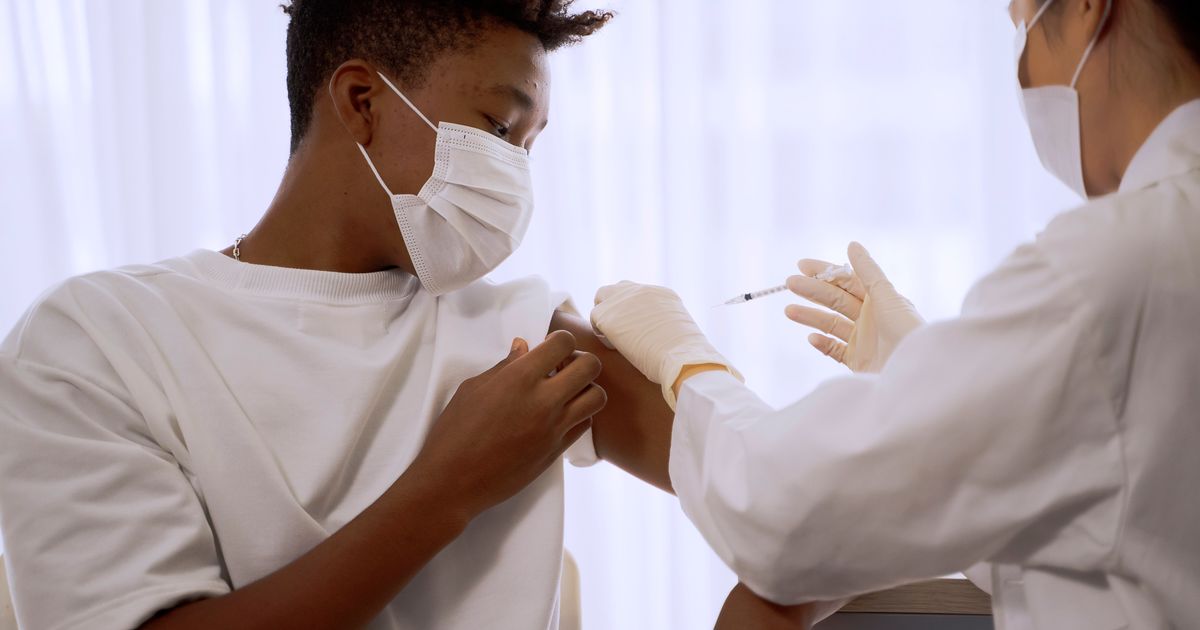
Leaving eight weeks between your first and second dose of the Pfizer Covid-19 vaccine is the optimum gap for immunity and protection, say scientists.

A new study, funded by the Department of Health and Social Care has found that a 10-week gap between doses produces higher antibody levels, as well as a higher proportion of infection-fighting T cells, compared to just four weeks.

However, scientists involved in the study have described an eight-week dosing interval as the “sweet spot” when it comes to generating a strong immune response while also protecting the UK population against the Delta variant of coronavirus – to which people can still be vulnerable after just one jab.

At the start of the second wave of the Covid-19 epidemic, the Joint Committee on Vaccination and Immunisation (JCVI) decided to recommend 12 weeks between two doses for the two vaccines that were available at the time: Pfizer and Oxford/AstraZeneca.

This was when vaccines were in short supply and early research suggested that widening the gap from the manufacturer-recommended four weeks to 12 ramped up the jabs’ immune response.

In May, the guidance was changed to eight weeks as cases associated with the Delta variant – which was first identified in India – continued to rise in the UK.

Professor Susanna Duanchie of the University of Oxford, joint chief investigator in the study, said: “The original recommendation from JCVI was 12 weeks and this was based on a lot of knowledge from other vaccines that often having a longer interval (between doses) gives your immune system a chance to make the highest response.

“The decision to put it to eight weeks is really balancing all the wider issues, the pros and cons – two doses is better than one overall. Also, other factors need to be balanced: vaccine supply, the desire to open up, and so on.”

She added: “I think that eight weeks is about the sweet spot for me, because people do want to get the two vaccine (doses) and there is a lot of Delta out there right now. Unfortunately, I can’t see this virus disappearing so you want to balance that against getting the best protection that you can.”

Researchers recruited 503 healthcare workers for the study, 44% (223) of whom previously had Covid-19, and studied the immune responses generated by the Pfizer jab. They found that both short (three to four-week) and long (10-week) gaps between the Pfizer vaccine doses generated strong antibody and T cell immune responses.

But the longer gap led to higher antibody levels and a higher proportion of helper T cells, which according to the researchers, supports immune memory.

After the second dose, a wider gap also resulted in higher neutralising antibody levels against the Delta variant and all other variants of concern, they found. But in this instance, antibody levels dropped off between first and second dose – leaving the recipients vulnerable against the Delta variant after one jab.

Dr Rebecca Payne, one of the study’s authors from Newcastle University, said the cellular response from infection-fighting T cells remained consistent across both long and short dosing gaps, suggesting they play an important role in protecting against Covid-19 between the first and second jab.

“After the second dose on the longer dosing schedule, antibody levels surpassed those seen at the same timepoint after a shorter dosing interval,” she added. “Although T cell levels were comparatively lower, the profile of T cells present suggested more support of immune memory and antibody generation.”

Researchers said there may be exceptions where the gap between doses may need to be shortened from eight weeks to four, such as before treatments that may affect the immune system, such as cancer or organ transplant.

Vaccines minister Nadhim Zahawi said the government took the JCVI’s advice to shorten the dosing interval from 12 to eight weeks to help protect more people against the Delta variant.

“This latest study provides further evidence that this interval results in a strong immune response and supports our decision,” he added.

“I urge every adult to get both doses of the vaccine to protect yourself and those around you and we are looking to offer millions of the most vulnerable a booster jab from September to ensure this protection is maintained.”

Share Button

Why The PM’s Covid Passports Are Now Not A Threat But A Promise

UK ParliamentPA

Nadhim Zahawi

Connoisseurs of parliamentary proceedings will know that while ministers use an opening statement to set out broad policy, the devilish detail is often held back until their answer to their opposition shadow. And for anyone interested in the scale of the government’s planned ‘Covid passports’, today was a perfect example.

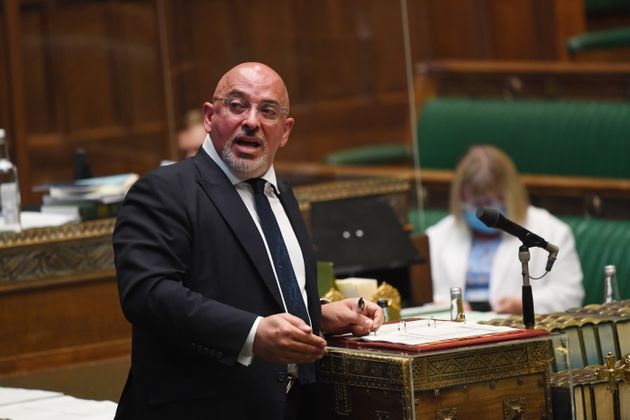
In answer to Labour’s Jonathan Ashworth, vaccinations minister Nadhim Zahawi gave a very strong hint that it was not just nightclubs that would require the NHS Covid pass as a condition of entry. He said indoor music venues, as well as “large unstructured outdoor events such as business events”, “music and spectator sport events” were “the ones that we are most concerned about”.

That will ring alarm bells among Labour’s party conference organisers I suspect (it’s due to have a full in-person conference in Brighton, whereas the Tories have pointedly planned a hybrid event and the LibDems a fully online one), as well the UK’s huge but struggling events business. Football matches, gigs, all sound like they’ll need a passport for entry.

And despite suspicions that the nightclub plan for late September was just a bluff to get young people jabbed, it looks like it really is going ahead. One of the few areas where business secretary Kwasi Kwarteng stuck to the script on Thursday was when he said that instead of a specific vote for nightclub passes, there might be “a general vote on the concept”. “I’m very confident we can pass the legislation we require,” he added.

With many Tories worried that a blanket Covid ‘ID card’ could be used for entry to pubs (and with Labour going for the populist line that it would be “unfair” on pubs and pubgoers), Kwarteng’s confidence will be subjected to a serious stress test when the Commons returns after its summer break.

But given Zahawi’s detailed hints, the PM’s own line on Monday – “some of life’s most important pleasures and opportunities are likely to be increasingly dependent on vaccination” – now feels like it’s not a threat but a promise. Zahawi also put Covid passports at the heart of the government’s strategy to be the first country in the world to “transition” from pandemic to endemic, “from pandemic to manageable menace”.

Vaccination does remain the best hope of getting there (new stats showed it had prevented 52,600 hospitalisations), yet there are real worries in Whitehall at the slowing uptake among under-30s. Some 34% of 18-29s have not had their first jab. And as NHS England warns hospitals they may be entering the “most difficult period” of the pandemic for more than a year, it also said high rates of admissions are ”closely linked” to low vaccine uptake.

Just as worrying, the surge in Covid cases has a direct impact on the vaccination programme because anyone infected has to wait 28 days until they can be given the jab. PHE said a total of 1154.7 infections per 100,000 people were recorded among those aged 20 to 29 – the highest figure recorded for any age cohort since the beginning of the pandemic.

In a bitter twist on the PM’s line this week that he’s “turning jabs, jabs, jabs into jobs, jobs, jobs”, the pingtastic third wave is forcing young people to not only delay vaccination but also forcing them to stay off work, with all the consequences for the economy that entails.

One subject that Zahawi didn’t want to touch in any detail on Thursday was NHS pay. He ignored both Ashworth and Jeremy Hunt when they asked just where the £2.2bn needed to fund the 3% rise was coming from. Downing St confirmed for the first time the cash would come from the DHSC budget but not from money “earmarked for the NHS front line”.

The cash will probably come from a mixture of the extra emergency Covid funding for this financial year for the NHS (although trusts are still waiting for the post-September half of that), plus the long term plan. But given the massive £37bn earmarked for Test and Trace over two years, I wonder if Sajid Javid will see that as a target?

Few people realise that Test and Trace actually reported a huge, 39% underspend of its 2020-21 budget of £22bn, mainly because the lockdown earlier this year meant “cancelled activity”. That’s a cool £4.3bn, more than double the pay rise bill.

The Treasury will probably just bank the underspend, but politically just imagine what a win-win it would be to hand cash from a failing service to pay the wages of the tired, heroic staff of the NHS?

Share Button

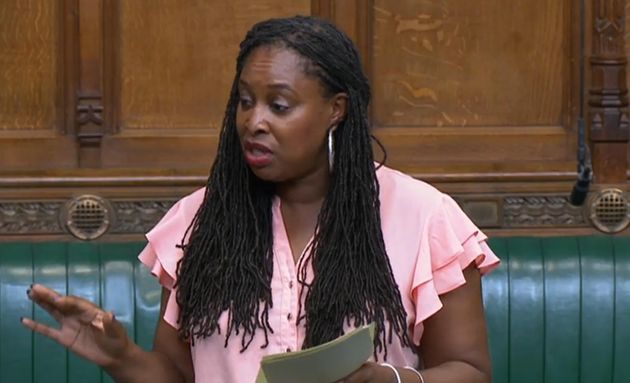
Dawn Butler Ordered To Leave Commons For Calling Boris Johnson A Liar

House of Commons – PA Images via Getty Images

Dawn Butler was told to withdraw from the chamber by temporary deputy speaker Judith Cummins following her remarks in a Commons debate.  

A Labour MP has been ordered to leave the House of Commons after refusing to withdraw claims that Boris Johnson has “lied to the House and the country over and over again”.

Dawn Butler was told to withdraw from the chamber by temporary deputy speaker Judith Cummins following her remarks in a Commons debate.

It is not considered within the boundaries of parliamentary etiquette to call another member a liar.

Butler had said: “Poor people in our country have paid with their lives because the prime minister has spent the last 18 months misleading this House and the country over and over again.”

She highlighted disputed claims made by the Prime Minister, including that the link between Covid-19 infection and serious disease and death had been severed.

She added: “It’s dangerous to lie in a pandemic.

“I am disappointed the prime minister has not come to the House to correct the record and correct the fact that he has lied to the House and the country over and over again.”

Cummins intervened and said: “Order! Order! I’m sure that the member will reflect on her words she’s saying and perhaps correct the record.”

Butler replied: “What would you rather – a weakened leg or a severed leg?

“At the end of the day the prime minister has lied to this House time and time again.

“It’s funny that we get in trouble in this place for calling out the lie rather than the person lying.”

Cummins intervened again and urged Butler to “reflect” on her words and withdraw them.

Butler replied: “I’ve reflected on my words and somebody needs to tell the truth in this House that the prime minister has lied.”

Cummins then read out a statement in which she ordered Butler to “withdraw immediately from the House for the remainder of the day’s sitting”.

Butler left her seat and exited the chamber.

Share Button

Prince George’s Birthday Photo Pays Sweet Tribute To Duke Of Edinburgh

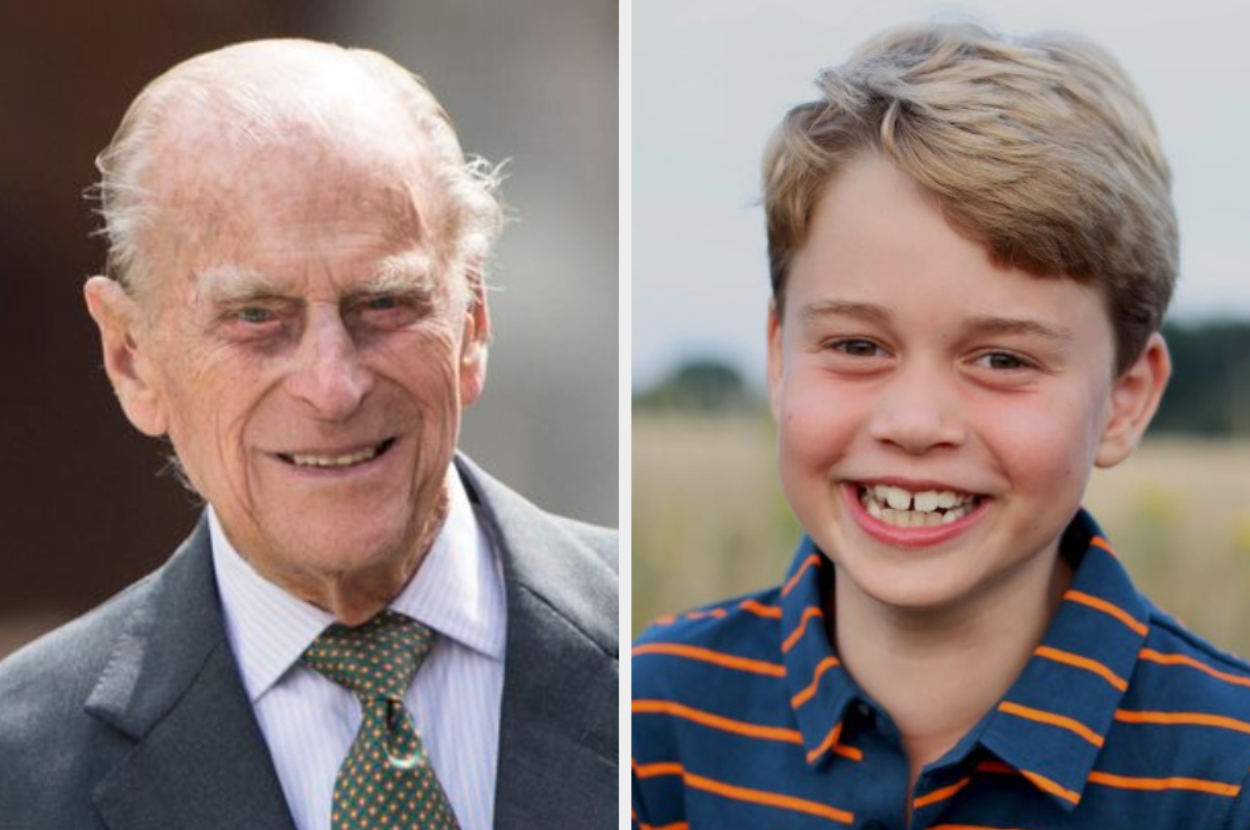
Prince George’s eight birthday has been marked with a new photograph that pays touching tribute to his great-grandfather, the late Duke of Edinburgh.

In the image, taken by his mother, the Duchess of Cambridge, George sits on the bonnet of a Land Rover Defender, Prince Philip’s favourite make of car.

The Duke of Edinburgh, who died in April a few months short of his 100th birthday, regularly drove Land Rovers and during his funeral, his coffin was carried by a specially adapted defender, which he helped design himself.

A keen photographer, the Duchess of Cambridge often releases images she has taken of George, his sister Charlotte and brother Louis to mark birthdays and major landmarks of both the Cambridge and Royal families.

Prince George was born on July 22, 2013, in the private Lindo Wing of St Mary’s Hospital in Paddington and, at that time of his birth, was the Queen’s third great-grandchild. She now has 11, after latest arrival in June of the Duke and Duchess of Sussex’s second child, Lilibet “Lili” Diana Mountbatten-Windsor, who was named by her great-grandmother’s childhood nickname.

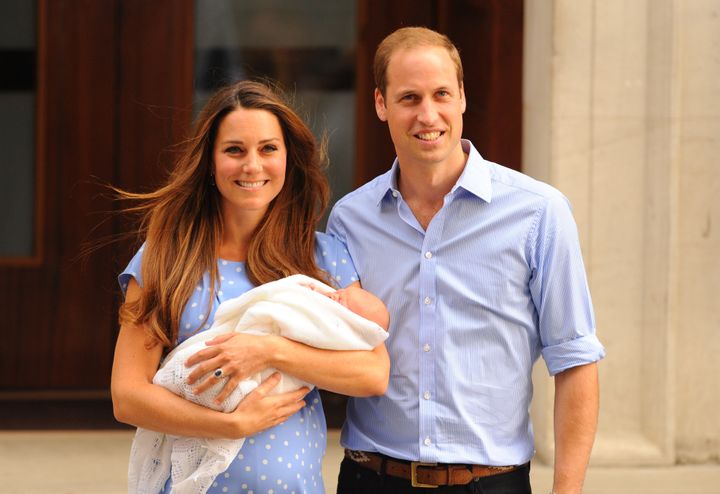
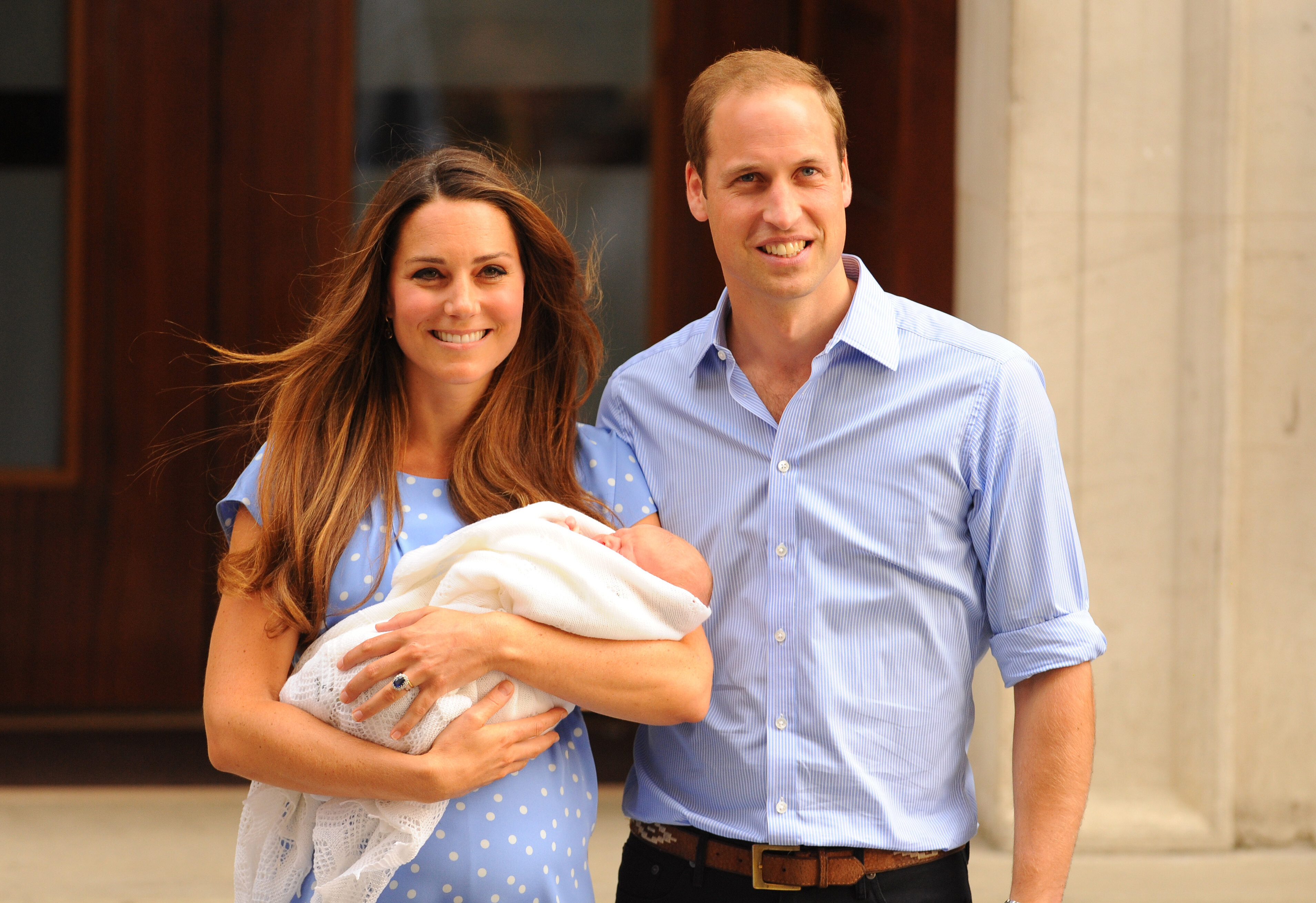
George, who is third in line to the throne after his grandfather, the Prince of Wales, and his father, Prince William, made his debut in front of the world’s media on the hospital steps a day after his birth, wrapped in a white merino wool shawl and cradled in his parents’ arms.

The Duke and Duchess of Cambridge leave the Lindo Wing of St Mary's Hospital with their newborn son, Prince George of Cambridge in 2013.

The Duke and Duchess of Cambridge leave the Lindo Wing of St Mary’s Hospital with their newborn son, Prince George of Cambridge in 2013.

He has since been photographed on his first day of school, at various royal weddings and big occasions, and ahead each of his birthdays.

Kate’s latest pictures of Prince George was taken earlier this month in Norfolk, where the Cambridges have a family home, Anmer Hall, which is close to the Queen’s Sandringham residence.

George, who celebrates his birthday on Thursday, is dressed in a striped polo- top and shorts, and is sporting a big smile for his mother behind the lens.

Despite this, Kate has previously revealed that her children sometimes beg her to put her camera down. Speaking at an event for her Hold Still photography contest in June, the duchess said about George, Charlotte and Louis: “Everyone’s like, ‘Mummy, please stop taking photographs’.”

Share Button

Can Boris Johnson Win His Game Of Covid Chicken Over Vaccine Passports?

UK ParliamentPA

Boris Johnson

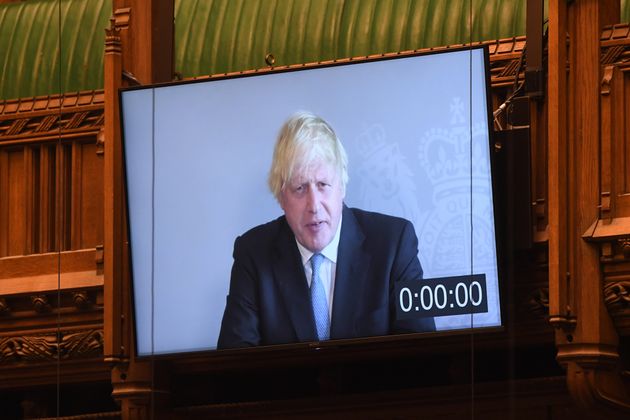
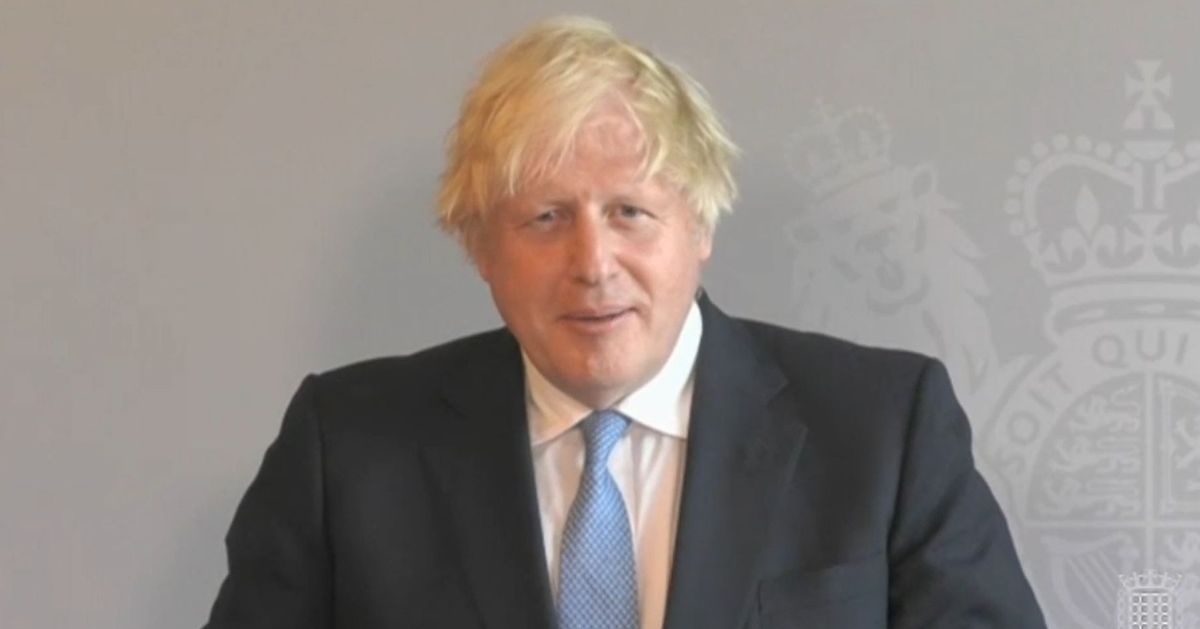
“Do you want me to have another go?” Boris Johnson’s plaintive plea in PMQs was directed at the Speaker, as a Zoom glitch cramped his usually combative style. David Cameron famously once said his Christianity was like “Magic FM in the Chilterns, it comes and goes”, and the PM’s volubility suffered similarly from his remote access to the Commons.

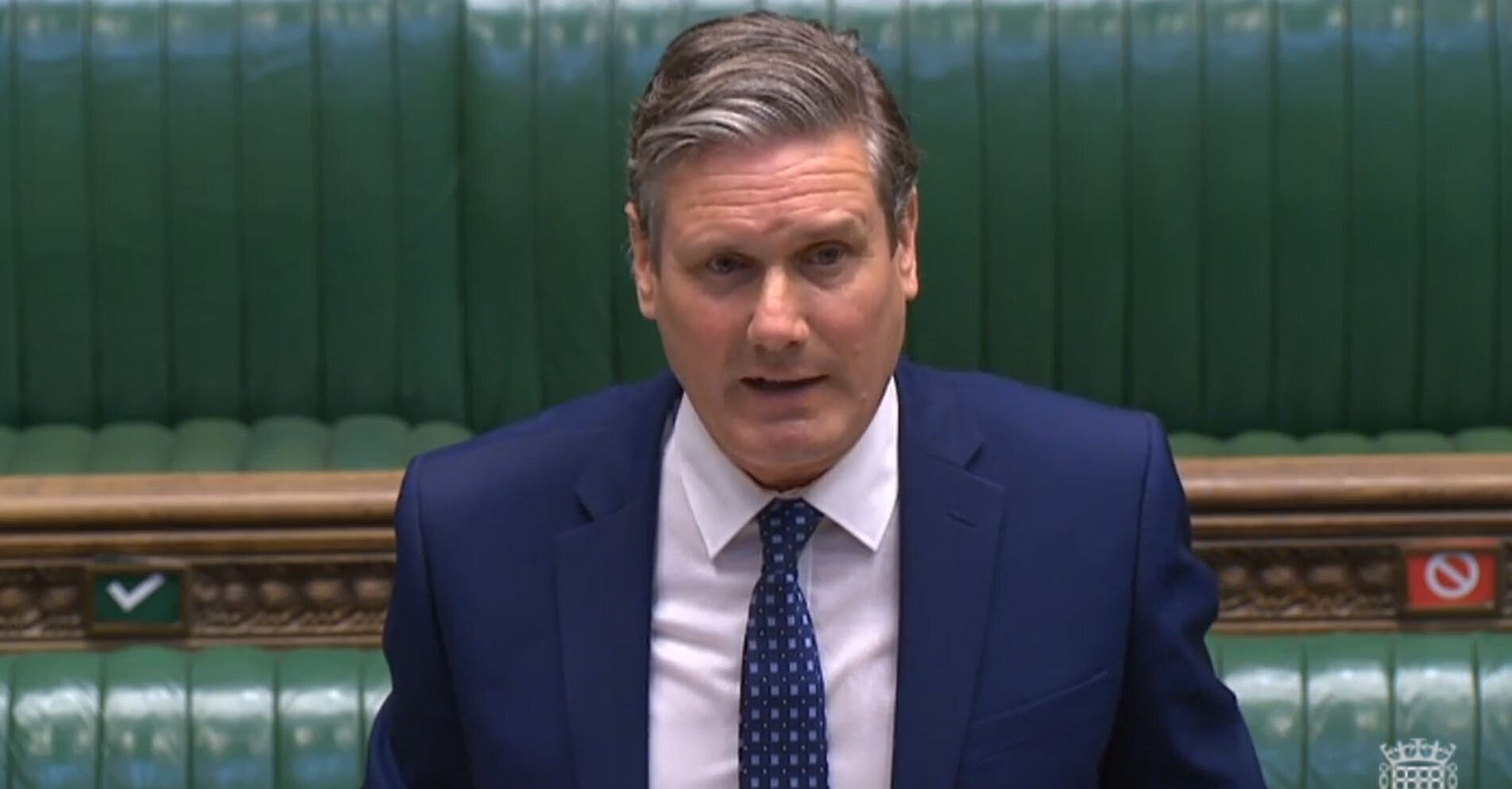
The erratic nature of Johnson’s contributions turned out to be uncannily apt as it matched yet another chaotic day for the government. Keir Starmer was relentless about ministerial mixed messaging on use of the NHS app. He also ridiculed No.10’s failure to define which “critical workers” (clearly the PM wasn’t one of them) would be exempt from being pinged into isolation.

Johnson tried to hit back by stressing that his own forced quarantine in Buckinghamshire just proved how important it was to comply with requests to stay at home, even if not everyone has use of a country home.

But while the PM was playing Chequers, Starmer was playing chess. His attack on Johnson’s WhatsApp messages (joking about leaving the over-80s to die from Covid) prompted the PM to let slip that “we were thinking in those ways” last year – damning admission that is sure to haunt him in any public inquiry.

Starmer also put the opportunist into Opposition, seizing on Tory backbench unease about Johnson’s U-turn over Covid “passports” by ridiculing his previous vow to eat any ID card he was forced to carry. Later, Labour announced it would not support compulsory use of double-jabbed certificates for entry to nightclubs, creating the prospect of a government defeat on any such legislation.

It was perhaps that realisation that prompted the PM to later tell the backbench 1922 Committee that basically his threat on nightclubs was all about jolting the young into getting vaccinated. If enough came forward, he wasn’t ruling out ditching the plan. Playing a game of chicken with the under-30s seems to be where his pandemic policy is right now.

What Johnson didn’t do was read the riot act to those MPs, like Commons leader Jacob Rees-Mogg, who opted not to wear face masks in PMQs. At one point I counted only a quarter of Tory MPs following the Speaker’s clear guidance, and at most just under half. With his backbenches restive over other Covid curbs, that suggested who is really calling the shots right now.

With more non-mask wearers on trains and buses this week despite government “encouragement”, the sight of senior MPs doing the same is yet another corrosive bit of message indiscipline. The bare-faced cheek of both is the public health equivalent of tailgating on the Tube, when fare dodgers ride the slipstream of those who do the right thing. The division and resentment it can breed can only get worse.

The Speaker is likely to be even more unhappy about the farcical way in which the 3% NHS pay rise was non-announced to parliament, before being announced finally in the form of a press release. Labour’s Rosena Allin-Khan, who is a part time A&E doctor, could hardly contain her anger as health minister Helen Whately said the pay rise was merely “considering” the rise.

Perhaps taking to heart the PM’s request to have “another go” at things, the department of health took just three hours to reveal the 3% was indeed happening after all. I understand the reason for the delay was not an admin error or anything to do with the fact that Sajid Javid and Rishi Sunak are themselves isolating. It feels like there was serious tension over where and when the funding might come from.

With non-NHS staff like police and teachers being told their pay was frozen (a tactic perhaps designed to make nurses think their deal was a king’s ransom in comparison), the overall impression was not one of end-of-term good news for key workers who were once clapped for their public service in the pandemic.

And it’s that U-turn, the U-turn in sentiment towards those who helped everyone else over the past year, and the suspicion that a pay rise has been dragged out of him for the NHS and is non-existent for others, that could cause the government serious trouble. The Tories are still ahead in the polls but there’s a sense that the ‘vaccine bounce’ may be coming to its natural end.

The upside of the vaccine programme is it touched nearly everyone. The downside of the ‘pingdemic’ is that it too appears to be touching nearly everyone. Calmer heads in government think the sense of disruption, confusion and chaos can’t last much longer. But as MPs head for the metaphorical beaches this summer, some Tories worry that the PM’s flip flops may linger in the public memory.

Share Button

Labour Will Oppose Boris Johnson Plan for Compulsory Covid Passports For Nightclubs

Boris Johnson’s plans to force nightclubs to make Covid ‘passports’ a condition of entry are hanging in the balance after Labour came out against the idea.

The PM’s proposal, which would from the end of September restrict entry to people who have been double-jabbed, has met with a backlash from club owners.

It is already opposed by a number of Tory MPs, who fear it would open the way for similar curbs on pubs, and Labour’s opposition now means that the government cannot be sure of getting it passed by parliament.

Even though the PM has a majority of more than 80, more than 40 Tory MPs have come out against the idea of compulsory ‘Covid passports’ at a time when most other restrictions have been lifted.

Keir Starmer prefers a rival plan to immediately mandate clubbers to get a negative Covid test before entry, believing it would offer better health protection at a time when the Delta variant of the virus is ripping through younger age groups.

Labour believes that proof double-jabbing is no guarantee that people don’t carry the virus, as the forced isolation of health secretary Sajid Javid underlined last weekend.

“We oppose the use of Covid vaccination status for everyday access to venues and services. It’s costly, open to fraud and is impractical,” a spokesperson for Starmer said.

“Being double-jabbed doesn’t prove you aren’t carrying the virus. Testing for access to venues would be more efficient, and would give people and businesses more certainty.”

Under surprise plans announced by the PM on Monday, the day when most restrictions were lifted in England, nightclubs have until the end of September to comply with a new scheme to restrict entry to the double-jabbed.

So far, some 42 Tory MPs have signed a cross-party declaration by the Big Brother Watch lobby group, which states they are against “Covid status certification to deny individuals access to general services, businesses or jobs”.

Several Conservatives are furious because ministers ruled out the idea of compulsory ‘Covid passports’ after a review by Michael Gove’s Cabinet Office.

But this week, neither the PM nor No.10 ruled out introducing mandatory passports for other crowded indoor venues such as pubs – even though Johnson said he was ”keen” to avoid the need to provide “papers for a pint”.

Labour believes that waiting until the end of September means the risk of clubs acting as ‘super spreader’ venues is too high and it wants immediate testing as a condition of entry.

The issue surfaced in prime minister’s question time, when Starmer pointed out that the PM had once promised to “eat an ID card if he ever had to produce one”.

“When it comes to creating confusion, the Prime Minister is a super spreader. Why is it okay to go to a nightclub for the next six weeks without proof of a vaccine or a test, and then from September it will only be okay to get into a nightclub if you’ve’ got a vaccine ID card?”

Johnson hit back: “Everybody can see that we have to wait until the end of September, by which time, it is only fair to the younger generation when they will all have been offered two jabs before we consider something like asking people to be double jabbed before they go into a nightclub.

“That is blindingly obvious to everybody. It is common sense, and I think most people in this country understand it. Most people in this country want to see younger people being encouraged to get vaccinations.”

Shadow domestic violence minister Jess Phillips told TimesRadio: “I just don’t think it will work. I just don’t think that businesses – like your local nightclub or local pub – would be able to police it, and I don’t think it’s fair on them.”

Downing Street confirmed that legislation would be needed to make the passports compulsory.

In a clue to government nervousness over the forthcoming vote on the plans, PoliticsHome reported that cabinet minister Simon Hart had on Wednesday pleaded with rebels to back the PM.

“As far as a rebellion is concerned, if I was in a position to talk to colleagues who are uncomfortable about these proposals [I’d say] that absolutely none of these things are ever done with any degree of enthusiasm or glee,” the Welsh Secretary said.

“It’s always done with the heaviest of hearts and on the basis of what we think is really compelling advice and evidence. I very much hope that if we get to a vote on this that we can take as many colleagues with us as possible.”

Starmer was himself forced to enter self-isolation after one of his children tested positive for coronavirus around the time he was in the Commons for Prime Minister’s Questions.

The Labour leader tested negative on Wednesday morning ahead of his appearance in parliament where he grilled Johnson over his isolation policy.

Share Button

7 In 10 Disabled Women Experience Sexual Harassment At Work

Seven in 10 disabled women say they have been sexually harassed at work, increasing to almost eight in 10 among those aged 18 to 34.

These shocking statistics, which compare to 52% of women in general, are from a new report published by the the TUC that surveyed 2,003 disabled women about their careers. Of those, 1,162 respondents agreed to answer questions about their experiences of sexual harassment at work.

It’s been more than four years since the #MeToo movement took over our social media feeds, but this is the first major study into the sexual harassment of disabled women at work in Great Britain. As the report highlights, “the voices and experiences of disabled women have too infrequently been highlighted”.

Common experiences shared by those surveyed included unwanted sexual advances (38%), unwanted touching (36%), and unwanted sexual touching/sexual assault (18%).

One in 25 said they had experienced a serious sexual assault or rape at work.

The research also suggests that many disabled women experience multiple forms of harassment in the workplace, with more than half of respondents (54%) saying they had experienced two or more types of sexually harassing behaviour, and 45% saying they had experienced three or more. “This points to workplace cultures where sexual harassment is a frequent and normalised occurrence rather than an isolated incident,” the authors said.

The report identified great hesitancy among disabled women in reporting harassment at work. Two thirds (67%) of those who had experienced it did not report the harassment to their boss the most recent time it happened, with 39% saying this was because they did not believe they would be taken seriously.

Some said they were worried it would have a negative impact on their career or work relationships. Other reasons included not thinking they would be believed or thinking they would be blamed if they reported the incident.

And unfortunately, of those who did report the most recent instance of sexual harassment, more than half (53%) said it was not dealt with satisfactorily.

Unsurprisingly, this is having a huge impact on the wellbeing of women.

Around one in three (34%) of those who disclosed harassment in the survey said their experiences had a negative impact on their mental health and more than one in five (21%) said it negatively affected their relationships with colleagues.

The experiences caused one in eight (12%) to leave their job or employer entirely. This is particularly troubling given disabled women already face significant barriers to getting into work and getting paid the same as non-disabled workers.

TUC research in October 2020 found that disabled women earned 36% less than non-disabled men. The analysis also found a huge unemployment gap; disabled women were 32.6% more likely to be unemployed when compared to non-disabled men.

“Four years on from the explosion of #MeToo on a global scale, employers still aren’t doing enough to make sure women are safe at work. It’s time for every employer to take responsibility for protecting their staff from sexual harassment,” said TUC General Secretary Frances O’Grady.

“Ministers must change the law to make employers protect workers from sexual harassment specifically, and from all forms of harassment by customers and clients. Anyone worried about sexual harassment at work should get in touch with their union.”

Useful helplines and websites:

Share Button

Will Muddy Messaging Spoil Boris Johnson’s End-Of-Term Send Off?

You’re reading The Waugh Zone, our daily politics briefing. Sign up now to get it by email in the evening.

Just before a parliamentary recess, governments often embark on a Take Out The Trash Day. A raft of written ministerial statements will suddenly appear, stuffed full of announcements or data that ministers hope will get buried amid the pile of departmental black bin bags.

Thursday will still inevitably see that mass of information dropped on Westminster, but today the government seemed intent on a different kind of trash talk: soiling its own public health policy with yet more muddied messaging.

In the apparent absence of a coherent pandemic plan for the third wave, both ministers and No.10 fuelled the suspicion that they are simply making things up as they go along. The day after ‘Freedom Day’ felt like free jazz day, with different bits of government riffing and soloing discordantly.

Business minister Paul Scully kicked things off by suggesting the public could make their own “informed decisions” about isolation after being pinged by the Covid app, adding it was ultimately “up to individuals and employers”. Within minutes, No.10 had a not so gentle slapdown, stressing it was “crucial” people isolated when told to by the app. 

It’s worth saying that Scully was absolutely correct that there is no legal requirement to obey the ping, and it’s only if you’re directly contacted by Test and Trace that you need to stay at home. But his natural attempt to stress the needs of business contrasted with Downing Street’s emphasis on the needs of the healthcare system.

Unfortunately, No10 added to the air of confusion by failing to come up with clarity on exactly which ‘critical workers’ would be allowed an exemption from isolation. There will not be any list of individual sectors that qualify, because “we’re not seeking to draw lines specifically around who or who is not exempt”, the PM’s spokesman said. That sounded less gov.uk than confused.com.

Worse still, it appears there will be a fantastically bureaucratic system whereby individual firms have to apply to individual Whitehall departments to seek exemptions for individual staff (though even that is unclear, as the spokesman later talked of “groups of individuals in specific sectors”). 

Unlike the clear definitions used last year for exemptions for overseas travel in the first wave, there is no definition at all. And in what appears to be a form of state planning beloved of Soviet East Germany, civil servants will use a ‘case by case’ approach, with no clue so far as to how long each application will take. No wonder business has said the plan is “unworkable”. 

No.10 is hoping to launch some fresh public health messaging later this week, but I don’t envy them. Instead of ‘Hands, Face, Space’, it seems we now have ‘Plans: Case By Case’.

The sense of chaos was underlined with new figures showing a million schoolchildren were sent home to isolate in England in the past week. The numbers of under-5s in nurseries affected is high too, with all the knock-on effect on working parents. Some 10% of parliament’s armed police officers have been pinged, highlighting the scale of this third wave caseload.

Another alarm bell ringing is the Guardian’s revelation that Border Force staff are so overwhelmed that they have been told they need no longer check negative test or passenger locator forms for airport arrivals from amber list countries. I suspect Keir Starmer may want to add that to his PMQs list on Wednesday. While Channel crossings of migrants alarms ministers, the Covid crossings at airports could end up much more concerning. 

In one early ‘Take Out The Trash’ move, the DWP slipped out its response to a consultation on statutory sick pay tonight and was swiftly accused of reneging on its promise to reform it. Citing the pandemic, the department said now “was not the right time to introduce changes to the rate of SSP or its eligibility criteria”. With increasing numbers asked to isolate, fear of losing income makes this a very live issue again.

As if all that were not enough, there’s new Tory unease at the idea of U-turns on both Covid passports and jacking up national insurance to pay for social care (neither of which may get a Commons majority). They may well ask whether 2019 manifesto pledges being taken out with the trash too. 

Despite the backbench morale boost of an expected 3% pay rise for NHS staff, in some ways it’s probably a good thing Boris Johnson will not be physically present for his end-of-term session at the despatch box, or at the 1922 Committee. With Tory backbenchers, as with Covid, remote control is often no control at all. 

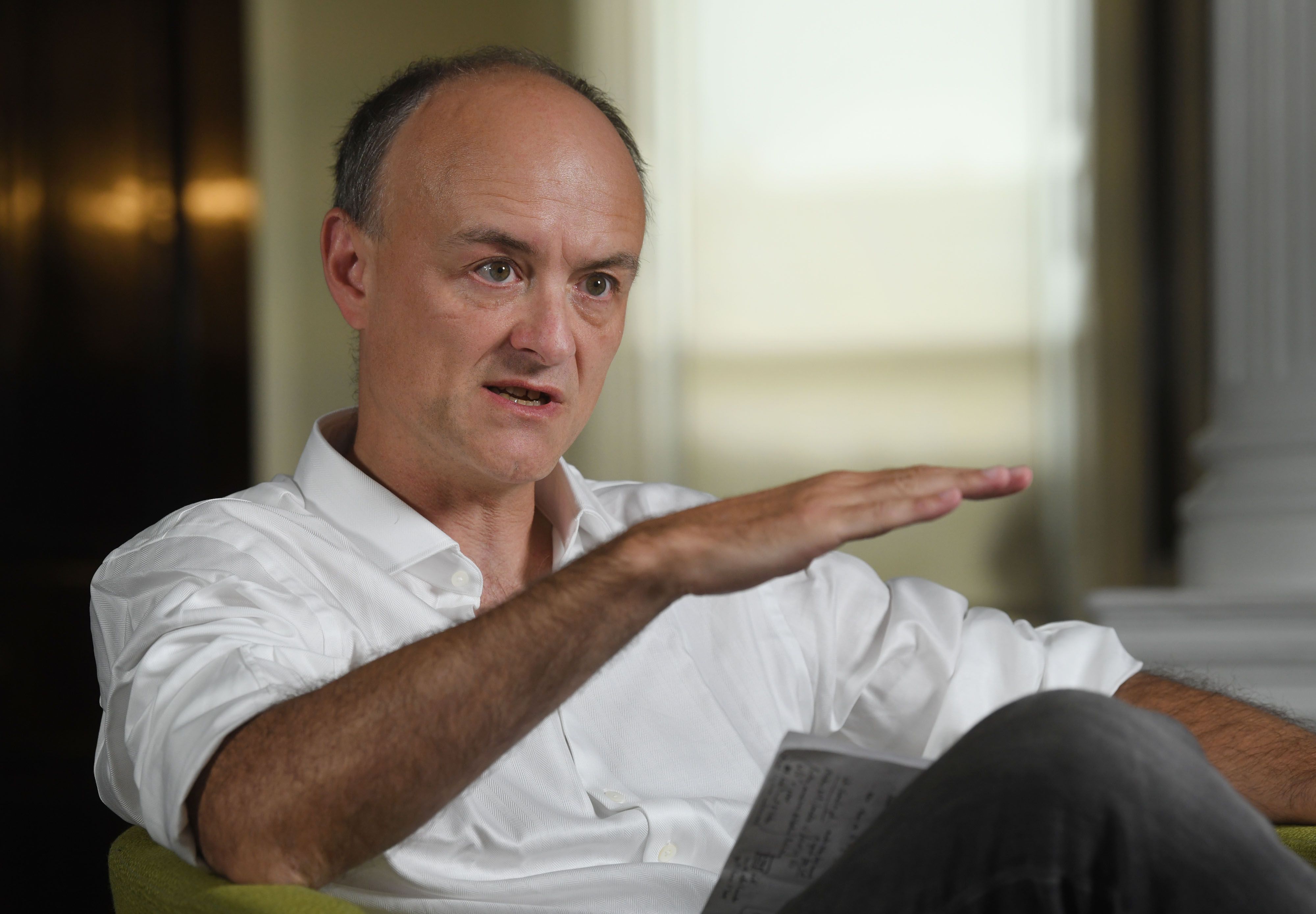
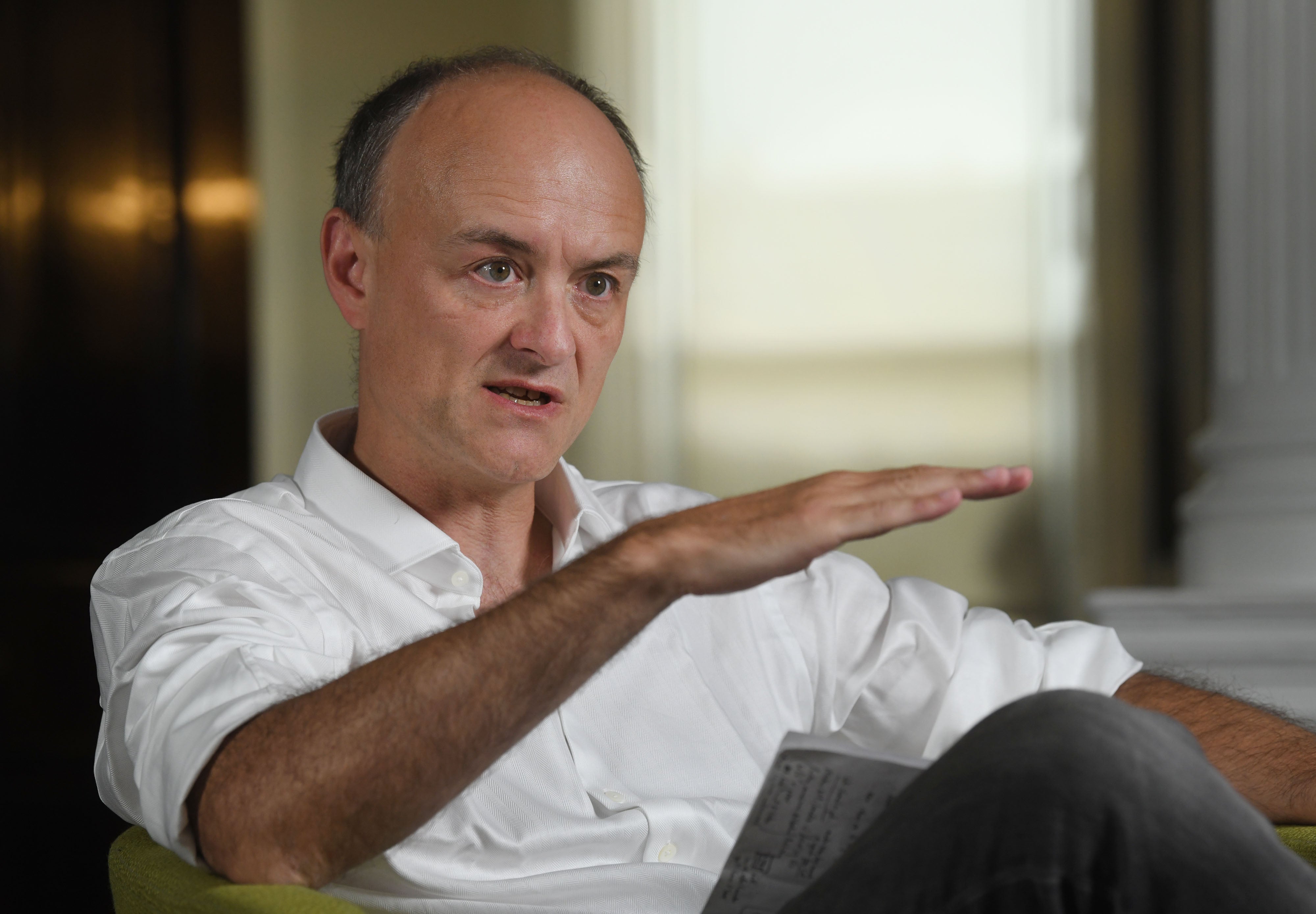
Still, Dominic Cummings could once again ride to the PM’s rescue, though this time not exactly as he intended. Tory MPs’ sheer loathing of the former adviser has gone off the scale after he told the BBC he discussed a ‘coup’ to oust Johnson within days of his 2019 election.

There could be no better way of getting backbenchers to back their leader.  But if the PM continues to upset his troops by breaking his word, they may even start to think Cummings has a point. The right messaging matters to your own party as well as the public.

Share Button

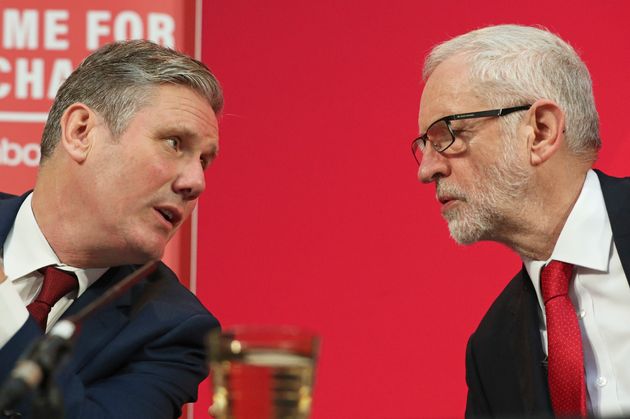
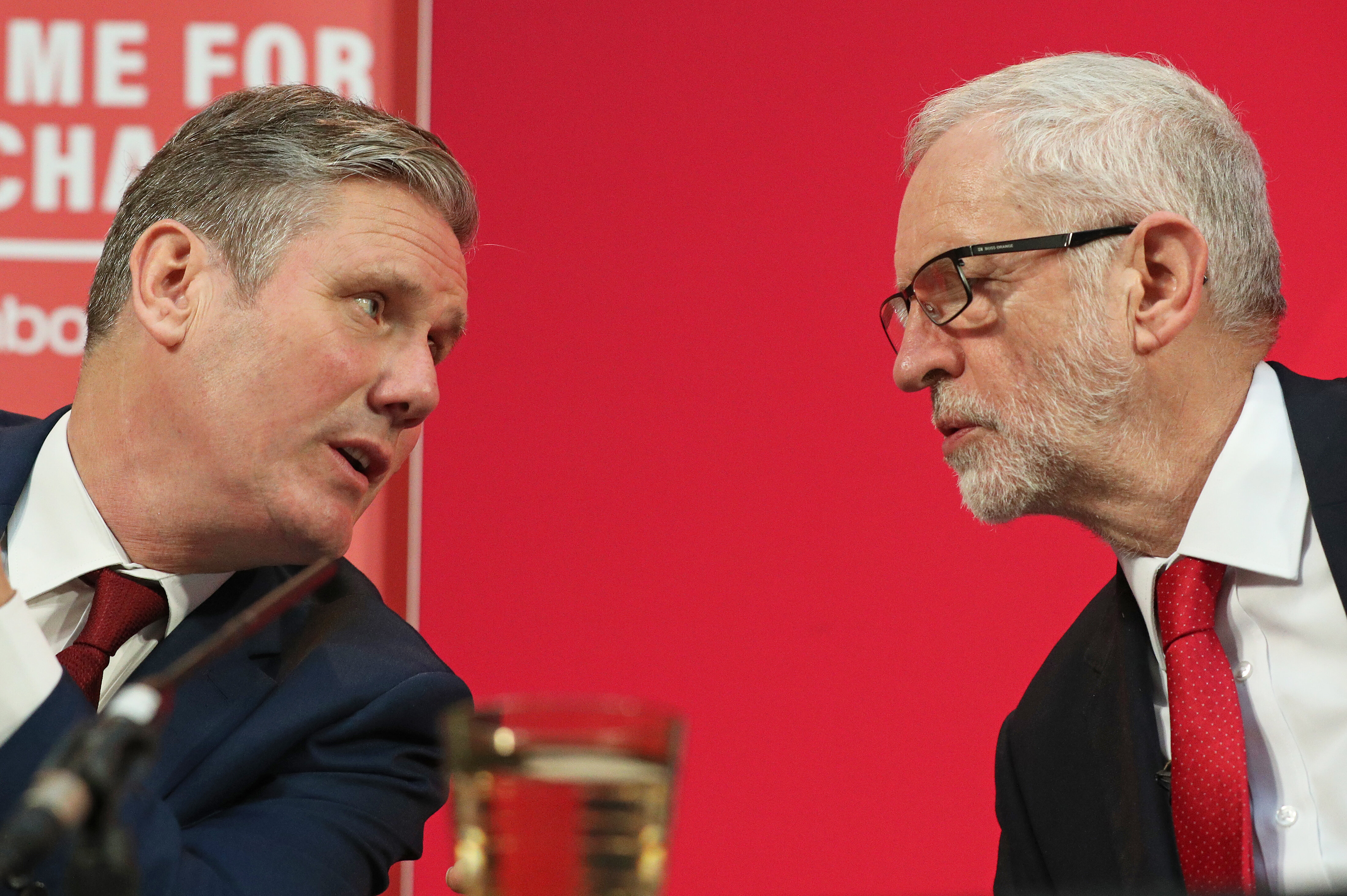
Keir Starmer Expels Far-Left Corbyn Supporters From Labour

Jonathan Brady – PA Images via Getty Images

Hundreds of far Left supporters of Jeremy Corbyn will be expelled from Labour within days after its ruling body agreed to ban four groups accused of promoting a “toxic culture” within the party.

The ruling National Executive Committee (NEC) decided on Tuesday to proscribe ‘Resist’ and ‘Labour Against the Witchhunt’, factions which both claim anti-Semitism allegations have been politically motivated.

‘Labour In Exile’, which actively welcomes expelled or suspended members, was banned. Another group, ‘Socialist Appeal’, which describes itself as Marxist, was also proscribed.

HuffPost UK understands that letters of “auto-exclusion”, informing members they have effectively expelled themselves by being members of any of the groups, will be sent by the end of this week.

The NEC approved the proscription with a big majority, insiders said.

Many of the members of the four factions were strong supporters of former leader Corbyn, who remains suspended from the party whip following his reaction to an equalities watchdog finding of institutional anti-Semitism.

The NEC also agreed to set up a new panel which would look assess whether other fringe groups operating within the party should also be proscribed.

The panel will be drawn from the Organisation Sub-Committee of the NEC, but insiders said that it would not operate as a “Star Chamber” because once it ruled which groups should be banned, expulsion was automatic.

In one concession to critics, it was agreed that the full NEC would have to ratify any decisions by the “Org Sub” committee.

As the lengthy NEC meeting took place, members of the far-Left groups and others – including Corbyn’s brother Piers – demonstrated outside Labour’s HQ in London.

Grassroots group Momentum and Unite the union had both warned that the attempt to “purge” the groups was an act of “machismo” that was unnecessary.

And former shadow chancellor John McDonnell had tweeted that it was a “standard Blairite” tactic to try and show how strong a leader Starmer was.

Corbyn too had expressed strong opposition to the plan.

But one member of the NEC told HuffPost UK that the move was “morally important” because members of the groups had supported those who had been expelled for anti-Semitism.

‘Socialist Appeal’ has also been described as an “entryist” group and some MPs believe its expulsion had echos of the booting out of Militant under Neil Kinnock in the 1980s.

The margins of the proscription votes on the NEC underlined the strength of support Starmer now has on the ruling body, with two-to-one majorities for most of them.

The narrowest vote was to ban ‘Socialist Appeal’, by a margin of 20 votes to 12.

Share Button