The increase in police inquiries in England and Wales is unprecedented, an abortion provider says.


The increase in police inquiries in England and Wales is unprecedented, an abortion provider says.
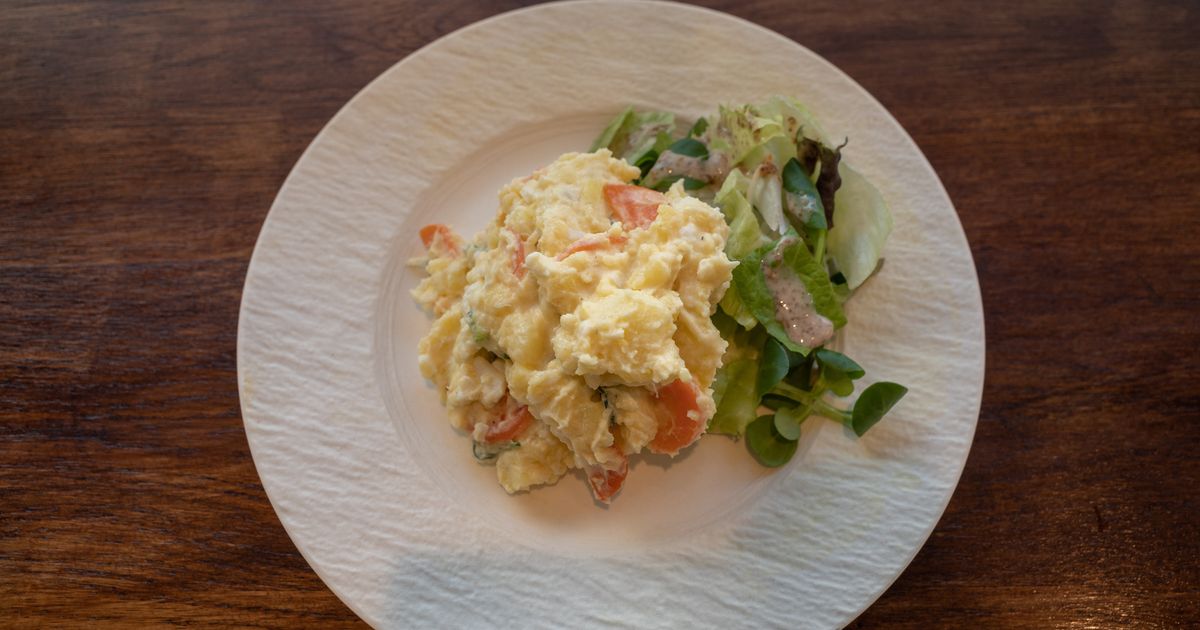
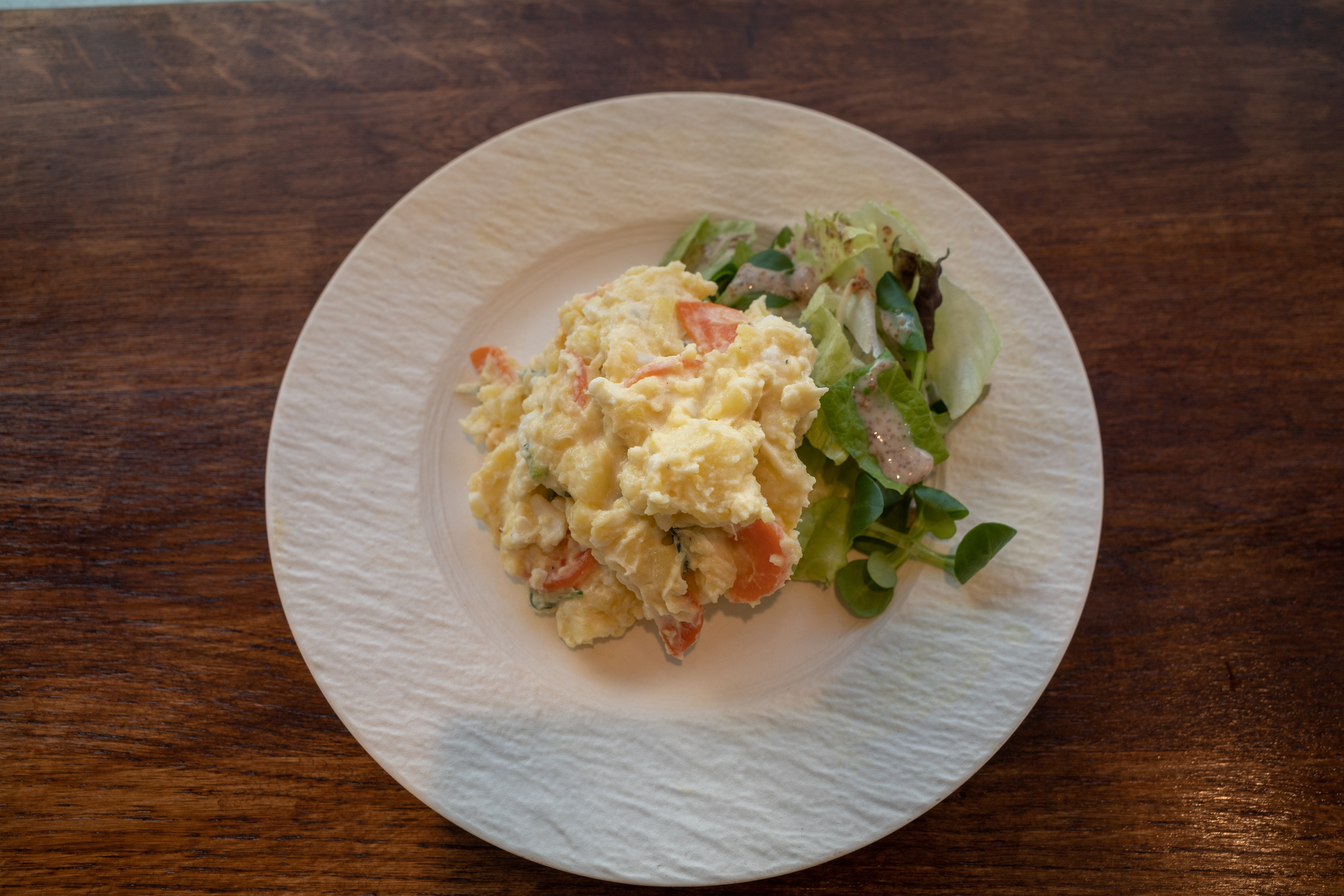
I can stand some Irish stereotypes; actually, yes, we do all know each other (more or less). And yep, we love potatoes ― what sane person wouldn’t?
I like mine baked, fried, chipped, boiled, mashed, and, uh, be-saladed (?). But It wasn’t until I read Mary Berry’s version of the dish that I started eating it on its own for lunch.
Advertisement
That’s because the Cordon Bleu-trained chef adds tasty (and omega 3 and protein-rich) salmon and prawns to her dish, not only making it more delicious but also turning it into a more balanced meal.
In fact, the dish is so tasty that it’s earned a five-star rating on its BBC page ― having tried it myself, I can understand why.
The tasty addition of radishes to the dish adds a crisp and peppery bite to the meal, balancing out the mushy spuds and tender fish.
It holds up well during storage, too ― in fact, all of this recipe does. “The potato salad can be made a day in advance and stored in the fridge, adding the radish, freshly cooked salmon and the prawns up to four hours ahead,” the BBC’s page suggests.
Advertisement
In order to hold up longer against refrigeration, Mary Berry recommends using thicker, middle-cut salmon from the centre of the fish, rather than the tail.
The result is a delicious, balanced dish with loads of contrasting texture and complex flavours ― way, way better than your standard spud salad.
You’ll need three middle-cut salmon fillets, each weighing 125 grams or four and a half ounces, with their skin left on. Additionally, the recipe calls for one lemon and 16 cooked tiger prawns.
For the potato salad, you’ll need 500 grams of baby new potatoes, four tablespoons of olive oil, three tablespoons of Dijon mustard, one tablespoon of caster sugar, and three tablespoons of white wine vinegar.
You’ll also require six tablespoons of mayonnaise, one bunch of thinly sliced spring onions, 150 grams of thinly sliced radishes, four finely chopped celery sticks, one small bunch of finely chopped flatleaf parsley, salt, and freshly ground black pepper. This makes enough for six people.
Advertisement
Preheat the oven to 180°C/160°C Fan/Gas Mark 4, and line a baking tray with kitchen foil.
To prep the salad, place the potatoes in a saucepan of salted water and bring them to a boil. Allow them to cook for approximately 15 minutes or until they are tender ― once they’re cooked, drain them and then slice ’em into quarters.
While the potatoes are cooking, place the salmon fillets skin-side down on the foil-lined baking tray. Squeeze half of the lemon juice over them and season them with salt and pepper. Cover the fillets with foil, seal to make a parcel, and bake for about 15 minutes or until just cooked. Once that’s done, remove them from the oven and let them cool before removing the skin.
For the salad, combine oil, mustard, sugar, and vinegar in a large bowl. Add the hot potatoes, season with salt and pepper, and set aside to cool. After that, you can mix in the mayonnaise, spring onions, radishes, and celery. Adjust the seasoning to your taste and add the remaining lemon juice.
Gently flake the cooked salmon into large pieces and stir it into the salad with the prawns and half of the chopped parsley, ensuring you don’t accidentally mash any spuds. Serve sprinkled with the remaining parsley.
Voila ― you’ve got an elite potato salad that’s bulky and balanced enough to count as a full meal (at least, I’ve eaten it for dinner with a baguette twice this week).
Enjoy!
Advertisement
Low-sodium soy sauce, soup and snacks dominate supermarket shelves, so it seems pretty obvious that a lot of Americans are aware that they need to lower their sodium intake. But to what extent is it really a problem?
Most people have no idea how much salt they’re eating every day, or how much is recommended (particularly for those with certain health conditions). And did you know that some people are actually encouraged to eat more salt?
Advertisement
We spoke with doctors to answer all of our saltiest questions.
According to Dr. Columbus Batiste, the regional chief of cardiology with Kaiser Permanente in Southern California, “We need the right amount of salt to provide our bodies with important electrolytes that can regulate things like muscle contractions, fluid balance and nerve transmission.”
Dr. Rohan Khera, an assistant professor of cardiovascular medicine at the Yale School of Medicine, told HuffPost that salt is “needed for every single body cell, especially the more active heart and muscle tissues.”
Moreover, salt plays a role in ”sweating, normal cell function, metabolism, maintenance of body fluids, and keeping muscles and nerves working properly,” said Dr. John Higgins, a cardiologist with UTHealth Houston.
Healthy adults only need 500 milligrams of salt per day (about a quarter-teaspoon of salt) to maintain healthy body function, according to cardiologist Dr. Nieca Goldberg, the medical director of Atria New York and a clinical associate professor of medicine at NYU Grossman School of Medicine.
Advertisement
Limiting salt intake to such a paltry amount isn’t realistic for many people, and that’s OK for most healthy adults, as long as they don’t overdo it. The American Heart Association recommends that healthy adults consume no more than 2,300 milligrams of salt per day and ideally no more than 1,500 milligrams, or about three-quarters of a teaspoon of salt per day.
However, most Americans eat far more than the recommended amount of salt, according to Goldberg. “The average American eats about 3,500 milligrams of sodium a day,” she said. “Seventy percent of that salt that consumed is from processed foods.”
Although the recommended maximum of salt may seem low for such an important nutrient, there is a good reason for these guidelines. Khera explained that “our body is built to preserve sodium, so we only have to supplement a little in our diet to ensure we are in good balance” — and too much salt is risky for some people.
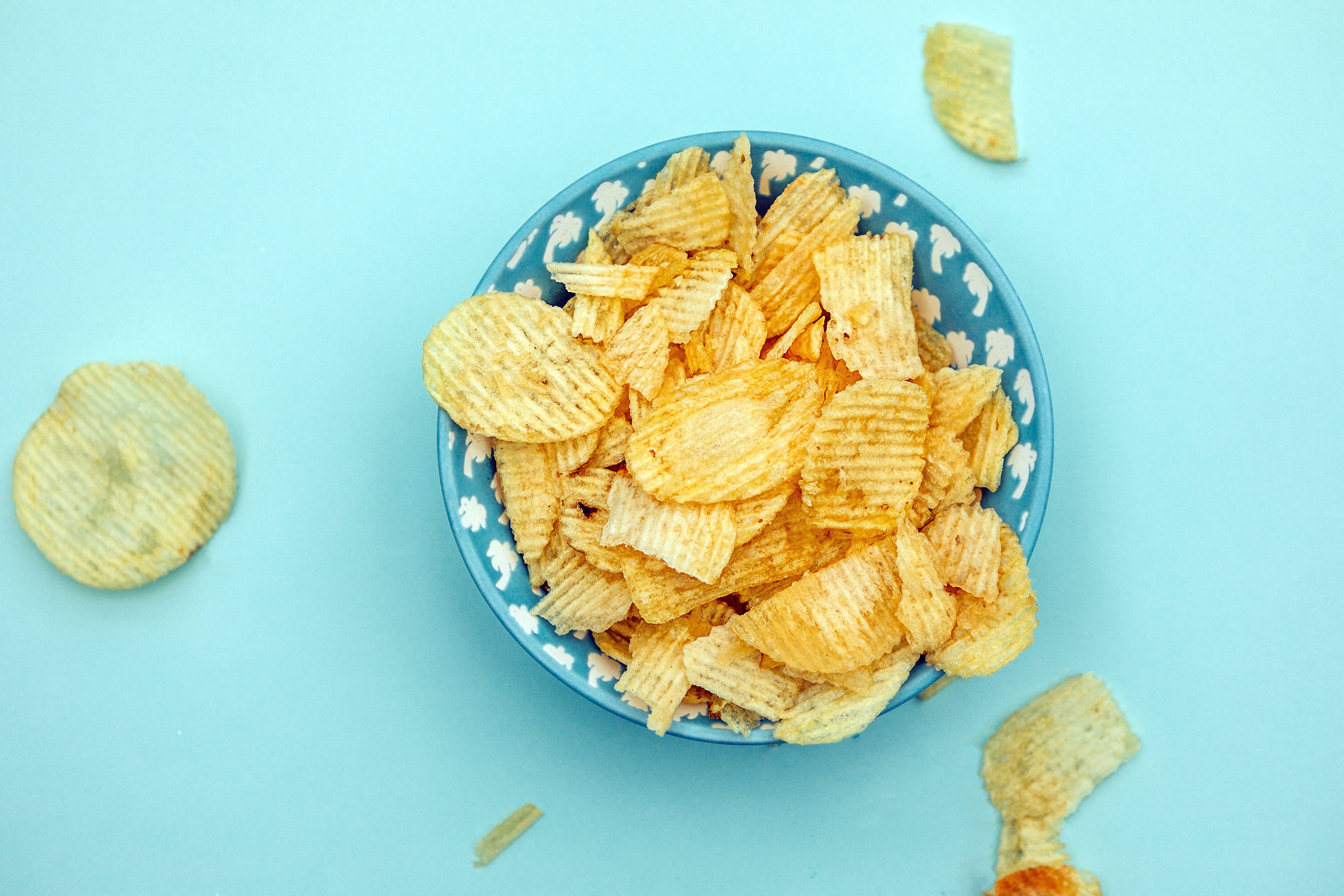
Too much salt can be dangerous. This is true whether you add salt to your food or purchase processed foods made with salt.
According to Higgins, “A high-salt diet can contribute to high blood pressure, stroke, heart disease, osteoporosis, stomach cancer, kidney disease, renal stones and obesity.” Since too much salt can increase blood pressure, this has the ability to cause a heart attack or stroke, he added.
Advertisement
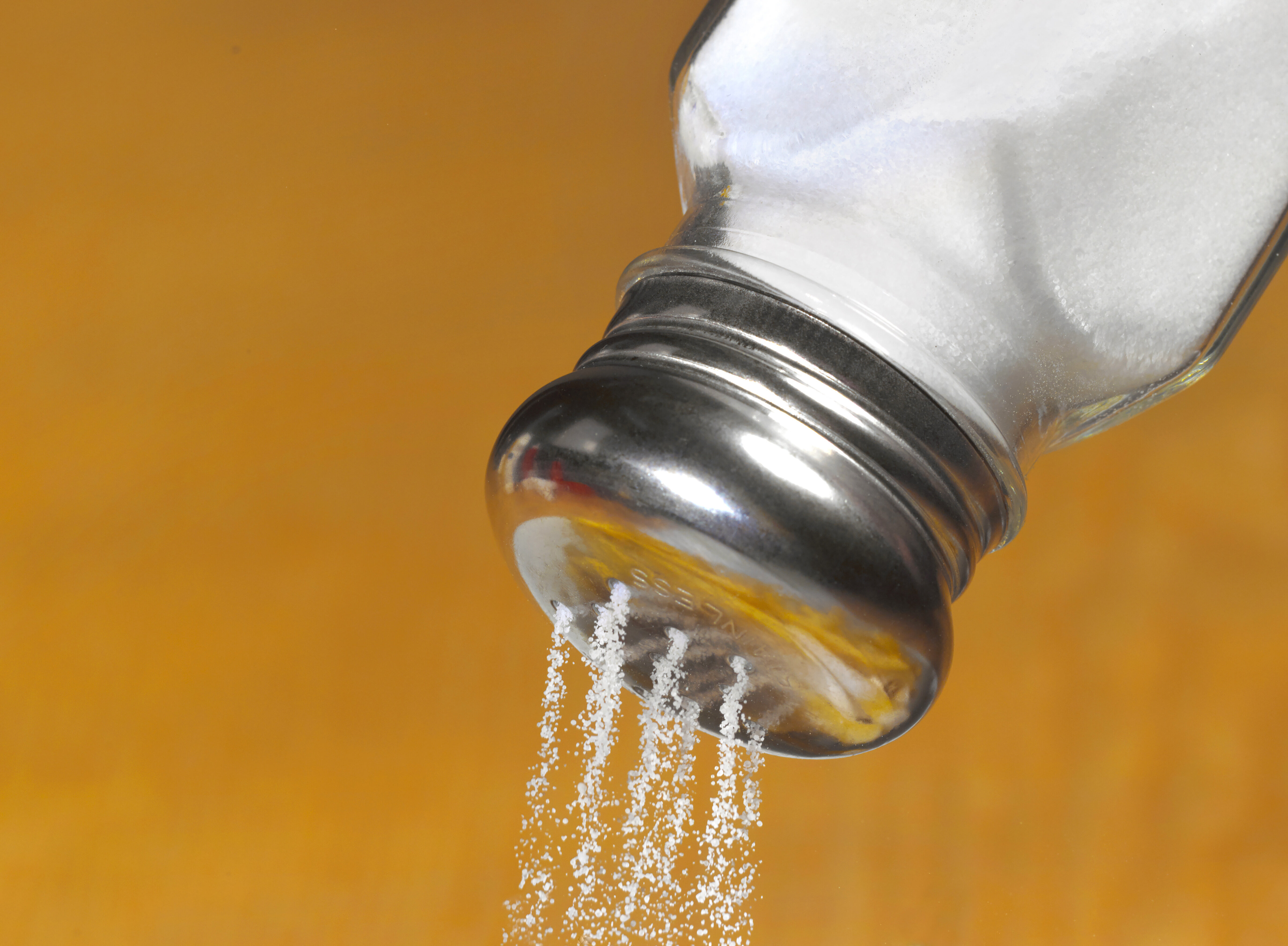
Peter Dazeley via Getty Images
Other risks of high salt intake include blood vessel damage and negative impacts on hormonal and inflammatory pathways, immune response, the gut microbiome and body fat metabolism, Batiste said. He added that the effects of consuming too much salt can lead to premature death.
Not everyone needs to worry. Too much salt “may not be bad for everyone. It depends on the person’s health status,” Goldberg explained. “If you are healthy and have low blood pressure, salt may not be harmful,” she said.
If you aren’t sure whether you need to watch your salt intake, Goldberg recommended discussing your diet with your doctor.
High amounts of salt are dangerous for many people, however.
For those with high blood pressure “in the pre-hypertensive range or higher,” or with “heart failure or kidney disease,” Goldberg cautioned that “high salt intake may worsen your condition.”
Advertisement
Higgins said that patients with moderate to severe heart failure should limit their salt intake to under 2,000 milligrams, or about one teaspoon, a day. Those who have had a heart attack or stroke should consume under 1,000 milligrams, or about a half-teaspoon, per day.
Higgins recommended switching out table salt for an alternative like Morton Salt Substitute, which does not contain any sodium. Goldberg also recommended looking for lower-salt versions of foods that you already eat and becoming skilled at reading labels.
For those with high blood pressure, Higgins recommended eating fruits and vegetables high in potassium, which can lower blood pressure naturally. These include potatoes, tomatoes, spinach, raisins, lima beans, lentils, bananas, oranges, watermelon and cantaloupe.
Although most people consume too much salt, some conditions require more salt. However, before increasing your salt intake, Khera emphasised that “these are specialised conditions that require specific expertise,” and that no one should increase their salt intake before having “explicit discussions with their doctor.” The following conditions may require adding salt to one’s diet:
Orthostatic hypotension. Khera explained that if people have low blood pressure when standing up, or orthostatic hypotension, they may need more salt. When a patient is diagnosed with this condition — one variation of which is postural orthostatic tachycardia syndrome — doctors “sometimes recommend salt to retain more fluid in the body and have fewer dizzy or loss-of-consciousness spells,” Khera said.
Advertisement
High-performance athletes. Khera explained that high-performance athletes may lose a lot of salt via sweat, especially if they are training or competing in hot climates. However, he noted that “this is rarely needed,” and that when it is, “modest increases are sufficient.”
Cystic fibrosis. Individuals with cystic fibrosis lose salt through their sweat more than those without the condition, Khera said. That means they “often require an increase in intake in salt,” although the amount of additional salt each person needs varies and is determined by their doctor.
Addison’s disease. According to Batiste, “People with Addison’s disease, a condition affecting the adrenal glands, may experience low levels of sodium.” Health care providers may recommend increased salt intake to maintain electrolyte balance.
Electrolyte abnormalities. Some electrolyte abnormalities, such as low blood sodium or hyponatremia, are treated with increased sodium intake. However, these conditions are sometimes treated with reduced fluid intake.
Dialysis. Some dialysis patients are instructed to increase sodium intake, Khera said.

The Luton Town defender collapsed on the pitch after a cardiac arrest last December.
Offering regular colonoscopies to people with Lynch syndrome at any age will save lives, NHS England says.
The vote in favour of a strike could see junior doctors take part in a 24-hour walkout in March.
Experts are particularly worried about the proportion of younger people whose health is at risk.
Patients are facing delays for ongoing cancer care, heart check-ups and eye treatment in England.
Hannah Huxford from Grimsby is unable to get hold of her ADHD medicine due to a national shortage.
Overseas dentists may be provisionally registered to work in the UK without checks, plans say.
