I Was On A Perfect Date Until His Comment About My Face Caused Everything To Unravel

My first date with Jordan was moving along seamlessly when out of nowhere he made a strange joke about my appearance.

“Wow, good thing you don’t have anything in your teeth,” he said while I was busy laughing, “because your teeth stick out so much it’s like, ‘Whoa.’”

He imitated what I apparently looked like — something between a piranha and a chipmunk. For most people, this might not have been a big deal. But for me — someone with a long history of body dysmorphic disorder, this was devastating.

I met Jordan on a dating site my daughter had encouraged me to check out not long after she’d left for college. She messaged me one afternoon with concern.

“I’m seeing a lot of selfies of you with the cats,” she said. “What’s going on? Are you getting out with your friends and meeting new people?” On her next visit home, she helped me set up a profile on a dating app.

Jordan’s profile pictures revealed a handsome man with deep hazel eyes and a full dark moustache and goatee. He was divorced and now living in Madison, Wisconsin, when he popped into my queue of potential dates after he, too, swiped right on my profile. We messaged for a few days and then made plans to meet at a popular bar-restaurant on Madison’s west side.

I had no sooner agreed to the date than my anxiety kicked in and I began obsessing over my appearance. Dating with body dysmorphic disorder had always been excruciating.

Defined by the Diagnostic and Statistical Manual of Mental Disorders, body dysmorphic disorder (BDD) falls under the category of an obsessive-compulsive disorder, specifically a preoccupation with one or more perceived defects or flaws in physical appearance that are not observable or appear slight to others. It’s estimated that in the United States, 5 million to 10 million people suffer from this disorder. My BDD revolves around my face, specifically my nose, jaw and teeth. Like other mental illnesses, BDD varies in its severity, affecting everyone differently. Left untreated, it can lead to devastating effects, including anxiety, depression and suicidal ideation.

Though my obsession with my facial defects never ceases to exist completely, it had been at a minimum for the few months preceding my date, giving me enough confidence to say yes to Jordan. In fact, as I got ready to go out, I found myself unexpectedly excited as I dug out my high-waisted black pants, new silver silk top and dangling sequin earrings. Putting on my makeup, I carefully played up my eyes with a dusty mauve shadow and highlighter above my cheekbones, attempting to draw attention away from the lower areas of my face. I must have thought I looked decent enough because I took a selfie and posted it to Facebook just before heading out the door.

It was a cool March evening when I pulled up to the Bonfyre Grill. I saw Jordan as soon as I walked in — he was standing at the bar, gazing intently at the doorway. Our eyes met and he smiled. He was shorter than his pictures revealed, but other than that, he looked much as I’d expected.

After a nervous greeting (on my part, because he appeared calm and confident), we ordered drinks and settled into our conversation. Jordan told me he moved to the U.S. in the early ’90s to attend law school. We both had kids, though I had only one, and she was off at graduate school. Jordan had two — a daughter in college who lived nearby and a younger son still at home. I’d been hoping to find a future partner who didn’t have young kids, but it wasn’t a total deal-breaker.

Forty-five minutes later, I revelled in how well our date was going. Jordan was gregarious and funny to the point of being entertaining — I was laughing so hard both my stomach and face hurt. He was also a passionate conversationalist with a deep voice and British accent I found uncommonly attractive. Even more endearing was his attentive disposition — he asked me questions about my work and complimented me on raising my daughter alone as a single mom.

As we relaxed into our second hour and another drink, Jordan inched his barstool closer to mine. Now facing each other with our knees brushing, he reached out and took my hand. I relished our mutual attraction as we planned for a second date.

A moment later, things took a surprising turn for the worse when Jordan made the joke about my teeth. I immediately froze up in shock. Before I could gather myself, he made another joke-like comment about my nose. I tried to play it off, but it was too late. A freight train had been let loose, and it was headed to a deep, dark oblivion.

I had never been on a date with anyone who had commented on one of my BDD focus areas, and I had no idea how to respond. In an instant, all the pain of my struggle rushed back to me, and I went into flight mode. Jordan quickly picked up on my change of demeanor and followed with, “Don’t get me wrong, you’re cute as hell,” but I was already searching for the exit.

“Before I could gather myself, he made another joke-like comment about my nose. I tried to play it off, but it was too late. A freight train had been let loose, and it was headed to a deep, dark oblivion.”

My struggle with body dysmorphic disorder started decades ago after suffering a mental breakdown at 28. As is common with this disorder, I didn’t trust the doctors’ diagnosis or recommendations. I didn’t need psychotherapy or medication. I needed a plastic surgeon, an orthognathic surgeon and an orthodontist. The only way to stop the obsessing and mental pain, I believed, was to fix my face. That was the beginning of a long and painful road.

I continued to have severe anxiety and daily obsessiveness for months before I finally agreed to try medication and therapy. A year later, I was no longer having panic attacks, but the obsessions were still strong. I now had depression added to my diagnosis from struggling so long with no reprieve. Unable to see the light at the end of the tunnel, I became desperate. I didn’t want to die, but I didn’t know how much longer I could go on suffering. The mental pain had become more than I could take.

Every day became a fight for survival, taking all I had to get to work, parent my daughter and maintain our small household. I began an early morning routine of prayer and spiritual reading. I meditated and visualised myself healthy, happy and defect-free. I read self-help and BDD recovery books, feverishly highlighting passages and going back to those helpful parts regularly. Many of those books became lifesaving. I set out to retrain my brain to think different thoughts and to put a hard stop to the devastating ones. Slowly, I started to have good days. Slowly, the fog lifted. And when I finally made it out of the dark two years later, I never wanted to go back again. The pain of living that existential death was worse than living with an imperfect face.

I decided it made no difference whether or not I was “deformed.” What was killing me wasn’t the deformities — real or imagined, slight or major — but the meaning I’d applied to them.

Jordan was, perhaps, insensitive and careless in his remarks about my face, but he certainly couldn’t have known the weight of his words or the impact they would have on me. But at that moment, staying in his presence was too painful. I ended the date promptly, telling him I had an early morning the next day and needed to call it a night.

“Do you still want to get together midweek then?” he asked as I was putting my coat on to leave.

“Sure,” I responded, knowing I never would.

I stopped interacting with Jordan and went back to therapy. That was over a year ago now, just two weeks before the country went into lockdown with the pandemic. Therapy, along with the solitude that quarantine provided, allowed me time to heal and to get my mind back on track.

Now, as the COVID-19 numbers decrease and with summer here, I’ve been thinking about dating again. With so much time alone, I’ve pondered how nice it would be to have a companion, a future partner, love.

A few weeks ago, I got back on the dating app and recently swiped right on a man named Matt.

Matt is five years younger than me, fit, tattooed and handsome. A military veteran now working as an engineer, he’s been sweet and gentlemanly in our messages. We’ve made plans to meet for lunch on Sunday. I’m not cured of my body dysmorphic disorder and may never be. Further, there is no guarantee the date will go well. But what lies ahead of me is a choice. I choose to live — struggles, imperfections and all.

Tammy Rabideau is a writer living in Madison, Wisconsin. Her writing has been featured in The New York Times, Rebelle Society and other publications. She is working on a memoir based on her New York Times Modern Love essay. You can follow her on Twitter at @TammyRabideau2.

Share Button

10 Dating Trends We Want To Leave Behind In 2022

Quarantine and social distancing practices made dating weird for the last few years – in New York City, health officials even told singles to use walls and other dividers during sex to avoid face-to-face contact? (“Make it a little kinky,” they advised.)

Now singles are pretty much back into the swing of things, which is great, only there’s a whole slew of new dating trends to look out for.

Below, we catalogue 10 terrible dating trends we’d love to swipe left on in the new year. (Plus, a few we hope last.)

1. Zombie-ing

It’s alive! It’s alive! With zombie-ing, the ghoster you thought you’d never hear from again pops back into your life as if nothing happened. Your best bet? Make like a non-zombie character from “The Walking Dead” and run far, far away.

2. Voice-fishing


In 2021, the dating app Hinge released a feature allowing daters to send voice messages and add audio notes to profiles. Apparently, that’s resulted in a lot of voice-fishing – users use a phony, sexier-sounding voice in the hopes of attracting a date. Think: Paris Hilton using a baby voice even though she actually has a relatively deep voice.

<img class="img-sized__img landscape" loading="lazy" alt="In 2021, the dating app Hinge released a feature allowing daters to send voice messages and add audio notes to profiles, which has led to voice-fishing. ” width=”720″ height=”480″ src=”https://www.wellnessmaster.com/wp-content/uploads/2022/12/10-dating-trends-we-want-to-leave-behind-in-2022-4.jpg”>

Luis Alvarez via Getty Images

In 2021, the dating app Hinge released a feature allowing daters to send voice messages and add audio notes to profiles, which has led to voice-fishing.

3. Hesidating

A holdover from our collective pandemic mentality, to hesidate is to feel unsure about a relationship and dating as a whole because of how uncertain life has felt since Covid.

A study from Plenty of Fish this year found 70% of singles are unsure about who they’re dating and if they want something serious or more casual. While we can sympathise, in the long run, that kind of avoidant dating behavior benefits no one.

4. Masterminding

Admittedly, this one is going to be hard to understand if you’re not a Swiftie. First, you have to understand that Mastermind is a song from Taylor Swift’s album Midnights that delves into how she laid the “groundwork” for meeting a romantic interest.

In response to the song, TikTokers posted videos sharing the grunt work they put into making things happen with their partners.

There’s nothing wrong with doing your research on a crush or creating a fancy-meeting-you-here “coincidence” or two but some people admitted to vaguely stalkerish behaviour.

“I researched on LinkedIn a lawyer in my area that could help me and then ‘bumped into him’ for a week straight at his local Starbucks until he asked me out,” one woman confessed in a now-viral video, which has been viewed more than 1.8 million times. “We dated for about a month, in which he helped me out so much and I got my legal procedure resolved.”

5. Power PDA-ing

Coined by the dating app Bumble, “power PDA” is like regular PDA, only with more spit and way more ass grabbing.

“People are really making up for lost time,” Caroline West, relationship expert with Bumble, said of the trend on the Dermot & Dave” podcast. “Two in three Bumble daters are saying they’re into [the power PDA trend], and I think it’s related to how touch-starved we were during the pandemic. People are really making up for two years of having nobody touch them.”

We agree that touch is essential but please, try to keep it below Kourtney Kardashian and Travis Barker levels. The world doesn’t need another Kravis.

6. The excess of ethically nonmonogamous men on dating apps

We’ve got nothing against practicing ethical nonmonogamy – whatever works for you and yours! – but too many times, it’s a cover for shady behaviour. Maybe someone doesn’t admit they’re in an open relationship until they’ve been on multiple dates with a new person. Or maybe their partner isn’t clued in on the nonmonogamy.

As Twitter user @MxMippy put it, “Let’s stop saying ‘ethical non-monogamy’ and start saying ‘consensual non-monogamy’ to emphasise that a lot more people are in non-monogamous relationships than they aren’t consenting to or are aware of.”

7. Pete Davidson

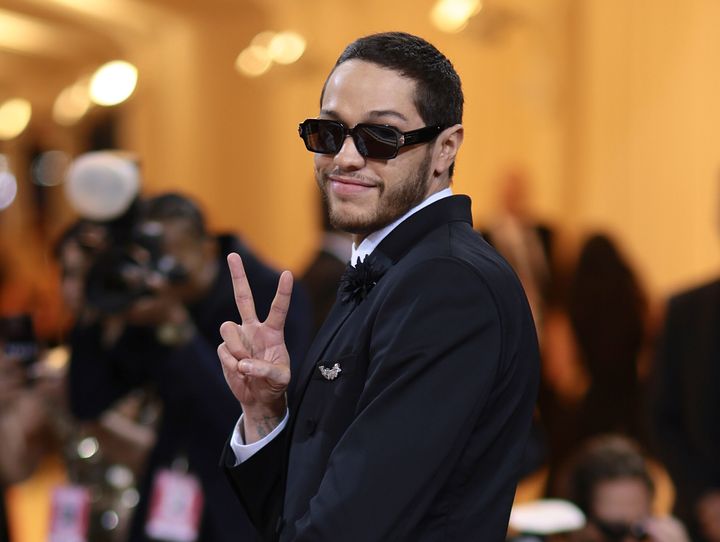
Yep, Pete Davidson has dated enough women this past year to qualify as a veritable trend. (Side note: Is there a way to unsubscribe from Pete Davidson content? If so, let us know in the comments.)

Yes, Pete Davidson has dated enough women this year to qualify as a trend.

Dimitrios Kambouris via Getty Images

Yes, Pete Davidson has dated enough women this year to qualify as a trend.

8. Beige Flags

First coined by TikTok creator Caitlin MacPhail, a self-proclaimed dating guru, “beige flags” are “signs on dating app profiles that the person behind the profile is probably fucking boring.”

Think: Someone whose entire personality is liking “The Office” or “Harry Potter.” Or someone who writes that they’re “looking for someone who can keep up with me” on their dating profile.

Why are we not into this trend? It’s just sort of petty. Give people a little leeway to be basic sometimes!

9. Winter Coating

Season-specific dating trends to reek of desperation (ugh, “cuffing season”) and this one is no different: Winter coating is when someone you’ve casually dated, hooked up or even just DM’ed with on a dating app hits you up during the aforementioned cuffing season. Gotta keep warm somehow!

10. Hey-ter

Have you ever had a conversation with someone on a dating app where they started off saying “hey” and followed up with “hey” and maybe then tossed in a “good morning!” the next day, just to keep things fresh? Yeah, that’s a hey-ter and we hate that.

And here are five dating trends we want to keep:

1. Infla-dating

According to eHarmony’s end-of-year and 2023 dating trends report, 47% of singles have passed on a date due to their personal financial situation.

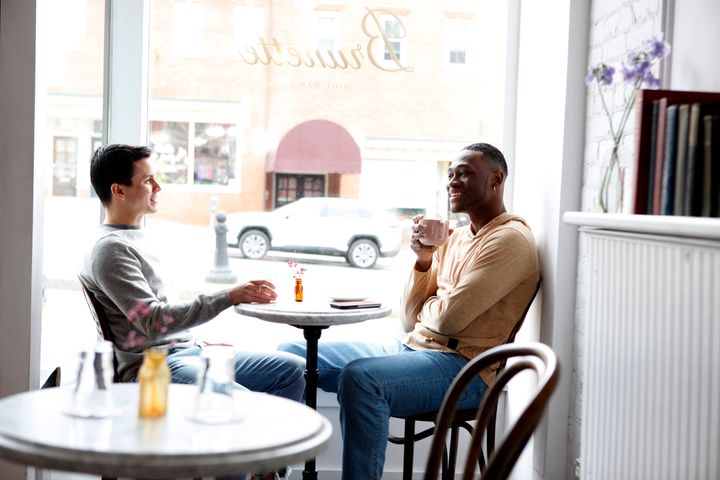
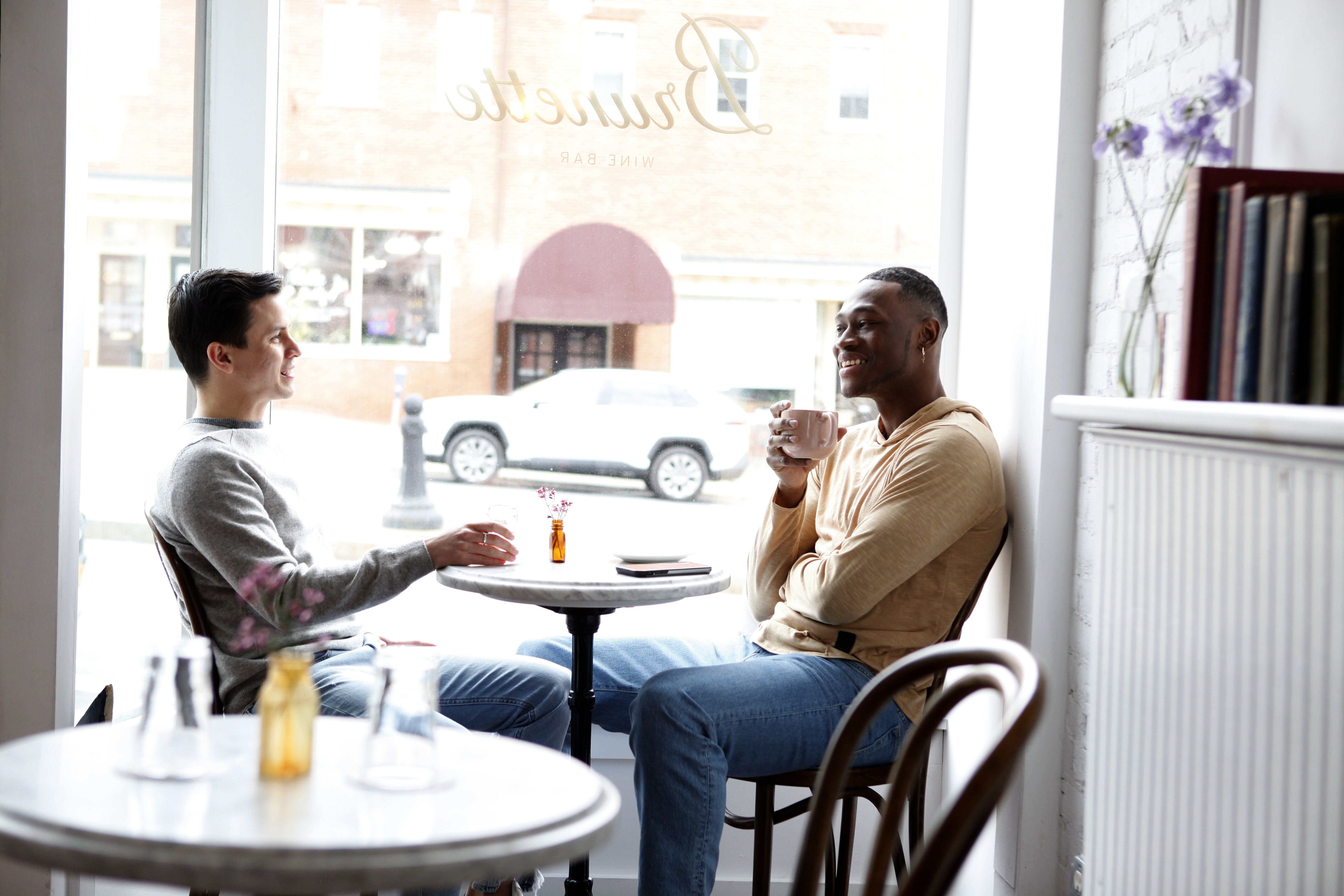
Luckily, others have just decided to “infla-date” — or go on less expensive dates due to the rising prices of food at restaurants and gas.

As many as 48% of single millennials and Gen Zers have suggested going on more budget-friendly dates ― think a mid-morning coffee and a walk rather than a £100 dinner ― in response to the economy, according to a survey from Plenty of Fish.

The benefits of infla-dating trend may go beyond your wallet: Going on less expensive dates makes the stakes feel lower and takes some of the pressure off.

“Less pressure can mean more fun, deeper connection, or — if the date is bad — a quicker exit,” dating coach Lily Womble told HuffPost.

According to a recent survey conducted by dating app Plenty of Fish, 48% of single millennials and Gen Zers have suggested going on more budget-friendly dates

tim scott via Getty Images

According to a recent survey conducted by dating app Plenty of Fish, 48% of single millennials and Gen Zers have suggested going on more budget-friendly dates

2. “Are We Dating The Same Guy” private Facebook groups

“Are We Dating The Same Guy?” started as a Facebook group for New Yorkers where women could anonymously share warnings about guys they’ve dated (or ask if anyone had any intel about a guy before the date). Now there’s a “Are We Dating The Same Guy?” for nearly every big city in the US.

As Glamour wrote of the trend, the groups are like the “whisper network women have been using for centuries, just amplified.”

3. Open-Casting

With the “open-casting” trend, singles shift their focus away from their traditional “type” and give someone they wouldn’t usually go for a chance. According to a Bumble’s annual report, one in three are now more open to whom they would consider dating.

“With open-casting we are seeing people more willing to date outside their type, and valuing emotional maturity over physical attractiveness, which shows we are less focused on superficial qualities like looks and more focused on who we are emotionally compatible with,” Lucille McCart, Bumble’s communications director, told news.com.au last month.

4. Hardballing

To hardball is to be clear with someone about your intentions and expectations for being romantically involved, whether you’re looking for a serious long-term partnership or a casual fling. Hardballing is basically the antidote to “situationships” and awkward “What are we?” conversations.

5. Dating Wrapped

Inspired by Spotify Wrapped, the annual feature on Spotify that shows you stats on your most listened to artists and songs, “Dating Wrapped” videos on TikTok had singles getting brutally honest about their dating activity in 2022, cataloging everything from the the number of first dates they went on, to the the number of times they deleted and re-downloaded dating apps.

“I went on 31 first dates, and if you think that’s a lot, there is more: this does not include one catfish encounter. That’s right, I spent three days talking to someone pretending to be a Polish influencer. I also ended up on the ‘Today’ show because of it,” TikTok user @SamsAreBetter joked.

Not only is the trend hilarious, but detailing the minutiae of your dating life is a great way to pinpoint things you want to change in 2023. Way to put those PowerPoint skills to use, guys!

Share Button