The Pandemic Warped Our Sense Of Time. Here’s How To Gain It Back.

At this point of the pandemic, it still feels like we’re stuck in a bit of a time warp.

Yes, offices are opening back up and many people are carrying on with their events and travel plans. But there’s still a layer of uncertainty about what might happen next with Covid and when the pandemic will truly end — especially as more variants pop up.

Life doesn’t exactly feel normal yet, and as a result, time drags by. Here’s why, and how you can “gain” some of it back:

1. We lost our routines.

According to Ruth Ogden, an experimental psychologist at Liverpool John Moores University who studies how humans process time, this sensation that time is warped has been a global phenomenon. Through her research, she’s found that people across the globe have experienced distorted time during the pandemic.

The biggest culprit of the time warp: the loss of our routines.

“All the things in our day that helped us know what time it was ― they were gone. That meant it became easy for time to slip and slide around,” Ogden said.

During the pandemic, time stood still for many of us. We canceled our activities and we distanced from friends. People did everything — sleep, eat, work, socialise, parent, exercise — from their homes.

“We’re all heavily routinised creatures, but this routine is important because it keeps us in time,” Ogden said.

Our day-to-day activities help us perceive time — if we are commuting, we know it’s morning, if we’re running out for lunch, it’s midday, and so on and so forth. Without daily routines, which act as markers of time, it becomes easy to get lost in time. The things that made your Saturday a Saturday, or your Tuesday a Tuesday, may no longer be there.

Research also suggests that emotions significantly impact our perception of time. When we’re happy and physiologically aroused, time feels like it’s flying by; conversely, depression can make time feel sluggish.

Furthermore, our expectations of how things will occur (i.e., the pandemic is over!) versus the reality of how things play out (there’s a new variant coming for us) can make time feel faster or slower, depending on if the actual outcome was better or worse than our predictions.

2. Memories help us process time, and our memories are different from the last few years.

Think back to the beginning of the pandemic, when news of Covid spreading around China first leaked. How long ago does that feel to you? Months? Years? It’s probably hard to tell.

Ogden and her research team have been studying how people feel about the length of the pandemic and have discovered that the brain processes length of time through memories.

“If we’ve got loads of memories, then it says, ‘Oh, it must have been a long time,’ but if it has very few memories, then we think it must have been a short period of time,” Ogden said.

In theory, most of us should remember the pandemic as being short — because we didn’t do a lot, Ogden said. But she’s found the opposite: most people feel like we’ve been stuck in the pandemic for much longer than we have been.

The reason, it seems, is that while we didn’t necessarily form a ton of fun, new memories for a period of time, we still formed memories. We learned how to bake bread, we got into puzzles and crafts and packed our days with Zoom meetings. We navigated life through restrictions, masking and distancing; we developed new skills and fell into new routines. Time moved forward.


A loss of routine is the main reason why time seems to drag by.

Delmaine Donson via Getty Images

A loss of routine is the main reason why time seems to drag by.

3. People process time differently.

Just how distorted time feels varies from person to person. It ultimately depends each person’s personal experience with Covid and how much the pandemic has influenced or changed their daily activities, said Nicole Dudukovic, the director of the neuroscience major at the University of Oregon.

Ogden’s research, for example, has found that social satisfaction is one of the biggest factors behind how people process time.

“The more socially satisfied you were, the ‘quicker’ the pandemic went,” Ogden said, noting that this didn’t just involve being around people, like family in your household, but seeking out and enjoying social connections.

People who have engaged in “normal life” again, and are traveling and commuting to the office and engaged in activities, are probably going to have a more normal sense of time right now. People who are at-risk and are hunkering down, along with those who are stressed about returning to pre-pandemic activities, may continue to feel disoriented about time.

“For some people, this experience will continue for a long time and that will continue to cause distortion to their experience of time,” Ogden said.

4. We’re more aware of time now.

Ultimately, the pandemic has made people much more aware of time. We’ve had more time on our hands, which has caused us to become hyper aware of time and how it’s passing, Ogden said.

At the same time, we often don’t remember time accurately. It’s very hard for people to remember how we felt about things, like time, in the past — it’s largely influenced by how we feel about things now. Memories of how time once passed can be very inaccurate, according to Dudukovic. While it may feel like time is passing differently now, it’s totally plausible that we’re just misremembering how time felt pre-pandemic.

“It’s possible that if you’d asked me in 2019 about how fast time was going that maybe it would be not that different from how I’m feeling about it now,” Dudukovic said.

Here’s how to overcome the time warp.

Ogden said it’s important to recognise that we are not going to return to life before the pandemic.

“So much in the world has changed as a result of the pandemic,” she said. We’ve carried on and adapted to new ways of work and socialising.

One of the best ways to mitigate the feeling that we’re stuck in a time warp is to create new routines.

“There’s a lot of evidence to suggest that your routine, and also the number of activities that you’re engaged in, that that’s going to influence how you’re perceiving time,” Dudukovic said.

Changing your environments — stepping out of the house, going on walks, or even switching up the room you work in — can trick your brain into thinking more is happening, so that time passes more regularly.

If your days blend together, save certain activities and routines for specific days of the week.

“Make your Tuesday a Tuesday because of the things you do in it,” Ogden said.

Finally, try to keep busy. The busier we are, the less we tend to focus on how time is passing.
Share Button

How To Cope When You’re The Only One Wearing A Mask At Work

Under the latest Centers for Disease Control and Prevention guidance, more than half of the U.S. population lives in an area now considered to be low or medium risk for COVID, and residents there can go indoors without a mask. Many states have also loosened mask mandates, and a lot of workplaces no longer require employees to wear masks as a result.

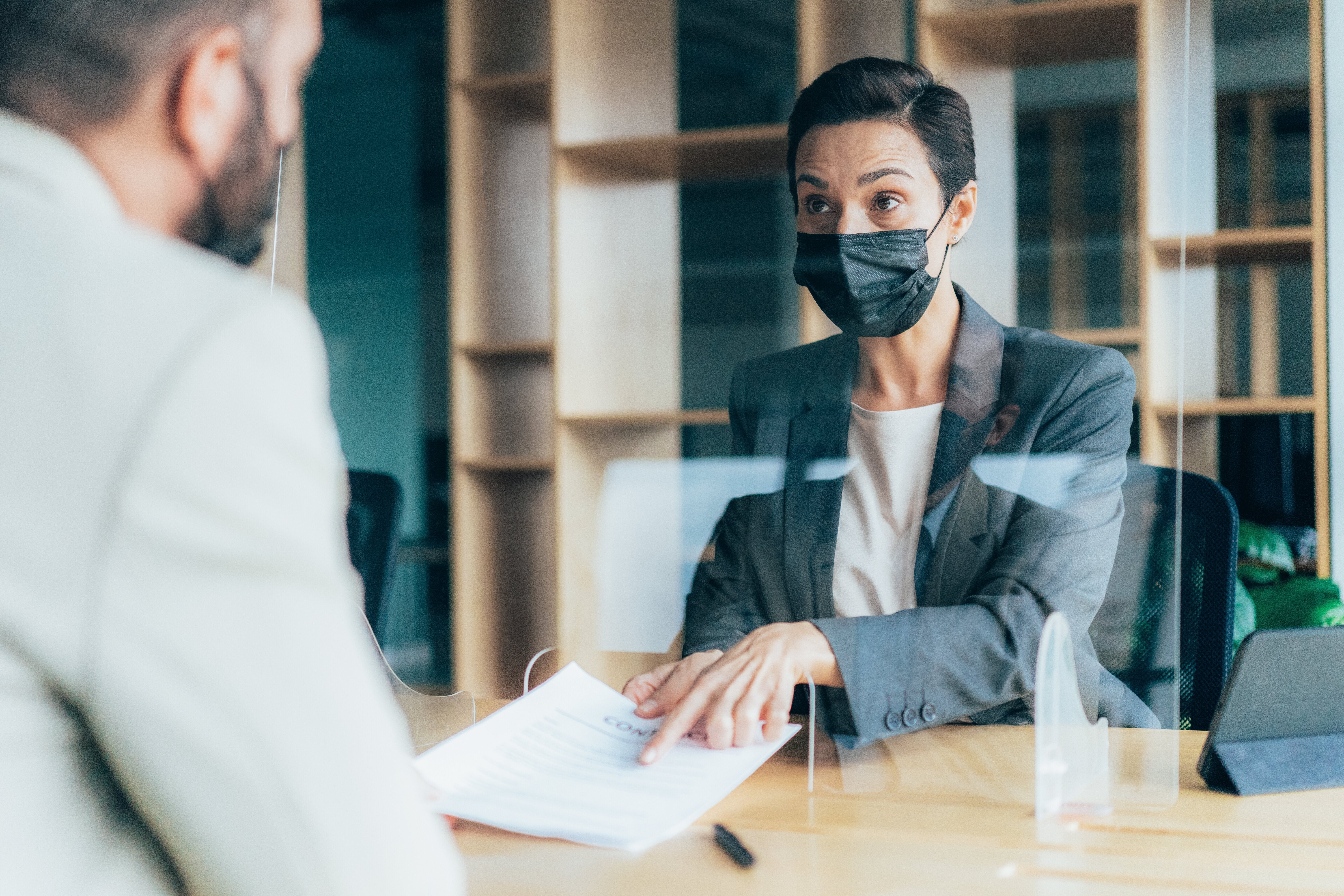
If you’re still most comfortable with a mask on indoors in an office setting, you may suddenly find yourself to be in the minority. And when you are one of the only people with a face mask during meetings, it can feel socially awkward.

That’s why it can help to remember why masks are effective and to have a strategy in place if a colleague does inquire about your mask. Epidemiologists and other COVID experts weighed in on one-way masking benefits, and offered conversation strategies for mask-wearers:

1. Keep in mind that masks still work and we’re still in a pandemic.

If none of your co-workers are wearing masks, you may wonder if there’s a point to you wearing one. But well-constructed, tightly-fitting masks do offer protection, even when others are not wearing them, too.

“They do work. Somebody who is wearing a respirator in an office setting is going to get a fair degree of protection from doing that,” said Dr. Mark Rupp, chief of the Infectious Diseases Division at the University of Nebraska Medical Center.

“Any mask is better than no mask,” said Jose-Luis Jimenez, a professor at the University of Colorado Boulder and an aerosols scientist. “To make up for the fact that other people are not masking, you should wear a high-quality mask.”

Jimenez described high-quality masks as ones that are breathable, with a good filter that prevents most aerosols from being inhaled, and with a secure fit that has no gaps on your face, such as an N95 mask.

“Have the strength of your convictions and realize you may be the smartest person in the room”

– Dr. Mark Rupp, chief of the Infectious Diseases Division at the University of Nebraska Medical Center

And keep in mind the public health stakes. “What you are doing is minimizing the chance that you inhale a respiratory disease. That’s the big reason to stay masked,” said Charlotte Baker, an epidemiologist in public health at Virginia Tech. Although cases are declining in the U.S., there is still plenty of COVID out there. Around 1,800 deaths continue to be announced most days.

“There is no need to feel embarrassed or apologetic for wearing a mask,” Rupp said. “In most communities in the United States today the level of transmission continues to be substantial. … It’s headed in the right direction, but there is still a lot of COVID that is being transmitted in our communities.”

2. Understand that wearing a mask for your job doesn’t have to be ‘always’ or ‘never.’

Rupp said masking should not be seen as a choice between never wearing your mask at work or always having to wear a mask at work. You should be open to changing your mind depending on individual circumstances.

“You may feel safe and not wear a mask going into a setting where there is a lot of room and few people and a short duration of time,” Rupp said. “Whereas you might feel very uncomfortable making that same decision in a smaller, crowded setting that you are going to have to be present for an hour.”

Rupp cited your community’s virus transmission rates, your building’s indoor ventilation, your colleagues’ vaccination status, and your own health risks as factors to consider before taking off your mask. Here’s the CDC tracker for checking out your county’s transmission rates.

Be open to putting a mask back on as we learn more about the latest COVID developments, too. “Six weeks from now, or three months from now as a new variant starts to be described, they may decide, ‘You know it’s time for me to put the mask back on,’” Rupp said.

3. Remember that social awkwardness around masks is real, but it helps to remember your original reason for wearing one.

“Social pressure is very real. We can be talked out of anything if enough people dissent to our point of view,” said clinical psychologist Ramani Durvasula.

She cited social psychologist Solomon Asch’s research on conformity, which found people were more likely to give a wrong answer when they heard other people give that wrong answer out of a motivation to avoid conflict.

Your decision to wear a mask is none of your colleague’s business. You don’t owe anyone an explanation of why you are masking indoors, but if sharing one helps you feel less awkward, keep it brief, Durvasula advised.

“Make it about yourself and don’t turn it into a polemic on public health and responsibility,“ she suggested. “If a person chooses to wear a mask that is their right, but it can turn difficult if the mask-wearer frames it as virtue.”

Whether you are doing so to protect the health of others or for your own personal risk tolerance, Durvasula advised not engaging too much about it in the workplace: “Don’t take the bait.”

Baker said if it makes you feel more comfortable, it’s alright to deflect to another topic if it comes up or “just be stern one time, and say, ‘Look I’m going to wear it, I don’t want to hear anything else about it. It has nothing to do with you.’”

Pep talks can also help when you feel peer pressure, too. Baker shared what she tells herself when she finds herself to be one of the only maskers in social settings.

I’m immunocompromised, so I tell myself I don’t want to die,” she said. “Two is: ‘I’m doing this for my family.’ I want to see my nieces, I want to see my nephews. I want them to grow up in a healthy world. If I wear my mask, I get to go see them. And I’m also setting a good example. And third is: ‘My mom is senior … and I need to keep myself healthy so I don’t get her sick.’”

Baker noted that for people who have become numb to pandemic risks, external motivations like a vacation or a concert you want to be healthy to go to can also help. “Whatever that motivator needs to be for you, figure out what it is. Write it down, so you see it,” she said.

Once you know your why, remind yourself of it when you want to waver from your original decision to wear a mask. And if you need an affirmation, take it from Rupp.

“Have the strength of your convictions and realize you may be the smartest person in the room,” he said.

Experts are still learning about COVID-19. The information in this story is what was known or available as of publication, but guidance can change as scientists discover more about the virus. Please check the Centers for Disease Control and Prevention for the most updated recommendations.

Share Button

Chris Whitty And Patrick Vallance Urge Caution Despite Removal Of Covid Restrictions

The UK government’s leading scientific advisors on the Covid pandemic have sounded notes of caution as Boris Johnson released his plan for living with the virus.

England’s chief medical officer professor Sir Chris Whitty and Sir Patrick Vallance, the government’s chief scientific adviser, both used markedly different language to the PM as he announced a rolling back of all legal Covid restrictions within weeks.

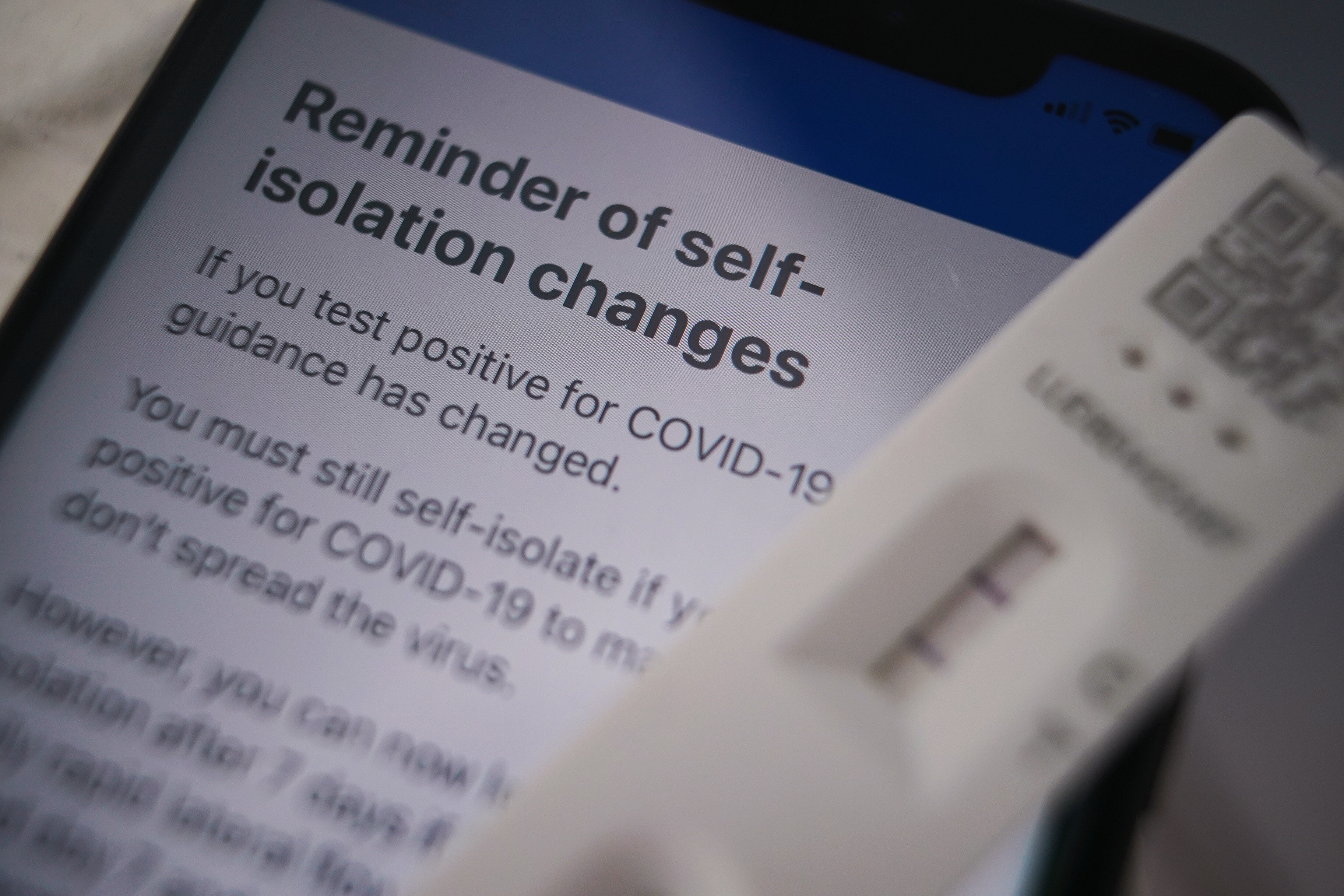
In addition, from this Thursday people will no longer have to self-isolate if they test positive for Covid. Currently, the rules state that anyone who has tested positive or has symptoms must isolate for up to 10 days.

At a Downing Street press conference, the scientists were at pains to stress the lifting of restrictions “needs to be a gradual, steady change”, and warned new Covid variants will cause “significant problems”. Whitty even said people should still isolate if they have Covid-19.

But despite the differences in tone, Johnson insisted there was no divide between the “gung-ho politicians and the cautious, anxious scientists”.

Earlier in the Commons, the PM admitted that the “pandemic is not over”, but said he wanted people to take personal responsibility for dealing with the pandemic, rather than relying on government intervention.

At the press conference, Whitty warned high rates of Omicron remain and “I would urge people in terms of public health advice, and this is very much the government’s position, that people should still if they have Covid try to prevent other people getting it and that means self-isolating”.

“So, that is the public health advice. It would have been the public health advice, and will be the public health advice, for multiple other diseases,” he said, describing it as “standard public health advice for a significant and highly transmissible infection”.

Vallance added that “the one thing this virus has taught you, is not to be cocky”, and said Covid will continue to evolve over the next couple of years.

He told the Downing Street news conference that there was no guarantee that future variants would be less severe.

“This pandemic is not over. The virus is continuing to evolve. It will continue to do so quite fast probably for the next couple of years,” he said.

“There is no guarantee that the next variant is as reduced severity as Omicron. As is it evolves what it is trying to do is to transmit more readily.

“The change in severity is a random by-product. We expect there to be further variants and they could be more severe.”

Johnson said there will likely be another variant that will “cause us trouble”.

Speaking at the press conference, he said: “I don’t want you to think that there’s some division between the gung-ho politicians and the cautious, anxious scientists, much as it may suit everybody to say so.

“We have a very clear view of this. This has not gone away. We’re able to make these changes now because of the vaccines and the high level of immunity and all the other considerations about Omicron that you’ve seen.

“But we have to face the fact that there could be, likely will be, another variant that will cause us trouble.

“But I believe that thanks to a lot of the stuff that we’ve done, particularly investment in vaccines and vaccine technology and therapeutics, we’ll be in a far better position to tackle that new variant when it comes.”

Routine contact tracing will also end on Thursday, as will the £500 self-isolation payments and the legal obligation for individuals to tell their employers about their requirement to isolate.

Changes to statutory sick pay and employment support allowance designed to help people through the coronavirus pandemic will end on March 24.

People aged 75 and over, the immunosuppressed and those living in care homes will be offered another Covid-19 booster vaccine this spring under the plans.

But free universal testing will be massively scaled back from April 1 and will instead be focused on the most vulnerable, with the UK Health Security Agency set to determine the details, while asymptomatic testing will continue for social care staff.

But the Department of Health and Social Care will receive no extra money to deliver the testing.

Share Button

Covid Vaccine To Be Given To All Children Aged 5-11 In England, Announces Sajid Javid

Children aged five to 11 in England will be offered a Covid vaccine, the government has announced.

It follows advice from the independent Joint Committee on Vaccination and Immunisation (JCVI).

Sajid Javid, the health secretary, said the vaccine programme will be rolled out to include children in that age group at some point during April.

The decision follows similar moves in Scotland and Wales.

“Children without underlying health conditions are at low risk of serious illness from Covid-19 and the priority remains for the NHS to offer vaccines and boosters to adults and vulnerable young people, as well as to catch-up with other childhood immunisation programmes,” Javid said.

“The NHS will prepare to extend this non-urgent offer to all children during April so parents can, if they want, take up the offer to increase protection against potential future waves of Covid-19 as we learn to live with this virus.”

It is understood precise details of the expansion of the vaccine programme will be set out soon.

The UK medical regulator, the Medicines and Healthcare products Regulatory Agency (MHRA), approved the Pfizer vaccine for use in children five to 11 last year.

The MHRA announced in December that a special “paediatric formulation” of the Pfizer vaccine was safe for use among that group.

They will be offered a much lower dose of the vaccine than what is offered to adults or children aged 12 and over.

Boris Johnson is due next Wednesday to announce the lifting of all domestic Covid rules in England, including the requirement to self-isolate after testing positive.

Javid’s announcement came just hours after Nicola Sturgeon confirmed that Scottish children aged five and over will be offered the vaccine.

She said: “Discussions with health boards on the best way of delivering vaccinations to five- to 11-year-olds have already begun. These will continue and we will provide further information when this approach is finalised. In the meantime, parents and carers of children aged between five and 11 need not do anything.

“This draft advice does not affect children in the five- to 11-year-old age group who have specific medical conditions which place them at greater risk from Covid-19. This group is already being vaccinated.”

Share Button

UK Records 534 Daily Covid Deaths In Week Government Says ‘We’ve Won The War’

The UK has recorded 534 daily Covid-19 deaths, the highest figure since February last year.

It comes as statisticians suggested Covid-19 infections have stopped falling, and a week after Plan B restrictions were abandoned and ministers said the Omicron-fuelled surge was “in retreat”.

The government said on Wednesday a further 534 people have died within 28 days of testing positive for Covid-19, bringing the total to 157,409.

These figures now include deaths in England following possible reinfections of Covid-19, which is why there has been a jump in the cumulative total of deaths and why the daily total is higher than recently.

But the daily figure is the highest since February 23, 2021, when the daily count was 548. The new data will raise questions over the rolling back of measures to curb the spread of Covid-19.

On Monday, culture secretary Nadine Dorries, when doing a media round defending Boris Johnson, said: “We have won the war on Covid in this country. That’s what people see and that’s what people know.”

There were 88,085 cases of Covid-19 reported in the UK on Wednesday.

Earlier in the day the Office for National Statistics (ONS) said Covid-19 infections have plateaued or showed an increase.

In England around one in 20 people in private households are estimated to have had the virus in the week to January 29, or 2.6 million people – unchanged from the week to January 22.

In Wales around one in 20 people had Covid-19 last week, up from one in 30.

Northern Ireland has also seen a week-on-week increase, from one in 20 people to one in 15.

In Scotland, the ONS describes the trend as “uncertain” with around one in 30 people estimated to have had Covid-19 last week, unchanged from the previous week.

Share Button

Boris Johnson Accused Of ‘Ignoring The Science’ On Covid

Boris Johnson has been accused by Wales’s First Minister Mark Drakeford of “ignoring the science” in refusing to introduce tighter coronavirus restrictions in England.

Drakeford defended his earlier comments that England was the “global outlier” in the fight against the Omicron variant.

On Friday, he had launched a blistering attack on Boris Johnson, accusing him of leading a Government which was “politically paralysed”.

Speaking on Sky’s Trevor Phillips on Sunday, Drakeford said: “I’m asked time after time why isn’t Wales doing the same things as England?

“My answer was to point out that in this debate it is not Wales that is the outlier.

“Wales is following the same path of putting protections in place that is being followed by Scotland, Northern Ireland, and not just devolved governments in the UK, but governments across Europe and across the world.

“The questions as to why the UK Government has decided not to follow that course of action are for them to answer, not for me.

“I think they have not done what the science would have told them they should do.

“But that’s decisions for them to answer for – I’m answerable for the decisions we take here in Wales.”

Alert level 2 restrictions remain in Wales, including wearing face coverings indoors, groups in public places such as restaurants limited to six people, and working from home if possible.

Indoor events of more than 30 people or outdoor events for more than 50 people are not allowed.

On Friday there was 994 people with Covid-19 being treated in Welsh hospitals while around 40 are in critical care – the majority of whom are unvaccinated.

Drakeford said that having different restrictions in both England and Wales made public health communications “more difficult”.

“When we have different messages across our border that does make it more difficult for us,” he told Sky News.

“We have faced this in the past and we go on doing as we see it as the right thing to protect lives and livelihoods here in Wales.”

He also said he was hopeful the restrictions could be lifted in Wales as he was expecting a steep decline in infections once the peak in the next couple of weeks was reached.

“As soon as we are in a position to see the peak past and the position improving, of course we will want to revert to the far more modest level of protections we had in place only a few weeks ago,” he said.

“We’re hopeful that the level of protections we currently have in place will be sufficient to mitigate the impact of Omicron to help our NHS to deal with the astonishing pressures which it’s having to deal with every day.”

Share Button

‘Flurona’: What To Know About Getting Covid And Flu At The Same Time

At every stage in the pandemic, we’ve added new terms to our everyday vocabulary: coronavirus, Covid-19, social distancing, Delta, Omicron… the list goes on and on.

The latest grabbing international headlines is “flurona,” a term that describes people who are infected with both the coronavirus and influenza at the same time. Confirmed cases have popped up in the US, Israel, Brazil and elsewhere.

Wondering what it means for you? Here’s what you need to know.

‘Flurona’ isn’t actually new

The term “flurona” may be new and catchy, but the phenomenon isn’t, as Raghu Adiga, chief medical officer at Liberty Hospital in Kansas City, Missouri, pointed out in this Scientific American explainer. News reports that make it sound like a “nightmare” are blowing the whole situation out of proportion – and missing the fact that it’s happened before, Adiga said.

“The way this story was taken out of context is yet another example of the kind of internet-based misinformation that haunts all of us who are trying to fight the real crisis at hand,” he wrote in the piece.

When a pandemic with millions of new cases daily collides with seasonal influenza “among a world population largely unvaccinated against either Covid-19 or flu, it is reasonable to find patients who may catch both viruses around the same time,” Adiga continued. Health care providers can run diagnostic flu and/or Covid tests to detect what you’ve been infected with.

And again, there have been documented (or suspected) cases of Covid/flu co-infection basically since the pandemic began. We may start seeing more of them now because the 2021 flu season was so benign (likely because of lockdowns, school closures and widespread masking), and there are concerns that this year’s flu season could be much worse. We’re also, of course, in the middle of an omicron surge that is driving up cases nationwide.

It can be serious, but experts say it’s not super common right now

While the recent flood of stories about “flurona” is arguably over-the-top, medical experts say it is important to take both Covid and the flu very seriously right now. Yes, the vast majority of people who get the flu or Covid recover. But there have also been more than 800,000 Covid-related deaths in the United States since the pandemic began, and more than 150,000 in the UK, while in any given year, the flu results in 12,000 to 52,000 US deaths and between 10,000 and 25,000 in the UK.

So even though co-infections are nothing new, they are something to be aware of. They can certainly put extra stress on people’s immune systems and increase the likelihood that you’ll get ill, particularly if you’re older or immunocompromised, for example.

“It is true that when you’re infected, your immune system is under attack. Therefore your immune defences are weakened. And therefore your ability to defend against another infection is reduced,” said David Edwards, an aerosol scientist, faculty member at Harvard University and inventor of FEND, a nasal mist that aims to trap and flush out tiny pathogens.

That said, your personal odds of being exposed to both viruses simultaneously are pretty low, particularly if people around you are doing their part and staying home if they’re experiencing any symptoms.

“The probability of being exposed to both at the same time is quite small. It’s important for people to understand that when they hear the term ‘flurona,’ it’s not as though there’s this big, bad new combined viral infection that’s going to overtake omicron,” Edwards told HuffPost. “But it happens.”

Be on the lookout for typical COVID and flu symptoms

The hallmark symptoms of Covid-19 are the same as they’ve been throughout the pandemic: fever, cough, chills, muscle aches, shortness of breath and/or loss of taste or smell. But milder symptoms are also possible, such as a runny nose or a headache. Also, some people experience gastrointestinal symptoms rather than what people think of as more typical respiratory effects.

Symptoms of the flu are pretty similar, and as the US Centers for Disease Control and Prevention notes on its website, there’s a lot of overlap. Again, be on the lookout for a cough, stuffy nose, fever, aches, fatigue, etc. With the flu, symptoms typically appear one to four days after exposure. With the coronavirus, the timeline is more like two to 14 days (with the average being about five days) – though there’s growing evidence that Omicron symptoms show up faster than with previous variants.

You can prevent flurona by taking all the right measures we’ve learned about during the pandemic

You really do not have to reinvent the wheel to protect yourself against flurona.

“The key best practices continue to remain getting vaccinated for flu, getting vaccinated and boosted for Covid when eligible, wearing masks and maintaining physical distancing from others, good hand-washing, staying home when sick, and getting tested for flu and Covid when sick,” said Matthew Kronman, associate medical director of infection prevention at Seattle Children’s in Washington.

Many experts say that now is a good time to upgrade to a KN95 or N95 mask if you haven’t already. Also, really err on the side of caution if you have any symptoms at all, even just one. It’s impossible for doctors to determine whether you’ve got a cough and runny nose because you’ve got omicron, because you’re developing a case of the flu, because you’ve got both, or whether you’re dealing with something else altogether – unless they test you.

So do your part to protect others. Stay home until you know what’s what and once you’re cleared of any infection.

Experts are still learning about Covid-19. The information in this story is what was known or available at the time of publication, but guidance could change as scientists discover more about the virus. To keep up to date with health advice and cases in your area, visit gov.uk/coronavirus and nhs.uk.

Share Button

These Are The People Most Likely To Experience Long Covid

Long Covid has been shrouded in mystery for much of the pandemic. But new research has finally shone a light on those who suffer a whole range of symptoms weeks or even months after they stopped being infectious.

New data from the Office of National Statistics has now revealed approximately 1.3 million people in the UK have self-reported long Covid as of December 6.

These estimates are based on participants who responded to a survey, rather than everyone in the population who had been clinically diagnosed with long Covid. This is a staggering number, adding up to 2% of the population.

Trends spotted among long Covid sufferers:

  • They tend to be between 35 and 69 years.

  • They are usually female.

  • They might live in a more deprived area.

  • They work in health, social care or teaching and education.

  • They deal with another activity-limiting health condition or disability.

ONS reported that 64% of people who self-reported long Covid said it affected their daily activities.

And among those who told ONS they had long Covid – in the month leading up to December 6 – 21% said they had confirmed or suspected Covid less than 12 weeks before.

Around 70% said they had confirmed or suspected Covid at least 12 weeks ago, while 40% said they had it at least one year ago.

Symptoms can include:

  • Fatigue

  • Loss of smell and taste (parosmia)

  • Shortness of breath

  • Difficulty concentrating (brain fog)

  • Insomnia

  • Dizziness

  • Pins and needles

  • Joint pain

  • Depressing and anxiety

  • Chest pain or heart palpitations

  • Tinnitus or earaches

  • Feeling sick, diarrhoea, stomach aches of loss of appetite

  • High temperature

  • cough

  • Sore throat

  • Rashes

What it’s like to have long Covid

Support worker Quincy Dwamena, 31, told PA reporters that he was a “healthy young guy” who “went to the gym often” before getting seriously ill from Covid.

Speaking in August 2021, he said: “I ended up being hospitalised and thought I was going to die.

“My advice is to get the vaccine: don’t put yourself and others at risk, I wish I’d got mine as soon as it was offered.”

Special needs tutor from London, Megan Higgins, 25, also told PA: “It’s now been eight months since I tested positive, and I can’t even walk around the shops without getting exhausted.

“Long Covid is debilitating, so please, get vaccinated. I wouldn’t want anyone else to go through what I have.”

Ella Harwood, 23, also contracted long Covid. She told reporters: “I’m young and fit but I was bed-bound for seven months with Covid.

“Before I caught the virus, I was super active and had no health concerns but I now suffer with asthma which I didn’t have before and a number of allergies.

“I fear I’ll never be the same again but I’m making progress and I’m very grateful that I’m still alive.”

However, some hopeful studies around long Covid have been published in recent months.

Being double-vaccinated can halve your risk of developing long Covid, while the overall numbers of people reporting long Covid is thought to be falling.

Share Button

UK Daily Covid Cases Fall For Second Day In A Row

The number of UK daily Covid cases has fallen for a second day in a row.

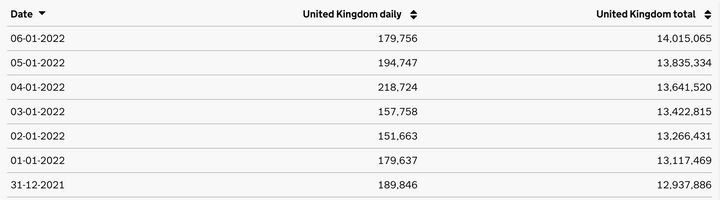
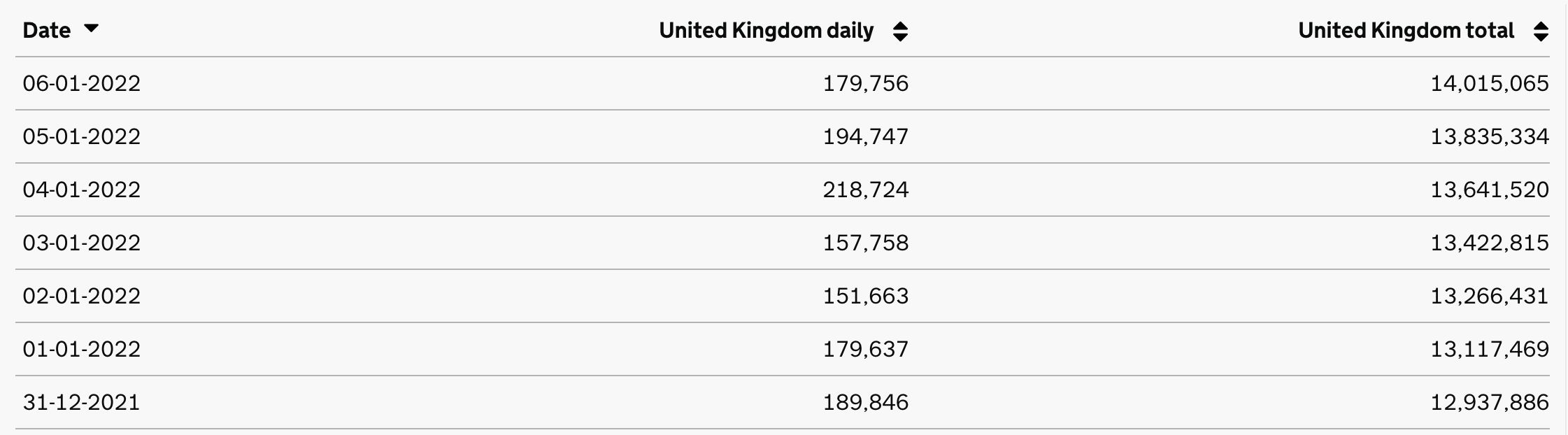
The government said lab-confirmed coronavirus cases were 179,756 as of 9am on Thursday, and a further 231 people had died within 28 days of testing positive for Covid.

On Tuesday, 218,724 infections were reported – a record high – and fell to 194,747 on Wednesday.

Cases in the last seven days

UK Government

It comes as Boris Johnson said hospitals will be offered increased support to deal with the “very difficult circumstances” they face, as he encouraged more people to take up the offer of a booster jab.

The prime minister said that “perhaps 30-40%” of the 17,000 patients in hospital with Covid “haven’t actually been vaccinated at all” as he urged the public to “behave sensibly” in the face of high daily Omicron cases.

Both Johnson and chancellor Rishi Sunak made visits to vaccination centres on Thursday as ministers made a fresh push for people to come forward for their third coronavirus vaccination dose.

Speaking to broadcasters during a visit to Northamptonshire, the prime minister said: “What we’ve got to do is make sure that people understand the pressures that Omicron is causing.

“And the way to deal with it is for everybody to stick to Plan B, which we are, make sure that they behave sensibly, but also recognise the vital importance of vaccination.

“When you look at what’s happening to patients coming into hospital, a large number of them, perhaps 30-40% of them, haven’t actually been vaccinated at all.

“And that’s increasingly true of people who go into ICU, into intensive care – the large majority of them have not been vaccinated at all, and the overwhelming majority of them have not been boosted.”

The Conservative Party leader said that, as well as “increasing support massively” to struggling hospitals – including by helping trusts to source extra staff while dealing with high proportions of the workforce being in self-isolation – a key target was to “make sure that the people who are likely to get ill get vaccinated first”.

Hitting out at anti-vaxxers for posting “mumbo jumbo” on social media, Johnson added: “The saddest words in the English language are too late – when you’re in ICU, and you haven’t been vaccinated, sadly it’s too late to get vaccinated. So get boosted now.”

A total of 247,478 booster and third doses of Covid-19 vaccine were reported across the UK on Wednesday, new figures show, with around 65% of all adults in the UK having now received a booster or third dose.

However, fewer than half of all adults in some of the biggest cities in England are among those to receive a top-up jab.

Figures published by NHS England, accounting for vaccinations delivered up to January 2, estimate that in Liverpool, 49.1% of all people aged 18 and over have had a third jab, along with 46.9% in Birmingham, 45.7% in Manchester and 42.8% in Nottingham.

It is understood that 17 hospital trusts in England currently have critical incidents – an alert to signal that there are fears priority services cannot be safely delivered – as hospitals are confronted by a wave of Omicron admissions.

Share Button

UK Daily Covid Cases Top 200,000 For The First Time

The number of UK daily Covid cases has reached another record high – topping 200,000 for the first time.

The government said lab-confirmed coronavirus cases were 218,724 as of 9am on Tuesday, and a further 48 people had died within 28 days of testing positive for Covid.

On New Year’s Eve, 189,846 infections were reported – the previous high.

Tuesday’s figures contain some delayed reporting of cases because of the holiday period.

It comes as the NHS is facing significant pressure as it copes with the latest wave of Covid-19 despite hopes that cases should start to drop in the coming weeks.

Boris Johnson will lead a Downing Street press conference as No 10 admitted that the health service is facing a “difficult time” during a “challenging winter”.

But health secretary Sajid Javid said there was nothing in the data that suggested England needed to move beyond the current Plan B restrictions.

“I think Plan B, implementing that, has been the right approach and also being absolutely focused on the vaccination programme,” he told reporters during a visit to a vaccination centre in south London.

Officials in Whitehall are keeping an “extremely close eye” on hospital capacity, with admissions and occupancy “increasing significantly”, Downing Street said.

But the prime minister’s official spokesman said: “We’re not seeing that same jump in beds requiring ventilation, which is pleasing, and almost certainly a function of both the nature of Omicron and our successful booster programme.”

He added that the vaccinations and “evidence that Omicron may be milder” means “we are not seeing those huge waves in cases translate into those needing the most serious care that we saw perhaps in previous waves, but that still puts the NHS under significant pressure”.

The government has stuck with the Plan B measures in place in England – including wearing masks in shops and on public transport and working from home where possible – despite tougher restrictions in other parts of the UK.

That optimism may be helped by comments from Professor Neil Ferguson, from Imperial College London, whose data was instrumental to the UK going into lockdown in March 2020, who said infection rates may already be plateauing in London and could fall across the country within weeks.

Prof Ferguson, a member of the government’s Sage scientific advisory panel, told BBC Radio 4’s Today programme: “I would say that, with an epidemic which has been spreading so quickly and reaching such high numbers, it can’t sustain those numbers forever, so we would expect to see case numbers start to come down in the next week, maybe already coming down in London, but in other regions a week to three weeks.

“Whether they then drop precipitously, or we see a pattern a bit like we saw with Delta back in July of an initial drop and then quite a high plateau, remains to be seen.

“It’s just too difficult to interpret current mixing trends and what the effect of opening schools again will be.”

Prof Ferguson said the Omicron variant had not had much time to infect pupils before schools shut for the Christmas break, and a rise in cases is now expected.

Meanwhile, Professor Sir Andrew Pollard, director of the Oxford Vaccine Group, told Sky News it would not be “affordable, sustainable or deliverable” to give regular jabs every six months to cope with waning immunity and the rise of new variants.

“Remember that, today, less than 10% of people in low-income countries have even had their first dose, so the whole idea of regular fourth doses globally is just not sensible,” he said.

Sir Andrew said it may be that future boosters could be targeted at the most vulnerable and it is too early to say whether updated vaccines will be required every year, as with flu.

Downing Street said ministers will also be taking clinical advice and keeping a “very close eye on” the “waning efficacy of second doses and the interplay of Omicron on that as well” as part of a review on whether to make a booster jab a requirement to access a Covid pass.

Elsewhere, Matthew Taylor, chief executive of the NHS Confederation, said the staffing situation in hospitals is “almost impossible” as leaders try to manage their resources.

He told Times Radio that, for many, “the most pressing element of all” is the number of staff who are absent due to Covid.

He added that hospital admissions seem to have “perhaps plateaued in London or there may be a second peak after the new year now, but it’s rising across the rest of Britain”.

Meanwhile, Chris Hopson, chief executive of NHS Providers, said at least “half a dozen” NHS hospitals have declared a critical incident as they try to respond to Covid.

Morecambe Bay NHS Trust and Blackpool Teaching Hospitals NHS Trust were among those declaring critical incidents.

Dr Sakthi Karunanithi, public health director for Lancashire County Council, told Today: “Lancashire is beginning to experience what London did at the beginning of last month and, of course, London is better resourced and the infrastructures are well organised compared to other regions, so we are bracing ourselves for a tsunami of Omicron cases in Lancashire.”

Javid said it was a “fast-moving situation” but the NHS was getting “a huge amount of support” to cope with staff absences caused by the wave of coronavirus cases.

As well as volunteers the NHS is also “widely using an emergency list of workers that has been able to develop over the pandemic so far, and then call on clinicians and others that may have retired for example, to come back and help”, he said.

Share Button