I’m at the hospital when I get the call. It’s a Thursday morning, not even 24 hours since my C-section. I’m watching my newborn son nap in his bassinet and trying to enjoy my first meal since surgery.
The caller ID says CHKD Children’s Hospital, so I answer. My 16-month-old daughter was just released from that hospital earlier in the week following a severe bacterial infection that caused her lymph nodes to swell an extraordinary amount.
Advertisement
“Hello?” I say, worried that they uncovered something concerning in her bloodwork.
“Hello, I’m a paediatrician at Norfolk Children’s Hospital. I’m calling to check on Camille, and to let you know that she may have been exposed to the measles during her stay with us.”
My heart dropped, and the post-surgery nausea that had nearly subsided suddenly returned.
The doctor proceeded to tell me that she was reading from a script, and that they (under the advisement of the Virginia Department of Health) were recommending that all young children exposed receive their second measles vaccine as soon as possible. She then asked me about the vaccination status of everyone else who visited my daughter at the hospital, including myself, my parents, my husband and my almost-3-year-old.
Thankfully, both of my daughters had their first measles shot, which grants immunity in up to 95% of individuals. However, I now have a vulnerable infant to consider, and even a small chance of exposing him to this virus with no protection is too big of a risk.
Advertisement
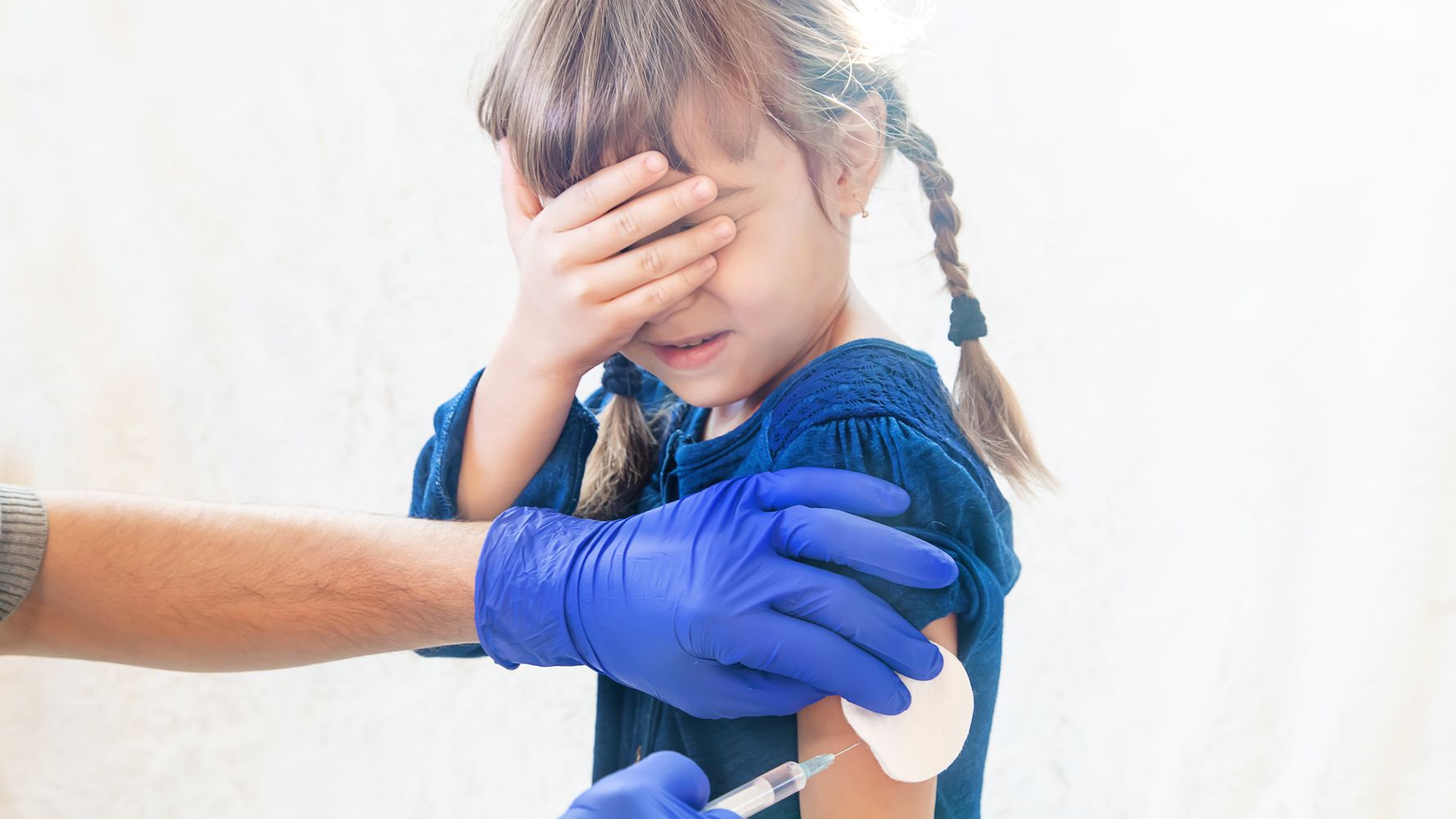
So, under the advice of our paediatrician, I decided to give both of my daughters their second measles-mumps-rubella vaccine early. I didn’t feel entirely comfortable with this decision — especially with my 16-month-old just recovering from an infection and borderline immunocompromised. But it was the best decision available to me.
And because of parents who opt out of vaccinating their kids, I was put in the position to make it.
The recent measles scare in Virginia came from a student at a local elementary school. Though the individual’s vaccination status was not directly stated in a letter from the Virginia Beach Department of Health or in an interview with officials, several local outlets have taken this opportunity to advocate for the safety and continued necessity of childhood vaccinations. Of the 1,491 confirmed cases of measles in the U.S. this year, 92% occurred in individuals who were unvaccinated (or who had an unknown vaccination status).
In fact, 2025 boasts more measles cases since the disease was considered eliminated in 2000 — and more than any other year in the past three decades.
Advertisement
Low vaccination rates caused by vaccine hesitancy and anti-vaccine movements are largely to blame.
In other words, parents who choose not to vaccinate their children play a major role in these outbreaks ― which will continue to rise if nothing changes.
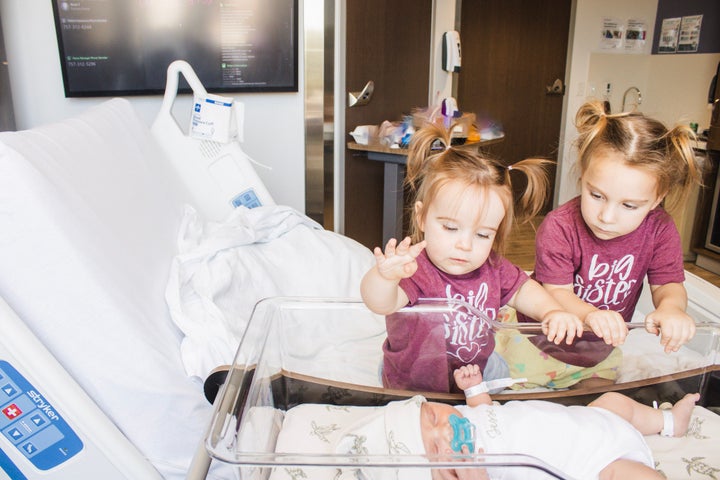
Photo Courtesy Of Lauren Gumpert
As parents, we make hundreds of decisions on a daily basis — some inconsequential, others less so. We’re constantly weighing pros and cons, risks and benefits. In a world that feels more disconnected than ever — when we can bury our heads into our phones and surround ourselves with an echo chamber of conspiratorial ideas — it’s easy to lose sight of the bigger picture.
Advertisement
So let’s zoom out for a minute. In 1900, infectious diseases (such as pneumonia, influenza and measles) killed about 18% of children. Before vaccines and other public health measures, 1 in 5 children did not live to see their first birthday.
Compare that reality to today, when less than 1% of children die before their fifth birthday.
Back then, childhood was inherently dangerous. Even if they lived, those who became infected with a virus such as measles often suffered long-term side effects such as brain damage and a permanently weakened immune system.
The success of public health measures such as vaccines has given people a false sense of security, leading many to conclude that once-tragic diseases are no longer a threat. But it’s only thanks to science that illness and death among children is no longer commonplace.
Advertisement
Nowadays, it’s easy to take our health for granted — especially with anti-vaccine conspiracy theorist Robert F. Kennedy Jr. steering the narrative at the helm of the Department of Health and Human Services. We have the luxury of arguing over genetically modified organisms and artificial food colors and doubting the effectiveness of the very things that have kept us safe for the past half-century.
I won’t pretend to understand the various circumstances that might lead a parent not to vaccinate their child.
But I do know that as parents (and human beings), we have a responsibility to protect all children. I’m reminded of a quote by author and activist Glennon Doyle who said, “There’s no such thing as other people’s children.” We have an obligation to protect those who cannot opt to protect themselves. This is why I keep my kids home when they’re sick, why I advocate for stricter gun laws and — yes — why I vaccinate my kids.
Advertisement
Because measles is an airborne disease, one infected person can easily pass it on to 18 other people. To achieve herd immunity, 95% of the population must be fully vaccinated. Unfortunately, vaccination rates among children have continued to decline since the COVID-19 pandemic, with only 92.5% of kindergartners in the U.S. reportedly vaccinated against measles last year.
Just this week, a school-aged child in California died due to a delayed measles-related complication known as subacute sclerosing panencephalitis (SSPE). The child contracted the disease in infancy before they were eligible for vaccination. If infected, my newborn son could suffer the same fate.
I don’t want my kids — or anyone else’s — to become another preventable casualty.
So, both of my daughters received their second MMR vaccine ahead of schedule. However, we still aren’t out of the woods, because measles symptoms can appear as late as 21 days after exposure. Additionally, about 5% of children who receive their second vaccine develop a measles-like rash and fever, so it can be difficult to determine whether they have the disease.
Advertisement
Now I’m left to wonder and stress about every little bump that surfaces on my daughters’ skin. And if one of them does develop symptoms, I’ll have to contact the Virginia Department of Health to get them tested, because I can’t bring them to the paediatrician and risk exposing other vulnerable children.
I understand why many parents have grown to distrust medical institutions. I’ve also had my fair share of negative experiences that sometimes make me doubt doctors’ recommendations and interventions.
With so much misinformation circulating on social media, knowing whom to trust can be difficult. But I’m asking you to trust me — a fellow parent, personally affected by your choices, who sincerely wants the best for all of our kids. I’m asking you to trust the health care professionals who have treated your sick child instead of the influencers on social media (who are trying to sell you something) or the corrupt politicians like RFK Jr., who seems to change his opinion often to suit his political agenda.
Advertisement
Despite the fact that a link between vaccines and autism has been disproven over and over, RFK Jr. continues to spread lies and misinformation. He promised Americans that he would find a cause for the “autism epidemic” — a pursuit that won him support among many parents. However, with no formal medical or public health training, the secretary of health continues to undermine the scientific process by hiring incompetent individuals and misappropriating resources to maintain his base of support. For example, he recently employed a known pseudoscientist to uncover a link between vaccines and autism (which, as previously stated, studies have found does not exist).
In light of recent threats to vaccine access, 34 scientific and medical organisations including the American Association of Immunologists and the American College of Physicians have come together to produce a statement reaffirming the safety and effectiveness of vaccines.
With so many conspiracy theories circulating on the internet, it can be difficult to know who to trust. As a result, many parents fail to recognise the far-reaching implications of their choices. A once-standard public health measure has become politicised and exploited — and our children will suffer because of it.
Advertisement
Mother Teresa said: “If we have no peace, it is because we have forgotten that we belong to each other.”
The consequences of a decision like not vaccinating your child are not hypothetical. By now, hundreds of families in Virginia Beach like mine have been affected by one family’s choices. None of us live on an island, and our actions continue to ripple outward and affect others in unexpected ways.
In this life, we have no choice but to rely on each other. As parents, we have the power to end preventable deaths by vaccinating our children. I hope the vaccine skeptics among us will find the strength to do what’s necessary to keep all of our children safe.
Advertisement
Do you have a compelling personal story you’d like to see published on HuffPost? Find out what we’re looking for here and send us a pitch at pitch@huffpost.com.