Final UK Evacuation Flight For Afghan Nationals Leaves Kabul, MoD Confirms

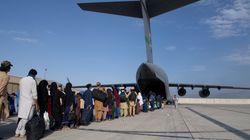
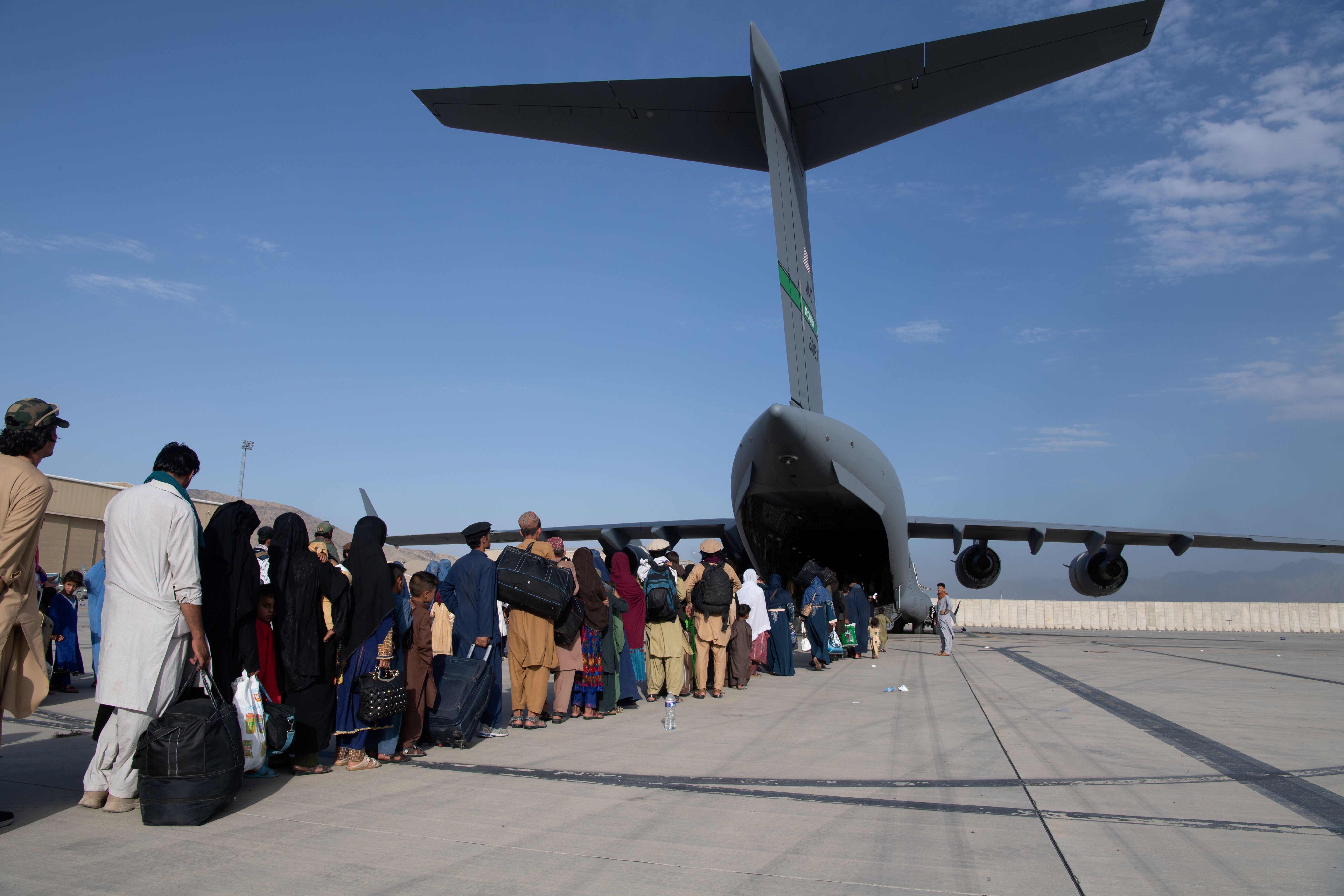
The final UK evacuation flight purely for Afghan nationals has left Kabul airport, the Ministry of Defence has confirmed.

Any further flights which will now leave Kabul under the UK’s evacuation operation will have UK diplomatic and military personnel on board.

The Ministry of Defence confirmed that the final flight purely for evacuations under Operation Pitting had departed from Kabul.

It is understood any further flights would be able to transport those still needing evacuation, but would now also include personnel travelling back to the UK.
WAKIL KOHSAR via Getty Images

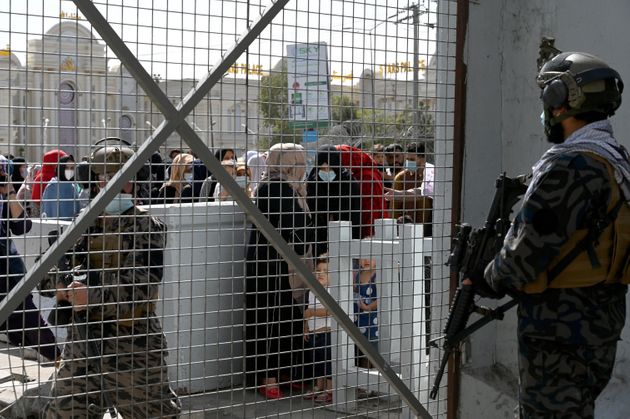
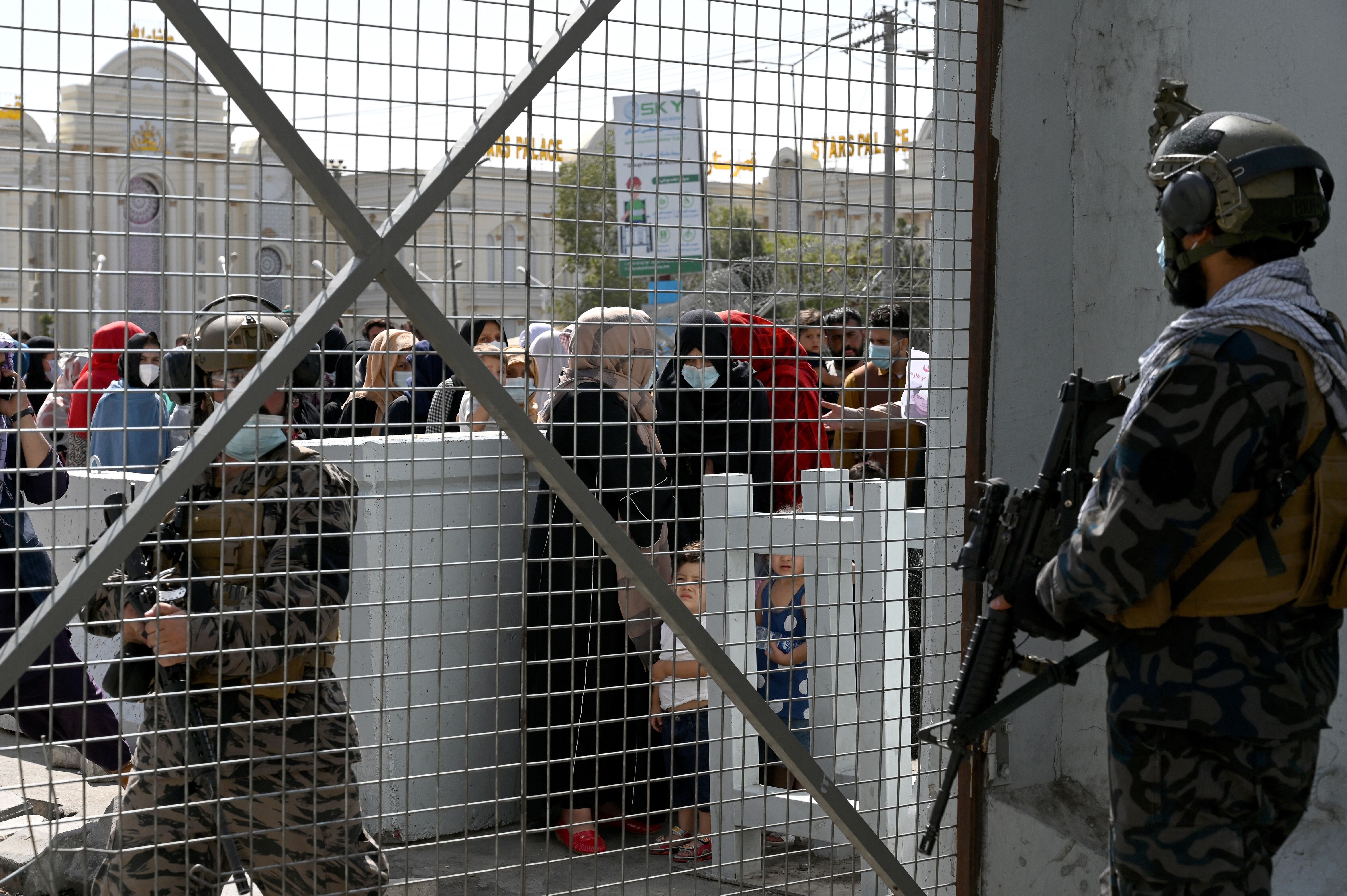
Taliban Badri fighters, a “special forces” unit, stand guard as Afghans, hoping to leave Afghanistan, wait at the main entrance gate of Kabul airport on August 28, 2021, following the Taliban stunning military takeover of Afghanistan.

It comes as British ambassador to Afghanistan Sir Laurie Bristow said it was “time to close this phase” of the evacuation effort.

In a video posted on Twitter, Sir Laurie – who has remained in Afghanistan processing those who needed to leave the country – said: “The team here have been working until the very last moment to evacuate British nationals, Afghans and others at risk.

“Since the 13th of August, we’ve brought nearly 15,000 people to safety, and about 1,000 military, diplomatic, civilian personnel have worked on Operation Pitting in Kabul, many, many more elsewhere.

“Thursday’s terrorist attack was a reminder of the difficult and dangerous conditions in which Operation Pitting has been done. And sadly I attended here yesterday the ceremony to pay our respects to the 13 US soldiers who died.”

General Sir Nick Carter, the Chief of the Defence Staff, said Operation Pitting – the effort to evacuate UK nationals and eligible Afghans from Kabul airport – had “gone as well as it could do in the circumstances”.

On BBC Radio 4’s Today programme, the head of the UK armed forces spoke of the “heartbreaking” judgment calls military personnel had been forced to make.

“We haven’t been able to bring everybody out and that has been heartbreaking, and there have been some very challenging judgments that have had to be made on the ground,” Sir Nick said.

“And I think that, you know, people like me, who have had a very, very long association with this country, we are forever receiving messages and texts from our Afghan friends that are very distressing, so we’re all living this in the most painful way.”

Analysis — By Paul Waugh

What Keir Starmer called “a sad and a dark day” for the UK’s role in Afghanistan just got sadder and darker. The latest news, that two British nationals and the child of a British national were among those killed by the suicide bomb attacks outside Kabul airport, underlined the sense of unfolding tragedy.

While the primary responsibility for the murders undeniably lies with barbaric Islamist terrorists, Boris Johnson is now facing even greater political pressure over his own handling of the wider policy on Afghanistan.

In many ways, Johnson’s hands have of course been tied by his heavy reliance on the Americans. Joe Biden’s refusal to shift his political commitment to the August 31 withdrawal deadline has driven events, though the US president’s failure to keep allies like the UK in the loop has left a bitter taste for many of them.

As for the so-called “special relationship” between the UK and US, the phrase feels even more of a polite fiction than usual. Despite British ministers having gone public in calling for an extension to the airport evacuation, it took Biden just seven minutes into his conference call with the G7 this week to announce he was not budging.

Read more…

 As the evacuation flights to RAF Brize Norton in Oxfordshire came to an end, Labour’s shadow defence secretary John Healey told Sky News: “This is the brutal truth, despite getting more than 14,000 people out, there are probably 1,000 Afghans who have worked with us over two decades in Afghanistan, helped our troops, our aid workers, our diplomats, that we promised to protect, but we’re leaving behind.

“And I know those troops in particular will feel our failure on this as a country is a betrayal of many of those who risked their own lives to work alongside us.”
ALASTAIR GRANT via Getty Images

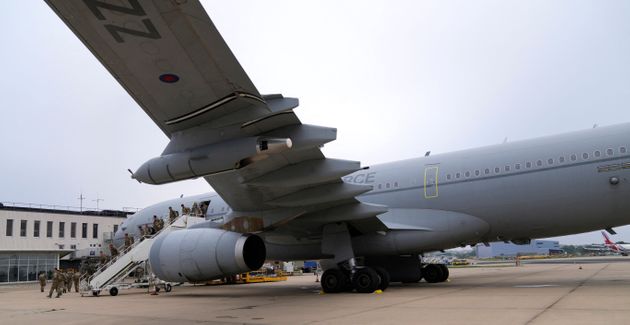
Members of the British armed forces 16 Air Assault Brigade walk to the air terminal after disembarking a Royal Airforce Voyager aircraft at Brize Norton, Oxfordshire on August 28, 2021, as the troops return from assisting with the evacuation of people from Kabul airport in Afghanistan.

Tom Tugendhat, a Tory MP who fought in Afghanistan, said he was disappointed the evacuation effort was coming to an end.

The former army officer and now chairman of the Commons Foreign Affairs Select Committee told BBC Breakfast: “I’m extremely sad about this and I very much hope that it might go beyond the August deadline but we found out a few days ago that it wasn’t, so I was expecting it.

“It still leaves me extremely sad that so many of my friends have been left behind.”

Questioned over whether the UK could have done better when withdrawing personnel from Afghanistan, Mr Tugendhat said: “In the last week, probably not, but this has been a sprint finish after a not exactly sprint start.”

“There are going to be questions to be asked to the Foreign Secretary about the processing in the UK in recent weeks that we’re going to have to see what the answers are.”

Defence Secretary Ben Wallace previously admitted there were between 800 and 1,100 Afghans eligible under the Afghan Relocation and Assistance Policy (Arap) scheme who would be left behind, while around 100 and 150 UK nationals will remain in Afghanistan, although Mr Wallace said some of those were staying willingly.

But a number of MPs have said that based on the correspondence they had received asking for help, they thought this was an underestimation.

In the early hours of Saturday, the US military conducted an airstrike against a member of so-called Islamic State in Afghanistan who was believed to be involved in planning attacks against the US in Kabul.

The strike killed one individual, and US spokesman navy captain William Urban said they knew of no civilian casualties.

It comes after two British adults and the child of a British national – understood to be a teenager – were killed in a bombing on Thursday, with another adult and child injured.

The BBC reported a London taxi driver, Mohammad Niazi, had been killed in the Kabul attack after flying out to help his family return home, but it was not confirmed if he was one of the UK nationals referred to by the Foreign Office.

Meanwhile, The Times reported that the injured child, believed to be aged under 10, was related to one of the adults killed.
Share Button

Donald Trump Suggests Osama Bin Laden Wasn’t That Big A Deal, Says He Only Had ‘One Hit’

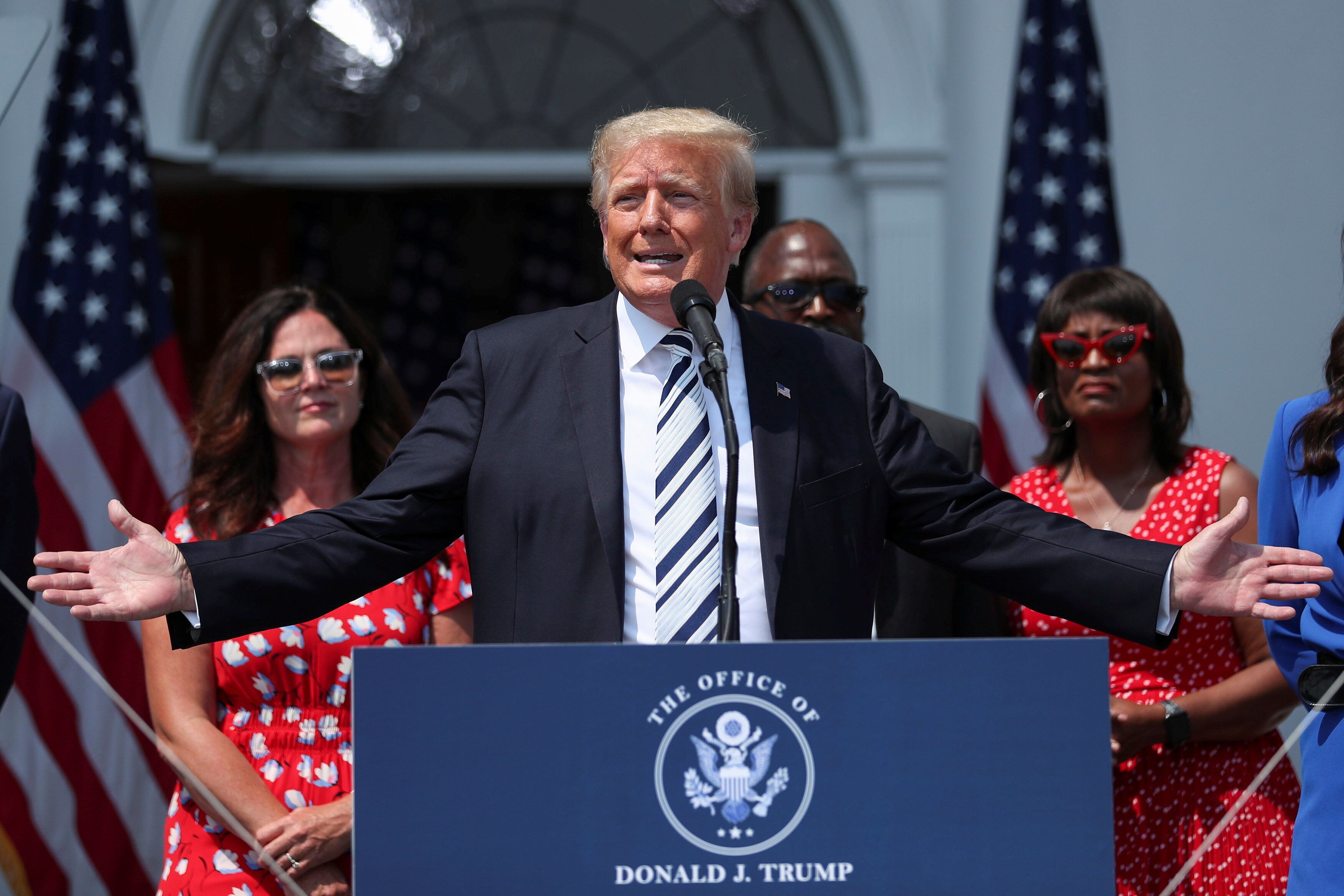
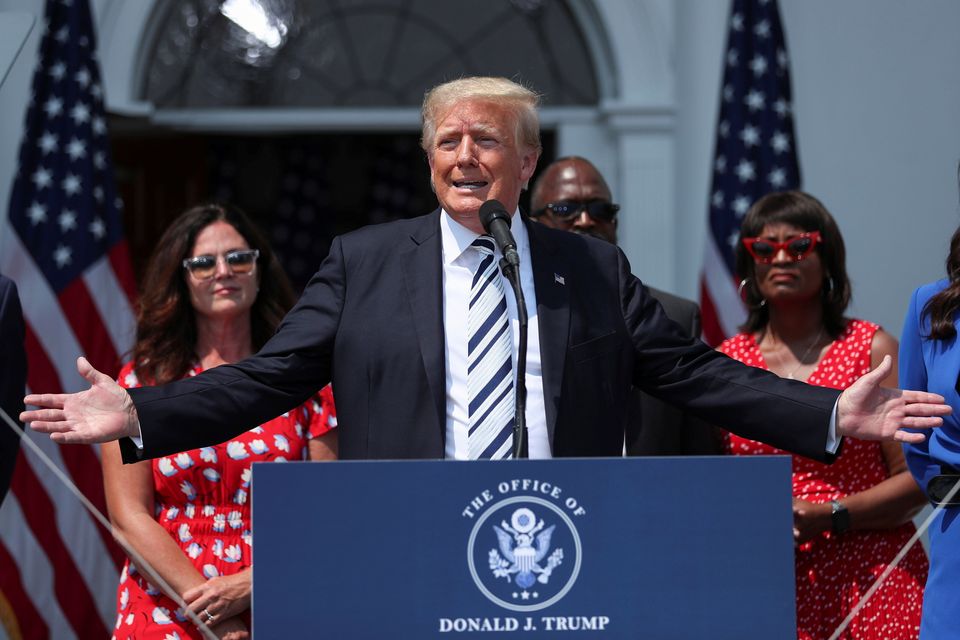
With just weeks to go before the 20th anniversary of the September 11 terrorist attacks, former US President Donald Trump suggested the man behind them, Osama bin Laden, wasn’t that bad and only had “one hit.”

Trump made the callous and false comment during an interview about the crisis in Afghanistan on conservative radio host Hugh Hewitt’s show Thursday morning.

After trashing President Joe Biden’s handling of the US withdrawal from the country, Trump bragged about two terror chiefs killed under his own administration: ISIS leader Abu Bakr al-Baghdadi and Iranian General Qasem Soleimani.

He claimed that both men were much bigger targets than bin Laden, who was killed in 2011 under former President Barack Obama’s leadership.

“Now, just so you understand, Soleimani is bigger by many, many times than Osama bin Laden,” Trump said. “The founder of ISIS is bigger by many, many times, al-Baghdadi, than Osama bin Laden.” 

“Osama bin Laden had one hit, and it was a bad one, in New York City, the World Trade Center,” Trump said, ignoring Bin Laden’s other deadly attacks. “But these other two guys were monsters. They were monsters.”

“And I kept saying for years, why aren’t they getting them? For years, I said it,” Trump continued. “I got them. The press doesn’t talk about it. They don’t talk about it because they don’t want to talk about it.”

Bin Laden was a founder of al-Qaeda and the mastermind behind multiple mass-casualty terror attacks, including the 1998 US embassy bombings that killed more than 200 people and the 2000 bombing of the USS Cole, which killed 17 US Navy sailors. He also oversaw the 2001 attacks on the World Trade Center towers and Pentagon that killed nearly 3,000 people.

The former president also blustered that he “got 100%” of ISIS.

“ISIS is tougher than the Taliban, and nastier than the Taliban. And ISIS was watching, and then they were, they didn’t exist anymore,” he said.

At least 12 US troops and 60 Afghans are dead after two suicide bombers and gunmen attacked crowds at the Kabul airport on Thursday. The Pentagon believes the attack was carried out by an Islamic State offshoot group, named ISIS-K.

Trump has repeatedly railed against Biden over his handling of Afghanistan since it was overthrown by Taliban insurgents, even though Trump cut a peace deal with the Taliban last year that included a withdrawal of US troops by May 1 and the release of 5,000 Taliban fighters.

Share Button

Donald Trump Mocked For Repeatedly Botching Name Of ISIS Offshoot In Fox News Ramble

Donald Trump is still struggling with names.

In a Fox News interview with Sean Hannity on Thursday, the former US president claimed he “knocked out 100 percent of the ISIS caliphate” but that a “new ISIS” has formed: “ISIS-X.” 

The group operating in Afghanistan, which claimed responsibility for Thursday’s deadly attack in Kabul, is actually ISIS-K, which stands for Islamic State Khorasan.

Khorasan is a historical term for Afghanistan and the surrounding region.   

Trump eventually got the name right.

As is his tendency, however, he didn’t admit he botched it, only that he was predicting the future.

“They’ll have an ISIS-X pretty soon, which is gonna be worse than ISIS-K,” he told Hannity.  

His critics fired back: 

Share Button

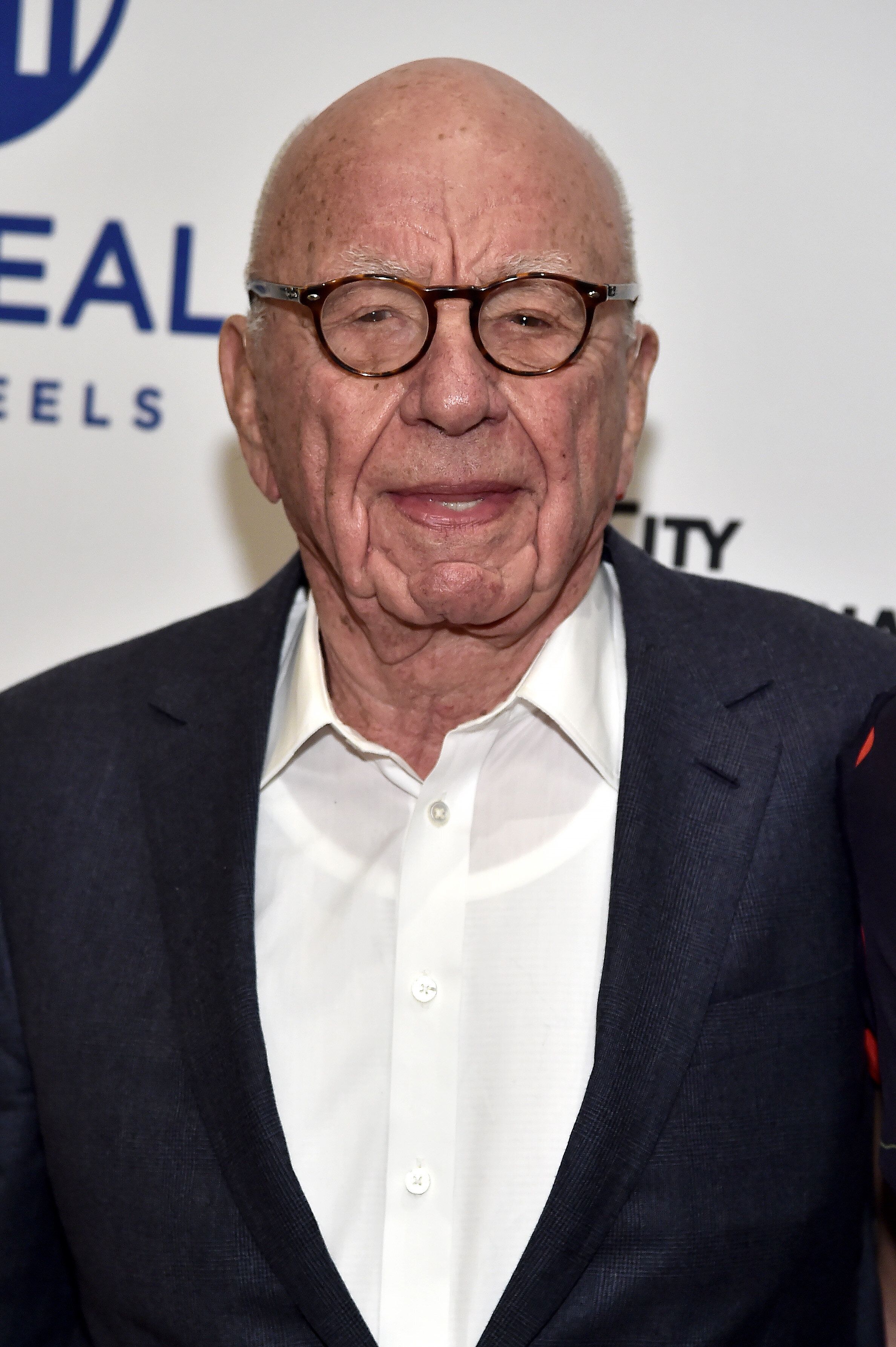
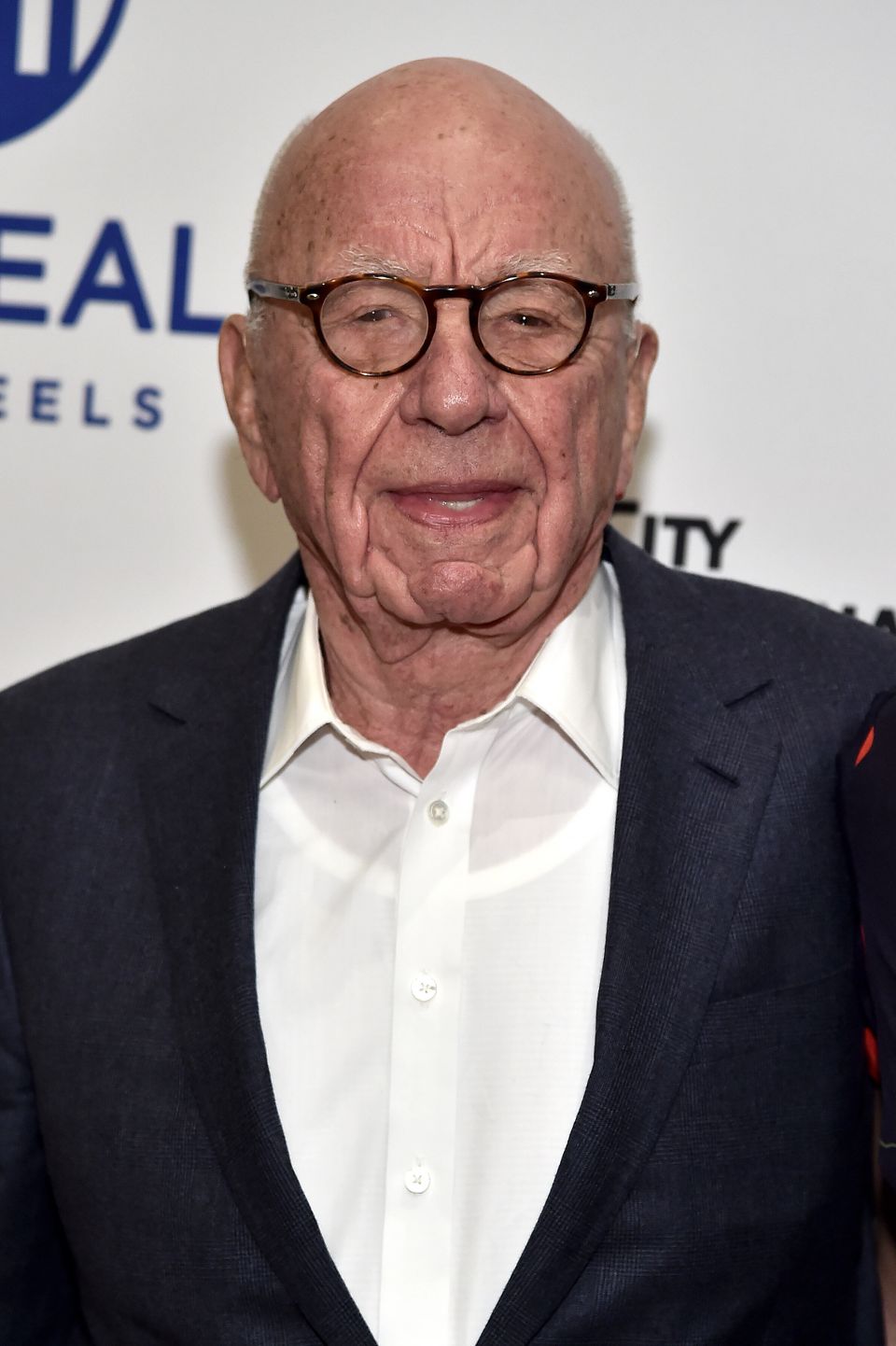
Rupert Murdoch’s NY Post Reportedly Demands Workers Mask Up As It Slams Mask Mandates

Workers at the New York Post have been ordered to mask up even while the newspaper slams masks and mask mandates to its readers and the public, CNN Business reported Monday.

It’s the latest searing case of hypocrisy to emerge this month in media mogul Rupert Murdoch’s News Corp world. While Fox News personalities Sean Hannity and Tucker Carlson rage against vaccines and masks, Fox last week demanded that all staff disclose their vaccination status. 

The same Fox memo also encouraged even fully vaccinated people to mask up in public spaces, and it’s mandated for all in “small, confined spaces.”

New York Post workers were told in an August 12 memo from Sean Giancola, publisher and chief executive of the tabloid, that “masks are required while walking the floor/not at your desk,” CNN reported.

Employees must “mask up” and “cover” their face when “away from their desk or chatting with colleagues,” according to CNN, which obtained a copy of the memo. Workers may remove masks when sitting alone at their desks.

Workers are also required to submit to a daily health screening “every day before entering the office,” so they don’t come to work sick.

Yet despite that standard for its own workers, the Post has railed against calls to mask up, incredibly blasting it as “madness” when the Centers for Disease Control and Prevention recommended in July that even the vaccinated wear masks in communities with high transmission rates of COVID-19. The Post’s editorial also called the CDC recommendation “nonsense” and “pernicious.”

An earlier Post editorial even called for scrapping mask mandates on trains and buses because it claimed the health safety measure was “pointless.”

There was reportedly no mention of a vaccine requirement in the Post memo, unlike the demand from Fox News.

A disgusted Malcolm Turnbull, former prime minister of Australia, last month accused Murdoch of using his media properties to peddle lies about Covid-19 that he himself doesn’t believe just to make money by pandering to his gullible consumers.

“Rupert got himself vaccinated as quickly as he could; he’s not a fool. He  knows the vaccines work,” Turnbull said in an interview.

Murdoch is “making billions of dollars out of a news channel, a news platform, Fox News, which is promoting and enabling all of this vaccine hesitancy,” Turnbull warned.

“Anybody who is “promoting these conspiracy theories about vaccines, and anyone who is discouraging people from getting vaccinated is contributing to death and disease. There’s no question about that,” Turnbull said.

Share Button

Conservative, Vaccine-Skeptic Talk Radio Host Dead After Contracting Covid-19

A US conservative radio host and vaccine skeptic, who said he wouldn’t get vaccinated because he had a “low risk” of getting Covid-19 and dying from it, has died after being hospitalised with the virus, his employer said.

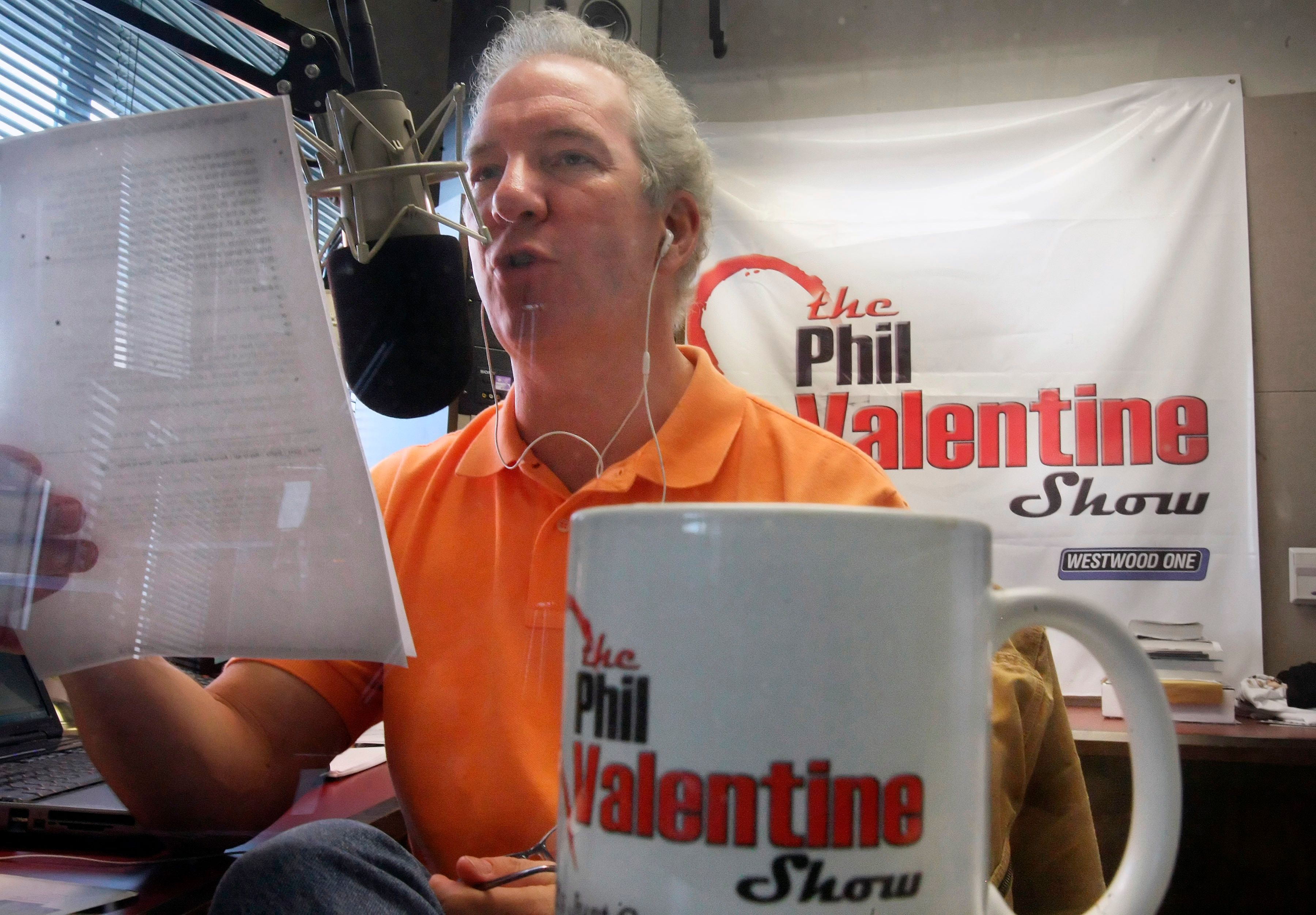
Phil Valentine’s death at age 61 was announced Saturday by Nashville radio station SuperTalk 99.7 WTN. The Tennessee-based talk radio host was first hospitalised in late July with the virus.

A statement from his family at the time of his hospitalisation said his illness led him to have second thoughts and regrets about the vaccines’ significance and encouraged people to “go get vaccinated.”

John Partipilo via AP

Conservative talk show host Phil Valentine, seen in 2009, has died after being hospitalised with Covid-19, his employer announced.

“Phil would like for his listeners to know that while he has never been an ‘anti-vaxer’ he regrets not being more vehemently ‘Pro-Vaccine’, and looks forward to being able to more vigorously advocate that position as soon as he is back on the air, which we all hope will be soon,” his family said in a statement posted to Facebook by the radio station.

Valentine had expressed his skepticism of the coronavirus vaccines and masks on his radio program and social media, with one of his last tweets on July 15 questioning the safety of the Johnson & Johnson vaccine.

Back in December, he tweeted that people should do a “risk assessment” on whether they should get vaccinated.

“I have a very low risk of A) Getting COVID and B) dying of it if I do. Why would I risk getting a heart attack or paralysis by getting the vaccine?” he posted.

He also recorded a Beatles parody song, “Vaxman,” that mocked the vaccine.

Share Button

Joe Biden Warns ‘A Lot Could Still Go Wrong’ With Afghanistan Evacuations

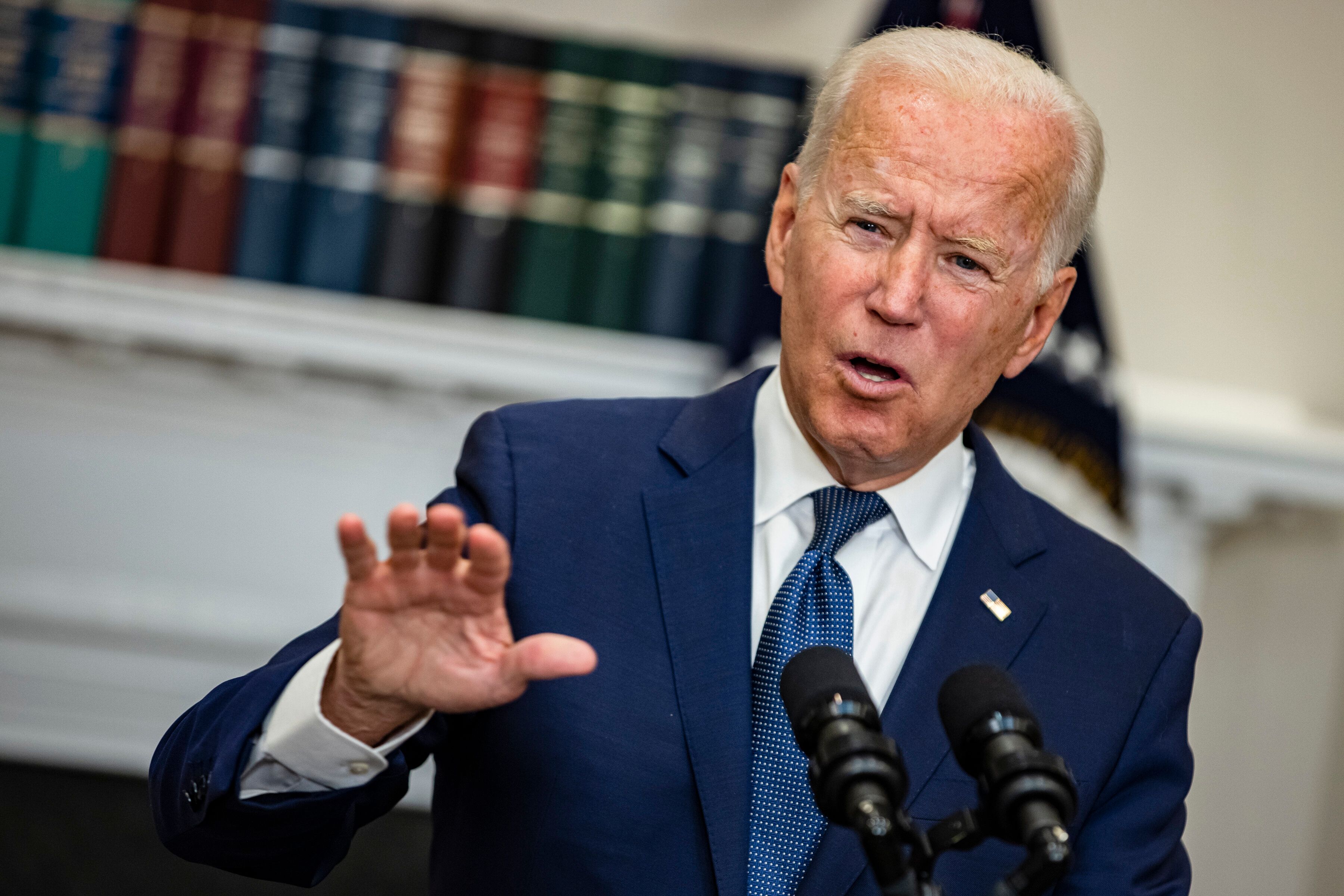
US President Joe Biden touted on Sunday the surging number of Afghanistan evacuations carried out so far by the United States, but acknowledged that such a massive operation does not come “without pain and loss.”

The White House said that the US has evacuated 30,300 people out of Afghanistan since August 14, including more than 13,000 people over the weekend. That brings the total evacuated by the US to about 35,500 since July, though the president stressed in a televised address that “we have a long way to go, and a lot could still go wrong.”

“Let me be clear, the evacuation of thousands of people from Kabul is going to be hard and painful no matter when it started, when we began,” Biden said. “It would have been true if we had started a month ago, or a month from now. There is no way to evacuate this many people without pain and loss, [like] those heartbreaking images you see on television. It’s just a fact.”

The British military said earlier Sunday that at least seven Afghans died in a panicked crush of thousands of people trying to flee the country at Kabul’s international airport, in an attempted exodus resulting from the Taliban taking over just a week ago. Others may have been trampled, suffocated or experienced heart attacks as Taliban fighters fired shots into the air to try and drive back crowds from the airport ― the last spot still held by the US military.

Some of the seven who were killed had plunged to their deaths after clinging on to a US plane as it took off on August 16, while thousands of others poured on to the tarmac in a desperate attempt to escape life under Taliban rule. Photos and video showed Afghans passing babies and small children above their heads so Western soldiers could raise them over walls and ensure their safety.

“My heart aches for those people you see,” Biden said on Sunday. “We are proving, though, that we can move thousands of people a day out of Kabul. We’re bringing out citizens, NATO allies, Afghanis who in fact have helped us in the war effort ― but we have a long way to go, and a lot could still go wrong. But to move out 30,000 people in just over a week, that’s a great testament to the men and women on the ground in Kabul.”

Earlier on Sunday, national security adviser Jake Sullivan told CNN that 23 US military flights had evacuated about 3,900 people from Afghanistan, with an additional 3,900 airlifted by 35 non-US military flights, in the past 24 hours. Defence Secretary Lloyd Austin activated the Civil Reserve Air Fleet program, requesting 18 aircraft from US carriers to assist in transporting Afghan refugees after they’ve been evacuated to other countries.

To help continue the evacuations safely, the US has extended the “safe zone” perimeter around the Kabul airport to expand access to people trying to flee the country. This change includes changing the gate operations, which Biden explained is why the military has been able to increase the number of evacuees. 

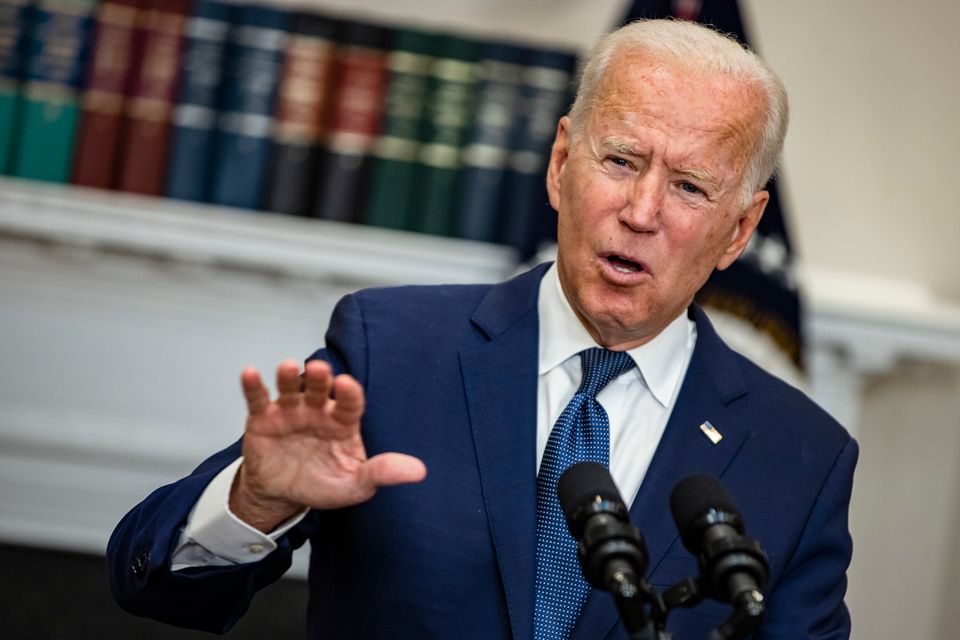
The president said that the Taliban “have been cooperative with regard to changing the perimeter” during discussions, but when asked by a reporter if he trusts Taliban promises, Biden said: “I don’t trust anybody, including you.”

Biden did say that the Taliban have not taken action against US forces so far during the evacuation, and “by and large” have followed through on allowing Americans to pass through. But the president also emphasised that US troops and Afghans still face danger at the airport, such as terrorists like ISIS and its Afghan affiliate ISIS-K who may “seek to exploit the situation ― including trying to strike from a distance.”

The president said he still hopes to meet the August 31 evacuation deadline out of Kabul, but is currently having discussions for the potential of extending the timeline to make sure the US can evacuate as many people as possible.

The chaotic rollout of Biden’s evacuation plan has unleashed bipartisan anger, though many officials and experts stress that this is not on one administration, but on decades of government and military officials. Still, with the evacuation occurring under the current White House that has a lackluster record on refugee issues, advocates are blasting Biden for not moving fast enough and claiming the president is more focused on avoiding political attacks than on helping vulnerable people abroad.

“I had a basic decision to make. I either withdraw America from a 20-year war ― that depending whose analysis you accept cost us $150 million a day for 20 years or $300 million a day for 20 years ― where we lost 2,248 Americans dead and 20,722 wounded,” Biden said, pulling out a card he says he always carries that tells him the war’s casualty count. 

“I either increase the number of forces we keep there, and keep that going, or I end the war. And I decided to end the war.”

Share Button

How To Say No To Social Invitations Without Getting FOMO

PeopleImages via Getty Images

Learn to say no to social invitations and carve out time for self-care.

After the initial portion of the Covid-19 pandemic kept us apart for so long, many people pledged to take advantage of every opportunity to see loved ones again once vaccines were available. Thus, “hot vax summer” was born, with a focus on filling our social calendars with parties, trips, weddings and more.

Now, as coronavirus variants continue to spread and, with the onset of autumn, opportunities for socialisation could start to shrink again, we may be feeling even more pressure to cram in a bunch of activities.

But saying yes to every single social invitation can lead to feelings of being overwhelmed and to burnout. We let our FOMO (fear of missing out) create a sense of obligation that can negatively impact mental health. The solution? Embracing JOMO or the “joy of missing out.”

“JOMO allows you to redefine what actually brings joy into your life, instead of allowing other people, events or society dictate it for you,” Michelle Wax, founder of the American Happiness Project, tells HuffPost. 

“While in the past having a packed schedule of trips, events and activities may have been the norm, the past 18 months have allowed many of us to re-evaluate our lives and decide if how we’re spending our time and energy is what we actually want,” she adds. “JOMO allows you to choose the events, people and activities that will bring the most happiness into your life, and remove the ‘shoulds’ that are draining and time-consuming.”

If you’re someone who feels the pressure to go to every wedding, birthday party, picnic and day trip because you fear missing out, it will take more than just flipping a switch to feel the JOMO. But that doesn’t mean the situation is hopeless. Below, experts share their advice for how to embrace missing out. 

Stop saying ‘yes’ to everything

“While meaningful social connections are critical to our physical and emotional well-being, finding a balance is also key,” says Sophie Lazarus, a psychologist with the Ohio State University Wexner Medical Center. “Saying yes to and needing to be a part of everything can be exhausting and paradoxically reduce our ability to get the most out of the time that we do spend with others.”

Of course, caring about other people is important, but this shouldn’t come at the expense of your needs. Don’t feel obligated to attend events or do things you don’t enjoy simply because you feel like you “should.” It’s helpful to disconnect from guilt and obligation and use your time and resources for meaningful things in life. 

“For the next month, just say ‘no,’” recommends Matthew Ferry, a happiness coach and author of Quiet Mind Epic Life. “Intentionally abstain from doing more and saying yes. Practise being picky and selective with your time. Ask this question, ‘Will saying yes to this help me realise that all is well in my world?’ If not, then say no.”

JGI/Jamie Grill via Getty Images

Make a list of the things that bring you joy. 

Do a ‘joy audit’

“To embrace JOMO, it’s helpful to become self-aware of what really lights you up and rejuvenates you personally,” Wax says. “I recommend taking a ‘Joy Audit’ and writing down what people, places and activities bring joy to your life, and on the flip side, what people, places and activities drain your joy.”

Things that bring joy to your life could be as simple as cooking a new meal, reading a novel, turning off the news, getting out in nature or calling a loved one. When you find yourself with the opportunity to experience the joy of missing out, look to your list and choose one of these activities. 

Develop a healthy routine

Self-care is the name of the game when it comes to finding joy in “missing out” or taking a break from the endless chaos of life. Make this part of your daily routine, so that you can get used to prioritising your needs. 

“Take your ‘MEDS’ daily – meditation, exercise, diet and sleep,” Ferry says. He emphasises the power of nurturing our bodies with movement, nourishing food, mindfulness and rest. “When you do that, you feel empowered and satisfied with the moment,” Ferry adds.

Take a break from social media

“Nudge yourself into avoiding having to scroll, check, click and like all the time,” says Svend Brinkmann, a psychologist and author of The Joy of Missing Out: The Art of Self-Restraint in an Age of Excess.

Substitute this social media time with something more fulfilling to you on a personal level – whether that’s spending time with people in person or taking a nature walk alone. 

“Any changes that help you make wise decisions and also minimise the potential for FOMO can be really helpful,” Lazarus says. “If you know social media is going to make it hard for you to feel good about your decision, then unplug for a bit. Maybe make a plan to engage in a favourite solo activity to help you make the most out of the time you gained from ‘missing out.’”

katleho Seisa via Getty Images

Take breaks from social media or reframe the way you look at people’s posts. 

Reframe how you engage with social media

“You don’t have to unplug from social media altogether to avoid feeling the fear of missing out, but when you see people enjoying life online or on social media, another trick you can use is the ‘I am Next’ Strategy,” says Ken Honda, a happiness expert and author of Happy Money: The Japanese Art of Making Peace With Your Money.

“Whenever you feel jealousy or think other people are all out having a great time while you’re not, you can say to yourself, ‘Good for them! I’m next,’” he adds.

Rather than feeling bad about not being part of a certain event or trip, you can also think about how much more enjoyable your current and future life experiences are because you’re taking care of yourself and not getting burned out in the process. And remind yourself that individuals enjoy different things, so every little experience is not necessarily for you. 

Take stock of what you have

The joy of missing out can encompass social events and other experiences, as well as spending money on objects. JOMO is about realising that you cannot do or have everything – and it’s not necessarily a bad thing.

“There is much in human psychology that drives us towards more, achieving more, earning more money, experiencing more and so on,” Brinkmann says. “But as they rightly say, less can be more, and JOMO is about reminding oneself that more is not always better, but in the consumer society that we have constructed over the last 100 years, it takes a disciplined effort to go against these tendencies.”

To counter these instincts, Honda recommends taking stock of all of the wonderful experiences and items you can already call your own and making time to appreciate them. You can keep physical lists in a gratitude journal or make it a regular mental exercise.

“The hard truth is that you cannot get everything in life anyway. There are thousands of events and chances happening every day that we just don’t know about, so we just enjoy the bliss of ignorance,” Honda explains. “It’s all about where you place your attention. Instead of purposely putting your attention on things you can’t have, it’s better to put your attention on things that you either can have or things you already have that make you happy.”

AsiaVision via Getty Images

Engage with and appreciate the objects and memories you already have to shift your mind away from what you don’t have.

Let go of false urgency

“Oftentimes we don’t realise the impact of reacting to the assumption, ‘I have to show up to everything I am invited to,’” Ferry says. “We automatically assume that there will be a negative consequence for not attending the party, accepting the dinner invite, or participating in an event that is important to someone else in our life.”

This assumption creates a false sense of urgency, so we assign undue importance to things that are actually more commonplace and routine. 

“We behave like the relationship is on the line if I turn down an invitation,” Ferry explains. “Yet, accepting that invitation might not be what’s best for you mentally, emotionally, physically or financially. We are pack animals. We accidentally prioritise other people above ourselves. Put your needs first. Demand to be treated well. Demand to be at peace. Release false urgency and practice just being.”

Make time for reflection and mindfulness

“Since the pandemic started, our daily routines stretched, shifting us positively and negatively, causing us to turn inwards and witness our signals during uncertainty,” says life coach and Behaving Bravely author Anita Kanti. “It revealed a time to ponder life’s interpretations resulting in more gratification, an unexpected gift for many.”

Even as aspects of “normal life” become possible again, it’s important to continue setting aside time for reflection. Listen to what you need and let that guide you. Consider talking to a professional therapist if you don’t already.

Kanti also recommends mindfulness exercises to help with that process and mind shift. “Choosing JOMO while managing unproductive FOMO stimulates us to go deeper within ourselves,” she explains. “Try belly breathing exercises lying down, breathe by bringing the air down toward the belly. Do simple grounding techniques to detach, repeat affirmations, or focus on humour.” 

Covid-19 is more than a news story – it has changed every aspect of life in the UK. We are following how Britain is experiencing this crisis, the different stages of collective emotion, reaction and resilience. You can tell us how you are feeling and find further advice and resources here.

Share Button

7 Reasons Greta Thunberg Is Spot On With Her Takedown Of UK Climate Promises

Greta Thunberg denounced the claim that the UK is a climate leading nation on Friday and said that is a “lie”.

The Swedish activist has a reputation for calling out world leaders when they don’t act on their climate promises – and it now seems the UK is in her sights. 

She attacked the claim that the UK has reduced its climate emissions by 44 percent since 1990, a comment prime minister Boris Johnson made at this year’s Leaders’ Climate Summit, and said that Downing Street is good at “creative carbon accounting” instead.

Thunberg added: “I am hoping that we stop referring to the UK as a climate leader. If you look at the reality, that is simply not true.”

Her words are particularly significant given the Intergovernmental Panel on Climate Change has just declared the environmental crisis a “code red”.

Here’s a breakdown of the top concerns about Britain’s battle against the climate crisis.

CARL-JOHAN UTSI via Getty Images

Swedish climate activist Greta Thunberg poses for a photo 

1. UK Emission targets aren’t as ambitious as they seem

The UK has technically promised to cut emissions faster than other developed nations by vowing to make 68% cuts by 2030 when compared to UK emissions released in 1990.

The UK does have the 2035 target to cut 78% too, according to the 2008 Climate Change Act, and it did cut more greenhouse gas emissions between 1990 and 2016 than any other G7 country.

However, the UK’s emission figures are misleading. Britain contributes to approximately 2% of the global emissions, meaning its target cuts are unlikely to have a major impact.

The US contributes 15% to global emissions, and has promised to cut around 50% when compared to 2005 levels – meaning by 2030, the States will have had more of an impact than the UK.

Emissions for UK transport have not shifted much at all over the past decade either, and home heating emissions are still very high.

Rachel Kyte, former top World Bank official at the Paris climate talks, told The Guardian: “What the UK is doing is like dad dancing – it is not that they’re evil, just that they are very uncoordinated. They have not yet perfected a whole government approach to getting to net zero.”

SOPA Images via Getty Images

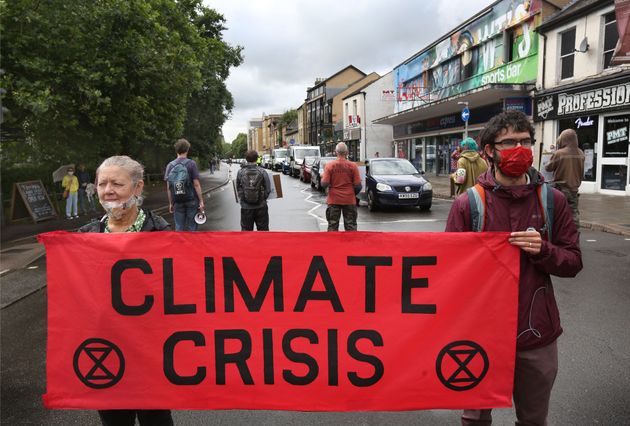
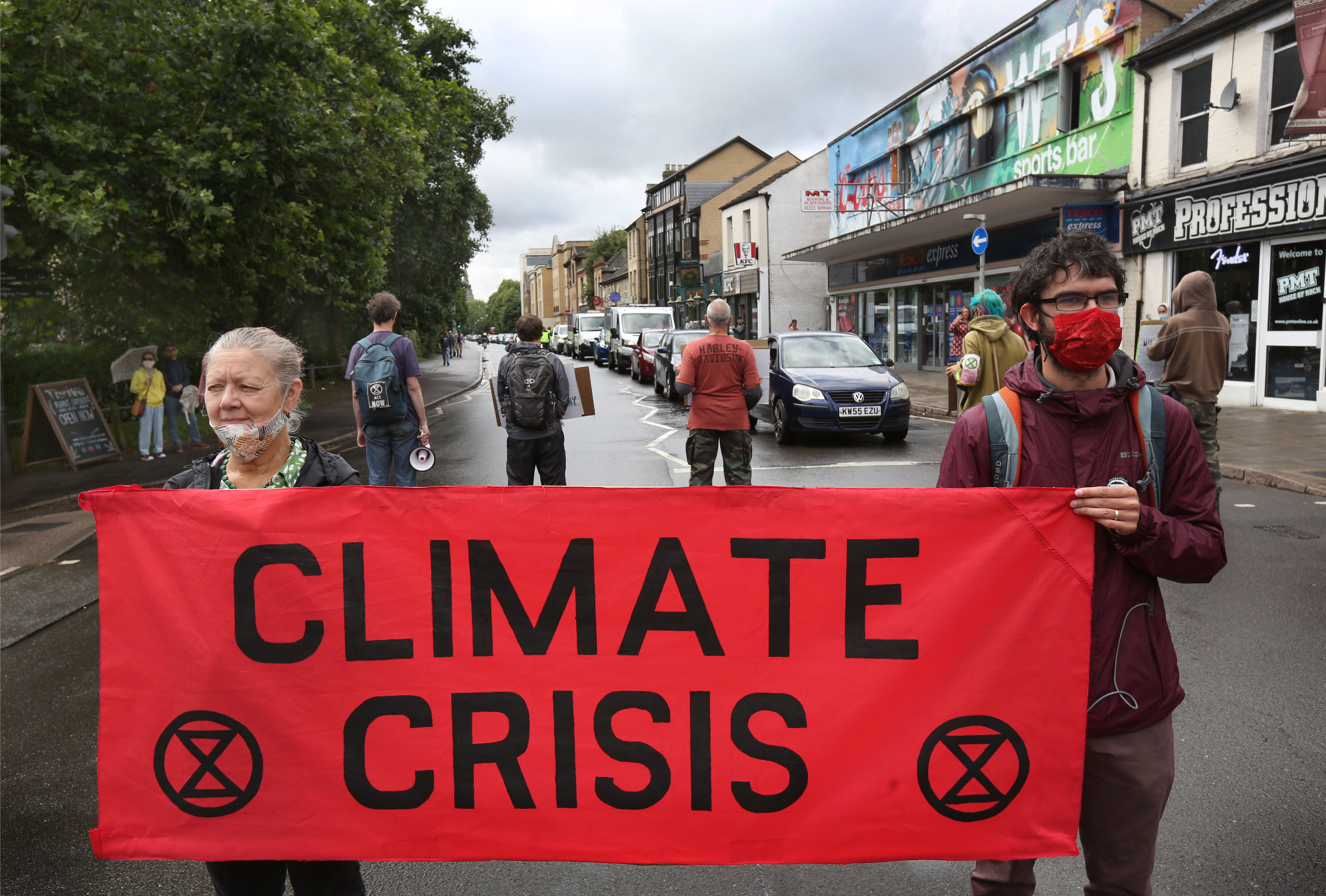
Protesters hold a banner saying climate crisis during the demonstration in Cambridge

2. Official climate advisers worry there’s no plan

The UN did actually urge more countries to follow the UK’s lead ahead of COP26, back in February.

The UK and the EU were the only two out of the world’s top 18 greenhouse gas emitters to submit plans for reducing emissions in the winter.

But, despite having a plan, there are concerns it was not thorough enough.

Chief executive of the Climate Change Committee, Chris Stark, shared his worries with Sky News in June about how the UK would reach net zero by 2050.

The government adviser said: “It is true the ambition of the country has changed in the last 12 months and this useful.

If we don’t take action now we risk falling to the back of the pack on tackling climate changeThe Energy and Climate Intelligence Unit’s Jess Ralston

“But unless it is being physically delivered, so the things that will drive us towards net zero, the changes we will see in homes, industry and transport, we can’t say we are credibly on track. The government has to change course.”

The committee advisers made 200 recommendations to Downing Street, including a Planning Bill to ensure new houses are low carbon and adapted for rising temperatures.

The committee also claimed the UK would only have to spend less than 1% of GDP a year to meet the net-zero target, and it could deliver a return boost of 2% by 2035.

The climate advisers also said the country was less prepared to tackle global warming than it was five years ago.

Stark said: “We’ve been raising our concerns consistently for some time now. [The government has] found it far too easy to dismiss those.”

Barcroft Media via Getty Images

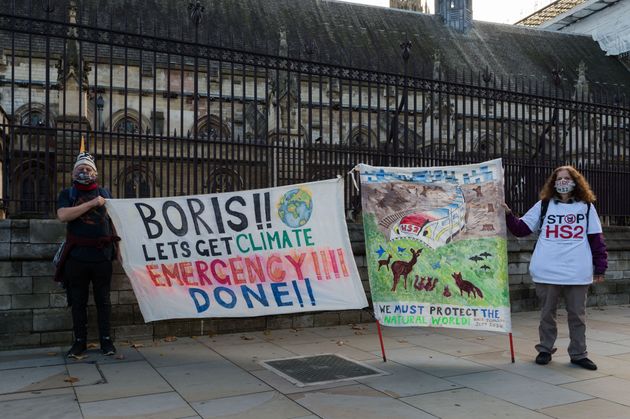
Environmental activists protest in Parliament Square against the UK’s High Speed 2 railway project as well as the Government’s failure to act on the climate and ecological crisis in October 

3. The UK is not adapting to a warmer future

The climate goals mean the world will have to adapt to an increase in temperature of between 1.5 degrees Celsius and 2 degrees Celsius in the next 80 years.

If not enough is done to reduce global warming, the average climate could rocket up to 4 degrees Celsius.

Professor Dame Julia King, chair of the Climate Change Committee, warned in June: “We cannot deliver net zero without adaptation.

“It’s absolutely illogical that we are not doing it.”

She also claimed it was a “failing” that the Treasury’s assessment did not consider the cost of adapting the nation to climate change.

Downing Street responded by acknowledging the report and saying it would examine its recommendations “closely”.

SOPA Images via Getty Images

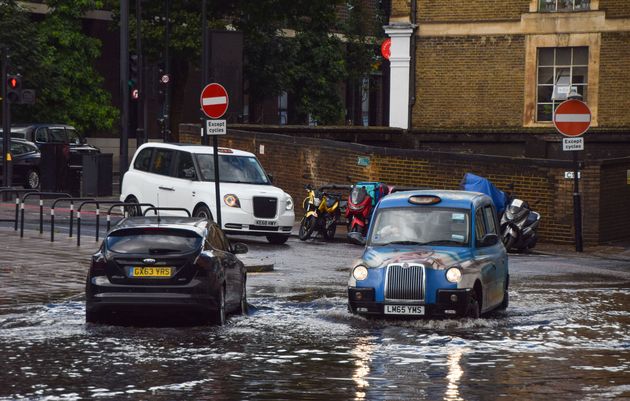
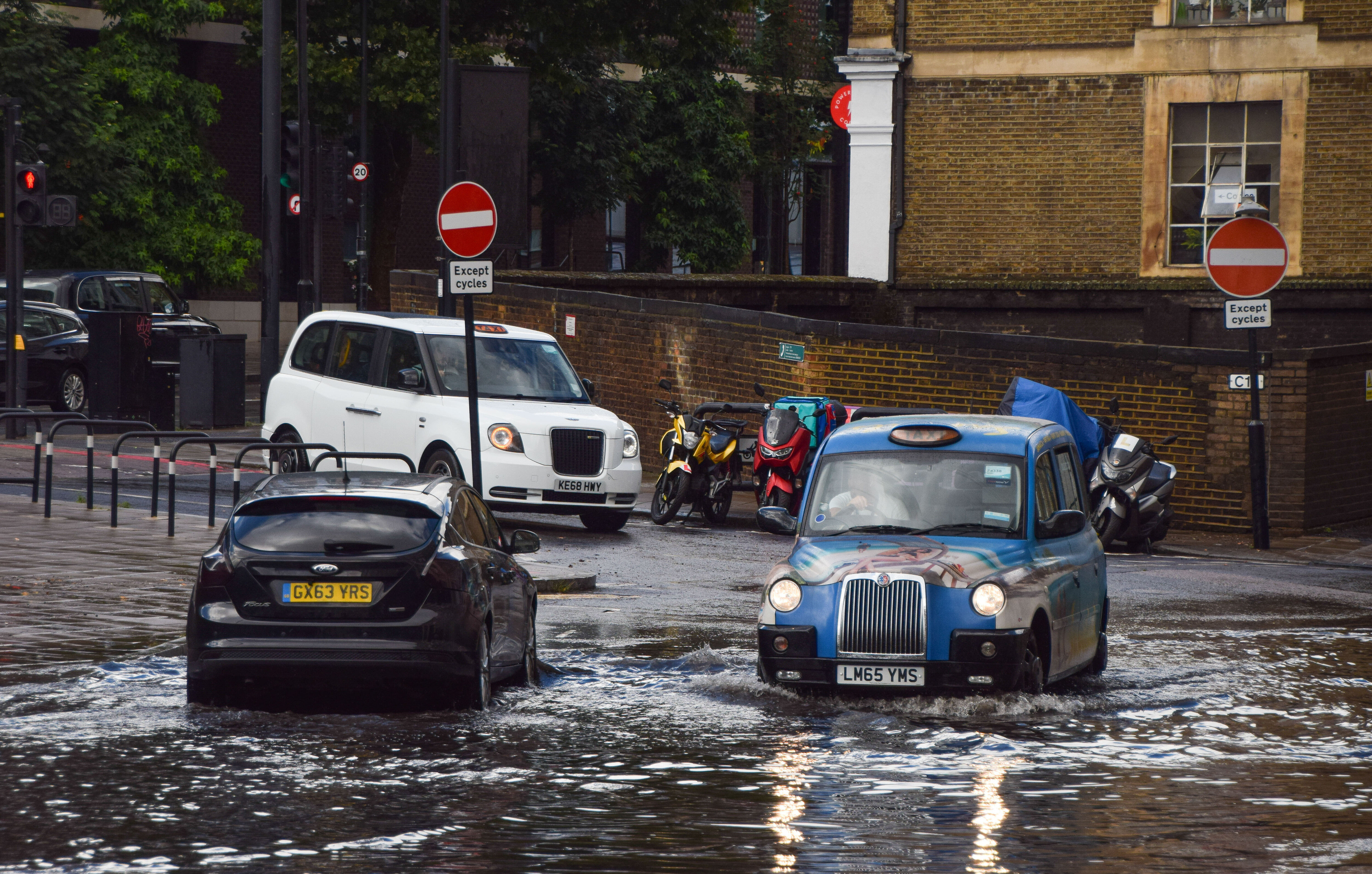
A taxi drives through a flooded Farringdon Lane in central London after a day of heavy rain in the capital in 2021

4. Time is ‘getting a bit thin’ to make a change

The Energy and Climate Intelligence Unit’s Jess Ralston said the UK needs to make an action plan ahead of the year it hosts the climate summit.

She told Sky News: “This year is the government’s chance to prove to the world that they are not just talking about this, they are delivering on it as well.

“Time is getting a bit thin.

“If we don’t take action now we risk falling to the back of the pack on tackling climate change. We also risk missing out on new life-long jobs in green industries, which are the future of the UK.”

However, the government did respond to Ralston’s complaints.

A spokesperson said: “Our forthcoming strategies on heat and buildings, hydrogen, transport and comprehensive net zero strategy this year will set out more of the very policies the Climate Change Committee is calling for as we redouble our efforts to end the UK’s contribution to climate change.”

John Keeble via Getty Images

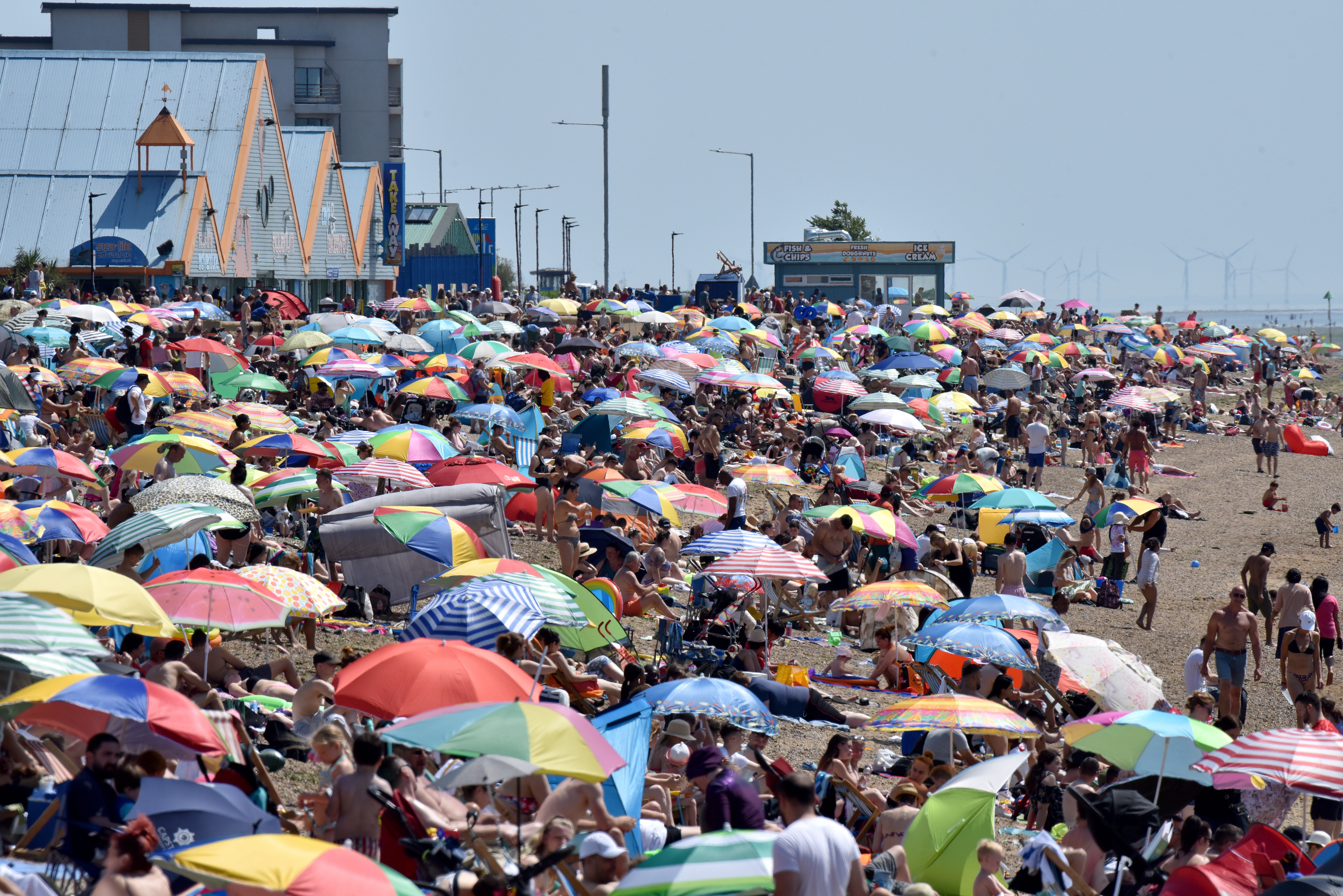
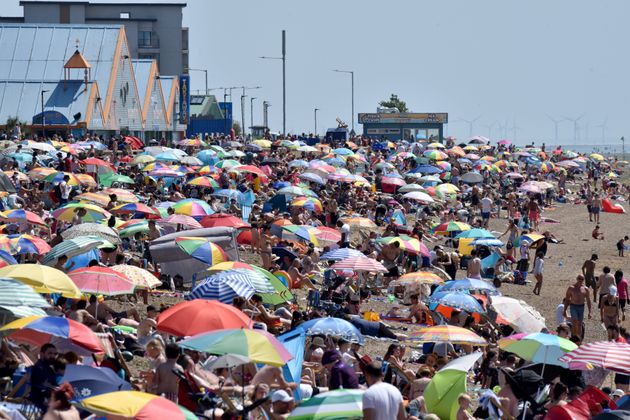
Heatwaves are becoming more frequent in the UK

5. Many changes are already ‘locked in’

According to the Climate Change Committee, the UK has already seen the average land temperature rise by around 12 degrees Celsius from pre-industrial levels.

Sea levels from around the country have risen by 16cm since 1900 as well, and extreme heat is becoming more common.

In the last five years, more than 57,000 new homes have been built which the committee believes are not resilient enough to sustain higher temperatures.

In the last three years, there have been 4,000 deaths related to heat in England alone.

Nearly 60 percent of the total risks noted by the committee were also given the highest urgency score.

Peter Summers via Getty Images

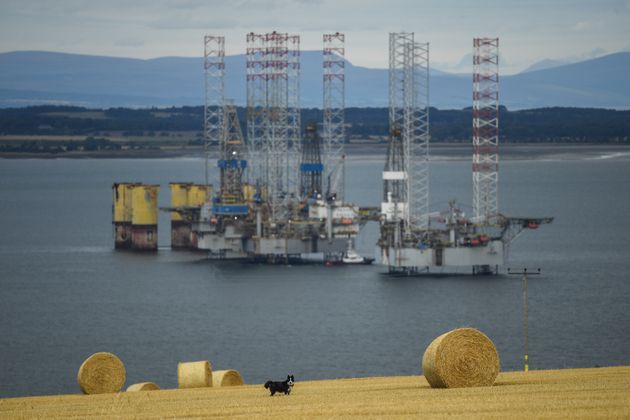
Oil rigs in Scotland

6. The UK gives a lot of subsidies to fossil fuel companies

Britain gives more subsidies to fossil fuel firms than any other country in Europe.

The government is also attempting to open a new coal mine in Cumbria, near Whitehaven, while continuing to grant new oil and gas exploration licenses.

There is an ongoing debate about the proposal to mine Cambo – an oil field in the North Sea – as well, even though it could undermine the UK’s credibility at COP26 in Glasgow come November.

This site could produce up to 880 million barrels of oil.

However, shouting down calls from activists not to open the oil field, Downing Street has said the initial exploration license was granted two decades ago.

It also claimed that if anything is extracted, the Oil and Gas Authority will only grant a license for 170 million barrels.

7. The UK relies on ‘false solutions’

The UK has been criticised for relying on “offsetting schemes” which promisees to reduce carbon emissions in the future.

However, delayed action could contribute to an additional 1.4 degrees Celcius of warming.

Friends Of The Earth claimed carbon offsetting does not work most of the time in practice, after a study for the European Commission found only 2% of offsetting projects were likely to resulted in additional emissions reductions.

The campaigners claimed carbon-offsetting was not the best way to tackle the climate crisis, and that it was best to prioritise the reduction of carbon emissions. This is a view also shared by renowned environmental organisation, Greenpeace.

Share Button

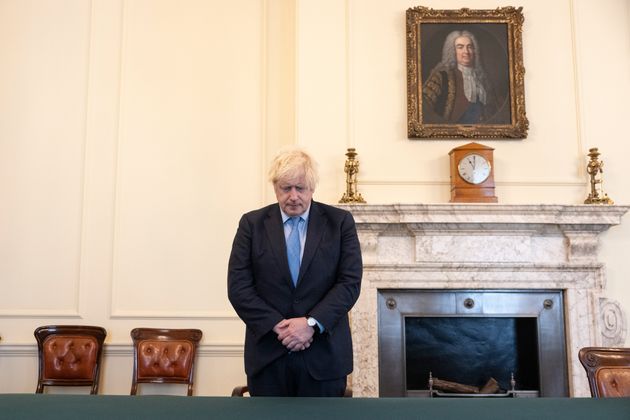
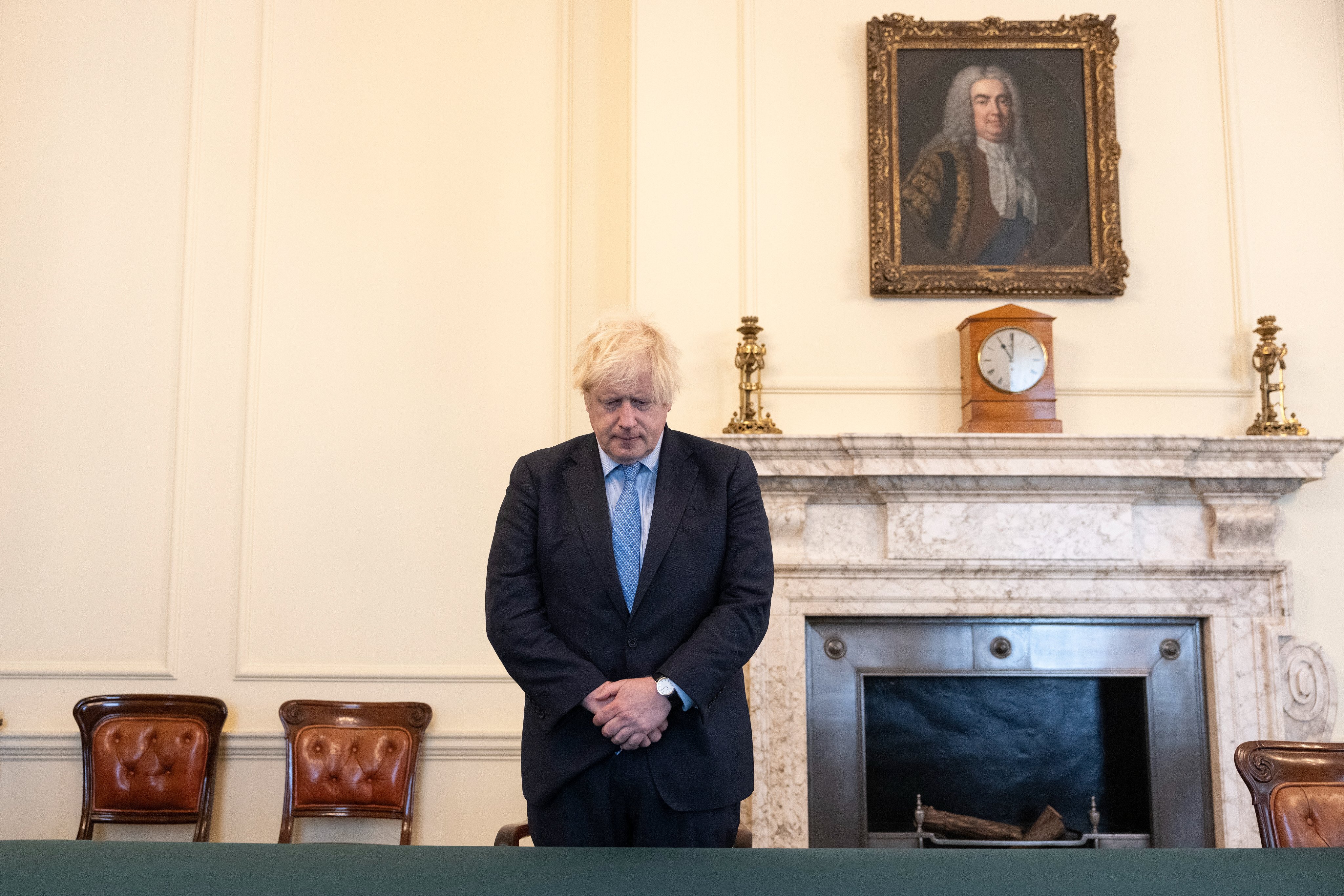
Only Time Will Tell: Did Boris Johnson Really Mark 11am Silence At 11.14?

Twitter @10DowningStreet

Boris Johnson marking the 11am silence for victims of the Plymouth shooting. 

Twitter users were unimpressed when the prime minister posted a photograph of himself marking Monday’s 11am silence when his watch clearly said it was 11.14am – but just how accurate were these criticisms?

Boris Johnson released the images as a tribute to the five victims of last week’s devastating Plymouth shooting on Monday.

One Twitter user commented: “They cared enough to turn back the clock on the mantelpiece but forgot his wrist watch.”

Another account criticised the claim that the prime minister was honouring the 11am silence, and compared the two different times on the mantlepiece clock and on Johnson’s watch. They asked in their caption: “You sure about that?” 

Others questioned why it took so long for the photograph to be uploaded to social media as it appeared online at 12.37pm.

One account noted: “Took one hour and 36 minutes to write this tweet and upload this photo? Or maybe, given the different times on the clock and watch, it was a belated, hastily assembled piece of gesture politics?”

Another account dubbed the photograph as “embarrassing”.

Journalist Chris Stokel-Walker also weighed in on the debate, and tweeted: “Absolutely incredible scenes as Boris Johnson’s watch gives away that this wasn’t actually taken at 11am, despite the clock in the background.”

However, he later tweeted in defence of the photograph after reportedly hearing more about the photograph’s origins.

He deleted his original tweet, and added: “For transparency: deleting the screenshotted tweet below before it gets picked up by conspiracists after being told the EXIF data shows the watch is wrong, the clock is right.”

The EXIF data means the Exchangeable Image File Format and refers to the accurate data about the image’s origins stored in the camera when a photograph is taken.

A Downing Street official also claimed that it was actually the watch which was running 14 minutes fast, and that the image was taken at 11am.

Johnson also acknowledged the horrendous incident last week, tweeting: “My thoughts are with the friends and family of those who lost their lives and with all those affected by the tragic incident in Plymouth last night. I thank the emergency services for their response.”

The prime minister was not the only one to honour the horrifying shooting in Plymouth, which was the worst seen in the UK for a decade.

Approximately 200 people gathered outside Plymouth city centre at 11am on Monday to mourn the lives lost.

William Dax via Getty Images

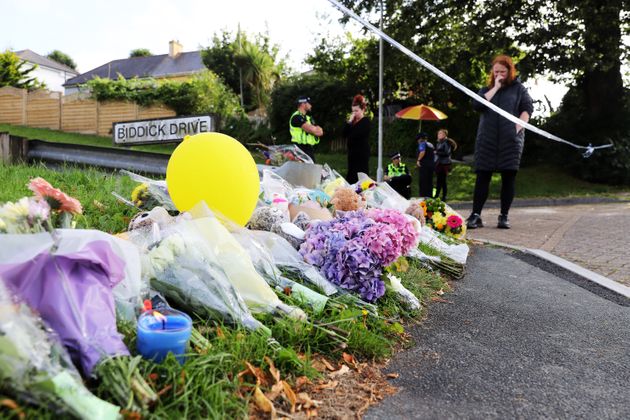
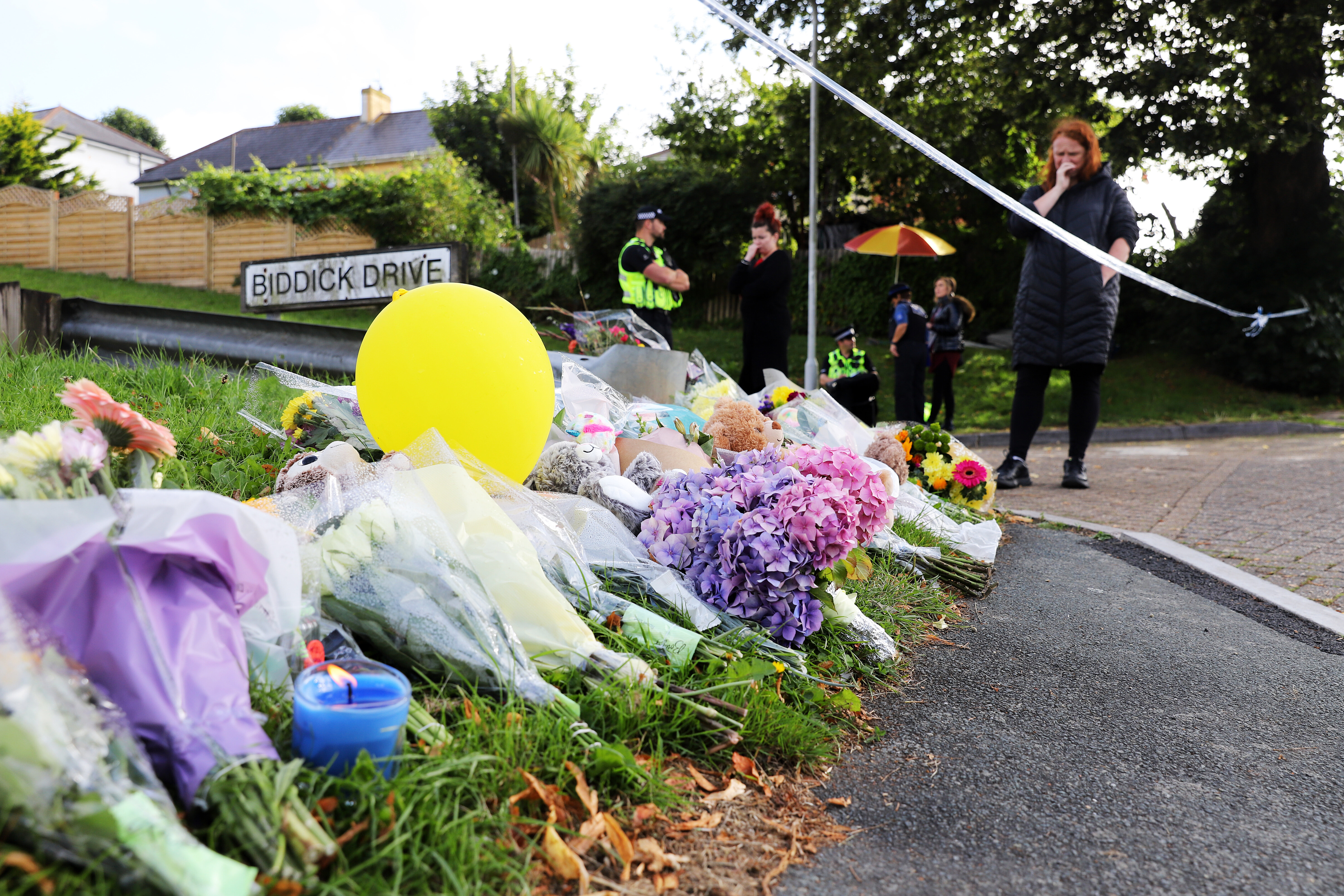
Members of the public place flowers at the entrance of Biddick Drive, where Davison began his killing spree last week

Jake Davison, a 22-year-old, shot his mother Maxine Davison, 51, dead in Biddick Drive, before shooting 3-year-old Sophie Martyn, and her father 43-year-old Lee Martyn on the street.

Davison went on to kill Stephen Washington, 59, and 66-year-old Kate Shepherd.

Davison was a licensed firearms holder, raising serious questions about the government’s current gun laws and prompting widespread calls for change.

The government has confirmed that it is preparing statutory guidance to help promote high standards of decision-making within gun licensing applications.

The Home Office wants future gun applications to cover the social media of individuals too.

Davison’s YouTube channel and Facebook account showed he referred to himself as the “terminator” and held misogynistic views.

All police forces in England and Wales have been advised to review their current processes and assess existing licences.

Share Button

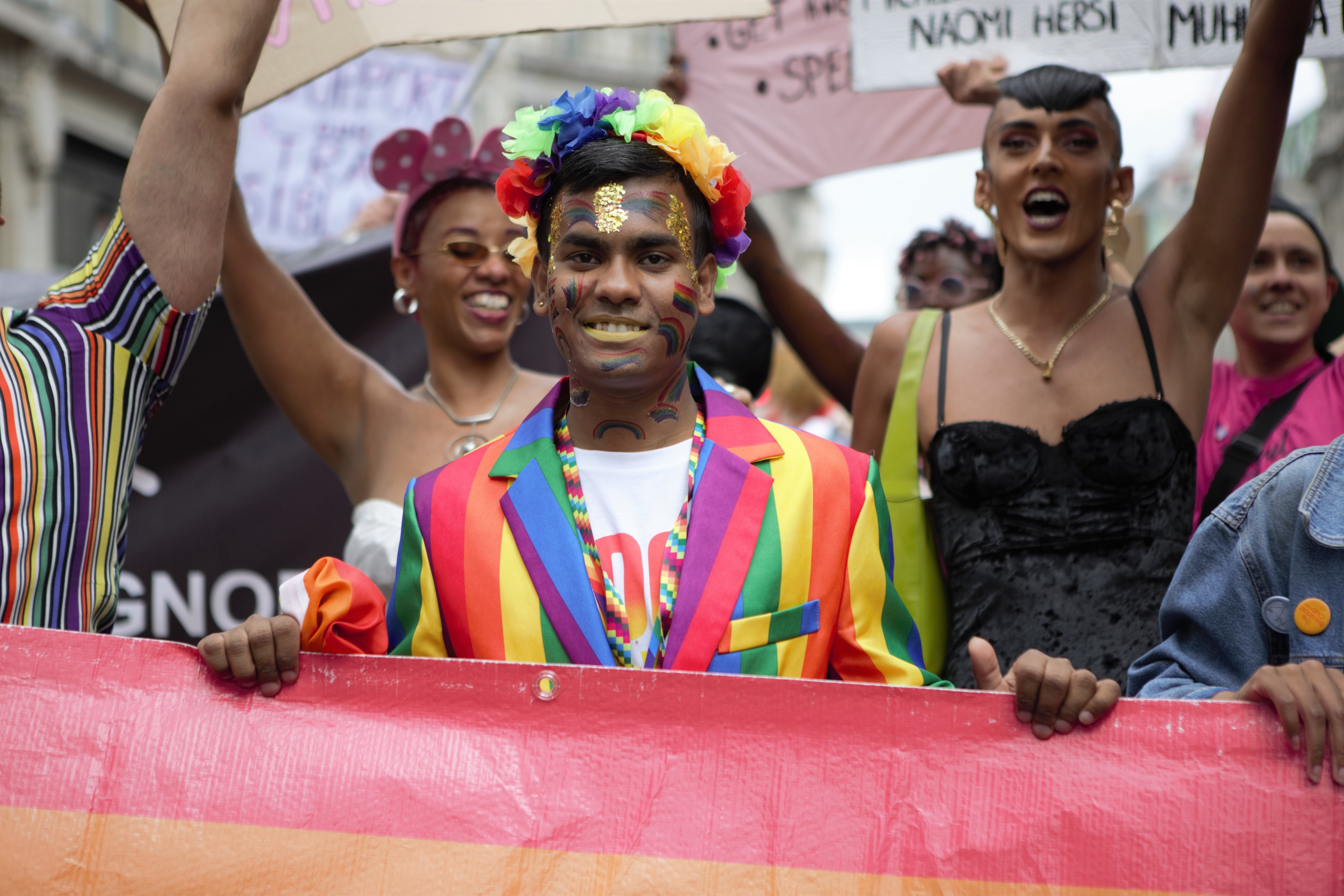
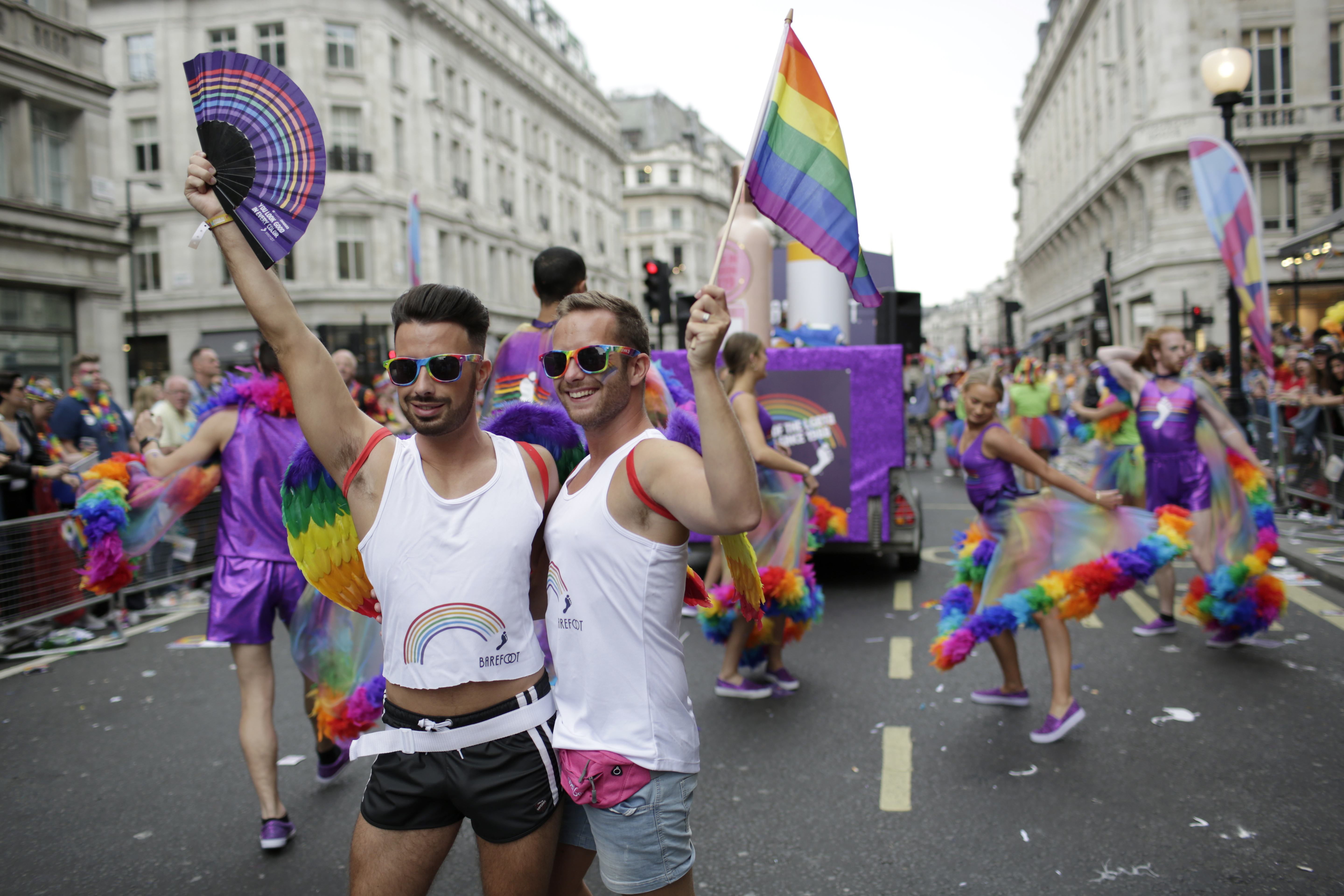
‘If The Euros Can Happen, Why Not Pride?’ – People Are Devastated That London Pride Is Cancelled

SOPA Images SOPA Images/LightRocket via Gett

London Pride has been cancelled for a second year in row

Pride in London was cancelled on Friday, just a few weeks before the public were set to attend the highly-anticipated event – leaving some people angry and frustrated.

The director for community engagement with Pride in London confirmed the disappointing news in a short video posted on Twitter.

Christopher Joell-Deshields explained: “Pride like all other major public events has faced countless challenges with regards to safely holding one of the largest events in the capital.

“I’m truly saddened to say that Pride in London won’t be happening in person this year.”

Unsurprisingly, the news did not go down well among the fans of the festival, especially as it was also cancelled last year.

When the news broke, The New Statesman’s Rachel Cunliffe tweeted: “This is so sad. It’s an outdoor parade.

“If the Euros can happen, why not Pride?”

Why the Euros 2020 final did go ahead 

Approximately 60,000 fans flocked to Wembley stadium to watch England compete in the Euro 2020 final against Italy back in July.

The match was blighted by chaos at one point when ticketless fans also flooded into London, with some even attempting to enter the stadium.

Covid spread rapidly among the attendees with some even dubbing their strain of the virus the “Wembley variant” in the days immediately after the football game and many claimed the occasion was a super-spreader event.

But the match went ahead as part of a pilot scheme, the Event Research Programme, run by the government to see what kind of risk large gatherings posed to the epidemic.

England has since lifted almost all of the restrictions – yet many public events, like Pride, are still being cancelled.
John Phillips via Getty Images for Barefoot Wine

Pride was last held in London in 2019

NIKLAS HALLE’N via Getty Images

The crowds leaving the Euro 2020 final in Wembley stadium in July

Another account supported the comparison to the Euros, tweeting: “Oh, but when it’s football London is wide open.”

One pointed to the other events held in the UK and asked: “340,000 people at Silverstone but Pride is too much? The rules don’t make any sense.”

There were approximately 350,000 who attended Silverstone at some point during the three-day motor racing event held in July.

Another took aim at the management team and said: “As pride organisers you’re hardly fighting.”

But, not all hit out at London Pride’s decision.

Some believe this was the safest move

A different Twitter account wrote: “Gutting news but absolutely the right decision. Pride without the protest just isn’t.

“Solidarity with your whole team who must be devastated to have to make such a hard decision.”

We Are via Getty Images

Manchester and Brighton Pride have also been cancelled due to Covid regulations

But why did it have to be cancelled? 

Joell-Deshields explained that navigating the new Covid guidelines and legislation for large-scale events was “extremely challenging”.

He added that it was clear Pride in London could not “provide the level of mitigation expected from the local public health team and the government”.

Joell-Deshields said the parade would have to be cancelled, with the whole event restricted to two or three events across London with a limited ticket supply.

He explained: “This goes against everything we want Pride in London to be or that we have been so far.”

He explained: “We cannot waiver from that commitment to you, our community.”

Joell-Deshields added that volunteers will still be focusing on engaging with LGBT+ communities to “achieve our committed objections towards diversity and inclusion”.

He said his team will now start planning for Pride in London 2022, which will honour the 50th anniversary since the UK’s first pride event.

There will also be an appeal to declare 2022 “a year of queer”.

Pride in London is not the only major event this year which had to cancel.

Manchester Pride, Brighton Pride and Notting Hill Carnival were all called off, along with Glastonbury Music Festival.

Southampton Pride, on August 28, and Reading Pride, held on September 4, will still be going ahead. 
Share Button