I Never Believed In The Death Penalty – Then I Was Selected To Be A Juror For A Serial Killer’s Trial

I was 14 the first time I really thought about the death penalty. Every day in freshman English, our teacher wrote a new question on the whiteboard. Before class began, we had to write a short essay on the topic. One day, the prompt read: “What is your opinion on capital punishment?”

Until that moment, I hadn’t given it much thought. Whenever I heard that someone had been sentenced to death, I just assumed they probably deserved it. But I’d never been asked to consider whether it was morally right.

I wrote my first sentence with a No. 2 pencil: “I believe the death penalty is appropriate when a serious crime has been committed.”

Then I stopped. I picked up the eraser and erased it. I realised I couldn’t, in good faith, justify capital punishment.

Unlike my answer to the question on the board, death wasn’t a decision that could be undone just by picking up an eraser. Death was final. So, from that moment forward, I knew where I stood: I was against the death penalty.

As I grew older, my opposition to the death penalty never faded. It became a core part of my identity, a topic I often returned to in conversations with friends, or sometimes even strangers.

The more I read about the topic, the more disturbed I became by how unevenly capital punishment is applied. Two people can commit the same crime and receive completely different sentences, depending on where the crime occurred, or on their access to money and legal resources.

I learned about the many people who were executed and later found to be innocent. I began donating to The Innocence Project, an organisation that works to free the wrongfully convicted. At times, my donations were small. But it was my way of staying connected to a belief I had carried since I was 14.

I never expected that 20 years later, I would again be confronted with the same question written on that whiteboard. But this time, it wasn’t hypothetical.

In April 2025, I received a jury summons. I didn’t have time for jury duty, but the court’s website said most proceedings last only two to three days. I assumed I would not be selected, and if I was, I expected it to be brief.

Ultimately, I was selected to be a juror, and I quickly realised this wouldn’t be the case. It was a trial of an accused serial killer who was alleged to have murdered eight people: Andrew Remillard; Parker Smith; Salim Richards; Latorrie Beckford; Kristopher Cameron; Maria Villanueva; his mother, Rene Cooksey; and her partner, Edward Nunn.

As the scope of the case became clear, I knew that a death sentence was a real possibility, and I felt conflicted about moving forward as a juror. But as I listened to other potential jurors answer the attorneys’ questions during selection, I began to think maybe I belonged there. I hoped I could keep an open mind and bring nuance to deliberative conversations.

One of the most difficult days as a juror was when the youngest daughter of Maria Villanueva testified. Maria had been abducted and sexually assaulted. Her lifeless body was found in an unpaved alley – nearly naked, surrounded by trash cans and cigarette butts.

After listening to her talk about her mother, I had a 6pm dinner reservation for pasta and drinks with my neighbours. The juxtaposition felt shameful, but I was desperate to think about anything other than what had happened in court.

After months of testimony, the jury deliberated on whether or not the defendant was guilty. We found the defendant guilty on all charges, but the jury still had to determine if the defendant would receive life in prison with no release or the death penalty.

Before the sentencing phase of the trial began, the victims’ families read their impact statements.

When Kristopher Cameron’s partner spoke, I knew her words would hurt.

“Our son was only 10 months old when his father was taken. My daughter never got to meet him. My kids will never experience dances or donuts with their dad. He had dreams. Now all we are left with is the void his absence will carry.”

Kristopher’s children will never hear his voice or watch him walk through the front door after work and kiss their mother. Instead, they’re left with ashes on a mantle. They won’t know his smell, his laugh, or how it felt to hug him. They will never unwrap a gift with a tag that says, “From Dad.” Kristopher’s murder ended one life, but it also fractured every life he was connected to.

After several more months of listening to the prosecution and the defense arguing over mitigating circumstances, it was time for the jury to deliberate again. We immediately took a preemptive vote.

I was the only one who didn’t instantly vote for death.
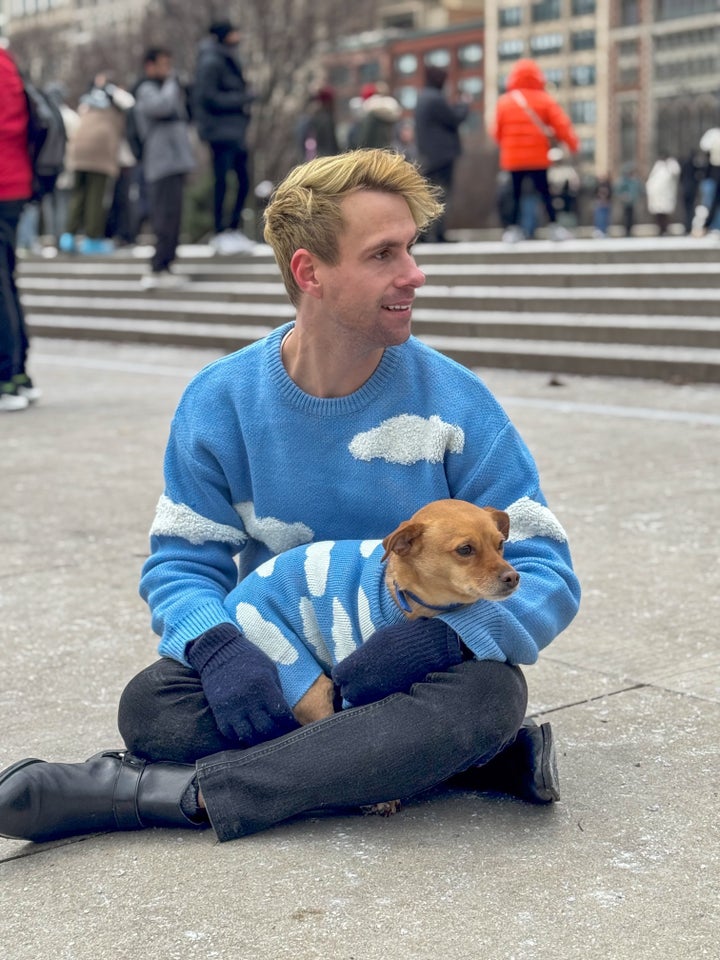
The author with his dog.

Photo Courtesy Of William Ehlers

The author with his dog.

Attempting to keep an open mind, for six out of the eight counts, I voted as “undecided”. For the murder of the defendant’s mother and her partner, I voted in favour of life without parole.

I braced for the judgement from the other jurors. I explained that I had tried to consider all the mitigating circumstances related to the defendant. He had been abused. I know his childhood was difficult, and I know that he had a problem with drugs. Legally, these factors all allowed us to grant leniency. But any attempt to have these conversations fell on deaf ears.

Many jurors refused to acknowledge the defendant’s history of drug abuse and mental illness, despite expert testimony from both the defense and the prosecution. All the mitigating circumstances were irrelevant to them. The only thing that mattered was making sure the defendant was executed.

It didn’t feel like justice for the victims – it was vengeance toward the defendant.

After just a few days of deliberation, I knew if I didn’t change my vote to execute, I’d be the cause of a hung jury, which meant the sentencing phase would have to be retried, a process that would take months. A new group of jurors would be tasked with deciding a sentence for a verdict they hadn’t delivered. And there was no way to know how long it would be before the new trial began.

I sat on the floor of the jury room hallway, creating a list.

If I choose death, that’s it. He’s dead.

But if I choose life, the jury will hang. His sentence will be retried, some new set of jurors will go through it all again, and the victims’ loved ones will be denied closure.

There was no option that did not harm someone, if not many people. There was no option that minimised the damage. I’d gone into this trial initially believing I would not vote to execute the defendant under any circumstance. I romanticised the idea of refusing to crack under pressure, and the mercy I would be extending to someone. But after a week of sleepless nights and several bottles of wine, I knew what I had to do.

“All in favour of life for count one, regarding Parker Smith, raise your hand.”

“Now, all in favour of death, raise your hand.” Twelve votes.

I was forced to put my hand up for each individual charge until I had voted for death six times. I couldn’t bring myself to vote for death regarding the murder of the defendant’s mother, Rene Cooksey, and her partner, Edward Nunn, because I did not believe the defendant was in a coherent state of mind when he committed these murders.

Once the vote was done, I managed to lift my head off the table, only to drop my face into my palms and weep. I couldn’t hold back any longer. I could hear backpacks zipping as the other jurors packed up their belongings to head out for lunch, while I just cried.

The defendant had been arrested on Dec. 17, 2017. Exactly eight years later, we turned in our verdicts. They were read out loud the next day.

Being a juror on a capital murder trial unearthed frustrations with our system that I never knew existed. I always knew that I didn’t support capital punishment, but I supported it even less after this experience.

I know I will always partially regret my decision. My life will forever exist in two sections: before trial and after trial. If I was able to give in on my most strongly held belief, what do I really believe in, and what do those beliefs even mean? Being responsible for an execution is a burden I will carry with me. While the death of each victim brings me sorrow, so does the inevitable death of the defendant.

I wish the trial hadn’t ended this way. But I wish there didn’t have to be a trial at all, because I wish that all eight victims were still here. I think about Andrew, Parker, Salim, Latorrie, Kristopher, Maria, Rene and Ed constantly. I will always do my best to make sure they live on.

I chose death, not because I wanted the defendant to die, but to bring closure to the families and to allow the victims to finally rest in peace. Although I know I am going to carry the burden of that choice with me forever, I hope it lifted at least a little of that burden off them.

Do you have a compelling personal story you’d like to see published on HuffPost? Find out what we’re looking for here and send us a pitch at pitch@huffpost.com.

Share Button

Joe Biden Warns ‘A Lot Could Still Go Wrong’ With Afghanistan Evacuations

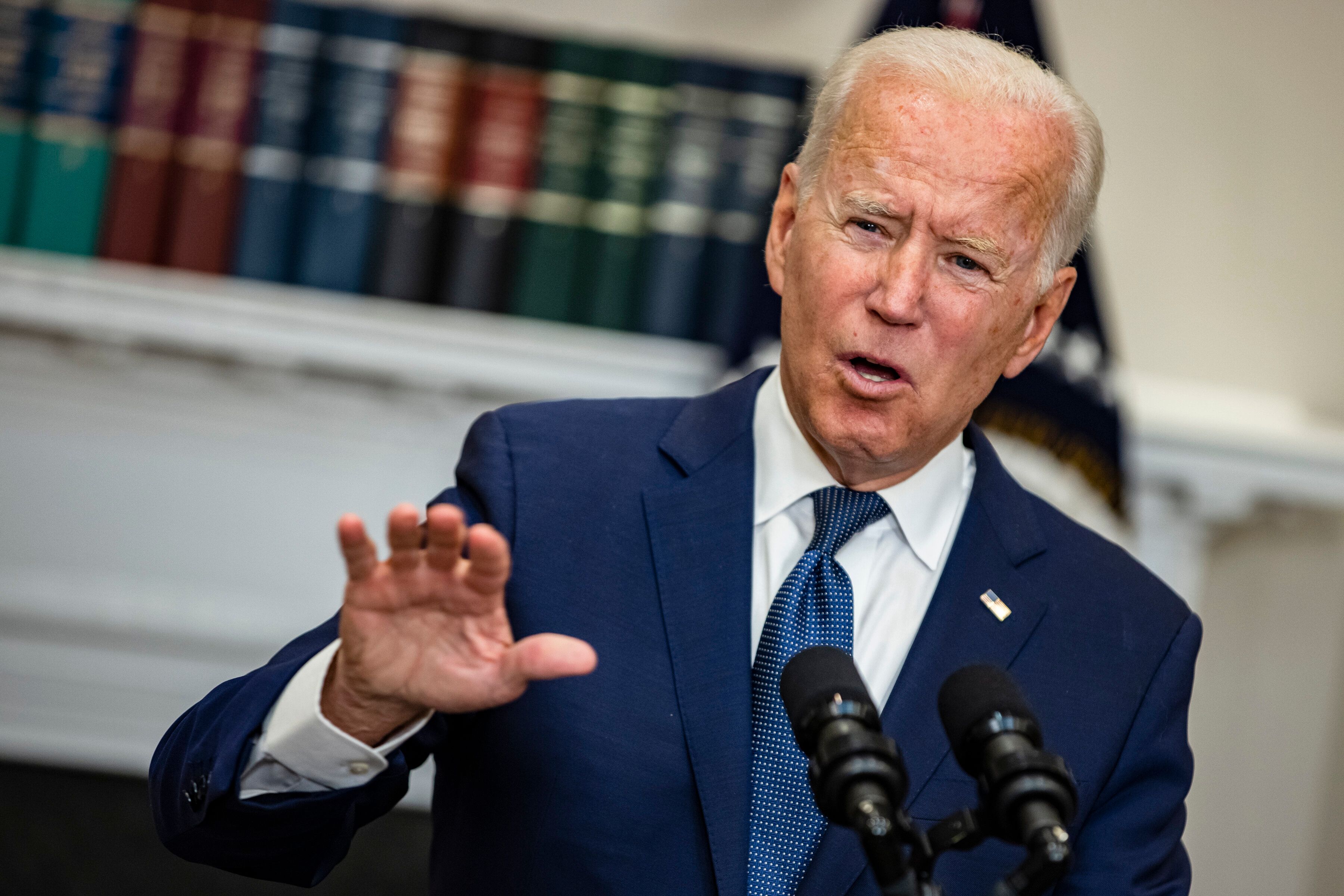
US President Joe Biden touted on Sunday the surging number of Afghanistan evacuations carried out so far by the United States, but acknowledged that such a massive operation does not come “without pain and loss.”

The White House said that the US has evacuated 30,300 people out of Afghanistan since August 14, including more than 13,000 people over the weekend. That brings the total evacuated by the US to about 35,500 since July, though the president stressed in a televised address that “we have a long way to go, and a lot could still go wrong.”

“Let me be clear, the evacuation of thousands of people from Kabul is going to be hard and painful no matter when it started, when we began,” Biden said. “It would have been true if we had started a month ago, or a month from now. There is no way to evacuate this many people without pain and loss, [like] those heartbreaking images you see on television. It’s just a fact.”

The British military said earlier Sunday that at least seven Afghans died in a panicked crush of thousands of people trying to flee the country at Kabul’s international airport, in an attempted exodus resulting from the Taliban taking over just a week ago. Others may have been trampled, suffocated or experienced heart attacks as Taliban fighters fired shots into the air to try and drive back crowds from the airport ― the last spot still held by the US military.

Some of the seven who were killed had plunged to their deaths after clinging on to a US plane as it took off on August 16, while thousands of others poured on to the tarmac in a desperate attempt to escape life under Taliban rule. Photos and video showed Afghans passing babies and small children above their heads so Western soldiers could raise them over walls and ensure their safety.

“My heart aches for those people you see,” Biden said on Sunday. “We are proving, though, that we can move thousands of people a day out of Kabul. We’re bringing out citizens, NATO allies, Afghanis who in fact have helped us in the war effort ― but we have a long way to go, and a lot could still go wrong. But to move out 30,000 people in just over a week, that’s a great testament to the men and women on the ground in Kabul.”

Earlier on Sunday, national security adviser Jake Sullivan told CNN that 23 US military flights had evacuated about 3,900 people from Afghanistan, with an additional 3,900 airlifted by 35 non-US military flights, in the past 24 hours. Defence Secretary Lloyd Austin activated the Civil Reserve Air Fleet program, requesting 18 aircraft from US carriers to assist in transporting Afghan refugees after they’ve been evacuated to other countries.

To help continue the evacuations safely, the US has extended the “safe zone” perimeter around the Kabul airport to expand access to people trying to flee the country. This change includes changing the gate operations, which Biden explained is why the military has been able to increase the number of evacuees. 

The president said that the Taliban “have been cooperative with regard to changing the perimeter” during discussions, but when asked by a reporter if he trusts Taliban promises, Biden said: “I don’t trust anybody, including you.”

Biden did say that the Taliban have not taken action against US forces so far during the evacuation, and “by and large” have followed through on allowing Americans to pass through. But the president also emphasised that US troops and Afghans still face danger at the airport, such as terrorists like ISIS and its Afghan affiliate ISIS-K who may “seek to exploit the situation ― including trying to strike from a distance.”

The president said he still hopes to meet the August 31 evacuation deadline out of Kabul, but is currently having discussions for the potential of extending the timeline to make sure the US can evacuate as many people as possible.

The chaotic rollout of Biden’s evacuation plan has unleashed bipartisan anger, though many officials and experts stress that this is not on one administration, but on decades of government and military officials. Still, with the evacuation occurring under the current White House that has a lackluster record on refugee issues, advocates are blasting Biden for not moving fast enough and claiming the president is more focused on avoiding political attacks than on helping vulnerable people abroad.

“I had a basic decision to make. I either withdraw America from a 20-year war ― that depending whose analysis you accept cost us $150 million a day for 20 years or $300 million a day for 20 years ― where we lost 2,248 Americans dead and 20,722 wounded,” Biden said, pulling out a card he says he always carries that tells him the war’s casualty count. 

“I either increase the number of forces we keep there, and keep that going, or I end the war. And I decided to end the war.”

Share Button

What Are The US And EU Travel Changes? Your Questions, Answered

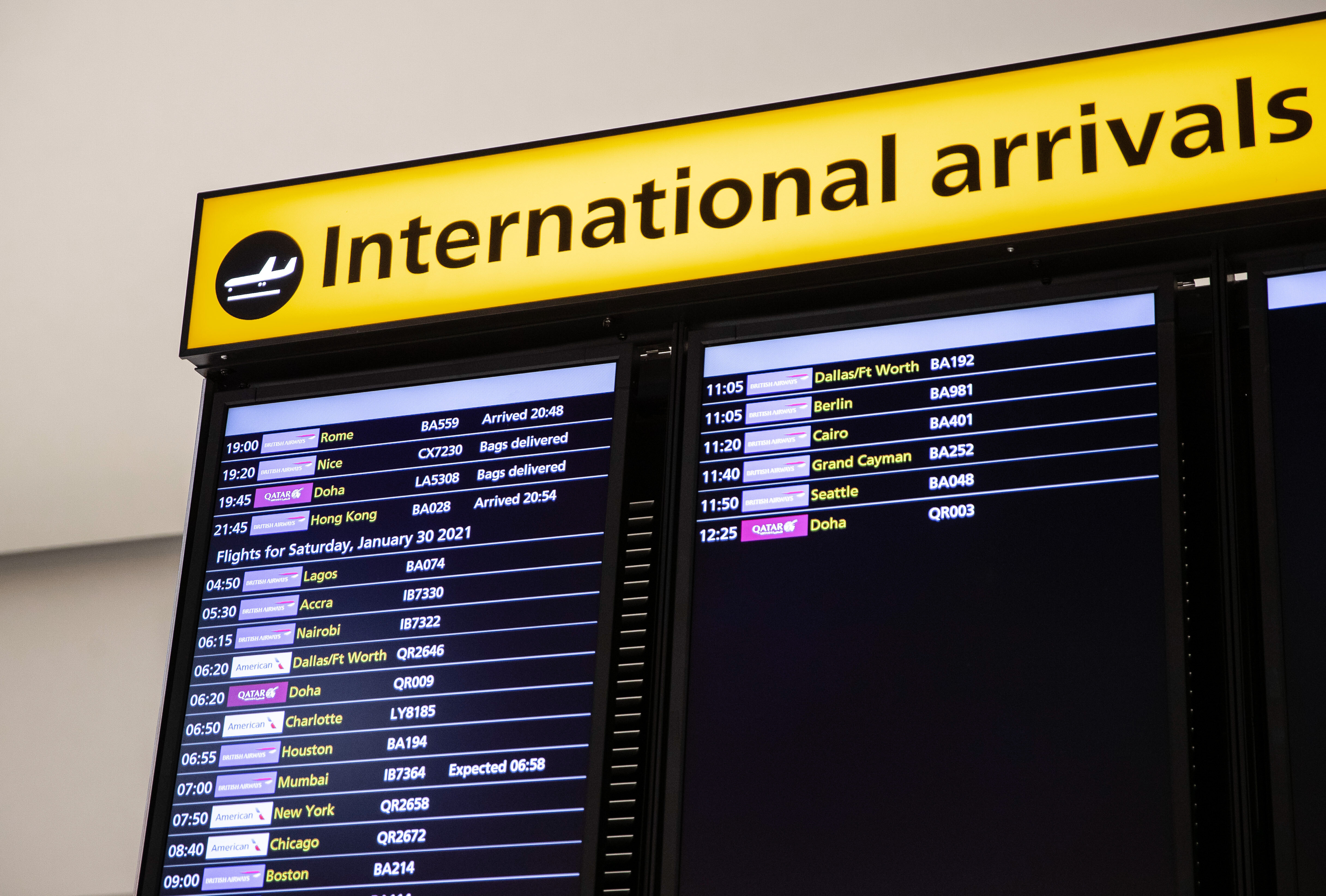
Fully-vaccinated US and European citizens will soon be able to travel to England from an amber list country without having to quarantine.

The UK government will formally recognise US vaccine certificates that prove a traveller has been double-jabbed, as well as accepting the EU equivalent, from Monday August 2.

Making the announcement on Wednesday, transport secretary Grant Shapps said: “We’ve taken great strides on our journey to reopen international travel and today is another important step forward.

“Whether you are a family reuniting for the first time since the start of the pandemic or a business benefiting from increased trade – this is progress we can all enjoy.”

While the news has been welcomed by families and friends long separated by the complex rules around international travel, the announcement has also left many people confused about the small print. Here are your questions on the latest travel rules answered.

What are the changes and when do they come into effect?

Currently, only travellers who have received two doses of a vaccine in the UK are permitted to enter England from an amber country without self-isolating for 10 days, excluding France which is “amber plus” status, due to recent high levels of the Beta variant that originated in South Africa.

From 4am on Monday August 2, US vaccine certificates, both digital and hard copy, as well as the EU version that confirms you have been double-jabbed, will allow citizens of those countries to enter England without needing to self-isolate for 10 days.

Who will the quarantine exemption apply to?

“The changes will apply to fully vaxxed people with an FDA or EMA vaccine – they’ll still need to do the usual pre-departure test before arrival and take a PCR test on day 2 of returning to the England,” Shapps tweeted.

An FDA vaccine is one authorised by the US Food and Drug Administration, so the Pfizer, Moderna or Johnson & Johnson Janssen vaccines, received in the US; while an EMA vaccine is one authorised by the European Medicines Agency, so Pfizer, Moderna, Johnson & Johnson and AstraZeneca, received in Europe.

All visitors must still have proof of a negative Covid-19 test to travel to England from abroad. You must take a test even if you’ve been fully vaccinated and/or are traveling from a country on the green list.

Are all European countries exempt from quarantine?

The changes apply to citizens from the US and all EU countries. However, it’s important to note that they will only apply to journeys made to England from amber list countries.

All arrivals from France, for example, which is currently in amber plus status, will still be required to enter quarantine for 10 days. Falling rates of the Beta variant in France do mean the amber plus list is expected to be scrapped at the next traffic light review on August 4, though.

Has the US advice on travel to the UK changed?

While the UK government is willing to accept US travellers – on the condition they follow the amber entry requirements – the US government is still advising against travel to the UK.

The US State Department and the Centers for Disease Control and Prevention (CDC) have issued a travel advisory telling US citizens not to travel to the UK because of the current case count of Covid-19.

“Because of the current situation in the United Kingdom, even fully vaccinated travellers may be at risk for getting and spreading Covid-19 variants,” the CDC website states.

So, will this make travel to the US and Europe easier, too?

Currently, there are strict limits on travel to the US from the UK – it’s not possible for most British nationals to enter if they have been in the UK, Ireland, Europe, Iran, Brazil, China, South Africa or India within the previous 14 days.

Meanwhile, entry requirements for UK citizens vary from country to country in Europe. Regardless of a country’s traffic light status from the UK government, it’s worth doing your homework before booking a holiday as the traffic light system is not reciprocal. There may be extra tests and quarantine times to factor in when you arrive, which could increase the cost of your trip.

Grant Shapps said on Wednesday that he expected that rules for Brits travelling to the US to become more relaxed “in time”. Asked whether he was confident the US and Europe would reciprocate on the government’s change in rules, he said: “It will depend. We can only set the rules at our end, and that has always been the case. People should always check the rules on the other side.

“I’ve just spoken to my US counterpart today and in the US they still have an executive order which prevents travel from the UK, from Europe, from several other countries to the US. So we’re saying, ‘You can come here, you can come visit, you can come see friends, you can come as a tourist if you’ve been double vaccinated and follow the rules without quarantine’.

“We can’t change that on the other side, but we do expect that in time they will release that executive order, which was actually signed by the previous president, and bans inward travel.”

Are these latest travel changes safe to make?

Grant Shapps said the government would “continue to be guided by the latest scientific data” on its travel guidelines. However, Labour’s deputy leader Angela Rayner said the opposition had “real concerns” about the change in policy, especially given the rise in Delta variant cases in the US.

“There doesn’t seem to be a system in place yet for an international vaccine passport which the Government said that they were going to bring forward,” she said while on a visit to Hull.

“Each individual US state does things differently. They don’t have a National Health Service that has a vaccine programme like we do with the certifications. So we’re really concerned about making sure that new variants do not come into the UK and that we do have a system that identifies where we have variants of Covid where infection is and we’re able to isolate it.”

Rayner added: “We cannot stress enough that new variants pose a risk and therefore we’ve got to make sure our borders are safe and that we open up international travel in a safe and secure way.”

Share Button

This Is What Boris Johnson Discussed In His First Call With President Joe Biden

HuffPost is part of Verizon Media. We and our partners will store and/or access information on your device through the use of cookies and similar technologies, to display personalised ads and content, for ad and content measurement, audience insights and product development.

Your personal data that may be used

  • Information about your device and internet connection, including your IP address
  • Browsing and search activity while using Verizon Media websites and apps
  • Precise location

Find out more about how we use your information in our Privacy Policy and Cookie Policy.

To enable Verizon Media and our partners to process your personal data select ‘I agree‘, or select ‘Manage settings‘ for more information and to manage your choices. You can change your choices at any time by visiting Your Privacy Controls.

Share Button

Boris Johnson Claims US Is A ‘Bastion Of Peace’ Despite Donald Trump’s Response To Black Lives Matter Protests

HuffPost is part of Verizon Media. Click ‘I agree‘ to allow Verizon Media and our partners to use cookies and similar technologies to access your device and use your data (including location) to understand your interests, and provide and measure personalised ads. We will also provide you with personalised ads on partner products. Learn more about how we use your data in our Privacy Centre. Once you confirm your privacy choices here, you can make changes at any time by visiting your Privacy dashboard.

Click ‘Learn more‘ to learn and customise how Verizon Media and our partners collect and use data.

Share Button

Britain’s Record On Racism Is No Less Bloody Than America’s

HuffPost is part of Verizon Media. Click ‘I agree‘ to allow Verizon Media and our partners to use cookies and similar technologies to access your device and use your data (including location) to understand your interests, and provide and measure personalised ads. We will also provide you with personalised ads on partner products. Learn more about how we use your data in our Privacy Centre. Once you confirm your privacy choices here, you can make changes at any time by visiting your Privacy dashboard.

Click ‘Learn more‘ to learn and customise how Verizon Media and our partners collect and use data.

Share Button

Donald Trump Mangles Name Of India’s Most Beloved Cricketer At Rally During State Visit

HuffPost is part of Verizon Media. Click ‘I agree‘ to allow Verizon Media and our partners to use cookies and similar technologies to access your device and use your data (including location) to understand your interests, and provide and measure personalised ads. We will also provide you with personalised ads on partner products. Learn more about how we use your data in our Privacy Centre. Once you confirm your privacy choices here, you can make changes at any time by visiting your Privacy dashboard.

Click ‘Learn more‘ to learn and customise how Verizon Media and our partners collect and use data.

Share Button

The Mueller Report Is Just The Beginning – It’s Now Up To Congress To Take The Baton And Run

HuffPost is part of Oath. Oath and our partners need your consent to access your device and use your data (including location) to understand your interests, and provide and measure personalised ads. Oath will also provide you with personalised ads on partner products. Learn more.

Select ‘OK’ to continue and allow Oath and our partners to use your data, or select ‘Manage options’ to view your choices.

Share Button