Sophy Ridge Leaves Steve Barclay Squirming Over Tories’ NHS Spending Plans

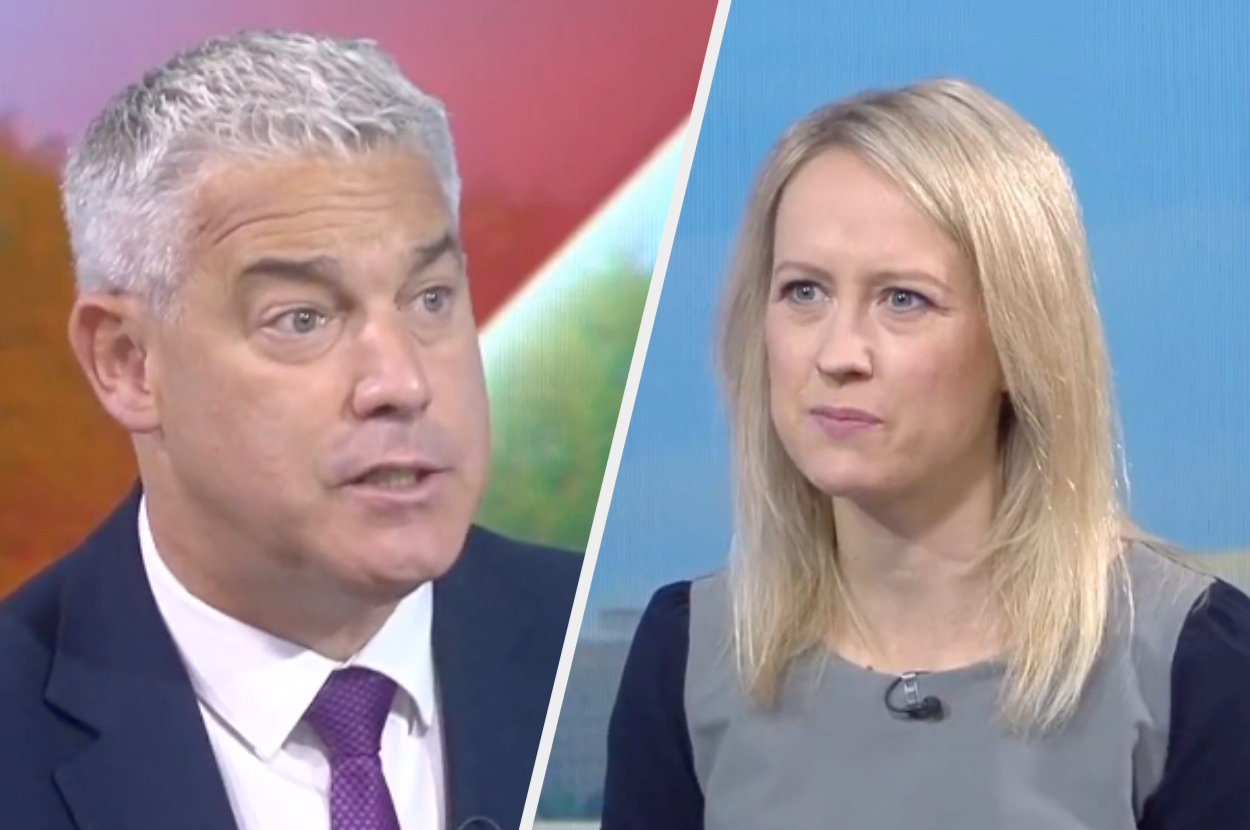
Steve Barclay was left squirming by Sophy Ridge as he failed to explain how the Tories will pay for a major NHS spending boost.

The Sky News presenter repeatedly asked the health secretary where the £2.4 billion to recruit thousands more doctors and nurses will come from.

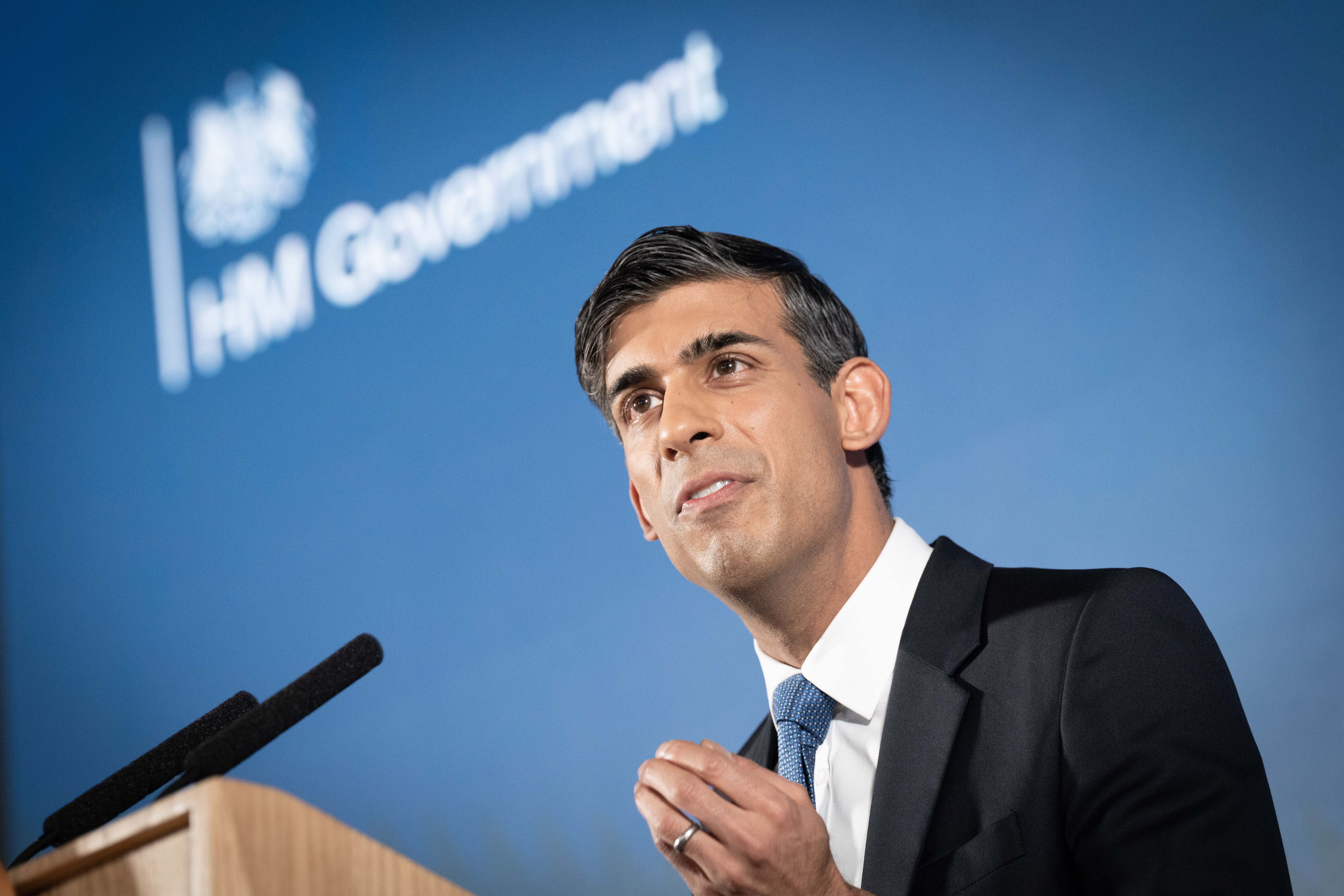
Rishi Sunak unveiled the long-awaited NHS workforce plan on Friday.

Asked by Ridge how the government would find the money, Barclay would only say it would be “through the Treasury” but refused to give any specifics.

Ridge responded: “What does that mean though? Is that more money for your department or are you going to have to find it from existing NHS budgets or is it borrowing? Where is it coming from?”

In a rambling answer, Barclay said: “This is additional money, it will be announced in the usual way through fiscal events.”

Ridge hit back: “I haven’t heard any new tax rises or spending cuts so I’m assuming it sounds like it must be extra borrowing.

″A hundred per cent of GDP – that the current level of debt. Interest rates rising, so the cost of servicing debt is going up – is that really responsible?

“If Labour announced a policy of £2.4 billion without saying where that money was coming from you would be after them like a rocket.”

Barclay said the policy would also improve the retention of NHS staff, thereby saving money on hiring agency workers.

Share Button

Fresh NHS Strikes On The Way As Nurses Reject Government Pay Offer

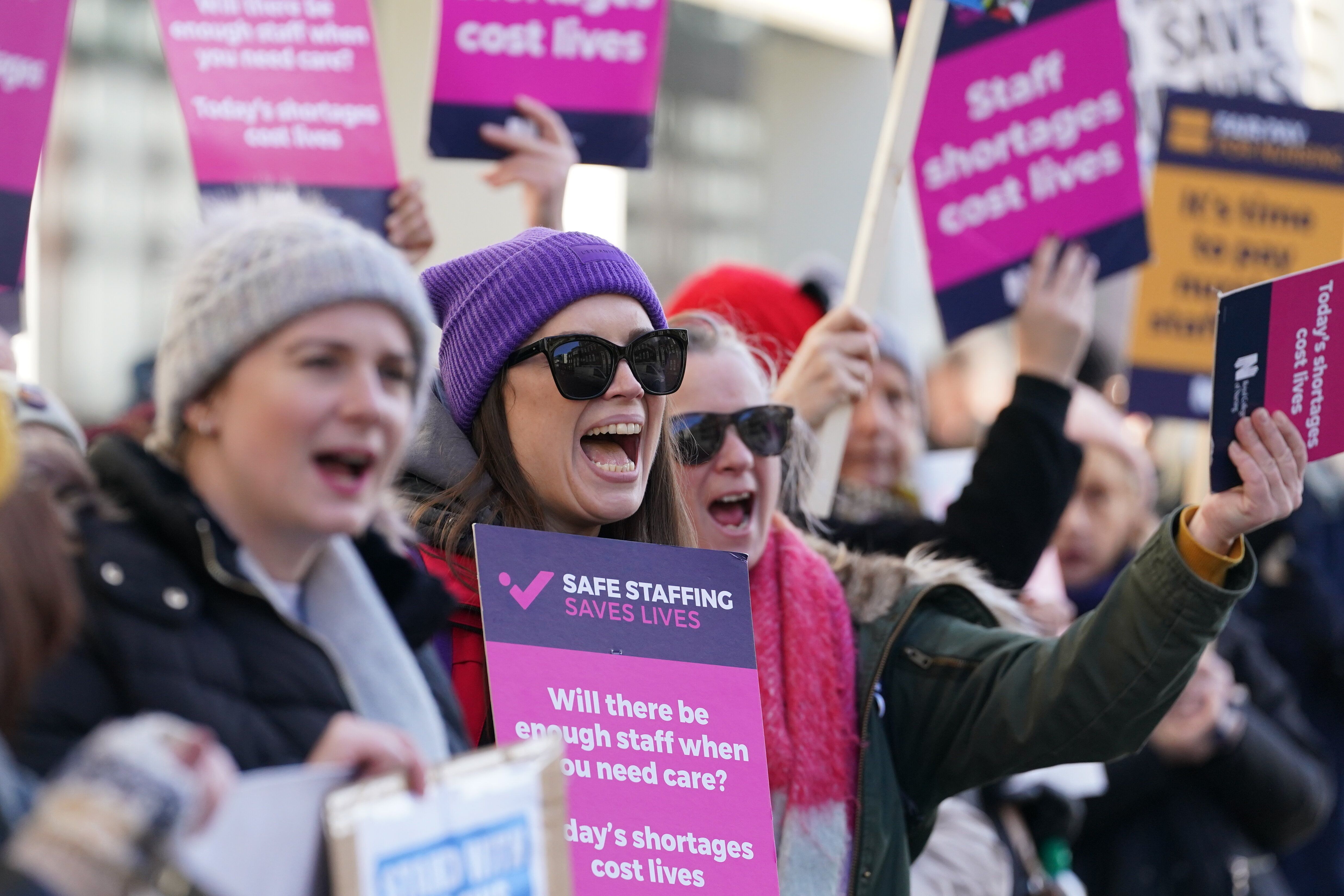
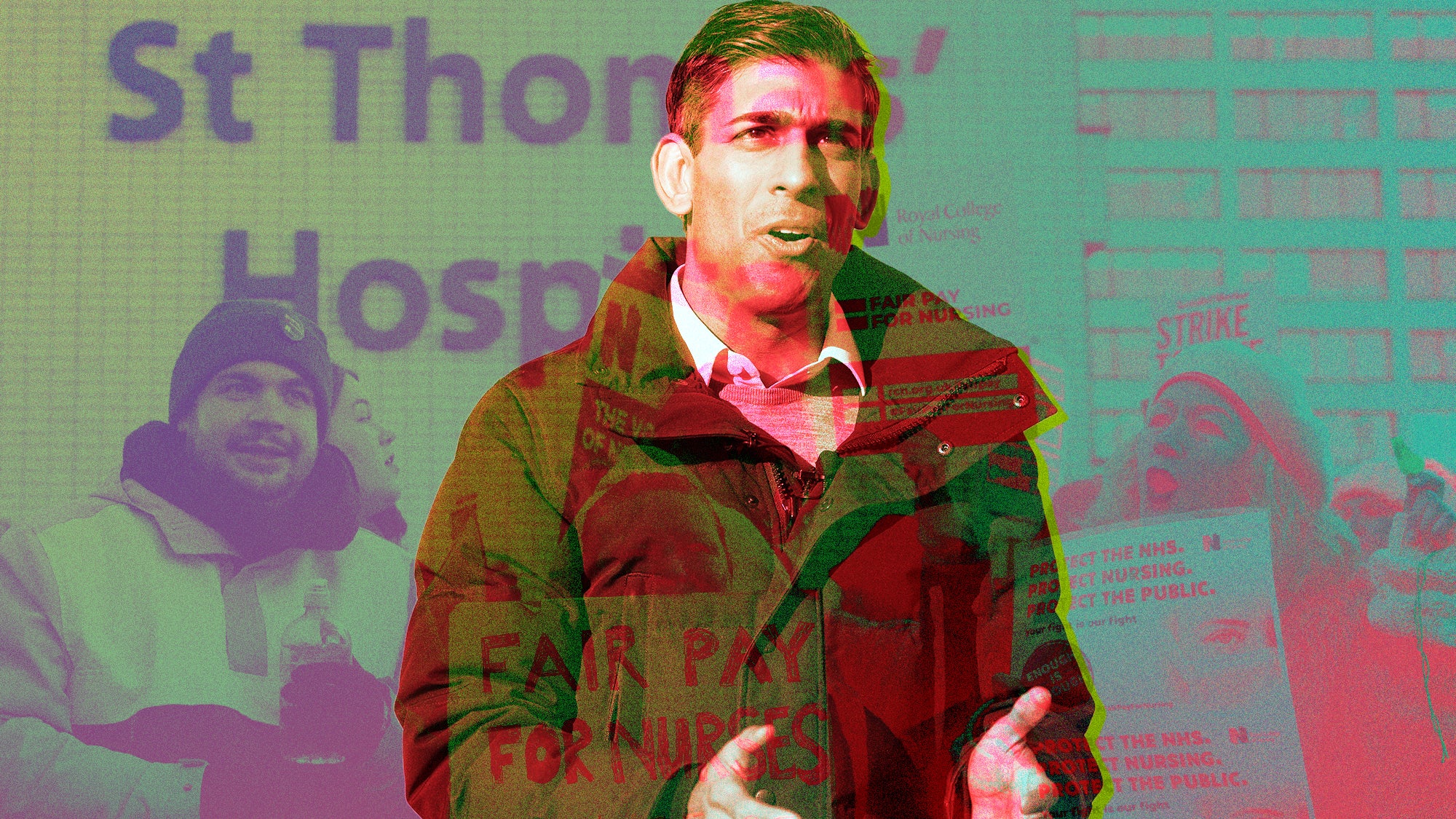
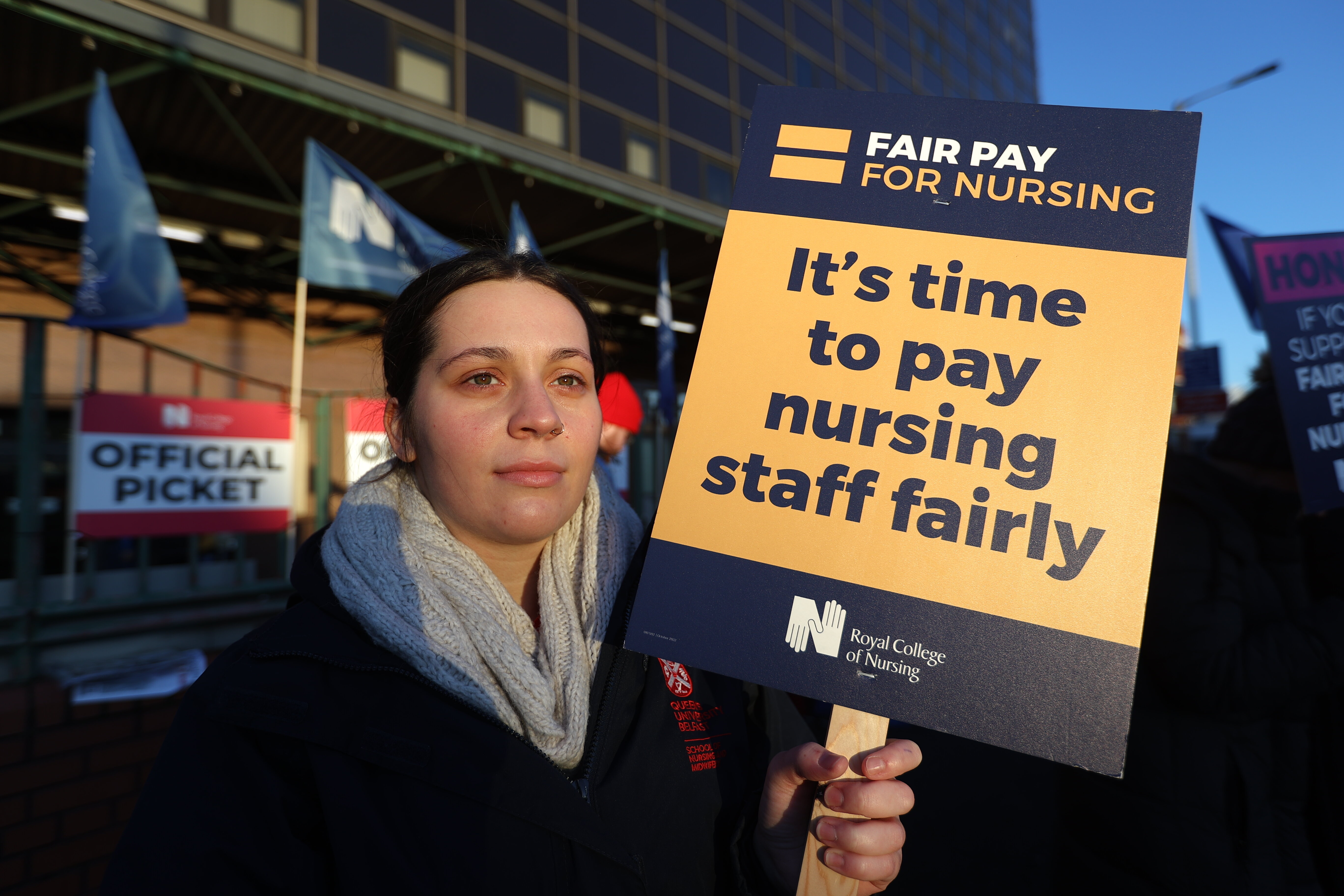
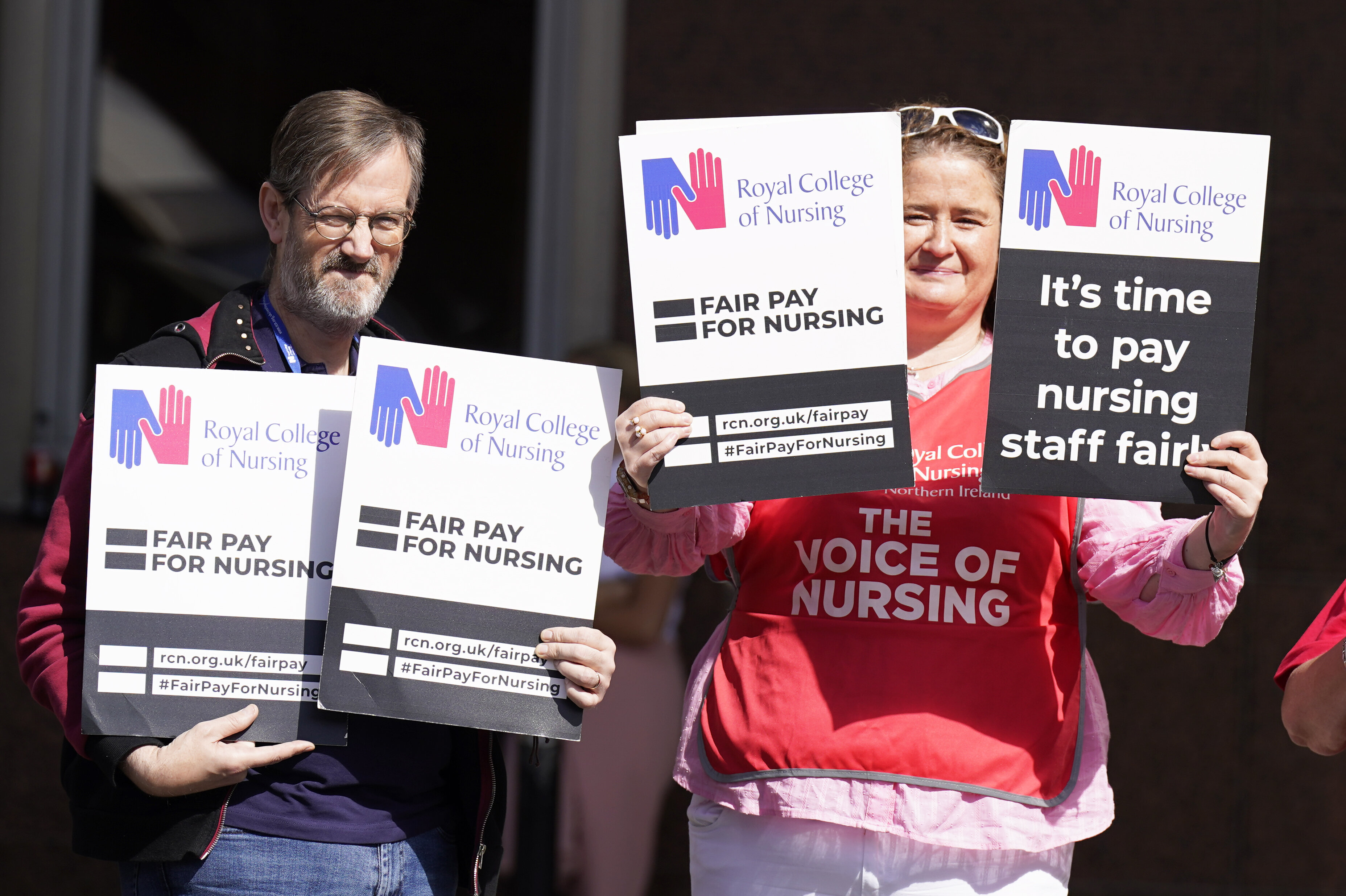
Nurses are to intensify their campaign of industrial action after rejecting the government’s latest pay offer.

The Royal College of Nursing announced that its members had voted by 54% to 46% against a deal to end the long-running dispute. Turnout was 61%.

A 48-hour strike by RCN members – including staff in emergency departments, intensive care units and cancer care units for the first time – will now take place from April 30 until May 2.

They have already taken part in six days of strikes since December, and a further ballot for more walkouts later in the year will now take place, the union said.

It is a huge blow for Rishi Sunak, who has made ending the wave of industrial disputes across the public sector one of his key priorities.

The RCN had recommended that its members accept the offer of a 5% pay rise this year and a one-off cash payment for last year.

In a letter to health secretary Steve Barclay, RCN general secretary Pat Cullen said: “What has been offered to date is simply not enough.

“The government needs to increase what has already been offered and we will be highly critical of any move to reduce it.”

She added: “Until there is a significantly improved offer, we are forced back to the picket line.

“Meetings alone are not sufficient to prevent strike action and I will require an improved offer as soon as possible. In February, you opened negotiations directly with me and I urge you to do the same now.

“After a historic vote to strike, our members expect a historic pay award.”

However, a separate ballot of nurses who are members of Unison, which closed this afternoon, overwhelmingly backed the government’s pay offer.

More than 150,000 nurses took part in the ballot – a 52% turnout – with 74% voting to accept the deal and 26% rejecting it.

Sara Gorton, Unison’s head of health, said: “Clearly health workers would have wanted more, but this was the best that could be achieved through negotiation.”

She added: ”“This vote might end Unison’s dispute, but it doesn’t solve the wider staffing emergency affecting every part of the NHS. Now, the government must work with unions to bring about a sustained programme of investment in the workforce.

“Lessons must also be learned. The mistakes of the past few months cannot be repeated. It’s time for a whole new approach to setting pay across the NHS.”

A key meeting of all six NHS unions is due to take place on May 2, at which it will be decided whether they should all accept the pay deal.

A government spokesperson said: “It is hugely disappointing that the Royal College of Nursing membership has rejected the pay deal recommended by their leadership.

“Following constructive discussions, all parties agreed this was a fair and generous offer which is demonstrated by Unison, representing the largest share of the NHS workforce, choosing to accept it.

“The fact that the Royal College of Nursing has announced an escalation in strike action, based on a vote from the minority of the nursing workforce, will be hugely concerning for patients.

“Hundreds of thousands of staff continue to vote in ballots for other unions over the next two weeks and we hope this generous offer secures their support.”

The RCN result came just hours after the Prospect union, which represents civil servants, announced that its members will strike on May 10 and June 7 after rejecting a fresh pay offer from ministers this morning.

It is also the final day of a four-day strike by junior doctors, who are demanding a 35% pay rise.

Share Button

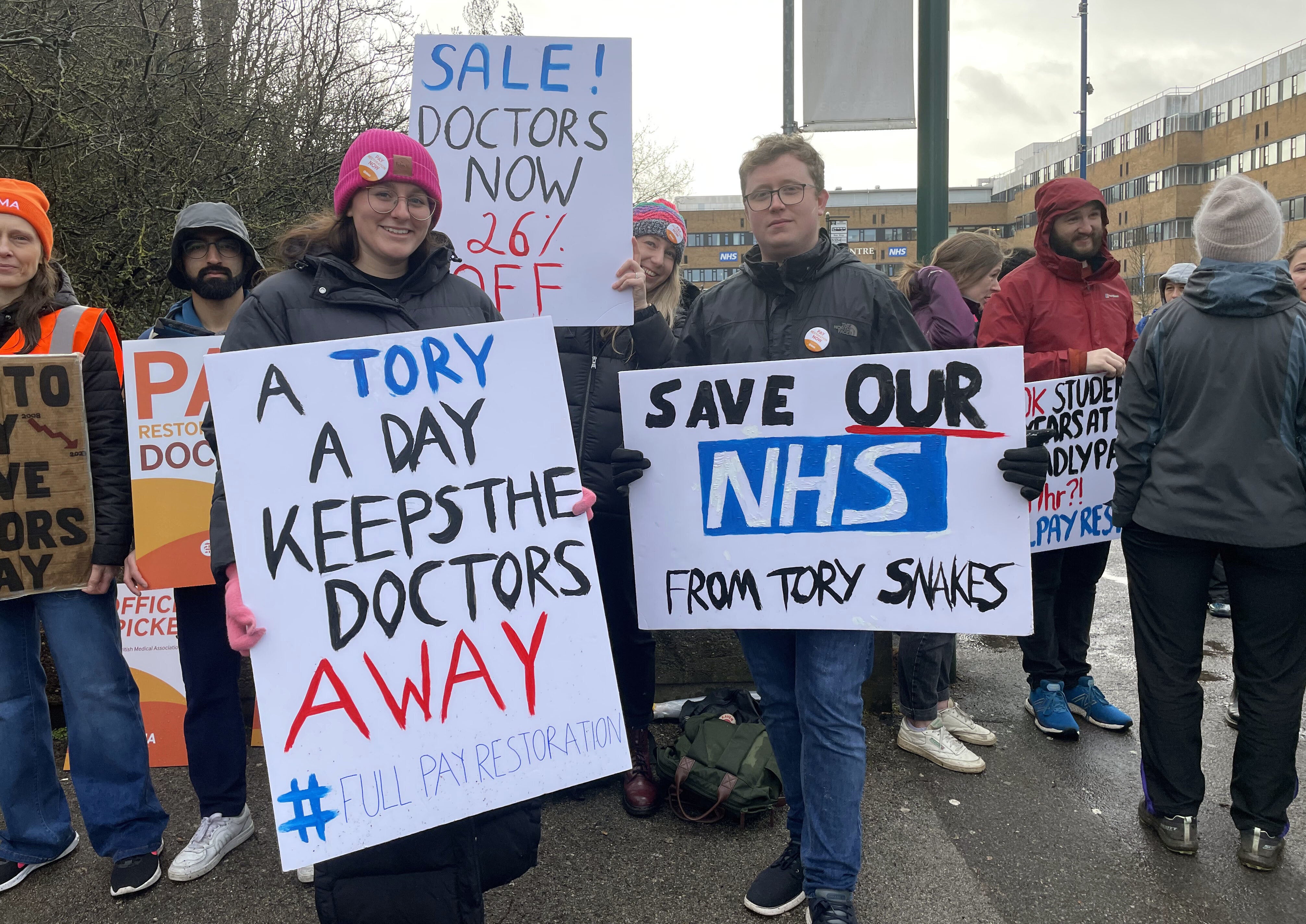
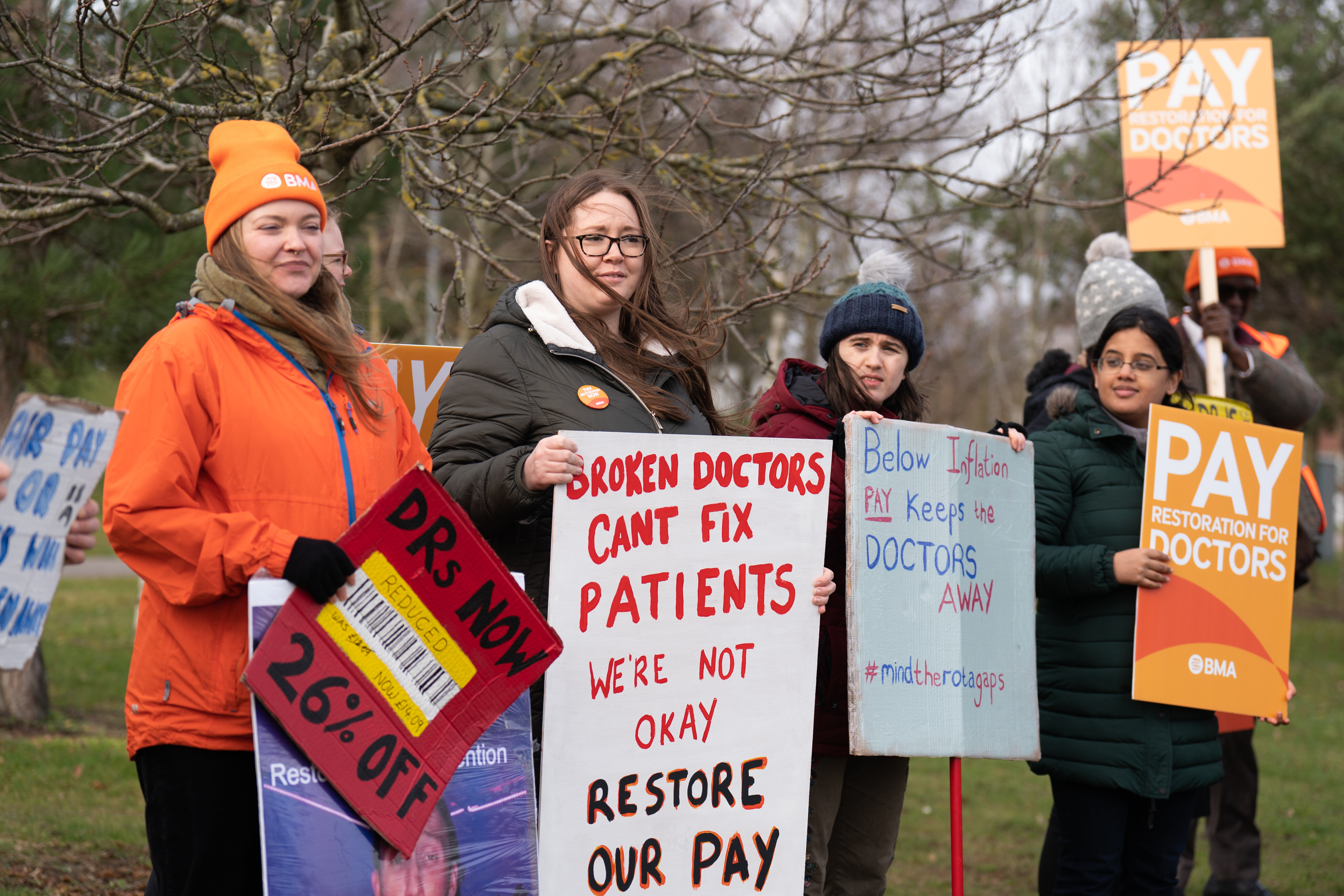
‘Broken Doctors Can’t Fix Patients’ What Junior Doctors Are Saying On The Picket Line

Junior doctors took to picket lines across the UK today as they began a three-day strike in their long-running pay dispute with the government.

The British Medical Association rejected a last-ditch appeal by health secretary Steve Barclay for them to enter into fresh negotiations in an attempt to avert the walkout.

The unions says junior doctors’ pay has fallen in real terms by 26% since 2008/09 and are demanding “full pay restoration”.

Professor Stephen Powis, medical director of NHS England, said it would be “the most disruptive set of industrial action days that we’ve seen all winter”.

But the striking medics say their action is necessary to force the government’s hand.

Here is what some of those striking have been saying from the picket line.

Speaking outside the Queen Elizabeth Hospital in Birmingham, junior doctor Shivam Sharma told the Press Association: “Junior doctors have faced a massive 26% real-terms pay cut over the last 15 years.

“We are not worth 26% less, we don’t do 26% less work, we don’t see 26% less patients. In fact, the work has only gotten harder.

“Currently, 50% of junior doctors are struggling to pay rent, mortgage and bills, and 50% are having to borrow money from friends and family just to make ends meet.

“If you or I were going into hospital critically unwell, we couldn’t want our junior doctor to be worrying about how they’re going to pay their bills.

“So something has to be done – we have to value doctors here if we are going to keep them.”

Paul Smith, a first-year surgical trainee at the Nottingham University Hospitals NHS Trust, said: “I started in my training post in August last year and I’ve spent £3,000 on course fees, professional fees and exams. We can claim some tax back but I’ve still got to pay that upfront.

“Me and my partner managed to save up enough money to buy a house locally and we found a hole in the roof last week.

“We’re genuinely struggling to find the money to fix that at the moment.”

Speaking from the picket line at University College Hospital in London, Rebecca Lissman, 29, a trainee in obstetrics and gynaecology, said: “I still want to work for a service that’s free at the point of use when I’m a fully qualified consultant. We want a health service that works for everyone and that’s why I’m here today.

“We can’t give people the service they deserve and see them as quickly as they need because we are so stretched.

“I want to be in work, looking after people, getting trained. I don’t want to be out here striking but I feel that I have to.”

“Junior doctors have faced a massive 26% real-terms pay cut over the last 15 years. We are not worth 26% less, we don’t do 26% less work, we don’t see 26% less patients.”

Edward Finn, an anaesthetist registrar at the Nottingham University Hospitals NHS Trust, said: “If you look at the overall cost of living, wages that haven’t kept up with that, and we don’t go out for meals, we don’t do anything.

“My wife and I are both part-time – we couldn’t afford to be full-time with the cost of childcare – but we still have to do the occasional extra shift on top of our contracted hours to keep up with things like the electricity bill.

“When you’re talking about somebody who’s been a doctor for 12 years, it’s quite sad really, isn’t it?”

Striking junior doctor Martin Whyte, on the picket line in Newcastle, said the public understood the need for the industrial action.

“We used to say anything above four hours was a breach but we have missed that target so overwhelmingly now, it’s almost not worth counting.

“These systems are failing chronically and I think the public understand that.

“They know steps have to be taken to address that, and that starts with better retention of staff and for that you need better pay. We are seeing a lot of attrition from the workforce.”

The 36-year-old said newly qualified doctors used to talk about the specialism they hoped to work in, adding: “Now when I talk to them they say ‘I’m going to go to Australia’, ‘I’m going to go to Canada’, or ‘I’m going to quit medicine all together’, because the pay relative to the work and the intensity and the hours just doesn’t add up.”

Striking NHS junior doctors on the picket line outside Norfolk & Norwich University Hospital in Norwich, as the British Medical Association is holding a 72-hour walkout in a dispute over pay. Picture date: Monday March 13, 2023.

Joe Giddens via PA Wire/PA Images

Speaking on a picket line at Leeds General Infirmary, Dr Chris Morris, doctor and British Medical Association rep, said: “It’s really reassuring when members of the public do go past honking their horns, giving us messages of support. It reemphasises why we’re doing this.”

“I don’t think anyone has taken this decision lightly. It’s the last thing we want to do as doctors but we feel that we’ve pushed into this decision by the government.”

Steve Barclay said he wanted to “engage” with the junior doctors to reach an agreement to end the strikes.

He said other health unions had agreed to hold pay talks with him and he called on the BMA to do so “as a matter of urgency”.

It marks a change of tone from December, when Barclay said he could not offer NHS staff more money.

Share Button

Exclusive: Downing Street Accused Of ‘Quietly Editing’ One Of The PM’s Five Promises To Voters

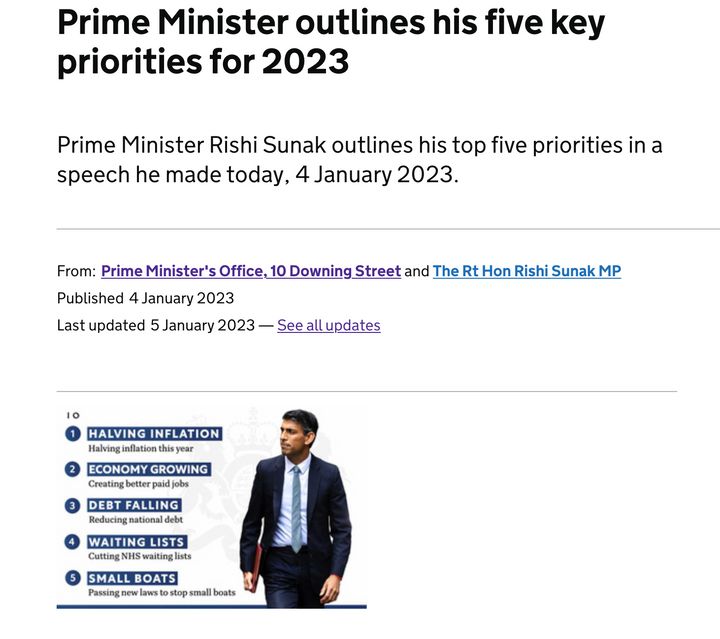
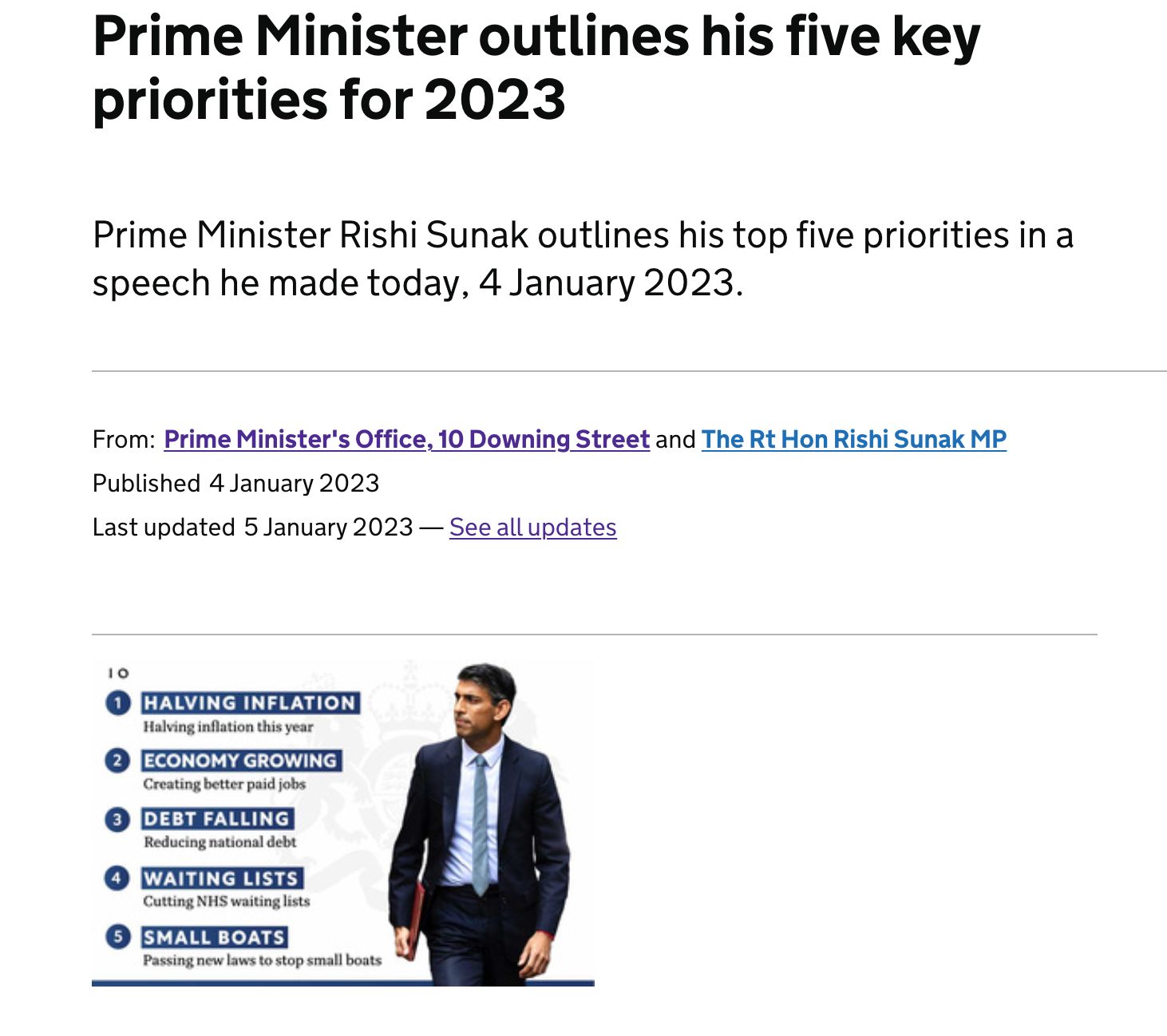
Downing Street has been accused of “quietly editing” one of Rishi Sunak’s five new promises to voters.

The prime minister unveiled the pledges in a major speech setting out his plans for 2023.

They included a vow to halve inflation this year, grow the economy and cut hospital waiting lists.

Sunak said: “No tricks, no ambiguity – we’re either delivering for you or we’re not.”

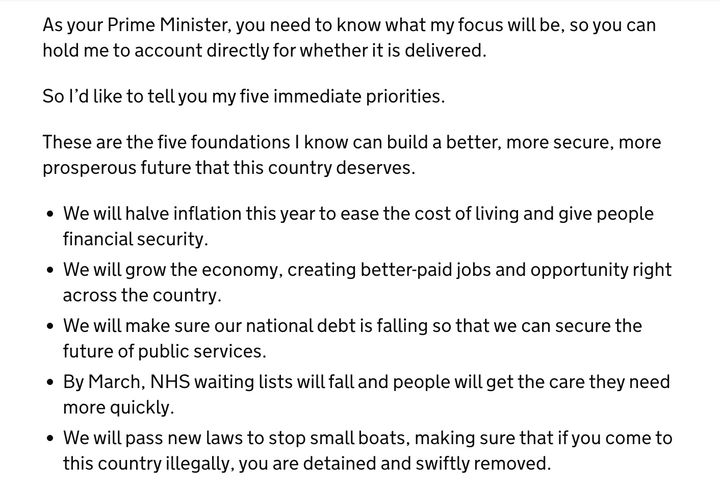
The original version of the announcement published on the government website after Sunak made his speech on Wednesday says: “By March, NHS waiting lists will fall and people will get the care they need more quickly.”

The fourth bullet point claims waiting lists will fall "by March".
The fourth bullet point claims waiting lists will fall “by March”.

UK government

However, visitors to the same page are now told that it was “updated” on Thursday and the March reference has been removed.

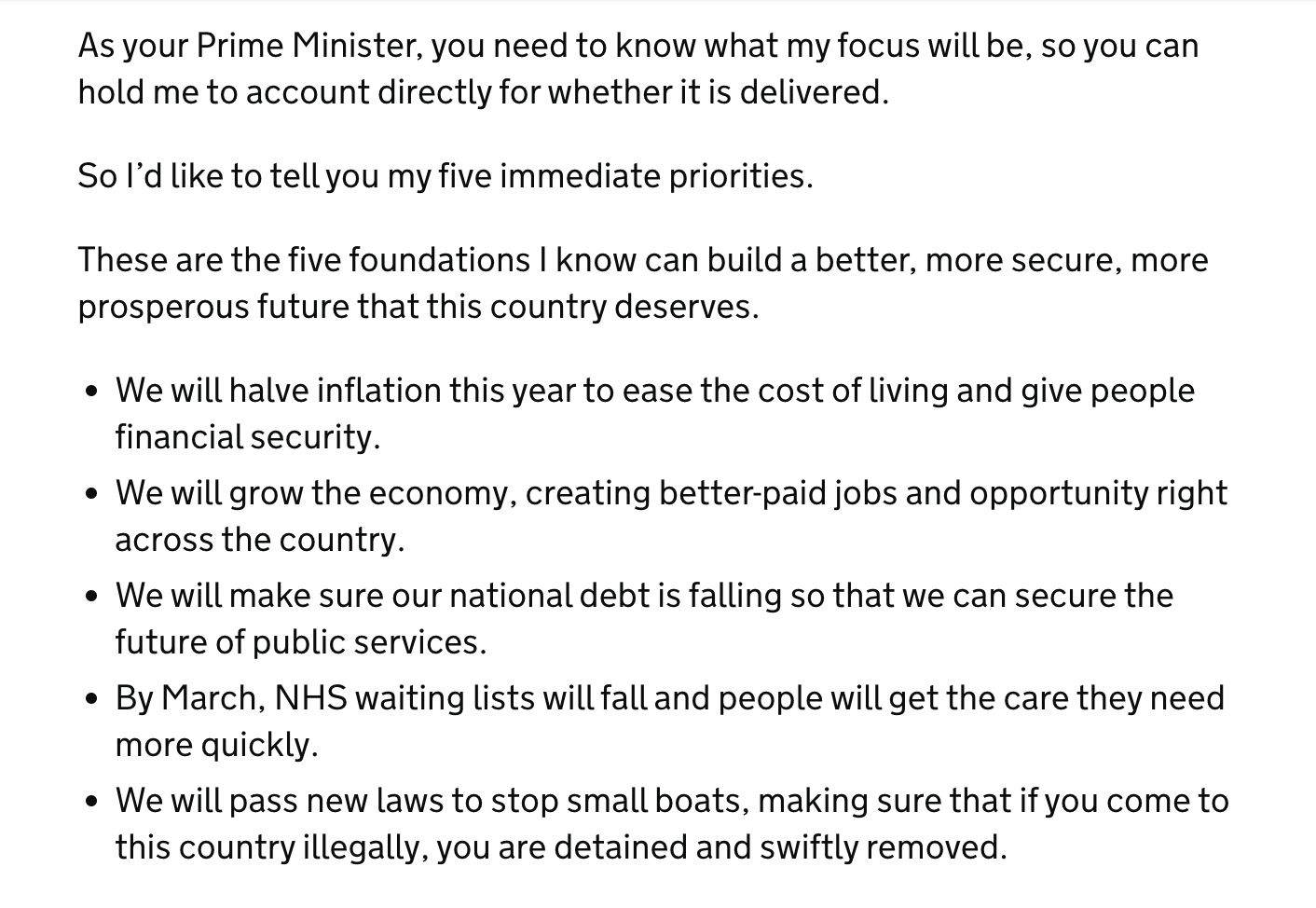
That pledge now says: “NHS waiting lists will fall and people will get the care they need more quickly.”

The page has since been edited and the March reference removed.

UK government

Shadow health secretary Wes Streeting told HuffPost UK: “Just 48 hours after promising the British people a series of cast-iron promises, Sunak is already quietly editing the small print.

“The longer we give the Conservatives in power, the longer patients will wait.”

Answering questions from journalists after his speech, the PM said: “By spring of next year, we will have practically eliminated those waiting over a year, with the overall waiting list falling.”

A Downing Street source said the target for bringing waiting lists down is March 2024, and the government website had been edited to avoid any confusion.

HuffPost UK can also reveal that former health secretary Sajid Javid first made the March 2024 vow almost a year ago.

Speaking last February, he said: “Assuming half of the missing demand from the pandemic returns over the next three years, the NHS expect waiting lists to be reducing by March 2024.

“Addressing long waits is critical to the recovery of elective care and we will be actively offering longer waiting patients greater choice about their care to help bring these numbers down.”

Share Button

All The January 2023 Strikes Set To Hit As Industrial Action Continues

With Christmas done and dusted, many of us are now looking forward to New Year and the fresh start it brings.

However, strike action has only just begun, with more dates planned across different industries into January.

Bus drivers, ambulance drivers, rail staff and more are all set to take action in the coming week, with disruption expected as a result.

Here’s everything you need to know ahead of the strikes in January 2023.

Rail strikes

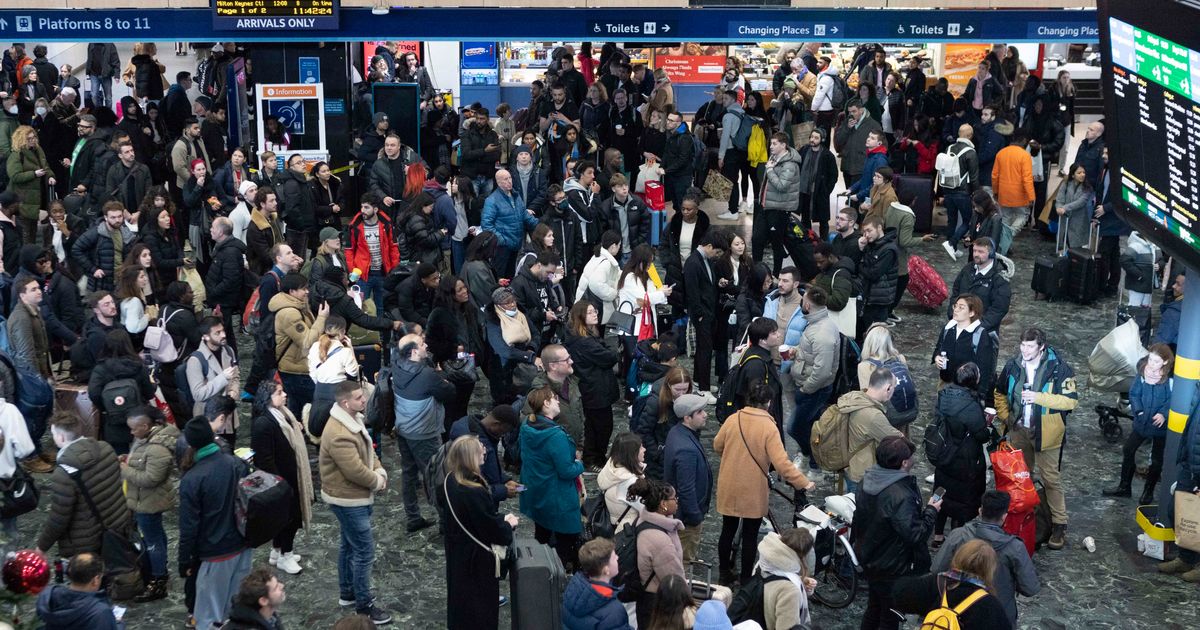
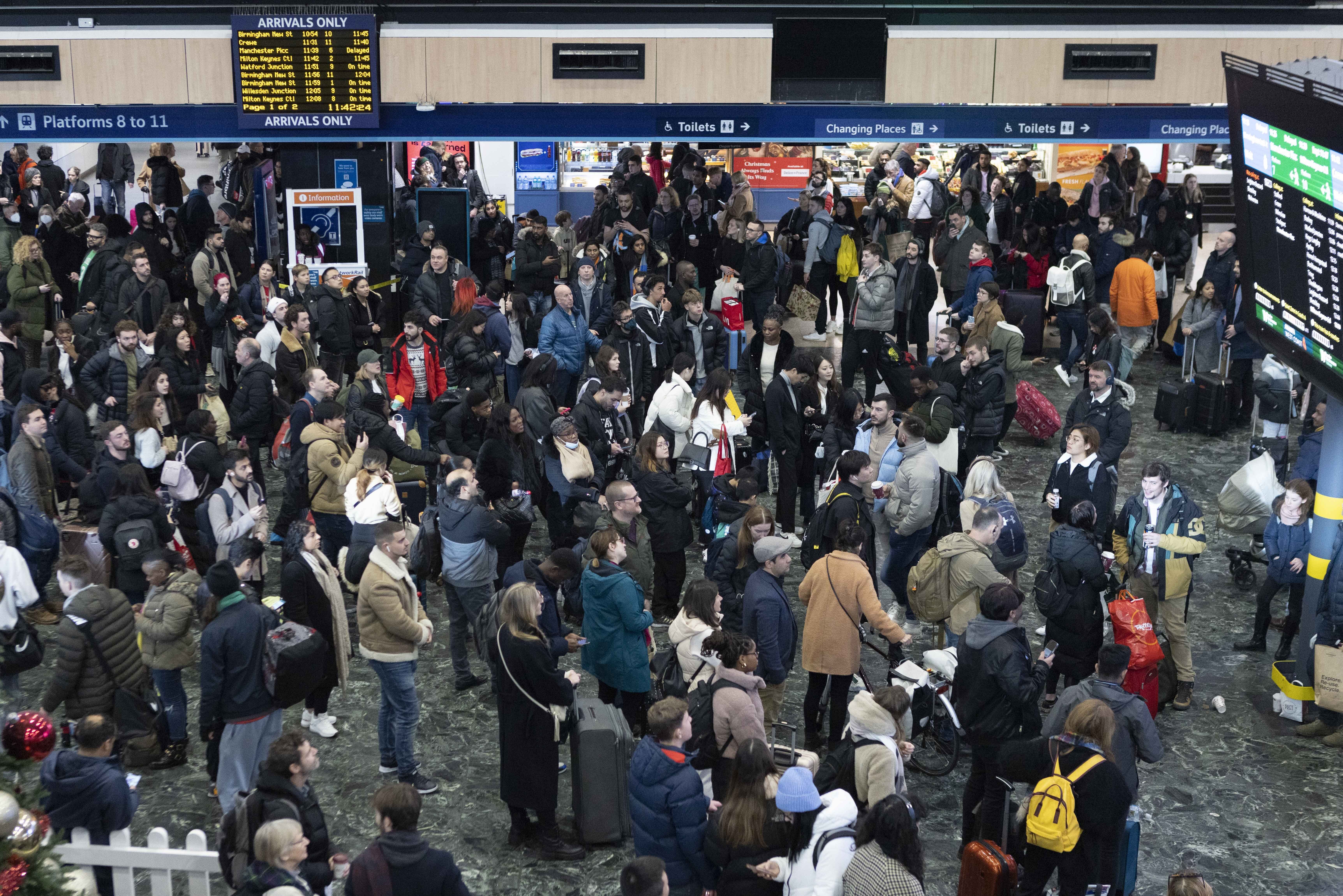
Strikes by the RMT and ASLEF trade unions will bring rail services to a halt across the UK from Tuesday January 3 to Saturday January 7.

RMT union members at Network Rail are striking once more over pay and conditions.

The train strikes will affect the following train operators:

  • LNER
  • Northern trains
  • Avanti West Coast
  • Southeastern
  • Cross Country
  • Chiltern Railways
  • Greater Anglia
  • Govia Thameslink (plus Gatwick Express)
  • London Underground
  • West Midlands Trains (plus London Northwestern Railway)
  • Great Western Railway
  • Transpennine Express

Mick Whelan, general secretary of ASLEF, explained the reasoning for the strike action: “We don’t want to go on strike but the companies have pushed us into this place. They have not offered our members at these companies a penny – and these are people who have not had an increase since April 2019.”

People are being advised to avoid travelling between January 3 – 7 if possible.

Highway workers strikes

If your plan to get around the railway strikes was to take to the roads, we’ve got some bad news.

National Highways traffic officers in the PCS union across the UK will strike on January 3 and 4.

The strike action will see control centre staff walk out and officers will normally deal with the aftermath of road accidents will also stop work on the two dates.

The PCS union says the walkout could cause delays to reopening carriageways and motorways affected by any accidents on the strike action dates.

Nurses

The Royal College of Nurses (RCN) has announced strike action on January 18 and 19 in England following previous action on December 15 and 20.

The RCN wants members to see a pay rise of 19%.

RCN general secretary and chief executive Pat Cullen said: “The government had the opportunity to end this dispute before Christmas but instead they have chosen to push nursing staff out into the cold again in January.

“I do not wish to prolong this dispute, but the Prime Minister has left us with no choice.”

Ambulance drivers

Some ambulance staff in England will take part in two strikes next month, on January 11 and 23.

Services in London, Yorkshire, the North West, North East and South West will be affected as union members campaign for pay rises that are above inflation rates.

The strikes will affect non-life threatening calls only but is likely to put even more pressure on emergency care.

Bus drivers

Meanwhile in London, Abellio bus drivers in south and west London will take action over eight days throughout January.

The strikes will take place on January 4, 5, 10, 12, 16, 19, 25 and 26.

Transport for London has urged Unite and the Abellio bus company to work together to avoid disruption, with some of the proposed strike dates clashing with RMT train strikes.

Teachers in Scotland

Two teachers’ strike days will take place in Scotland in January 2023.

Teachers will walkout on both January 10 and 11 after a 6.85% increase for the lowest paid was rejected.

Although the action is currently exclusive to Scotland, teaching unions in both England and Wales are balloting members over pay, which could mean strikes further south in the coming weeks.

RCN general secretary and chief executive Pat Cullen said: “The government had the opportunity to end this dispute before Christmas but instead they have chosen to push nursing staff out into the cold again in January.

“I do not wish to prolong this dispute, but the Prime Minister has left us with no choice.”

Ambulance drivers

Some ambulance staff in England will take part in two strikes next month, on January 11 and 23.

Services in London, Yorkshire, the North West, North East and South West will be affected as union members campaign for pay rises that are above inflation rates.

The strikes will affect non-life threatening calls only but is likely to put even more pressure on emergency care.

Bus drivers

Meanwhile in London, Abellio bus drivers in south and west London will take action over eight days throughout January.

The strikes will take place on January 4, 5, 10, 12, 16, 19, 25 and 26.

Transport for London has urged Unite and the Abellio bus company to work together to avoid disruption, with some of the proposed strike dates clashing with RMT train strikes.

Teachers in Scotland

Two teachers’ strike days will take place in Scotland in January 2023.

Teachers will walkout on both January 10 and 11 after a 6.85% increase for the lowest paid was rejected.

Although the action is currently exclusive to Scotland, teaching unions in both England and Wales are balloting members over pay, which could mean strikes further south in the coming weeks.

Share Button

Will Rishi Sunak Perform Yet Another U-Turn To End The Nurses’ Strike?

Rishi Sunak this week stopped being Britain’s shortest-serving prime minister.

After managing to survive 50 days in Number 10, he has surpassed Liz Truss’s ill-starred tenure as PM.

But during his brief time in charge, Sunak has managed to earn an unenviable reputation for being willing to completely change his position when the pressure’s on.

We’ve already seen two major U-turns – one on housebuilding targets and the other on onshore wind farms – brought on by the prospect of Tory backbench rebellions.

Now, it seems only a matter of time before he is forced into his biggest about-face yet as he tries to end nurses pay dispute which saw members of the Royal College of Nursing walk out on Thursday. A further 24-strike is due next week.

So far, ministers have stuck to the same line on nurses’ pay as they have on other public sector workers taking part in the growing winter of discontent – that the government has accepted the recommendations of the various pay review bodies and won’t be re-visiting the matter.

But with trade unions unwilling to accept the real-terms pay cuts on offer, the pressure is building on the PM – not least from senior Tories – to relent.

Former Conservative chairman Jake Berry – a man with an axe to grind after being sacked by Sunak – spoke for many of his colleagues when he said the current offer on the table to nurses was “too low” and that compromise was needed.

“There is no do-nothing option except continued strikes,” he said yesterday.

“And I just think the cancellation of probably literally hundreds of thousands of non-urgent appointments has huge repercussions for an already-overstretched health service.

“That’s why I think it’s reasonable to say in this regard, it is time for pragmatism and talking between the government and the unions. I don’t see why that is controversial.

“Machismo and sort of chest beating and ‘we’ll take the unions on’ doesn’t work. You only get these things sorted out by talking.”

Dr Dan Poulter – a GP – and former cabinet minister Robert Buckland are also among a growing band of Tory MPs who believe compromise is urgently needed to bring an end to the dispute.

Public support for the nurses’ fight remains strong, meaning the political damage for the government grows whenever they take to the picket line.

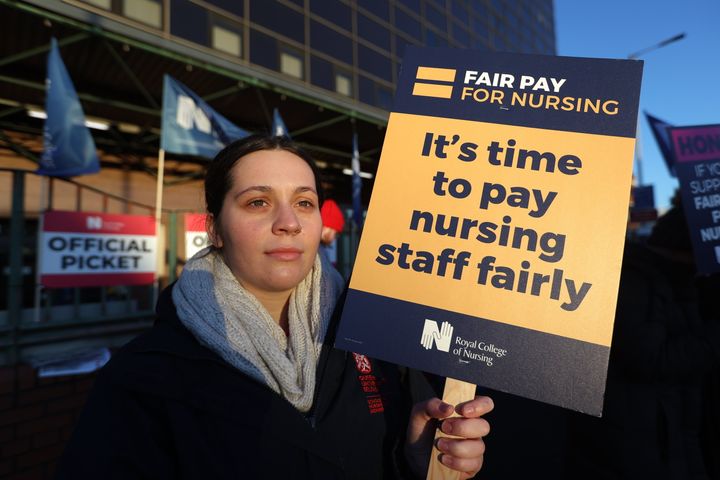
Staff Nurse Courtney Watson joins members of the Royal College of Nursing (RCN) on the picket line outside Mater Infirmorum Hospital in Belfast as nurses in England, Wales and Northern Ireland take industrial action over pay. Picture date: Thursday December 15, 2022.

Liam McBurney via PA Wire/PA Images

A veteran Tory MP told HuffPost UK: “I’ve been around long enough to know that there will invariably be a compromise found.”

Labour can hardly believe their luck. A party source told HuffPost UK: “I just don’t understand what they are thinking – do they think ‘crush the nurses’ is a viable strategy for the country or a good look? He’s just going to end up looking weak again.

“It’s notable that the Tories who think strategically can see a mile off this isn’t going to work.

“It’s absolutely bonkers they didn’t get that strike called off and instead let us use PMQs to frame all the strike action around it. It’s not just that Sunak has no vision – there’s no political strategy either.”

For now, though, the prime minister appears to be digging in.

Speaking in Belfast yesterday, he said: “We want to be fair, reasonable and constructive, that’s why we accepted the recommendations of an independent pay body about what fair pay would be.”

But there is a growing sense in Westminster that a government climbdown is inevitable.

And while that may well pave the way for a resolution to the nurses’ dispute, it will be yet another blow to Sunak’s faltering political reputation.

Share Button

Nurses Issue Government With Ultimatum Or Risk Strike Action

Nurses have called for “detailed negotiations” on pay in the next five days or it will announce strike dates for December.

In a letter to health secretary Steve Barclay following the autumn statement, Royal College of Nursing (RCN) general secretary Pat Cullen said the chancellor demonstrated that “the government remains unprepared to give my members the support they need at work and at home”.

She said that recent meetings with the minister had been “cordial in tone”, but had not resolved the issues at the heart of proposed strike action.

Last week, the RCN announced that nursing staff at the majority of NHS employers across the UK had voted to take strike action over pay and patient safety.

In the letter, she added: “It is with regret that I write to say that unless our next meeting is formal pay negotiations, beginning within the next five days, we will be announcing the dates and locations of our December strike action.”

The RCN is calling for a pay rise of 5% above inflation, saying that despite a pay rise earlier this year, experienced nurses were worse off by 20% due to successive below-inflation awards since 2010.

Cullen said recent meetings with Barclay were welcome, but added: “I must not let my members nor the public confuse these meetings for serious discussions on the issues of NHS pay and patient safety.

“You have again asked to meet in the coming days and for this third occasion I must be clearer in my expectation.

“There is only value in meeting if you wish to discuss – in formal, detailed negotiations – the issues that have caused our members to vote for strike action.

“It is now more than a week since we announced our ballot outcome and your department has dedicated more time to publicly criticising our members’ expectations than finding common ground and a satisfactory conclusion.

“I also point out that this stands in contrast to the approach taken by governments and executives in other parts of the United Kingdom.”

Health secretary Barclay said: “We are all hugely grateful for the hard work and dedication of healthcare staff, including nurses, and we have prioritised the NHS in the autumn statement with an additional £6.6 billion over the next two years, alongside a commitment to publish a comprehensive workforce strategy next year with independently verified forecasts.

“We deeply regret some union members have voted for industrial action.

“These are challenging times, which is why we accepted the recommendations of the independent NHS Pay Review Body in full and have given over one million NHS workers a pay rise of at least £1,400 this year.

“This is on top of a 3% pay increase last year when public sector pay was frozen, and wider government support with the cost of living.”

Share Button

Keir Starmer Criticised For Saying The NHS Is Recruiting ‘Too Many People From Overseas’

Keir Starmer has been criticised for saying the NHS is recruiting too many people from overseas.

The Labour leader said “we should be training people in this country” as he set out his plans to control immigration.

But Starmer came under fire for his comments, with SNP MP Stewart McDonald accusing him of “grubby dog-whistling”.

Speaking to BBC Scotland, Starmer said: “What I would like to see is the numbers go down in some areas.

“I think we are recruiting too many people from overseas in, for example, the health service, but on the other hand if we need high-skilled people in innovation and tech to set up factories, etc, then I would encourage that, so I don’t think there’s an overall number here, some areas will need to go down, other areas will need to go up.”

At the Labour conference in Liverpool last month, the party leader unveiled plans to recruit 7,500 staff to the NHS across the UK.

Starmer added: “We should be training people in this country, of course we need some immigration but we need to train people in this country.

“What we’ve done – this is absolutely classic of this Tory government – is short-term fixes, plasters over problems, never a long-term solution and we’re going around and around in circles, every year we have a winter crisis.”

Responding to Starmer’s comments on Twitter, McDonald – the SNP’s defence spokesperson – accused the Labour leader of betraying the efforts of foreign NHS workers during the pandemic.

Meanehile, the pro-Jeremy Corbyn campaign group Momentum said Starmer was “out out of touch with the Labour party and the Labour movement”.

Share Button

Concern Over Covid Boosters And Baby Scans Cancelled For Queen’s Funeral

Patients are expressing concern that some Covid booster jabs, flu vaccinations, as well as key hospital appointments, are being cancelled ahead of the Queen’s funeral on September 19 since it was made a last-minute Bank Holiday.

Kate Brodie, 62, a retired NHS GP who is about to start a second round of chemotherapy for breast cancer, had specifically timed the date of her Covid booster so it fell before her hospital treatment started.

The vaccine was booked for September 19. However Brodie, who lives in south Devon, says she received a text message on September 12 saying the appointment had been cancelled due to the unexpected bank holiday.

“Having cancer is a huge stress with all the worry about survival, the process of going through gruesome treatment and hoping to continue to avoid Covid 19 while my immune system is down,” she tells HuffPost UK.

“The death of the Queen is very sad, but the reaction by NHSE [NHS England] to cancel delivery of much-needed services at short notice will cause harm and hardship to many.”

Many GP practices across England will be closed for the Bank Holiday, which has been given to allow individuals, businesses and other organisations to pay their respects to the Queen on the day of her state funeral.

A letter from Dr Ursula Montgomery, director of primary care at NHS England, said that out-of-hours services will be in place during the day to meet patients’ urgent primary medical care needs.

The funeral has come at a busy time for the NHS, as it implements its Covid booster and flu vaccination programmes ahead of the winter.

A text message from one GP surgery on the outskirts of London, seen by HuffPost UK, said flu vaccine appointments scheduled for this week would need to be rescheduled by a few days because of “the unfortunate news the nation is facing at the moment”.

Dr Helen Salisbury, a GP and medical educator from Oxford, explained on Twitter how a last minute bank holiday can be a “nightmare” for those trying to run health services, especially with lots of patients already booked in.

“What to do?” she tweeted. “Implore staff to work and pay extra? Reschedule and delay all the appointments?”

Other staff working in general practice responded to say that even when they do open on Bank Holidays, they often aren’t busy. Some added that they suspect lots of patients won’t turn up because they’ll be watching the funeral.

Scheduled Covid boosters are still going ahead in care homes, said NHS England, which has also issued guidance urging clinics to stay open to deliver the boosters “where there is a high population need”.

But a report by openDemocracy found thousands of non-urgent hospital appointments – for issues such as hip and knee replacements, cataract surgery, maternity checks and some cancer treatments – are being postponed.

One pregnant woman revealed how her foetal scan had been cancelled, leaving her anxious about her baby’s health.

“I’m really disappointed,” she told openDemocracy. “Yes, it’s a routine scan, but that’s another week or two until I’m seen and wondering whether my baby is healthy – which means quite a lot of anxiety, sitting and waiting.”

Kate Brodie has since tried to rebook her Covid booster for the next cycle, but was told there were no dates free near to where she lives.

“Thankfully I have found a centre 15 miles away that I can attend on Sunday instead,” she says. “I am lucky I am mobile and have transport to reach the further venue.”

Meanwhile, Greg Hadfield, 66, from Brighton, also found out his Covid booster vaccine appointment on September 19 has been cancelled and is now having to travel nearly 40 minutes by car to get another one.

The 66-year-old was originally invited to have the booster at his local Waitrose. However because the store will now be closed for the Bank Holiday – as many supermarkets will be – his appointment won’t go ahead.

“When I tried to re-book for another day at the same centre, the system offered only dates that were 14 days-plus ahead, by which time I will be abroad for a month,” he tells HuffPost UK.

He has managed to book an appointment 40 minutes away for the same date, September 19, which hasn’t been cancelled – so far.

“I am just relieved to get the booster before leaving for Turkey and Greece later this month,” he says.

Share Button

Brutal Hospital Heckle Gives Health Secretary Steve Barclay A Taste Of Public Anger

Health secretary Steve Barclay has been confronted with public fury over the crumbling NHS – as an angry member of the public heckled the minister upset about ambulance delays.

The cabinet minister was speaking to media outside Moorfields Eye Hospital in Old Street, central London, when a woman suggested the Tory government has done “bugger all” during 12 years in power.

During his interviews, a woman passing by approached Barclay and asked him: “Are you going to do anything about the ambulances waiting, and the people dying out?”

Barclay replied: “Of course we are,” but the woman continued: “Don’t you think 12 years is long enough?

“Twelve years – you’ve done bugger all about it.

“People have died, and all you’ve done is nothing.”

The incident drew comparisons to an infamous scene from BBC comedy The Thick Of It, when fictional minister Hugh Abbot is confronted by an angry worker who asks: “Do you know what it’s like to clean up your own mother’s piss?”

Last week, many were shocked after an 87-year-old man had to wait 15 hours for an ambulance in a makeshift shelter made out of a garden football goal.

A recent report by the Care Quality Commission (CQC) showed that patients were facing “frequent and prolonged” waits for ambulances.

The report exposed several cases, such as that of an elderly patient who died after waiting 14 hours for assistance from South Central Ambulance Service.

On Thursday, Barclay was given a tour of an operating theatre by surgeons at Moorfields Eye Hospital, before speaking to press on the street outside.

Following the heated interaction, Barclay said that reducing ambulance waiting times is an “absolute priority” for the government.

He told the PA news agency: “There’s a range of measures that we’re taking.

“We’re looking at conveyance rates in ambulances, we’re looking at how we address variation in performance, we’re looking at funding – an extra £150 million to the ambulance service, a further £50 million into call centres, for 111 and 999, in terms of call handling, a further £30 million into St John Ambulance around the auxiliary ambulance performance.

“We’re also then looking at what happens with the ambulance handovers, so emergency departments, how we triage those, how we look at the allocation of this within the system.

“Of course, that is all connected to delayed discharge and people being ready to leave hospital who are not doing so, and that’s about the integration of care between social care and hospitals.

“So there’s a range of issues within how we deliver on ambulances, but it’s an absolute priority both for the Government and for NHS England.”

Share Button