Exclusive: Pro-Abortion Campaigners Fear Medical Staff Could Be Prosecuted Under Law Changes

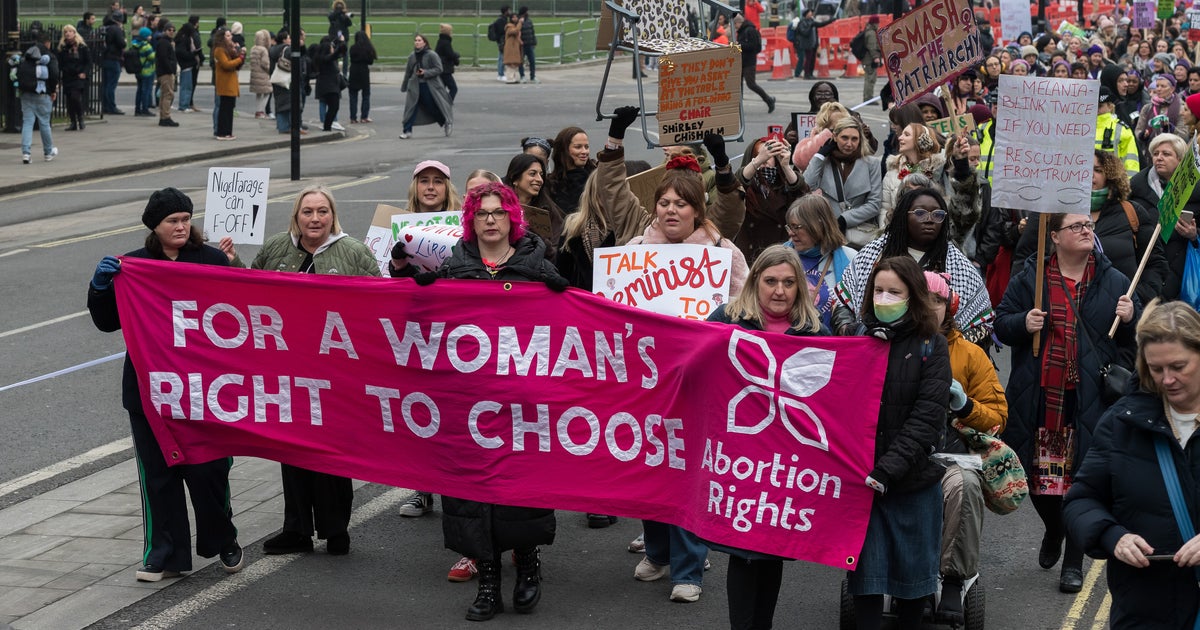
MPs are set to vote on changing the country’s abortion law on Tuesday but campaigners are split over just what alterations are needed.

Two Labour backbenchers have proposed altering the government’s Crime and Policing Bill with rival amendments to the draft legislation.

Both aim to decriminalise abortion, but the differences between their two policies have caused a major divide.

What is the difference between the two amendments?

1. Tonia Antoniazzi’s amendment

This amendment put forward by the Labour MP for Gower would stop it being a criminal offence for a woman to end their own pregnancy.

They would not be prosecuted for procuring or administering drugs, or using instruments, to cause an abortion.

This amendment would not include protections for medical staff or activists who aid the abortion.

2. Stella Creasy’s amendment

The Labour MP for Walthamstow’s amendment would decriminalise abortion up to 24 weeks.

Late-term abortions outside of the Abortion Act would also not result in custodial sentences.

She wants to decriminalise abortion for any medical professionals who carry out the abortion with the explicit consent of the pregnant person too, as long as the pregnancy has not exceeded 24 weeks.

Fears for medical staff and activists

The charities BPAS (British Pregnancy Advisory Service) and MSI Reproductive Choices have publicly supported Antoniazzi’s amendment – and written to MPs calling on them to do the same.

But activists fear that amendment will only lead to the prosecution of anyone who helps someone get an abortion, such as activists and medical staff.

HuffPost UK understands that MSI have claimed it is “possible” medical staff or activists could be investigated under Antoniazzi’s amendment.

However, Emma Campbell, co-convenor for Alliance 4 Choice, told HuffPost UK that Britain should be wary of what happened when a similar law was unveiled in Poland.

“Once it was no longer legal to arrest the people [who were pregnant], they arrested the activists,” she warned.

She said she was “mystified” by the fact that BPAS and MSI were not supporting Creasy’s amendment, calling Antoniazzi’s amendment “dangerous”.

“It seems bizarre – they’re willing to play politics on abortion-seekers and their close ones’ lives,” she said.

BPAS told HuffPost UK that Antoniazzi’s amendment “would change nothing about abortion provision or the laws around medical professionals and activists.”

BPAS’ head of advocacy Rachael Clarke said: “All it would do is stop the prosecution of vulnerable women who end their own pregnancies outside the current law.

“Every organisation that represents medical professionals working in abortion care support this amendment, including all abortion providers in England and Wales, the Royal College of Obstetricians and Gynaecologists, the Royal College of Nursing, the Royal College of Midwives, the Faculty of Sexual and Reproductive Healthcare, and the British Society of Abortion Care Providers.

“The uniting issue for all these groups is that women must urgently be removed from the criminal law on abortion – and that wider reform including that around the law related to medical professionals needs proper consideration and input from medical bodies and abortion care providers.”

MSI told HuffPost UK that Antoniazzi’s amendment “protects the person ending their own pregnancy from prosecution. It does not change the law in relation to medics or activists, and nor do we have reason to believe it would make prosecutions of medics or activists more likely.”

Louise McCudden, MSI Reproductive Choices’ UK head of external affairs. added: “We would never support an amendment that criminalised medics or activists, or that made their prosecution more likely.”

Confusion around campaigners

There’s also a clash between activists over Creasy’s amendment.

MSI told MPs it was written without abortion providers’ input, and suggested it did not have enough support to pass.

MSI has also warned campaigners it could set back the fight for full decriminalisation of abortion for a generation.

The same organisation wrote to MPs last week calling for them to withdraw their support for Creasy’s decriminalisation bill.

MSI’s Louise McCudden told HuffPost UK: “We strongly support full decriminalisation of abortion and we have long advocated for it with our partners, including the many pro-choice activists who have signed up to back NC1 as an important milestone. Abortion providers, pro-choice activists, and medics have already begun to reimagine abortion care for the 21st century.

“This is a complex area and it’s important we get it right. In the meantime, we advocate for a simple reform to the law which will end the prosecution of women who have been investigated under our Victorian abortion laws. The women have who have been investigated so far include domestic abuse survivors, potential trafficking survivors, and women who have had stillbirths – this is a fundamental injustice and addressing it cannot wait.”

Share Button

Senior Labour MP Calls For National Plan To End ‘The Motherhood Penalty’

Whether explicit or not, many politicians rest their policies on mothers accepting the ‘mental load’ – the list of caring and logistical tasks that underpin day to day life. But as tech bros now dominate public life, its time this group of overworked and undervalued labourers rebel – and we address the damage inequality is doing according. It’s time for mothering Independence Day.

The narrative that mothering should be difficult is so ingrained we rarely question it. There’s few other roles with so many memes dedicated to celebrating ‘struggle and juggle’ and in doing so failing to liberate those at the sharp end.

Yet the motherhood penalty pockmarks society, damning women to frustrated lives, men to outdated gender stereotypes and ultimately harming economic growth.

The very capacity to carry children means women face discrimination from employers fearing maternity rights obligations – a risk that will harden with the Employment Rights Bill, which improves maternity protection but not paternity rights, so reinforcing the notion its ‘ladies who do babies’.

Have a kid and say goodbye not just to your beach body but your pay packet and credibility at work. As Joeli Brearley argues: “Men get pay rises and promotions when they have kids.. women get pay cuts and demotions when they become a mother.”

In 2023 the pay gap between mothers and fathers was 24% per hour. Mothers are considered less competent and committed, especially in contrast to fathers. Politicians currently compete to bang the drum that somehow being present in the office is what makes you work. Challenging the time lost trying to combine nursery or school gate pick ups and commuting or office timetables is seen as woke, not wise.

“Get a nanny” cry commentators – as if wanting to spend time with your child in person is indulgent – yet the UK has some of the most expensive childcare in the world. The Tories crashed an already-stretched system by pushing up demand without providing the funds to properly increase supply.

Costs are still rising, with those on the lowest incomes least likely to be able to access it at all. We may have rights to flexible working, but flexibility isn’t spontaneity. In my own workplace they expect parents to plan childcare on a weekly basis, as if nursery places or childminders exist on tap.

Despite the legion of economic and social benefits, this critical economic infrastructure takes second place to debating AI and the mythical possibilities of technology.

Most mums also know the soft discrimination of being cut out because they can’t drop everything – and the gritted teeth when others try to ‘solve’ childcare for them. From those who expect you to treat your children as if they are puppies who can be left with a stranger to those who say you should “enjoy your time off” during school holidays.

It is not by accident that saying no is seen as ungrateful. The discourse that goes with motherhood is designed to reinforce rather than shatter patriarchy – if we want change we should focus on reshaping this environment, rather than forcing mums to make outdated ways of working acceptable in the first place.

Everywhere you look motherhood is associated with risk, not reward. Up to 60% of women who experience domestic abuse do so during pregnancy and 65% of maternity units have been judged not fit for purpose. Make it home and women are still working – globally doing three-quarters of the world’s unpaid work, equating to 11 billion hours a day and three times more than men.

Of course, money makes a difference to this – meaning those on the lowest incomes, single parents, the disabled or those from minority communities, are even more shut out of the conversation.

Freeing mums up from these pressures may not a topic for progressives, but its clear that defining our duties is a must for the authoritarian right. UK politics is again being flooded with tropes about family, as women’s bodies are the battlefield for their culture wars.

Whether calls for restrictions in access to abortion to the suggestion the best mums want to stay at home as ‘trad wives’ whilst men “sacrifice themselves” in offices. Handwringing about the show ‘Adolescence’ bemoans the lack of fathers and how a mother cannot be ‘enough’ – as others claim feminism created a situation where our sons have been overlooked altogether.

Mums don’t need more memes about how we’re doing great. We need a revolution. Not just to be seen, but heard and valued for both our parenting and our political contribution. That requires not just better maternity care, investment in childcare, or equal parental rights.

With women increasingly recognising the raw deal offered to mothers, we need a national plan for ending the motherhood penalty. Its time to stand up for mothers and speak up for what they are capable of before the Handmaids Tale becomes a documentary, not a satire.

Stella Creasy is the Labour MP for Walthamstow

Share Button

Women’s Rights Campaigners Celebrate As MPs Back Abortion Clinic Buffer Zones

Campaigners have hailed a move that could see anti-harassment buffer zones created around abortion clinics in England and Wales.

MPs voted in favour of an amendment to the government’s Public Order Bill that would make it a criminal offence for anti-abortion campaigners to interfere, intimidate or harass women who are seeking a termination or providing the medical service.

The proposals, which were pushed by a cross-party group of MPs, passed by 297 votes to 110 — a majority of 187.

In a lengthy parliamentary debate, a number of MPs spoke in support of the 150-metre buffer zones while other raised concerns that they would hinder the right to free speech.

Labour MP Stella Creasy, who proposed the amendment, said women “in their “droves are asking for this protection” and that there needed to be an end to the “postcode lottery of protection”.

Addressing MPs who opposed the amendment on free speech grounds, Creasy said: “New clause 11 does not stop free speech on abortion, it does not stop people protesting.

“As somebody who has been regularly subjected to protests, it’d do nothing to stop the protests that I have experienced from many of the people who are involved in this.

“It simply says that you shouldn’t have a right to do that in the face of somebody — and very often these people are right up in front of people — at a point when they have made a decision.”

Caroline Nokes, the Conservative chair of the women and equalities committee, also backed the proposals, arguing that “progress has been too slow” in protecting women from street harassment.

She was supported by former justice minister Victoria Atkins, who said she agreed with the amendment.

“These are fundamental healthcare services that we provide rightly, lawfully, in the 21st century. So we must surely enable women to get the services as they need them, when they need them, so that they get the right help and advice that they need.”

The debate comes after warnings from campaigners that women are being targeted by anti-abortion protestors and bombarded with distressing leaflets and materials.

The Royal College of Obstetricians and Gynaecologists, which welcomed the amendment’s passing, said there had been reports of leaflets being handed to women telling them that “rape is easier to get over than abortion”.

It also raised concerns that leaflets advertising so-called abortion reversal pills had been given to women despite the fact that there is “no reputable evidence” that the progesterone in the pills can “reverse” an abortion.

But Conservative MP Fiona Bruce said she believed exclusion zones had “grave implications” for “freedom of thought, conscience, speech, belief and assembly”.

She acknowledged harassment and intimidation around abortion clinics had to be “addressed”, but said there were already existing laws and “there have been relatively few if any reports of this”.

The DUP’s Carla Lockhart agreed, arguing that the amendment was “simply unnecessary” and that demonstrators offered women “alternatives” to abortion.

The Public Order Bill still has to undergo scrutiny in the House of Lords before it becomes law.

Speaking after the amendment passed, Creasy said: “Today’s vote is a victory for campaigners like Sister Supporter, women and MPs across parliament, especially Rupa Huq MP, who have fought for years for these vital protections.

“With evidence hundreds of thousands of women every year are hassled it’s right we have a national solution for a national problem.

“It’s for them we have acted so that they can access an abortion without having to run the gauntlet of protestors to seek healthcare.

“Ministers need to act swiftly to ensure that this change is implemented and guidance published to ensure that every woman is able to enjoy the protections which have been won today.”

Last week it was reported that a buffer zone was being placed around a clinic in Dorset to deter anti-abortion campaigners harassing service users and staff.

Breaching the buffer zone could result in a fixed penalty notice of £100 or a conviction at a magistrates court, the Guardian reported.

Share Button

Misogyny Could Become A Hate Crime, Says Law Commission As Review Launched

HuffPost is part of Verizon Media. We and our partners will store and/or access information on your device through the use of cookies and similar technologies, to display personalised ads and content, for ad and content measurement, audience insights and product development.

Your personal data that may be used

  • Information about your device and internet connection, including your IP address
  • Browsing and search activity while using Verizon Media websites and apps
  • Precise location

Find out more about how we use your information in our Privacy Policy and Cookie Policy.

To enable Verizon Media and our partners to process your personal data select ‘I agree‘, or select ‘Manage settings‘ for more information and to manage your choices. You can change your choices at any time by visiting Your Privacy Controls.

Share Button

John Bercow Blasts ‘Vile’ Pro-Life Billboards Aimed At Pregnant MP Stella Creasy

HuffPost is part of Oath. Oath and our partners need your consent to access your device and use your data (including location) to understand your interests, and provide and measure personalised ads. Oath will also provide you with personalised ads on partner products. Learn more.

Select ‘OK’ to continue and allow Oath and our partners to use your data, or select ‘Manage options’ to view your choices.

Share Button