Abortion has been decriminalised in England and Wales following a historic Commons vote.
MPs voted by 379 to 137 to amend the government’s Crime and Policing Bill so that it will no longer be a criminal offence for a woman to end her pregnancy at any time.
The amendment was tabled by Tonia Antoniazzi, the Labour MP for Gower and passed following a free vote, meaning MPs did not vote along party lines.
Advertisement
What is the current legislation around abortion?
Abortions are currently legal in England and Wales as long as they are carried out within the first 24 weeks of pregnancy.
For the rest of the UK, a foetus is considered “viable” once it reaches 24 weeks – meaning it could survive outside of the womb if it had enough support.
Advertisement
That means an individual is only allowed an abortion after that point if their own life is in danger or the foetus is showing signs of abnormalities.
Two doctors must give their approval for the abortion to go ahead, agreeing it would be riskier for the physical or mental health of the individual in question rather than having an abortion.
Doctors may allow an abortion if birth would create a substantial risk to the child.
The Covid pandemic also meant the government allowed women to access pills in the post if they want to terminate a pregnancy up to 10 weeks.
Advertisement
What did MPs just vote on?
MPs just voted in support of Antoniazzi’s amendment to remove women from the 1861 criminal law linked to abortion.
It means they would not be prosecuted under the act when it relates to their own pregnancy – even if they abort without medical approval after 24 weeks.
However, medical staff who assist would not be protected – although it is assumed the old law will fall out of use.
Advertisement
That means a rival amendment from fellow Labour backbencher Stella Creasy, who wanted to enshrine abortion as a human right, failed.
She wanted to change the law so neither pregnant people nor medical professionals would be able to be prosecuted for their involvement in abortions.
Why is abortion a particularly controversial topic right now?
Six women have appeared in court in England over the last three years and been charged with ending – or attempting to end – their pregnancy in breach of the 1967 Abortion Act.

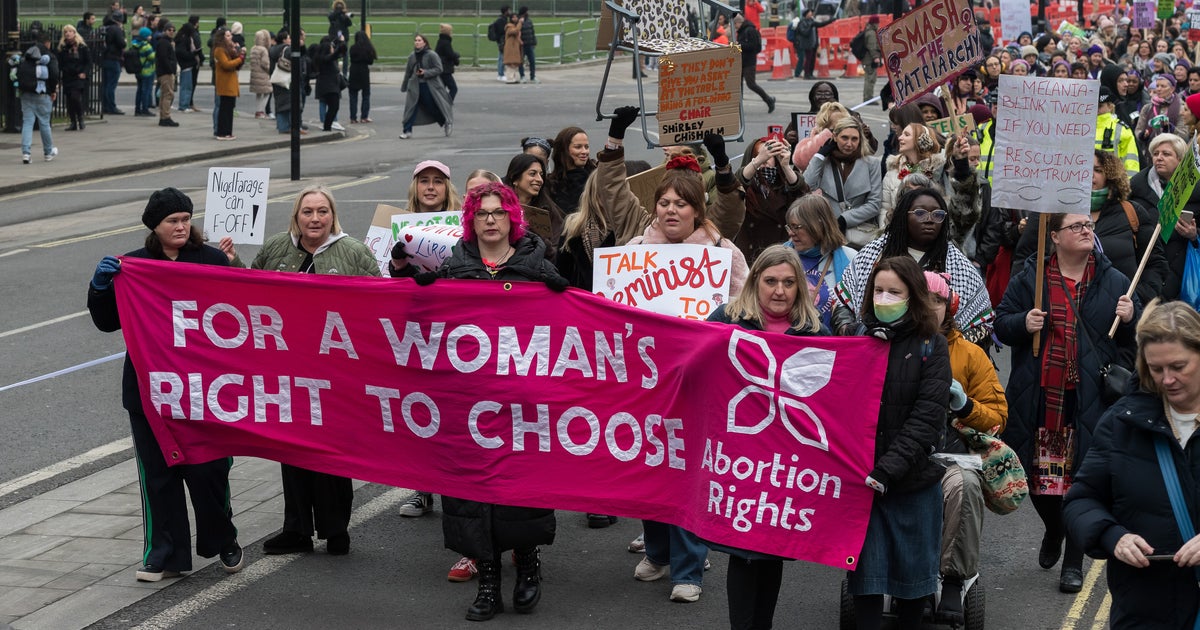
This sparked outrage from protesters, who said the women had a right to act in relation to their own bodies.
There is also international pressure adding heat to the debate after the US Supreme Court overturned Roe vs Wade, a landmark ruling which protected abortion rights, in 2022.
MPs are set to vote on changing the country’s abortion law on Tuesday but campaigners are split over just what alterations are needed.
Two Labour backbenchers have proposed altering the government’s Crime and Policing Bill with rival amendments to the draft legislation.
Advertisement
Both aim to decriminalise abortion, but the differences between their two policies have caused a major divide.
What is the difference between the two amendments?
1. Tonia Antoniazzi’s amendment
This amendment put forward by the Labour MP for Gower would stop it being a criminal offence for a woman to end their own pregnancy.
They would not be prosecuted for procuring or administering drugs, or using instruments, to cause an abortion.
Advertisement
This amendment would not include protections for medical staff or activists who aid the abortion.
2. Stella Creasy’s amendment
The Labour MP for Walthamstow’s amendment would decriminalise abortion up to 24 weeks.
Late-term abortions outside of the Abortion Act would also not result in custodial sentences.
She wants to decriminalise abortion for any medical professionals who carry out the abortion with the explicit consent of the pregnant person too, as long as the pregnancy has not exceeded 24 weeks.
Fears for medical staff and activists
The charities BPAS (British Pregnancy Advisory Service) and MSI Reproductive Choices have publicly supported Antoniazzi’s amendment – and written to MPs calling on them to do the same.
But activists fear that amendment will only lead to the prosecution of anyone who helps someone get an abortion, such as activists and medical staff.
Advertisement
HuffPost UK understands that MSI have claimed it is “possible” medical staff or activists could be investigated under Antoniazzi’s amendment.
However, Emma Campbell, co-convenor for Alliance 4 Choice, told HuffPost UK that Britain should be wary of what happened when a similar law was unveiled in Poland.
“Once it was no longer legal to arrest the people [who were pregnant], they arrested the activists,” she warned.
Advertisement
She said she was “mystified” by the fact that BPAS and MSI were not supporting Creasy’s amendment, calling Antoniazzi’s amendment “dangerous”.
“It seems bizarre – they’re willing to play politics on abortion-seekers and their close ones’ lives,” she said.
BPAS told HuffPost UK that Antoniazzi’s amendment “would change nothing about abortion provision or the laws around medical professionals and activists.”
Advertisement
BPAS’ head of advocacy Rachael Clarke said: “All it would do is stop the prosecution of vulnerable women who end their own pregnancies outside the current law.
“Every organisation that represents medical professionals working in abortion care support this amendment, including all abortion providers in England and Wales, the Royal College of Obstetricians and Gynaecologists, the Royal College of Nursing, the Royal College of Midwives, the Faculty of Sexual and Reproductive Healthcare, and the British Society of Abortion Care Providers.
“The uniting issue for all these groups is that women must urgently be removed from the criminal law on abortion – and that wider reform including that around the law related to medical professionals needs proper consideration and input from medical bodies and abortion care providers.”
Advertisement
MSI told HuffPost UK that Antoniazzi’s amendment “protects the person ending their own pregnancy from prosecution. It does not change the law in relation to medics or activists, and nor do we have reason to believe it would make prosecutions of medics or activists more likely.”
Louise McCudden, MSI Reproductive Choices’ UK head of external affairs. added: “We would never support an amendment that criminalised medics or activists, or that made their prosecution more likely.”
Confusion around campaigners
There’s also a clash between activists over Creasy’s amendment.
MSI told MPs it was written without abortion providers’ input, and suggested it did not have enough support to pass.
Advertisement
MSI has also warned campaigners it could set back the fight for full decriminalisation of abortion for a generation.
The same organisation wrote to MPs last week calling for them to withdraw their support for Creasy’s decriminalisation bill.
MSI’s Louise McCudden told HuffPost UK: “We strongly support full decriminalisation of abortion and we have long advocated for it with our partners, including the many pro-choice activists who have signed up to back NC1 as an important milestone. Abortion providers, pro-choice activists, and medics have already begun to reimagine abortion care for the 21st century.
Advertisement
“This is a complex area and it’s important we get it right. In the meantime, we advocate for a simple reform to the law which will end the prosecution of women who have been investigated under our Victorian abortion laws. The women have who have been investigated so far include domestic abuse survivors, potential trafficking survivors, and women who have had stillbirths – this is a fundamental injustice and addressing it cannot wait.”
A day after indicating some support for a referendum to protect abortion rights in Florida, Donald Trump said Friday he’s actually going to vote against it.
If passed, Amendment 4 would amend Florida’s constitution to restore abortion access until fetal viability ― typically around the 6-month mark. Florida currently bans abortion beyond the sixth week of gestation, with limited exceptions.
Advertisement
Abortion late in pregnancy is extremely rare and often happens because the fetus would not survive after birth or because of serious threats to the mother’s health.
Trump, a Florida voter as of 2020, then claimed that blue-state abortion laws allow for the homicide of newborn babies ― a lie he often repeats.
“Some of the states like Minnesota and other states have it where you could actually execute the baby after birth, and all of that stuff is unacceptable,” he said. “So I’ll be voting no for that reason.”
Trump reiterated that he thinks that Florida’s current ban is too restrictive, even though he boasted as recently as last year that “without me there would be no six weeks, 10 weeks, 15 weeks” bans.
Advertisement
In recent months, Trump has increasingly tried to appear moderate on abortion ― a matter that’s proven to be a losing issue for Republicans since the fall of the Supreme Court precedent under Roe v. Wade in 2022. Vice President Kamala Harris’ presidential campaign has repeatedly told voters not to take his more relaxed stance on the issue seriously, pointing to his long record of opposing abortion access.
In response to Trump’s remarks Friday, Harris said he’s clearly aligned himself with the anti-abortion movement.
“Donald Trump just made his position on abortion very clear: He will vote to uphold an abortion ban so extreme it applies before many women even know they are pregnant,” she said.
“Of course he thinks it’s a ‘beautiful thing’ that women in Florida and across the country are being turned away from emergency rooms, face life-threatening situations and are forced to travel hundreds of miles for the care they need,” she continued.
“President Trump has not yet said how he will vote on the ballot initiative in Florida, he simply reiterated that he believes six weeks is too short,” campaign press secretary Karoline Leavitt said in a news release.
Measures like the one in Florida have passed in numerous other states since the fall of Roe. In all seven states that have put abortion questions before voters, including red states like Kansas, Kentucky and Montana and swing states Ohio and Michigan, voters have sided with abortion rights.
Donald Trump saidthe Arizona Supreme Court overstepped when it ruled Tuesday that a 160-year-old law criminalizing most abortions can go into effect.
Asked by reporters outside his plane Wednesday in Georgia if the ruling in Arizona “went too far”, Trump replied: “Yeah they did, and that will be straightened out.”
Advertisement
“As you know, it’s all about states’ rights,” he continued, saying he believes Gov. Katie Hobbs (D) will “bring it back into reason”. He did not explain what he thought a reasonable restriction would be.
His remarks echo a murky statement he made on abortion days earlier that left voters wondering whether he would support a federal ban pushed by members of his party. But shortly after speaking to reporters outside his plane, Trump said he wouldn’t sign a national abortion ban if elected.
Arizona’s 1864 law is a near-total ban on abortion at every stage of pregnancy that only makes exceptions to save the pregnant person’s life, overriding a 15-week ban that went into effect in 2022. Abortion providers who violate the law could face two to five years in prison.
The law does not immediately go into effect, as the Arizona court stayed it for 14 days to allow a lower court to hear additional arguments.
Advertisement
Arizona Attorney General Kris Mayes vowed Tuesday that she would not enforce such an “unconscionable” and “draconian law” during her term even if the law were to be enacted.
“Today’s decision to reimpose a law from a time when Arizona wasn’t a state, the Civil War was raging, and women couldn’t even vote will go down in history as a stain on our state,” Mayes said in a statement. “This is far from the end of the debate on reproductive freedom, and I look forward to the people of Arizona having their say in the matter.”
A coalition of reproductive rights groups is spearheading an effort to ask the residents of Arizona to vote on adding an amendment protecting abortion to the state’s constitution. They said last week they’ve collected enough signatures for the amendment to appear on the ballot this November.
Trump’s remarks come two days after he issued a vague statement on abortion rights, seemingly responding to pressure he clarify his stance on the issue before officially becoming the GOP nominee for president. In a video he posted to social networking site Truth Social, Trump took credit for the overturning of Roe v. Wade in 2022 and said he thinks abortion rights should remain up to the states.
“My view is now that we have abortion where everybody wanted it from a legal standpoint. The states will determine by vote or legislation, or perhaps both, and whatever they decide must be the law of the land — in this case, the law of the state,” he said in the video.
Advertisement
Though he clarified Wednesday he wouldn’t sign a national abortion ban, he’s yet to offer an opinion on attempts to limit access to the drug mifepristone ― the most common method of terminating pregnancies.
Following Trump’s statements Wednesday, President Joe Biden’s campaign emphasised that Trump cannot be trusted on abortion and questioned the veracity of his promise not to sign a national abortion ban.
“Trump lies constantly ― about everything ― but has one track record: banning abortion every chance he gets,” communications director Michael Tyler said. “The guy who wants to be a dictator on day one will use every tool at his disposal to ban abortion nationwide, with or without Congress, and running away from reporters to his private jet like a coward doesn’t change that reality.”
When I was 8 years old, my mom, who was about 20 weeks pregnant, flew to Boston with my then-stepdad. She returned without a bump or a baby.
When she got home, she was devastated. So was I, because I’d always wanted a little sister. I’d been thrilled when my mother’s belly started to grow, and people began congratulating her everywhere we went.
Advertisement
She’d remarried less than a year before that, and the transition of having a new man in the house had been tough for my younger brother and me. A new baby was something we could all rally around, so it was especially difficult for all of us when my mom started experiencing complications.
At the beginning of her second trimester, right after she’d started telling people she was pregnant, she began bleeding and cramping. I spent a lot of afternoons at my cousin’s house while my mom attended doctor appointments. She’d return to pick me up, and I’d find her whispering in the driveway with my aunt. One night after dinner, we had a family meeting where she told us that the baby had a heart problem and would need surgery right after it was born.
The bleeding continued, and there were more doctor appointments and late-afternoon pickups and whispered conversations. A few weeks later, my mom went to Boston. When she returned, a new word was added to my second-grade vocabulary: miscarriage. At the time, I was old enough to know the baby was gone, but too young to understand or remember any specifics.
Still, my mom’s “miscarriage” shaped my perception of pregnancy. I understood its fragility.
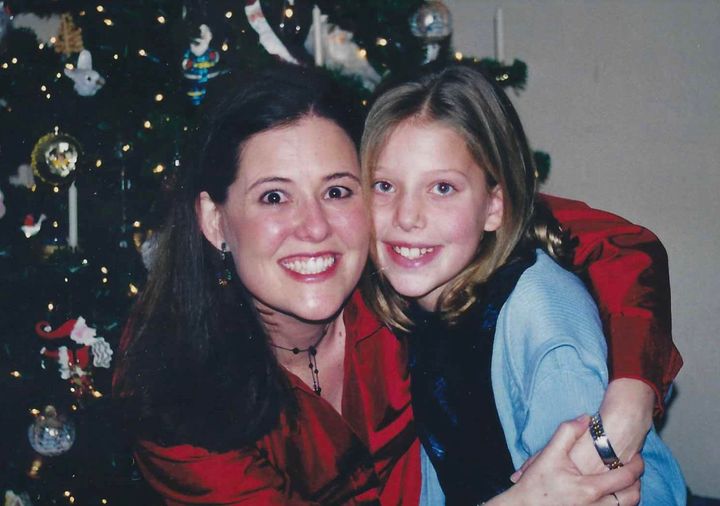
Courtesy of Sarah Hunter Simanson
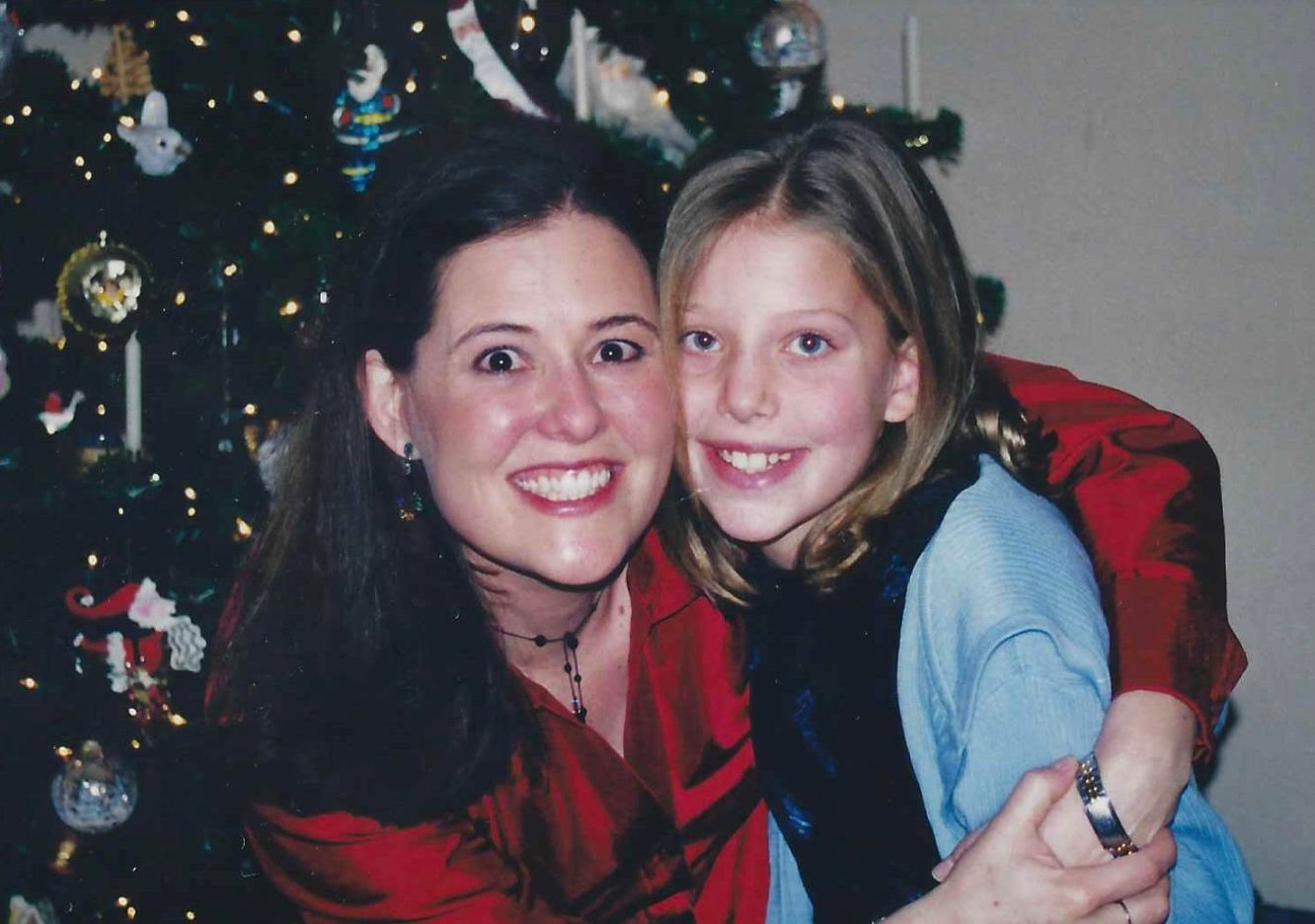
The author and her mom at Christmastime when the author was in elementary school.
Advertisement
In the fall of 2017, just as the Memphis air was turning from humid to crisp, my mom and I went for one of our regular morning walks. She was between chemo treatments for the stage 4 cholangiocarcinoma she was battling, and I had just taken my first positive pregnancy test. I hadn’t told her yet. My mom didn’t even know my husband and I were trying. I was only about four weeks pregnant, and I was afraid of getting her hopes up at a time when she really needed things to believe in, so I decided to wait to share my news until my doctor detected a heartbeat at the six-week appointment and I had an ultrasound picture to show her.
As we walked under the canopy of brown and burnt orange leaves, I asked her questions about when she was pregnant with me: “How did you feel? What was it like? Did it hurt?” This was something I’d started doing about many different topics ― I sought out information I wanted to know from her and asked questions while she was still around to answer them.
But that morning, my mom didn’t have many answers about when she was pregnant with me. “I don’t remember,” she told me. “You forget the hard parts, so you can do it again.”
We walked around a big curve in the road, and I thought about the poppy seed-sized embryo inside of me. My mom turned to look at me. I expected her to offer some insight about morning sickness or food cravings, but she changed the subject.
”You know it had genetic abnormalities, too?” she said out of nowhere. Actually, I didn’t know this, because she never talked about the baby she lost. ”My body kept trying to abort it, but it couldn’t. That’s why I kept haemorrhaging.” Her voice was faraway as she mentally traveled back to that time.
Advertisement
Now, almost four years after my mom’s death and five years after that conversation, I still remember it vividly — the crunch of leaves under our feet, the exact bend of that road, the mild weather of the day. The moment was a glimpse into the experiences of my mom’s that I could never access ― a reminder that she’d die with so many untold stories.
One day last summer, as I watched my two kids playing under the bright pink blooms of the crepe myrtles in our backyard, I began bleeding. It was a very early miscarriage, nothing like what my mom had been through. But it still made me think of her and that conversation. I couldn’t know the extent of her much-worse tragedy, but I, too, was experiencing a third pregnancy that would never be. My miscarriage — this third baby that would not be — made me feel connected to her.
It wasn’t until last month, when Tennessee’s total abortion ban went into effect, that I finally understood my mom didn’t have a miscarriage. Technically, legally, she had an abortion.
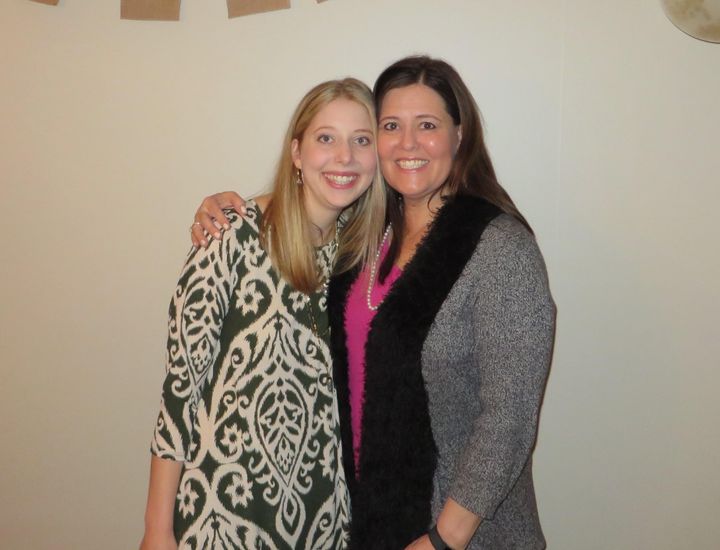
Courtesy of Sarah Hunter Simanson
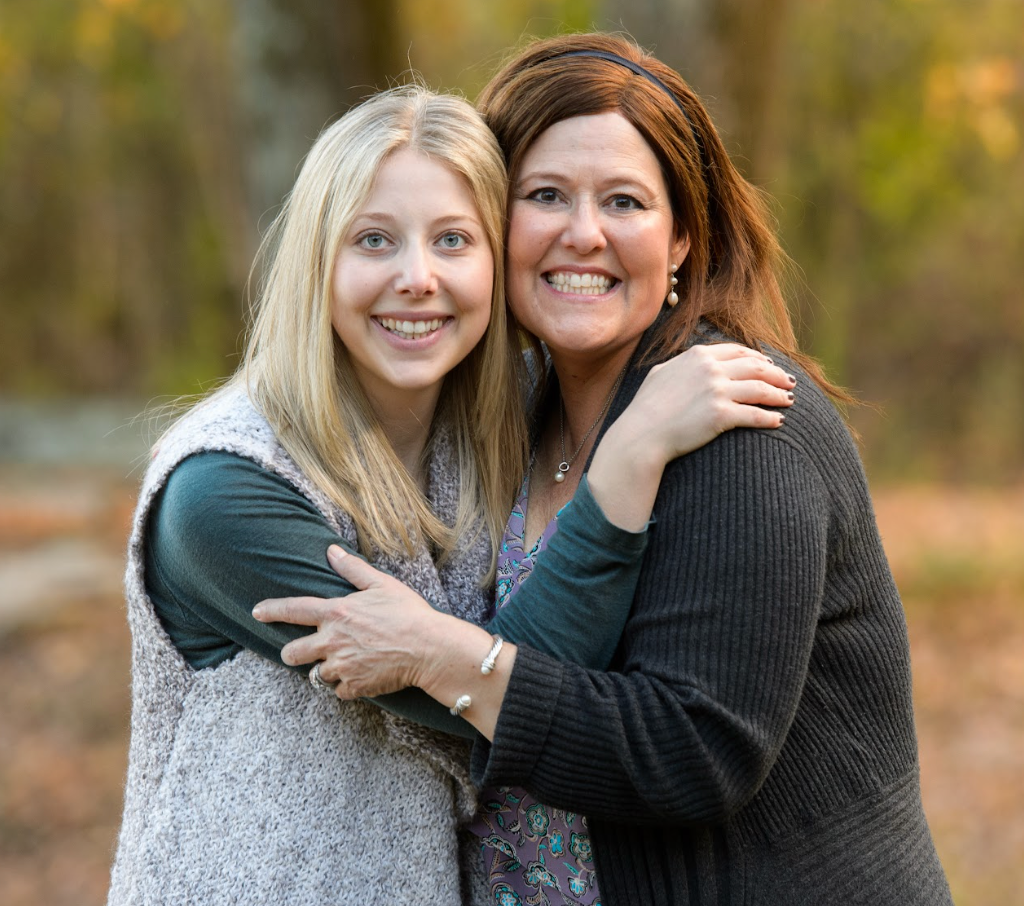
The author and her mom in November 2016. “This was right after I got engaged, two days after doctors found a mass in her liver,” she writes.
Tennessee’s ban is one of the strictest in the country. It does not include an exception for incest or rape, or for the life of the mother. Instead, the law offers the possibility of an “affirmative defence,” which allows the doctor, if charged with a Class C felony, to argue that an abortion was necessary “to prevent the death of the pregnant woman or to prevent serious risk of substantial and irreversible impairment to a major bodily function of the pregnant woman.”
Advertisement
As I read the law’s language and understood that women in Tennessee were no longer guaranteed equitable, potentially lifesaving health care, I thought back to my mom’s words: That’s why I kept haemorrhaging.
I had to know what happened in Boston. I was almost certain the pregnancy had put my mom’s life at risk and that she’d had to get an abortion, but I needed corroboration. I called my great-aunt who lives in Boston, and she immediately answered the questions I’d never known to ask.
“Yes, it was an abortion,” my great-aunt told me. “It wasn’t a viable pregnancy. It was endangering your mom’s life. It was an extremely difficult situation, and she’d had to travel to Boston for the procedure because it wasn’t legal in Tennessee.”
My great-aunt didn’t remember the specifics about why the pregnancy wasn’t viable. I knew there was only one person who’d been to those appointments with my mom and might know everything: my former stepdad.
It took me weeks to text him. We hadn’t spoken since their acrimonious divorce, the year after I graduated from college. I wasn’t even sure he’d be receptive to these questions. The experience was so long ago, and it had been so painful.
Advertisement
But he was immediately responsive, and willing to share the details he remembered. He told me the foetus had a chromosomal abnormality, misshapen kidneys, a hole in the heart, and structures at the oesophagus and rectum that prevented the processing of amniotic fluids. My mom’s health was also at risk because she kept bleeding. The neonatologist said they needed to make a decision.
The specialist referred them to an abortion clinic in Tulsa, Oklahoma. When my mom called the clinic for more information, the receptionist warned her that patients were usually harassed when entering the facility. So my mom called her aunt in Boston, and she connected her to a doctor at a hospital there.
Photo by Madison Yen
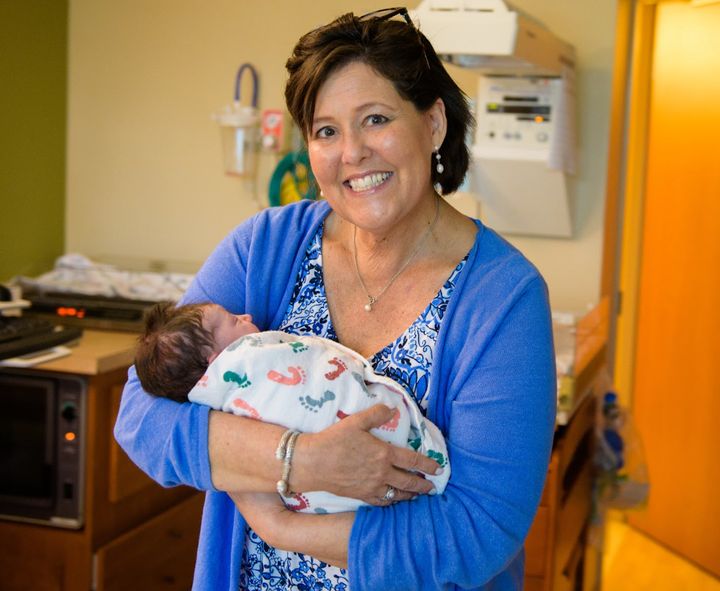
The author’s mother holds the author’s daughter a few minutes after she was born in August 2018. “It is one of the few pictures I have of them together,” the author writes. “My mom’s health declined quickly, and she died four months later.”
Even though the baby had chromosomal abnormalities and too many physiologic issues to correct, and even though my mom’s body kept trying to abort the baby naturally, it was still an unthinkable decision, my former stepdad said. They sought counsel from their Episcopal priest and diocesan bishop. They consulted another doctor in Memphis. Ultimately, the doctor in Boston reaffirmed that the foetus was not viable and wouldn’t live if carried to term. Because of this, and because of the risk to my mom’s health, they decided to proceed with the abortion.
I’ll never know what my mom experienced during that procedure. Though it was an abortion ― and a choice she made ― she still considered it a “miscarriage,” and went on to describe it that way to the few close friends with whom she discussed it. I know it was traumatic, and that is why my family never talked about it. Most importantly, I know it was a procedure my mom needed for her safety, and one that other women will need for their own.
Advertisement
Chrissy Teigen recently revealed that, like my mom, what she had claimed was a miscarriage was actually an abortion. “I told the world we had a miscarriage, the world agreed we had a miscarriage, all the headlines said it was a miscarriage,” the model said. “And I became really frustrated that I didn’t, in the first place, say what it was, and I felt silly that it had taken me over a year to actually understand that we had had an abortion.”
There are so many reasons why someone may not admit that they’ve had an abortion ― from fear and grief to the nightmarish political climate and simply wanting to keep their medical decisions private ― and all of them are valid. The bottom line is abortion needs to be safe, legal and accessible for anyone who wants or needs one.
Despite the deep trauma of her abortion, I know that my mom was profoundly grateful she could get one. It ensured she’d live and allowed her to keep being my mom. While I did not know my mom’s story until recently, I know that if she were here today, she would be outraged by what has happened in this country ― and what’s still happening. I know she’d want lawyers to challenge the abortion bans that various states have enacted. I know she’d want Lindsey Graham to understand the devastating effect that a federal 15-week abortion ban would have on the health of women and people with uteruses. I know she’d want voters to support candidates who champion abortion rights. And I believe she’d be proud of me for speaking up now and telling her story in the hope that it might matter ― that it might mean something and maybe even help do something.
Ultimately, she’d want women to have access to the procedure that protected her life. And she’d want them to have it regardless of where they are in their pregnancy, or which state they live in.
Advertisement
Sarah Hunter Simanson received her MFA from Vermont College of Fine Arts. Her writing has appeared in Salon, Romper and The Daily Memphian. She is currently working on her first novel.
At least four of the eight candidates on stage falsely claimed that people are getting abortions up until birth. But the Florida governor went a little further.
DeSantis claimed to know a woman named “Penny” who he said “survived multiple abortion attempts” and “was left discarded in a pan.”
He added: “Fortunately, her grandmother saved her and brought her to a different hospital.”
DeSantis then declared that Republicans “are not going to allow abortion all the way up ’til birth,” referring to something that, again, is not actually happening to begin with, no matter what Republican politicians desperate for primary voters might say.
Many people on social media were sceptical that DeSantis’ story is true and that his good friend Penny even exists.
HuffPost reached out to the DeSantis campaign to ask about the governor’s friendship with Penny and whether they would make her available for interviews, but no one immediately responded.
DeSantis may have been referring to an anti-abortion rights activist from Michigan named Miriam “Penny” Hopper, who has claimed she was born in 1955 at 23 weeks old after her parents decided to have an abortion.
Shocking new research from the campaign group Pregnant Then Screwed has revealed that 1 in every 61 pregnant workers says their boss has insinuated they should terminate their pregnancy for the sake of their career.
Pregnant Then Screwed, who campaign for the rights of parents and against sex discrimination, surveyed over 24,000 parents to uncover the discrimination that women face in the workplace when they become mothers.
Advertisement
The data shows that over half of all mothers (52%) have faced some form of discrimination when pregnant, on maternity leave, or when they returned to work.
One woman involved in the study, Connie*, told her boss about her pregnancy at eight weeks and was told, “It would be easier for your future career if you just brought a coat hanger”. Three colleagues went on to tell Connie that she had ruined her career and should have had an abortion.
For some women, the consequences of having children can have life-changing consequences on their career, with one in five mothers (19%) making the decision to leave their employer due to a negative experience.
Additionally, one in 10 women (10%) revealed they were bullied or harassed when pregnant or returning to work, and 7% of women lost their job — through redundancy, sacking, or feeling forced to leave due to a flexible working request being declined or due to health and safety issues.
Advertisement
If scaled up, this could mean as many as 41,752 pregnant women or mothers are sacked or made redundant every year.
“These stats show how far we have to go before mothers are truly accepted as equal members of the workplace,” says Joeli Brearley, CEO and founder of Pregnant Then Screwed.
“We know that women are treated differently from the point they get pregnant. They are viewed as distracted and less committed to their work, despite there being no change to their performance. This bias plays out in numerous ways, affecting women’s earnings and career potential. There is absolutely no excuse for bosses, who hold the power, to tell their employees to abort a pregnancy. It is sex discrimination and it is inhumane.”
Abraham Gonzalez Fernandez via Getty Images
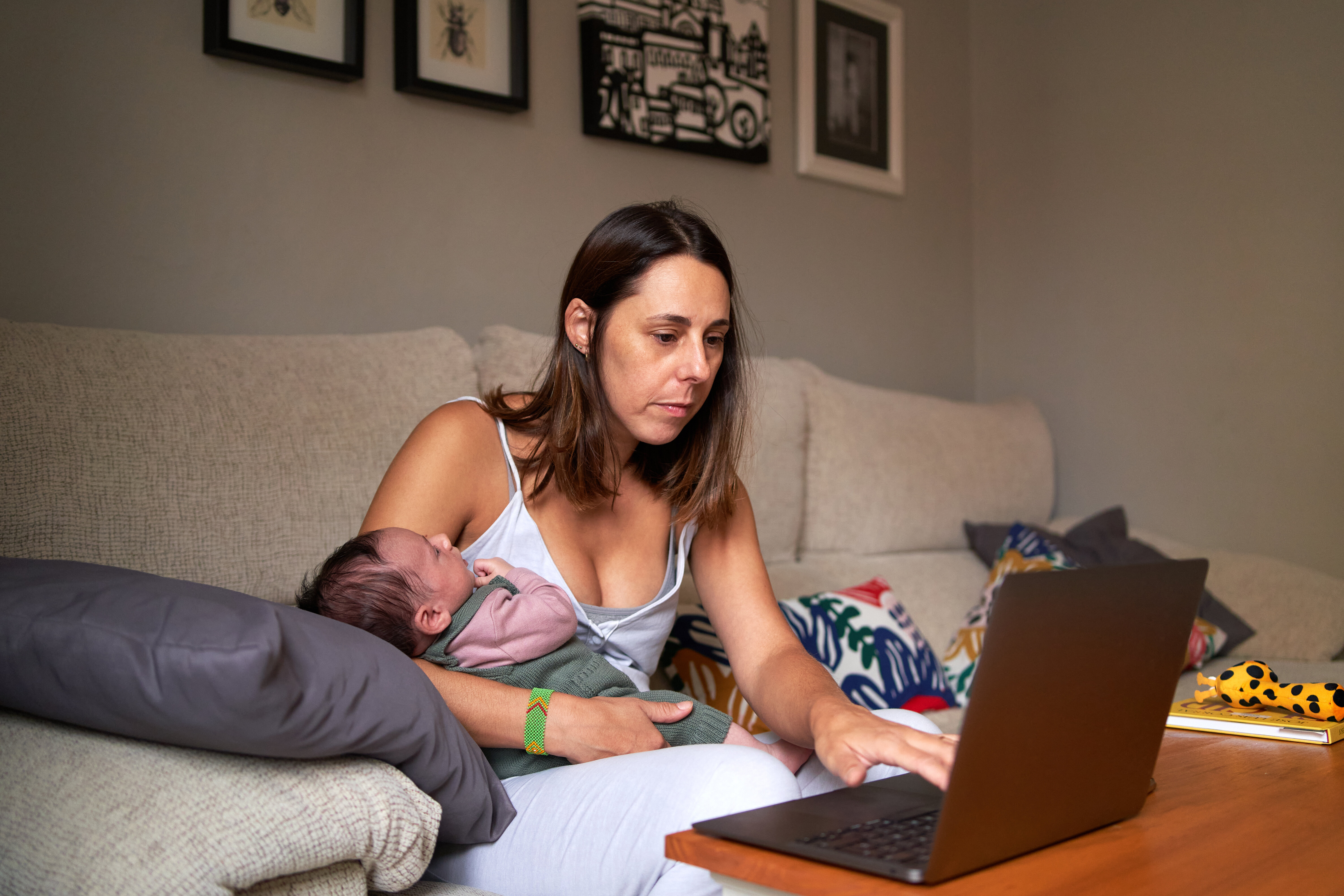
Portrait of a stressed woman tries to work from home with baby in arms
The discrimination that women face doesn’t always come from their boss; in fact, 73% of women shared that a colleague made hurtful comments about their pregnancy or maternity leave, and 74% of women said that a colleague insinuated that their performance had dipped due to pregnancy or maternity leave. Some women even experience criticism based on the way they look when they are pregnant – with 64% saying their boss or a colleague had made inappropriate comments about their looks.
Advertisement
“The fact that the majority of pregnant women have experienced inappropriate and degrading comments from a colleague or their boss about the way they look is shameful,” says Brearley.
“Why as a society do we accept women being a target for such abuse? These hurtful comments chip away at women’s confidence, ambition and feeling of belonging,” she says.
“Pregnant women are made to feel like an unsightly burden, no wonder a high proportion of women report feeling depressed or anxious when pregnant and one in five women leave their employer after becoming pregnant.’’
The study’s data and the shocking stories shared by pregnant women in workplaces around the UK highlight the worrying and pervasive attitudes towards women in society — even in a supposedly equal one like the UK.
It isn’t just about having children; women are being treated differently for decisions relating to their reproductive health, too. An especially worrying trend in our post-Roe v Wade world, which is seeing our rights rolled back across the globe.
Advertisement
For instance, a third of women (31.58%) who told their employer about having an abortion felt that they experienced discrimination or were unfairly treated as a result. And the majority of women (57.6%) didn’t even tell their employer they had an abortion, presumably for fear of being judged negatively.
Women being bullied out of the workplace for being pregnant, or choosing not to be, is just one more example of the ways women’s freedoms are being infringed upon, and shows that, in the end, the patriarchy doesn’t want us to win.
It’s something we should all vehemently stand against, together.
If you or anyone you know has experienced discrimination in the workplace, please call the Pregnant Then Screwed helpline on Tel: 0161 2229879
Last Friday, five of the nine Supreme Court judges overturned Roe v Wade, the 50-year-old landmark legislation which enshrined the right to an abortion across America.
Advertisement
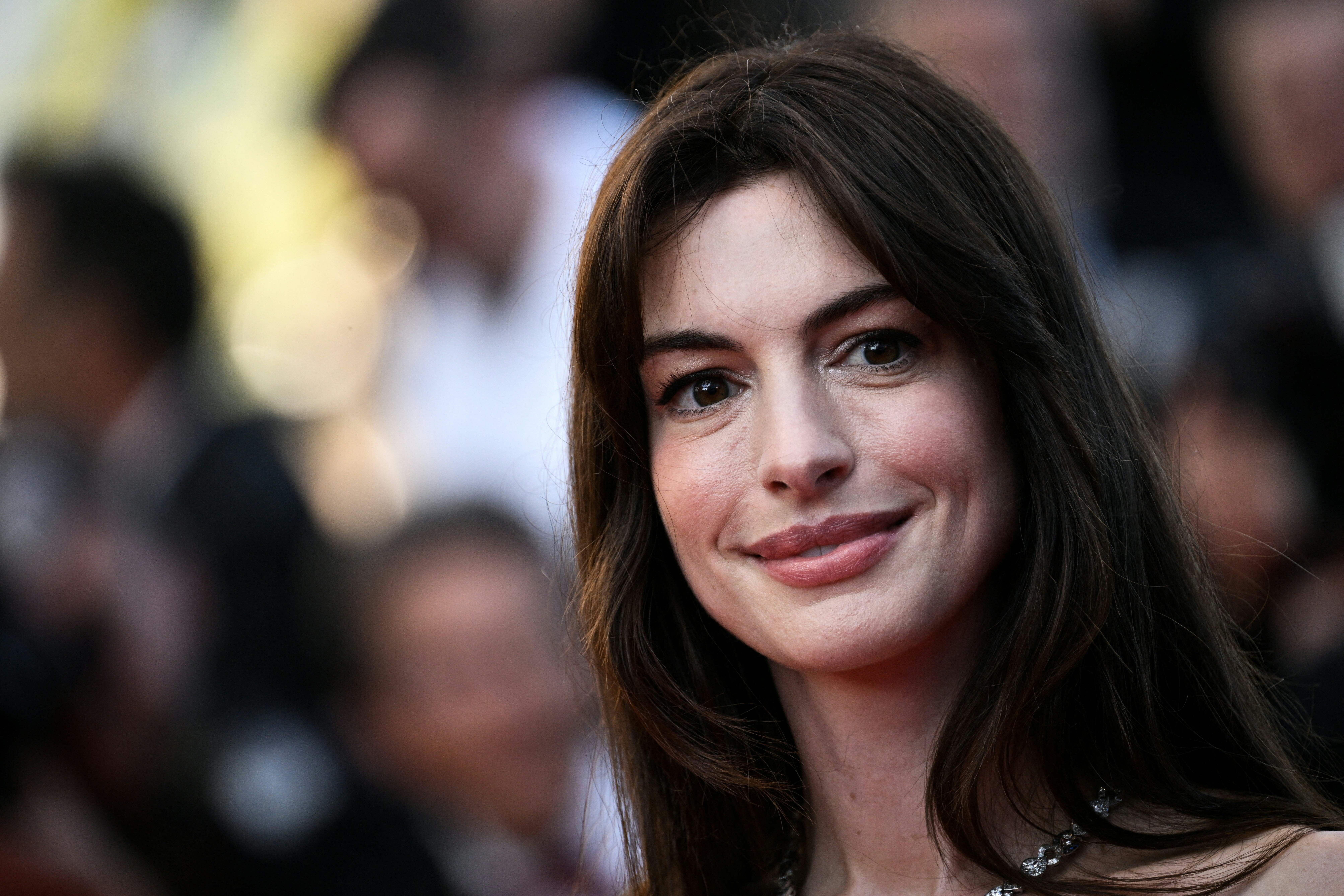
In an Instagram post shared on Thursday – the 16th anniversary of the film Anne starred in opposite Meryl Streep – Anne used it as an opportunity to comment on the ruling.
“Happy Anniversary to #TheDevilWearsPrada,” she captioned a series of stills from the 2006 film.
“Looking back on photos of this beloved film that shaped the lives and careers of so many—mine included—I am struck by the fact that the young female characters in this movie built their lives and careers in a country that honored their right to have choice over their own reproductive health.
“See you in the fight,” she added.
Anne Hathaway in The Devil Wears Prada
Barry WetcherBarry Wetcher/20th Century Fox/Kobal/Shutterstock
Advertisement
The actor’s latest post follows another from 24 June, in which she shared a New Yorker article titled ‘We’re Not Going Back to the Time Before Roe. We’re Going Somewhere Worse’.
Anne titled the post: “So much to say, but let’s start here.”
Anne’s posts come after a number of artists performing at last weekend’s Glastonbury spoke out about the ruling.
Performers including Megan Thee Stallion, Lorde, Kendrick Lamar and more were among those making some noise at the festival.
During her set on Saturday, US singer Olivia Rodrigo invited Lily Allen to sing with her. The pair duetted on Lily’s hit Fuck You, dedicating it to the Supreme Court.
Advertisement
Olivia told the crowd she was devastated that “so many women and so many girls are gonna die because of this.”
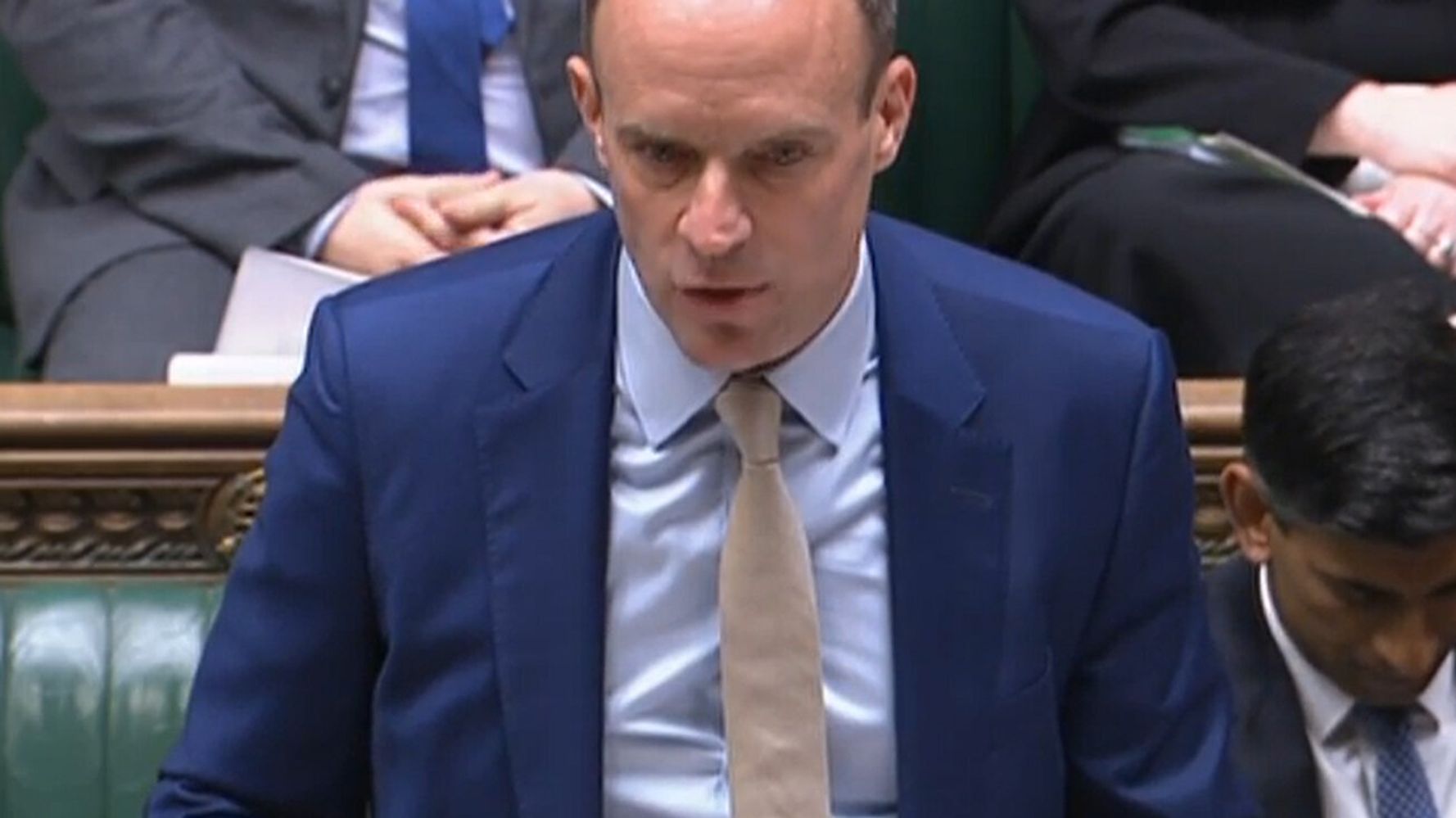
Speaking during PMQs on Wednesday, Labour MP Rosie Duffield said: “So far this year, 52 women have been killed in the UK.
“Our rights to free speech, safe spaces, fairness in sport and even the words we use to describe our own bodies are all under threat.
“Will the deputy prime minister send a clear signal, as some of his cabinet colleagues have done this week, that Britain respects the rights of women, and will he accept the cross-party amendment to his forthcoming Bill of Rights which enshrines a women’s right to choose in law?”
But Raab, who was standing in for Johnson as the prime minister is abroad, said such a move risked abortion rights “being litigated through the courts”.
Advertisement
“The position, as she knows, is settled in UK law in relation to abortion,” the deputy prime minister and justice secretary said.
“It’s decided by honourable members across this House. It’s an issue of conscience. I don’t think there is a strong case for change.
“What I wouldn’t want to do is find ourselves, with the greatest of respect, in the US position where this is being litigated through the courts rather than settled as it is now settled by honourable members in this House.”
Raab’s British Bill of Rights will work as a successor to the Human Rights Act.
It asserts that the UK Supreme Court is the ultimate decision maker on human rights issues in the UK and the country does not always have to follow case law from the European Court of Human Rights.
Since news of the overturning of Roe V Wade broke on Friday, ending the constitutional right to abortion in the US after almost half a century, abortion rights activists have galvanised, and social media efforts have amplified.
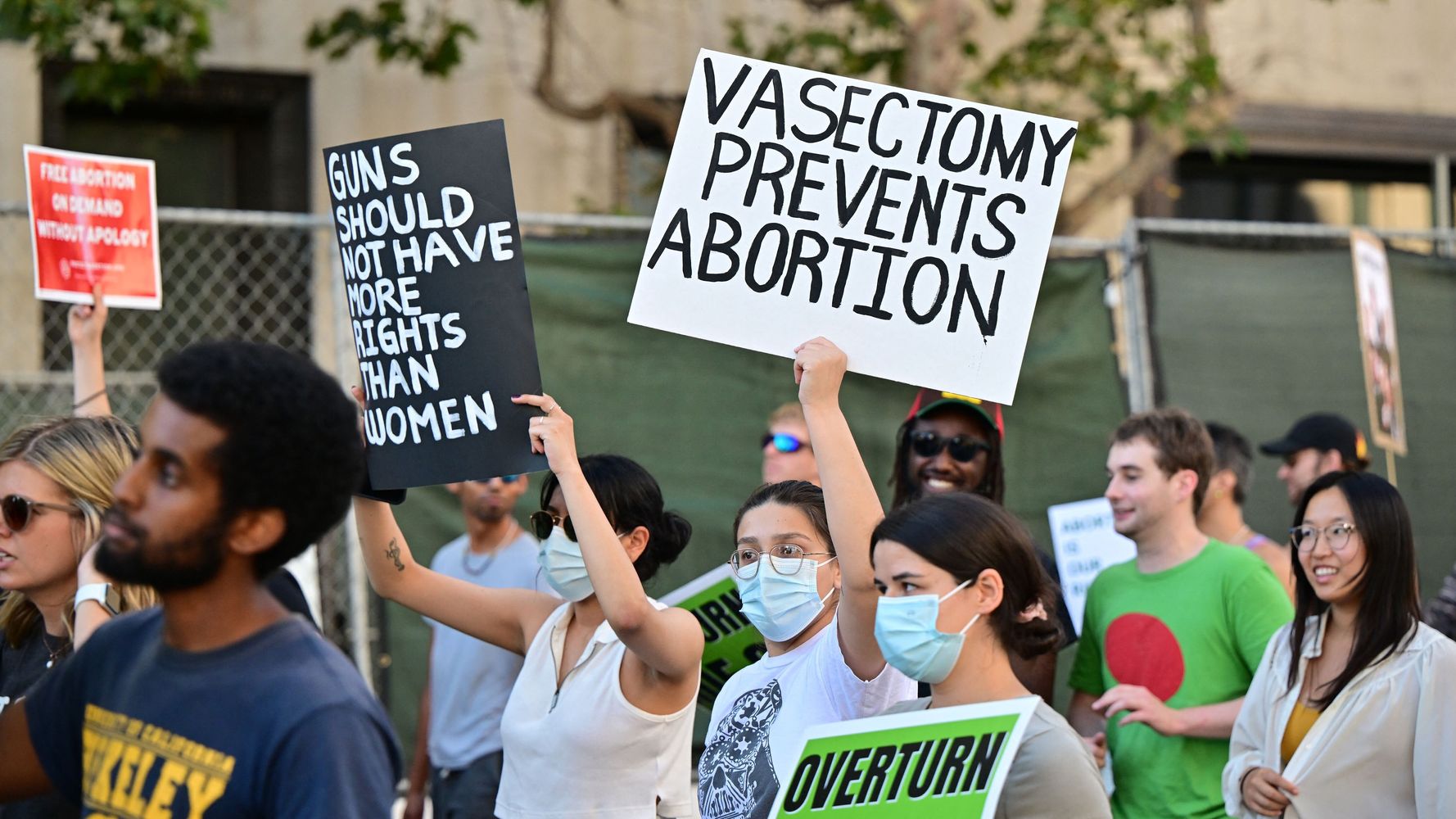
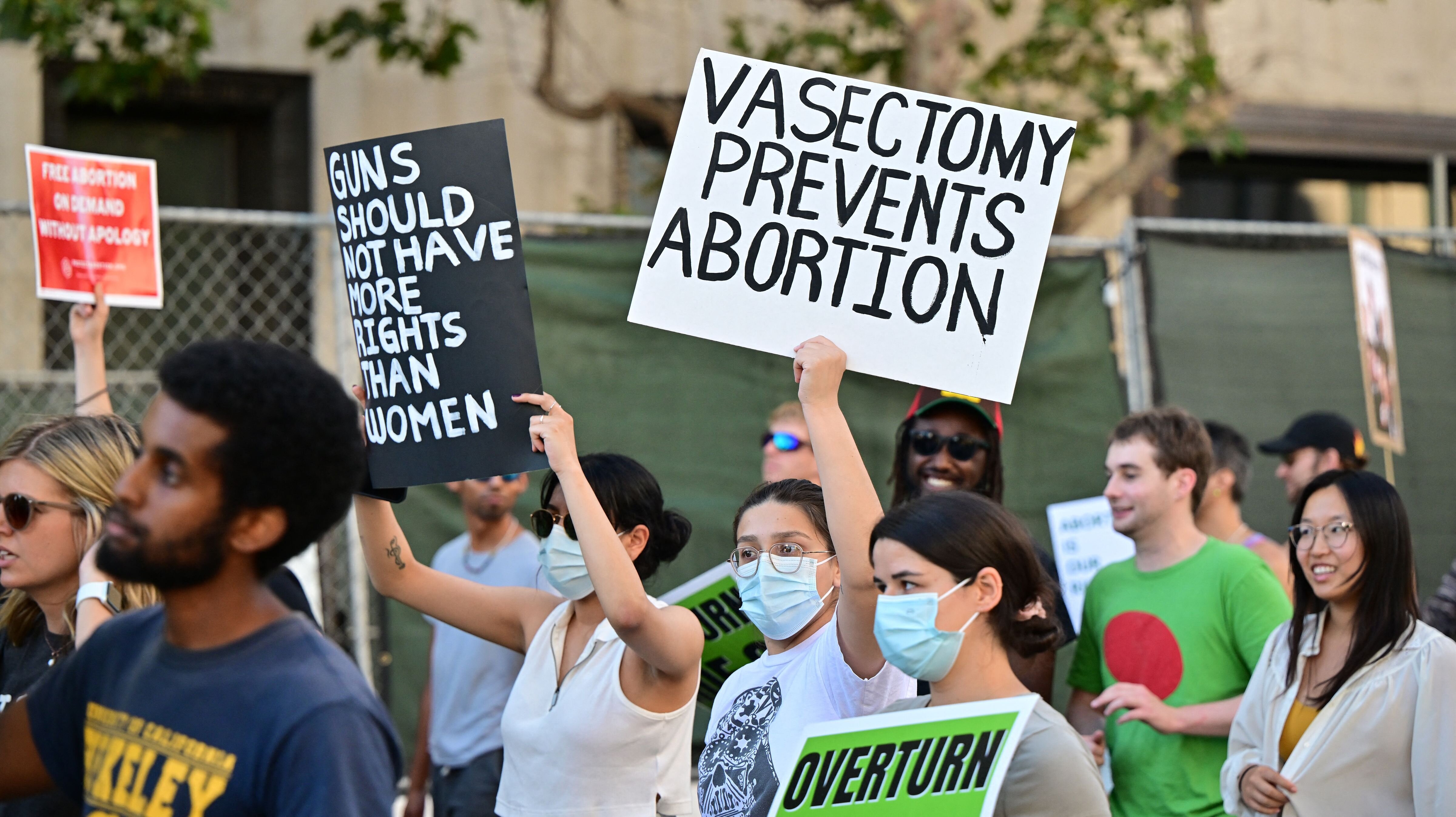
You may have seen posts alluding to the fact that a woman can only foster one full pregnancy a year, while a man can impregnate multiple people in a day, should he have the opportunity. And the solution often suggested: vasectomy, the surgical procedure that cuts or seals the tubes that carry a man’s sperm.
Advertisement
Amid so much anger around the policing of women’s bodies, the impulse to suggest that men’s bodies should also be policed is understandable.
In a world of reduced abortion access, where women are left either to manage birth control or carry their babies to full term, people are once again suggesting we shift the onus to men in the form of mandatory vasectomies.
You wanna know what prevents abortions? Vasectomies.
— 🖕🏻Aunt Crabby Calls Bullshit 🖕🏻 (@DearAuntCrabby) June 25, 2022
In fact, this view has been circulating on social media for a while now. And while many people are probably not being literal in their calls for vasectomies, it speaks to the widespread rage over moves to control bodily autonomy.
However, many people are pointing out the flaws in the argument.
Vasectomies aren’t an ‘alternative’ to abortion
This suggestion has basic logistical failings, as PHD researcher Georgia Grainger, from the Centre for the Social History of Health and Healthcare in Glasgow, has pointed out in a Twitter thread.
As a historian of vasectomies, Grainger, aka @sniphist on Twitter, stresses that the procedure is not an alternative to abortion.
This is because women will still need terminations, she says, both of wanted and unwanted pregnancies, regardless of vasectomies and other forms of birth control.
Nor are vasectomies a failsafe form of birth control – and when in rare cases they do fail, it’s not usually obvious until the pregnancy is identified, she says.
Advertisement
If the pregnancy is a wanted pregnancy but is either ectopic or otherwise not viable or dangerous, then a vasectomy explicitly cannot prevent that – they were wanting to be pregnant, it’s a biological mishap and needs to be treated with abortion.
If it’s caused by failed birth control, then… Vasectomies can fail too! It’s unlikely but absolutely possible. Sometimes the vas deferens heals itself years later. And there’s no way to know, unlike a split condom or missed Pill, so no Plan B.
In her thread, Grainger also highlights that even if someone had insisted they’d had the surgery, could you trust that they really had?
Especially, in the case of abusive relationships or sexual assault, why would someone who doesn’t respect consent take up an invasive surgery for the benefit of someone else?
Forced sterilisations are deeply problematic
Grainger stresses this important historical point. Forced sterilisations have been trialled as several points during history and they enforce eugenics, she says. The policy has predominantly been targeted at minority groups to stop them from procreating.
Advertisement
In US history, indigenous Americans, Black and Latinx people, incarcerated peoples, and poor communities endured forced sterilisations.
These groups were targeted throughout the 20th century, with nearly 70,000 people forcibly sterilised (and not just men, an overwhelming amount were working-class women of colour).
If you think a “mandatory vasectomy til men prove they can be a father” is even a fun thought experiment, I recommend you go and read up on eugenics. Plus, that inevitably becomes “mandatory IUDs for women” too, which again, has happened in recent US history.
Germany also has a history of coercive sterilisation, having sterilised disabled people, institutionalised people, and even alcoholics. In Nazi Germany, the Hereditary Health Court also known as the Genetic Health Court, was a court that decided whether people should be forcibly sterilised.
Grainger is not the only one to point out these troubling historical precedents.
i am BEGGING other white people to stop talking about mandatory vasectomies as if Black and Indigenous peoples haven’t been subjected to centuries of involuntary sterilization. there are other ways to discuss contraception and pregnancy prevention that don’t invoke eugenics.
forced sterilization of cis-men would ultimately impact Black and brown men the most as all of these restrictions always target the most vulnerable of our population
hi this is called eugenics! what is so hard for people to understand about this? BODILY AUTONOMY FOR EVERYONE, NOT PUNISHMENT. pic.twitter.com/kLZomQGkQB
— Elly Belle 🔮 (famously not a woman) (@literElly) June 26, 2022
Bodily autonomy for all, not some
People have also pointed out that if we want better rights and autonomy for women and people who can get pregnant, this has to mean protecting these rights for everybody
Do we really want men to face the same bodily scrutiny applied to women – and for men who chose not to go through the procedure to be vilified?
Advertisement
Nor does the vasectomy vs abortion binary do much for trans and nonbinary people who also need access to abortions, and are often excluded from discussions of these human rights.
The pro-choice movement is all about bodily autonomy and protecting everyone’s right to make decisions about their own bodies
As the debate continues, Grainger’s insights have gone viral on Twitter, amassing more than 75,000 likes.
But, as she pointed out in her own thread, she is still pro-vasectomy, as long as they’re for the right reasons and for people who genuinely want them.
Ultimately, we shouldn’t pit vasectomies against abortions, she says. Abortions will always be needed, whether because the pregnancy is failing, the pregnant person is at risk, because there wasn’t consent to the sex in the first place, or simply because the pregnant person doesn’t want children.
Advertisement
So next time you see calls for mandatory vasectomies or are temped to make one yourself, remember that it’s not as straightforward as it seems.