Caitlin has a condition which meant she was born with no bones in the fingers of her left hand.


Caitlin has a condition which meant she was born with no bones in the fingers of her left hand.
What you need to know about ambulance and Border Force workers’ strikes, by the BBC’s Zoe Conway.
BMA members have been balloted over a junior doctors strike, with the result expected on Monday,

Vladimir Putin is likely to be responsible for balloons spotted over Kyiv, British intelligence has said.
Last week Russia again pummelled Ukraine with a barrage of cruise and other missiles, hitting targets from east to west.
Advertisement
In its latest intelligence update on Sunday, the UK Ministry of Defence (MoD) said: “On 15 February 2023 Ukrainian armed forces spotted several balloons with radar reflectors suspended beneath them over Kyiv.
“Ukrainian officials reported that they shot down at least six of these. Earlier, on 12 February 2023, Ukraine’s Air Force reported sighting balloons over eastern Dnipropetrovsk.
“It is likely that the balloons were Russian. They likely represent a new tactic by Russia to gain information about Ukrainian air defence systems and compel the Ukrainians to expend valuable stocks of surface to air missiles and ammunition.
“On 14 February 2023, sighting of a ‘balloon shaped’ object led to the closure of Moldovan airspace for several hours.
Advertisement
The MoD added: “There is a realistic possibility that this was a Russian balloon that had drifted from Ukrainian airspace.”
Britain’s assessment matches that made earlier by Ukraine, which said Russian troops had launched balloons with corner reflectors to deceive air defences.
It came as Rishi Sunak told world leaders they must arm Ukraine now and set about boosting its long-term future against further Russian aggression.
The prime minister, in a speech at the Munich Security Conference on Saturday, had a two-fold message for the West.
He said that Ukraine needed military backing by allies to counter any spring offensive by Putin’s troops.
Advertisement
But he argued the West must also start to put in place the foundations to strengthen Kyiv’s security in the long term.

Ed Sheeran has dismissed claims he turned down an offer to perform during a celebratory concert in honour of King Charles’ upcoming coronation.
Last month, it was revealed that a televised concert featuring “global music icons and contemporary stars” will take place on Sunday 7 May, the day after Charles is officially crowned.
Advertisement
Over the weekend, the Mail On Sunday reported that organisers had been hoping that both Ed and fellow chart-topping British singer Adele would take part in the event, but were dealt a “huge blow” when both musicians were unavailable due to previous commitments.
However, a spokesperson for Ed Sheeran has insisted this is not the case.

WPA Pool via Getty Images
According to the Metro, a representative for the Shape Of You said that neither he “nor his team” have been “approached” about performing during the show.
Ed is currently scheduled to perform in Arlington, Texas on 6 May, the day before the event, but this is then followed by a week-long gap in tour dates.
Advertisement
HuffPost UK has contacted Adele’s representatives for comment.

Kevin Mazur via Getty Images
The Mail On Sunday has also listed Harry Styles, Lionel Richie and the Spice Girls among those it’s hoped will appear at the concert.
It was previously revealed that musical theatre composer Andrew Lloyd Webber had been commissioned to create a new anthem in honour of the King’s coronation.
A balcony appearance at Buckingham Palace and a day of volunteering will all form part of celebrations for the coronation between 6 and 8 May, in addition to the star-studded musical event.




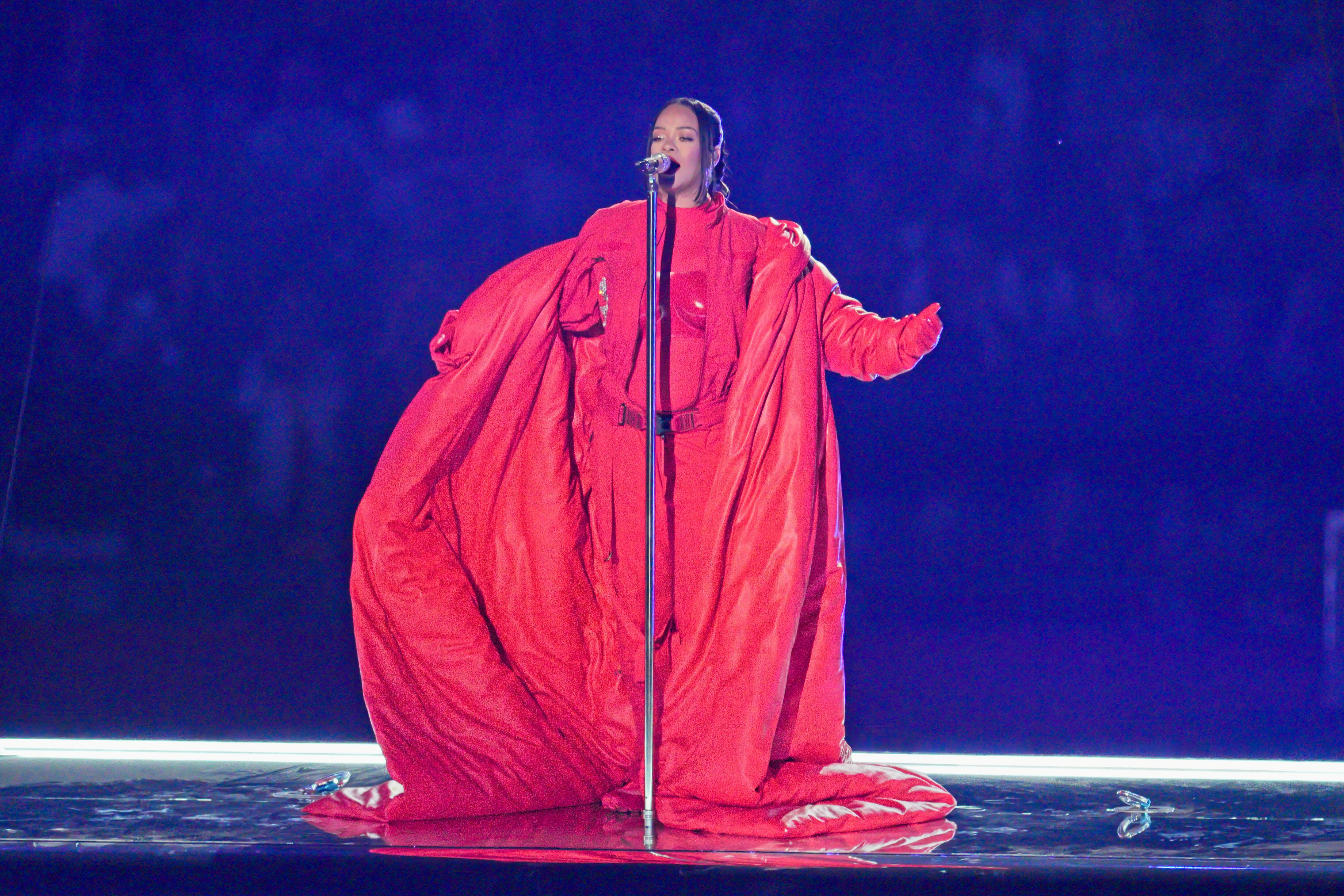
Adele has joked that it’s “hard work being a constant meme” after going viral with her appearance at the Super Bowl last week.
When Adele was shown on camera, her laidback attitude and her complete unbothered-ness became an instant meme – but what she probably didn’t bank on was that people would try and lip-read what she was saying.
Many claimed that it looked like the Grammy winner was telling her pals that Rihanna would “have some weed and be fab” ahead of her much-anticipated performance.
Well, it turns out that’s exactly what Adele was saying, which she confirmed on stage during her Vegas residency on Friday night.
“I don’t know what it is about my fucking face, but every time I slip out my house [I become a meme],” she told the audience.
“Maybe it’s because I don’t have any Botox or anything and my face just moves so much, I don’t know what it is.”
“I was saying, ’she’s gonna be fine, she’s gonna, like, have some weed and be fine, but clearly she couldn’t have any weed because she’s pregnant!” Adele added with a cackle.


BBC news editor Carly Appleby reflects on life six years after her breast cancer diagnosis, aged 37.

We’ve all been stuck in conversations in which it feels like we’re talking to a wall.
“Why isn’t he asking me any questions?” we may grumble to ourselves. “Why are they forcing me to carry this conversation?” we may silently judge.
A recent essay from a researcher who studies conversations offers a fascinating possible answer as to why these frustrating interactions happen.
Advertisement
Post-doctoral research scholar Adam Mastroianni of Columbia Business School explained in an essay published on Substack that there are two types of conversationalists: You can be either a “giver” or a “taker,” and these types don’t always assume the best of each other.
“Givers think that conversations unfold as a series of invitations; takers think conversations unfold as a series of declarations. When giver meets giver or taker meets taker, all is well,” Mastroianni wrote. “When giver meets taker, however, giver gives, taker takes, and giver gets resentful (‘Why won’t he ask me a single question?’) while taker has a lovely time (‘She must really think I’m interesting!’) or gets annoyed (‘My job is so boring, why does she keep asking me about it?’).”
In other words, givers typically end up asking more questions in a conversation, because they believe that’s how to foster the best conversation, while takers believe it’s best to make more declarative statements to ramp up the conversation to its most interesting place.
Beyond the differences between inviting and declaring, there are other telltale signs that can help you determine if you are giving or taking.
Advertisement
One is how you feel when there are silences in a conversation, Mastroianni told HuffPost. “Givers feel like ‘Oh no, I’ve done something wrong,’” when there are conversational lulls, he said, while takers believe “someone should make something happen” and that that person is them.
Emily Rosado-Solomon, an assistant professor of management at Babson College who researches workplace communications, read the essay and said she buys Mastroianni’s explanation of givers and takers ― and whether or not you are a giver or taker could also be culturally specific, citing the late social psychologist Geert Hofstede’s research on individualism and collectivism.
“People from cultures with very low individualism are probably not going to be as likely to take the spotlight and talk about themselves; they are probably going to be more givers, whereas people from cultures with very high individualism are probably much more likely to talk about themselves,” she said.
Once you start seeing conversations in terms of givers and takers, you can start to see how it matters in workplaces, too.
Rosado-Solomon said that because all of us carry different cultural perspectives, “What is most important in the workplace specifically is being ambidextrous so that you can communicate with people from different cultural backgrounds.” People have a universal need to feel seen.
Advertisement
She said she can switch between taking and giving styles at work depending on the needs of her conversation partner.
“If asking questions makes that person feel seen, then that is what I will do. I am genuinely curious about other people, which is why I spend my life studying people at work,” she said. “But at the same time, some people are uncomfortable with that, and it becomes an awkward interview inquisition and so I find that I try to switch then to more disclosure and sort of a taker style. And not necessarily intimate disclosure, just sort of taking the pressure off of them.”
Mastroianni said he also sees the giver-taker dynamic come into play when more junior employees are speaking with senior staff.
“Typically, if you’re in the low-power position, you’re going to have to be the one giving, because basically you have more of a reason to talk to the high-power person than the high-power person has to talk to you,” he said. “If you approach that interaction purely in the taking sense, then it might end very quickly. If you don’t invite their participation, they might go do something else, because it’s like, ‘OK we’re done here.’”
Of course, employees in positions of power should be aware of that dynamic and do more giving, too. That’s only fair.
Advertisement
Mastroianni said when he finds himself in the higher-status role, he knows “it’s very easy for me to just let them ask me questions.” He tries instead to take responsibility for keeping up the conversation by either asking the other person questions as well, or giving them something to respond to.
“Neither givers nor takers have it completely right.”
Mary Abbajay, president of Careerstone Group, a leadership development consultancy, agreed that it’s important for any leader to “learn to be a little bit more of a giver, which is really making sure that they are inviting conversation and then that they are listening.”
She noted that the givers-and-takers framework could also relate to how introverts and extroverts clash in the workplace.
“In meetings, the introverts tend to get talked over because the extroverts tend to be takers and they have rapid-fire conversation, but that doesn’t leave space for the introvert to respond,” she said. That’s why it’s important for work meetings to accommodate both styles and for leaders to be in charge of making that happen.
Advertisement
Could gender also play a role? When I asked Mastroianni, he noted he did not have empirical data on the question, but he said he would bet £100 that if people completed a giver-and-taker questionnaire, women would be more likely to be givers, and men would be takers.
“Part of that could be reflected in the power dynamics in society and part of that could be reflected in who do we take our cues from when we are growing up, and who do we learn from in terms of how to talk, who do we listen to.”
Abbajay said she believes women are more likely to be givers at their jobs as a survival mechanism to meet gendered giving expectations.
“Science and research shows that women are often talked over more in the workplace. They’re often mansplained. When you get mansplained, you’re not going to speak up very much,” she said. “I do think women tend to be more givers than takers, and I think a lot of that is based in gender bias in the workplace.”
Regardless of whether you think you have the heart of a giver or a taker, you can learn from the other side.
That’s because neither givers nor takers have it completely right. Takers misunderstand that their “declarations” aren’t guaranteed to be interesting, while givers misunderstand that asking questions is not always the most generous thing you can do in a conversation — and can, at times, be exhausting.
As Mastroianni put it in his essay, “It’s easy to remember how lonely it feels when a taker refuses to cede the spotlight to you, but easy to forget how lovely it feels when you don’t want the spotlight and a taker lets you recline on the mezzanine while they fill the stage.”
Both sides can learn to be aware of “conversational affordances,” he explained in the essay, which are opportunities to help keep the conversation moving forward in an exciting and engaging way.
In practice, for takers, this could mean they ask more questions that the other person would be actually interested to answer. That way, the conversation gets closer to the unexpected, interesting, fun and weird places of how someone really feels and thinks, he said.
Advertisement
And if you’re a giver who finds yourself being steamrolled by a taker, try toning down the questions and playing the taker’s game of responding, Mastroianni suggested. “Sometimes there are fun conversations that can be had that way, because you put less pressure on yourself to be like, ‘Oh, the conversation succeeds because I am pushing it.’”
Being a giver who starts to take more is a way to test the strength of your relationships, too.
“Give them the thing that they are giving. That’s what they deserve. Then you’ll be able to tell the difference between someone who intends to be a generous taker and someone who is a taker because they are selfish,” Mastroianni said.
And if a taker continuously keeps ignoring your cues to share, that may be your sign to leave the conversation “and speak to somebody else,” he added.


There’s a whole lot of curiosity about squirting — in fact, “how to squirt” is one of the most-Googled sex queries, according to search data. This sexual act is still a bit of mystery, one that continues to flummox sex experts and regular people alike.
Here’s what we know: Squirting occurs when fluid is expelled through the urethra during sexual stimulation or orgasm. It’s sometimes referred to as “female ejaculation,” but it can happen to trans and non-binary people, too.
Advertisement
While many people use the terms squirting and female ejaculation interchangeably, some experts believe they are actually two distinct phenomena that produce different fluids. However, research on the subject is lacking, and the studies we do have involve very small sample sizes.
“What one source says is often contradicted by another,” sexuality educator Susan Milstein, co-author of “Human Sexuality: Making Informed Decisions,” told HuffPost.
Those who differentiate between the two say squirt is a large amount of clear liquid that is chemically similar — but not identical — to diluted urine (more on that later). Ejaculate, on the other hand, is a smaller quantity of a thicker, milky substance.
“Squirting involves fluid coming from the bladder. And female ejaculation involves fluid that comes from the Skene’s glands,” Milstein said. Also known as the “female prostate,” these glands are located near the opening of the urethra.
Advertisement
Female ejaculate has been found to contain a high concentration of prostate-specific antigen (PSA), while squirt may also contain PSA, but in a lower concentration. It’s worth noting that squirting and ejaculation can also happen simultaneously.
The release of fluid during female arousal or climax may be a fairly common occurrence. Some studies have put the prevalence at between 10% and 54% of women.
“We pee when we’re peeing, we squirt when we’re squirting, and sometimes we pee during sex. All separate events.”
– Luna Matatas, sex and pleasure educator
Sex therapist Nazanin Moali, host of the “Sexology” podcast, said she receives “tons of questions” about squirting from clients and listeners. They often fall into two camps.
“The first group of people idealise squirting and romanticise it as the only way to experience a deep satisfaction,“ Moali told HuffPost. “The other group includes women who feel embarrassed by it.” If it happens during sex, she said, they worry “their partner may assume they’re urinating.”
Advertisement
Sex experts address these common concerns, and others, below.
Let’s clear one thing up. Squirting may occur via the urethra — the tube that connects the bladder to the outside of the body — and the fluid may contain urine, but it’s not the same as urinating during sex.
“We pee when we’re peeing, we squirt when we’re squirting, and sometimes we pee during sex,” sex and pleasure educator Luna Matatas told HuffPost. “All separate events. I think the big concern is more about body and sexual shame than it is about squirting facts.”
Science “doesn’t center the pleasure of vulvas in research,” she added, “so we are way behind on understanding the pleasure anatomy and its functions.”
A sex toy reviewer who goes by the name Epiphora — and runs the blog Hey Epiphora — pointed to the studies that have found prostate-specific antigen in squirt, as well as her own experience with squirting, as evidence that it’s not “just urine,” as some claim.
“An army of vagina-owners, including myself, know the stuff they ejaculate does not look, smell or taste like pee,” she told HuffPost.
Advertisement
Despite what porn and other media might have you think, squirting is not a measure of how much a person enjoyed a given sexual activity.
“Some women may love the sex play, and yet never squirt,” Milstein said. “And some women may squirt every time they’re sexually aroused. That doesn’t mean that every time they have sex, it’s the best sex of their lives.”
Similarly, some people consider squirting “the pinnacle of sexuality,” said Moali. If they’re unable to do it, they feel like they’re missing out, their body is letting them down or their partner is falling short.
While squirting “can be pleasurable, it’s not a necessity for experiencing pleasure during sexual encounters,” Moali said. “If you’re interested in trying it, squirting can be fun. But if you’re not, your sex life can still be very hot.”
Nor do squirting and orgasms always go hand in hand. And when squirting orgasms do happen, they’re not necessarily more satisfying than other types of orgasms.
Advertisement
“Bombastic media coverage loves to claim that squirting equals bigger, better orgasms,” Epiphora said. “This is an insidious lie. Squirting is not a life requirement in any way, shape, or form. If you want to pursue it, great! Your sexual explorations should be dictated by you, not pressure from culture.”
There’s some disagreement as to whether you can learn how to squirt, Milstein said. However, if you have a vulva, you “can probably experience it with enough practice,” said Moali.
Again, squirting is by no means necessary for a fulfilling sex life, and you shouldn’t feel pressured — by a partner or yourself — to do it. However, if you’re interested in getting to know your body better and uncovering new sensations, read on. (Just know that not everyone enjoys the feeling, Epiphora noted.)
First, lay down a towel or sex blanket to prepare for any potential mess. Then, take a deep breath and relax. Our experts agreed that if you want to squirt, taking the stress out of the endeavor is essential. When you’re so focused on a particular outcome, it’s difficult to enjoy the experience.
“Stop trying so hard,” Matatas said. “Our body relies on our nervous system being in a receptive and relaxed state in order to open up the flow for arousal and for muscle contractions to happen. When we focus too hard on a goal like squirting or orgasm, it takes us into our heads and often results in more tension and less relaxation.”
Advertisement
Another tip? Slow things down and leave plenty of time for foreplay.
“People learning to squirt will want to allow at least half an hour to get fully turned on and stimulated,” Moali said.
Matatas recommended getting the body “super aroused” with 20 minutes or more of an activity you know you respond well to. That might be making out, watching porn or using sex toys.
Pay special attention to the G-spot; the erogenous zone located along the anterior vaginal wall is key for many people who squirt.
“Give G-spot-specific stimulation with a firm and curved G-spot sex toy,” Matatas said. “G-spots like firm and continuous stimulation, so rocking instead of thrusting might work better for building pleasure. Don’t hold your breath, remember to breathe, and notice any tension anywhere in the body. Take breaks if it is taking too long for you, and remember you can always try again.”
You may still find “mind-blowing pleasure” with these kinds of toys “even if you don’t actually squirt,” said Milstein.
Advertisement
You can also stimulate the G-spot by pressing with the fingers, Moali said.
“You can pinpoint the exact spot that you or your partner likes,” she said. “Plus, they are flexible enough to try different motions until you learn what your partner needs to squirt.”
“Your sexual explorations should be dictated by you, not pressure from culture.”
– Epiphora, sex toy reviewer and blogger at Hey Epiphora
When Epiphora squirted for the first time 15 years ago, it didn’t “just happen” to her — she “had to pursue it,” she said. She had read online that intense G-spot stimulation could lead to squirting and that the initial feeling would be like the one you get when you need to pee. One day, she was using a curved dildo when she felt that sensation and followed it, she said.
“I sped up, thrusting as quickly as I physically could, until a warm sensation washed over my vulva and fluid poured out of me. It was an intense moment. I was in awe,” Epiphora said. She credits sex toys with her “G-spot awakening,” which helped her enjoy penetration for the first time in her life. (The best sex toy for squirting, in her opinion? The njoy Pure Wand.)
Over time, squirting became easier for her to achieve. These days, her orgasms are “regularly accompanied by a small gush,” but “full-on squirting is a once-in-a-while thing” because it’s “too messy,” she said.
Advertisement
The G-spot may often be associated with squirting, but you don’t need to stimulate that area in order to squirt, Matatas said.
“You can stimulate other erogenous zones like nipples, anuses, lips, etc.,” she said. “Explore fuller body pleasure by giving attention to under-served erogenous zones like necks, scalps, thighs, bellies, backs.”
And while squirting can be an enjoyable addition to your sexual repertoire, “it may happen sometimes and not others,” Milstein said. “Or it may not happen at all.”
“Regardless, don’t let the focus on squirting get in the way of you enjoying what you’re doing,” she said.

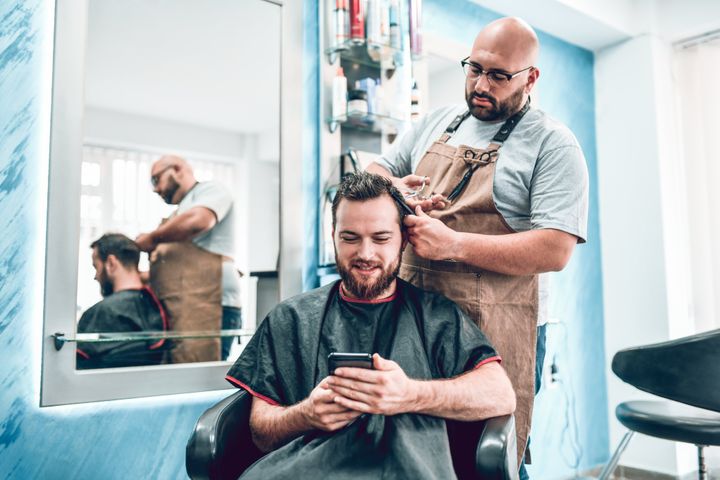
While you may feel pretty comfortable at your regular salon or barbershop, sometimes clients can get a little too comfortable, and the professionals with the scissors just wish people would, well, cut it out.
There are certain actions people might not realise are rude, but they have a major impact on the hairstylist’s ability to perform their job or the experience of other customers and staff members in the salon. They can even negatively impact the rest of the stylist’s day long after you exit the premises.
Advertisement
To help everyone better understand the most respectful way to behave while getting their hair done, we interviewed six long-time hair pros from salons around the country to ask about the rudest behaviours they regularly witness from their clients.
Among the stylists polled, the No. 1 complaint was customer tardiness. “A single late customer can create a domino effect on a whole day’s work schedule,” explained Viktor Holas, who has been a barber for eight years and currently works at San Diego’s Wise Barber.
“This means that other clients will be forced to wait despite being there on time. It also puts more pressure on the stylist to work as fast as possible to restore the original timeline.”
Furthermore, “lateness can end up denying your hairdresser their usual 5 to 10 minutes of much-deserved rest in between cuts,” Holas said.
Advertisement
If you’re unexpectedly running late, call your salon as soon as possible to let them know. And when you arrive, be mindful of helping the remainder of the appointment go as smoothly and quickly as possible to avoid a backlog.
“There are levels to this,” noted 12-year industry pro Yvey Valcin, who heads up Seattle’s Yvey Salon. If the call is important, such as regarding your children or work, try to make it quick and keep your voice low. “But if it’s just a casual conversation,” Valcin added, “that is not very respectful.”
If you do have to make a quick phone call during your appointment, don’t ignore your stylist in the process. “If [you are] asked questions about your cut or styling, reply right away” added Olya Iudina, a stylist for 15 years who is with New York City’s IGK NYC.
“After arriving 15 minutes late, a client had a phone conversation for 10 minutes. When they hung up, I had to tell them I no longer had time to cut their hair and they were furious,” recalled hairstylist Andrea Cottin, who has 13 years of experience and works at Portland, Oregon’s Propaganda The Salon.
If you have to interrupt your service to step away for an emergency phone call, don’t expect to “resume full service as if nothing happened,” said Justin Kafando, a New York-based barber with the Barber Surgeons Guild who has over 20 years of experience. To avoid delaying subsequent clients’ appointments, your stylist may have to rush or might not be able to complete the same services as if there were an uninterrupted appointment.
Advertisement
AleksandarGeorgiev via Getty Images
Stylists agree they would rather a client call in sick than sit in their chair while spreading germs. In coming in contagious, you not only put your hairstylist at risk of getting sick, but the other stylists, clients and staff as well.
“If anyone contracts the same sickness, they’ll be forced to take a sick leave, and you’ll have unintentionally taken them out of business for a couple of days,” Holas said. “This also means canceling several days’ worth of appointments, which will be more inconvenient for us, and the clients affected by the cancellations.”
When you’re at a hair salon, you should behave as if you’re a guest in someone’s home, which means respecting their property. Ricardo Rojas, a hairstylist for 30 years who has owned four salons including Ricardo Rojas Salon in New York City, recalled a time shortly after the salon was redecorated with beautiful new chairs.
“[A client] was eating a piece of cake with her hands,” Rojas said. “She put the cake down directly on the silk chair so she could shake my hand. I was appalled.”
Advertisement
Another absolute no: Touching the stylist’s equipment without permission. “We take pride and really good care of our tools as they are expensive and must be in perfect shape to offer a perfect cut,” Kafando explained.
The way you sit in the stylist’s chair can impact their ability to do their job. A major pet peeve for hair professionals is when clients are “getting up every two seconds to look in the mirror,” Kafando said. “We know your hair doesn’t look great unfinished. We are getting there!”
Furthermore, a client who is “sitting crooked or constantly having their head down can make it difficult to cut and colour the hair,” Cottin noted. If you’re looking down at your phone during your appointment, try to ensure that it doesn’t affect your posture in a way that’s detrimental to the stylist.

Bill Sykes via Getty Images
Some salons provide complimentary refreshments such as coffee, tea, snacks or even alcoholic beverages. Of course, you may accept any refreshments you’re offered, but can you ask for refills? And is it OK to swing by the snack table more than once?
Advertisement
“More than one refill of alcoholic beverages is generally frowned upon,” Cottin advised.
“Refills aren’t usually on the initial budget and might end up being costly for your barber,” added Holas, who warned against “turning the refreshments corner into [your] own personal buffet.”
While cash tips are generally preferred, many salons offer alternatives if you don’t have bills handy such as money transfer apps, ATMs or tipping on a credit card. If you’re happy with the service you’ve received, the stylists polled agreed that 20% of the cost of service is an appropriate tip for your main stylist.
“You should tip your colourist, stylist and the assistants if they were helping wash or blow drying your hair,” noted Iudina.