“The height of rudeness is treating staff as though they are invisible, or worse, beneath you,” he shared with us.
Advertisement
“Snapping fingers, avoiding eye contact, or issuing demands without a ‘please’ or ‘thank you’ is quite beyond the pale”.
Hanson explained that includes leaving your room in a “reasonable” state for cleaning staff when you finish your stay. But what’s the etiquette when you’re still in there?
Here, we asked him whether we should vacate the area when it’s due a clean.
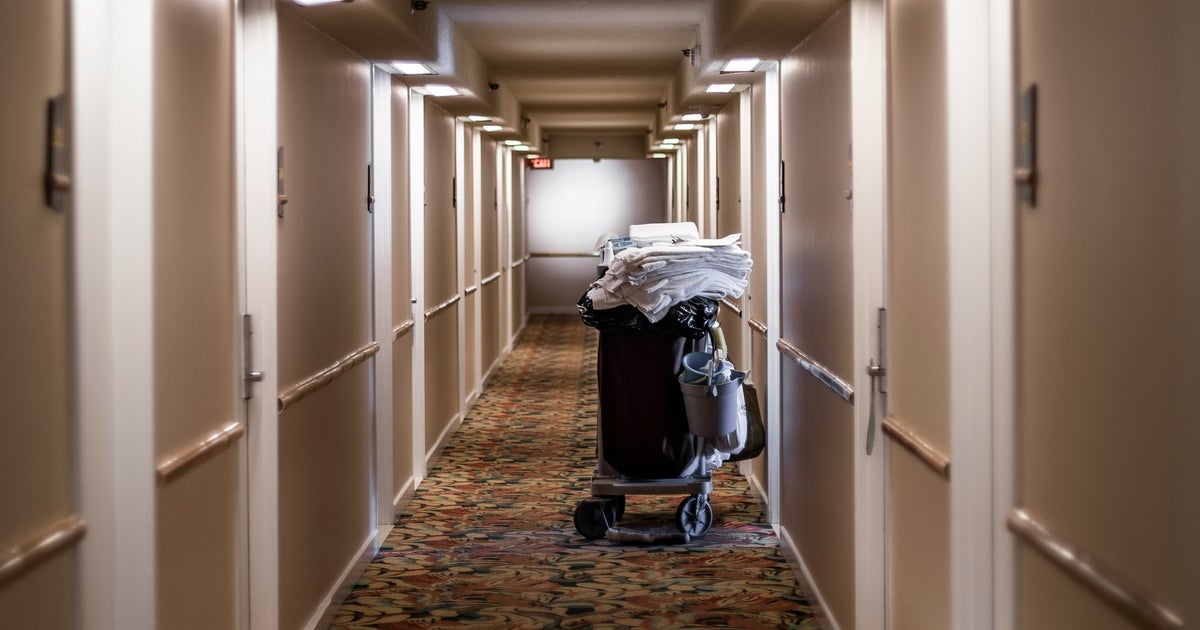
Should you leave your hotel room when cleaners come in?
The etiquette expert’s answer was pretty definitive: “You should vacate the room while it is being serviced. It is simply more considerate”.
Advertisement
He added, “Most housekeepers will wait until you are out and will always knock and announce themselves first.
“If you are inside and would like the room cleaned, answer promptly, greet them politely, and make your exit. Linger not.”
And, Hanson stressed, it’s important to leave your room in decent nick throughout your stay, rather than just rushing through it at the end.
Advertisement
“As I note in Rule Five of my Grand Etiquette Hotel Guide… ‘Housekeeping Is Not an Archaeological Activity.’ They are there to clean, not excavate,” he stated.
Anything else?
Yes – Hanson has a “golden rule” when it comes to hotel staff.
“If you wouldn’t speak that way to a colleague, don’t do so in a hotel simply because you are paying to be there. Good manners, one finds, are often quietly rewarded,” he said.
Advertisement
A hotel etiquette study commissioned by Hotels.com found that 90% of Brits think our hotel manners are pretty perfect.
But the same research also found that over a third of us have tried to sneak in an extra guest after booking, and about the same amount say they’ve snuck out breakfast buffet food to eat later.
When you stay at a hotel, the rules are mostly clear: blasting music at 2am is not OK. Running through the halls is not OK. Someone at the front desk will intervene if things get out of hand.
Airbnbs and other holiday shares operate in more of a grey zone. You’re basically staying in someone else’s home, and it doesn’t have a concierge or staff on-site to set expectations or step in when guests cross a line.
Advertisement
“We never take a vacation from good manners,” said Jodi RR Smith, president of Mannersmith Etiquette Consulting. “Even when you are off and away, you still must take into consideration how your behaviours impact those around you.”
Even if no one is watching, the way you act can have real consequences – from negative reviews to cancelled bookings or fines. Here are the seven rudest things you can do in an Airbnb, according to etiquette experts.
Taking things that aren’t yours
“Towels, décor, kitchen tools, robes, or specialty products are not souvenirs,” explained Jacqueline Whitmore, etiquette expert in Palm Beach, Florida. “Even small items add up, and replacing them is costly and frustrating. If you are unsure whether something is complimentary, ask. When in doubt, leave it.”
Advertisement
You may be thinking: Is this even worth mentioning? Apparently, yes. Hosts routinely report stolen items – from pillows to utensils. At first, I optimistically wondered whether some of the confusion stems from hotel culture, where toiletries, slippers, and mini bottles are fair game. In a short-term rental, however, all items are simply part of someone’s home inventory.
Smoking (anywhere)
“Most rental properties are nonsmoking and most guests get that at this point,” Smith said. “But the guests think (hope?) that if they are outside, the no-smoking does not apply. However, unless otherwise noted, the entire property is nonsmoking.”
If that sounds overly strict, there’s a reason for it. Smoking on rental properties can cause lingering odours, damage furnishings, and create outdoor fire risks. Discarded cigarettes tossed into planters or mulch have ignited porch fires, leading to serious property damage.
Advertisement
Being noisy
On vacation, my everyday routine goes out the window. I sleep in, stay out later, and generally abandon the discipline required for a 9am conference call. But just because I’m on holiday doesn’t mean everyone else is.
“Late-night gatherings, screaming kids, drunken arguments, and loud music can disturb nearby neighbours,” Whitmore said. “Observe quiet hours and be mindful that your neighbours are not on vacation.”
And it’s not just the 1am DJ set that can get you in trouble – though most short-term rental agreements include no-party clauses, so that’s worth noting. It’s also the less conspicuous noises that add up: slamming doors in a shared hallway, dragging suitcases at dawn, speakerphone calls on a balcony, or kids racing up and down stairs in a multi-unit building.
Advertisement
Ghosting your host
Nobody likes to be ignored, especially when you’re staying on their property. “Prompt communication builds trust,” Whitmore said. “Be a considerate guest. Respect the host, the neighbours and the property, and you will always be welcomed back.”
That courtesy goes both ways. Whether you have a question about turning off a fire alarm or need to let the host know you’ve broken something, it’s better to speak up than stay silent.
“If there’s a problem, speak up,” said Nick Leighton, co-host of the Were You Raised by Wolves? podcast. “Hosts would much rather know about a problem during your stay and try to address it rather than just learn about something for the first time in your negative review.”
Advertisement
The Good Brigade via Getty Images
Leaving your rental reasonably tidy and respecting the space goes a long way with Airbnb hosts.
Treating your rental like a hotel
When I’m staying at a hotel, I regress a little to my teenage self: towels on the floor, bed unmade, room service tray lingering longer than it should. It feels like part of the perk. No disrespect intended, just the luxury of not having to reset the space before you leave.
But at a holiday rental, you don’t have those same perks.
“Treat the home as if you were staying with a friend or family member,” said Whitmore. “Follow house rules and leave it reasonably tidy. Don’t create excessive mess, move furniture, or break something without telling your host.”
Advertisement
Inviting friends or pets
It may feel harmless to have your mom stay the night before an early flight or let a friend crash on the couch after dinner. But in a short-term rental, occupancy limits aren’t just suggestions. They’re often tied to insurance policies, local regulations, homeowners association rules, and cleaning arrangements. Adding even one unapproved overnight guest can put hosts in a difficult position.
“Unannounced visitors raise safety and insurance concerns,” explained Whitmore. “If you plan to bring a guest or a pet, get approval first. Many hosts may charge an extra cleaning fee.”
While an extra overnight guest can create insurance or occupancy issues, pets raise even more concerns – even if you’re certain yours “wouldn’t do anything.”
Advertisement
“Your pup may be extraordinarily well-behaved, but if the property says no pets, you need to adhere to the agreement,” Smith said. “Whether it is cameras on the property, just nosy neighbours or the cleaning staff, most owners end up learning of a pet on the premises. (Certified service animals aside.)”
Ignoring the checkout procedure
You’re packed, you’ve called your car, and you’re mentally already at the airport. But before you shut the door, did you take out the trash? Is there still half a pint of milk in the fridge?
“Be sure to read and understand the checkout instructions before you book,” Leighton said. “Some can be quite onerous, but once you’ve agreed, you’ve agreed! So, be sure to follow the list before departure.”
Advertisement
Experts recommend leaving the rental as you found it. That can include tidying up messes, returning moved furniture to its original place, and taking care of smaller details like turning off lights and adjusting the heat.
“Be sure to understand how to strip the beds, where to put the wet towels, whether you need to empty the refrigerator, and how to handle the garbage and recycling,” Smith said.
Have you ever been trapped on a train carriage with someone watching TikToks from their phone without headphones? Or seated on a plane by a passenger blasting music? Or even stuck in a doctor’s office waiting room as a fellow patient broadcasts radio commentary on a sports stream?
If so, you’ve experienced what some call “bare beating”. This term refers to the act of playing music, videos, podcasts or other audio out loud in public without headphones – essentially treating shared space like a personal living room.
Advertisement
“This. Is. Rude. There just is no other way to slice it,” said Nick Leighton, an etiquette expert and host of the Were You Raised by Wolves? podcast.
“You’re imposing your choices on a captive audience. Nobody decided they wanted to listen to that YouTube video, and yet here we are all having to endure it without our consent.”
Jodi R.R. Smith, the president of Mannersmith Etiquette Consulting, agreed, emphasising that bare beating is “unequivocally rude”.
Advertisement
“The presumption that everyone wants to listen to what you are listening to is simply unacceptable,” she said. “This is doubly so if others are unable to move away from you – at work, in an elevator, on public transportation, etc.”
In those tight quarters, what might even seem like low or moderate volume to you can feel disruptive to someone sitting inches away.
“Whether the distraction is visual, or noise related, when someone is intruding on another person’s public space, it’s not easy to look away and ignore,” said Diane Gottsman, the author of Modern Etiquette for a Better Life and founder of The Protocol School of Texas.
Advertisement
“Think of it this way: if a child was doing it in a public space, tight quarters or a restaurant, others would be annoyed and blame the parents for not adjusting the behaviour. When an adult does the same thing, it’s important for them to self adjust and be respectful of others in close proximity.”
Children might get grace for this behaviour because they aren’t as aware of social norms, but for adults who should know better, it’s simply rude. And depending on where you are, it might even be subject to legal penalties.
“Some people just aren’t mindful of how their behaviour affects others and simply have no idea how far phone speakers can carry sound,” Leighton said. “Spoiler alert: It’s way farther than you think.”
Advertisement
AleksandarGeorgiev via Getty Images
Are you guilty of “bare beating” in public? Here’s what etiquette experts think of the “unequivocally rude” behavior.
Indeed, “bare beaters” don’t necessarily have negative intent and are sometimes blissfully unaware.
“The reason people are doing this is because they are trying to pass the time or may not even realise their volume is offensive,” Gottsman said. “But when you’re sitting inches away from another person, even lower noises are amplified.”
There may even sometimes be understandable reasons for the behaviour. Someone with hearing difficulties may not realise how loud their device is, or they may be experiencing technical issues. Still, Gottsman said, unless it’s an emergency, the courteous move is to wait to listen to the audio when you’re in private.
Advertisement
“Of course, using earbuds and utilising captions is a reasonable option,” she added.
And while bare beating feels like a modern behaviour, it’s not entirely new.
“Forcing strangers to become your unwilling audience has been an issue that’s plagued humanity since the dawn of time,” Leighton said.
Smith pointed out that methods and norms have shifted over the decades.
“Back in the ’80s, being a DJ to those in your surrounding area was actually considered the norm,” she said.
“The person with the giant boombox would play it so that everyone nearby could enjoy the sound,” she said.
Advertisement
“But times change and nearly everyone has the ability to listen to what they like almost anywhere – so long as they are wearing headphones or earbuds.”
For those who flout modern etiquette rules by bare beating, sometimes all it takes is a gentle nudge.
Smith recalled a recent experience at an airport gate where a man was loudly streaming a soccer game on his phone as it was time to board.
Advertisement
“After a few minutes, I turned and asked him what he was watching,” she said. “He excitedly told me his favourite team was playing. I told him that I was having a hard time hearing the boarding announcements and asked if he could use earbuds. He gave his head a quick shake and looked around sheepishly.
“He had not realised how loud his phone was or how many people were giving him ‘the look.’ He apologised to me and the others around him as he put in his earbuds.”
Still, Gottsman emphasised that deciding whether to speak up is a judgment call.
“Is it rude to intrude on other people‘s personal space? The answer is yes,” she said. “But understand that we cannot determine another person‘s reaction, and if you can ignore it for a very short subway ride, it’s probably best to do so.”
Advertisement
Regardless of whether you choose to confront someone over this behaviour, the important thing is to avoid bare beating yourself. Remember: Just because you can press play doesn’t mean everyone else signed up to listen.
Air travel does not typically bring out the best in people. The stress of tight connections, long lines, cramped cabins and general transit fatigue can push even the calmest travelers to their limits.
But that doesn’t mean you have to add to the unpleasantness. Indeed, there are many things passengers do that make the flight experience worse for their fellow travellers – from the airport to boarding and even deplaning.
Advertisement
On the latter front, the lack of courtesy has gotten particularly dire.
“It’s like a cattle call to both get on the plane and then get off,” said August Abbott, an etiquette expert with JustAnswer. “It’s embarrassing to the whole human race to see otherwise caring, helpful and patient people lose all sense of their humanity and seemingly revert to instinctive behaviour and act like animals fighting for survival.”
To help improve the situation, HuffPost asked etiquette experts to share some common rude behaviours during the deplaning process. Read on for eight faux pas and what you should do instead.
Not waiting your turn
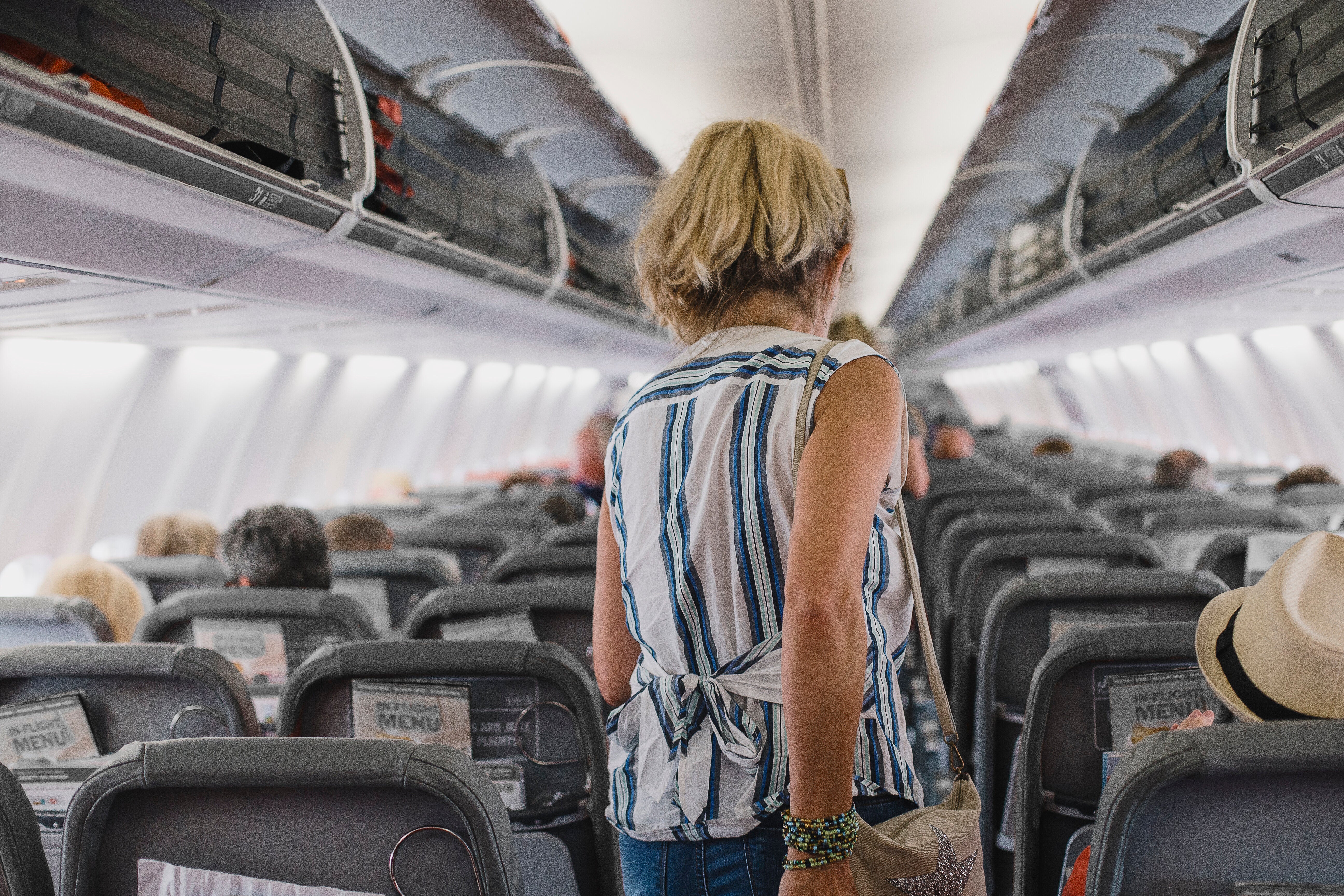
“It’s important to be courteous to fellow passengers, and waiting for your row to deplane is the most obvious and courteous behaviour,” said Diane Gottsman, an etiquette expert, author of Modern Etiquette for a Better Life and founder of The Protocol School of Texas.
Advertisement
There’s a term for people who immediately stand and rush up the aisle the moment the plane arrives at the gate: aisle lice. You don’t want to be part of this group.
In instances of major delays, the flight crew often asks passengers who aren’t making tight connections to stay seated and allow those in a rush to deplane first. So if you’ve arrived at your final destination, show courtesy by respecting that request.
Otherwise, Gottsman advised not assuming you’re the only one with a connection.
“If you are running late for another flight, so are the people in front of you and behind you,” she said. “If you need assistance, you can ask a flight attendant.”
Advertisement
Ignoring flight crew requests around tight connections
As noted, in the event of a long delay, flight attendants may ask those who are arriving at their final destination or have ample time to make their next flight to stay seated and allow those with shorter windows the chance to deplane first.
“If a nearby passenger has a very tight connection, it is kind to allow them to exit as quickly as possible,” said Jodi R.R. Smith, president of Mannersmith Etiquette Consulting.
Those who’ve been in this situation know that passengers don’t always heed the request, however, which is a very inconsiderate behaviour.
Advertisement
Being unprepared and holding everyone up
“Let’s face it. Even on short commuter flights, everyone wants to be off the plane,” Smith said. “Gather your belongings so you are ready when it is your turn to deplane.”
She pointed to “clogging the aisle” as a deplaning faux pas many passengers commit. “It is their turn to exit and they just start looking about for their belongings.”
Travelers who aren’t prepared to deplane when it’s their turn should allow others to pass them, Smith added.
Advertisement
“Be ready when it’s time for your row,” echoed Nick Leighton, an etiquette expert and cohost of the “Were You Raised by Wolves?” podcast. “It’s no secret when you’re next. Be prepared!”
Smith recommended taking a moment after landing to look around your seat.
“Check for anything that may have come out of your carry-on,” Smith advised. “Do you have your phone, snack containers, water bottle, book, etc.?”
Shoving into the crowded aisle
Smith noted that “trying to push into an already crowded aisle” is another rude deplaning behaviour.
“You should allow the row ahead of you to clear before you deplane,” she said. “It certainly is fine to stand in the aisle if there is space, but shoving is not going to speed your departure.”
Advertisement
If standing at your seat is uncomfortable, you can always sit back down and have your under-seat belongings ready to go on your lap. There’s no need to push anyone out of the way.
“Is shoving your way to the front so you can save 10 seconds really worth it? Probably not!” Leighton noted.
Taking bags down from the overhead bin with nowhere to put them
Just as you shouldn’t shove your body into the aisle when it’s already full of people, you should refrain from adding luggage into the mix if there’s nowhere to put it.
Advertisement
As Smith noted, another rude behaviour is “insisting on taking down items from the overhead bin when there is no physical space to put them yet.”
Of course, everyone needs to retrieve their luggage eventually ― just wait until there’s actually room to safely manoeuvre. Timing is everything.
Whacking people with your things
“Be aware when you do remove bags from the overhead bins,” Smith said. “It is never polite to hit another passenger in the head with your luggage.”
Advertisement
Spatial awareness is hugely important when it comes to courtesy and consideration toward others.
“Try to be conscious of your space,” Smith advised. “Whipping your backpack or bag onto your back while standing in a crowded aisle is bound to create issues.”
Leaving a mess behind
Don’t treat the plane like your personal bin. If you missed the trash collection before landing, don’t leave it to the crew to clean up the mess.
“Nowadays, it is polite to assist the crew in turning over your plane,” Smith said. “Armrests up, shades down – especially in warm climates – and seat belt crossed. Any of your remaining trash, wrappers, empty drinks and certainly used tissues, should be carried with you into the terminal for proper disposal.”
Advertisement
Complaining without helping
“One of the most rude and offensive behaviours is complaining about someone struggling to collect their carry-ons – instead of just helping them,” Abbott said. “Is it that much easier to rant and rage than to be kind and caring?”
Before complaining, travellers who are able to assist their fellow passenger with a tricky overhead bag manoeuvre should offer to help, or try to find someone else who can.
“Shame on those growing impatient with the speed that those ahead of you are setting due to struggles no one is helping them with,” Abbott said.
Gulp-inducing news for the newly-engaged – it turns out the average cost of a wedding in the UK is currently around £23,250.
Which, I’m sure, makes the roughly 20% of guests who don’t show up despite RSVP-ing yes quite a challenging issue to reckon with.
Advertisement
But if you’re put in that frustrating situation, what are you meant to do about it?
Well, Redditor u/KeyManufacturer9764 says his friend had a pretty simple solution: when the poster cancelled on his pal’s wedding, he asked for cold, hard cash.
We asked Zoe Burke, leading wedding expert at Hitched.co.uk, and founder of Etiquette Expert, Jo Hayes, what they thought of the move.
Advertisement
The original poster (OP) cancelled last-minute
The Redditor, who introduced his friend to his now-wife, shared that he’d fully intended to attend and had booked a hotel.
But due to an “important work visitation” in France, he cancelled the wedding. In the comments, OP said he stated he wouldn’t be coming 12 hours before he’d have travelled, and 48 hours before the wedding itself.
“I know how insanely annoying it is with people cancelling, especially weddings late on, but I had no option for my future business, and [the work] will massively help me financially,” he continued.
Advertisement
He offered to send his wedding gift to his “disappointed” friend’s home address. And while sharing his details, the friend reportedly said: “By the way, as you’ll be missing the food, can you send the money to cover [your] empty spot, which is £95 per head”.
The poster said that the price is “taking the p*ss” for what he sees as a simple meal, and asked, “AITA if I question it or do I just send the money and stop complaining?”
Advertisement
The move is “valid”
Speaking to HuffPost UK, wedding expert Burke said: “I do think that it is valid to charge people who cancel at the very last minute”.
Despite the poster’s comment about the price of the meal “taking the piss”, she explained that “the average wedding guest costs couples £261, [so] it makes sense that they would want to recoup some of the costs – because they could have invited someone else if they’d had more notice”.
She continued, “It’s really poor etiquette, unless it’s a medical emergency or something that you know really cannot be avoided.
Advertisement
“It’s not just the fact you’re putting the couple out of pocket, but so many other things will be put out too; the table plan, the wedding favours, the personal touches that go along with being a guest at a wedding – it’s so much more than just not turning up for dinner.”
Etiquette expert Hayes agreed that “few people, with any level of decency, would pull out of a wedding with such late notice.”
Still, she said that in general – not in this specific case – “Bridal couples do well to have grace for their guests in such instances, and simply absorb the cost”.
You know what sends chills down my spine? The phrase “stay as long as you like” – I get the feeling the person saying it does not actually mean I can live rent-free for the next decade at their home, but I wonder if a one-night stay under those terms would seem offensively short.
(See also: “let me know if there’s anything I can do to help”. Anything? Really?)
“I have British friends in the UK who invited me to stay with them when I visit the UK. They said I can stay with them as long as I want but I don’t want to overstay my welcome,” the Singaporean poster asked.
Advertisement
“Do they really mean that?”
We asked the founder of Etiquette Expert, Jo Hayes, for her thoughts.
The term means different things in different cultures
Speaking to HuffPost UK, Hayes said that the phrase means so many different things across cultures and individuals that when someone extends such a “generous and hospitable” invitation, you should take it as “genuine”.
However, she says, there’s a caveat: this should only be assumed “as long as your presence doesn’t start smelling like a dead fish”.
Advertisement
In other words, it’s not so much about decoding what your host might theoretically mean with their kind offer as it is recognising when you’re overstaying your welcome.
“Having house guests can be great or terrible, depending on the host and the guest. We all have different levels of introversion/extroversion, different capacities for small talk, [and] different needs for alone time,” she told us.
“If the host and guest are drastically mismatched on any of the above, the house stay situation could get very old, very quickly.”
Advertisement
Well-matched guests and hosts may never notice this issue, Hayes continued. But if you notice tension in the household, communicate clearly with your hosts.
“Be aware of signs of weariness/exhaustion/‘I’m over this’ in the host, and if that happens, firstly communicate (‘I insist you tell me if you need me to move on, zero offence!’), and/or, if it’s clearly not working, simply make a decision to wrap it up,” she recommended.
“Keep things light and polite – [say] ‘Thank you so much for having me,’ [and give them] a kind gift to thank them for their hospitality, etc.”
Advertisement
How can I be a great house guest?
Though you can never tell in advance exactly how you and your host will get along, the etiquette pro has some rules for those seeking to maximise their odds of remaining in their friend’s good books.
“Guests, don’t loaf about,” she commented.
“Contribute to the household, help wherever you can, make it so the hosts are glad you’re there. Be quick to help with cooking, dishes, taking trash out, and unloading the dishwasher. Keep the place clean. Offer to vacuum, etc.”
For hosts, she ended, “give your guests breathing room. Don’t hover, encroach on their need for personal/ alone time.
Advertisement
“Kind, calm, clear communication is the MO for making the deal sweet for all concerned.”
It’s a problem I’ve seen posted all over social media: people without kids are starting to resent their parent friends who bring their children along to events.
“I realise that even though I care about [my parent friends], our relationship has changed, and over time we’ve drifted apart, also because none of them have EVER found a way to go out alone with me, they always bring the kid,” an upset Redditor opined.
Advertisement
A Mumsnet user who is tired of hanging out with her pal’s teenagers, meanwhile, said she’d “tried making excuses” not to meet her anymore.
I don’t have kids, but I have to admit I found these scenarios a bit baffling. Surely, I thought, the polite thing is to state your preference before this discomfort builds?
But then, I’m not an expert. Jo Hayes, founder at Etiquette Expert, is though – and thankfully, she shared her rules for banning (and bringing) kids as guests.
Advertisement
Communication is key – but so is context
Speaking to HuffPost UK, Hayes shared that “the number one key in such situations is communication… Specifically, kind, calm, clear communication”.
And number two, she added, is “common sense, common wisdom and common intuition”.
For something like a wedding invite, the etiquette expert said that invites should “clearly” state who’s meant to come. Hosts might want to explicitly state their child-free rules in this scenario – especially if the children are relatives.
Adding something like “we absolutely adore our nieces and nephews, but, due to limited capacity, this will be an adults-only celebration” works, Hayes said.
Advertisement
But precedent matters. If your annual getaway with your mates never involved kids, it’s up to the parent/s to ask whether it’s alright to bring their child on this occasion.
“For guests, if in doubt about whether children are invited, do not assume. ASK,” she explained.
“In fact, unless it’s an absolutely obvious ‘children are included’ event (eg. there’s a big lawn outside for the children to run around in), I suggest guests ask, just to be on the safe side.”
What should I do if someone has brought kids to my child-free event?
Even the best-written invite, or what seems to you to be a clear-cut child-free event, can be confusing to some parents, Jo said.
Advertisement
If someone has brought a child to an event which is inappropriate for them, the expert said “it may be necessary for the host to have a discrete word to the parent, and have the child taken home, or picked up (say, by a grandparent)”.
Do this quietly and discreetly so as not to embarrass your guest, she added, saying something like “you may have missed this on the invite, but this is intentionally a child-free event”.
She ended: “A note to guests: Do not argue the point, or try to wrangle a spot for your children. This is the host’s event, not yours. If they say no children, it’s no children. It’s impolite not to respect this boundary.”
There are few places more ripe with the opportunity for awkwardness and even downright rude behaviour than lifts. They’re small, often crowded and require you to be mere inches from complete strangers.
When it comes to how to act in a lift, experts told HuffPost that you have to remember that they’re public spaces.
“It’s not that you’re already in your office and you can close the door, or in your apartment and you can close the door — you’re still in a public space, and people should conduct themselves accordingly.”
“You have to observe and respect that public space just like you would someone’s home or a hotel lobby, and you must be respectful of the property itself [and] assume that there are eyes on you because there might be a camera up in the top corner,” said Diane Gottsman, a national etiquette expert and founder of the Protocol School of Texas.
Advertisement
Most people don’t get into a lift with the goal of being rude, but there are some common behaviours that are off-putting to your fellow lift riders.
Below, etiquette experts share the elevator no-nos that irk them most:
Not holding the door for someone else
There’s no excuse not to hold the door for someone who is coming up behind you to also get on the lift, experts told HuffPost.
While it’s rude to let the door slam in anyone’s face, Claytor added that it’s particularly rude if the person who’s walking behind you is elderly, uses medical equipment such as a walker, or has a stroller.
Advertisement
“There’s a gentleman who lives in my building who never holds the lift for anyone, and when my mother was alive, she used a walker, and he would not just wait a few seconds for her to catch up to him, he would just let the door close in her face,” Claytor noted.
Conversely, it’s also rude to hold the elevator door too long
You also shouldn’t hold a lift door too long and hold up other people’s day.
“Let’s say you’re traveling with a friend or a partner … and they are running just a little bit behind, but you’ve got to go, and you’re in a hurry, so you want to hold that lift door for them, even though they’re not even there yet,” said Gottsman.
“So, you’re kind of waiting, waiting, waiting, because it’s rush hour, it’s time to get out … so, you’re holding it because your friend is not quite ready with a suitcase,” Gottsman noted. “You have to let it go. You can’t hold up that elevator car while waiting for someone who’s not there.”
Advertisement
You can go downstairs without them, or get off tand wait for them, but you can’t just hold the door for someone who isn’t ready.
More, you shouldn’t hold a lift door open to finish a conversation with someone who isn’t actually getting on, Claytor said. Maybe you’re leaving the office and getting in a few last-minute words with your colleague before going home.
“Have you ever been in a situation where someone’s holding the lift, they’re inside or outside the lift, and they’re holding a conversation with someone? And so now you’re stuck, you’re trapped on this lift, and people are holding a conversation,” Claytor said.
Advertisement
You should either get off the lift and continue the conversation, or get on and end it, she added.
Not facing forward
You shouldn’t face backwards in a lift, said Gottsman. Once you’re in an lift you should face forward — so, face the door, once you’re inside.
“Even though it’s a public space, we still feel as if we need to have some privacy in that space,” Gottsman said. “You don’t want someone staring at you.”
Natalia Lebedinskaia via Getty Images
Advertisement
Pushing into a crowded lift
“We’ve all experienced it, every single one of us … the door opens, you’re in the lift being crushed already, and then there are three people standing there, or one person, and they’ll say, ‘Oh, is there a room for me?’” Gottsman said. “You clearly know there’s no room for you. We are sardines in this little can.”
Nonetheless, they squeeze into the lift “and no one wants to say anything because everyone wants to be polite, but it is so crowded that you can’t breathe,” said Gottsman.
“And just think of potentially, what could happen if that lift gets stuck, and then what are you going to do?” she said.
Advertisement
Overcrowding a lift is a big faux pas, and you should read the room before stepping in, Gottsman said. If there’s no room to fit comfortably, wait 20 seconds for the next elevator.
Not covering your mouth when you cough and sneeze
While it’s never OK to just cough or sneeze out in the open, it’s especially rude in a space that isn’t even six feet across.
If you’re on a lift and you cough or sneeze, it’s important that you cover your mouth — otherwise it’s really rude to the other passengers, Claytor noted.
Advertisement
No one wants to be sneezed or coughed on by a stranger.
Talking on speakerphone
Lifts aren’t exactly mobile phone friendly — service is often spotty and no one wants to hear you yammer away, anyway.
“I would prefer if people would pause their [phone] conversations until they got to their personal space, but if you absolutely have to continue this conversation, definitely do not use speakerphone,” said Claytor.
“No one else on the lift wants to hear your conversation,” she said.
Plus, you don’t know who may know the person you’re talking to on the phone, Gottsman added.
“A client of mine had a personal experience where they were on the lift and someone on the phone was talking about them on speaker. So, the person in the lift didn’t know them, but they were talking about that person,” explained Gottsman.
Advertisement
Shoving people out of the way to get off the lift
If you’re in the back of a crowded elevator and need to get off, you shouldn’t just push your way forward, Gottsman noted.
Instead, you should speak up and say something like, “Excuse me, this is my floor,” Gottsman said.
“Let them know. Don’t just try and push through,” she said.
People should move to the side to let you off, Gottsman added. “You’ve got to get out so you can let other people out, and then you can get back in and hold that door for yourself and for them,” Gottsman said.
Wearing too much cologne or perfume
A lift is a supremely small space. No one wants to be in a tiny, enclosed space with someone who just dosed themselves in fragrance, and forcing someone to stand directly next to you after you put on lots of cologne or perfume is rude, both experts told HuffPost.
Advertisement
This doesn’t mean that you can’t wear a fragrance, but you should be mindful of how much you put on if you know you have to get into an elevator.
“Just be mindful that scents linger,” Gottsman said.
When it comes to being your best self in a lift (or any public space, for that matter), Claytor has some advice: “At its very fundamental level, etiquette is about thinking of others before you think of yourself.”
So, instead of disregarding those around you by letting the door slam in their face or pushing off a crowded lift, think about how that may make others feel.
Advertisement
“I like to tell people … just slow down for a moment. Don’t always be in such a rush, and just observe the world around you, and that will make you a more conscientious person,” Claytor said.
Ever had a conversation that goes a little something like this?
Your conversation partner: “Have you been promoted recently?”
You: “What? No? You know I’m self employ–”
Your conversation partner: “I actually got promoted last week. I’ve become the vice-deputy manager-chair god-king of…” etc., etc..
If so, I’m afraid you’ve been the victim of a “boomerask,” a portmanteau of “boomerang” and “ask.”
The term refers to questions that only really exist to give the askers room to talk about themselves.
Advertisement
The self-serving purpose hides under the guise of enquiring about the other person, which askers think leaves a good impression, a paper published in the Journal of Experimental Psychology: General says.
So, we spoke to etiquette expert Jo Hayes, founder of Etiquette Expert, and psychiatric mental health provider Dr Zian Omene from MyShilohHealth, about how to actually handle questions in conversation.
Advertisement
“Boomerasking” can make you lose friends fast
“The research shows that boomerasking… can make people feel ignored and less fond of you,” Dr Omene told us.
It allows people to “hijack [an] answer to talk about yourself”; if you’ve got a story, she advised, “share it later, straight-up, like, ‘Oh, I tried that once too!’”.
The study bears this advice out. It found that people prefer a straightforward brag to a roundabout “boomerask.”
Advertisement
“It’s about keeping it real and letting them shine,” Dr Omene added. “People love feeling understood, not upstaged.”
“People with good/healthy social skills know that the way to strike up a good conversation, and develop healthy relationships, is to show genuine interest in the other person,” Hayes agreed.
“Boomerasking involves asking such a question – but then answering it yourself. It’s a faux conversational skill, because it starts off right, but then quickly plummets into antisocial behaviour.”
Advertisement
So, how should we ask questions?
“To ask questions that make others feel included, appreciated, and genuinely heard, I’d go with open-ended ones like, ‘What’s been the best part of your day?” instead of a flat ‘How’s it going?’”, Dr Omene shared.
“Then, really listen – nod, keep eye contact, and maybe echo back something like, ‘That sounds like a blast, what made it so fun?’”
Hayes’ recommendation is similar: “Simply ask the question, and then let the other person answer.”
“It’s all about focusing on the other, not yourself. The other person feels seen, heard, honoured, respected, valued… and naturally warms to you – the person demonstrating that respect,” she continued.
Advertisement
“And the natural consequence of that is that they’ll be interested in finding more about you and hearing what you have to say – thus giving you ample opportunity to share your own thoughts/opinions.”
Most people these days rely on text messages as their main form of communication; for some, the thought of making a phone call is even scary. That said, since a text can’t capture one’s body language and nonverbal cues, it is easy for certain messages to come across as condescending or blatantly rude.
“Condescension isn’t just about words but making another person feel small,” said Logan Jones, a licensed clinical psychologist and founder atClarity Therapy NYC. “Text messages feel condescending when one person assumes superiority, implies incompetence, feels dismissive or [gives] unnecessary explanations.”
Advertisement
We spoke with licensed mental health professionals about common text messages you may not realise are condescending ― and how not to take them personally should you be on the receiving end. Here’s what experts say:
1. “K”
We’ve all likely sent this at least once, whether it was intentionally to someone who annoyed us or when we simply didn’t feel like answering.
Bottom line: “It feels short, dismissive, and passive aggressive and implies annoyance or disinterest because it lacks any warmth and engagement,” said Lauren Palumbo, a licensed psychotherapist at Clarity Therapy NYC.
Advertisement
2. A thumbs-up
According to Palumbo, simply “thumbs-upping” or “liking” a text message can feel condescending in its own right, especially if you just shared a juicy or personal story and were hoping for a reaction that matches your energy.
“These types of reactions can stop conversational momentum dead in its tracks, making it clear that others aren’t interested in keeping it going, which can feel disappointing and deflating,” she said.
3. “No offence, but…”
You sometimes hear this during in-person conversation, and it goes over just as poorly via text message, according to Michele Leno, a psychologist and host at Mind Matters with Dr. Michele.
Advertisement
Despite the phrasing, the verbiage lets you know that someone is about to say something offensive and likely rude, too. “In such cases, being direct is less condescending,” Leno said.
4. “Google it.”
Who hasn’t texted their friends worried about a health ailment? Although mostly everything can be found on Google with a quick search, you don’t want to tell someone to “Google it” since that can come off as extremely condescending.
“Few things shut down a conversation faster than this because it’s dismissive and shows that someone’s curiosity or isn’t worth your time or energy,” Jones said.
Advertisement
5. “You always do this.”
It can be hard to effectively communicate through text messages, and lobbing accusatory, blanket “always” or “never” statements like this can prohibit more meaningful conversation. It’s also difficult to defend over text, according to Jones.
“This is hyperbolic, accusatory and a trap,” Jones said. “Saying something like this turns your minor frustration into painting someone as having a character flaw and trapping them in a pattern they can’t easily defend against via text.”
6. “I told you so.”
Hearing this doesn’t get easier no matter how old you are ― especially when it’s over text. It’s hard to glean any sort of care or nuance when it’s written out, so it feels more smug than anything.
Advertisement
“Saying ‘I told you so’ offers nothing but cheap and quick self-satisfaction at the expense of someone else’s hurt feelings,” Jones said.
7. “Yikes.”
According to Palumbo, “yikes” can feel condescending and judgmental, especially if there’s no elaboration. “It sends the message that whatever was shared was embarrassing, wrong or cringeworthy,” she said.
Tim Robberts via Getty Images
While some texts may have good intentions (or neutral intentions), experts say your tone may come off hurtful. However, there are ways to fix it.
Advertisement
How can you make text messages sound less condescending?
Very few people want to intentionally send rude or off-putting texts. If you want to communicate more effectively and not sound condescending, here are some therapist-approved tips to get you started:
Don’t make assumptions.
Leno recommended using neutral language if you’re looking to sound less condescending. “For example, ‘I’m available to help if needed’ is better than, ‘It looks like you need help.’”
Use emotive and clarifying language.
Jones suggested using more emotive and clarifying language in an attempt to make text messages come across as less condescending. “A simple ‘haha’ or ‘I see what you mean, *smiley face*’ can make a big difference,” he said.
Advertisement
Call them instead.
Michelle English, a licensed clinical social worker and executive clinical manager at Healthy Life Recovery, recommended engaging in more direct communication. “Give them a call or hop on a video chat to clear things up,” she said. “Direct communication is always the best way to bridge any misunderstandings.”
Plus, if you’re on a video call, you can see body language and other nonverbal cues that can help with effective communication.
At the end of the day, condescending text messages can be frustrating to navigate since they often lead us to question our own intelligence and worth.
Advertisement
That said, people who send condescending text messages might not realize they’re doing it. A little grace ― and some punctuation changes ― can go a long way.