New personalized test for an earlier and more accurate prediction of cancer relapse

Researchers have developed a new protocol for monitoring acute lymphoblastic leukemia (ALL), the most common cancer in children, to inform more effective treatment strategies and detect disease recurrence. The personalized mediator probe PCR (MP PCR) uses multiple genomic cancer cell markers in a single assay and is simpler than current techniques. It improves monitoring clonal tumor evolution to detect a relapse sooner and avoid false negative results. Their protocol is detailed in The Journal of Molecular Diagnostics, published by Elsevier.

The survival rate for children with ALL has increased impressively to over 80% over the last several decades. However, the prognosis for children whose cancer recurs remains unfavorable. Therefore, minimal residual disease (MRD) monitoring is an important prognostic factor for treatment response and patient stratification. MRD monitoring uses highly sensitive real-time PCR to measure the amount of cancer cells among normal cells.

“MRD markers can disappear during treatment, which can lead to false-negative results and poor decision-making in personalized treatments,” explains Principal investigator Cornelia Eckert, PhD, Department of Pediatric Oncology/Hematology, Charité — Universitätsmedizin Berlin, German Cancer Consortium (DKTK) and German Cancer Research Center (DKFZ). Consequently, monitoring at least two independent markers per patient is recommended. Dr. Eckert continues, “The current gold standard EuroMRD consortium guidelines call for amplification using singleplex real-time PCR quantification, making testing additional markers more laborious and expensive. They also lead to a higher consumption of patient material.”

To overcome these limitations, Dr. Eckert and co-investigators established the personalized MP PCR, an iterative workflow and guidelines for designing multiplex real-time PCRs to monitor up to four MRD markers for ALL simultaneously in one assay. When tested on DNA in bone marrow samples from patients with ALL, the MP PCRs met the EuroMRD gold standard guidelines and level of sensitivity for clinical decision-making.

Co-investigator Michael Lehnert, PhD, Hahn-Schickard Freiburg, states, “Multiplexing can significantly improve personalized MRD monitoring of patients, because a higher number of MRD markers per patient can be analyzed at the same time. Even though these patient-specific sequences of cancer cells only differ in a few DNA nucleotides from healthy cells, our multiplex assay can still distinguish between these DNA sequences. Therefore, a broader range of patient-specific sequences can be included in the assay.”

The MRD-MP guidelines are simple and may allow assay standardization across different laboratories. To demonstrate the potential transfer of the duplex MP PCR into a routine diagnostic setting, the new assay was applied in a prospectively assessed patient case in comparison with the gold standard singleplex test. Both fulfilled the EuroMRD guidelines and led to a similar quantitative range and sensitivity.

In order to deal with challenges inherent to multiplex PCR, the researchers developed an efficient iterative workflow for PCR design and optimization. DNA primer titration is only involved and extended if the assay performance is not sufficient in the first step, so that the number of iterations is minimized.

“There is a vast variety of DNA marker sequences unique to each leukemia,” adds first author Elena Kipf, PhD, Hahn-Schickard Freiburg. “The MRD-multiplex workflow provides a systematic and reliable way of effective MRD-MP PCR design and optimization and helps the standardization of personal diagnostics.”

While their work demonstrates that multiplex MP PCR has the potential to set a new standard in personalized MRD monitoring, the researchers note it must be clinically validated in a representative cohort of ALL patients. “Cancer is a fatal disease from which not every patient can be cured,” Dr. Eckert stresses. “After successful clinical validation, patients could benefit from extended MRD monitoring, leading to more precise predictions of therapy response and better patient stratification and outcomes.”

Story Source:

Materials provided by Elsevier. Note: Content may be edited for style and length.

Share Button

Why Bigger Goals Can Be Easier to Achieve

I originally shared this post on January 6 in Conscious Growth Club’s member forums, as a follow-up to our quarterly goal planning process. I thought it would be nice to share it here as well. Many CGCers found it helpful.

Let me share an unusual insight about why it’s often easier to achieve goals that seem bigger than anything you’ve done before.

This builds upon the Chapter 1 vs Chapter 2 idea shared on yesterday’s review call, but I don’t think you need to have heard that part to understand this.

[The idea I shared on the review call was based on a common piece of advice for new fiction writers – that you should delete whatever you wrote for Chapter 1 and begin your book with Chapter 2. This is because your original Chapter 1 will typically include too much backstory and exposition, and it’s frequently better to get into the juicy parts of your story sooner. I used this as an analogy for setting goals, suggesting that people ought to skip past the Chapter 1 version of their goals (which often involve overly mental or numbers-based framing – boring!) and get into the juicy parts of Chapter 2 and beyond by focusing on the meaning, ripples, and emotional journey.]

Acknowledging Your Old Story

When I was in my scarcity phase of life, I was very sensitive to prices. Since money was tight, I saw anything free as so much better than anything paid. If something cost $5, that would feel sooooo different than free. Even $1 vs free was a big deal. If I would buy a veggie sandwich at Subway, I would skip the avocado for $1 extra, even though I loved avocado. Would that $1 difference really matter? It felt like it mattered.

There’s still a part of my mind that thinks this way today because I conditioned it to think that way in the past. But it’s also linked up with relatively low-cost expenses because that was my training data set at the time.

As my income increased, I formed different associations to more expensive items. So part of my mind still wants to run extra assessment cycles over the difference between a $5 and $10 option, but when I think about a $500 vs $1000 expense, those land in my abundance training data set, so that seems easy because I don’t have major negative associations to those kinds of expenses. Consequently, it feels like $500 expenses are cheaper than $5 ones because I have less resistance to spending an extra $500 than I do to spending $5.

Same thing goes for taxes. Paying a $50K tax bill seems easy. Paying a $1K tax bill seems more painful. Those two tax bills are associated with different training sets and different chapters of my life.

Even today I will often think more about whether a $5 expense is worth it, but I can spend $500 like it’s just free money.

This also applies to the income side. It feels difficult to try to earn an extra $100. But earning an extra $20K or $50K is easy, and earning an extra $100K just seems fun and flowing. And I think that’s because with respect to those numbers, I’m not struggling with past associations getting in my way.

So that’s an interesting oddity about moving into a fresh Chapter 2 reality. It gives you a chance to break through your old associations and write a new story for your character.

Stretching Your Intentionality

Trying to fight or overcome my character’s pre-trained tendencies keeps me stuck in Chapter 1. But if I skip ahead to Chapter 2 in my imagination, there’s a blank page where I can write something new, if I’m willing to take the leap into unexplored territory.

This is one reason it’s so important and useful to stretch your intentionality further forward. Stretch beyond the story that’s already been written by your past, and extend your mind and goals into open spaces. You can often make much faster progress that way.

This requires the willingness to stretch your character and identity. Can you start seeing yourself as a different person? It helps if you’re able to stretch your character into some unexplored territory where you can begin writing some fresh story, so you can bypass some constraints of your past story.

It’s a bit like moving to a new city or going to a new school. If no one in the new territory knows you as your past self, you have more freedom to write a fresh story. I felt like I became a different person each time I had a significant move or school change. Same goes for getting into a new social circle.

It’s extra crucial to connect with a social group that gives you room to grow and that won’t keep associating you with your Chapter 1 self. It’s best to loosen up those connections that will resist your efforts to write some fresh story for your character. I think we do a good job of this in CGC by fostering a culture that encourages exploration and change, not tying anyone to stick with their past selves. You probably won’t find many members here who’d try to talk you out of writing a fresh chapter of your life story, but I know that some members struggle with other social connections that resist those kinds of changes.

Keep in mind (and in heart) that when you break free and begin writing your Chapter 2 story, you encourage others to do the same, even if they may initially resist what you’re doing. You’re not really serving anyone by clinging to Chapter 1.

The Power of Unwritten Story

One pattern I see frequently in people who have some great transformational breakthroughs is that they stop focusing their attention where the resistance is, and they head for fresh territory. They start writing their new story where the story hasn’t been written yet.

Chapter 1 is the story of the old reality. That’s where all the problems and difficulties are. It’s so tempting to focus your attention there by saying, “I need to clear all of this out, and then I can begin writing Chapter 2.” But that will almost always keep you stuck in Chapter 1, which will just keep generating more of the same kinds of problems to anchor you there. You’ll probably never make it to Chapter 2 with that approach. Usually life doesn’t reward this approach very well either. You probably won’t get much cooperation, so you’ll have to self-power your way through every little problem and project, which becomes exhausting after a while. I really don’t recommend this.

It seems like a cheat to start writing Chapter 2 before you’ve finished Chapter 1, but is it really? If you were writing a novel or a movie script, would your best inspiration and motivation come from writing about the old reality? Do you think George Lucas got inspired to write Star Wars by thinking about a farmer boy with some droids? Did he finish writing Chapter 1 before giving much thought to what would come next? Seriously… who finds the inspiration for great story from anything in Chapter 1? You may begin writing there, but the inspiration for the story comes from much further along.

When people focus on Chapter 1 goals – the telltale signs being that the goals are super objective (often numbers-based), lack motivational fire, and don’t involve any meaningful character or identity shifts – they usually don’t get very far with them. And they often wonder what’s the point. And they’re right. There’s little point in working on such goals. It’s like watching Luke Skywalker setting quarterly goals to optimize the farm.

You’re munching on your popcorn watching Luke on the screen, and your mind is wondering when the real story will begin because you know that you’re just seeing the pre-transformational backstory during the first several minutes.

And oddly it’s easier for Luke to become a Jedi than it would be for him to optimize the farm. When he leaves Tatooine, he’s free to write fresh story. While his new reality may seem more daunting, it’s also 100X more motivating, and that makes all the difference in the galaxy.

He still, however, takes his (newest) farm droids with him on his new journey, so he doesn’t entirely break free from his past. But that doesn’t matter because he’s writing such a completely different story that the droids can’t offer any meaningful resistance. They get swept up in his new story too and become helpful allies. C3PO’s whining serves as humor and to remind us how much Luke has grown, but C3PO is powerless to derail Luke’s new story.

I find that to be the case in real life as well. When writing fresh story, I still carry elements of the past with me, but they no longer serve as anchors to resistance. The new story gives those old story elements new meaning. For instance, fretting over a $5 expense serves as a reminder to appreciate abundance and not to take it for granted, and that actually sweetens the experience. It also makes it easy to relate to people who struggle with finances because that mode of thinking is still with me. I wrote some extra script after that part of my story, but scarcity thinking is still part of my story. The scarcity mindset plays a different role now, anchoring to gratitude and compassion instead of to resistance and frustration. Sometimes I think of it as cute, much as you could see R2D2 in that way.

Finding Your Best Motivational Fuel

Chapter 1 doesn’t provide the motivational fuel to get through Chapter 1. That fuel comes from hooking your body, mind, heart, and spirit into Chapter 2 and beyond. Once you anchor your intentions into your new reality and your new identity, your perspective on Chapter 1 will shift. How this plays out is different for everyone, but it generally involves finding shortcuts that speed you through Chapter 1 and/or realizing that some of the old problems don’t even need to be solved or dealt with anymore.

Did Luke ever go back to Tatooine and wrap up his affairs with the farm? Did he inherit the place from his uncle and aunt after they died? Did the Empire seize it for unpaid taxes? Did he turn it into a rebel burner commune? Does it matter?

It’s hard to find people who regret getting into their Chapter 2 story, even when the transition out of Chapter 1 is messy and inelegant (which it usually is). The #1 regret is that people wish they’d done it sooner, often many years sooner. People regret spending so much time figuring out, optimizing, and trying to advance their Chapter 1 story. In retrospect, they look back and wonder why it took them so long to progress to the juiciest and most engaging parts of their story arc. In many cases they waited until life kicked them out of Chapter 1, and they were forced by circumstances to finally get into Chapter 2, but then it wasn’t the Chapter 2 experience they’d have chosen if they’d done it more consciously and deliberately.

Look at your goals and ask yourself if you’re drawing motivation, inspiration, and story progression from Chapter 2 and beyond… or if you’re still trying to optimize the farm. You can tinker on the farm – that’s your choice – but life won’t likely open up the floodgates of support and synchronous aid till you make a more interesting story pitch.

Your own body is unlikely to cooperate much with a Chapter 1 story pitch either. It probably won’t fill your heart with the best motivation and your mind with the best idea flow until you give it a compelling reason to amp up the energy flow. That compelling reason won’t be found in Chapter 1.


Share Button

Neighbours Cast ‘Very Emotional’ At Soap Axe, Say Show’s Susan And Karl: ‘We Need A Hero’

Neighbours veterans Jackie Woodburne and Alan Fletcher have spoken out on behalf of the the cast about the soap’s future, after it was axed by Channel 5.

Over the weekend, it emerged the Australian soap could be forced off air after 37 years, following Channel 5′s announcement it is to stop screening the show in the UK this summer.

Unless another British network picks it up, Neighbours will finish filming in June, as the show is largely funded by its international broadcast partner.

Jackie and Alan – who have played Susan and Karl Kennedy since 1994 – revealed the cast are “very emotional” at the real possibility the soap could end this year, and said a “hero” is needed to save it from the axe.

Cast and crew were called to a meeting at the show’s studios in Melbourne on Monday to discuss its future, where Jackie said everyone present was in tears.

Appearing on The Project, she said: “It’s been a rollercoaster, absolutely, the last 24 hours or 36 hours, as you can imagine. Kind of a lot of information to try and process. I still feel a bit in shock, a bit overwhelmed.

“We had a meeting today where our producers gave us some more information, really nothing more than what’s already been out there, but, look, I have to say, the feeling was one of… it was just, it was quite lovely.

“Everybody is sad. We’re all crying, we’re all very emotional about it all, but we’re all so determined to bring this show home as best we can.”

In a newsletter sent to fans, Alan said that the news had “come as a huge shock to a lot of people”.

“The show still has upwards of 1.5 million viewers in the UK on any given day and it seemed to be going strong,” he said, adding that “it seems that the axing of Neighbours is a financial decision”.

He continued: “We need a hero and, maybe, one will come along. In the meantime we have at least seven months of fantastic Neighbours episodes to look forward to.”

If production does come to an end, Jackie said that “everyone wants to honour the show” and end it “with love and with pride and dignity”.

“Would you want to be a writer in that room trying to wind up a show after 38 years in a way that’s going to please everybody? I mean, no pressure at all!” she said.

Jackie added that it would be “awesome” if reports claiming Kylie Minogue and Jason Donovan will return to the soap to see it off were true.

The pair found international fame as Charlene Mitchell and Scott Robinson in the 1980s, with their on-screen wedding drawing 20 million UK TV viewers in 1988.

Scott and Charlene's wedding drew 20 million viewers in 1988
Scott and Charlene’s wedding drew 20 million viewers in 1988

Fremantle Media/Shutterstock

Jason, whose daughter Jemma currently appears on the soap as Harlow Robinson, tweeted on Sunday: “Neighbours changed the Australian television landscape. It launched many careers over decades including mine. Engaged and entertained audiences for generations.

“Hoping that it will find a new home with another UK broadcaster and continue to provide opportunity and entertainment.”

Channel 5 has aired Neighbours in the UK since 2008, after poaching it from BBC One, where it had screened twice daily since 1986.

The network said the decision to drop Neighbours had been motivated by its “current focus is on increasing our investment in original UK drama, which has strong appeal for our viewers”.

Neighbours has long been more popular in the UK than in Australia, where it airs to around 100,000 daily viewers on digital channel 10Peach, with Channel 5 heavily contributing to its production costs.

The cast of Neighbours were told the show faces an uncertain future

Fremantle/Channel 5

Aussie network Ten said it is its “intention to continue our association with Neighbours if another broadcast partner comes forward”.

An email to staff from Fremantle Media executive producer Jason Herbison, seen by the Sydney Morning Herald, said that “discussions are ongoing, however there is no new broadcaster at the moment”.

He said that “production must end, effectively resting the show”, with filming set to wrap on 10 June, and the show remaining on air until August.

Share Button

Covid: Plan to tackle England’s NHS backlog delayed

The health secretary denies the full plan has been held back because of an intervention by the Treasury.

Share Button

Tinnitus biobank needed to explain ringing ears condition

A charity says a biobank library of human tissue is needed so experts can try to cure tinnitus.

Share Button

Jimmy Carr Says He’s ‘Going Down Swinging’ During Live Gig Following Holocaust Joke Backlash

Jimmy Carr has broken his silence after he faced a huge backlash over a joke he made about the Traveller community and the Holocaust in his Netflix special, His Dark Material.

In a widely-shared clip from the hour-long show, Carr spoke about the horror of the Holocaust and “six million Jewish lives being lost” before making a disparaging remark about the deaths of thousands of Travellers at the hands of the Nazis as a punchline.

Carr has received widespread criticism over the remarks, with calls for Netflix to remove the joke and sparking petitions calling on him to apologise.

On Saturday night, the comedian took to the stage for his stand-up show at the Whitley Bay Playhouse and told the audience he was “going down swinging” and that “the joke that ends my career is already out there.”

Jimmy Carr
Jimmy Carr

Thomas M Jackson via Getty Images

According to the Mirror, a heckler at the gig yelled out: “Are we going to talk about the holocaust?”

Jimmy replied: “We are going to talk about cancel culture, the whole thing.

“We are going to talk about fucking everything people. Relax.”

After joking about offending the LGBT community, Jimmy said: “We are speaking my friends in the last chance saloon.

“What I am saying on stage this evening is barely acceptable now. In ten years fucking forget about it.

“You are going to be able to tell your grandchildren about seeing this show tonight.

“You will say I saw a man and he stood on a stage and he made light of serious issues.

“We used to call them jokes and people would laugh.”

He continued: “I am going to get cancelled, that’s the bad news. The good news is I am going down swinging.

“The joke that ends my career it’s already out there. It’s on YouTube, Netflix, or whatever, and it’s fine until one day it fucking isn’t.”

Jimmy’s friend and fellow comedian David Baddiel has spoken out about the Netflix joke in a series of tweets over the weekend.

The comic pointed out the difference between cruel jokes about the Holocaust and ones that target the oppressors.

“I said this every night during my Trolls: Not The Dolls tour as part of a bit arguing that it’s not the subject matter of a joke that counts, it’s the specifics of the individual joke. Clearly, Jimmy Carr’s was the former,” he said.

“Jimmy Carr’s comments, no one can call that, you know, snowflake or wokeishness, that’s just… it was just appalling,” Dorries said during an interview on BBC Breakfast.

Nadia Whittome, Labour MP for Nottingham East, has also urged Netflix to remove Carr’s “vile anti-GRT and antisemitic material”.

Meanwhile, Judge Rinder star Robert Rinder labelled Carr and the audience at his Netflix special who “clapped, whooped and cheered” over the joke, “complete incorrigible turds”.

Robert, who is the grandson of a Holocaust survivor, made his feelings clear during a panel discussion about the hour-long special on Talk Radio.

HuffPost UK has contacted Carr’s reps for comment.

Share Button

Johnny Mercer Spoke To Boris Johnson On Saturday But Was So Drunk He Can’t Remember

A Conservative MP spoke to Boris Johnson on the phone – but was so drunk he cannot remember what they spoke about.

The prime minister rang Johnny Mercer on Saturday as part of his efforts to rally support among his disgruntled backbenchers amid growing calls for him to resign.

The Plymouth Moor View MP was sacked as veterans minister last year after clashing with the PM over the treatment of former armed forces personnel.

He later said that the the Johnson administration was “the most distrustful, awful environment I’ve ever worked in”.

On Saturday night, Mercer’s wife Felicity posted a picture of him sleeping at their home.

It said: “So..funny story…the Prime Minister rang tonight directly after an afternoon of FA Cup football and England rugby..and Johnny Mercer was so pissed he can’t remember what was said. Thinking of winding him up tomorrow…I heard Johnny/Boris say………suggestions please.”

Mercer’s local team, Plymouth Argyle, had earlier lost 2-1 to Chelsea in the FA Cup, with England later losing to Scotland in the Six Nations rugby.

Responding to his wife’s tweet, Mercer said: “In other breaking news, wives have a mind and a life of their own.. She’s on this nuts journey with me – the highs and many lows. She is more than entitled to take the p**s out of me/the PM/whoever she likes.”

Share Button

Kwasi Kwarteng: Boris Johnson Was Right To Claim Crime Is Falling When It’s Actually Going Up

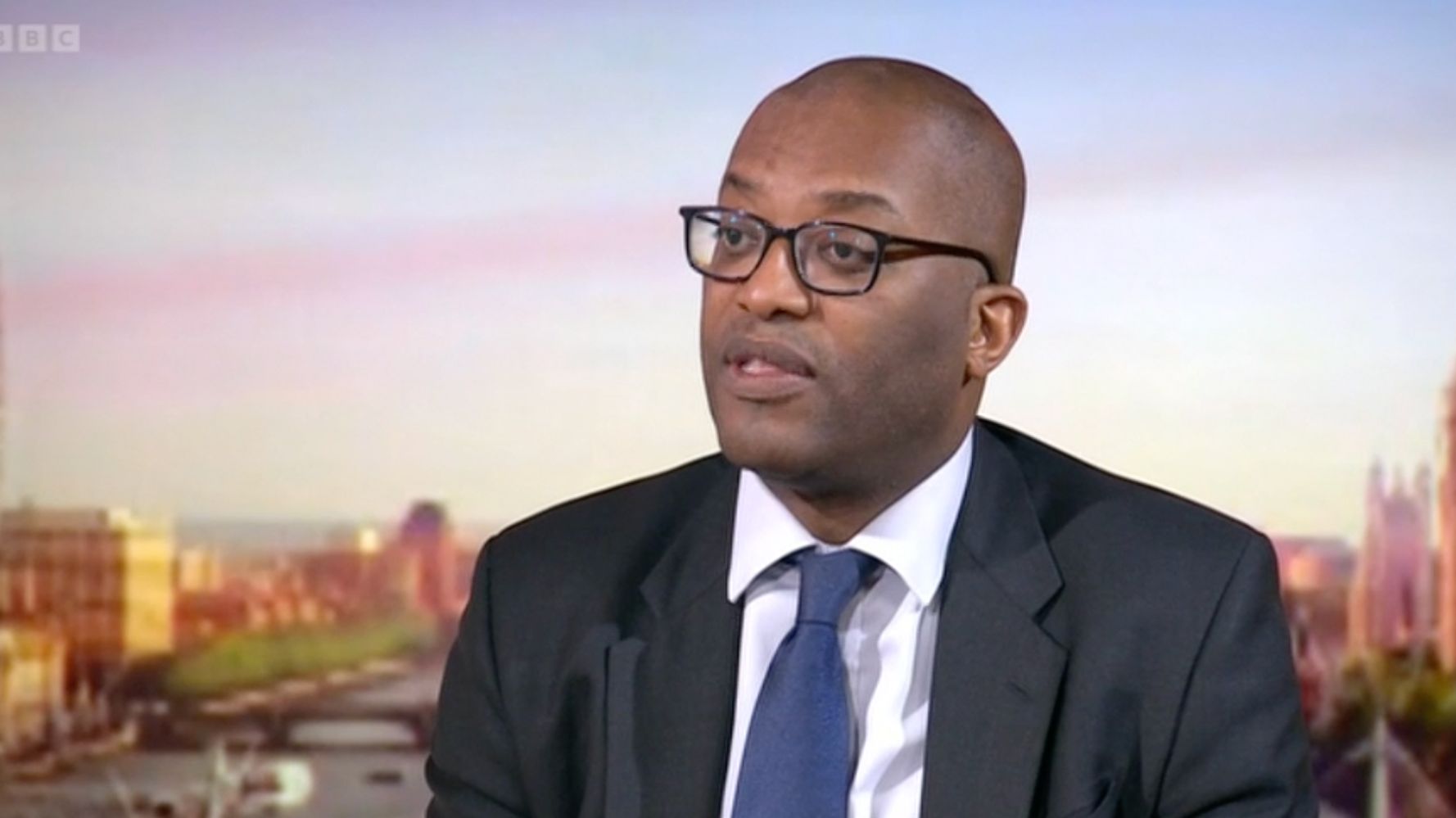
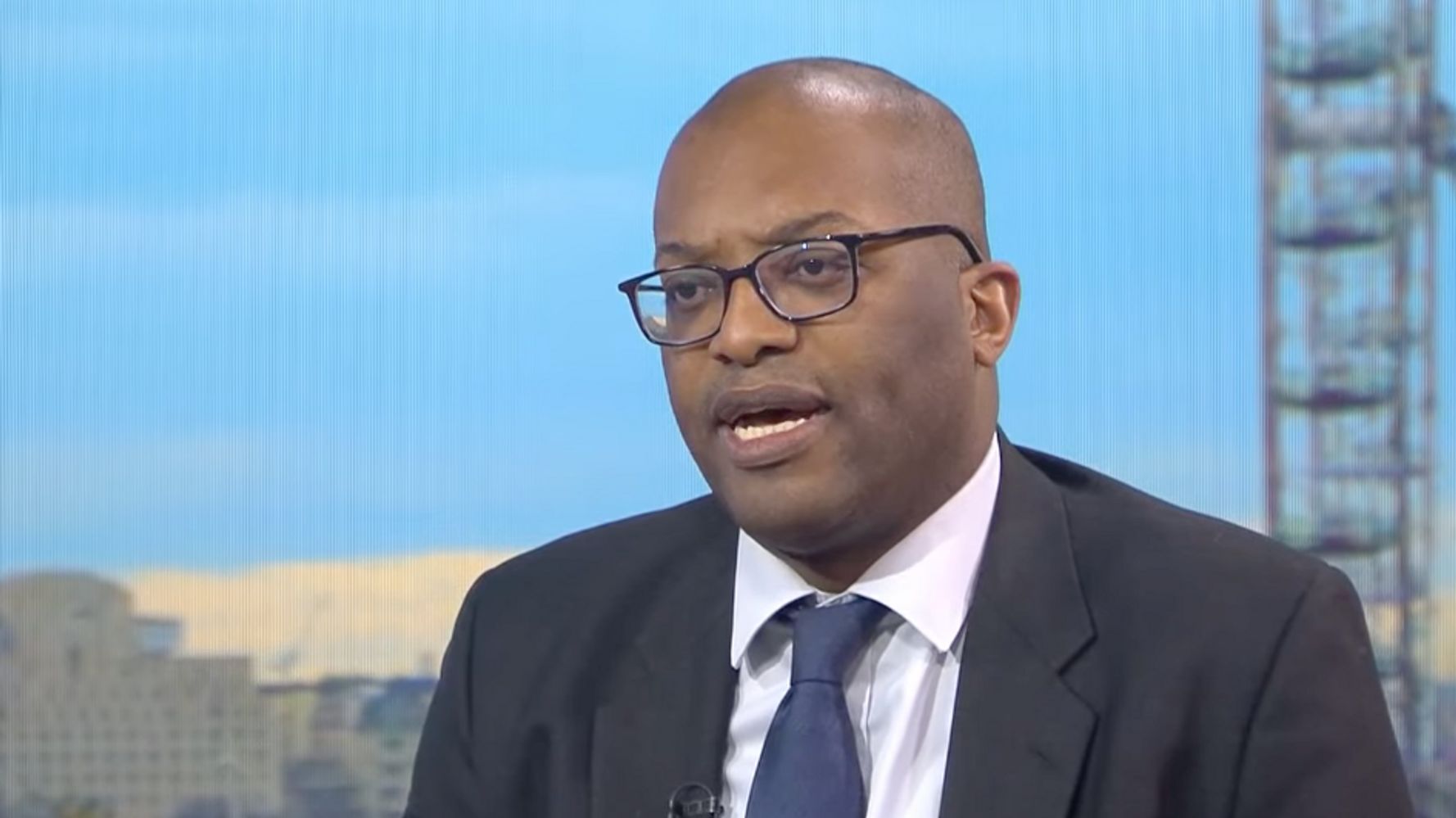
Kwasi Kwarteng has been mocked after he claimed Boris Johnson was right to tell MPs that crime is falling even though it is actually going up.

The Business Secretary defended the prime minister for ignoring the rise in fraud cases when he made the inaccurate claim in the Commons.

Johnson said crime had fallen by 14 per cent under his government.

But according to the UK Statistics Authority, once fraud and computer misuse are included, the crime rate has actually gone up by 14 per cent.

Challenged on the PM’s untrue claims on the BBC’s Sunday Morning show, Kwarteng said: “I don’t know why you say it isn’t true. I don’t know what the evidence is for it not being true.

“All I know is that certainly on the doorstep people are saying that there is progress being made.”

Presented with figures showing fraud is on the rise, the minister said: “When people talk about crime – I think fraud is really important – but people are talking particularly about burglaries, about personal injury, about physical crimes, and I think in that context we’re seeing lower crimes. I think the prime minister was right.

“He was talking about personal injury and crime in relation to individuals.

“The point the prime minister was making in terms of the crime people experience in their day-to-day lives, in terms of burglary – not fraud – but in terms of physical injury, has gone down, that’s absolutely right.”

The minister was roundly mocked on Twitter for his bizarre defence of the PM.

Liberal Democrat home affairs spokesperson, Alistair Carmichael, said: “The failure of Conservative ministers to stand up to Boris Johnson’s dishonesty and lack of decency is doing huge damage to public trust. Instead of apologising for misleading the public over rising crime, Kwasi Kwarteng doubled down on this blatant lie.

“This is an insult to every victim of fraud crime. Instead of fighting their corner, this government is ignoring the plight of all those who have been cruelly robbed in their own homes and on their own devices.

“Given the prime minister is being investigated by the police about alleged crimes committed in Downing Street, it’s perhaps not surprising he and his ministers are lying about crime falling across the country.”

Earlier on Sky News, Kwarteng had reignited the Cabinet split over the Jimmy Savile row by insisting it had been “entirely legitimate” for the prime minister to wrongly accuse Keir Starmer of letting Jimmy Savile escape justice when he was Director of Public Prosecutions.

The Business Secretary’s support for the PM over the row puts him at odds with Cabinet colleagues Rishi Sunak and Sajid Javid, both of whom have distanced themselves from the remarks.

Kwarteng said: “It was perfectly reasonable to mention the fact Sir Keir apologised on behalf of the organisation he led about the fact they failed to prosecute Jimmy Savile. So the fact he apologised suggests he does at some level bear some responsibility.”

Share Button

Kwasi Kwarteng Says Boris Johnson’s Jimmy Savile Smear Was ‘Entirely Legitimate’

Boris Johnson’s attempt to smear Keir Starmer over the failure to prosecute Jimmy Savile was “entirely legitimate”, according to Kwasi Kwarteng.

The Business Secretary’s support for the prime minister over the row puts him at odds with Cabinet colleagues Rishi Sunak and Sajid Javid, both of whom have distanced themselves from the PM.

Johnson sparked fury last Monday, during a debate on Sue Gray’s report into partygate, when he made the untrue claim about Starmer’s involvement in Savile escaping justice.

Referring to the Labour leader’s past role as Director of Public Prosecutions, the PM claimed he had “spent most of his time prosecuting journalists and failing to prosecute Jimmy Savile”.

Johnson eventually “clarified” his remarks by insisting he did not believe Starmer was personally responsible for the decision not to prosecute the notorious sex offender.

But that was too late to prevent the resignation of No. 10 policy chief Munira Mirza. In a devastating resignation letter, she said: “I believe it was wrong for you to imply this week that Keir Starmer was personally responsible for allowing Jimmy Savile to escape justice.

Several Conservative MPs have also identified the smear as one of the reasons why they have submitted letters of no confidence in the PM.

Chancellor Rishi Sunak openly criticised Johnson by saying he “wouldn’t have said” what he did, while Health Secretary Sajid Javid said Starmer deserved “respect” for the job he did as DPP.

But appearing on Trevor Phillips on Sunday on Sky News, Kwasi Kwarteng said it had been “entirely legitimate” for the prime minister to attack Starmer in the way he did.

He added: “It was perfectly reasonable to mention the fact Sir Keir apologised on behalf of the organisation he led about the fact they failed to prosecute Jimmy Savile. So the fact he apologised suggests he does at some level bear some responsibility.”

Kwarteng added: “I’m not saying he had personal blame, he didn’t, and we’ve been very clear about that, the PM clarified that position as well. But I think in the cut and thrust of debate… bringing up something Sir Keir himself apologised for seems reasonable.”

His comments came as Johnson tried to regain the political initiative by announcing a shake-up of his Downing Street operation.

Former BBC journalist Guto Harri – who worked for the PM when he was London mayor – has been appointed the new No. 10 director of communications, while Tory MP Steve Barclay is the new Downing Street chief of staff.

The moves follow the resignation of Munira Mirza and four other No. 10 advisers in the space of 24 hours at the end of last week.

Share Button

Meryl Streep’s ‘Breathtaking’ Improv In Don’t Look Up Is All Kinds Of Wow

No one could ever dispute Meryl Streep’s acting chops, but who knew she was also the queen of improv?

Don’t Look Up director Adam McKay has shared a compilation of clips of the multiple Oscar-winning star on the set of the Netflix hit showing off her “breathtaking” improvisation skills.

Meryl, who plays a Trump-esque US president in the climate crisis metaphor movie, ditched the script for one particular scene where she is seen on the phone in the Oval Office.

Adam reveals he filmed “20 to 25 completely different absurd phone calls” of the actor, which he described as “tour de force of improv”, and after seeing the clip, we’ve got to agree.

“She didn’t repeat anything,” he said.

Watch the video below and prepare to be wowed…

Share Button