Louise Redknapp Hits Back At Report She’s In ‘Despair’ Over Ex Jamie’s New Baby: ‘I’m Loving My Life’

Louise Redknapp has hit back at claims she is in “despair” at her ex-husband Jamie having a baby with new wife Frida Andersson.

The former Eternal singer was the subject of a story in this week’s Heat magazine which detailed her supposed feelings about Jamie and Frida welcoming their first child together last month.

However, Louise has shot down the reports in a post on Twitter, insisting she is “not in despair or anything like it”, adding that she is in “the most positive of headspaces and loving my life”.

“I try not to read or respond to these things but sometimes they’re unavoidable,” she wrote. “I’d really love to clarify that ‘Louise’ is not in despair or anything like it!!

“I have my two gorgeous boys that I adore more than anything in the world, the best family around me and I’m having the best time of my life in my career and with the most wonderful friends that a girl could hope for.”

“These stories are there to sell magazines but I’d like to make it clear that I’m in the most positive of headspaces and loving my life. Here’s to all the ladies out there that are in control of their lives and living their very best lives.

Addressing the magazine directly, she added: “Come on @heatworld magazine, women are better than this… x.”

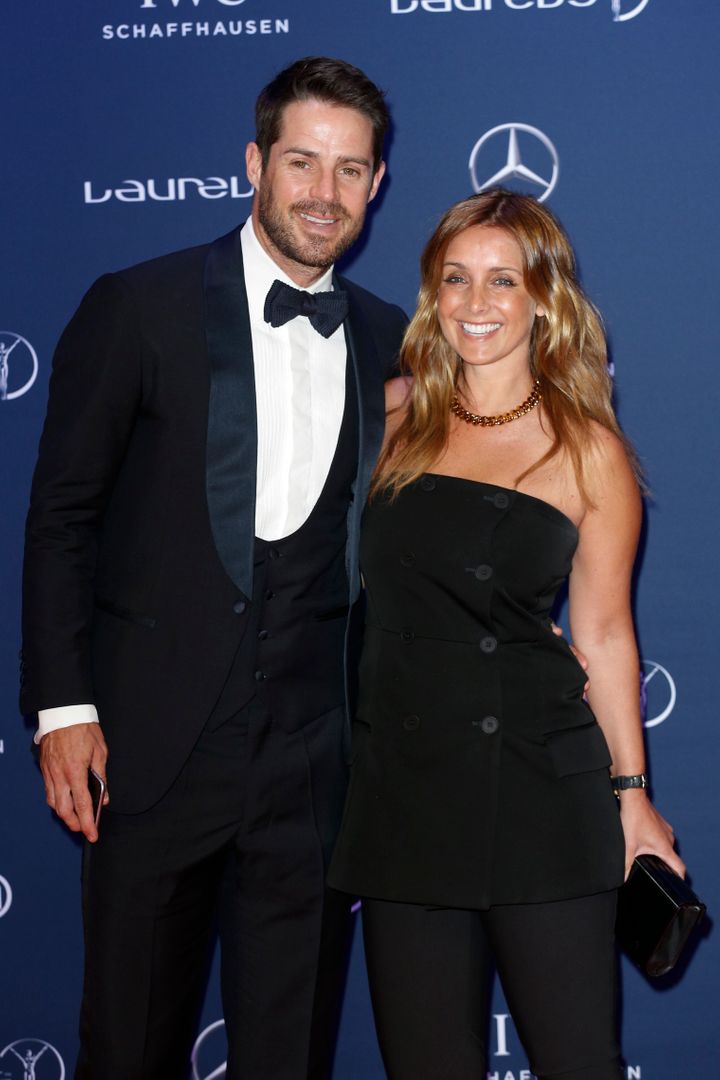
Louise split from Jamie Redknapp in 2017

Franziska Krug via Getty Images

Louise split from former footballer Jamie in 2017 after 19 years together.

The former couple are parents to sons Charley, 17, and Beau, 13.

Jamie married Frida in a low-key ceremony in London in October, where they were surrounded by 30 of their closest friends and family.

They were reported to have started dating last year.

Jamie with new wife Frida Andersson

BerettaBeretta/Sims/Shutterstock

The newlyweds announced the arrival of their son Raphael Anders Redknapp in a sweet Instagram post last month.

“We’re so in love, mum is doing so well too,” Jamie said. “We can’t thank the amazing doctors and nurses at the Chelsea and Westminster enough. So excited for him to meet my boys.”

Share Button

Covid-19: Mums who were severely ill urge pregnant women to get jabs

In a video, one woman says her family were told she would not survive after giving birth with Covid.

Share Button

Covid: GPs can defer some services in booster jab push

Practices in England can postpone minor surgery and routine health checks for over-75s, NHS chiefs say.

Share Button

Daytime meals may reduce health risks linked to night shift work

A small clinical trial supported by the National Institutes of Health has found that eating during the nighttime — like many shift workers do — can increase glucose levels, while eating only during the daytime might prevent the higher glucose levels now linked with a nocturnal work life. The findings, the study authors said, could lead to novel behavioral interventions aimed at improving the health of shift workers — grocery stockers, hotel workers, truck drivers, first responders, and others — who past studies show may be at an increased risk for diabetes, heart disease, and obesity.

The new study, which the researchers noted is the first to demonstrate the beneficial effect of this type of meal timing intervention in humans, appears online in the journal Science Advances. It was funded primarily by the National Heart, Lung, and Blood Institute (NHLBI), part of NIH.

“This is a rigorous and highly controlled laboratory study that demonstrates a potential intervention for the adverse metabolic effects associated with shift work, which is a known public health concern,” said Marishka Brown, Ph.D., director of the NHLBI’s National Center on Sleep Disorders Research. “We look forward to additional studies that confirm the results and begin to untangle the biological underpinnings of these findings.”

For the study, the researchers enrolled 19 healthy young participants (seven women and 12 men). After a preconditioning routine, the participants were randomly assigned to a 14-day controlled laboratory protocol involving simulated night work conditions with one of two meal schedules. One group ate during the nighttime to mimic a meal schedule typical among night workers, and one group ate during the daytime.

The researchers then evaluated the effects of these meal schedules on their internal circadian rhythms. That’s the internal process that regulates not just the sleep-wake cycle, but also the 24-hour cycle of virtually all aspects of your bodily functions, including metabolism.

The researchers found that nighttime eating boosted glucose levels — a risk factor for diabetes — while restricting meals to the daytime prevented this effect. Specifically, average glucose levels for those who ate at night increased by 6.4% during the simulated night work, while those who ate during the daytime showed no significant increases.

“This is the first study in humans to demonstrate the use of meal timing as a countermeasure against the combined negative effects of impaired glucose tolerance and disrupted alignment of circadian rhythms resulting from simulated night work,” said study leader Frank A.J.L. Scheer, Ph.D., professor of medicine at Harvard Medical School and director of the Medical Chronobiology Program at Brigham & Women’s Hospital in Boston.

The researchers said that the mechanisms behind the observed effects are complex. They believe that the nighttime eating effects on glucose levels during simulated night work are caused by circadian misalignment. That corresponds to the mistiming between the central circadian “clock” (located in the brain’s hypothalamus) and behavioral sleep/wake, light/dark, and fasting/eating cycles, which can influence peripheral “clocks” throughout the body. The current study shows that, in particular, mistiming of the central circadian clock with the fasting/eating cycles plays a key role in boosting glucose levels. The work further suggests the beneficial effects of daytime eating on glucose levels during simulated night work may be driven by better alignment between these central and peripheral “clocks.”

“This study reinforces the notion that when you eat matters for determining health outcomes such as blood sugar levels, which are relevant for night workers as they typically eat at night while on shift,” said the study co-leader Sarah L. Chellappa, M.D., Ph.D., a researcher in the nuclear medicine department at the University of Cologne, Germany. Chellappa formerly worked with Scheer in Brigham & Women’s Medical Chronobiology Program.

To translate these findings into practical and effective meal timing interventions, the researchers said more study is needed, including with real-life shift workers in their typical work environment.

Share Button

Immune system-stimulating nanoparticle could lead to more powerful vaccines

A common strategy to make vaccines more powerful is to deliver them along with an adjuvant — a compound that stimulates the immune system to produce a stronger response.

Researchers from MIT, the La Jolla Institute for Immunology, and other institutions have now designed a new nanoparticle adjuvant that may be more potent than others now in use. Studies in mice showed that it significantly improved antibody production following vaccination against HIV, diphtheria, and influenza.

“We started looking at this particular formulation and found that it was incredibly potent, better than almost anything else we had tried,” says Darrell Irvine, the Underwood-Prescott Professor with appointments in MIT’s departments of Biological Engineering and Materials Science and Engineering; an associate director of MIT’s Koch Institute for Integrative Cancer Research; and a member of the Ragon Institute of MGH, MIT, and Harvard.

The researchers now hope to incorporate the adjuvant into an HIV vaccine that is currently being tested in clinical trials, in hopes of improving its performance.

Irvine and Shane Crotty, a professor at the Center for Infectious Disease and Vaccine Research at the La Jolla Institute for Immunology, are the senior authors of the study, which appears today in Science Immunology. The lead authors of the paper are Murillo Silva, a former MIT postdoc, and Yu Kato, a staff scientist at the La Jolla Institute.

More powerful vaccines

Although the idea of using adjuvants to boost vaccine effectiveness has been around for decades, there are only a handful of FDA-approved vaccine adjuvants. One is aluminum hydroxide, an aluminum salt that induces inflammation, and another is an oil and water emulsion that is used in flu vaccines. A few years ago, the FDA approved an adjuvant based on saponin, a compound derived from the bark of the Chilean soapbark tree.

Saponin formulated in liposomes is now used as an adjuvant in the shingles vaccine, and saponins are also being used in a cage-like nanoparticle called an immunostimulatory complex (ISCOM) in a Covid-19 vaccine that is currently in clinical trials.

Researchers have shown that saponins promote inflammatory immune responses and stimulate antibody production, but how they do that is unclear. In the new study, the MIT and La Jolla team wanted to figure out how the adjuvant exerts its effects, and to see if they could make it more potent.

They designed a new type of adjuvant that is similar to the ISCOM adjuvant but also incorporates a molecule called MPLA, which is a toll-like receptor agonist. When these molecules bind to toll-like receptors on immune cells, they promote inflammation. The researchers call their new adjuvant SMNP (saponin/MPLA nanoparticles).

“We expected that this could be interesting because saponin and toll-like receptor agonists are both adjuvants that have been studied separately and shown to be very effective,” Irvine says.

The researchers tested the adjuvant by injecting it into mice along with a few different antigens, or fragments of viral proteins. These included two HIV antigens, as well as diphtheria and influenza antigens. They compared the adjuvant to several other approved adjuvants and found that the new saponin-based nanoparticle elicited a stronger antibody response than any of the others.

One of the HIV antigens that they used is an HIV envelope protein nanoparticle, which presents many copies of the gp120 antigen that is present on the HIV viral surface. This antigen recently completed initial testing in phase 1 clinical trials. Irvine and Crotty are part of the Consortium for HIV/AIDS Vaccine Development at the Scripps Research Institute, which ran that trial. The researchers now hope to develop a way to manufacture the new adjuvant at large scale so it can be tested along with an HIV envelope trimer in another clinical trial beginning next year. Clinical trials that combine envelope trimers with the traditional vaccine adjuvant aluminum hydroxide are also underway.

“Aluminum hydroxide is safe but not particularly potent, so we hope that (the new adjuvant) would be an interesting alternative to elicit neutralizing antibody responses in people,” Irvine says.

Rapid flow

When vaccines are injected into the arm, they travel through lymph vessels to the lymph nodes, where they encounter and activate B cells. The research team found that the new adjuvant speeds up the flow of lymph to the nodes, helping the antigen to get there before it starts to break down. It does this in part by stimulating immune cells called mast cells, which previously were not known to be involved in vaccine responses.

“Getting to the lymph nodes quickly is useful because once you inject the antigen, it starts slowly breaking down. The sooner a B cell can see that antigen, the more likely it’s fully intact, so that B cells are targeting the structure as it will be present on the native virus,” Irvine says.

Additionally, once the vaccine reaches the lymph nodes, the adjuvant causes a layer of cells called macrophages, which act as a barrier, to die off quickly, making it easier for the antigen to get into the nodes.

Another way that the adjuvant helps boost immune responses is by activating inflammatory cytokines that drive a stronger response. The TLR agonist that the researchers included in the adjuvant is believed to amplify that cytokine response, but the exact mechanism for that is not known yet.

This kind of adjuvant could also be useful for any other kind of subunit vaccine, which consists of fragments of viral proteins or other molecules. In addition to their work on HIV vaccines, the researchers are also working on a potential Covid-19 vaccine, along with J. Christopher Love’s lab at the Koch Institute. The new adjuvant also appears to help stimulate T cell activity, which could make it useful as a component of cancer vaccines, which aim to stimulate the body’s own T cells to attack tumors.

The research was funded by the National Institute of Allergy and Infectious Diseases, the Koch Institute’s Marble Center for Cancer Nanomedicine, the U.S. Army Research Office through the Institute for Soldier Nanotechnologies at MIT, the Koch Institute Support (core) Grant from the National Cancer Institute, the International AIDS Vaccine Initiative, and the Ragon Institute.

Share Button

Covid-19: Matt Hancock neighbour denies NHS cronyism claim

Alex Bourne says the former health secretary had no involvement is his company winning NHS work.

Share Button

Wraparound care coordination associated with many positive outcomes amongst youth with serious and complex behavioral health needs

A study in the Journal of the American Academy of Child and Adolescent Psychiatry (JAACAP), published by Elsevier, finds that Wraparound Care Coordination (Wraparound), which has been adopted in states and jurisdictions across the country to help meet the needs of children and adolescents with serious emotional and behavioral disorders, produces more positive outcomes for youth when compared to more common service approaches.

Moreover, Wraparound may hold the potential for reducing disparities in outcomes for youth of color, which has long been found in mental health services.

A team of researchers, led by Jonathan Olson, PhD, at the University of Washington Department of Psychiatry and Behavioral Sciences, Seattle, WA, USA, conducted a meta-analysis of 17 controlled studies, and their results, published between 1996 and 2019 in order to compare the effects of Wraparound to regular services in youth with SED (serious emotional disorders).

“For many years, public systems have used Wraparound because it makes sense and provides families with the kind of compassionate approach, something that all families say they want and need,” said Dr. Eric Bruns, Professor of Psychiatry and senior author on the research team. “Now we have clear results that support what many have seen in their own local systems of care: that Wraparound is more effective and cost-effective than traditional services.”

Significant effects in favor of Wraparound across a range of important youth outcomes were found — including reduced out-of-home placements and improved mental health functioning and school outcomes. The study also found significantly lower overall care costs for youth in Wraparound care, due to less spending on costly out-of-home placements. Across the 17 studies, Wraparound effects were more positive for samples with higher proportions of youth of color.

“Wraparound lives up to principles we want to uphold — for example, being youth- and family-driven, strengths-based and using a team of people with a blank checkbook to ‘do whatever it takes’ to meet the needs of the youth and family,” added Dr. Bruns. “While many states have taken Wraparound to scale, others have been more hesitant, saying it wasn’t ‘evidence-based.’ This study should help address those concerns.”

Wraparound was established in the 1980s as an alternative to service delivery strategies that kept youth and family services in fragmented siloes, driven by professionals and often relying on costly institution-based care rather than investing in community supports. Instead, Wraparound invests in a care coordinator with a low caseload who convenes a team that includes the family, friends and members of the wider community, as well as service and support providers.

Dr. Olson also points out, however, that the study additionally reinforced how important it is to implement high-quality Wraparound services that are true to the model: “Unfortunately, many studies were conducted before there were measures of fidelity, or measures of ‘doing Wraparound right,'” he said. “However, for studies that did measure fidelity, we saw more positive outcomes for youth and families who received care that was of high-quality and closely adhered to Wraparound principles.”

The potential for Wraparound to better meet the needs of youth of color was an unexpected finding, concluded Dr. Bruns, but perhaps not surprising: “We need to remember that in all these studies, Wraparound was compared to more traditional services delivered in mental health, child welfare and juvenile justice.

“There is a long history of research showing disparities in access and outcomes for youth of color and their families. It may be that by allowing for more youth and family voice and choice, and teams that include family, friends, and community members, Wraparound helps reduce those disparities. However, such questions were not the explicit focus of these studies. We need to investigate the issue of what may address disparities with greater rigor.”

Story Source:

Materials provided by Elsevier. Note: Content may be edited for style and length.

Share Button

Scientists Have Found The Two Most Effective Covid Booster Jabs

The Pfizer and Moderna vaccines are the most effective Covid booster jabs. a new study has found, but all boosters could help fight the Omicron variant.

Newly published research from the ongoing CovBoost study into vaccines, shows that six different vaccines are safe and effective as booster doses for people who have already had two doses of AstraZeneca or Pfizer/BioNTech.

The latest CovBoost trial, published in the Lancet, involved 2,878 people aged 30 or over who received a booster 10 to 12 weeks after their initial two jabs.

The six vaccines tested as a third doses were AstraZeneca, Pfizer/BioNTech, Moderna, Novavax, Janssen (made by Johnson and Johnson) and CureVac (which has ceased production).

“All of the vaccines in our study do show a statistically significant boost,” says Professor Saul Faust, trial lead and director of the NIHR Clinical Research Facility at University Hospital Southampton NHS Foundation Trust.

He stressed that while the boost delivered by the two mRNA vaccines – Pfizer and Moderna – was “very high”, Novavax, Janssen and AstraZeneca also delivered “very effective boosts”.

Although the newly emerged Omicron variant was not tested in the study, the study showed that booster vaccines are working well against existing variants.

Asked specifically about Omicron, Prof Faust said: “Our hope as scientists is that protection against hospitalisation and death will remain intact.”

filadendron via Getty Images

“It’s really encouraging that a wide range of vaccines, using different technologies, show benefits as a third dose to either AstraZeneca or Pfizer/BioNTech,” said Prof Faust. “That gives confidence and flexibility in developing booster programmes here in the UK and globally, with other factors like supply chain and logistics also in play.

Additionally, researchers think that T cell immunity, which was studied alongside antibodies in the research, could play a big role in fighting off the new variant.

“Even though we don’t properly understand its relation to long-term immunity, the T cell data is showing us that it does seem to be broader against all the variant strains, which gives us hope that a variant strain of the virus might be able to be handled, certainly for hospitalisation and death if not prevention of infection, by the current vaccines,” Prof Faust said.

When looking at antibody levels in the trial, people who had received two doses of AstraZeneca initially had booster responses that were between 1.8 times higher to 32.3 times higher depending on the booster vaccine used. After two doses of Pfizer, the range was 1.3 times higher to 11.5 times higher.

There were 13 different groups testing the boosters or acting as controls, with controls given a meningitis vaccine. Immunity was then assessed after 28 days, with experts saying that more data will be published in the future on the immunity results three months and one year after receiving boosters.

Jonathan Ball, professor of molecular virology at the University of Nottingham, commented: “This is a fantastic study and it’s great to finally see the data that was no doubt pivotal in deciding the UK’s vaccine booster approach.

“The data clearly shows that all boosters provided a lift to at least one aspect of your Covid immunity, and that side effects were, on the whole, mild.”

He added: “The data also shows that an mRNA booster – such as Moderna or Pfizer – provided the best overall boost, irrespective of whether your first doses were mRNA or (AstraZeneca). The fact that the mRNA vaccine boosts gave a marked increase in both antibodies and T cells is great news, especially now, when our attention has been grabbed by the emergence of the Omicron variant.”

Samples from the study have now been passed to the UK Health Security Agency to look at how well the Omicron variant can be neutralised by vaccines.

More data will be published early next year looking at whether a longer period between second and third doses improves the response.

Share Button

Covid: First data points to Omicron re-infection risk

Scientists in South Africa have identified a spike in the numbers catching Covid again.

Share Button

Can seven questions determine how wise you are?

Researchers at University of California San Diego School of Medicine report that an abbreviated, seven-item scale can help determine with high validity a person’s level of wisdom, a potentially modifiable personality trait that has been shown to have a strong association to well-being.

The study’s researchers had previously developed the 28-item San Diego Wisdom Scale (SD-WISE-28), which has been used in large national and international studies, biological research and clinical trials to evaluate wisdom.

But in a study publishing in International Psychogeriatrics, researchers found that a shortened seven-item version (SD-WISE-7 or Jeste-Thomas Wisdom Index), was comparable and reliable.

“Wisdom measures are increasingly being used to study factors that impact mental health and optimal aging. We wanted to test if a list of only seven items could provide valuable information to test wisdom,” said senior author Dilip V. Jeste, MD, senior associate dean for the Center of Healthy Aging and Distinguished Professor of Psychiatry and Neurosciences at UC San Diego School of Medicine.

Past studies have shown that wisdom is comprised of seven components: self-reflection, pro-social behaviors (such as empathy, compassion and altruism), emotional regulation, acceptance of diverse perspectives, decisiveness, social advising (such as giving rational and helpful advice to others) and spirituality.

The latest study surveyed 2,093 participants, ages 20 to 82, through the online crowdsourcing platform Amazon Mechanical Turk.

The seven statements, selected from SD-WISE-28, relate to the seven components of wisdom and are rated on a 1 to 5 scale, from strongly disagree to strongly agree. Examples of the statements include “I remain calm under pressure” and “I avoid situations where I know my help will be needed.”

“Shorter doesn’t mean less valid,” said Jeste. “We selected the right type of questions to get important information that not only contributes to the advancement of science but also supports our previous data that wisdom correlates with health and longevity.”

Additionally, the SD-WISE-7 was found to strongly and positively correlate with resilience, happiness and mental well-being and strongly and negatively correlate with loneliness, depression and anxiety.

“There are evidence-based interventions to increase levels of specific components of wisdom, which would help reduce loneliness and promote overall well-being,” said Jeste.

“Like the COVID-19 vaccine protects us from the novel coronavirus, wisdom can aid in protecting us from loneliness. Thus, we can potentially help end a behavioral pandemic of loneliness, suicides and opioid abuse that has been going on for the last 20 years.”

Next steps include genetic, biological, psychosocial and cultural studies of large numbers of diverse populations to assess wisdom, as well as various factors related to mental, physical and cognitive health in people across the lifespan.

“We need wisdom for surviving and thriving in life. Now, we have a list of questions that take less than a couple of minutes to answer that can be put into clinical practice to try to help individuals,” said Jeste.

Co-authors include: Michael Thomas with Colorado State University; and Barton Palmer, Ellen Lee, Jinyuan Liu, Rebecca Daly and Xin Tu, all with UC San Diego.

Share Button