In estimations of ocean heat content — important when assessing and predicting the effects of climate change — calculations have often presented the rate of warming as a gradual rise from the mid-20th century to today. However, new research from UC Santa Barbara scientists Timothy DeVries and Aaron Bagnell could overturn that assumption, suggesting the ocean maintained a relatively steady temperature throughout most of the 20th century, before embarking on a steep rise. The newly discovered dynamics may have significant implications for what we might expect in the future.
“There wasn’t an onset of an imbalance until about 1990, which is later than most estimates,” said DeVries, an associate professor in the Department of Geography, and a co-author on a paper that appears in the journal Nature Communications. According to the study, the period from 1950 to1990 saw temperature fluctuations in the water column but no net warming. After 1990, the study continues, the entire water column switched from cooling to warming.
These findings are the result of the addition of a largely underexplored factor in ocean heat content (OHC): deep ocean temperatures.
“Prior studies didn’t consider the deep ocean,” said Bagnell, a graduate scholar in DeVries’ laboratory and the paper’s lead author. Because of the challenges involved in getting temperature measurements in the deep ocean (below 2,000 meters) that region has gone largely unaccounted for, and data has been sparse. “There is some existing data, from research cruises and autonomous floats,” he added.
The researchers used an autoregressive artificial neural network (ARANN) and machine learning methods to connect the dots between data points and “produce a single consistent estimate of the top-to-bottom OHC change for 1946 to 2019.” The result was a trend that delays warming by decades over previous models.
There are two main possibilities for why the effects of global warming took so long to reach the ocean, De Vries said.
“One is that anthropogenic warming might have been weaker than previously thought during the 20th century, perhaps due to the cooling effects of aerosol pollution,” he said. The other is that the deep ocean may still be exhibiting the effects of climate events long past.
“It can take centuries for climate signals to propagate from the surface to the interior,” he said. Thus, the effects of a cooling event such as the Little Ice Age might be deep history to us on the surface, but the echoes of the event may have continued to resonate in the deep ocean into the 20th century, providing a buffer to the warming Earth.
The delayed cooling effect ended in 1990, after which ocean temperatures, according to the study, have been accelerating upward.
“The lag is catching up and the ocean is warming more strongly now,” Bagnell said. The Atlantic Ocean and Southern Ocean are currently where most of the warming is, with the Pacific Ocean and Indian Ocean not far behind.
Ocean warming is a concern on many levels, as it can cause changes in circulation, reduce its ability to absorb carbon and fuel more intense storms, in addition to causing sea level rise and creating inhospitable environments for undersea life. If the trend continues, the effects might last centuries, thanks to the same lag that kept the oceans cool until the last 30 years.
You’re reading Move, the nudge we need to get active, however makes us happiest and healthiest.
A funny thing happens after a big sporting event takes over our televisions: fitness centres, gyms and sports clubs see a spike in new members.
Advertisement
It happened after the 2019 FIFA Women’s World Cup, when 850,000 more women signed up to play footie. Then again during and immediately after Wimbledon the same year, when the Lawn Tennis Association saw casual player court bookings jump by around 49%.
So imagine the impact of Team GB equalling the glory of London 2012 to record their joint highest ever Olympic medal tally in Tokyo this past fortnight with an amazing 22 golds, 21 silvers and 22 bronzes – adding up to 65 medals in all.
Advertisement
After the pandemic forced the cancellation of so many sporting fixtures and events in 2020, the bonanza of summer 2021 has been all the more inspiring. From multi-screening the Euros and Wimbledon, enjoying a whole new cricket tournament in The Hundred, and getting glued to the Olympics and the Paralympics yet to come, we’ve never been more ready to tune in, then train up.
Participation data has yet to be released for the year, but we’d put money on it being big. So, why does watching sport make us want to get sporty ourselves?
Advertisement
Fred Lee via Getty Images
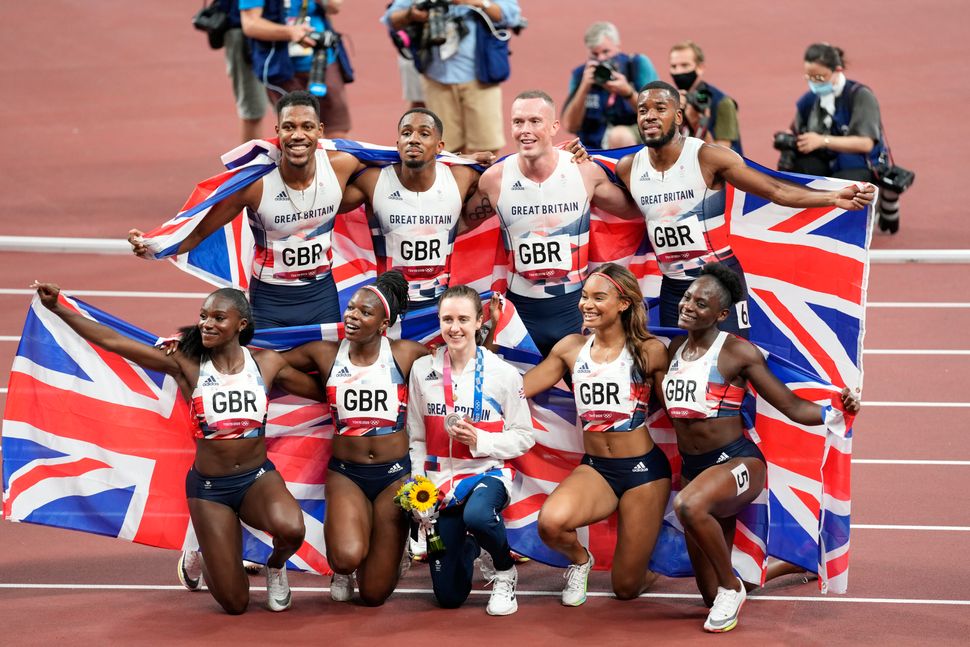
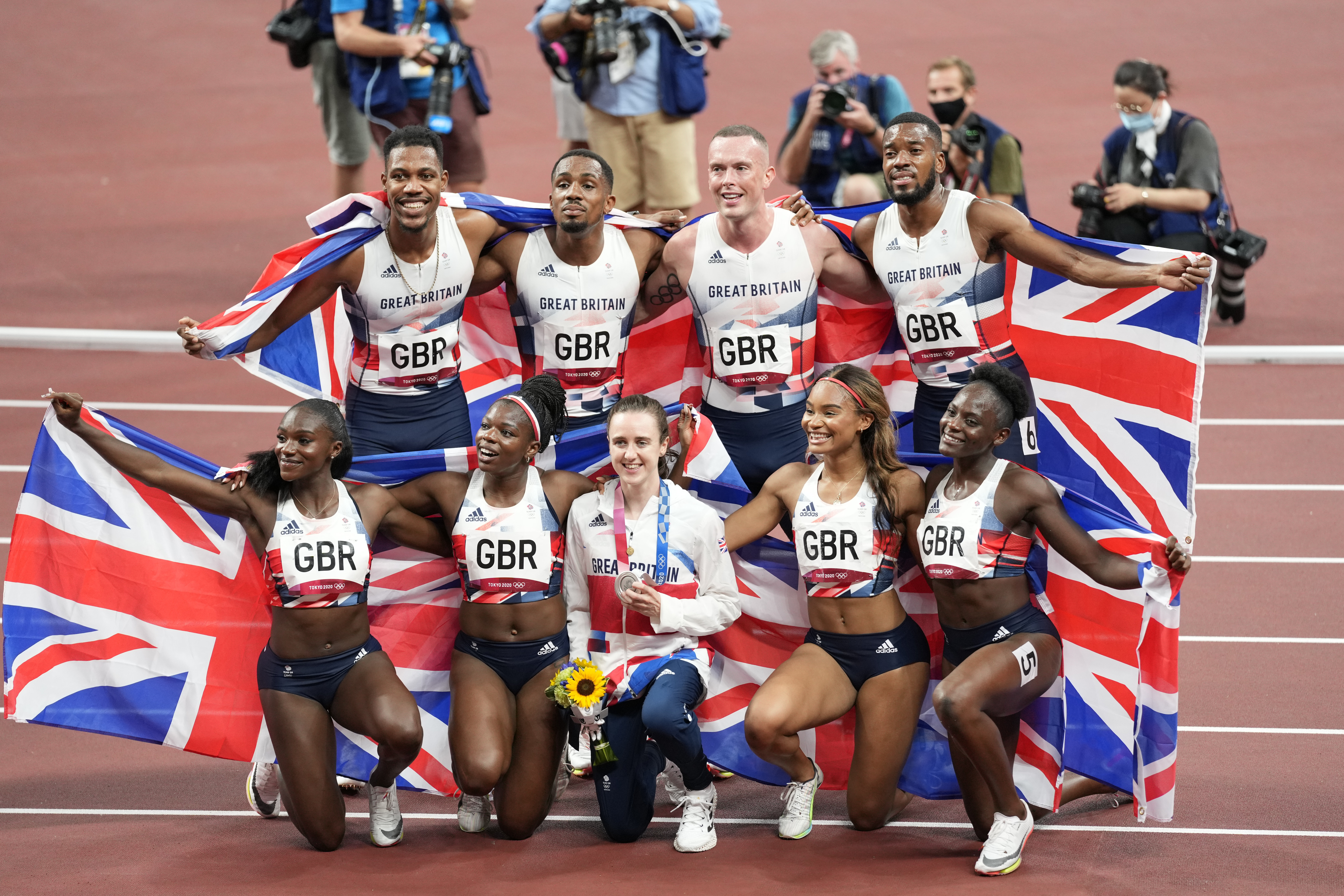
Team GB’s athletes celebrate their triumphs on the track in Tokyo
“Watching sport makes us realise the power of community and triggers the sense of belonging that we all crave,” says sports psychologist Dr Josie Perry , whose audiobook, The 10 Pillars of Success, is out on August 15. “We watch people trying their absolute hardest, achieving great things and looking amazing and we want a piece of that too. We want to feel part of that world.”
The pull we feel watching elite athletes is so strong, it’s even felt by other sporting pros. Five-time Olympian Jo Pavey tells HuffPost UK she gets inspired to try other sports when she watches them on TV – even if they’re out of her own comfort zone of long-distance running. And what’s true for adults also applies to kids, says Pavey, who narrowly missed out on a spot in Tokyo.
“When England were playing football in the Euros it inspired us all to keep playing football matches in the garden. When Wimbledon is on, we’re more likely to have a go at tennis,” says the mother-of-two.
“I think it’s great for kids to see role models on the TV as it inspires them to have a go at different things. I also find it motivating to watch the determination of sports people competing in different events.”
Not only does a high profile tournament inspire many of us to try something new, it can also remind us of past sporting fun, adds Dr Perry. Watching a sport we’ve dabbled in ourselves, “helps us remember the pleasure we got from both doing it and from the feeling we had mastered aspects of it,” she says.
The summer Olympics, with 339 events and 33 different sports, offers the ultimate opportunity to reminisce – even if we’re simply laughing about how terrible we were at javelin in school and wondering if we’d do better now.
The Olympians understand this knock-on-effect. “That’s why we are all here, because sport has an amazing power to inspire people and hopefully this is going to be an amazing motivation for people,” said swimmer Adam Peaty after winning Team GB’s very first gold medal of the game.
This is why HuffPost UK has chosen this moment to relaunch our fitness section as Move – a renewed commitment to celebrating exercise in all its forms, putting accessibility front and centre. We aim to provide bags of ideas for getting active, however makes you happiest and healthiest – but we’ll also get real about motivation, addressing the barriers that stop so many of us from moving more.
Advertisement
HuffPost UK / Rebecca Zisser
Take participation after a major sporting event. We know people sign up in their thousands after watching sport on TV, but we also know that many people drop out soon afterwards.
A quarter of people have given up on certain sports because they didn’t think they would be good enough, according to research from Procter & Gamble. A further 16% of people have been put off a sport, because they didn’t believe they fit the stereotype of what people playing that sport are “supposed” to look like. For many, the pandemic and long stints indoors has only exacerbated such worries, particularly among those who’ve historically felt excluded from the fitness community, and not catered for in gyms and sports centres.
Research from the disability charity Scope for its new Make It Count drive – dubbed “a movement of movers” – found that nearly half (48%) of disabled people have become less active since the pandemic began. Four in 10 (40%) said they never do sport or physical activity, but 91% want to be more active.
So, how do we take inspiration and energy from a summer of sport such as this one and harness it once the media hubbub has died down? And how can we shake off the inner critic that tells us we’ll never be as good as the pros?
Bryn Lennon via Getty Images
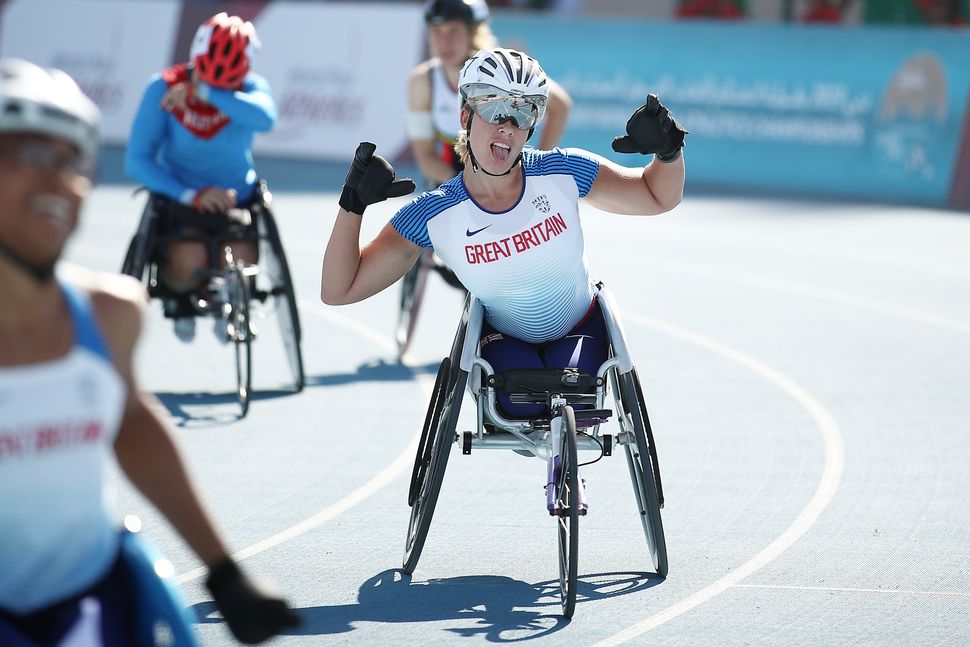
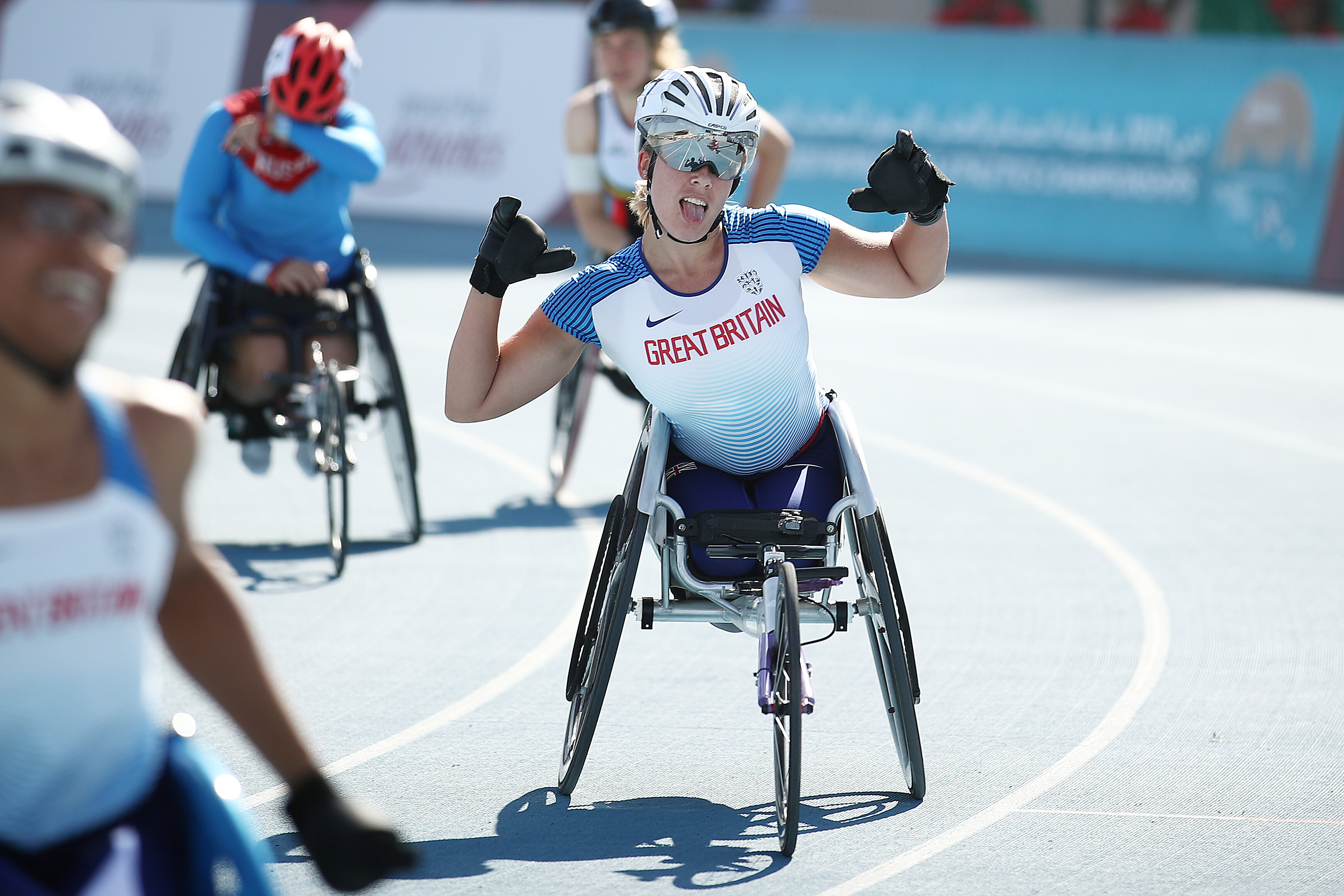
Hannah Cockroft is one of Team GB’s great hopes at the Paralympics in Tokyo.
Well, we can start by stealing some motivation tactics from elite athletes, says Jeremy Snape, a former England cricketer-turned-sports psychologist, who hosts the podcast Inside the Mind of Champions.
“We have this myth that elite performers are going to wake up every morning with a zest for their painful training and are going to do that for eight or 10 years without a break, but that’s not true,” he tells HuffPost.
“A professional athlete, that’s their job, so while their motivation may ebb and flow through the various training cycles, their commitment remains the same.”
A professional athlete’s commitment – or end goal – may be winning a certain tournament or hitting a new world record. They’ll use a number of tactics to visualise not only what this might look like, but how this might feel, says Snape. They may imagine a social gathering where they’ll show family that trophy, or put an inspirational image as their phone screen saver that makes them feel good about their ambition.
Leon Neal via Getty Images
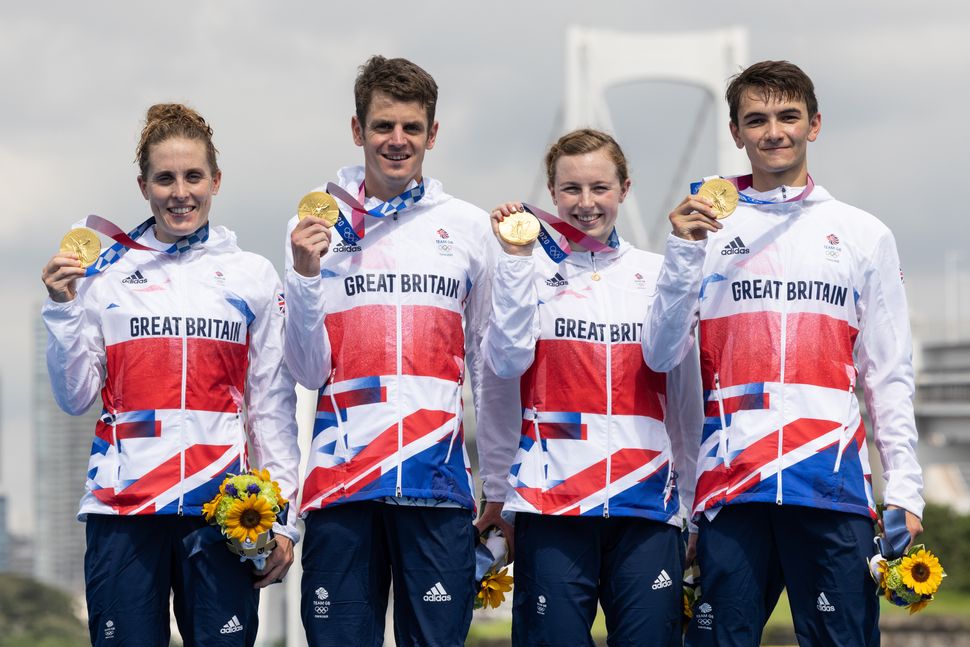
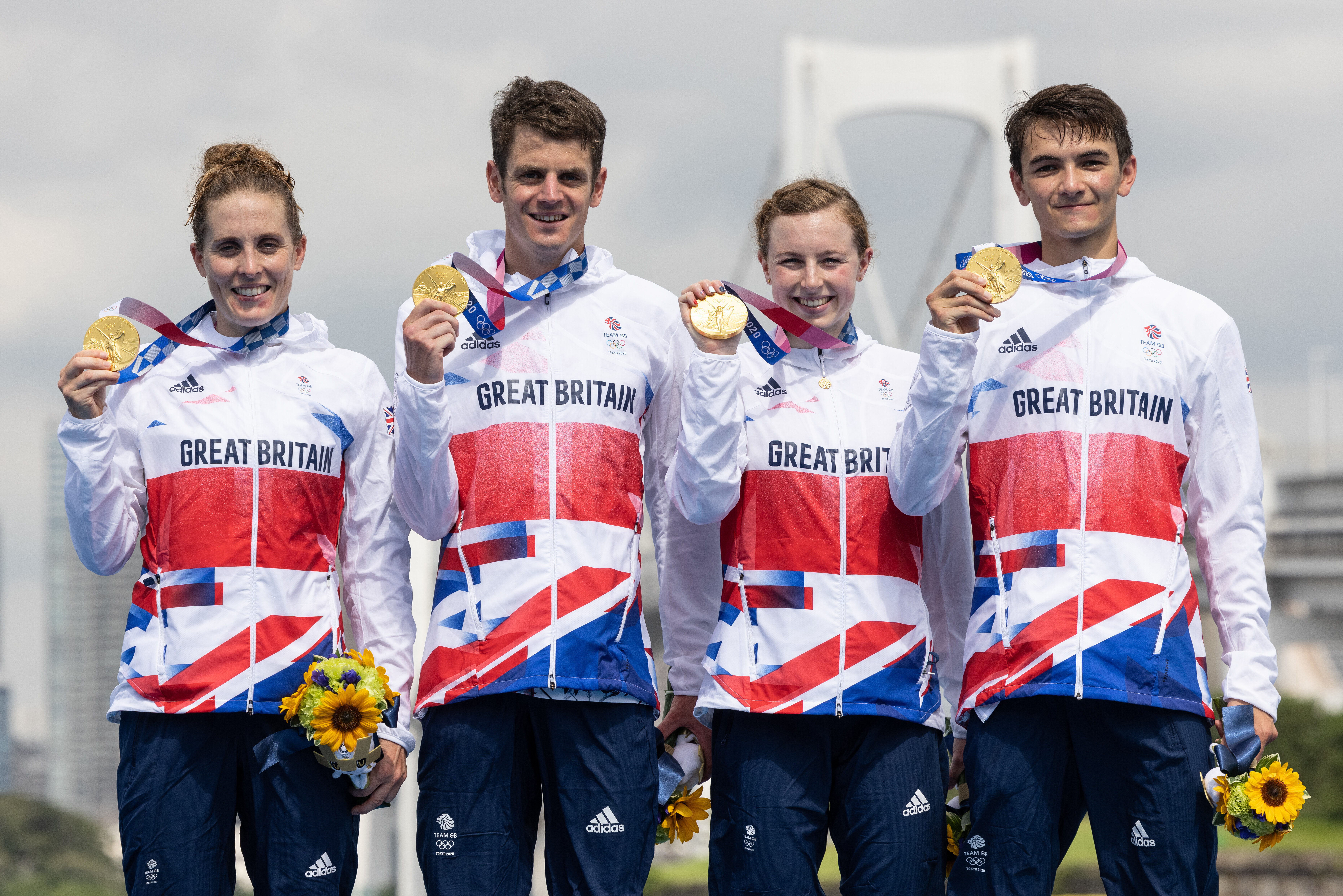
Team GB’s Mixed Relay Triathlon team show off their gold medals
For you, the commitment may be getting fitter so you don’t get so tired out during your work week or so you can play with your kids without getting out of breath. Snape recommends thinking about how great this will feel, rather than focusing on something static – such as weight loss – as the goal.
When your motivation is high, such as after watching sport on TV, he suggests putting “architecture” in place for when it inevitably dips. This might be signing up to a class, or laying out your gym kit with your phone alarm in the shoe.
“The chances are, when we wake up, we’ll think the duvet is going to beat us, but if your alarm is going to ring in your gym shoes and it’s all laid out, you’ve 90% more chance that you’re going to follow through,” he says. “The hardest part of a run is getting out of the front door.”
Pavey recommends listening to music before and and during a workout to help “get you in the groove,” exercising with friends, and planning what you’ll do after a workout. “But the main thing is to enjoy it,” she says. “If you’re experiencing a lack of motivation try varying your workouts or maybe take the time to exercise where there is beautiful scenery as this can be so uplifting.”
And if self-doubt starts to creep in, remember that any movement is positive movement – and you don’t need to look like an elite athlete to take part.
“What we’ve got to do when we look at Olympians is look at the characteristics we aspire to. Things like their personal discipline, the selflessness in teams, [their] wellbeing.”
“You’ve got to bear in mind that it’s those people’s professions and they’ve studied and sacrificed for 15 years to look like that, some of them started their training when they were five years old,” says Snape.
“In the same way you’d look at a doctor and say ‘wow that’s amazing,’ you’re not just going to turn up and be a doctor within two weeks of good intentions, because there’s a whole raft of training and skills that go behind it. I think what we’ve got to do when we look at Olympians is look at the characteristics that we aspire to – things like their personal discipline, the selflessness in teams, things like [their] wellbeing.”
Advertisement
Seeking inspiration closer to home can also help, says Dr Perry. “It might be the person at Parkrun who is like you but a bit faster or the guy at your football club who has worked incredibly hard on their fitness who inspires you,” she says.
“They give us what is known as ‘vicarious confidence,’ knowing they can do it helps us believe we can too. So look at friends and acquaintances – who is doing well and what element of that would you like to emulate?”
Above all, give yourself to permission to take things slowly and celebrate each win, whether that’s swimming a length for the first time, or feeling less out of breath as you walk to the end of the road.
“I think the pandemic has taught us that being outside and being active is incredibly liberating from a mental health perspective,” says Snape. “For both elite athletes and the average person, we should be not be judging ourselves on the outcome, but about our progress.”
Move celebrates exercise in all its forms, with accessible features encouraging you to add movement into your day – because it’s not just good for the body, but the mind, too. We get it: workouts can be a bit of a slog, but there are ways you can move more without dreading it. Whether you love hikes, bike rides, YouTube workouts or hula hoop routines, exercise should be something to enjoy.