Maria Whale’s husband John questioned whether his wife would have lived if help had come sooner.


Maria Whale’s husband John questioned whether his wife would have lived if help had come sooner.

Using advanced imaging technology, Mayo Clinic scientists have provided an unprecedented understanding of the BRCA1-BARD1 protein complex, which is often mutated in patients with breast or ovarian cancer. Their paper, published in Nature, identifies aspects of how BRCA1-BARD1 functions, supporting future translational research, cancer prevention efforts and drug development.
“BRCA1-BARD1 is important for DNA repair. It has direct relevance to cancer because hundreds of mutations in the BRCA1 and BARD1 genes have been identified in cancer patients,” says Georges Mer, Ph.D., a Mayo Clinic structural biologist and biochemist who is the lead author of the paper. “But no one knows if these mutations, or variants of unknown significance, are cancer-predisposing or not because we do not know whether the variants are located in a region of BRCA1-BARD1 that is important for function. Now because we can see how BRCA1-BARD1 works, we have a good idea of what regions of BRCA1-BARD1 are important for function.”
In a cell, the complex of DNA and histone proteins are complexed into what’s called chromatin, and packaged into bundles called nucleosomes. DNA damage response proteins need to access chromatin to repair damaged DNA. BRCA1-BARD1 contributes to fixing broken DNA strands, which helps in the maintenance and survival of cells. But it is also a function that could possibly be blocked or inactivated if this is a strategy a cancer cell uses to survive chemotherapy.
Cryo-electron microscopy and nuclear magnetic resonance spectroscopy
“We used two techniques — cryo-electron microscopy and nuclear magnetic resonance spectroscopy — to understand at near-atomic resolution how BRCA1-BARD1 associates with the nucleosome, the repeating unit of chromatin, and how BRCA1-BARD1 modifies chromatin,” explains Dr. Mer.
In cryo-electron microscopy, purified BRCA1-BARD1 bound to nucleosomes, together referred to as macromolecules, are flash-frozen then imaged using an electron microscope. The macromolecules are oriented in various ways within the sample so a computer program evaluates all the orientation data to create a 3D structure. Dr. Mer and his team also examined BRCA1-BARD1 nucleosome complexes with nuclear magnetic resonance spectroscopy, which uses a strong magnet to probe the relative positions of atoms within macromolecules. Using these imaging tools, the scientists could visualize BRCA1-BARD1 in action and uncover a new function of the complex.
“We showed how BRCA1-BARD1 attaches ubiquitin to the nucleosome, but we also determined that BRCA1-BARD1 recognizes ubiquitin already attached to the nucleosome, which serves as a signal for broken DNA,” says Dr. Mer. “We discovered an unexpected cross-talk by which ubiquitin recognition by BRCA1-BARD1 enhances its ubiquitin attachment activity, and this helps us better understand how BRCA1-BARD1 performs its function.”
The researchers created a video from the cryo-electron microscopy data to show where the protein complex interacts with the nucleosome [see link below].
From discovery science to patient care
Dr. Mer and his team expect that high-resolution images of BRCA1-BARD1 can help guide patient care and future treatment of cancer in two ways: classifying variants of unknown significance and directing drug development with more accuracy.
“With these 3D structures, we should be able to convert several variants of unknown significance to likely cancer-predisposing variants,” says Dr. Mer. “This work is also expected to have an impact on drug development in the long term because the 3D structures of BRCA1-BARD1 in complex with the nucleosome we generated may help in the design of small molecules that could, for example, inactivate BRCA1-BARD1.”
In addition to Dr. Mer, other authors on the paper are Qi Hu, Ph.D.; Maria Victoria Botuyan, Ph.D.; Debiao Zhao, Ph.D.; Gaofeng Cui, Ph.D.; and Elie Mer. This research was funded by the National Institutes of Health, Mayo Clinic Cancer Center, Mayo Clinic Center for Biomedical Discovery, and the Ovarian Cancer Research Alliance, and was made possible through cryo-electron microscopy and nuclear magnetic resonance instrumentation at the Pacific Northwest Center for Cryo-EM and Mayo Clinic, respectively.
Story Source:
Materials provided by Mayo Clinic. Original written by Sara Tiner. Note: Content may be edited for style and length.

Sunlight in, reflected and emitted energy out. That’s the fundamental energy balance sheet for our planet. If Earth’s clouds, oceans, ice caps and land surfaces send as much energy back up to space as the sun shines down on us, then our planet maintains equilibrium.
But for decades, that system has been out of balance. Sunlight continues to pour in, and Earth isn’t releasing enough, either as reflected solar radiation or as emitted infrared radiation. The extra heat trapped around our globe — some 90% of which is stored in the ocean — adds energy to worldwide climate systems and manifests in many ways: higher temperatures, rising sea levels, floods, droughts, more powerful blizzards and hurricanes, and deadlier extreme events.
While climate scientists have warned for a half-century that this was the inevitable result of adding too much carbon dioxide to the atmosphere, so-called climate deniers have continued to suggest that the observed changes might be a fluke — just natural variation.
“Until now, scientists have believed that because of the short observational record, we can’t deduce if the increase in the imbalance is due to humans or climatic ‘noise,'” said Shiv Priyam Raghuraman, a graduate student in atmospheric and oceanic sciences (AOS) at Princeton. “Our study shows that even with the given observational record, it is almost impossible to have such a large increase in the imbalance just by Earth doing its own oscillations and variations.”
He and his co-authors used satellite observations from 2001 to 2020 and found that Earth’s “energy imbalance” is growing. Raghuraman worked with David Paynter of the Geophysical Fluid Dynamics Laboratory (GFDL), a NOAA-funded national laboratory located on Princeton’s Forrestal Campus, and V. “Ram” Ramaswamy, director of GFDL and a lecturer with the rank of professor in geosciences and AOS at Princeton University. Their paper appears today in Nature Communications.
So what has caused the growing energy imbalance?
“We always think, ‘Increasing greenhouse gases means trapping more infrared heat’ — the classic greenhouse effect becomes larger,” said Raghuraman. “This is correct, but the flip side is that the resulting warmer planet now also radiates more infrared heat away to space, so the greenhouse gas heating impact is cancelled. Instead, much of the imbalance increase comes from the fact that we are receiving the same amount of sunlight but reflecting back less, because increased greenhouse gases cause cloud cover changes, less aerosols in the air to reflect sunlight — that is, cleaner air over the U.S. and Europe — and sea-ice decreases.” (Bright white sea ice reflects much more sunlight than sea water, so as sea ice melts, Earth is becoming less reflective.)
In addition, the Princeton and GFDL researchers noted that oceans store 90% of this excess heat. Because of this close relationship between the growing energy imbalance and ocean heating, the Earth’s energy imbalance has important connections to marine health, sea-level rise and the warming of the global climate system. The researchers hope that tracking the historical trends in this energy imbalance and understanding its components will improve the models of future climate change that drive policymaking and mitigation efforts.
“The satellite record provides clear evidence of a human-influenced climate system,” they said. “Knowing that human activity is responsible for the acceleration of planetary heat uptake implies the need for significant policy and societal action to reduce anthropogenic greenhouse gas emissions to curb further increases in Earth’s energy imbalance.”
Story Source:
Materials provided by Princeton University. Original written by Liz Fuller-Wright. Note: Content may be edited for style and length.
Amanda Pritchard to take over from Sir Simon Stevens on 1 August, describing it as a great honour.
Infected blood scandal survivors have accused ministers of misleading the public in 1983.
Fully-vaccinated US and European citizens will soon be able to travel to England from an amber list country without having to quarantine.
The UK government will formally recognise US vaccine certificates that prove a traveller has been double-jabbed, as well as accepting the EU equivalent, from Monday August 2.
Advertisement
Making the announcement on Wednesday, transport secretary Grant Shapps said: “We’ve taken great strides on our journey to reopen international travel and today is another important step forward.
“Whether you are a family reuniting for the first time since the start of the pandemic or a business benefiting from increased trade – this is progress we can all enjoy.”
Advertisement
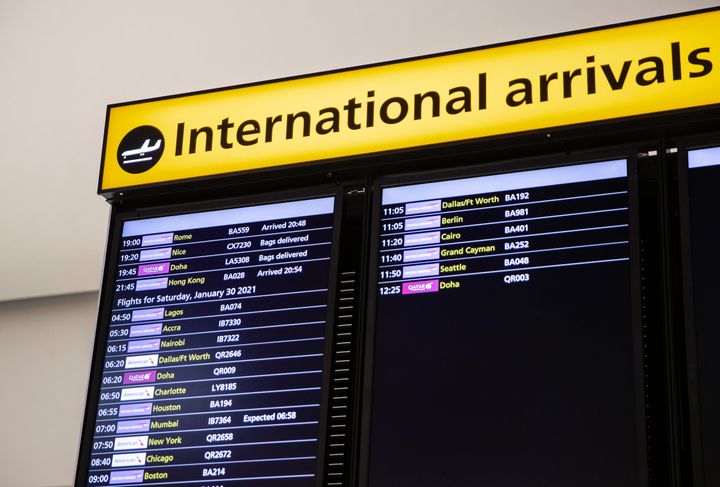
While the news has been welcomed by families and friends long separated by the complex rules around international travel, the announcement has also left many people confused about the small print. Here are your questions on the latest travel rules answered.
Advertisement
Currently, only travellers who have received two doses of a vaccine in the UK are permitted to enter England from an amber country without self-isolating for 10 days, excluding France which is “amber plus” status, due to recent high levels of the Beta variant that originated in South Africa.
From 4am on Monday August 2, US vaccine certificates, both digital and hard copy, as well as the EU version that confirms you have been double-jabbed, will allow citizens of those countries to enter England without needing to self-isolate for 10 days.
“The changes will apply to fully vaxxed people with an FDA or EMA vaccine – they’ll still need to do the usual pre-departure test before arrival and take a PCR test on day 2 of returning to the England,” Shapps tweeted.
Advertisement
An FDA vaccine is one authorised by the US Food and Drug Administration, so the Pfizer, Moderna or Johnson & Johnson Janssen vaccines, received in the US; while an EMA vaccine is one authorised by the European Medicines Agency, so Pfizer, Moderna, Johnson & Johnson and AstraZeneca, received in Europe.
All visitors must still have proof of a negative Covid-19 test to travel to England from abroad. You must take a test even if you’ve been fully vaccinated and/or are traveling from a country on the green list.
The changes apply to citizens from the US and all EU countries. However, it’s important to note that they will only apply to journeys made to England from amber list countries.
All arrivals from France, for example, which is currently in amber plus status, will still be required to enter quarantine for 10 days. Falling rates of the Beta variant in France do mean the amber plus list is expected to be scrapped at the next traffic light review on August 4, though.
While the UK government is willing to accept US travellers – on the condition they follow the amber entry requirements – the US government is still advising against travel to the UK.
The US State Department and the Centers for Disease Control and Prevention (CDC) have issued a travel advisory telling US citizens not to travel to the UK because of the current case count of Covid-19.
“Because of the current situation in the United Kingdom, even fully vaccinated travellers may be at risk for getting and spreading Covid-19 variants,” the CDC website states.
Advertisement
Currently, there are strict limits on travel to the US from the UK – it’s not possible for most British nationals to enter if they have been in the UK, Ireland, Europe, Iran, Brazil, China, South Africa or India within the previous 14 days.
Meanwhile, entry requirements for UK citizens vary from country to country in Europe. Regardless of a country’s traffic light status from the UK government, it’s worth doing your homework before booking a holiday as the traffic light system is not reciprocal. There may be extra tests and quarantine times to factor in when you arrive, which could increase the cost of your trip.
Grant Shapps said on Wednesday that he expected that rules for Brits travelling to the US to become more relaxed “in time”. Asked whether he was confident the US and Europe would reciprocate on the government’s change in rules, he said: “It will depend. We can only set the rules at our end, and that has always been the case. People should always check the rules on the other side.
“I’ve just spoken to my US counterpart today and in the US they still have an executive order which prevents travel from the UK, from Europe, from several other countries to the US. So we’re saying, ‘You can come here, you can come visit, you can come see friends, you can come as a tourist if you’ve been double vaccinated and follow the rules without quarantine’.
“We can’t change that on the other side, but we do expect that in time they will release that executive order, which was actually signed by the previous president, and bans inward travel.”
Grant Shapps said the government would “continue to be guided by the latest scientific data” on its travel guidelines. However, Labour’s deputy leader Angela Rayner said the opposition had “real concerns” about the change in policy, especially given the rise in Delta variant cases in the US.
“There doesn’t seem to be a system in place yet for an international vaccine passport which the Government said that they were going to bring forward,” she said while on a visit to Hull.
“Each individual US state does things differently. They don’t have a National Health Service that has a vaccine programme like we do with the certifications. So we’re really concerned about making sure that new variants do not come into the UK and that we do have a system that identifies where we have variants of Covid where infection is and we’re able to isolate it.”
Rayner added: “We cannot stress enough that new variants pose a risk and therefore we’ve got to make sure our borders are safe and that we open up international travel in a safe and secure way.”
Advertisement
Why could the current cohort of 40-somethings be proving less healthy than previous generations?
Hungarian swimmer Kristof Milak blamed his failure to set a new world record in the 200-meter butterfly final at the Tokyo Olympics on a rip in his swimming shorts.
“They split 10 minutes before I entered the pool and in that moment I knew the world record was gone. I lost my focus and knew I couldn’t do it,” Milak said Wednesday, according to the BBC.
Milak, 21, changed into a new pair of trunks and still won the event by almost 2.5 seconds. He set a new Olympic record of 1:51:25 in the process, shattering Michael Phelps’ time of 1:52:03 at the Beijing games in 2008.
But the wardrobe malfunction was a negative distraction, he said.

JONATHAN NACKSTRAND via Getty Images
”It was a problem for me. I have a routine, a rhythm, a focus. This broke my focus and that problem impacted my time,” he explained. “I wasn’t swimming for the medal, I was swimming for the time,” he added. “I said earlier I wanted a personal best. And my personal best is a world record.”
Milak set his world record of 1:50:73 at the world championships in Gwangju, South Korea, in 2019. He shaved 0.78 seconds off Phelps’ time from the 2009 World Championships.
“As frustrated as I am to see that record go down, I couldn’t be happier to see how he did it,” Phelps said in tribute to Milak at the time. “That kid’s last 100m was incredible. He put together a great 200 fly from start to finish.”


Mayo Clinic does not endorse companies or products. Advertising revenue supports our not-for-profit mission.
Advertising & Sponsorship
Check out these best-sellers and special offers on books and newsletters from Mayo Clinic.

Relaxing Covid-19 restrictions could pave the way for new vaccine-resistant virus mutations, according to researchers at the University of East Anglia and the Earlham Institute.
A new article published today warns against relaxing Covid-19 restrictions prematurely.
It describes how we are in an ‘arms race’ with the virus and how rising cases could provide opportunities for it to evolve into even more transmissible variants.
The researchers fear that any new variants could be more virulent, more vaccine resistant, and more dangerous for children and vulnerable groups such as transplant patients.
Lead author and editor in chief of Virulence, Prof Kevin Tyler from UEA’s Norwich Medical School, said: “Over the past 17 months, economies, education and mental well-being have suffered tremendously due to the restrictions imposed in an attempt to stem the spread of the pandemic.
“Although vaccines have weakened the link between infection and mortality, they should not be used as an argument to justify a broad change in policy for countries experiencing an exponential increase in infection numbers.
“This is because most of the world’s population are still unvaccinated, and even in countries with efficient vaccination programmes, a significant proportion of society, particularly children, remain unprotected.
“Relaxing restrictions boosts transmission and allows the virus population to expand, which enhances its adaptive evolutionary potential and increases the risk of vaccine-resistant strains emerging by a process known as antigenic drift.
“Put simply, limiting the spread of Covid-19 as much as possible restricts the number of future deaths by restricting the rate with which new variants arise.
“Successive SARS-CoV-2 variants such as the Alpha and Delta variants, have displaced one another since the outbreak.
“Slowing down the rate of new variant emergence requires us to act fast and decisively, reducing the number of infected people including children with vaccines and in combination with other public health policies.
“In most cases, children are not vaccinated against Covid-19 because the risk to them becoming seriously ill is very low. But new strains may evolve with higher transmissibility in children, and vaccinating children may become necessary to control the emergence of new variants.
“In other words, a policy of relaxing restrictions while children are not vaccinated, risks inadvertently selecting for virulent variants that are better able to infect children and are also more problematic in vulnerable groups.
“Children may be particularly at risk because they are the only group that has remained unvaccinated. But there is no guarantee that the virus won’t evolve the ability to infect children too, and the data shows that new variants are relatively more often found in younger age groups.
“Only when a large proportion of the world’s population is vaccinated, or has acquired immunity from infection, can we relax other social measures.
Co-lead author and evolutionary biologist Prof Cock Van Oosterhout, from UEA’s School of Environmental Sciences, said: “We have an arms race on our hands.
“On the human side, the arms race is fought with vaccines, new technology such as the NHS Covid-19 App, and our behavioural change, but the virus fights back by adapting and evolving.
“It is unlikely we will get ahead in this arms race unless we can significantly reduce the population size of the virus.
“But given that the infection rate is about the same now as it was during the first wave, we are pretty much ‘at evens’ with this virus.
And as with many other coevolutionary arms races, there are no winners.
“This is what evolutionary biologists mean when we say that coevolution is a ‘zero-sum game’. But what you cannot do is suddenly drop your guard in the middle of an arms race. That gives your opponent — the virus — a real advantage. So we must continue doing the things we have been doing for the past 18 months, particularly in countries where the number of infected people is increasing.
“Entrusting public health measures to personal responsibility is a laissez-faire approach that many governments are now taking towards Covid-19 management.
“During exponential transmission of virus, we need an ongoing, mandatory public health policy that includes social distancing and the compulsory wearing of facemasks in crowded indoor spaces such as shops and on public transport.
“Our current vaccination programmes alone will not end the pandemic and scientific evidence suggests that we can only safely start to relax social restrictions when the R number is below one,” he added.
Co-author and director of the Earlham Institute (EI), Prof Neil Hall, said: “As long as there are large numbers of unvaccinated people around the world transmitting the virus, we’re all at risk.
“High numbers of Covid-19 cases increase the likelihood the virus will evolve to become more virulent, more transmissible, or capable of evading vaccines. It’s critical we continue using public health measures to bring transmission rates down. We have to co-exist with caution — if we ignore global health policies which have proven to reduce infection, the virus will further adapt.
“When we weigh up the benefits and risks in vaccinating young people, we have to consider the impact on wider society too. The current approach to protecting young people seems to be letting them reach herd immunity through infection. Every day that approach continues, we give the virus the upper hand and prolong this pandemic — increasing the burden on healthcare systems and economies.”
‘COVID-19 adaptive evolution during the pandemic — Implications of new SARS-CoV-2 variants on public health policies’ is published in the journal Virulence on July 27, 2021.
The article was led by researchers at UEA in collaboration with Norwich Research Park colleagues at the Earlham Institute, as well as it the University of Pittsburgh, the University of California Davis, the University of Minnesota Twin Cities, and King Abdul Aziz University, Jeddah, Saudi Arabia.
