UK Covid Vaccine Booster Trial Launched, Announces Matt Hancock

WPA Pool via Getty Images

Thousands of volunteers will receive a Covid vaccine booster in a new “world-first” clinical trial, Matt Hancock has announced.

The health secretary said seven vaccines will be tested to see the impact of a third dose on patients’ immune responses.

It will include a total of 2,886 patients and participants are to begin being vaccinated from early June. The initial findings are expected in September.

“The UK vaccination programme has been a phenomenal national effort, with seven in 10 UK adults now having had their first Covid-19 jab,” Hancock said.

“We will do everything we can to future-proof this country from pandemics and other threats to our health security, and the data from this world-first clinical trial will help shape the plans for our booster programme later this year.”

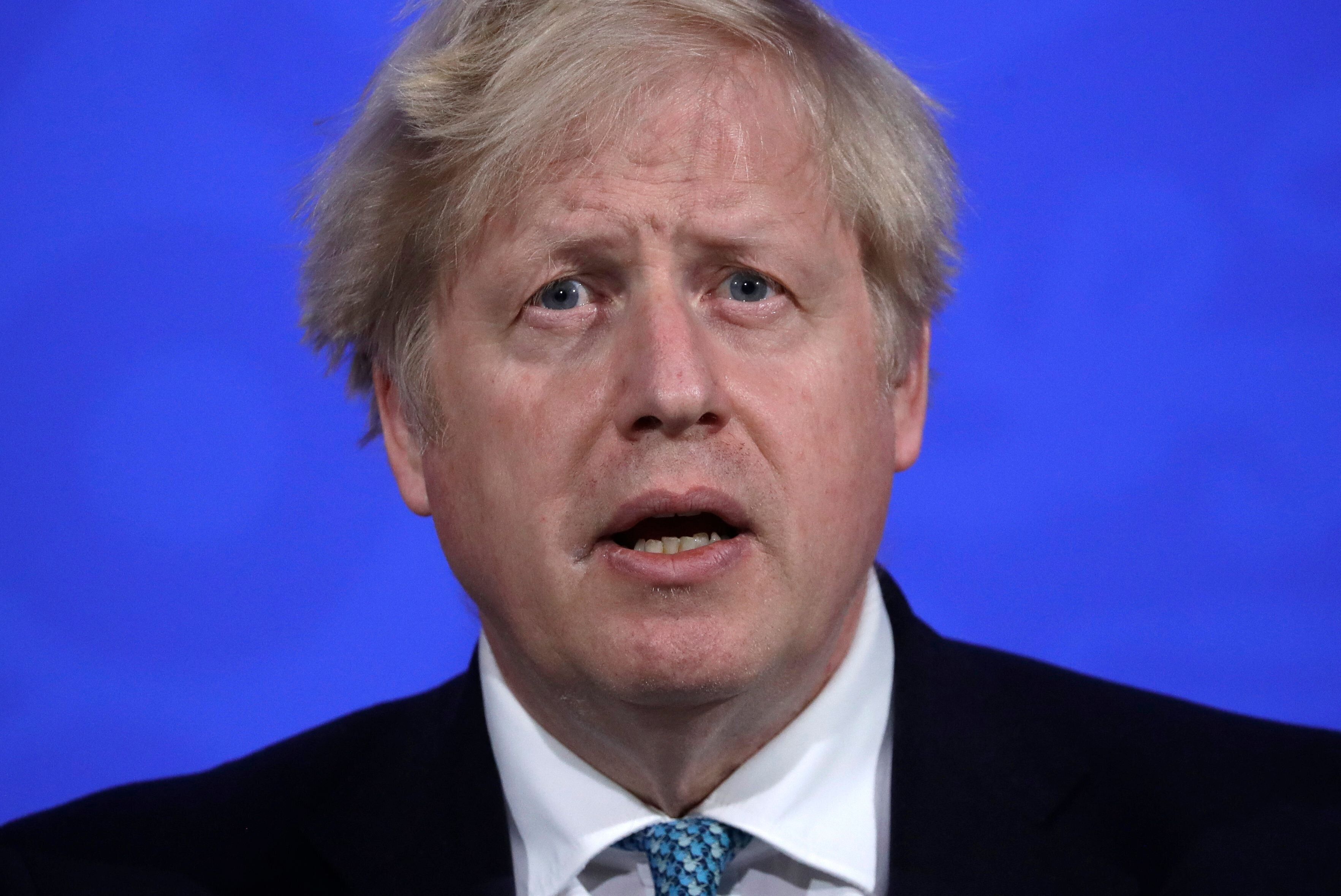
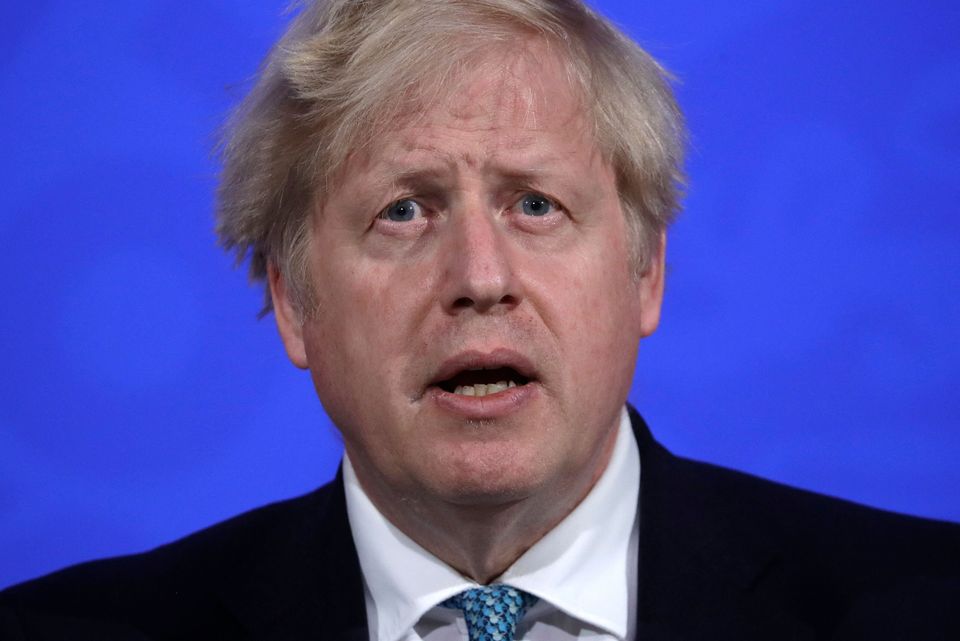
It comes as Boris Johnson said the government had “increasing confidence” that Covid vaccines are effective against “all variants” of the illness. 

But the prime minister admitted the spread of the Indian variant was “one of the issues” that could stop the June 21 unlocking date being met.

Vaccines being trialled include Oxford/AstraZeneca, Pfizer/BioNTech, Moderna, Novavax, Valneva, Janssen and Curevac.

The Cov-Boost study, led by University Hospital Southampton NHS Foundation Trust and backed by £19.3 million of government funding

Professor Saul Faust, the chief investigator and director of the NIHR Southampton clinical research facility, said it would give Joint Committee on Vaccination and Immunisation (JCVI) data on “how to protect the population against any future wave”.

“It is fantastic that so many people across the country have taken part in vaccine trials up to now so that we can be in a position to study the effects of boosters,” he said.

“We hope that as many people as possible over the age of 30 who received their first dose early in the NHS programme will be able to take part.”

Three of the vaccines will also be tested at a half dose, with experts expecting an adequate immune response at this level.

The half doses will inform whether side-effects are reduced at a lower dose, and could offer useful information to countries where vaccine supply may be more scarce.

Share Button

Friends Cast Reveal Where They Think Their Characters Would Be Now

It’s been 17 years since we last saw our favourite Friends characters on screen together, and with the cast set to reunite on an upcoming TV retrospective, we’ve been dying to find out what the actors think their fictional counterparts would be up to now. 

Well, we now have some answers, as Jennifer Aniston, Courteney Cox, Lisa Kudrow, Matthew Perry, Matt LeBlanc and David Schwimmer have given us the lowdown on what they reckon has happened to the gang in the intervening years. 

The actors spilled the beans in a new interview with People magazine, previewing the upcoming reunion, which is set to debut in the US on 27 May. 

Here’s what they had to say… 

NBC via Getty Images

The cast of Friends pictured in 1996

Rachel Green 

Jennifer Aniston says she would to see Rachel still working in fashion, having now started her own clothing line. 

“It’s sort of a small franchise, like a Nili Lotan. And I live in New York City on the Upper East Side,” Jen imagines. 

NBC via Getty Images

Jennifer Aniston as Rachel Green

Monica Geller

Courteney Cox believes Monica’s competitiveness wouldn’t have mellowed in middle age and that she would be “doing something competitively with other mothers and trying to outdo them”. 

“Whether it’s the bake sale at school or something,” she says. “I mean, she’d be so annoying. She’d be at the head of the PTA or something.”

NBC via Getty Images

Courteney Cox as Monica Geller 

Phoebe Buffay

Lisa Kudrow reckons Phoebe would still be married to Mike Hannigan (Paul Rudd) and they would have moved away from New York, to settle in Connecticut with their children. 

“She’s in charge of the arts program for the school,” Lisa says. “And the advocate for her kids because they’re different like she was.”

NBC via Getty Images

Lisa Kudrow as Phoebe Buffay

Chandler Bing

Matthew Perry believes Chandler would be “a wonderful father”, having had twins with Monica at the end of the series. 

He also believes the character would have had another change of career, and would now be “a wonderful comedy writer”.

NBC via Getty Images

Matthew Perry as Chandler Bing

Joey Tribbiani 

While we got a glimpse of post-Friends life for Joey in the ill-fated spin-off series Joey, which saw him try and make it as an actor in LA, Matt reckons his character has had a humbler life since. 

He says Joey “would have opened a chain of sandwich shops”, to which Matthew Perry adds: “And eaten all the sandwiches.”

NBC via Getty Images

Matt Le Blanc as Joey Tribbiani 

Ross Geller

David Schwimmer is convinced Ross is still “playing with the bones” and working as a palaeontologist, but that he also would have invested in Joey’s sandwich shop and “lost a lot of his savings for his kids”.

NBC via Getty Images

David Schwimmer as Ross Geller 

People magazine have also obtained the first official images from the unscripted special, one of which shows the gang playing the epic trivia game from season four, which saw Joey and Chandler win Monica and Rachel’s apartment. 

Another image shows them sat down to do a table read of part of The One with The Jellyfish episode. 

Last week, it was announced that the cast will be joined by a host of special guests, including James Michael Tyler and Maggie Wheeler – better known as Gunther and Janice.

Joining them will be Elliott Gould and Christina Pickles (who played Monica and Ross’ parents, Jack and Judy Geller), Reese Witherspoon (who co-starred as Rachel’s sister in two episodes of the sitcom) and Tom Selleck (who played Monica’s love interest, Richard).

Also appearing in the show will be a string of famous Friends fans, who include Lady Gaga, David Beckham, Malala Yousafzai, James Corden, Justin Bieber and Cindy Crawford.

The Friends reunion will be available to stream on HBO Max in the US from 27 May, exactly a year after it was supposed to launch, before the pandemic scuppered plans to begin production.

It’s still not clear exactly when or how British fans will be able to watch, but HBO productions typically come to Sky Atlantic and NOW in the UK.

Read the full cover interview with the cast of Friends in the latest issue of People magazine, available in the US on Friday, or read an excerpt here.  

HuffPost may receive a share from purchases made via links on this page. Prices and availability subject to change.

Share Button

Your Relationship With Your Alarm Clock

If you use an alarm clock to wake up in the morning, think about relationship you’d like to create with your alarm clock. What would be the healthiest and happiest version of that relationship for you?

If you were an alarm clock, what kind of relationship would you want to have with your human?

For instance, maybe your alarm clock would appreciate it if you’d pat it on the head now and then and say, “Thanks for waking me up today. I appreciate you!”

How would your alarm clock feel about being put across the room and kept at a distance from you? How would it feel if you groaned when it sounded off?

How would your alarm clock feel if you kept using the snooze feature? Would it potentially lose respect for you?

Have you ever thought about the kind of relationship you’d like to have with your alarm clock? How would you like to feel towards it, and how would you like to imagine that it feels towards you?

I normally use an alarm clock to wake up in the morning, set for 5am. I never use the snooze alarm since that wouldn’t help me experience the kind of relationships I want to have – with my alarm clock, with myself, and with the start of my day.

I like relating to my alarm clock on the basis of mutual trust and mutual respect. My alarm clock is my buddy who helps me start the day at the time of my choosing. It’s very reliable. I like knowing that I can trust it to sound off when I tell it.

If my intention was to get up at a certain time, and I didn’t just leave the alarm set by mistake, then it’s important to get up to honor that relationship. If I can trust that my alarm will sound off, I also want my alarm to trust me too – to trust that I’ll get up when I intended to get up.

While it may sound odd to have a relationship with an inanimate object, you’re already doing that anyway. Some patch of neurons in your brain is already storing your associations to your alarm clock. Like it or not, that relationship exists in your mind, and it will continue to exist. So you already have some stored thoughts and feelings towards your alarm clock. Do those thoughts and feelings serve you well? Or could you modify how you’re framing that relationship make it better?

If you’re going to have a relationship with your alarm clock in your mind anyway, why not make it what you want it to be? Make it a relationship that serves you well. Make it a relationship that helps you get the results you want.

If your relationship with your alarm clock is dysfunctional, do you really think that will help you create and maintain highly functional habits? How is that going to be good for your day’s startup routine?

For me a good relationship with any device involves trust, respect, and appreciation. I don’t want to use devices that I don’t trust, respect, and appreciate. Especially if it’s the first device that connects me with my day, I really want that to be a positive and uplifting relationship. If the very first sound I hear to begin my day immediately links me with a negative emotion, a downer thought, or a corrupted relationship, well… that’s a stupid relationship then, isn’t it? How is that possibly going to do me any good, especially if I let that relationship wallow unfixed for years?

If you have a messed up relationship with your alarm clock – or with however you like to begin your day – I invite you to fix that relationship. Start by making a real decision about what kind of relationship you’d like to have. Then go have a little talk with your alarm clock to share your thoughts and feelings about the kind of relationship you’d like to create with it. Imagine that it’s listening to you attentively, and then listen internally for what it wants to see from you.

Imagine creating a truly win-win relationship here. Consider what kind of relationship your alarm clock would love to have with you. What does it want from you? What kinds of behaviors would it like to see from you? How would it like to be treated? You might think that this is taking the idea a bit far, but I encourage you to think along these lines anyway since it can help you get clarity about the right kind of relationship for you.

I have a very positive relationship with my alarm clock. I can get up right away when it goes off and leverage it for a good start to my day. I’ve never put it across the room. I’ve never used the snooze alarm. I like and respect my alarm clock. I honor its purpose in my life. I appreciate what it does for me. I don’t have to burden myself with a negative relationship that I might drag forward into all of my future years. This relationship is all in my mind anyway, so it’s my choice what to make of it. Why not assert your freedom of choice here as well?

If it helps you get up feeling a little happier and a little more enthusiastic to imagine that your alarm clock is proud of you… or to imagine that your alarm clock likes being appreciated by you… that’s all good. Feeling appreciation is wonderful, so why not give yourself any reason to begin your day with that sort of feeling? Use your imagination to help you here. Don’t let a lack of imagination cage you in a negative relationship.

What is your version of a golden relationship with your alarm clock? What would that look like? What thoughts and feelings would you like to bring to this relationship? Whatever it is, you can create that relationship. But it sure helps tremendously if you take a moment to consciously decide what that relationship is going to be.

Share Button

Covid: WHO urges Wales to delay giving children jabs

Wales asked to donate vaccines to low-income countries by the World Health Organization.

Share Button

Closer to gene therapy that would restore hearing for the congenitally deaf

Researchers at Oregon State University have found a key new piece of the puzzle in the quest to use gene therapy to enable people born deaf to hear.

The work centers around a large gene responsible for an inner-ear protein, otoferlin. Mutations in otoferlin are linked to severe congenital hearing loss, a common type of deafness in which patients can hear almost nothing.

“For a long time otoferlin seemed to be a one-trick pony of a protein,” said Colin Johnson, associate professor of biochemistry and biophysics in the OSU College of Science. “A lot of genes will find various things to do, but the otoferlin gene had appeared only to have one purpose and that was to encode sound in the sensory hair cells in the inner ear. Small mutations in otoferlin render people profoundly deaf.”

In its regular form, the otoferlin gene is too big to package into a delivery vehicle for molecular therapy, so Johnson’s team is looking at using a truncated version instead.

Research led by graduate student Aayushi Manchanda showed the shortened version needs to include a part of the gene known as the transmembrane domain, and one of the reasons for that was unexpected: Without the transmembrane domain, the sensory cells were slow to mature.

“That was surprising since otoferlin was known to help encode hearing information but had not been thought to be involved in sensory cell development,” Johnson said.

Findings were published today in Molecular Biology of the Cell.

Scientists in Johnson’s lab have been working for years with the otoferlin molecule and in 2017 they identified a truncated form of the gene that can function in the encoding of sound.

To test whether the transmembrane domain of otoferlin needed to be part of the shortened version of the gene, Manchanda introduced a mutation that truncated the transmembrane domain in zebrafish.

Zebrafish, a small freshwater species that go from a cell to a swimming fish in about five days, share a remarkable similarity to humans at the molecular, genetic and cellular levels, meaning many zebrafish findings are immediately relevant to humans. Embryonic zebrafish are transparent and can be easily maintained in small amounts of water.

“The transmembrane domain tethers otoferlin to the cell membrane and intracellular vesicles but it was not clear if this was essential and had to be included in a shortened form of otoferlin,” Manchanda said. “We found that the loss of the transmembrane domain results in the sensory hair cells producing less otoferlin as well as deficits in hair cell activity. The mutation also caused a delay in the maturation of the sensory cells, which was a surprise. Overall the results argue that the transmembrane domain must be included in any gene therapy construct.”

At the molecular level, Manchanda found that a lack of transmembrane domain led to otoferlin failing to properly link the synaptic vesicles filled with neurotransmitter to the cell membrane, causing less neurotransmitter to be released.

“Our study suggests otoferlin’s ability to tether the vesicles to the cell membrane is a key mechanistic step for neurotransmitter release during the encoding of sound,” Manchanda said.

The National Institutes of Health supported the study.

Story Source:

Materials provided by Oregon State University. Original written by Steve Lundeberg. Note: Content may be edited for style and length.

Share Button

Covid: Government criticised over pre-pandemic planning

Ministers failed to prepare for a threat on the scale of the pandemic, the spending watchdog says.

Share Button

Did Earth’s early rise in oxygen help multicellular life evolve?

Scientists have long thought that there was a direct connection between the rise in atmospheric oxygen, which started with the Great Oxygenation Event 2.5 billion years ago, and the rise of large, complex multicellular organisms.

That theory, the “Oxygen Control Hypothesis,” suggests that the size of these early multicellular organisms was limited by the depth to which oxygen could diffuse into their bodies. The hypothesis makes a simple prediction that has been highly influential within both evolutionary biology and geosciences: Greater atmospheric oxygen should always increase the size to which multicellular organisms can grow.

It’s a hypothesis that’s proven difficult to test in a lab. Yet a team of Georgia Tech researchers found a way — using directed evolution, synthetic biology, and mathematical modeling — all brought to bear on a simple multicellular lifeform called a ‘snowflake yeast’. The results? Significant new information on the correlations between oxygenation of the early Earth and the rise of large multicellular organisms — and it’s all about exactly how much O2 was available to some of our earliest multicellular ancestors.

“The positive effect of oxygen on the evolution of multicellularity is entirely dose-dependent — our planet’s first oxygenation would have strongly constrained, not promoted, the evolution of multicellular life,” explains G. Ozan Bozdag, research scientist in the School of Biological Sciences and the study’s lead author. “The positive effect of oxygen on multicellular size may only be realized when it reaches high levels.”

“Oxygen suppression of macroscopic multicellularity” is published in the May 14, 2021 edition of the journal Nature Communications. Bozdag’s co-authors on the paper include Georgia Tech researchers Will Ratcliff, associate professor in the School of Biological Sciences; Chris Reinhard, associate professor in the School of Earth and Atmospheric Sciences; Rozenn Pineau, Ph.D. student in the School of Biological Sciences and the Interdisciplinary Graduate Program in Quantitative Biosciences (QBioS); along with Eric Libby, assistant professor at Umea University in Sweden and the Santa Fe Institute in New Mexico.

Directing yeast to evolve in record time

“We show that the effect of oxygen is more complex than previously imagined. The early rise in global oxygen should in fact strongly constrain the evolution of macroscopic multicellularity, rather than selecting for larger and more complex organisms,” notes Ratcliff.

“People have long believed that the oxygenation of Earth’s surface was helpful — some going so far as to say it is a precondition — for the evolution of large, complex multicellular organisms,” he adds. “But nobody has ever tested this directly, because we haven’t had a model system that is both able to undergo lots of generations of evolution quickly, and able to grow over the full range of oxygen conditions,” from anaerobic conditions up to modern levels.

The researchers were able to do that, however, with snowflake yeast, simple multicellular organisms capable of rapid evolutionary change. By varying their growth environment, they evolved snowflake yeast for over 800 generations in the lab with selection for larger size.

The results surprised Bozdag. “I was astonished to see that multicellular yeast doubled their size very rapidly when they could not use oxygen, while populations that evolved in the moderately oxygenated environment showed no size increase at all,” he says. “This effect is robust — even over much longer timescales.”

Size — and oxygen levels — matter for multicellular growth

In the team’s research, “large size easily evolved either when our yeast had no oxygen or plenty of it, but not when oxygen was present at low levels,” Ratcliff says. “We did a lot more work to show that this is actually a totally predictable and understandable outcome of the fact that oxygen, when limiting, acts as a resource — if cells can access it, they get a big metabolic benefit. When oxygen is scarce, it can’t diffuse very far into organisms, so there is an evolutionary incentive for multicellular organisms to be small — allowing most of their cells access to oxygen — a constraint that is not there when oxygen simply isn’t present, or when there’s enough of it around to diffuse more deeply into tissues.”

Ratcliff says not only does his group’s work challenge the Oxygen Control Hypothesis, it also helps science understand why so little apparent evolutionary innovation was happening in the world of multicellular organisms in the billion years after the Great Oxygenation Event. Ratcliff explains that geologists call this period the “Boring Billion” in Earth’s history — also known as the Dullest Time in Earth’s History, and Earth’s Middle Ages — a period when oxygen was present in the atmosphere, but at low levels, and multicellular organisms stayed relatively small and simple.

Bozdag adds another insight into the unique nature of the study. “Previous work examined the interplay between oxygen and multicellular size mainly through the physical principles of gas diffusion,” he says. “While that reasoning is essential, we also need an inclusive consideration of principles of Darwinian evolution when studying the origin of complex multicellular life on our planet.” Finally being able to advance organisms through many generations of evolution helped the researchers accomplish just that, Bozdag adds.

Share Button

Walking for fitness: Staying motivated

Mayo Clinic does not endorse companies or products. Advertising revenue supports our not-for-profit mission.

Advertising & Sponsorship

Mayo Clinic Marketplace

Check out these best-sellers and special offers on books and newsletters from Mayo Clinic.

Share Button

Unpublished hospital patient safety reports exposed

BBC Panorama finds dozens of reports into concerns over hospital services have not been made public.

Share Button

Will Boris Johnson’s Covid Caution Finally Snap This Summer?

You’re reading The Waugh Zone, our daily politics briefing. Sign up now to get it by email in the evening.

In politics, as with the British summer, it never rains but it pours. Just under a fortnight since his stunning local elections success in England, Boris Johnson is finding out just how the political weather can change pretty quickly. And in true 2021 style, lots of problems are coming at once.

First, we had Jenny McGee, the NHS nurse who looked after the PM when he was in intensive care last year. McGee has told a Channel 4 documentary that she has quit her job because of the government’s 1% pay offer and the lack of respect it entailed. “I’m just sick of it,” she said.

Her remarks should act like an ice-bucket challenge to the government, jolting MPs out of their complacency and reminding ministers of just how horrific life has been on the front line for NHS staff this past year. Many are still dealing with post-traumatic stress from the helplessness of combatting this awful virus and its knock-on effects on other healthcare. Many are exhausted.

Yet as the caravan moved on and debate turned to summer holidays, staff in England will never forget they weren’t even given a Christmas bonus (unlike counterparts in Scotland and Wales), let alone a real terms pay rise offer. McGee revealed she couldn’t bring herself to take part in a ‘clap for carers’ photocall alongside the PM, not least as there was little cash for carers.

The second problem came in the shape of Dominic Cummings, who once more hit the Twittersphere to resume his ominous attacks on Johnson’s handling of the pandemic. Ahead of his potentially explosive evidence before MPs next week, the former adviser signalled he had argued for hard and fast lockdowns last year but was ignored.

Cummings also said the UK had a “joke” border policy to deal with Covid, a point heartily seized on by Labour, which is highlighting the rising cases of the Indian variant of the virus and calling for much tougher controls on travellers. Although we know that almost all cases of the Indian variant in London were caused by travel or linked to those who had travelled, there is a strange silence from the government on the breakdown of cases across the UK.

Add to all that the sheer confusion on travel policy. In the morning, cabinet minister George Eustice said ‘amber list’ countries were open to those who wanted to visit family or friends. At lunchtime, No.10 firmly contradicted that, saying all travel to such states was banned other than for a few exceptions. The PM himself said these countries [France, Spain, Italy and so on] were “not somewhere you should go on holiday”.

Even though it is legal to visit such countries and no longer punishable by a £5,000 fine, by the evening another minister had gone much further in the war on travel. Lord Bethell said that any overseas trips were “dangerous”, adding “travelling is not for this year, please stay in this country”. For good measure, he even praised as “creative” the idea of putting electronic tags on anyone quarantining on return from abroad.

No one should underestimate the PM’s houdini-like ability to wriggle out of his political woes. He could arrive at PMQs on Wednesday armed with his strongest hint yet that money had been put aside for a real terms pay rise for NHS nurses, should the independent review body suggest it. Cummings’ own rule-breaking and tarnished credibility in the eyes of the public may blunt his political assassination attempt. Holiday chaos may not really hit home until July.

Instead, it may be travel within the UK, rather outside it, that becomes the PM’s most pressing problem. Eustice went on record to admit local lockdowns were now an “option” for dealing with the Indian variant. Under one hardline option, that could mean travel restrictions into and out of areas like Bolton and Bedford where B.1617.2 is rising in clusters.

The problem is that such local lockdowns have their real potential to cause deep divisions. The Guardian reports today that Bolton council’s Tory leader warned Hancock on Friday that a new local lockdown would cause “civil unrest”.

As well as being potentially toxic to community cohesion, given differing rates of vaccine hesitancy in different ethnic groups, such a plan may simply not work. Even with vaccines, the variant may still escape a tiered system. The Kent variant certainly did when it ripped through the country in December.

On the other hand, if the PM delays the full exit from lockdown for the rest of the country, effectively tying the whole of England to the variant clusters, he faces a sizeable backbench revolt from areas where there is zero Covid. After months of their local businesses living on life support, MPs’ patience could snap and so could Johnson’s.

Still, a national delay may be his least worst policy option. Most of the big changes took place yesterday, and a few weeks more wearing masks and pre-planning pub trips may be more palatable than a fourth wave. There is also a case for saying that in fact the real final unlockdown date should be linked to the government’s own target date for the whole English adult population getting jabbed – the end of July. Any earlier, and unlockdown could be earlier.

But as Johnson tries to justify any delays to his roadmap, the need to ‘protect’ the battered NHS will again become his defence shield. Imagine how much stronger that defence would be if he had thousands of NHS nurses, properly paid and respected, backing his case.

Share Button