Covid Vaccine Passports: Boris Johnson Facing Tory Rebellion Over Certification Scheme

More than 70 MPs as well as peers from the House of Lords have launched a campaign claiming coronavirus vaccine passports would be “divisive and discriminatory”.

The cross-party opposition includes 40 Tories and former Labour leader Jeremy Corbyn.

A pledge has been signed by Conservative former leader Sir Iain Duncan-Smith, Labour former shadow chancellor John McDonnell and ex-Lib Dem leader Tim Farron.

It has also been backed by a string of Tory former ministers including Esther McVey, Nus Ghani, Mark Harper and Harriett Baldwin.

Former shadow attorney general Baroness Shami Chakrabarti said the scheme would be “dangerous, discriminatory and counter-productive”.

The government has insisted no final decisions have been taken on whether Covid-status certification could play a role in reopening the economy.

It comes as a report in The Daily Telegraph suggested a series of pilot tests for certificates were being planned, which could include the FA Cup final and other sporting events in May.

Boris Johnson has defended the idea and suggested a certificate could give “maximum confidence” to businesses and customers as society reopens.

Any scheme is likely to go beyond just showing whether someone has had a vaccine – as jabs are not mandatory – covering whether they have had Covid-19, and so are likely to have antibodies, or if they have a negative recent test.

Baroness Chakrabarti, the former director of human rights organisation Liberty, told BBC Radio 4’s Today programme: “It’s dangerous, it’s discriminatory, it’s counter-productive.”

The Labour peer warned that using coronavirus certificates could create a “checkpoint Britain” as she urged for the country to “open up together” as restrictions ease.

“It’s one thing to have a passport to travel internationally, that is a privilege, even a luxury, but participating in local community life is a fundamental right,” she added.

The group’s pledge has been backed by Big Brother Watch, Liberty, the Joint Council for the Welfare of Immigrants (JCWI) and Privacy International.

Senior Tory MP Sir Graham Brady, who is also a signatory to the pledge, which has been backed by a string of Conservative former ministers, insisted the aim should be to return to normal life.

The chair of the 1922 Committee of backbench Conservative MPs said: “Covid-status certification would be divisive and discriminatory.

“With high levels of vaccination protecting the vulnerable and making transmission less likely, we should aim to return to normal life, not to put permanent restrictions in place.”

Earlier this week, Labour leader Keir Starmer indicated there could be opposition to the move among the public if death rates are near zero and hospital admissions are very low.

A government spokeswoman said: “The review is considering a range of issues, including the ethical, equalities, privacy, legal and operational aspects, and what limits, if any, should be placed on organisations using certification.”

Emma McClarkin, chief executive of the British Beer and Pub Association, said that introducing vaccine passports could potentially “scupper things” for hospitality venues which are trying to reopen.

On the possible use of coronavirus certificates, she told BBC Breakfast: “This would be an additional burden put on to the pubs. We are desperate to get back open again. We are desperate to do that.

“We will play our part in test and trace but the additional burden of the vaccine passport could really, really scupper things.

“It is a difficult process for us to implement in venues and yet today we have not had a consultation with the government about how we would do this in pubs.”

Share Button

New method uses device cameras to measure pulse, breathing rate and could help telehealth

Telehealth has become a critical way for doctors to still provide health care while minimizing in-person contact during COVID-19. But with phone or Zoom appointments, it’s harder for doctors to get important vital signs from a patient, such as their pulse or respiration rate, in real time.

A University of Washington-led team has developed a method that uses the camera on a person’s smartphone or computer to take their pulse and respiration signal from a real-time video of their face. The researchers presented this state-of-the-art system in December at the Neural Information Processing Systems conference.

Now the team is proposing a better system to measure these physiological signals. This system is less likely to be tripped up by different cameras, lighting conditions or facial features, such as skin color. The researchers will present these findings April 8 at the ACM Conference on Health, Interference, and Learning.

“Machine learning is pretty good at classifying images. If you give it a series of photos of cats and then tell it to find cats in other images, it can do it. But for machine learning to be helpful in remote health sensing, we need a system that can identify the region of interest in a video that holds the strongest source of physiological information — pulse, for example — and then measure that over time,” said lead author Xin Liu, a UW doctoral student in the Paul G. Allen School of Computer Science & Engineering.

“Every person is different,” Liu said. “So this system needs to be able to quickly adapt to each person’s unique physiological signature, and separate this from other variations, such as what they look like and what environment they are in.”

The team’s system is privacy preserving — it runs on the device instead of in the cloud — and uses machine learning to capture subtle changes in how light reflects off a person’s face, which is correlated with changing blood flow. Then it converts these changes into both pulse and respiration rate.

The first version of this system was trained with a dataset that contained both videos of people’s faces and “ground truth” information: each person’s pulse and respiration rate measured by standard instruments in the field. The system then used spatial and temporal information from the videos to calculate both vital signs. It outperformed similar machine learning systems on videos where subjects were moving and talking.

But while the system worked well on some datasets, it still struggled with others that contained different people, backgrounds and lighting. This is a common problem known as “overfitting,” the team said.

The researchers improved the system by having it produce a personalized machine learning model for each individual. Specifically, it helps look for important areas in a video frame that likely contain physiological features correlated with changing blood flow in a face under different contexts, such as different skin tones, lighting conditions and environments. From there, it can focus on that area and measure the pulse and respiration rate.

While this new system outperforms its predecessor when given more challenging datasets, especially for people with darker skin tones, there’s still more work to do, the team said.

“We acknowledge that there is still a trend toward inferior performance when the subject’s skin type is darker,” Liu said. “This is in part because light reflects differently off of darker skin, resulting in a weaker signal for the camera to pick up. Our team is actively developing new methods to solve this limitation.”

The researchers are also working on a variety of collaborations with doctors to see how this system performs in the clinic.

“Any ability to sense pulse or respiration rate remotely provides new opportunities for remote patient care and telemedicine. This could include self-care, follow-up care or triage, especially when someone doesn’t have convenient access to a clinic,” said senior author Shwetak Patel, a professor in both the Allen School and the electrical and computer engineering department. “It’s exciting to see academic communities working on new algorithmic approaches to address this with devices that people have in their homes.”

Story Source:

Materials provided by University of Washington. Original written by Sarah McQuate. Note: Content may be edited for style and length.

Share Button

Tory Councillor Says £500 Self-Isolation Payment Could Be ‘Incentive’ To Spread Covid

PAUL ELLIS via AFP via Getty Images

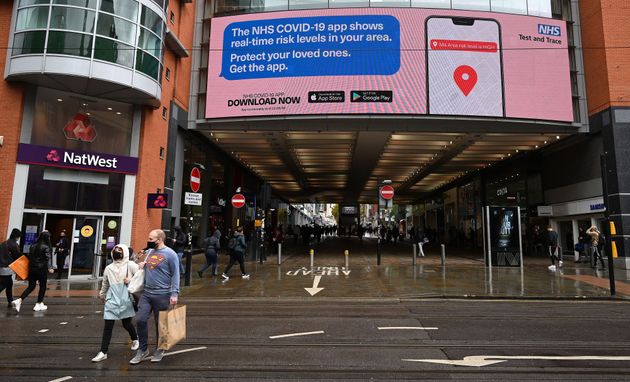
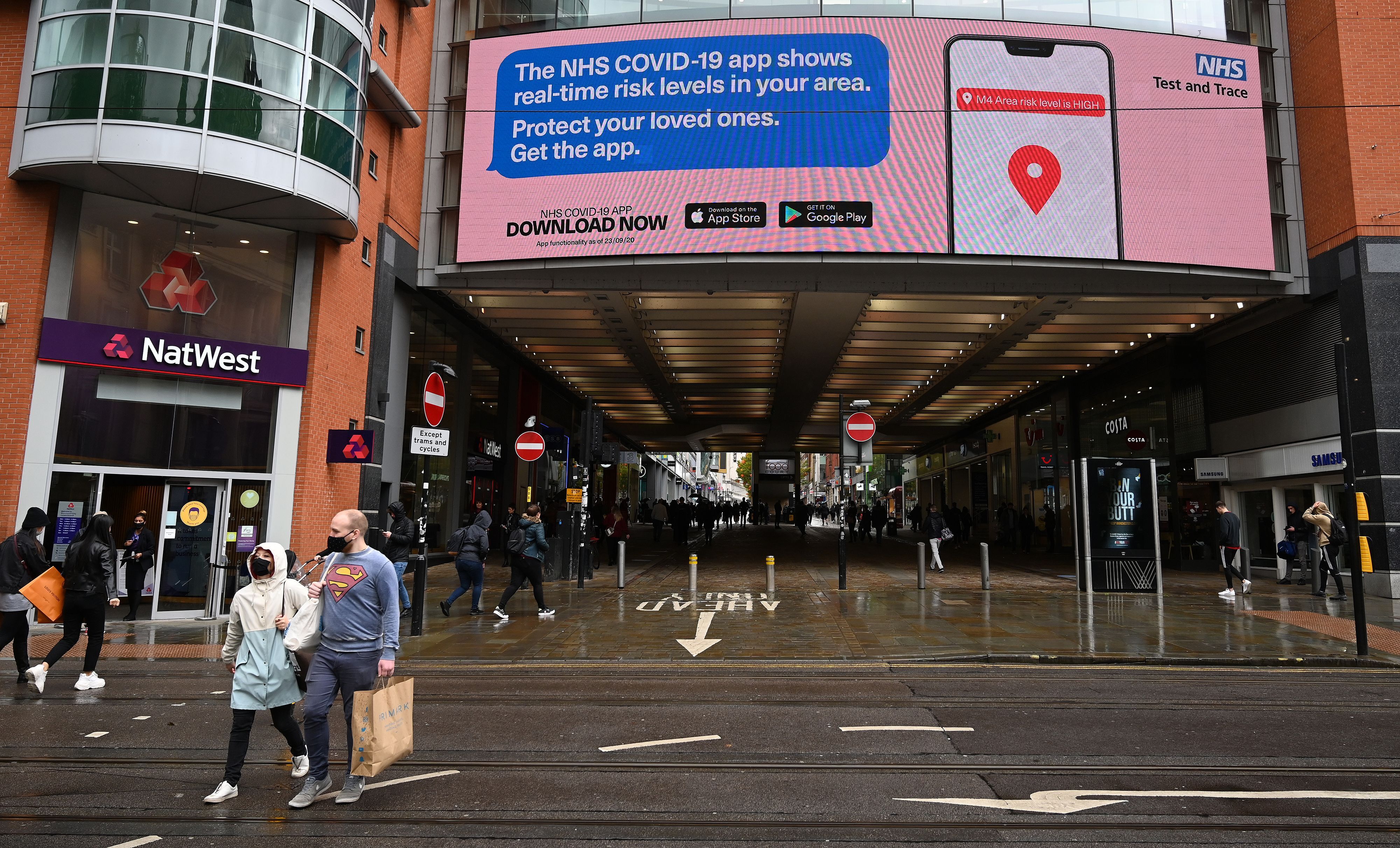
Shoppers pass beneath an electronic sign promoting the NHS Covi-19 app, outside the Arndale Centre in Manchester.

A Tory councillor has come under fire after suggesting £500 Covid-19 self-isolation payments would be an “incentive to spread” the virus.

John Fuller OBE, who is the Conservative leader of South Norfolk Council, told BBC Newsnight on Thursday: “Let’s not have a system whereby if you catch Covid, you get £500.

“That is an incentive to actually spread the disease, and that’s not in anybody’s interests.”

When asked by host Kirsty Wark, “Are you really saying £500 is an incentive for people to spread the disease?” he replied: “What I’m saying is… let’s not… I said let’s not have the incentive, I didn’t say it was, let’s not have an incentive that would encourage people to catch the disease.

“Our job is to bear down on it as quickly as we can.”

His words were condemned by Liverpool metro mayor Steve Rotherham, who described the suggestion as “shocking” and “an insult” to the people who have died as a result of Covid-19. 

People who have been told to self-isolate by NHS Test and Trace are entitled to a £500 Test and Trace Support Payment.

But Labour has said the payment – which can be claimed by those who cannot work from home but need to isolate – should be available to everyone without access to workplace sick pay.

The Test and Trace Support Payment applies to both employed and self-employed people in England, but there is concern that some people who need it are unable to access it.

On Thursday’s BBC Newsnight, the Liverpool mayor cited figures showing 70% of applications for the payment were being rejected.

“There is no one-off £500 payment that would convince anybody, even on low pay, to actually get Covid,” he said in response to Fuller.

Share Button

Diversity can prevent failures in large power grids

The recent power outages in Texas brought attention to its power grid being separated from the rest of the country. While it is not immediately clear whether integration with other parts of the national grid would have completely eliminated the need for rolling outages, the state’s inability to import significant amounts of electricity was decisive in the blackout.

A larger power grid has perks, but also has perils that researchers at Northwestern University are hoping to address to expedite integration and improvements to the system.

An obvious challenge in larger grids is that failures can propagate further — in the case of Texas, across state lines. Another is that all power generators need to be kept synchronized to a common frequency in order to transmit energy. The U.S. is served by three “separate” grids: The Eastern interconnection, the Western interconnection and the Texas interconnection, interlinked only by direct-current power lines. Any persistent deviation in frequencies within a region can lead to an outage.

As a result, researchers are searching for ways to stabilize the grid by looking for methods to mitigate deviations in the power generators’ frequencies.

The new Northwestern research shows that counter to assumptions held by some, there are stability benefits to heterogeneity in the power grid. Examining several power grids across the U.S. and Europe, a team led by Northwestern physicist Adilson Motter recently reported that generators operating on different frequencies return to their normal state more quickly when they are damped by “breakers” at different rates than generators around them.

The paper was published March 5 in the journal Nature Communications.

Motter is the Charles E. and Emma H. Morrison Professor in the department of physics and astronomy in the Weinberg College of Arts and Sciences. His research focuses on nonlinear phenomena in complex systems and networks.

Motter compares power grids to a choir: “It’s a little bit like a choir without a conductor. The generators have to listen to others and speak in sync. They react and respond to each other’s frequencies.”

Listen to an out-of-whack frequency, and the result can be a failure. Given the interconnected makeup of the system, a failure can propagate across the network. Historically, these malfunctions have been prevented by using active controllers. However, failures are often caused precisely by control and equipment errors. This points to a need to build additional stability within the design of the system. To achieve that, the team looked into leveraging the natural heterogeneities of the grid.

When the frequencies of the power generators are moved away from the synchronous state, they can swing around for a long time and even become more erratic. To mitigate these fluctuations, they came up with something akin to a door mechanism used to close a door the fastest, but without slamming.

“Mathematically, the problem of damping frequency deviations in a power generator is analogous to the problem of optimally damping a door to get it to close the fastest, which has a known solution in the case of a single door,” Motter said. “But it’s not a single door in this analogy. It’s a network of many doors that are coupled with each other, if you can imagine the doors as power generators.”

When creating an “optimal damping” effect, they discovered that rather than making each damper identical, damping the power generators in a way that is suitably different from each other can further optimize their ability to synchronize to the same frequency as quickly as possible. That is, suitably heterogenous damping across the network can lead to improved stability in the power grids studied by the team.

This discovery could have implications for future grid design as developers work to optimize technology and in considerations to further integrate now separated networks.

The study was supported by Northwestern University’s Finite Earth Initiative (supported by Leslie and Mac McQuown) and ARPA-E Award No. DE-AR0000702 and also benefited from logistical support from the Northwestern Institute for Sustainability and Energy.

Story Source:

Materials provided by Northwestern University. Original written by Lila Reynolds. Note: Content may be edited for style and length.

Share Button

Evidence of Antarctic glacier’s tipping point confirmed

Researchers have confirmed for the first time that Pine Island Glacier in West Antarctica could cross tipping points, leading to a rapid and irreversible retreat which would have significant consequences for global sea level.

Pine Island Glacier is a region of fast-flowing ice draining an area of West Antarctica approximately two thirds the size of the UK. The glacier is a particular cause for concern as it is losing more ice than any other glacier in Antarctica.

Currently, Pine Island Glacier together with its neighbouring Thwaites glacier are responsible for about 10% of the ongoing increase in global sea level.

Scientists have argued for some time that this region of Antarctica could reach a tipping point and undergo an irreversible retreat from which it could not recover. Such a retreat, once started, could lead to the collapse of the entire West Antarctic Ice Sheet, which contains enough ice to raise global sea level by over three metres.

While the general possibility of such a tipping point within ice sheets has been raised before, showing that Pine Island Glacier has the potential to enter unstable retreat is a very different question.

Now, researchers from Northumbria University have shown, for the first time, that this is indeed the case.

Their findings are published in leading journal, The Cryosphere.

Using a state-of-the-art ice flow model developed by Northumbria’s glaciology research group, the team have developed methods that allow tipping points within ice sheets to be identified.

For Pine Island Glacier, their study shows that the glacier has at least three distinct tipping points. The third and final event, triggered by ocean temperatures increasing by 1.2C, leads to an irreversible retreat of the entire glacier.

The researchers say that long-term warming and shoaling trends in Circumpolar Deep Water, in combination with changing wind patterns in the Amundsen Sea, could expose Pine Island Glacier’s ice shelf to warmer waters for longer periods of time, making temperature changes of this magnitude increasingly likely.

The lead author of the study, Dr Sebastian Rosier, is a Vice-Chancellor’s Research Fellow in Northumbria’s Department of Geography and Environmental Sciences. He specialises in the modelling processes controlling ice flow in Antarctica with the goal of understanding how the continent will contribute to future sea level rise.

Dr Rosier is a member of the University’s glaciology research group, led by Professor Hilmar Gudmundsson, which is currently working on a major £4million study to investigate if climate change will drive the Antarctic Ice Sheet towards a tipping point.

Dr Rosier explained: “The potential for this region to cross a tipping point has been raised in the past, but our study is the first to confirm that Pine Island Glacier does indeed cross these critical thresholds.

“Many different computer simulations around the world are attempting to quantify how a changing climate could affect the West Antarctic Ice Sheet but identifying whether a period of retreat in these models is a tipping point is challenging.

“However, it is a crucial question and the methodology we use in this new study makes it much easier to identify potential future tipping points.”

Hilmar Gudmundsson, Professor of Glaciology and Extreme Environments worked with Dr Rosier on the study. He added: “The possibility of Pine Island Glacier entering an unstable retreat has been raised before but this is the first time that this possibility is rigorously established and quantified.

“This is a major forward step in our understanding of the dynamics of this area and I’m thrilled that we have now been able to finally provide firm answers to this important question.

“But the findings of this study also concern me. Should the glacier enter unstable irreversible retreat, the impact on sea level could be measured in metres, and as this study shows, once the retreat starts it might be impossible to halt it.”

Share Button

Far-Right Will Use Government-Backed Race Report ‘As A Cover’ For Racism, Campaigners Warn

The controversial government-backed report which claimed institutional racism does not exist in the UK will be used as a “cover” by the far-right to “peddle their own racism”, anti-racism campaigners have warned.

Hope Not Hate said the report contains a number of views that are often echoed in far-right groups, as well as right-wing media and on the right of the Conservative Party.

But the far right in particular will use the findings to “deny racism exists” and validate their own narrative of “white people being the real victims of racism”, which could lead to a rise in political and physical attacks on those who strive for racial equality, the campaigners said.

It came as leading the Runnymede Trust, a leading race equality think-tank, said the report was “littered with racist tropes”, including references to the “optimism” of some immigrants as opposed to others, references to absent Black fathers and claims of “rising sensitivity” among ethnic minorities to racism.

The commission “repeats harmful stereotypes”, “belittles the realities of racial injustice in this country” and has “set race relations back decades”, the trust said.

The review has sparked widespread criticism, particularly over its suggestion that British schools should teach “a new story” about slavery that is not only “about profit and suffering”. 

The day after its publication on Wednesday, Downing Street’s most senior Black adviser, Samuel Kasumu, quit his post, although No.10 sources insisted his departure had “absolutely nothing to do with the report”. 

Nick Lowles, director of Hope Not Hate, said the report amplified “libertarian conservative views on race” that were previously “consigned to the margins for 30 years”.

“The consequences could be very dangerous,” he told HuffPost UK.

“The far right, and racists generally, will use this report to deny racism exists and as a cover to peddle their own racism. 

“They will feel that their own narrative of white people being the real victims of racism will be validated and as a consequence we are also likely to see an increase in their political and physical attacks on those who strive for racial equality and justice.”

Lowles also highlighted January polling by Hope Not Hate which suggested 62% of ethnic minority Britons agree Black and Asian people face discrimination in their daily lives, while 40% experienced or saw racial violence in the past 12 months.

“The report is a small group of ideologically minded people telling huge swathes of ethnic minority communities that they are wrong about their own experiences,” he said.

Runnymede policy officer Alba Kapoor said the commission was “a fig leaf looking to disguise the realities of structural racism in our society, instead of taking meaningful steps to address it”.

She told HuffPost UK: “This report not only seeks to belittle the realities of racial injustice in this country, but it is also littered with concerning racist tropes.

“It repeats harmful stereotypes about ethnic minority family structures and goes so far as to claim that some experiences of racism are just imagined. 

“This rhetoric is offered without meaningful policy measures to address the injustices faced by Black and ethnic minority families that this government feigns concern for.

“However you spin it, these kinds of comments should never be seen in a government report, and set race relations back decades.”

Earlier, Boris Johnson called the review a “very interesting piece of work” but admitted more needed to be done to address racism.

“I don’t say the government is going to agree with absolutely everything in it, but it has some original and stimulating work in it that I think people need to read and to consider,” the prime minister said during a visit to Middlesbrough.

“There are very serious issues that our society faces to do with racism that we need to address.

“We’ve got to do more to fix it, we need to understand the severity of the problem, and we’re going to be looking at all the ideas that they have put forward, and we’ll be making our response.”

Share Button

James Corden Reveals How Close Paul McCartney Came To Pulling The Plug On Carpool Karaoke

Sir Paul McCartney’s viral 2018 Carpool Karaoke appearance came this close to being cancelled by the artist,  James Corden revealed this week.

The legendary Beatle repeatedly “got cold feet” over the project, which was filmed in his native city of Liverpool, England, the Late, Late Show host recalled. 

Speaking at PaleyFest LA 2021, James said he sent a heartfelt email to Macca, pleading the case for the singer-songwriter’s participation.

The show had already scouted locations, he told Sir Paul, and cancelling at the eleventh hour would cause a big financial hit. He promised the segment would turn out “great”.

Carpool Karaoke

Paul McCartney on Carpool Karaoke

Sir Paul apparently wobbled multiple times, and even considered pulling the plug on the morning of the shoot, according to James. Fortunately, the star finally agreed to get back on board when he was told to enjoy himself.

The Carpool Karaoke segment itself saw the pair driving around Liverpool, with Sir Paul visiting someone of his old haunts and singing Penny Lane on, well, Penny Lane, obviously.

James also got misty-eyed when they performed Let It Be together.

After it aired, Sir Paul secured his first chart-topping album as a soloist in the United States and, according to James, texted him to say: “We did it. Thank you for convincing me to do it. I had a blast.”

Check out Corden’s comments here:

And see the “Carpool Karaoke” segment here:

Share Button

Covid biggest NHS challenge since World War Two, says NHS boss

Sir Simon Stevens says the pandemic could bring about radical new ways of working.

Share Button

Coronavirus: Pfizer jab ‘stopping 91% of cases in first six months’

And another study shows even 96-year-olds are producing an impressive immune response.

Share Button

Pfizer Jab’s ‘Off The Scale’ Antibodies Could Protect Against Brazil Variant

“The other potential is that you boost your antibody levels so high from whatever vaccine you have that there’s enough to go around and you cope with the variant.

“We’ve certainly seen in this paper that the antibody levels are so good, really after the first two weeks, that we are pretty confident that this should be very helpful against the Brazilian variant.”

Asked if he is surprised how well the vaccines have worked in older people, he said: “We were. When we sent these samples to Porton Down they said ‘we can’t give you results right now because we’ve got to dilute them because they’re so high, they’re off the scale’.

“The antibody levels were so high that they’d gone above the thresholds so they had to dilute them.”

But he added it will be crucial to see how long antibody levels are maintained after people have had a Covid-19 vaccine.

“It will be important to assess that and whether they wane at different rates in people of different ages,” he said.

“I think that’s something that we have to watch out for.”

Although the new study did not look at the Oxford University/AstraZeneca vaccine, Prof Moss said the evidence for the jab is that “it’s very, very effective”.

He added: “The UK has a strong portfolio of vaccines – Pfizer, AstraZeneca, we’ve got Moderna coming very soon, and Novavax as well.

“So yes, I think it’s possible that we can have very broad vaccine coverage across the UK very quickly.”

On T cell responses, Prof Moss said they are “better against variants overall” than antibodies, but he added the role of T cells in fighting coronavirus is still uncertain.

“I do think cellular immunity is very important,” he said, adding that a third of people in the study had no cellular responses detected.

“We know that, as people age, their cellular and immune responses are more difficult to elicit.

“Even influenza vaccines are much less effective in older people so that’s something that we will keep an eye on very closely.”

Prof Moss also said the UK’s plan to exit lockdown appears to be “on track”, with policies to control variants, the development of new vaccines and a strong immunisation programme.

“I think we can be confident about gaining control of variants with the current plans, and also leaving lockdown,” he said.

First author on the paper, Dr Helen Parry, a National Institute for Health Research academic clinical lecturer at the University of Birmingham, said: “Our research provides further evidence that the mRNA vaccine platform delivers a strong immune antibody response in people up to 96 years of age and retains broad efficacy against the P.1 (Brazilian) variant, which is a variant of concern.”

Share Button